Blog

  • Patient Derived Xenograft (PDX) Models Market Outlook From 2026 To 2030: Key Growth Factors And Future Opportunities

    Patient Derived Xenograft (PDX) Models Market Outlook From 2026 To 2030: Key Growth Factors And Future Opportunities

    Featuring market attractiveness scoring, total addressable market sizing, company benchmarking matrices, interactive Excel dashboards, deeper supply chain intelligence, emerging startup tracking, and granular product-level insights, The Business Research Company’s 2026 market reports are built to deliver research that is both more actionable and more strategically valuable.

    Patient Derived Xenograft (PDX) Models Market Size, Value And Growth Trajectory Through 2030

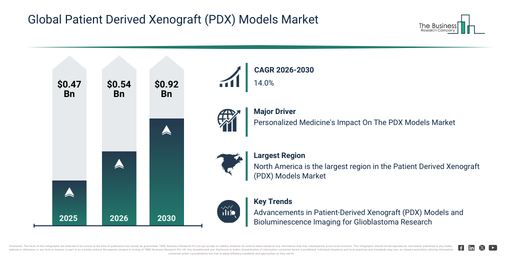
    The patient derived xenograft (pdx) models market has seen substantial growth recently. It is forecast to increase from $0.47 billion in 2025 to $0.54 billion in 2026, achieving a compound annual growth rate (CAGR) of 15.8%. This historical expansion can be attributed to several factors, including the constrained predictive power of conventional cell line models, a surge in cancer research initiatives, the reliance on animal models for drug testing, an escalating demand for translational oncology studies, and the proliferation of collaborations between academic institutions and pharmaceutical research bodies.

    The market for patient-derived xenograft (PDX) models is projected to experience substantial expansion in the coming years. This market is forecast to reach $0.92 billion by 2030, demonstrating a compound annual growth rate (CAGR) of 14.0%. This anticipated growth during the forecast period is primarily driven by factors such as the increasing incorporation of PDX models in precision medicine, greater investments in humanized mouse and rat models, the development of co-clinical trial programs, the broadening of contract research services providing PDX solutions, and the expanded application of PDX models for assessing immunotherapy and targeted therapies. Key trends foreseen for this period encompass the growing utilization of PDX models in preclinical drug development, an intensifying focus on personalized cancer research employing PDX models, the increasing integration of digital platforms for managing tumor data, the wider use of humanized and genetically modified models, and the expanding scope of co-clinical trials that utilize PDX models.

    Get A Free Sample Report With In-Depth Market Insights:

    https://thebusinessresearchcompany.com/sample_request?id=65824297&type=smp&name=Patient%20Derived%20Xenograft%20%28PDX%29%20Models%20Market%20Report%202026&utm_source=Blogs&utm_medium=Paid&utm_campaign=Nov_PR

    Patient Derived Xenograft (PDX) Models Market Growth Catalysts And Demand Drivers

    The future expansion of the patient-derived xenograft (PDX) models market is anticipated to be driven by the growing requirement for personalized medicine. Personalized medicine focuses on customizing healthcare interventions for individual patients, taking into account their unique genetic makeup, environmental influences, and lifestyle choices. An uptick in the need for personalized medicine stems from breakthroughs in genomic research, which facilitate customized therapies aligned with individual genetic profiles, thereby achieving more potent and focused healthcare results. Patient-derived xenograft (PDX) models contribute to personalized medicine by enabling the assessment of tumors from individual patients to forecast their reactions to treatments and subsequently customize therapies. Consequently, the impetus for the expansion of the patient-derived xenograft (PDX) models market is the escalating demand for personalized medicine.

    Patient Derived Xenograft (PDX) Models Market Segment Performance And Emerging Opportunities

    The patient derived xenograft (pdx) models market covered in this report is segmented –

    1) By Type: Mice Models, Rat Models

    2) By Technique: Heterotopic Implantation, Orthotropic Implantation

    3) By Tumor Type: Gastrointestinal Tumor Models, Lung Tumor Models, Hematological Tumor Models, Gynecological Tumor Models, Respiratory Tumor Models, Urological Tumor Models, Other Tumor Models

    4) By Application: Preclinical Drug Development, Precision Medicine, Co-Clinical Trials, Basic Cancer Research

    5) By End-User: Academic And Research Organizations, Contract Research Organizations, Pharmaceutical And Biotechnological Companies, Other End-Users

    Subsegments:

    1) By Mice Models: Immunodeficient Mice Models (Nude Mice, SCID Mice), Humanized Mice Models, Genetically Modified Mice Models

    2) By Rat Models: Immunodeficient Rat Models, Humanized Rat Models, Genetically Modified Rat Models

    Patient Derived Xenograft (PDX) Models Market Industry Trends: What’s Reshaping Demand?

    Major entities engaged in the patient-derived xenograft (PDX) models market are creating advanced models equipped with in vivo bioluminescence imaging functionalities, allowing for continuous observation of tumor development. In vivo bioluminescence imaging assists PDX models by enabling noninvasive, real-time surveillance of tumor spread and reactions to treatment, thereby bolstering the effectiveness of preclinical studies in pharmaceutical development.

    Patient Derived Xenograft (PDX) Models Market Key Players: Which Companies Lead Industry Competition?

    Major companies operating in the patient derived xenograft (pdx) models market are WuXi AppTec Co Ltd, Charles River Laboratories International Inc, The Jackson Laboratory, Inotiv Inc, Taconic Biosciences Inc, Crown Bioscience Inc, Champions Oncology Inc, Certis Oncology Solutions Inc, EPO Experimental Pharmacology & Oncology Berlin-Buch GmbH, InnoSer, Envigo, Oncodesign Services SA, Horizon Discovery Ltd, Pharmatest Services Ltd, Hera BioLabs, Xenopat, Noble Life Sciences, Medicilon, TheraIndx Life Sciences, Invivocue, InVitro Research Solutions Private Limited, NexusPharma, Mediford Corporation, GemPharmatech Co Ltd.

    View The Full Patient Derived Xenograft (PDX) Models Market Report:

    https://thebusinessresearchcompany.com/report/patient-derived-xenograft-pdx-models-global-market-report?utm_source=Blogs&utm_medium=Paid&utm_campaign=Nov_PR

    Patient Derived Xenograft (PDX) Models Market Regional Split: Which Areas Are Fueling Growth?

    North America was the largest region in the patient derived xenograft (PDX) models market in 2025. Asia-Pacific is expected to be the fastest-growing region in the forecast period. The regions covered in the patient derived xenograft (pdx) models market report are Asia-Pacific, South East Asia, Western Europe, Eastern Europe, North America, South America, Middle East, Africa.

    Reach Out To Our Team:

    The Business Research Company: https://www.thebusinessresearchcompany.com/

    Americas: +1 310-496-7795

    Asia: +44 7882 955267 & +91 8897263534

    Europe: +44 7882 955267

    Email us at: marketing@tbrc.info

    Follow us on:

    LinkedIn: https://in.linkedin.com/company/the-business-research-company

    YouTube: https://www.youtube.com/channel/UC24_fI0rV8cR5DxlCpgmyFQ

    Global Market Model: https://www.thebusinessresearchcompany.com/global-market-model
  • Patient Data Hub Solutions Market Growth Forecast: Market Size, Key Trends And Emerging Opportunities Through 2030

    Patient Data Hub Solutions Market Growth Forecast: Market Size, Key Trends And Emerging Opportunities Through 2030

    Built to provide research that’s more actionable and strategically valuable, The Business Research Company’s 2026 market reports include market attractiveness analysis, total addressable market sizing, company benchmarking matrices, interactive Excel dashboards, broader supply chain intelligence, emerging startup tracking, and in-depth product insights.

    Patient Data Hub Solutions Market CAGR Outlook And Future Development

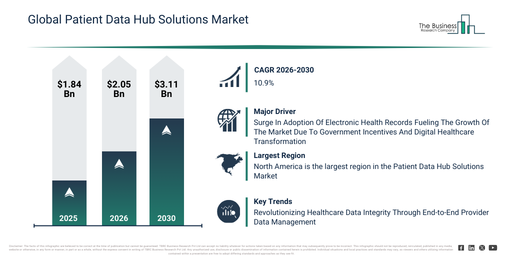
    The patient data hub solutions market has experienced rapid expansion in recent years. It is projected to increase from $1.84 billion in 2025 to $2.05 billion in 2026, demonstrating a compound annual growth rate (CAGR) of 11.2%. The growth observed in the historic period is attributable to the increasing digitization of healthcare records, the widespread adoption of electronic health records, the expansion of healthcare IT infrastructure, the growing necessity for coordinated care delivery, and an elevated regulatory focus on data standardization.

    The patient data hub solutions market size is anticipated to experience substantial growth over the next few years. This market is projected to expand to $3.11 billion by 2030, demonstrating a compound annual growth rate (CAGR) of 10.9%. The drivers behind this growth include escalating investments in healthcare interoperability solutions, a rising need for predictive analytics in care management, the expansion of value-based healthcare models, a growing emphasis on patient-centric data platforms, and increasing adoption of cloud-native healthcare solutions. Prominent trends for this period involve the wider implementation of unified patient record platforms, an increased demand for interoperable healthcare data systems, the growing integration of AI-driven clinical insights, the proliferation of cloud-based patient data hubs, and an enhanced focus on real-time care coordination.

    Get A Free Sample Report With In-Depth Market Insights:

    https://thebusinessresearchcompany.com/sample_request?id=32625795&type=smp&name=Patient%20Data%20Hub%20Solutions%20Market%20Report%202026&utm_source=Blogs&utm_medium=Paid&utm_campaign=Nov_PR

    Patient Data Hub Solutions Market Opportunity Drivers: What’s Unlocking New Revenue Potential?

    The expanding integration of electronic health records (EHRs) is anticipated to fuel the expansion of the patient data hub solutions market in the future. EHRs represent digital systems designed to record and retain patient clinical data in a structured, accessible format. This increasing uptake of electronic health records is spurred by rising governmental incentives and directives that encourage digital transformation in healthcare to enhance interoperability and optimize care efficiency. Patient data hub solutions facilitate this integration by consolidating and standardizing data originating from various EHR systems, thereby allowing healthcare providers to access cohesive patient data and render well-informed clinical judgments. Consequently, the increasing implementation of electronic health records serves as a key driver for the expansion of the patient data hub solutions market.

    Patient Data Hub Solutions Market Segment Landscape And Growth Outlook

    The patient data hub solutions market covered in this report is segmented –

    1) By Solution Type: Health Data Apps And AI Solutions, Data Integration Solutions, Patient 360 View Platforms, Other Solution Types

    2) By Deployment Mode: Cloud-Based, On-Premises

    3) By End User: Healthcare Companies, Healthcare Providers, Healthcare Payers, Other End Users

    Subsegments:

    1) By Health Data Apps And AI Solutions: Mobile Health Applications, Artificial Intelligence Analytics Tools, Remote Patient Monitoring Platforms, Predictive Health Management Systems, Virtual Health Assistant Solutions

    2) By Data Integration Solutions: Cloud-Based Integration Tools, On-Premise Integration Platforms, Application Programming Interface Management Solutions, Data Interoperability Frameworks, Master Data Management Systems

    3) By Patient 360 View Platforms: Unified Patient Record Systems, Clinical Data Aggregation Platforms, Real-Time Data Visualization Tools, Patient Journey Mapping Solutions, Population Health Management Systems

    4) By Other Solution Types: Data Security And Compliance Tools, Healthcare Data Warehousing Solutions, Interoperability Middleware Platforms, Data Quality And Governance Solutions, Custom Analytics And Reporting Tools

    Patient Data Hub Solutions Market Innovation Trends: What Developments Are Reshaping The Industry?

    Major companies in the patient data hub solutions market are prioritizing advanced innovations, such as unified provider-data platforms, to improve data integrity, lessen fragmentation, and optimize subsequent healthcare workflows. Unified provider-data platforms are end-to-end systems that ingest, cleanse, standardize, and utilize provider information from various sources to establish a single trustworthy source of truth. For instance, in October 2025, CertifyOS, a US-based data intelligence provider, launched its Provider Hub platform. This platform is designed to consolidate provider data into a real-time, 360-degree view, enabling health plans and digital-health companies to enhance data accuracy, accelerate credentialing, and reduce operational costs. By offering a foundation of clean, linked provider data, this initiative supports better compliance, improves both member and provider experiences, and drives more intelligent healthcare network operations.

    Patient Data Hub Solutions Market Competitive Landscape: Who Leads The Industry?

    Major companies operating in the patient data hub solutions market are McKesson Corporation, Optum Inc., Oracle Corporation, Capgemini SE, Siemens Healthineers AG, Philips Healthcare, GE Healthcare, IQVIA Holdings Inc., Epic Systems Corporation, Athenahealth Inc., Veeva Systems Inc., Informatica Inc., InterSystems Corporation, eClinicalWorks LLC, Medical Information Technology Inc., WellSky Corporation, Health Catalyst Inc., Greenway Health LLC, Cerner Corporation, Allscripts Healthcare Solutions, NextGen Healthcare

    View The Full Patient Data Hub Solutions Market Report:

    https://thebusinessresearchcompany.com/report/global-patient-data-hub-solutions-market-report?utm_source=Blogs&utm_medium=Paid&utm_campaign=Nov_PR

    Patient Data Hub Solutions Market Top Region: Where Does Most Revenue Come From?

    North America was the largest region in the patient data hub solutions market in 2025. Asia-Pacific is expected to be the fastest-growing region in the forecast period. The regions covered in the patient data hub solutions market report are Asia-Pacific, South East Asia, Western Europe, Eastern Europe, North America, South America, Middle East, Africa.

    Reach Out To Our Team:

    The Business Research Company: https://www.thebusinessresearchcompany.com/

    Americas: +1 310-496-7795

    Asia: +44 7882 955267 & +91 8897263534

    Europe: +44 7882 955267

    Email us at: marketing@tbrc.info

    Follow us on:

    LinkedIn: https://in.linkedin.com/company/the-business-research-company

    YouTube: https://www.youtube.com/channel/UC24_fI0rV8cR5DxlCpgmyFQ

    Global Market Model: https://www.thebusinessresearchcompany.com/global-market-model
  • Patient Check-In Kiosk Software Market CAGR Forecast Through 2030: Key Trends Shaping Industry Expansion

    Patient Check-In Kiosk Software Market CAGR Forecast Through 2030: Key Trends Shaping Industry Expansion

    Backed by market attractiveness analysis, total addressable market sizing, company benchmarking matrices, interactive Excel dashboards, wider supply chain intelligence, emerging startup coverage, and detailed product-level insights, The Business Research Company’s 2026 market reports are designed to offer research that is more actionable and strategically valuable than ever.

    Patient Check-In Kiosk Software Market Set To Climb From $10.54 Billion In 2026 To $15.44 Billion By 2030

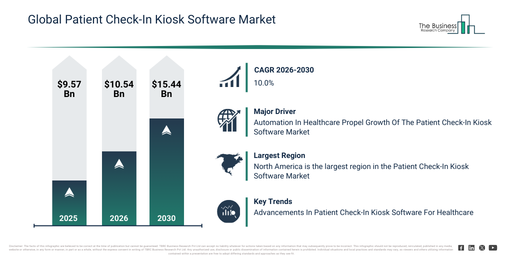
    The market size for patient check-in kiosk software has shown rapid expansion in recent years. It is forecast to rise from $9.57 billion in 2025 to $10.54 billion in 2026, exhibiting a compound annual growth rate (CAGR) of 10.2%. Historically, this growth can be attributed to elements such as manual patient check-in processes, extended wait times during registration, dependence on front-desk staff for data entry, disconnected patient scheduling systems, and limited digital integration with EHRs.

    The market size for patient check-in kiosk software is projected to experience substantial expansion over the upcoming years. This market is anticipated to reach a valuation of $15.44 billion by 2030, demonstrating a compound annual growth rate (CAGR) of 10.0%. This projected increase during the forecast period can be linked to several factors, including the development of AI-powered registration workflows, the growing embrace of cloud-based kiosk platforms, a heightened need for smooth patient experiences, the broader availability of telehealth and remote check-in options, and enhanced integration with hospital management systems. Significant trends anticipated in this period encompass the greater uptake of self-service solutions for patient check-in, the burgeoning expansion of cloud-based kiosk software platforms, the increased incorporation of AI and automation into patient registration, the broadening scope of digital appointment management and scheduling systems, and a sharpened emphasis on contactless and remote patient onboarding processes.

    Get A Free Sample Report With In-Depth Market Insights:

    https://thebusinessresearchcompany.com/sample_request?id=60623966&type=smp&name=Patient%20Check-In%20Kiosk%20Software%20Market%20Report%202026&utm_source=Blogs&utm_medium=Paid&utm_campaign=Nov_PR

    Patient Check-In Kiosk Software Market Growth Momentum: What Factors Are Shaping Demand?

    The patient check-in kiosk software market is projected to grow significantly, fueled by the rising demand for automation in healthcare. Healthcare automation encompasses the application of technology and software to execute tasks typically carried out by humans, with the goals of improving operational efficiency, decreasing human error, and elevating patient care. The increasing need for automation in healthcare stems from various factors, including gains in efficiency and productivity, cost savings, enhanced patient care, and effective data management. Patient check-in kiosk software plays a vital role in advancing automation within healthcare facilities by streamlining administrative processes and improving the patient experience. Thus, the escalating demand for automation in healthcare is driving the expansion of the patient check-in kiosk software market.

    Patient Check-In Kiosk Software Market Breakdown By Product Type And Application

    The patient check-in kiosk software market covered in this report is segmented –

    1) By Product Or Type: Cloud-Based, On-Premise

    2) By Organization Size: Large Enterprises, Small And Medium-Sized Enterprises

    3) By End-User: Healthcare Providers, Patients

    Subsegments:

    1) By Cloud-Based: Software-As-A-Service (SaaS), Platform-As-A-Service (PaaS), Hosted Solutions

    2) By On-Premise: Custom Installed Solutions, Integrated Systems, Legacy Software Solutions

    Patient Check-In Kiosk Software Market Trends: What’s Defining The Industry’s Next Phase?

    Major companies within the patient check-in kiosk software market are prioritizing the development of advanced healthcare technologies, such as intuitive patient intake solutions, to enhance front-office efficiency, empower patients, and alleviate the burden on front-office staff. User-friendly patient intake solutions refer to software specifically designed to streamline and simplify the process of gathering patient information before medical appointments.

    Patient Check-In Kiosk Software Market Company Landscape And Competitive Strategy

    Major companies operating in the patient check-in kiosk software market are eClinicalWorks, AdvancedMD, Wavetec, KIOSK Information Systems, CERTIFY Health, Vecna Healthcare, Meridian Kiosks, Clearwave, Aila Technologies, PatientTrak, Phreesia, PatientWorks, DynaTouch, SimplePractice, Curogram, athenahealth, Solutionreach, Tebra, DrChrono, Nextech, Qless, HealthWare, MedixTouch, LeanTaaS iQueue, Higi, Olea Kiosks, RedyRef Interactive Kiosks, Advanced Kiosks, Nevatronix, Zenig, CareCloud, RXNT

    View The Full Patient Check-In Kiosk Software Market Report:

    https://thebusinessresearchcompany.com/report/patient-check-in-kiosk-software-global-market-report?utm_source=Blogs&utm_medium=Paid&utm_campaign=Nov_PR

    Patient Check-In Kiosk Software Market Regional Breakdown: Where Is Demand Concentrated?

    North America was the largest region in the patient check-in kiosk software market in 2025. The regions covered in the patient check-in kiosk software market report are Asia-Pacific, South East Asia, Western Europe, Eastern Europe, North America, South America, Middle East, Africa.

    Reach Out To Our Team:

    The Business Research Company: https://www.thebusinessresearchcompany.com/

    Americas: +1 310-496-7795

    Asia: +44 7882 955267 & +91 8897263534

    Europe: +44 7882 955267

    Email us at: marketing@tbrc.info

    Follow us on:

    LinkedIn: https://in.linkedin.com/company/the-business-research-company

    YouTube: https://www.youtube.com/channel/UC24_fI0rV8cR5DxlCpgmyFQ

    Global Market Model: https://www.thebusinessresearchcompany.com/global-market-model
  • Patient Access /Front-end RCM Solutions Market To Witness 11.2% CAGR Growth Through 2030: Key Industry Drivers

    Patient Access /Front-end RCM Solutions Market To Witness 11.2% CAGR Growth Through 2030: Key Industry Drivers

    Featuring market attractiveness scoring, total addressable market sizing, company benchmarking matrices, interactive Excel dashboards, deeper supply chain intelligence, emerging startup tracking, and granular product-level insights, The Business Research Company’s 2026 market reports are built to deliver research that is both more actionable and more strategically valuable.

    Patient Access /Front-end RCM Solutions Market Forecast: Value Set To Climb From $3.11 Billion To $4.76 Billion

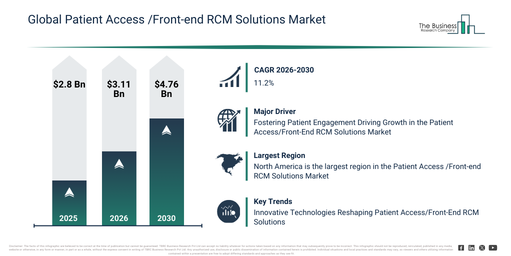
    The patient access /front-end rcm solutions market has seen rapid expansion in recent years. It is anticipated to increase from $2.8 billion in 2025 to $3.11 billion in 2026, achieving a compound annual growth rate (CAGR) of 11.2%. This historical growth is linked to factors including manual patient registration processes, fragmented eligibility verification systems, limited automation in pre-authorization workflows, inconsistent financial counseling services, and a reliance on on-premise RCM solutions.

    The patient access /front-end rcm solutions market size is projected to experience substantial expansion over the upcoming years, with its value set to reach $4.76 billion by 2030, exhibiting a compound annual growth rate (CAGR) of 11.2%. This projected growth stems from several factors, including the increasing integration of AI and automation within patient access, the growing deployment of cloud-based RCM solutions, a rising demand for unified front-end patient management, the expansion of telehealth and remote patient engagement, and a heightened regulatory emphasis on patient data accuracy and billing compliance. Key developments anticipated during this period encompass the escalating adoption of AI-enabled systems for patient registration and eligibility verification, the continued growth of cloud-based RCM platforms, the enhanced incorporation of real-time data analytics for front-end operations, the broader implementation of digital payment and billing solutions, and the increasing use of telehealth-integrated patient access tools.

    Get A Free Sample Report With In-Depth Market Insights:

    https://thebusinessresearchcompany.com/sample_request?id=55970293&type=smp&name=Patient%20Access%20%2FFront-end%20RCM%20Solutions%20Market%20Report%202026&utm_source=Blogs&utm_medium=Paid&utm_campaign=Nov_PR

    Patient Access /Front-end RCM Solutions Market Expansion Drivers: What’s Shaping Future Growth?

    The growth of the patient access /front-end RCM solutions market is anticipated to be driven by increasing patient engagement. Patient engagement refers to the active involvement, participation, and collaboration of patients throughout their healthcare journey. It encompasses a spectrum of actions, behaviors, and interactions between patients and healthcare providers, all aimed at enhancing the overall healthcare experience, improving health outcomes, and fostering patient empowerment. Accurate data collection at the front end reduces billing errors, claim denials, and the need for costly corrections, thereby contributing to the efficiency of RCM processes. Consequently, the rising patient engagement serves as a significant driver for the expansion of the patient access /front-end RCM solutions market.

    Patient Access /Front-end RCM Solutions Market Segment Analysis And Revenue Potential

    The patient access /front-end rcm solutions market covered in this report is segmented –

    1) By Product And Service: Services, Software

    2) By Deployment: On-Premise Solutions, Web And Cloud-Based Solutions

    3) By End-User: HCIT Outsourcing Companies, Healthcare Providers

    Subsegments:

    1) By Services: Patient Registration Services, Insurance Verification Services, Eligibility And Benefits Verification, Scheduling Services, Pre-Authorization Services, Financial Counseling Services

    2) By Software: Patient Registration Software, Eligibility Verification Software, Appointment Scheduling Software, Billing And Payment Software, Analytics And Reporting Tools

    Patient Access /Front-end RCM Solutions Market Industry Trends Fueling Future Revenue Growth

    Leading companies operating in the patient access /front-end RCM solutions market are developing innovative technologies, such as Enabled Solutions, to enhance revenue cycle outcomes. Enabled solutions leverage advanced technological tools and systems to improve and optimize the various processes involved in managing a company’s revenue cycle, along with implementing robust cybersecurity measures to safeguard sensitive financial and patient data.

    Patient Access /Front-end RCM Solutions Market Key Players Shaping Industry Direction

    Major companies operating in the patient access /front-end rcm solutions market are McKesson Corporation, Optum Inc, Qway Healthcare Inc., 3M Company, Cognizant Technology Solutions Corporation, Experian PLC, Cerner Corporation, Epic Systems Corporation, Conduent Inc, PATIENT ACCESS SOLUTIONS, INC., Conifer Health Solutions, Exela Technologies Inc, VIRTUSA CORPORATION, Waystar, Availity LLC, Craneware Inc., Allscripts Healthcare Solutions Inc., Kareo Inc, The SSI Group LLC, AccuReg Software, KYRUUS, HEALTHASYST, ACCESS ONE INC., Clearwave Inc, PLEXIS HEALTHCARE SYSTEMS, VEE TECHNOLOGIES, Cirius Group Inc., FINTHRIVE

    View The Full Patient Access /Front-end RCM Solutions Market Report:

    https://thebusinessresearchcompany.com/report/patient-access-or-front-end-rcm-solutions-global-market-report?utm_source=Blogs&utm_medium=Paid&utm_campaign=Nov_PR

    Patient Access /Front-end RCM Solutions Market Geographic Landscape: Which Region Leads Industry Growth?

    North America was the largest region in the patient access /front-end RCM solutions market in 2025. Asia-Pacific is expected to be the fastest-growing region in the forecast period. The regions covered in the patient access /front-end rcm solutions market report are Asia-Pacific, South East Asia, Western Europe, Eastern Europe, North America, South America, Middle East, Africa.

    Reach Out To Our Team:

    The Business Research Company: https://www.thebusinessresearchcompany.com/

    Americas: +1 310-496-7795

    Asia: +44 7882 955267 & +91 8897263534

    Europe: +44 7882 955267

    Email us at: marketing@tbrc.info

    Follow us on:

    LinkedIn: https://in.linkedin.com/company/the-business-research-company

    YouTube: https://www.youtube.com/channel/UC24_fI0rV8cR5DxlCpgmyFQ

    Global Market Model: https://www.thebusinessresearchcompany.com/global-market-model
  • Patent Analytics Market Projected For Strong Expansion Through 2030: Key Trends And Future Outlook

    Patent Analytics Market Projected For Strong Expansion Through 2030: Key Trends And Future Outlook

    Built to provide research that’s more actionable and strategically valuable, The Business Research Company’s 2026 market reports include market attractiveness analysis, total addressable market sizing, company benchmarking matrices, interactive Excel dashboards, broader supply chain intelligence, emerging startup tracking, and in-depth product insights.

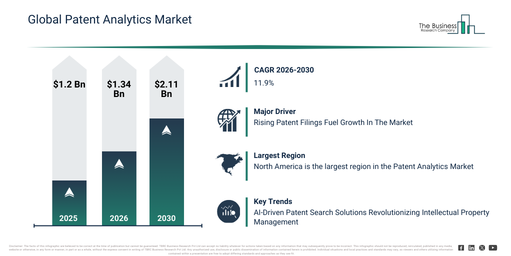
    Patent Analytics Market Revenue Growth On Track For A 11.9% CAGR Through 2030

    The patent analytics market has experienced swift expansion in its size over recent times. It is projected to expand from $1.2 billion in 2025 to $1.34 billion in 2026, demonstrating a compound annual growth rate (CAGR) of 12.3%. Factors contributing to this historical expansion include an escalating volume of global patent submissions, the increasing intricacy of intellectual property environments, a heightened demand for competitive benchmarking, a historical dependence on manual patent analysis techniques, and the broadening of multinational corporate innovation approaches.

    The patent analytics market is projected to experience substantial expansion over the coming years. This market is forecast to reach $2.11 billion by 2030, demonstrating a compound annual growth rate (CAGR) of 11.9%. Factors contributing to this growth include the incorporation of AI and machine learning into patent analytics tools, greater acceptance by SMEs, an increased need for real-time patent information, the rise of cloud-based analytics implementations, and the broadened application of patent data for making strategic investment choices. Key trends anticipated during this period involve the growing acceptance of data-informed patent decision-making, an increasing requirement for competitive intelligence and landscape analysis, the proliferation of cloud-based patent analytics platforms, the broadening scope of patent valuation and monetization, and enhanced attention to IP risk management and preparedness for litigation.

    Get A Free Sample Report With In-Depth Market Insights:

    https://thebusinessresearchcompany.com/sample_request?id=62704113&type=smp&name=Patent%20Analytics%20Market%20Report%202026&utm_source=Blogs&utm_medium=Paid&utm_campaign=Nov_PR

    Patent Analytics Market Development Factors: What’s Supporting Demand?

    A rise in patent applications is anticipated to propel the expansion of the patent analytics market in the future. Patent applications involve the act of submitting requests to secure legal entitlements for an invention, providing the applicant with sole ownership and safeguarding it for a defined duration. The escalation in patent submissions stems from various elements, including heightened R&D expenditure, greater intellectual property consciousness, and the actions of patent trolls. Patent analytics assists in discerning existing prior art, evaluating an invention’s patentability, and formulating strong claims to enhance approaches for patent submission. Consequently, a growing volume of patent applications is fueling the expansion of the patent analytics market.

    Patent Analytics Market Segmentation And Category Overview

    The patent analytics market covered in this report is segmented –

    1) By Component: Solutions, Services

    2) By Deployment Type: On-Premises, Cloud-Based

    3) By Enterprise Size: Large Enterprises, Small And Mid-Sized Enterprises (SMEs)

    4) By Application: Competitive Intelligence, Technology Landscape Analysis, Patent Valuation, Litigation Support

    5) By End-User: Corporates, Research Organizations, Intellectual Property Firms, Government Agencies

    Subsegments:

    1) By Solutions: Patent Search And Analytics Software, Patent Valuation Solutions, Competitive Intelligence Solutions, Patent Mapping And Landscape Tools, IP Portfolio Management Solutions

    2) By Services: Patent Search Services, Patent Licensing And Monetization Services, Patent Litigation Support Services, Patent Strategy And Consulting Services, Patent Filing And Prosecution Services

    Patent Analytics Market Trends Powering Strategic Industry Growth

    Leading firms within the patent analytics market are prioritizing the creation of sophisticated artificial intelligence-driven patent search solutions to improve decision-making within intellectual property management. Such an AI-enabled patent search solution employs cutting-edge technologies to simplify and automate searches across patent databases, enabling users to effectively pinpoint pertinent patents, monitor innovation patterns, and evaluate patentability with greater precision.

    Patent Analytics Market Competitive Analysis Of Leading Industry Participants

    Major companies operating in the patent analytics market are Clarivate Plc, LexisNexis, IP.com, Patsnap, Anaqua Inc., TechInsights Inc., QUESTEL SAS, Sagacious IP, MaxVal Group Inc., RPX Corporation, Wynne-Jones IP Ltd., Ocean Tomo LLC, Minesoft Ltd., IDTechEx Limited, Excelon IP, Coller IP, Harrity & Harrity LLP, Patent iNSIGHT Pro, IPlytics GmbH, Dolcera, PatSeer Technologies Pvt. Ltd.

    View The Full Patent Analytics Market Report:

    https://thebusinessresearchcompany.com/report/patent-analytics-global-market-report?utm_source=Blogs&utm_medium=Paid&utm_campaign=Nov_PR

    Patent Analytics Market Largest Region: Which Geography Holds The Biggest Share?

    North America was the largest region in the patent analytics market in 2025. Asia-Pacific is expected to be the fastest-growing region in the forecast period. The regions covered in the patent analytics market report are Asia-Pacific, South East Asia, Western Europe, Eastern Europe, North America, South America, Middle East, Africa.

    Reach Out To Our Team:

    The Business Research Company: https://www.thebusinessresearchcompany.com/

    Americas: +1 310-496-7795

    Asia: +44 7882 955267 & +91 8897263534

    Europe: +44 7882 955267

    Email us at: marketing@tbrc.info

    Follow us on:

    LinkedIn: https://in.linkedin.com/company/the-business-research-company

    YouTube: https://www.youtube.com/channel/UC24_fI0rV8cR5DxlCpgmyFQ

    Global Market Model: https://www.thebusinessresearchcompany.com/global-market-model
  • Pars Planitis Treatment Market Outlook 2026–2030: Growth Trends, Market Dynamics And Emerging Opportunities

    Pars Planitis Treatment Market Outlook 2026–2030: Growth Trends, Market Dynamics And Emerging Opportunities

    Backed by market attractiveness analysis, total addressable market sizing, company benchmarking matrices, interactive Excel dashboards, wider supply chain intelligence, emerging startup coverage, and detailed product-level insights, The Business Research Company’s 2026 market reports are designed to offer research that is more actionable and strategically valuable than ever.

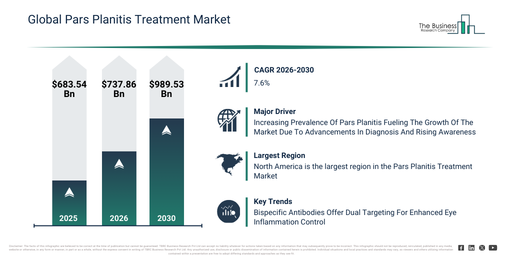
    Pars Planitis Treatment Market Value Growth And Long-Term Outlook

    The pars planitis treatment market size has demonstrated significant growth in recent years. It is anticipated to expand from $683.54 billion in 2025 to $737.86 billion in 2026, achieving a compound annual growth rate (CAGR) of 7.9%. The historical growth can be attributed to an improved understanding of uveitis pathophysiology, the availability of corticosteroid-based therapies, the expansion of ophthalmology specialty clinics, increasing diagnostic imaging utilization, and growing clinical awareness of pars planitis.

    The pars planitis treatment market is anticipated to show significant expansion in the upcoming years. Its valuation is expected to reach $989.53 billion by 2030, growing at a compound annual growth rate (CAGR) of 7.6%. This projected growth throughout the forecast period can be attributed to an increasing adoption of personalized ophthalmic treatments, a rising demand for sustained inflammation control, the broadening of biologic drug pipelines, a growing emphasis on vision preservation strategies, and increased investment in advanced ophthalmic diagnostics. Key trends emerging in the forecast period include the expanding use of immunomodulatory therapies, a growing embrace of biologic agents, an increasing preference for targeted anti-inflammatory treatments, the development of sophisticated ocular surgical techniques, and a stronger focus on early diagnosis and disease monitoring.

    Get A Free Sample Report With In-Depth Market Insights:

    https://thebusinessresearchcompany.com/sample_request?id=64398271&type=smp&name=Pars%20Planitis%20Treatment%20Market%20Report%202026&utm_source=Blogs&utm_medium=Paid&utm_campaign=Nov_PR

    Pars Planitis Treatment Market Industry Drivers: What’s Behind The Revenue Growth?

    The rising incidence of pars planitis is projected to drive expansion in the pars planitis treatment market moving ahead. Pars planitis is identified as an idiopathic type of intermediate uveitis, mainly causing inflammation in the vitreous and peripheral retina, generally impacting those between 15 and 40 years old. This growing prevalence is attributed to increased awareness and enhanced diagnostic methods, as advanced imaging tools allow for earlier and more accurate detection. Treatments for pars planitis assist in managing the condition by lessening ocular inflammation, making them vital for maintaining vision and averting complications. These treatments improve patient care by providing specific therapies like corticosteroids and immunosuppressants, which contribute to better long-term eye health and an improved quality of life. For example, a case report issued in February 2025 by Mega Journal of Case Reports, a medical journal based in the US, reported that intermediate uveitis manifests at a frequency of 1.4 to 2 cases per 100,000 people, with its idiopathic variant, pars planitis, comprising 70% of these instances. Hence, the increasing prevalence of pars planitis is stimulating the growth of the pars planitis treatment market.

    Pars Planitis Treatment Market Segment Outlook: Which Categories Are Growing Fastest?

    The pars planitis treatment market covered in this report is segmented –

    1) By Treatment: Corticosteroid, Non-Steroidal Anti-Inflammatory Drugs (NSAIDs), Surgery, Cryotherapy, Immunomodulatory Therapy, Other Treatments

    2) By Diagnosis: Blood Tests, Fundus Examination And Optical Coherence Tomography, Magnetic Resonance Imaging (MRI), Other Diagnosis

    3) By Route Of Administration: Oral, Intravenous, Other Routes Of Administration

    4) By Distribution Channel: Hospital Pharmacy, Retail Pharmacy, Online Pharmacy

    5) By End-User: Clinic, Hospital, Other End-Users

    Subsegments:

    1) By Corticosteroid: Topical Corticosteroids, Periocular Corticosteroid Injections, Intravitreal Corticosteroid Implants, Systemic Corticosteroids

    2) By Non-Steroidal Anti-Inflammatory Drugs (NSAIDs): Oral Non-Steroidal Anti-Inflammatory Drugs (NSAIDs), Topical Non-Steroidal Anti-Inflammatory Drugs (NSAIDs), Injectable Non-Steroidal Anti-Inflammatory Drugs (NSAIDs)

    3) By Surgery: Pars Plana Vitrectomy, Cataract Surgery, Glaucoma Surgery

    4) By Cryotherapy: Trans-scleral Cryotherapy, Endocryotherapy

    5) By Immunomodulatory Therapy: Antimetabolites, Calcineurin Inhibitors, Biologic Agents

    6) By Other Treatments: Antibiotics, Antivirals, Laser therapy

    Pars Planitis Treatment Market Growth Trends Reshaping The Competitive Landscape

    Leading companies in the pars planitis treatment market are concentrating on developing advanced solutions, such as bispecific antibodies, to improve immune modulation, decrease ocular inflammation, and reduce systemic adverse effects. Bispecific antibodies are engineered proteins designed to simultaneously bind to two distinct antigens or targets, thereby providing more precise and effective treatment with fewer side effects.

    Pars Planitis Treatment Market Leading Companies And Competitive Benchmarking

    Major companies operating in the pars planitis treatment market are Johnson And Johnson, Merck And Co Inc, AbbVie Inc, Bayer AG, AstraZeneca plc, Novartis AG, EyePoint Pharmaceuticals Inc, Eli Lilly And Company, Teva Pharmaceutical Industries Ltd, Quantum Cryogenics Ltd, Zimmer MedizinSysteme GmbH, Sun Pharmaceutical Industries Ltd, Aurobindo Pharma Limited, Santen Pharmaceutical Co Ltd, Alimera Sciences Inc, Clearside Biomedical Inc, Roche Holding AG, Pfizer Inc, Bristol Myers Squibb Company, Regeneron Pharmaceuticals Inc, UCB SA, Bausch Health Companies Inc

    View The Full Pars Planitis Treatment Market Report:

    https://thebusinessresearchcompany.com/report/pars-planitis-treatment-global-market-report?utm_source=Blogs&utm_medium=Paid&utm_campaign=Nov_PR

    Pars Planitis Treatment Market Regional Analysis: Which Geography Leads On Revenue?

    North America was the largest region in the pars planitis treatment market in 2025. The regions covered in the pars planitis treatment market report are Asia-Pacific, South East Asia, Western Europe, Eastern Europe, North America, South America, Middle East, Africa.

    Reach Out To Our Team:

    The Business Research Company: https://www.thebusinessresearchcompany.com/

    Americas: +1 310-496-7795

    Asia: +44 7882 955267 & +91 8897263534

    Europe: +44 7882 955267

    Email us at: marketing@tbrc.info

    Follow us on:

    LinkedIn: https://in.linkedin.com/company/the-business-research-company

    YouTube: https://www.youtube.com/channel/UC24_fI0rV8cR5DxlCpgmyFQ

    Global Market Model: https://www.thebusinessresearchcompany.com/global-market-model
  • Paroxysmal Nocturnal Hemoglobinuria (PNH) Treatment Market Growth Outlook From $6.89 Billion In 2026 To $11.32 Billion By 2030

    Paroxysmal Nocturnal Hemoglobinuria (PNH) Treatment Market Growth Outlook From $6.89 Billion In 2026 To $11.32 Billion By 2030

    Featuring market attractiveness scoring, total addressable market sizing, company benchmarking matrices, interactive Excel dashboards, deeper supply chain intelligence, emerging startup tracking, and granular product-level insights, The Business Research Company’s 2026 market reports are built to deliver research that is both more actionable and more strategically valuable.

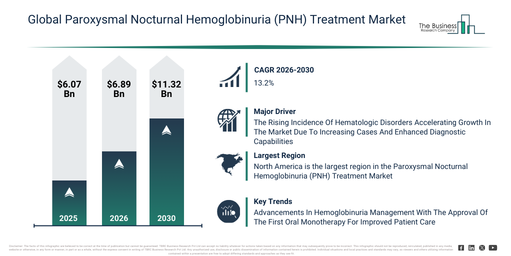
    Paroxysmal Nocturnal Hemoglobinuria (PNH) Treatment Market Poised To Hit $11.32 Billion By 2030 With A 13.2% CAGR

    The market for paroxysmal nocturnal hemoglobinuria (pnh) treatment has experienced rapid growth in recent years. This sector is anticipated to increase from $6.07 billion in 2025 to $6.89 billion in 2026, reflecting a compound annual growth rate (CAGR) of 13.4%. The historical expansion of this market can be attributed to factors like the limited availability of effective targeted therapies, a reliance on supportive care and transfusions, delayed diagnosis stemming from the disease’s rarity, the significant risk of life-threatening thrombosis, and the absence of standardized long-term treatment protocols.

    The paroxysmal nocturnal hemoglobinuria (pnh) treatment market is poised for significant expansion over the next few years. Its valuation is expected to reach $11.32 billion by 2030, progressing at a compound annual growth rate (CAGR) of 13.2%. This projected increase during the forecast period can be attributed to the emergence of next-generation complement inhibitors, a broadening clinical pipeline for oral and subcutaneous therapies, a heightened focus on drug innovation for orphan diseases, improved diagnosis rates through advanced testing, and enhanced reimbursement coverage for rare hematologic disorders. Major trends anticipated during this period include a rising adoption of complement c5 inhibitor therapies, an increasing shift towards long-acting and subcutaneous treatments, the development of alternative pathway inhibitors, the expansion of combination and dual complement inhibition strategies, and better management of thrombotic and bone marrow complications.

    Get A Free Sample Report With In-Depth Market Insights:

    https://thebusinessresearchcompany.com/sample_request?id=32649021&type=smp&name=Paroxysmal%20Nocturnal%20Hemoglobinuria%20%28PNH%29%20Treatment%20Market%20Report%202026&utm_source=Blogs&utm_medium=Paid&utm_campaign=Nov_PR

    Paroxysmal Nocturnal Hemoglobinuria (PNH) Treatment Market Growth Factors: What’s Supporting Expansion?

    A rise in the occurrence of hematologic disorders is anticipated to fuel the expansion of the paroxysmal nocturnal hemoglobinuria (PNH) treatment market in the future. Hematologic disorders encompass a wide range of medical conditions impacting the blood and its producing organs, manifesting as irregularities in red blood cells, white blood cells, platelets, bone marrow, and the coagulation system, potentially resulting in conditions such as anemia, clotting problems, or cancers. The growing frequency of these disorders is attributed to elements like aging populations and genetic predispositions, with genetic mutations being crucial by initiating irregular blood cell production, which leads to various hematologic conditions. Paroxysmal nocturnal hemoglobinuria (PNH) treatment effectively addresses hematologic disorders through specialized therapies that lessen complement-mediated hemolysis, decrease thrombotic complications, and enhance patient survival outcomes. Consequently, the increasing prevalence of hematologic disorders is a key driver for the paroxysmal nocturnal hemoglobinuria (PNH) treatment market’s growth.

    Paroxysmal Nocturnal Hemoglobinuria (PNH) Treatment Market Segment Landscape: Which Areas Lead Development?

    The paroxysmal nocturnal hemoglobinuria (pnh) treatment market covered in this report is segmented –

    1) By Treatment Type: Complement C5 Inhibitors, Anti-Complement Component 5a Receptor (C5aR) Monoclonal Antibodies, Alternative Pathway Inhibitors, Hematopoietic Stem Cell Transplantation, Other Therapies

    2) By Route Of Administration: Intravenous, Subcutaneous, Oral

    3) By Market Availability: Approved, In Pipeline, Investigational

    4) By End-Use: Hospitals, Specialty Clinics, Homecare Settings, Other End-Users

    Subsegments:

    1) By Complement: C5 InhibitorsEculizumab (Soliris), Ravulizumab (Ultomiris), Emerging C5 Inhibitors, Biosimilars Of C5 Inhibitors,

    2) By Anti-Complement Component 5a Receptor Monoclonal Antibodies: Avacopan (Tavneos), Other Investigational C5aR mAbs, Monotherapy vs Combination Therapy, Clinical Trial Phase (Phase I, II, III)

    3) By Alternative Pathway Inhibitors: C3 Inhibitors, Factor B Inhibitors, Factor D Inhibitors, Targeting Complement Amplification, Combination Therapies And Dual Inhibition

    4) By Hematopoietic Stem Cell Transplantation (HSCT): Autologous HSCT vs. Allogeneic HSCT, Pre-Transplant Conditioning Therapies, Post-Transplant Immunosuppressive Therapies

    5) By Other Therapies: Immunosuppressive Therapy, Supportive Care, Anticoagulation Therapy, Gene Therapy

    Paroxysmal Nocturnal Hemoglobinuria (PNH) Treatment Market Trends Shaping Long-Term Demand

    Major companies operating in the paroxysmal nocturnal hemoglobinuria (PNH) treatment market are concentrating on developing innovative solutions, such as oral factor B inhibitors, to introduce novel treatment options that enhance therapeutic effectiveness and improve patient convenience in managing PNH. An oral Factor B inhibitor acts as a targeted small-molecule drug, selectively inhibiting Factor B in the alternative complement pathway, aiming to regulate immune system overactivation and reduce inflammation in complement-mediated diseases.

    Paroxysmal Nocturnal Hemoglobinuria (PNH) Treatment Market Industry Leaders And Competitive Landscape

    Major companies operating in the paroxysmal nocturnal hemoglobinuria (pnh) treatment market are F. Hoffmann-La Roche Ltd, Novartis AG, Mayo Clinic, Cleveland Clinic Foundation, Johns Hopkins Medicine, Memorial Sloan Kettering Cancer Center, Stanford Health Care, University of California San Francisco (UCSF) Health, Emory Healthcare, Cedars-Sinai Medical Center, Duke University Health System, Mount Sinai Health System, Dana-Farber Cancer Institute, Swedish Orphan Biovitrum, Alnylam Pharmaceuticals, BioCryst Pharmaceuticals, Apellis Pharmaceuticals, Omeros Corporation, Takeda Pharmaceutical Company, Sanofi S A, Pfizer Inc, Akari Therapeutics Plc, NovelMed Therapeutics, Ionis Pharmaceuticals, Johnson & Johnson, Biogen Inc.

    View The Full Paroxysmal Nocturnal Hemoglobinuria (PNH) Treatment Market Report:

    https://thebusinessresearchcompany.com/report/paroxysmal-nocturnal-hemoglobinuria-pnh-treatment-global-market-report?utm_source=Blogs&utm_medium=Paid&utm_campaign=Nov_PR

    Paroxysmal Nocturnal Hemoglobinuria (PNH) Treatment Market Geographic Spread And Regional Opportunities

    North America was the largest region in the paroxysmal nocturnal hemoglobinuria (PNH) treatment market in 2025. Asia-Pacific is expected to be the fastest-growing region in the forecast period. The regions covered in the paroxysmal nocturnal hemoglobinuria (pnh) treatment market report are Asia-Pacific, South East Asia, Western Europe, Eastern Europe, North America, South America, Middle East, Africa.

    Reach Out To Our Team:

    The Business Research Company: https://www.thebusinessresearchcompany.com/

    Americas: +1 310-496-7795

    Asia: +44 7882 955267 & +91 8897263534

    Europe: +44 7882 955267

    Email us at: marketing@tbrc.info

    Follow us on:

    LinkedIn: https://in.linkedin.com/company/the-business-research-company

    YouTube: https://www.youtube.com/channel/UC24_fI0rV8cR5DxlCpgmyFQ

    Global Market Model: https://www.thebusinessresearchcompany.com/global-market-model
  • Paroxysmal Nocturnal Hemoglobinuria (PNH) And Atypical Hemolytic Uremic Syndrome (aHUS) Market Forecast To Reach $8.42 Billion By 2030: Key Growth Drivers And Industry Trends

    Paroxysmal Nocturnal Hemoglobinuria (PNH) And Atypical Hemolytic Uremic Syndrome (aHUS) Market Forecast To Reach $8.42 Billion By 2030: Key Growth Drivers And Industry Trends

    Built to provide research that’s more actionable and strategically valuable, The Business Research Company’s 2026 market reports include market attractiveness analysis, total addressable market sizing, company benchmarking matrices, interactive Excel dashboards, broader supply chain intelligence, emerging startup tracking, and in-depth product insights.

    Paroxysmal Nocturnal Hemoglobinuria (PNH) And Atypical Hemolytic Uremic Syndrome (aHUS) Market Size And Revenue Outlook Through 2030

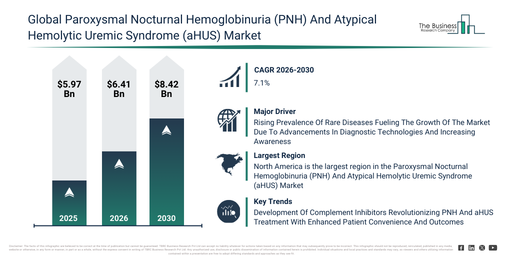
    The paroxysmal nocturnal hemoglobinuria (pnh) and atypical hemolytic uremic syndrome (ahus) market size has experienced robust expansion in recent years. Projections indicate an increase from $5.97 billion in 2025 to $6.41 billion in 2026, demonstrating a compound annual growth rate (CAGR) of 7.3%. Historical growth can be linked to factors such as the restricted access to specific complement therapies, challenges in timely diagnosis given the diseases’ rarity, the predominant use of plasma exchange and general supportive care, elevated treatment expenses hindering patient access, and insufficient public understanding of complement-mediated conditions.

    The paroxysmal nocturnal hemoglobinuria (pnh) and atypical hemolytic uremic syndrome (ahus) market is expected to show strong expansion in the upcoming years. It is projected to reach $8.42 billion in 2030, exhibiting a compound annual growth rate (CAGR) of 7.1%. The anticipated growth during this period is driven by the development of next-generation complement inhibitors, higher diagnosis rates through advanced testing, an increased focus on orphan disease drug development, broader reimbursement coverage for rare diseases, and the growing establishment of specialty hematology and nephrology centers. Prominent trends observed in the forecast period include the rising adoption of complement inhibitor therapies, expanded utilization of genetic and biomarker testing, the emergence of long-acting complement inhibition drugs, the proliferation of specialized rare disease treatment centers, and improved early diagnosis of complement-mediated disorders.

    Get A Free Sample Report With In-Depth Market Insights:

    https://thebusinessresearchcompany.com/sample_request?id=81155628&type=smp&name=Paroxysmal%20Nocturnal%20Hemoglobinuria%20%28PNH%29%20And%20Atypical%20Hemolytic%20Uremic%20Syndrome%20%28aHUS%29%20Market%20Report%202026&utm_source=Blogs&utm_medium=Paid&utm_campaign=Nov_PR

    Paroxysmal Nocturnal Hemoglobinuria (PNH) And Atypical Hemolytic Uremic Syndrome (aHUS) Market Demand Drivers: What’s Powering Industry Growth?

    The growing occurrence of rare diseases is anticipated to drive expansion in the paroxysmal nocturnal hemoglobinuria (PNH) and atypical hemolytic uremic syndrome (aHUS) market in the future. These conditions are defined as medical ailments impacting a small segment of the populace, usually under 200,000 people, and are frequently marked by their intricate nature, seriousness, and requirement for specialized therapeutic approaches. This surge in rare disease prevalence stems from improvements in diagnostic tools, facilitating improved discovery and recognition of conditions that were previously not well-documented or identified. Paroxysmal nocturnal hemoglobinuria (PNH) and atypical hemolytic uremic syndrome (aHUS) offer valuable contributions to comprehending and managing rare diseases through insights into their disease mechanisms and potential areas for therapy, particularly for conditions lacking extensive treatment choices. Consequently, the expanding incidence of rare diseases is fueling the development of the paroxysmal nocturnal hemoglobinuria (PNH) and atypical hemolytic uremic syndrome (aHUS) market.

    Paroxysmal Nocturnal Hemoglobinuria (PNH) And Atypical Hemolytic Uremic Syndrome (aHUS) Market Segments: Where Is Growth Concentrated?

    The paroxysmal nocturnal hemoglobinuria (pnh) and atypical hemolytic uremic syndrome (ahus) market covered in this report is segmented –

    1) By Type: Soliris, Ultomiris

    2) By Disease Type: Paroxysmal Nocturnal Hemoglobinuria(PNH), Atypical Hemolytic Uremic Syndrome(aHUS)

    3) By Treatment Type: Complement Inhibitors, Plasma Exchange Or Infusion, Other Symptomatic Treatments

    4) By Diagnosis Method: Clinical Diagnosis, Genetic Testing, Biomarker Testing

    5) By End-User: Hospitals, Specialty Clinics, Research Institutes, Other End-Users

    Subsegments:

    1) By Soliris: Eculizumab For PNH, Eculizumab For aHUS, Eculizumab Biosimilars

    2) By Ultomiris: Ravulizumab For PNH, Ravulizumab For aHUS, Ravulizumab Extended-Interval Dosing

    Paroxysmal Nocturnal Hemoglobinuria (PNH) And Atypical Hemolytic Uremic Syndrome (aHUS) Market Innovation Trends Shaping Future Development

    Leading companies in the paroxysmal nocturnal hemoglobinuria (PNH) and atypical hemolytic uremic syndrome (aHUS) market are prioritizing the development of innovative products, such as complement inhibitors, to enhance treatment outcomes and patient convenience. Complement inhibitors are therapeutic agents that obstruct specific components of the complement system, an immune system part crucial for clearing pathogens and damaged cells.

    Paroxysmal Nocturnal Hemoglobinuria (PNH) And Atypical Hemolytic Uremic Syndrome (aHUS) Market Key Participants And Competitive Landscape

    Major companies operating in the paroxysmal nocturnal hemoglobinuria (pnh) and atypical hemolytic uremic syndrome (ahus) market are Roche Holding AG, Alexion Pharmaceuticals Inc, Genentech Inc, Novartis AG, Apellis Pharmaceuticals Inc, Omeros Corporation, BioCryst Pharmaceuticals Inc, ChemoCentryx Inc, Sanofi SA, CSL Behring, Takeda Pharmaceutical Company, Pfizer Inc, Regeneron Pharmaceuticals Inc, Ionis Pharmaceuticals Inc, Horizon Therapeutics, Achillion Pharmaceuticals Inc, Sobi Swedish Orphan Biovitrum AB, ImmunoForge Co Ltd, Care Pharma, Daiichi Sankyo Co Ltd, Astellas Pharma Inc, Mallinckrodt Pharmaceuticals, CANbridge Pharmaceuticals Inc.

    View The Full Paroxysmal Nocturnal Hemoglobinuria (PNH) And Atypical Hemolytic Uremic Syndrome (aHUS) Market Report:

    https://thebusinessresearchcompany.com/report/paroxysmal-nocturnal-hemoglobinuria-pnh-and-atypical-hemolytic-uremic-syndrome-ahus-global-market-report?utm_source=Blogs&utm_medium=Paid&utm_campaign=Nov_PR

    Paroxysmal Nocturnal Hemoglobinuria (PNH) And Atypical Hemolytic Uremic Syndrome (aHUS) Market Top Region By Revenue And Market Share

    North America was the largest region in the paroxysmal nocturnal hemoglobinuria (PNH) and atypical hemolytic uremic syndrome (aHUS) market in 2025. Asia-Pacific is expected to be the fastest-growing region in the forecast period. The regions covered in the paroxysmal nocturnal hemoglobinuria (pnh) and atypical hemolytic uremic syndrome (ahus) market report are Asia-Pacific, South East Asia, Western Europe, Eastern Europe, North America, South America, Middle East, Africa.

    Reach Out To Our Team:

    The Business Research Company: https://www.thebusinessresearchcompany.com/

    Americas: +1 310-496-7795

    Asia: +44 7882 955267 & +91 8897263534

    Europe: +44 7882 955267

    Email us at: marketing@tbrc.info

    Follow us on:

    LinkedIn: https://in.linkedin.com/company/the-business-research-company

    YouTube: https://www.youtube.com/channel/UC24_fI0rV8cR5DxlCpgmyFQ

    Global Market Model: https://www.thebusinessresearchcompany.com/global-market-model
  • Paroxysmal Nocturnal Hemoglobinuria (PNH) Market Research 2026: Market Size, Trends, Segments And Growth Forecast

    Paroxysmal Nocturnal Hemoglobinuria (PNH) Market Research 2026: Market Size, Trends, Segments And Growth Forecast

    Backed by market attractiveness analysis, total addressable market sizing, company benchmarking matrices, interactive Excel dashboards, wider supply chain intelligence, emerging startup coverage, and detailed product-level insights, The Business Research Company’s 2026 market reports are designed to offer research that is more actionable and strategically valuable than ever.

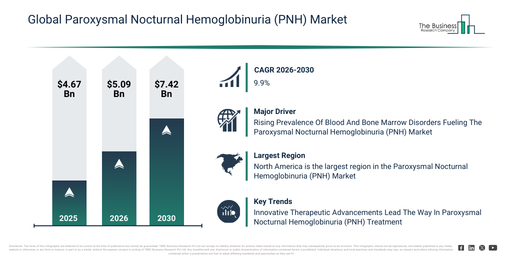
    Paroxysmal Nocturnal Hemoglobinuria (PNH) Market Growth From $5.09 Billion In 2026 To $7.42 Billion By 2030 At A CAGR Of 9.9%

    The paroxysmal nocturnal hemoglobinuria (PNH) market size has shown robust expansion in recent years. It is anticipated to grow from $4.67 billion in 2025 to $5.09 billion in 2026, exhibiting a compound annual growth rate (CAGR) of 9.1%. Historically, this market’s growth can be attributed to factors such as the restricted availability of effective targeted therapies, challenges in diagnosis due to the disease’s rarity, a dependency on supportive care and transfusions, the elevated mortality associated with untreated PNH, and insufficient awareness among general healthcare providers.

    The paroxysmal nocturnal hemoglobinuria (PNH) market is expected to show robust expansion in the upcoming years, with its size projected to reach $7.42 billion by 2030, growing at a compound annual growth rate (CAGR) of 9.9%. This anticipated growth is due to factors such as the development of advanced complement inhibitors, increased diagnosis rates through improved testing, a heightened focus on orphan disease treatment, better access to specialized hematology centers, and expanded reimbursement coverage for rare disease therapies. Significant trends influencing the forecast period include the growing adoption of complement inhibitor therapies, wider utilization of flow cytometry for accurate diagnosis, the emergence of long-acting monoclonal antibody treatments, the expansion of specialized rare hematology care programs, and enhanced management of thrombosis and hemolysis complications.

    Get A Free Sample Report With In-Depth Market Insights:

    https://thebusinessresearchcompany.com/sample_request?id=12889818&type=smp&name=Paroxysmal%20Nocturnal%20Hemoglobinuria%20%28PNH%29%20Market%20Report%202026&utm_source=Blogs&utm_medium=Paid&utm_campaign=Nov_PR

    Paroxysmal Nocturnal Hemoglobinuria (PNH) Market Growth Drivers: What’s Behind The Acceleration?

    The escalating occurrence of blood and bone marrow-related disorders is projected to propel the expansion of the paroxysmal nocturnal hemoglobinuria (PNH) market in the coming period. Blood disorders encompass medical conditions that influence the composition, function, and generation of blood and its constituents. Bone marrow-related disorders manifest when the bone marrow fails to produce sufficient red, white, or platelets, or when the blood cells formed are either damaged or defective. paroxysmal nocturnal hemoglobinuria (PNH) is intimately connected to these types of disorders due to its influence on blood cell formation, immune system operation, and the overall bone marrow microenvironment. It is a rare blood condition associated with bone marrow failure diseases, occurring because of a genetic defect that impairs the functioning of red blood cells and platelets. As an illustration, according to Blood Cancer United, a UK-based nonprofit advocacy group dedicated to raising awareness and support for blood cancer patients, it is estimated that approximately 192,070 individuals in the U.S. will be diagnosed with leukemia, lymphoma, or myeloma in 2025. Therefore, the increasing prevalence of blood disorders and bone marrow-related disorders is serving as a significant driver for the paroxysmal nocturnal hemoglobinuria (PNH) market’s growth.

    Paroxysmal Nocturnal Hemoglobinuria (PNH) Market Segment Analysis: What Are The Core Market Categories?

    The paroxysmal nocturnal hemoglobinuria (pnh) market covered in this report is segmented –

    1) By Treatment Type: Medications, Bone Marrow Transplantation, Blood Transfusion, Immunosuppressive Therapy, Other Treatment Types

    2) By Diagnosis Type: Flow Cytometry, High-Resolution Mass Spectrometry, Other Diagnosis Types

    3) By End Use: Hospitals, Clinics, Other End Users

    Subsegments:

    1) By Medications: Eculizumab, Ravulizumab, Complement Inhibitors, Supportive Care Medications

    2) By Bone Marrow Transplantation: Allogeneic Stem Cell Transplantation, Autologous Stem Cell transplantation

    3) By Blood Transfusion: Red blood Cell Transfusion, Platelet Transfusion, Fresh Frozen Plasma Transfusion

    4) By Immunosuppressive Therapy: Corticosteroids, Azathioprine, Cyclophosphamide, Mycophenolate Mofetil

    5) By Other Treatment Types: Supportive Therapies, Management Of Complications

    Paroxysmal Nocturnal Hemoglobinuria (PNH) Market Trends Redefining Industry Growth

    Key companies active in the paroxysmal nocturnal hemoglobinuria (PNH) market are prioritizing the development of innovative drugs and therapies, such as injectable C5 inhibitors designed for treating paroxysmal nocturnal hemoglobinuria (PNH), to secure their competitive standing. An injectable C5 inhibitor is a type of monoclonal antibody that effectively blocks the complement component C5, thereby reducing inflammation and tissue damage observed in autoimmune disorders and conditions like paroxysmal nocturnal hemoglobinuria (PNH).

    Paroxysmal Nocturnal Hemoglobinuria (PNH) Market Top Companies Driving Competitive Growth

    Major companies operating in the paroxysmal nocturnal hemoglobinuria (pnh) market are Pfizer Inc, Novartis AG, Thermo Fisher Scientific Inc, GE Healthcare, Grifols S.A, Genentech Inc, Bioverativ Inc, BioCryst Pharmaceuticals, Hansa Biopharma AB, Apellis Pharmaceuticals Inc, Akari Therapeutics Plc, RA Pharmaceuticals Inc, C5 Therapeutics Inc, Omeros Corporation, Amyndas Pharmaceuticals SA, CANbridge Pharmaceuticals, NovelMed Therapeutics Inc, Annexon Inc, Dianthus Therapeutics, DynamiCure Biotechnology, Kira Pharmaceuticals Ltd, Kyowa Kirin Co Ltd, Swedish Orphan Biovitrum AB, Arrowhead Pharmaceuticals, ReAlta Life Sciences, Q32 Bio, ISU Abxis

    View The Full Paroxysmal Nocturnal Hemoglobinuria (PNH) Market Report:

    https://thebusinessresearchcompany.com/report/paroxysmal-nocturnal-hemoglobinuria-pnh-global-market-report?utm_source=Blogs&utm_medium=Paid&utm_campaign=Nov_PR

    Paroxysmal Nocturnal Hemoglobinuria (PNH) Market Regional Analysis And Top Geography

    North America was the largest region in the paroxysmal nocturnal hemoglobinuria (PNH) market in 2025. The regions covered in the paroxysmal nocturnal hemoglobinuria (pnh) market report are Asia-Pacific, South East Asia, Western Europe, Eastern Europe, North America, South America, Middle East, Africa.

    Reach Out To Our Team:

    The Business Research Company: https://www.thebusinessresearchcompany.com/

    Americas: +1 310-496-7795

    Asia: +44 7882 955267 & +91 8897263534

    Europe: +44 7882 955267

    Email us at: marketing@tbrc.info

    Follow us on:

    LinkedIn: https://in.linkedin.com/company/the-business-research-company

    YouTube: https://www.youtube.com/channel/UC24_fI0rV8cR5DxlCpgmyFQ

    Global Market Model: https://www.thebusinessresearchcompany.com/global-market-model
  • Parkinson’s Disease Market Forecast 2026: Market Size, Competitive Landscape And Growth Drivers

    Parkinson’s Disease Market Forecast 2026: Market Size, Competitive Landscape And Growth Drivers

    Featuring market attractiveness scoring, total addressable market sizing, company benchmarking matrices, interactive Excel dashboards, deeper supply chain intelligence, emerging startup tracking, and granular product-level insights, The Business Research Company’s 2026 market reports are built to deliver research that is both more actionable and more strategically valuable.

    Parkinson’s Disease Market Expansion Outlook: What Revenue Opportunities Are Ahead?

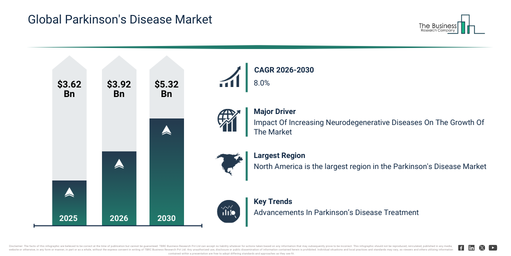
    The market for Parkinson’s disease has experienced robust expansion over recent years. It is anticipated to expand from $3.62 billion in 2025 to $3.92 billion in 2026, showcasing a compound annual growth rate (CAGR) of 8.2%. The historical increase in this market can be linked to a restricted array of treatment choices for disease progression, a dependence on levodopa-centric therapeutic approaches, prolonged diagnosis periods due to symptom similarities, a deficit of specialized movement disorder clinics, and inconsistent access to sophisticated surgical interventions.

    The parkinson’s disease market is anticipated to experience substantial expansion over the upcoming years. This market is projected to reach a valuation of $5.32 billion by 2030, exhibiting a compound annual growth rate (CAGR) of 8.0%. Key drivers for this projected growth include the advancement of new dopamine and non-dopamine treatments, the rising number of elderly individuals, the greater uptake of deep brain stimulation techniques, an increased emphasis on tailored medical strategies, and the proliferation of specialized neurology clinics. Significant trends anticipated during this period encompass the growing acceptance of multi-drug regimens, the wider application of deep brain stimulation interventions, an increase in early detection and treatment, the broadening of comprehensive parkinson’s care initiatives, and enhanced symptom control via individualized therapy plans.

    Get A Free Sample Report With In-Depth Market Insights:

    https://thebusinessresearchcompany.com/sample_request?id=86194287&type=smp&name=Parkinson%27s%20Disease%20Market%20Report%202026&utm_source=Blogs&utm_medium=Paid&utm_campaign=Nov_PR

    Parkinson’s Disease Market Growth Factors Behind Sustained Expansion

    The rising prevalence of neurodegenerative diseases is expected to propel the growth of the parkinson’s disease market. Neurodegenerative diseases are disorders characterized by the progressive degeneration and loss of function of neurons in the brain and nervous system. The increasing occurrence of these conditions is attributed to factors such as an aging population, genetic predisposition, environmental influences, improved diagnosis, rising chronic health conditions, and lifestyle changes. Parkinson’s disease significantly contributes to advancing the understanding of neurodegenerative diseases by providing critical insights into their underlying mechanisms, potential therapeutic targets, and the development of innovative treatment approaches. For instance, in 2025, according to the National Institutes of Health (NIH), a US-based government’s primary medical research agency, the projected prevalence of Parkinson’s disease for 2050 is estimated at 267 cases per 100,000 people, with a range of 230 to 320. Therefore, the growing prevalence of neurodegenerative diseases is driving the expansion of the parkinson’s disease market.

    Parkinson’s Disease Market Segment Breakdown: Which Categories Lead On Revenue?

    The parkinson’s disease market covered in this report is segmented –

    1) By Drug Class: Dopamine Agonists, Catechol-O-Methyltransferase Inhibitors, Monoamine Oxidase B Inhibitors, Anticholinergics, Carbidopa-Levodopa, Other Drug Classes

    2) By Route Of Administration: Oral, Injectable, Intestinal infusion, Subcutaneous, Other Routes Of Administrations

    3) By Distribution Channel: Retail Pharmacies, Hospital Pharmacies, Online Pharmacies

    4) By Patient Care Setting: Clinics, Hospitals

    Subsegments:

    1) By Dopamine Agonists: Ergot Derivatives, Non-Ergot Derivatives

    2) By Catechol-O-Methyltransferase (COMT) Inhibitors: Entacapone, Tolcapone, Opicapone

    3) By Monoamine Oxidase B (MAO-B) Inhibitors: Selegiline, Rasagiline, Safinamide

    4) By Anticholinergics: Trihexyphenidyl, Benztropine, Procyclidine

    5) By Carbidopa-Levodopa: Immediate-Release Formulation, Extended-Release Formulation, Inhaled And Intestinal Gel Formulations

    6) By Other Drug Classes: Amantadine And Derivatives, Adenosine A2A Receptor Antagonists, Glutamate Antagonists

    Parkinson’s Disease Market Strategic Trends: What Defines The Next Growth Phase?

    Leading companies in the parkinson’s disease market are dedicated to creating innovative solutions, such as levodopa-based therapy, aimed at enhancing motor function and ensuring continuous symptom management for individuals with advanced parkinson’s disease. Levodopa-based therapy functions by employing levodopa, a drug that converts into dopamine within the brain, thereby improving motor capabilities and alleviating Parkinson’s disease symptoms.

    Parkinson’s Disease Market Leading Players And Competitive Positioning

    Major companies operating in the parkinson’s disease market are Roche Holding AG, AbbVie Inc., Novo Nordisk A/S, Takeda Pharmaceutical Company Limited, UCB S.A., Eisai Co. Ltd., Kyowa Kirin Co. Ltd., Amneal Pharmaceuticals Inc., Neurocrine Biosciences Inc., Supernus Pharmaceuticals Inc., Sunovion Pharmaceuticals Inc., Intracellular Therapies Inc., Voyager Therapeutics Inc., Sage Therapeutics Inc., Adamas Pharmaceuticals Inc., Sun Pharma Advanced Research Company Ltd., Neuraly Inc., Mitsubishi Tanabe Pharma Corporation, Athira Pharma Inc., VistaGen Therapeutics Inc.

    View The Full Parkinson’s Disease Market Report:

    https://thebusinessresearchcompany.com/report/parkinsons-disease-global-market-report?utm_source=Blogs&utm_medium=Paid&utm_campaign=Nov_PR

    Parkinson’s Disease Market Geographic Analysis: Where Is Demand Rising Fastest?

    North America was the largest region in the parkinson’s disease market in 2025. Asia-Pacific is expected to be the fastest-growing region in the forecast period. The regions covered in the parkinson’s disease market report are Asia-Pacific, South East Asia, Western Europe, Eastern Europe, North America, South America, Middle East, Africa.

    Reach Out To Our Team:

    The Business Research Company: https://www.thebusinessresearchcompany.com/

    Americas: +1 310-496-7795

    Asia: +44 7882 955267 & +91 8897263534

    Europe: +44 7882 955267

    Email us at: marketing@tbrc.info

    Follow us on:

    LinkedIn: https://in.linkedin.com/company/the-business-research-company

    YouTube: https://www.youtube.com/channel/UC24_fI0rV8cR5DxlCpgmyFQ

    Global Market Model: https://www.thebusinessresearchcompany.com/global-market-model