Blog

  • Lung Cancer Drugs Market Growth Through 2030 Creates New Strategic Opportunities

    Lung Cancer Drugs Market Growth Through 2030 Creates New Strategic Opportunities

    Enhanced with market attractiveness analysis, total addressable market evaluation, company benchmarking matrices, interactive Excel dashboards, expanded supply chain intelligence, emerging startup coverage, and detailed product insights, The Business Research Company’s 2026 market reports deliver more actionable and strategically valuable research.

    Lung Cancer Drugs Market Size And Revenue Forecast Through 2030

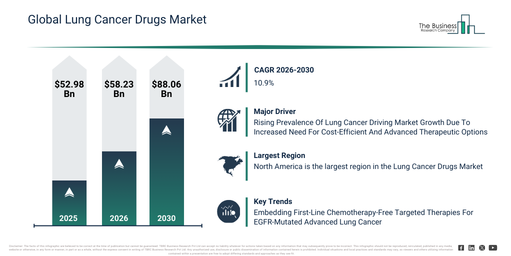
    The lung cancer drugs market has seen significant growth over recent years, with projections indicating an increase from $52.98 billion in 2025 to $58.23 billion in 2026, reflecting a compound annual growth rate (CAGR) of 9.9%. This historical expansion is driven by factors such as elevated smoking rates, a growing incidence of lung cancer, broad usage of chemotherapy, the proliferation of oncology hospitals, and improved accessibility to generic cancer medications.

    The lung cancer drugs sector is anticipated to experience significant expansion in the coming years, reaching an estimated $88.06 billion by 2030 with a compound annual growth rate of 10.9%. This projected increase is driven by several factors, including the advancement of targeted and immunotherapy treatments, a higher prevalence of lung cancer screening programs, growing financial allocations for cancer care, an older demographic, and a broader range of combination therapy approvals. Key developments shaping this period involve a greater reliance on targeted lung cancer treatments, more frequent use of drug combinations, a heightened emphasis on treating early-stage disease, the further adoption of personalized medicine approaches, and an increased number of oncology drugs being administered in hospital environments.

    Download A Free Sample Report For Comprehensive Market Insights:

    https://www.thebusinessresearchcompany.com/sample.aspx?id=2567&type=smp&utm_source=BlogsPR&utm_medium=Paid&utm_campaign=Jul_PR

    Lung Cancer Drugs Market Growth Drivers: What Factors Are Accelerating Expansion?

    The increase in lung cancer prevalence is anticipated to propel the expansion of the lung cancer drugs market moving forward. Lung cancer, a life-threatening malignancy, demands prompt and effective intervention through chemotherapy, targeted therapies, immunotherapies, and combination treatments to enhance survival rates. This rise is largely fueled by environmental pollution, carcinogen exposure, and genetic predisposition, which trigger lung cell mutations even among non-smokers. The growing incidence of lung cancer fuels the market for lung cancer drugs by accelerating the need for advanced therapeutic options that extend life expectancy, slow tumor growth, and improve patient quality of life. For example, as reported in January 2023 by the American Cancer Society—a U.S.-based nonprofit dedicated to cancer eradication—an estimated 238,340 new lung cancer cases (117,550 in males and 120,790 in females) and approximately 127,070 lung cancer deaths (67,160 in males and 59,910 in females) were projected for 2023. Consequently, the climbing prevalence of lung cancer is powering the growth of the lung cancer drugs market.

    Lung Cancer Drugs Market Segment Landscape And Growth Potential

    The lung cancer drugs market covered in this report is segmented –

    1) By Drugs: Gemzar, Paraplatin, Taxotere, Navelbine, Avastin, Tarceva, Iressa, Other Drugs

    2) By Disease Type: Small cell lung cancer (SCLC), Non-small cell lung cancer (NSCLC)

    3) By End User: Hospitals, Clinics, Other End-Users

    Lung Cancer Drugs Market Trends: What Is Shaping Future Industry Growth?

    Major players in the lung cancer drugs market are increasingly focusing on innovation, with a particular emphasis on creating chemotherapy-free combination therapies aimed at EGFR mutations. These formulations are designed to boost treatment effectiveness, lower systemic toxicity, and enhance the quality of life for patients suffering from advanced non-small cell lung cancer (NSCLC). Such therapies support precision oncology by specifically targeting the molecular pathways that drive tumor growth. In August 2024, for instance, Johnson & Johnson, a pharmaceutical company based in the United States, secured U.S. FDA approval for the combination of Rybrevant and Lazcluze as a first-line treatment for advanced NSCLC with EGFR mutations, avoiding the use of chemotherapy. This regimen works through dual inhibition of EGFR and MET pathways, resulting in stronger anti-tumor effects while reducing the side effects typically linked to conventional chemotherapy. The approval underscores a rising movement in the lung cancer market toward personalized, targeted treatment strategies that improve clinical outcomes and the patient experience by lessening dependence on traditional chemotherapy approaches.

    Lung Cancer Drugs Market Competitive Landscape: Who Are The Leading Companies?

    Major companies operating in the lung cancer drugs market are Bristol-Myers Squibb Company, Merck & Co. Inc., F. Hoffmann-La Roche Ltd., Novartis AG, Pfizer Inc., GlaxoSmithKline plc, Sanofi S.A., Sun Pharmaceutical Industries Ltd., Celgene Corporation, Mylan N.V., Ono Pharmaceutical Co. Ltd., Teva Pharmaceutical Industries Ltd., Takeda Pharmaceutical Company Limited, Ziopharm Oncology Inc., Menarini Group, AstraZeneca PLC, AbbVie Inc., Bayer AG, Boehringer Ingelheim International GmbH, Daiichi Sankyo Company Limited, Eli Lilly and Company Inc., Johnson & Johnson, Amgen Inc., Array BioPharma Inc., Astellas Pharma Inc., Clovis Oncology Inc., Eisai Co. Ltd., Exelixis Inc., Genentech Inc., Gilead Sciences Inc., Incyte Corporation, Ipsen Biopharmaceuticals Inc., Kyowa Kirin Co. Ltd., Loxo Oncology Inc., MedImmune LLC

    Access The Complete Lung Cancer Drugs Market Report:

    https://www.thebusinessresearchcompany.com/report/lung-cancer-drugs-global-market-report?utm_source=BlogsPR&utm_medium=Paid&utm_campaign=Jul_PR

    Lung Cancer Drugs Market Largest Region: Which Geography Holds The Highest Market Share?

    North America was the largest region in the lung cancer drugs market in 2025. Middle East is expected to be the fastest-growing region in the lung cancer drugs market during the forecast period. The regions covered in the lung cancer drugs market report are Asia-Pacific, South East Asia, Western Europe, Eastern Europe, North America, South America, Middle East, Africa.

    Get in touch with us:

    The Business Research Company: https://www.thebusinessresearchcompany.com/?utm_source=BlogsPR&utm_medium=Paid&utm_campaign=home_page_test

    Americas: +1 310-496-7795

    Asia: +44 7882 955267 & +91 8897263534

    Europe: +44 7882 955267

    Email us at: marketing@tbrc.info

    Follow us on:

    LinkedIn: https://in.linkedin.com/company/the-business-research-company

    YouTube: https://www.youtube.com/channel/UC24_fI0rV8cR5DxlCpgmyFQ

    Global Market Model: https://www.thebusinessresearchcompany.com/global-market-model
  • Lumbosacral Radicular Pain Management Market Size Projected To Increase From $0.95 Billion To $1.17 Billion During The Forecast Period

    Lumbosacral Radicular Pain Management Market Size Projected To Increase From $0.95 Billion To $1.17 Billion During The Forecast Period

    Through market attractiveness analysis, total addressable market evaluation, company benchmarking matrices, interactive Excel dashboards, expanded supply chain intelligence, emerging startup coverage, and detailed product insights, The Business Research Company’s 2026 market reports provide more actionable and strategically valuable research.

    Lumbosacral Radicular Pain Management Market Growth From $0.95 Billion In 2026 To $1.17 Billion By 2030 At A CAGR Of 5.4%

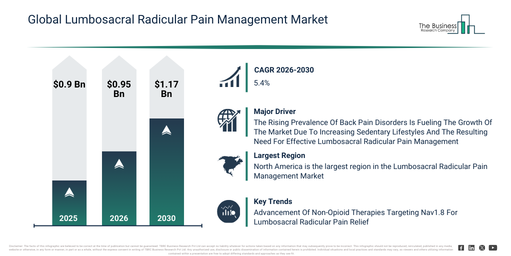
    The market for managing lumbosacral radicular pain has experienced notable expansion in recent times. Its valuation is projected to rise from $0.9 billion in 2025 to $0.95 billion in 2026, reflecting a compound annual growth rate (CAGR) of 5.7%. Historical growth has been driven by factors such as an increasing prevalence of spinal disc issues, dependence on medication-based pain management, delivery of pain care within hospital settings, a higher number of orthopedic visits, and the expansion of physical therapy offerings.

    The market for managing lumbosacral radicular pain is projected to experience robust expansion over the coming years. By 2030, its value is anticipated to reach $1.17 billion, reflecting a compound annual growth rate (CAGR) of 5.4%. This forecasted growth is driven by several key factors, including the rising number of elderly individuals, increased need for sustained pain relief, growing preference for non-invasive treatment options, broader use of home-based rehabilitation services, and continuous improvements in pain diagnostic technologies. Among the significant developments shaping the marketplace during this period are a heightened inclination toward multimodal pain management strategies, increased utilization of non-opioid medications, broader implementation of physical therapy-led interventions, stronger demand for procedures that are minimally invasive, and the integration of individualized pain management protocols.

    Download A Free Sample Report For Comprehensive Market Insights:

    https://www.thebusinessresearchcompany.com/sample.aspx?id=24592&type=smp&utm_source=BlogsPR&utm_medium=Paid&utm_campaign=Jul_PR

    Lumbosacral Radicular Pain Management Market Growth Factors Supporting Long-Term Expansion

    The anticipated expansion of the lumbosacral radicular pain management market is driven by the growing frequency of back pain disorders. These disorders encompass various conditions impacting the spine, back muscles, or nerves, resulting in discomfort or pain. This increase is largely attributed to sedentary lifestyles that weaken back muscles, leading to poor posture and ongoing pain. Management of lumbosacral radicular pain focuses on alleviating nerve root irritation in the lower back, thereby reducing pain and inflammation. It also helps restore mobility and enhances quality of life. A June 2024 report from the Australian Institute of Health and Welfare, an Australian government agency, indicated that in 2023, back problems ranked as the third leading cause of disease burden in Australia, accounting for 4.3% of the nation’s total disease burden. Thus, the rising incidence of back pain disorders fosters the growth of the lumbosacral radicular pain management market.

    Lumbosacral Radicular Pain Management Market Categorization By Product Type And Application

    The lumbosacral radicular pain management market covered in this report is segmented –

    1) By Medication: Non-Steroidal Anti-Inflammatory Drugs, Opioids, Antidepressants, Anticonvulsants, Steroids

    2) By Physical Therapy: Manual Therapy, Exercise Therapy, Electrotherapy, Thermal Therapy, Hydrotherapy

    3) By Route Of Administration: Oral, Topical

    4) By End-User: Hospital Pharmacy, Retail Pharmacy, Online Pharmacy

    Subsegments:

    1) By Non-Steroidal Anti-Inflammatory Drugs: Ibuprofen, Naproxen, Diclofenac, Celecoxib, Etoricoxib

    2) By Opioids: Tramadol, Oxycodone, Morphine, Hydrocodone, Fentanyl

    3) By Antidepressants: Amitriptyline, Nortriptyline, Duloxetine, Desvenlafaxine, Venlafaxine

    4) By Anticonvulsants: Gabapentin, Pregabalin, Carbamazepine, Lamotrigine, Topiramate

    5) By Steroids: Dexamethasone, Methylprednisolone, Prednisone, Triamcinolone, Hydrocortison

    Lumbosacral Radicular Pain Management Market Industry Trends Shaping Future Revenue Growth

    Leading firms within the lumbosacral radicular pain management sector are prioritizing the development of innovative therapies, including experimental oral NaV1.8 pain signal inhibitors, to provide a non-opioid solution for sustained pain relief. This investigational oral NaV1.8 pain signal inhibitor is a medication currently under trial that targets the NaV1.8 sodium channel, a crucial mechanism for transmitting pain signals via sensory nerves. For example, in December 2024, Vertex Pharmaceuticals, a biotechnology company based in the US, disclosed findings from its Phase 2 trial of suzetrigine for treating painful lumbosacral radiculopathy (LSR). The trial achieved its main objective, demonstrating a statistically significant and clinically meaningful decrease in pain relative to baseline among those receiving suzetrigine. The drug was generally well tolerated, with no serious adverse effects being observed. Vertex intends to account for the high placebo response in upcoming Phase 3 studies to more accurately evaluate the treatment’s effectiveness.

    Lumbosacral Radicular Pain Management Market Company Landscape And Strategic Competition

    Major companies operating in the lumbosacral radicular pain management market are Pfizer Inc., Johnson & Johnson Services Inc., Bayer AG, Sanofi SA, Bristol-Myers Squibb, AstraZeneca plc, Novartis AG, GSK plc, Medtronic plc, Eli Lilly and Company, Amgen Inc, Koninklijke Philips NV, Stryker Corporation, Teva Pharmaceutical Industries Ltd, Boston Scientific Corporation, Dr Reddy’s Laboratories Ltd, NuVasive Inc., Nobel Biocare Holdings AG, Ultradent Products Inc., Nevro Corp., Zynex Inc., Eliem Therapeutics, Vertebral Technologies Inc., Semnur Pharmaceuticals Inc.

    Access The Complete Lumbosacral Radicular Pain Management Market Report:

    https://www.thebusinessresearchcompany.com/report/lumbosacral-radicular-pain-management-global-market-report?utm_source=BlogsPR&utm_medium=Paid&utm_campaign=Jul_PR

    Lumbosacral Radicular Pain Management Market Regional Analysis: Which Region Leads By Revenue?

    North America was the largest region in the lumbosacral radicular pain management market in 2025. Asia-Pacific is expected to be the fastest-growing region in the forecast period. The regions covered in the lumbosacral radicular pain management market report are Asia-Pacific, South East Asia, Western Europe, Eastern Europe, North America, South America, Middle East, Africa.

    Get in touch with us:

    The Business Research Company: https://www.thebusinessresearchcompany.com/?utm_source=BlogsPR&utm_medium=Paid&utm_campaign=home_page_test

    Americas: +1 310-496-7795

    Asia: +44 7882 955267 & +91 8897263534

    Europe: +44 7882 955267

    Email us at: marketing@tbrc.info

    Follow us on:

    LinkedIn: https://in.linkedin.com/company/the-business-research-company

    YouTube: https://www.youtube.com/channel/UC24_fI0rV8cR5DxlCpgmyFQ

    Global Market Model: https://www.thebusinessresearchcompany.com/global-market-model
  • Lumbosacral Radicular Pain Market Growth Outlook Reveals A CAGR Of 5.7% And A Market Value Of $1.27 Billion By 2030

    Lumbosacral Radicular Pain Market Growth Outlook Reveals A CAGR Of 5.7% And A Market Value Of $1.27 Billion By 2030

    Delivering more actionable and strategically valuable research, The Business Research Company’s 2026 market reports feature market attractiveness analysis, total addressable market evaluation, company benchmarking matrices, interactive Excel dashboards, expanded supply chain intelligence, emerging startup coverage, and detailed product insights.

    Lumbosacral Radicular Pain Market Expansion Outlook: What Revenue Opportunities Lie Ahead?

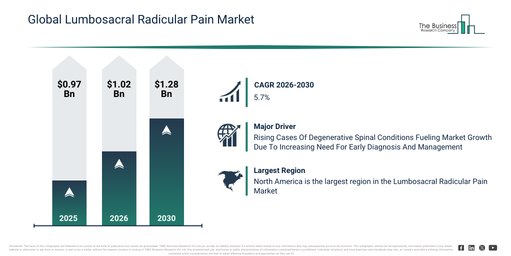
    In recent years, the market for lumbosacral radicular pain has experienced robust expansion. Projected to rise from $0.97 billion in 2025 to $1.02 billion in 2026, this growth reflects a compound annual growth rate (CAGR) of 6.0%. Historical progress has been driven by factors such as an aging demographic, spinal degenerative conditions, use of opioids for pain control, hospital-based pain management clinics, and the volume of orthopedic surgical procedures.

    Projections indicate that the lumbosacral radicular pain market will experience robust expansion in the coming years, reaching $1.28 billion by 2030, driven by a compound annual growth rate (CAGR) of 5.7%. This anticipated growth during the forecast period is fueled by the increasing uptake of non-opioid pain therapies, a rise in outpatient pain management procedures, the integration of digital tools for pain monitoring, advancements in minimally invasive spine technologies, and the broadening of rehabilitation programs. Key trends shaping this period include a greater emphasis on multimodal pain management approaches, a surge in interventional spine procedures, heightened demand for treatments that avoid opioids, an expansion of rehabilitation-focused care models, and a growing preference for minimally invasive interventions to address pain.

    Download A Free Sample Report For Comprehensive Market Insights:

    https://www.thebusinessresearchcompany.com/sample.aspx?id=24591&type=smp&utm_source=BlogsPR&utm_medium=Paid&utm_campaign=Jul_PR

    Lumbosacral Radicular Pain Market Demand Drivers Creating New Revenue Opportunities

    The increasing prevalence of degenerative spinal conditions is expected to propel the growth of the lumbosacral radicular pain market going forward. Degenerative spinal conditions refer to a group of disorders caused by the gradual wear and tear of the spine over time. The rise in degenerative spinal conditions is due to aging populations and lifestyle factors that increase the risk of spinal wear and nerve compression, leading to higher demand for diagnosis and treatment. Lumbosacral radicular pain helps identify underlying degenerative spinal conditions by signaling nerve root irritation or compression, guiding clinical evaluation and management. For instance, in May 2023, according to the University of Sydney, an Australia-based public university, it is anticipated that more than 800 million people worldwide will suffer from back discomfort by 2050. Therefore, the increasing prevalence of degenerative spinal conditions drives the growth of the lumbosacral radicular pain market.

    Lumbosacral Radicular Pain Market Driver: Rising Prevalence Of Obesity Driving The Market Growth Due To Sedentary Lifestyles And Dietary Changes

    The rising prevalence of obesity is expected to propel the growth of the lumbosacral radicular pain market going forward. Obesity refers to a medical condition characterized by excessive body fat accumulation, typically defined as having a body mass index of 30 or higher, which increases the risk of various health complications. The increasing prevalence of obesity is driven by sedentary lifestyles and processed food consumption patterns, as modern work environments increasingly involve prolonged sitting and desk-based activities while convenient access to high-calorie, nutrient-poor foods has become widespread in developed nations. Growing obesity directly supports higher incidence of lower back and leg pain caused by compressed nerve roots, as excess body weight places additional mechanical stress on the lumbar spine and surrounding structures, leading to nerve compression and inflammation. For instance, in May 2025, according to the Office for Health Improvement and Disparities, a UK-based government body, from 2023 to 2024, an estimated 64.5% of adults aged 18 and over in England were overweight or living with obesity, up from 64.0% in 2022 to 2023. Therefore, the rising prevalence of obesity is driving the growth of the lumbosacral radicular pain market.

    Lumbosacral Radicular Pain Market Segment Analysis And Revenue Opportunities

    The lumbosacral radicular pain market covered in this report is segmented –

    1) By Treatment Type: Pharmacological Treatment, Non-Pharmacological Treatment, Interventional Procedures

    2) By Route Of Administration: Oral, Topical, Injectable, Implantable

    3) By Distribution Channel: Hospital Pharmacies, Retail Pharmacies, Online Pharmacies

    4) By End User: Hospitals, Specialty Clinics, Rehabilitation Centers, Homecare Settings

    Subsegments:

    1) By Pharmacological Treatment: Nonsteroidal Anti-Inflammatory Drugs, Opioids, Anticonvulsants, Antidepressants, Muscle Relaxants, Corticosteroids

    2) By Non-Pharmacological Treatment: Physical Therapy, Exercise And Rehabilitation Programs, Chiropractic Care, Acupuncture, Cognitive Behavioral Therapy, Heat And Cold Therapy

    3) By Interventional Procedures: Epidural Steroid Injections, Radiofrequency Ablation, Nerve Root Blocks, Spinal Cord Stimulation, Minimally Invasive Decompression, Intrathecal Drug Delivery Systems

    Lumbosacral Radicular Pain Market Leading Players Shaping Industry Direction

    Major companies operating in the lumbosacral radicular pain market are Medtronic plc, Boston Scientific Corporation, Nevro Corp., SPR Therapeutics, Saluda Medical Pty Ltd., Nalu Medical Inc., Abbott Neuromodulation, Stryker Corporation, Zimmer Biomet Holdings Inc., Globus Medical Inc., NuVasive Inc., Orthofix Medical Inc., B. Braun Melsungen AG, Teleflex Incorporated, Merit Medical Systems Inc., Avanos Medical Inc., Halyard Health Inc., Terumo Corporation, Baxter International Inc., Fresenius Kabi AG, Hikma Pharmaceuticals PLC, Pfizer CentreOne, Teva Pharmaceutical Industries Ltd., Mallinckrodt Pharmaceuticals, Sun Pharmaceutical Industries Ltd., Lupin Limited, Zydus Lifesciences Ltd., Cipla Ltd., Dr. Reddy’s Laboratories Ltd., Amneal Pharmaceuticals Inc., Perrigo Company plc

    Access The Complete Lumbosacral Radicular Pain Market Report:

    https://www.thebusinessresearchcompany.com/report/lumbosacral-radicular-pain-global-market-report?utm_source=BlogsPR&utm_medium=Paid&utm_campaign=Jul_PR

    Lumbosacral Radicular Pain Market Geographic Distribution And Regional Opportunities

    North America was the largest region in the lumbosacral radicular pain market in 2025. The regions covered in the lumbosacral radicular pain market report are Asia-Pacific, South East Asia, Western Europe, Eastern Europe, North America, South America, Middle East, Africa.

    Get in touch with us:

    The Business Research Company: https://www.thebusinessresearchcompany.com/?utm_source=BlogsPR&utm_medium=Paid&utm_campaign=home_page_test

    Americas: +1 310-496-7795

    Asia: +44 7882 955267 & +91 8897263534

    Europe: +44 7882 955267

    Email us at: marketing@tbrc.info

    Follow us on:

    LinkedIn: https://in.linkedin.com/company/the-business-research-company

    YouTube: https://www.youtube.com/channel/UC24_fI0rV8cR5DxlCpgmyFQ

    Global Market Model: https://www.thebusinessresearchcompany.com/global-market-model
  • Losartan Potassium Active Pharmaceutical Ingredient (API) Market Forecast Highlights Expansion From $1.97 Billion To $2.54 Billion Through 2030

    Losartan Potassium Active Pharmaceutical Ingredient (API) Market Forecast Highlights Expansion From $1.97 Billion To $2.54 Billion Through 2030

    Enhanced with market attractiveness analysis, total addressable market evaluation, company benchmarking matrices, interactive Excel dashboards, expanded supply chain intelligence, emerging startup coverage, and detailed product insights, The Business Research Company’s 2026 market reports deliver more actionable and strategically valuable research.

    Losartan Potassium Active Pharmaceutical Ingredient (API) Market Growth Potential: How Will Market Size Change Through 2030?

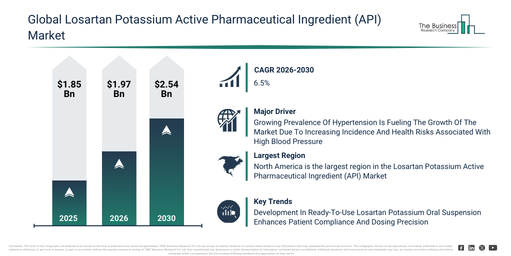
    The market for losartan potassium active pharmaceutical ingredient (API) has experienced robust expansion in recent years, increasing from $1.85 billion in 2025 to a projected $1.97 billion in 2026, reflecting a compound annual growth rate (CAGR) of 6.5%. This growth during the historic period has been driven by several factors, including a growing incidence of hypertension, the expiration of patents on branded medications, the expansion of generic pharmaceutical production, heightened demand for cardiovascular treatments, and the broadening of global pharmaceutical supply chains.

    The losartan potassium active pharmaceutical ingredient (API) market is anticipated to experience significant expansion over the upcoming years. By 2030, it is forecasted to reach a value of $2.54 billion, progressing at a compound annual growth rate (CAGR) of 6.5%. This projected growth during the forecast period is driven by several factors, including a rising global burden of cardiovascular diseases, heightened demand from emerging economies, improvements in API manufacturing techniques, a greater emphasis on eco-friendly pharmaceutical production, and the widening application of treatments for chronic kidney disease. Key trends shaping this period encompass a growing preference for generic losartan products, wider implementation of continuous flow API manufacturing methods, an increased focus on cost-effective antihypertensive APIs, broader utilization of losartan API within combination therapies, and a stronger dedication to manufacturing practices that meet stringent regulatory standards.

    Download A Free Sample Report For Comprehensive Market Insights:

    https://www.thebusinessresearchcompany.com/sample.aspx?id=24285&type=smp&utm_source=BlogsPR&utm_medium=Paid&utm_campaign=Jul_PR

    Losartan Potassium Active Pharmaceutical Ingredient (API) Market Expansion Supported By Key Demand Factors

    The expanding prevalence of hypertension is set to drive growth in the losartan potassium active pharmaceutical ingredient (API) market in the coming period. Hypertension, characterized by consistently elevated blood pressure, increases the risk of heart disease, stroke, and various other serious health issues. This rising occurrence of hypertension is associated with diets high in salt and processed foods, which cause fluid retention and put greater strain on the heart. By blocking angiotensin II—a substance that constricts blood vessels—losartan potassium effectively manages hypertension. This action helps relax and dilate the vessels, thereby reducing blood pressure and lessening the workload on the heart. As an example, in September 2025, the World Health Organization (WHO), a Geneva, Switzerland-based global health authority, reported that around 1.4 billion adults aged 30 to 79 had hypertension in 2024, up from approximately 1.3 billion in 2022. Consequently, the increasing incidence of hypertension is fueling expansion in the losartan potassium active pharmaceutical ingredient (API) market.

    Losartan Potassium Active Pharmaceutical Ingredient (API) Market Segmentation And Category Breakdown

    The losartan potassium active pharmaceutical ingredient (api) market covered in this report is segmented –

    1) By Product Type: Tablet, Capsule, Other Product Types

    2) By Production Method: Synthetic Route, Continuous Flow Production

    3) By Distribution Channel: Online Pharmacies, Hospital Pharmacies, Retail Pharmacies, Other Distribution Channels

    4) By Application: Hypertension, Heart Failure, Chronic Kidney Diseases, Other Applications

    5) By End-User: Hospitals, Clinics, Pharmaceutical Companies

    Subsegments:

    1) By Tablet: Immediate-Release Tablets, Extended-Release Tablets, Film-Coated Tablets, Orally Disintegrating Tablets

    2) By Capsule: Hard Gelatin Capsules, Modified-Release Capsules

    3) By Other Product Types: Bulk Active Pharmaceutical Ingredient (API) Powder, Granules For Suspension, Pre-Formulated Intermediates

    Losartan Potassium Active Pharmaceutical Ingredient (API) Market Growth Trends Influencing Competitive Dynamics

    Key players in the losartan potassium active pharmaceutical ingredient (API) market are concentrating on creating novel products and securing regulatory approvals, including losartan potassium oral suspension, to improve patient adherence and broaden treatment possibilities. This oral suspension is a liquid version of losartan potassium, designed for patients who have difficulty swallowing pills. As an example, in March 2025, Scienture Holdings Inc., a biopharmaceutical firm based in the United States, obtained approval from the Food and Drug Administration (FDA) for Arbli. Arbli is a ready-to-use liquid formulation indicated for hypertension, reducing stroke risk in hypertensive patients with left ventricular hypertrophy, and managing diabetic nephropathy in individuals with type 2 diabetes. It provides accurate dosing without the need for compounding and is supplied as a 165 mL peppermint-flavored suspension (10 mg/mL), featuring an 18-month shelf life when stored at room temperature.

    Losartan Potassium Active Pharmaceutical Ingredient (API) Market Competitive Analysis Of Major Industry Participants

    Major companies operating in the losartan potassium active pharmaceutical ingredient (api) market are Teva Pharmaceutical Industries Ltd, Sun Pharmaceutical Industries Ltd, Aurobindo Pharma Ltd, Dr. Reddy’s Laboratories, Cadila Pharmaceuticals Ltd, Lupin Ltd, Zydus Lifesciences Ltd, Alkem Laboratories Ltd, IPCA Laboratories Ltd, Alembic Pharmaceuticals Ltd, Granules India Limited, Vasudha Pharma Chem Ltd, IOL Chemicals and Pharmaceuticals Limited, Unichem Laboratories Ltd, Global Pharma Tek, Hetero Drugs Ltd, Manus Aktteva Biopharma LLP, Wellona Pharma, Atom pharma, Sinoway Industrial Co. Ltd, Cerata Pharmaceuticals LLP

    Access The Complete Losartan Potassium Active Pharmaceutical Ingredient (API) Market Report:

    https://www.thebusinessresearchcompany.com/report/losartan-potassium-active-pharmaceutical-ingredient-api-global-market-report?utm_source=BlogsPR&utm_medium=Paid&utm_campaign=Jul_PR

    Losartan Potassium Active Pharmaceutical Ingredient (API) Market Largest Region By Revenue And Market Share

    North America was the largest region in the losartan potassium API market in 2025. Asia-Pacific is expected to be the fastest-growing region in the forecast period. The regions covered in the losartan potassium active pharmaceutical ingredient (api) market report are Asia-Pacific, South East Asia, Western Europe, Eastern Europe, North America, South America, Middle East, Africa.

    Get in touch with us:

    The Business Research Company: https://www.thebusinessresearchcompany.com/?utm_source=BlogsPR&utm_medium=Paid&utm_campaign=home_page_test

    Americas: +1 310-496-7795

    Asia: +44 7882 955267 & +91 8897263534

    Europe: +44 7882 955267

    Email us at: marketing@tbrc.info

    Follow us on:

    LinkedIn: https://in.linkedin.com/company/the-business-research-company

    YouTube: https://www.youtube.com/channel/UC24_fI0rV8cR5DxlCpgmyFQ

    Global Market Model: https://www.thebusinessresearchcompany.com/global-market-model
  • Local Anesthesia Drugs Market Expected To Reach $6.15 Billion By 2030 As Growth Accelerates At 5.6% CAGR

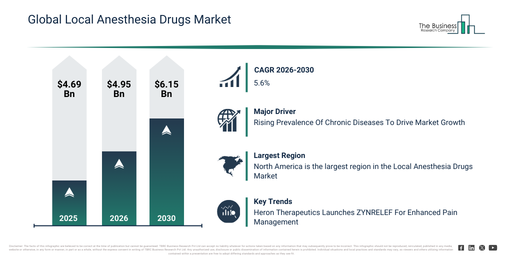
    Local Anesthesia Drugs Market Expected To Reach $6.15 Billion By 2030 As Growth Accelerates At 5.6% CAGR

    Through market attractiveness analysis, total addressable market evaluation, company benchmarking matrices, interactive Excel dashboards, expanded supply chain intelligence, emerging startup coverage, and detailed product insights, The Business Research Company’s 2026 market reports provide more actionable and strategically valuable research.

    Local Anesthesia Drugs Market Value Analysis: What Growth Is Expected Over The Forecast Period?

    The market for local anesthesia drugs has experienced robust expansion in recent years. Projections indicate an increase from $4.69 billion in 2025 to $4.95 billion in 2026, reflecting a compound annual growth rate (CAGR) of 5.6%. This historic growth can be explained by several factors: a higher volume of outpatient surgeries, an uptick in musculoskeletal disorders, more dental procedures being performed, the broadening of hospital facilities, and greater public awareness regarding pain management alternatives.

    The local anesthesia drugs market is anticipated to experience significant expansion in the coming years. By 2030, its value is projected to reach $6.15 billion, driven by a compound annual growth rate (CAGR) of 5.6%. This forecasted growth is fueled by factors such as the uptake of advanced anesthetic formulations, the incorporation of robotics into surgical procedures, an increasing elderly population, the growth of ambulatory surgical centers, and the creation of sustained-release anesthetic technologies. Key trends shaping this period include a shift toward minimally invasive procedures, a growing preference for outpatient surgeries, the innovation of long-acting local anesthetics, the proliferation of pain management clinics, and an heightened emphasis on patient safety and comfort.

    Download A Free Sample Report For Comprehensive Market Insights:

    https://www.thebusinessresearchcompany.com/sample.aspx?id=8021&type=smp&utm_source=BlogsPR&utm_medium=Paid&utm_campaign=Jul_PR

    Local Anesthesia Drugs Market Growth Drivers And Industry Catalysts

    The expansion of the local anesthesia drugs market is anticipated to be driven by the rising incidence of chronic diseases in the coming years. Chronic disease is defined as a medical condition persisting for three months or longer, which may worsen over time. Such conditions frequently require surgical procedures, thereby boosting the need for local anesthesia medications. These drugs are essential for managing pain during surgeries linked to chronic illnesses, enhancing patient comfort. Contributing factors like an aging population, progress in surgical methods, and a growing emphasis on outpatient procedures are also fueling demand for local anesthesia drugs. For example, in January 2024, the American Cancer Society (ACS), a US-based nonprofit dedicated to cancer research and awareness, reported that the United States is expected to face about 2,001,140 new cancer cases and roughly 611,720 cancer deaths in 2024—approximately 1,680 fatalities per day. Consequently, the growing prevalence of chronic diseases is propelling the local anesthesia drugs market forward.

    Local Anesthesia Drugs Market Segment Outlook: Which Categories Are Expanding The Fastest?

    The local anesthesia drugs market covered in this report is segmented –

    1) By Type: Bupivacaine, Lidocaine, Benzocaine, Ropivacaine, Prilocaine, Chloroprocaine, Other Types

    2) By Mode Of Administration: Injectable, Surface Anesthetic

    3) By Distribution Channel: Hospital Pharmacy, Pharmacy Stores, Other Channels

    Local Anesthesia Drugs Market Trends Influencing Long-Term Demand

    Major players in the local anesthesia drugs sector are focusing on the creation of dual-acting local anesthetics to maintain their competitive edge in the market. By blocking sensory nerves to produce numbness while simultaneously offering anti-inflammatory benefits or prolonged anesthesia, these agents deliver effective pain control. Such a dual mechanism proves especially valuable in surgical settings and for the management of acute pain. For example, Heron Therapeutics, Inc., a biotechnology firm based in the United States, introduced ZYNRELEF in January 2024 following FDA approval. This formulation pairs bupivacaine with a small amount of meloxicam to achieve superior pain relief. According to findings from Phase 3 clinical trials, it substantially decreases pain and minimizes dependence on opioid medications for up to 72 hours following surgery.

    Local Anesthesia Drugs Market Key Companies And Competitive Benchmarking

    Major companies operating in the local anesthesia drugs market are Hikma Pharmaceuticals PLC, Fresenius SE & Co. KGaA, Glenmark Pharmaceuticals Limited, B. Braun Melsungen AG, Pacira BioSciences Inc., Pfizer Inc., Septodont, Teva Pharmaceutical Industries Limited, Aspen Pharmacare Holdings Limited, Sagent Pharmaceuticals Inc., Mylan N.V., Akorn Operating Company LLC, Endo International PLC, Abbott Laboratories, Anesiva Inc., Baxter International Inc., Dentsply Sirona Inc., Jiangsu Hengrui Medicine Co. Ltd., Johnson & Johnson, Lannett Company Inc., Lupin Limited, Alembic Pharmaceuticals, Torrent Pharmaceuticals, Cadila Healthcare, Indoco Remedies, Jubilant Life Sciences, Zydus Cadila, Wockhardt Ltd., Par Pharmaceutical, West-Ward Pharmaceuticals Corp.

    Access The Complete Local Anesthesia Drugs Market Report:

    https://www.thebusinessresearchcompany.com/report/local-anesthesia-drugs-global-market-report?utm_source=BlogsPR&utm_medium=Paid&utm_campaign=Jul_PR

    Local Anesthesia Drugs Market Regional Analysis And Leading Geography

    North America was the largest region in the local anesthesia drugs market in 2025. Asia-Pacific is expected to be the fastest-growing region in the local anesthesia drugs market report during the forecast period. The regions covered in the local anesthesia drugs market report are Asia-Pacific, South East Asia, Western Europe, Eastern Europe, North America, South America, Middle East, Africa.

    Get in touch with us:

    The Business Research Company: https://www.thebusinessresearchcompany.com/?utm_source=BlogsPR&utm_medium=Paid&utm_campaign=home_page_test

    Americas: +1 310-496-7795

    Asia: +44 7882 955267 & +91 8897263534

    Europe: +44 7882 955267

    Email us at: marketing@tbrc.info

    Follow us on:

    LinkedIn: https://in.linkedin.com/company/the-business-research-company

    YouTube: https://www.youtube.com/channel/UC24_fI0rV8cR5DxlCpgmyFQ

    Global Market Model: https://www.thebusinessresearchcompany.com/global-market-model
  • Liver Health Supplements Market Set To Grow From $11.59 Billion In 2026 To $14.82 Billion By 2030 At A CAGR Of 6.3%

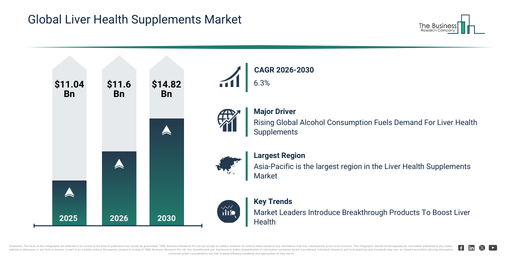
    Liver Health Supplements Market Set To Grow From $11.59 Billion In 2026 To $14.82 Billion By 2030 At A CAGR Of 6.3%

    Delivering more actionable and strategically valuable research, The Business Research Company’s 2026 market reports feature market attractiveness analysis, total addressable market evaluation, company benchmarking matrices, interactive Excel dashboards, expanded supply chain intelligence, emerging startup coverage, and detailed product insights.

    Liver Health Supplements Market Size Forecast: How Large Could The Market Become By 2030?

    The market for liver health supplements has experienced robust expansion over the last several years. Projected figures show an increase from $11.04 billion in 2025 to $11.6 billion in 2026, reflecting a compound annual growth rate (CAGR) of 5.1%. This historical growth was driven by factors such as heightened awareness surrounding liver diseases, a greater uptake of herbal supplements, a rise in liver disorders tied to lifestyle choices, an extended network of retail pharmacies, and the availability of supplements in various forms.

    The liver health supplements market is projected to experience robust expansion over the coming years, with its value anticipated to reach $14.82 billion by 2030, reflecting a compound annual growth rate (CAGR) of 6.3%. This forecasted growth is driven by several factors, including a growing preference for customized liver health supplements, their incorporation into digital health platforms, a heightened focus on preventive healthcare, expanded e-commerce channels for supplement sales, and advancements in functional ingredients. Key developments shaping the market during this period encompass an emphasis on liver detoxification, a shift toward natural and herbal supplement options, the rise of personalized nutrition and supplementation, the integration of immune support features, and the broader trend of functional health and wellness.

    Download A Free Sample Report For Comprehensive Market Insights:

    https://www.thebusinessresearchcompany.com/sample.aspx?id=12953&type=smp&utm_source=BlogsPR&utm_medium=Paid&utm_campaign=Jul_PR

    Liver Health Supplements Market Opportunity Drivers: What Is Creating New Revenue Potential?

    The growing intake of alcoholic beverages is anticipated to boost the expansion of the liver health supplements market in the coming period. Alcohol consumption involves the ingestion of drinks containing ethanol as the active component. Liver health supplements may benefit individuals with high alcohol intake by aiding the liver, which plays a key role in eliminating toxins from the body. Products featuring ingredients like milk thistle, dandelion root, and kudzu root can assist liver function through enhanced detoxification and reduced inflammation. As an example, in February 2024, the Australian Institute of Health and Welfare, a government agency based in Australia, reported that during 2022–2023, roughly 31% of people aged 14 and older, equating to 6.6 million individuals, participated in alcohol consumption that endangered their health. Consequently, the rising consumption of alcohol is fueling the growth of the liver health supplements market.

    The increasing occurrence of chronic liver conditions is expected to drive the liver health supplements market forward in the future. Chronic liver diseases encompass a range of long-term, often progressive, and potentially serious medical issues that impact the liver’s structure and function over an extended duration. Liver health supplements are frequently utilized as complementary or supportive tools in managing these diseases. Although these supplements do not replace medical treatment or lifestyle adjustments, they can be integrated into a holistic care strategy to promote liver function and overall liver wellness. For instance, in April 2024, the Office for Health Improvement and Disparities, a UK government department, noted that hospital admission rates for liver disease have steadily increased, reaching 155.2 per 100,000 population in the financial year ending 2023, with a range between 152.9 and 157.5. This represents a rise from 150.6 (ranging from 148.2 to 152.9) in the prior year. Thus, the rising prevalence of chronic liver diseases is propelling the growth of the liver health supplements market.

    Liver Health Supplements Market Segment Landscape: Which Areas Lead Market Development?

    The liver health supplements market covered in this report is segmented –

    1) By Product: Vitamin And Minerals, Herbal Supplements, Other Products

    2) By Nature: Organic, Conventional

    3) By Form: Dry, Tablets, Powder, Liquid

    4) By Distribution Channel: Hospital Pharmacies, Retail Pharmacies, Online Pharmacies

    Subsegments:

    1) By Vitamin And Minerals: Vitamin E, Vitamin C, B-complex Vitamins, Minerals

    2) By Herbal Supplements: Milk Thistle, Dandelion Root, Turmeric, Artichoke Extract

    3) By Other Products: Amino Acids, Probiotics, Fatty Acids

    Liver Health Supplements Market Innovation Trends Driving Future Development

    Key industry players within the liver health supplements sector are rolling out novel products to maintain their competitive standing. There is a growing trend toward advanced supplement innovations because they aid in the regeneration of liver cells, thereby enhancing hepatic performance. A case in point is March 2023, when Evogen Nutrition, a US-based firm focused on healthy lifestyle nutrition, introduced Evogen Liver Longer—a new dietary formulation aimed at bolstering liver well-being. This product is crafted for complete liver support and features a blend of liver-nourishing components, such as tauroursodeoxycholic acid (TUDCA), siphons, and milk thistle extract, offering robust antioxidant protection to safeguard and elevate liver function.

    Liver Health Supplements Market Industry Leaders And Market Competition

    Major companies operating in the liver health supplements market are Amway Corp., Balchem Corporation, Himalaya Wellness Company, NOW Foods Inc., Metagenics Inc., Aker BioMarine ASA, Enzymedica Inc., Jarrow Formulas Inc., Garden of Life, Designs for Health Inc., Nature’s Way Products LLC, Swanson Healthcare Products Inc., Irwins Natural, Integria Healthcare Pty Ltd., Integrative Therapeutics Inc., Premier Research Labs, Gaia Herbs Inc., Pure Encapsulations Inc., Solgar Inc., Renew Life, NutraBio, Nature’s Bounty Inc., Nutralife Health Products Inc., Organifi, Terry Naturally Vitamins, Natures Craft, Source Naturals Inc., America’s Finest Inc.

    Access The Complete Liver Health Supplements Market Report:

    https://www.thebusinessresearchcompany.com/report/liver-health-supplements-global-market-report?utm_source=BlogsPR&utm_medium=Paid&utm_campaign=Jul_PR

    Liver Health Supplements Market Geographic Analysis: Where Is Demand Growing The Fastest?

    Asia-Pacific was the largest region in the liver health supplements market in 2025. North America is expected to be the fastest-growing region in the forecast period. The regions covered in the liver health supplements market report are Asia-Pacific, South East Asia, Western Europe, Eastern Europe, North America, South America, Middle East, Africa.

    Get in touch with us:

    The Business Research Company: https://www.thebusinessresearchcompany.com/?utm_source=BlogsPR&utm_medium=Paid&utm_campaign=home_page_test

    Americas: +1 310-496-7795

    Asia: +44 7882 955267 & +91 8897263534

    Europe: +44 7882 955267

    Email us at: marketing@tbrc.info

    Follow us on:

    LinkedIn: https://in.linkedin.com/company/the-business-research-company

    YouTube: https://www.youtube.com/channel/UC24_fI0rV8cR5DxlCpgmyFQ

    Global Market Model: https://www.thebusinessresearchcompany.com/global-market-model
  • Liver Cancer Therapeutics Market Opportunities Are Emerging Beyond Traditional Growth Areas

    Liver Cancer Therapeutics Market Opportunities Are Emerging Beyond Traditional Growth Areas

    Enhanced with market attractiveness analysis, total addressable market evaluation, company benchmarking matrices, interactive Excel dashboards, expanded supply chain intelligence, emerging startup coverage, and detailed product insights, The Business Research Company’s 2026 market reports deliver more actionable and strategically valuable research.

    Liver Cancer Therapeutics Market Revenue Outlook: What CAGR Is Expected Through 2030?

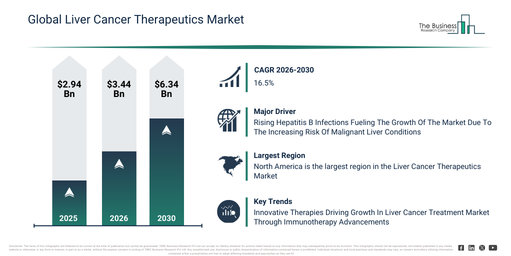
    The liver cancer therapeutics market has experienced significant expansion in recent years, with projections indicating an increase from $2.94 billion in 2025 to $3.44 billion in 2026, reflecting a compound annual growth rate (CAGR) of 16.8%. This historical growth has been driven by factors such as the escalating worldwide prevalence of liver cancer, the suboptimal efficacy of traditional chemotherapy, heightened awareness surrounding early detection, the proliferation of oncology treatment facilities, and the regulatory clearance of targeted therapeutic agents.

    The market for liver cancer therapeutics is projected to experience strong expansion in the coming years, with its value anticipated to reach $6.34 billion by 2030, reflecting a compound annual growth rate (CAGR) of 16.5%. This forecast period growth is driven by factors such as the expansion of immuno-oncology pipelines, a rising frequency of chronic liver conditions, progress in biomarker-based therapies, higher spending on cancer treatment, and the broadening of personalized oncology strategies. Key trends shaping this period include a greater incorporation of immunotherapy for liver cancer, a surge in the application of targeted therapies for advanced stages, a heightened preference for combination treatment plans, the advancement of precision medicine techniques, and an uptick in clinical trials focused on innovative liver cancer medications.

    Download A Free Sample Report For Comprehensive Market Insights:

    https://www.thebusinessresearchcompany.com/sample.aspx?id=24283&type=smp&utm_source=BlogsPR&utm_medium=Paid&utm_campaign=Jul_PR

    Liver Cancer Therapeutics Market Growth Momentum: Which Factors Are Influencing Demand?

    The growing prevalence of hepatitis B infections is expected to drive expansion in the liver cancer therapeutics market. This infection involves a viral condition caused by the hepatitis B virus (HBV), which predominantly impacts the liver and may result in both acute and chronic health complications, such as liver cancer. Contributing factors include heightened injection drug use, which facilitates disease transmission through the sharing of contaminated needles and syringes. Liver cancer treatments are necessary for hepatitis B cases because persistent chronic infection triggers ongoing liver inflammation and cellular harm, substantially elevating the likelihood of developing malignant liver conditions over time. As an example, data from the World Health Organization, a health agency based in Switzerland, indicated in July 2025 that approximately 1.2 million new HBV infections occur worldwide each year. Consequently, the increasing rate of hepatitis B infections is set to enhance the liver cancer therapeutics market’s growth.

    Liver Cancer Therapeutics Market Segments: Where Are The Largest Growth Opportunities?

    The liver cancer therapeutics market covered in this report is segmented –

    1) By Type: Hepatocellular Carcinoma, Cholangio Carcinoma, Hepatoblastoma, Other Types

    2) By Therapy Type: Targeted Therapy, Immunotherapy, Chemotherapy, Radiation Therapy, Other Therapy Types

    3) By Distribution Channel Type: Hospital Pharmacy, Retail Pharmacy, Online Pharmacy

    4) By End-Users: Pediatrics, Adults

    Subsegments:

    1) By Hepatocellular Carcinoma: Localized Hepatocellular Carcinoma, Advanced Hepatocellular Carcinoma, Recurrent Hepatocellular Carcinoma

    2) By Cholangiocarcinoma: Intrahepatic Cholangiocarcinoma, Extrahepatic Cholangiocarcinoma, Perihilar Cholangiocarcinoma

    3) By Hepatoblastoma: Standard-Risk Hepatoblastoma, High-Risk Hepatoblastoma, Metastatic Hepatoblastoma

    4) By Other Types: Fibrolamellar Carcinoma, Angiosarcoma Of The Liver, Hemangiosarcoma

    Liver Cancer Therapeutics Market Trends Reshaping Industry Growth

    Major players in the liver cancer therapeutics market are concentrating on the creation of advanced treatments, including prescription immunotherapy drugs, aimed at delivering sustained benefits. These prescription immunotherapy medications function by either boosting or dampening the immune system to combat specific illnesses like cancer or persistent infections through the modulation of immune responses. For example, in April 2025, Bristol Myers Squibb, a biopharmaceutical firm based in the United States, secured approval from the U.S. Food and Drug Administration (FDA) for Opdivo (nivolumab) and Yervoy (ipilimumab) as a first-line therapy for adult patients suffering from hepatocellular carcinoma (HCC), the most common form of primary liver cancer, which is either incurable or has metastasized. What distinguishes this product is its approval, grounded in findings from the global Phase 3 randomized, open-label CheckMate-9DW trial. In that study, individuals with metastatic or incurable HCC who had not undergone prior systemic treatment were randomly assigned to receive Opdivo plus Yervoy, alongside the investigator’s selected tyrosine kinase inhibitor monotherapy (lenvatinib or sorafenib). This combination therapy yielded statistically meaningful enhancements in overall survival (OS) and overall response rate (ORR) relative to the control group, making it the sole trial backing an FDA approval that demonstrates superior outcomes in this context.

    Liver Cancer Therapeutics Market Major Participants And Competitive Dynamics

    Major companies operating in the liver cancer therapeutics market are Pfizer Inc., F. Hoffmann-La Roche Ltd., Merck & Co. Inc., Novartis AG, Bayer AG, Sanofi SA, Bristol-Myers Squibb, AstraZeneca PLC, Amgen Inc., Eli Lilly and Company , Gilead Sciences Inc., Regeneron Pharmaceuticals Inc., Eisai Co. Ltd., Ipsen, Exelixis Inc., BeiGene Ltd., Hutchmed, Celgene Corporation, Zymeworks Inc., Can-Fite BioPharma, Onyx Pharmaceuticals Inc.

    Access The Complete Liver Cancer Therapeutics Market Report:

    https://www.thebusinessresearchcompany.com/report/liver-cancer-therapeutics-global-market-report?utm_source=BlogsPR&utm_medium=Paid&utm_campaign=Jul_PR

    Liver Cancer Therapeutics Market Global Footprint: Which Region Holds Market Leadership?

    North America was the largest region in the liver cancer therapeutics market in 2025. Asia-Pacific is expected to be the fastest-growing region in the forecast period. The regions covered in the liver cancer therapeutics market report are Asia-Pacific, South East Asia, Western Europe, Eastern Europe, North America, South America, Middle East, Africa.

    Get in touch with us:

    The Business Research Company: https://www.thebusinessresearchcompany.com/?utm_source=BlogsPR&utm_medium=Paid&utm_campaign=home_page_test

    Americas: +1 310-496-7795

    Asia: +44 7882 955267 & +91 8897263534

    Europe: +44 7882 955267

    Email us at: marketing@tbrc.info

    Follow us on:

    LinkedIn: https://in.linkedin.com/company/the-business-research-company

    YouTube: https://www.youtube.com/channel/UC24_fI0rV8cR5DxlCpgmyFQ

    Global Market Model: https://www.thebusinessresearchcompany.com/global-market-model
  • Live Cell Imaging Microscopes Market Expansion Is Opening New Pathways For Strategic Investment

    Live Cell Imaging Microscopes Market Expansion Is Opening New Pathways For Strategic Investment

    Through market attractiveness analysis, total addressable market evaluation, company benchmarking matrices, interactive Excel dashboards, expanded supply chain intelligence, emerging startup coverage, and detailed product insights, The Business Research Company’s 2026 market reports provide more actionable and strategically valuable research.

    Live Cell Imaging Microscopes Market Growth Analysis: How Will Revenue Expand During The Forecast Period?

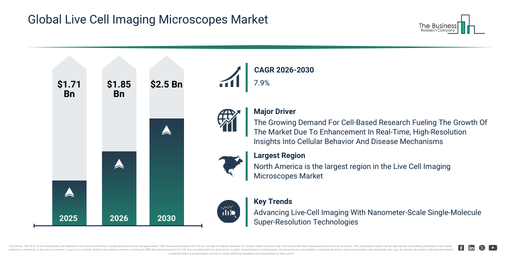
    The live cell imaging microscopes market has experienced robust expansion over recent years. Projected to rise from $1.71 billion in 2025 to $1.85 billion in 2026, this growth reflects a compound annual growth rate (CAGR) of 8.0%. During the historical period, this upward trend was driven by factors such as increased cell biology research, progress in optical microscopy technologies, the broadening of pharmaceutical research and development initiatives, greater financial support for life sciences studies, and a growing reliance on in vitro cell investigations.

    The live cell imaging microscopes market is anticipated to experience robust expansion over the coming years, with projections indicating it will reach $2.5 billion by 2030, reflecting a compound annual growth rate (CAGR) of 7.9%. This forecasted growth is driven by several factors, including advancements in stem cell and regenerative medicine research, a heightened need for live cell analysis within precision medicine, the broadening implementation of automated laboratory workflows, the growing integration of AI-powered image analysis, and an uptick in contract research services. Key trends shaping the market during this period encompass a rising demand for real-time cellular observation, a greater uptake of fluorescence and confocal microscopy techniques, expanded applications of live cell imaging in drug discovery, the proliferation of automated and high-content imaging platforms, and the enhanced incorporation of imaging software with analytical tools.

    Download A Free Sample Report For Comprehensive Market Insights:

    https://www.thebusinessresearchcompany.com/sample.aspx?id=24281&type=smp&utm_source=BlogsPR&utm_medium=Paid&utm_campaign=Jul_PR

    Live Cell Imaging Microscopes Market Expansion Drivers: What Is Shaping Future Growth?

    The upward trajectory of the live cell imaging microscopes market is significantly driven by the increasing emphasis on cell-based research. This area of study involves the examination of living cells to better understand biological processes, uncover mechanisms of disease, and develop novel therapeutic approaches. The expansion of cell-based research is fueled by its potential in personalized medicine, enabling the design of treatments tailored to an individual’s genetic profile, thereby boosting efficacy while reducing adverse effects. Live cell imaging microscopes allow for the continuous monitoring of cellular activities in real time without disturbing the cells, providing high-resolution data on cell dynamics, molecular interactions, and reactions to different stimuli. This capability deepens the comprehension of disease pathways, drug impacts, and cellular functions. For example, the National Institutes of Health (NIH), a U.S.-based medical research agency, reported in May 2024 that funding for stem cell research reached $2.22 billion, up from $2.20 billion in 2022. Consequently, the rising demand for cell-based research is propelling growth in the live cell imaging microscopes market.

    Live Cell Imaging Microscopes Market Segment Analysis: What Are The Major Market Categories?

    The live cell imaging microscopes market covered in this report is segmented –

    1) By Type: Confocal Microscopy, Phase Contrast Microscopy, Fluorescent Microscopy, Quantitative Phase Contrast Microscopy

    2) By Application: Cell Biology, Developmental Biology, Stem Cell Research, Drug Discovery, Other Applications

    3) By End-User: Academic And Research Institutes, Pharmaceutical And Biotechnology Companies, Contract Research Organizations, Hospitals And Diagnostic Laboratories

    Subsegments:

    1) By Confocal Microscopy: Laser Scanning Confocal Microscopy (LSCM), Spinning Disk Confocal Microscopy, Multiphoton Confocal Microscopy

    2) By Phase Contrast Microscopy: Traditional Phase Contrast, Differential Interference Contrast (DIC), Enhanced Phase Contrast

    3) By Fluorescent Microscopy: Widefield Fluorescence Microscopy, Total Internal Reflection Fluorescence (TIRF) Microscopy, Super-Resolution Fluorescence Microscopy

    4) By Quantitative Phase Contrast Microscopy: Digital Holographic Microscopy (DHM), Optical Path Length (OPL) Mapping, Interferometric Phase Microscopy

    Live Cell Imaging Microscopes Market Strategic Trends: What Is Defining The Next Phase Of Growth?

    Key industry players in the live cell imaging microscopes market are prioritizing the creation of cutting-edge products, including single-molecule super-resolution imaging systems, to facilitate real-time, in-depth exploration of dynamic cellular activities. This technology, known as a single-molecule super-resolution imaging system, represents an advanced microscopy approach that allows scientists to track and examine the position, motion, and interactions of individual molecules with precision at the nanometer scale. For example, in January 2025, Oxford Nanoimaging (ONI), a UK-based firm dedicated to advancing super-resolution microscopy, unveiled the Aplo Scope. This single-molecule super-resolution microscope is designed to observe and quantify molecular interactions within cells and tissues with remarkable clarity. As part of the Aplo Platform, this compact benchtop system combines sophisticated imaging capabilities, automated procedures, and cloud-integrated software to optimize workflows and achieve a nanoscale resolution of 20 nm. By easing the transition between live-cell imaging and super-resolution microscopy, the Aplo Scope tackles hurdles in drug delivery, biomarker detection, and antibody-based therapies, thereby speeding up progress in biomedical research.

    Live Cell Imaging Microscopes Market Leading Companies Driving Competitive Growth

    Major companies operating in the live cell imaging microscopes market are Thermo Fisher Scientific Inc., ZEISS Group, Keyence Corporation of America, Agilent Technologies Inc., PerkinElmer Inc., Bruker Corporation, EVIDENT, Leica Microsystems A/S, Thorlabs Inc., Oxford Instruments India Pvt. Ltd., Axion BioSystems Inc, OPTIKA S.r.l., Discover Echo, Curiosis Inc., Quasmo, Nikon Instruments Inc., Nanolive, Live Cell Instrument (LCI), BestScope, Confocal.nl.

    Access The Complete Live Cell Imaging Microscopes Market Report:

    https://www.thebusinessresearchcompany.com/report/live-cell-imaging-microscopes-global-market-report?utm_source=BlogsPR&utm_medium=Paid&utm_campaign=Jul_PR

    Live Cell Imaging Microscopes Market Regional Distribution: Which Areas Drive Market Expansion?

    North America was the largest region in the live cell imaging microscopes market in 2025. The regions covered in the live cell imaging microscopes market report are Asia-Pacific, South East Asia, Western Europe, Eastern Europe, North America, South America, Middle East, Africa.

    Get in touch with us:

    The Business Research Company: https://www.thebusinessresearchcompany.com/?utm_source=BlogsPR&utm_medium=Paid&utm_campaign=home_page_test

    Americas: +1 310-496-7795

    Asia: +44 7882 955267 & +91 8897263534

    Europe: +44 7882 955267

    Email us at: marketing@tbrc.info

    Follow us on:

    LinkedIn: https://in.linkedin.com/company/the-business-research-company

    YouTube: https://www.youtube.com/channel/UC24_fI0rV8cR5DxlCpgmyFQ

    Global Market Model: https://www.thebusinessresearchcompany.com/global-market-model
  • Live Attenuated Vaccines Market Trends Are Creating New Opportunities For Industry Leaders

    Live Attenuated Vaccines Market Trends Are Creating New Opportunities For Industry Leaders

    Delivering more actionable and strategically valuable research, The Business Research Company’s 2026 market reports feature market attractiveness analysis, total addressable market evaluation, company benchmarking matrices, interactive Excel dashboards, expanded supply chain intelligence, emerging startup coverage, and detailed product insights.

    Live Attenuated Vaccines Market Forecast: What Market Value Is Expected By 2030?

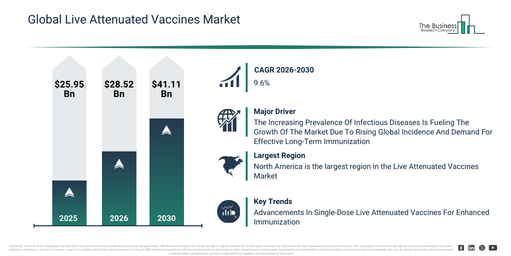
    The market for live attenuated vaccines has experienced robust expansion over the past few years. Valued at $25.95 billion in 2025, it is projected to reach $28.52 billion by 2026, reflecting a compound annual growth rate of 9.9%. This historical growth can be linked to the worldwide impact of infectious diseases, governmental vaccination campaigns, policies mandating childhood immunization, vaccine administration within hospital settings, and vaccination initiatives spearheaded by the World Health Organization.

    The market for live attenuated vaccines is projected to experience significant expansion over the coming years. By 2030, its value is anticipated to reach $41.11 billion, driven by a compound annual growth rate (CAGR) of 9.6%. This forecasted growth is fueled by factors such as the rising need for booster shots, the threat posed by new infectious diseases, improvements in cold chain logistics, enhanced global health investments, and the emergence of next-generation vaccine platforms. Key developments shaping this period include the broadening of national vaccination initiatives, increasing requirements for childhood immunizations, betterments in vaccine stability and preservation, a heightened emphasis on pandemic readiness, and the creation of multivalent vaccines.

    Download A Free Sample Report For Comprehensive Market Insights:

    https://www.thebusinessresearchcompany.com/sample.aspx?id=24590&type=smp&utm_source=BlogsPR&utm_medium=Paid&utm_campaign=Jul_PR

    Live Attenuated Vaccines Market Development Factors: Which Trends Are Supporting Demand?

    The rising occurrence of infectious diseases is anticipated to boost the expansion of the live attenuated vaccines market going forward. Infectious diseases refer to conditions caused by harmful microorganisms, including bacteria, viruses, fungi, or parasites, which can be transmitted directly or indirectly between people, animals, or environments. The growth of international travel facilitates the swift spread of these illnesses, enabling pathogens to cross borders more rapidly than containment efforts can respond. Live attenuated vaccines are used to prevent infectious diseases by eliciting a strong immune response through weakened pathogens, providing durable immunity and curbing disease transmission. For example, in March 2025, the World Health Organization, an intergovernmental body headquartered in Switzerland, reported that an estimated 10.8 million individuals contracted tuberculosis globally in 2023, comprising 6.0 million men, 3.6 million women, and 1.3 million children. Consequently, the heightened prevalence of infectious diseases is fueling the growth of the live attenuated vaccines market.

    Live Attenuated Vaccines Market Segment Breakdown: Which Categories Generate The Most Revenue?

    The live attenuated vaccines market covered in this report is segmented –

    1) By Vaccine Type: Monovalent, Multivalent

    2) By Route Of Administration: Intramuscular, Subcutaneous, Oral Attenuated, Intranasal Attenuated

    3) By Indication: Influenza, Measles, Mumps and Rubella (MMR), Polio, Chickenpox, Shingles, Rotavirus, Other Indications

    4) By Distribution Channel: Hospital Pharmacies, Retail Pharmacies, Online Pharmacies

    5) By End-User: Hospitals, Clinics, Diagnostic Centers, Research Institute, Other End-Users

    Subsegments:

    1) By Monovalent: Single-Dose Vaccines, Multiple-Dose Vaccines

    2) By Multivalent: Bivalent Vaccines, Trivalent Vaccines, Quadrivalent Vaccines, Other Multivalent Vaccines

    Live Attenuated Vaccines Market Transformation Trends: Which Innovations Are Driving Change?

    Key players in the live attenuated vaccines market are placing significant emphasis on the creation of advanced solutions, particularly single-dose vaccines, to boost immunization effectiveness and increase patient adherence. A single-dose formulation offers lifelong protection through just one injection, removing the necessity for repeated administrations. This approach makes vaccination more straightforward for both individuals and medical professionals, thereby improving ease of use and overall reach. A noteworthy example is Valneva SE, a biotech firm headquartered in France specializing in infectious disease vaccines, which introduced IXCHIQ in November 2023. This product secured approval from the U.S. Food and Drug Administration (FDA), an American health regulatory authority. IXCHIQ represents the first live-attenuated chikungunya vaccine globally, designed for individuals aged 18 and above. This regulatory milestone holds considerable importance as it marks the debut of a licensed vaccine for chikungunya, filling a critical gap in preventive care for this mosquito-borne viral illness, which is known to trigger intense fever, joint and muscle discomfort, along with other adverse effects.

    Live Attenuated Vaccines Market Key Players And Strategic Industry Positioning

    Major companies operating in the live attenuated vaccines market are Merck & Co. Inc., Sanofi SA, AstraZeneca plc, Abbott Laboratories, GlaxoSmithKline plc, Takeda Pharmaceutical Company Limited, Boehringer Ingelheim International GmbH, CSL Limited, GC Biopharma, Serum Institute of India Pvt. Ltd., Bavarian Nordic, Valneva SE, Southern Research, BioFarma, Bharat Biotech International Limited, Meissa Vaccines Inc., BioDiem Ltd., Bio-Med Limited, Naobios, Lakshmi Pharmaceuticals

    Access The Complete Live Attenuated Vaccines Market Report:

    https://www.thebusinessresearchcompany.com/report/live-attenuated-vaccines-global-market-report?utm_source=BlogsPR&utm_medium=Paid&utm_campaign=Jul_PR

    Live Attenuated Vaccines Market Leading Geography: Which Region Generates The Most Revenue?

    North America was the largest region in the live attenuated vaccines market in 2025. Asia-Pacific is expected to be the fastest-growing region in the forecast period. The regions covered in the live attenuated vaccines market report are Asia-Pacific, South East Asia, Western Europe, Eastern Europe, North America, South America, Middle East, Africa.

    Get in touch with us:

    The Business Research Company: https://www.thebusinessresearchcompany.com/?utm_source=BlogsPR&utm_medium=Paid&utm_campaign=home_page_test

    Americas: +1 310-496-7795

    Asia: +44 7882 955267 & +91 8897263534

    Europe: +44 7882 955267

    Email us at: marketing@tbrc.info

    Follow us on:

    LinkedIn: https://in.linkedin.com/company/the-business-research-company

    YouTube: https://www.youtube.com/channel/UC24_fI0rV8cR5DxlCpgmyFQ

    Global Market Model: https://www.thebusinessresearchcompany.com/global-market-model
  • Liraglutide Market Growth Is Reshaping Competitive Advantage Across The Industry

    Liraglutide Market Growth Is Reshaping Competitive Advantage Across The Industry

    Enhanced with market attractiveness analysis, total addressable market evaluation, company benchmarking matrices, interactive Excel dashboards, expanded supply chain intelligence, emerging startup coverage, and detailed product insights, The Business Research Company’s 2026 market reports deliver more actionable and strategically valuable research.

    Liraglutide Market Size Outlook: How Fast Will Revenue Grow Through 2030?

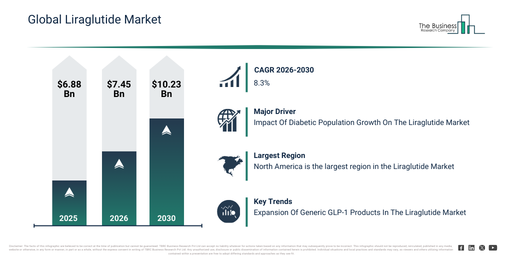
    A notable expansion has been observed in the liraglutide market over recent years. Projected figures indicate that between 2025 and 2026, the market is set to rise from $6.88 billion to $7.45 billion, reflecting a compound annual growth rate (CAGR) of 8.2%. Several factors have driven this historical growth, including the increasing worldwide incidence of type 2 diabetes, the demonstrated clinical benefits of GLP-1 receptor agonists, a growing demand for treatments that can manage both blood sugar and body weight, regulatory approvals for liraglutide covering diabetic and weight management indications, and heightened physician trust in injectable incretin-based therapies.

    The liraglutide market is anticipated to experience robust expansion over the coming years, reaching a projected value of $10.23 billion by 2030, with a compound annual growth rate (CAGR) of 8.3%. This forecasted growth is driven by factors such as the rising global prevalence of obesity, a growing shift toward weight-focused diabetes treatments, the broadening of metabolic disorder screening initiatives, heightened patient interest in effective appetite-suppressing therapies, and ongoing innovation and education surrounding GLP-1-based treatments. Key trends shaping this period include the widespread integration of liraglutide into type 2 diabetes care, its increasing application in medical weight management, broader acceptance of injectable GLP-1 therapies, the scaling of long-term metabolic disease management programs, and a heightened emphasis on achieving both glycemic control and weight reduction benefits.

    Download A Free Sample Report For Comprehensive Market Insights:

    https://www.thebusinessresearchcompany.com/sample.aspx?id=18659&type=smp&utm_source=BlogsPR&utm_medium=Paid&utm_campaign=Jul_PR

    Liraglutide Market Industry Drivers: What Is Driving Revenue Growth?

    The liraglutide market is anticipated to gain momentum from the expanding number of individuals diagnosed with diabetes worldwide. This condition, characterized by the body’s inability to effectively manage blood glucose levels due to insufficient insulin production or impaired insulin function, continues to rise in prevalence. Its growth is largely attributed to global trends such as sedentary habits, poor dietary choices, and escalating obesity rates. Medications like liraglutide offer therapeutic benefits by replicating the actions of the GLP-1 hormone, which stimulates insulin release, reduces blood sugar, and supports weight reduction, making it a valuable tool for controlling type 2 diabetes. A report by the Government of the United Kingdom, published in March 2024, highlighted that by March 2023, the proportion of patients with type 1 diabetes in England receiving all eight recommended care processes through general practices participating in the NDA had risen to 43.8%, up from 35.2% recorded the prior year. Hence, the ongoing rise in the diabetic population is fueling expansion in the liraglutide market.

    Liraglutide Market Segmentation: How Is The Market Structured Across Key Categories?

    The liraglutide market covered in this report is segmented –

    1) By Brands: Victoza, Saxenda

    2) By Distribution Channel: Hospital Pharmacies, Retail Pharmacies And Drug Stores, Online Pharmacies

    3) By Type Of Application: Diabetes Treatment, Weight Management

    4) By End-Users: Hospitals And Clinics, Homecare Settings

    Subsegments:

    1) By Victoza: Type 2 Diabetes Treatment Or Weight Management

    2) By Saxenda: Weight Loss Treatment Or Obesity Management

    Liraglutide Market Growth Trends: What Is Influencing The Future Outlook?

    Key players in the liraglutide market are currently concentrating on the creation of innovative products like generic GLP-1 formulations, aiming to broaden the spectrum of therapeutic options and respond to the growing need for more budget-friendly treatments. These generic GLP-1 medications are copies of original GLP-1 receptor agonists, manufactured once patent protection for the branded drugs has lapsed, thereby providing economical alternatives for managing ailments such as type 2 diabetes and obesity. A notable example occurred in June 2024, when Teva Pharmaceutical Industries Ltd., a company headquartered in Israel, launched the debut generic GLP-1 product comparable to Victoza within the U.S. market, thereby catering to the escalating demand for such therapies. These liraglutide injections are utilized to improve glycemic control in adults and children aged ten and above who have type 2 diabetes, as well as to diminish the likelihood of cardiovascular events in adults with type 2 diabetes who also have pre-existing heart conditions.

    Liraglutide Market Competitive Landscape And Leading Companies

    Major companies operating in the liraglutide market are Novo Nordisk A/S

    Access The Complete Liraglutide Market Report:

    https://www.thebusinessresearchcompany.com/report/liraglutide-global-market-report?utm_source=BlogsPR&utm_medium=Paid&utm_campaign=Jul_PR

    Liraglutide Market Regional Outlook: Where Are The Largest Opportunities Located?

    North America was the largest region in the liraglutide market in 2025. North America is expected to be the fastest-growing region in the forecast period. The regions covered in the liraglutide market report are Asia-Pacific, South East Asia, Western Europe, Eastern Europe, North America, South America, Middle East, Africa.

    Get in touch with us:

    The Business Research Company: https://www.thebusinessresearchcompany.com/?utm_source=BlogsPR&utm_medium=Paid&utm_campaign=home_page_test

    Americas: +1 310-496-7795

    Asia: +44 7882 955267 & +91 8897263534

    Europe: +44 7882 955267

    Email us at: marketing@tbrc.info

    Follow us on:

    LinkedIn: https://in.linkedin.com/company/the-business-research-company

    YouTube: https://www.youtube.com/channel/UC24_fI0rV8cR5DxlCpgmyFQ

    Global Market Model: https://www.thebusinessresearchcompany.com/global-market-model