Blog

  • Acne Drugs Market Forecast Signals New Revenue Opportunities Through 2030

    Acne Drugs Market Forecast Signals New Revenue Opportunities Through 2030

    Enhanced with market attractiveness analysis, total addressable market evaluation, company benchmarking matrices, interactive Excel dashboards, expanded supply chain intelligence, emerging startup coverage, and detailed product insights, The Business Research Company’s 2026 market reports deliver more actionable and strategically valuable research.

    Acne Drugs Market Growth Potential: How Will Market Size Change Through 2030?

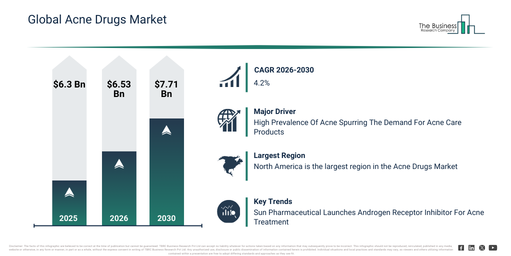
    Over recent years, the market for acne treatments has experienced consistent expansion. Its value is projected to rise from $6.3 billion in 2025 to $6.53 billion in 2026, reflecting a compound annual growth rate (CAGR) of 3.5%. This historical growth has been largely driven by factors such as the higher incidence of acne in adolescents, fewer combination therapies being available, increased public knowledge of skin care and dermatological solutions, frequent reliance on topical antibiotics, and a growing number of consultations with dermatologists.

    Market analysts project a steady rise in the acne drugs market over the coming years, with its value anticipated to reach $7.71 billion by 2030, driven by a compound annual growth rate (CAGR) of 4.2%. This expansion in the forecast period is attributed to the development of innovative anti-inflammatory and retinoid formulations, a broader array of over-the-counter acne products, increased use of digital skincare platforms, advances in personalized dermatology solutions, and heightened investments in acne research and clinical trials. Key trends shaping this period include a growing preference for combination therapies in acne management, wider application of topical and oral retinoids, a surge in OTC acne treatment options, tailored acne care plans, and increasing emphasis on skin health and preventive dermatology.

    Download A Free Sample Report For Comprehensive Market Insights:

    https://www.thebusinessresearchcompany.com/sample.aspx?id=2412&type=smp&utm_source=BlogsPR&utm_medium=Paid&utm_campaign=Jul_PR

    Acne Drugs Market Growth Momentum: Which Factors Are Influencing Demand?

    The anticipated rise in acne cases is set to drive forward the growth of the acne drug market in the coming period. Acne, a dermatological condition characterized by the obstruction of pores with oil and dead skin cells, results in pimples, blackheads, and inflammation. Its growing prevalence stems from its high occurrence in adolescents, young adults, and adults alike. Acne medications work to enhance skin health by alleviating inflammation, regulating sebum production, and halting pore blockages. As an example, a March 2024 report from Pierre Fabre Laboratories, a French pharmaceutical and dermo-cosmetics firm, indicated that acne affects about 20.5% of adults worldwide, with peak rates in the 16–24 age bracket at 28.3%. Among adults aged 25–39, the rate is still significant at 19.3%, with a higher impact on women (23.6%) compared to men (17.5%). Consequently, the escalating incidence of acne is fueling expansion in the acne drug market.

    Acne Drugs Market Segmentation And Category Breakdown

    The acne drugs market covered in this report is segmented –

    1) By Type: Inflammatory Acne Drugs, Non-Inflammatory Acne Drugs

    2) By Therapeutic Class: Retinoids, Antibiotics, Salicylic Aci, Benzoyl Peroxide, Other Therapeutics

    3) By End User: Hospitals And Clinics, Pharmacies And Drug Stores, Other End Users

    Subsegments:

    1) By Inflammatory Acne Drugs: Antibiotics (Topical And Oral), Anti-inflammatory Drugs, Corticosteroids, Combination Therapies

    2) By Non-Inflammatory Acne Drugs: Retinoids (Topical And Oral), Benzoyl Peroxide, Salicylic Acid, Alpha Hydroxy Acids (AHAs), Over-The-Counter (OTC) Treatments

    Acne Drugs Market Trends Reshaping Industry Growth

    Leading firms in the acne treatment market are focusing on the creation of advanced receptor inhibitor medications and broadening their research into new therapies, aiming to develop cutting-edge products and secure a stronger position in the expanding healthcare industry. These receptor inhibitor drugs function by blocking the activity of particular receptors within the body. As an example, Sun Pharmaceutical Industries Ltd., a biopharmaceutical company based in India, introduced (PR)WINLEVI (clascoterone cream 1% w/w) in September 2023. WINLEVI is believed to reduce the influence of acne-related hormones on the skin by interfering with the androgen pathway, marking a shift from conventional topical acne treatments that target follicular hyperkeratinization, reduce inflammation, or provide antibacterial effects. Although its exact mode of action remains unclear, the drug aims to inhibit androgen receptor activity in sebaceous gland cells, the oil-producing structures in the skin, thereby helping to lower sebum production and curb inflammatory cytokines.

    Acne Drugs Market Competitive Analysis Of Major Industry Participants

    Major companies operating in the acne drugs market are Johnson & Johnson, Galderma S.A., Almirall SA, Bausch Health Companies Inc., GlaxoSmithKline, Reckitt Benckiser Group, Mayne Pharma Group Limited, Allergan Plc., Cipher Pharmaceuticals, Sol Gel Advanced Topical Therapy, Pfizer Inc., Novartis AG, Merck & Co. Inc., Amgen Inc., Eli Lilly and Company, Daiichi Sankyo Company Limited, Sinopharm Group Co. Ltd, Mylan N.V., F. Hoffmann-La Roche Ltd, Bayer AG, Teva Pharmaceutical Industries, Sun Pharmaceutical Industries Ltd., Cipla Inc., Zydus Cadila, Otsuka Pharmaceutical Co. Ltd, Shanghai Pharmaceuticals Holding Co. Ltd, Jiangsu Hengrui Medicine, Guangzhou Baiyunshan Pharmaceutical, China Meheco Co Ltd, Huadong Medicine Co. Ltd., Ranbaxy Laboratories, Stiefel Laboratories, BIOCAD, Zentiva (Sanofi), Gedeon Richter Plc, Polpharma SA Pharmaceutical Works, Egis Group, Dermira Inc.

    Access The Complete Acne Drugs Market Report:

    https://www.thebusinessresearchcompany.com/report/acne-drugs-global-market-report?utm_source=BlogsPR&utm_medium=Paid&utm_campaign=Jul_PR

    Acne Drugs Market Global Footprint: Which Region Holds Market Leadership?

    North America was the largest region in the acne drugs market in 2025. Middle East is expected to be the largest growing region in the global acne drugs market during the forecast period. The regions covered in the acne drugs market report are Asia-Pacific, South East Asia, Western Europe, Eastern Europe, North America, South America, Middle East, Africa.

    Get in touch with us:

    The Business Research Company: https://www.thebusinessresearchcompany.com/?utm_source=BlogsPR&utm_medium=Paid&utm_campaign=home_page_test

    Americas: +1 310-496-7795

    Asia: +44 7882 955267 & +91 8897263534

    Europe: +44 7882 955267

    Email us at: marketing@tbrc.info

    Follow us on:

    LinkedIn: https://in.linkedin.com/company/the-business-research-company

    YouTube: https://www.youtube.com/channel/UC24_fI0rV8cR5DxlCpgmyFQ

    Global Market Model: https://www.thebusinessresearchcompany.com/global-market-model
  • Acetaminophen-Opioid Combination Market Growth Is Accelerating As Industry Transformation Continues

    Acetaminophen-Opioid Combination Market Growth Is Accelerating As Industry Transformation Continues

    Through market attractiveness analysis, total addressable market evaluation, company benchmarking matrices, interactive Excel dashboards, expanded supply chain intelligence, emerging startup coverage, and detailed product insights, The Business Research Company’s 2026 market reports provide more actionable and strategically valuable research.

    Acetaminophen-Opioid Combination Market Value Analysis: What Growth Is Expected Over The Forecast Period?

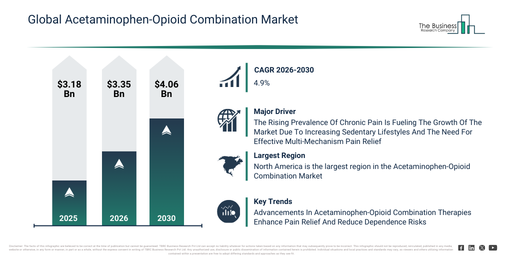
    The market for acetaminophen-opioid combination products has experienced robust expansion in recent years, with projections indicating an increase from $3.18 billion in 2025 to $3.35 billion in 2026, reflecting a compound annual growth rate (CAGR) of 5.3%. This upward trajectory during the historical period has been fueled by a high incidence of surgical pain cases, established opioid prescribing habits, the implementation of hospital pain management protocols, the wide availability of combination medications, and the widespread prevalence of chronic pain conditions.

    Over the coming years, the market for acetaminophen-opioid combinations is projected to experience consistent expansion. By 2030, its valuation is expected to reach $4.06 billion, reflecting a compound annual growth rate of 4.9%. This forecasted growth is driven by factors such as the implementation of opioid stewardship programs, a growing inclination toward non-opioid treatments, advancements in digital prescription tracking, stricter regulatory measures, and the rise of outpatient pain management approaches. Key developments shaping this period include a reduction in usage linked to opioid regulations, a movement toward lower-dose formulations, enhanced surveillance of prescription patterns, the proliferation of generic combination therapies, and a heightened emphasis on managing acute pain effectively.

    Download A Free Sample Report For Comprehensive Market Insights:

    https://www.thebusinessresearchcompany.com/sample.aspx?id=24450&type=smp&utm_source=BlogsPR&utm_medium=Paid&utm_campaign=Jul_PR

    Acetaminophen-Opioid Combination Market Expansion Drivers: What Is Shaping Future Growth?

    The growing incidence of chronic pain is anticipated to drive expansion in the acetaminophen-opioid combination market moving forward. Chronic pain is characterized by persistent or recurring discomfort lasting more than three to six months, surpassing the typical healing period, and frequently has a major impact on an individual’s everyday activities and overall health. This condition is on the rise due to sedentary lifestyles leading to poor posture and weakened muscles, which place extra pressure on the body and result in sustained pain. Acetaminophen-opioid formulations are effective in addressing chronic pain by concurrently engaging multiple pain pathways. This strategy improves pain management, supports enhanced daily functioning, and may reduce the need for high opioid doses. For example, in June 2024, data from the Australian Institute of Health and Welfare, a government agency based in Australia, revealed that in 2023, chronic conditions contributed to approximately 4.4 million years of healthy life lost among Australians, representing 85% of the nation’s total disease burden. Consequently, the rising prevalence of chronic pain is fueling growth in the acetaminophen-opioid combination market.

    The growing number of orthopedic surgical procedures is expected to boost the acetaminophen-opioid combination market going forward. These surgeries focus on diagnosing, treating, or repairing issues with bones, joints, muscles, and ligaments within the musculoskeletal system. The increase in such operations is driven by an aging population experiencing more degenerative musculoskeletal conditions, which heightens demand for procedures that enhance mobility and alleviate discomfort. Acetaminophen-opioid combinations are effective in managing moderate to severe postoperative pain in orthopedic settings by targeting distinct pain mechanisms, thereby improving patient comfort and mobility while minimizing the necessary opioid dosage. For instance, in January 2024, the Office for Health Improvement and Disparities, a UK government department, reported that in 2023, 18.4% of individuals aged 16 and older had long-term musculoskeletal disorders, up from 17.6% in 2022. As a result, the increase in orthopedic surgical procedures is propelling growth in the acetaminophen-opioid combination market.

    Acetaminophen-Opioid Combination Market Segment Outlook: Which Categories Are Expanding The Fastest?

    The acetaminophen-opioid combination market covered in this report is segmented –

    1) By Product: Hydrocodone-Acetaminophen, Oxycodone-Acetaminophen, Codeine-Acetaminophen, Tramadol-Acetaminophen, Other Products

    2) By Strength: Low Dose Combinations, Moderate To High Dose Combinations, Extended-Release Combinations

    3) By Indication: Acute Pain, Chronic Pain

    4) By Distribution Channel: Hospital Pharmacies, Retail Pharmacies, Online Pharmacies, Clinics

    Acetaminophen-Opioid Combination Market Strategic Trends: What Is Defining The Next Phase Of Growth?

    Key players in the acetaminophen-opioid combination market are concentrating on creating innovative products, like oxycodone hydrochloride and acetaminophen tablets, to improve pain relief effectiveness while minimizing the likelihood of opioid addiction. These tablets merge a potent opioid analgesic with a non-opioid pain reliever to efficiently address moderate to severe pain. By utilizing complementary mechanisms, this dual-action formulation enhances pain management outcomes. For example, in May 2025, Elite Pharmaceuticals, Inc., a specialty pharmaceutical firm based in the United States, introduced its generic version of Percocet in dosages of 5mg/325mg, 7.5mg/325mg, and 10mg/325mg. Produced in compliance with cGMP standards, this product provides a reliable, high-quality substitute for the branded Percocet, designed for immediate-release pain control. Prescribed for alleviating moderate to moderately severe pain, this launch represents a notable milestone for Elite within the niche generic pharmaceutical market.

    Acetaminophen-Opioid Combination Market Key Companies And Competitive Benchmarking

    Major companies operating in the acetaminophen-opioid combination market are Sun Pharmaceutical Industries Ltd, Endo Pharmaceuticals, Amneal Pharmaceuticals, Mallinckrodt Pharmaceuticals plc, Lupin Pharmaceuticals, Alvogen, Camber Pharmaceuticals Inc., Watson Laboratories, West-Ward Pharmaceuticals Corp., Teva Pharmaceutical Industries Ltd, Purdue Pharma L.P., Hikma Pharmaceuticals PLC, Dr. Reddy’s Laboratories Ltd, Zydus Lifesciences Ltd, Aurobindo Pharma Ltd, Cipla Ltd, Sandoz (Novartis AG), Apotex Inc., Mylan N.V. (Viatris Inc.), Torrent Pharmaceuticals Ltd, Alembic Pharmaceuticals Ltd, Strides Pharma Science Ltd, Wockhardt Ltd, Micro Labs Ltd, Intas Pharmaceuticals Ltd

    Access The Complete Acetaminophen-Opioid Combination Market Report:

    https://www.thebusinessresearchcompany.com/report/acetaminophen-opioid-combination-global-market-report?utm_source=BlogsPR&utm_medium=Paid&utm_campaign=Jul_PR

    Acetaminophen-Opioid Combination Market Regional Distribution: Which Areas Drive Market Expansion?

    North America was the largest region in the acetaminophen-opioid combination market in 2025. The regions covered in the acetaminophen-opioid combination market report are Asia-Pacific, South East Asia, Western Europe, Eastern Europe, North America, South America, Middle East, Africa.

    Get in touch with us:

    The Business Research Company: https://www.thebusinessresearchcompany.com/?utm_source=BlogsPR&utm_medium=Paid&utm_campaign=home_page_test

    Americas: +1 310-496-7795

    Asia: +44 7882 955267 & +91 8897263534

    Europe: +44 7882 955267

    Email us at: marketing@tbrc.info

    Follow us on:

    LinkedIn: https://in.linkedin.com/company/the-business-research-company

    YouTube: https://www.youtube.com/channel/UC24_fI0rV8cR5DxlCpgmyFQ

    Global Market Model: https://www.thebusinessresearchcompany.com/global-market-model
  • ACE Inhibitors Market Outlook Highlights The Next Major Growth Opportunities

    ACE Inhibitors Market Outlook Highlights The Next Major Growth Opportunities

    Delivering more actionable and strategically valuable research, The Business Research Company’s 2026 market reports feature market attractiveness analysis, total addressable market evaluation, company benchmarking matrices, interactive Excel dashboards, expanded supply chain intelligence, emerging startup coverage, and detailed product insights.

    ACE Inhibitors Market Size Forecast: How Large Could The Market Become By 2030?

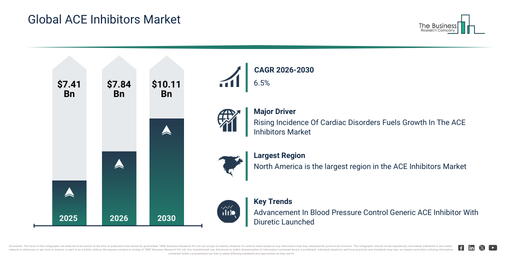
    The market for ACE inhibitors has experienced significant expansion over recent years. From $7.41 billion in 2025, it is projected to reach $7.84 billion by 2026, reflecting a compound annual growth rate (CAGR) of 5.8%. This historical growth has been driven primarily by a higher incidence of hypertension, greater public recognition of cardiovascular conditions, the launch of first-generation ACE inhibitors, an expanding elderly demographic, and progress in drug development technologies.

    The ace inhibitors market is projected to experience robust expansion in the coming years, reaching an estimated $10.11 billion by 2030 with a compound annual growth rate (CAGR) of 6.5%. This anticipated growth during the forecast period is driven by several factors, including the rising demand for personalized medicine, the adoption of digital health technologies, growth in emerging markets, the creation of innovative ace inhibitor combinations, and the increasing prevalence of home healthcare services. Key trends shaping the market outlook include a focus on tailored hypertension care, the use of telemedicine and remote patient monitoring, ongoing efforts in combination therapy innovation, a higher availability of generic ace inhibitors, and a broader uptake of home-based healthcare solutions.

    Download A Free Sample Report For Comprehensive Market Insights:

    https://www.thebusinessresearchcompany.com/sample.aspx?id=10671&type=smp&utm_source=BlogsPR&utm_medium=Paid&utm_campaign=Jul_PR

    ACE Inhibitors Market Development Factors: Which Trends Are Supporting Demand?

    The expansion of the ACE inhibitors market is being fueled by a rising prevalence of cardiac disorders. These conditions, which affect the heart and blood vessels, encompass coronary artery disease, heart failure, and arrhythmias among others. By inhibiting the angiotensin-converting enzyme, ACE blockers diminish vasoconstriction, sodium retention, and aldosterone secretion, thereby improving heart function. For example, in January 2024 the American Heart Association, a US-based nonprofit, reported that the age-adjusted death rate from cardiovascular disease climbed to 233.3 per 100,000, representing a 4.0% increase from 224.4 per 100,000 in 2023. As a result, the growing frequency of cardiac disorders is driving the ACE inhibitors market forward.

    ACE Inhibitors Market Segment Landscape: Which Areas Lead Market Development?

    The ace inhibitors market covered in this report is segmented –

    1) By Type: Sulfhydryl-containing Agents, Dicarboxylate-containing Agents, Phosphonate-containing Agents

    2) By Drug: Ramipril, Enalapril, Benazepril, Fosinopril, Captopril, Moexipril, Other Drugs

    3) By Dosage Form: Oral Tablets, Oral Solutions

    4) By Application: Heart Failure, Chronic Kidney Disease, Hypertension, Diabetes, Heart Attack, Other Applications

    5) By End-Users: Hospitals, Online Drug Stores, Other End-Users

    Subsegments:

    1) By Sulfhydryl-Containing Agents: Captopril, Zofenopril

    2) By Dicarboxylate-Containing Agents: Enalapril, Lisinopril, Ramipril, Quinapril, Benazepril, Perindopril

    3) By Phosphonate-Containing Agents: Fosinopril, Fosinopril Sodium, Fosinopril Calcium

    ACE Inhibitors Market Transformation Trends: Which Innovations Are Driving Change?

    Major players within the ACE inhibitor sector are increasingly prioritizing the introduction of generic drugs as a strategy to secure a competitive advantage in the marketplace. A generic drug is defined as a pharmaceutical product containing identical active ingredients, dosage form, strength, safety profile, route of administration, and therapeutic efficacy as its brand-name counterpart, yet it is generally offered at a reduced price following the expiration of the original patent. As an example, in August 2023, Pharmascience Inc., a pharmaceutical firm based in Canada, released pms-PERINDOPRIL-INDAPAMIDE, a generic medication designed for the primary management of mild to moderate essential hypertension (elevated blood pressure) in adult patients. This combination therapy consists of two active substances: perindopril erbumine, an angiotensin-converting enzyme (ACE) inhibitor that works to relax blood vessels, and indapamide, a chlorosulphamoyl diuretic that promotes the elimination of extra fluid and sodium from the body. Working together, these components synergistically achieve effective blood pressure reduction across a broad patient population. pms-PERINDOPRIL-INDAPAMIDE is supplied in several dosage strengths, specifically 2 mg, 4 mg, and 8 mg of perindopril erbumine, each combined with 0.625 mg, 1.25 mg, and 2.5 mg of indapamide, respectively.

    ACE Inhibitors Market Industry Leaders And Market Competition

    Major companies operating in the ace inhibitors market are Pfizer Inc., Novartis AG, Johnson & Johnson Private Limited, Merck KGaA, Sanofi S.A., Bayer AG, Teva Pharmaceutical Industries Ltd., Bristol-Myers Squibb Co., Takeda Pharmaceuticals Company, Daiichi Sankyo Company Ltd., Endo International plc, Sun Pharmaceutical Industries Ltd., Boehringer Ingelheim, Bausch Health Companies Inc., Dr. Reddy’s Laboratories, Abbott Laboratories, Eli Lilly and Company, Cipla Limited, GlaxoSmithKline plc, Cadila Healthcare Limited, AbbVie Inc., Sandoz Group AG, Accord Healthcare Ltd., AstraZeneca plc, Lupin Limited, Macleods Pharmaceuticals Limited, Zydus lifescience Ltd., Apotex Inc.

    Access The Complete ACE Inhibitors Market Report:

    https://www.thebusinessresearchcompany.com/report/ace-inhibitors-global-market-report?utm_source=BlogsPR&utm_medium=Paid&utm_campaign=Jul_PR

    ACE Inhibitors Market Leading Geography: Which Region Generates The Most Revenue?

    North America was the largest region in the ACE inhibitors market in 2025. Asia-Pacific is expected to be the fastest-growing region in the global ACE inhibitors market report during the forecast period. The regions covered in the ace inhibitors market report are Asia-Pacific, South East Asia, Western Europe, Eastern Europe, North America, South America, Middle East, Africa.

    Get in touch with us:

    The Business Research Company: https://www.thebusinessresearchcompany.com/?utm_source=BlogsPR&utm_medium=Paid&utm_campaign=home_page_test

    Americas: +1 310-496-7795

    Asia: +44 7882 955267 & +91 8897263534

    Europe: +44 7882 955267

    Email us at: marketing@tbrc.info

    Follow us on:

    LinkedIn: https://in.linkedin.com/company/the-business-research-company

    YouTube: https://www.youtube.com/channel/UC24_fI0rV8cR5DxlCpgmyFQ

    Global Market Model: https://www.thebusinessresearchcompany.com/global-market-model
  • Abortion Drugs Market Trends And Growth Drivers Point To Strong Future Potential

    Abortion Drugs Market Trends And Growth Drivers Point To Strong Future Potential

    Enhanced with market attractiveness analysis, total addressable market evaluation, company benchmarking matrices, interactive Excel dashboards, expanded supply chain intelligence, emerging startup coverage, and detailed product insights, The Business Research Company’s 2026 market reports deliver more actionable and strategically valuable research.

    Abortion Drugs Market Revenue Outlook: What CAGR Is Expected Through 2030?

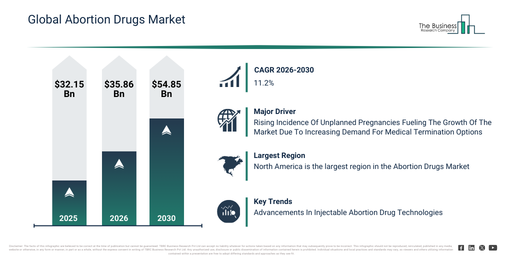
    In recent years, the market for abortion drugs has experienced swift expansion. Valued at $32.15 billion in 2025, it is projected to reach $35.86 billion by 2026, reflecting a compound annual growth rate (CAGR) of 11.5%. This historical growth has been driven by factors such as regulatory approvals, hospital-based abortion services, women’s reproductive health initiatives, the availability of misoprostol, and the validation of clinical safety.

    The market for abortion drugs is projected to experience significant expansion in the coming years, reaching an estimated value of $54.85 billion by 2030, with a compound annual growth rate (CAGR) of 11.2%. This anticipated growth during the forecast period is driven by factors such as the expansion of telehealth services, heightened awareness of reproductive health, increased penetration of generic drugs, regulatory alignment across regions, and the rise of digital pharmacies. Key trends shaping this period include a growing reliance on medical abortion drugs, a higher demand for early-stage pregnancy termination, improved access through telemedicine platforms, a surge in generic abortion medication availability, and a stronger emphasis on safe and regulated drug usage.

    Download A Free Sample Report For Comprehensive Market Insights:

    https://www.thebusinessresearchcompany.com/sample.aspx?id=24449&type=smp&utm_source=BlogsPR&utm_medium=Paid&utm_campaign=Jul_PR

    Abortion Drugs Market Industry Drivers: What Is Driving Revenue Growth?

    The growing frequency of unplanned pregnancies is set to fuel the expansion of the abortion drug market moving forward. Unplanned pregnancies are those that occur without prior intention or planning at conception, frequently stemming from inconsistent or incorrect usage of contraceptive methods. This rise is largely driven by restricted access to contraception, where obstacles like expense, insufficient education, and poor healthcare systems hinder individuals from obtaining and effectively employing birth control options. Abortion drugs address unplanned pregnancies by offering a secure, non-invasive method to terminate an early pregnancy, enhancing reproductive autonomy, minimizing the necessity for surgical procedures, and facilitating prompt healthcare access both in clinical environments and at home. For example, in January 2025, a report from the National Center for Biotechnology Information (NCBI), a branch of the US-based National Library of Medicine (NLM), indicated that an estimated six million unintended pregnancies occurred in Pakistan in 2023, with 64%—roughly 3.8 million—resulting in induced abortions. Consequently, the increasing number of unplanned pregnancies is propelling the growth of the abortion drugs market.

    Abortion Drugs Market Segments: Where Are The Largest Growth Opportunities?

    The abortion drugs market covered in this report is segmented –

    1) By Drug Class: Mifepristone, Misoprostol, Pitocin, Hemabate, Carboprost, Other Drug Classes

    2) By Route Of Administration: Oral, Intravenous, Subcutaneous

    3) By Therapeutic Application: Medical Abortion, Surgical Abortion

    4) By Distribution Channel: Hospital Pharmacies, Retail Pharmacies, Online Pharmacies

    Subsegments:

    1) By Mifepristone: Generic Mifepristone, Branded Mifepristone, Combination With Misoprostol

    2) By Misoprostol: Oral Tablets, Vaginal Tablets, Sublingual Tablets, Buccal Tablets

    3) By Pitocin: Injectable Solution, Intravenous (IV) Administration, Intramuscular (IM) Administration

    4) By Hemabate: Injectable Solution, Single-Dose Vials, Multi-Dose Vials

    5) By Carboprost: Intramuscular Injection, Prefilled Syringes, Vial Form

    6) By Other Drug Classes: Methotrexate, Dinoprostone, Ergometrine, Oxytocin Analogs

    Abortion Drugs Market Growth Trends: What Is Influencing The Future Outlook?

    Leading players in the abortion drugs sector are concentrating on creating innovative offerings, like modern prostaglandin-based injectable treatments, designed to enhance safety, effectiveness, and dependability in medically induced pregnancy termination and related obstetrical care. These advanced injectable prostaglandin-based agents represent contemporary versions of prostaglandin analogs, intended to trigger robust, well-regulated uterine contractions, thereby boosting the success rate and predictability of termination procedures while providing a more consistent, accurately dosed, and clinically trustworthy option compared to older or less specialized therapies. For example, in May 2023, Eugia US LLC—a pharmaceutical manufacturing company based in the United States—secured approval from the U.S. Food and Drug Administration (USFDA) for its Carboprost Tromethamine Injection USP 250 mcg/mL, available in Single-Dose Vials. This advanced injectable prostaglandin analog is utilized for second-trimester pregnancy termination and the management of postpartum hemorrhage. It boasts a precisely measured single-dose design that amplifies clinical precision, minimizes contamination risks, and ensures uniform potency.

    Abortion Drugs Market Major Participants And Competitive Dynamics

    Major companies operating in the abortion drugs market are Pfizer Inc., Bayer AG, Intas Pharmaceuticals, Sun Pharmaceutical Industries Ltd., Macleods Pharmaceuticals Ltd, Cipla Ltd., Lupin Ltd., Zydus Lifesciences Ltd., Cadila Pharmaceuticals, Alkem Laboratories Ltd., Shanghai Xinhua Pharmaceutical Co. Ltd., Medley Pharmaceuticals, Acme Formulations Ltd., Aristo Pharmaceuticals Pvt. Ltd., Mankind Pharma Ltd., Neiss Labs Ltd., Danco Laboratories LLC, GenBioPro Inc., Exelgyn SA, Linepharma International Limited, Adorshea

    Access The Complete Abortion Drugs Market Report:

    https://www.thebusinessresearchcompany.com/report/abortion-drugs-global-market-report?utm_source=BlogsPR&utm_medium=Paid&utm_campaign=Jul_PR

    Abortion Drugs Market Regional Outlook: Where Are The Largest Opportunities Located?

    North America was the largest region in the abortion drugs market in 2025. Asia-Pacific is expected to be the fastest-growing region in the forecast period. The regions covered in the abortion drugs market report are Asia-Pacific, South East Asia, Western Europe, Eastern Europe, North America, South America, Middle East, Africa.

    Get in touch with us:

    The Business Research Company: https://www.thebusinessresearchcompany.com/?utm_source=BlogsPR&utm_medium=Paid&utm_campaign=home_page_test

    Americas: +1 310-496-7795

    Asia: +44 7882 955267 & +91 8897263534

    Europe: +44 7882 955267

    Email us at: marketing@tbrc.info

    Follow us on:

    LinkedIn: https://in.linkedin.com/company/the-business-research-company

    YouTube: https://www.youtube.com/channel/UC24_fI0rV8cR5DxlCpgmyFQ

    Global Market Model: https://www.thebusinessresearchcompany.com/global-market-model
  • Abemaciclib Market Expansion Is Reshaping Competitive Dynamics Across The Industry

    Abemaciclib Market Expansion Is Reshaping Competitive Dynamics Across The Industry

    Through market attractiveness analysis, total addressable market evaluation, company benchmarking matrices, interactive Excel dashboards, expanded supply chain intelligence, emerging startup coverage, and detailed product insights, The Business Research Company’s 2026 market reports provide more actionable and strategically valuable research.

    Abemaciclib Market Growth Analysis: How Will Revenue Expand During The Forecast Period?

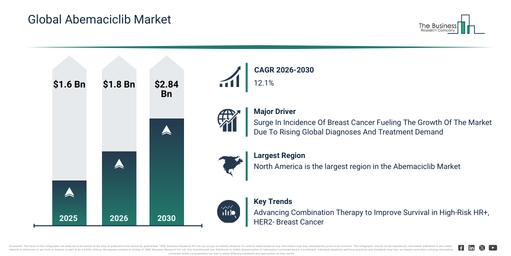
    The market for abemaciclib has experienced rapid expansion in recent years, with its size projected to increase from $1.6 billion in 2025 to $1.8 billion in 2026, reflecting a compound annual growth rate (CAGR) of 12.4%. This historic growth is driven by several factors, including a rising incidence of hormone receptor-positive breast cancer, progress in molecular oncology research, regulatory approvals for targeted treatments, enhanced diagnostic screening initiatives, and the broader availability of oncology care facilities.

    The projected growth trajectory for the abemaciclib market remains strong in the coming years, with expectations that it will reach a valuation of $2.84 billion by 2030, reflecting a compound annual growth rate (CAGR) of 12.1%. This anticipated expansion during the forecast period is fueled by escalating demand for precision oncology medications, heightened financial commitments to targeted cancer treatments, broader implementation of early breast cancer management protocols, greater reliance on oral anticancer agents, and persistent innovation in cell cycle inhibition therapies. Key developments shaping this period include a notable uptick in the use of CDK4/6 inhibitor therapies, a strengthened push for combination endocrine regimens, a heightened focus on precision-driven breast cancer drugs, wider application of oral oncology solutions, and an increased priority on intervening in early-stage malignancies.

    Download A Free Sample Report For Comprehensive Market Insights:

    https://www.thebusinessresearchcompany.com/sample.aspx?id=28112&type=smp&utm_source=BlogsPR&utm_medium=Paid&utm_campaign=Jul_PR

    #Abemaciclib Market Growth Factors: Which Forces Are Supporting Market Expansion?

    The anticipated expansion of the abemaciclib market is being driven forward by the rising occurrence of breast cancer. This condition involves a malignant growth developing within breast tissue, mainly impacting the ducts or lobules, and capable of spreading throughout the body if left untreated. The increasing frequency of breast cancer diagnoses stems from enhanced detection and screening techniques, which identify cases that may have formerly remained undetected. Abemaciclib functions by inhibiting specific enzymes that promote tumor cell proliferation, thus reducing the pace of disease progression and enhancing patient results. As an example, data from the International Agency for Research on Cancer (IARC), a France-based intergovernmental body, indicated in February 2025 that approximately 2.3 million women received breast cancer diagnoses globally in 2022, resulting in 670,000 fatalities, with estimates predicting 3.2 million new cases and 1.1 million deaths annually by 2050. Consequently, this growing prevalence of breast cancer is fueling the expansion of the abemaciclib market.

    Abemaciclib Market Segment Analysis: What Are The Major Market Categories?

    The abemaciclib market covered in this report is segmented –

    1) By Product Type: Tablets, Capsules, Other Product Types

    2) By Indication: Advanced Or Metastatic Breast Cancer, Early Breast Cancer, Other Indications

    3) By Distribution Channel: Online, Offline

    4) By End-User: Hospitals, Cancer Treatment Centers, Other End-Users

    Subsegments:

    1) By Tablets: Standard Tablets, Extended-Release Tablets

    2) By Capsules: Hard Gelatin Capsules, Soft Gelatin Capsules

    3) By Other Product Types: Oral Suspensions, Injectable Forms, Topical Forms

    Abemaciclib Market Industry Trends: What Changes Are Reshaping Demand?

    Major industry players in the abemaciclib market are concentrating on pioneering advanced solutions, particularly combination therapies paired with endocrine treatment, aimed at boosting overall survival rates, strengthening long-term therapeutic effectiveness, and minimizing relapse in high-risk patients with HR-positive, HER2-negative early breast cancer. This approach, combining abemaciclib with hormone-blocking therapy, is designed to more powerfully suppress the proliferation and dissemination of HR-positive breast cancer cells. A notable example occurred in August 2025, when Eli Lilly and Company, an American pharmaceutical and biotechnology firm, unveiled fresh Phase 3 findings indicating that adjuvant abemaciclib used alongside endocrine therapy markedly enhanced overall survival for individuals suffering from high-risk HR-positive, HER2-negative, node-positive early breast cancer. The treatment yielded substantial decreases in recurrence and prolonged disease advancement. Such progress broadens the availability of scientifically validated combination strategies for high-risk breast cancer patients worldwide. By merging abemaciclib with endocrine therapy, the objective is to elevate patient results and deliver a more potent, enduring treatment option.

    Abemaciclib Market Leading Companies Driving Competitive Growth

    Major companies operating in the abemaciclib market are Eli Lilly and Company

    Access The Complete Abemaciclib Market Report:

    https://www.thebusinessresearchcompany.com/report/abemaciclib-global-market-report?utm_source=BlogsPR&utm_medium=Paid&utm_campaign=Jul_PR

    Abemaciclib Market Geographic Landscape: Which Region Dominates Industry Growth?

    North America was the largest region in the abemaciclib market in 2025. Asia-Pacific is expected to be the fastest-growing region in the forecast period. The regions covered in the abemaciclib market report are Asia-Pacific, South East Asia, Western Europe, Eastern Europe, North America, South America, Middle East, Africa.

    Get in touch with us:

    The Business Research Company: https://www.thebusinessresearchcompany.com/?utm_source=BlogsPR&utm_medium=Paid&utm_campaign=home_page_test

    Americas: +1 310-496-7795

    Asia: +44 7882 955267 & +91 8897263534

    Europe: +44 7882 955267

    Email us at: marketing@tbrc.info

    Follow us on:

    LinkedIn: https://in.linkedin.com/company/the-business-research-company

    YouTube: https://www.youtube.com/channel/UC24_fI0rV8cR5DxlCpgmyFQ

    Global Market Model: https://www.thebusinessresearchcompany.com/global-market-model
  • 3D Bioprinted Human Tissue Market Forecast Reveals Where Future Industry Value Will Be Created

    3D Bioprinted Human Tissue Market Forecast Reveals Where Future Industry Value Will Be Created

    Delivering more actionable and strategically valuable research, The Business Research Company’s 2026 market reports feature market attractiveness analysis, total addressable market evaluation, company benchmarking matrices, interactive Excel dashboards, expanded supply chain intelligence, emerging startup coverage, and detailed product insights.

    3D Bioprinted Human Tissue Market Forecast: What Market Value Is Expected By 2030?

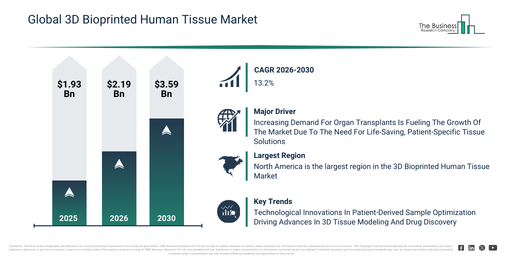
    The market for 3D bioprinted human tissue has seen swift expansion in recent times. Projected to rise from $1.93 billion in 2025 to $2.19 billion in 2026, it reflects a compound annual growth rate (CAGR) of 13.5%. This historic growth is driven by several factors, including the early uptake of tissue engineering technologies, an escalating demand for sophisticated in vitro testing models, the constraints posed by conventional animal testing approaches, increased funding for academic research, and early-stage progress in biomaterials and bioinks.

    The market for 3D bioprinted human tissue is projected to experience substantial expansion over the coming years. By 2030, its value is anticipated to reach $3.59 billion, reflecting a compound annual growth rate (CAGR) of 13.2%. This upward trajectory during the forecast period is driven by enhanced bioprinting resolution and scalability, a surge in regenerative medicine investments, heightened pharmaceutical requirements for predictive drug testing models, progress in organ transplantation studies, and the establishment of supportive regulatory frameworks for advanced therapies. Key trends shaping this period include the growing application of bioprinted tissues in drug screening and disease modeling, a rising need for regenerative medicine and tissue engineering offerings, the development of customized patient-specific constructs, stronger ties between academic and clinical research initiatives, and an expanding shift toward adopting bioprinted tissues as substitutes for animal testing.

    Download A Free Sample Report For Comprehensive Market Insights:

    https://www.thebusinessresearchcompany.com/sample.aspx?id=27196&type=smp&utm_source=BlogsPR&utm_medium=Paid&utm_campaign=Jul_PR

    3D Bioprinted Human Tissue Market Demand Drivers: What Is Fueling Industry Growth?

    The rising need for organ transplants is anticipated to drive the expansion of the 3D bioprinted human tissue market in the coming period. Organ transplantation involves the surgical transfer of organs from a donor to a recipient to restore function in organs that are damaged or failing. This growing demand stems from patients seeking life-saving interventions that shorten waiting periods, enhance survival odds, and provide hope through accessible and dependable transplant options. 3D bioprinted human tissue offers a groundbreaking approach to organ transplantation by allowing the production of patient-specific, functional tissues that lower rejection risks and decrease reliance on donor organs. For example, in January 2025, the Organ Procurement and Transplantation Network, a US-based nonprofit, reported a slight increase in kidney transplants to 27,759 in 2024, representing a 1.6 percent rise from 2023. Meanwhile, heart transplants remained relatively stable, with 4,572 procedures performed in 2024 compared to 4,545 in 2023. Consequently, the growing demand for organ transplants is fueling the growth of the 3D bioprinted human tissue market.

    3D Bioprinted Human Tissue Market Segment Breakdown: Which Categories Generate The Most Revenue?

    The 3d bioprinted human tissue market covered in this report is segmented –

    1) By Tissue Type: Skin, Cartilage, Liver, Bone, Heart, Other Tissue Types

    2) By Technology: Extrusion-Based, Inkjet Bioprinting, Laser-Assisted Bioprinting, Microfluidic And Acoustic, Magnetic Levitation, Hybrid Or 4D

    3) By Materials: Natural Biomaterials, Synthetic Biomaterials, Decellularized Extracellular Matrices, Hydrogels, Composite Materials, Other Materials

    4) By Application: Tissue Engineering, Cosmetic Surgery, Drug Testing And Development, Food Testing

    5) By End-User: Pharmaceutical Companies, Biotechnology Firms, Academic Research Institutions, Contract Research Organizations, Hospitals And Clinics

    Subsegments:

    1) By Skin: Wound Healing Applications, Cosmetic Testing Models, Skin Graft Replacements

    2) By Cartilage: Joint Repair Models, Nasal Reconstruction, Ear Reconstruction

    3) By Liver: Toxicity Testing Models, Disease Modeling, Transplant Research

    4) By Bone: Orthopedic Implants, Cranial Repair Models, Bone Graft Substitutes

    5) By Heart: Cardiac Patch Development, Heart Valve Models, Myocardial Regeneration

    6) By Other Tissue Types: Kidney Models, Lung Tissue Constructs, Pancreatic Tissue Models

    3D Bioprinted Human Tissue Market Innovation Trends: Which Developments Are Transforming The Industry?

    Major players in the 3D bioprinted human tissue market are directing efforts toward developing novel strategies, like refining the use of patient-derived samples, to build tissue models that are both highly precise and individually tailored—thereby enhancing drug testing, disease investigation, and regenerative medicine results. Patient-derived sample optimization refers to the improved capacity to make the most of limited patient cells so that multiple superior-quality, biologically faithful 3D tissue constructs can be produced, enabling more precise and personalized research findings. For example, in January 2025, Inventia Life Science Pty Ltd., a biotechnology firm based in Australia, introduced the RASTRUM platform as part of its Inventia Life Science product range. This system is specifically engineered to facilitate the quick, accurate, and reproducible generation of intricate 3D human tissue models that closely replicate actual human tissues, with applications in drug discovery, disease modeling, and regenerative medicine. The RASTRUM platform employs advanced drop-on-demand bioprinting to automate and scale up the creation of 3D cell cultures directly within standard lab plate formats, thereby markedly cutting down on manual work and inconsistency. Consequently, researchers can execute high-throughput, consistent experiments using biologically relevant tissue constructs, helping to speed up scientific breakthroughs and enhance the reliability of preclinical research outcomes.

    3D Bioprinted Human Tissue Market Key Players And Strategic Industry Positioning

    Major companies operating in the 3d bioprinted human tissue market are Inventia Life Science PTY LTD., Aspect Biosystems Ltd., Cellink Global AB, Prellis Biologics Inc., Cyfuse Biomedical K.K., Poietis SAS, Fluidform LLC, EpiBone Inc., Carcinotech Ltd., Organovo Holdings Inc., CollPlant Biotechnologies Ltd.

    Access The Complete 3D Bioprinted Human Tissue Market Report:

    https://www.thebusinessresearchcompany.com/report/3d-bioprinted-human-tissue-global-market-report?utm_source=BlogsPR&utm_medium=Paid&utm_campaign=Jul_PR

    3D Bioprinted Human Tissue Market Largest Region: Which Geography Holds The Highest Market Share?

    North America was the largest region in the 3D bioprinted human tissue market in 2025. Asia-Pacific is expected to be the fastest-growing region in the forecast period. The regions covered in the 3d bioprinted human tissue market report are Asia-Pacific, South East Asia, Western Europe, Eastern Europe, North America, South America, Middle East, Africa.

    Get in touch with us:

    The Business Research Company: https://www.thebusinessresearchcompany.com/?utm_source=BlogsPR&utm_medium=Paid&utm_campaign=home_page_test

    Americas: +1 310-496-7795

    Asia: +44 7882 955267 & +91 8897263534

    Europe: +44 7882 955267

    Email us at: marketing@tbrc.info

    Follow us on:

    LinkedIn: https://in.linkedin.com/company/the-business-research-company

    YouTube: https://www.youtube.com/channel/UC24_fI0rV8cR5DxlCpgmyFQ

    Global Market Model: https://www.thebusinessresearchcompany.com/global-market-model
  • 2D Cell Culture Market Growth Through 2030 Creates New Strategic Opportunities

    2D Cell Culture Market Growth Through 2030 Creates New Strategic Opportunities

    Enhanced with market attractiveness analysis, total addressable market evaluation, company benchmarking matrices, interactive Excel dashboards, expanded supply chain intelligence, emerging startup coverage, and detailed product insights, The Business Research Company’s 2026 market reports deliver more actionable and strategically valuable research.

    2D Cell Culture Market Size Outlook: How Fast Will Revenue Grow Through 2030?

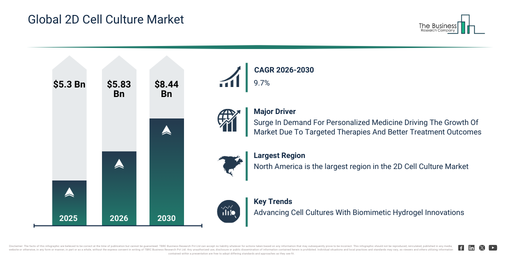
    The market for 2D cell culture has experienced robust expansion in the recent past. Its value is projected to rise from $5.3 billion in 2025 to $5.83 billion in 2026, representing a compound annual growth rate (CAGR) of 10.0%. This historic growth has been driven by the broad acceptance of monolayer culture methods, heavy reliance on these systems for initial-phase drug discovery, the supply of affordable plasticware, the dependence of academic research on two-dimensional models, and the presence of established laboratory procedures.

    The 2D cell culture market is projected to experience considerable growth in the coming years. By 2030, its valuation is anticipated to reach $8.44 billion, expanding at a compound annual growth rate (CAGR) of 9.7%. This upward trajectory during the forecast period is driven by several factors, including the increasing integration with automated imaging systems, a heightened demand from biopharmaceutical pipelines, the broadening of toxicology and safety testing applications, a greater utilization in regenerative medicine studies, and its ongoing significance alongside 3D culture models. Key trends shaping the future include the wider adoption of standardized cell culture consumables, the rising implementation of automated 2D culture platforms, a growing need for assays with high reproducibility, the expansion of high-throughput screening applications, and an intensified emphasis on cost-efficient cell-based research.

    Download A Free Sample Report For Comprehensive Market Insights:

    https://www.thebusinessresearchcompany.com/sample.aspx?id=28896&type=smp&utm_source=BlogsPR&utm_medium=Paid&utm_campaign=Jul_PR

    2D Cell Culture Market Growth Drivers: What Factors Are Accelerating Expansion?

    The growing need for personalized medicine is anticipated to boost the expansion of the 2D cell culture market in the future. Personalized medicine is a healthcare method that customizes treatment and preventive measures based on an individual’s distinct genetic profile, lifestyle, and environment, moving away from a uniform approach. This increased demand is fueled by improved therapeutic results, as targeted therapies prove more effective and cause fewer adverse reactions, leading to faster patient recovery and enhanced quality of life. The push for personalized medicine fuels the requirement for 2D cell culture by allowing researchers to cultivate and examine patient-derived cells, which facilitates the investigation of specific drug responses and the creation of customized treatment plans. In February 2024, as an example, the Personalized Medicine Coalition, a US-based nonprofit, reported that the FDA approved 16 new personalized therapies for rare disease patients in 2023, a notable jump from the six approvals in 2022. Consequently, the surging demand for personalized medicine is propelling the growth of the 2D cell culture market.

    2D Cell Culture Market Segmentation: How Is The Market Structured Across Key Categories?

    The 2d cell culture market covered in this report is segmented –

    1) By Type: Skin Cell, Lung Cell, Brain Cell, Kidney Cell, Liver Cell, Breast Cell, Other Types

    2) By Technology: 2D Cell Culture Platforms, Microfluidics Technology, Automated Cell Culture Systems, Incubation and Analysis Systems, Culture Monitoring and Control Systems

    3) By Application: Pharmaceutical, Stem Cell Research, Bioproduction, Food Application, Bioenergy, Environment Testing and Toxicology, Agriculture

    4) By End-User: Pharmaceutical Companies, Biotechnology Companies, Contract Research Organizations, Academic Research Institutes

    Subsegments:

    1) By Skin Cell: Epidermal Cell, Dermal Cell, Melanocyte, Keratinocyte

    2) By Lung Cell: Alveolar Cell, Bronchial Cell, Pneumocyte

    3) By Brain Cell: Neuron, Astrocyte, Microglia, Oligodendrocyte

    4) By Kidney Cell: Glomerular Cell, Tubular Cell, Podocyte

    5) By Liver Cell: Hepatocyte, Kupffer Cell, Stellate Cell

    6) By Breast Cell: Luminal Cell, Myoepithelial Cell, Basal Cell

    7) By Other Types: Endothelial Cell, Fibroblast, Stem Cell, Immune Cell

    2D Cell Culture Market Trends: What Is Shaping Future Industry Growth?

    Leading players within the 2D cell culture market are placing considerable emphasis on creating advanced biomaterials, including thin hydrogel coatings applied to 2D substrates, in order to promote cell adhesion, replicate native tissue conditions, and boost consistency in experimental results. These thin hydrogel coatings for 2D substrates are defined as specialized surface layers designed to offer a biomimetic, cell-friendly environment that facilitates improved cell attachment, growth, and overall functionality in 2D culture systems. For example, TheWell Bioscience Inc., a biotechnology firm headquartered in the United States, launched an innovative, xeno-free biomimetic hydrogel system in September 2025. This platform is specifically engineered to accommodate both 2D and 3D neuronal cell cultures, in addition to serving as an injectable delivery method for in vivo applications. Its purpose is to propel neuroregenerative research forward by accurately simulating the natural surroundings of cells. Furthermore, this technology finds utility across precision medicine, cell therapy, and biomanufacturing sectors. Ultimately, it marks a notable advancement in the progression of effective cell-centered therapeutic approaches.

    2D Cell Culture Market Competitive Landscape And Leading Companies

    Major companies operating in the 2d cell culture market are Tecan Group Ltd., Roche Holding AG, Thermo Fisher Scientific Inc., Takara Bio Inc., Danaher Corporation, Merck KGaA, GE Healthcare, Corning Incorporated, Becton Dickinson and Company (BD), Lonza Group AG, Agilent Technologies Inc., Sartorius AG, PerkinElmer Inc., Bio-Rad Laboratories Inc., Eppendorf AG, Bio-Techne Corporation, STEMCELL Technologies Inc., Greiner Bio-One International AG, Promega Corporation, BICO Group AB, Cedarlane Laboratories Ltd., Creative Bioarray Inc., PromoCell GmbH, Biolamina AB, HiMedia Laboratories Pvt. Ltd., 3H Biomedical AB, Cell Microsystems Inc., AlveoliX AG.

    Access The Complete 2D Cell Culture Market Report:

    https://www.thebusinessresearchcompany.com/report/2d-cell-culture-global-market-report?utm_source=BlogsPR&utm_medium=Paid&utm_campaign=Jul_PR

    2D Cell Culture Market Regional Analysis: Which Region Leads By Revenue?

    North America was the largest region in the 2D cell culture market in 2025. Asia-Pacific is expected to be the fastest-growing region in the forecast period. The regions covered in the 2d cell culture market report are Asia-Pacific, South East Asia, Western Europe, Eastern Europe, North America, South America, Middle East, Africa.

    Get in touch with us:

    The Business Research Company: https://www.thebusinessresearchcompany.com/?utm_source=BlogsPR&utm_medium=Paid&utm_campaign=home_page_test

    Americas: +1 310-496-7795

    Asia: +44 7882 955267 & +91 8897263534

    Europe: +44 7882 955267

    Email us at: marketing@tbrc.info

    Follow us on:

    LinkedIn: https://in.linkedin.com/company/the-business-research-company

    YouTube: https://www.youtube.com/channel/UC24_fI0rV8cR5DxlCpgmyFQ

    Global Market Model: https://www.thebusinessresearchcompany.com/global-market-model
  • Cancer Supportive Care Drugs Market Set To Grow From $22.4 Billion In 2026 To $25.93 Billion By 2030 At A CAGR Of 3.7%

    Cancer Supportive Care Drugs Market Set To Grow From $22.4 Billion In 2026 To $25.93 Billion By 2030 At A CAGR Of 3.7%

    Enhanced with market attractiveness analysis, total addressable market evaluation, company benchmarking matrices, interactive Excel dashboards, expanded supply chain intelligence, emerging startup coverage, and detailed product insights, The Business Research Company’s 2026 market reports deliver more actionable and strategically valuable research.

    Cancer Supportive Care Drugs Market CAGR Analysis And Future Market Development

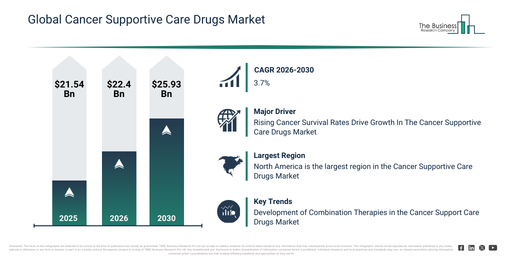
    The market for cancer supportive care drugs has experienced consistent expansion in recent years, with projections showing an increase from $21.54 billion in 2025 to $22.4 billion in 2026, reflecting a compound annual growth rate (CAGR) of 4.0%. This historical growth has been driven by several factors, including the global rise in cancer cases, the wider application of chemotherapy and radiation treatments, heightened awareness of side effects related to therapy, the development of oncology facilities in hospitals, and enhanced availability of vital supportive medicines.

    The market for cancer supportive care drugs is projected to experience consistent expansion during the upcoming years. By 2030, its value is anticipated to reach $25.93 billion, representing a compound annual growth rate (CAGR) of 3.7%. This forecasted growth is driven by factors such as an aging global population, higher rates of cancer survival, an increased emphasis on patient-focused oncology care, broader availability of treatment options in developing countries, and a heightened need for all-encompassing symptom relief. Key trends shaping this period involve a stronger focus on quality-of-life measures in cancer treatment, a greater blending of supportive care into primary oncology therapies, a surge in demand for pain and symptom management treatments, the extension of supportive care to early and long-term stages of treatment, and a wider implementation of collaborative supportive care models.

    Download A Free Sample Report For Comprehensive Market Insights:

    https://www.thebusinessresearchcompany.com/sample.aspx?id=15749&type=smp&utm_source=BlogsPR&utm_medium=Paid&utm_campaign=Jul_PR

    Cancer Supportive Care Drugs Market Industry Drivers: What Is Driving Revenue Growth?

    The rising survival rate among cancer patients is anticipated to accelerate the expansion of the cancer supportive care drugs market in the coming period. This survival rate measures the proportion of individuals who remain alive for a specific timeframe, typically five years, following a cancer diagnosis. Increases in this rate are driven by earlier detection, therapeutic advancements, enhanced diagnostic methods, and improved availability of quality healthcare. The market for cancer supportive care drugs contributes to better survival outcomes by addressing treatment-related side effects like nausea, anemia, pain, and infection susceptibility, which helps patients endure therapy and finish their full treatment regimen. As an example, in December 2024, the Cancer Council Australia, a non-profit organization based in Australia, reported that Victoria’s five-year cancer survival rate reached 72% in 2023, a significant rise from 49% three decades earlier, with rates of 73% for females and 71% for males. Consequently, the improved survival rate of cancer patients is fueling growth in the cancer supportive care drugs market.

    Cancer Supportive Care Drugs Market Segment Analysis Highlighting Growth Areas

    The cancer supportive care drugs market covered in this report is segmented –

    1) By Type: Erythropoiesis Stimulating Agents, Granulocyte Colony Stimulating Factors, Antiemetics, Bisphosphonates, Opioids, Nonsteroidal Anti Inflammatory Drugs, Other Types

    2) By Application: Breast Cancer, Lung Cancer, Colorectal Cancer, Prostate Cancer, Liver Cancer, Stomach Cancer, Other Applications

    3) By Distribution Channel: Hospital Pharmacies, Retail Pharmacies, Online Pharmacies, Specialty Clinics, Other Channels

    Subsegments:

    1) By Erythropoiesis Stimulating Agents: Epoetin Alfa, Darbepoetin Alfa, Methoxy Polyethylene Glycol-Epoetin Beta

    2) By Granulocyte Colony Stimulating Factors: Filgrastim, Pegfilgrastim, Lenograstim

    3) By Antiemetics: 5-HT3 Receptor Antagonists, NK1 Receptor Antagonists, Corticosteroids

    4) By Bisphosphonates: Zoledronic Acid, Pamidronate, Ibandronate

    5) By Opioids: Morphine, Fentanyl, Oxycodone

    6) By Nonsteroidal Anti Inflammatory Drugs (NSAIDs): Ibuprofen, Diclofenac, Celecoxib

    7) By Other Types: Steroids, Anxiolytics, Appetite Stimulants

    Cancer Supportive Care Drugs Market Growth Trends: What Is Influencing The Future Outlook?

    Leading players in the cancer supportive care drugs market are increasingly prioritizing the development of sophisticated combination therapies to tackle the intricacies of cancer treatment, boost therapeutic efficacy, and elevate patient outcomes. Combination therapies involve the concurrent use of two or more therapeutic agents to target various pathways linked to cancer growth, progression, and resistance, resulting in more sustained responses compared to single-agent treatments. For example, in November 2023, Merck, a pharmaceutical firm headquartered in the United States, secured U.S. FDA approval for KEYTRUDA, an anti-PD-1 therapy, when used alongside gemcitabine and cisplatin for patients suffering from locally advanced unresectable or metastatic biliary tract cancer. This approval led to enhanced overall survival rates and broadened treatment possibilities for a patient group that previously had limited therapeutic options.

    Cancer Supportive Care Drugs Market Leading Companies: Who Holds Significant Market Presence?

    Major companies operating in the cancer supportive care drugs market are Pfizer Inc., Johnson & Johnson, AbbVie Inc., Bayer AG, Sanofi SA, Novartis AG, F. Hoffmann-La Roche Ltd., Amgen Inc., Teva Pharmaceutical Industries Ltd., Baxter International Inc., Otsuka Pharmaceutical Co. Ltd., Eisai Co. Ltd., Merck, Bristol Myers Squibb Company, AstraZeneca plc, Takeda Pharmaceutical Company Limited, GlaxoSmithKline plc, Eli Lilly and Company, Astellas Pharma Inc., Heron Therapeutics Inc.

    Access The Complete Cancer Supportive Care Drugs Market Report:

    https://www.thebusinessresearchcompany.com/report/cancer-supportive-care-drugs-global-market-report?utm_source=BlogsPR&utm_medium=Paid&utm_campaign=Jul_PR

    Cancer Supportive Care Drugs Market Geographic Distribution And Regional Opportunities

    North America was the largest region in the cancer supportive care drugs market in 2025. Asia-Pacific is expected to be the fastest-growing region in the forecast period. The regions covered in the cancer supportive care drugs market report are Asia-Pacific, South East Asia, Western Europe, Eastern Europe, North America, South America, Middle East, Africa.

    Get in touch with us:

    The Business Research Company: https://www.thebusinessresearchcompany.com/?utm_source=BlogsPR&utm_medium=Paid&utm_campaign=home_page_test

    Americas: +1 310-496-7795

    Asia: +44 7882 955267 & +91 8897263534

    Europe: +44 7882 955267

    Email us at: marketing@tbrc.info

    Follow us on:

    LinkedIn: https://in.linkedin.com/company/the-business-research-company

    YouTube: https://www.youtube.com/channel/UC24_fI0rV8cR5DxlCpgmyFQ

    Global Market Model: https://www.thebusinessresearchcompany.com/global-market-model
  • Cancer Monoclonal Antibodies Market Opportunities Are Emerging Beyond Traditional Growth Areas

    Cancer Monoclonal Antibodies Market Opportunities Are Emerging Beyond Traditional Growth Areas

    Through market attractiveness analysis, total addressable market evaluation, company benchmarking matrices, interactive Excel dashboards, expanded supply chain intelligence, emerging startup coverage, and detailed product insights, The Business Research Company’s 2026 market reports provide more actionable and strategically valuable research.

    Cancer Monoclonal Antibodies Market Expansion From $98.1 Billion In 2026 To $166.91 Billion In 2030

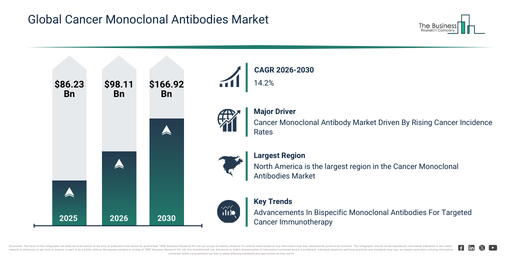
    The market for cancer monoclonal antibodies has experienced robust expansion in recent years, with its value projected to increase from $86.23 billion in 2025 to $98.11 billion in 2026, reflecting a compound annual growth rate (CAGR) of 13.8%. This historical growth has been driven by factors such as the constrained supply of monoclonal antibody treatments, a continued dependence on conventional chemotherapy, a rising prevalence of breast and blood cancers, heightened physician understanding of targeted therapeutic options, and the enlargement of oncology departments within hospitals.

    Over the coming years, the market for cancer monoclonal antibodies is anticipated to experience substantial expansion. By 2030, it is projected to reach a value of $166.92 billion, reflecting a compound annual growth rate of 14.2%. This upward trajectory in the forecast period is fueled by several factors, including the introduction of innovative immuno-oncology monoclonal antibodies, the advancement of combination therapeutic strategies, a greater emphasis on personalized cancer care, enhanced research laboratory capabilities, and heightened investment in clinical trials as well as biologics manufacturing. Key developments shaping this period encompass an increased utilization of targeted monoclonal antibody therapies across diverse cancer types, a surge in funding for immuno-oncology research and development, the broadening of personalized and precision oncology initiatives, improvements in hospital and lab infrastructure dedicated to cancer treatment, and the incorporation of combination therapies along with novel biologics into standard care practices.

    Download A Free Sample Report For Comprehensive Market Insights:

    https://www.thebusinessresearchcompany.com/sample.aspx?id=3451&type=smp&utm_source=BlogsPR&utm_medium=Paid&utm_campaign=Jul_PR

    #Cancer Monoclonal Antibodies Market Growth Factors: Which Forces Are Supporting Market Expansion?

    The global increase in cancer diagnoses is expected to drive growth in the cancer monoclonal antibody market. Cancer encompasses a group of diseases characterized by the uncontrolled proliferation of abnormal cells, which invade surrounding tissues and may metastasize to other areas of the body. This rising prevalence is closely tied to an aging population, as advanced age represents the primary risk factor for most cancers, with the majority of cases found in individuals over 65. Monoclonal antibody therapies aid in cancer treatment by specifically identifying and attaching to tumor-associated antigens, directly impeding cancer cell proliferation, marking malignant cells for immune system destruction, precisely delivering cytotoxic agents to tumors, and altering the tumor microenvironment to strengthen the body’s natural anti-cancer defense. For example, in July 2024, the Australian Institute of Health and Welfare, a government agency in Australia, reported that the number of diagnosed cancer cases rose from 160,570 in 2022 to 164,694 in 2023, indicating a substantial increase within a single year. This trend underscores the growing prevalence of cancer in the country. Globally, the four most prevalent cancer types—lung, prostate, bowel, and female breast cancer—together account for 43% of all new diagnoses. Consequently, the worldwide rise in cancer incidence is expected to fuel demand for growth in the cancer monoclonal antibody market.

    Cancer Monoclonal Antibodies Market Segment Performance And Strategic Opportunities

    The cancer monoclonal antibodies market covered in this report is segmented –

    1) By Monoclonal Antibody Therapies: Avastin, Herceptin,Keytruda, Opdivo, Darzalex, Perjeta, Others

    2) By Application: Breast Cancer, Blood Cancer, Lung Cancer, Brain Tumor,Colorectal Cancer, Cervical Cancer, Gastric Cancer, Others

    3) By End-User: Hospitals, Research Laboratories, Others

    Subsegments:

    1) By Avastin: Colorectal Cancer Treatment, Lung Cancer Treatment, Renal Cell Carcinoma Treatment

    2) By Herceptin: Breast Cancer Treatment, Gastric Cancer Treatment

    3) By Keytruda: Melanoma Treatment, Non-Small Cell Lung Cancer (NSCLC) Treatment, Head And Neck Cancer Treatment

    4) By Opdivo: Melanoma Treatment, Renal Cell Carcinoma Treatment, Hodgkin Lymphoma Treatment

    5) By Darzalex: Multiple Myeloma Treatment, AL Amyloidosis Treatment

    6) By Perjeta: Breast Cancer Treatment, Neoadjuvant Therapy For HER2-Positive Breast Cancer

    7) By Others: Cetuximab (Erbitux) For Colorectal And Head And Neck Cancers, Rituximab (Rituxan) For Non-Hodgkin Lymphoma And Chronic Lymphocytic Leukemia, Atezolizumab (Tecentriq) For Various Cancers

    Cancer Monoclonal Antibodies Market Industry Trends: What Changes Are Reshaping Demand?

    Leading players in the cancer monoclonal antibodies market are increasingly prioritizing innovations in oncology, especially the development of bispecific antibody technology designed to direct T-cells toward malignant B-cells. This technology involves engineered antibodies capable of binding to two distinct antigens simultaneously, which facilitates precise immune system activation against tumor cells. A notable example occurred in May 2023 when AbbVie Inc., a biopharmaceutical firm based in the United States, secured accelerated approval from the FDA for EPKINLY (epcoritamab-bysp) and subsequently brought it to market. The therapy is indicated for adult patients suffering from relapsed or refractory diffuse large B-cell lymphoma and high-grade B-cell lymphoma, following at least two prior systemic treatments. By employing bispecific antibody technology, it effectively recruits T-cells, offering a novel and targeted strategy for lymphoma care.

    Cancer Monoclonal Antibodies Market Key Players: Which Companies Shape Industry Competition?

    Major companies operating in the cancer monoclonal antibodies market are F. Hoffmann-La Roche Ltd, Merck & Co. Inc, Bristol Myers Squibb Company, Johnson & Johnson, Amgen Inc, AstraZeneca plc, Eli Lilly and Company, Pfizer Inc, Regeneron Pharmaceuticals Inc, Sanofi S.A, Innovent Biologics, Sino biological, Shanghai Henlius Biotech, Intas bio, Zydus Cadila, Ranbaxy, Takeda pharmaceuticals, AbbVie Inc, Biogen Idec, Bayer AG, Novartis AG, BiosanaPharma, WuXi, GlaxoSmithKline, Teva UK Limited, Abbott Laboratories, Fujifilm, Procos SpA, BSP Pharmaceuticals, Genmab, Insysbio, Gilead Sciences, Eurofarma, BIONOVIS BRASIL, Ache, Libbs Farmaceutica, Julphar, Spimaco Addwaeih, Hikma Pharmaceuticals, Tabuk, Genzyme

    Access The Complete Cancer Monoclonal Antibodies Market Report:

    https://www.thebusinessresearchcompany.com/report/cancer-monoclonal-antibodie-global-market-report?utm_source=BlogsPR&utm_medium=Paid&utm_campaign=Jul_PR

    Cancer Monoclonal Antibodies Market Largest Region By Revenue And Market Share

    North America was the largest region in the cancer monoclonal antibodies market in 2025. The regions covered in the cancer monoclonal antibodies market report are Asia-Pacific, South East Asia, Western Europe, Eastern Europe, North America, South America, Middle East, Africa.

    Get in touch with us:

    The Business Research Company: https://www.thebusinessresearchcompany.com/?utm_source=BlogsPR&utm_medium=Paid&utm_campaign=home_page_test

    Americas: +1 310-496-7795

    Asia: +44 7882 955267 & +91 8897263534

    Europe: +44 7882 955267

    Email us at: marketing@tbrc.info

    Follow us on:

    LinkedIn: https://in.linkedin.com/company/the-business-research-company

    YouTube: https://www.youtube.com/channel/UC24_fI0rV8cR5DxlCpgmyFQ

    Global Market Model: https://www.thebusinessresearchcompany.com/global-market-model
  • Cancer Immunotherapy Drug Discovery Outsourcing Market Expansion Is Opening New Pathways For Strategic Investment

    Cancer Immunotherapy Drug Discovery Outsourcing Market Expansion Is Opening New Pathways For Strategic Investment

    Delivering more actionable and strategically valuable research, The Business Research Company’s 2026 market reports feature market attractiveness analysis, total addressable market evaluation, company benchmarking matrices, interactive Excel dashboards, expanded supply chain intelligence, emerging startup coverage, and detailed product insights.

    Cancer Immunotherapy Drug Discovery Outsourcing Market Forecast Highlighting Growth From $1.84 Billion To $2.63 Billion

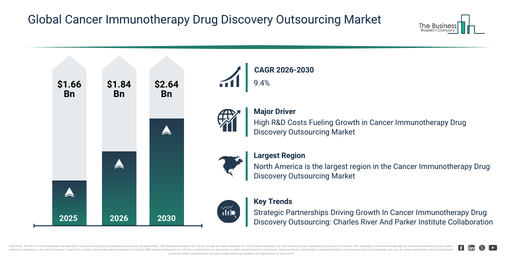
    The market for outsourcing cancer immunotherapy drug discovery has experienced swift expansion in recent years. Projected to increase from $1.66 billion in 2025 to $1.84 billion in 2026, it reflects a compound annual growth rate (CAGR) of 10.9%. This historical growth has been driven by factors such as the escalating global incidence of cancer, higher research and development expenses for immunotherapy treatments, constrained internal discovery resources, the proliferation of biologics and monoclonal antibody development programs, and the broadening of contract research organization (CRO) capabilities.

    The market for cancer immunotherapy drug discovery outsourcing is anticipated to post substantial growth in the coming years, reaching a value of $2.64 billion by 2030 at a compound annual growth rate (CAGR) of 9.4%. Several factors are expected to fuel this expansion during the forecast period, including an escalating need for precision immuno-oncology treatments, a surge in the formation of new biotech companies, the increasing intricacy of immunotherapy platforms, the imperative to reduce drug development durations, and heightened funding for outsourced discovery operations. Key developments shaping this period will involve the growing delegation of early-phase immunotherapy research to external partners, a rising demand for specialized contract research organization expertise, an expansion of cell-based and immune assay services, stronger alliances between pharmaceutical and biotechnology enterprises, and speedier progress in creating advanced immunotherapies.

    Download A Free Sample Report For Comprehensive Market Insights:

    https://www.thebusinessresearchcompany.com/sample.aspx?id=15528&type=smp&utm_source=BlogsPR&utm_medium=Paid&utm_campaign=Jul_PR

    Cancer Immunotherapy Drug Discovery Outsourcing Market Demand Drivers: What Is Fueling Industry Growth?

    Growing research and development expenses are anticipated to boost the expansion of the cancer immunotherapy drug discovery outsourcing market moving forward. These costs represent the significant financial commitment needed for scientific knowledge, advanced lab facilities, sophisticated technologies, and high-risk innovative processes. R&D spending continues to climb as scientific complexity increases and highly specialized expertise becomes essential. By utilizing contract research organizations (CROs), the cancer immunotherapy drug discovery outsourcing market helps pharmaceutical and biotechnology firms gain cost-effective access to cutting-edge research resources. For example, in August 2025, the UK-based Office for National Statistics (ONS) reported that in 2023, R&D expenditure conducted in the UK reached $95.2 billion, marking a $3.93 billion increase in current prices compared to 2022. Consequently, the elevated expense of in-house research and development is fueling progress in the cancer immunotherapy drug discovery outsourcing market.

    Cancer Immunotherapy Drug Discovery Outsourcing Market Driver: The Rise In Cancer Incidence Driving The Growth Of The Market Due To Increased Demand For Targeted Therapies

    A growing cancer incidence is set to drive the expansion of the cancer immunotherapy drug discovery outsourcing market going ahead. Cancer incidence denotes the count of newly diagnosed cancer cases within a particular population over a defined timeframe. Increased tobacco and alcohol use, along with widespread smoking, are fueling the uptick in global cancer cases. Cancer immunotherapy drug discovery outsourcing aids in addressing this rising incidence by speeding up the creation of targeted therapies that enhance treatment success and patient survival. As an illustration, in September 2025, Cancer Research UK, a charitable organization based in the UK, estimated that from 2024 to 2026, the leukemia incidence rate in the UK stands at roughly 17.9 cases per 100,000 people annually, with a projected 3% decline to about 17.4 per 100,000 by 2038 to 2040. Hence, the escalating cancer incidence is propelling the growth of the cancer immunotherapy drug discovery outsourcing market.

    Cancer Immunotherapy Drug Discovery Outsourcing Market Segment Landscape And Growth Potential

    The cancer immunotherapy drug discovery outsourcing market covered in this report is segmented –

    1) By Drug Type: Monoclonal Antibodies, Immunomodulators, Oncolytic Viral Therapies And Cancer Vaccines, Other Drug Types

    2) By Service Type: Target Identification And Validation, Lead Screening And Characterization, Cell-Based Assays

    3) By Therapeutic Area: Lung Cancer, Breast Cancer, Melanoma, Other Therapeutic Areas

    Subsegments:

    1) By Monoclonal Antibodies: Checkpoint Inhibitors, Therapeutic Monoclonal Antibodies, Bispecific Antibodies, Antibody-Drug Conjugates (ADCs)

    2) By Immunomodulators: Cytokines, Immune Checkpoint Modulators, Toll-Like Receptor Agonists, Immune Adjuvants

    3) By Oncolytic Viral Therapies And Cancer Vaccines: Oncolytic Virus-Based Therapies, Cancer Vaccines, Viral Vectors For Immunotherapy

    4) By Other Drug Types: Adoptive Cell Therapy, Immune Cell Modulators, Small Molecule Immune Modulators, Gene Editing And Immunotherapy

    Cancer Immunotherapy Drug Discovery Outsourcing Market Innovation Trends: Which Developments Are Transforming The Industry?

    Leading corporations in the market for cancer immunotherapy drug discovery outsourcing are increasingly pursuing strategic alliance strategies to speed up the creation of innovative treatments. These collaborative arrangements foster growth in this sector by offering entry to cutting-edge technologies, specialized knowledge, and comprehensive services, consequently shortening development periods and enhancing the effectiveness of advancing novel cancer immunotherapies toward clinical application. For example, in September 2025, Charles River Laboratories, a contract research organization based in the United States, teamed up with the Parker Institute for Cancer Immunotherapy, a non-profit cancer research entity also from the US, with the goal of expediting progress on new cancer therapies. This joint effort is centered on refining preclinical testing and manufacturing processes for advanced cell and gene treatments. Leveraging Charles River’s proficiency in contract research alongside the Parker Institute’s immunotherapy initiatives, this partnership is designed to deliver innovative cancer solutions to patients with greater efficiency.

    Cancer Immunotherapy Drug Discovery Outsourcing Market Competitive Landscape: Who Are The Leading Companies?

    Major companies operating in the cancer immunotherapy drug discovery outsourcing market are Thermo Fisher Scientific Inc., Danaher Corporation, Laboratory Corporation of America Holdings (LabCorp), Eurofins Scientific SE, WuXi AppTec Co Ltd., Charles River Laboratories International Inc., PerkinElmer Inc, Bio-Rad Laboratories Inc, QIAGEN N.V., Evotec SE, Shanghai ChemPartner Co. Ltd., Aragen Life Sciences Limited, GenScript Biotech Corporation, BGI Genomics Co. Ltd., NeoGenomics Laboratories Inc, ARUP Laboratories, Syngene International Limited, BioDuro-Sundia, Ambry Genetics Corporation, Selvita, Crown Bioscience International, CENTOGENE N.V., Oncodesign Services, Reaction Biology Corporation

    Access The Complete Cancer Immunotherapy Drug Discovery Outsourcing Market Report:

    https://www.thebusinessresearchcompany.com/report/cancer-immunotherapy-drug-discovery-outsourcing-global-market-report?utm_source=BlogsPR&utm_medium=Paid&utm_campaign=Jul_PR

    Cancer Immunotherapy Drug Discovery Outsourcing Market Regional Analysis And Leading Geography

    North America was the largest region in the cancer immunotherapy drug discovery outsourcing market in 2025. Asia-Pacific is expected to be the fastest-growing region in the forecast period. The regions covered in the cancer immunotherapy drug discovery outsourcing market report are Asia-Pacific, South East Asia, Western Europe, Eastern Europe, North America, South America, Middle East, Africa.

    Get in touch with us:

    The Business Research Company: https://www.thebusinessresearchcompany.com/?utm_source=BlogsPR&utm_medium=Paid&utm_campaign=home_page_test

    Americas: +1 310-496-7795

    Asia: +44 7882 955267 & +91 8897263534

    Europe: +44 7882 955267

    Email us at: marketing@tbrc.info

    Follow us on:

    LinkedIn: https://in.linkedin.com/company/the-business-research-company

    YouTube: https://www.youtube.com/channel/UC24_fI0rV8cR5DxlCpgmyFQ

    Global Market Model: https://www.thebusinessresearchcompany.com/global-market-model