Blog

  • Calcitonin Gene-Related Peptide (CGRP) Inhibitors Market Growth Outlook Reveals A CAGR Of 9.8% And A Market Value Of $5.02 Billion By 2030

    Calcitonin Gene-Related Peptide (CGRP) Inhibitors Market Growth Outlook Reveals A CAGR Of 9.8% And A Market Value Of $5.02 Billion By 2030

    Through market attractiveness analysis, total addressable market evaluation, company benchmarking matrices, interactive Excel dashboards, expanded supply chain intelligence, emerging startup coverage, and detailed product insights, The Business Research Company’s 2026 market reports provide more actionable and strategically valuable research.

    Calcitonin Gene-Related Peptide (CGRP) Inhibitors Market Growth Analysis: How Will Revenue Expand During The Forecast Period?

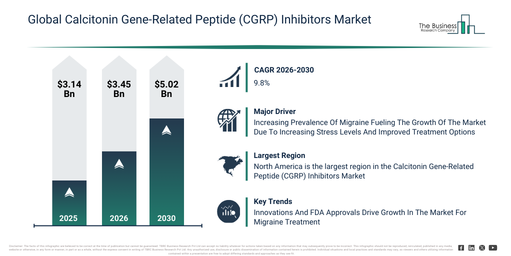
    The market for calcitonin gene-related peptide (CGRP) inhibitors has experienced robust expansion over the past few years. Its value is projected to rise from $3.14 billion in 2025 to $3.45 billion in 2026, reflecting a compound annual growth rate (CAGR) of 9.9%. This past growth has been driven by factors such as the increasing incidence of migraine conditions, the shortcomings of traditional migraine treatments, stronger clinical evidence supporting the CGRP pathway, greater adoption by neurologists, and supportive reimbursement policies in developed economies.

    The market for calcitonin gene-related peptide (CGRP) inhibitors is projected to experience robust expansion over the coming years. By 2030, it is anticipated to reach $5.02 billion, reflecting a compound annual growth rate (CAGR) of 9.8%. This forecasted growth can be linked to several factors: the enlarging pool of patients suffering from chronic migraines, the development of a broader pipeline for oral CGRP inhibitors, a growing need for sustained migraine prevention, better patient adherence to targeted treatment options, and enhanced market access in developing regions. Notable trends expected to shape the forecast period encompass the rising uptake of targeted migraine therapies, a growing emphasis on preventive approaches to migraine care, an increased preference for non-opioid pain relief strategies, the advancement of oral small-molecule CGRP inhibitors, and heightened awareness coupled with better diagnostic rates for chronic migraines.

    Download A Free Sample Report For Comprehensive Market Insights:

    https://www.thebusinessresearchcompany.com/sample.aspx?id=24182&type=smp&utm_source=BlogsPR&utm_medium=Paid&utm_campaign=Jul_PR

    #Calcitonin Gene-Related Peptide (CGRP) Inhibitors Market Growth Factors: Which Forces Are Supporting Market Expansion?

    The rising incidence of migraine is anticipated to drive forward the calcitonin gene-related peptide (CGRP) inhibitors market. Migraine is characterized by intense headache episodes, frequently causing throbbing pain on one side of the head, accompanied by symptoms such as nausea, vomiting, and heightened sensitivity to light and sound. This increasing prevalence is linked to elevated stress levels, as chronic stress activates specific neural pathways. CGRP inhibitors offer a targeted preventive approach for migraine management, compatible with both acute and chronic treatment plans, by effectively blocking CGRP receptors to reduce headache frequency and severity, thereby enhancing patient well-being and daily functioning. In January 2023, data from the National Library of Medicine, a US-based health information institution, revealed that the global migraine prevalence ranges between 14% and 15%, accounting for 4.9% of the worldwide disease burden. Consequently, the growing prevalence of migraine is fueling the expansion of the CGRP inhibitors market.

    Calcitonin Gene-Related Peptide (CGRP) Inhibitors Market Segment Analysis Highlighting Growth Areas

    The calcitonin gene-related peptide (cgrp) inhibitors market covered in this report is segmented –

    1) By Type Of Inhibitor: Monoclonal Antibodies, Small Molecules, Peptides

    2) By Mechanism Of Action: Anti-Calcitonin Gene-Related Peptide (CGRP) Ligand, Calcitonin Gene-Related Peptide (CGRP) Receptor Antagonist

    3) By Route of Administration: Oral, Nasal, Intravenous

    4) By Treatment: Preventive Migraine Treatment, Acute Migraine Treatment

    5) By End User: Hospitals, Specialty Clinics, Mail Order Pharmacies, Retail Pharmacies

    Subsegments:

    1) By Monoclonal Antibodies: Erenumab (Aimovig), Eptinezumab (Vyepti), Fremanezumab (Ajovy), Galcanezumab (Emgality)

    2) By Small Molecules: Ubrogepant, Rimegepant, Atogepant, Zavegepant

    3) By Peptides: Calcitonin Gene-Related Peptide (CGRP) Antagonist Peptides, Modified Calcitonin Gene-Related Peptide (CGRP) Analogs, Intranasal Peptide Formulations, Peptide-Based Delivery Systems

    Calcitonin Gene-Related Peptide (CGRP) Inhibitors Market Industry Trends: What Changes Are Reshaping Demand?

    Key players in the calcitonin gene-related peptide (CGRP) inhibitors market are concentrating their efforts on creating groundbreaking products aimed at obtaining regulatory approvals, such as CGRP receptor antagonists designed to improve migraine treatment effectiveness, broadening the range of therapeutic uses, and providing more patient-friendly delivery methods like oral and intranasal forms. A CGRP receptor antagonist is a medication that blocks the CGRP receptor to interrupt pain signals associated with migraines. As an example, in April 2023, AbbVie Inc., a biotechnology firm based in the United States, secured approval from the U.S. Food and Drug Administration (FDA) for QULIPTA (atogepant) in the management of chronic migraine among adults. QULIPTA is an oral CGRP receptor antagonist that functions by obstructing CGRP receptors, which play a role in migraine mechanisms, thus aiding in the prevention of migraine episodes.

    Calcitonin Gene-Related Peptide (CGRP) Inhibitors Market Leading Companies: Who Holds Significant Market Presence?

    Major companies operating in the calcitonin gene-related peptide (cgrp) inhibitors market are Pfizer Inc., F. Hoffmann-La Roche AG, Merck & Co. Inc., AbbVie Inc., Bristol Myers Squibb Company, AstraZeneca plc, Novartis AG, Eli Lilly and Company, Amgen Inc., Otsuka Holdings Co. Ltd., Teva Pharmaceutical Industries Ltd., H. Lundbeck A/S, Kissei Pharmaceutical Co. Ltd., Shanghai Junshi Biosciences Co. Ltd., Shin Nippon Biomedical Laboratories Ltd., Sosei Group Corporation, Nuvie Bio Inc., Vaxxinity Inc., Acherx LLC, AfaSci Inc.

    Access The Complete Calcitonin Gene-Related Peptide (CGRP) Inhibitors Market Report:

    https://www.thebusinessresearchcompany.com/report/calcitonin-gene-related-peptide-cgrp-inhibitors-global-market-report?utm_source=BlogsPR&utm_medium=Paid&utm_campaign=Jul_PR

    Calcitonin Gene-Related Peptide (CGRP) Inhibitors Market Regional Analysis And Leading Geography

    North America was the largest region in the calcitonin gene-related peptide (CGRP) inhibitors market in 2025. Asia-Pacific is expected to be the fastest-growing region in the forecast period. The regions covered in the calcitonin gene-related peptide (cgrp) inhibitors market report are Asia-Pacific, South East Asia, Western Europe, Eastern Europe, North America, South America, Middle East, Africa.

    Get in touch with us:

    The Business Research Company: https://www.thebusinessresearchcompany.com/?utm_source=BlogsPR&utm_medium=Paid&utm_campaign=home_page_test

    Americas: +1 310-496-7795

    Asia: +44 7882 955267 & +91 8897263534

    Europe: +44 7882 955267

    Email us at: marketing@tbrc.info

    Follow us on:

    LinkedIn: https://in.linkedin.com/company/the-business-research-company

    YouTube: https://www.youtube.com/channel/UC24_fI0rV8cR5DxlCpgmyFQ

    Global Market Model: https://www.thebusinessresearchcompany.com/global-market-model
  • Calcineurin Inhibitors Market Forecast Highlights Expansion From $10.23 Billion To $13.78 Billion Through 2030

    Calcineurin Inhibitors Market Forecast Highlights Expansion From $10.23 Billion To $13.78 Billion Through 2030

    Delivering more actionable and strategically valuable research, The Business Research Company’s 2026 market reports feature market attractiveness analysis, total addressable market evaluation, company benchmarking matrices, interactive Excel dashboards, expanded supply chain intelligence, emerging startup coverage, and detailed product insights.

    Calcineurin Inhibitors Market Forecast: What Market Value Is Expected By 2030?

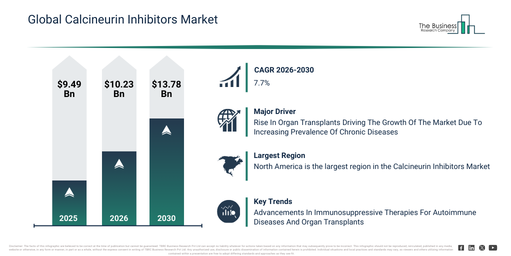
    The calcineurin inhibitors market has experienced robust expansion in recent years. By 2025, its value reached $9.49 billion, and this figure is projected to rise to $10.23 billion come 2026, reflecting a compound annual growth rate (CAGR) of 7.8%. Several factors drove this growth during the historical period, including a rising number of organ transplant surgeries, broad clinical adoption of immunosuppressive therapies, extended utilization in managing chronic autoimmune diseases, the proliferation of hospital-affiliated transplant facilities, and the continued presence of branded drug formulations.

    The market for calcineurin inhibitors is anticipated to experience substantial expansion in the coming years. By 2030, it is projected to reach $13.78 billion, achieving a compound annual growth rate (CAGR) of 7.7%. Key factors driving this growth during the forecast period include increasing transplant waiting lists, a higher prevalence of autoimmune diseases, broader generic drug manufacturing, greater market penetration in emerging regions, and the creation of better drug delivery systems. Prominent trends for this period involve the sustained use of these drugs in organ transplant management, their growing application in treating autoimmune conditions, a rising preference for generic and biosimilar alternatives, expanded usage of topical treatments, and an intensified focus on refining dosage strategies and enhancing safety profiles.

    Download A Free Sample Report For Comprehensive Market Insights:

    https://www.thebusinessresearchcompany.com/sample.aspx?id=23336&type=smp&utm_source=BlogsPR&utm_medium=Paid&utm_campaign=Jul_PR

    Calcineurin Inhibitors Market Demand Drivers: What Is Fueling Industry Growth?

    A growing number of organ transplant procedures is expected to fuel the expansion of the calcineurin inhibitors market in the coming years. An organ transplant involves surgically replacing a failing or damaged organ with a healthy one from a donor. The rising frequency of such procedures is largely driven by the increasing prevalence of chronic conditions like diabetes and hypertension, which often lead to organ failure and heighten the need for transplants. Calcineurin inhibitors play a critical role in these surgeries by suppressing T-cell activation, which prevents the immune system from recognizing the transplanted organ as foreign and mounting an attack. This action helps lower the risk of organ rejection and promotes long-term graft survival. As a case in point, data from the Organ Procurement and Transplantation Network (OPTN), a US-based transplant system, released in January 2025, shows that more than 48,000 organ transplants were performed in 2024—a 3.3% rise over 2023. Consequently, the continued increase in organ transplant procedures is propelling the calcineurin inhibitors market forward.

    Calcineurin Inhibitors Market Segment Performance And Strategic Opportunities

    The calcineurin inhibitors market covered in this report is segmented –

    1) By Product: Branded, Generic

    2) By Dosage: Tablets And Capsules, Ointments, Injections, Other Dosages

    3) By Indication: Organ Transplantation, Autoimmune Disease, Other Indications

    4) By End User: Hospitals, Homecare Settings, Pharmacies

    Subsegments:

    1) By Branded: Patented Drugs, Proprietary Formulations

    2) By Generic: Off-Patent Equivalents, Biosimilars

    Calcineurin Inhibitors Market Innovation Trends: Which Developments Are Transforming The Industry?

    Key players in the calcineurin inhibitors market are prioritizing the development of immunosuppressive therapies, including drugs for autoimmune conditions, aimed at controlling excessive immune reactions, alleviating inflammation, and preventing tissue harm. Autoimmune disease medications function by modulating the immune system through suppression of overactive responses or alteration of immune activity to curb inflammation and tissue injury, encompassing corticosteroids, immunosuppressants, biologics, and disease-modifying antirheumatic drugs (DMARDs). As an example, in April 2024, Biocon Limited, a biopharmaceutical firm based in India, secured approval from the South African Health Products Regulatory Authority (SAHPRA) for Tacrolimus. This calcineurin inhibitor and immunosuppressant is utilized to avert organ rejection in transplant recipients, having been extensively employed in renal transplant scenarios for over twenty years due to its efficacy. Tacrolimus operates by attaching to the immunophilin FKBP-12, creating a complex that suppresses calcineurin activity. This suppression hinders NF-AT dephosphorylation, thereby diminishing interleukin-2 (IL-2) production and T-cell proliferation, processes critical to the immune response against transplanted organs.

    Calcineurin Inhibitors Market Key Players: Which Companies Shape Industry Competition?

    Major companies operating in the calcineurin inhibitors market are Pfizer Inc., Roche Holding AG, Bristol-Myers Squibb Company, Novartis AG, Viatris Inc., Astellas Pharma Inc., Bausch Health Companies Inc., Huadong Medicine Co. Ltd., Sun Pharmaceutical Industries Ltd., Apotex Inc., Dr. Reddy’s Laboratories Ltd., Cipla Ltd., Lupin Pharmaceutical Inc., Zydus Cadila, Biocon Limited, Glenmark Pharmaceuticals Ltd., Accord Healthcare Ltd., Strides Pharma Science Limited, Harrow Inc., Panacea Biotec Ltd.

    Access The Complete Calcineurin Inhibitors Market Report:

    https://www.thebusinessresearchcompany.com/report/calcineurin-inhibitors-global-market-report?utm_source=BlogsPR&utm_medium=Paid&utm_campaign=Jul_PR

    Calcineurin Inhibitors Market Geographic Analysis: Where Is Demand Growing The Fastest?

    North America was the largest region in the calcineurin inhibitors market in 2025. Asia-Pacific is expected to be the fastest-growing region in the forecast period. The regions covered in the calcineurin inhibitors market report are Asia-Pacific, South East Asia, Western Europe, Eastern Europe, North America, South America, Middle East, Africa.

    Get in touch with us:

    The Business Research Company: https://www.thebusinessresearchcompany.com/?utm_source=BlogsPR&utm_medium=Paid&utm_campaign=home_page_test

    Americas: +1 310-496-7795

    Asia: +44 7882 955267 & +91 8897263534

    Europe: +44 7882 955267

    Email us at: marketing@tbrc.info

    Follow us on:

    LinkedIn: https://in.linkedin.com/company/the-business-research-company

    YouTube: https://www.youtube.com/channel/UC24_fI0rV8cR5DxlCpgmyFQ

    Global Market Model: https://www.thebusinessresearchcompany.com/global-market-model
  • C5 Complement Inhibitors Market Expected To Reach $14.93 Billion By 2030 As Growth Accelerates At 13.7% CAGR

    C5 Complement Inhibitors Market Expected To Reach $14.93 Billion By 2030 As Growth Accelerates At 13.7% CAGR

    Enhanced with market attractiveness analysis, total addressable market evaluation, company benchmarking matrices, interactive Excel dashboards, expanded supply chain intelligence, emerging startup coverage, and detailed product insights, The Business Research Company’s 2026 market reports deliver more actionable and strategically valuable research.

    C5 Complement Inhibitors Market Size Outlook: How Fast Will Revenue Grow Through 2030?

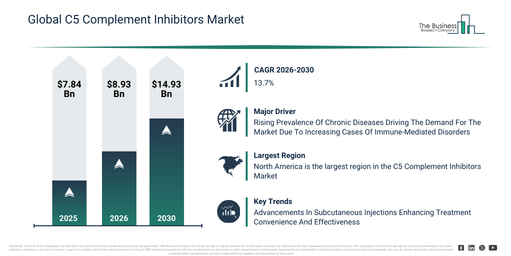
    The market for c5 complement inhibitors has experienced significant expansion in recent years. Projections indicate an increase from $7.84 billion in 2025 to $8.93 billion in 2026, reflecting a compound annual growth rate (CAGR) of 13.9%. Several factors drove this historical growth, including the approval of pioneering complement inhibitors, a rising prevalence of diagnosed rare hematological conditions, heightened clinical understanding of complement pathways, the proliferation of specialized treatment facilities, and robust progress in biologic drug development programs.

    The market for c5 complement inhibitors is anticipated to experience substantial expansion over the coming years. By 2030, its value is projected to hit $14.93 billion, reflecting a compound annual growth rate (CAGR) of 13.7%. Several factors are driving this forecasted growth, including a higher incidence of autoimmune and rare conditions, the broadening of tailored medicine strategies, a dynamic pipeline for next-generation inhibitors, enhanced capabilities for biologic manufacturing, and favorable regulatory frameworks for orphan drugs. Key developments shaping this period involve an increased uptake of targeted immunotherapies, broader application in uncommon complement-related diseases, a shift toward long-acting formulations, the emergence of combined therapeutic protocols, and a heightened emphasis on prompt diagnosis and early treatment.

    Download A Free Sample Report For Comprehensive Market Insights:

    https://www.thebusinessresearchcompany.com/sample.aspx?id=23334&type=smp&utm_source=BlogsPR&utm_medium=Paid&utm_campaign=Jul_PR

    C5 Complement Inhibitors Market Growth Drivers: What Factors Are Accelerating Expansion?

    The growth of the C5 complement inhibitors market is anticipated to be driven by the rising frequency of chronic diseases. These conditions are long-term medical issues that develop gradually and persist, often demanding ongoing care and oversight to avert complications. Their increasing occurrence is primarily fueled by lifestyle factors like unhealthy eating, lack of exercise, smoking, and stress, which lead to progressive health decline. By inhibiting complement system overactivation, C5 complement inhibitors reduce inflammation, avert tissue harm, and enhance patient outcomes for diseases like PNH, aHUS, and other complement-linked disorders. As an illustration, the International Diabetes Federation, a nonprofit based in Belgium, reported in April 2025 that over 9.5 million individuals globally had type 1 diabetes in 2024, with 1.9 million being children and adolescents under 20. The worldwide diabetic population is projected to surge to 853 million by 2050. Consequently, the escalating prevalence of chronic diseases is propelling the expansion of the C5 complement inhibitors market.

    C5 Complement Inhibitors Market Segment Landscape And Growth Potential

    The c5 complement inhibitors market covered in this report is segmented –

    1) By Product: Long Acting C5 Inhibitors, Short Acting C5 Inhibitors

    2) By Drug: Eculizumab, Ravulizumab, Other Drugs

    3) By Route Of Administration: Intravenous, Subcutaneous

    4) By Distribution Channel: Hospital Pharmacies, Retail Pharmacies

    5) By Application: Paroxysmal Noctural Hemoglobuinuria, Atyptical Hemolytic Uremic Syndrome, Generalized Myasthenia Gravis, Neuromyelitis Optics Spectrum Disorder, Other Applications

    Subsegments:

    1) By Long Acting C5 Inhibitors: Crovalimab, Pozelimab, Tesidolumab, Other Long-Acting C5 Inhibitors

    2) By Short Acting C5 Inhibitors: Zilucoplan, Cemdisiran, Nomacopan, Other Short-Acting C5 Inhibitors

    C5 Complement Inhibitors Market Trends: What Is Shaping Future Industry Growth?

    Key players in the C5 complement inhibitors market are prioritizing the development of innovative treatments, including self-administered C5 inhibitors, to broaden therapeutic options for generalized myasthenia gravis. These self-administered C5 inhibitors function as targeted therapies that inhibit the complement C5 protein, thereby reducing inflammation and immune-related tissue damage, and are intended for patient use in managing conditions like paroxysmal nocturnal hemoglobinuria and atypical hemolytic uremic syndrome. A notable example occurred in October 2023, when Union Chimique Belge (UCB) SA, a biopharmaceutical firm headquartered in Belgium, received approval from the U.S. Food and Drug Administration (FDA), a federal regulatory body, for Zilbrysq (zilucoplan) to treat adults with generalized myasthenia gravis (gMG). This authorization is limited to patients who test positive for anti-acetylcholine receptor (AChR) antibodies, a prevalent subtype of the disorder. As a once-daily, subcutaneous C5 complement inhibitor that can be self-administered, Zilbrysq introduces a novel therapeutic alternative for individuals with gMG. This regulatory success enhances UCB’s neurology pipeline, giving patients with autoimmune neuromuscular conditions greater access to diverse treatment options.

    C5 Complement Inhibitors Market Competitive Landscape: Who Are The Leading Companies?

    Major companies operating in the c5 complement inhibitors market are AstraZeneca plc, F. Hoffmann-La Roche AG, Chugai Pharmaceutical Co. Ltd., Swedish Orphan Biovitrum AB, Alnylam Pharmaceuticals Inc., BioCryst Pharmaceuticals Inc., Omeros Corporation, Dianthus Therapeutics Inc., Akari Therapeutics Plc, Regeneron Pharmaceuticals Inc., UCB Pharma SA, Astellas Pharma Inc., InflaRx NV, Alexion Pharmaceuticals Inc., Ra Pharmaceuticals Inc., ChemoCentryx Inc., Annexon Biosciences Inc., Iveric Bio Inc., Apellis Pharmaceuticals Inc., Kira Pharmaceuticals Inc.

    Access The Complete C5 Complement Inhibitors Market Report:

    https://www.thebusinessresearchcompany.com/report/c5-complement-inhibitors-global-market-report?utm_source=BlogsPR&utm_medium=Paid&utm_campaign=Jul_PR

    C5 Complement Inhibitors Market Global Footprint: Which Region Holds Market Leadership?

    North America was the largest region in the C5 complement inhibitors market in 2025. Asia-Pacific is expected to be the fastest-growing region in the forecast period. The regions covered in the c5 complement inhibitors market report are Asia-Pacific, South East Asia, Western Europe, Eastern Europe, North America, South America, Middle East, Africa.

    Get in touch with us:

    The Business Research Company: https://www.thebusinessresearchcompany.com/?utm_source=BlogsPR&utm_medium=Paid&utm_campaign=home_page_test

    Americas: +1 310-496-7795

    Asia: +44 7882 955267 & +91 8897263534

    Europe: +44 7882 955267

    Email us at: marketing@tbrc.info

    Follow us on:

    LinkedIn: https://in.linkedin.com/company/the-business-research-company

    YouTube: https://www.youtube.com/channel/UC24_fI0rV8cR5DxlCpgmyFQ

    Global Market Model: https://www.thebusinessresearchcompany.com/global-market-model
  • Budesonide Inhaler Market Set To Grow From $7.45 Billion In 2026 To $10.25 Billion By 2030 At A CAGR Of 8.3%

    Budesonide Inhaler Market Set To Grow From $7.45 Billion In 2026 To $10.25 Billion By 2030 At A CAGR Of 8.3%

    Through market attractiveness analysis, total addressable market evaluation, company benchmarking matrices, interactive Excel dashboards, expanded supply chain intelligence, emerging startup coverage, and detailed product insights, The Business Research Company’s 2026 market reports provide more actionable and strategically valuable research.

    Budesonide Inhaler Market Size, Value And Growth Trends Through 2030

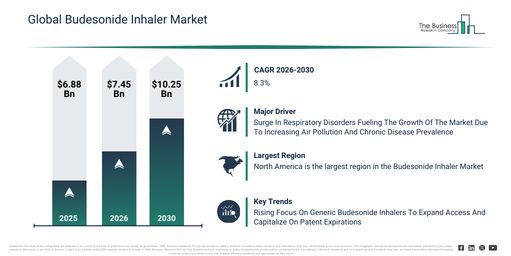
    The budesonide inhaler industry has experienced significant expansion over the last few years. Its market valuation is projected to increase from $6.88 billion in 2025 to $7.45 billion in 2026, reflecting a compound annual growth rate (CAGR) of 8.3%. Factors driving this historical growth include rising cases of asthma, higher rates of COPD detection, broader use of corticosteroid inhalers, an enlarged capacity for hospital-based respiratory treatment, and a growing number of respiratory conditions linked to smoking.

    The market for budesonide inhalers is projected to experience significant expansion over the coming years, reaching an estimated $10.25 billion by 2030 with a compound annual growth rate (CAGR) of 8.3%. This upward trajectory during the forecast period is fueled by factors such as the rising prevalence of chronic respiratory conditions, the advancement of smart inhaler technologies, the expansion of outpatient respiratory care services, a heightened emphasis on preventive asthma management, and growing demand in emerging economies. Key developments shaping this period include a growing preference for sustained respiratory control, wider adoption of combination inhaler therapies, an increase in home-based respiratory care, expanded use among pediatric and elderly populations, and ongoing efforts to enhance inhaler drug delivery efficiency.

    Download A Free Sample Report For Comprehensive Market Insights:

    https://www.thebusinessresearchcompany.com/sample.aspx?id=24181&type=smp&utm_source=BlogsPR&utm_medium=Paid&utm_campaign=Jul_PR

    Budesonide Inhaler Market Growth Factors Supporting Long-Term Expansion

    The growing occurrence of respiratory conditions is anticipated to boost the expansion of the budesonide inhaler market in the coming years. These conditions, which impact the lungs and airways, often result in breathing difficulties and are typically accompanied by symptoms like coughing, wheezing, and shortness of breath. They encompass asthma, chronic obstructive pulmonary disease (COPD), pneumonia, bronchitis, and various lung infections. An increase in these disorders is largely attributed to rising air pollution, which heightens exposure to harmful pollutants that irritate the airways and compromise lung function. Budesonide inhalers are utilized to manage such conditions by delivering anti-inflammatory medication directly to the lungs, providing sustained control. Their portable design ensures ease of use and carriage, helping to reduce flare-ups and enhance respiratory well-being. As a case in point, in June 2025, Public Health Wales, a UK-based National Health Service organization, reported that the number of patients listed on asthma and COPD registers in Wales is forecasted to grow over the next decade. Specifically, asthma cases are expected to climb from 237,400 in 2023-24 to over 256,000 registered cases, while COPD cases are projected to rise from 75,600 to more than 84,000 in the same period. Consequently, the rising prevalence of respiratory disorders is fueling progress in the budesonide inhaler market.

    Budesonide Inhaler Market Categorization By Product Type And Application

    The budesonide inhaler market covered in this report is segmented –

    1) By Product Type: Metered-Dose Inhalers (MDIs), Dry Powder Inhalers (DPIs), Nebulizers, Combination Inhalers

    2) By Dosage Form: Aerosols, Dry Powder, Suspension, Spray

    3) By Indication: Asthma, Chronic Obstructive Pulmonary Disease, Allergic Rhinitis

    4) By End User: Hospitals, Outpatient Clinics, Homecare Settings, Pharmacies

    Subsegments:

    1) By Metered-Dose Inhalers: Pressurized Metered-Dose Inhalers, Breath-Actuated Metered-Dose Inhalers, Spacer-Compatible Metered-Dose Inhalers, Hydrofluoroalkane Propellant-Based Metered-Dose Inhalers

    2) By Dry Powder Inhalers: Single-Dose Dry Powder Inhalers, Multi-Dose Dry Powder Inhalers, Capsule-Based Dry Powder Inhalers, Reservoir-Based Dry Powder Inhalers

    3) By Nebulizers: Jet Nebulizers, Ultrasonic Nebulizers, Mesh Nebulizers, Homecare Nebulizers, Hospital-Use Nebulizers

    4) By Combination Inhalers: Budesonide And Formoterol Inhalers, Budesonide And Salmeterol Inhalers, Budesonide, Glycopyrrolate, And Formoterol Inhalers, Budesonide And Vilanterol Inhalers

    Budesonide Inhaler Market Industry Trends Shaping Future Revenue Growth

    Major players within the budesonide inhaler sector are concentrating their efforts on bringing innovative products to market, particularly generic ones, as a means to enhance affordability and broaden patient access to respiratory treatments. Generic inhaled medications are unbranded versions that deliver identical active ingredients, dosages, and therapeutic outcomes as their branded equivalents, usually at reduced costs. For example, in July 2023, the US-based pharmaceutical company Viatris Inc., working alongside Kindeva Drug Delivery L.P., also US-based, released Breyna (budesonide and formoterol fumarate dihydrate) inhalation aerosol—the very first generic of Symbicort to receive approval from the Food and Drug Administration (FDA). This drug-device combination is indicated for asthma and chronic obstructive pulmonary disease (COPD); it operates by decreasing airway inflammation via budesonide while formoterol loosens the muscles surrounding the airways, thus giving patients a less expensive treatment option.

    Budesonide Inhaler Market Company Landscape And Strategic Competition

    Major companies operating in the budesonide inhaler market are AstraZeneca plc, GSK plc, Takeda Pharmaceutical Company Limited, Viatris Inc., Teva Pharmaceutical Industries Ltd., Boehringer Ingelheim International GmbH, Sandoz International GmbH, Bausch Health Companies Inc., Sun Pharmaceutical Industries Ltd., Synmosa Biopharma Corporation, Chiesi Farmaceutici S.p.A., Aurobindo Pharma Limited, Cipla Limited, Hikma Pharmaceuticals PLC, Lupin Limited, Orion Corporation, Nephron Pharmaceuticals Corporation, Curia Global Inc., Kindeva Drug Delivery L.P., Minakem SAS, Axplora Group GmbH, Cosmo Pharmaceuticals N.V., Manus Aktteva Biopharma LLP, Tovec Pharma Pvt. Ltd., Nutra Respiro Healthcare Pvt. Ltd.

    Access The Complete Budesonide Inhaler Market Report:

    https://www.thebusinessresearchcompany.com/report/budesonide-inhaler-global-market-report?utm_source=BlogsPR&utm_medium=Paid&utm_campaign=Jul_PR

    Budesonide Inhaler Market Regional Distribution: Which Areas Drive Market Expansion?

    North America was the largest region in the budesonide inhaler market in 2025. Asia-Pacific is expected to be the fastest-growing region in the forecast period. The regions covered in the budesonide inhaler market report are Asia-Pacific, South East Asia, Western Europe, Eastern Europe, North America, South America, Middle East, Africa.

    Get in touch with us:

    The Business Research Company: https://www.thebusinessresearchcompany.com/?utm_source=BlogsPR&utm_medium=Paid&utm_campaign=home_page_test

    Americas: +1 310-496-7795

    Asia: +44 7882 955267 & +91 8897263534

    Europe: +44 7882 955267

    Email us at: marketing@tbrc.info

    Follow us on:

    LinkedIn: https://in.linkedin.com/company/the-business-research-company

    YouTube: https://www.youtube.com/channel/UC24_fI0rV8cR5DxlCpgmyFQ

    Global Market Model: https://www.thebusinessresearchcompany.com/global-market-model
  • Budesonide Market Opportunities Are Emerging Beyond Traditional Growth Areas

    Budesonide Market Opportunities Are Emerging Beyond Traditional Growth Areas

    Delivering more actionable and strategically valuable research, The Business Research Company’s 2026 market reports feature market attractiveness analysis, total addressable market evaluation, company benchmarking matrices, interactive Excel dashboards, expanded supply chain intelligence, emerging startup coverage, and detailed product insights.

    Budesonide Market CAGR Analysis And Future Market Development

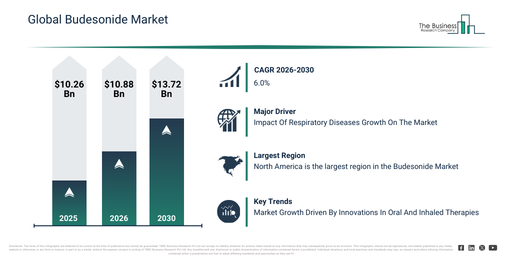
    The budesonide market has experienced robust expansion in recent years. Projections indicate it will rise from $10.26 billion in 2025 to $10.88 billion in 2026, achieving a compound annual growth rate (CAGR) of 6.0%. This historical growth can be linked to factors such as a growing incidence of asthma and COPD, the extensive use of corticosteroids, the broadening availability of inhalation therapies, a higher number of IBD diagnoses, and advancements in drug delivery systems.

    The budesonide market is projected to experience significant expansion over the coming years, reaching $13.72 billion by 2030 with a compound annual growth rate (CAGR) of 6.0%. This anticipated growth during the forecast period is driven by factors such as an aging population, a higher prevalence of chronic inflammatory conditions, increased use of generic medications, the expansion of home-based treatment approaches, and a growing burden of respiratory illnesses. Key developments shaping the market include the wider application of inhaled corticosteroids for managing chronic respiratory issues, greater utilization in treating inflammatory bowel diseases, a shift toward targeted localized steroid therapies, the proliferation of generic budesonide products, and more frequent adoption for long-term maintenance therapy.

    Download A Free Sample Report For Comprehensive Market Insights:

    https://www.thebusinessresearchcompany.com/sample.aspx?id=21121&type=smp&utm_source=BlogsPR&utm_medium=Paid&utm_campaign=Jul_PR

    Budesonide Market Demand Drivers Creating New Revenue Opportunities

    The growing frequency of respiratory illnesses is anticipated to boost the budesonide market in the coming period. Respiratory diseases are medical conditions impacting the organs and tissues involved in gas exchange for air-breathing organisms. This rise in respiratory illnesses is driven by increasing air pollution, especially exposure to particulate matter and allergens, which significantly contributes to conditions like asthma and chronic obstructive pulmonary disease. Budesonide is employed in managing respiratory ailments such as asthma and COPD to decrease inflammation, enhance airflow, and reduce symptoms like wheezing and shortness of breath. For example, in August 2025, the Centers for Disease Control and Prevention, a public health agency based in Switzerland, reported that 90% of the nation’s $4.9 trillion in annual healthcare spending goes toward individuals with chronic and mental health conditions, with over 84,000 Americans dying each year from heart disease or stroke and cardiovascular disease costs projected to reach about $2 trillion by 2050. Consequently, the increasing prevalence of respiratory diseases is expected to propel growth in the budesonide market.

    Budesonide Market Segment Analysis And Revenue Opportunities

    The budesonide market covered in this report is segmented –

    1) By Type: Inhalation Powder, Aerosols, Tablets And Capsules

    2) By Distribution Channel: Hospital Pharmacies, Retail Pharmacies, Online Pharmacies

    3) By Application: Nose Disease Treatment, Inflammatory Bowel Disease Treatment, Respiratory Disease Treatment, Other Applications

    Subsegments:

    1) By Inhalation Powder: Dry Powder Inhalers (DPI), Soft Mist Inhalers (SMI)

    2) By Aerosols: Metered-Dose Inhalers (MDI), Breath-Activated Inhalers

    3) By Tablets And Capsules: Oral Tablets, Oral Capsules

    Budesonide Market Trends Driving Strategic Industry Expansion

    Leading firms in the budesonide market are concentrating on respiratory treatment breakthroughs, particularly through oral therapy, which enhances patient convenience, boosts adherence to medication regimens, and widens the range of therapeutic options for managing asthma and other respiratory conditions. Administered by mouth, oral budesonide is a formulation primarily indicated for treating inflammatory disorders. For example, in February 2024, Takeda Pharmaceuticals, a company based in Japan, announced that the US federal agency the Food and Drug Administration (FDA) has authorized EOHILIA, a budesonide oral suspension, as the first and only FDA-approved oral medication for patients aged 11 and older with eosinophilic esophagitis (EoE). Moreover, the FDA approved a dosage of 2 mg twice daily for EOHILIA, a decision supported by effectiveness and safety data gathered from two multicenter, randomized, double-blind, parallel-group, placebo-controlled 12-week studies conducted in individuals aged 11 to 56 with EoE.

    Budesonide Market Leading Players Shaping Industry Direction

    Major companies operating in the budesonide market are AstraZeneca AB, Novartis AG, Takeda Pharmaceuticals Company Limited, Viatris Inc., Teva Pharmaceutical Industries Ltd., Sandoz AG, Aurobindo Pharma Limited, Chiesi Farmaceutici S.p.A., Cipla Limited, Lupin Limited, Orion Corporation, Salix Pharmaceuticals Inc., Synmosa Biopharma Corporation, Cosmo Pharmaceuticals N.V., Skyepharma Holdings Inc., Manus Aktteva Biopharma LLP, Cennet Biopharma Private Limited, Santarus Inc., SiNi Pharma Private Limited, Shanghai Sine Promod Pharmaceutical Co. Ltd.

    Access The Complete Budesonide Market Report:

    https://www.thebusinessresearchcompany.com/report/budesonide-global-market-report?utm_source=BlogsPR&utm_medium=Paid&utm_campaign=Jul_PR

    Budesonide Market Leading Geography: Which Region Generates The Most Revenue?

    North America was the largest region in the budesonide market in 2025. The regions covered in the budesonide market report are Asia-Pacific, South East Asia, Western Europe, Eastern Europe, North America, South America, Middle East, Africa.

    Get in touch with us:

    The Business Research Company: https://www.thebusinessresearchcompany.com/?utm_source=BlogsPR&utm_medium=Paid&utm_campaign=home_page_test

    Americas: +1 310-496-7795

    Asia: +44 7882 955267 & +91 8897263534

    Europe: +44 7882 955267

    Email us at: marketing@tbrc.info

    Follow us on:

    LinkedIn: https://in.linkedin.com/company/the-business-research-company

    YouTube: https://www.youtube.com/channel/UC24_fI0rV8cR5DxlCpgmyFQ

    Global Market Model: https://www.thebusinessresearchcompany.com/global-market-model
  • Bruton’s Tyrosine Kinase (BTK) Inhibitor Market Expansion Is Opening New Pathways For Strategic Investment

    Bruton’s Tyrosine Kinase (BTK) Inhibitor Market Expansion Is Opening New Pathways For Strategic Investment

    Enhanced with market attractiveness analysis, total addressable market evaluation, company benchmarking matrices, interactive Excel dashboards, expanded supply chain intelligence, emerging startup coverage, and detailed product insights, The Business Research Company’s 2026 market reports deliver more actionable and strategically valuable research.

    Bruton’s Tyrosine Kinase (BTK) Inhibitor Market Expansion From $13.11 Billion In 2026 To $21.76 Billion In 2030

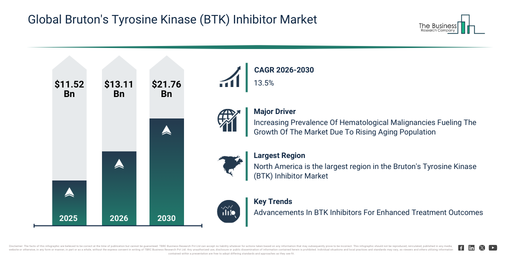
    The size of the Bruton’s tyrosine kinase (BTK) inhibitor market has seen substantial expansion in recent years. Projections indicate an increase from $11.52 billion in 2025 to $13.11 billion in 2026, reflecting a compound annual growth rate (CAGR) of 13.8%. This historical growth has been driven by the development of first-generation BTK inhibitors, a rising incidence of chronic lymphocytic leukemia, improved hospital and specialty clinic facilities, heightened early-stage research and development funding for B-cell malignancies, and a scarcity of available therapeutic choices for autoimmune conditions.

    Over the coming years, the bruton’s tyrosine kinase (btk) inhibitor market is anticipated to experience rapid expansion. Projections indicate it will climb to $21.76 billion by 2030, advancing at a compound annual growth rate (CAGR) of 13.5%. This forecast period’s growth is driven by the creation of next-generation btk inhibitors featuring enhanced safety profiles, a broader range of targeted therapies addressing rare b-cell malignancies, a growing emphasis on personalized medicine, heightened funding for clinical trials and research, and an increase in collaborations between biotechnology and pharmaceutical companies. Key trends shaping this period include the growing preference for second- and third-generation btk inhibitors, the widening availability of both oral and subcutaneous delivery methods, an upsurge in their application for rare b-cell malignancies and autoimmune disorders, a stronger focus on clinical trials and research exploring novel uses, and an escalation of partnerships between pharmaceutical companies and research institutions.

    Download A Free Sample Report For Comprehensive Market Insights:

    https://www.thebusinessresearchcompany.com/sample.aspx?id=25714&type=smp&utm_source=BlogsPR&utm_medium=Paid&utm_campaign=Jul_PR

    Bruton’s Tyrosine Kinase (BTK) Inhibitor Market Expansion Supported By Key Demand Factors

    The rising occurrence of hematological cancers is anticipated to drive expansion in the Bruton’s tyrosine kinase (BTK) inhibitor market in the coming years. These malignancies, which originate in the blood, bone marrow, or lymphatic system—encompassing leukemia, lymphoma, and multiple myeloma—disrupt the normal functioning of blood and immune cells. A globally aging population elevates the likelihood of developing blood cancers like leukemia, lymphoma, and myeloma, as susceptibility grows with age. BTK inhibitors contribute to managing these conditions by enabling patients to live longer with controlled disease, curbing cancer cell proliferation and relapse, thereby improving survival rates and boosting prevalence statistics. As an example, in February 2023, a report from the Leukemia Foundation, an Australian non-profit, projected that between 2022 and 2035, more than 7,000 children, 6,000 young adults, and 108,000 adults aged 25 to 65 will be diagnosed with blood cancers, primarily acute lymphoblastic leukemia, acute myeloid leukemia, and non-Hodgkin lymphoma. Consequently, the growing prevalence of hematological malignancies is fueling progress in the BTK inhibitor market.

    Bruton’s Tyrosine Kinase (BTK) Inhibitor Market Segmentation And Category Breakdown

    The bruton’s tyrosine kinase (btk) inhibitor market covered in this report is segmented –

    1) By Drug Type: First-Generation Bruton’s Tyrosine Kinase (BTK) Inhibitors, Second-Generation Bruton’s Tyrosine Kinase (BTK) Inhibitors, Third-Generation Bruton’s Tyrosine Kinase (BTK) Inhibitors

    2) By Route Of Administration: Oral Administration, Intravenous Administration, Subcutaneous Administration

    3) By Application: Chronic Lymphocytic Leukemia (CLL), Follicular Lymphoma, Mantle Cell Lymphoma, Marginal Zone Lymphoma, Small Lymphocytic Lymphoma (SLL), Waldenstrom Macroglobulinemia, Other Selective B Cell Malignancies, Chronic Graft-Versus-Host Disease, Other Applications

    4) By End User: Hospitals, Specialty Clinics, Research Laboratories, Pharmacies, Other End Users

    Subsegments:

    1) By First-Generation Bruton’s Tyrosine Kinase (BTK) Inhibitors: Ibrutinib, CC-292 (Spebrutinib)

    2) By Second-Generation Bruton’s Tyrosine Kinase (BTK) Inhibitors: Acalabrutinib, Zanubrutinib, Tirabrutinib

    3) By Third-Generation Bruton’s Tyrosine Kinase (BTK) Inhibitors: Pirtobrutinib (LOXO-305/Jaypirca), Nemtabrutinib (ARQ 531)

    Bruton’s Tyrosine Kinase (BTK) Inhibitor Market Growth Trends Influencing Competitive Dynamics

    Key players in the bruton’s tyrosine kinase (BTK) inhibitor market are prioritizing progress in drug development, particularly through targeted therapy, to improve treatment results. Targeted therapy involves using drugs or agents to precisely identify and combat cancer cells or disease mechanisms, while largely preserving normal, healthy cells. For example, in July 2025, Glenmark Pharmaceuticals Ltd., a pharmaceutical firm based in India, introduced Brukinsa (zanubrutinib) as a fresh therapeutic option for Indian patients suffering from hematological (blood) cancers. This represents the initial and exclusive Bruton’s tyrosine kinase (BTK) inhibitor in India authorized for treating five varieties of B-cell malignancies. It possesses distinct characteristics that set it apart as an advanced Bruton’s tyrosine kinase (BTK) inhibitor designed to manage B-cell malignancies. It ensures consistent, high-level BTK occupancy in both blood and lymph nodes, boosting its ability to prevent cancerous B-cell survival. Brukinsa features an enhanced safety profile, with fewer cardiac adverse effects and reduced discontinuation rates when compared to first-generation BTK inhibitors. Additionally, it provides adaptable dosing options, enabling patients to choose between 160 mg taken twice daily or 320 mg taken once daily, depending on their tolerance and convenience.

    Bruton’s Tyrosine Kinase (BTK) Inhibitor Market Competitive Analysis Of Major Industry Participants

    Major companies operating in the bruton’s tyrosine kinase (btk) inhibitor market are Johnson & Johnson Inc., AbbVie Inc., Nurix Therapeutics Inc., InnoCare Pharma Limited, Carna Biosciences Inc., Aptose Biosciences Inc

    Access The Complete Bruton’s Tyrosine Kinase (BTK) Inhibitor Market Report:

    https://www.thebusinessresearchcompany.com/report/brutons-tyrosine-kinase-btk-inhibitor-global-market-report?utm_source=BlogsPR&utm_medium=Paid&utm_campaign=Jul_PR

    Bruton’s Tyrosine Kinase (BTK) Inhibitor Market Regional Outlook: Where Are The Largest Opportunities Located?

    North America was the largest region in the bruton’s tyrosine kinase (BTK) inhibitor market in 2025. Asia-Pacific is expected to be the fastest-growing region in the forecast period. The regions covered in the bruton’s tyrosine kinase (btk) inhibitor market report are Asia-Pacific, South East Asia, Western Europe, Eastern Europe, North America, South America, Middle East, Africa.

    Get in touch with us:

    The Business Research Company: https://www.thebusinessresearchcompany.com/?utm_source=BlogsPR&utm_medium=Paid&utm_campaign=home_page_test

    Americas: +1 310-496-7795

    Asia: +44 7882 955267 & +91 8897263534

    Europe: +44 7882 955267

    Email us at: marketing@tbrc.info

    Follow us on:

    LinkedIn: https://in.linkedin.com/company/the-business-research-company

    YouTube: https://www.youtube.com/channel/UC24_fI0rV8cR5DxlCpgmyFQ

    Global Market Model: https://www.thebusinessresearchcompany.com/global-market-model
  • Bronchodilators Market Trends Are Creating New Opportunities For Industry Leaders

    Bronchodilators Market Trends Are Creating New Opportunities For Industry Leaders

    Through market attractiveness analysis, total addressable market evaluation, company benchmarking matrices, interactive Excel dashboards, expanded supply chain intelligence, emerging startup coverage, and detailed product insights, The Business Research Company’s 2026 market reports provide more actionable and strategically valuable research.

    Bronchodilators Market Forecast Highlighting Growth From $37.56 Billion To $47.95 Billion

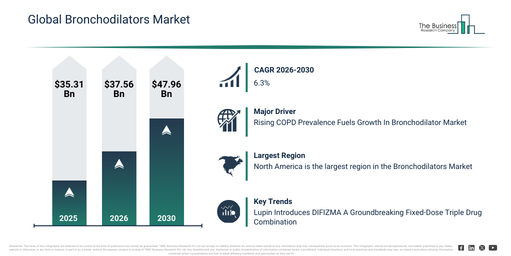
    The bronchodilators market has experienced robust expansion in recent years, with its value projected to rise from $35.31 billion in 2025 to $37.56 billion in 2026, reflecting a compound annual growth rate (CAGR) of 6.4%. This historical growth has been driven by factors such as the growing incidence of asthma and COPD, higher smoking rates, restricted availability of sophisticated inhalation devices, government programs aimed at improving respiratory health, and a significant prevalence of respiratory conditions linked to air pollution.

    The bronchodilators market is forecasted to experience significant expansion over the coming years. By 2030, it is projected to reach a value of $47.96 billion, driven by a compound annual growth rate (CAGR) of 6.3%. This anticipated growth during the forecast period is fueled by several key factors, including progress in inhalation device technology, a rising focus on personalized medicine, greater incorporation of telemedicine, an increased need for combination treatments, and improvements to healthcare infrastructure in developing markets. Notably, prominent trends shaping this period include the advancement of personalized bronchodilator approaches, the use of remote monitoring and telehealth services, innovations in inhaler designs, the development of multidrug therapies, and treatments specifically tailored for pediatric and geriatric populations.

    Download A Free Sample Report For Comprehensive Market Insights:

    https://www.thebusinessresearchcompany.com/sample.aspx?id=13816&type=smp&utm_source=BlogsPR&utm_medium=Paid&utm_campaign=Jul_PR

    Bronchodilators Market Growth Drivers And Industry Catalysts

    The rising frequency of chronic obstructive pulmonary disease (COPD) is anticipated to drive the expansion of the bronchodilator market in the near future. Chronic obstructive pulmonary disease is a progressive lung condition marked by persistent inflammation of the airways and restricted or blocked airflow. Bronchodilators are employed in managing COPD to relax the muscles surrounding the airways, thereby widening them and facilitating easier breathing. For example, in March 2023, a report from the Scottish Public Health Observatory, managed by Public Health Scotland—a Population Health Centre based in the UK—revealed that COPD rates began climbing after the effects of COVID-19 subsided. Among males, the rate rose from 83.2 to 97.6 cases per 100,000 individuals, while for females, it increased from 72.6 to 97.3. Consequently, the growing occurrence of chronic obstructive pulmonary disease is fueling the advancement of the bronchodilator market.

    Bronchodilators Market Segment Outlook: Which Categories Are Expanding The Fastest?

    The bronchodilators market covered in this report is segmented –

    1) By Type: Beta-Adrenergic Bronchodilators, Anticholinergic Bronchodilators, Xanthine Derivatives, Other Types

    2) By Route of Administration: Oral, Nasal (Inhalation), Injectable

    3) By Indication: Asthma, Chronic Obstructive Pulmonary Disease (COPD), Allergic Reactions, Breathing Problem, Other Indications

    4) By End-User: Hospitals, Specialty Clinics, Other End Users

    Subsegments:

    1) By Beta-Adrenergic Bronchodilators: Short-Acting Beta Agonists (SABAs), Long-Acting Beta Agonists (LABAs)

    2) By Anticholinergic Bronchodilators: Short-Acting Anticholinergics, Long-Acting Anticholinergics

    3) By Xanthine Derivatives: Theophylline, Aminophylline

    4) By Other Types: Leukotriene Receptor Antagonists, Combination Therapies

    Bronchodilators Market Trends Influencing Long-Term Demand

    Key players in the bronchodilator industry are concentrating their efforts on creating advanced therapeutic solutions, particularly fixed-dose triple-drug combinations, to enhance patient care. These formulations combine three active substances into a single dosage, each at a predetermined strength. A notable example is Lupin, a pharmaceutical company headquartered in India, which introduced DIFIZMA in January 2023—a fixed-dose triple-drug bronchodilator featuring indacaterol, glycopyrronium, and mometasone for the management of asthma. Administered as a dry powder inhaler, DIFIZMA stands out as the only such combination to receive approval from the Drug Controller General of India (DCGI) for addressing inadequately controlled asthma. It achieves this by enhancing lung capacity, delivering superior symptom management, and lowering the frequency of exacerbations.

    Bronchodilators Market Key Companies And Competitive Benchmarking

    Major companies operating in the bronchodilators market are Pfizer Inc., Johnson & Johnson Services Inc., Bayer AG, Novartis AG, Abbott Laboratories, Sanofi S.A., GlaxoSmithKline plc, Merck & Co. Inc., AstraZeneca plc, Teva Pharmaceuticals Industries Ltd., Mylan N.V., Boehringer Ingelheim International GmbH, Aurobindo Pharma Limited, Cipla Limited, Hikma Pharmaceutical plc, Amneal Pharmaceuticals LLC, Glenmark Pharmaceuticals Limited, Sun Pharmaceutical Industries Ltd., Viatris Inc., Mitsubishi Tanabe Pharma, Kissei Pharmaceutical Co.Ltd., Theron Pharmaceuticals

    Access The Complete Bronchodilators Market Report:

    https://www.thebusinessresearchcompany.com/report/bronchodilators-global-market-report?utm_source=BlogsPR&utm_medium=Paid&utm_campaign=Jul_PR

    Bronchodilators Market Geographic Landscape: Which Region Dominates Industry Growth?

    North America was the largest region in the bronchodilators market in 2025. Asia-Pacific is expected to be the fastest-growing region in the forecast period. The regions covered in the bronchodilators market report are Asia-Pacific, South East Asia, Western Europe, Eastern Europe, North America, South America, Middle East, Africa.

    Get in touch with us:

    The Business Research Company: https://www.thebusinessresearchcompany.com/?utm_source=BlogsPR&utm_medium=Paid&utm_campaign=home_page_test

    Americas: +1 310-496-7795

    Asia: +44 7882 955267 & +91 8897263534

    Europe: +44 7882 955267

    Email us at: marketing@tbrc.info

    Follow us on:

    LinkedIn: https://in.linkedin.com/company/the-business-research-company

    YouTube: https://www.youtube.com/channel/UC24_fI0rV8cR5DxlCpgmyFQ

    Global Market Model: https://www.thebusinessresearchcompany.com/global-market-model
  • Bronchiolitis Obliterans Syndrome Market Growth Is Reshaping Competitive Advantage Across The Industry

    Bronchiolitis Obliterans Syndrome Market Growth Is Reshaping Competitive Advantage Across The Industry

    Delivering more actionable and strategically valuable research, The Business Research Company’s 2026 market reports feature market attractiveness analysis, total addressable market evaluation, company benchmarking matrices, interactive Excel dashboards, expanded supply chain intelligence, emerging startup coverage, and detailed product insights.

    Bronchiolitis Obliterans Syndrome Market Revenue Growth Supported By A CAGR Of 2.42% Through 2030

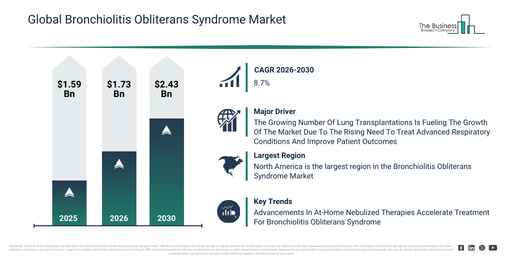
    The bronchiolitis obliterans syndrome market has experienced significant expansion in recent years. Its value is projected to rise from $1.59 billion in 2025 to $1.73 billion in 2026, reflecting a compound annual growth rate (CAGR) of 9.1%. This historical growth has been driven by factors such as the increase in organ transplant procedures, higher incidences of chronic graft rejection, advancements in hospital-based pulmonary care, the use of immunosuppressants, and limited early diagnostic capabilities.

    The market size for bronchiolitis obliterans syndrome is anticipated to experience robust expansion over the coming years, reaching $2.43 billion by 2030 with a compound annual growth rate (CAGR) of 8.7%. This projected increase in the forecast period is driven by factors such as the growing number of transplant procedures, advancements in early detection technologies, the rise of personalized immunotherapy, the establishment of specialized respiratory centers, and improved long-term patient management strategies. Key trends shaping this period include heightened monitoring after transplantation, the expansion of immunosuppressive therapies, broader adoption of early diagnostic testing, a stronger emphasis on preserving long-term lung function, and an increasing demand for specialized pulmonary care services.

    Download A Free Sample Report For Comprehensive Market Insights:

    https://www.thebusinessresearchcompany.com/sample.aspx?id=24488&type=smp&utm_source=BlogsPR&utm_medium=Paid&utm_campaign=Jul_PR

    Bronchiolitis Obliterans Syndrome Market Opportunity Drivers: What Is Creating New Revenue Potential?

    The anticipated rise in lung transplant procedures is set to drive the bronchiolitis obliterans syndrome market forward. Lung transplantation involves surgically replacing a diseased or failing lung with a healthy donor lung to enhance respiratory function. This procedure is becoming more common due to improvements in surgical methods, which have notably boosted success rates and lowered complication risks, making it safer and more attainable for patients requiring it. For advanced bronchiolitis obliterans syndrome, lung transplantation offers effective treatment by substituting damaged lungs with healthy ones, thereby improving respiration and lung capacity. Data from January 2025, provided by the Organ Procurement and Transplantation Network—a US-based non-profit scientific and educational organization—shows that lung transplants experienced the largest proportional increase, rising from 3,026 in 2023 to 3,340 in 2024, marking a 10.4 percent growth. Consequently, the increasing volume of lung transplants is fueling the expansion of the bronchiolitis obliterans syndrome market.

    The growth of the bronchiolitis obliterans syndrome market is being propelled by a rise in clinical trials. These trials are research investigations conducted with human participants to assess the safety, efficacy, and effectiveness of medical interventions like drugs, devices, procedures, or behavioral therapies. Their increasing frequency stems from a growing demand for personalized medicine, which necessitates more studies to validate targeted, gene-based treatments. Clinical trials advance bronchiolitis obliterans syndrome care by evaluating novel therapies aimed at reducing inflammation and preserving lung function, while also improving knowledge of disease progression and treatment safety. For example, in December 2024, the Association of the British Pharmaceutical Industry (ABPI), a UK-based trade organization, reported that industry-initiated clinical trials in the UK rose from 411 in 2022 to 426 in 2023, driven by a 16.5% uptick in Phase III trials. Thus, the uptrend in clinical trials is driving the bronchiolitis obliterans syndrome market forward.

    Bronchiolitis Obliterans Syndrome Market Segment Landscape: Which Areas Lead Market Development?

    The bronchiolitis obliterans syndrome market covered in this report is segmented –

    1) By Treatment Type: Medication, Oxygen Therapy, Lung Transplant

    2) By Diagnosis: Pulmonary Function Tests, Imaging Tests, Lung Biopsy, Other Diagnosis

    3) By Disease Type: Acute Bronchiolitis, Chronic Bronchiolitis Obliterans Syndrome

    4) By End-User: Hospitals, Specialty Clinics, Diagnostic Centers, Other End-Users

    Subsegments:

    1) By Medication: Immunosuppressants, Corticosteroids, Antibiotics, Bronchodilators, Anti-Inflammatory Agents

    2) By Oxygen Therapy: Continuous Oxygen Therapy, Intermittent Oxygen Therapy, Portable Oxygen Therapy, Hyperbaric Oxygen Therapy

    3) By Lung Transplant: Single Lung Transplant, Double Lung Transplant, Living Donor Lung Transplant, Retransplantation

    Bronchiolitis Obliterans Syndrome Market Innovation Trends Driving Future Development

    Major players in the bronchiolitis obliterans syndrome market are prioritizing the development of innovative approaches like at-home nebulized therapy, which aims to boost medication adherence and decelerate disease progression by providing targeted, uninterrupted treatment. This therapy involves a nebulizer that converts liquid medicine into an inhalable mist, ensuring direct lung delivery. Its convenient, self-administered nature allows patients to effectively oversee respiratory health from their own homes. For example, in March 2023, Renovion, Inc., a US-based clinical-stage pharmaceutical company, introduced ARINA-1, which was granted Fast Track Designation by the Food and Drug Administration (FDA) for its role in halting the advancement of bronchiolitis obliterans syndrome (BOS) in individuals with bilateral lung transplants. This regulatory achievement highlights ARINA-1’s promise in addressing a significant gap in transplant care. The Fast Track designation facilitates enhanced communication with the FDA and prioritizes ARINA-1 for expedited development and review, underscoring Renovion’s dedication to improving respiratory health via patient-focused, groundbreaking treatments.

    Bronchiolitis Obliterans Syndrome Market Industry Leaders And Market Competition

    Major companies operating in the bronchiolitis obliterans syndrome market are Novartis AG, F. Hoffmann-La Roche Ltd., GlaxoSmithKline plc, AstraZeneca plc, Sanofi S.A., Johnson & Johnson (Janssen), AbbVie Inc., Bristol-Myers Squibb Company, Merck & Co. Inc., Takeda Pharmaceutical Company Limited, Astellas Pharma Inc., Amgen Inc., Teva Pharmaceutical Industries Ltd., Cipla Limited, Sun Pharmaceutical Industries Ltd., Lupin Limited, Dr. Reddy’s Laboratories Ltd., Hikma Pharmaceuticals PLC, Chiesi Farmaceutici S.p.A., Vertex Pharmaceuticals Incorporated, United Therapeutics Corporation, Insmed Incorporated, Viatris Inc., Zydus Lifesciences Ltd., Cadila Pharmaceuticals Ltd.

    Access The Complete Bronchiolitis Obliterans Syndrome Market Report:

    https://www.thebusinessresearchcompany.com/report/bronchiolitis-obliterans-syndrome-global-market-report?utm_source=BlogsPR&utm_medium=Paid&utm_campaign=Jul_PR

    Bronchiolitis Obliterans Syndrome Market Largest Region: Which Geography Holds The Highest Market Share?

    North America was the largest region in the bronchiolitis obliterans syndrome market in 2025. Asia-Pacific is expected to be the fastest-growing region in the forecast period. The regions covered in the bronchiolitis obliterans syndrome market report are Asia-Pacific, South East Asia, Western Europe, Eastern Europe, North America, South America, Middle East, Africa.

    Get in touch with us:

    The Business Research Company: https://www.thebusinessresearchcompany.com/?utm_source=BlogsPR&utm_medium=Paid&utm_campaign=home_page_test

    Americas: +1 310-496-7795

    Asia: +44 7882 955267 & +91 8897263534

    Europe: +44 7882 955267

    Email us at: marketing@tbrc.info

    Follow us on:

    LinkedIn: https://in.linkedin.com/company/the-business-research-company

    YouTube: https://www.youtube.com/channel/UC24_fI0rV8cR5DxlCpgmyFQ

    Global Market Model: https://www.thebusinessresearchcompany.com/global-market-model
  • Breast Milk Substitutes Market Forecast Signals New Revenue Opportunities Through 2030

    Breast Milk Substitutes Market Forecast Signals New Revenue Opportunities Through 2030

    Enhanced with market attractiveness analysis, total addressable market evaluation, company benchmarking matrices, interactive Excel dashboards, expanded supply chain intelligence, emerging startup coverage, and detailed product insights, The Business Research Company’s 2026 market reports deliver more actionable and strategically valuable research.

    Breast Milk Substitutes Market Value Expansion And Long-Term Growth Outlook

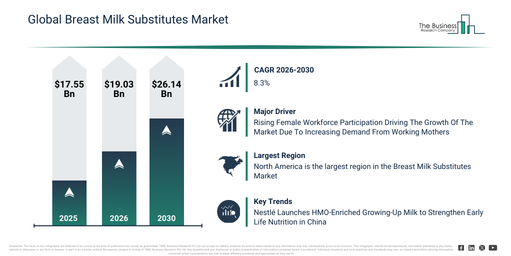
    The market for breast milk substitutes has experienced robust expansion over the past few years, with projections indicating an increase from $17.55 billion in 2025 to $19.03 billion in 2026, reflecting a compound annual growth rate (CAGR) of 8.4%. This historical growth is driven by factors such as a drop in breastfeeding prevalence within urban regions, a growing number of women entering the workforce, heightened recognition of the importance of infant nutrition, a broader availability of retail infant care items, and improved access to pediatric healthcare services.

    During the upcoming years, the breast milk substitutes market is anticipated to experience robust expansion. Projections indicate it will reach $26.14 billion by 2030, reflecting a compound annual growth rate (CAGR) of 8.3%. Several factors are driving this anticipated growth within the forecast period, including a rising infant population across developing regions, heightened consumer demand for premium infant formulas, the broadening of e-commerce sales channels, continuous innovation in nutritional product formulations, and an increased public awareness surrounding infant food safety. Key trends shaping the market include a growing appetite for alternative infant nutrition products, a rising uptake of hypoallergenic formulations, an increased preference for both fortified and organic formulas, the proliferation of ready-to-use infant nutrition items, and an intensified industry focus on promoting infant digestive health.

    Download A Free Sample Report For Comprehensive Market Insights:

    https://www.thebusinessresearchcompany.com/sample.aspx?id=23331&type=smp&utm_source=BlogsPR&utm_medium=Paid&utm_campaign=Jul_PR

    Breast Milk Substitutes Market Growth Momentum: Which Factors Are Influencing Demand?

    The growth of the breast milk substitutes market is anticipated to be driven by an increase in female workforce participation. This metric indicates the proportion of women who are either employed or looking for jobs within the labor market. Such participation is on the rise, largely due to better access to education, which provides women with skills and credentials, thereby opening up more employment opportunities and fostering financial autonomy. Working mothers often require breast milk substitutes because these products offer a practical and nutritionally sufficient option for infant feeding when breastfeeding is not possible due to work schedules, workplace restrictions, or insufficient maternity leave, allowing babies to receive vital nutrients while their mothers manage their careers. As an illustration, the House of Commons, a UK government body, reported in February 2025 that 16.37 million women aged 16 and above were employed in the UK from October to December 2024. Consequently, the rising number of women in the workforce is fueling expansion in the breast milk substitutes market.

    Breast Milk Substitutes Market Segments: Where Are The Largest Growth Opportunities?

    The breast milk substitutes market covered in this report is segmented –

    1) By Product Type: Ready-To-Use, Powdered, Concentrated Liquid

    2) By Substitute Type: Milk-Based Formula, Soy-Based Formula, Hypoallergenic Formula, Other Substitute Types

    3) By Consumer Age: Below 6 Months, 6-23 Months

    4) By Distribution Channel: Supermarkets Or Hypermarkets, Pharmacies, Online Retail

    5) By End Users: Hospitals And Clinics, Specialty Clinics, Other End Users

    Subsegments:

    1) By Ready-To-Use: Standard Infant Formula, Specialized Infant Formula, Organic Infant Formula

    2) By Powdered: Standard Powdered Formula, Hypoallergenic Powdered Formula, Organic Powdered Formula

    3) By Concentrated Liquid: Standard Concentrated Formula, Lactose-Free Concentrated Formula, Organic Concentrated Formula

    Breast Milk Substitutes Market Trends Reshaping Industry Growth

    Leading players in the breast milk substitutes industry are increasingly prioritizing scientific breakthroughs, particularly through Human Milk Oligosaccharide (HMO)-enriched formulas, to more accurately mimic the functional advantages of natural breast milk, thereby supporting immune function, gut health, and cognitive development in infants. These HMO-Enriched Formulations integrate bioactive oligosaccharides—the third most prevalent solid component in human breast milk—to bolster immunity, cultivate a balanced gut microbiome, and aid early brain growth. For example, in November 2023, Nestlé, a nutrition science firm headquartered in Switzerland, introduced a new growing-up milk under the Wyeth Illuma brand in mainland China, featuring two essential HMOs: 2-Fucosyllactose (2FL) and Lacto-N-(neo)tetraose (LNnT). Produced at its Suzhou facility, this formulation combines HMOs with vital proteins and lipids to enhance gut health, immune development, and cognitive performance, following recent authorization from China’s National Health Commission for HMO use in infant nutrition.

    Breast Milk Substitutes Market Major Participants And Competitive Dynamics

    Major companies operating in the breast milk substitutes market are Nestlé S.A., Mead Johnson Nutrition Company LLC, BASF SE, Abbott Laboratories, Danone S.A., The Kraft Heinz Company, Koninklijke FrieslandCampina N.V. (FrieslandCampina), Arla Foods Amba, Reckitt Benckiser Group plc, Fonterra Co-operative Group Limited, Perrigo Company plc, The Hain Celestial Group Inc., Hero Group AG, HiPP GmbH & Co. Vertrieb KG, Beingmate Baby & Child Food Co. Ltd., Bellamy’s Organic Pty Ltd., Vitagermine SAS, Kendal Nutricare Ltd. (Kendamil), Cow & Gate, Humana Inc.

    Access The Complete Breast Milk Substitutes Market Report:

    https://www.thebusinessresearchcompany.com/report/breast-milk-substitutes-global-market-report?utm_source=BlogsPR&utm_medium=Paid&utm_campaign=Jul_PR

    Breast Milk Substitutes Market Regional Analysis: Which Region Leads By Revenue?

    North America was the largest region in the breast milk substitutes market in 2025. Asia-Pacific is expected to be the fastest-growing region in the forecast period. The regions covered in the breast milk substitutes market report are Asia-Pacific, South East Asia, Western Europe, Eastern Europe, North America, South America, Middle East, Africa.

    Get in touch with us:

    The Business Research Company: https://www.thebusinessresearchcompany.com/?utm_source=BlogsPR&utm_medium=Paid&utm_campaign=home_page_test

    Americas: +1 310-496-7795

    Asia: +44 7882 955267 & +91 8897263534

    Europe: +44 7882 955267

    Email us at: marketing@tbrc.info

    Follow us on:

    LinkedIn: https://in.linkedin.com/company/the-business-research-company

    YouTube: https://www.youtube.com/channel/UC24_fI0rV8cR5DxlCpgmyFQ

    Global Market Model: https://www.thebusinessresearchcompany.com/global-market-model
  • Breast Cancer Monoclonal Antibodies Market Growth Is Accelerating As Industry Transformation Continues

    Breast Cancer Monoclonal Antibodies Market Growth Is Accelerating As Industry Transformation Continues

    Through market attractiveness analysis, total addressable market evaluation, company benchmarking matrices, interactive Excel dashboards, expanded supply chain intelligence, emerging startup coverage, and detailed product insights, The Business Research Company’s 2026 market reports provide more actionable and strategically valuable research.

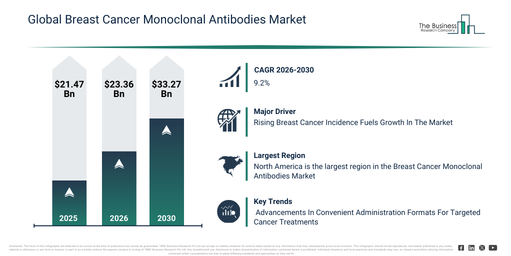
    Breast Cancer Monoclonal Antibodies Market Expected To Reach $33.27 Billion By 2030 At 9.2% CAGR

    The breast cancer monoclonal antibodies market has experienced significant expansion in recent years. Valued at $21.47 billion in 2025, it is projected to reach $23.36 billion by 2026, reflecting a compound annual growth rate (CAGR) of 8.8%. This historic growth has been driven by factors such as the increasing worldwide incidence of breast cancer, early regulatory approvals for monoclonal antibody therapies, heightened awareness of targeted cancer treatments, the proliferation of oncology treatment facilities, and the growing adoption of biologic therapies in cancer care.

    The breast cancer monoclonal antibodies sector is projected to experience substantial expansion in the coming years. By 2030, its value is anticipated to reach $33.27 billion, reflecting a compound annual growth rate (CAGR) of 9.2%. This predicted growth over the forecast period is driven by the development of cutting-edge conjugated monoclonal antibodies, a heightened emphasis on personalized cancer care, the wider uptake of biosimilars, the scaling of oncology biologic manufacturing, and increased healthcare investments in cancer therapies. Key developments shaping this period include the growing adoption of targeted monoclonal antibody treatments for breast cancer, the escalating use of combination regimens involving chemotherapy and hormone therapy, a higher demand for HER2-targeted and biomarker-specific options, the advancement of conjugated antibodies for advanced disease stages, and improved patient outcomes that encourage prolonged use of these biologics.

    Download A Free Sample Report For Comprehensive Market Insights:

    https://www.thebusinessresearchcompany.com/sample.aspx?id=3450&type=smp&utm_source=BlogsPR&utm_medium=Paid&utm_campaign=Jul_PR

    Breast Cancer Monoclonal Antibodies Market Expansion Drivers: What Is Shaping Future Growth?

    The global increase in breast cancer cases is anticipated to drive expansion in the breast cancer monoclonal antibody market moving forward. Breast cancer occurs when cells in the breast multiply uncontrollably, resulting in a tumor capable of invading adjacent tissues or metastasizing to other areas of the body. Its growing incidence is largely attributed to lifestyle modifications, where elements such as unhealthy eating habits and decreased physical activity elevate the likelihood of abnormal breast cell development. Monoclonal antibodies designed for breast cancer work by precisely targeting and interfering with pathways involved in cancer cell proliferation, which helps decelerate tumor advancement and enhances patient prognosis. As an example, the American Society of Plastic Surgeons, a US-based pharmaceutical organization, reported in June 2024 that around 25.4 million cosmetic minimally invasive procedures were carried out in 2023, with breast lift surgeries totaling 153,600—a 7% rise from the previous year. Consequently, the escalating global prevalence of breast cancer is projected to fuel growth within the breast cancer monoclonal antibody market.

    Breast Cancer Monoclonal Antibodies Market Segment Analysis: What Are The Major Market Categories?

    The breast cancer monoclonal antibodies market covered in this report is segmented –

    1) By Product: Naked Mabs, Conjugated Mabs

    2) By Treatment: Chemotherapy, Surgery & Radiation Therapy, Targeted Therapy, Biologic Therapy, Hormone Therapy

    3) By End-User: Hospitals, Retail Pharmacies

    Subsegments:

    1) By Naked MABs: Trastuzumab (Herceptin), Rituximab, Cetuximab, Other Naked MABs

    2) By Conjugated MABs: Ado-trastuzumab emtansine (Kadcyla), Brentuximab vedotin, Other Conjugated MABs

    Breast Cancer Monoclonal Antibodies Market Strategic Trends: What Is Defining The Next Phase Of Growth?

    Leading corporations in the breast cancer monoclonal antibodies sector are developing novel subcutaneous formulations to boost treatment ease, cut down on administration time, and expand patient availability to HER2-targeted therapies. Subcutaneous formulations facilitate the quick delivery of biologics, eliminating the requirement for lengthy intravenous infusions, which enhances patient satisfaction and healthcare operational effectiveness. As an example, in November 2023, Chugai Pharmaceutical, a biopharmaceutical firm based in Japan, introduced Phesgo, a pre-mixed subcutaneous combination of pertuzumab and trastuzumab, indicated for HER2-positive breast and colorectal cancer. This innovation is designed to simplify HER2-targeted treatment by offering quicker, more convenient administration without compromising clinical effectiveness. This product launch bolsters Chugai’s cancer treatment portfolio and encourages greater acceptance of patient-friendly biologic therapies in oncology practice.

    Breast Cancer Monoclonal Antibodies Market Leading Companies Driving Competitive Growth

    Major companies operating in the breast cancer monoclonal antibodies market are Amgen Inc., Mylan N.V., Merck & Co. Inc., Novartis AG, GlaxoSmithKline plc., Daiichi Sankyo Company Ltd., Biocad, Boehringer Ingelheim International GmbH, Bristol-Myers Squibb Company, Celldex Therapeutics Inc., Celltrion Inc., F. Hoffmann-La Roche AG, Immunomedics Inc., MacroGenics Inc., Pfizer Inc., Teva Pharmaceutical Industries Ltd., Puma Biotechnology Inc., Seattle Genetics Inc., AstraZeneca plc, Eisai Co. Ltd., ImmunoGen Inc., Eli Lilly and Company, AbbVie Inc., Johnson & Johnson, Mersana Therapeutics Inc.

    Access The Complete Breast Cancer Monoclonal Antibodies Market Report:

    https://www.thebusinessresearchcompany.com/report/breast-cancer-monoclonal-antibodie-global-market-report?utm_source=BlogsPR&utm_medium=Paid&utm_campaign=Jul_PR

    Breast Cancer Monoclonal Antibodies Market Geographic Distribution And Regional Opportunities

    North America was the largest region in the breast cancer monoclonal antibodies market in 2025. The regions covered in the breast cancer monoclonal antibodies market report are Asia-Pacific, South East Asia, Western Europe, Eastern Europe, North America, South America, Middle East, Africa.

    Get in touch with us:

    The Business Research Company: https://www.thebusinessresearchcompany.com/?utm_source=BlogsPR&utm_medium=Paid&utm_campaign=home_page_test

    Americas: +1 310-496-7795

    Asia: +44 7882 955267 & +91 8897263534

    Europe: +44 7882 955267

    Email us at: marketing@tbrc.info

    Follow us on:

    LinkedIn: https://in.linkedin.com/company/the-business-research-company

    YouTube: https://www.youtube.com/channel/UC24_fI0rV8cR5DxlCpgmyFQ

    Global Market Model: https://www.thebusinessresearchcompany.com/global-market-model