Blog

  • Bismuth Subsalicylate Market Growth Through 2030 Creates New Strategic Opportunities

    Bismuth Subsalicylate Market Growth Through 2030 Creates New Strategic Opportunities

    Through market attractiveness analysis, total addressable market evaluation, company benchmarking matrices, interactive Excel dashboards, expanded supply chain intelligence, emerging startup coverage, and detailed product insights, The Business Research Company’s 2026 market reports provide more actionable and strategically valuable research.

    Bismuth Subsalicylate Market Growth Potential: How Will Market Size Change Through 2030?

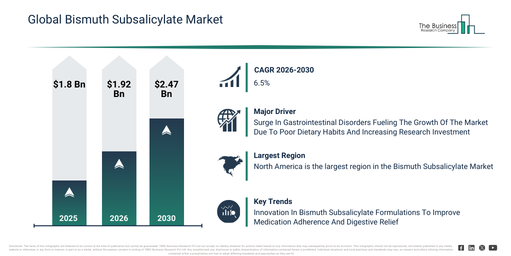
    The market for bismuth subsalicylate has experienced robust expansion over the past few years. Valued at $1.8 billion in 2025, it is projected to reach $1.92 billion by 2026, representing a compound annual growth rate (CAGR) of 6.6%. This past growth has been driven by factors such as the widespread occurrence of gastrointestinal conditions, the easy availability of over-the-counter medications, the proliferation of retail pharmacy networks, a growing tendency among consumers to self-medicate, and heightened awareness regarding digestive health.

    The market for bismuth subsalicylate is anticipated to experience robust expansion in the coming years. By 2030, its value is projected to reach $2.47 billion, driven by a compound annual growth rate (CAGR) of 6.5%. This forecasted growth is largely influenced by factors such as the rising emphasis on preventive healthcare, an increased demand for safe over-the-counter treatments, the expanding market for pediatric digestive care, deeper penetration into emerging economies, and advancements in liquid product formulations. Key developments shaping this period include a greater consumer preference for OTC gastrointestinal solutions, the launch of child-friendly medication formats, a surge in the use of products for preventive digestive health, enhanced accessibility via retail networks, and a growing focus on alcohol-free and sugar-free alternatives.

    Download A Free Sample Report For Comprehensive Market Insights:

    https://www.thebusinessresearchcompany.com/sample.aspx?id=24173&type=smp&utm_source=BlogsPR&utm_medium=Paid&utm_campaign=Jul_PR

    Bismuth Subsalicylate Market Growth Drivers And Industry Catalysts

    The rising frequency of gastrointestinal issues is expected to drive the bismuth subsalicylate market forward in the near future. These conditions involve the digestive tract—encompassing the stomach, intestines, and related organs—and manifest through symptoms like pain, bloating, and irregular bowel movements. Poor eating habits, particularly high consumption of processed foods combined with low fiber intake, largely contribute to this increase by disrupting gut microbiota and impairing digestion. Bismuth subsalicylate works to alleviate diarrhea in these disorders by reducing gut inflammation and limiting the growth of certain bacteria that cause digestive discomfort. For example, a projection published in April 2025 in Nature, a UK peer-reviewed scientific journal, based on population-based registry data indicates that inflammatory bowel disease prevalence in Canada is estimated to climb from 0.83% in 2025 to 0.96% in 2035 and 1.05% by 2043, assuming stable incidence rates; this equates to roughly 321,000 Canadians with IBD in 2025, increasing to 372,000 in 2035 and 407,000 by 2043. Consequently, the growing prevalence of gastrointestinal disorders will foster expansion in the bismuth subsalicylate market.

    The pharmaceutical industry’s growth is anticipated to boost the bismuth subsalicylate market in the coming period. This sector encompasses the research, development, manufacturing, and marketing of medications and therapeutic products aimed at enhancing health and treating a range of medical ailments. Its expansion is fueled by a rising global burden of chronic diseases, which fuels an ongoing demand for innovative therapies to manage these prolonged health issues. A growing pharmaceutical industry supports bismuth subsalicylate by improving the availability of advanced formulations and distribution networks, thus widening global access to this effective gastrointestinal treatment. As an illustration, per the FDA’s Fiscal Year 2023 Report released in June 2024 by a US government publication, the CDER Product Catalog listed 13,572 Abbreviated New Drug Applications at fiscal year 2023’s end, up from earlier years; New Drug Applications reached 3,593 (a 1.5% increase); and Biologics License Applications hit 354 (a 9% rise); overall, the total number of listed products grew by 6% to 148,886 in fiscal year 2023. Thus, the pharmaceutical industry’s expansion will drive growth in the bismuth subsalicylate market.

    Bismuth Subsalicylate Market Segment Analysis And Revenue Opportunities

    The bismuth subsalicylate market covered in this report is segmented –

    1) By Product: Bismuth Subsalicylate Tablets, Bismuth Subsalicylate Suspension, Bismuth Subsalicylate Chewable Tablets

    2) By Distribution Channel: Online Pharmacies, Retail Pharmacies, Supermarkets Or Hypermarkets, Health And Wellness Stores

    3) By Application: Gastrointestinal Disorders, Diarrhea, Nausea, Heartburn, Indigestion

    4) By End-User: Adult Consumers, Pediatric Consumers, Healthcare Professionals, Caretakers And Guardians

    Subsegments:

    1) By Bismuth Subsalicylate Tablets: Prescription Tablets, Over-The-Counter (OTC) Tablets, Coated Tablets, Uncoated Tablets

    2) By Bismuth Subsalicylate Suspension: Flavored Suspension, Unflavored Suspension, Alcohol-Free Suspension, Sugar-Free Suspension

    3) By Bismuth Subsalicylate Chewable Tablets: Adult Chewable Tablets, Pediatric Chewable Tablets, Mint-Flavored Chewable Tablets, Fruit-Flavored Chewable Tablets

    Bismuth Subsalicylate Market Trends Influencing Long-Term Demand

    Key players within the bismuth subsalicylate industry are increasingly prioritizing the creation of innovative products such as chewable tablets to improve patient compliance with medication or supplement routines. Designed to be chewed prior to swallowing, chewable tablets simplify consumption and facilitate faster absorption. A recent example is Wonderbelly, a pharmaceutical company based in the United States, which introduced a dye-free version of Pepto-Bismol (Bismuth Subsalicylate) in May 2025. These chewable tablets provide multi-symptom relief for conditions like upset stomach, diarrhea, indigestion, and nausea. While incorporating the same active ingredient as Pepto-Bismol (bismuth subsalicylate), they are manufactured without the addition of dyes or talc.

    Bismuth Subsalicylate Market Leading Players Shaping Industry Direction

    Major companies operating in the bismuth subsalicylate market are Procter & Gamble, GlaxoSmithKline Plc, Perrigo Company Plc, Siegfried AG, Laboratorios Imperiales S.A. de C.V., Shandong Xinhua Pharmaceutical Co. Ltd., Alpha Chemika, JQC (Huayin) Pharmaceutical Co. Ltd., Chr. Olesen Group, Vital Materials Co. Ltd., Shanpar Industries Pvt. Ltd., OCB Pharmaceutical, Muby Chemicals, A. B. Enterprises, Samuh Laxmi, Lumax Pharmaceutical Labs Pvt. Ltd., GB Nitrochem Pvt. Ltd., Indian Platinum Private Limited, Organs Bio Lab Private Limited, Maan Medex Private Limited

    Access The Complete Bismuth Subsalicylate Market Report:

    https://www.thebusinessresearchcompany.com/report/bismuth-subsalicylate-global-market-report?utm_source=BlogsPR&utm_medium=Paid&utm_campaign=Jul_PR

    Bismuth Subsalicylate Market Regional Analysis: Which Region Leads By Revenue?

    North America was the largest region in the bismuth subsalicylate market in 2025. Asia-Pacific is expected to be the fastest-growing region in the forecast period. The regions covered in the bismuth subsalicylate market report are Asia-Pacific, South East Asia, Western Europe, Eastern Europe, North America, South America, Middle East, Africa.

    Get in touch with us:

    The Business Research Company: https://www.thebusinessresearchcompany.com/?utm_source=BlogsPR&utm_medium=Paid&utm_campaign=home_page_test

    Americas: +1 310-496-7795

    Asia: +44 7882 955267 & +91 8897263534

    Europe: +44 7882 955267

    Email us at: marketing@tbrc.info

    Follow us on:

    LinkedIn: https://in.linkedin.com/company/the-business-research-company

    YouTube: https://www.youtube.com/channel/UC24_fI0rV8cR5DxlCpgmyFQ

    Global Market Model: https://www.thebusinessresearchcompany.com/global-market-model
  • Bipolar Disorder Drugs And Treatment Market Size Projected To Increase From $8.63 Billion To $10.83 Billion During The Forecast Period

    Bipolar Disorder Drugs And Treatment Market Size Projected To Increase From $8.63 Billion To $10.83 Billion During The Forecast Period

    Delivering more actionable and strategically valuable research, The Business Research Company’s 2026 market reports feature market attractiveness analysis, total addressable market evaluation, company benchmarking matrices, interactive Excel dashboards, expanded supply chain intelligence, emerging startup coverage, and detailed product insights.

    Bipolar Disorder Drugs And Treatment Market Value Analysis: What Growth Is Expected Over The Forecast Period?

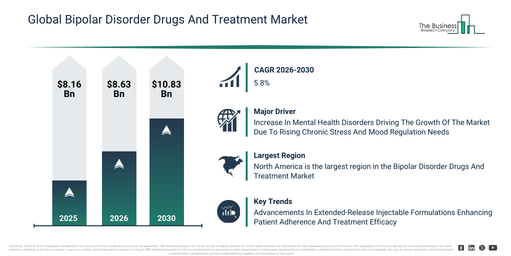
    The bipolar disorder drugs and treatment market has shown solid expansion over the past few years. This market is projected to rise from $8.16 billion in 2025 to $8.63 billion in 2026, reflecting a compound annual growth rate (CAGR) of 5.8%. During the historic period, growth was driven by factors such as increasing awareness of mental health issues, broader adoption of antidepressants, improved psychiatric hospital facilities, greater access to mood stabilizers, and higher rates of diagnosis.

    The market for bipolar disorder drugs and treatments is anticipated to experience robust expansion in the coming years. By 2030, it is projected to reach $10.83 billion, advancing at a compound annual growth rate (CAGR) of 5.8%. This forecasted growth is fueled by developments in precision psychiatry, the introduction of long-acting injectable medications, the incorporation of digital mental health tools, the design of personalized care strategies, and the broadening of outpatient psychiatric services. Key trends shaping this period involve a greater reliance on combination drug approaches, a heightened focus on sustained mood stabilization, wider usage of atypical antipsychotics, an increased emphasis on preventing relapse, and enhanced efforts to boost patient treatment adherence.

    Download A Free Sample Report For Comprehensive Market Insights:

    https://www.thebusinessresearchcompany.com/sample.aspx?id=24171&type=smp&utm_source=BlogsPR&utm_medium=Paid&utm_campaign=Jul_PR

    Bipolar Disorder Drugs And Treatment Market Opportunity Drivers: What Is Creating New Revenue Potential?

    The growing incidence of mental health disorders is expected to drive expansion in the bipolar disorder drugs and treatment market in the years ahead. Such disorders impact an individual’s cognitive functions, emotional states, behaviors, or moods, frequently hindering routine activities and overall wellness. Their rise is largely attributed to heightened chronic stress stemming from contemporary lifestyles, where persistent strains associated with employment, finances, and societal expectations gradually undermine emotional stability and foster lasting psychological difficulties. Treatment options for bipolar disorder, including medications, prove advantageous for these conditions by aiding in mood stabilization, thereby enhancing emotional control and diminishing both the occurrence and intensity of severe episodes. By way of illustration, the National Alliance On Mental Illness, an entity based in the United States, reported in 2024 that psychosis spectrum and mood disorders lead to roughly 600,000 hospitalizations annually among Americans aged 18 to 44. Consequently, the escalating prevalence of mental health disorders will significantly propel the bipolar disorder drugs and treatment market forward.

    Bipolar Disorder Drugs And Treatment Market Segmentation And Category Breakdown

    The bipolar disorder drugs and treatment market covered in this report is segmented –

    1) By Types: Mood Stabilizers, Anticonvulsants, Antipsychotic Drugs, Antidepressant Drugs, Anti-Anxiety Drugs

    2) By Route Of Administration: Oral, Parenteral, Other Routes Of Administration

    3) By Bipolar Disorder: Bipolar I Disorder, Bipolar II Disorder, Cyclothymic Disorder

    4) By Distribution Channel: Hospital Pharmacies, Retail Pharmacies, Online Pharmacies

    Subsegments:

    1) By Mood Stabilizers: Lithium Carbonate, Lamotrigine, Valproate

    2) By Anticonvulsants: Carbamazepine, Oxcarbazepine, Topiramate

    3) By Antipsychotic Drugs: Olanzapine, Risperidone, Quetiapine, Aripiprazole

    4) By Antidepressant Drugs: Selective Serotonin Reuptake Inhibitors (SSRIs), Serotonin-Norepinephrine Reuptake Inhibitors (SNRIs), Tricyclic Antidepressants (TCAs)

    5) By Anti-Anxiety Drugs: Benzodiazepines, Buspirone

    Bipolar Disorder Drugs And Treatment Market Innovation Trends Driving Future Development

    Leading players in the bipolar disorder drugs and treatment market are concentrating on creating innovative products, particularly extended-release injectable formulations, aimed at delivering stable, long-term therapeutic benefits. Such formulations are designed to release medication gradually into the bloodstream, lessening the requirement for daily administration and fostering consistent treatment outcomes. A notable example occurred in January 2023 when Luye Pharma, a pharmaceutical firm based in China, secured U.S. Food and Drug Administration (FDA) approval for Rykindo (risperidone). This is a long-acting injectable suspension indicated for adult schizophrenia, as well as a standalone or adjunctive therapy alongside lithium or valproate for adult bipolar I disorder. The drug relies on a proprietary microsphere technology platform developed by Luye Pharma, enabling its administration via intramuscular injection once every two weeks for extended effects. The active component, risperidone, is released through this extended-release microsphere system, guaranteeing a gradual and sustained delivery over the treatment period.

    Bipolar Disorder Drugs And Treatment Market Competitive Analysis Of Major Industry Participants

    Major companies operating in the bipolar disorder drugs and treatment market are Pfizer Inc., Johnson & Johnson, Merck & Co. Inc., AbbVie Inc., Novartis AG, Sanofi S.A., Bristol-Myers Squibb Company, AstraZeneca PLC, GSK PLC, Takeda Pharmaceutical Company Limited, Eli Lilly and Company, Teva Pharmaceutical Industries Ltd., Boehringer Ingelheim International GmbH, Otsuka Holdings Co. Ltd., Astellas Pharma Inc., Sumitomo Pharma America Inc., Dr. Reddy’s Laboratories Ltd., H. Lundbeck A/S, Cipla Limited, Gedeon Richter Plc, Lupin Limited, Neurocrine Biosciences Inc., Alkermes Plc.

    Access The Complete Bipolar Disorder Drugs And Treatment Market Report:

    https://www.thebusinessresearchcompany.com/report/bipolar-disorder-drugs-and-treatment-global-market-report?utm_source=BlogsPR&utm_medium=Paid&utm_campaign=Jul_PR

    Bipolar Disorder Drugs And Treatment Market Geographic Distribution And Regional Opportunities

    North America was the largest region in the bipolar disorder drugs and treatment market in 2025. Asia-Pacific is expected to be the fastest-growing region in the forecast period. The regions covered in the bipolar disorder drugs and treatment market report are Asia-Pacific, South East Asia, Western Europe, Eastern Europe, North America, South America, Middle East, Africa.

    Get in touch with us:

    The Business Research Company: https://www.thebusinessresearchcompany.com/?utm_source=BlogsPR&utm_medium=Paid&utm_campaign=home_page_test

    Americas: +1 310-496-7795

    Asia: +44 7882 955267 & +91 8897263534

    Europe: +44 7882 955267

    Email us at: marketing@tbrc.info

    Follow us on:

    LinkedIn: https://in.linkedin.com/company/the-business-research-company

    YouTube: https://www.youtube.com/channel/UC24_fI0rV8cR5DxlCpgmyFQ

    Global Market Model: https://www.thebusinessresearchcompany.com/global-market-model
  • Biotech Ingredient Market Growth Outlook Reveals A CAGR Of 6.6% And A Market Value Of $87.05 Billion By 2030

    Biotech Ingredient Market Growth Outlook Reveals A CAGR Of 6.6% And A Market Value Of $87.05 Billion By 2030

    Enhanced with market attractiveness analysis, total addressable market evaluation, company benchmarking matrices, interactive Excel dashboards, expanded supply chain intelligence, emerging startup coverage, and detailed product insights, The Business Research Company’s 2026 market reports deliver more actionable and strategically valuable research.

    Biotech Ingredient Market Size Forecast: How Large Could The Market Become By 2030?

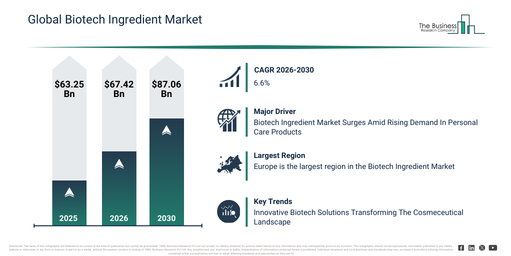
    The biotech ingredient sector has seen robust expansion over recent years, with projections showing an increase from $63.25 billion in 2025 to $67.42 billion in 2026—representing a compound annual growth rate (CAGR) of 6.6%. This historical growth has been driven by a rising need for natural and safe components, progress in microbial fermentation methods, heightened understanding of biotechnology’s role in food and personal care products, a growing consumer shift toward sustainable options, and the initial uptake of compounds derived from yeast and algae.

    The biotech ingredient market is anticipated to experience robust expansion over the coming years, with projections indicating a rise to $87.06 billion by 2030 at a compound annual growth rate of 6.6%. This forecasted growth is driven by factors such as the widening scope of precision medicine and personalized nutrition, enhanced governmental backing for biotech research and development, the upscaling of microbial and yeast expression systems, the integration of artificial intelligence and automation into manufacturing processes, and an increasing range of uses in sectors like cosmetics, cleaning products, and food. Key trends influencing this period include progress in synthetic biology, breakthroughs in microbial engineering, more cost-efficient methods for producing ingredients, a stronger focus on regulatory compliance and safety protocols, and a broader adoption within the food, personal care, and cleaning industries.

    Download A Free Sample Report For Comprehensive Market Insights:

    https://www.thebusinessresearchcompany.com/sample.aspx?id=9817&type=smp&utm_source=BlogsPR&utm_medium=Paid&utm_campaign=Jul_PR

    Biotech Ingredient Market Growth Momentum: Which Factors Are Influencing Demand?

    The biotech ingredient market is set to expand further, fueled by an escalating demand for personal care products. These products encompass a wide array of items designed to uphold personal hygiene and improve appearance. The incorporation of biotech ingredients into such products provides numerous advantages, including a smaller environmental footprint, sustainability, dependable uniformity, decreased allergenic potential, biocompatibility, better efficacy, and a lower reliance on petrochemicals. As an illustration, the Bureau of Labor Statistics, a US governmental agency, reported in December 2024 that the typical yearly expenditure on personal care items and services increased from $866 per consumer unit in 2022 to $950 per consumer unit in 2023. Consequently, the rising need for personal care items is propelling the expansion of the biotech ingredient market.

    Biotech Ingredient Market Segment Outlook: Which Categories Are Expanding The Fastest?

    The biotech ingredient market covered in this report is segmented –

    1) By Type: Active Pharmaceutical Ingredients, Biosimilars

    2) By Expression Systems: Mammalian Expression Systems, Microbial Expression Systems, Yeast Expression Systems, Plant Expression Systems, Insect Expression Systems

    3) By Application: Food And Beverages, Personal Care And Cosmetics, Cleaning Products, Other Applications

    Subsegments:

    1) By Active Pharmaceutical Ingredients (APIs): Biologic APIs, Synthetic APIs

    2) By Biosimilars: Monoclonal Antibodies, Recombinant Proteins, Insulin Biosimilars

    Biotech Ingredient Market Trends Reshaping Industry Growth

    Key industry players within the biotech ingredient space are concentrating on the creation of advanced solutions, such as cutting-edge platforms built on biotechnology, to address the growing need for high-performance, sustainable, and next-generation formulas in cosmetics and personal care. These biotechnology-derived components employ enzymatic and bio-based methods to generate unique molecular architectures with improved capabilities, delivering superior functionality, scalability, and ecological advantages over conventional chemically produced alternatives. In March 2023, International Flavors & Fragrances Inc., an American producer of fragrances, biotech innovations, cosmetic actives, and organic health ingredients, released Aurist AGC, a novel biopolymer intended for hair care applications. This demonstrates the potential of the new DEB platform by harnessing IFF’s complete biotechnological capabilities to deliver enduring, high-performance glamour solutions that can genuinely drive transformation within the cosmeceutical sector. This ingredient utilizes IFF’s proprietary Designed Enzymatic Biopolymers (DEB) technology, an advanced biotechnological method capable of creating new bio-based polysaccharides featuring unique structures and product attributes.

    Biotech Ingredient Market Key Companies And Competitive Benchmarking

    Major companies operating in the biotech ingredient market are Merck & Co. Inc., Sanofi S.A., AbbVie Inc., International Flavors & Fragrance (IFF) Inc., Novartis AG, Pfizer Inc., Teva Pharmaceutical Industries Ltd., Mylan Inc., Boehringer Ingelheim International GmbH., AstraZeneca plc., Givaudan, Firmenich SA, Amyris Inc., Advanced BioTech, Sollice Biotech, Novocap S.A., Eli Lilly, Bristol-Myers Squibb Company, GlaxoSmithKline plc., F. Hoffmann-La Roche AG, Biogen Inc., Amgen Inc., Johnson & Johnson, Genentech Inc., Regeneron Pharmaceuticals Inc., Vertex Pharmaceuticals Incorporated, Alexion Pharmaceuticals Inc., Celgene Corporation, Gilead Sciences Inc., BioMarin Pharmaceutical Inc., Incyte Corporation, Seattle Genetics Inc., Alnylam Pharmaceuticals Inc., Ionis Pharmaceuticals Inc., Moderna Inc., Editas Medicine Inc., Intellia Therapeutics Inc., Sangamo Therapeutics Inc., Bluebird Bio Inc., Spark Therapeutics Inc.

    Access The Complete Biotech Ingredient Market Report:

    https://www.thebusinessresearchcompany.com/report/biotech-ingredient-global-market-report?utm_source=BlogsPR&utm_medium=Paid&utm_campaign=Jul_PR

    Biotech Ingredient Market Largest Region By Revenue And Market Share

    Europe was the largest region in the biotech ingredient market in 2025. Asia-Pacific is expected to be the fastest-growing region in the biotech ingredients market report during the forecast period. The regions covered in the biotech ingredient market report are Asia-Pacific, South East Asia, Western Europe, Eastern Europe, North America, South America, Middle East, Africa.

    Get in touch with us:

    The Business Research Company: https://www.thebusinessresearchcompany.com/?utm_source=BlogsPR&utm_medium=Paid&utm_campaign=home_page_test

    Americas: +1 310-496-7795

    Asia: +44 7882 955267 & +91 8897263534

    Europe: +44 7882 955267

    Email us at: marketing@tbrc.info

    Follow us on:

    LinkedIn: https://in.linkedin.com/company/the-business-research-company

    YouTube: https://www.youtube.com/channel/UC24_fI0rV8cR5DxlCpgmyFQ

    Global Market Model: https://www.thebusinessresearchcompany.com/global-market-model
  • Biotech Collaborations Market Forecast Highlights Expansion From $105.07 Billion To $159.76 Billion Through 2030

    Biotech Collaborations Market Forecast Highlights Expansion From $105.07 Billion To $159.76 Billion Through 2030

    Through market attractiveness analysis, total addressable market evaluation, company benchmarking matrices, interactive Excel dashboards, expanded supply chain intelligence, emerging startup coverage, and detailed product insights, The Business Research Company’s 2026 market reports provide more actionable and strategically valuable research.

    Biotech Collaborations Market Revenue Outlook: What CAGR Is Expected Through 2030?

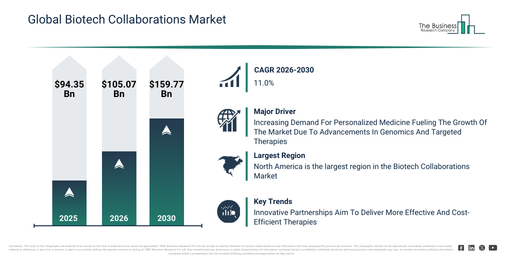
    The size of the biotech collaborations market has experienced swift growth over recent years, expanding from $94.35 billion in 2025 to an estimated $105.07 billion in 2026, reflecting a compound annual growth rate (CAGR) of 11.4%. This historic growth has been driven by several factors, including the growing intricacy of drug development pipelines, the escalating expenses associated with clinical trials, the broadening of translational research programs, the rise in venture-backed biotech startups, and the heightened involvement of academic research.

    The biotechnology collaboration market is anticipated to experience substantial expansion over the coming years, projected to reach $159.77 billion by 2030 with an 11.0% compound annual growth rate (CAGR). This forecasted growth is driven by factors such as an increased emphasis on precision medicine partnerships, a greater reliance on data-informed drug discovery alliances, the expansion of joint public-private research initiatives, heightened interest in platform-oriented biotech agreements, and the accelerating globalization of clinical trials. Notable developments influencing this period include a surge in strategic R&D partnerships among biotech enterprises, the growing prevalence of licensing and co-development structures, more extensive cooperation with academic research centers, the broadening of cross-border biotech collaborations, and a stronger focus on mechanisms that share innovation risks.

    Download A Free Sample Report For Comprehensive Market Insights:

    https://www.thebusinessresearchcompany.com/sample.aspx?id=28151&type=smp&utm_source=BlogsPR&utm_medium=Paid&utm_campaign=Jul_PR

    Biotech Collaborations Market Expansion Drivers: What Is Shaping Future Growth?

    The rising demand for tailored medical treatments is anticipated to boost expansion in the biotech collaborations market. Personalized medicine is a healthcare strategy that customizes therapeutic and preventive measures based on an individual’s distinct genetic profile, lifestyle, and environment. This growing preference for personalized approaches is largely driven by advances in genomics, which allow for accurate detection of genetic differences and customized care for each person. By merging specialized knowledge and cutting-edge technologies, biotech partnerships speed up progress in personalized medicine, facilitating the creation of targeted treatments suited to individual patients. Such collaborations shorten research periods and boost success rates, thereby improving treatment effectiveness and patient well-being. For example, in February 2024, the Personalized Medicine Coalition, a U.S.-based nonprofit, reported that the U.S. Food and Drug Administration approved 26 new personalized medicines in 2023—a sharp rise from the 12 approved in 2022. Consequently, the growing need for personalized medicine is fueling advancement in the biotech collaborations market.

    Biotech Collaborations Market Segment Landscape: Which Areas Lead Market Development?

    The biotech collaborations market covered in this report is segmented –

    1) By Collaboration Type: Research And Development Collaborations, Licensing Agreements, Joint Ventures, Mergers Or Acquisitions, Other Collaborations

    2) By Application: Drug Discovery, Clinical Research, Diagnostics, Therapeutics, Other Applications

    3) By End User: Pharmaceutical Companies, Biotechnology Firms, Academic And Research Institutes, Other End-Users

    Subsegments:

    1) By Research And Development Collaborations: Preclinical Research, Clinical Trials, Translational Research, Drug Discovery

    2) By Licensing Agreements: Exclusive Licensing, Non Exclusive Licensing, In Licensing, Out Licensing

    3) By Joint Ventures: Strategic Alliance, Co Development, Co Marketing, Technology Sharing

    4) By Mergers Or Acquisitions: Horizontal Merger, Vertical Merger, Conglomerate Merger, Acquisition Of Assets

    5) By Other Collaborations: Research Consortium, Public Private Partnership, Academic Collaboration, Contract Research

    Biotech Collaborations Market Strategic Trends: What Is Defining The Next Phase Of Growth?

    Major players in the biotech collaborations market are prioritizing the creation of cutting-edge approaches, including AI-powered drug discovery platforms, to speed up the detection of new therapies and enhance the efficiency of research and development. These platforms rely on sophisticated algorithms and machine learning to examine biological information, forecast interactions between drugs and their targets, and streamline the creation of new treatments. A relevant example occurred in January 2025, when Iktos S.A.S., a biotechnology firm based in France, entered into a partnership with Cube Biotech GmbH, a German biotechnology company, to create new small molecule agonists aimed at the amylin receptor—a promising target for cardiometabolic conditions such as obesity, diabetes, and metabolic dysfunction-associated steatotic hepatitis (MASH). This collaboration takes advantage of Iktos’ generative AI-based drug discovery and robotic synthesis systems, combined with Cube Biotech’s expertise in NativeMP membrane protein technology, protein stabilization strategies, and biophysical assay methods. The aim of this partnership is to reduce drug discovery timelines, boost the likelihood of success, and more effectively tackle difficult membrane protein targets, potentially leading to treatments that are both more efficient and cost-effective compared to current options like GLP-1 receptor agonists.

    Biotech Collaborations Market Industry Leaders And Market Competition

    Major companies operating in the biotech collaborations market are Johnson And Johnson, F. Hoffmann-La Roche Ltd., Merck And Co. Inc., Pfizer Inc., AbbVie Inc., Bayer AG, Sanofi S.A., Novartis AG, AstraZeneca plc, Bristol-Myers Squibb Company, GlaxoSmithKline plc, Eli Lilly And Company, Novo Nordisk A/S, Takeda Pharmaceutical Company Limited, Amgen Inc., Gilead Sciences Inc., C.H. Boehringer Sohn AG & Co. KG, CSL Limited., Regeneron Pharmaceuticals Inc., Vertex Pharmaceuticals Incorporated, Biogen Inc.

    Access The Complete Biotech Collaborations Market Report:

    https://www.thebusinessresearchcompany.com/report/biotech-collaborations-global-market-report?utm_source=BlogsPR&utm_medium=Paid&utm_campaign=Jul_PR

    Biotech Collaborations Market Regional Analysis And Leading Geography

    North America was the largest region in the biotech collaborations market in 2025. The regions covered in the biotech collaborations market report are Asia-Pacific, South East Asia, Western Europe, Eastern Europe, North America, South America, Middle East, Africa.

    Get in touch with us:

    The Business Research Company: https://www.thebusinessresearchcompany.com/?utm_source=BlogsPR&utm_medium=Paid&utm_campaign=home_page_test

    Americas: +1 310-496-7795

    Asia: +44 7882 955267 & +91 8897263534

    Europe: +44 7882 955267

    Email us at: marketing@tbrc.info

    Follow us on:

    LinkedIn: https://in.linkedin.com/company/the-business-research-company

    YouTube: https://www.youtube.com/channel/UC24_fI0rV8cR5DxlCpgmyFQ

    Global Market Model: https://www.thebusinessresearchcompany.com/global-market-model
  • Biosimilars Market Expected To Reach $48.52 Billion By 2030 As Growth Accelerates At 17.4% CAGR

    Biosimilars Market Expected To Reach $48.52 Billion By 2030 As Growth Accelerates At 17.4% CAGR

    Delivering more actionable and strategically valuable research, The Business Research Company’s 2026 market reports feature market attractiveness analysis, total addressable market evaluation, company benchmarking matrices, interactive Excel dashboards, expanded supply chain intelligence, emerging startup coverage, and detailed product insights.

    Biosimilars Market Growth Analysis: How Will Revenue Expand During The Forecast Period?

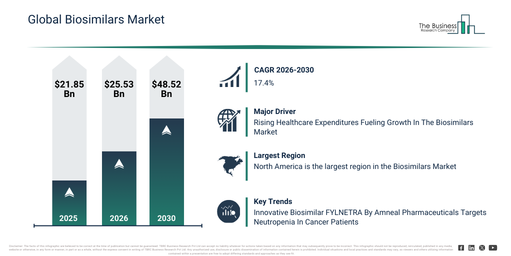
    The biosimilars sector has experienced swift expansion in recent years. Projections indicate an increase from $21.85 billion in 2025 to $25.53 billion in 2026, achieving a compound annual growth rate (CAGR) of 16.9%. Several factors have driven this historical growth, including the escalating incidence of chronic and autoimmune conditions, the substantial expense of reference biologics, a heightened need for affordable treatment options, progress in biopharmaceutical research and development, and the strengthening of healthcare systems within developing countries.

    The biosimilars market is projected to experience significant growth over the coming years, with its value anticipated to reach $48.52 billion by 2030, expanding at a compound annual growth rate (CAGR) of 17.4%. This forecasted expansion is driven by the expiration of patents for major biologic drugs, heightened utilization of biosimilars in oncology and autoimmune treatments, favorable government policies and incentives, enhanced production capabilities in the Asia-Pacific region, and increased collaborations between biopharmaceutical firms and contract manufacturing organizations. Key trends shaping this period include the emergence of tailored biosimilar development, more cost-efficient biologic manufacturing, progress in regulatory alignment and compliance, growth of biosimilar markets in developing regions, and a rise in strategic alliances and joint ventures.

    Download A Free Sample Report For Comprehensive Market Insights:

    https://www.thebusinessresearchcompany.com/sample.aspx?id=2807&type=smp&utm_source=BlogsPR&utm_medium=Paid&utm_campaign=Jul_PR

    Biosimilars Market Development Factors: Which Trends Are Supporting Demand?

    The rising costs of healthcare are anticipated to drive the expansion of the biosimilars market in the coming period. Healthcare expenditures encompass the overall amount spent on medical goods and services within a specific population or system. By providing more affordable options compared to costly biologic drugs, the biosimilar sector helps cut treatment expenses for patients and healthcare systems, thereby reducing overall healthcare spending. For example, in March 2024, the Health Foundation, an independent UK charity and think tank, reported that total health spending in England reached £182 billion ($196.78 billion) in 2022/23, the most recent year with confirmed data. Although planned health expenditures are expected to climb to £192 billion ($207.59 billion) in 2024/25, inflation will limit the real-term increase to just 0.6% relative to the 2023/24 fiscal year. Consequently, the growth of the biosimilars market is being fueled by increasing healthcare expenditures.

    Biosimilars Market Segments: Where Are The Largest Growth Opportunities?

    The biosimilars market covered in this report is segmented –

    1) By Type: Monoclonal Antibodies, Insulin, Erythropoietin, Granulocyte-Colony Stimulating Factor, Other Hormones

    2) By Protein Type: Recombinant Non-glycosylated Proteins, Recombinant Glycosylated Proteins

    3) By Application: Oncology, Chronic And Autoimmune Diseases, Growth Hormone Deficiency, Infectious Diseases, Other Applications

    Subsegments:

    1) By Monoclonal Antibodies: IgG Biosimilars, Non-IgG Biosimilars

    2) By Insulin: Rapid-Acting Insulin Biosimilars, Long-Acting Insulin Biosimilars, Premixed Insulin Biosimilars

    3) By Erythropoietin: Epoetin Alfa Biosimilars, Darbepoetin Alfa Biosimilars

    4) By Granulocyte-Colony Stimulating Factor (G-CSF): Filgrastim Biosimilars, Pegfilgrastim Biosimilars

    5) By Other Hormones: Growth Hormones, Hormonal Replacement Therapy Biosimilars

    Biosimilars Market Transformation Trends: Which Innovations Are Driving Change?

    Key players in the biosimilars industry are concentrating on developing cutting-edge products to secure a competitive advantage within the sector. FYLNETRA, a leukocyte growth factor, is designed to reduce the occurrence of infections, particularly those presenting as febrile neutropenia, in patients with non-myeloid cancers who are undergoing myelosuppressive chemotherapy regimens linked to a notable risk of febrile neutropenia. A notable example occurred in May 2023, when Amneal Pharmaceuticals Inc., a pharmaceutical firm based in the United States, introduced FYLNETRA (pegfilgrastim-pbbk) to the market, a biosimilar referencing Neulasta, delivered in a prefilled single-dose syringe. This therapy addresses neutropenia—a condition characterized by low levels of neutrophils, the white blood cells essential for fighting infections—frequently experienced by individuals during chemotherapy.

    Biosimilars Market Major Participants And Competitive Dynamics

    Major companies operating in the biosimilars market are Amgen, Novartis AG, Samsung Bioepis Co. Ltd., Viatris, Celltrion Inc., Coherus Biosciences, Eli Lilly and Company, Dr. Reddy’s Laboratories, Roche India Pvt Ltd, Abbott India Limited, Wuxi Biologics, Shanghai Henlius Biotech, Innovent Biologics, Hisun Pharma, 3SBio, Beijing ShuangLu Pharmaceuticals, Qilu Pharmaceutical, Kyowa Hakko Kirin, Takeda, Mitsubishi Tanabe, AGC Biologics, Bio-Thera, Sandoz Pty Ltd, Apotex Pty Ltd, Cadila Pharmaceuticals, BiosanaPharma, GlaxoSmithKline, AstraZeneca, Bayer, Merck, Boehringer Ingelheim, Sanofi, Fresenius Kabi, Napp Pharmaceuticals, Mundipharma Deutschland GmbH & Co. KG, Geropharm, Valenta, NovaMedica, SynBio, Rani Therapeutics, Johnson & Johnson, Biogen Inc., Aché, Eurofarma, Teva Pharmaceuticals, Oramed Pharmaceuticals, Entera Bio, Julphar, Hikma Pharmaceuticals, BIOPHARMA-MEA, NeoTX, AID Genomics Limited, Altis Biologics, Cipla Medpro South Africa, Next Biosciences, Viome, Inqaba Biotechnical Industries (Pty)

    Access The Complete Biosimilars Market Report:

    https://www.thebusinessresearchcompany.com/report/biosimilar-global-market-report?utm_source=BlogsPR&utm_medium=Paid&utm_campaign=Jul_PR

    Biosimilars Market Geographic Analysis: Where Is Demand Growing The Fastest?

    North America was the largest region in the global biosimilars market in 2025. Middle East is expected to be the fastest-growing region in the forecast period. The regions covered in the biosimilars market report are Asia-Pacific, South East Asia, Western Europe, Eastern Europe, North America, South America, Middle East, Africa.

    Get in touch with us:

    The Business Research Company: https://www.thebusinessresearchcompany.com/?utm_source=BlogsPR&utm_medium=Paid&utm_campaign=home_page_test

    Americas: +1 310-496-7795

    Asia: +44 7882 955267 & +91 8897263534

    Europe: +44 7882 955267

    Email us at: marketing@tbrc.info

    Follow us on:

    LinkedIn: https://in.linkedin.com/company/the-business-research-company

    YouTube: https://www.youtube.com/channel/UC24_fI0rV8cR5DxlCpgmyFQ

    Global Market Model: https://www.thebusinessresearchcompany.com/global-market-model
  • Biosimilar Therapeutic Peptides Market Set To Grow From $3.89 Billion In 2026 To $6.11 Billion By 2030 At A CAGR Of 11.9%

    Biosimilar Therapeutic Peptides Market Set To Grow From $3.89 Billion In 2026 To $6.11 Billion By 2030 At A CAGR Of 11.9%

    Enhanced with market attractiveness analysis, total addressable market evaluation, company benchmarking matrices, interactive Excel dashboards, expanded supply chain intelligence, emerging startup coverage, and detailed product insights, The Business Research Company’s 2026 market reports deliver more actionable and strategically valuable research.

    Biosimilar Therapeutic Peptides Market Forecast: What Market Value Is Expected By 2030?

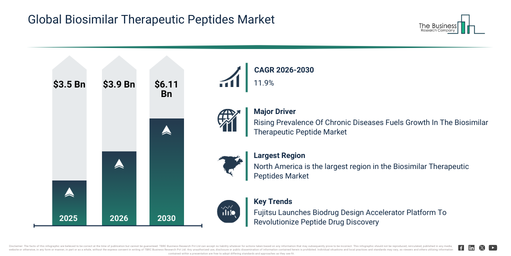
    The market for biosimilar therapeutic peptides has experienced swift expansion in recent years. Projected to rise from $3.5 billion in 2025 to $3.9 billion in 2026, it reflects a compound annual growth rate (CAGR) of 11.5%. This historical growth has been driven by factors such as the restricted supply of biosimilar peptides, a dependence on novel peptide treatments, a rising incidence of cancer and metabolic conditions, heightened awareness regarding peptide-based therapies, and advancements in parenteral delivery techniques.

    The market for biosimilar therapeutic peptides is projected to experience significant expansion over the coming years. By 2030, its value is anticipated to reach $6.11 billion, registering a compound annual growth rate (CAGR) of 11.9%. This upward trajectory during the forecast period is driven by several factors, including the launch of combination and long-acting peptides, the scaling up of generic peptide manufacturing, a greater uptake of transdermal delivery systems, increased funding for peptide research and development, and higher global healthcare spending on peptide-based treatments. Notable trends shaping this period involve a heightened demand for biosimilar therapeutic peptides in oncology, a broader application of peptide therapies for metabolic and cardiovascular conditions, a shift toward long-acting and combination peptide formulations, the growing use of parenteral and transdermal administration methods, and a strategic emphasis on cost-effective generic peptides to improve accessibility in emerging economies.

    Download A Free Sample Report For Comprehensive Market Insights:

    https://www.thebusinessresearchcompany.com/sample.aspx?id=3423&type=smp&utm_source=BlogsPR&utm_medium=Paid&utm_campaign=Jul_PR

    Biosimilar Therapeutic Peptides Market Industry Drivers: What Is Driving Revenue Growth?

    The growing incidence of chronic diseases is anticipated to propel the biosimilar therapeutic peptide market. These long-lasting health conditions require continuous care and management over extended periods, often spanning many years or a lifetime. As the number of such cases rises, there is an increasing need for affordable treatment options, positioning biosimilar therapeutic peptides as a cost-effective solution that can enhance patient access and support the sustainability of healthcare systems. Market expansion is further supported by favorable regulatory frameworks and accumulating clinical evidence. For example, in April 2025, the US Centers for Disease Control and Prevention (CDC) reported that in 2023, approximately 194 million American adults—representing 76.4%—had at least one chronic condition. This prevalence varied by age group: 59.5% among young adults, 78.4% among those in midlife, and 93.0% among older adults. Consequently, the increasing burden of chronic diseases is likely to drive growth in the biosimilar therapeutic peptides market.

    Biosimilar Therapeutic Peptides Market Segment Analysis: What Are The Major Market Categories?

    The biosimilar therapeutic peptides market covered in this report is segmented –

    1) By Type: Innovative, Generic

    2) By Route Of Administration: Parenteral Route, Transdermal Route, Other Route Of Administrations

    3) By Application: Cancer, Cardiovascular, Central Nervous Systems, Metabolic Disorders, Infection, Hematological Disorders, Gastrointestinal Disorders, Dermatology, Respiratory Disorders

    Subsegments:

    1) By Innovative: Long-Acting Peptides, Combination Peptides

    2) By Generic: Monoclonal Antibodies, Hormones, Enzymes

    Biosimilar Therapeutic Peptides Market Growth Trends: What Is Influencing The Future Outlook?

    Key players in the biosimilar therapeutic peptide market are advancing a research platform focused on streamlining peptide synthesis, boosting manufacturing effectiveness, and upholding consistent quality standards from initial discovery through full-scale commercialization. Known as the Biodrug Design Accelerator, this system is designed to oversee research workflows in peptide drug discovery—an area widely seen as a promising frontier in novel drug development. In May 2023, for example, Fujitsu Limited, a US-based toy manufacturing and entertainment firm, introduced the Biodrug Design Accelerator platform to expedite peptide drug discovery research. This platform aids pharmaceutical scientists by enhancing and accelerating peptide drug development through iterative cycles of design, synthesis, testing, and analysis (DMTA), thereby facilitating faster and smarter design of peptide drug candidates and fostering clearer communication among researchers about synthesis and testing procedures.

    Biosimilar Therapeutic Peptides Market Leading Companies Driving Competitive Growth

    Major companies operating in the biosimilar therapeutic peptides market are Pfizer Inc., Merck & Co. Inc., Novartis AG, Sanofi SA, Takeda Pharmaceuticals Co. Ltd., Eli Lilly and Company, Novo Nordisk A/S, Apotex Inc., Teva Pharmaceuticals Industries Ltd., Sandoz International GmbH, Lonza Inc., Stada Arzneimittel AG, Ipsen S.A, Biocon Biopharmaceuticals Pvt. Ltd., Dr. Reddy’s Laboratories Ltd., Alvogen Pharma US Inc., Corden Pharma GmbH, Bachem Holding AG, PolyPeptide Laboratories Ltd.

    Access The Complete Biosimilar Therapeutic Peptides Market Report:

    https://www.thebusinessresearchcompany.com/report/biosimilar-therapeutic-peptide-global-market-report?utm_source=BlogsPR&utm_medium=Paid&utm_campaign=Jul_PR

    Biosimilar Therapeutic Peptides Market Global Footprint: Which Region Holds Market Leadership?

    North America was the largest region in the biosimilar therapeutics peptides market in 2025. Middle East is expected to be the fastest growing region in the biosimilar therapeutic peptides market report during the forecast period. The regions covered in the biosimilar therapeutic peptides market report are Asia-Pacific, South East Asia, Western Europe, Eastern Europe, North America, South America, Middle East, Africa.

    Get in touch with us:

    The Business Research Company: https://www.thebusinessresearchcompany.com/?utm_source=BlogsPR&utm_medium=Paid&utm_campaign=home_page_test

    Americas: +1 310-496-7795

    Asia: +44 7882 955267 & +91 8897263534

    Europe: +44 7882 955267

    Email us at: marketing@tbrc.info

    Follow us on:

    LinkedIn: https://in.linkedin.com/company/the-business-research-company

    YouTube: https://www.youtube.com/channel/UC24_fI0rV8cR5DxlCpgmyFQ

    Global Market Model: https://www.thebusinessresearchcompany.com/global-market-model
  • Biosimilar Monoclonal Antibodies Market Opportunities Are Emerging Beyond Traditional Growth Areas

    Biosimilar Monoclonal Antibodies Market Opportunities Are Emerging Beyond Traditional Growth Areas

    Through market attractiveness analysis, total addressable market evaluation, company benchmarking matrices, interactive Excel dashboards, expanded supply chain intelligence, emerging startup coverage, and detailed product insights, The Business Research Company’s 2026 market reports provide more actionable and strategically valuable research.

    Biosimilar Monoclonal Antibodies Market Size Outlook: How Fast Will Revenue Grow Through 2030?

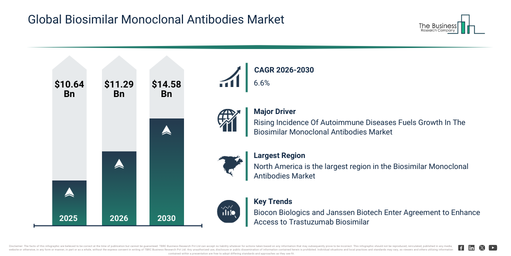
    The biosimilar monoclonal antibodies market has experienced robust expansion over recent years. Its valuation is projected to rise from $10.64 billion in 2025 to $11.29 billion in 2026, reflecting a compound annual growth rate (CAGR) of 6.2%. This historical growth has been driven by several key factors: the elevated expense of original biologic drugs, an increasing prevalence of chronic and autoimmune conditions, the expiration of patents for major monoclonal antibodies, rising healthcare spending, and the gradual establishment of clearer regulatory frameworks for biosimilars.

    The biosimilar monoclonal antibodies industry is anticipated to experience robust expansion in the coming years. By 2030, its value is projected to hit $14.58 billion, achieving a compound annual growth rate (CAGR) of 6.6%. Several factors are driving this growth in the forecast period, including the broadening of biosimilar development initiatives, a heightened need for economical biologic treatments, growing authorizations in developing economies, progress in biopharmaceutical production methods, and favorable government measures encouraging biosimilar utilization. Noteworthy developments expected during this period involve the growing preference for cost-efficient biosimilar monoclonal antibodies, more frequent application of biosimilars in oncology and autoimmune conditions, rising confidence among healthcare professionals and patients regarding these products, an increase in regulatory clearances in international markets, and a heightened emphasis on broadening the availability of biologic therapies.

    Download A Free Sample Report For Comprehensive Market Insights:

    https://www.thebusinessresearchcompany.com/sample.aspx?id=3412&type=smp&utm_source=BlogsPR&utm_medium=Paid&utm_campaign=Jul_PR

    #Biosimilar Monoclonal Antibodies Market Growth Factors: Which Forces Are Supporting Market Expansion?

    The growing prevalence of autoimmune conditions is set to boost the biosimilar monoclonal antibodies market. These disorders occur when the immune system erroneously attacks the body’s own tissues and organs. This increase largely stems from heightened exposure to environmental factors like pollution and chemicals, which disturb immune system equilibrium and spur irregular immune reactions. By delivering cost-effective, potent, and broadly available targeted treatments that control excessive immune activity in patients, biosimilar monoclonal antibodies play a crucial role in tackling this issue. In February 2024, Arthritis Australia, a nonprofit based in the country, reported that an estimated 212,136 males and 362,137 females are projected to have rheumatoid arthritis (RA) in 2025, with these figures anticipated to climb to roughly 280,040 males and 479,828 females by 2040. Consequently, the rising incidence of autoimmune diseases is fueling growth in the biosimilar monoclonal antibodies market.

    Biosimilar Monoclonal Antibodies Market Segment Breakdown: Which Categories Generate The Most Revenue?

    The biosimilar monoclonal antibodies market covered in this report is segmented –

    1) By Type: Biopharmaceuticals, Other Types

    2) By Compound: Infliximab, Rituximab, Abciximab, Trastuzumab, Adalimumab, Bevacizumab

    3) By Application: Chronic & Autoimmune Diseases, Oncology, Other Applications

    Subsegments:

    1) By Biopharmaceuticals: Monoclonal Antibodies, Recombinant Proteins, Vaccines, Other Biopharmaceuticals

    2) By Other Types: Antibody-Drug Conjugates, Fusion Proteins, Biosimilars Of Other Biologics

    Biosimilar Monoclonal Antibodies Market Industry Trends: What Changes Are Reshaping Demand?

    Leading firms within the biosimilar monoclonal antibody sector are actively creating biosimilar versions of the monoclonal antibody, aiming to deliver more affordable alternatives to original monoclonal antibody therapies, thereby enhancing healthcare access and cost-effectiveness. An intravenous formulation describes a preparation of the antibody meant for direct administration into the bloodstream via a vein to achieve a swift therapeutic effect. As an example, in May 2024, Bio-Thera Solutions, a biopharmaceutical company headquartered in China, along with Biogen Inc., a biopharmaceutical firm based in the United States, introduced TOFIDENCE (tocilizumab-bavi) in an intravenous formulation within the U.S. market. The U.S. Food and Drug Administration granted approval for TOFIDENCE in September 2023, targeting the treatment of moderately to severely active rheumatoid arthritis, polyarticular juvenile idiopathic arthritis, and systemic juvenile idiopathic arthritis. At the time of its launch, TOFIDENCE was made available in three vial sizes: 80 mg/4 mL, 200 mg/10 mL, and 400 mg/20 mL for intravenous infusion, with subcutaneous formulations slated for introduction at a later date.

    Biosimilar Monoclonal Antibodies Market Key Players And Strategic Industry Positioning

    Major companies operating in the biosimilar monoclonal antibodies market are Pfizer Inc., Novartis AG, AbbVie Inc., Coherus BioSciences, Biocon Limited, Amgen Inc., Boehringer Ingelheim International GmbH, Celltrion Inc., BioXpress Therapeutics SA, Intas Pharmaceuticals Limited, Genor BioPharma Co. Ltd., BIOCAD, Dr. Reddy’s Laboratories Ltd., 3SBio Inc., Reliance Life Sciences, Hisun Pharmaceuticals, Celgen Biopharmaceuticals, Torrent Pharmaceuticals Ltd., Cadila Healthcare Ltd., Shanghai Henlius Biotech Inc., Teva Pharmaceutical Industries Ltd., Alvotech, Xentria Inc., Lazuline Biotech Private Limited, Epygen Biotech Pvt Ltd., Mabpharm Limited, Qilu Pharmaceutical Co. Ltd., Chiatai Tianqing Pharmaceutical Group Co. Ltd., YL Biologics Ltd., Aprogen Biologics, UNDBIO Co Ltd., Samsung Bioepis Co. Ltd., ISU Abxis Corp., Bio-Rad Laboratories Inc.

    Access The Complete Biosimilar Monoclonal Antibodies Market Report:

    https://www.thebusinessresearchcompany.com/report/biosimilar-monoclonal-antibodie-global-market-report?utm_source=BlogsPR&utm_medium=Paid&utm_campaign=Jul_PR

    Biosimilar Monoclonal Antibodies Market Regional Distribution: Which Areas Drive Market Expansion?

    North America was the largest region in the biosimilar monoclonal antibodies market in 2025. The regions covered in the biosimilar monoclonal antibodies market report are Asia-Pacific, South East Asia, Western Europe, Eastern Europe, North America, South America, Middle East, Africa.

    Get in touch with us:

    The Business Research Company: https://www.thebusinessresearchcompany.com/?utm_source=BlogsPR&utm_medium=Paid&utm_campaign=home_page_test

    Americas: +1 310-496-7795

    Asia: +44 7882 955267 & +91 8897263534

    Europe: +44 7882 955267

    Email us at: marketing@tbrc.info

    Follow us on:

    LinkedIn: https://in.linkedin.com/company/the-business-research-company

    YouTube: https://www.youtube.com/channel/UC24_fI0rV8cR5DxlCpgmyFQ

    Global Market Model: https://www.thebusinessresearchcompany.com/global-market-model
  • Biosimilar Lymphocyte Modulator Market Expansion Is Opening New Pathways For Strategic Investment

    Biosimilar Lymphocyte Modulator Market Expansion Is Opening New Pathways For Strategic Investment

    Delivering more actionable and strategically valuable research, The Business Research Company’s 2026 market reports feature market attractiveness analysis, total addressable market evaluation, company benchmarking matrices, interactive Excel dashboards, expanded supply chain intelligence, emerging startup coverage, and detailed product insights.

    Biosimilar Lymphocyte Modulator Market Size, Value And Growth Trends Through 2030

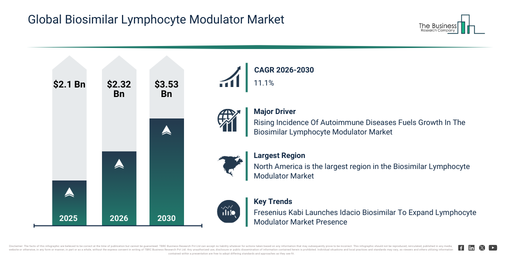
    The biosimilar lymphocyte modulator market has experienced swift expansion in recent times, with its value projected to rise from $2.1 billion in 2025 to $2.32 billion in 2026, reflecting a compound annual growth rate (CAGR) of 10.6%. This historical growth has been driven by several factors, including the high expense associated with branded biologics, an increasing occurrence of autoimmune disorders, a growing number of cancer cases, restricted availability of cutting-edge treatments, and higher healthcare spending.

    The biosimilar lymphocyte modulator market is projected to experience substantial growth over the coming years. By 2030, it is anticipated to reach a value of $3.53 billion, reflecting a compound annual growth rate (CAGR) of 11.1%. This expansion during the forecast period is driven by the patent expiration of reference biologics, an expanding pipeline for biosimilar development, growing physician confidence in these therapies, the broader reach of online pharmacy distribution channels, and enhanced government backing for biosimilar uptake. Key trends shaping this period include the increasing use of biosimilar lymphocyte modulators to achieve cost-effective treatment, heightened demand for autoimmune and oncology therapies, wider clinical acceptance of biosimilars, an expanded array of options for managing multiple sclerosis and multiple myeloma, and more streamlined regulatory pathways that facilitate biosimilar approvals.

    Download A Free Sample Report For Comprehensive Market Insights:

    https://www.thebusinessresearchcompany.com/sample.aspx?id=3434&type=smp&utm_source=BlogsPR&utm_medium=Paid&utm_campaign=Jul_PR

    Biosimilar Lymphocyte Modulator Market Demand Drivers: What Is Fueling Industry Growth?

    The anticipated growth of the biosimilar lymphocyte modulator market is being driven by the increasing prevalence of autoimmune diseases. These conditions arise when the immune system mistakenly attacks the body’s own tissues and organs. This upward trend is largely attributed to growing environmental factors like pollution and chemical exposure, which can disturb immune system regulation and trigger abnormal responses. Biosimilar lymphocyte modulators offer therapeutic benefits for autoimmune diseases by regulating immune activity, decreasing inflammation, and easing symptoms. As an example, in February 2024, Arthritis Australia, a nonprofit organization based in Australia, reported that an estimated 212,136 males and 362,137 females are projected to have rheumatoid arthritis (RA) by 2025, with these figures climbing to around 280,040 males and 479,828 females by 2040. Consequently, the escalating incidence of autoimmune diseases is fueling expansion in the biosimilar lymphocyte modulator market.

    Biosimilar Lymphocyte Modulator Market Segmentation: How Is The Market Structured Across Key Categories?

    The biosimilar lymphocyte modulator market covered in this report is segmented –

    1) By Drug: Campath-1H, Natalizumab Biosimilar, Efalizumab – A1089-Anti-CD11a Biosimilar, Anti-CD38 Daratumumab Biosimilar, Anti-CS1 Elotuzumab Biosimilar

    2) By Disease: Arthritis, Diabetes, Multiple Myeloma, Enterocolitis, Multiple Sclerosis, Psoriasis, Other Diseases

    3) By Distribution Channel: Online Pharmacies, Direct To Consumer

    Biosimilar Lymphocyte Modulator Market Innovation Trends: Which Developments Are Transforming The Industry?

    Major players in the biosimilar lymphocyte modulator sector are actively creating biosimilar versions of key lymphocyte-modifying drugs to strengthen their market position. Idacio (adalimumab-aacf) functions as a tumor necrosis factor (TNF) blocker, serving as a biosimilar counterpart to Humira (adalimumab). As an example, in July 2023, Fresenius Kabi AG, a Germany-headquartered healthcare firm, introduced the citrate-free biosimilar Idacio (adalimumab-aacf) into the U.S. market for addressing chronic autoimmune conditions. This product is supplied in the U.S. through a self-administered prefilled syringe and a self-administered prefilled pen, or autoinjector, designed to facilitate dosing for all approved uses.

    Biosimilar Lymphocyte Modulator Market Competitive Landscape And Leading Companies

    Major companies operating in the biosimilar lymphocyte modulator market are Pfizer Inc., Celltrion Inc., Genentech Inc., Novartis AG, Sandoz International GmbH, Fresenius Kabi AG, Biocon Ltd., Dr. Reddy’s Laboratories Ltd., Intas Pharmaceuticals Ltd., Lupin Limited, Stada Arzneimittel AG, Zydus Cadila, Hetero Drugs Limited, Torrent Pharmaceuticals Ltd., Glenmark Pharmaceuticals Ltd., Alvotech, Coherus BioSciences, Innovent Biologics, Shanghai Henlius Biotech, BioXpress Therapeutics SA, Mabion SA, Polpharma Biologics, Prestige BioPharma, Qilu Pharmaceutical, Shanghai Fosun Pharmaceutical Group Co. Ltd., Wockhardt Ltd., Amega Biotech

    Access The Complete Biosimilar Lymphocyte Modulator Market Report:

    https://www.thebusinessresearchcompany.com/report/biosimilar-lymphocytes-modulator-global-market-report?utm_source=BlogsPR&utm_medium=Paid&utm_campaign=Jul_PR

    Biosimilar Lymphocyte Modulator Market Leading Geography: Which Region Generates The Most Revenue?

    North America was the largest region in the biosimilar lymphocyte modulator market in 2025. Middle East is expected to be the fastest-growing region in the biosimilar lymphocyte modulator market report during the forecast period. The regions covered in the biosimilar lymphocyte modulator market report are Asia-Pacific, South East Asia, Western Europe, Eastern Europe, North America, South America, Middle East, Africa.

    Get in touch with us:

    The Business Research Company: https://www.thebusinessresearchcompany.com/?utm_source=BlogsPR&utm_medium=Paid&utm_campaign=home_page_test

    Americas: +1 310-496-7795

    Asia: +44 7882 955267 & +91 8897263534

    Europe: +44 7882 955267

    Email us at: marketing@tbrc.info

    Follow us on:

    LinkedIn: https://in.linkedin.com/company/the-business-research-company

    YouTube: https://www.youtube.com/channel/UC24_fI0rV8cR5DxlCpgmyFQ

    Global Market Model: https://www.thebusinessresearchcompany.com/global-market-model
  • Biosimilar Interleukins Market Trends Are Creating New Opportunities For Industry Leaders

    Biosimilar Interleukins Market Trends Are Creating New Opportunities For Industry Leaders

    Enhanced with market attractiveness analysis, total addressable market evaluation, company benchmarking matrices, interactive Excel dashboards, expanded supply chain intelligence, emerging startup coverage, and detailed product insights, The Business Research Company’s 2026 market reports deliver more actionable and strategically valuable research.

    Biosimilar Interleukins Market CAGR Analysis And Future Market Development

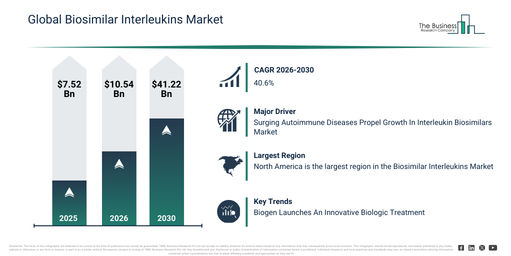
    The market for biosimilar interleukins has seen remarkable expansion over the last few years, with its value projected to climb from $7.52 billion in 2025 to $10.54 billion in 2026, reflecting a compound annual growth rate (CAGR) of 40.2%. This historical growth has been driven by several key factors, including the steep pricing of original interleukin biologics, a rising incidence of autoimmune and inflammatory conditions, an escalating toll from rheumatoid arthritis and psoriasis, restricted patient access to biologic treatments, and growing knowledge about biologics used for immune modulation.

    The biosimilar interleukins market is projected to experience remarkable expansion in the coming years, with its value anticipated to reach $41.22 billion by 2030, representing a compound annual growth rate (CAGR) of 40.6%. This forecasted growth is driven by several key factors, including the expiration of patents on branded interleukins, the broadening of biosimilar clinical pipelines, heightened physician confidence in biosimilars, favorable governmental initiatives encouraging their adoption, and a growing need for cost-effective biologic treatments in oncology and immunology. Notable trends shaping this period include a greater embrace of biosimilar interleukins for managing autoimmune diseases, a rising preference for affordable alternatives to original biologics, an increase in regulatory approvals for biosimilars across diverse therapeutic areas, expanded applications of interleukins in chronic inflammatory conditions, and enhanced regulatory frameworks designed to facilitate biosimilar uptake.

    Download A Free Sample Report For Comprehensive Market Insights:

    https://www.thebusinessresearchcompany.com/sample.aspx?id=3433&type=smp&utm_source=BlogsPR&utm_medium=Paid&utm_campaign=Jul_PR

    Biosimilar Interleukins Market Growth Drivers: What Factors Are Accelerating Expansion?

    The growing occurrence of autoimmune conditions like psoriasis and rheumatoid arthritis is anticipated to propel the expansion of the interleukin biosimilars market during the forecast period. Autoimmune diseases arise when immune cells fail to differentiate healthy cells from harmful antibodies. Biologic treatments, including anti-interleukin antibodies, have demonstrated substantial clinical advantages in regulating cells and directing their proliferation, activation, and migration. In February 2024, for example, reports from the National Institutes of Health (NIH), a US-based biomedical research entity, indicated that the global incidence and prevalence of autoimmune diseases are projected to rise by 19.1% and 12.5% annually, respectively. Consequently, the rising prevalence of these disorders is fueling demand for biosimilar interleukins, which is expected to drive market growth.

    Biosimilar Interleukins Market Segmentation Trends And Revenue Drivers

    The biosimilar interleukins market covered in this report is segmented –

    1) By Type: IL-17, IL-23, IL-1, IL-5, IL-6

    2) By Application: Psoriasis, Psoriatic Arthritis, Rheumatoid Arthritis, Asthma, Inflammatory Bowel Disease (IBD), Other Applications

    3) By Distribution Channel: Hospital Pharmacies, Online Pharmacies, Retail Pharmacies, Clinics, Research Institutes

    Subsegments:

    1) By IL-17: Autoimmune Disease Treatment, Inflammatory Disease Management

    2) By IL-23: Psoriasis Treatment, Inflammatory Bowel Disease (IBD) Treatment

    3) By IL-1: Rheumatoid Arthritis Management, Other Autoimmune Disorders

    4) By IL-5: Asthma Treatment, Eosinophilic Disorders

    5) By IL-6: Rheumatoid Arthritis Management, Inflammatory Disease Treatment

    Biosimilar Interleukins Market Trends: What Is Shaping Future Industry Growth?

    Key players in the biosimilar interleukins market are focusing on the development of novel products like Tofidence (tocilizumab-bavi) to enhance their competitive position and financial performance. This monoclonal antibody works by binding to interleukin-6 receptors and is utilized in managing several inflammatory autoimmune conditions. A significant milestone occurred in September 2023 when Biogen Inc., a US-based biotechnology firm, secured FDA approval for Tofidence as the first biosimilar counterpart to Genentech’s Actemra (tocilizumab). Delivered via intravenous infusion, this treatment has been authorized for addressing severe active rheumatoid arthritis, along with polyarticular juvenile idiopathic arthritis and systemic juvenile idiopathic arthritis.

    Biosimilar Interleukins Market Industry Leaders: Which Organizations Are Driving Competition?

    Major companies operating in the biosimilar interleukins market are Mabpharm Limitied, Gedeon Richter plc, Bio-Thera Solutions Ltd., Sunshine Guojian Pharmaceutical, Stada Arzneimittel AG, Teva Pharmaceutical Industries, 3SBio Inc., Shanghai Fosun Pharmaceuticals, Novartis AG, Pfizer Inc., Amgen Inc., F. Hoffmann-La Roche AG, Sanofi SA, Merck & Co. Inc., GlaxoSmithKline plc, Eli Lilly and Company, AstraZeneca plc, Qilu Pharmaceutical, Tonghua Dongbao, PROBIOMED S.A. de C.V., Biosidus S.A., LG Life Sciences, Viatris Inc.

    Access The Complete Biosimilar Interleukins Market Report:

    https://www.thebusinessresearchcompany.com/report/biosimilar-interleukin-global-market-report?utm_source=BlogsPR&utm_medium=Paid&utm_campaign=Jul_PR

    Biosimilar Interleukins Market Regional Outlook: Where Are The Largest Opportunities Located?

    North America was the largest region in the biosimilar interleukins market in 2025. The regions covered in the biosimilar interleukins market report are Asia-Pacific, South East Asia, Western Europe, Eastern Europe, North America, South America, Middle East, Africa.

    Get in touch with us:

    The Business Research Company: https://www.thebusinessresearchcompany.com/?utm_source=BlogsPR&utm_medium=Paid&utm_campaign=home_page_test

    Americas: +1 310-496-7795

    Asia: +44 7882 955267 & +91 8897263534

    Europe: +44 7882 955267

    Email us at: marketing@tbrc.info

    Follow us on:

    LinkedIn: https://in.linkedin.com/company/the-business-research-company

    YouTube: https://www.youtube.com/channel/UC24_fI0rV8cR5DxlCpgmyFQ

    Global Market Model: https://www.thebusinessresearchcompany.com/global-market-model
  • Biosimilar Hormones Market Growth Is Reshaping Competitive Advantage Across The Industry

    Biosimilar Hormones Market Growth Is Reshaping Competitive Advantage Across The Industry

    Through market attractiveness analysis, total addressable market evaluation, company benchmarking matrices, interactive Excel dashboards, expanded supply chain intelligence, emerging startup coverage, and detailed product insights, The Business Research Company’s 2026 market reports provide more actionable and strategically valuable research.

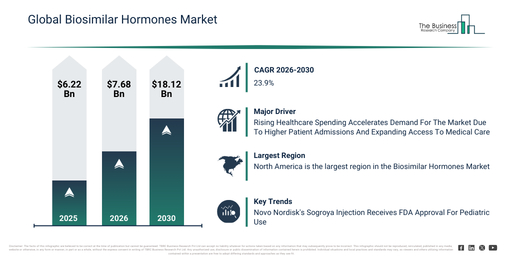
    Biosimilar Hormones Market Expansion From $7.68 Billion In 2026 To $18.12 Billion In 2030

    The biosimilar hormones market has experienced remarkable expansion in recent years, with its value projected to increase from $6.22 billion in 2025 to $7.68 billion in 2026, reflecting a compound annual growth rate (CAGR) of 23.5%. This historic growth has been driven by several factors, including the increasing incidence of diabetes and hormonal disorders, the elevated expense associated with branded hormone treatments, a growing elderly demographic, heightened awareness surrounding hormone replacement therapies, and the broader reach of hospital and retail pharmacy networks.

    Over the coming years, the market for biosimilar hormones is anticipated to experience rapid and substantial expansion. By 2030, its value is projected to reach $18.12 billion, reflecting a compound annual growth rate (CAGR) of 23.9%. This forecasted surge is driven by several factors, including the expiration of patents for major biologic hormones, heightened regulatory backing for biosimilars, a rising need for cost-effective endocrine treatments, broader distribution through online pharmacies, and increased funding for biosimilar research and development. Key developments shaping this period involve a growing preference for biosimilar hormones as more affordable treatment options, a heightened demand for biosimilars of insulin and growth hormones, greater physician confidence in these therapies, their expanding role in managing chronic and lifestyle-related conditions, and more streamlined regulatory processes that facilitate their approval.

    Download A Free Sample Report For Comprehensive Market Insights:

    https://www.thebusinessresearchcompany.com/sample.aspx?id=3432&type=smp&utm_source=BlogsPR&utm_medium=Paid&utm_campaign=Jul_PR

    Biosimilar Hormones Market Growth Factors Supporting Long-Term Expansion

    The upward trajectory of healthcare spending is anticipated to drive expansion in the biosimilar hormones market during the forecast period. Healthcare expenditure encompasses all financial resources allocated by individuals, organizations, or governments toward preventing, treating, and managing health conditions. This spending is on the rise because of improvements in medical technology, where novel diagnostic tools, treatments, and cutting-edge therapies frequently carry higher costs, thereby increasing overall spending in the healthcare sector. Growing healthcare costs are boosting the adoption of biosimilar hormones by fueling demand for economical treatment options and broadening patient availability across various healthcare systems. As an example, in December 2024, the Centers for Medicare & Medicaid Services—a U.S. agency overseeing Medicare and Medicaid programs—reported that American healthcare expenditures rose by 7.5% in 2023, reaching $4.9 trillion, which equates to roughly $14,570 per person. Consequently, the rise in healthcare spending is propelling growth within the biosimilar hormones market.

    Biosimilar Hormones Market Driver: Rising Diabetes Epidemic Fuels Growth In Biosimilar Hormones Market

    Escalating diabetes rates are expected to fuel expansion in the biosimilar hormones market moving forward. Diabetes represents a chronic medical condition that affects how the body processes food for energy. Biosimilar hormones such as insulin provide safe and effective options for diabetes management, potentially leading to lower costs and enhanced patient accessibility. Biosimilar growth hormone can assist in diabetes treatment by improving blood sugar regulation in adults diagnosed with type 1 and type 2 diabetes. To illustrate, in June 2023, the International Diabetes Federation (IDF)—a Germany-based umbrella organization covering more than 240 national diabetes groups—noted a substantial rise in diabetes cases, projecting that 783 million adults aged 20–79 will be living with diabetes by 2045. Hence, the growing prevalence of diabetes will continue to drive the biosimilar hormones market forward in the years ahead.

    Biosimilar Hormones Market Segment Analysis Highlighting Growth Areas

    The biosimilar hormones market covered in this report is segmented –

    1) By Type: Teriparatide Biosimilars, Follitropin Alfa Biosimilars, Insulin Biosimilars, Somatropin Biosimilars, Other Types

    2) By Application: Research & Biotechnology, Therapeutics, Other Applications

    3) By Distribution Channel: Hospital And Retail Pharmacy, Online Pharmacy/pharmacy, Specialty Clinics

    Subsegments:

    1) By Teriparatide Biosimilars: Osteoporosis Treatment, Bone Health Maintenance

    2) By Follitropin Alfa Biosimilars: Infertility Treatment, Assisted Reproductive Technology (ART)

    3) By Insulin Biosimilars: Type 1 Diabetes Management, Type 2 Diabetes Management

    4) By Somatropin Biosimilars: Growth Hormone Deficiency Treatment, Pediatric Growth Disorders

    5) By Other Types: Thyroid Hormones, Corticosteroids

    Biosimilar Hormones Market Industry Trends Shaping Future Revenue Growth

    Leading firms in the biosimilar hormones sector are developing new offerings like Sogroya (somapacitan-beco) injection to boost their market profitability. Sogroya (somapacitan-beco) is a prescribed analog of human growth hormone (GH) used for treating individuals with growth hormone deficiency (GHD). For example, in April 2023, Novo Nordisk, a pharmaceutical company based in Denmark, secured FDA approval for a new indication for Sogroya (somapacitan-beco) injection. This approval covers children aged 2.5 years and older who experience growth failure due to insufficient endogenous growth hormone secretion. Sogroya is the only once-weekly growth hormone (GH) therapy designed for both children and adults. The approval was based on results from the phase 3 REAL4 trial, which showed Sogroya’s effectiveness in treating growth hormone deficiency (GHD) in pediatric patients.

    Biosimilar Hormones Market Leading Companies: Who Holds Significant Market Presence?

    Major companies operating in the biosimilar hormones market are Teva Pharmaceutical Industries Ltd., Gedeon Richter Plc., Intas Pharmaceuticals Ltd., Biocon Limited, Mylan, Sanofi, Sandoz Group AG, LG Life Sciences, Ferring Pharmaceuticals, GC Pharma, Pfizer Inc., Dr. Reddy’s Laboratories, Amgen Inc., Eli Lilly and Company, Celltrion Inc., Samsungbioepis Co.Ltd, Merck & Co., Biogen Inc., Boehringer Ingelheim, Alvotech, Cipla Limited, Lupin Ltd., Stada Arzneimittel AG, Torrent Pharmaceuticals, Zydus Cadila, Accord Healthcare, Hetero Drugs, Wockhardt

    Access The Complete Biosimilar Hormones Market Report:

    https://www.thebusinessresearchcompany.com/report/biosimilar-hormone-global-market-report?utm_source=BlogsPR&utm_medium=Paid&utm_campaign=Jul_PR

    Biosimilar Hormones Market Geographic Landscape: Which Region Dominates Industry Growth?

    North America was the largest region in the biosimilar hormones market in 2025. The regions covered in the biosimilar hormones market report are Asia-Pacific, South East Asia, Western Europe, Eastern Europe, North America, South America, Middle East, Africa.

    Get in touch with us:

    The Business Research Company: https://www.thebusinessresearchcompany.com/?utm_source=BlogsPR&utm_medium=Paid&utm_campaign=home_page_test

    Americas: +1 310-496-7795

    Asia: +44 7882 955267 & +91 8897263534

    Europe: +44 7882 955267

    Email us at: marketing@tbrc.info

    Follow us on:

    LinkedIn: https://in.linkedin.com/company/the-business-research-company

    YouTube: https://www.youtube.com/channel/UC24_fI0rV8cR5DxlCpgmyFQ

    Global Market Model: https://www.thebusinessresearchcompany.com/global-market-model