Month: June 2026

  • Large Volume Parenteral (LVP) Market Expansion Is Opening New Pathways For Strategic Investment

    Large Volume Parenteral (LVP) Market Expansion Is Opening New Pathways For Strategic Investment

    Delivering more actionable and strategically valuable research, The Business Research Company’s 2026 market reports feature market attractiveness analysis, total addressable market evaluation, company benchmarking matrices, interactive Excel dashboards, expanded supply chain intelligence, emerging startup coverage, and detailed product insights.

    Large Volume Parenteral (LVP) Market Size, Value And Growth Trends Through 2030

    The global market for large volume parenteral (LVP) solutions has experienced robust expansion lately. Projections indicate this sector will expand from $13.53 billion in 2025 to $14.76 billion in 2026, reflecting a compound annual growth rate of 9.1%. Key factors contributing to this growth during the preceding period include an upward trend in hospital admissions, increased reliance on intravenous fluid therapies, a rise in the number of surgical interventions, enhancements in critical care facilities, and advancements in managing infectious diseases.

    The global market for large volume parenteral (LVP) solutions is poised for significant expansion, projected to reach $21.37 billion by the year 2030, registering a compound annual growth rate of 9.7% through the forecasted period. This upward trajectory is primarily fueled by an increasing elderly demographic, a higher incidence of long-term health conditions, a greater need for nutritional support via parenteral routes, the development of healthcare facilities in developing economies, and an increased provision of emergency and trauma medical services. Key developments shaping this market in the coming years include a surge in preference for environmentally friendly and PVC-free LVP containers, a greater availability of pre-prepared and mixed infusion products, an intensified emphasis on maintaining sterile conditions and preventing contamination, a broader application of LVPs in critical care settings and emergency medicine, and an overall increase in the volume of intravenous therapies administered within hospitals.

    Download A Free Sample Report For Comprehensive Market Insights:

    https://www.thebusinessresearchcompany.com/sample.aspx?id=12195&type=smp

    Large Volume Parenteral (LVP) Market Expansion Supported By Key Demand Factors

    The escalating incidence of long-term illnesses is anticipated to be a significant catalyst for the expansion of the large-volume parenteral market in the future. Chronic diseases, characterized by conditions persisting for three months or more and potentially progressing over time, are largely attributed to factors such as tobacco consumption, exposure to secondhand smoke, and inadequate dietary habits. Patients suffering from these ailments necessitate a balanced intake of vital nutrients essential for maintaining bodily strength, and parenteral administration proves advantageous by ensuring direct absorption of pharmaceutical dosages into the bloodstream, bypassing the digestive tract. Illustratively, the World Health Organization reported in September 2023 that non-communicable diseases, or chronic conditions, were responsible for 41 million deaths annually worldwide, accounting for 74% of all fatalities. Consequently, the increased prevalence of chronic diseases serves as a primary driver for the growth observed in the large-volume parenteral market.

    Augmenting healthcare spending is projected to significantly boost the large-volume parenteral market in the coming period. This increase in financial investment towards healthcare encompasses a broader allocation of resources for medical services, research, and public health initiatives. Enhanced financial commitment often correlates with the development and fortification of healthcare infrastructure, including the establishment of new medical centers and facilities, thereby increasing the capacity for service delivery and consequently stimulating the demand for large-volume parenteral products. As an example, the American Medical Association indicated in April 2025 that US healthcare spending experienced a substantial rise of 7.5% in 2023, reaching $4.9 trillion or $14,570 per individual, a notable uptick from the 4.6% growth noted in the preceding year. Hence, the upward trend in healthcare expenditure is a key factor propelling the expansion of the large-volume parenteral market.

    Large Volume Parenteral (LVP) Market Segment Landscape And Growth Potential

    The large volume parenteral (lvp) market covered in this report is segmented –

    1) By Type: Soft Bag LVP, Plastic Bag LVP, Glass Bottle LVP

    2) By Volume: 100 ML – 250 ML, 250 ML – 500 ML, 500 ML – 1000 ML, 1000 ML -2000 ML, 2000 And More

    3) By Application: Basic Infusion, Therapeutics Infusion, Nutritious Infusion

    4) By End-User: Hospital, Medical Centers, Other End Users

    Subsegments:

    1) By Soft Bag LVP: PVC Soft Bags, Non-PVC Soft Bags

    2) By Plastic Bag LVP: Polypropylene Bags, Polyethylene Bags

    3) By Glass Bottle LVP: Single-Use Glass Bottles, Multi-Dose Glass Bottles

    Large Volume Parenteral (LVP) Market Growth Trends Influencing Competitive Dynamics

    Global leaders in the large volume parenteral (LVP) market are prioritizing the creation of smart infusion device advancements, specifically intelligent large-volume infusion pumps, to address the growing need for enhanced safety, automation, and connectivity in intravenous therapy. This trend is fueled by the expansion of hospital-based infusion services, the rise of remote patient monitoring, and the industry-wide drive for standardized, error-minimizing medication administration. An intelligent large-volume infusion pump distinguishes itself from conventional devices by incorporating dose-error reduction software, smart drug library capabilities, and advanced alarm management, going beyond the manual programming and basic automation of older models. These sophisticated pumps are engineered to deliver substantial IV fluid volumes while actively preventing medication errors, easing healthcare professionals’ workloads, and seamlessly integrating with hospital information technology infrastructures. As a prime example, Baxter International Inc. secured U.S. FDA approval in April 2024 for its Novum IQ Large-Volume Infusion Pump, featuring the integrated Dose IQ smart-dose software. This innovative pump facilitates rapid fluid delivery, including extensive volume infusions, and boasts safety mechanisms like drug library integration to mitigate dosing inaccuracies, alongside the capability to link with hospital electronic health records and intelligent monitoring systems, ultimately empowering clinicians to enhance infusion precision, diminish the likelihood of dosage errors, and optimize workflows for high-volume IV therapies, ensuring safer and more efficient patient care.

    Large Volume Parenteral (LVP) Market Competitive Landscape: Who Are The Leading Companies?

    Major companies operating in the large volume parenteral (lvp) market are Pfizer Inc., Fresenius Kabi AG, Abbott Laboratories Inc., Otsuka Holdings Co. Ltd., Baxter International Inc., B. Braun Melsungen AG, Grifols S.A., Cipla Limited, ICU Medical Inc., Biocon Limited, Sichuan Kelun Pharmaceutical Co. Ltd., Alembic Pharmaceuticals Limited, Cadila Healthcare Ltd., Gland Pharma Limited, Akums Drugs & Pharmaceuticals Ltd., Beximco Pharmaceutical Ltd., Taj Pharmaceuticals Limited, Albert David Ltd., Amanta Healthcare Ltd., Unique Pharmaceutical Laboratories Ltd., Ahlcon Parenterals India Ltd., Parenteral Drugs Limited, Abaris Healthcare Pvt. Ltd., BML Parenteral Drugs, Denis Chem Lab Ltd., Pentagon Labs Ltd., DJ Labs Pvt. Ltd., Higgs Healthcare

    Access The Complete Large Volume Parenteral (LVP) Market Report:

    https://www.thebusinessresearchcompany.com/report/large-volume-parenteral-lvp-global-market-report

    Large Volume Parenteral (LVP) Market Regional Outlook: Where Are The Largest Opportunities Located?

    North America was the largest region in the large volume parenteral (LVP) market in 2025. Asia-Pacific is expected to be the fastest-growing region in the forecast period. The regions covered in the large volume parenteral (lvp) market report are Asia-Pacific, South East Asia, Western Europe, Eastern Europe, North America, South America, Middle East, Africa.

    Get in touch with us:

    The Business Research Company: https://www.thebusinessresearchcompany.com/

    Americas: +1 310-496-7795

    Asia: +44 7882 955267 & +91 8897263534

    Europe: +44 7882 955267

    Email us at: marketing@tbrc.info

    Follow us on:

    LinkedIn: https://in.linkedin.com/company/the-business-research-company

    YouTube: https://www.youtube.com/channel/UC24_fI0rV8cR5DxlCpgmyFQ

    Global Market Model: https://www.thebusinessresearchcompany.com/global-market-model

  • Large Molecule Bioanalytical Technologies Market Trends Are Creating New Opportunities For Industry Leaders

    Large Molecule Bioanalytical Technologies Market Trends Are Creating New Opportunities For Industry Leaders

    Enhanced with market attractiveness analysis, total addressable market evaluation, company benchmarking matrices, interactive Excel dashboards, expanded supply chain intelligence, emerging startup coverage, and detailed product insights, The Business Research Company’s 2026 market reports deliver more actionable and strategically valuable research.

    Large Molecule Bioanalytical Technologies Market CAGR Analysis And Future Market Development

    The market for large molecule bioanalytical technologies has experienced significant expansion lately, projected to increase from $11.67 billion in 2025 to $13.36 billion in 2026, reflecting a compound annual growth rate of 14.5%. This upward trend historically stems from advancements in biologic development, the wider application of chromatography methods, intensified focus on protein characterization, greater utilization of ELISA techniques, and expanded investment in pharmaceutical research and development.

    The market for large molecule bioanalytical technologies is poised for substantial expansion in the coming years, projected to reach $21.22 billion by 2030, exhibiting a compound annual growth rate of 12.2%. This anticipated growth over the forecast period will be driven by several key factors, including a burgeoning pipeline of monoclonal antibodies, advancements in cell and gene therapy research, an elevated need for biomarker validation, the increasing intricacy of biologic drugs, and the widening scope of bioanalytical outsourcing. Prominent trends shaping this market during the forecast period are expected to involve the increasing embrace of sophisticated mass spectrometry methods, a rising demand for highly sensitive bioanalytical assays, greater utilization of multiplex and high-throughput testing methodologies, expanded bioanalytical support for cell and gene therapies, and a growing trend of outsourcing large molecule bioanalysis to contract research organizations (CROs).

    Download A Free Sample Report For Comprehensive Market Insights:

    https://www.thebusinessresearchcompany.com/sample.aspx?id=15596&type=smp

    Large Molecule Bioanalytical Technologies Market Growth Drivers And Industry Catalysts

    The increasing emphasis on tailored medical treatments is anticipated to be a significant driver for the expansion of the large molecule bioanalytical technologies market. Personalized medicine, which involves tailoring healthcare and treatment strategies to an individual’s specific characteristics like their genetic profile, biological markers, lifestyle, and environmental influences, aims for optimum effectiveness and minimized adverse reactions. This trend is fueled by considerations such as variations in individual disease vulnerability, the movement toward healthcare systems that reward outcomes, and a greater emphasis on patient-centric approaches. Furthermore, large-molecule bioanalytical technologies play a crucial role in the creation of pharmaceuticals, enabling the examination of how drugs like monoclonal antibodies or gene therapies are absorbed, distributed, metabolized, and excreted by the body, as well as their biological effects. Illustrating this, data from the Personalized Medicine Coalition in February 2024 indicated that the US Food and Drug Administration (FDA) approved sixteen novel personalized medicines for individuals with rare diseases in 2023, a notable increase from the six approvals seen in 2022. Consequently, the growing momentum behind personalized medicine is directly stimulating the growth within the large molecule bioanalytical technologies sector.

    Large Molecule Bioanalytical Technologies Market Categorization By Product Type And Application

    The large molecule bioanalytical technologies market covered in this report is segmented –

    1) By Product And Services: Instruments, Reagents And Consumables, Software, Services

    2) By Technology: Chromatography, Mass Spectrometry, Enzyme-Linked Immunosorbent Assay, Electrophoresis, Polymerase Chain Reaction, Western Blot, Flow Cytometry

    3) By Application: Biologics, Oligonucleotide Derived Drugs And Molecules, Viral Vector, Cell And Gene Therapy, Nanoparticles And Polymers, Disease Diagnosis, Other Applications

    Subsegments:

    1) By Instruments: Mass Spectrometers, Chromatography Systems, Immunoassay Analyzers

    2) By Reagents And Consumables: Antibodies, Enzyme-Linked Immunosorbent Assay (Elisa) Kits

    3) By Software: Data Analysis Software, Visualization Software

    4) By Services: Analytical Testing Services, Contract Research Organization (CRO) Services, Method Development And Validation Services, Stability Testing Services

    #Large Molecule Bioanalytical Technologies Market Trends Influencing Long-Term Demand

    The large molecule bioanalytical technologies sector is witnessing a significant trend among key players who are prioritizing the creation of chromatography and detection systems that are both bio-inert and highly accurate. This strategic emphasis stems from the escalating need for reliable, consistent, and sensitive bioanalytical methods, propelled by advancements in biologics research and development, more stringent regulatory requirements, and the emergence of sophisticated therapeutic types like monoclonal antibodies, bispecific antibodies, and gene therapies. A bio-inert HPLC system functions by reducing unintended interactions between large biological molecules and the internal components of the chromatographic equipment, leading to better sample recovery, diminished peak distortion, and more precise quantification, a marked improvement over conventional HPLC systems that can lead to analyte degradation and inconsistent results due to metal adsorption. Demonstrating this innovation, Waters Corporation, an American provider of analytical instruments, unveiled its Alliance iS Bio HPLC System in April 2024; this system incorporates MaxPeak High-Performance Surface (HPS) technology to ensure bio-inert flow paths, mitigate undesirable analyte interactions, and enhance sensitivity, while simultaneously reducing common quality control laboratory mistakes by as much as 40%, and integrates with Empower chromatography software for regulated data recording, supports advanced column technologies, and facilitates method migration through its intelligent method translation capabilities, ultimately enabling biologics quality control labs to accelerate testing, boost reproducibility, and decrease the likelihood of out-of-specification outcomes through its combination of surface inertness, intuitive design, and inherent error mitigation.

    Large Molecule Bioanalytical Technologies Market Company Landscape And Strategic Competition

    Major companies operating in the large molecule bioanalytical technologies market are Thermo Fisher Scientific Inc., Danaher Corporation, Laboratory Corporation of America Holdings, Agilent Technologies Inc., Charles River Laboratories International Inc., Intertek Group plc, Shimadzu Corporation, Bio-Rad Laboratories Inc., Qiagen N.V., HORIBA Ltd., SCIEX, Bio-Techne Corporation, Hamilton Company, Promega Corporation, Verder Group, Solvias AG, Analytik Jena AG, Genedata AG, Wyatt Technology Corporation, Nanalysis Corporation, Avomeen Analytical Services, Cergentis B.V., Halo Labs Inc., Hitachi High-Technologies Corporation, Precision NanoSystems Inc.

    Access The Complete Large Molecule Bioanalytical Technologies Market Report:

    https://www.thebusinessresearchcompany.com/report/large-molecule-bioanalytical-technologies-global-market-report

    Large Molecule Bioanalytical Technologies Market Geographic Landscape: Which Region Dominates Industry Growth?

    North Americawas the largest region in the large molecule bioanalytical technologies market in 2025. Asia-Pacificis expected to be the fastest-growing region in the forecast period. The regions covered in the large molecule bioanalytical technologies market report are Asia-Pacific, South East Asia, Western Europe, Eastern Europe, North America, South America, Middle East, Africa.

    Get in touch with us:

    The Business Research Company: https://www.thebusinessresearchcompany.com/

    Americas: +1 310-496-7795

    Asia: +44 7882 955267 & +91 8897263534

    Europe: +44 7882 955267

    Email us at: marketing@tbrc.info

    Follow us on:

    LinkedIn: https://in.linkedin.com/company/the-business-research-company

    YouTube: https://www.youtube.com/channel/UC24_fI0rV8cR5DxlCpgmyFQ

    Global Market Model: https://www.thebusinessresearchcompany.com/global-market-model

  • Large And Small-Scale Bioprocessing Market Growth Is Reshaping Competitive Advantage Across The Industry

    Large And Small-Scale Bioprocessing Market Growth Is Reshaping Competitive Advantage Across The Industry

    Through market attractiveness analysis, total addressable market evaluation, company benchmarking matrices, interactive Excel dashboards, expanded supply chain intelligence, emerging startup coverage, and detailed product insights, The Business Research Company’s 2026 market reports provide more actionable and strategically valuable research.

    Large And Small-Scale Bioprocessing Market Expansion From $76.72 Billion In 2026 To $119.99 Billion In 2030

    The bioprocessing market, encompassing both large and small-scale operations, has experienced swift expansion lately. Projections indicate a rise from $67.66 billion in 2025 to $76.73 billion in 2026, reflecting a compound annual growth rate of 13.4%. Key factors driving this expansion during the historical period include the burgeoning biopharmaceutical manufacturing sector, escalating investments in biotechnology research and development, the wider adoption of fermentation-based production methods, an increased reliance on cell culture technologies, and advancements in the development of large-scale stainless steel bioreactors.

    The bioprocessing market, encompassing both large and small-scale operations, is poised for substantial expansion in the coming years, projecting a market value of $119.99 billion by 2030, driven by an impressive compound annual growth rate of 11.8%. This projected upswing is underpinned by several key factors including a burgeoning demand for biologic drugs and their biosimilar counterparts, a growing embrace of single-use technologies, the advancement of personalized and precision medicine approaches, the increasing availability of contract development and manufacturing organization (CDMO) services, and a heightened emphasis on environmentally conscious bioprocessing techniques. Significant developments anticipated within this forecast period involve a greater incorporation of single-use and adaptable bioprocessing systems, a heightened need for versatile small-scale bioprocessing solutions in research and development endeavors, the expansion of contract biomanufacturing and externalized production models, a strong focus on achieving seamless scalability from laboratory experimentation to full-scale commercial production, and an intensified integration of both upstream and downstream bioprocessing procedures.

    Download A Free Sample Report For Comprehensive Market Insights:

    https://www.thebusinessresearchcompany.com/sample.aspx?id=15845&type=smp

    Large And Small-Scale Bioprocessing Market Opportunity Drivers: What Is Creating New Revenue Potential?

    The increasing need for biologic medicines, which are derived from living organisms or their parts like vaccines, blood products, gene therapies, tissues, and manufactured proteins, is anticipated to fuel the expansion of both large and small-scale bioprocessing sectors. This surge in demand for biologics is a direct result of progress in biotechnology, a deepened comprehension of how diseases function, and the escalating requirement for treatments tailored to individual patients and specific targets. Both industrial-scale and laboratory-scale bioprocessing are absolutely crucial for bringing biologic products from conception to market successfully. Small-scale bioprocessing is vital during the initial phases of product development, for refining processes, and for conducting viability assessments. Conversely, large-scale bioprocessing is necessary to manufacture biologics in sufficient quantities, ensuring they are produced reliably, consistently, and in adherence to all official regulations required for their widespread availability. For example, as reported by the National Library of Medicine in February 2024, the US Food and Drug Administration (FDA) authorized 55 new medications in 2023, comprising 29 novel chemical compounds and 25 novel biological substances, representing a substantial 50% rise from the 37 approvals recorded in 2022. Consequently, the mounting demand for biologics acts as a primary driver for the growth within the large and small-scale bioprocessing market.

    Large And Small-Scale Bioprocessing Market Segment Analysis And Revenue Opportunities

    The large and small-scale bioprocessing market covered in this report is segmented –

    1) By Product: Bioreactors Or Fermenters, Cell Culture Products, Filtration Assemblies, Bioreactors Accessories, Bags And Containers, Other Products

    2) By Mode: In-house, Outsourced

    3) By Workflow: Downstream Processing, Fermentation, Upstream Processing

    4) By Scale: Industrial Scale, Small Scale

    5) By Application: Biopharmaceuticals, Specialty Industrial Chemicals, Environmental Aids

    Subsegments:

    1) Bioreactors Or Fermenters: Single-Use Bioreactors, Stainless Steel Bioreactors, Glass Bioreactors

    2) Cell Culture Products: Cell Culture Media, Sera And Supplements, Reagents

    3) Filtration Assemblies: Membrane Filters, Depth Filters, Tangential Flow Filtration Systems

    4) Bioreactor Accessories: Spargers, Impellers, Sensors And Probes

    5) Bags And Containers: Single-Use Bags, Storage Containers, Transfer Bags

    6) Other Products: Mixers, Tubing And Connectors, Sampling Systems

    Large And Small-Scale Bioprocessing Market Innovation Trends Driving Future Development

    Key players within the expansive bioprocessing sector are channeling their efforts toward pioneering advancements, exemplified by the creation of compact, fixed-bed bioreactor controllers, aimed at satisfying the escalating need for highly productive, economically viable, and scalable manufacturing of viral vectors and cutting-edge therapies fueled by the surge in gene therapies, vaccines, and biologics. This type of bioreactor controller specifically addresses the management of extensive cell cultures within fixed-bed systems, providing an efficient, user-friendly, and streamlined fluid management solution, which stands in stark contrast to the substantial space requirements, considerable initial investment, and intricate infrastructure associated with conventional large-scale stirred-tank bioreactors. Illustrating this trend, Univercells Technologies SA, a bioprocessing entity based in Belgium, introduced the scale-X Nitro Controller in May 2025, engineered for their 200 m² and 600 m² scale-X Nitro fixed-bed bioreactors. This controller, presented as a convenient, mobile unit with a modest footprint of 1.6 m² that can navigate standard cleanroom doorways, is capable of supporting both adherent and suspension cell cultivation and features exceptionally straightforward operational controls. It facilitates swift scaling from research and development phases to commercial production within approximately eight months, simultaneously achieving a reduction in cost of goods by 36–82% when compared to established adherent processes. Through its synergy of substantial output and an uncomplicated, space-conserving configuration, the scale-X Nitro Controller empowers biomanufacturers, particularly contract development and manufacturing organizations (CDMOs) and vaccine developers, to expedite their development schedules and diminish the financial obstacles associated with large-scale viral production.

    Large And Small-Scale Bioprocessing Market Leading Players Shaping Industry Direction

    Major companies operating in the large and small-scale bioprocessing market are F. Hoffmann-La Roche AG, Novartis AG, Sanofi S.A., Pfizer Inc., Merck & Co. Inc., Bristol Myers Squibb Company, AstraZeneca PLC, GlaxoSmithKline PLC, Takeda Pharmaceutical Company Ltd., Eli Lilly and Company, AbbVie Inc., Amgen Inc., Biogen Inc., Regeneron Pharmaceuticals Inc., Genentech Inc., Gilead Sciences Inc., Novo Nordisk A/S, CSL Limited, UCB S.A., Samsung Biologics, WuXi Biologics, Boehringer Ingelheim

    Access The Complete Large And Small-Scale Bioprocessing Market Report:

    https://www.thebusinessresearchcompany.com/report/large-and-small-scale-bioprocessing-global-market-report

    Large And Small-Scale Bioprocessing Market Largest Region: Which Geography Holds The Highest Market Share?

    North Americawas the largest region in the large and small-scale bioprocessing market in 2025. Asia-Pacificis expected to be the fastest-growing region in the forecast period. The regions covered in the large and small-scale bioprocessing market report are Asia-Pacific, South East Asia, Western Europe, Eastern Europe, North America, South America, Middle East, Africa.

    Get in touch with us:

    The Business Research Company: https://www.thebusinessresearchcompany.com/

    Americas: +1 310-496-7795

    Asia: +44 7882 955267 & +91 8897263534

    Europe: +44 7882 955267

    Email us at: marketing@tbrc.info

    Follow us on:

    LinkedIn: https://in.linkedin.com/company/the-business-research-company

    YouTube: https://www.youtube.com/channel/UC24_fI0rV8cR5DxlCpgmyFQ

    Global Market Model: https://www.thebusinessresearchcompany.com/global-market-model

  • Laparoscopic Gynecological Procedures Market Forecast Signals New Revenue Opportunities Through 2030

    Laparoscopic Gynecological Procedures Market Forecast Signals New Revenue Opportunities Through 2030

    Delivering more actionable and strategically valuable research, The Business Research Company’s 2026 market reports feature market attractiveness analysis, total addressable market evaluation, company benchmarking matrices, interactive Excel dashboards, expanded supply chain intelligence, emerging startup coverage, and detailed product insights.

    Laparoscopic Gynecological Procedures Market Forecast Highlighting Growth From $29.53 Billion To $38.3 Billion

    The market for laparoscopic gynecological procedures has experienced robust expansion lately, with its value projected to increase from $27.46 billion in 2025 to $29.53 billion in 2026, reflecting a compound annual growth rate of 7.6%. This historical growth trajectory has been propelled by significant advancements in laparoscopic surgical methodologies, a rising incidence of gynecological conditions, the increasing adoption of minimally invasive surgical approaches, the enhancement of hospital surgical facilities, and an augmented number of gynecologic surgeons who have completed specialized training.

    The market for laparoscopic gynecological procedures is poised for substantial expansion over the upcoming years, projected to reach $38.31 billion by 2030, reflecting a compound annual growth rate of 6.7%. This anticipated growth trajectory is fueled by several key factors, including an aging female demographic, heightened emphasis on patient safety and minimizing surgical complications, the increasing integration of robotic-assisted laparoscopy, the proliferation of ambulatory surgery centers, and ongoing technological advancements in both imaging and surgical instruments. Furthermore, the coming years will likely witness significant trends such as a greater embrace of minimally invasive gynecological interventions, a growing preference for quicker patient recovery and reduced hospitalizations, escalating demand for sophisticated laparoscopic surgical equipment, the further development of outpatient and ambulatory gynecological services, and enhancements in surgical accuracy and visualization methods.

    Download A Free Sample Report For Comprehensive Market Insights:

    https://www.thebusinessresearchcompany.com/sample.aspx?id=15844&type=smp

    Laparoscopic Gynecological Procedures Market Growth Momentum: Which Factors Are Influencing Demand?

    The increasing incidence of gynecological cancers is anticipated to be a significant driver for the expansion of the laparoscopic gynecological procedures market. Gynecological cancer encompasses malignancies originating in a woman’s reproductive system, including cancers of the ovaries, uterus, cervix, vagina, and vulva. Factors contributing to this rise include an aging demographic with increased longevity, higher rates of obesity, prevalent smoking habits, and sedentary lifestyles. Laparoscopic gynecological procedures play a crucial role in addressing gynecological cancer by facilitating treatment and disease management, mitigating the likelihood of recurrence, and enhancing patient prognoses through various therapeutic interventions. Illustrating this, data from the American Cancer Society indicated that in 2023, an estimated 19,710 new cases of ovarian cancer were projected in the United States, with an unfortunate projection of 13,270 fatalities attributed to the disease. Consequently, the substantial burden of gynecological cancer directly fuels the growth trajectory of the market for laparoscopic gynecological procedures.

    Laparoscopic Gynecological Procedures Market Segmentation And Category Breakdown

    The laparoscopic gynecological procedures market covered in this report is segmented –

    1) By Procedure: Laparoscopic Hysterectomy, Laparoscopic Myomectomy, Laparoscopic Colpopexy, Laparoscopic Endometrial Excision, Laparoscopic Adnexal

    2) By Product: Surgical Devices, Gynecological Imaging Devices, Portable Tools

    3) By End-Use: Hospitals, Clinics, Ambulatory Surgery Centers (ASCs)

    Subsegments:

    1) By Laparoscopic Hysterectomy: Total Laparoscopic Hysterectomy (TLH), Laparoscopic Supracervical Hysterectomy (LSH), Laparoscopically Assisted Vaginal Hysterectomy (LAVH)

    2) By Laparoscopic Myomectomy: Single Myomectomy, Multiple Myomectomy

    3) By Laparoscopic Colpopexy: Sacrocolpopexy, Sacrocervicopexy

    4) By Laparoscopic Endometrial Excision: Deep Excision, Superficial Excision

    5) By Laparoscopic Adnexal: Oophorectomy, Salpingo-oophorectomy, Cystectomy

    Laparoscopic Gynecological Procedures Market Trends Reshaping Industry Growth

    Within the laparoscopic gynecological surgery landscape, key players are concentrating their efforts on pioneering novel technologies, including state-of-the-art laparoscopic imaging systems, with the ultimate goal of improving surgical accuracy, visual clarity, and patient recovery. These sophisticated imaging systems represent advanced technological tools and apparatus employed to offer unparalleled clarity, precision, and intricate detail of the operative area during minimally invasive gynecological procedures. Illustratively, in May of 2023, B. Braun, a prominent medical device firm based in Germany, introduced its new laparoscopic imaging solution, the AESCULAP EinsteinVision 3.0 FI, specifically engineered to support minimally invasive surgical interventions. This sophisticated system incorporates 3D fluorescence imaging (FI) capabilities, facilitating live visualization across three distinct FI overlay configurations. It is purposefully crafted for a spectrum of minimally invasive surgical uses, encompassing the evaluation of blood vessel or organ perfusion, the detailed depiction of bile duct structures, and the identification of sentinel lymph nodes. The package comes complete with a camera processor equipped for built-in recording, a premium display screen, and a stereo endoscope that delivers exceptional visual fidelity, thereby boosting both the effectiveness of surgical procedures and overall operational efficiency.

    Laparoscopic Gynecological Procedures Market Competitive Analysis Of Major Industry Participants

    Major companies operating in the laparoscopic gynecological procedures market are Johnson & Johnson, Medtronic plc, Stryker Corporation, Boston Scientific, B. Braun Melsungen, Intuitive Surgical, Smith & Nephew, Hologic Inc., CooperSurgical, W. L. Gore & Associates, Teleflex Incorporated, Karl Storz GmbH, Cook Medical, ConMed Corporation, KLS Martin Group, Applied Medical, Aesculap Inc., Richard Wolf GmbH, Lumenis Ltd., ERBE Elektromedizin GmbH

    Access The Complete Laparoscopic Gynecological Procedures Market Report:

    https://www.thebusinessresearchcompany.com/report/laparoscopic-gynecological-procedures-global-market-report

    Laparoscopic Gynecological Procedures Market Regional Analysis: Which Region Leads By Revenue?

    North Americawas the largest region in the laparoscopic gynecological procedures market in 2025. Asia-Pacificis expected to be the fastest-growing region in the forecast period. The regions covered in the laparoscopic gynecological procedures market report are Asia-Pacific, South East Asia, Western Europe, Eastern Europe, North America, South America, Middle East, Africa.

    Get in touch with us:

    The Business Research Company: https://www.thebusinessresearchcompany.com/

    Americas: +1 310-496-7795

    Asia: +44 7882 955267 & +91 8897263534

    Europe: +44 7882 955267

    Email us at: marketing@tbrc.info

    Follow us on:

    LinkedIn: https://in.linkedin.com/company/the-business-research-company

    YouTube: https://www.youtube.com/channel/UC24_fI0rV8cR5DxlCpgmyFQ

    Global Market Model: https://www.thebusinessresearchcompany.com/global-market-model
  • Lactose Monohydrate Market Growth Is Accelerating As Industry Transformation Continues

    Lactose Monohydrate Market Growth Is Accelerating As Industry Transformation Continues

    Enhanced with market attractiveness analysis, total addressable market evaluation, company benchmarking matrices, interactive Excel dashboards, expanded supply chain intelligence, emerging startup coverage, and detailed product insights, The Business Research Company’s 2026 market reports deliver more actionable and strategically valuable research.

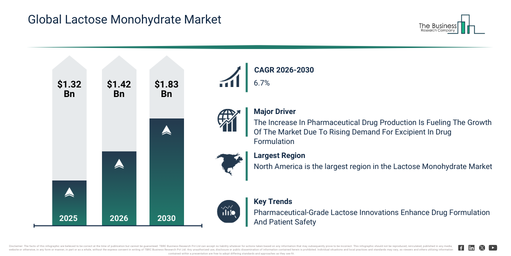
    Lactose Monohydrate Market Revenue Growth Supported By A CAGR Of 1.83% Through 2030

    The market for lactose monohydrate has experienced robust expansion lately, with projections indicating a significant increase from $1.32 billion in 2025 to $1.42 billion in 2026, reflecting a compound annual growth rate of 7.0%. This historical growth trajectory has been propelled by several key factors, including the expanding production of pharmaceutical tablets, the extensive application of lactose as an excipient, advancements in the processing of dairy-derived components, the existence of substantial lactose refining capabilities, and the consistent demand emanating from the food formulation sectors.

    The market for lactose monohydrate is poised for substantial expansion over the forthcoming years, projecting a rise to $1.83 billion by 2030 with a compound annual growth rate (CAGR) of 6.7%. This anticipated growth is fueled by several key factors, including escalating pharmaceutical production output, a burgeoning demand for specialized excipients, the growth of nutraceutical manufacturing operations, a heightened emphasis on ensuring the stability of drug formulations, and the increasing integration of co-processed excipient technologies. During this forecast period, prominent market trends will encompass a greater need for pharmaceutical-grade lactose, its increased utilization in the creation of solid oral dosage forms, a growing preference for excipients of high purity, the expanded application of spray-dried lactose, and a more dedicated approach to precisely controlling particle size.

    Download A Free Sample Report For Comprehensive Market Insights:

    https://www.thebusinessresearchcompany.com/sample.aspx?id=24583&type=smp

    Lactose Monohydrate Market Expansion Drivers: What Is Shaping Future Growth?

    An escalating demand for pharmaceutical drug manufacturing is anticipated to be a primary catalyst for the expansion of the lactose monohydrate market. This manufacturing process, which entails the meticulous production of medications under stringent guidelines to ensure patient safety, therapeutic efficacy, and consistent quality, is experiencing a surge due to an increasing elderly demographic that necessitates sophisticated interventions for effective management of long-term health conditions, and lactose monohydrate plays a crucial role in this sector as an excipient, serving as a bulking agent and adhesive to ensure uniform dispersion of active pharmaceutical components, while its enhanced compacting properties facilitate efficient tablet creation and dependable drug outcomes; for example, the European Federation of Pharmaceutical Industries and Associations (EFPIA) reported that European pharmaceutical production reached $422,803 million in 2023, an increase from $393,857 million in 2022, underscoring the direct correlation between augmented

    Lactose Monohydrate Market Segment Outlook: Which Categories Are Expanding The Fastest?

    The lactose monohydrate market covered in this report is segmented –

    1) By Product Type: Crystalline Lactose Monohydrate, Amorphous Lactose Monohydrate

    2) By Purity: Food Grade, Pharmaceutical Grade

    3) By Distribution Channel: Online Stores, Supermarkets Or Hypermarkets, Specialty Stores, Other Distribution Channels

    4) By Application: Pharmaceuticals, Food And Beverages, Nutraceuticals, Cosmetics And Personal Care, Animal Feed

    Subsegments:

    1) By Crystalline Lactose Monohydrate: a-Lactose Monohydrate, ß-Lactose Anhydrous, Spray-Dried Crystalline Lactose, Milled Crystalline Lactose

    2) By Amorphous Lactose Monohydrate: Spray-Dried Amorphous Lactose, Co-Processed Amorphous Lactose, Glassy Lactose, Hygroscopic Amorphous Lactose

    Lactose Monohydrate Market Strategic Trends: What Is Defining The Next Phase Of Growth?

    In the landscape of the lactose monohydrate market, leading entities are concentrating their efforts on innovating sophisticated offerings, notably pharmaceutical-grade lactose, a move aimed at bolstering patient well-being and adhering to rigorous compliance requirements; this specialized lactose, a refined variant, is meticulously crafted for integration into medicinal preparations, functioning as a crucial excipient that ensures safety, consistency, and seamless integration with active pharmaceutical ingredients; exemplifying this trend, in October of 2023, Lactalis Ingredients, a French producer of dairy-derived components, introduced Lactalpha, a collection of lactose monohydrate products processed through milling and sieving, signifying their strategic extension from food-grade lactose into the pharmaceutical domain by providing a product with precisely managed particle dimensions, superior handling properties, and exceptional compressibility, rendering them optimal choices as excipients for solid dosage forms such as tablets, capsules, and sachets in pharmaceutical contexts.

    Lactose Monohydrate Market Key Companies And Competitive Benchmarking

    Major companies operating in the lactose monohydrate market are DFE Pharma, Kerry Group, MEGGLE GmbH & Co KG, Lactose India Limited, Lactalis Ingredients, BASF SE, Merck KGaA, Armor Pharma, Hilmar Ingredients, Glanbia plc, Fonterra Co-operative Group Limited, Arla Foods Ingredients, Milei GmbH, Saputo Inc, Molvest Group, Tatua Co-operative Dairy Company Ltd, Valio Ltd

    Access The Complete Lactose Monohydrate Market Report:

    https://www.thebusinessresearchcompany.com/report/lactose-monohydrate-global-market-report

    Lactose Monohydrate Market Geographic Distribution And Regional Opportunities

    North Americawas the largest region in the lactose monohydrate market in 2025. Asia-Pacificis expected to be the fastest-growing region in the forecast period. The regions covered in the lactose monohydrate market report are Asia-Pacific, South East Asia, Western Europe, Eastern Europe, North America, South America, Middle East, Africa.

    Get in touch with us:

    The Business Research Company: https://www.thebusinessresearchcompany.com/

    Americas: +1 310-496-7795

    Asia: +44 7882 955267 & +91 8897263534

    Europe: +44 7882 955267

    Email us at: marketing@tbrc.info

    Follow us on:

    LinkedIn: https://in.linkedin.com/company/the-business-research-company

    YouTube: https://www.youtube.com/channel/UC24_fI0rV8cR5DxlCpgmyFQ

    Global Market Model: https://www.thebusinessresearchcompany.com/global-market-model

  • Laboratory Testing Services Market Outlook Highlights The Next Major Growth Opportunities

    Laboratory Testing Services Market Outlook Highlights The Next Major Growth Opportunities

    Through market attractiveness analysis, total addressable market evaluation, company benchmarking matrices, interactive Excel dashboards, expanded supply chain intelligence, emerging startup coverage, and detailed product insights, The Business Research Company’s 2026 market reports provide more actionable and strategically valuable research.

    Laboratory Testing Services Market Value Expansion And Long-Term Growth Outlook

    Experiencing consistent expansion, the market for laboratory testing services is projected to ascend from $112.52 billion in 2025 to $117.88 billion by 2026, reflecting a compound annual growth rate of 4.8%. This upward trajectory in the historical period is largely a consequence of several converging factors, including a rise in chronic and infectious diseases, a greater dependence on laboratory diagnostics for informed clinical choices, the proliferation of hospital-affiliated laboratories, an increasing demand for regular health examinations, and the well-established contribution of laboratories to the drug development process.

    The sector for laboratory testing services is poised for considerable expansion in the upcoming years, projecting a market valuation of $148.26 billion by 2030. This growth trajectory is fueled by a compound annual growth rate (CAGR) of 5.9%, driven by several key factors including an increasing elderly demographic necessitating frequent diagnostic procedures, a heightened uptake of individualized and genetic testing methodologies, the broadening scope of clinical trials and pharmaceutical research, a greater emphasis on identifying illnesses at their earliest stages, and the proliferation of independent diagnostic facilities. Furthermore, during this projection period, significant trends are anticipated to shape the market, such as an escalating need for all-encompassing diagnostic testing solutions, a greater tendency for healthcare organizations to delegate laboratory testing to external providers, a surge in the utilization of advanced, high-volume, and specialized assays, an expansion in laboratory services focused on prevention and screening, and enhancements to testing turnaround times achieved through operational refinements.

    Download A Free Sample Report For Comprehensive Market Insights:

    https://www.thebusinessresearchcompany.com/sample.aspx?id=9735&type=smp

    Laboratory Testing Services Market Development Factors: Which Trends Are Supporting Demand?

    An increase in the prevalence of both long-term health conditions and communicable diseases is anticipated to propel the expansion of the laboratory testing services sector. Chronic illnesses, defined as conditions persisting for at least three months and capable of deteriorating, necessitate laboratory services for effective management. These services are crucial for monitoring numerous chronic ailments, validating the efficacy and quality of new products throughout their development, ensuring quality control during production stages, calibrating essential measurement instruments, and analyzing failures to discern root causes and implement preventative measures. For example, data from the Australian Institute of Health and Welfare indicated that in 2023, chronic conditions were responsible for an estimated 4.4 million years of healthy life lost in Australia, constituting 85% of the country’s overall disease burden for that year. Consequently, the growing number of individuals affected by chronic and infectious diseases is acting as a catalyst for the growth of the laboratory testing services market.

    Laboratory Testing Services Market Segment Landscape: Which Areas Lead Market Development?

    The laboratory testing services market covered in this report is segmented –

    1) By Test Type: Clinical Chemistry, Immunology, Cytology, Genetics, Microbiology, Hematology, Other Test Types

    2) By Application: Bioanalytical And Lab Chemistry Services, Toxicology Testing Services, Cell And Gene Therapy Related Services, Preclinical And Clinical Trial Related Services, Drug Discovery And Development Related Services, Other Applications

    3) By Service Provider: Stand-Alone Laboratories, Hospital-Based Laboratories, Contract Research Organizations, Other Service Providers

    Subsegments:

    1) By Clinical Chemistry: Blood Tests, Electrolyte Tests, Enzyme Tests, Metabolic Panels, Lipid Profiles

    2) By Immunology: Allergy Testing, Autoimmune Disease Testing, Infectious Disease Testing

    3) By Cytology: Pap Tests, Fine Needle Aspiration Cytology (FNAC), Bronchial Washing

    4) By Genetics: Genetic Screening, Carrier Testing, Prenatal Testing, Genetic Profiling

    5) By Microbiology: Bacterial Culture Tests, Antimicrobial Susceptibility Testing, Virology Testing

    6) By Hematology: Complete Blood Count (CBC), Coagulation Tests, Hemoglobin Electrophoresis

    7) By Other Test Types: Pathology, Toxicology, Environmental Testing, Blood Banking

    Laboratory Testing Services Market Transformation Trends: Which Innovations Are Driving Change?

    Leading players within the laboratory testing services sector are directing their efforts toward delivering testing solutions that leverage sophisticated equipment, including compact electromagnetic interference (EMI) test receivers. These devices offer laboratories a streamlined and effective method for conducting accurate EMI measurements, thereby improving the efficacy of product certification and compliance assessments. A compact EMI test receiver is characterized by its portability and light weight, specifically engineered to quantify the electromagnetic interference (EMI) emitted by electronic apparatus, ensuring adherence to established regulatory benchmarks through its core capabilities. Illustrating this trend, Germany’s Rohde & Schwarz introduced the R&S EPL1000, an innovative EMI test receiver, in March 2023. This receiver is adept at performing efficient emission measurements up to a frequency of 30 MHz. Its compliance with the CISPR 16-1-1 standard renders it an ideal tool for certification testing and diminishes potential inaccuracies during preliminary compliance evaluations. The R&S EPL1000 demonstrates particular aptitude for measuring conducted voltage and current emissions, consistent with international standards such as ISO, EN, CISPR, and FCC.

    Laboratory Testing Services Market Industry Leaders And Market Competition

    Major companies operating in the laboratory testing services market are Abbott Laboratories, Siemens Medical Solutions USA Inc., Laboratory Corporation of America Holdings, Quest Diagnostics Inc., Eurofins Scientific SE, SGS US Testing Co Inc., Sonic Healthcare Limited, Bureau Veritas S.A., Charles River Laboratories International Inc., SYNLAB International GmbH, Intertek Group plc, Covance Inc., ARUP Laboratories Inc., ALS Limited, Cerba HealthCare SAS, OPKO Health Inc., Bio-Reference Laboratories Inc., NeoGenomics Laboratories Inc., Silliker Inc., Mérieux NutriSciences S.A., Microbac Laboratories Inc., US BioTek Laboratories, American Testing Lab Inc., Unilabs Holding A/S, Element Materials Technology Limited

    Access The Complete Laboratory Testing Services Market Report:

    https://www.thebusinessresearchcompany.com/report/laboratory-testing-services-global-market-report

    Laboratory Testing Services Market Largest Region By Revenue And Market Share

    North Americawas the largest region in the laboratory testing services market in 2025. Asia-Pacificis expected to be the global laboratory testing services market report fastest-growing region in the forecast period. The regions covered in the laboratory testing services market report are Asia-Pacific, South East Asia, Western Europe, Eastern Europe, North America, South America, Middle East, Africa.

    Get in touch with us:

    The Business Research Company: https://www.thebusinessresearchcompany.com/

    Americas: +1 310-496-7795

    Asia: +44 7882 955267 & +91 8897263534

    Europe: +44 7882 955267

    Email us at: marketing@tbrc.info

    Follow us on:

    LinkedIn: https://in.linkedin.com/company/the-business-research-company

    YouTube: https://www.youtube.com/channel/UC24_fI0rV8cR5DxlCpgmyFQ

    Global Market Model: https://www.thebusinessresearchcompany.com/global-market-model

  • Laboratory Proficiency Testing Market Trends And Growth Drivers Point To Strong Future Potential

    Laboratory Proficiency Testing Market Trends And Growth Drivers Point To Strong Future Potential

    Delivering more actionable and strategically valuable research, The Business Research Company’s 2026 market reports feature market attractiveness analysis, total addressable market evaluation, company benchmarking matrices, interactive Excel dashboards, expanded supply chain intelligence, emerging startup coverage, and detailed product insights.

    Laboratory Proficiency Testing Market Expected To Reach $2.44 Billion By 2030 At 9.6% CAGR

    The market for laboratory proficiency testing has experienced robust expansion recently, projecting a rise from $1.55 billion in 2025 to $1.69 billion in 2026, reflecting a compound annual growth rate of 9.1%. This growth trajectory over the past period is driven by several key factors, including increasingly stringent regulatory mandates for laboratory accreditation, an inherent demand for inter-laboratory comparisons, the significant proliferation of diagnostic and testing facilities, a heightened emphasis on quality assurance methodologies, and the broader adoption of standardized testing procedures.

    The field of laboratory proficiency testing is poised for substantial expansion in the coming years, with projections indicating a market valuation of $2.45 billion by 2030, driven by a compound annual growth rate of 9.6%. This anticipated growth during the forecast period is fueled by several key factors, including the escalating intricacy of laboratory testing methodologies, a greater uptake of sophisticated diagnostic tools, a heightened global imperative for laboratory standardization, the proliferation of clinical and research facilities, and a more rigorous examination of laboratory performance and precision. Key developments expected to shape this market include a heightened focus on laboratory quality assurance and accreditation, a growing inclination towards digital and remote proficiency testing solutions, an increased need for specialized and advanced proficiency assessments, the broadening application of proficiency testing across diverse laboratory disciplines, and a more frequent cadence of performance evaluation and comparative analysis.

    Download A Free Sample Report For Comprehensive Market Insights:

    https://www.thebusinessresearchcompany.com/sample.aspx?id=10518&type=smp

    Laboratory Proficiency Testing Market Industry Drivers: What Is Driving Revenue Growth?

    The expansion of the biosimilars sector is anticipated to be a key driver for the laboratory proficiency testing market. Biosimilars are biological medications that are virtually identical to already-approved reference products, manufactured by different companies. With the increasing prevalence of biosimilars, the necessity for rigorous analytical and bioanalytical assessments of these complex products becomes more pronounced, consequently boosting the demand for laboratory proficiency testing. This demand stems from the critical need to validate and ensure the precision and trustworthiness of testing outcomes. To illustrate this trend, Cardinal Health Inc., a U.S. healthcare entity, reported that in January 2022, the United States had 33 biosimilar products authorized by the FDA, of which 21 were accessible. By January 2023, this figure had risen to 40 FDA-approved biosimilars, with 25 actively marketed. Consequently, the burgeoning biosimilars market is directly contributing to the advancement of the laboratory proficiency testing market.

    Laboratory Proficiency Testing Market Segments: Where Are The Largest Growth Opportunities?

    The laboratory proficiency testing market covered in this report is segmented –

    1) By Technology: Cell Culture, Polymerase Chain Reaction (PCR), Immunoassays, Chromatography, Spectrophotometry, Other Technologies

    2) By Test: Routine, Specialty

    3) By Department: Parasitology, Virology, Hematology, Toxicology, Immunology/Serology, Histopathology, Urinalysis, Other Departments

    4) By End-Use: Hospitals, Contract Research Organizations, Pharmaceutical & Biotechnology Companies, Academic Research, Diagnostic Laboratories, Independent Laboratories, Specialty Laboratories

    Subsegments:

    1) By Cell Culture: Adherent Cell Culture, Suspension Cell Culture

    2) By Polymerase Chain Reaction (PCR): Quantitative PCR (qPCR), Reverse Transcription PCR (RT-PCR), Digital PCR

    3) By Immunoassays: Enzyme-Linked Immunosorbent Assay (ELISA), Radioimmunoassay (RIA), Chemiluminescent Immunoassay (CLIA)

    4) By Chromatography: Liquid Chromatography, Gas Chromatography, Ion Chromatography

    5) By Spectrophotometry: Ultraviolet-Visible Spectrophotometry, Infrared Spectrophotometry, Atomic Absorption Spectrophotometry

    6) By Other Technologies: Mass Spectrometry, Flow Cytometry, Next-Generation Sequencing (NGS)

    #Laboratory Proficiency Testing Market Growth Trends: What Is Influencing The Future Outlook?

    The proficiency testing market for laboratories is witnessing a significant trend where leading organizations are prioritizing the creation of cutting-edge offerings, exemplified by web-based laboratory information management systems for proficiency testing, in response to the growing need for systems that are scalable, user-friendly, and secure. This surge is fueled by the broader push towards digital transformation, the imperative of regulatory adherence, and the desire for more streamlined comparisons between laboratories. Such a web-based system provides cloud-based access, enabling laboratories to input their findings, access reports, and monitor their progress via a web browser, a notable departure from older methods that involved manual data entry, offline reports, and disjointed processes. To illustrate, APHA Scientific, a UK-based entity specializing in veterinary proficiency testing (VETQAS), introduced PT-LIMS in June 2025, a contemporary platform designed to manage proficiency testing. This platform boasts a redesigned, intuitive user interface, more lucid reporting capabilities, improved accessibility, and fortified data protection measures aligned with GDPR. It facilitates online result submission from participants, processes these results to produce summarized reports, and automatically alerts users upon report availability. Through the centralization and digitalization of the proficiency testing process, PT-LIMS aims to alleviate administrative tasks, expedite feedback delivery, and elevate both traceability and the overall user experience.

    Laboratory Proficiency Testing Market Major Participants And Competitive Dynamics

    Major companies operating in the laboratory proficiency testing market are LGC Limited, American Proficiency Institute, College of American Pathologists, Bio-Rad Laboratories, Randox Laboratories, Merck KGaA, FAPAS, QACS International Pvt. Ltd., Wales External Quality Assessment Scheme, AOAC INTERNATIONAL, Bureau Interprofessionnel d’Études Analytiques, SPEX CertiPrep Group LLC, Absolute Standards Inc, Trilogy Analytical Laboratories, NSI Lab Solutions, INSTAND e.V., Anresco Laboratories, BioScreen Testing Services Inc., EMSL Analytical Inc., Eurofins Scientific SE, Food Safety Net Services LLC, Analytical Laboratory Services Inc., Singapore Accreditation Council, Proctor & Allan East Africa Limited

    Access The Complete Laboratory Proficiency Testing Market Report:

    https://www.thebusinessresearchcompany.com/report/laboratory-proficiency-testing-global-market-report

    Laboratory Proficiency Testing Market Regional Analysis And Leading Geography

    North Americawas the largest region in the laboratory proficiency testing market in 2025Asia-Pacificis expected to be the fastest-growing region in the global laboratory proficiency testing market report during the forecast period. The regions covered in the laboratory proficiency testing market report are Asia-Pacific, South East Asia, Western Europe, Eastern Europe, North America, South America, Middle East, Africa.

    Get in touch with us:

    The Business Research Company: https://www.thebusinessresearchcompany.com/

    Americas: +1 310-496-7795

    Asia: +44 7882 955267 & +91 8897263534

    Europe: +44 7882 955267

    Email us at: marketing@tbrc.info

    Follow us on:

    LinkedIn: https://in.linkedin.com/company/the-business-research-company

    YouTube: https://www.youtube.com/channel/UC24_fI0rV8cR5DxlCpgmyFQ

    Global Market Model: https://www.thebusinessresearchcompany.com/global-market-model
  • Laboratory Products And Outsourcing Services Market Expansion Is Reshaping Competitive Dynamics Across The Industry

    Laboratory Products And Outsourcing Services Market Expansion Is Reshaping Competitive Dynamics Across The Industry

    Enhanced with market attractiveness analysis, total addressable market evaluation, company benchmarking matrices, interactive Excel dashboards, expanded supply chain intelligence, emerging startup coverage, and detailed product insights, The Business Research Company’s 2026 market reports deliver more actionable and strategically valuable research.

    Laboratory Products And Outsourcing Services Market Size And Revenue Forecast Through 2030

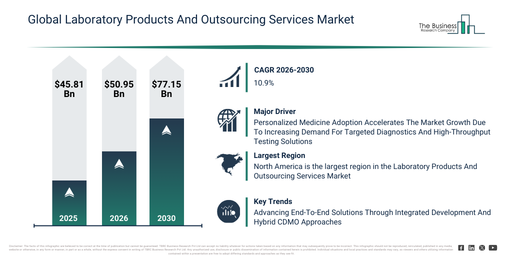
    Fueled by the expanding scope of pharmaceutical and biotechnology research initiatives, an increase in the volume of clinical trials, escalating regulatory complexities, a heightened demand for specialized laboratory analyses, and the widespread availability of contract research offerings, the market for laboratory products and outsourcing services has experienced substantial recent expansion. Projections indicate a continued upward trajectory, with the market value set to ascend from $45.81 billion in 2025 to $50.95 billion in 2026, reflecting a projected compound annual growth rate of 11.2%.

    The market for laboratory products and outsourcing services is poised for substantial expansion over the coming years, projecting a surge to $77.15 billion by 2030, driven by a compound annual growth rate (CAGR) of 10.9%. This projected growth is fueled by several key factors, including a heightened demand for comprehensive laboratory outsourcing solutions, the increasing embrace of digital platforms for laboratory management, the burgeoning field of personalized medicine research, a greater emphasis on maintaining data integrity and adhering to regulatory standards, and a significant uptick in investments directed towards sophisticated laboratory automation technologies. Within this forecast period, notable trends include a discernible shift towards outsourcing laboratory testing functions, a growing need for cutting-edge analytical instrumentation, the widespread adoption of automated laboratory processes, an upswing in both bioanalytical and stability testing services, and a strengthened focus on providing robust support for regulatory compliance.

    Download A Free Sample Report For Comprehensive Market Insights:

    https://www.thebusinessresearchcompany.com/sample.aspx?id=27323&type=smp

    Laboratory Products And Outsourcing Services Market Growth Factors: Which Forces Are Supporting Market Expansion?

    The increasing integration of personalized medicine is anticipated to boost the expansion of the market for laboratory products and outsourcing services. Personalized medicine, which tailors healthcare decisions and treatments to an individual’s unique genetic makeup, lifestyle, and environmental factors, is gaining momentum due to a strong desire for treatments that are both more effective and precisely targeted, thereby reducing adverse effects and enhancing patient results. Laboratory products and outsourcing services are crucial in facilitating this approach by enabling large-scale genetic analysis, the examination of biomarkers, and specialized diagnostic capabilities necessary for customizing patient care. Illustrating this trend, the Personalized Medicine Coalition (PMC) reported in February 2024 that the FDA authorized 16 novel personalized treatments in 2023, a notable increase from the six approvals in 2022, marking the fourth consecutive year that personalized medicines represented over a third of all new drug approvals by the U.S. Food and Drug Administration (FDA). Consequently, the expanding use of personalized medicine is fueling the growth observed in the laboratory products and outsourcing services sector.

    Laboratory Products And Outsourcing Services Market Segment Analysis: What Are The Major Market Categories?

    The laboratory products and outsourcing services market covered in this report is segmented –

    1) By Type: Products, Services, Method Development And Validation, Stability Testing, Other Types

    2) By Technology: Immunoassays, Molecular Diagnostics, Microbiology, Clinical Chemistry, Flow Cytometry, Mass Spectroscopy, Chromatography, Other Technology

    3) By End-Use: Pharmaceutical And Biotech Companies, Medical Device Companies, Contract Research Organizations (CRO) And Contract Development And Manufacturing Organizations (CDMO), Other End-Use

    Subsegments:

    1) By Products: Instruments, Consumables, Reagents

    2) By Services: Bioanalytical Testing, Microbiology Testing, Toxicology Testing

    3) By Method Development And Validation: Analytical Method Development, Process Validation, Bioanalytical Method Validation

    4) By Stability Testing: Real-Time Stability Testing, Photostability Testing, Accelerated Stability Testing

    5) By Other Types: Regulatory Compliance Services, Sample Storage And Logistics, Data Management

    Laboratory Products And Outsourcing Services Market Industry Trends: What Changes Are Reshaping Demand?

    Companies dominant in the laboratory products and outsourcing services sector are concentrating their efforts on crafting novel offerings like consolidated development and manufacturing systems. These integrated platforms aim to deliver comprehensive services, simplify operational challenges, and bolster client scalability. Such a platform represents a cohesive structure that amalgamates research, development, analytical examination, and production stages into one efficient process, thereby boosting collaboration, accelerating project completion, and optimizing biopharmaceutical output. As an illustration, Shilpa Medicare Ltd., a pharmaceutical entity based in India, introduced a novel, all-encompassing hybrid contract development and manufacturing organization in March 2025. This new venture provides integrated services spanning from initial development stages right through to commercial-scale production. It facilitates both adaptable outsourcing options, mirroring conventional CDMO provisions, alongside proprietary formulations available for licensing, thereby facilitating a quicker and less risky market debut for pharmaceutical firms. The objective is to furnish diverse avenues for market introduction, supporting ongoing development projects or swift business-to-business licensing arrangements, with a particular emphasis on oncology treatments and sophisticated therapeutic agents.

    Laboratory Products And Outsourcing Services Market Leading Companies Driving Competitive Growth

    Major companies operating in the laboratory products and outsourcing services market are Thermo Fisher Scientific Inc., Abbott Laboratories, Siemens Healthineers AG, IQVIA Holdings Inc., Labcorp Holdings Inc., Quest Diagnostics, SGS SA, Eurofins Scientific Inc., Agilent Technologies Inc., WuXi AppTec Co. Ltd., Charles River Laboratories International Inc., Intertek Group plc., Waters Corporation, Bio-Rad Laboratories Inc., ALS Limited, PerkinElmer Inc., Medpace Holdings Inc., Tecan Group AG, Greiner Bio-One International GmbH, Randox Laboratories Ltd., Tulip Diagnostics Private Limited.

    Access The Complete Laboratory Products And Outsourcing Services Market Report:

    https://www.thebusinessresearchcompany.com/report/laboratory-products-and-outsourcing-services-global-market-report

    Laboratory Products And Outsourcing Services Market Geographic Analysis: Where Is Demand Growing The Fastest?

    North Americawas the largest region in the laboratory products and outsourcing services market in 2025. Asia-Pacificis expected to be the fastest-growing region in the forecast period. The regions covered in the laboratory products and outsourcing services market report are Asia-Pacific, South East Asia, Western Europe, Eastern Europe, North America, South America, Middle East, Africa.

    Get in touch with us:

    The Business Research Company: https://www.thebusinessresearchcompany.com/

    Americas: +1 310-496-7795

    Asia: +44 7882 955267 & +91 8897263534

    Europe: +44 7882 955267

    Email us at: marketing@tbrc.info

    Follow us on:

    LinkedIn: https://in.linkedin.com/company/the-business-research-company

    YouTube: https://www.youtube.com/channel/UC24_fI0rV8cR5DxlCpgmyFQ

    Global Market Model: https://www.thebusinessresearchcompany.com/global-market-model
  • Laboratory Information System Market Forecast Reveals Where Future Industry Value Will Be Created

    Laboratory Information System Market Forecast Reveals Where Future Industry Value Will Be Created

    Through market attractiveness analysis, total addressable market evaluation, company benchmarking matrices, interactive Excel dashboards, expanded supply chain intelligence, emerging startup coverage, and detailed product insights, The Business Research Company’s 2026 market reports provide more actionable and strategically valuable research.

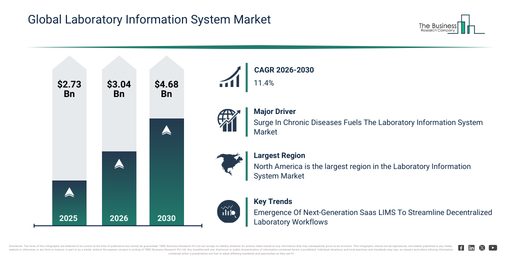
    Laboratory Information System Market Growth From $3.04 Billion In 2026 To $4.67 Billion By 2030 At A CAGR Of 11.4%

    The market for laboratory information systems has experienced significant expansion, projected to increase from $2.73 billion in 2025 to $3.04 billion by 2026, reflecting a compound annual growth rate of 11.4%. This upward trajectory in growth during the preceding period was fueled by several key factors, including a surge in the volume of diagnostic tests performed, the escalating demand for effective management of laboratory data, a greater embrace of electronic health records, the enhancement of hospital laboratory facilities, and the growing stringency of regulatory documentation mandates.

    The laboratory information system sector is poised for substantial expansion in the coming years, projecting a market value of $4.68 billion by 2030, driven by an 11.4% compound annual growth rate. This upward trajectory through the forecast period is underpinned by several key factors: the accelerating digital transformation initiatives within healthcare laboratories, a heightened need for seamless interoperability among diverse healthcare systems, escalating investments in health information technology, the proliferation of independent diagnostic facilities, and a growing emphasis on patient-focused diagnostic offerings. Anticipated significant trends during this timeframe encompass the increasing integration of LIS with HIS and EHR platforms, a discernible move towards cloud-based LIS solutions, a greater focus on granting real-time access to laboratory data, the broadening application of LIS in decentralized settings and physician office laboratories, and a heightened commitment to standardizing laboratory workflows while simultaneously minimizing errors.

    Download A Free Sample Report For Comprehensive Market Insights:

    https://www.thebusinessresearchcompany.com/sample.aspx?id=3275&type=smp

    Laboratory Information System Market Demand Drivers: What Is Fueling Industry Growth?

    The increasing prevalence of chronic diseases is poised to be a significant catalyst for the expansion of the laboratory information system market. These long-term health conditions, often referred to as non-communicable diseases, necessitate efficient and accurate management, which laboratory information systems are well-equipped to provide. By enhancing the precision and speed of diagnostic testing, enabling seamless data aggregation, and bolstering clinical decision-making, these systems play a crucial role in addressing the complexities of chronic illness care. Confirming this trend, data from the World Health Organization, a UN agency headquartered in Switzerland, revealed in September 2023 that non-communicable diseases account for a substantial 74% of annual global deaths, totaling 41 million fatalities. Specifically, cardiovascular diseases were responsible for 17.9 million deaths, cancer for 9.3 million, chronic respiratory diseases for 4.1 million, and diabetes for 2.0 million deaths, underscoring the direct correlation between the growing burden of chronic conditions and the heightened demand for laboratory information systems.

    Laboratory Information System Market Segment Breakdown: Which Categories Generate The Most Revenue?

    The laboratory information system market covered in this report is segmented –

    1) By Product: Standalone LIS, Integrated LIS

    2) By Component: Software, Services

    3) By End User: Hospital Laboratories, Independent Laboratories, Physician Office Laboratories, Other End Users

    Subsegments:

    1) By Standalone LIS: On-premise Standalone LIS, Cloud-based Standalone LIS

    2) By Integrated LIS: Laboratory And Hospital Information System (LIS-HIS) Integration, Laboratory And Electronic Health Records (LIS-EHR) Integration

    Laboratory Information System Market Innovation Trends: Which Developments Are Transforming The Industry?

    Leading entities within the laboratory information system sector are prioritizing the creation of advanced offerings, including cloud-native architectures, to satisfy the escalating need for adaptable solutions. This modern software paradigm, characterized by containerization, microservices, automated DevOps practices, and flexible cloud infrastructure, empowers organizations to accelerate application development, deployment, management, and scaling with enhanced reliability and cost efficiency. Illustrating this trend, LabWare, a prominent US vendor in the LIMS arena, introduced LabWare ASSURE in March 2025, a Software as a Service LIMS tailored for laboratories engaged in food safety, microbiology, and quality assurance testing. This platform provides pre-validated, operational workflows, live data visualizations, comprehensive lot and sample handling, seamless instrument integration, and environmental monitoring features. Accessible entirely via a web browser, it facilitates adherence to regulations like 21 CFR Part 11, allows for swift implementation typically within a 30-day timeframe, and permits laboratory expansion without necessitating capital outlays for physical infrastructure, thereby enabling laboratories to boost efficiency, enforce process consistency, and expedite sample analysis.

    Laboratory Information System Market Key Players And Strategic Industry Positioning

    Major companies operating in the laboratory information system market are Cerner Corporation, McKesson Corporation, Epic Corporation Inc., Medical Information Technology Inc., SCC Soft Computer Inc., Sunquest Information Systems Inc., CompuGroup Medical AG, Computer Programs and Systems Inc., Orchard Software Corporation, LabWare Inc., LigoLab LLC, Clinisys Group Ltd., LabVantage Solutions Inc., Labgen LIS, Polytech LIS, NovoPath Inc., LABTRACK LIMS, Dendi Inc., Technidata AG, Psyche Systems Corporation, Data Innovations LLC, Merge Healthcare Inc., Abbott Laboratories, Thermo Fisher Scientific Inc., Agilent Technologies Inc., QA Studio

    Access The Complete Laboratory Information System Market Report:

    https://www.thebusinessresearchcompany.com/report/laboratory-information-system-global-market-report

    Laboratory Information System Market Global Footprint: Which Region Holds Market Leadership?

    North Americawas the largest region in the healthcare services market in 2025. Western Europewas the second largest region in the healthcare services market. The regions covered in the laboratory information system market report are Asia-Pacific, South East Asia, Western Europe, Eastern Europe, North America, South America, Middle East, Africa.

    Get in touch with us:

    The Business Research Company: https://www.thebusinessresearchcompany.com/

    Americas: +1 310-496-7795

    Asia: +44 7882 955267 & +91 8897263534

    Europe: +44 7882 955267

    Email us at: marketing@tbrc.info

    Follow us on:

    LinkedIn: https://in.linkedin.com/company/the-business-research-company

    YouTube: https://www.youtube.com/channel/UC24_fI0rV8cR5DxlCpgmyFQ

    Global Market Model: https://www.thebusinessresearchcompany.com/global-market-model

  • Laboratory Information Management System Market Growth Through 2030 Creates New Strategic Opportunities

    Laboratory Information Management System Market Growth Through 2030 Creates New Strategic Opportunities

    Delivering more actionable and strategically valuable research, The Business Research Company’s 2026 market reports feature market attractiveness analysis, total addressable market evaluation, company benchmarking matrices, interactive Excel dashboards, expanded supply chain intelligence, emerging startup coverage, and detailed product insights.

    Laboratory Information Management System Market Expansion Outlook: What Revenue Opportunities Lie Ahead?

    The market for laboratory information management systems has experienced substantial expansion recently. This sector is projected to increase from $2.43 billion in 2025 to $2.67 billion by 2026, reflecting a compound annual growth rate of 10.2%. Key factors driving this historical growth include the escalating volume of laboratory data, the imperative to minimize errors associated with manual documentation, burgeoning demands for regulatory adherence, the proliferation of life sciences research facilities, and a heightened need for laboratory standardization.

    The global market for laboratory information management systems is poised for substantial expansion over the coming years, projected to reach $3.95 billion by 2030, exhibiting a compound annual growth rate of 10.2%. This anticipated ascent is propelled by several key factors, including the escalating utilization of cloud computing within laboratory settings, a heightened emphasis on digitizing lab operations, a growing need for immediate data access, the continued growth of contract research organizations, and increased financial commitments towards laboratory automation software. During this same forecast period, notable market dynamics are expected to include a greater embrace of cloud-based LIMS solutions, enhanced integration of LIMS with laboratory instrumentation, a surge in demand for data management that adheres to regulatory standards, the widening application of LIMS beyond traditional life sciences laboratories, and a stronger focus on automating workflows and ensuring thorough sample traceability.

    Download A Free Sample Report For Comprehensive Market Insights:

    https://www.thebusinessresearchcompany.com/sample.aspx?id=13686&type=smp

    Laboratory Information Management System Market Growth Drivers: What Factors Are Accelerating Expansion?

    The expanding landscape of research and development initiatives is poised to be a primary catalyst for the advancement of the laboratory information management system market. Such endeavors encompass a wide array of organizational undertakings focused on generating novel insights, products, services, or methodologies, or on refining established ones. Laboratory information management systems play a crucial role in facilitating these research and development efforts by ensuring the efficient operation of laboratories. They provide support for a multitude of research-related functions, including the systematic organization of R&D data within projects and studies, the oversight of resources and task allocation, the reduction of IT operational expenses, and the optimization of overall output. As a testament to this trend, data from the National Centre for Science and Engineering Statistics, a federal entity in the United States, indicated that in Fiscal Year 2024, Federally Funded Research & Development Centers (FFRDCs) boosted their R&D investments to $31.7 billion, marking a $2.4 billion increase from Fiscal Year 2023. This follows a $29.3 billion R&D expenditure reported by 42 FFRDCs in Fiscal Year 2023, a growth of 12.7% compared to Fiscal Year 2022. Consequently, the escalating volume of research and development activities serves as a significant driver for the growth trajectory of the laboratory information management system market.

    Laboratory Information Management System Market Segmentation: How Is The Market Structured Across Key Categories?

    The laboratory information management system market covered in this report is segmented –

    1) By Component: Software, Services

    2) By Deployment Model: On-Premise Laboratory Information Management System (LIMS), Cloud Laboratory Information Management System (LIMS), Remotely Hosted Laboratory Information Management System (LIMS)

    3) By Distribution Channel: Direct Tenders, Retail Sales

    4) By End-Use: Life Sciences, Contract Research Organizations (CROs), Petrochemical Refineries And Oil And Gas Industry, Chemical Industry, Food And Beverage And Agriculture Industries, Environmental Testing Laboratories, Other End-Uses

    Subsegments:

    1) By Software: On-Premise LIMS, Cloud-Based LIMS, Web-Based LIMS

    2) By Services: Implementation Services, Support And Maintenance Services, Consulting Services

    Laboratory Information Management System Market Trends: What Is Shaping Future Industry Growth?

    Leading entities within the laboratory information management system sector are prioritizing the creation of cutting-edge offerings, exemplified by scalable lab automation solutions designed to equip laboratories with adaptable, automated systems that optimize processes and improve data handling capabilities. These scalable lab automation solutions are characterized by their modularity and adaptability, empowering laboratories to automate and refine their operational workflows while facilitating straightforward growth and adjustments in response to changing demands. A pertinent illustration is the introduction of Clinisys Laboratory Solutions by the American informatics software firm, Clinisys, in July of 2023. This new offering incorporates specialized laboratory information management systems for various disciplines, all underpinned by a cohesive SaaS framework, thereby boosting automation, expanding scalability, and refining data management. Consequently, laboratories can expect to streamline their operations, acquire more profound analytical insights, and benefit from enhanced workflow agility, all while simultaneously achieving cost reductions and bolstering security. Such advancements are instrumental in propelling scientific advancements by refining the oversight and interpretation of data within a broad spectrum of laboratory environments, including those dedicated to environmental monitoring, water quality assessment, and public health initiatives.

    Laboratory Information Management System Market Competitive Landscape And Leading Companies

    Major companies operating in the laboratory information management system market are McKesson Corporation, Siemens AG, Thermo Fisher Scientific Inc., Abbott Laboratories, STARLIMS Corporation, Novatek International Pty Ltd., Agilent Technologies Inc., Dassault Systemes SA, PerkinElmer Inc., Illumina Inc., Ovation.io Inc., Waters Corporation, CompuGroup Medical, CliniSys Group Limited, LabWare Inc., LabLynx Inc., LabVantage Solutions Inc., INFORS GmbH, Agaram Technologies Pvt Ltd., Benchling Inc., CloudLIMS Lab Solutions (India) Pvt. Ltd., Quartzy Inc., Caliber Technologies Inc., Accelerated Technology Laboratories Inc., Autoscribe Limited, Labworks International Inc., Computing Solutions Inc., CrelioHealth Inc., AssayNet Inc., Eusoft Ltd.

    Access The Complete Laboratory Information Management System Market Report:

    https://www.thebusinessresearchcompany.com/report/laboratory-information-management-system-global-market-report

    Laboratory Information Management System Market Regional Distribution: Which Areas Drive Market Expansion?

    North Americawas the largest region in the laboratory information management system market in 2025. Asia-Pacificis expected to be the fastest-growing region in the forecast period. The regions covered in the laboratory information management system market report are Asia-Pacific, South East Asia, Western Europe, Eastern Europe, North America, South America, Middle East, Africa.

    Get in touch with us:

    The Business Research Company: https://www.thebusinessresearchcompany.com/

    Americas: +1 310-496-7795

    Asia: +44 7882 955267 & +91 8897263534

    Europe: +44 7882 955267

    Email us at: marketing@tbrc.info

    Follow us on:

    LinkedIn: https://in.linkedin.com/company/the-business-research-company

    YouTube: https://www.youtube.com/channel/UC24_fI0rV8cR5DxlCpgmyFQ

    Global Market Model: https://www.thebusinessresearchcompany.com/global-market-model