Month: June 2026

  • Cartilage Repair Market Forecast Reveals Where Future Industry Value Will Be Created

    Cartilage Repair Market Forecast Reveals Where Future Industry Value Will Be Created

    Through market attractiveness analysis, total addressable market evaluation, company benchmarking matrices, interactive Excel dashboards, expanded supply chain intelligence, emerging startup coverage, and detailed product insights, The Business Research Company’s 2026 market reports provide more actionable and strategically valuable research.

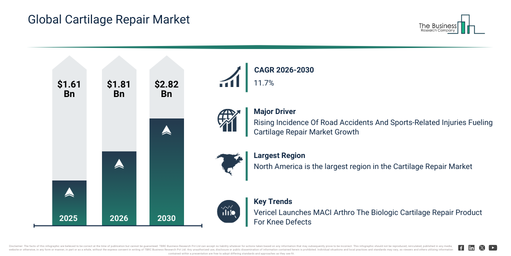
    Cartilage Repair Market Expected To Reach $2.81 Billion By 2030 At 11.7% CAGR

    The market for cartilage repair experienced substantial expansion recently, projecting a rise from $1.61 billion in 2025 to $1.81 billion in 2026, underpinned by a compound annual growth rate of 11.9%. Factors fueling this growth during the preceding period included a higher prevalence of joint injuries, an increase in sports-related orthopedic ailments, greater acceptance of surgical interventions for cartilage repair, innovations in biomaterials, and the proliferation of specialized orthopedic clinics.

    The global market for cartilage repair is poised for significant expansion over the upcoming years, projecting an increase to $2.82 billion by 2030, driven by a compound annual growth rate of 11.7%. This anticipated growth throughout the forecast period is fueled by a confluence of factors, including escalating demand for regenerative medicine, a surge in investment for tissue engineering research, the broadening availability of personalized orthopedic interventions, a heightened emphasis on biological repair techniques, and a greater prevalence of ambulatory orthopedic surgeries. Key developments anticipated during this timeframe encompass the increasing uptake of cell-based cartilage repair approaches, a greater utilization of stem cell and regenerative therapies, a growing preference for less invasive repair methods, advancements in scaffold-based regeneration technologies, and an amplified focus on strategies for long-term joint health maintenance.

    Download A Free Sample Report For Comprehensive Market Insights:

    https://www.thebusinessresearchcompany.com/sample.aspx?id=13400&type=smp

    Cartilage Repair Market Expansion Drivers: What Is Shaping Future Growth?

    The escalating frequency of traffic collisions and injuries sustained during athletic pursuits is anticipated to be a primary catalyst for the expansion of the cartilage repair sector. Traffic accidents encompass incidents involving automobiles, pedestrians, or cyclists on public thoroughfares. Conversely, sports-related injuries denote harm incurred during engagement in diverse athletic endeavors and physical pastimes. An uptick in both traffic incidents and sports-related harm substantially amplifies the demand for cartilage repair treatments aimed at rehabilitating compromised cartilage, mitigating discomfort, and enhancing joint performance stemming from these types of injuries. To illustrate, a report from the Transport Accident Commission, an Australian governmental body, indicated that for the fiscal year ending June 30, 2025, 296 fatalities were recorded on roadways, an increase from the 287 deaths observed during the preceding year, signifying a rise of 9 lives lost. Consequently, the increasing incidence of traffic accidents and sports-related injuries is a key determinant in the upward trajectory of the cartilage repair market.

    Cartilage Repair Market Segment Analysis Highlighting Growth Areas

    The cartilage repair market covered in this report is segmented –

    1) By Treatment Modality: Cell-Based, Non-Cell-Based

    2) By Site: Knee, Hip, Ankle And Foot, Other Application Sites

    3) By Application: Hyaline Cartilage, Fibrocartilage

    4) By End User: Hospital And Clinic, Ambulatory Surgical Center (ASC), Other End-Users

    Subsegments:

    1) By Cell-Based Treatments: Autologous Chondrocyte Implantation (ACI), Stem Cell Therapy, Matrix-Induced Autologous Chondrocyte Implantation (MACI)

    2) By Non-Cell-Based Treatments: Scaffold-Based Treatment, Osteochondral Grafts, Synthetic Implants

    Cartilage Repair Market Strategic Trends: What Is Defining The Next Phase Of Growth?

    Leading players within the cartilage repair sector are actively developing cutting-edge solutions, specifically biologic cartilage repair options, aiming to enhance the treatment landscape for cartilage injuries and foster inherent regenerative processes. These biologic cartilage repair products encompass therapies sourced from living organisms, including cells, tissues, or potent growth factors, engineered for the restoration or renewal of compromised cartilage. As an illustration, in August of 2024, Vericel, a prominent biotechnology firm headquartered in the United States, introduced MACI Arthro, a product featuring autologous cultured chondrocytes embedded on a porcine collagen membrane, subsequently gaining clearance from a United States federal body tasked with safeguarding public well-being. MACI Arthro represents a novel biologic cartilage repair innovation intended for the management of articular cartilage defects within the knee. This groundbreaking therapy empowers surgical professionals to address symptomatic full-thickness cartilage lesions in the knee, extending up to 4 square centimeters in area, utilizing less invasive surgical approaches. The MACI Arthro system facilitates the assessment and preparation of the damaged site via minor incisions, employing specifically engineered instruments, marking a substantial progression compared to conventional methodologies.

    Cartilage Repair Market Leading Companies: Who Holds Significant Market Presence?

    Major companies operating in the cartilage repair market are Stryker Corporation, Zimmer Biomet Holdings Inc, Smith and Nephew plc, Arthrex Inc, CONMED Corporation, Vericel Corporation, Anika Therapeutics Inc, MEDIPOST Co Ltd, Histogenics Corporation, ISTO Technologies Inc, Regentis Biomaterials Ltd, CartiHeal Ltd, Aesculap AG, Medacta International SA, Mathys AG Bettlach, JRI Orthopaedics Ltd, Waldemar Link GmbH and Co KG, Teijin Nakashima Medical Co Ltd, BioPoly LLC, Orthocell Ltd

    Access The Complete Cartilage Repair Market Report:

    https://www.thebusinessresearchcompany.com/report/cartilage-repair-global-market-report

    Cartilage Repair Market Regional Distribution: Which Areas Drive Market Expansion?

    North Americawas the largest region in the cartilage repair market in 2025. Asia-Pacificis expected to be the fastest-growing region in the forecast period. The regions covered in the cartilage repair market report are Asia-Pacific, South East Asia, Western Europe, Eastern Europe, North America, South America, Middle East, Africa.

    Get in touch with us:

    The Business Research Company: https://www.thebusinessresearchcompany.com/

    Americas: +1 310-496-7795

    Asia: +44 7882 955267 & +91 8897263534

    Europe: +44 7882 955267

    Email us at: marketing@tbrc.info

    Follow us on:

    LinkedIn: https://in.linkedin.com/company/the-business-research-company

    YouTube: https://www.youtube.com/channel/UC24_fI0rV8cR5DxlCpgmyFQ

    Global Market Model: https://www.thebusinessresearchcompany.com/global-market-model
  • Cartilage Degeneration Market Growth Through 2030 Creates New Strategic Opportunities

    Cartilage Degeneration Market Growth Through 2030 Creates New Strategic Opportunities

    Delivering more actionable and strategically valuable research, The Business Research Company’s 2026 market reports feature market attractiveness analysis, total addressable market evaluation, company benchmarking matrices, interactive Excel dashboards, expanded supply chain intelligence, emerging startup coverage, and detailed product insights.

    #Cartilage Degeneration Market Size And Revenue Forecast Through 2030

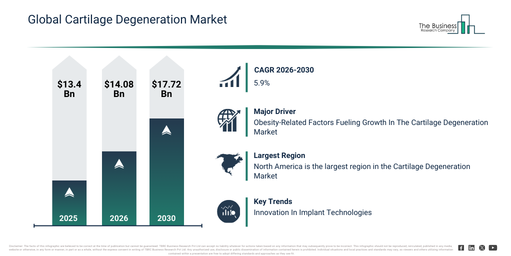
    The market for cartilage degeneration remedies experienced robust expansion historically. Projections indicate this sector will expand from \$13.4 billion in 2025 to \$14.08 billion in 2026, reflecting a compound annual growth rate of 5.0%. This past growth trajectory was fueled by factors such as the escalating prevalence of osteoarthritis, a greater number of orthopedic surgical interventions, an increasing elderly demographic, the introduction of sophisticated surgical methods, and the uptake of therapies aimed at preserving joint health.

    The market for cartilage degeneration is poised for considerable expansion, projecting a valuation of $17.72 billion by 2030, fueled by a compound annual growth rate of 5.9%. This anticipated surge over the forecast period is largely attributable to heightened investments in regenerative medicine research, a growing preference for biological cartilage repair options, the broader application of stem cell therapies, an increased emphasis on tailored orthopedic treatments, and the wider adoption of sophisticated cartilage restoration techniques. Key developments shaping this market in the coming years will involve a greater embrace of cell-based cartilage repair methods, a rise in the utilization of minimally invasive surgical interventions, escalating demand for regenerative medicine products, advancements in sophisticated imaging and diagnostic technologies, and a more pronounced concentration on ensuring the longevity of joint health.

    Download A Free Sample Report For Comprehensive Market Insights:

    https://www.thebusinessresearchcompany.com/sample.aspx?id=13103&type=smp

    Cartilage Degeneration Market Development Factors: Which Trends Are Supporting Demand?

    The escalating rates of obesity are anticipated to be a significant catalyst for the expansion of the cartilage degeneration market. This condition, defined by an unhealthy surplus of body fat, directly contributes to and hastens the deterioration of cartilage through elevated pressure and heightened inflammatory responses within the joint. Furthermore, obesity triggers a cascade of detrimental alterations to the knee joint’s overall structure, manifesting as improper weight distribution, misalignment, and diminished muscular strength. As an illustration, data from the UK’s National Health Service (NHS) Digital revealed a rise in childhood obesity among 4 to 5-year-olds, climbing from 9.2% in the 2022/23 period to 9.6% in 2023/24. Consequently, this growing obesity epidemic is a key factor fueling the upward trajectory of the cartilage degeneration market.

    Cartilage Degeneration Market Segment Performance And Strategic Opportunities

    The cartilage degeneration market covered in this report is segmented –

    1) By Procedure: Joint Replacements, Chondroplasty, Osteochondral Transplants, Microfracture, Meniscus Transplants, Cell-Based Cartilage Resurfacing, Autologous Chondrocyte Implantation, Other Procedures

    2) By Application: Knee, Hip, Other Applications

    3) By End User: Hospitals And Specialty Clinics, Ambulatory Surgical Centers, Academic And Research Institutes

    Subsegments:

    1) By Joint Replacements: Knee Replacement (Partial, Total), Hip Replacement (Partial, Total), Shoulder Replacement (Total, Reverse), Other Joints (Ankle, Elbow, Wrist)

    2) By Chondroplasty: Radiofrequency Ablation Chondroplasty, Mechanical Chondroplasty, Thermal Chondroplasty, Arthroscopic Chondroplasty

    3) By Osteochondral Transplants: Autografts (OATS), Allografts (Fresh Osteochondral Allografts), Synthetic Implants

    4) By Microfracture: Traditional Microfracture, Augmented Microfracture (with scaffolds or matrix implants)

    5) By Meniscus Transplants: Allograft Meniscus Transplantation (Cryopreserved, Fresh Frozen), Synthetic Meniscus Implants

    6) By Cell-Based Cartilage Resurfacing: Autologous Cell-Based Therapy, Allogeneic Cell-Based Therapy, Stem Cell-Based Cartilage Repair

    7) By Autologous Chondrocyte Implantation (ACI): First-Generation ACI, Second-Generation ACI, Third-Generation ACI (MACI)

    8) By Other Procedures: Arthroscopic Debridement, Osteotomy, Cartilage Repair Using Synthetic Scaffolds, Injection-Based Therapies (Hyaluronic Acid, PRP, Stem Cell Injections)

    Cartilage Degeneration Market Transformation Trends: Which Innovations Are Driving Change?

    Leading entities within the cartilage degeneration sector are prioritizing regenerative treatment approaches to solidify their market standing. These regenerative treatments leverage sophisticated biological methodologies aimed at mending or substituting compromised cartilage, thereby stimulating inherent restorative mechanisms. As an illustration, in the year 2023, Zimmer Biomet, a prominent American medical device firm, introduced its Tissue Regeneration System. This innovative system employs a patented scaffold technology engineered to bolster cartilage repair. It incorporates materials that are compatible with biological systems, fostering cellular proliferation and assimilation with adjacent tissues, which substantially improves recovery results. Furthermore, the system provides adaptable configurations designed to meet specific patient requirements, thereby amplifying its efficacy. These advancements underscore a widespread movement toward individualized treatment paradigms in managing cartilage degeneration, confronting the escalating incidence of osteoarthritis and athletic injuries, while simultaneously encouraging swifter convalescence and elevated levels of patient contentment.

    Cartilage Degeneration Market Key Players: Which Companies Shape Industry Competition?

    Major companies operating in the cartilage degeneration market are Johnson & Johnson Services Inc., MEDIPOST Co. Ltd., Medtronic plc, Stryker Corporation, Zimmer Biomet Holdings Inc., Smith and Nephew plc, Osiris Therapeutics Inc., Arthrex Inc., Conmed Corporation, Orthocell Ltd., Bioventus LLC, Aesculap Inc., Vericel Corporation, Anika Therapeutics Inc., Geistlich Pharma AG, MatTek Corporation, Breg Inc., Isto Biologics Inc., OrthoTrophix LLC, CellGenix GmbH, CartiHeal Inc., Cayenne Medical Inc., Collagen Solutions plc, Regentis Biomaterials Ltd., Histogen Inc., BioTime Inc., CollPlant Holdings Ltd.

    Access The Complete Cartilage Degeneration Market Report:

    https://www.thebusinessresearchcompany.com/report/cartilage-degeneration-global-market-report

    Cartilage Degeneration Market Leading Geography: Which Region Generates The Most Revenue?

    North Americawas the largest region in the cartilage degeneration market in 2025. Asia-Pacificis expected to be the fastest-growing region in the forecast period. The regions covered in the cartilage degeneration market report are Asia-Pacific, South East Asia, Western Europe, Eastern Europe, North America, South America, Middle East, Africa.

    Get in touch with us:

    The Business Research Company: https://www.thebusinessresearchcompany.com/

    Americas: +1 310-496-7795

    Asia: +44 7882 955267 & +91 8897263534

    Europe: +44 7882 955267

    Email us at: marketing@tbrc.info

    Follow us on:

    LinkedIn: https://in.linkedin.com/company/the-business-research-company

    YouTube: https://www.youtube.com/channel/UC24_fI0rV8cR5DxlCpgmyFQ

    Global Market Model: https://www.thebusinessresearchcompany.com/global-market-model
  • Carrier Screening Market Size Projected To Increase From $3.67 Billion To $6.57 Billion During The Forecast Period

    Carrier Screening Market Size Projected To Increase From $3.67 Billion To $6.57 Billion During The Forecast Period

    Enhanced with market attractiveness analysis, total addressable market evaluation, company benchmarking matrices, interactive Excel dashboards, expanded supply chain intelligence, emerging startup coverage, and detailed product insights, The Business Research Company’s 2026 market reports deliver more actionable and strategically valuable research.

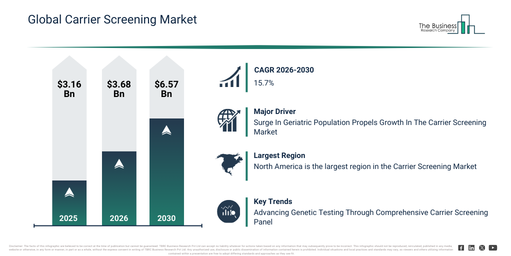
    Carrier Screening Market Growth From $3.67 Billion In 2026 To $6.57 Billion By 2030 At A CAGR Of 15.7%

    The market for carrier screening has experienced significant expansion recently, projected to increase from $3.16 billion in 2025 to $3.68 billion in 2026, reflecting a compound annual growth rate of 16.3%. This robust growth trajectory in the historical period is largely a consequence of heightened public understanding of genetic conditions, a broader availability of prenatal and preconception screening options, improvements in DNA sequencing techniques, increased reliance on laboratory diagnostic methods, and enhanced accessibility to professional genetic counseling.

    The carrier screening market is poised for substantial expansion over the coming years, projected to reach $6.57 billion by 2030, driven by a robust compound annual growth rate of 15.7%. This anticipated surge is fueled by several key factors, including a heightened demand for personalized medical approaches, escalating investments in genomic research endeavors, the broader implementation of population-based screening programs, the increasing application of artificial intelligence in genomic data analysis, and a greater emphasis on proactive healthcare strategies. During this forecast horizon, significant market developments are expected to unfold, such as a greater uptake of comprehensive carrier screening panels, the continued advancement and utilization of next-generation sequencing technologies, the growing incorporation of AI for deciphering genetic information, the wider accessibility of preventive genetic testing, and an intensified focus on screening for reproductive health.

    Download A Free Sample Report For Comprehensive Market Insights:

    https://www.thebusinessresearchcompany.com/sample.aspx?id=7952&type=smp

    Carrier Screening Market Industry Drivers: What Is Driving Revenue Growth?

    The expansion of the carrier screening market is projected to be fueled by the growing elderly demographic. This segment, comprising older individuals, may increasingly turn to carrier screening services, particularly when considering parenthood at an advanced age. Such screening can offer valuable insights into potential genetic risks linked to later-life conception as part of preconception or prenatal care. Illustrating this demographic shift, the Office for the National Statistics in the UK reported that in 2024, the population aged 90 and above reached 625,000, a rise from 612,000 in mid-2023, signifying a 2.2% increase. Consequently, this escalating geriatric population is a significant driver for the carrier screening market’s advancement.

    #Carrier Screening Market Segment Landscape And Growth Potential

    The carrier screening market covered in this report is segmented –

    1) By Type: Expanded Carrier Screening, Targeted Disease Carrier Screening

    2) By Medical Condition: Pulmonary Conditions, Hematological Conditions, Neurological Conditions, Other Medical Conditions

    3) By Technology: DNA Sequencing, Polymerase Chain Reaction, Microarrays, Other Technologies

    4) By End User: Hospitals, Reference Laboratories, Physician Offices And Clinics, Other End Users

    Subsegments:

    1) By Expanded Carrier Screening: Next-Generation Sequencing (NGS) Panels, Comprehensive Carrier Screening Tests

    2) By Targeted Disease Carrier Screening: Single Gene Tests, Disease-Specific Panels, Ethnic Or Population-Specific Screening Tests

    #Carrier Screening Market Growth Trends: What Is Influencing The Future Outlook?

    In the competitive landscape of the carrier screening sector, leading entities are prioritizing innovation through initiatives like the development of advanced carrier screening panels to solidify their market standing. These specialized panels consist of a compilation of genetic assessments designed to detect carriers of specific genetic disorder mutations, irrespective of whether the individual displays any health symptoms. As an illustration, in February of 2023, Fulgent Genetics, Inc., a prominent United States-based firm renowned for its expertise in genetic testing and diagnostic solutions, unveiled its new Beacon787 comprehensive carrier screening panel. This cutting-edge panel encompasses 787 genes associated with both autosomal recessive and X-linked disorders, incorporating all genes categorized by the American College of Medical Genetics and Genomics (ACMG) as Tier 3. The integration of these genes is consistent with the latest practical recommendations from the ACMG, which endorse thorough screening for all expectant mothers and individuals contemplating conception. Fulgent’s Beacon787 is strategically designed to offer a fair and inclusive screening method applicable across diverse ethnic groups, underscoring the company’s dedication to enhancing genetic testing capabilities for a wider spectrum of diseases and supporting well-informed family planning choices.

    Carrier Screening Market Competitive Landscape: Who Are The Leading Companies?

    Major companies operating in the carrier screening market are Invitae Corporation, BGI Genomics Co. Ltd., Centogene NV, Eurofins Scientific SE, Fulgent Genetics Inc., Illumina Inc., Laboratory Corporation of America Holdings, MedGenome Inc., Myriad Genetics Inc., Natera Inc., OPKO Health Inc., Otogenetics Corporation, Quest Diagnostics Inc., Sema4 Holdings Corporation, Thermo Fisher Scientific Inc., Associated Regional and University Pathologists Inc., GeneDx LLC, GenPath Consultants and Technologies Private Limited, Good Start Genetics Inc., NIPD Genetics Co. Pvt. Ltd., Pathway Genomics Corp., PerkinElmer Inc., PreventionGenetics LLC, Progenity Inc.

    Access The Complete Carrier Screening Market Report:

    https://www.thebusinessresearchcompany.com/report/carrier-screening-global-market-report

    Carrier Screening Market Regional Outlook: Where Are The Largest Opportunities Located?

    North Americawas the largest region in the carrier screening market in 2025. Asia-Pacificis expected to be the fastest-growing region in the carrier screening market report during the forecast period. The regions covered in the carrier screening market report are Asia-Pacific, South East Asia, Western Europe, Eastern Europe, North America, South America, Middle East, Africa.

    Get in touch with us:

    The Business Research Company: https://www.thebusinessresearchcompany.com/

    Americas: +1 310-496-7795

    Asia: +44 7882 955267 & +91 8897263534

    Europe: +44 7882 955267

    Email us at: marketing@tbrc.info

    Follow us on:

    LinkedIn: https://in.linkedin.com/company/the-business-research-company

    YouTube: https://www.youtube.com/channel/UC24_fI0rV8cR5DxlCpgmyFQ

    Global Market Model: https://www.thebusinessresearchcompany.com/global-market-model
  • Automation In Biopharma Industry Market Trends Are Creating New Opportunities For Industry Leaders

    Automation In Biopharma Industry Market Trends Are Creating New Opportunities For Industry Leaders

    Through market attractiveness analysis, total addressable market evaluation, company benchmarking matrices, interactive Excel dashboards, expanded supply chain intelligence, emerging startup coverage, and detailed product insights, The Business Research Company’s 2026 market reports provide more actionable and strategically valuable research.

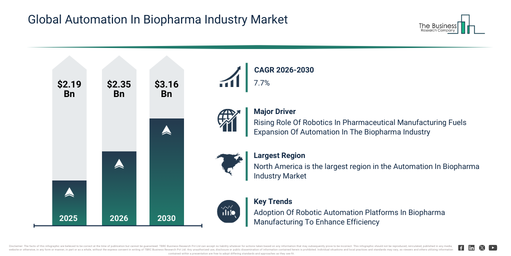
    Automation In Biopharma Industry Market Expected To Reach $3.15 Billion By 2030 At 7.7% CAGR

    The biopharmaceutical sector’s automation market has witnessed robust expansion, projected to increase from $2.19 billion in 2025 to $2.35 billion in 2026, reflecting a compound annual growth rate of 7.1%. This upward trajectory during the historical period is underpinned by several key factors, including the escalating complexity associated with biologic drug manufacturing, a growing need for scalable biopharmaceutical production capabilities, the early embracement of laboratory automation solutions, the proliferation of contract manufacturing services, and significant advancements in process control technologies.

    The biopharmaceutical sector’s automation market is poised for significant expansion, projecting a valuation of $3.16 billion by 2030, reflecting a compound annual growth rate of 7.7%. This anticipated surge is fueled by escalating investments in intelligent biomanufacturing infrastructure, the wider embrace of continuous production methods, advancements in personalized biologic manufacturing, a heightened need for regulatory adherence in automation, and a concentrated effort to refine manufacturing output. Key developments shaping this period include the increasing deployment of automated production systems, the greater incorporation of digital twin methodologies, the expanded utilization of automated quality assurance processes, comprehensive automation across bioprocessing, and a stronger emphasis on manufacturing guided by data analytics.

    Download A Free Sample Report For Comprehensive Market Insights:

    https://www.thebusinessresearchcompany.com/sample.aspx?id=12704&type=smp

    #Automation In Biopharma Industry Market Growth Drivers And Industry Catalysts

    The expanding utilization of robotic systems within the pharmaceutical production sector is anticipated to be a significant catalyst for the advancement of the automation in the biopharma industry market. These sophisticated automated systems and machinery are instrumental in executing diverse functions throughout the creation and packaging of medicinal goods. Their application spans numerous facets of pharmaceutical manufacturing, including but not limited to, secondary packaging operations, internal logistics management, laboratory process automation, pick-and-place activities, the streamlining of pharmacy workflows, and the development of personalized medicines. Such widespread deployment leads to substantial improvements in productivity, elevates precision levels, minimizes contamination risks, and bolsters the safety of the workforce. Illustrating this trend, September 2024 data from the International Federation of Robotics, a renowned German non-profit entity, indicated a robust 9% surge in industrial robot installations across Europe’s manufacturing landscape, achieving an all-time peak of 92,393 units. Notably, a substantial 80% of these installations, amounting to 73,534 units, were situated within the European Union, reflecting a 2% year-over-year increase. Consequently, the escalating integration of robots in pharmaceutical manufacturing is poised to propel the expansion of the automation in biopharma industry market.

    Automation In Biopharma Industry Market Segment Breakdown: Which Categories Generate The Most Revenue?

    The automation in biopharma industry market covered in this report is segmented –

    1) By Technology: Automation Technology, Digitization Technology

    2) By Component: Automation Hardware, Automation Software, Services Project Phase, Services Operation Phase

    3) By Application: Clinical Phase, Drug Discovery Phase, Production Phase

    Subsegments:

    1) By Automation Technology: Process Automation, Laboratory Automation, Robotics And Artificial Intelligence, Control Systems, Programmable Logic Controllers (PLCs)

    2) By Digitization Technology: Data Analytics And Visualization, Electronic Lab Notebooks (ELN), Cloud Computing, Internet Of Things (IoT) In Pharma, Digital Twin Technology

    #Automation In Biopharma Industry Market Trends Influencing Long-Term Demand

    Within the biopharmaceutical sector, leading enterprises are actively driving automation initiatives, specifically targeting the enhancement of technological capabilities like robotic platforms designed for cell-therapy production. These advanced systems are engineered to achieve large-scale, highly efficient, and accuracy-improved manufacturing of sophisticated therapies. A typical robotic cell-therapy manufacturing setup integrates autonomous mobile units, sterile liquid management tools, automated pipe joining mechanisms, and digitized workflow oversight, creating a completely sealed and adaptable environment. This stands in stark contrast to conventional manual bioprocessing methods, which are considerably labor-intensive and utilize open containment strategies. As an illustration, in May of 2023, Cellular Origins, a UK entity specializing in life sciences automation, introduced Constellation, an adaptable robotic framework intended for the creation of cutting-edge therapies. This platform features integrated autonomous mobile robots, aseptic liquid conveyance systems, and modular processing stations, facilitating smooth incorporation into established bioprocessing operations. It achieves a remarkable 30-fold improvement in spatial utilization, necessitates 16 times less human effort, and slashes manufacturing expenses by 51%, all while providing comprehensive digital connectivity for quality assurance and remote oversight.

    Automation In Biopharma Industry Market Key Players And Strategic Industry Positioning

    Major companies operating in the automation in biopharma industry market are F. Hoffmann-La Roche Ltd., Thermo Fisher Scientific Inc., Danaher Corporation, ABB Ltd, Siemens Healthineers AG, Emerson Electric Co., Becton Dickinson and Company (BD), Corning Incorporated, Rockwell Automation Inc., Agilent Technologies Inc., PerkinElmer Inc., Sartorius AG, bioMérieux SA, Mettler-Toledo International Inc., Beckman Coulter Inc., Waters Corporation, Pall Corporation, Bruker Corporation, Qiagen N.V., Eppendorf AG, Tecan Group Ltd., Promega Corporation, Brooks Automation Inc., Omron Automation, Hamilton Company, Integra Biosciences AG, Gilson Inc., Analytik Jena AG, BioTek Instruments Inc.

    Access The Complete Automation In Biopharma Industry Market Report:

    https://www.thebusinessresearchcompany.com/report/automation-in-biopharma-industry-global-market-report

    Automation In Biopharma Industry Market Global Footprint: Which Region Holds Market Leadership?

    North Americawas the largest region in the automation in biopharma industry market in 2025. The regions covered in the automation in biopharma industry market report are Asia-Pacific, South East Asia, Western Europe, Eastern Europe, North America, South America, Middle East, Africa.

    Get in touch with us:

    The Business Research Company: https://www.thebusinessresearchcompany.com/

    Americas: +1 310-496-7795

    Asia: +44 7882 955267 & +91 8897263534

    Europe: +44 7882 955267

    Email us at: marketing@tbrc.info

    Follow us on:

    LinkedIn: https://in.linkedin.com/company/the-business-research-company

    YouTube: https://www.youtube.com/channel/UC24_fI0rV8cR5DxlCpgmyFQ

    Global Market Model: https://www.thebusinessresearchcompany.com/global-market-model
  • Automated Sample Preparation Market Growth Is Reshaping Competitive Advantage Across The Industry

    Automated Sample Preparation Market Growth Is Reshaping Competitive Advantage Across The Industry

    Delivering more actionable and strategically valuable research, The Business Research Company’s 2026 market reports feature market attractiveness analysis, total addressable market evaluation, company benchmarking matrices, interactive Excel dashboards, expanded supply chain intelligence, emerging startup coverage, and detailed product insights.

    #Automated Sample Preparation Market Size And Revenue Forecast Through 2030

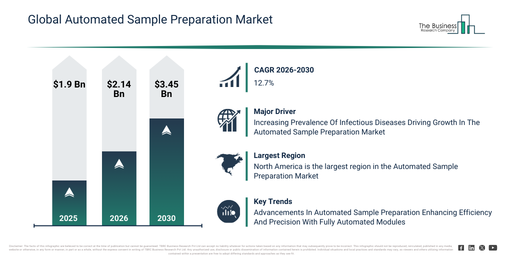
    The market for automated sample preparation has experienced notable expansion lately, with projections indicating a rise from $1.9 billion in 2025 to $2.14 billion in 2026, reflecting a compound annual growth rate of 13.0%. This upward trajectory is underpinned by several key factors that fueled its expansion during the preceding period, including the proliferation of laboratory automation strategies, a surge in the quantity of clinical and research specimens processed, a heightened emphasis on achieving consistent and repeatable test results, the widening scope of pharmaceutical research and development endeavors, and the accessibility of sophisticated laboratory equipment.

    Anticipate a swift expansion in the automated sample preparation sector over the forthcoming years, projecting a market valuation of $3.45 billion by 2030, fueled by a compound annual growth rate of 12.7%. This projected growth trajectory is propelled by several key factors, including the escalating implementation of fully automated laboratory environments, a surge in the need for accurate diagnostic capabilities, the broadening scope of personalized medicine investigations, increased capital outlay for intelligent laboratory infrastructure, and the deepening integration of artificial intelligence-powered analytics within sample preparation processes. Prominent trends expected to shape this market during the forecast period encompass a greater prevalence of robotic liquid handling systems, a heightened demand for systems capable of processing samples at high volumes, the expanding utilization of automated workstations in laboratory settings, a focus on minimizing errors through advanced sample handling techniques, and an overall improvement in the standardization of laboratory operational flows.

    Download A Free Sample Report For Comprehensive Market Insights:

    https://www.thebusinessresearchcompany.com/sample.aspx?id=19325&type=smp

    Automated Sample Preparation Market Opportunity Drivers: What Is Creating New Revenue Potential?

    The expanding incidence of infectious diseases is anticipated to be a significant driver for the advancement of the automated sample preparation market. These ailments, stemming from microorganisms like bacteria, viruses, fungi, or parasites, possess the capability to transmit between individuals or via contaminated means. Factors such as deficient hygiene, limited healthcare accessibility, climatic shifts, and the emergence of antimicrobial resistance are contributing to the surge in infectious disease occurrences. Automated sample preparation techniques boost the precision and effectiveness of diagnosing infectious diseases by streamlining and standardizing the handling of biological specimens, consequently minimizing human mistakes and ensuring dependable outcomes in high-volume testing scenarios. Illustratively, as reported by the Centers for Disease Control and Prevention (CDC) in March 2024, the United States witnessed a jump in tuberculosis cases from 8,320 in 2022 to 9,615 in 2023, marking a rise of 1,295 cases, with the incidence rate climbing from 2.5 per 100,000 individuals in 2022 to 2.9 in 2023. Consequently, the escalating spread of infectious diseases is fueling the expansion of the automated sample preparation sector.

    Automated Sample Preparation Market Segmentation: How Is The Market Structured Across Key Categories?

    The automated sample preparation market covered in this report is segmented –

    1) By Product Type: Kits And Consumables, Instruments

    2) By Application: Research And Development, Diagnostics

    3) By End User: Biotechnology And Pharmaceutical Companies, Clinical And Diagnostic Laboratories, Academic And Research Institutions

    Subsegments:

    1) By Kits And Consumables: DNA/RNA Extraction Kits, Protein Purification Kits, Sample Collection Consumables, Reagents And Buffers, Assay Kits

    2) By Instruments: Automated Liquid Handling Systems, Magnetic Bead Separation Systems, Centrifuges, Robotically Controlled Pipetting Systems, Workstations For Sample Preparation

    Automated Sample Preparation Market Innovation Trends Driving Future Development

    Leading entities within the automated sample preparation sector are prioritizing the creation of sophisticated technologies, specifically fully automated sample preparation modules, with the aim of boosting operational efficiency, minimizing human-induced inaccuracies, and achieving greater consistency in laboratory workflows. These sophisticated modules are engineered to manage every phase of sample handling with exceedingly limited human input. As an illustration, in July of 2024, Shimadzu Corporation, a prominent Japanese producer of sophisticated scientific and medical instruments, introduced the MUP-3100, a fully automated sample preparation module engineered for glycan analysis, which effectively streamlines the initial processing of antibody glycans. This system, employing a six-axis robotic arm, automates critical steps including the measured dispensing of reagents and the meticulous processing of samples, thereby conserving labor, reducing the likelihood of procedural mistakes, and elevating workplace safety. With the capacity to process as many as 24 samples within a six-hour timeframe, the MUP-3100 offers a substantial acceleration of analytical processes when contrasted with conventional techniques that can span more than 48 hours. This cutting-edge apparatus presents considerable benefits, particularly for pharmaceutical firms and contract research organizations (CROs) engaged in the development of biosimilar medications and antibody-based therapeutics.

    Automated Sample Preparation Market Competitive Landscape And Leading Companies

    Major companies operating in the automated sample preparation market are F. Hoffmann-La Roche Ltd., Thermo Fisher Scientific Inc., Danaher Corporation, Agilent Technologies, Hitachi High-Technologies Corp, Sartorius AG, Mettler-Toledo International Inc., Shimadzu Corporation, PerkinElmer, Waters Corporation, Bio-Rad Laboratories, Bruker Corporation, QIAGEN NV, Eppendorf, Tecan Group, Hamilton Company, Malvern Panalytical, Promega Corporation, Biotage AB, Gilson Inc., Aurora Biomed

    Access The Complete Automated Sample Preparation Market Report:

    https://www.thebusinessresearchcompany.com/report/automated-sample-preparation-global-market-report

    Automated Sample Preparation Market Regional Distribution: Which Areas Drive Market Expansion?

    North Americawas the largest region in the automated sample preparation market in 2025. The regions covered in the automated sample preparation market report are Asia-Pacific, South East Asia, Western Europe, Eastern Europe, North America, South America, Middle East, Africa.

    Get in touch with us:

    The Business Research Company: https://www.thebusinessresearchcompany.com/

    Americas: +1 310-496-7795

    Asia: +44 7882 955267 & +91 8897263534

    Europe: +44 7882 955267

    Email us at: marketing@tbrc.info

    Follow us on:

    LinkedIn: https://in.linkedin.com/company/the-business-research-company

    YouTube: https://www.youtube.com/channel/UC24_fI0rV8cR5DxlCpgmyFQ

    Global Market Model: https://www.thebusinessresearchcompany.com/global-market-model
  • Automated Next-Generation Sequencing (NGS) Library Preparation Market Forecast Signals New Revenue Opportunities Through 2030

    Automated Next-Generation Sequencing (NGS) Library Preparation Market Forecast Signals New Revenue Opportunities Through 2030

    Enhanced with market attractiveness analysis, total addressable market evaluation, company benchmarking matrices, interactive Excel dashboards, expanded supply chain intelligence, emerging startup coverage, and detailed product insights, The Business Research Company’s 2026 market reports deliver more actionable and strategically valuable research.

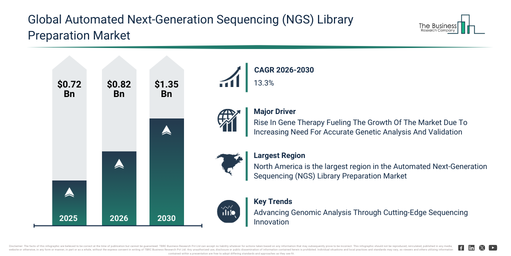
    Automated Next-Generation Sequencing (NGS) Library Preparation Market Growth From $0.82 Billion In 2026 To $1.35 Billion By 2030 At A CAGR Of 13.3%

    The market for automated next-generation sequencing (NGS) library preparation has experienced swift expansion, projecting a rise from $0.72 billion in 2025 to $0.82 billion in 2026, signifying a compound annual growth rate of 13.9%. This progression in the preceding period was fueled by several key factors, including the burgeoning scope of genomic research, a greater embrace of NGS within clinical studies, advancements in precision medicine efforts, the escalating need for scalable sequencing solutions, and enhancements in sequencing chemistry.

    The market for automated next-generation sequencing (NGS) library preparation is poised for substantial expansion over the coming years, projected to reach $1.35 billion by 2030, reflecting a compound annual growth rate (CAGR) of 13.3%. This anticipated surge in growth during the forecast period is fueled by several key factors, including the expanding application of NGS in diagnostic procedures, escalating investments in sophisticated laboratory infrastructure, the proliferation of population genomics initiatives, a heightened need for expedited sequencing results, and the increasing incorporation of single-cell sequencing methodologies. Furthermore, significant trends shaping this market landscape over the forecast horizon involve the growing embrace of entirely automated library preparation systems, a rising demand for high-throughput sequencing capabilities, a greater integration of robotic technologies in sample processing, the wider implementation of standardized and reproducible NGS pipelines, and a strengthened emphasis on minimizing errors and ensuring consistent workflow execution.

    Download A Free Sample Report For Comprehensive Market Insights:

    https://www.thebusinessresearchcompany.com/sample.aspx?id=27216&type=smp

    Automated Next-Generation Sequencing (NGS) Library Preparation Market Growth Momentum: Which Factors Are Influencing Demand?

    The expansion of gene therapy applications is poised to stimulate the advancement of the automated next-generation sequencing (NGS) library preparation sector. Gene therapy, a medical approach focused on modifying an individual’s genetic makeup to address or avert illness, is experiencing a surge in adoption driven by the escalating incidence of hereditary conditions necessitating precise and enduring therapeutic interventions. Automated NGS library preparation plays a crucial role in gene therapy by facilitating the meticulous examination and verification of genetic alterations, achieved through the meticulous preparation of superior DNA or RNA specimens for subsequent sequencing. Illustratively, data from April 2024, as reported by the American Society of Gene and Cell Therapy, indicated a 10% uptick in phase III gene therapy clinical trials during the final quarter of 2023, representing the initial quarterly expansion observed since the third quarter of 2022. Consequently, the burgeoning field of gene therapy is a significant catalyst for the growth trajectory of the automated NGS library preparation market.

    Automated Next-Generation Sequencing (NGS) Library Preparation Market Segmentation Trends And Revenue Drivers

    The automated next-generation sequencing (ngs) library preparation market covered in this report is segmented –

    1) By Type: Targeted Genome Sequencing, Whole Genome Sequencing, Whole Exome Sequencing, Other Sequencing Types

    2) By Workflow: Nucleic Acid Extraction, Fragmentation, Adapter Ligation, Purification And Quantification

    3) By Application: Drug And Biomarker Discovery, Disease Diagnostics, Other Applications

    4) By End-Use: Hospitals And Clinics, Academic And Research Institutions, Pharmaceutical And Biotechnology Companies, Other End-Users

    Subsegments:

    1) By Targeted Genome Sequencing: Amplicon-Based Targeted Sequencing, Hybridization Capture-Based Targeted Sequencing, Custom Targeted Panels, Pre-designed Gene Panels

    2) By Whole Genome Sequencing: Human Whole Genome Sequencing, Animal Whole Genome Sequencing, Plant Whole Genome Sequencing, Microbial Whole Genome Sequencing

    3) By Whole Exome Sequencing: Standard Exome Sequencing, Clinical Exome Sequencing, Custom Exome Panels, Ultra-Rapid Exome Sequencing

    4) By Other Sequencing Types: RNA Sequencing (RNA-Seq), Epigenome Sequencing, Metagenomic Sequencing, Single-Cell Sequencing

    Automated Next-Generation Sequencing (NGS) Library Preparation Market Trends Reshaping Industry Growth

    Leading entities within the automated next-generation sequencing (NGS) library preparation sector are heavily invested in pioneering sophisticated techniques, exemplified by Xpandomer technology, aiming to accelerate sequencing, bolster data precision, and achieve greater scalability. This strategic focus on innovation is geared towards optimizing operational workflows and fostering more robust and dependable genomic investigations. Fundamentally, Xpandomer technology represents a sophisticated approach to deoxyribonucleic acid (DNA) or ribonucleic acid (RNA) sequencing, distinguished by its capacity to transform a targeted nucleic acid molecule into an artificually created, elongated polymer, termed an Xpandomer, which boasts a length roughly fiftyfold that of the initial deoxyribonucleic acid (DNA) or ribonucleic acid (RNA) segment. As a concrete illustration of this advancement, Roche AG, a biotechnology firm headquartered in Switzerland, introduced Sequencing by Expansion in February 2025. This state-of-the-art sequencing platform is engineered to elevate genomic resolution, proving instrumental for cutting-edge diagnostics, the study of diseases, and the implementation of precision medicine across various fields. This progressive automated next-generation sequencing (NGS) library preparation framework simplifies intricate processes, elevates the caliber of generated data, and expedites genomic examinations, thereby facilitating sophisticated research endeavors and the advancement of personalized healthcare. The inherent adaptability of the sequencing by expansion platform allows for meticulous examination of diverse genomic variations pertinent to a broad spectrum of ailments, encompassing oncological conditions and uncommon inherited disorders, by refining resolution and accuracy to yield profound biological understanding.

    #Automated Next-Generation Sequencing (NGS) Library Preparation Market Industry Leaders: Which Organizations Are Driving Competition?

    Major companies operating in the automated next-generation sequencing (ngs) library preparation market are F. Hoffmann-La Roche Ltd., Thermo Fisher Scientific Inc., Agilent Technologies India Private Limited, Illumina Inc., Beckman Coulter Inc., Bio-Rad Laboratories Inc., IDT Corporation, Tecan Group AG, Hamilton Company, Takara Bio Inc., 10x Genomics Inc., Oxford Nanopore Technologies plc, Twist Bioscience Corporation, New England Biolabs Inc., SPT Labtech Limited, Watchmaker Genomics Inc., Pillar Biosciences Inc., Aurora Biomed Inc., BGI Group, SEQWELL INC., Hudson Robotics Inc.

    Access The Complete Automated Next-Generation Sequencing (NGS) Library Preparation Market Report:

    https://www.thebusinessresearchcompany.com/report/automated-next-generation-sequencing-ngs-library-preparation-global-market-report

    Automated Next-Generation Sequencing (NGS) Library Preparation Market Leading Geography: Which Region Generates The Most Revenue?

    North Americawas the largest region in the automated next-generation sequencing (NGS) library preparation market in 2025. Asia-Pacificis expected to be the fastest-growing region in the forecast period. The regions covered in the automated next-generation sequencing (ngs) library preparation market report are Asia-Pacific, South East Asia, Western Europe, Eastern Europe, North America, South America, Middle East, Africa.

    Get in touch with us:

    The Business Research Company: https://www.thebusinessresearchcompany.com/

    Americas: +1 310-496-7795

    Asia: +44 7882 955267 & +91 8897263534

    Europe: +44 7882 955267

    Email us at: marketing@tbrc.info

    Follow us on:

    LinkedIn: https://in.linkedin.com/company/the-business-research-company

    YouTube: https://www.youtube.com/channel/UC24_fI0rV8cR5DxlCpgmyFQ

    Global Market Model: https://www.thebusinessresearchcompany.com/global-market-model
  • Automated Microscopy Market Growth Is Accelerating As Industry Transformation Continues

    Automated Microscopy Market Growth Is Accelerating As Industry Transformation Continues

    Through market attractiveness analysis, total addressable market evaluation, company benchmarking matrices, interactive Excel dashboards, expanded supply chain intelligence, emerging startup coverage, and detailed product insights, The Business Research Company’s 2026 market reports provide more actionable and strategically valuable research.

    Automated Microscopy Market Expansion Outlook: What Revenue Opportunities Lie Ahead?

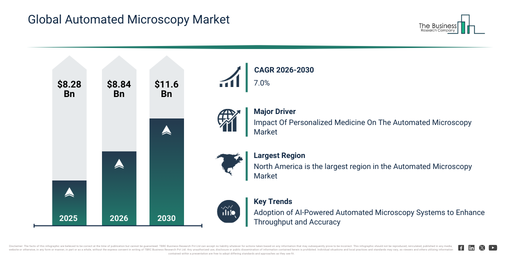
    The worldwide market for automated microscopy solutions has experienced substantial expansion, with projections indicating continued robust growth. This sector is expected to transition from an evaluation of $8.28 billion in 2025 to approximately $8.84 billion by 2026, reflecting a calculated compound annual growth rate of 6.8%. The expansion observed during the preceding period was propelled by several key factors, including the escalating utilization of microscopy techniques within life sciences investigations, the broadening scope of imaging in clinical diagnostic applications, significant strides in both optical and electron microscopy technologies, an upswing in materials science research endeavors, and a heightened need for consistently reliable imaging outcomes.

    The market for automated microscopy is poised for significant expansion over the upcoming years, projected to reach $11.6 billion by 2030, driven by a compound annual growth rate of 7.0%. This anticipated growth is fueled by several key factors, including the escalating use of AI in diagnostic procedures, broader application of automated microscopy in semiconductor inspection, increased financial backing for automated research facilities, a rising need for imaging solutions that can scale effectively, and the growing integration of microscopy platforms accessible via the cloud. Within this forecast period, prominent developments are expected to include a greater implementation of AI for image analysis, a surge in the adoption of platforms designed for high-throughput imaging, more extensive integration of systems for automated sample manipulation, the continued expansion of remote and digital microscopy capabilities, and an intensified emphasis on achieving superior accuracy in high-resolution imaging.

    Download A Free Sample Report For Comprehensive Market Insights:

    https://www.thebusinessresearchcompany.com/sample.aspx?id=14259&type=smp

    Automated Microscopy Market Expansion Drivers: What Is Shaping Future Growth?

    The expansion of automated microscopy is anticipated to be significantly influenced by the increasing need for personalized medicine, a healthcare paradigm focused on tailoring treatments based on an individual’s unique genetic makeup, environmental influences, and lifestyle choices. This trend toward personalized medicine is gaining momentum, fueled by a heightened understanding of genetic diversity, progress in genomic technologies, and the escalating rate of chronic illnesses. Automated microscopy equips scientists and medical practitioners with essential instruments and capabilities to further personalized medicine, aiding in the elucidation of disease processes, the discovery of prognostic biomarkers, and the refinement of therapeutic approaches. As an illustration, the Personalized Medicine Coalition reported in February 2024 that the FDA sanctioned 16 novel personalized therapies for individuals with rare conditions in 2023, a notable increase from the previous year’s figure of six. Consequently, the rising demand for personalized medicine is a key catalyst for the growth observed in the automated microscopy market.

    Automated Microscopy Market Segment Analysis Highlighting Growth Areas

    The automated microscopy market covered in this report is segmented –

    1) By Product Type: Optical Microscopes, Electron Microscopes, Scanning Probe Microscopes

    2) By Application: Medical Diagnostics, Nanotechnology, Material Science, Life Sciences, Semiconductors

    3) By End User: Hospitals, Research Facilities, Diagnostic Clinics

    Subsegments:

    1) By Optical Microscopes: Automated Light Microscopes, Confocal Microscopes, Fluorescence Microscopes

    2) By Electron Microscopes: Scanning Electron Microscopes (SEM), Transmission Electron Microscopes (TEM), Scanning Transmission Electron Microscopes (STEM)

    3) By Scanning Probe Microscopes: Atomic Force Microscopes (AFM), Scanning Tunneling Microscopes (STM)

    Automated Microscopy Market Strategic Trends: What Is Defining The Next Phase Of Growth?

    Leading entities within the automated microscopy sector are prioritizing the innovation of technologies like AI-driven automated fluorescence microscopes. This strategic focus aims to boost processing capacity, enhance image precision, and diminish the need for manual effort in processes such as cell examination and drug discovery. An AI-enhanced automated microscope incorporates features such as automated stage movement, autofocus capabilities, the capacity for multi-channel imaging, and sophisticated image analysis software. These integrated components facilitate tasks like automatic cell enumeration, confluency evaluation, and time-lapse imaging, all while requiring very little human input. Illustrating this trend, in August of 2024, Leica Microsystems, a prominent German manufacturer of scientific equipment, introduced the Mateo FL. This AI-powered digital fluorescence microscope is specifically engineered for the automated analysis of cell cultures, merging transmitted-light imaging for observing cells without labels with multi-channel fluorescence imaging. It leverages artificial intelligence algorithms to perform automated evaluations of confluency and count cells, delivering results with a high degree of consistency and accelerating experimental timelines in contrast to conventional manual microscopy methods.

    Automated Microscopy Market Leading Companies: Who Holds Significant Market Presence?

    Major companies operating in the automated microscopy market are Thermo Fisher Scientific Inc., Zeiss Group, Agilent Technologies Inc., Keyence Corporation, Hitachi High-Tech Corporation, PerkinElmer Inc., Nikon Corporation, Bruker Corporation, Hamamatsu Photonics K.K., Jenoptik AG, HORIBA Scientific, Molecular Devices LLC, JEOL Ltd., Olympus Corporation, Prior Scientific Instruments Ltd., Phase Holographic Imaging PHI AB, Andor Technology Ltd., Crest Optics S.p.A, Delmic B.V., Nanolive SA, Nanosurf AG, Photometrics

    Access The Complete Automated Microscopy Market Report:

    https://www.thebusinessresearchcompany.com/report/automated-microscopy-global-market-report

    Automated Microscopy Market Regional Outlook: Where Are The Largest Opportunities Located?

    North Americawas the largest region in the automated microscopy market in 2025. Asia-Pacificis expected to be the fastest-growing region in the forecast period. The regions covered in the automated microscopy market report are Asia-Pacific, South East Asia, Western Europe, Eastern Europe, North America, South America, Middle East, Africa.

    Get in touch with us:

    The Business Research Company: https://www.thebusinessresearchcompany.com/

    Americas: +1 310-496-7795

    Asia: +44 7882 955267 & +91 8897263534

    Europe: +44 7882 955267

    Email us at: marketing@tbrc.info

    Follow us on:

    LinkedIn: https://in.linkedin.com/company/the-business-research-company

    YouTube: https://www.youtube.com/channel/UC24_fI0rV8cR5DxlCpgmyFQ

    Global Market Model: https://www.thebusinessresearchcompany.com/global-market-model
  • Automated Microbiology Market Outlook Highlights The Next Major Growth Opportunities

    Automated Microbiology Market Outlook Highlights The Next Major Growth Opportunities

    Delivering more actionable and strategically valuable research, The Business Research Company’s 2026 market reports feature market attractiveness analysis, total addressable market evaluation, company benchmarking matrices, interactive Excel dashboards, expanded supply chain intelligence, emerging startup coverage, and detailed product insights.

    Automated Microbiology Market Growth Potential: How Will Market Size Change Through 2030?

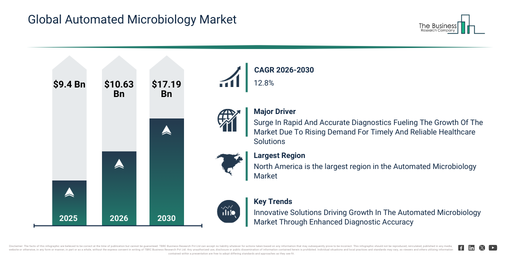
    The automated microbiology sector has experienced significant expansion lately, with projections indicating a jump from $9.4 billion in 2025 to $10.63 billion in 2026, reflecting a compound annual growth rate of 13.0%. This historical growth trajectory has been propelled by several key factors, including a surge in clinical testing, the escalating need for prompt diagnostic outcomes, enhancements in hospital laboratory facilities, a scarcity of qualified laboratory staff, and the widespread implementation of uniform diagnostic procedures.

    The automated microbiology sector is poised for considerable expansion over the coming years, projecting an increase to $17.19 billion by 2030, driven by a compound annual growth rate (CAGR) of 12.8%. This projected increase stems from several key factors, including amplified investments in intelligent laboratory setups, a heightened demand for prompt diagnostic solutions for infectious diseases, broadening applications within molecular microbiology, greater acceptance of laboratory systems integrated with data, and a consequential emphasis on improving diagnostic precision. Prominent developments anticipated within this timeframe are the increasing embrace of fully automated microbiology solutions, a surge in the utilization of artificial intelligence for identifying pathogens, closer integration with LIMS (Laboratory Information Management System) platforms, the expansion of high-volume diagnostic testing capabilities, and an intensified effort towards automating laboratory operations.

    Download A Free Sample Report For Comprehensive Market Insights:

    https://www.thebusinessresearchcompany.com/sample.aspx?id=24163&type=smp

    Automated Microbiology Market Development Factors: Which Trends Are Supporting Demand?

    The automated microbiology sector is poised for expansion, largely fueled by an escalating need for swift and precise diagnostic tools. These advanced diagnostic methods are crucial for the rapid and exact identification of ailments, thereby facilitating prompt and efficient therapeutic interventions. This heightened demand stems from the growing imperative for early disease identification, which is essential for averting adverse outcomes, enhancing patient recovery, and significantly reducing turnaround times for test results. Automated microbiology systems are instrumental in meeting this demand through their capacity for high-volume, consistent, and mistake-reduced testing, ultimately leading to quicker insights and superior patient management, as evidenced by the World Health Organization’s findings that preliminary diagnostic tests were utilized for 54% (4.5 million) of the 8.3 million new tuberculosis diagnoses in 2024, a notable increase from 48% (8.2 million cases) in 2023, thus underscoring the market’s upward trajectory due to the pursuit of rapid and accurate diagnostic capabilities.

    Automated Microbiology Market Segment Performance And Strategic Opportunities

    The automated microbiology market covered in this report is segmented –

    1) By Product: Instruments, Reagents And Kits, Software

    2) By Automation Type: Fully Automated, Semi-Automated

    3) By Diagnostic Technology: DNA And RNA Probe Technology, Detection Techniques

    4) By Application: Biopharmaceutical Production, Clinical Diagnostics, Environmental And Water Testing, Food And Beverage Testing, Other Applications

    5) By End Use: Pharmaceutical And Biotechnology Companies, Hospitals And Diagnostic Laboratories, Academic And Research Institutes, Other End Uses

    Subsegments:

    1) By Instruments: Automated Gram Stainers, Microbial Detection Systems, Automated ID/AST Systems, Blood Culture Systems, Sample Preparation Systems

    2) By Reagents And Kits: Culture Media, Identification Kits, Susceptibility Testing Kits, Staining Reagents, Molecular Diagnostic Reagents

    3) By Software: Data Analysis And Interpretation Tools, Laboratory Workflow Management Software, Integration And Connectivity Solutions, Quality Control And Compliance Software

    Automated Microbiology Market Transformation Trends: Which Innovations Are Driving Change?

    Key players within the automated microbiology sector are concentrating their efforts on pioneering sophisticated technologies, such as MALDI biotyper systems, with the objective of elevating both the rapidity and precision of microbial characterization. This methodology, which relies on mass spectrometry, enables the identification of microbes, encompassing bacteria and fungi, through the examination of their distinct protein signatures. As an illustration, in April of 2024, Bruker Corporation, an American enterprise specializing in scientific instrumentation for research into molecules and materials, introduced the MBT Pathfinder IVD robot, designed for the automated preparation of targets used in MALDI Biotyper analysis. This advancement automates the crucial step of target preparation for MALDI biotyper examinations, thereby augmenting the effectiveness of clinical laboratory processes. It simplifies the procedures for loading samples, applying matrix substances, and preparing plates, which ultimately facilitates quicker and more precise identification of microorganisms.

    Automated Microbiology Market Key Players: Which Companies Shape Industry Competition?

    Major companies operating in the automated microbiology market are Thermo Fisher Scientific Inc, Danaher Corporation, Becton Dickinson and Company, bioMérieux SA, Abbott Laboratories, Merck KGaA, Agilent Technologies Inc, Sysmex Corporation, Bio-Rad Laboratories Inc, PerkinElmer Inc, HORIBA Ltd, DiaSorin SpA, Neogen Corporation, Rapid Micro Biosystems Inc, Bruker Corporation, Tecan Group AG, Roche Diagnostics International AG, QIAGEN NV, Illumina Inc, Luminex Corporation

    Access The Complete Automated Microbiology Market Report:

    https://www.thebusinessresearchcompany.com/report/automated-microbiology-global-market-report

    Automated Microbiology Market Geographic Landscape: Which Region Dominates Industry Growth?

    North Americawas the largest region in the automated microbiology market in 2025. The regions covered in the automated microbiology market report are Asia-Pacific, South East Asia, Western Europe, Eastern Europe, North America, South America, Middle East, Africa.

    Get in touch with us:

    The Business Research Company: https://www.thebusinessresearchcompany.com/

    Americas: +1 310-496-7795

    Asia: +44 7882 955267 & +91 8897263534

    Europe: +44 7882 955267

    Email us at: marketing@tbrc.info

    Follow us on:

    LinkedIn: https://in.linkedin.com/company/the-business-research-company

    YouTube: https://www.youtube.com/channel/UC24_fI0rV8cR5DxlCpgmyFQ

    Global Market Model: https://www.thebusinessresearchcompany.com/global-market-model
  • Automated Cell Cultures Market Trends And Growth Drivers Point To Strong Future Potential

    Automated Cell Cultures Market Trends And Growth Drivers Point To Strong Future Potential

    Enhanced with market attractiveness analysis, total addressable market evaluation, company benchmarking matrices, interactive Excel dashboards, expanded supply chain intelligence, emerging startup coverage, and detailed product insights, The Business Research Company’s 2026 market reports deliver more actionable and strategically valuable research.

    Automated Cell Cultures Market Value Analysis: What Growth Is Expected Over The Forecast Period?

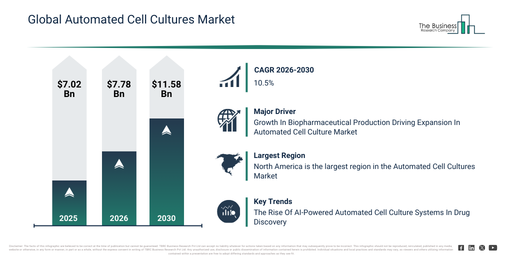
    The market for automated cell cultures has experienced significant expansion lately, with projections indicating a substantial increase from $7.02 billion in 2025 to $7.78 billion in 2026, reflecting a compound annual growth rate of 10.8%. This robust growth trajectory is underpinned by several key factors that fueled its development historically: a surge in biopharmaceutical research endeavors, a growing need for consistent and repeatable cell culture methodologies, the acceleration of drug discovery initiatives, the accessibility of adaptable automation systems, and the flourishing of life science investigations within academic institutions.

    The automated cell cultures sector is poised for significant expansion in the coming years, projected to reach a market valuation of $11.58 billion by the year 2030, driven by a compound annual growth rate of 10.5%. This anticipated growth during the forecast period is underpinned by several key factors, including escalating investments in the production of cell and gene therapies, a heightened demand for efficient high-throughput screening processes, the burgeoning field of personalized medicine research, the increasing integration of automation within laboratory environments, and an intensified emphasis on enabling the scalable manufacturing of biologics. Furthermore, prominent trends anticipated to shape this market include the greater implementation of completely automated cell culture platforms, the wider adoption of robotic systems for liquid handling, the expanding utilization of scalable automation solutions for cell culture, the advancement of closed-system cell processing techniques, and a strengthened focus on ensuring reproducibility and maintaining stringent sterility controls.

    Download A Free Sample Report For Comprehensive Market Insights:

    https://www.thebusinessresearchcompany.com/sample.aspx?id=20499&type=smp

    Automated Cell Cultures Market Industry Drivers: What Is Driving Revenue Growth?

    The expansion of biopharmaceutical manufacturing is anticipated to fuel the advancement of the automated cell culture sector moving ahead. Biopharmaceuticals, which are medications developed through biotechnological means such as recombinant DNA technology and cell cultivation, are seeing elevated demand due to their capacity for precise, potent therapies with minimized adverse effects compared to conventional treatments. Automated cell culture systems contribute to improved efficiency and uniformity in biopharmaceutical output by optimizing the stages of cell proliferation, surveillance, and collection. Substantiating this trend, Sartorius, a German entity specializing in life science technologies, reported in July 2025 that worldwide revenues from biopharmaceutical medications ascended by approximately 9% to USD 458 billion in 2024, a rise from the prior year, representing 41% of the overall pharmaceutical market share, up from 40% in 2023. Consequently, the escalating output of biopharmaceuticals is acting as a catalyst for the growth observed in the automated cell culture market.

    #Automated Cell Cultures Market Segment Landscape And Growth Potential

    The automated cell cultures market covered in this report is segmented –

    1) By Type: Modular Automation, Whole Label Automation

    2) By Equipment Type: Automated Liquid Handling Systems, Microplate Readers, Robotic Systems, Automated Storage And Retrieval Systems, Other Equipment Types

    3) By Application: Biopharmaceuticals Production, Diagnostics, Gene Therapy, Drug Screening And Development, Toxicity Testing, Stem Cell Research, Tissue Engineering And Regenerative Medicine, Personalized Medicine, Other Applications

    4) By End User: Pharmaceuticals And Biotechnology Companies, Hospital And Diagnostic Laboratories, Research Institutes, Cell Banks

    Subsegments:

    1) By Modular Automation: Automated Cell Culture Systems, Robotic Workstations, Modular Bioreactors

    2) By Whole Label Automation: Fully Automated Cell Culture Systems, Integrated Cell Culture Platforms, Automated Cell Handling Solutions

    #Automated Cell Cultures Market Growth Trends: What Is Influencing The Future Outlook?

    The leading entities within the automated cell cultures sector are prioritizing innovation through sophisticated technologies, including artificial intelligence (AI) driven software, as a strategic means to secure market prominence. This integration of AI software in automated cell culture systems serves to refine experimental parameters and boost operational effectiveness by processing live data, thereby promoting superior cell proliferation and output. A notable development occurred in October 2023 when Molecular Devices LLC, a prominent biotechnology firm headquartered in the United States, introduced its CellXpress.ai Automated Cell Culture System, a pioneering solution engineered to accelerate drug discovery initiatives via cutting-edge automation and AI capabilities. This platform is specifically developed to simplify intricate cell culture procedures, liberating scientists to concentrate on more vital aspects of their research while simultaneously elevating both efficiency and dependability.

    Automated Cell Cultures Market Competitive Landscape: Who Are The Leading Companies?

    Major companies operating in the automated cell cultures market are Hitachi Ltd., Panasonic Holdings Corporation, Thermo Fisher Scientific Inc., Danaher Corporation, Corning Incorporated, Lonza Group AG, Nikon healthcare, Sartorius AG, Beckman Coulter Inc., Celltrio Inc., Eppendorf AG, Tecan Trading AG, Shibuya Corp, Hamilton Company, Molecular Devices LLC, FORMULATRIX, Highres Biosolutions, Biotron Healthcare, Agilent Technologies, Miltenyi Biotec

    Access The Complete Automated Cell Cultures Market Report:

    https://www.thebusinessresearchcompany.com/report/automated-cell-cultures-global-market-report

    #Automated Cell Cultures Market Largest Region: Which Geography Holds The Highest Market Share?

    North Americawas the largest region in the automated cell cultures market in 2025. Asia-Pacificis expected to be the fastest-growing region in the forecast period. The regions covered in the automated cell cultures market report are Asia-Pacific, South East Asia, Western Europe, Eastern Europe, North America, South America, Middle East, Africa.

    Get in touch with us:

    The Business Research Company: https://www.thebusinessresearchcompany.com/

    Americas: +1 310-496-7795

    Asia: +44 7882 955267 & +91 8897263534

    Europe: +44 7882 955267

    Email us at: marketing@tbrc.info

    Follow us on:

    LinkedIn: https://in.linkedin.com/company/the-business-research-company

    YouTube: https://www.youtube.com/channel/UC24_fI0rV8cR5DxlCpgmyFQ

    Global Market Model: https://www.thebusinessresearchcompany.com/global-market-model
  • Automated Cell Culture Equipment Market Expansion Is Reshaping Competitive Dynamics Across The Industry

    Automated Cell Culture Equipment Market Expansion Is Reshaping Competitive Dynamics Across The Industry

    Through market attractiveness analysis, total addressable market evaluation, company benchmarking matrices, interactive Excel dashboards, expanded supply chain intelligence, emerging startup coverage, and detailed product insights, The Business Research Company’s 2026 market reports provide more actionable and strategically valuable research.

    Automated Cell Culture Equipment Market Size Forecast: How Large Could The Market Become By 2030?

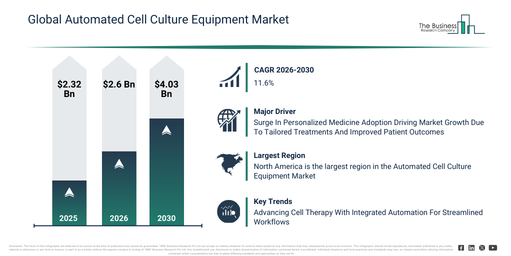
    The market for automated cell culture systems has experienced substantial expansion lately, projected to advance from $2.32 billion in 2025 to $2.6 billion in 2026, reflecting an 11.9% combined annual growth rate. This upward trajectory in the past was fueled by increased investment in pharmaceutical and biologics research, a growing need for reliable cell culture results, the broadening scope of drug discovery initiatives, the escalating intricacy of cell-based testing methods, and the early integration of automation in laboratories.

    The market for automated cell culture systems is projected for substantial expansion in the upcoming years, anticipated to reach a value of $4.03 billion by 2030. This upward trajectory, reflecting a compound annual growth rate of 11.6%, is fueled by several key factors including escalating investments in regenerative medicine, a widening array of cell and gene therapy initiatives, the pressing need for scalable cell culture methods, a heightened emphasis on minimizing inconsistencies within laboratory procedures, and the growing incorporation of AI-powered laboratory automation. Key developments expected during this forecast period involve the increased implementation of comprehensive automated cell culture platforms, a greater acceptance of systems designed for high-volume cell processing, the synergistic integration of robotics and advanced imaging techniques, the proliferation of closed-system and contamination-controlled operational frameworks, and a strengthened commitment to ensuring process reproducibility and standardization.

    Download A Free Sample Report For Comprehensive Market Insights:

    https://www.thebusinessresearchcompany.com/sample.aspx?id=30201&type=smp

    #Automated Cell Culture Equipment Market Growth Factors: Which Forces Are Supporting Market Expansion?

    An expansion in the utilization of individualized medical treatments is anticipated to fuel the advancement of the automated cell culture equipment sector in the future. Personalized medicine offers tailored health interventions based on an individual’s unique genetic makeup, lifestyle choices, and environmental influences, leading to more accurate and successful medical care. This increasing embrace of personalized medicine is fueled by superior treatment efficacy, as therapies are customized to an individual’s genetic and biological characteristics, thereby enhancing patient results. Automated cell culture equipment facilitates personalized medicine by delivering accurate, high-volume, and consistently repeatable cell cultivation procedures that underpin the creation of patient-specific treatments and customized drug evaluations. As an illustration, the Personalized Medicine Coalition, a nonprofit entity based in the United States, noted in February 2024 that the FDA sanctioned 16 novel personalized therapies for individuals with rare conditions in 2023, a notable surge from the six approvals seen in 2022. Consequently, the growing acceptance of personalized medicine is a key factor contributing to the expansion of the automated cell culture equipment market.

    Automated Cell Culture Equipment Market Categorization By Product Type And Application

    The automated cell culture equipment market covered in this report is segmented –

    1) By Product Type: Instruments, Consumables, Software

    2) By Automation Level: Fully Automated Systems, Semi-Automated Systems, Manual Systems With Automation Features

    3) By Application: Drug Discovery And Development, Regenerative Medicine, Toxicology Testing, Vaccine Development, Stem Cell Research

    4) By End-User: Pharmaceutical Companies, Biotechnology Companies, Academic And Research Institutions, Contract Research Organizations (CROs), Diagnostics And Testing Laboratories

    Subsegments:

    1) By Instruments: Automated Cell Culture Systems, Bioreactors, Incubators, Centrifuges, Cell Counters And Analyzers, Liquid Handling Systems, Cell Imaging Systems, Robotic Arms And Manipulators, Cell Harvesting Systems, Filtration And Separation Devices

    2) By Consumables: Culture Media, Reagents And Supplements, Microplates And Culture Dishes, Flasks And Bottles, Single-Use Bags And Tubing, Filters And Membranes, Pipette Tips And Cartridges, Cell Culture Inserts, Sterile Connectors And Clamps

    3) By Software: Data Management Software, Process Control And Monitoring Software, Laboratory Information Management Systems (LIMS), Image Analysis Software, Workflow Automation Software, Quality Control And Compliance Software, Remote Monitoring And Cloud Integration Tools

    Automated Cell Culture Equipment Market Industry Trends: What Changes Are Reshaping Demand?

    In the realm of automated cell culture equipment, leading entities are prioritizing advancements in fluid and integrated workflow solutions, exemplified by closed single-use consumable platforms. These innovative systems are designed to bolster process consistency, mitigate contamination hazards, decrease manual intervention, and facilitate effective scaling from early-stage research through to commercial production. A closed single-use consumable system represents a disposable, sterile environment that consolidates various cell culture operations into a singular apparatus, thereby minimizing contamination risks and fostering scalable, repeatable operational sequences. Illustrating this trend, Limula SA, a Swiss biotechnology firm dedicated to automated cell therapy production, introduced LimONE in March 2025. This comprehensive solution harmonizes hardware, software, and disposable consumables, streamlining and standardizing the processes involved in cell culture and subsequent manipulation. The debut of LimONE signifies the market entry of a commercial offering aimed at both research applications and Good Manufacturing Practice (GMP) compliant manufacturing environments. The benefits of LimONE include accelerated technology transfer, reduced operational expenditures related to labor and infrastructure, and support for the scaled production of sophisticated cell therapies, such as CAR-T and genetically modified stem cells. Ultimately, this new system elevates workflow productivity and guarantees consistent outcomes across a spectrum of cell therapy protocols, reinforcing Limula’s position within the automated cell culture equipment sector and aiding adherence to regulatory standards.

    Automated Cell Culture Equipment Market Company Landscape And Strategic Competition

    Major companies operating in the automated cell culture equipment market are F. Hoffmann-La Roche Ltd, Hitachi Ltd., Merck KGaA, Panasonic Holdings Corporation, Thermo Fisher Scientific Inc., Danaher Corporation, Becton Dickinson and Company, Corning Incorporated, Lonza Group AG, Olympus Corporation, Sartorius AG, Eppendorf SE, Tecan Group Ltd., STEMCELL Technologies Inc., Miltenyi Biotec B.V. & Co. KG, Hamilton Company, Greiner Bio-One International GmbH, Solida Biotech GmbH, Biostream International B.V., HiMedia Laboratories Pvt. Ltd., Kuhner Shaker AG, Cellexus International Ltd.

    Access The Complete Automated Cell Culture Equipment Market Report:

    https://www.thebusinessresearchcompany.com/report/global-automated-cell-culture-equipment-market-report

    Automated Cell Culture Equipment Market Regional Analysis: Which Region Leads By Revenue?

    North Americawas the largest region in the automated cell culture equipment market in 2025. Asia-Pacificis expected to be the fastest-growing region in the forecast period. The regions covered in the automated cell culture equipment market report are Asia-Pacific, South East Asia, Western Europe, Eastern Europe, North America, South America, Middle East, Africa.

    Get in touch with us:

    The Business Research Company: https://www.thebusinessresearchcompany.com/

    Americas: +1 310-496-7795

    Asia: +44 7882 955267 & +91 8897263534

    Europe: +44 7882 955267

    Email us at: marketing@tbrc.info

    Follow us on:

    LinkedIn: https://in.linkedin.com/company/the-business-research-company

    YouTube: https://www.youtube.com/channel/UC24_fI0rV8cR5DxlCpgmyFQ

    Global Market Model: https://www.thebusinessresearchcompany.com/global-market-model