Month: June 2026

  • Urothelial Carcinoma Treatment Market Growth Is Reshaping Competitive Advantage Across The Industry

    Urothelial Carcinoma Treatment Market Growth Is Reshaping Competitive Advantage Across The Industry

    Delivering more actionable and strategically valuable research, The Business Research Company’s 2026 market reports feature market attractiveness analysis, total addressable market evaluation, company benchmarking matrices, interactive Excel dashboards, expanded supply chain intelligence, emerging startup coverage, and detailed product insights.

    Urothelial Carcinoma Treatment Market Growth Analysis: How Will Revenue Expand During The Forecast Period?

    Regarding urothelial carcinoma treatments, the market has experienced considerable expansion. Projections indicate a rise from $3.36 billion in 2025 to $3.92 billion by 2026, reflecting a compound annual growth rate of 16.5%. This growth during the preceding period was influenced by a greater prevalence of bladder cancer, the proliferation of cancer treatment facilities, heightened understanding surrounding urothelial carcinoma, increased utilization of chemotherapy regimens, and the availability of surgical interventions.

    The market for treating urothelial carcinoma is poised for significant expansion, projected to reach $7.3 billion by 2030, reflecting a robust compound annual growth rate of 16.8%. This anticipated growth trajectory is primarily fueled by advancements in groundbreaking immunotherapies, escalating financial commitments to cancer research, a growing preference for tailored medical interventions, the broadening application of combined therapeutic strategies, and a greater reliance on treatment plans guided by specific biomarkers. Key developments anticipated during this period include a greater embrace of immunotherapy-centric treatment plans, increased utilization of therapies targeting specific molecular pathways, a more thorough integration of individualized cancer care strategies, broader adoption of less invasive surgical methods, and a heightened emphasis on detecting and addressing the condition in its early stages.

    Download A Free Sample Report For Comprehensive Market Insights:

    https://www.thebusinessresearchcompany.com/sample.aspx?id=12947&type=smp

    Urothelial Carcinoma Treatment Market Opportunity Drivers: What Is Creating New Revenue Potential?

    The anticipated rise in bladder cancer incidence is poised to act as a significant catalyst for the expansion of the urothelial carcinoma treatment market. As bladder cancer, a common malignancy affecting the urothelium of the urinary bladder, continues to see increasing diagnoses, both patients and medical professionals are increasingly exploring a variety of therapeutic avenues. Advancements in bladder cancer research are instrumental in developing tailored treatments and deepening our understanding of urothelial carcinoma, thereby encouraging collaborative efforts across different medical disciplines to enhance patient care and treatment efficacy. A clear indicator of this trend, as reported in September 2023 by the National Library of Medicine, a prominent US federal government-operated medical repository, is the projection that new bladder cancer cases will ascend to 991,000 annually by the year 2040, representing a substantial 72.8% surge compared to 2020 figures, with projected annual fatalities from this disease also escalating to 397,000, an 86.6% increment, underscoring the direct correlation between the growing burden of bladder cancer and the subsequent expansion of the urothelial carcinoma treatment market.

    Urothelial Carcinoma Treatment Market Segment Breakdown: Which Categories Generate The Most Revenue?

    The urothelial carcinoma treatment market covered in this report is segmented –

    1) By Type: Non-Invasive Urothelial Carcinoma Treatment, Invasive Urothelial Carcinoma Treatment

    2) By Treatment: Immunotherapy, Radiotherapy, Chemotherapy

    3) By Cancer Type: Bladder Cancer, Urethral Cancer, Ureteric And Renal Pelvic Cancer

    4) By End-Users: Hospitals, Homecare, Specialty Centers, Other End-Users

    Subsegments:

    1) By Non-Invasive Urothelial Carcinoma Treatment: Intravesical Therapy, Immunotherapy, Chemotherapy

    2) By Invasive Urothelial Carcinoma Treatment: Radical Cystectomy, Chemotherapy, Radiation Therapy, Targeted Therapy

    Urothelial Carcinoma Treatment Market Innovation Trends Driving Future Development

    Key players within the urothelial carcinoma treatment sector are actively pursuing the development of novel solutions to enhance their market positioning and meet the dynamic requirements of consumers. A prime illustration of this drive is Nonacus Limited’s introduction in March 2023 of GALEAS Bladder, an innovative test designed for the non-invasive identification of bladder cancer. This diagnostic tool represents a significant advancement, providing a molecular triage solution from sample collection to report generation that utilizes a highly sensitive biomarker to detect bladder cancer with speed and precision. The result is a more efficient diagnostic pathway, diminishing the reliance on intrusive examinations like cystoscopies. The product, a result of joint efforts with the University of Birmingham, UK, underwent extensive validation using more than 600 patient samples across three distinct UK clinical groups. This thorough evaluation confirmed the outstanding capabilities of GALEAS Bladder, highlighting its impressive diagnostic precision—featuring sensitivity above 90% and specificity surpassing 85%—making it adept at identifying bladder cancer across different grades and stages.

    Urothelial Carcinoma Treatment Market Key Players And Strategic Industry Positioning

    Major companies operating in the urothelial carcinoma treatment market are Pfizer Inc, Johnson & Johnson Services Inc, F Hoffmann-La Roche Ltd, Merck & Co Inc, AbbVie Inc, Bayer AG, Sanofi S A, Bristol-Myers Squibb Company, AstraZeneca PLC, Astellas Pharma Inc, Eisai Co Ltd, Incyte Corporation, UroGen Pharma Inc, Novartis AG, Eli Lilly and Company, BeiGene Ltd, Bicycle Therapeutics Ltd, Infinity Pharmaceuticals Inc, QED Therapeutics Inc, Nektar Therapeutics, Abbisko Therapeutics Inc, Exelixis Inc, MedPacto Inc, Tyra Biosciences Inc, Ikena Oncology Inc, ALX Oncology Holdings Inc, Rubius Therapeutics Inc, Kinnate Biopharma Inc

    Access The Complete Urothelial Carcinoma Treatment Market Report:

    https://www.thebusinessresearchcompany.com/report/urothelial-carcinoma-treatment-global-market-report

    Urothelial Carcinoma Treatment Market Regional Analysis And Leading Geography

    North Americawas the largest region in the urothelial carcinoma treatment market in 2025. The regions covered in the urothelial carcinoma treatment market report are Asia-Pacific, South East Asia, Western Europe, Eastern Europe, North America, South America, Middle East, Africa.

    Get in touch with us:

    The Business Research Company: https://www.thebusinessresearchcompany.com/

    Americas: +1 310-496-7795

    Asia: +44 7882 955267 & +91 8897263534

    Europe: +44 7882 955267

    Email us at: marketing@tbrc.info

    Follow us on:

    LinkedIn: https://in.linkedin.com/company/the-business-research-company

    YouTube: https://www.youtube.com/channel/UC24_fI0rV8cR5DxlCpgmyFQ

    Global Market Model: https://www.thebusinessresearchcompany.com/global-market-model
  • Urology Robotic Surgery Market Forecast Signals New Revenue Opportunities Through 2030

    Urology Robotic Surgery Market Forecast Signals New Revenue Opportunities Through 2030

    Enhanced with market attractiveness analysis, total addressable market evaluation, company benchmarking matrices, interactive Excel dashboards, expanded supply chain intelligence, emerging startup coverage, and detailed product insights, The Business Research Company’s 2026 market reports deliver more actionable and strategically valuable research.

    Urology Robotic Surgery Market Forecast: What Market Value Is Expected By 2030?

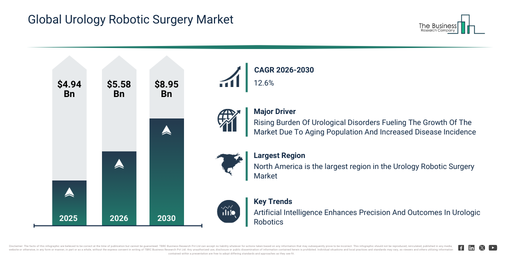
    The field of robotic surgery for urological procedures has experienced substantial expansion lately, projecting an increase from $4.94 billion in 2025 to $5.58 billion in 2026, reflecting a compound annual growth rate of 12.8%. This upward trajectory during the past period is largely a consequence of several key factors, including a heightened incidence of prostate and kidney conditions, greater adoption of less invasive surgical techniques, increased capital allocation towards robotic surgery technology, a broadening network of dedicated urology facilities, and advancements enhancing the dependability of robotic platforms.

    The urology robotic surgery market is poised for substantial expansion, projected to reach $8.95 billion by 2030 with a compound annual growth rate of 12.6%. This anticipated surge is fueled by several key factors including the increasing embrace of innovative robotic systems, the growing incorporation of artificial intelligence for surgical strategy development, a heightened preference for outpatient robotic interventions, the broadening availability of surgeon education initiatives, and ongoing improvements in robotic surgical tools. Throughout this projected period, significant market shifts will be characterized by a greater prevalence of robotic assistance in urological operations, a wider application of sophisticated surgical guidance technologies, a more prominent role for virtual reality in training surgeons, the expanded use of less invasive treatment methods, and a heightened emphasis on achieving superior precision and patient results in surgery.

    Download A Free Sample Report For Comprehensive Market Insights:

    https://www.thebusinessresearchcompany.com/sample.aspx?id=27442&type=smp

    Urology Robotic Surgery Market Growth Momentum: Which Factors Are Influencing Demand?

    The expanding incidence of issues related to the urinary system is anticipated to be a primary catalyst for the advancement of the robotic surgery sector within urology. These urinary system ailments encompass conditions affecting both the urinary tract and the reproductive organs specific to males. A significant factor contributing to this rise in urological problems is the aging demographic, as physiological changes associated with getting older can result in diminished muscle strength in the bladder and pelvic region, thereby elevating the susceptibility to these ailments. Robotic surgery in urology offers advantageous solutions for these conditions by enabling treatments that are both highly accurate and minimally invasive, leading to enhanced surgical precision, fewer adverse outcomes, and quicker recuperation for ailments such as prostate cancer and kidney-related diseases. Illustratively, data from Prostate Cancer UK, a charitable organization operating in the United Kingdom, indicates that in England, newly diagnosed cases of prostate cancer saw an increase from 50,751 men in 2022 to 55,033 men in 2023, according to figures released in January 2025. Consequently, the escalating occurrence of urological disorders is proving to be a key driver for the growth trajectory of the urology robotic surgery market.

    Urology Robotic Surgery Market Segmentation: How Is The Market Structured Across Key Categories?

    The urology robotic surgery market covered in this report is segmented –

    1) By Type: Robot Machines, Navigation Systems, Planners, Simulators, Other Types

    2) By Component: Robotic Surgery Systems, Instruments And Accessories, Services

    3) By Application: Robotic Prostatectomy, Robotic Cystectomy, Robotic Pyeloplasty, Robotic Nephrectomy, Other Applications

    4) By End-User: Hospitals, Ambulatory Surgical Centers, Specialty Clinics, Other End-Users

    Subsegments:

    1) By Robot Machines: Surgical Robots, Assistive Robots, Teleoperated Robots, Autonomous Robots

    2) By Navigation Systems: Imaging Navigation Systems, Electromagnetic Navigation Systems, Optical Tracking Systems, Ultrasound Navigation Systems

    3) By Planners: Preoperative Planning Software, Intraoperative Planning Software, 3D Modeling Software, Procedure Simulation Software

    4) By Simulators: Virtual Reality Simulators, Augmented Reality Simulators, Haptic Feedback Simulators, Training Simulators

    5) By Other Types: Robotic Arms, Control Consoles, Robotic Accessories, Robotic Integration Systems

    Urology Robotic Surgery Market Trends Reshaping Industry Growth

    The significant players in the urology robotic surgery sector are intensifying their efforts to incorporate artificial intelligence (AI) capabilities, aiming to distinguish themselves within the competitive landscape. These AI integrations encompass real-time visual assistance for pinpointing tumors, the creation of three-dimensional models for surgical strategy formulation, and the assessment of surgical proficiency during operations, all intended to elevate accuracy and enhance patient recovery. A pertinent example is the August 2024 FDA approval granted to PROCEPT BioRobotics, an American firm specializing in surgical robotics, for its HYDROS Robotic System. This sophisticated, AI-enhanced platform is engineered to augment Aquablation therapy for individuals suffering from benign prostatic hyperplasia (BPH). The HYDROS system synergizes AI-guided treatment planning, cutting-edge imaging technology, and robotic assistance for heat-free waterjet tissue ablation, facilitating the precise and effective removal of prostate tissue while safeguarding vital anatomical structures. Furthermore, it contributes to a more efficient surgical process and optimizes operating room productivity. The overarching objective of HYDROS is to provide dependable, individualized, and lasting symptom alleviation, accompanied by improved preservation of sexual and urinary functions, representing a notable advancement in the management of BPH.

    Urology Robotic Surgery Market Competitive Landscape And Leading Companies

    Major companies operating in the urology robotic surgery market are Siemens Healthineers, Medtronic PLC, Stryker Corporation, Boston Scientific Corporation, Intuitive Surgical Inc., KARL STORZ SE & Co. KG, Sina Robotics and Medical Innovators Co. Ltd., CMR Surgical Limited, SS Innovations International Inc., Distalmotion SA, Ronovo Surgical Inc., Levita Magnetics International Corp., Titan Medical Inc., Virtual Incision Corporation, Nanjing Perlove Medical Equipment Co. Ltd., Edge Medical Robotics Corporation, Rob Surgical Systems S.L, Virtuoso Surgical Inc., GynoBotics Inc., Harbin Sagebot Intelligent Medical Equipment Co. Ltd., Perlove Medical Robot.

    Access The Complete Urology Robotic Surgery Market Report:

    https://www.thebusinessresearchcompany.com/report/urology-robotic-surgery-global-market-report

    Urology Robotic Surgery Market Geographic Analysis: Where Is Demand Growing The Fastest?

    North Americawas the largest region in the urology robotic surgery market in 2025. Asia-Pacificis expected to be the fastest-growing region in the forecast period. The regions covered in the urology robotic surgery market report are Asia-Pacific, South East Asia, Western Europe, Eastern Europe, North America, South America, Middle East, Africa.

    Get in touch with us:

    The Business Research Company: https://www.thebusinessresearchcompany.com/

    Americas: +1 310-496-7795

    Asia: +44 7882 955267 & +91 8897263534

    Europe: +44 7882 955267

    Email us at: marketing@tbrc.info

    Follow us on:

    LinkedIn: https://in.linkedin.com/company/the-business-research-company

    YouTube: https://www.youtube.com/channel/UC24_fI0rV8cR5DxlCpgmyFQ

    Global Market Model: https://www.thebusinessresearchcompany.com/global-market-model
  • Urology Catheters Market Growth Is Accelerating As Industry Transformation Continues

    Urology Catheters Market Growth Is Accelerating As Industry Transformation Continues

    Through market attractiveness analysis, total addressable market evaluation, company benchmarking matrices, interactive Excel dashboards, expanded supply chain intelligence, emerging startup coverage, and detailed product insights, The Business Research Company’s 2026 market reports provide more actionable and strategically valuable research.

    Urology Catheters Market Size Outlook: How Fast Will Revenue Grow Through 2030?

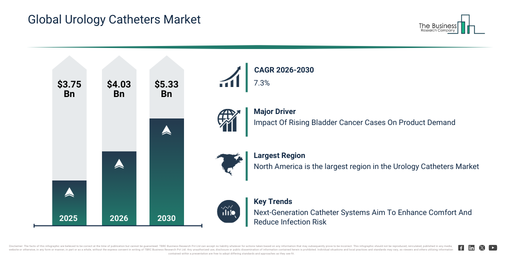
    The landscape of the urology catheters sector has experienced robust expansion lately, with projections indicating a surge from $3.75 billion in 2025 to $4.03 billion by 2026, reflecting a compound annual growth rate of 7.4%. This upswing throughout the preceding period has been fueled by several key factors, including a greater prevalence of urinary incontinence, an escalation in surgical interventions necessitating catheter use, the broadening of urology services within hospital settings, an increasing proportion of elderly individuals in the population, and a wider array of urology catheter products becoming accessible to the market.

    The market for urology catheters is poised for significant expansion, projecting a valuation of $5.33 billion by 2030 with a compound annual growth rate of 7.3%. This upward trajectory is fueled by several key drivers, including a greater embrace of catheters designed to prevent infections, a burgeoning need for accessible home healthcare services, a heightened emphasis on designing catheters with patient needs at the forefront, the broadening scope of minimally invasive urological procedures, and an increasing preference for environmentally sustainable catheter materials. As we look ahead, prominent market trends will involve the wider adoption of antimicrobial catheter technologies, a surge in demand for silicone-based catheter options, a continued rise in the use of single-use, disposable catheters, the further development of catheterization solutions for home care settings, and an intensified focus on ensuring both patient comfort and safety throughout the catheterization process.

    Download A Free Sample Report For Comprehensive Market Insights:

    https://www.thebusinessresearchcompany.com/sample.aspx?id=20991&type=smp

    Urology Catheters Market Expansion Drivers: What Is Shaping Future Growth?

    Anticipated increases in bladder cancer diagnoses are poised to stimulate expansion within the urology catheter sector. Bladder cancer, originating in the bladder’s cellular structure—a muscular pouch in the lower abdomen responsible for urine storage—is experiencing an upward trend attributed to demographic shifts towards older age groups, heightened exposure to cancer-causing agents, radiation therapy to the pelvic region, and reduced fluid intake. Urology catheters are integral to managing urinary output and facilitating drainage for individuals diagnosed with bladder cancer, particularly following procedures that compromise the bladder’s typical functionality. Illustratively, data from Cancer Research UK, as of July 2024, forecasts a rise in the annual incidence of new bladder cancer cases in the United Kingdom, moving from an estimated 9,800 cases per year during the 2023-2025 period to approximately 10,700 cases annually by the 2038-2040 timeframe. Consequently, this escalating prevalence of bladder cancer is a key factor fueling the advancement of the urology catheter market.

    Urology Catheters Market Segmentation Trends And Revenue Drivers

    The urology catheters market covered in this report is segmented –

    1) By Product Type: Intermittent Catheters, Foley Catheters, External Catheters, Other Product Types

    2) By Material: Latex, Silicone, Other Materials

    3) By Application: Urinary Incontinence, Benign Prostatic Hyperplasia, Surgery, Other Applications

    4) By End-User: Hospitals, Clinics, Ambulatory Surgical Centers, Home Care Settings

    Subsegments:

    1) By Intermittent Catheters: Straight Catheters, Coude Catheters, Hydrophilic Catheters, Reusable Catheters, Disposable Catheters

    2) By Foley Catheters: Silicone Foley Catheters, Latex Foley Catheters, Anti-Bacterial Foley Catheters, 2-Way Foley Catheters, 3-Way Foley Catheters

    3) By External Catheters: Male External Catheters, Female External Catheters, Condom Catheters

    4) By Other Product Types: Urethral Catheters, Suprapubic Catheters, Nephrostomy Catheters, Catheter Accessories

    Urology Catheters Market Strategic Trends: What Is Defining The Next Phase Of Growth?

    The leading entities within the urology catheter sector are directing their efforts toward innovating sophisticated offerings, notably next-generation intermittent urinary catheter systems, aiming to elevate patient well-being, mitigate infection probabilities, and foster enhanced autonomy in managing bladder functions. These advanced intermittent urinary catheter systems are characterized as single-use or integrated devices meticulously crafted with superior materials, specialized surface treatments, and refined drainage configurations to reduce urethral irritation, ensure superior sanitary protocols, and decrease the likelihood of encrustation or urinary tract infections. As an illustration, Coloplast A/S, a prominent Danish medical technology firm, introduced its Luja Coude intermittent catheter in February 2023, receiving FDA 510(k) clearance (K230165). This innovative catheter boasts a pliable tip with numerous micro-perforations that optimize drainage efficiency, a hydrophilic coating intended to lessen friction and insertion discomfort, and a user-friendly design offered in a variety of French sizes (8–16 Fr) suitable for adult males and females experiencing urinary retention or voiding difficulties.

    Urology Catheters Market Industry Leaders: Which Organizations Are Driving Competition?

    Major companies operating in the urology catheters market are Cardinal Health Inc., Medtronic PLC, Becton Dickinson and Company, Boston Scientific Corporation, Medline Industries Inc., B. Braun Melsungen AG, Coloplast A/S, Teleflex Incorporated, Cook Medical, ConvaTec Group PLC, Hollister Incorporated, Amsino International Inc., Well Lead Medical Co.Ltd., Urocare Products Inc., Bactiguard AB, CURE MEDICAL LLC., Degania Silicone Ltd., CompactCath Inc., Go Medical Industries Pty Ltd., UROTECH GmbH, J and M Urinary Catheters LLC

    Access The Complete Urology Catheters Market Report:

    https://www.thebusinessresearchcompany.com/report/urology-catheters-global-market-report

    Urology Catheters Market Global Footprint: Which Region Holds Market Leadership?

    North Americawas the largest region in the urology catheters market in 2025. Asia-Pacificis expected to be the fastest-growing region in the forecast period. The regions covered in the urology catheters market report are Asia-Pacific, South East Asia, Western Europe, Eastern Europe, North America, South America, Middle East, Africa.

    Get in touch with us:

    The Business Research Company: https://www.thebusinessresearchcompany.com/

    Americas: +1 310-496-7795

    Asia: +44 7882 955267 & +91 8897263534

    Europe: +44 7882 955267

    Email us at: marketing@tbrc.info

    Follow us on:

    LinkedIn: https://in.linkedin.com/company/the-business-research-company

    YouTube: https://www.youtube.com/channel/UC24_fI0rV8cR5DxlCpgmyFQ

    Global Market Model: https://www.thebusinessresearchcompany.com/global-market-model

  • Urine Sediment Testing Market Outlook Highlights The Next Major Growth Opportunities

    Urine Sediment Testing Market Outlook Highlights The Next Major Growth Opportunities

    Delivering more actionable and strategically valuable research, The Business Research Company’s 2026 market reports feature market attractiveness analysis, total addressable market evaluation, company benchmarking matrices, interactive Excel dashboards, expanded supply chain intelligence, emerging startup coverage, and detailed product insights.

    Urine Sediment Testing Market Size, Value And Growth Trends Through 2030

    In recent times, the market for urine sediment testing has experienced robust expansion, projecting a climb from $2034.91 billion in 2025 to $2207.73 billion in 2026, fueled by a compound annual growth rate of 8.5%. This historical growth trajectory is underpinned by several key factors, including a heightened incidence of urinary tract conditions, the proliferation of clinical diagnostic facilities, a surge in the need for routine urinalysis, advancements in hospital diagnostic capacities, and the increasing utilization of semi-automated testing methodologies.

    The market for urine sediment testing is projected for robust expansion over the approaching years, anticipated to reach $3044.39 billion by 2030, propelled by a compound annual growth rate (CAGR) of 8.4%. This projected increase over the forecast period is a direct result of the growing incorporation of AI-driven diagnostic tools, escalating investments in automating laboratory processes, a heightened need for swift diagnostic results, the broadening availability of diagnostic testing in non-inpatient environments, and a more pronounced emphasis on precision-based diagnostics. Key developments shaping this market during the forecast period encompass the increasing preference for fully automated urine sediment analysis instruments, the expanding application of AI in analyzing diagnostic imagery, a surge in demand for systems capable of high-volume diagnostic processing, the widespread deployment of laboratory automation solutions, and a significantly intensified commitment to ensuring diagnostic precision.

    Download A Free Sample Report For Comprehensive Market Insights:

    https://www.thebusinessresearchcompany.com/sample.aspx?id=9400&type=smp

    Urine Sediment Testing Market Development Factors: Which Trends Are Supporting Demand?

    The expanding demographic of individuals aged 60 and above is anticipated to be a significant catalyst for the advancement of the urine sedimentation testing market. This demographic, comprising those over sixty years old, benefits substantially from urine sediment testing, as it aids in the detection of renal ailments and furnishes crucial details concerning factors exacerbating conditions, patient prognoses, pathogenic microorganisms, and the efficacy of antibiotics. Illustrating this trend, the World Health Organization, observing from its Switzerland base, projected in October 2024 that by the year 2030, one out of every six individuals globally will have reached the age of 60 or older, a figure anticipated to escalate to 2.1 billion by 2050. Consequently, the augmentation in the elderly population is a primary driver fueling the expansion of the urine sedimentation testing market.

    A surge in the incidence of chronic kidney diseases is poised to invigorate the expansion of the urine sedimentation testing market. Chronic kidney disease, characterized by the kidneys’ diminished capacity to adequately filter blood due to progressive damage and functional decline, can be effectively diagnosed and monitored through urine sediment testing, a straightforward and non-invasive diagnostic procedure offering vital insights into renal health. For corroboration, a June 2023 report from Kidney Research UK, a charitable entity in the United Kingdom, indicated that roughly 7.2 million individuals in the UK were contending with chronic kidney disease, equating to over 10% of the populace, with 3.25 million experiencing advanced stages and an additional 3.9 million in earlier phases; furthermore, projections suggest this figure will climb to 7.61 million by 2033. Therefore, the increasing prevalence of chronic kidney diseases is a key driver contributing to the growth of the urine sedimentation testing market.

    Urine Sediment Testing Market Segment Analysis Highlighting Growth Areas

    The urine sediment testing market covered in this report is segmented –

    1) By Product Type: Fully Automatic Urine Sediment Analyzer, Semi-Automatic Urine Sediment Analyzer

    2) By Application: Urinary Tract Infections, Diabetes, Kidney Diseases, Hypertension, Other Applications

    3) By End User: Hospital, Diagnostics Centers, Clinics, Ambulatory Surgical Centers, Educational Institutes, Other End Users

    Subsegments:

    1) By Fully Automatic Urine Sediment Analyzer: High-Throughput Analyzers, Compact Analyzers

    2) By Semi-Automatic Urine Sediment Analyzer: Manual Microscopy Systems, Semi-Automated Systems

    Urine Sediment Testing Market Transformation Trends: Which Innovations Are Driving Change?

    The key players within the urine sediment testing sector are actively pursuing the creation of automated urinalysis platforms as a strategy to enhance their market standing. Urinalysis solutions are comprised of liquids employed for the examination of urine to detect a range of substances, including leukocytes (white blood cells), nitrites, protein, and glucose. Illustrating this trend, a US-based producer of sophisticated biomedical diagnostics, Beckman Coulter Inc., introduced its DxU Iris Workcell in October 2023. This DxU Iris Workcell represents a completely automated urinalysis system engineered to optimize laboratory processes and decrease the necessity for manual review to a mere 4%. Leveraging its proprietary Digital Flow Morphology technology in conjunction with Auto-Particle Recognition (APR) software, the DxU Iris Workcell achieves the isolation, identification, and characterization of urine particles directly on screen, thereby largely obviating the need for manual microscopic examination. Furthermore, the design of the DxU Iris Workcell emphasizes user convenience and straightforward upkeep, featuring an intuitive interface that necessitates very little operator training.

    Urine Sediment Testing Market Leading Companies: Who Holds Significant Market Presence?

    Major companies operating in the urine sediment testing market are Abbott Laboratories, Siemens AG, F Hoffmann-La Roche Ltd, Sysmex Corporation, Beckman Coulter Inc, ARKRAY Inc, Mindray Medical International Limited, URIT Medical Electronic Co Ltd, Analyticon Biotechnologies AG, DIRUI Industrial Co Ltd, HUMAN Gesellschaft für Biochemica und Diagnostica GmbH, Menarini Diagnostics, Shenzhen Mindray Bio-Medical Electronics Co Ltd, URIT Medical Electronic Group Co Ltd

    Access The Complete Urine Sediment Testing Market Report:

    https://www.thebusinessresearchcompany.com/report/urine-sediment-testing-global-market-report

    Urine Sediment Testing Market Regional Distribution: Which Areas Drive Market Expansion?

    North Americawas the largest region in the urine sediment testing market in 2025. The regions covered in the urine sediment testing market report are Asia-Pacific, South East Asia, Western Europe, Eastern Europe, North America, South America, Middle East, Africa.

    Get in touch with us:

    The Business Research Company: https://www.thebusinessresearchcompany.com/

    Americas: +1 310-496-7795

    Asia: +44 7882 955267 & +91 8897263534

    Europe: +44 7882 955267

    Email us at: marketing@tbrc.info

    Follow us on:

    LinkedIn: https://in.linkedin.com/company/the-business-research-company

    YouTube: https://www.youtube.com/channel/UC24_fI0rV8cR5DxlCpgmyFQ

    Global Market Model: https://www.thebusinessresearchcompany.com/global-market-model

  • Urine Output Monitoring Systems Market Trends And Growth Drivers Point To Strong Future Potential

    Urine Output Monitoring Systems Market Trends And Growth Drivers Point To Strong Future Potential

    Enhanced with market attractiveness analysis, total addressable market evaluation, company benchmarking matrices, interactive Excel dashboards, expanded supply chain intelligence, emerging startup coverage, and detailed product insights, The Business Research Company’s 2026 market reports deliver more actionable and strategically valuable research.

    Urine Output Monitoring Systems Market CAGR Analysis And Future Market Development

    The global urine output monitoring systems sector is experiencing significant expansion, projected to increase from $0.77 billion in 2025 to $0.87 billion in 2026, reflecting a robust compound annual growth rate of 12.2%. This historical growth trajectory has been fueled by several key factors, including the heightened utilization of these systems within critical care settings, an upward trend in hospital admissions related to kidney disorders, the broadened scope of patient observation following surgical procedures, increased preference for catheter-based monitoring solutions, and a greater understanding among clinicians of the importance of precise fluid balance management.

    The market for urine output monitoring systems is poised for substantial expansion in the coming years, projected to reach $1.37 billion by 2030, fueled by a compound annual growth rate of 12.1%. This anticipated growth stems from several key factors, including a growing preference for at-home healthcare solutions, a surge in the use of wearable medical technology, the increasing consolidation of monitoring data within electronic health records, the broadening scope of telehealth, and a heightened emphasis on identifying kidney issues sooner. During this forecast period, significant trends will likely include a greater uptake of automated urine analysis devices, increased integration of wireless monitoring technologies, a rising interest in non-intrusive monitoring methods, the enhanced capabilities of remote patient observation, and a strengthened emphasis on the precision of real-time data.

    Download A Free Sample Report For Comprehensive Market Insights:

    https://www.thebusinessresearchcompany.com/sample.aspx?id=20990&type=smp

    Urine Output Monitoring Systems Market Industry Drivers: What Is Driving Revenue Growth?

    The escalating incidence of kidney ailments is anticipated to be a significant catalyst for the expansion of the urine output monitoring systems market in the foreseeable future. These kidney ailments encompass conditions that compromise the kidneys’ crucial function of filtering waste, excess fluid, and harmful substances from the bloodstream, alongside their roles in maintaining electrolyte balance and blood pressure. Factors contributing to their growing prevalence include the rise in diabetes, hypertension, obesity, an aging global population, and increased exposure to substances detrimental to kidney health, such as specific pharmaceuticals, environmental contaminants, and industrial agents. Urine output monitoring systems play a vital role in managing kidney disorders by enabling the assessment of kidney function and the early identification of potential kidney failure or related complications. Illustratively, data released in June 2023 by Kidney Research UK, a charitable organization in the United Kingdom, indicated that 7.2 million individuals in the UK currently have chronic kidney disease, equating to more than 10% of the country’s population. Within this group, 3.25 million are experiencing advanced stages of the disease, and an additional 3.9 million are in the initial phases. Projections suggest that by 2033, the number of people suffering from chronic kidney disease will increase to 7.61 million. Consequently, the growing burden of kidney disorders is a primary driver propelling the market for urine output monitoring systems.

    Urine Output Monitoring Systems Market Segment Performance And Strategic Opportunities

    The urine output monitoring systems market covered in this report is segmented –

    1) By Product Type: Catheter-Based Systems, Patch-Based Systems, Wearable Devices

    2) By Monitoring Method: Invasive Monitoring, Non-Invasive Monitoring

    3) By Application: Acute Care Settings, Chronic Care Settings, Home Health Settings

    4) By End-User: Hospitals, Ambulatory Surgical Centers, Nursing Homes, Patients

    Subsegments:

    1) By Catheter-Based Systems: Indwelling Catheters, External Catheters, Condom Catheters

    2) By Patch-Based Systems: Adhesive Urine Monitoring Patches, Smart Urine Monitoring Patches

    3) By Wearable Devices: Wireless Wearable Urine Output Monitors, Reusable Wearable Urine Output Devices

    #Urine Output Monitoring Systems Market Growth Trends: What Is Influencing The Future Outlook?

    Key players in the urine output monitoring systems sector are prioritizing advancements in technology, including user-friendly, at-home urine analysis solutions designed to provide individuals with thorough health information. These connected, home-based urine analysis devices are positioned within the toilet bowl for automatic sample collection and analysis, subsequently delivering health insights and practical data to users through a mobile application. As an illustration, in early 2023, Withings, a French consumer electronics firm, introduced U-Scan, a pioneering domestic urine analysis apparatus that effectively converts a standard toilet into a personalized health diagnostics hub. This novel device, designed for hygienic placement inside the toilet bowl, empowers users to perform daily urine examinations without the necessity of manually collecting samples. The U-Scan leverages sophisticated technology, featuring a distinctive pebble-shaped reader and replaceable cartridges, to evaluate particular markers pertinent to hydration levels, nutritional status, and reproductive health cycles.

    Urine Output Monitoring Systems Market Key Players: Which Companies Shape Industry Competition?

    Major companies operating in the urine output monitoring systems market are Accuryn Medical, Serenno Medical, RenalSense Ltd., Observe Medical ASA, Baxter International Inc., Fresenius Medical Care, Potrero Medical Inc., Nihon Kohden, Stryker Corporation, Mindray Bio-Medical Electronics Co Ltd, GE Healthcare, Philips, Terumo Corporation, Schiller AG, Honeywell International Inc, CureMetrix Inc, Asahi Kasei Medical, B Braun Melsungen AG, Teleflex Incorporated, Urit Medical Electronic Group, AKAS Infusions.

    Access The Complete Urine Output Monitoring Systems Market Report:

    https://www.thebusinessresearchcompany.com/report/urine-output-monitoring-systems-global-market-report

    Urine Output Monitoring Systems Market Leading Geography: Which Region Generates The Most Revenue?

    North Americawas the largest region in the urine output monitoring systems market in 2025. The regions covered in the urine output monitoring systems market report are Asia-Pacific, South East Asia, Western Europe, Eastern Europe, North America, South America, Middle East, Africa.

    Get in touch with us:

    The Business Research Company: https://www.thebusinessresearchcompany.com/

    Americas: +1 310-496-7795

    Asia: +44 7882 955267 & +91 8897263534

    Europe: +44 7882 955267

    Email us at: marketing@tbrc.info

    Follow us on:

    LinkedIn: https://in.linkedin.com/company/the-business-research-company

    YouTube: https://www.youtube.com/channel/UC24_fI0rV8cR5DxlCpgmyFQ

    Global Market Model: https://www.thebusinessresearchcompany.com/global-market-model

  • Urinary Tract Infection Treatment Market Expansion Is Reshaping Competitive Dynamics Across The Industry

    Urinary Tract Infection Treatment Market Expansion Is Reshaping Competitive Dynamics Across The Industry

    Through market attractiveness analysis, total addressable market evaluation, company benchmarking matrices, interactive Excel dashboards, expanded supply chain intelligence, emerging startup coverage, and detailed product insights, The Business Research Company’s 2026 market reports provide more actionable and strategically valuable research.

    Urinary Tract Infection Treatment Market Expansion From $11.12 Billion In 2026 To $12.9 Billion In 2030

    Anticipated expansion characterizes the urinary tract infection treatment market, projecting a rise from $10.76 billion in 2025 to $11.12 billion in 2026, reflecting a compound annual growth rate of 3.4%. This upward trajectory in the upcoming period is underpinned by several key factors, notably the increasing incidence of recurring urinary tract infections, a higher rate of antibiotic prescriptions, enhanced accessibility to foundational healthcare services, heightened public consciousness regarding urinary maladies, and the broad spectrum of antimicrobial drug options presently accessible.

    Anticipate a consistent expansion within the urinary tract infection treatment market over the approaching years, projecting a reach of $12.9 billion by 2030, propelled by a compound annual growth rate of 3.8%. This projected expansion is largely fueled by advancements in therapies designed to combat drug resistance, augmented funding for new antibiotic research, the proliferation of quick point-of-care diagnostic tools, a heightened emphasis on customized infection management approaches, and the increasing utilization of telemedicine for urinary tract infection care. Key developments anticipated during this period include a greater reliance on broad-spectrum antibiotics, a more significant focus on swift diagnostic procedures, escalating demand for specialized antimicrobial treatments, a broader availability of outpatient treatment alternatives for UTIs, and a stronger commitment to the responsible use of antimicrobials.

    Download A Free Sample Report For Comprehensive Market Insights:

    https://www.thebusinessresearchcompany.com/sample.aspx?id=11958&type=smp

    Urinary Tract Infection Treatment Market Growth Factors: Which Forces Are Supporting Market Expansion?

    The increasing incidence of urinary tract infections is anticipated to be a key driver for the expansion of the urinary tract infection treatment market. Urinary tract infections are characterized by bacterial invasions affecting organs such as the kidneys, bladder, ureters, and urethra, along with other components of the urinary system. Therapeutics for these infections are crucial for effectively managing the condition and facilitating recovery. For example, data from January 2023, reported by the National Institute of Health, a US government research organization focused on public health, indicated that urinary tract infections ranked as the seventh most frequent cause for emergency department visits in the United States, accounting for over a million annually. Within this figure, approximately 22% (220,000 cases) are identified as complicated UTIs, and about 100,000 patients require hospitalization each year. Consequently, the escalating rate of urinary tract infections directly fuels the growth trajectory of the market dedicated to their treatment.

    Urinary Tract Infection Treatment Market Segment Landscape And Growth Potential

    The urinary tract infection treatment market covered in this report is segmented –

    1) By Drug Class: Penicillin And Combinations, Quinolones, Cephalosporin, Aminoglycoside Antibiotics, Sulphonamides, Azoles And Amphotericin B, Tetracycline, Nitrofurantoin

    2) By Indication: Complicated UTI, Uncomplicated UTI

    3) By Distribution Channel: Hospital Pharmacies, Gynecology And Urology Clinics, Drug Stores, Retail Pharmacies, Online Drug Store

    Subsegments:

    1) By Penicillin And Combinations: Amoxicillin, Ampicillin, Amoxicillin Or Clavulanate

    2) By Quinolones: Ciprofloxacin, Levofloxacin, Norfloxacin

    3) By Cephalosporin: Cephalexin, Ceftriaxone, Cefotaxime

    4) By Aminoglycoside Antibiotics: Gentamicin, Tobramycin, Amikacin

    5) By Sulphonamides: Sulfamethoxazole Or Trimethoprim, Sulfadiazine

    6) By Azoles And Amphotericin B: Fluconazole, Itraconazole, Amphotericin B

    7) By Tetracycline: Doxycycline, Minocycline

    8) By Nitrofurantoin: Nitrofurantoin Monohydrate, Nitrofurantoin Macrocrystals

    Urinary Tract Infection Treatment Market Industry Trends: What Changes Are Reshaping Demand?

    The urinary tract infection treatment sector sees key players prioritizing the introduction of advanced therapies, exemplified by first-in-class oral antibiotics, aiming to enhance therapeutic results and combat the escalating challenge of antimicrobial resistance. These novel oral antibiotics are distinguished by their innovative mechanisms of action, specifically engineered to manage uncomplicated UTIs stemming from prevalent and resistant uropathogens, thereby providing viable alternatives to established antibiotics experiencing diminished efficacy. A notable development occurred in March 2025 when GlaxoSmithKline, a prominent biopharmaceutical firm based in the UK, secured U.S. FDA approval for Blujepa, chemically known as gepotidacin, for use in treating uncomplicated urinary tract infections in females aged 12 and above. Blujepa introduces a groundbreaking approach through its unique bacterial topoisomerase inhibition, has proven effective against resistant strains of E. coli, and offers the convenience of a single oral dose, marking a significant stride forward in the management of UTIs.

    Urinary Tract Infection Treatment Market Competitive Landscape: Who Are The Leading Companies?

    Major companies operating in the urinary tract infection treatment market are Pfizer Inc., Merck & Co Inc, Bayer AG, Sanofi S A, AstraZeneca plc, GlaxoSmithKline PLC, Boehringer Ingelheim GmbH, Teva Pharmaceutical Industries Ltd, Sun Pharmaceutical Industries Ltd, Dr Reddy’s Laboratories Ltd, Cipla Ltd, Hikma Pharmaceuticals PLC, Lupin Limited, Torrent Pharmaceuticals Limited, Glenmark Pharmaceuticals Limited, Mylan N V, Aurobindo Pharma Ltd, Macleods Pharma Ltd, Zydus Cadila Healthcare Ltd, Abbott Laboratories, Shionogi & Co Ltd, Alkem Laboratories Ltd.

    Access The Complete Urinary Tract Infection Treatment Market Report:

    https://www.thebusinessresearchcompany.com/report/urinary-tract-infection-treatment-global-market-report

    Urinary Tract Infection Treatment Market Regional Outlook: Where Are The Largest Opportunities Located?

    North America was the largest region in the urinary tract infection treatment market in 2025. The regions covered in the urinary tract infection treatment market report are Asia-Pacific, South East Asia, Western Europe, Eastern Europe, North America, South America, Middle East, Africa.

    Get in touch with us:

    The Business Research Company: https://www.thebusinessresearchcompany.com/

    Americas: +1 310-496-7795

    Asia: +44 7882 955267 & +91 8897263534

    Europe: +44 7882 955267

    Email us at: marketing@tbrc.info

    Follow us on:

    LinkedIn: https://in.linkedin.com/company/the-business-research-company

    YouTube: https://www.youtube.com/channel/UC24_fI0rV8cR5DxlCpgmyFQ

    Global Market Model: https://www.thebusinessresearchcompany.com/global-market-model

  • Urinary Tract Cancer Market Forecast Reveals Where Future Industry Value Will Be Created

    Urinary Tract Cancer Market Forecast Reveals Where Future Industry Value Will Be Created

    Delivering more actionable and strategically valuable research, The Business Research Company’s 2026 market reports feature market attractiveness analysis, total addressable market evaluation, company benchmarking matrices, interactive Excel dashboards, expanded supply chain intelligence, emerging startup coverage, and detailed product insights.

    Urinary Tract Cancer Market Forecast Highlighting Growth From $4.56 Billion To $9.29 Billion

    The market for urinary tract cancer treatments has experienced substantial expansion lately. Projections indicate a rise from $3.84 billion in 2025 to $4.56 billion in 2026, reflecting a compound annual growth rate of 18.7%. Factors contributing to the market’s uptrend during the past period include a surge in smoking-induced cancer cases, heightened exposure to workplace carcinogens, advancements in diagnostic technologies for cancer detection, the proliferation of specialized oncology treatment facilities, and an increasing public understanding of urinary tract cancers.

    Anticipate a swift expansion within the urinary tract cancer market in the coming years, projecting a valuation of $9.29 billion by 2030, fueled by a compound annual growth rate of 19.5%. This projected growth trajectory is chiefly propelled by escalating investments in customized oncological treatments, a greater embrace of immunotherapeutic methodologies, the proliferation of AI-powered diagnostic instruments, a heightened emphasis on early detection initiatives, and breakthroughs in less invasive surgical techniques for cancer. Key developments anticipated during this forecast period encompass a broader implementation of targeted cancer therapies, increased utilization of sophisticated diagnostic imaging technologies, deeper integration of precision oncology strategies, the broader application of comprehensive treatment plans, and a more pronounced concentration on identifying cancer at its earliest stages.

    Download A Free Sample Report For Comprehensive Market Insights:

    https://www.thebusinessresearchcompany.com/sample.aspx?id=13059&type=smp

    Urinary Tract Cancer Market Demand Drivers: What Is Fueling Industry Growth?

    The escalating incidence of bladder cancer is anticipated to be a key factor fueling the expansion of the urinary tract cancer market. Defined as the abnormal proliferation of malignant cells within the urinary bladder’s tissues—a pelvic organ that serves as a reservoir for urine before elimination—this condition necessitates increased access to diagnostic procedures, early detection techniques, and therapeutic interventions for affected individuals. Illustrating this trend, data from the American Cancer Society Inc., a prominent US organization dedicated to cancer advocacy, indicated in January 2023 that the United States saw an estimated 168,560 cases of urinary system cancer in 2023, representing a 2.66% rise from the 164,190 cases recorded in 2022. Consequently, the increasing occurrence of bladder cancer is poised to stimulate growth within the urinary tract cancer market.

    Urinary Tract Cancer Market Categorization By Product Type And Application

    The urinary tract cancer market covered in this report is segmented –

    1) By Cancer Type: Bladder Cancer, Urethral Cancer, Ureteric And Renal Pelvic Cancer

    2) By Treatment: Chemotherapy, Intravesical Therapy, Radiation Therapy, Surgery

    3) By Diagnostic Techniques: Cystoscopy, Transurethral Resection Of The Tumor, Imaging Tests, Urine Analyses, Other Diagnostic Techniques

    4) By Distribution Channel: Retail Pharmacy, Online Pharmacy

    Subsegments:

    1) By Bladder Cancer: Transitional Cell Carcinoma, Squamous Cell Carcinoma, Adenocarcinoma

    2) By Urethral Cancer: Urethral Carcinoma, Urethral Tumors

    3) By Ureteric And Renal Pelvic Cancer: Ureteric Cancer, Renal Pelvic Cancer

    Urinary Tract Cancer Market Innovation Trends: Which Developments Are Transforming The Industry?

    In the realm of urinary tract cancer therapeutics, leading industry players are prioritizing the introduction of advanced treatment modalities, including antibody-drug conjugates (ADCs) and combination therapies involving immune-checkpoint inhibitors, with the goal of achieving superior and personalized results in urothelial carcinoma. These innovative treatment strategies, characterized by the synergy of targeted cytotoxic ADCs and immune-boosting checkpoint inhibitors, are designed to directly eliminate cancer cells while simultaneously bolstering the body’s immune response, ultimately leading to enhanced patient outcomes and increased survival rates for individuals battling urinary tract cancers. A prime illustration of this progress occurred in November 2025 when Astellas Pharma Inc., a prominent Japanese pharmaceutical entity, secured U.S. Food and Drug Administration (FDA) clearance for PADCEV (enfortumab vedotin-ejfv) in conjunction with KEYTRUDA (pembrolizumab) for both neoadjuvant and adjuvant management of muscle-invasive bladder cancer; this regimen leverages a Nectin-4-targeting ADC coupled with PD-1 immune-checkpoint inhibition, a combination engineered to diminish the risk of recurrence, progression, or mortality by approximately 60% when contrasted with surgical intervention alone, and is progressing through the regulatory process under the FDA’s Priority Review designation, with a target action date set for April 7, 2026.

    Urinary Tract Cancer Market Company Landscape And Strategic Competition

    Major companies operating in the urinary tract cancer market are Pfizer Inc., Johnson & Johnson, F. Hoffmann-La Roche Ltd, Merck KGaA, Bayer AG, Novartis AG, Bristol-Myers Squibb Company, AstraZeneca PLC, GlaxoSmithKline PLC (GSK), Eli Lilly and Company, Amgen Inc., Astellas Pharma Inc., Eisai Co. Ltd., Boehringer Ingelheim GmbH, Incyte Corporation, Seagen Inc., Exelixis Inc., UroGen Pharma Inc., Mersana Therapeutics, Spectrum Pharmaceuticals

    Access The Complete Urinary Tract Cancer Market Report:

    https://www.thebusinessresearchcompany.com/report/urinary-tract-cancer-global-market-report

    Urinary Tract Cancer Market Geographic Landscape: Which Region Dominates Industry Growth?

    North Americawas the largest region in the urinary tract cancer market in 2025. The regions covered in the urinary tract cancer market report are Asia-Pacific, South East Asia, Western Europe, Eastern Europe, North America, South America, Middle East, Africa.

    Get in touch with us:

    The Business Research Company: https://www.thebusinessresearchcompany.com/

    Americas: +1 310-496-7795

    Asia: +44 7882 955267 & +91 8897263534

    Europe: +44 7882 955267

    Email us at: marketing@tbrc.info

    Follow us on:

    LinkedIn: https://in.linkedin.com/company/the-business-research-company

    YouTube: https://www.youtube.com/channel/UC24_fI0rV8cR5DxlCpgmyFQ

    Global Market Model: https://www.thebusinessresearchcompany.com/global-market-model

  • Urinary Stents Or Ureteral Stents Market Growth Through 2030 Creates New Strategic Opportunities

    Urinary Stents Or Ureteral Stents Market Growth Through 2030 Creates New Strategic Opportunities

    Enhanced with market attractiveness analysis, total addressable market evaluation, company benchmarking matrices, interactive Excel dashboards, expanded supply chain intelligence, emerging startup coverage, and detailed product insights, The Business Research Company’s 2026 market reports deliver more actionable and strategically valuable research.

    Urinary Stents Or Ureteral Stents Market Revenue Growth Supported By A CAGR Of 0.69% Through 2030

    The global market for urinary and ureteral stents has demonstrated robust expansion recently. Projections indicate a rise from $0.51 billion in 2025 to $0.54 billion in 2026, reflecting a compound annual growth rate (CAGR) of 6.6%. This recent growth trajectory is underpinned by several key factors, including a growing prevalence of kidney stone diagnoses, an increasing volume of urological surgical procedures, advancements in imaging and stent insertion methodologies, a greater adoption rate of ureteral stents, and the expansion of hospital-based urology services.

    The market for urinary or ureteral stents is poised for significant expansion in the coming years, projected to reach $0.69 billion by 2030, expanding at a compound annual growth rate of 6.4%. This anticipated growth stems from several key factors including an escalating demand for advanced stent materials, a heightened emphasis on designs that combat infections, a broader offering of urological procedures performed in outpatient settings, the increasing utilization of precisely guided stent insertion techniques, and innovations in bioresorbable stent science. Over the forecast period, prominent market dynamics involve a greater incorporation of biodegradable stent materials, a surge in the need for enduring solutions for ureteral drainage, a wider application of minimally invasive urological interventions, the development of bespoke stent designs, and a heightened commitment to patient comfort and security.

    Download A Free Sample Report For Comprehensive Market Insights:

    https://www.thebusinessresearchcompany.com/sample.aspx?id=20987&type=smp

    Urinary Stents Or Ureteral Stents Market Growth Drivers: What Factors Are Accelerating Expansion?

    The escalating prevalence of kidney-related ailments is poised to fuel the expansion of the urinary or ureteral stents market. These conditions encompass issues like chronic kidney disease, kidney stones, blockages in the urinary tract, and infections that negatively impact renal structure and performance. Primarily, the rise in diabetes and hypertension, significant metabolic contributors to kidney damage, is driving the increase in kidney diseases. The market for urinary or ureteral stents plays a crucial role in this scenario by mitigating urinary obstructions, ensuring proper urine drainage, and preserving kidney function for individuals managing CKD, stones, or similar obstructive issues. Illustratively, data from Kidney Research UK in June 2023 indicated that approximately 7.19 million individuals in the United Kingdom suffered from chronic kidney disease in 2023, a figure exceeding 10% of the nation’s population, with projections suggesting this number will reach 7.61 million by 2033. Consequently, the growing number of kidney disease cases directly correlates with the market’s expansion in urinary or ureteral stents.

    Urinary Stents Or Ureteral Stents Market Segment Analysis And Revenue Opportunities

    The urinary stents or ureteral stents market covered in this report is segmented –

    1) By Product Type: Open End Stents, Closed End Stents, Double Pigtail Stents, Multiloop Stents

    2) By Material: Metallic Stents, Polymer Stents, Biodegradable Hydrogel Stents

    3) By Application: Kidney Stones, Kidney Failure, Urinary Tract Infection, Other Applications

    4) By End-User: Hospitals And Specialty Centers, Ambulatory Surgical Centers, Academic and Research Institutes

    Subsegments:

    1) By Open End Stents: Standard Open End Ureteral Stents, Silicone Open End Stents

    2) By Closed End Stents: Standard Closed End Ureteral Stents, Anti-reflux Closed End Stents

    3) By Double Pigtail Stents: Coiled Double Pigtail Stents, Silicone Double Pigtail Stents

    4) By Multiloop Stents: Metallic Multiloop Stents, Polymeric Multiloop Stents

    Urinary Stents Or Ureteral Stents Market Trends: What Is Shaping Future Industry Growth?

    Leading entities within the urinary and ureteral stent sector are actively engaged in creating novel approaches, including drug-eluting stents, with the aim of curbing infections, thwarting encrustation, and ultimately elevating patient well-being. A drug-eluting device, by definition, is a medical implement, like a stent, designed to gradually dispense medication to preempt adverse events such as infection, inflammation, or obstructions within bodily tissues. Illustrating this trend, in January of 2025, University Hospitals (UH), a prominent nonprofit academic medical institution located in the United States, revealed that the Food and Drug Administration (FDA) had issued 510(k) clearance for the RELIEF ureteral stent, a device designed to mitigate vesicoureteral reflux. This particular RELIEF stent incorporates a unique suture-tethered, mobile bladder coil mechanism that facilitates the natural opening and closing of the ureteral orifice, thereby diminishing the backward flow of urine and minimizing irritation to the bladder. Evidence from clinical investigations has confirmed the stent’s efficacy in preventing reflux while concurrently enhancing patient comfort when contrasted with standard ureteral stents. Consequently, UH intends to incorporate the RELIEF stent into its established urology procedures to achieve superior therapeutic results for individuals diagnosed with vesicoureteral reflux.

    Urinary Stents Or Ureteral Stents Market Leading Players Shaping Industry Direction

    Major companies operating in the urinary stents or ureteral stents market are Boston Scientific Corporation, Coloplast A/S, Teleflex Incorporated, Cook Medical LLC, Merit Medical Systems Inc., Lepu Medical Technology Co. Ltd., Applied Medical Resources Corporation, Well Lead Medical Co. Ltd., Micro-Tech Nanjing Co. Ltd., Medi-Globe GmbH, Pnn Medical A/S, Rocamed SAM, HydrUStent SA, Urovision GmbH, MED PRO MEDICAL B.V., Medtronic plc, B Braun Melsungen AG, Allium Medical Solutions Ltd, Richard Wolf GmbH, KARL STORZ SE & Co. KG

    Access The Complete Urinary Stents Or Ureteral Stents Market Report:

    https://www.thebusinessresearchcompany.com/report/urinary-stents-or-ureteral-stents-global-market-report

    Urinary Stents Or Ureteral Stents Market Largest Region: Which Geography Holds The Highest Market Share?

    North Americawas the largest region in the urinary stents or ureteral stents market in 2025. Asia-Pacificis expected to be the fastest-growing region in the forecast period. The regions covered in the urinary stents or ureteral stents market report are Asia-Pacific, South East Asia, Western Europe, Eastern Europe, North America, South America, Middle East, Africa.

    Get in touch with us:

    The Business Research Company: https://www.thebusinessresearchcompany.com/

    Americas: +1 310-496-7795

    Asia: +44 7882 955267 & +91 8897263534

    Europe: +44 7882 955267

    Email us at: marketing@tbrc.info

    Follow us on:

    LinkedIn: https://in.linkedin.com/company/the-business-research-company

    YouTube: https://www.youtube.com/channel/UC24_fI0rV8cR5DxlCpgmyFQ

    Global Market Model: https://www.thebusinessresearchcompany.com/global-market-model

  • Urinary Retention Therapeutics Market Size Projected To Increase From $3.79 Billion To $4.97 Billion During The Forecast Period

    Urinary Retention Therapeutics Market Size Projected To Increase From $3.79 Billion To $4.97 Billion During The Forecast Period

    Through market attractiveness analysis, total addressable market evaluation, company benchmarking matrices, interactive Excel dashboards, expanded supply chain intelligence, emerging startup coverage, and detailed product insights, The Business Research Company’s 2026 market reports provide more actionable and strategically valuable research.

    Urinary Retention Therapeutics Market Value Expansion And Long-Term Growth Outlook

    The market for urinary retention treatments experienced robust expansion recently, projected to advance from $3.55 billion in 2025 to $3.79 billion in 2026, reflecting a compound annual growth rate of 7.0%. This historical growth trajectory has been fueled by several key factors, including the escalating rates of prostate issues, a higher occurrence of neurological diseases, greater precision in diagnosing bladder irregularities, a wider array of pharmaceutical choices readily accessible, and the broadening scope of urology services offered within hospital settings.

    The market for treatments designed to address urinary retention is poised for significant expansion over the coming years, with an anticipated surge to $4.97 billion by 2030, reflecting a compound annual growth rate of 7.0%. This projected increase is underpinned by several key drivers, including a heightened need for precisely targeted drug treatments, increased financial backing for investigations into urological conditions, a greater reliance on digital tools for patient observation, an enlargement of treatment services provided in outpatient settings, and the innovation of advanced medications for managing bladder control. Furthermore, the period ahead is likely to be shaped by prominent trends such as the growing application of combined drug regimens, a move towards individualized treatment strategies for bladder issues, a greater emphasis on therapeutic approaches that involve minimal invasiveness, the introduction of new pharmaceutical compounds, and more sophisticated methods for tracking the results of bladder function interventions.

    Download A Free Sample Report For Comprehensive Market Insights:

    https://www.thebusinessresearchcompany.com/sample.aspx?id=23553&type=smp

    Urinary Retention Therapeutics Market Growth Factors Supporting Long-Term Expansion

    The increasing prevalence of prostate cancer is anticipated to be a significant catalyst for the expansion of the urinary retention therapeutics market. Prostate cancer, a form of malignancy defined by aberrant cell multiplication within the prostate gland, is seeing a rise in incidence. This escalation is largely attributed to the aging male demographic, whereby a greater number of individuals enter age groups associated with a higher risk of developing the condition. Urinary retention therapeutics play a crucial role in supporting this market’s growth by offering therapeutic interventions and devices designed to alleviate obstructed urine flow, a common complication arising from prostate enlargement or tumors impeding the urethra. Illustratively, data from the American Cancer Society Facts and Figures indicated that in the United States, new prostate cancer diagnoses were projected to rise from 268,490 in 2022 to 288,300 in 2023, with a slight uptick in mortality from 34,500 to 34,700 during the same period. Thus, the mounting burden of prostate cancer cases is directly influencing the trajectory of the urinary retention therapeutics market.

    Urinary Retention Therapeutics Market Segmentation And Category Breakdown

    The urinary retention therapeutics market covered in this report is segmented –

    1) By Drug Class: 5-Alpha-Reductase Inhibitor And Alpha-Blocker Drugs, Anticholinergic Or Antispasmodic Agents, Antidepressants, Skeletal Muscle Relaxants, Topical Estrogens, Other Drugs

    2) By Incontinence Type: Stress Incontinence, Urge Incontinence, Over-Flow Incontinence, Mixed Incontinence, Other Incontinence Types

    3) By Administration Route: Oral, Intravesical, Intravenous, Transdermal

    4) By Distribution Channel: Retail Pharmacy, Hospital Pharmacy, Online Pharmacy

    Subsegments:

    1) By 5-Alpha-Reductase Inhibitor And Alpha-Blocker Drugs: Finasteride, Dutasteride, Tamsulosin, Alfuzosin, Terazosin, Doxazosin

    2) By Anticholinergic or Antispasmodic Agents: Oxybutynin, Tolterodine, Solifenacin, Darifenacin, Trospium, Fesoterodine

    3) By Antidepressants: Imipramine, Amitriptyline, Duloxetine

    4) By Skeletal Muscle Relaxants: Baclofen, Tizanidine, Diazepam, Cyclobenzaprine

    5) By Topical Estrogens: Estradiol Cream, Conjugated Estrogens, Estriol Vaginal Cream

    6) By Other Drugs: Botulinum Toxin (Botox), Mirabegron, Desmopressin

    Urinary Retention Therapeutics Market Industry Trends Shaping Future Revenue Growth

    Within the realm of urinary retention therapeutic solutions, leading market participants are actively pursuing novel advancements, with sacral nerve stimulation emerging as a prominent strategy to enhance bladder control, elevate patient well-being, and foster greater independence. A sacral nerve stimulator functions as a medical apparatus that administers gentle electrical pulses to the sacral nerves situated close to the lumbar spine, thereby aiding in the regulation of both bladder and bowel activities. As a case in point, in November of 2024, Medtronic plc, a medical technology enterprise headquartered in Ireland, introduced its InterStim X Sacral Neuromodulation (SNM) system in India, a device that had previously received FDA approval and is intended for the management of overactive bladder (OAB), chronic fecal incontinence (FI), and non-obstructive urinary retention. This therapeutic approach operates by delivering tailored sacral nerve stimulation, influencing the neural signals responsible for governing bladder and bowel functions to alleviate issues such as the pervasive urge to urinate and incontinence episodes. The therapeutic process typically involves two distinct phases: an initial trial period utilizing an external stimulator, which, if proving effective, is followed by the surgical implantation of a pulse generator; notably, this device boasts an extended battery lifespan exceeding a decade, obviating the need for frequent recharging.

    Urinary Retention Therapeutics Market Competitive Analysis Of Major Industry Participants

    Major companies operating in the urinary retention therapeutics market are Pfizer Inc. , Merck KGaA , Abbvie Inc. , Bayer AG , Sanofi SA , GlaxoSmithKline Plc. , Medtronic Plc , Boston Scientific Corp. , Sumitomo Pharma Inc. , Ipsen Pharma , Coloplast A/S , Dr. Reddy’s Laboratories , Cipla Limited , Amneal Pharmaceuticals Inc. , Ferring Pharmaceuticals , Astellas Pharma Inc. , Johnson & Johnson , Teva Pharmaceutical Industries Ltd. , Novartis International AG , Takeda Pharmaceutical Company Limited , Boehringer Ingelheim International GmbH , UroGen Pharma Ltd.

    Access The Complete Urinary Retention Therapeutics Market Report:

    https://www.thebusinessresearchcompany.com/report/urinary-retention-therapeutics-global-market-report

    Urinary Retention Therapeutics Market Regional Analysis: Which Region Leads By Revenue?

    North Americawas the largest region in the urinary retention therapeutics market in 2025. Asia-Pacificis expected to be the fastest-growing region in the forecast period. The regions covered in the urinary retention therapeutics market report are Asia-Pacific, South East Asia, Western Europe, Eastern Europe, North America, South America, Middle East, Africa.

    Get in touch with us:

    The Business Research Company: https://www.thebusinessresearchcompany.com/

    Americas: +1 310-496-7795

    Asia: +44 7882 955267 & +91 8897263534

    Europe: +44 7882 955267

    Email us at: marketing@tbrc.info

    Follow us on:

    LinkedIn: https://in.linkedin.com/company/the-business-research-company

    YouTube: https://www.youtube.com/channel/UC24_fI0rV8cR5DxlCpgmyFQ

    Global Market Model: https://www.thebusinessresearchcompany.com/global-market-model
  • Urinary Incontinence Market Growth Outlook Reveals A CAGR Of 7.3% And A Market Value Of $18.84 Billion By 2030

    Urinary Incontinence Market Growth Outlook Reveals A CAGR Of 7.3% And A Market Value Of $18.84 Billion By 2030

    Delivering more actionable and strategically valuable research, The Business Research Company’s 2026 market reports feature market attractiveness analysis, total addressable market evaluation, company benchmarking matrices, interactive Excel dashboards, expanded supply chain intelligence, emerging startup coverage, and detailed product insights.

    Urinary Incontinence Market Expected To Reach $18.84 Billion By 2030 At 7.3% CAGR

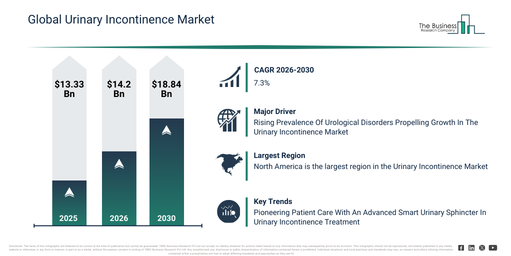
    The global market for urinary incontinence solutions experienced robust expansion recently and is projected to continue this trend, forecasting a rise from \$13.33 billion in 2025 to \$14.2 billion in 2026, reflecting a compound annual growth rate of 6.6%. Factors propelling this growth historically include a larger elderly demographic, an increase in obesity-related health issues, a greater number of pelvic floor problems stemming from childbirth, enhanced accessibility to diagnostic medical care, and heightened public consciousness regarding urinary system disorders.

    The global market for urinary incontinence solutions is poised for considerable expansion, projected to reach $18.84 billion by 2030, driven by a compound annual growth rate of 7.3%. This upward trajectory is fueled by several key factors, including the increasing integration of tailored therapeutic strategies, wider use of digital platforms for health monitoring, a growing preference for non-invasive interventions, a heightened emphasis on proactive urological health, and the development of innovative devices for managing incontinence. During this projection period, significant market trends will likely include a greater uptake of sophisticated diagnostic techniques, a surge in demand for treatments involving minimal invasiveness, a more pronounced concentration on therapies aimed at pelvic floor muscle strengthening, the proliferation of solutions designed for managing incontinence at home, and an overall elevation in public consciousness regarding urinary health issues.

    Download A Free Sample Report For Comprehensive Market Insights:

    https://www.thebusinessresearchcompany.com/sample.aspx?id=12946&type=smp

    Urinary Incontinence Market Demand Drivers Creating New Revenue Opportunities

    The expanding incidence of urological conditions is anticipated to be a significant catalyst for the advancement of the urinary incontinence market in the foreseeable future. Such conditions encompass a range of medical ailments impacting the urinary tract and male reproductive structures, from the kidneys and bladder to the urethra, prostate, and testes. This escalating prevalence is largely attributed to an increased disease load stemming from an aging global population and modifications in lifestyle that affect health. The urinary incontinence market plays a crucial role in meeting these evolving demands by offering a suite of diagnostic instruments, therapeutic goods, and sophisticated treatment options designed to cater to a growing patient base. As a testament to this trend, the American Cancer Society reported in January 2023 that an estimated 82,290 cases of urinary bladder cancer were projected for 2023 in the United States, signaling a rise in conjunction with the escalating disease burden seen in recent periods. Consequently, the rising occurrence of urological disorders is poised to fuel the expansion of the urinary incontinence market.

    Urinary Incontinence Market Segment Outlook: Which Categories Are Expanding The Fastest?

    The urinary incontinence market covered in this report is segmented –

    1) By Type: Urge Incontinence, Stress Incontinence, Overflow Incontinence, Functional Incontinence

    2) By Treatment Type: Medication, Devices, Other Treatments

    3) By Route Of Administration: Oral, Parenteral, Other Routes Of Administration

    4) By Diagnosis: Physical Exam, Pad Test, Urodynamic Testing, Cystoscopy, Stress Test, Ultrasound, Urine Samples

    5) By End-Users: Hospitals, Specialty Clinics, Homecare, Other End-Users

    Subsegments:

    1) By Urge Incontinence: Overactive Bladder, Urinary Urgency

    2) By Stress Incontinence: Involuntary Leakage During Physical Activity, Coughing Or Sneezing

    3) By Overflow Incontinence: Chronic Urinary Retention, Frequent Or Constant Dribbling

    4) By Functional Incontinence: Cognitive Impairment, Physical Limitations

    Urinary Incontinence Market Trends Driving Strategic Industry Expansion

    Key players within the urinary incontinence sector are prioritizing the creation of novel treatments, including intelligent, self-regulating artificial urinary sphincters and sophisticated devices requiring minimal surgical intervention, all with the goal of boosting therapeutic outcomes and elevating the overall well-being of patients. These state-of-the-art technologies, like the smart, automated artificial urinary sphincters and advanced minimally invasive devices, are engineered to refine bladder management by automatically regulating urine expulsion and providing patients with less intrusive, more comfortable therapeutic alternatives. A noteworthy development occurred in July 2023 when UroMems SAS, a biotechnology firm located in France, successfully implanted its UroActive smart, automated artificial urinary sphincter (AUS) into a female patient suffering from stress urinary incontinence (SUI), marking a significant step in addressing this condition in women. The pioneering UroActive device utilizes a microelectromechanical system (MEMS) to fulfill the recognized need for a conclusive treatment for SUI in the female population. This surgical procedure, which received approval from the French regulatory body comparable to the FDA, was conducted with robotic assistance at La Pitié-Salpêtrière University Hospital in Paris. The UroActive system’s capacity for adjustment, its intelligent features, and its non-invasive methodology are collectively intended to enhance the quality of life for individuals undergoing treatment.

    Urinary Incontinence Market Key Companies And Competitive Benchmarking

    Major companies operating in the urinary incontinence market are Teleflex Incorporated, Ethicon Inc., Laborie Medical Technologies Corp., NeoTract Inc., Promedon GmbH, Caldera Medical Inc, Cook Medical Inc, Cook Group Inc, ConvaTec Group PLC, Boston Scientific Corporation, Coloplast A/S, B Braun Melsungen AG, Medtronic plc, Hollister Incorporated, Becton Dickinson and Company, A.M.I. GmbH, Atlantic Therapeutics Group Ltd, InControl Medical, Zephyr Surgical Implants

    Access The Complete Urinary Incontinence Market Report:

    https://www.thebusinessresearchcompany.com/report/urinary-incontinence-global-market-report

    Urinary Incontinence Market Geographic Distribution And Regional Opportunities

    North Americawas the largest region in the urinary incontinence market in 2025. The regions covered in the urinary incontinence market report are Asia-Pacific, South East Asia, Western Europe, Eastern Europe, North America, South America, Middle East, Africa.

    Get in touch with us:

    The Business Research Company: https://www.thebusinessresearchcompany.com/

    Americas: +1 310-496-7795

    Asia: +44 7882 955267 & +91 8897263534

    Europe: +44 7882 955267

    Email us at: marketing@tbrc.info

    Follow us on:

    LinkedIn: https://in.linkedin.com/company/the-business-research-company

    YouTube: https://www.youtube.com/channel/UC24_fI0rV8cR5DxlCpgmyFQ

    Global Market Model: https://www.thebusinessresearchcompany.com/global-market-model