Month: June 2026

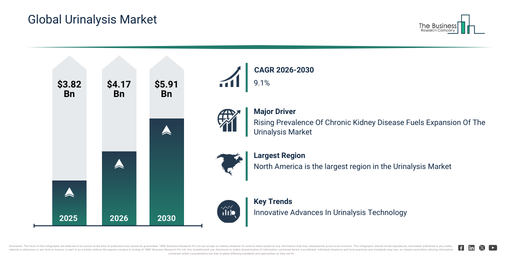
  • Urinalysis Market Forecast Highlights Expansion From $4.17 Billion To $5.91 Billion Through 2030

    Urinalysis Market Forecast Highlights Expansion From $4.17 Billion To $5.91 Billion Through 2030

    Enhanced with market attractiveness analysis, total addressable market evaluation, company benchmarking matrices, interactive Excel dashboards, expanded supply chain intelligence, emerging startup coverage, and detailed product insights, The Business Research Company’s 2026 market reports deliver more actionable and strategically valuable research.

    Urinalysis Market Size And Revenue Forecast Through 2030

    The urinalysis market has experienced robust expansion lately, projected to ascend from \$3.82 billion in 2025 to \$4.17 billion by 2026, reflecting a compound annual growth rate of 9.2%. This historical growth trend can be linked to several key factors, including the increasing incidence of diabetes and kidney-related ailments, the proliferation of clinical diagnostic facilities, a surge in demand for regular health check-ups, greater integration of laboratory automation technologies, and enhanced accessibility to necessary consumables.

    The urinalysis sector is poised for substantial expansion over the coming years, projected to reach a market value of $5.91 billion by 2030, driven by a compound annual growth rate of 9.1%. This anticipated expansion is largely fueled by several key factors: a surge in demand for swift diagnostic solutions, a heightened emphasis on proactive health management, the broadening scope of at-home diagnostic services, the increasing incorporation of AI for interpreting results, and escalating healthcare expenditures dedicated to diagnostic procedures. Furthermore, the evolving landscape within this market is characterized by several prominent trends, including a greater acceptance of automated urinalysis instruments, a concurrent rise in the utilization of point-of-care testing kits, the growing integration of systems for digital management of test outcomes, the expansion of urinalysis testing capabilities within home environments, and a persistent augmentation of efforts aimed at improving diagnostic precision.

    Download A Free Sample Report For Comprehensive Market Insights:

    https://www.thebusinessresearchcompany.com/sample.aspx?id=8623&type=smp

    Urinalysis Market Expansion Supported By Key Demand Factors

    The increasing incidence of chronic kidney conditions is anticipated to be a key driver for the urinalysis market’s expansion. Chronic kidney disease, a state where renal function deteriorates and hinders the body’s ability to expel toxins and surplus fluid from the bloodstream, is becoming more widespread. This surge is largely attributed to escalating diabetes rates, a condition known to inflict gradual damage on the kidneys, thereby compromising their essential functions. Urinalysis plays a crucial role in the early detection of these kidney ailments by identifying irregularities in urine composition, including the presence of protein, blood, or imbalances in waste products, all indicative of diminishing kidney efficiency. To illustrate, data released in June 2023 by Oxford University Press, a division of the University of Oxford in the UK, forecasted a 4% increase in chronic kidney disease prevalence across the UK, from 8.27 million to 8.61 million people between the years 2022 and 2032. Consequently, the rising tide of chronic kidney disease is directly contributing to the growth observed in the urinalysis market.

    Urinalysis Market Segment Landscape: Which Areas Lead Market Development?

    The urinalysis market covered in this report is segmented –

    1) By Test Type: Pregnancy And Fertility Tests, Biochemical Urinalysis, Sediment Urinalysis

    2) By Product: Consumables, Instruments

    3) By Application: Urinary Tract Infections (UTIs), Kidney Disease, Liver Disease, Diabetes, Hypertension, Other Applications

    4) By End Users: Diagnostic Laboratories, Hospitals And Clinics, Home Care Settings, Research Laboratories And Institutes

    Subsegments:

    1) By Pregnancy And Fertility Tests: Urine Pregnancy Tests, Ovulation Prediction Tests

    2) By Biochemical Urinalysis: Dipstick Tests, Reagent Strip Tests, Microalbumin Tests

    3) By Sediment Urinalysis: Microscopic Examination, Chemical Analysis Of Sediment, Culture Tests

    Urinalysis Market Growth Trends Influencing Competitive Dynamics

    Companies leading the urinalysis sector are concentrating on creating novel offerings, including urine particle analyzers, to solidify their market positions. These urine analyzers function as clinical instruments designed for the automated examination of urine, capable of detecting and measuring multiple substances. Offering superior accuracy and precision compared to manual microscopic examination, urine particle analyzers contribute to a standardized approach in urine particle assessment, thereby diminishing variations among different observers. As an illustration, Sysmex Europe SE, a German entity specializing in automated in vitro diagnostics, introduced the UF-1500 Fully Automated Urine Particle Analyzer in April 2023. This instrument is specifically designed for substantial space savings, approximately 30% smaller, without compromising its high operational efficiency and user-friendliness. Employing the advanced fluorescence flow cytometry technology also featured in their top-tier UF-5000 model, the UF-1500 addresses diverse client requirements. It serves as a fully automated urinalysis workstation solution for both established and developing regions, and it can also function as supplementary or localized systems for larger laboratories that have previously implemented the UN-Series. Furthermore, this analyzer facilitates integration with their UC-3500 urine chemistry analyzers.

    Urinalysis Market Industry Leaders And Market Competition

    Major companies operating in the urinalysis market are Siemens Healthineers AG, F. Hoffmann-La Roche Ltd., Cardinal Health Inc., Abbott Laboratories, Danaher Corporation, Beckman Coulter Inc., Sysmex Corporation, ARKRAY Inc., ACON Laboratories Inc., Bio-Rad Laboratories Inc., URIT Medical Electronic Group Co Ltd., 77 Elektronika Kft, Thermo Fisher Scientific Inc., Teco Diagnostics, Mindray Medical International Limited, Quidel Corporation, Becton Dickinson and Company, EKF Diagnostics, Shenzhen Mindray Bio-Medical Electronics Co. Ltd., Guangzhou Wondfo Biotech Co. Ltd., Chembio Diagnostic Systems Inc

    Access The Complete Urinalysis Market Report:

    https://www.thebusinessresearchcompany.com/report/urinalysis-global-market-report

    Urinalysis Market Largest Region By Revenue And Market Share

    North Americawas the largest region in the urinalysis market in 2025. The regions covered in the urinalysis market report are Asia-Pacific, South East Asia, Western Europe, Eastern Europe, North America, South America, Middle East, Africa.

    Get in touch with us:

    The Business Research Company: https://www.thebusinessresearchcompany.com/

    Americas: +1 310-496-7795

    Asia: +44 7882 955267 & +91 8897263534

    Europe: +44 7882 955267

    Email us at: marketing@tbrc.info

    Follow us on:

    LinkedIn: https://in.linkedin.com/company/the-business-research-company

    YouTube: https://www.youtube.com/channel/UC24_fI0rV8cR5DxlCpgmyFQ

    Global Market Model: https://www.thebusinessresearchcompany.com/global-market-model

  • Urgent Care Center Market Expected To Reach $38.79 Billion By 2030 As Growth Accelerates At 7.5% CAGR

    Urgent Care Center Market Expected To Reach $38.79 Billion By 2030 As Growth Accelerates At 7.5% CAGR

    Through market attractiveness analysis, total addressable market evaluation, company benchmarking matrices, interactive Excel dashboards, expanded supply chain intelligence, emerging startup coverage, and detailed product insights, The Business Research Company’s 2026 market reports provide more actionable and strategically valuable research.

    Urgent Care Center Market Growth From $29.08 Billion In 2026 To $38.79 Billion By 2030 At A CAGR Of 7.5%

    The urgent care sector has experienced robust expansion over the past few years, with projections indicating continued strong performance. Estimations show the market valued at $27.05 billion in 2025, poised to reach $29.09 billion by 2026, reflecting a compound annual growth rate of 7.5%. Key factors driving this historical growth include a heightened patient inclination towards accessible, immediate medical attention, the escalating issue of overburdened emergency departments, the proliferation of retail-based healthcare services, increasing population concentration in urban areas, and advancements in diagnostic capabilities.

    The urgent care center sector is poised for significant expansion, with projections indicating a market valuation of $38.8 billion by 2030, reflecting a compound annual growth rate of 7.5% during the forecast period. This upward trajectory is driven by several key factors, including heightened financial commitments to urgent care facilities, a growing preference for distributed healthcare services, the proliferation of employer-backed urgent care options, the increasing adoption of digital check-in technologies, and a marked emphasis on economical healthcare solutions. Key developments anticipated within this timeframe encompass the broader implementation of technologically advanced clinics, a deeper integration of digital patient management tools, an intensified focus on swift diagnostic capabilities, the wider availability of extended operating hours, and a heightened commitment to consistent care standards.

    Download A Free Sample Report For Comprehensive Market Insights:

    https://www.thebusinessresearchcompany.com/sample.aspx?id=8807&type=smp

    Urgent Care Center Market Growth Drivers And Industry Catalysts

    The escalating requirement for immediate medical attention is anticipated to be a primary catalyst for the expansion of the urgent care sector. This patient demand signifies individuals’ expressed or felt need for healthcare interventions, encompassing a spectrum from routine wellness visits and preventive screenings to the management of acute ailments and ongoing health conditions. The heightened reliance on urgent care facilities correlates directly with this growing patient need for prompt medical services. These centers effectively bridge the gap, offering a more accessible and often more affordable option compared to traditional hospitals or clinics. With their extended hours and capacity to manage a variety of non-life-threatening issues, urgent care centers cater to patients looking for rapid and economical healthcare solutions. To illustrate the scale, data from August 2023 highlighted that the Urgent Care Association, a US-based professional body, reported that in 2022, these centers served approximately 206 million non-emergency cases. The number of such centers also showed consistent growth, escalating from 14,075 to 14,382 by mid-2023, underscoring the market’s upward trajectory fueled by patient inclination towards urgent care solutions.

    Urgent Care Center Market Segments: Where Are The Largest Growth Opportunities?

    The urgent care center market covered in this report is segmented –

    1) By Service: Trauma Or Injury Services, Vaccination Services, Acute Illness Treatment Solutions, Other Services

    2) By Ownership: Corporate Owned, Hospital Owned, Physician Owned, Other Ownerships

    3) By Patient Age Group: Pediatrics (0–17 years), Adults (18–64 years), Geriatrics (65 years and above), All-Age And General Population

    Subsegments:

    1) By Trauma Or Injury Services: Minor Injury Treatment, Fracture Care, Laceration Repair

    2) By Vaccination Services: Routine Immunizations, Travel Vaccinations, Flu Shots

    3) By Acute Illness Treatment Solutions: Cold And Flu Treatment, Gastrointestinal Issues, Skin Infections And Rashes

    4) By Other Services: Diagnostic Services, Physical Exams, Occupational Health Services

    #Urgent Care Center Market Trends Influencing Long-Term Demand

    In the urgent care sector, leading entities are actively forming alliances to enhance their competitive standing. A strategic business partnership essentially denotes a formal association between two or more commercial entities, usually formalized through contractual agreements. As an illustration, by July 2023, Baylor Scott & White Health, a prominent healthcare system headquartered in the United States, entered into a partnership with NextCare. This cooperative venture is designed to integrate 41 urgent care facilities into Baylor Scott & White Health’s existing network, thereby extending the healthcare system’s reach into new geographical areas within Texas, including Abilene, San Antonio, and Houston. NextCare itself is a healthcare services provider based in the US, delivering a range of services that encompass primary care, virtual consultations, and immediate medical attention.

    Urgent Care Center Market Major Participants And Competitive Dynamics

    Major companies operating in the urgent care center market are NextCare Holdings Inc., Concentra Inc., HCA Healthcare Inc., MedExpress Urgent Care, American Family Care, FastMed Urgent Care, CareNow Healthcare Private Limited, St Joseph’s Health Care London, U.S. HealthWorks Inc., CityMD Healthcare Private Limited, GoHealth Urgent Care, CareSpot Urgent Care, Dignity Health Care, United Health Group, Texas MedClinic, Patient First Corporation, Aurora Urgent Care, Bellin Health Systems, MD Now Medical Centers Inc., ZOOM Care, Adventist Healthcare, AtlantiCare, CRH Healthcare LLC, Excel Urgent Care, Premier Health Partners, Summit Health, AFC Urgent Care, CityDoc Urgent Care, Fast Pace Medical Clinic PLLC, Geisinger Careworks

    Access The Complete Urgent Care Center Market Report:

    https://www.thebusinessresearchcompany.com/report/urgent-care-center-global-market-report

    Urgent Care Center Market Regional Analysis And Leading Geography

    North Americawas the largest region in the urgent care center market share in 2025. Asia-Pacificis expected to be the fastest-growing region in the forecast period. The regions covered in the urgent care center market report are Asia-Pacific, South East Asia, Western Europe, Eastern Europe, North America, South America, Middle East, Africa.

    Get in touch with us:

    The Business Research Company: https://www.thebusinessresearchcompany.com/

    Americas: +1 310-496-7795

    Asia: +44 7882 955267 & +91 8897263534

    Europe: +44 7882 955267

    Email us at: marketing@tbrc.info

    Follow us on:

    LinkedIn: https://in.linkedin.com/company/the-business-research-company

    YouTube: https://www.youtube.com/channel/UC24_fI0rV8cR5DxlCpgmyFQ

    Global Market Model: https://www.thebusinessresearchcompany.com/global-market-model

  • Urgent Care Apps Market Set To Grow From $6.26 Billion In 2026 To $23.47 Billion By 2030 At A CAGR Of 39.1%

    Urgent Care Apps Market Set To Grow From $6.26 Billion In 2026 To $23.47 Billion By 2030 At A CAGR Of 39.1%

    Delivering more actionable and strategically valuable research, The Business Research Company’s 2026 market reports feature market attractiveness analysis, total addressable market evaluation, company benchmarking matrices, interactive Excel dashboards, expanded supply chain intelligence, emerging startup coverage, and detailed product insights.

    Urgent Care Apps Market Expansion Outlook: What Revenue Opportunities Lie Ahead?

    The urgent care applications sector has witnessed substantial expansion lately, projected to climb from a valuation of $4.5 billion in 2025 to an impressive $6.26 billion by 2026, reflecting a robust compound annual growth rate of 39.1%. Factors fueling this prior growth trajectory include the widespread adoption of smartphones, an increasing embrace of digital health solutions, a growing need for immediate healthcare services, the proliferation of urgent care facilities, and enhanced access to mobile internet connectivity.

    The urgent care applications sector is poised for substantial expansion, projected to reach a valuation of $23.47 billion by 2030, reflecting a robust compound annual growth rate of 39.1% throughout the forecast period. This upward trajectory is fueled by several key factors, including heightened investment in digital health technologies, a surge in demand for telehealth-based initial patient assessment services, the broader adoption of healthcare reimbursement models that prioritize outcomes, the increasing incorporation of artificial intelligence to improve patient interaction, and supportive government regulations encouraging virtual healthcare services. Furthermore, the coming years are expected to witness significant shifts such as the greater integration of telehealth capabilities within urgent care applications, a rise in AI-powered tools for preliminary symptom evaluation, the wider implementation of navigational aids for immediate patient care, the proliferation of emergency applications linked with wearable devices, and a stronger emphasis on safeguarding patient data.

    Download A Free Sample Report For Comprehensive Market Insights:

    https://www.thebusinessresearchcompany.com/sample.aspx?id=14216&type=smp

    Urgent Care Apps Market Opportunity Drivers: What Is Creating New Revenue Potential?

    The escalating incidence of persistent health issues like diabetes is anticipated to be a primary catalyst for the expansion of the urgent care applications sector in the future. Chronic conditions, defined as long-term medical states typically persisting for three months or more and often requiring continuous oversight and management, include ailments such as diabetes. This particular metabolic disorder is marked by elevated blood glucose levels, which, if left unchecked over time, can result in significant harm to cardiovascular systems and other bodily organs. Urgent care applications offer a valuable tool for individuals with diabetes to better manage their well-being, enhance their daily living, and alleviate pressure on healthcare infrastructures. Furthermore, these applications empower diabetic patients to meticulously document and track their symptoms, thereby facilitating the identification of health-related patterns and evolving trends. To illustrate, data from the National Institutes of Health indicated in January 2023 that an estimated 35.66% (with a margin of error between 33.36% and 36.04%) of the American population aged 50 and above will be managing at least one chronic condition by 2035, a proportion expected to climb to 47.81% (ranging from 46.09% to 49.71%) by the year 2050. Consequently, the growing prevalence of chronic conditions, including diabetes, is a key factor fueling the advancement of the urgent care app market.

    Urgent Care Apps Market Segment Analysis: What Are The Major Market Categories?

    The urgent care apps market covered in this report is segmented –

    1) By Type: Pre-Hospital Emergency Care And Triaging Apps, In-Hospital Communication And Collaboration Apps, Post-Hospital Apps

    2) By Technology: Phone-Based Apps, Web-Based Apps, Wearable Patient-Centric Apps

    3) By Clinical Area: Trauma, Stroke, Cardiac Conditions, Other Clinical Areas

    Subsegments:

    1) By Pre-Hospital Emergency Care And Triaging Apps: Symptom Checker Apps, Triage Apps, Remote Patient Monitoring Apps

    2) By In-Hospital Communication And Collaboration Apps: Secure Messaging Apps, Team Collaboration Tools, Patient Management Systems

    3) By Post-Hospital Apps: Follow-Up Care Apps, Medication Management Apps, Telehealth Apps

    Urgent Care Apps Market Innovation Trends Driving Future Development

    Leading entities within the urgent care applications sector are prioritizing the deployment of cutting-edge technological innovations, exemplified by the Cedars-Sinai Connect app and applications incorporating artificial intelligence, as a strategic imperative to bolster their market standing. The Cedars-Sinai Connect app functions as a digital healthcare initiative that leverages artificial intelligence to furnish individuals with prompt and convenient access to medical support. These platforms empower users to locate and secure assistance from the nearest urgent care facilities, as well as retrieve crucial information concerning urgent and emergency medical situations. As a case in point, in October 2023, Cedars-Sinai, a prominent health science and medical institution in the United States, unveiled the Cedars-Sinai Connect app. This novel artificial intelligence-powered mobile health application, designed for patients in the USA, offers virtual care solutions for a spectrum of clinical conditions, including same-day primary care appointments and continuous virtual access to medical specialists for immediate treatment needs. The application facilitates patients in receiving care for diverse conditions, ranging from type 2 diabetes and headaches to colds, anxiety, routine wellness check-ups, and specialist referrals. Through this AI-integrated application, both new and existing patients can articulate their symptoms and health details via a structured intake process. Following a comprehensive review of this information, the app transmits it to a medical professional for evaluation, culminating in a video consultation between the patient and the healthcare provider.

    Urgent Care Apps Market Leading Companies Driving Competitive Growth

    Major companies operating in the urgent care apps market are Teladoc Health, HeyDoctor, American Well, Carbon Health, Doctor on Demand, MDLive, Akira, Lemonaid Health, PlushCare, 98point6, HealthTap, Medici, K Health, MeMD, Maple, CareClix, LiveHealth Online, Push Doctor, Zocdoc, Brave Care, GoodRx Care, Sesame Care, RelyMD, Doctoranytime

    Access The Complete Urgent Care Apps Market Report:

    https://www.thebusinessresearchcompany.com/report/urgent-care-apps-global-market-report

    Urgent Care Apps Market Geographic Analysis: Where Is Demand Growing The Fastest?

    North Americawas the largest region in the urgent care apps market in 2025. Asia-Pacificis expected to be the fastest-growing region in the forecast period. The regions covered in the urgent care apps market report are Asia-Pacific, South East Asia, Western Europe, Eastern Europe, North America, South America, Middle East, Africa.

    Get in touch with us:

    The Business Research Company: https://www.thebusinessresearchcompany.com/

    Americas: +1 310-496-7795

    Asia: +44 7882 955267 & +91 8897263534

    Europe: +44 7882 955267

    Email us at: marketing@tbrc.info

    Follow us on:

    LinkedIn: https://in.linkedin.com/company/the-business-research-company

    YouTube: https://www.youtube.com/channel/UC24_fI0rV8cR5DxlCpgmyFQ

    Global Market Model: https://www.thebusinessresearchcompany.com/global-market-model
  • Ureteroscope Market Opportunities Are Emerging Beyond Traditional Growth Areas

    Ureteroscope Market Opportunities Are Emerging Beyond Traditional Growth Areas

    Enhanced with market attractiveness analysis, total addressable market evaluation, company benchmarking matrices, interactive Excel dashboards, expanded supply chain intelligence, emerging startup coverage, and detailed product insights, The Business Research Company’s 2026 market reports deliver more actionable and strategically valuable research.

    Ureteroscope Market Growth Potential: How Will Market Size Change Through 2030?

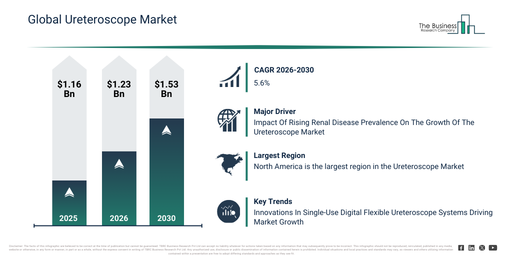
    Experiencing robust expansion, the ureteroscope market has demonstrated significant upward momentum. Projections indicate a continued growth trajectory, with the market value anticipated to increase from $1.16 billion in 2025 to $1.23 billion in 2026, reflecting a compound annual growth rate (CAGR) of 6.3%. This historical surge is largely attributable to a confluence of factors, including the increasing incidence of urolithiasis, the broadening scope of specialized urology services, augmented healthcare facility investments in diagnostic endoscopy technology, a heightened utilization of less invasive diagnostic methods, and a greater availability of skilled urologists.

    Significant expansion is anticipated for the ureteroscope market over the coming years, projecting a rise to $1.53 billion by 2030 with a compound annual growth rate (CAGR) of 5.6%. This projected increase is fueled by several key factors, including a heightened demand for disposable endoscopic equipment, a growing prevalence of kidney-related ailments, an uptick in ambulatory urology treatments, innovations in digital imaging technologies, and an amplified emphasis on safeguarding patient well-being. Key developments shaping the market during this forecast period encompass the escalating adoption of disposable ureteroscopes, a burgeoning need for high-definition imaging systems, a discernible shift towards flexible ureteroscopes, the broader implementation of minimally invasive urological interventions, and a more pronounced concentration on effective infection control measures.

    Download A Free Sample Report For Comprehensive Market Insights:

    https://www.thebusinessresearchcompany.com/sample.aspx?id=16562&type=smp

    Ureteroscope Market Growth Momentum: Which Factors Are Influencing Demand?

    The expanding incidence of kidney ailments is anticipated to be a primary driver for the advancement of the ureteroscope market in the future. Kidney diseases encompass a wide spectrum of disorders impacting the kidneys’ functionality and physical makeup, arising from influences such as genetic vulnerabilities, lifestyle habits, environmental exposures, and coexisting medical issues. Ureteroscopes play a crucial role in managing these conditions by facilitating the identification and intervention for kidney stones, growths, constrictions, and obstructions via less invasive techniques, affording clear visibility and entry to the urinary system. As an illustration, data from Kidney Research UK indicated that in the UK, approximately 7.19 million individuals were impacted by chronic kidney disease in 2023, a figure exceeding 10 percent of the total population, with projections suggesting this number will climb to 7.61 million by 2033. Consequently, the rising occurrence of kidney-related conditions is directly contributing to the expansion of the ureteroscope sector.

    Ureteroscope Market Segment Breakdown: Which Categories Generate The Most Revenue?

    The ureteroscope market covered in this report is segmented –

    1) By Product: Digital Ureteroscopes, Flexible Ureteroscopes, Rigid Ureteroscope, Semi-Rigid Ureteroscopes, Fiberoptic Ureteroscopes

    2) By Application: Urinary Stricture, Urolithiasis, Kidney Cancer, Diagnostics

    3) By End-User: Ambulatory Surgical Centers, Specialty Clinics, Hospitals, Urology Clinics, Diagnostic Centers, Endoscopic Clinic, Other End-Users

    Subsegments:

    1) By Digital Ureteroscopes: Standard Digital Ureteroscopes, High-Definition (HD) Digital Ureteroscopes, Single-Use Digital Ureteroscopes

    2) By Flexible Ureteroscopes: Semi-Flexible Ureteroscopes, Fully Flexible Ureteroscopes, Single-Use Flexible Ureteroscopes

    3) By Rigid Ureteroscope: Standard Rigid Ureteroscopes, High-Definition (HD) Rigid Ureteroscopes, Single-Use Rigid Ureteroscopes

    4) By Semi-Rigid Ureteroscopes: Standard Semi-Rigid Ureteroscopes, Flexible Semi-Rigid Ureteroscopes

    5) By Fiberoptic Ureteroscopes: Standard Fiberoptic Ureteroscopes, High-Performance Fiberoptic Ureteroscopes

    Ureteroscope Market Trends Reshaping Industry Growth

    Within the ureteroscope sector, leading entities are concentrating on pioneering advancements, including the introduction of disposable digital flexible ureteroscope systems, with the primary aim of bolstering patient well-being through the mitigation of infection transmission risks. These disposable systems are essentially single-use ureteroscopes equipped with flexible tubing and sophisticated digital imaging capabilities, intended for utilization in one medical operation. An illustrative case occurred in February 2023 when Boston Scientific, a prominent American manufacturer of medical devices, secured clearance from the United States Food and Drug Administration for its LithoVue Elite System, a prime example of a single-use digital flexible ureteroscope. This particular system is distinguished by its superior image resolution, the ability to monitor pressure within the kidney concurrently, direct command over the capture of images and video, and its seamless compatibility with current surgical suite visualization equipment and endoscopic displays. Furthermore, the system incorporates a built-in sensor, empowering urologists with the capacity for real-time monitoring of intrarenal pressure during surgical interventions, thereby facilitating well-grounded decisions pertaining to pressure management.

    Ureteroscope Market Key Players And Strategic Industry Positioning

    Major companies operating in the ureteroscope market are Siemens Healthineers AG, Stryker Healthcare, Boston Scientific Corporation, Olympus Corporation, Karl Storz SE & Co. KG, Richard Wolf GmbH, PENTAX Medical, Dornier MedTech, Cogentix Medical, Henke-Sass Wolf GmbH, Merit Medical Systems, Ambu A/S, Elmed Medical Systems Inc, OPCOM Medical Inc, Maxer Endoscopy GmbH, Rocamed SAM, NeoScope Inc, Teleflex Incorporated, Medtronic plc, Hoya Corporation

    Access The Complete Ureteroscope Market Report:

    https://www.thebusinessresearchcompany.com/report/ureteroscope-global-market-report

    Ureteroscope Market Global Footprint: Which Region Holds Market Leadership?

    North Americawas the largest region in the ureteroscope market in 2025. Asia-Pacificis expected to be the fastest-growing region in the forecast period. The regions covered in the ureteroscope market report are Asia-Pacific, South East Asia, Western Europe, Eastern Europe, North America, South America, Middle East, Africa.

    Get in touch with us:

    The Business Research Company: https://www.thebusinessresearchcompany.com/

    Americas: +1 310-496-7795

    Asia: +44 7882 955267 & +91 8897263534

    Europe: +44 7882 955267

    Email us at: marketing@tbrc.info

    Follow us on:

    LinkedIn: https://in.linkedin.com/company/the-business-research-company

    YouTube: https://www.youtube.com/channel/UC24_fI0rV8cR5DxlCpgmyFQ

    Global Market Model: https://www.thebusinessresearchcompany.com/global-market-model
  • Upstream Bioprocessing Market Expansion Is Opening New Pathways For Strategic Investment

    Upstream Bioprocessing Market Expansion Is Opening New Pathways For Strategic Investment

    Through market attractiveness analysis, total addressable market evaluation, company benchmarking matrices, interactive Excel dashboards, expanded supply chain intelligence, emerging startup coverage, and detailed product insights, The Business Research Company’s 2026 market reports provide more actionable and strategically valuable research.

    Upstream Bioprocessing Market Value Analysis: What Growth Is Expected Over The Forecast Period?

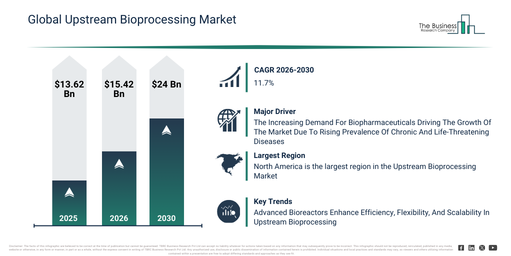
    Upstream bioprocessing’s market value has seen significant expansion, poised to increase from US$13.62 billion in 2025 to US$15.42 billion in 2026, reflecting a compound annual growth rate of 13.2%. This upward trajectory during the preceding period was propelled by several key factors, including the burgeoning development pipelines for biologic drugs, the scaling up of vaccine production facilities, increased financial commitments towards biopharmaceutical research and development, the growing acceptance of cell-based therapeutic approaches, and a heightened need for adaptable upstream manufacturing systems.

    During the upcoming years, the upstream bioprocessing sector is poised for significant expansion, projected to reach a market value of $24 billion by 2030, driven by a compound annual growth rate of 11.7%. This anticipated growth trajectory within the forecast period is largely fueled by the escalating development of vaccines and monoclonal antibodies, a growing inclination towards continuous bioprocessing methodologies, the amplification of CDMO outsourcing arrangements, a heightened emphasis on automating processes, and increasingly stringent regulatory demands for consistent product quality. Key developments shaping this period include a greater embrace of single-use bioprocessing equipment, wider implementation of sophisticated cell culture media, increased incorporation of automated bioreactors, the further proliferation of outsourced upstream processing services, and a concentrated effort on improving process repeatability and maximizing product yield.

    Download A Free Sample Report For Comprehensive Market Insights:

    https://www.thebusinessresearchcompany.com/sample.aspx?id=15950&type=smp

    Upstream Bioprocessing Market Expansion Drivers: What Is Shaping Future Growth?

    The escalating need for biopharmaceuticals is anticipated to fuel the expansion of the upstream bioprocessing sector. Biopharmaceuticals, which are derived from biological sources like cells or microorganisms and serve to treat, prevent, or diagnose illnesses, are seeing increased demand. This surge in demand is largely attributed to the growing incidence of chronic and severe health conditions, as biopharmaceutical treatments provide precise and effective therapeutic solutions that enhance patient well-being. Upstream bioprocessing plays a crucial role in advancing biopharmaceutical development by refining cell culture environments and manufacturing procedures, ultimately boosting the output, caliber, and uniformity of therapeutic proteins and other biological agents. Illustrating this trend, Cardinal Health Inc. reported that in January 2022, the United States had 33 FDA-approved biosimilar products, with 21 already accessible in the market. By 2023, this figure had grown to 40 FDA-approved biosimilars, 25 of which were commercially available, underscoring the direct correlation between rising biopharmaceutical demand and the growth trajectory of the upstream bioprocessing market.

    Upstream Bioprocessing Market Segmentation: How Is The Market Structured Across Key Categories?

    The upstream bioprocessing market covered in this report is segmented –

    1) By Product Type: Bioreactors, Fermenters, Cell Culture Media, Filters, Bags And Containers

    2) By Workflow: Media Preparation, Cell Culture, Cell Separation

    3) By Usage type: Single-Use, Multi-Use

    4) By Mode: In House, Outsourced

    5) By End User: Contract Development and Manufacturing Organization (CDMOs) Or Contract Research Organization (CROs), Research And Academic Institutes, Biopharmaceutical Companies

    Subsegments:

    1) By Bioreactors: Single-Use Bioreactors, Multi-Use Bioreactors

    2) By Fermenters: Laboratory Fermenters, Pilot Scale Fermenters, Industrial Fermenters

    3) By Cell Culture Media: Powdered Media, Liquid Media

    4) By Filters: Sterile Filters, Air Filters, Capsule Filters

    5) By Bags And Containers: Single-Use Bags, Bioprocess Containers, Storage Bags

    Upstream Bioprocessing Market Strategic Trends: What Is Defining The Next Phase Of Growth?

    Leading entities within the upstream bioprocessing sector are channeling efforts into the creation of sophisticated bioreactor systems, aiming to better serve cell culture operations by improving efficiency, adaptability, and the capacity for expansion. These bioreactors stand as critical components in upstream bioprocessing, facilitating the effective and regulated manufacturing of biopharmaceuticals via cell cultivation and the generation of biomolecules. Exemplifying this drive, a US-based supplier of life sciences goods and services, Cytiva, launched its X-platform bioreactors in April 2023, engineered to simplify single-use upstream bioprocessing workflows. The system comprises a vessel, a cabinet unit, and an interface for human-machine interaction, featuring a modular construction that permits varied configurations without necessitating custom hardware or disposable bags, and incorporating user-centric elements such as a fully accessible vessel door, internal baffles, and enhanced cable routing. Furthermore, an integrated online Bioreactor Scaler tool assists users in identifying optimal settings for successful process scaling.

    Upstream Bioprocessing Market Competitive Landscape And Leading Companies

    Major companies operating in the upstream bioprocessing market are Thermo Fisher Scientific Inc., Danaher Corp, Merck KGaA, GE HealthCare Technologies, Corning Inc., AGC Biologics, Avantor, Boehringer Ingelheim International GmbH, Catalent Inc., Sartorius AG, Bio-Rad Laboratories Inc., Samsung Biologics Co. Ltd., Eppendorf AG, Repligen Corporation, Takara Bio Inc., KBI Biopharma Inc., Rentschler Biopharma SE, Just Biotherapeutics Inc., PBS Biotech Inc., Applikon Biotechnology, Getinge AB

    Access The Complete Upstream Bioprocessing Market Report:

    https://www.thebusinessresearchcompany.com/report/upstream-bioprocessing-global-market-report

    Upstream Bioprocessing Market Regional Distribution: Which Areas Drive Market Expansion?

    North Americawas the largest region in the upstream bioprocessing market in 2025. Asia-Pacificis expected to be the fastest-growing region in the forecast period. The regions covered in the upstream bioprocessing market report are Asia-Pacific, South East Asia, Western Europe, Eastern Europe, North America, South America, Middle East, Africa.

    Get in touch with us:

    The Business Research Company: https://www.thebusinessresearchcompany.com/

    Americas: +1 310-496-7795

    Asia: +44 7882 955267 & +91 8897263534

    Europe: +44 7882 955267

    Email us at: marketing@tbrc.info

    Follow us on:

    LinkedIn: https://in.linkedin.com/company/the-business-research-company

    YouTube: https://www.youtube.com/channel/UC24_fI0rV8cR5DxlCpgmyFQ

    Global Market Model: https://www.thebusinessresearchcompany.com/global-market-model
  • Upadacitinib Market Trends Are Creating New Opportunities For Industry Leaders

    Upadacitinib Market Trends Are Creating New Opportunities For Industry Leaders

    Delivering more actionable and strategically valuable research, The Business Research Company’s 2026 market reports feature market attractiveness analysis, total addressable market evaluation, company benchmarking matrices, interactive Excel dashboards, expanded supply chain intelligence, emerging startup coverage, and detailed product insights.

    Upadacitinib Market Size Forecast: How Large Could The Market Become By 2030?

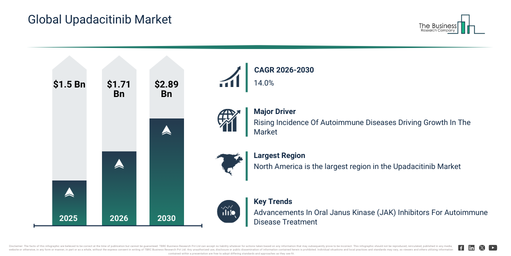
    The market for upadacitinib has experienced substantial expansion lately, projected to escalate from $1.5 billion in 2025 to $1.71 billion by 2026, reflecting a compound annual growth rate of 14.1%. This upward trajectory during the past period is largely attributable to a rising incidence of rheumatoid arthritis, the inherent constraints associated with traditional disease-modifying anti-rheumatic drugs (dmards), an increasing preference for precision-based treatments, the convenience offered by oral administration, and the broader availability of specialized medical services.

    The market for upadacitinib is poised for substantial expansion, projecting a valuation of $2.89 billion by 2030, fueled by a compound annual growth rate (CAGR) of 14.0%. This upward trajectory is anticipated to be driven by several key factors, including a greater number of clinical approvals for novel indications, an intensified emphasis on tailored treatments for autoimmune conditions, the broadening scope of oral immunotherapy development, increased funding for research into inflammatory diseases, and the growing acceptance of sophisticated small molecule therapeutics. During this forecast period, significant trends are expected to emerge, such as a greater reliance on JAK inhibitor therapies, a discernible shift towards oral targeted therapies, increased utilization of small molecule immunomodulators, the extension of autoimmune disease applications, and a more pronounced commitment to enduring disease management strategies.

    Download A Free Sample Report For Comprehensive Market Insights:

    https://www.thebusinessresearchcompany.com/sample.aspx?id=21311&type=smp

    Upadacitinib Market Development Factors: Which Trends Are Supporting Demand?

    The increasing prevalence of autoimmune disorders is poised to significantly boost the upadacitinib market. These conditions occur when the body’s own immune defenses erroneously target healthy tissues, mistaking them for external threats, and this phenomenon is influenced by a combination of inherited factors, external stimuli, and shifts in daily habits and immune system regulation. Upadacitinib functions by selectively blocking the JAK1 enzyme, thereby mitigating inflammatory processes and recalibrating immune system activity in ailments like rheumatoid arthritis and psoriatic arthritis. As an illustration, data from Arthritis Australia, a non-profit entity, indicated in February 2024 that rheumatoid arthritis is anticipated to affect an estimated 212,136 men and 362,137 women in 2025, with projections showing an increase to around 280,040 males and 479,828 females by the year 2040. Consequently, the escalating rate of autoimmune diseases is a key driver for the expansion of the upadacitinib market.

    Upadacitinib Market Segmentation Trends And Revenue Drivers

    The upadacitinib market covered in this report is segmented –

    1) By Drug Classes: Janus Kinase Inhibitors, Antirheumatic Agents, Small Molecule Drugs

    2) By Application: Rheumatoid Arthritis, Psoriatic Arthritis, Crohn’s Disease

    3) By End-User: Hospitals, Homecare, Specialty Clinics, Other End-Users

    Subsegments:

    1) By Janus Kinase Inhibitors: JAK1 Inhibitors, JAK2 Inhibitors, JAK3 Inhibitors, TYK2 Inhibitors

    2) By Antirheumatic Agents: Disease-Modifying Antirheumatic Drugs (DMARDs), Biologic DMARDs, Conventional Synthetic DMARDs

    3) By Small Molecule Drugs: Oral Small Molecule Drugs, Topical Small Molecule Drugs

    Upadacitinib Market Transformation Trends: Which Innovations Are Driving Change?

    Leading entities within the upadacitinib sector are prioritizing the creation of groundbreaking therapeutics, specifically oral Janus kinase (JAK) inhibitors, with the aim of broadening therapeutic avenues for individuals suffering from autoimmune conditions. These oral JAK inhibitors represent small-molecule medications designed to impede the function of Janus kinase enzymes, thereby mitigating immune system overactivity and inflammation, which results in effective management of autoimmune and inflammatory ailments. As an illustration, in April of 2023, AbbVie Inc., a prominent pharmaceutical corporation headquartered in the United States, unveiled RINVOQ (upadacitinib), a development that subsequently garnered approval from the European Commission for the therapeutic intervention of moderately to severely active Crohn’s disease. This particular oral version facilitates a regimen of once-daily intake, thereby enhancing patient convenience and compliance. Furthermore, the oral administration route offers a more rapid initiation of effects when contrasted with conventional therapies, simplifying the adherence to prescribed treatment protocols for patients.

    Upadacitinib Market Industry Leaders: Which Organizations Are Driving Competition?

    Major companies operating in the upadacitinib market are AbbVie Inc, Pfizer Inc, Eli Lilly and Company, Incyte Corporation, Novartis AG, GlaxoSmithKline plc, Bristol-Myers Squibb Company, Sanofi SA, Takeda Pharmaceutical Company Ltd, Astellas Pharma Inc, AstraZeneca PLC, Gilead Sciences Inc, Teva Pharmaceutical Industries Ltd, Mitsubishi Tanabe Pharma Corporation, Kyowa Hakko Kirin Co Ltd, Galapagos NV, UCB SA, Daiichi Sankyo Company Ltd, Horizon Therapeutics plc, Regeneron Pharmaceuticals Inc.

    Access The Complete Upadacitinib Market Report:

    https://www.thebusinessresearchcompany.com/report/upadacitinib-global-market-report

    Upadacitinib Market Leading Geography: Which Region Generates The Most Revenue?

    North Americawas the largest region in the upadacitinib market in 2025. Asia-Pacificis expected to be the fastest-growing region in the forecast period. The regions covered in the upadacitinib market report are Asia-Pacific, South East Asia, Western Europe, Eastern Europe, North America, South America, Middle East, Africa.

    Get in touch with us:

    The Business Research Company: https://www.thebusinessresearchcompany.com/

    Americas: +1 310-496-7795

    Asia: +44 7882 955267 & +91 8897263534

    Europe: +44 7882 955267

    Email us at: marketing@tbrc.info

    Follow us on:

    LinkedIn: https://in.linkedin.com/company/the-business-research-company

    YouTube: https://www.youtube.com/channel/UC24_fI0rV8cR5DxlCpgmyFQ

    Global Market Model: https://www.thebusinessresearchcompany.com/global-market-model
  • Unresectable Hepatocellular Carcinoma Market Growth Is Reshaping Competitive Advantage Across The Industry

    Unresectable Hepatocellular Carcinoma Market Growth Is Reshaping Competitive Advantage Across The Industry

    Enhanced with market attractiveness analysis, total addressable market evaluation, company benchmarking matrices, interactive Excel dashboards, expanded supply chain intelligence, emerging startup coverage, and detailed product insights, The Business Research Company’s 2026 market reports deliver more actionable and strategically valuable research.

    Unresectable Hepatocellular Carcinoma Market Revenue Outlook: What CAGR Is Expected Through 2030?

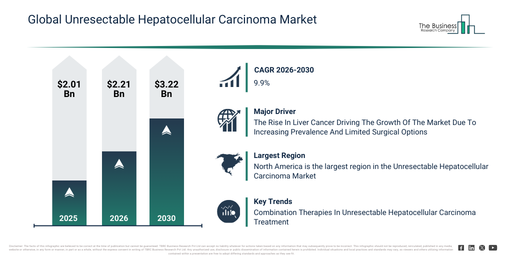
    The market for unresectable hepatocellular carcinoma has experienced significant expansion lately, projected to increase from $2.01 billion in 2025 to $2.21 billion in 2026, reflecting a compound annual growth rate of 9.9%. This recent advancement is underpinned by several key factors, including a greater number of chronic liver disease cases, a higher occurrence of cirrhosis-induced cancer, the proliferation of specialized cancer treatment facilities, the broader accessibility of systemic therapeutic interventions, and enhancements in the accuracy and scope of diagnostic technologies.

    The market for unresectable hepatocellular carcinoma is poised for substantial expansion, projected to reach a value of $3.22 billion by 2030, exhibiting a compound annual growth rate of 9.9%. This upward trajectory during the forecast period is anticipated to be fueled by several key factors, including the advancement of cutting-edge immunotherapies, a heightened emphasis on selecting treatments based on biomarkers, the proliferation of precision oncology initiatives, increased financial backing for liver cancer research, and a greater acceptance of less invasive therapeutic methods. Furthermore, significant market developments expected within this timeframe involve a more widespread utilization of immunotherapy-based interventions, a growing application of therapies targeting specific molecular pathways, an increased focus on combining different treatment modalities, the broader implementation of personalized oncology services, and a more sophisticated deployment of advanced diagnostic imaging techniques.

    Download A Free Sample Report For Comprehensive Market Insights:

    https://www.thebusinessresearchcompany.com/sample.aspx?id=12079&type=smp

    Unresectable Hepatocellular Carcinoma Market Industry Drivers: What Is Driving Revenue Growth?

    The surging incidence of liver cancer is poised to accelerate the expansion of the market for unresectable hepatocellular carcinoma. Liver cancer, characterized by the unchecked proliferation of tumor cells that supplant healthy liver tissue, leads to malignant growths that impair vital liver functions. This escalating prevalence is largely attributed to a rise in metabolic disorders, viral hepatitis infections, alcohol-induced liver ailments, and increasing obesity-related liver complications. The market for unresectable hepatocellular carcinoma facilitates this trend by offering therapeutic avenues like systemic treatments, immunotherapies, radiofrequency ablation, and liver-directed interventions for individuals ineligible for surgical tumor extirpation. Illustratively, as reported by the Cancer Council Victoria, an Australian non-profit, in May 2025, the year 2023 saw 667 liver cancer diagnoses in Victoria, with males accounting for 469 (70.3%) and females for 198 (29.7%). Current diagnosis rates are observed at 11.8 per 100,000 males and 4.4 per 100,000 females. Consequently, the growing burden of liver cancer is a significant catalyst for the unresectable hepatocellular carcinoma market.

    Unresectable Hepatocellular Carcinoma Market Driver: Increasing Healthcare Expenditure Fuels Expansion Of The Unresectable Hepatocellular Carcinoma Market Enhanced financial commitments to healthcare are anticipated to stimulate the growth trajectory of the unresectable hepatocellular carcinoma market. Health expenditure encompasses the total financial resources allocated towards activities aimed at enhancing, reinstating, or preserving well-being. This upward trend in healthcare spending is propelled by innovations in medical technology, as cutting-edge diagnostic instruments, therapeutic regimens, and novel treatments invariably incur higher costs, contributing to augmented overall health sector expenditures. The significance of health expenditure is pronounced in cases of unresectable hepatocellular carcinoma, where the progression to an unresectable stage necessitates more intricate and costly treatment modalities. For example, in December 2024, data from the Centers for Medicare & Medicaid Services, a U.S. entity overseeing Medicare and Medicaid, indicated that in 2023, U.S. healthcare spending escalated by 7.5%, reaching $4.9 trillion, which approximates to $14,570 per individual. Therefore, the augmentation of healthcare expenditure serves as a key driver for the unresectable hepatocellular carcinoma market.

    Unresectable Hepatocellular Carcinoma Market Segment Analysis Highlighting Growth Areas

    The unresectable hepatocellular carcinoma market covered in this report is segmented –

    1) By Type: Primary, Secondary, Benign Liver Growth

    2) By Treatment Type: Chemotherapy, Molecularly Targeted Therapy, Immunotherapy, Other Treatments

    3) By End-Users: Hospitals, Specialty Clinics, Cancer Centers

    Subsegments:

    1) By Primary: Hepatocellular Carcinoma (HCC), Fibrolamellar Carcinoma, Hepatoblastoma

    2) By Secondary: Metastatic Liver Cancer, Intrahepatic Cholangiocarcinoma

    3) By Benign Liver Growth: Hepatic Adenoma, Focal Nodular Hyperplasia, Hemangiomas

    #Unresectable Hepatocellular Carcinoma Market Growth Trends: What Is Influencing The Future Outlook?

    In the unresectable hepatocellular carcinoma sector, leading organizations are currently concentrating their efforts on pioneering novel treatment approaches, specifically the implementation of combination therapies for unresectable hepatocellular carcinoma. Such therapeutic strategies involve the concurrent administration of multiple treatments with the aim of enhancing treatment effectiveness, addressing diverse disease mechanisms, or overcoming treatment resistance within the context of managing a particular ailment. As an illustration, in March of 2023, Ono Pharmaceutical Co. Ltd., a pharmaceutical entity headquartered in Japan, introduced Opdivo (nivolumab) Intravenous Infusion (Opdivo), identified as a human anti-human PD-1 monoclonal antibody, alongside Yervoy. The mechanism of action for Opdivo involves impeding the engagement between PD-1, a protein found on T cells which are immune cells, and its corresponding ligands (PD-L1 and PD-L2) present on the surface of cancerous cells. Ordinarily, this interaction serves to inhibit the capacity of T cells to mount an assault on malignant cells. Through the interruption of this interaction, Opdivo subsequently empowers T cells to identify and eradicate cancer cells with greater proficiency.

    Unresectable Hepatocellular Carcinoma Market Leading Companies: Who Holds Significant Market Presence?

    Major companies operating in the unresectable hepatocellular carcinoma market are Pfizer Inc., Johnson & Johnson Private Limited, F Hoffmann-La Roche Ltd., Merck & Co Inc., Bayer AG, Bristol-Myers-Squibb Company, AstraZeneca PLC, Takeda Pharmaceutical Company Limited, Eli Lilly and Company, Amgen Inc., Regeneron Pharmaceuticals Inc., Chugai Pharmaceutical Co Ltd., Eisai Co. Ltd., Ipsen S.A., Jiangsu HengRui Medicine Co. Ltd., Exelixis Inc., BeiGene Ltd., Innovent Biologics Inc., Sirtex Medical Limited, Genentech Inc., CStone Pharmaceuticals, Delcath Systems Inc., Celsion Corporation

    Access The Complete Unresectable Hepatocellular Carcinoma Market Report:

    https://www.thebusinessresearchcompany.com/report/unresectable-hepatocellular-carcinoma-global-market-report

    Unresectable Hepatocellular Carcinoma Market Regional Outlook: Where Are The Largest Opportunities Located?

    North Americawas the largest region in the unresectable hepatocellular carcinoma market in 2025. The regions covered in the unresectable hepatocellular carcinoma market report are Asia-Pacific, South East Asia, Western Europe, Eastern Europe, North America, South America, Middle East, Africa.

    Get in touch with us:

    The Business Research Company: https://www.thebusinessresearchcompany.com/

    Americas: +1 310-496-7795

    Asia: +44 7882 955267 & +91 8897263534

    Europe: +44 7882 955267

    Email us at: marketing@tbrc.info

    Follow us on:

    LinkedIn: https://in.linkedin.com/company/the-business-research-company

    YouTube: https://www.youtube.com/channel/UC24_fI0rV8cR5DxlCpgmyFQ

    Global Market Model: https://www.thebusinessresearchcompany.com/global-market-model
  • Unified Communications As A Service In Healthcare Market Forecast Signals New Revenue Opportunities Through 2030

    Unified Communications As A Service In Healthcare Market Forecast Signals New Revenue Opportunities Through 2030

    Through market attractiveness analysis, total addressable market evaluation, company benchmarking matrices, interactive Excel dashboards, expanded supply chain intelligence, emerging startup coverage, and detailed product insights, The Business Research Company’s 2026 market reports provide more actionable and strategically valuable research.

    Unified Communications As A Service In Healthcare Market Growth Analysis: How Will Revenue Expand During The Forecast Period?

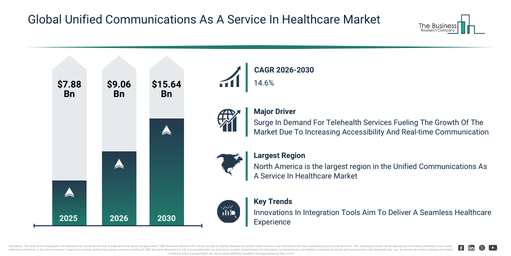
    The market for unified communications as a service within the healthcare sector has experienced substantial expansion, projecting an increase from $7.88 billion in 2025 to $9.06 billion in 2026, signaling a 14.9% compound annual growth rate. This upward trajectory during the preceding period was fueled by several key factors, including the broader integration of digital technologies in healthcare operations, a significant surge in telemedicine offerings, the escalating demand for improved care coordination, the widespread implementation of electronic health records, and the increasing prevalence of remote healthcare delivery models.

    The worldwide market for unified communications as a service tailored for the healthcare sector is poised for substantial expansion over the coming years, projected to reach $15.64 billion by 2030. This significant increase, driven by a compound annual growth rate of 14.6%, is anticipated due to several key factors, including augmented investments in digital healthcare infrastructure, a heightened demand for immediate clinical teamwork, the proliferation of blended healthcare service models, a greater emphasis on patient interaction technologies, and a stronger regulatory push for secure healthcare communication channels. Within this projected timeframe, prominent trends are expected to emerge, such as a wider embrace of cloud-based communication solutions for healthcare, deeper integration of secure messaging and collaborative functionalities, increased utilization of video conferencing for remote consultations, the broader deployment of interoperable communication systems, and an intensified focus on safeguarding data and adhering to compliance standards.

    Download A Free Sample Report For Comprehensive Market Insights:

    https://www.thebusinessresearchcompany.com/sample.aspx?id=28347&type=smp

    Unified Communications As A Service In Healthcare Market Growth Factors: Which Forces Are Supporting Market Expansion?

    The expansion of unified communications as a service (UCaaS) within the healthcare sector is anticipated to be significantly driven by the escalating adoption of telehealth solutions. Telehealth fundamentally involves remote healthcare delivery, encompassing consultations and various health services facilitated by digital communication tools. This surge in telehealth utilization stems from enhanced accessibility, empowering patients to connect with medical professionals from any location, thereby conserving valuable time and minimizing travel burdens. Consequently, the growing reliance on telehealth fosters efficient, secure, and immediate interactions between patients and caregivers, leading to better care management and increased patient involvement. A notable illustration of this trend comes from the UK’s National Health Service, which reported in December 2023 that 33.6 million individuals utilized telehealth applications, observing a substantial 54% increase in monthly user engagement over the preceding year, climbing from 16.8 million in November 2022 to 25.8 million by November 2023. This heightened requirement for instant communication is thus a pivotal factor fueling the advancement of the UCaaS in Healthcare market.

    Unified Communications As A Service In Healthcare Market Segment Performance And Strategic Opportunities

    The unified communications as a service in healthcare market covered in this report is segmented –

    1) By Service Type: Voice Over Internet Protocol, Video Conferencing, Messaging Services, Contact Center Services, Call Management

    2) By Component: Telephony, Unified Messaging, Collaboration Platforms, Conferencing, Other Components

    3) By Deployment Mode: Cloud-Based, On-Premises, Hybrid

    4) By Application: Telemedicine, Remote Patient Monitoring, Virtual Consultations, Care Coordination, Patient Engagement

    5) By End-User: Hospitals And Clinics, Health Insurance Providers, Diagnostic Laboratories

    Subsegments:

    1) By Voice Over Internet Protocol: Hosted Voice Solutions, Cloud Private Branch Exchange, Managed Voice Services, Session Initiation Protocol Trunking

    2) By Video Conferencing: Cloud-Based Video Conferencing, Web-Based Video Conferencing, Virtual Meeting Platforms, Telepresence System

    3) By Messaging Services: Instant Messaging Platforms, Secure Healthcare Messaging, Group Collaboration Tools, Patient Engagement Messaging

    4) By Contact Center Services: Cloud-Based Contact Centers, Virtual Assistance Services, Omni Channel Communication Solutions, Interactive Voice Response Systems

    5) By Call Management: Automated Call Distribution, Call Recording And Monitoring, Interactive Call Routing, Voicemail To Email Integration

    Unified Communications As A Service In Healthcare Market Industry Trends: What Changes Are Reshaping Demand?

    Leading participants in the healthcare sector’s unified communications as a service (UCaaS) market are concentrating their efforts on creating cutting-edge offerings, notably sophisticated API integrations, aimed at bolstering the compatibility of digital health instruments, optimizing the automation of operational processes, and elevating immediate communication among healthcare professionals. These advanced API integrations represent intricate software frameworks that facilitate the secure exchange of information between diverse healthcare applications, automate intricate business functions, and foster integrated communication workflows within cloud-based infrastructures. As an illustration, in April 2025, First Light Fiber Inc., a United States entity supplying fiber-optic data, internet, cloud, and voice services, unveiled an updated iteration of its Unified Communications (UC) platform. This new phase incorporates upgraded integration functionalities for effortless linkage among healthcare networks, sophisticated administrative utilities for unified oversight, and an improved user interface meticulously crafted to provide the dependable, secure, and instantaneous communication vital for clinical settings.

    Unified Communications As A Service In Healthcare Market Key Players: Which Companies Shape Industry Competition?

    Major companies operating in the unified communications as a service in healthcare market are Google LLC, Microsoft Corporation, Verizon Communications Incorporated, IBM Corporation, Cisco Systems Incorporated, BT Group Public Limited Company, NEC Corporation, Orange Business Services India Network Private Limited, Zoom Video Communications Incorporated, RingCentral Incorporated, Alcatel-Lucent Enterprise International Société par Actions Simplifiée, Mitel Networks Corporation, 8×8 Incorporated, GoTo Technologies Incorporated, Nextiva Incorporated, Intrado Incorporated, Dialpad Incorporated, Windstream Holdings Incorporated, Salesforce.com, Inc., Avaya Holdings Corp.

    Access The Complete Unified Communications As A Service In Healthcare Market Report:

    https://www.thebusinessresearchcompany.com/report/unified-communications-as-a-service-in-healthcare-global-market-report

    Unified Communications As A Service In Healthcare Market Geographic Landscape: Which Region Dominates Industry Growth?

    North Americawas the largest region in the unified communications as a service in healthcare market in 2025. Asia-Pacific is expected to be the fastest-growing region in the forecast period. The regions covered in the unified communications as a service in healthcare market report are Asia-Pacific, South East Asia, Western Europe, Eastern Europe, North America, South America, Middle East, Africa.

    Get in touch with us:

    The Business Research Company: https://www.thebusinessresearchcompany.com/

    Americas: +1 310-496-7795

    Asia: +44 7882 955267 & +91 8897263534

    Europe: +44 7882 955267

    Email us at: marketing@tbrc.info

    Follow us on:

    LinkedIn: https://in.linkedin.com/company/the-business-research-company

    YouTube: https://www.youtube.com/channel/UC24_fI0rV8cR5DxlCpgmyFQ

    Global Market Model: https://www.thebusinessresearchcompany.com/global-market-model

  • Uncomplicated Urinary Tract Infection Treatment Market Growth Is Accelerating As Industry Transformation Continues

    Uncomplicated Urinary Tract Infection Treatment Market Growth Is Accelerating As Industry Transformation Continues

    Delivering more actionable and strategically valuable research, The Business Research Company’s 2026 market reports feature market attractiveness analysis, total addressable market evaluation, company benchmarking matrices, interactive Excel dashboards, expanded supply chain intelligence, emerging startup coverage, and detailed product insights.

    Uncomplicated Urinary Tract Infection Treatment Market Forecast: What Market Value Is Expected By 2030?

    The market for straightforward urinary tract infection therapies has experienced significant expansion recently, projected to climb from $6.72 billion in 2025 to $7.41 billion in 2026, reflecting a compound annual growth rate of 10.2%. Key factors contributing to this historical growth trajectory include the extensive use of antibiotics for UTI care, the accessibility of existing antimicrobial medications, a rise in outpatient treatment options, escalating diagnostic capabilities, and enhanced access to pharmacy supply chains.

    The market for straightforward urinary tract infection treatments is poised for significant expansion over the coming years, projected to reach $10.52 billion by 2030 with a compound annual growth rate of 9.2%. This projected expansion in the forecast period is fueled by several key factors, including the ongoing creation of innovative antibiotic categories, a heightened emphasis on combating antimicrobial resistance, the broader implementation of tailor-made treatment strategies, increasing utilization of digital prescription services, and the introduction of new oral therapeutic options. Dominant trends anticipated during this forecast period encompass a greater embrace of abbreviated antibiotic regimens, a more concerted effort towards precise antimicrobial interventions, an upswing in the application of oral small molecule medications, the proliferation of localized UTI treatment frameworks, and a strengthened commitment to patient adherence to treatment protocols.

    Download A Free Sample Report For Comprehensive Market Insights:

    https://www.thebusinessresearchcompany.com/sample.aspx?id=17288&type=smp

    Uncomplicated Urinary Tract Infection Treatment Market Demand Drivers: What Is Fueling Industry Growth?

    The surging incidence of hospital-associated infections is anticipated to be a significant catalyst for the expansion of the uncomplicated urinary tract infection treatment market. These infections, contracted by patients during their healthcare facility stays and not present upon admission, are on the rise due to a confluence of factors including antibiotic-resistant pathogens, insufficient infection control measures, prolonged hospitalizations, and the vulnerability of patient immune systems. This escalating trend in healthcare-associated infections highlights the paramount importance of effective urinary tract infection treatment protocols within medical environments, thereby stimulating advancements and financial contributions to the field to adequately address mounting clinical needs. As an illustration, the Australian Institute of Health and Welfare reported 1,668 cases of staphylococcus aureus bloodstream infections across 22.5 million patient care days in Australian public hospitals in June 2024, translating to a rate of 0.74 cases per 10,000 patient days, thereby underscoring how the prevalence of hospital-acquired infections is fueling the growth of the uncomplicated urinary tract infection treatment sector.

    Uncomplicated Urinary Tract Infection Treatment Market Segment Landscape And Growth Potential

    The uncomplicated urinary tract infection treatment market covered in this report is segmented –

    1) By Drug Class: Gepotidacin, Sulfonamide, Tetracycline, Nitrofuran

    2) By Source Of Infection: Hospital-Acquired Urinary Tract Infection (UTI), Community-Acquired Urinary Tract Infection (UTI)

    3) By Gender: Male, Female

    4) By Distribution Channel: Hospital Pharmacies, Gynecology And Urology Clinics, Retail Pharmacies, Online Drug Stores

    Subsegments:

    1) By Gepotidacin: Oral Formulation, Injectable Formulation

    2) By Sulfonamide: Trimethoprim-Sulfamethoxazole (TMP-SMX)

    3) By Tetracycline: Doxycycline, Minocycline

    4) By Nitrofuran: Nitrofurantoin, Macrocrystals, Monohydrate/Macrocrystals

    Uncomplicated Urinary Tract Infection Treatment Market Innovation Trends: Which Developments Are Transforming The Industry?

    Within the competitive landscape of the uncomplicated urinary tract infection treatment arena, leading enterprises are focusing on the advancement of aminopenicillin antibiotics, a strategic move aimed at combating the escalating challenge of antibiotic resistance and improving therapeutic outcomes for prevalent bacterial infections. These aminopenicillin antibiotics play a crucial role in managing uncomplicated urinary tract infections (UTIs) by effectively neutralizing the pathogenic bacteria implicated in these conditions; their mechanism of action involves impeding the construction of bacterial cell walls, a vital process for bacterial proliferation and persistence. As a testament to this trend, in April 2024, the biotechnology research firm Utility Therapeutics Ltd., headquartered in the UK, secured FDA clearance for Pivya (pivmecillinam), a medication indicated for the treatment of uncomplicated urinary tract infections (UTIs) in adult women, specifically when caused by susceptible strains of Escherichia coli, Proteus mirabilis, and Staphylococcus saprophyticus. Pivmecillinam, being an aminopenicillin antibiotic, functions by obstructing the synthesis of the bacterial cell wall.

    Uncomplicated Urinary Tract Infection Treatment Market Competitive Landscape: Who Are The Leading Companies?

    Major companies operating in the uncomplicated urinary tract infection treatment market are Pfizer Inc., F. Hoffmann-La Roche Ltd., Merck & Co. Inc., Bayer AG, GlaxoSmithKline PLC, Abbott Laboratories, Daiichi Sankyo Company Limited, Dr. Reddy’s Laboratories Ltd., Cipla Ltd., Lupin Limited, Iterum Therapeutics PLC, Fimbrion Therapeutics Inc., Utility Therapeutics Ltd., Astellas Pharma Inc., Shionogi & Co. Ltd., Sandoz AG, Sun Pharmaceutical Industries Ltd., Teva Pharmaceutical Industries Ltd., Viatris Inc., Hikma Pharmaceuticals PLC, Alvogen Pharma, Meiji Seika Pharma Co. Ltd., Basilea Pharmaceutica AG

    Access The Complete Uncomplicated Urinary Tract Infection Treatment Market Report:

    https://www.thebusinessresearchcompany.com/report/uncomplicated-urinary-tract-infection-treatment-global-market-report

    Uncomplicated Urinary Tract Infection Treatment Market Largest Region: Which Geography Holds The Highest Market Share?

    North Americawas the largest region in the uncomplicated urinary tract infection treatment market in 2025. Asia-Pacificis expected to be the fastest-growing region in the forecast period. The regions covered in the uncomplicated urinary tract infection treatment market report are Asia-Pacific, South East Asia, Western Europe, Eastern Europe, North America, South America, Middle East, Africa.

    Get in touch with us:

    The Business Research Company: https://www.thebusinessresearchcompany.com/

    Americas: +1 310-496-7795

    Asia: +44 7882 955267 & +91 8897263534

    Europe: +44 7882 955267

    Email us at: marketing@tbrc.info

    Follow us on:

    LinkedIn: https://in.linkedin.com/company/the-business-research-company

    YouTube: https://www.youtube.com/channel/UC24_fI0rV8cR5DxlCpgmyFQ

    Global Market Model: https://www.thebusinessresearchcompany.com/global-market-model

  • Uncomplicated Urinary Tract Infection Market Outlook Highlights The Next Major Growth Opportunities

    Uncomplicated Urinary Tract Infection Market Outlook Highlights The Next Major Growth Opportunities

    Enhanced with market attractiveness analysis, total addressable market evaluation, company benchmarking matrices, interactive Excel dashboards, expanded supply chain intelligence, emerging startup coverage, and detailed product insights, The Business Research Company’s 2026 market reports deliver more actionable and strategically valuable research.

    Uncomplicated Urinary Tract Infection Market Size Outlook: How Fast Will Revenue Grow Through 2030?

    The uncomplicated urinary tract infection market has experienced robust expansion recently. Projections indicate a rise from $10.95 billion in 2025 to $11.69 billion in 2026, reflecting a compound annual growth rate (CAGR) of 6.8%. Factors contributing to this observed growth during the historical period include a higher incidence of urinary tract infections, extensive utilization of laboratory diagnostic methods, the accessibility of broad-spectrum antibiotic treatments, the enhancement of hospital diagnostic capabilities, and increased consciousness regarding infection control strategies.

    The market for uncomplicated urinary tract infections is projected to experience substantial expansion over the coming years, reaching an estimated value of $15.03 billion by 2030. This growth trajectory is underpinned by a compound annual growth rate (CAGR) of 6.5%, driven by several key factors. The escalating need for diagnostic tools that offer both speed and precision, coupled with a heightened awareness of the imperative to combat antibiotic resistance, are significant catalysts. Furthermore, the advancement and broader application of molecular diagnostic technologies, alongside the increasing acceptance of point-of-care testing methodologies and growing investments in automating laboratory processes, are contributing to this positive outlook. Within the forecast period, prominent trends shaping the market include a greater reliance on expedited diagnostic testing, the wider implementation of automated urinalysis systems, a reinforced commitment to antimicrobial stewardship initiatives, the proliferation of point-of-care UTI diagnostic solutions, and an intensified focus on detecting infections at their earliest stages.

    Download A Free Sample Report For Comprehensive Market Insights:

    https://www.thebusinessresearchcompany.com/sample.aspx?id=23550&type=smp

    Uncomplicated Urinary Tract Infection Market Growth Drivers: What Factors Are Accelerating Expansion?

    The persistent increase in chronic kidney disease occurrences is anticipated to act as a catalyst for the uncomplicated urinary tract infection market’s expansion. Chronic kidney disease involves a progressive decline in renal function, resulting in the accumulation of bodily waste and excess fluid. This escalating rate of CKD is largely attributed to the growing prevalence of diabetes, where elevated blood sugar levels over extended periods progressively impair kidney filtration capabilities. Impaired kidney function compromises the immune system, leaving individuals more vulnerable to urinary tract infections, and also promotes urine stasis, thereby fostering bacterial proliferation. For example, a report from Kidney Research UK in June 2023 indicated that approximately 7.2 million individuals in the UK, constituting over 10% of the population, are currently managing chronic kidney disease, with 3.25 million in advanced stages and 3.9 million in earlier phases. Projections suggest this figure will climb to 7.61 million by 2033, underscoring the significant impact of chronic kidney disease on the uncomplicated urinary tract infection market.

    The escalating number of diabetes cases is poised to stimulate the expansion of the uncomplicated urinary tract infection market. Diabetes, a chronic condition defined by elevated blood glucose levels stemming from inadequate insulin production or utilization, is increasingly prevalent due to lifestyle factors like poor dietary habits and insufficient physical activity. The widespread consumption of processed foods and sugary items, coupled with sedentary behaviors, contributes to rising obesity rates, a key determinant for type 2 diabetes. Persistent hyperglycemia promotes a conducive environment within the urinary tract for bacterial multiplication, thereby increasing the incidence of infections. Furthermore, diabetes can suppress the immune response, diminishing the body’s capacity to combat infections, including UTIs. Illustrating this trend, a report from the Office for Health Improvement & Disparities (OHID) in March 2024 revealed that in England, the proportion of individuals with Type 1 diabetes receiving all eight recommended care processes saw an increase from 35.2% to 43.8% within a single year, thereby highlighting the role of rising diabetes cases in fueling the growth of the uncomplicated urinary tract infection market.

    Uncomplicated Urinary Tract Infection Market Categorization By Product Type And Application

    The uncomplicated urinary tract infection market covered in this report is segmented –

    1) By Test Type: Urinalysis, Urine Cultures, Susceptibility Testing

    2) By Drug: Penicillin And Combinations, Quinolones, Cephalosporin, Azoles And Amphotericin B, Nitrofurans, Other Drugs

    3) By End-Users: Hospitals, Diagnostic Labs, Research Institutes

    Subsegments:

    1) By Urinalysis: Dipstick Tests, Microscopic Examination, Automated Urinalysis

    2) By Urine Cultures: Agar Plate Culture, Broth Culture, Chromogenic Media

    3) By Susceptibility Testing: Disk Diffusion Method, Automated Susceptibility Testing, Molecular Susceptibility Testing

    Uncomplicated Urinary Tract Infection Market Trends: What Is Shaping Future Industry Growth?

    Leading entities within the straightforward urinary tract infection (UTI) sector are concentrating their efforts on creating novel antibiotics aimed at improving therapeutic outcomes and confronting the challenge of antibiotic-resistant microorganisms. These antibiotics function by either eradicating bacterial pathogens or impeding their proliferation within the organism. Illustratively, in April 2024, the United States Food and Drug Administration granted approval for Pivya (pivmecillinam) tablets, a treatment designed for adult women experiencing uncomplicated UTIs. This medication is specifically formulated for uncomplicated urinary tract infections stemming from susceptible strains of Escherichia coli, Proteus mirabilis, and Staphylococcus saprophyticus. Pivmecillinam, a pro-drug, undergoes conversion into mecillinam, a beta-lactam antibiotic that specifically targets gram-negative bacteria through the mechanism of inhibiting the synthesis of their cell walls.

    Uncomplicated Urinary Tract Infection Market Company Landscape And Strategic Competition

    Major companies operating in the uncomplicated urinary tract infection market are Pfizer Inc., Bayer AG, GSK plc, Shionogi & Co. Ltd., Cipla Inc., Orchid Pharma Limited, Iterum Therapeutics PLC, UTILITY Therapeutics Ltd., Siemens AG, Sysmex Corporation, Bio-Rad Laboratories Inc., ACON Labs, Novartis AG, Sanofi SA, AbbVie Inc., Takeda Pharmaceutical Company Limited, Astellas Pharma Inc., Boehringer Ingelheim International GmbH, Roche Holding AG, F. Hoffmann-La Roche Ltd, Johnson & Johnson, Teva Pharmaceutical Industries Ltd

    Access The Complete Uncomplicated Urinary Tract Infection Market Report:

    https://www.thebusinessresearchcompany.com/report/uncomplicated-urinary-tract-infection-global-market-report

    Uncomplicated Urinary Tract Infection Market Regional Analysis: Which Region Leads By Revenue?

    North Americawas the largest region in the uncomplicated urinary tract infection market in 2025. The regions covered in the uncomplicated urinary tract infection market report are Asia-Pacific, South East Asia, Western Europe, Eastern Europe, North America, South America, Middle East, Africa.

    Get in touch with us:

    The Business Research Company: https://www.thebusinessresearchcompany.com/

    Americas: +1 310-496-7795

    Asia: +44 7882 955267 & +91 8897263534

    Europe: +44 7882 955267

    Email us at: marketing@tbrc.info

    Follow us on:

    LinkedIn: https://in.linkedin.com/company/the-business-research-company

    YouTube: https://www.youtube.com/channel/UC24_fI0rV8cR5DxlCpgmyFQ

    Global Market Model: https://www.thebusinessresearchcompany.com/global-market-model