Month: June 2026

  • Ultrasonic Technology Market Trends And Growth Drivers Point To Strong Future Potential

    Ultrasonic Technology Market Trends And Growth Drivers Point To Strong Future Potential

    Through market attractiveness analysis, total addressable market evaluation, company benchmarking matrices, interactive Excel dashboards, expanded supply chain intelligence, emerging startup coverage, and detailed product insights, The Business Research Company’s 2026 market reports provide more actionable and strategically valuable research.

    Ultrasonic Technology Market Size, Value And Growth Trends Through 2030

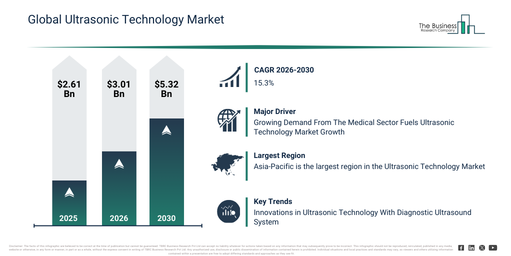
    The market for ultrasonic technology has experienced accelerated expansion lately. Projections indicate a rise from $2.61 billion in 2025 to $3.01 billion in 2026, reflecting a compound annual growth rate of 15.3%. Key factors propelling this growth during the preceding period included a greater uptake of industrial automation, escalating demand for diagnostic tools that do not require invasive procedures, the broader implementation of automotive safety features, increased utilization of ultrasonic inspection techniques, and the accessibility of economically viable sensor technologies.

    The market for ultrasonic technology is poised for significant expansion in the coming years, projecting a reach of $5.32 billion by 2030, propelled by a compound annual growth rate of 15.3%. This anticipated surge is largely fueled by the escalating implementation of smart manufacturing systems, a growing need for sophisticated medical imaging, the broader application of ultrasonic sensors in autonomous vehicles, the increasing convergence of these sensors with IoT platforms, and a heightened emphasis on precise monitoring solutions. Key developments shaping this growth trajectory include a greater uptake of ultrasonic sensors within industrial automation processes, a rise in their application for non-contact measurements, deeper integration into medical diagnostic systems, expanded use in quality inspection procedures, and an intensified focus on achieving high-precision distance sensing capabilities.

    Download A Free Sample Report For Comprehensive Market Insights:

    https://www.thebusinessresearchcompany.com/sample.aspx?id=6063&type=smp

    Ultrasonic Technology Market Growth Factors Supporting Long-Term Expansion

    The expansion of the ultrasonic technology market is anticipated to be significantly influenced by the increasing needs of the healthcare industry. This sector encompasses a wide array of entities involved in providing medical services, producing healthcare equipment, distributing medications, and maintaining the systems that support patient care. Key factors contributing to the heightened demand from the medical field include greater access to healthcare services, a rise in the prevalence of long-term health conditions, and a greater dependency on sophisticated diagnostic tools. Ultrasonic technology plays a crucial role in fulfilling these requirements by facilitating accurate imaging, guiding surgical procedures, and enabling essential non-invasive testing vital for contemporary medical practices. Illustrating this trend, U.S. healthcare spending reached $4.9 trillion in 2023, an increase of 7.5% from the previous year, amounting to approximately $14,570 per person, as reported by the Centers for Medicare & Medicaid Services in December 2024. Consequently, the escalating requirements from the medical sector are a primary catalyst for the growth witnessed in the ultrasonic technology market.

    Ultrasonic Technology Market Segment Analysis And Revenue Opportunities

    The ultrasonic technology market covered in this report is segmented –

    1) By Type: Ultrasonic Proximity Sensor, Ultrasonic Retro-Reflective Sensor, Ultrasonic Through-Beam Sensor, Other Types

    2) By Technology: Ultrasonic Medical Technology, Ultrasonic Processing Technology, Ultrasonic Testing Technology, Other Technologies

    3) By Application: Welding, Cleaning, Inspections, Other Applications

    4) By End User: Automotive, Food and beverage, Medical and healthcare, Aerospace and defense, Industrial, Other End Users

    Subsegments:

    1) By Ultrasonic Proximity Sensor: Non-Contact Ultrasonic Proximity Sensors, Short-Range Ultrasonic Proximity Sensors

    2) By Ultrasonic Retro-Reflective Sensor: Fixed Ultrasonic Retro-Reflective Sensors, Adjustable Ultrasonic Retro-Reflective Sensors

    3) By Ultrasonic Through-Beam Sensor: Transmitter-Receiver Through-Beam Sensors, Reflective Through-Beam Sensors

    4) By Other Types: Ultrasonic Flow Meters, Ultrasonic Cleaning Equipment, Ultrasonic Thickness Gauges

    Ultrasonic Technology Market Industry Trends Shaping Future Revenue Growth

    Key players within the ultrasonic technology sector are concentrating their efforts on creating novel diagnostic ultrasound system solutions aimed at elevating imaging clarity, bolstering patient well-being, and optimizing operational workflows. These diagnostic ultrasound system solutions represent sophisticated medical imaging methods that employ high-frequency sound waves to generate visual representations of internal bodily structures. Illustrating this trend, FUJIFILM, a prominent Japanese imaging and IT firm, introduced the ALOKA ARIETTA 850 Diagnostic Ultrasound System in February 2024, a state-of-the-art endoscopic ultrasound technology now accessible at Fortis Hospital in Bengaluru. This advanced system is designed to improve the precision of diagnoses for gastrointestinal ailments, offering superior high-definition visualization and facilitating less invasive interventions for procedures like pancreatic cyst drainage, thereby affirming FUJIFILM’s dedication to progressing healthcare results through pioneering medical advancements, especially in the critical areas of cancer staging and decisive diagnoses.

    Ultrasonic Technology Market Leading Players Shaping Industry Direction

    Major companies operating in the ultrasonic technology market are Emerson Electric, Siemens AG, Olympus Corporation, General Electric Company, Crest Ultrasonics Corp., Honeywell International Inc., Rockwell Automation Inc., Pepperl+Fuchs AG, Omron Corporation, Telsonic AG, Sonotec, Contrinex, Canon Medical Systems Corporation, Fujifilm Holdings Corporation, Mindray Medical International Limited, Balluff, Baumer, Sick AG, ifm electronic, Leuze electronic, Migatron, Banner Engineering, KEYENCE, Waycon Positionsmesstechnik, Massa Products

    Access The Complete Ultrasonic Technology Market Report:

    https://www.thebusinessresearchcompany.com/report/ultrasonic-technology-global-market-report

    Ultrasonic Technology Market Geographic Distribution And Regional Opportunities

    Asia-Pacificwas the largest region in the ultrasonic technology market in 2025. The regions covered in the ultrasonic technology market report are Asia-Pacific, South East Asia, Western Europe, Eastern Europe, North America, South America, Middle East, Africa.

    Get in touch with us:

    The Business Research Company: https://www.thebusinessresearchcompany.com/

    Americas: +1 310-496-7795

    Asia: +44 7882 955267 & +91 8897263534

    Europe: +44 7882 955267

    Email us at: marketing@tbrc.info

    Follow us on:

    LinkedIn: https://in.linkedin.com/company/the-business-research-company

    YouTube: https://www.youtube.com/channel/UC24_fI0rV8cR5DxlCpgmyFQ

    Global Market Model: https://www.thebusinessresearchcompany.com/global-market-model
  • Ulcerative Colitis Market Expansion Is Reshaping Competitive Dynamics Across The Industry

    Ulcerative Colitis Market Expansion Is Reshaping Competitive Dynamics Across The Industry

    Delivering more actionable and strategically valuable research, The Business Research Company’s 2026 market reports feature market attractiveness analysis, total addressable market evaluation, company benchmarking matrices, interactive Excel dashboards, expanded supply chain intelligence, emerging startup coverage, and detailed product insights.

    Ulcerative Colitis Market CAGR Analysis And Future Market Development

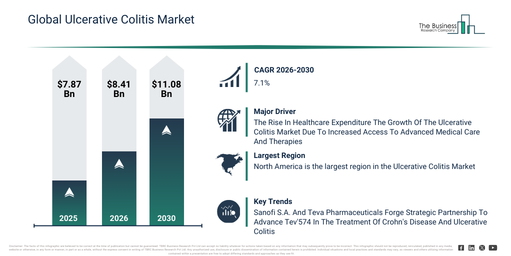
    The market for ulcerative colitis treatments has seen robust expansion recently, projected to increase from $7.87 billion in 2025 to $8.41 billion in 2026, reflecting a compound annual growth rate of 6.9%. During the preceding period, this growth was fueled by several factors, including enhanced access to anti-inflammatory drugs, a higher incidence of inflammatory bowel disease diagnoses, the expansion of specialized gastroenterology services, increased public awareness regarding autoimmune conditions, and progress in endoscopic diagnostic techniques.

    The market for ulcerative colitis is poised for significant expansion over the upcoming years, projected to reach a valuation of $11.08 billion by 2030, driven by a compound annual growth rate (CAGR) of 7.1%. This projected increase is fueled by several key factors, including advancements in the development of innovative biologics, a heightened emphasis on therapeutic approaches that minimize steroid reliance, the broader application of treatments targeting specific immune pathways, the increasing incorporation of digital tools for patient oversight, and escalating investments in inflammatory bowel disease (IBD) research along with ongoing innovation. Dominant trends that will shape this market during the forecast period involve a greater uptake of biologic therapies, a rise in the utilization of small molecule drugs, an intensified focus on tailoring treatment plans to individual patients, the implementation of more comprehensive long-term disease management strategies, and a greater emphasis placed on achieving early and precise diagnoses.

    Download A Free Sample Report For Comprehensive Market Insights:

    https://www.thebusinessresearchcompany.com/sample.aspx?id=10328&type=smp

    Ulcerative Colitis Market Demand Drivers Creating New Revenue Opportunities

    A rise in healthcare spending is anticipated to drive the expansion of the ulcerative colitis market. This sector encompasses all outlays for health-related services, reproductive health initiatives, nutritional programs, and emergency aid, excluding costs associated with water supply and sanitation systems. The upward trend in health expenditure is attributed to sophisticated medical advancements, where novel diagnostic methods, therapeutic interventions, and groundbreaking treatments inherently involve greater expense, thus inflating total healthcare outlays. Enhanced financial investment in healthcare can positively impact individuals with ulcerative colitis by broadening their access to medical attention and treatment options. For example, in December 2024, data released by the Centers for Medicare & Medicaid Services, an American entity overseeing Medicare and Medicaid, revealed that in 2023, health expenditures in the United States saw a 7.5% increase, reaching $4.9 trillion, which equates to approximately $14,570 per person. Consequently, escalating healthcare budgets are fueling the growth trajectory of the ulcerative colitis market.

    Ulcerative Colitis Market Segmentation And Category Breakdown

    The ulcerative colitis market covered in this report is segmented –

    1) By Drug Type: Anti-Inflammatory Drugs, Anti-TNF Biologics, Immunosuppressant, Calcineurin Inhibitors, Other Drug Types

    2) By Disease Type: Ulcerative Proctitis, Proctosigmoiditis, Left-sided Colitis, Pancolitis or Universal Colitis, Fulminant Colitis

    3) By Molecule Type: Biologics, Small Molecules

    4) By Route Of Administration: Oral, Injectables

    5) By End-User: Hospital Pharmacies, Retail Pharmacies, Drug Stores, Other End-User

    Subsegments:

    1) By Anti-Inflammatory Drugs: Aminosalicylates, Corticosteroids

    2) By Anti-TNF Biologics: Infliximab, Adalimumab, Golimumab

    3) By Immunosuppressant: Azathioprine, Mercaptopurine

    4) By Calcineurin Inhibitors: Tacrolimus, Cyclosporine

    5) By Other Drug Types: JAK Inhibitors, Monoclonal Antibodies, Other Novel Therapies

    Ulcerative Colitis Market Trends Driving Strategic Industry Expansion

    Leading entities within the ulcerative colitis therapeutic arena are prioritizing innovative collaborations, specifically through strategic co-development alliances, aimed at expediting the progression of late-stage biological treatments and broadening their international market reach. These strategic co-development partnerships involve formal arrangements where two pharmaceutical firms leverage their collective scientific acumen, clinical research proficiency, and commercial networks to jointly advance and commercialize a treatment candidate, sharing both financial burdens and operational duties. An illustrative example occurred in 2023 when Sanofi S.A., a prominent French pharmaceutical and healthcare corporation, entered into a collaborative alliance with Teva Pharmaceuticals, an American division of Teva Pharmaceutical Industries Ltd., to collaboratively develop and market TEV’574, a biological agent currently in Phase 2b development for both Crohn’s disease and ulcerative colitis. This agreement included an initial payment of €0.469 billion (equivalent to USD 0.50 billion), with the potential to receive up to an additional €0.94 billion (USD 1.0 billion) contingent upon achieving developmental and commercialization benchmarks, alongside a cost- and profit-sharing framework. Under this arrangement, Sanofi will spearhead commercialization efforts in North America, Japan, and Asia, while Teva will assume leadership in Europe, Israel, and specific other territories.

    Ulcerative Colitis Market Competitive Analysis Of Major Industry Participants

    Major companies operating in the ulcerative colitis market are AbbVie Inc., AstraZeneca plc, Bausch Health Companies Inc., Eli Lilly and Co., Johnson & Johnson, GlaxoSmithKline plc, Merck & Co. Inc., Novartis AG, Pfizer Inc., Sanofi S.A., Allergan plc, Bayer AG, Celgene Corporation, Bristol Myers Squibb Company, Takeda Pharmaceutical Company Limited, Genentech Inc., UCB S.A., Shire plc, Ferring Pharmaceuticals Inc., Salix Pharmaceuticals Inc., Dr. Falk Pharma GmbH, Tillotts Pharma AG, Cosmo Pharmaceuticals

    Access The Complete Ulcerative Colitis Market Report:

    https://www.thebusinessresearchcompany.com/report/ulcerative-colitis-global-market-report

    Ulcerative Colitis Market Largest Region By Revenue And Market Share

    North Americawas the largest region in the ulcerative colitis market in 2025. The regions covered in the ulcerative colitis market report are Asia-Pacific, South East Asia, Western Europe, Eastern Europe, North America, South America, Middle East, Africa.

    Get in touch with us:

    The Business Research Company: https://www.thebusinessresearchcompany.com/

    Americas: +1 310-496-7795

    Asia: +44 7882 955267 & +91 8897263534

    Europe: +44 7882 955267

    Email us at: marketing@tbrc.info

    Follow us on:

    LinkedIn: https://in.linkedin.com/company/the-business-research-company

    YouTube: https://www.youtube.com/channel/UC24_fI0rV8cR5DxlCpgmyFQ

    Global Market Model: https://www.thebusinessresearchcompany.com/global-market-model
  • Typhoid Vi Polysaccharide Vaccine Market Forecast Reveals Where Future Industry Value Will Be Created

    Typhoid Vi Polysaccharide Vaccine Market Forecast Reveals Where Future Industry Value Will Be Created

    Enhanced with market attractiveness analysis, total addressable market evaluation, company benchmarking matrices, interactive Excel dashboards, expanded supply chain intelligence, emerging startup coverage, and detailed product insights, The Business Research Company’s 2026 market reports deliver more actionable and strategically valuable research.

    Typhoid Vi Polysaccharide Vaccine Market Expansion From $7.92 Billion In 2026 To $15.5 Billion In 2030

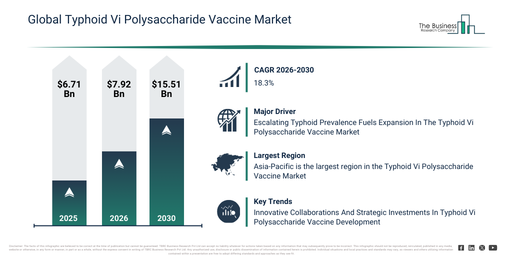
    The market for typhoid vi polysaccharide vaccines experienced notable growth, projected to expand from $6.71 billion in 2025 to $7.92 billion in 2026, reflecting a robust compound annual growth rate of 18.1%. Factors contributing to this expansion during the preceding period included the integration of the vaccine into national immunization programs, heightened public consciousness regarding typhoid prevention, the accessibility of polysaccharide vaccine options, the momentum generated by public vaccination initiatives, and the supportive involvement of international health organizations.

    The market for typhoid vi polysaccharide vaccines is poised for significant expansion over the coming years, with projections indicating a substantial climb to $15.51 billion by 2030. This upward trajectory is underpinned by a robust compound annual growth rate (CAGR) of 18.3%, driven primarily by intensified efforts towards mass immunization campaigns in areas where typhoid is prevalent. Furthermore, increased funding directed towards bolstering vaccine production capabilities, the broadening scope of vaccination initiatives for adults, a heightened awareness of the importance of immunizations for travelers, and the greater utilization of advanced vaccine preservation methods are all contributing factors to this projected growth. Key developments anticipated during this forecast period encompass an escalation in government-sponsored vaccination schemes, a surge in the need for comprehensive childhood immunization coverage, a more pronounced dedication to proactive health measures, the proliferation of collaborative public-private partnerships for vaccine distribution, and a concerted effort to optimize the cold chain logistics essential for vaccine efficacy.

    Download A Free Sample Report For Comprehensive Market Insights:

    https://www.thebusinessresearchcompany.com/sample.aspx?id=8313&type=smp

    Typhoid Vi Polysaccharide Vaccine Market Expansion Supported By Key Demand Factors

    The increasing incidence of typhoid is anticipated to stimulate the expansion of the typhoid Vi polysaccharide vaccine market in the future. This bacterial infection, Salmonella Typhi, poses a potentially lethal threat and is predominantly transmitted via contaminated ingestibles or liquids. Factors contributing to the surge in typhoid cases include inadequate sanitation infrastructure, compromised water supplies, rapid urban expansion, and heightened exposure to tainted food and beverages. To combat this, the typhoid Vi polysaccharide vaccine market offers a vital immunization option for individuals aged two years and above, both adults and children, thereby conferring protection against Salmonella enterica serovar Typhi and alleviating the impact of typhoid fever in areas where it is prevalent. For illustrative purposes, data from the UK Health Security Agency, released in August 2024, indicated a rise in laboratory-confirmed symptomatic enteric fever cases across England, Wales, and Northern Ireland, with Salmonella Typhi accounting for 313 instances, Salmonella Paratyphi A for 135, and Salmonella Paratyphi B for 18. Consequently, the escalating prevalence of typhoid is a key driver for the growth of the typhoid Vi polysaccharide vaccine market.

    The proliferation of immunization initiatives is poised to accelerate the development of the typhoid Vi polysaccharide vaccine market. These campaigns are defined by methodologies designed for efficient vaccine delivery to extensive populations at national or regional scales. The impetus behind the expansion of such campaigns stems from an intensified public health emphasis on preventing typhoid in regions with a high disease burden and the critical necessity to curb antibiotic resistance through broad vaccination efforts. Such widespread immunization campaigns bolster the typhoid Vi polysaccharide vaccine by enhancing its visibility, ensuring easier access, and increasing uptake rates, which collectively contribute to a reduction in both the occurrence and spread of typhoid fever. As an example, the UK Health Security Agency, a governmental body in the United Kingdom, reported in June 2023 that a total of 3,502,566 children, spanning Reception to Year 9, received vaccinations through the school-aged program during the 2022–2023 period. Therefore, the expanding scope of immunization campaigns serves as a significant driver for the growth of the typhoid Vi polysaccharide vaccine market.

    Typhoid Vi Polysaccharide Vaccine Market Segment Outlook: Which Categories Are Expanding The Fastest?

    The typhoid vi polysaccharide vaccine market covered in this report is segmented –

    1) By Type: Child, Adult

    2) By Route Of Administration: Oral, Parenteral

    3) By Application: Government Institution, Private Sector, Other Applications

    Subsegments:

    1) By Child: Pediatric Formulations, Age-Specific Dosages

    2) By Adult: Standard Adult Formulations, High-Risk Population Formulations

    Typhoid Vi Polysaccharide Vaccine Market Growth Trends Influencing Competitive Dynamics

    Key players within the typhoid Vi polysaccharide vaccine sector are actively working to solidify their standing by making strategic financial commitments, including the establishment of funding collaborations for advanced vaccine delivery systems, with the objective of spurring innovation and broadening the scope of worldwide vaccination efforts. These collaborations for next-generation vaccine delivery platforms involve joint investment endeavors designed to cultivate more effective typhoid vaccination methodologies, specifically those that are administered without needles, remain stable at various temperatures, and are straightforward to deploy, thereby improving accessibility, coverage, and adherence in areas with limited resources. An illustrative example is the August 2023 arrangement where SK Bioscience, a biotechnology firm headquartered in South Korea, in conjunction with Vaxxas, an Australian biotechnology enterprise known for its expertise in needle-free vaccine delivery, obtained AUD 0.0054 billion (equivalent to USD 0.00367 billion) in financial backing from Wellcome, a charitable foundation based in the UK, to advance the development of a typhoid conjugate vaccine intended for delivery via a needle-free high-density microarray patch (HD-MAP). This groundbreaking development incorporates a micro-projection patch that obviates the necessity for conventional needles, offers thermal stability crucial for deployment in regions with underdeveloped infrastructure, and presents the possibility of a simplified, painless administration process, all aimed at enhancing the worldwide adoption of typhoid immunization.

    Typhoid Vi Polysaccharide Vaccine Market Key Companies And Competitive Benchmarking

    Major companies operating in the typhoid vi polysaccharide vaccine market are Sanofi S.A., Merck & Co. Inc., PT Bio Farma, Bharat Biotech International Limited, Bio-Med Pvt. Ltd., Hualan Biological Engineering Inc., Indian Immunologicals Limited, Serum Institute of India Limited, Biological E Limited, Panacea Biotec Limited, Zydus Lifesciences Limited, Beijing Minhai Biotechnology Co. Ltd., Lanzhou Institute of Biological Products Co. Ltd., Chengdu Institute of Biological Products Co. Ltd., Wuhan Institute of Biological Products Co. Ltd., Eubiologics Co. Ltd., Incepta Vaccine Limited, GC Pharma, KM Biologics Inc., Bharat Immunologicals and Biologicals Corporation Limited, Sinovac Biotech Ltd., Bio Farma Indonesia

    Access The Complete Typhoid Vi Polysaccharide Vaccine Market Report:

    https://www.thebusinessresearchcompany.com/report/typhoid-vi-polysaccharide-vaccine-global-market-report

    Typhoid Vi Polysaccharide Vaccine Market Regional Analysis And Leading Geography

    Asia-Pacificwas the largest region in the typhoid Vi polysaccharide vaccine market share in 2025. The regions covered in the typhoid vi polysaccharide vaccine market report are Asia-Pacific, South East Asia, Western Europe, Eastern Europe, North America, South America, Middle East, Africa.

    Get in touch with us:

    The Business Research Company: https://www.thebusinessresearchcompany.com/

    Americas: +1 310-496-7795

    Asia: +44 7882 955267 & +91 8897263534

    Europe: +44 7882 955267

    Email us at: marketing@tbrc.info

    Follow us on:

    LinkedIn: https://in.linkedin.com/company/the-business-research-company

    YouTube: https://www.youtube.com/channel/UC24_fI0rV8cR5DxlCpgmyFQ

    Global Market Model: https://www.thebusinessresearchcompany.com/global-market-model

  • Typhoid Antibody Testing Market Growth Through 2030 Creates New Strategic Opportunities

    Typhoid Antibody Testing Market Growth Through 2030 Creates New Strategic Opportunities

    Through market attractiveness analysis, total addressable market evaluation, company benchmarking matrices, interactive Excel dashboards, expanded supply chain intelligence, emerging startup coverage, and detailed product insights, The Business Research Company’s 2026 market reports provide more actionable and strategically valuable research.

    Typhoid Antibody Testing Market Forecast Highlighting Growth From $9.1 Billion To $11.86 Billion

    The market for typhoid antibody testing has experienced robust expansion, projected to increase from $8.45 billion in 2025 to $9.1 billion in 2026, reflecting a compound annual growth rate of 7.8%. This historical upward trend is largely attributable to an escalating incidence of typhoid fever in regions where it is endemic, the broader implementation of public health screening initiatives, enhanced accessibility of serological diagnostic techniques, the proliferation of diagnostic laboratory capabilities, and a heightened consciousness regarding the management of infectious diseases.

    The market for typhoid antibody testing is poised for substantial expansion, projected to reach $11.87 billion by 2030, reflecting a compound annual growth rate of 6.9%. This anticipated growth over the forecast period is driven by several key factors, including a surging need for swift and precise diagnostic solutions, the proliferation of testing capabilities outside traditional laboratory settings, increased financial backing for cutting-edge immunoassay advancements, a heightened emphasis on readiness for disease outbreaks, and a growing embrace of digital laboratory infrastructure. Furthermore, significant trends shaping this market during the forecast years encompass a greater utilization of rapid diagnostic test kits, a mounting demand for point-of-care typhoid diagnostic tools, expanded application of ELISA-based assays, wider deployment of laboratory automation in diagnostic processes, and an intensified concentration on detecting the disease in its early stages.

    Download A Free Sample Report For Comprehensive Market Insights:

    https://www.thebusinessresearchcompany.com/sample.aspx?id=16815&type=smp

    Typhoid Antibody Testing Market Growth Drivers And Industry Catalysts

    The increasing prevalence of diseases transmitted through water is anticipated to be a significant catalyst for the expansion of the typhoid antibody testing market. These waterborne illnesses, stemming from harmful microbes present in contaminated water sources, are frequently exacerbated by inadequate sanitation and hygiene practices, limited access to potable water, burgeoning urbanization, climatic shifts, and agricultural discharge into waterways. Typhoid antibody testing plays a crucial role in addressing this trend by facilitating prompt diagnosis, confirming infection, and assessing treatment effectiveness, which in turn assists in identifying individuals who carry the typhoid fever pathogen and aids in implementing strategies to prevent further waterborne infections. For example, data from the Coalition against Typhoid, a US-based entity focused on averting typhoid and related invasive salmonellosis, revealed that the Philippines documented 4,440 instances of typhoid between January 1 and April 15, 2023. This figure represents a substantial 77% surge when contrasted with the corresponding timeframe in 2022, underscoring the direct correlation between the escalation of waterborne disease incidents and the heightened demand within the typhoid antibody testing sector.

    Typhoid Antibody Testing Market Segment Landscape: Which Areas Lead Market Development?

    The typhoid antibody testing market covered in this report is segmented –

    1) By Product Type: Rapid Serological Tests, Hem-agglutination And Co-agglutination, Counter Immunoelectrophoresis, Typhidot Test, Widal Test

    2) By Paratyphi Type: Paratyphi A, Paratyphi B, Paratyphi C

    3) By End-User: Hospitals, Serological Testing Centers, Clinics, Diagnostic Centers, Other End Users

    Subsegments:

    1) By Rapid Serological Tests: Lateral Flow Immunoassays (LFIA), Immunochromatographic Tests (ICT), Enzyme-Linked Immunosorbent Assays (ELISA)

    2) By Hem-agglutination And Co-agglutination: Hemagglutination Assay, Co-agglutination Assay

    3) By Counter Immunoelectrophoresis: Gel-Based Counter Immunoelectrophoresis, Paper-Based Counter Immunoelectrophoresis

    4) By Typhidot Test: Typhidot-M (IgM) Test, Typhidot-G (IgG) Test

    5) By Widal Test: Tube Widal Test, Slide Widal Test

    #Typhoid Antibody Testing Market Trends Influencing Long-Term Demand

    The typhoid antibody testing market is experiencing a strong push from leading enterprises toward the creation of pioneering solutions, specifically molecular diagnostic tests, aimed at improving both the precision and swiftness of diagnosing typhoid fever. These molecular diagnostic tests boast elevated levels of sensitivity and specificity, thereby enabling precise and prompt identification of causative agents such as Salmonella Typhi in individuals suspected of having typhoid fever. To illustrate, in April of 2023, Vanguard Diagnostics, a company based in India specializing in diagnostic reagents, introduced the VANSCAN typhoid RT PCR test, a molecular diagnostic test leveraging its proprietary technology. This test is engineered for the detection and diagnosis of typhoid fever utilizing a real-time PCR (RT-PCR) testing methodology, which surpasses traditional serological tests in accuracy and sensitivity. The VANSCAN Typhoid RT PCR Test represents a considerable leap forward in how typhoid is diagnosed, setting a new benchmark for early, precise, and dependable disease identification within India and on a worldwide scale.

    Typhoid Antibody Testing Market Industry Leaders And Market Competition

    Major companies operating in the typhoid antibody testing market are Thermo Fisher Scientific Inc., Abbott Laboratories, Siemens Healthineers AG, Quest Diagnostics Inc., bioMerieux SA, Bio-Rad Laboratories Inc., DiaSorin S.p.A., Meridian Bioscience Inc., Sekisui Diagnostics, CTK Biotech Inc., Creative Diagnostics, Fortress Diagnostics Ltd., CerTest Biotec S.L, InBios International Inc., J. Mitra & Co. Pvt. Ltd, AccuBioTech Co. Ltd, Vanguard Diagnostics Pvt. Ltd., Suburban Diagnostics India Private Limited, Biorex Diagnostics, Genebio Healthcare Private Limited, ICT Diagnostics

    Access The Complete Typhoid Antibody Testing Market Report:

    https://www.thebusinessresearchcompany.com/report/typhoid-antibody-testing-global-market-report

    Typhoid Antibody Testing Market Geographic Analysis: Where Is Demand Growing The Fastest?

    Asia-Pacificwas the largest region in the typhoid antibody testing market in 2025. The regions covered in the typhoid antibody testing market report are Asia-Pacific, South East Asia, Western Europe, Eastern Europe, North America, South America, Middle East, Africa.

    Get in touch with us:

    The Business Research Company: https://www.thebusinessresearchcompany.com/

    Americas: +1 310-496-7795

    Asia: +44 7882 955267 & +91 8897263534

    Europe: +44 7882 955267

    Email us at: marketing@tbrc.info

    Follow us on:

    LinkedIn: https://in.linkedin.com/company/the-business-research-company

    YouTube: https://www.youtube.com/channel/UC24_fI0rV8cR5DxlCpgmyFQ

    Global Market Model: https://www.thebusinessresearchcompany.com/global-market-model

  • Type 2 Diabetes Market Size Projected To Increase From $55.52 Billion To $78.66 Billion During The Forecast Period

    Type 2 Diabetes Market Size Projected To Increase From $55.52 Billion To $78.66 Billion During The Forecast Period

    Delivering more actionable and strategically valuable research, The Business Research Company’s 2026 market reports feature market attractiveness analysis, total addressable market evaluation, company benchmarking matrices, interactive Excel dashboards, expanded supply chain intelligence, emerging startup coverage, and detailed product insights.

    Type 2 Diabetes Market Revenue Growth Supported By A CAGR Of 78.66% Through 2030

    The market for type 2 diabetes treatments has experienced robust expansion. Projections indicate a rise from $51.47 billion in 2025 to $55.53 billion by 2026, reflecting a compound annual growth rate of 7.9%. Key factors contributing to the market’s historical surge include the escalating worldwide incidence of obesity, a rise in physically inactive lifestyles, broader accessibility to oral antidiabetic medications, enhanced detection of metabolic conditions, and improvements in accessing foundational diabetes care.

    The market for type 2 diabetes treatments is poised for significant expansion, with projections indicating a substantial increase to $78.67 billion by the year 2030, reflecting a compound annual growth rate of 9.1%. This anticipated surge is fueled by several key factors, including a heightened demand for therapeutic options that prioritize weight management, a growing tendency towards individualized diabetes care strategies, the broadening reach of digital health solutions, an intensified focus on preventing the onset of diabetes, and increased investment in the development of innovative antidiabetic medications. Furthermore, prevailing trends expected to shape this market during the forecast period encompass a greater utilization of GLP-1 receptor agonists, an elevated emphasis on managing cardiometabolic risks concurrently, a rise in the application of combination therapies, the wider integration of lifestyle-based treatment modalities, and a stronger commitment to achieving sustained glycemic control over the long term.

    Download A Free Sample Report For Comprehensive Market Insights:

    https://www.thebusinessresearchcompany.com/sample.aspx?id=13050&type=smp

    Type 2 Diabetes Market Opportunity Drivers: What Is Creating New Revenue Potential?

    The escalating prevalence of obesity and cardiovascular ailments is anticipated to be a significant catalyst for the expansion of the type 2 diabetes market. Obesity, characterized by an unhealthy accumulation of body fat, and heart disease, encompassing various conditions affecting the heart and its vasculature, are closely linked to the rise of type 2 diabetes. Excessive weight gain heightens the likelihood of insulin resistance, resulting in elevated blood glucose levels and the subsequent onset of type 2 diabetes. Conversely, persistently high blood sugar can inflict damage upon the blood vessels and the neural pathways governing cardiovascular function, thereby contributing to heart disease. As an illustration, a report issued in March 2024 by the World Health Organization (WHO), an international body headquartered in Switzerland, indicated that nearly 12.5% of the global population faces the challenge of obesity, with 2.5 billion adults (18 and above) being overweight, and 890 million of these individuals classified as obese. Within the adult demographic, 43% were identified as overweight, and 16% met the criteria for obesity. Furthermore, the figure for overweight children under five years of age stood at 37 million. Consequently, the increasing incidence of obesity and heart disease is a direct driver behind the growth observed in the type 2 diabetes market.

    Type 2 Diabetes Market Segments: Where Are The Largest Growth Opportunities?

    The type 2 diabetes market covered in this report is segmented –

    1) By Drug Class: Dipeptidyl Peptidase-4 (DPP-4) Inhibitors, Glucagon-Like Peptide-1 (GLP-1) Receptor Agonists, Thiazolidinediones, Alpha-Glucosidase Inhibitors, Sulfonylureas And Insulin Secretagogues, Biguanides, SodiumGlucose Cotransporter 2 Inhibitors, Other Drug Classes

    2) By Application: Glycemic Control, Cardiovascular Safety, Hypoglycemia Avoidance, Other Applications

    3) By End-User: Children, Adults

    Subsegments:

    1) By Dipeptidyl Peptidase-4 (DPP-4) Inhibitors: Sitagliptin, Saxagliptin, Linagliptin, Alogliptin

    2) By Glucagon-Like Peptide-1 (GLP-1) Receptor Agonists: Liraglutide, Semaglutide, Dulaglutide, Exenatide

    3) By Thiazolidinediones: Pioglitazone, Rosiglitazone

    4) By Alpha-Glucosidase Inhibitors: Acarbose, Miglitol

    5) By Sulfonylureas And Insulin Secretagogues: Glimepiride, Glipizide, Glyburide

    6) By Biguanides: Metformin, Buformin, Phenformin

    7) By Sodium-Glucose Cotransporter 2 Inhibitors: Canagliflozin, Dapagliflozin, Empagliflozin

    8) By Other Drug Classes: Amylin Analogues, Bile Acid Sequestrants, Dopamine Agonists

    Type 2 Diabetes Market Innovation Trends Driving Future Development

    Leading pharmaceutical firms in the type 2 diabetes sector are prioritizing the creation of innovative treatments, specifically dual-action SGLT2/GLP-1 therapies with expanded uses, aiming to achieve superior blood sugar management, mitigate associated health complications, and boost patient compliance. These combined SGLT2 inhibitor and GLP-1 receptor agonist therapies, also available as fixed-dose preparations, are designed to concurrently address glucose regulation, weight management, and cardiovascular and kidney health in individuals diagnosed with type 2 diabetes. A notable development occurred in June 2024 when AstraZeneca, a biopharmaceutical giant, secured U.S. FDA authorization for Farxiga (dapagliflozin) to treat type 2 diabetes in pediatric patients aged 10 and above, signifying a strategic move to encompass a wider demographic beyond adults. This advancement provides a convenient once-daily oral option for younger individuals, incorporates comprehensive data on cardioprotective and renoprotective benefits, and facilitates market penetration into pediatric and nascent stages of type 2 diabetes, thereby propelling the expansion of the worldwide type 2 diabetes market.

    Type 2 Diabetes Market Major Participants And Competitive Dynamics

    Major companies operating in the type 2 diabetes market are F. Hoffmann-La Roche AG, Merck and Co. Inc, Novartis AG, AstraZeneca plc, Abbott Laboratories, Sanofi SA, Medtronic plc, Takeda Pharmaceutical Company, GlaxoSmithKline plc, Eli Lilly and Company, Novo Nordisk A/S, Johnson And Johnson Private Limited, Daiichi Sankyo Co. Ltd, Boehringer Ingelheim International GmbH, Dexcom Inc, Amgen Inc., Insulet Corporation, Ascensia Diabetes Care, Beta Bionics, Onduo LLC, DarioHealth, One Drop, Bigfoot Biomedical Inc., Digbi Health, MySugr GmbH, Senseonics Holdings Inc., Provention Bio Inc., Vida Health Inc., Diathrive Health

    Access The Complete Type 2 Diabetes Market Report:

    https://www.thebusinessresearchcompany.com/report/type-2-diabetes-global-market-report

    Type 2 Diabetes Market Global Footprint: Which Region Holds Market Leadership?

    North Americawas the largest region in the type 2 diabetes market in 2025. Europeis expected to be the fastest-growing region in the forecast period. The regions covered in the type 2 diabetes market report are Asia-Pacific, South East Asia, Western Europe, Eastern Europe, North America, South America, Middle East, Africa.

    Get in touch with us:

    The Business Research Company: https://www.thebusinessresearchcompany.com/

    Americas: +1 310-496-7795

    Asia: +44 7882 955267 & +91 8897263534

    Europe: +44 7882 955267

    Email us at: marketing@tbrc.info

    Follow us on:

    LinkedIn: https://in.linkedin.com/company/the-business-research-company

    YouTube: https://www.youtube.com/channel/UC24_fI0rV8cR5DxlCpgmyFQ

    Global Market Model: https://www.thebusinessresearchcompany.com/global-market-model

  • Type 1 Diabetes Market Growth Outlook Reveals A CAGR Of 13.9% And A Market Value Of $25.73 Billion By 2030

    Type 1 Diabetes Market Growth Outlook Reveals A CAGR Of 13.9% And A Market Value Of $25.73 Billion By 2030

    Enhanced with market attractiveness analysis, total addressable market evaluation, company benchmarking matrices, interactive Excel dashboards, expanded supply chain intelligence, emerging startup coverage, and detailed product insights, The Business Research Company’s 2026 market reports deliver more actionable and strategically valuable research.

    Type 1 Diabetes Market Value Expansion And Long-Term Growth Outlook

    The market for type 1 diabetes experienced substantial expansion recently, projected to increase from $13.5 billion in 2025 to $15.27 billion in 2026, reflecting a compound annual growth rate of 13.1%. This growth during the preceding period was fueled by several factors, including enhanced access to insulin variants, a surge in diagnoses among younger individuals, the proliferation of specialized diabetes care facilities, heightened public understanding of autoimmune diabetes, and significant progress in glucose monitoring systems.

    The global market for type 1 diabetes therapeutics is projected for significant expansion in the coming years, reaching an estimated $25.73 billion by 2030, fueled by a compound annual growth rate of 13.9%. This projected surge is underpinned by several key factors, including the increasing integration of closed-loop insulin delivery systems, heightened financial commitment to immunotherapy research, a greater emphasis on treatments aimed at modifying the disease’s progression, the proliferation of digital tools for diabetes management, and a growing consumer preference for patient-focused care strategies. Within this expanding market, several prominent trends are expected to shape its trajectory, such as the broader acceptance of continuous glucose monitoring devices, a rise in the utilization of insulin pump technology, a stronger push towards individualized insulin regimens, the development and application of combination therapy strategies, and a more pronounced focus on early detection and effective disease management.

    Download A Free Sample Report For Comprehensive Market Insights:

    https://www.thebusinessresearchcompany.com/sample.aspx?id=12872&type=smp

    Type 1 Diabetes Market Growth Momentum: Which Factors Are Influencing Demand?

    The global population of women is poised to significantly fuel the expansion of the Turner syndrome market. This demographic surge, characterized by a growing number of females worldwide, is primarily attributed to enhanced longevity stemming from advancements in healthcare infrastructure and evolving demographic trends. In response, the Turner syndrome market provides crucial therapeutic avenues, including growth hormone treatments and estrogen replacement therapies, alongside comprehensive multidisciplinary care designed to foster optimal physical development, reproductive health, and sustained overall wellness for affected individuals. Illustratively, data from the U.S. Census Bureau indicated a female population of 0.168 billion in the United States as of July 2022, while Statistics Canada reported that the female demographic between the ages of 15 and 64 reached 0.01304 billion in 2023. Consequently, the expanding female population represents a key driver for the burgeoning Turner syndrome market.

    Type 1 Diabetes Market Segment Analysis: What Are The Major Market Categories?

    The type 1 diabetes market covered in this report is segmented –

    1) By Product Type: Rapid Acting Insulin Analogs, Long-Acting Insulin Analogs, Premix Insulin Analogs, Others Product Types

    2) By Device: Insulin Pump, Insulin Pen, Blood Glucose Meter

    3) By Application: Childrens, Adults

    4) By End-User: Hospital, Research Institutes, Home Care

    Subsegments:

    1) By Rapid Acting Insulin Analogs: Insulin Lispro, Insulin Aspart, Insulin Glulisine

    2) By Long-Acting Insulin Analogs: Insulin Detemir, Insulin Glargine, Insulin Degludec

    3) By Premix Insulin Analogs: Premixed Insulin Lispro, Premixed Insulin Aspart, Premixed Insulin Glargine

    4) By Other Product Types: Insulin Pumps, Continuous Glucose Monitoring Systems, Non-Insulin Medications, Combination Therapies

    Type 1 Diabetes Market Trends Reshaping Industry Growth

    Leading entities within the type 1 diabetes sector are directing their efforts toward pioneering sophisticated treatments, notably allogeneic islet cell transplantation, designed to provide replacement of functional beta cells and diminish reliance on insulin for individuals afflicted with type 1 diabetes. This particular transplantation method involves introducing pancreatic islet cells from a donor into the patient’s portal vein in the liver, with the objective of reestablishing the body’s own insulin generation and thereby decreasing the occurrences of dangerously low blood sugar and the need for insulin administrations. As an illustration, in June of 2023, CellTrans Inc., a biotechnology firm headquartered in the United States, secured authorization from the U.S. Food and Drug Administration (FDA) for Lantidra (donislecel), which stands as the inaugural cellular therapy developed to manage type 1 diabetes patients. This regulatory endorsement represents a pivotal advancement in the field of regenerative medicine, presenting a prospective enduring therapeutic solution for those with type 1 diabetes who face persistent challenges with their dependence on insulin. The mechanism of action for Lantidra involves substituting the insulin-secreting cells that have been compromised by the immune system, intending to reinstate the body’s inherent capacity to maintain stable blood glucose levels.

    Type 1 Diabetes Market Leading Companies Driving Competitive Growth

    Major companies operating in the type 1 diabetes market are Johnson and Johnson Limited, Merck and Co. Inc., Sanofi-Aventis LLC, Abbott Laboratories, Medtronic Plc, Eli Lilly and Co Ltd, Novo Nordisk A/S, Dexcom Inc, Insulet Corporation, Tandem Diabetes Care Inc, Adaptive Biotechnologies Corporation, Xeris Pharmaceuticals Inc, MannKind Corporation, Biocon Ltd, Virta Health Corp, Bigfoot Biomedical Inc, ViaCyte Inc, Beta Bionics Inc, Adocia SA, Senseonics Holdings Inc, Zealand Pharmaceuticals A/S, Provention Bio Inc

    Access The Complete Type 1 Diabetes Market Report:

    https://www.thebusinessresearchcompany.com/report/type-1-diabetes-global-market-report

    Type 1 Diabetes Market Regional Distribution: Which Areas Drive Market Expansion?

    North Americawas the largest region in the type 1 diabetes market in 2025. The regions covered in the type 1 diabetes market report are Asia-Pacific, South East Asia, Western Europe, Eastern Europe, North America, South America, Middle East, Africa.

    Get in touch with us:

    The Business Research Company: https://www.thebusinessresearchcompany.com/

    Americas: +1 310-496-7795

    Asia: +44 7882 955267 & +91 8897263534

    Europe: +44 7882 955267

    Email us at: marketing@tbrc.info

    Follow us on:

    LinkedIn: https://in.linkedin.com/company/the-business-research-company

    YouTube: https://www.youtube.com/channel/UC24_fI0rV8cR5DxlCpgmyFQ

    Global Market Model: https://www.thebusinessresearchcompany.com/global-market-model
  • Twin-Twin Transfusion Syndrome Treatment Market Forecast Highlights Expansion From $0.82 Billion To $1.05 Billion Through 2030

    Twin-Twin Transfusion Syndrome Treatment Market Forecast Highlights Expansion From $0.82 Billion To $1.05 Billion Through 2030

    Through market attractiveness analysis, total addressable market evaluation, company benchmarking matrices, interactive Excel dashboards, expanded supply chain intelligence, emerging startup coverage, and detailed product insights, The Business Research Company’s 2026 market reports provide more actionable and strategically valuable research.

    Twin-Twin Transfusion Syndrome Treatment Market Expected To Reach $1.05 Billion By 2030 At 6.6% CAGR

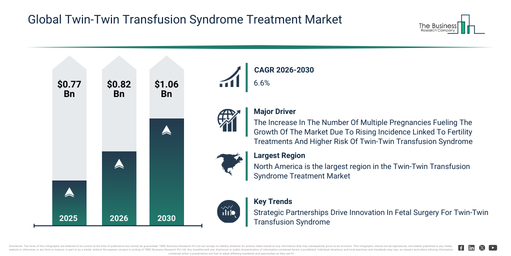
    The market for twin-twin transfusion syndrome treatments has experienced robust expansion recently, projecting a climb from $0.77 billion in 2025 to $0.82 billion in 2026, reflecting a compound annual growth rate of 6.8%. This historical growth trajectory has been propelled by several key factors, including heightened utilization of prenatal ultrasound screening, significant progress in fetal medicine methodologies, escalating awareness concerning the perils associated with monochorionic twins, the accessibility of laser photocoagulation interventions, and the broadening scope of maternal healthcare provision.

    Anticipating robust expansion, the market for twin-twin transfusion syndrome treatments is projected to reach $1.06 billion by 2030, exhibiting a compound annual growth rate of 6.6%. This anticipated surge is propelled by several key factors, including progress in minimally invasive fetal surgical techniques, escalating investments in maternal-fetal medicine, the proliferation of dedicated prenatal care facilities, increased demand for prompt intervention strategies, and enhanced survival rates for affected twin gestations. During this forecast period, significant trends are expected to shape the market, such as a greater embrace of fetoscopic laser interventions, wider utilization of sophisticated prenatal diagnostic imaging, a heightened focus on the early detection of TTTS, the development of more specialized fetal surgery centers, and the strengthening of integrated maternal-fetal healthcare approaches.

    Download A Free Sample Report For Comprehensive Market Insights:

    https://www.thebusinessresearchcompany.com/sample.aspx?id=23549&type=smp

    Twin-Twin Transfusion Syndrome Treatment Market Expansion Drivers: What Is Shaping Future Growth?

    The escalating occurrence of multiple gestations is poised to be a significant catalyst for the expansion of the twin-twin transfusion syndrome treatment market. Multiple pregnancies, characterized by the presence of more than one developing fetus, such as twins, triplets, or higher-order multiples, are becoming more prevalent. This surge is largely attributed to advancements in fertility treatments designed to stimulate ovulation, resulting in the release of multiple eggs. In the context of multiple pregnancies, twin-twin transfusion syndrome treatment strategically addresses aberrant vascular linkages within the shared placenta, thereby facilitating the normalization of blood circulation between the fetuses. Such interventions substantially improve the prospects of survival and mitigate the likelihood of adverse outcomes for both infants. Illustrating this trend, data from Twins Research Australia, a research organization based in Australia, indicated that in September 2023, Australia documented 4,118 multiple births, representing 1.5% of the nation’s total 286,998 births. Of these, twins constituted the predominant proportion, numbering 4,073 instances (approximately 99%), with only 45 births (1%) involving triplets or higher-order multiples. Consequently, the growing incidence of multiple pregnancies is a key factor driving the market for twin-twin transfusion syndrome treatment.

    Twin-Twin Transfusion Syndrome Treatment Market Segment Breakdown: Which Categories Generate The Most Revenue?

    The twin-twin transfusion syndrome treatment market covered in this report is segmented –

    1) By Treatment Type: Laser Therapy, Surgery, Blood Transfusion, Medication

    2) By Diagnosis Method: Ultrasound, Blood Tests, Amniocentesis

    3) By Mode Of Administration: Injectable, Oral, Other Modes Of Administration

    4) By Symptoms: Breathlessness, Tightness In The Abdomen, Rapid Expansion Of Abdomen, Rapid Weight Gain, Pressure On The Stomach, Premature Contractions

    5) By End-User: Hospitals, Homecare, Specialty Clinics, Other End-Users

    Subsegments:-

    1) By Laser Therapy: Fetoscopic Laser Photocoagulation, Selective Laser Ablation, Solomon Technique

    2) By Surgery: Amnioreduction Surgery, Septostomy, Fetoscopic Cord Coagulation

    3) By Blood Transfusion: Intrauterine Transfusion (IUT), Intraperitoneal Transfusion, Intravascular Transfusion

    4) By Medication: Tocolytics, Corticosteroids, Anti-Inflammatory Drugs, Antibiotics

    Twin-Twin Transfusion Syndrome Treatment Market Strategic Trends: What Is Defining The Next Phase Of Growth?

    Within the twin-twin transfusion syndrome treatment market, leading enterprises are prioritizing collaborative ventures to expedite the creation and market introduction of sophisticated treatment options. Such strategic alliances represent enduring cooperative agreements among distinct entities designed to accomplish common business objectives, enabling each participant to capitalize on complementary strengths, assets, or market presence for reciprocal advantage. Illustrating this trend, as of January 2023, CHA Hollywood Presbyterian Medical Center, a comprehensive healthcare services provider based in the United States, engaged in a partnership with Los Angeles Fetal Surgery, also a US-based medical facility, to inaugurate an innovative and life-sustaining fetal surgery program. This program, distinguished as one of a limited number available in the U.S., provides sophisticated, minimally invasive interventions for fetuses diagnosed with serious conditions, including spina bifida and twin-twin transfusion syndrome.

    Twin-Twin Transfusion Syndrome Treatment Market Key Players And Strategic Industry Positioning

    Major companies operating in the twin-twin transfusion syndrome treatment market are Mayo Foundation for Medical Education and Research, USF Health, Johns Hopkins Medicine, University Hospitals, Seattle Children’s Hospital, Texas Children’s Hospital, Cincinnati Children’s Hospital Medical Center, Apollo Hospitals, Tampa General Hospital, Children’s Hospital Colorado, UCSF Health, King’s College Hospital, The Children’s Hospital of Philadelphia, Riley Children’s Health, Yale School of Medicine, Lurie Children’s Hospital, Rainbow Children’s Hospital, UNC Department of Obstetrics & Gynecology, UC Davis Fetal Care and Treatment Center, SJD Barcelona Children’s Hospital, Children’s Minnesota Midwest Fetal Care Center, Boston Children’s Hospital, Nationwide Children’s Hospital Fetal Center

    Access The Complete Twin-Twin Transfusion Syndrome Treatment Market Report:

    https://www.thebusinessresearchcompany.com/report/twin-twin-transfusion-syndrome-treatment-global-market-report

    Twin-Twin Transfusion Syndrome Treatment Market Leading Geography: Which Region Generates The Most Revenue?

    North Americawas the largest region in the twin-twin transfusion syndrome treatment market in 2025. The regions covered in the twin-twin transfusion syndrome treatment market report are Asia-Pacific, South East Asia, Western Europe, Eastern Europe, North America, South America, Middle East, Africa.

    Get in touch with us:

    The Business Research Company: https://www.thebusinessresearchcompany.com/

    Americas: +1 310-496-7795

    Asia: +44 7882 955267 & +91 8897263534

    Europe: +44 7882 955267

    Email us at: marketing@tbrc.info

    Follow us on:

    LinkedIn: https://in.linkedin.com/company/the-business-research-company

    YouTube: https://www.youtube.com/channel/UC24_fI0rV8cR5DxlCpgmyFQ

    Global Market Model: https://www.thebusinessresearchcompany.com/global-market-model
  • Turner Syndrome Market Expected To Reach $3.63 Billion By 2030 As Growth Accelerates At 7.4% CAGR

    Turner Syndrome Market Expected To Reach $3.63 Billion By 2030 As Growth Accelerates At 7.4% CAGR

    Delivering more actionable and strategically valuable research, The Business Research Company’s 2026 market reports feature market attractiveness analysis, total addressable market evaluation, company benchmarking matrices, interactive Excel dashboards, expanded supply chain intelligence, emerging startup coverage, and detailed product insights.

    Turner Syndrome Market Size And Revenue Forecast Through 2030

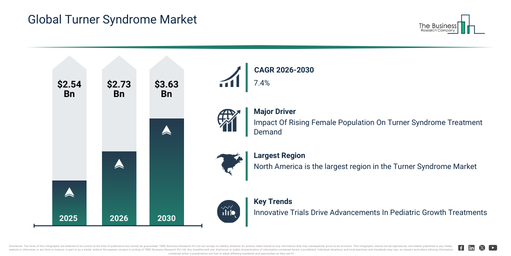
    The global market for Turner syndrome treatments has experienced robust expansion, projected to increase from $2.54 billion in 2025 to $2.73 billion by 2026, reflecting a compound annual growth rate of 7.6%. This upward trajectory in the historical period is underpinned by several key factors including heightened public understanding of genetic conditions, broader access to recombinant growth hormone therapies, the development of pediatric endocrinology services, advancements in diagnostic karyotyping, and the growing impact of patient advocacy groups.

    Experiencing robust expansion, the turner syndrome market is projected to reach $3.63 billion by the year 2030, driven by a compound annual growth rate of 7.4%. Key factors fueling this anticipated growth encompass strides in genetic screening, escalating utilization of tailored hormone treatments, the broadening availability of home healthcare solutions, intensified funding for rare disease investigations, and enhancements in sustained patient well-being. Within the projected timeframe, significant trends are anticipated to emerge, including a heightened emphasis on prompt genetic identification, increased reliance on growth hormone interventions, a greater focus on continuous management of the condition throughout a patient’s life, the development of integrated care approaches involving multiple specialists, and refined patient oversight mechanisms.

    Download A Free Sample Report For Comprehensive Market Insights:

    https://www.thebusinessresearchcompany.com/sample.aspx?id=21310&type=smp

    Turner Syndrome Market Development Factors: Which Trends Are Supporting Demand?

    A growing female demographic is anticipated to be a key driver for the Turner syndrome market’s expansion. This expanding demographic, reflecting the total number of females in a given area or worldwide, is influenced by extended female lifespans, a result of advancements in healthcare and demographic shifts. The Turner syndrome market contributes to this demographic by providing essential treatments such as growth hormone therapy, estrogen replacement, and comprehensive multidisciplinary care, all aimed at improving physical development, reproductive functions, and sustained long-term health. For example, data from the U.S. Census Bureau indicated that the United States had 0.168 billion females as of July 2022, and Statistics Canada reported an increase in the female population aged 15–64 from 0.01296 billion in 2022 to 0.01304 billion in 2023. Consequently, this rising number of females directly fuels the growth trajectory of the Turner syndrome market.

    Turner Syndrome Market Segmentation: How Is The Market Structured Across Key Categories?

    The turner syndrome market covered in this report is segmented –

    1) By Type: Classical Turner Syndrome, Mosaic Turner syndrome

    2) By Therapy Type: Growth Hormone Therapy, Estrogen And Progesteron, Replacement Therapy, Other Therapy Types

    3) By Drug Type: Norditropin, Oxandrolone, Humatrope, Somatropin, Oxandrin, Genotropin, Nutropin, Zomacton

    4) By End-User: Hospitals, Homecare, Specialty Clinics, Surgical Centres, Other End-Users

    Subsegments:

    1) By Classical Turner Syndrome: Complete Monosomy X, X Chromosome Deletion

    2) By Mosaic Turner Syndrome: Mosaicism With 45,X/46,XX Karyotype, Mosaicism With 45,X/46,XY Karyotype

    Turner Syndrome Market Transformation Trends: Which Innovations Are Driving Change?

    Leading entities within the turner syndrome market are prioritizing clinical investigations aimed at creating groundbreaking treatments, specifically pediatric growth hormone therapies, designed to optimize growth, enhance final height, and foster comprehensive development in pediatric patients facing growth hormone insufficiency or other growth-related conditions. These pediatric growth hormone medications, comprising synthetic or recombinant hormone interventions, are employed to promote growth and maturation in youngsters diagnosed with growth hormone deficiency (GHD) or diverse medical circumstances impacting stature and development. Illustrating this trend, Ascendis Pharma A/S, a biopharmaceutical firm headquartered in Denmark, revealed favorable outcomes in December 2024 from its Phase 2 New InsiGHTS study involving TransCon hGH (lonapegsomatropin) for children diagnosed with Turner syndrome. This study encompassed 49 prepubertal participants, ranging from 1 to 10 years of age, who had Turner syndrome. TransCon hGH exhibited enhanced growth across all initial dosage groups, performing comparably to daily somatropin administration. These findings bolster the prospect of TransCon hGH entering the Turner syndrome market, presenting a safety and effectiveness profile that aligns with that of daily treatment regimens.

    Turner Syndrome Market Competitive Landscape And Leading Companies

    Major companies operating in the turner syndrome market are Pfizer Inc., Novartis AG, Eli Lilly and Company, Novo Nordisk, Merck KGaA, Teva Pharmaceutical Industries Ltd., Sandoz International GmbH, Genentech Inc., Ipsen Pharma, Ferring Pharmaceutical, BioMarin Pharmaceutical Inc., Ascendis Pharma, CRISPR Therapeutics AG, Alnylam Pharmaceuticals Inc., Sangamo Therapeutics Inc., Ultragenyx Pharmaceutical Inc., BridgeBio Pharma Inc., Travere Therapeutics Inc., REGENXBIO Inc., Avalo Therapeutics Inc., Taysha Gene Therapies Inc., Asklepion Therapeutics Inc.

    Access The Complete Turner Syndrome Market Report:

    https://www.thebusinessresearchcompany.com/report/turner-syndrome-global-market-report

    Turner Syndrome Market Regional Outlook: Where Are The Largest Opportunities Located?

    North Americawas the largest region in the turner syndrome market in 2025. Asia-Pacificis expected to be the fastest-growing region in the forecast period. The regions covered in the turner syndrome market report are Asia-Pacific, South East Asia, Western Europe, Eastern Europe, North America, South America, Middle East, Africa.

    Get in touch with us:

    The Business Research Company: https://www.thebusinessresearchcompany.com/

    Americas: +1 310-496-7795

    Asia: +44 7882 955267 & +91 8897263534

    Europe: +44 7882 955267

    Email us at: marketing@tbrc.info

    Follow us on:

    LinkedIn: https://in.linkedin.com/company/the-business-research-company

    YouTube: https://www.youtube.com/channel/UC24_fI0rV8cR5DxlCpgmyFQ

    Global Market Model: https://www.thebusinessresearchcompany.com/global-market-model

  • Les jeux en direct de Ybets Casino : immersion totale

    Les jeux en direct de ybets Casino offrent une immersion totale, permettant aux joueurs de vivre une expérience authentique de casino sans quitter leur domicilie. Cette plateforme de jeux en ligne se distingue non seulement par ses nombreux jeux de casino, mais également par la qualité de ses jeux en direct, qui captent l’attention des utilisateurs et les plongent dans une atmosphère palpitante.

    L’expérience de jeu en direct

    Ybets Casino propose une gamme variée de jeux en direct, allant des classiques tels que le blackjack et la roulette aux shows de jeux interactifs. Les joueurs peuvent interagir avec des croupiers professionnels en temps réel, augmentant ainsi l’intensité du jeu. La possibilité de converser avec le croupier et d’autres joueurs fait de chaque session de jeu un moment unique et social.

    Les studios de jeux sont dotés de technologies avancées, garantissant des flux vidéo de haute qualité et une expérience sans interruption. La plateforme est conçue pour fonctionner sur différents appareils, permettant aux utilisateurs de jouer en direct depuis leur ordinateur ou leur mobile, ajoutant ainsi à la flexibilité de l’expérience de jeu.

    Les avantages de jouer en direct

    • Interaction sociale avec des croupiers et d’autres joueurs.
    • Ambiance de casino authentique depuis chez soi.
    • Accessibilité sur ordinateur et appareils mobiles.
    • Jeux en direct disponibles 24 heures sur 24.
    • Technologie de streaming de haute qualité.

    Comparaison avec d’autres plateformes

    En comparaison avec d’autres casinos en ligne, Ybets se démarque par la diversité et la qualité de ses jeux en direct. Tandis que d’autres plateformes proposent un nombre limité de jeux, Ybets offre une vaste gamme allant des jeux classiques aux nouvelles tendances. De plus, la rapidité des rotations de croupiers et la fluidité des jeux en direct surpassent souvent celles de la concurrence.

    Caractéristiques Ybets Casino Moyenne du marché
    Jeux en direct Large sélection Limitée
    Qualité vidéo Haute définition Moyenne
    Interaction Dynamique Passif

    Questions fréquentes

    1. Les jeux en direct sont-ils sûrs?
    Oui, Ybets Casino utilise un logiciel de cryptage avancé pour garantir la sécurité de toutes les transactions et données des joueurs.

    2. Quelle est la gamme de jeux en direct proposée?
    Le casino propose une large gamme de jeux en direct, y compris la roulette, le blackjack, et divers shows de jeux interactifs.

    3. Puis-je jouer sur mobile?
    Absolument, Ybets Casino est optimisé pour une utilisation mobile, permettant aux joueurs de profiter des jeux en direct depuis leur smartphone ou tablette.

  • Semi-Solid Dosage Contract Manufacturing Market Growth Outlook Reveals A CAGR Of 10.4% And A Market Value Of $29.52 Billion By 2030

    Semi-Solid Dosage Contract Manufacturing Market Growth Outlook Reveals A CAGR Of 10.4% And A Market Value Of $29.52 Billion By 2030

    Delivering more actionable and strategically valuable research, The Business Research Company’s 2026 market reports feature market attractiveness analysis, total addressable market evaluation, company benchmarking matrices, interactive Excel dashboards, expanded supply chain intelligence, emerging startup coverage, and detailed product insights.

    Semi-Solid Dosage Contract Manufacturing Market Expansion Outlook: What Revenue Opportunities Lie Ahead?

    The market for contract manufacturing of semi-solid dosage forms has experienced substantial expansion recently, with projections indicating continued strong growth. This sector is expected to increase from $17.97 billion in 2025 to $19.89 billion in 2026, reflecting a compound annual growth rate of 10.7%. Several factors have fueled this growth during the preceding period, including the increasing intricacy of pharmaceutical development pipelines, mounting cost pressures associated with in-house production, a broader adoption of topical and transdermal drug applications, an escalating demand for outsourced manufacturing solutions, and the emergence of specialized capabilities within contract manufacturing organizations.

    The domain of contract manufacturing for semi-solid dosage forms is poised for substantial expansion in the coming years, projecting a market valuation of $29.52 billion by 2030, driven by a compound annual growth rate (CAGR) of 10.4%. This projected growth is fueled by several key factors, including a heightened need for individually tailored topical treatments, greater investment in cutting-edge formulation techniques, an increase in the outsourcing of cosmeceutical production, a growing emphasis on eco-friendly excipients, and more stringent regulatory oversight concerning manufacturing excellence. Furthermore, several significant trends are expected to shape this period, such as a greater propensity for companies to outsource the production of semi-solid drugs, a surge in the demand for specialized dermatological preparations, the wider implementation of adaptable manufacturing processes, a proliferation of formulations derived from biological and natural sources, and an elevated commitment to production that adheres strictly to regulatory standards.

    Download A Free Sample Report For Comprehensive Market Insights:

    https://www.thebusinessresearchcompany.com/sample.aspx?id=25899&type=smp

    Semi-Solid Dosage Contract Manufacturing Market Growth Factors: Which Forces Are Supporting Market Expansion?

    The increasing incidence of dermatological conditions is poised to be a significant catalyst for the expansion of the contract manufacturing sector for semi-solid dosage forms. These conditions, which impact the skin’s aesthetic and physiological roles, frequently manifest through symptoms like redness, swelling, or aberrant dermal formations. Factors such as escalating environmental contamination are contributing to this upward trend, compromising the skin’s natural protective barriers and subsequently heightening susceptibility to sensitivities, allergic responses, and chronic skin ailments. The contract manufacturing of semi-solid formulations plays a crucial role in mitigating skin diseases by facilitating the production of superior, consistently developed topical therapies that are instrumental in preserving and enhancing dermal well-being. As an illustration, Cancer Research UK reported in February 2023 that melanoma skin cancer cases in the United Kingdom are projected to rise from approximately 20,800 annually during the 2023–2025 period to an estimated 26,500 cases by 2038–2040. Consequently, the widespread occurrence of skin disorders directly correlates with the burgeoning growth of the semi-solid dosage contract manufacturing market.

    Semi-Solid Dosage Contract Manufacturing Market Segment Analysis: What Are The Major Market Categories?

    The semi-solid dosage contract manufacturing market covered in this report is segmented –

    1) By Type: Topical, Transdermal, Oral

    2) By Material Type: Synthetic, Natural, Bio-Based

    3) By Company Size: Large Size Companies, Medium And Small Size Companies

    4) By Therapeutic Application: Dermatology, Pain Management, Hormonal Therapy, Wound Care, Ophthalmic Disorders, Other Therapeutic Applications

    5) By End Use: Pharmaceutical Companies, Cosmeceutical Companies, Other End Uses

    Subsegments:

    1) By Topical: Creams, Ointments, Gels, Lotions, Pastes, Foams

    2) By Transdermal: Transdermal Gels, Transdermal Creams, Transdermal Sprays, Transdermal Emulsions, Medicated Patches

    3) By Oral: Oral Gels, Oral Pastes, Oral Suspensions, Oral Emulsions, Oral Jellies

    Semi-Solid Dosage Contract Manufacturing Market Industry Trends: What Changes Are Reshaping Demand?

    Key players within the semi-solid dosage contract manufacturing sector are channeling resources into strategic ventures to penetrate emerging markets and cultivate novel advancements. Such strategic investments constitute substantial, forward-looking financial commitments designed to bolster a firm’s fundamental objectives, its trajectory for expansion, or its standing in the competitive landscape. As an illustration, LGM Pharma, an American entity specializing in contract manufacturing of semi-solid dosage forms, declared in March 2025 its intention to invest over $6 million for the expansion of its manufacturing facility in Rosenberg, Texas. This financial injection is slated to enhance the production capabilities for a range of pharmaceutical preparations, including liquids, suspensions, semi-solids, and suppositories, thereby addressing the escalating need for domestically produced pharmaceuticals. This initiative is congruent with LGM Pharma’s continuous progress in the realm of prescription drug development, encompassing both 505(b)(2) and ANDA pathways. The enhancements at the Rosenberg location are intended to facilitate increased output while rigorously adhering to FDA mandates and contemporary good manufacturing standards, with operations continuing seamlessly throughout the expansion period.

    Semi-Solid Dosage Contract Manufacturing Market Leading Companies Driving Competitive Growth

    Major companies operating in the semi-solid dosage contract manufacturing market are The Lubrizol Corporation, Recipharm AB, Piramal Pharma Solutions Inc., Cambrex Corporation, ANI Pharmaceuticals, Aurigene Pharmaceutical Services Limited, DPT Laboratories Ltd., Douglas Pharmaceuticals Ltd., Mission Pharmacal Co., Bora Pharmaceuticals Co. Ltd., Ascendia Pharmaceuticals Inc., Fermion Oy, Ferndale Pharma Group, Sterling Pharmaceutical Services LLC, Aphena Pharma Solutions Inc., Eubioco LLC, Madras Pharmaceuticals, Quality CDMO, Axxelent Pharma Science, Tergus Pharma, MedPharm Ltd., Alcami Corporation

    Access The Complete Semi-Solid Dosage Contract Manufacturing Market Report:

    https://www.thebusinessresearchcompany.com/report/semi-solid-dosage-contract-manufacturing-global-market-report

    Semi-Solid Dosage Contract Manufacturing Market Global Footprint: Which Region Holds Market Leadership?

    North Americawas the largest region in the semi-solid dosage contract manufacturing market in 2025. Asia-Pacificis expected to be the fastest-growing region in the forecast period. The regions covered in the semi-solid dosage contract manufacturing market report are Asia-Pacific, South East Asia, Western Europe, Eastern Europe, North America, South America, Middle East, Africa.

    Get in touch with us:

    The Business Research Company: https://www.thebusinessresearchcompany.com/

    Americas: +1 310-496-7795

    Asia: +44 7882 955267 & +91 8897263534

    Europe: +44 7882 955267

    Email us at: marketing@tbrc.info

    Follow us on:

    LinkedIn: https://in.linkedin.com/company/the-business-research-company

    YouTube: https://www.youtube.com/channel/UC24_fI0rV8cR5DxlCpgmyFQ

    Global Market Model: https://www.thebusinessresearchcompany.com/global-market-model