Month: June 2026

  • Hydrocortisone Market Trends And Growth Drivers Point To Strong Future Potential

    Hydrocortisone Market Trends And Growth Drivers Point To Strong Future Potential

    Enhanced with market attractiveness analysis, total addressable market evaluation, company benchmarking matrices, interactive Excel dashboards, expanded supply chain intelligence, emerging startup coverage, and detailed product insights, The Business Research Company’s 2026 market reports deliver more actionable and strategically valuable research.

    Hydrocortisone Market Size Outlook: How Fast Will Revenue Grow Through 2030?

    Recent years have witnessed robust expansion within the hydrocortisone market. Projections indicate a rise from $1.62 billion in 2025 to $1.72 billion in 2026, reflecting a compound annual growth rate of 6.5%. The significant advancements observed during the historical period can be credited to several key factors, including the extensive application of corticosteroids for managing inflammatory conditions, healthcare professionals’ extensive experience with hydrocortisone treatments, the accessibility of cost-effective generic versions, a growing incidence of dermatological issues, and its recognized efficacy in addressing adrenal insufficiency.

    The market for hydrocortisone is anticipated to experience substantial expansion over the coming years, projecting a valuation of $2.15 billion by 2030, propelled by a compound annual growth rate of 5.7%. This projected upswing is primarily fueled by an increasing prevalence of autoimmune and respiratory conditions, a rise in self-treatment via over-the-counter creams, advancements in drug delivery mechanisms, a growing elderly demographic, and wider availability through e-pharmacies. Key developments shaping this period involve a heightened demand for topical corticosteroids within dermatology, escalating utilization of low-dose and readily available hydrocortisone items, broader application of hydrocortisone in managing chronic inflammatory ailments, a growing preference for extended-release oral preparations, and an intensified emphasis on developing safer, long-term corticosteroid treatments.

    Download A Free Sample Report For Comprehensive Market Insights:

    https://www.thebusinessresearchcompany.com/sample.aspx?id=16446&type=smp

    Hydrocortisone Market Growth Factors Supporting Long-Term Expansion

    The escalating incidence of inflammatory and autoimmune conditions is anticipated to stimulate the expansion of the hydrocortisone market. These disorders are characterized by the immune system’s erroneous targeting of the body’s own tissues, leading to persistent inflammation and damage. The heightened utilization of treatments for these conditions stems from both their increasing prevalence and progress in medical interventions. Hydrocortisone finds application in managing severe asthma attacks, for example, by mitigating airway inflammation and facilitating prompt respiratory improvement, often administered intravenously during emergencies. Public Health Scotland’s data from August 2024 indicated that in 2023, the Scottish Multiple Sclerosis Register documented 455 new cases of MS. Consequently, the growing burden of inflammatory and autoimmune diseases is poised to fuel the hydrocortisone market’s growth.

    The expanding elderly demographic is projected to be a key catalyst for the hydrocortisone market’s advancement. This demographic trend reflects a larger segment of older individuals in society, attributed to longer lifespans and lower birthrates, which are themselves outcomes of healthcare improvements. Older individuals frequently utilize hydrocortisone for its anti-inflammatory properties and for managing chronic ailments such as arthritis, adrenal insufficiency, and dermatological issues. Illustrating this trend, the Population Reference Bureau in the US reported in January 2024 that the American population aged 65 and above is forecasted to climb from 58 million in 2022 to 82 million by 2050, a substantial 47% surge, thereby increasing their share of the total U.S. population from 17% to 23%. Accordingly, the burgeoning senior population is directly contributing to the hydrocortisone market’s expansion.

    Hydrocortisone Market Categorization By Product Type And Application

    The hydrocortisone market covered in this report is segmented –

    1) By Type: Cream, Injection, Tablet

    2) By Route Of Administration: Parenteral, Oral, Topical

    3) By Application: Adrenocortical Dysfunction, Rheumatoid Arthritis, Dermatitis, Asthma And Chronic Obstructive Pulmonary Disease, Other Applications

    4) By Distribution Channel: Hospital Pharmacies, Retail Pharmacies, Online Pharmacies

    Subsegments:

    1) By Cream: Topical Hydrocortisone Cream (0.5%, 1%, 2.5%), Hydrocortisone Ointment

    2) By Injection: Hydrocortisone Sodium Succinate Injection, Hydrocortisone Acetate Injection

    3) By Tablet: Oral Hydrocortisone Tablets (5mg, 10mg, 20mg), Extended-Release Hydrocortisone Tablets

    Hydrocortisone Market Industry Trends Shaping Future Revenue Growth

    The hydrocortisone market is characterized by leading entities prioritizing the development of combination treatments, including lotions formulated with butyrate active ingredients, aiming to boost therapeutic outcomes and diversify their product offerings. This approach, integrating hydrocortisone’s anti-inflammatory capabilities with butyrate’s immunomodulatory actions and possible skin barrier enhancement, presents a promising synergistic approach for addressing dermatological issues. Demonstrating this trend, J. Molner AS., a pharmaceutical firm headquartered in Estonia, introduced its Hydrocortisone Butyrate Lotion, 0.1%, in the United States in November 2023, a significant advancement in its plan to establish a commercial presence for its pharmaceutical goods internationally. The introduction of this lotion, intended for the management of inflammatory skin ailments, underscores Molner’s dedication to extending its reach within global marketplaces.

    Hydrocortisone Market Company Landscape And Strategic Competition

    Major companies operating in the hydrocortisone market are Pfizer Inc., Johnson & Johnson, Bayer AG, GlaxoSmithKline plc, Viatris Inc., Teva Pharmaceutical Industries Ltd., Sandoz AG, Fresenius Kabi AG, Sun Pharmaceutical Industries Ltd., Hikma Pharmaceuticals PLC, Aspen Pharmacare Holdings Limited, Macleods Pharmaceuticals Limited, Glenmark Pharmaceuticals Ltd., Torrent Pharmaceuticals Limited, Taro Pharmaceutical Industries Ltd., Lannett Company Inc., Almirall SA, Leo Pharma AS, Perrigo Company plc, Recordati S.p.A.

    Access The Complete Hydrocortisone Market Report:

    https://www.thebusinessresearchcompany.com/report/hydrocortisone-global-market-report

    Hydrocortisone Market Global Footprint: Which Region Holds Market Leadership?

    North Americawas the largest region in the hydrocortisone market in 2025. Asia-Pacificis expected to be the fastest-growing region in the forecast period. The regions covered in the hydrocortisone market report are Asia-Pacific, South East Asia, Western Europe, Eastern Europe, North America, South America, Middle East, Africa.

    Get in touch with us:

    The Business Research Company: https://www.thebusinessresearchcompany.com/

    Americas: +1 310-496-7795

    Asia: +44 7882 955267 & +91 8897263534

    Europe: +44 7882 955267

    Email us at: marketing@tbrc.info

    Follow us on:

    LinkedIn: https://in.linkedin.com/company/the-business-research-company

    YouTube: https://www.youtube.com/channel/UC24_fI0rV8cR5DxlCpgmyFQ

    Global Market Model: https://www.thebusinessresearchcompany.com/global-market-model

  • Hyaluronic Acid-based Dermal Fillers Market Expansion Is Reshaping Competitive Dynamics Across The Industry

    Hyaluronic Acid-based Dermal Fillers Market Expansion Is Reshaping Competitive Dynamics Across The Industry

    Through market attractiveness analysis, total addressable market evaluation, company benchmarking matrices, interactive Excel dashboards, expanded supply chain intelligence, emerging startup coverage, and detailed product insights, The Business Research Company’s 2026 market reports provide more actionable and strategically valuable research.

    Hyaluronic Acid-based Dermal Fillers Market Size, Value And Growth Trends Through 2030

    The market for dermal fillers utilizing hyaluronic acid has experienced considerable expansion recently. Projections indicate a rise from a valuation of $5.47 billion in 2025 to $6.06 billion by 2026, reflecting an 11.0% compound annual growth rate. Key factors fueling this growth during the preceding period include a heightened consumer emphasis on aesthetics, greater societal acceptance of cosmetic treatments, the presence of FDA-authorized hyaluronic acid-based fillers, increased discretionary spending among urban dwellers, and the proliferation of dermatology and aesthetic practices.

    The market for hyaluronic acid-based dermal fillers is poised for substantial expansion in the upcoming years, projecting a reach of $9.09 billion by 2030, fueled by a compound annual growth rate (CAGR) of 10.7% during this predicted period. This upward trajectory is largely propelled by a growing desire for non-surgical methods to combat aging signs, coupled with innovative developments in how fillers are created. Furthermore, the pervasive influence of social media and evolving beauty ideals, an increasing number of individuals entering older age brackets pursuing cosmetic enhancements, and a notable rise in men opting for aesthetic treatments are all contributing factors to this projected market growth. Key developments anticipated within this timeframe encompass a heightened demand for procedures that are minimally invasive, a distinct preference leaning towards dermal fillers that are temporary and can be reversed, a surge in customized treatments for facial aesthetics, the broader availability of aesthetic procedures in developing economies, and ongoing advancements specifically within hyaluronic acid formulations.

    Download A Free Sample Report For Comprehensive Market Insights:

    https://www.thebusinessresearchcompany.com/sample.aspx?id=6605&type=smp

    Hyaluronic Acid-based Dermal Fillers Market Demand Drivers Creating New Revenue Opportunities

    A demographic shift towards an older populace is anticipated to be a primary catalyst for the expansion of the hyaluronic acid-based dermal fillers sector. This demographic trend signifies a societal evolution where the elderly constitute an increasing percentage of the population, often a consequence of extended lifespans combined with reduced fertility rates. Specifically, hyaluronic acid-based dermal fillers provide a non-surgical avenue for mitigating the visible markers of aging, such as fine lines and skin laxity. To illustrate, the Population Reference Bureau, a non-profit entity based in the US, indicated in January 2024 that the cohort of American individuals aged 65 and over is projected to expand from 58 million in 2022 to 82 million by mid-century, representing a substantial 47% escalation. Concurrently, this demographic’s share of the overall US population will advance from 17% to 23% within the same timeframe, underscoring the significant impact of an aging population on the demand for hyaluronic acid-based dermal fillers.

    Hyaluronic Acid-based Dermal Fillers Market Segment Analysis And Revenue Opportunities

    The hyaluronic acid-based dermal fillers market covered in this report is segmented –

    1) By Product: Single-Phase Product, Duplex Product

    2) By Usage: Specialty And Dermatology Clinics, Hospitals And Clinics

    3) By Application: Wrinkle Removal, Lip Augmentation, Rhinoplasty, Other Applications

    Subsegments:

    1) By Single-Phase Product: Smooth Fillers, Firm Fillers

    2) By Duplex Product: Cross-Linked Fillers, Cohesive Fillers

    Hyaluronic Acid-based Dermal Fillers Market Trends Driving Strategic Industry Expansion

    Leading players within the hyaluronic acid-based dermal fillers sector are innovating by introducing sophisticated products like JUVÉDERM VOLUX XC. These advancements aim to deliver superior facial contouring and imbue the jawline with enhanced structural definition, promising extended duration and authentic outcomes for individuals pursuing cosmetic enhancements. Illustratively, January 2023 saw the unveiling of JUVÉDERM VOLUX XC by Allergan plc, an established pharmaceutical entity headquartered in Ireland. This particular HA filler is engineered for enduring effectiveness in refining facial contours and augmenting jawline volume, addressing a burgeoning market desire for aesthetically pleasing treatments that yield natural appearances. As a recent inclusion in the JUVÉDERM Collection, JUVÉDERM VOLUX XC presents a treatment pathway that is minimally invasive, does not necessitate surgery, and involves minimal to absent recovery periods.

    Hyaluronic Acid-based Dermal Fillers Market Leading Players Shaping Industry Direction

    Major companies operating in the hyaluronic acid-based dermal fillers market are AbbVie Inc., Galderma Laboratories L.P., Merz Pharmaceuticals GmbH, Teoxane S.A., Sinclair Pharma plc, Laboratories Vivacy SAS, Croma-Pharma GmbH, LG Chem Ltd., Huons Global Co. Ltd., Revance Therapeutics Inc., Suneva Medical Inc., Prollenium Medical Technologies Inc., Medytox Inc., Hugel Inc., Bioxis Pharmaceutical, Bohus Biotech AB, Bloomage BioTechnology Corporation Limited, Caregen Co. Ltd., SciVision Biotech Inc., Luminera Derm Ltd., Sculpt Luxury Dermal Fillers Ltd.

    Access The Complete Hyaluronic Acid-based Dermal Fillers Market Report:

    https://www.thebusinessresearchcompany.com/report/hyaluronic-acid-based-dermal-fillers-global-market-report

    Hyaluronic Acid-based Dermal Fillers Market Regional Distribution: Which Areas Drive Market Expansion?

    North Americawas the largest region in the hyaluronic acid-based dermal fillers market in 2025. Asia-Pacificis expected to be the fastest-growing region in the forecast period. The regions covered in the hyaluronic acid-based dermal fillers market report are Asia-Pacific, South East Asia, Western Europe, Eastern Europe, North America, South America, Middle East, Africa.

    Get in touch with us:

    The Business Research Company: https://www.thebusinessresearchcompany.com/

    Americas: +1 310-496-7795

    Asia: +44 7882 955267 & +91 8897263534

    Europe: +44 7882 955267

    Email us at: marketing@tbrc.info

    Follow us on:

    LinkedIn: https://in.linkedin.com/company/the-business-research-company

    YouTube: https://www.youtube.com/channel/UC24_fI0rV8cR5DxlCpgmyFQ

    Global Market Model: https://www.thebusinessresearchcompany.com/global-market-model

  • Hutchinson-Gilford Progeria Syndrome (HGPS) Market Forecast Reveals Where Future Industry Value Will Be Created

    Hutchinson-Gilford Progeria Syndrome (HGPS) Market Forecast Reveals Where Future Industry Value Will Be Created

    Delivering more actionable and strategically valuable research, The Business Research Company’s 2026 market reports feature market attractiveness analysis, total addressable market evaluation, company benchmarking matrices, interactive Excel dashboards, expanded supply chain intelligence, emerging startup coverage, and detailed product insights.

    Hutchinson-Gilford Progeria Syndrome (HGPS) Market CAGR Analysis And Future Market Development

    The market for hutchinson-gilford progeria syndrome (hgps) has experienced robust expansion lately and is projected to continue this upward trajectory, expanding from $106.25 billion in 2025 to $115.56 billion in 2025, reflecting a compound annual growth rate of 8.8%. This past growth was fueled by several key factors, including the successful identification of the lmna gene mutation responsible for the condition, a notable absence of definitive treatment strategies, a prevailing reliance on palliative and symptom-management approaches, the inherently small number of individuals affected, and a significant increase in the engagement of foundations dedicated to rare diseases.

    The market addressing Hutchinson-Gilford Progeria Syndrome (HGPS) is poised for considerable expansion in the coming years, projecting a rise to $160 billion by 2030, fueled by a compound annual growth rate of 8.5%. This projected ascent is powered by several key factors, including the ongoing breakthroughs in gene therapy and CRISPR-Cas9 technologies, a surge in funding dedicated to the study of ultra-rare diseases, the proliferation of clinical trials evaluating disease-modifying treatments, heightened global recognition of progeria, and augmented regulatory endorsement for orphan drugs. Within this forecast period, significant trends are emerging, such as a heightened concentration on gene editing and antisense approaches for HGPS, increased utilization of precision medicines like farnesyltransferase inhibitors, a greater emphasis on early genetic detection and guidance, the broader implementation of integrated care models involving multiple medical specialties, and enhanced collaborative research efforts focused on ultra-rare pediatric conditions.

    Download A Free Sample Report For Comprehensive Market Insights:

    https://www.thebusinessresearchcompany.com/sample.aspx?id=21205&type=smp

    Hutchinson-Gilford Progeria Syndrome (HGPS) Market Expansion Supported By Key Demand Factors

    An elevated investment in the exploration and creation of novel treatments is poised to be the primary catalyst for the expansion of the Hutchinson-Gilford Progeria Syndrome (HGPS) market. Such financial commitments to research and development, which entail the allocation of capital towards innovation, enhancement, and the progression of scientific understanding and technological applications, are bolstered by rising demand for pioneering medical interventions as well as governmental backing for healthcare progress. This amplified funding significantly expedites the refinement of therapies for Hutchinson-Gilford Progeria Syndrome by providing the necessary support for clinical investigations and nurturing groundbreaking treatment approaches, thereby advancing our comprehension of the condition’s genetic roots and paving the way for the development of precise remedies. Exemplifying this trend, the Office for National Statistics in the UK indicated in May 2024 that overall healthcare spending experienced a nominal rise of 5.6% between 2022 and 2023, a notable acceleration from the 0.9% growth registered in the preceding year. Consequently, this surge in financial backing for therapeutic innovation is directly fueling the growth trajectory of the Hutchinson-Gilford Progeria Syndrome (HGPS) market.

    Hutchinson-Gilford Progeria Syndrome (HGPS) Market Segmentation And Category Breakdown

    The hutchinson-gilford progeria syndrome (hgps) market covered in this report is segmented –

    1) By Treatment Type: Farnesyltransferase Inhibitors (Zokinvy (Lonafarnib)), Low-dose Aspirin, Physical And Occupational Therapy, Hearing Aids, Genetic Counseling, Other Treatment Types

    2) By Mechanism Of Action: Antisense Oligonucleotides, Crispr-cas9 Gene Editing, Rna Interference, Targeted Drug Delivery Systems

    3) By End-User: Hospitals, Specialty Clinics, Academic And Research Institutes, Other End-Users

    Subsegments:

    1) By Farnesyltransferase Inhibitors (Zokinvy (Lonafarnib)): Monotherapy With Lonafarnib, Combination Therapy With Other Drugs

    2) By Low-dose Aspirin: Cardiovascular Protection, Anti-inflammatory Therapy

    3) By Physical And Occupational Therapy: Mobility Support And Rehabilitation, Joint And Bone Health Management, Adaptive Equipment For Daily Activities

    4) By Hearing Aids: Conventional Hearing Aids, Bone-Anchored Hearing Aids (BAHA), Cochlear Implants

    5) By Genetic Counseling: Family Genetic Testing, Genetic Risk Assessment, Prenatal Counseling And Guidance

    6) By Other Treatment Types: Stem Cell Therapy, Gene Editing and Therapy, Nutritional Support And Management

    Hutchinson-Gilford Progeria Syndrome (HGPS) Market Growth Trends Influencing Competitive Dynamics

    Within the market for Hutchinson Gilford Progeria Syndrome (HGPS), leading firms are prioritizing the development of antisense and small-molecule medications that target progerin modulation, exemplified by Progerinin, as a means to secure their market positions. Illustrating this, PRG Science & Technology, a biotechnology enterprise situated in South Korea, obtained approval from the FDA in October 2024 to commence a Phase 2a clinical investigation of Progerinin. This orally administered treatment is formulated with the objective of decreasing progerin accumulation and is slated for evaluation in conjunction with Zokinvy. The dual-pronged strategy intends to confront the fundamental biological mechanisms driving Hutchinson-Gilford Progeria Syndrome (HGPS), moving beyond a sole focus on observable manifestations. Although this course of action holds promise for enhancing therapeutic interventions beyond existing possibilities, its sustained efficacy and safety profile in pediatric populations necessitate further investigation and clinical scrutiny.

    Hutchinson-Gilford Progeria Syndrome (HGPS) Market Competitive Analysis Of Major Industry Participants

    Major companies operating in the hutchinson-gilford progeria syndrome (hgps) market are Sentynl Therapeutics, Progeria Research Foundation, National Institutes of Health, Boston Children’s Hospital, Children’s Hospital of Philadelphia, Johns Hopkins Hospital, Mayo Clinic, Cleveland Clinic, Mount Sinai, Duke University, St Jude Children’s Research Hospital, Cincinnati Children’s Hospital Medical Center, Children’s Hospital Los Angeles, Harvard Medical School, The Scripps Research Institute, Blueprint Genetics, AnGes MG Inc., PRG Science & Technology Co. Ltd., University of Maryland School of Medicine, UCLA Health

    Access The Complete Hutchinson-Gilford Progeria Syndrome (HGPS) Market Report:

    https://www.thebusinessresearchcompany.com/report/hutchinson-gilford-progeria-syndrome-hgps-global-market-report

    Hutchinson-Gilford Progeria Syndrome (HGPS) Market Leading Geography: Which Region Generates The Most Revenue?

    North Americawas the largest region in the hutchinson-gilford progeria syndrome (HGPS) market in 2025. Asia-Pacificis expected to be the fastest-growing region in the forecast period. The regions covered in the hutchinson-gilford progeria syndrome (hgps) market report are Asia-Pacific, South East Asia, Western Europe, Eastern Europe, North America, South America, Middle East, Africa.

    Get in touch with us:

    The Business Research Company: https://www.thebusinessresearchcompany.com/

    Americas: +1 310-496-7795

    Asia: +44 7882 955267 & +91 8897263534

    Europe: +44 7882 955267

    Email us at: marketing@tbrc.info

    Follow us on:

    LinkedIn: https://in.linkedin.com/company/the-business-research-company

    YouTube: https://www.youtube.com/channel/UC24_fI0rV8cR5DxlCpgmyFQ

    Global Market Model: https://www.thebusinessresearchcompany.com/global-market-model
  • Huntington’s Disease Market Growth Through 2030 Creates New Strategic Opportunities

    Huntington’s Disease Market Growth Through 2030 Creates New Strategic Opportunities

    Enhanced with market attractiveness analysis, total addressable market evaluation, company benchmarking matrices, interactive Excel dashboards, expanded supply chain intelligence, emerging startup coverage, and detailed product insights, The Business Research Company’s 2026 market reports deliver more actionable and strategically valuable research.

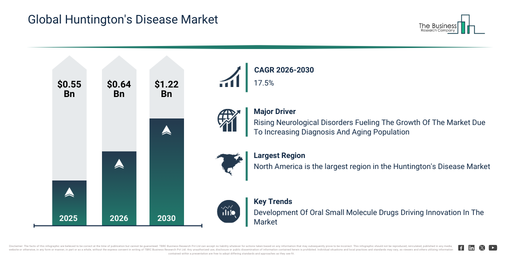
    Huntington’s Disease Market Expansion From $0.64 Billion In 2026 To $1.22 Billion In 2030

    In the realm of Huntington’s disease, a significant market expansion is evident. Projections indicate a rise from a valuation of $0.55 billion in 2025 to $0.64 billion by 2026, reflecting a substantial compound annual growth rate of 17.9%. Key factors fueling this past growth trajectory include the crucial identification of the htt gene mutation, the constrained existence of definitive cures, a heightened public consciousness surrounding rare neurodegenerative conditions, a prevailing dependence on treatments that manage symptoms, and an upward trend in diagnostic rates facilitated by genetic testing advancements.

    Within the realm of Huntington’s disease, a significant market expansion is projected over the ensuing years, reaching an estimated value of $1.22 billion by 2030, propelled by a compound annual growth rate of 17.5%. This anticipated surge is fueled by several key factors: progress in gene therapy and RNA-based therapeutic modalities, augmented financial backing for rare disease studies, a more robust pipeline of therapies designed to modify the disease’s course, a heightened emphasis on early detection and intervention protocols, and amplified backing from groups advocating for patients. Key developments anticipated during this forecast period encompass a greater concentration on therapies aimed at altering the disease’s progression and silencing specific genes, wider utilization of genetic testing for the prompt and precise identification of the condition, a mounting focus on comprehensive approaches to managing symptoms by a range of medical specialists, an increase in clinical investigations geared towards neurodegenerative conditions, and the growing prominence of patient-focused care frameworks alongside at-home management strategies.

    Download A Free Sample Report For Comprehensive Market Insights:

    https://www.thebusinessresearchcompany.com/sample.aspx?id=22008&type=smp

    Huntington’s Disease Market Growth Drivers And Industry Catalysts

    The increasing incidence of neurological conditions is anticipated to drive the expansion of the huntington’s disease market. These neurological disorders, characterized by their impact on the brain, spinal cord, and nerves, result in impairments affecting movement, coordination, sensation, or cognition. Factors contributing to the surge in neurological disorders include a growing elderly population, exposure to environmental toxins, shifts in lifestyle habits, enhanced diagnostic technologies enabling better detection, and genetic factors that facilitate case identification. Huntington’s disease itself is a neurodegenerative condition stemming from a genetic alteration, manifesting as motor impairment, cognitive deterioration, and psychological disturbances, with a progressive decline over time. To illustrate, the Alzheimer’s Association reported in March 2023 that approximately 6.7 million individuals in the United States aged 65 and above were living with Alzheimer’s dementia, a figure projected to reach 13.8 million by 2060 in the absence of curative or preventative medical advancements. Consequently, the escalating occurrence of neurological disorders is a key driver for the huntington’s disease market.

    Huntington’s Disease Market Segment Outlook: Which Categories Are Expanding The Fastest?

    The huntington’s disease market covered in this report is segmented –

    1) By Treatment Type: Symptomatic Therapy, Disease-Modifying Therapy, Other Treatment Types

    2) By Diagnosis: Magnetic Resonance Imaging (MRI), Genetic Testing

    3) By Distribution Channel: Hospital Pharmacy, Retail Pharmacy

    4) By End User: Hospitals, Homecare, Specialty Clinics, Other End Users

    Subsegments:

    1) By Symptomatic Therapy: Antipsychotics, Antidepressants, Mood Stabilizers, Muscle Relaxants

    2) By Disease-Modifying Therapy: Gene Silencing Therapies, Neuroprotective Agents

    3) By Other Treatment Types: Physical Therapy, Occupational Therapy, Speech Therapy

    #Huntington’s Disease Market Trends Influencing Long-Term Demand

    Leading entities within the Huntington’s disease market are prioritizing the creation of novel therapeutic approaches, exemplified by oral small molecule medications engineered to alleviate symptoms and impede disease advancement. These orally administered, low-molecular-weight compounds are specifically crafted to engage with biological targets like proteins or enzymes, thereby offering a potential treatment strategy. To illustrate, a significant development occurred in September 2024 when PTC Therapeutics Inc., a United States-based biopharmaceutical firm, was granted Fast Track designation by the U.S. Food and Drug Administration for its investigational drug, PTC518, which is being developed for Huntington’s disease. This regulatory pathway is reserved for treatments addressing pressing unmet medical needs, underscoring the promising potential of PTC518 as a therapy capable of modifying the course of this inherited neurological condition.

    Huntington’s Disease Market Key Companies And Competitive Benchmarking

    Major companies operating in the huntington’s disease market are Novartis AG, Eli Lilly and Company, Teva Pharmaceutical Industries Ltd, Bausch Health Companies Inc., Sun Pharmaceutical Industries Ltd., Apotex Inc, Ipsen S.A., Vertex Pharmaceuticals Incorporated, H. Lundbeck A/S, Dr. Reddy’s Laboratories Ltd., Hikma Pharmaceuticals PLC, Lupin Limited., Neurocrine Biosciences Inc., Alnylam Pharmaceuticals Inc, PTC Therapeutics Inc., Annexon Inc., Voyager Therapeutics Inc., Stealth BioTherapeutics Corp., Vaccinex Inc., SOM Biotech S.L., Alterity Therapeutics Limited, Medesis pharma SA.

    Access The Complete Huntington’s Disease Market Report:

    https://www.thebusinessresearchcompany.com/report/huntingtons-disease-global-market-report

    Huntington’s Disease Market Regional Outlook: Where Are The Largest Opportunities Located?

    North Americawas the largest region in the huntington’s disease market in 2025. Asia-Pacificis expected to be the fastest-growing region in the forecast period. The regions covered in the huntington’s disease market report are Asia-Pacific, South East Asia, Western Europe, Eastern Europe, North America, South America, Middle East, Africa.

    Get in touch with us:

    The Business Research Company: https://www.thebusinessresearchcompany.com/

    Americas: +1 310-496-7795

    Asia: +44 7882 955267 & +91 8897263534

    Europe: +44 7882 955267

    Email us at: marketing@tbrc.info

    Follow us on:

    LinkedIn: https://in.linkedin.com/company/the-business-research-company

    YouTube: https://www.youtube.com/channel/UC24_fI0rV8cR5DxlCpgmyFQ

    Global Market Model: https://www.thebusinessresearchcompany.com/global-market-model
  • Humira Biosimilar Market Size Projected To Increase From $4.11 Billion To $6.53 Billion During The Forecast Period

    Humira Biosimilar Market Size Projected To Increase From $4.11 Billion To $6.53 Billion During The Forecast Period

    Through market attractiveness analysis, total addressable market evaluation, company benchmarking matrices, interactive Excel dashboards, expanded supply chain intelligence, emerging startup coverage, and detailed product insights, The Business Research Company’s 2026 market reports provide more actionable and strategically valuable research.

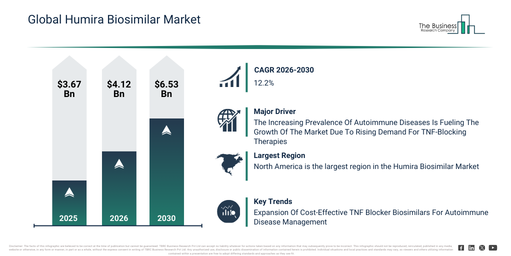
    Humira Biosimilar Market Forecast Highlighting Growth From $4.11 Billion To $6.53 Billion

    The market for Humira biosimilars has experienced substantial expansion, projecting a rise from $3.67 billion in 2025 to $4.12 billion in 2026, reflecting a compounded annual growth rate of 12.3%. Key drivers behind this historical growth trajectory include the expiration of Humira’s patent protection, the considerable expense associated with originator biologic treatments, a growing incidence of autoimmune conditions, favorable regulatory pathways for biosimilar products, and pressure from payers to curb expenditure on biologic medications.

    The market for biosimilar versions of Humira is poised for substantial expansion in the coming years, with projections indicating it will reach $6.53 billion by 2030, reflecting a compound annual growth rate of 12.2%. This upward trajectory during the forecast period is anticipated due to several key factors: increased integration of biosimilars into routine medical care, enhanced financial backing for biosimilar treatments, growing trust among physicians regarding the effectiveness of biosimilars, a rise in approvals for interchangeable biosimilars, and proactive efforts to improve patient access to more economical biologic options. Significant trends expected to shape this market include the broader application of adalimumab biosimilars for various autoimmune conditions, a heightened emphasis on managing the costs associated with biologic treatments, greater acceptance of interchangeable biosimilars by healthcare professionals, a demand for higher concentration and citrate-free product versions, and heightened competition among companies developing biosimilar products.

    Download A Free Sample Report For Comprehensive Market Insights:

    https://www.thebusinessresearchcompany.com/sample.aspx?id=24244&type=smp

    Humira Biosimilar Market Opportunity Drivers: What Is Creating New Revenue Potential?

    The rising incidence of autoimmune conditions is anticipated to be a significant driver for the expansion of the Humira biosimilar market in the future. These autoimmune diseases manifest when the body’s own immune system erroneously attacks its healthy components, including cells, tissues, or organs. Factors such as environmental pollution are increasingly being recognized as contributing to the surge in autoimmune disorders, as they can interfere with immune system function and elevate the likelihood of such adverse immune responses. Humira biosimilars effectively manage these conditions by inhibiting tumor necrosis factor (TNF), a key protein responsible for inflammation associated with autoimmune diseases. This inhibition serves to temper the immune system’s overactivity, thereby mitigating symptoms and averting damage to unaffected tissues. Illustrating this trend, Public Health Scotland’s national data indicated that by 2023, the Scottish Multiple Sclerosis Register (SMSR) had documented 455 new cases of multiple sclerosis within Scotland in August 2024. Consequently, the escalating rate of autoimmune disorders is fueling the advancement of the Humira biosimilar market.

    Humira Biosimilar Market Segment Landscape: Which Areas Lead Market Development?

    The humira biosimilar market covered in this report is segmented –

    1) By Product Type: Adalimumab Biosimilars, High-Concentration Adalimumab Biosimilars, Citrate-Free Adalimumab Biosimilars

    2) By Distribution Channel: Hospital Pharmacies, Retail Pharmacies, Online Pharmacies, Other Distribution Channels

    3) By Application: Rheumatoid Arthritis, Psoriasis, Crohn’s Disease, Ulcerative Colitis, Ankylosing Spondylitis, Other Applications

    Subsegments:

    1) By Adalimumab Biosimilars: Citrate-Containing, Standard-Concentration Formulations, Citrate-Free, Standard-Concentration Formulations

    2) By High-Concentration Adalimumab Biosimilars: Citrate-Containing High-Concentration Formulations, Citrate-Free High-Concentration Formulations

    3) By Citrate-Free Adalimumab Biosimilars: Standard-Concentration Citrate-Free Formulations, High-Concentration Citrate-Free Formulations

    Humira Biosimilar Market Innovation Trends Driving Future Development

    In the competitive landscape of the humira biosimilar sector, leading enterprises are prioritizing the creation of sophisticated treatments, including tumor necrosis factor (TNF) blockers, to provide more cost-effective solutions for managing autoimmune conditions. These TNF blockers function as biological agents designed to inhibit the activity of TNF, a critical protein instrumental in fueling inflammation. A notable development occurred in July 2023 when Organon & Co., a U.S. pharmaceutical entity, joined forces with Samsung Bioepis Co., Ltd., a South Korean biotechnology firm, to introduce HADLIMA, a biosimilar counterpart to Humira. Available in both high-concentration (100 mg/mL) formulations free of citrate and the low-concentration (50 mg/mL) versions containing citrate, thereby mirroring Humira’s original product offerings, HADLIMA is intended to broaden patient accessibility and enhance affordability. This biosimilar is being marketed at a substantial reduction, approximately 85% less than Humira’s established price, and is complemented by patient assistance initiatives. This market entry, subsequent to a worldwide agreement that permitted U.S. distribution, signifies a pivotal advancement in augmenting therapeutic choices for pervasive autoimmune disorders within the United States.

    Humira Biosimilar Market Industry Leaders And Market Competition

    Major companies operating in the humira biosimilar market are Amgen Inc., Pfizer Inc., Samsung Biologics, Biocon Limited, Celltrion Inc., Boehringer Ingelheim GmbH, Sandoz Group AG, Fresenius Kabi AG, Alvotech, Coherus BioSciences Inc., Zydus Lifesciences Ltd., Hetero Drugs Ltd., LG Chem Ltd., Torrent Pharmaceuticals Ltd., Fujifilm Holdings Corporation, Teva Pharmaceutical Industries Ltd., Merck KGaA, Organon & Co., Cipla Limited, Dr. Reddy’s Laboratories Ltd.

    Access The Complete Humira Biosimilar Market Report:

    https://www.thebusinessresearchcompany.com/report/humira-biosimilar-global-market-report

    Humira Biosimilar Market Geographic Landscape: Which Region Dominates Industry Growth?

    North Americawas the largest region in the humira biosimilar market in 2025. The regions covered in the humira biosimilar market report are Asia-Pacific, South East Asia, Western Europe, Eastern Europe, North America, South America, Middle East, Africa.

    Get in touch with us:

    The Business Research Company: https://www.thebusinessresearchcompany.com/

    Americas: +1 310-496-7795

    Asia: +44 7882 955267 & +91 8897263534

    Europe: +44 7882 955267

    Email us at: marketing@tbrc.info

    Follow us on:

    LinkedIn: https://in.linkedin.com/company/the-business-research-company

    YouTube: https://www.youtube.com/channel/UC24_fI0rV8cR5DxlCpgmyFQ

    Global Market Model: https://www.thebusinessresearchcompany.com/global-market-model
  • Humanized Antibody Market Growth Outlook Reveals A CAGR Of 12.7% And A Market Value Of $72.46 Billion By 2030

    Humanized Antibody Market Growth Outlook Reveals A CAGR Of 12.7% And A Market Value Of $72.46 Billion By 2030

    Delivering more actionable and strategically valuable research, The Business Research Company’s 2026 market reports feature market attractiveness analysis, total addressable market evaluation, company benchmarking matrices, interactive Excel dashboards, expanded supply chain intelligence, emerging startup coverage, and detailed product insights.

    Humanized Antibody Market Revenue Growth Supported By A CAGR Of 72.46% Through 2030

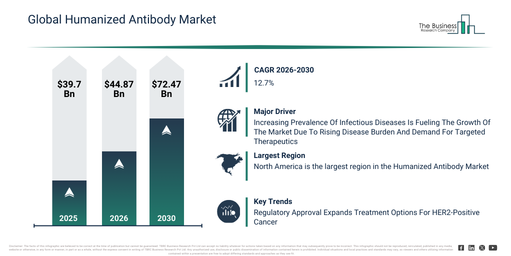
    The market for humanized antibodies has experienced significant expansion recently, projected to increase from $39.7 billion in 2025 to $44.87 billion in 2026, reflecting a compound annual growth rate of 13.0%. This upward trajectory in the historical period is largely due to progress in the engineering of monoclonal antibodies, initial positive outcomes in clinical trials for antibody-based treatments, a surge in the development of cancer medications, enhanced capabilities in biologics production, and the broadening scope of translational research initiatives.

    The global market for humanized antibodies is poised for substantial expansion over the coming years, projecting a market valuation of $72.47 billion by the year 2030, driven by a compound annual growth rate of 12.7%. This anticipated growth is fueled by several key factors, including a heightened demand for individualized cancer treatments, increased R&D funding for advanced biologic medications, broadening applications in autoimmune and infectious diseases, the growing acceptance of personalized medicine strategies, and a continuous stream of regulatory approvals for antibody-derived pharmaceuticals. During this projected period, significant market trends are expected to emerge, such as the intensified development of highly specific antibody therapies, a stronger concentration on minimizing the immune response to biologic agents, greater utilization of antibody-drug conjugates, the wider adoption of both bispecific and multispecific antibody configurations, and a heightened focus on their application within precision oncology.

    Download A Free Sample Report For Comprehensive Market Insights:

    https://www.thebusinessresearchcompany.com/sample.aspx?id=30298&type=smp

    Humanized Antibody Market Growth Momentum: Which Factors Are Influencing Demand?

    The increasing incidence of infectious diseases is anticipated to be a significant catalyst for the expansion of the humanized antibody market in the future. Infectious diseases, defined as ailments caused by infectious agents like bacteria, viruses, fungi, or parasites, possess the ability to spread from person to person through direct or indirect means. Factors such as heightened global travel contribute to a surge in the occurrence of these diseases by enabling swift pathogen dissemination across international boundaries. Humanized antibodies play a crucial role in managing infectious diseases by eliciting precise immune system reactions, thereby offering an effective strategy against particular disease-causing organisms. Their structural similarity to naturally occurring human antibodies minimizes the likelihood of immune system rejection, enhancing both patient safety and the therapeutic success of treatments. Illustrating this trend, data from February 2024 indicated that the UK Health Security Agency reported a rise in tuberculosis cases in England to 4,850 in 2023, marking a 10.7% increase from the 4,380 cases observed in 2022. Consequently, the escalating threat of infectious diseases is directly fueling market growth for humanized antibodies.

    Humanized Antibody Market Segments: Where Are The Largest Growth Opportunities?

    The humanized antibody market covered in this report is segmented –

    1) By Antibody Type: Humanized Antibodies, Chimeric Antibodies, Fully Human Antibodies, Murine Antibodies

    2) By Application: Cancer, Autoimmune Diseases, Infectious Diseases, Cardiovascular Diseases, Other Applications

    3) By End-User: Hospitals, Research Institutes, Diagnostic Laboratories, Other End-Users

    Subsegments:

    1) By Humanized Antibodies: Monospecific Therapeutic Antibodies, Bispecific And Multispecific Antibodies, Antibody Drug Conjugates, Single Chain Variable Fragment Based Antibodies, Fragment Antigen Binding Based Antibodies

    2) By Chimeric Antibodies: Monospecific Therapeutic Antibodies, Bispecific And Multispecific Antibodies, Antibody Drug Conjugates, Single Chain Variable Fragment Based Antibodies, Fragment Antigen Binding Based Antibodies

    3) By Fully Human Antibodies: Monospecific Therapeutic Antibodies, Bispecific And Multispecific Antibodies, Antibody Drug Conjugates, Single Chain Variable Fragment Based Antibodies, Long Acting Half Life Extended Antibodies

    4) By Murine Antibodies: Monospecific Research Grade Antibodies, Hybridoma Derived Antibodies, Antibody Drug Conjugate Precursors, Single Chain Variable Fragment Based Antibodies, Fragment Antigen Binding Based Antibodies

    Humanized Antibody Market Trends Reshaping Industry Growth

    Leading entities within the humanized antibody sector are prioritizing the creation of novel therapeutics, like humanized bispecific antibodies, aiming for swift expansion of treatable conditions and the provision of enhanced, sustained anti-tumor responses. These engineered antibodies, designed to mimic natural human antibodies, possess the capability to concurrently attach to two separate antigens or distinct sites on a single antigen. As an illustration, in November 2024, Ireland-based biopharmaceutical firm Jazz Pharmaceuticals plc secured expedited approval from the U.S. Food and Drug Administration for Ziihera (zanidatamab-hrii), intended for patients with previously treated, unresectable, or metastatic HER2-positive (IHC 3+) biliary tract cancer. This therapeutic is a humanized, immunoglobulin G (IgG)-like bispecific antibody targeting human epidermal growth factor receptor 2 (HER2), engaging two extracellular HER2 binding sites. Its unique mechanism of action activates immune effector cells and directly triggers programmed cell death in malignant cells, facilitating a focused assault on cancerous cells independent of initial immune stimulation.

    Humanized Antibody Market Major Participants And Competitive Dynamics

    Major companies operating in the humanized antibody market are Johnson & Johnson, Roche Holding AG, Merck & Co. Inc., Pfizer Inc., AbbVie Inc., Sanofi S.A., Novartis AG, AstraZeneca PLC, Bristol-Myers Squibb Company, GlaxoSmithKline plc, Eli Lilly and Company, Takeda Pharmaceutical Company Limited, Amgen Inc., Biogen Inc., Daiichi Sankyo Company Limited, UCB S.A., Genmab A/S, Xencor Inc., Zymeworks Inc., MacroGenics Inc.

    Access The Complete Humanized Antibody Market Report:

    https://www.thebusinessresearchcompany.com/report/global-humanized-antibody-market-report

    Humanized Antibody Market Largest Region: Which Geography Holds The Highest Market Share?

    North Americawas the largest region in the humanized antibody market in 2025. Asia-Pacificis expected to be the fastest-growing region in the forecast period. The regions covered in the humanized antibody market report are Asia-Pacific, South East Asia, Western Europe, Eastern Europe, North America, South America, Middle East, Africa.

    Get in touch with us:

    The Business Research Company: https://www.thebusinessresearchcompany.com/

    Americas: +1 310-496-7795

    Asia: +44 7882 955267 & +91 8897263534

    Europe: +44 7882 955267

    Email us at: marketing@tbrc.info

    Follow us on:

    LinkedIn: https://in.linkedin.com/company/the-business-research-company

    YouTube: https://www.youtube.com/channel/UC24_fI0rV8cR5DxlCpgmyFQ

    Global Market Model: https://www.thebusinessresearchcompany.com/global-market-model

  • Human Respiratory Syncytial Virus Treatment Market Forecast Highlights Expansion From $1.99 Billion To $2.76 Billion Through 2030

    Human Respiratory Syncytial Virus Treatment Market Forecast Highlights Expansion From $1.99 Billion To $2.76 Billion Through 2030

    Enhanced with market attractiveness analysis, total addressable market evaluation, company benchmarking matrices, interactive Excel dashboards, expanded supply chain intelligence, emerging startup coverage, and detailed product insights, The Business Research Company’s 2026 market reports deliver more actionable and strategically valuable research.

    Human Respiratory Syncytial Virus Treatment Market Value Expansion And Long-Term Growth Outlook

    The market for treatments targeting human respiratory syncytial virus has experienced robust expansion recently, with projections indicating continued growth from $1.83 billion in 2025 to $2 billion in 2026, reflecting a compound annual growth rate of 8.8%. This upward trend over the past few years is attributable to several key factors, including the widespread occurrence of RSV infections globally, elevated rates of hospitalization particularly for infants and the elderly, a prevailing reliance on supportive care methods, a scarcity of approved antiviral medications, and an increasing understanding of the complications associated with RSV.

    Anticipating a robust expansion in the coming years, the market for treating human respiratory syncytial virus is projected to reach $2.76 billion by 2030, exhibiting a compound annual growth rate of 8.5%. This upward trajectory during the forecast period is propelled by a confluence of factors, including the greater availability of approved RSV vaccines and monoclonal antibodies, a surge in demand for prophylactic treatments, the broadening reach of vaccination initiatives targeting at-risk groups, amplified investment in research and development for respiratory viruses, and an intensified effort to curb hospital admissions among children. Key developments expected to shape this market include a rise in the utilization of monoclonal antibodies for both preventing and managing RSV, continued progress in developing RSV vaccines for children and adults alike, a heightened emphasis on timely intervention for infants and elderly individuals highly susceptible to the virus, the enhancement of supportive care strategies for severe RSV cases, and ongoing clinical investigations into innovative antiviral treatments for RSV.

    Download A Free Sample Report For Comprehensive Market Insights:

    https://www.thebusinessresearchcompany.com/sample.aspx?id=23423&type=smp

    Human Respiratory Syncytial Virus Treatment Market Expansion Drivers: What Is Shaping Future Growth?

    The burgeoning adoption of telehealth services is poised to be a significant catalyst for the expansion of the human respiratory syncytial virus treatment market. These digital healthcare provisions, which utilize telecommunication to facilitate remote patient interactions, diagnostics, oversight, and therapeutic interventions, are experiencing increased utilization. This upswing in telehealth is attributed to the growing embrace of digital health technologies, which allow for patient

    Human Respiratory Syncytial Virus Treatment Market Segment Analysis: What Are The Major Market Categories?

    The human respiratory syncytial virus treatment market covered in this report is segmented –

    1) By Treatment Type: Antiviral Medications, Monoclonal Antibodies, Vaccines, Supportive Care

    2) By Patient Type: Pediatric Patients, Adult Patients

    3) By Route Of Administration: Oral, Parenteral

    4) By End User: Hospitals, Clinics, Home Care

    Subsegments:

    1) By Antiviral Medications: Fusion Inhibitors, Nucleoside Analogues, RNA Polymerase Inhibitors

    2) By Monoclonal Antibodies: Palivizumab, Nirsevimab, Other RSV-Specific Monoclonal Antibodies

    3) By Vaccines: Live Attenuated Vaccines, Subunit Vaccines, mRNA-Based Vaccines, Vector-Based Vaccines

    4) By Supportive Care: Oxygen Therapy, Mechanical Ventilation, Hydration Therapy, Fever and Pain Management

    Human Respiratory Syncytial Virus Treatment Market Strategic Trends: What Is Defining The Next Phase Of Growth?

    Leading entities within the human respiratory syncytial virus therapeutics sector are concentrating on pioneering treatments, including monoclonal antibodies and antiviral medications, to secure a stronger market position. Monoclonal antibodies are engineered proteins that bolster the body’s defense against pathogens, whereas antiviral drugs are pharmaceuticals that impede viral replication or dissemination. As a notable example, in July of 2023, AstraZeneca plc, a prominent biopharmaceutical firm headquartered in the United Kingdom, joined forces with Sanofi S.A., a pharmaceutical enterprise based in France. Together, they disclosed the U.S. Food and Drug Administration’s (FDA) authorization of Beyfortus (nirsevimab-alip), a monoclonal antibody developed to offer protection against RSV-induced lower respiratory tract illness in infants and vulnerable children. This regulatory milestone signified a significant stride forward in RSV prophylaxis, given that Beyfortus offers a sustained, one-time administration that confers passive immunity for the entire RSV season. Its utility is especially pronounced for neonates and very young infants, who face the greatest susceptibility to severe RSV infections, thereby contributing to a reduction in hospital admissions and associated health issues.

    Human Respiratory Syncytial Virus Treatment Market Leading Companies Driving Competitive Growth

    Major companies operating in the human respiratory syncytial virus treatment market are Pfizer Inc., Merck & Co, Sanofi S.A., AstraZeneca plc, GSK plc, Johnson & Johnson, Moderna Inc., Kyowa Kirin Co. Ltd., Novavax Inc., Alnylam Pharmaceuticals Inc., AdVaccine Biotechnology Co. Ltd., Enanta Pharmaceuticals Inc., Aridis Pharmaceuticals Inc., Synairgen plc, VBI Vaccines Inc., SAB Biotherapeutics Inc., Meissa Vaccines Inc., Osivax SAS, Codagenix Inc., BioVaxys Technology Corp.

    Access The Complete Human Respiratory Syncytial Virus Treatment Market Report:

    https://www.thebusinessresearchcompany.com/report/human-respiratory-syncytial-virus-treatment-global-market-report

    Human Respiratory Syncytial Virus Treatment Market Regional Analysis: Which Region Leads By Revenue?

    North Americawas the largest region in the human respiratory syncytial virus treatment market in 2025. Asia-Pacificis expected to be the fastest-growing region in the forecast period. The regions covered in the human respiratory syncytial virus treatment market report are Asia-Pacific, South East Asia, Western Europe, Eastern Europe, North America, South America, Middle East, Africa.

    Get in touch with us:

    The Business Research Company: https://www.thebusinessresearchcompany.com/

    Americas: +1 310-496-7795

    Asia: +44 7882 955267 & +91 8897263534

    Europe: +44 7882 955267

    Email us at: marketing@tbrc.info

    Follow us on:

    LinkedIn: https://in.linkedin.com/company/the-business-research-company

    YouTube: https://www.youtube.com/channel/UC24_fI0rV8cR5DxlCpgmyFQ

    Global Market Model: https://www.thebusinessresearchcompany.com/global-market-model

  • Human Primary Cell Culture Market Expected To Reach $6.39 Billion By 2030 As Growth Accelerates At 11% CAGR

    Human Primary Cell Culture Market Expected To Reach $6.39 Billion By 2030 As Growth Accelerates At 11% CAGR

    Through market attractiveness analysis, total addressable market evaluation, company benchmarking matrices, interactive Excel dashboards, expanded supply chain intelligence, emerging startup coverage, and detailed product insights, The Business Research Company’s 2026 market reports provide more actionable and strategically valuable research.

    Human Primary Cell Culture Market Expected To Reach $6.39 Billion By 2030 At 11% CAGR

    The market for primary cell cultures derived from humans has experienced substantial expansion lately, with projections indicating a rise from its 2025 valuation of $3.78 billion to $4.21 billion by 2026, reflecting a compound annual growth rate of 11.3%. This upward trend during the past period owes much to the inherent limitations of immortalized cell lines, a surge in biomedical research endeavors, augmented financial support for life sciences investigations, an escalating need for reliable preclinical predictive models, and significant progress in methods for cell isolation and cultivation.

    The global market for human primary cell cultures is poised for substantial expansion over the coming years. Projections indicate a market valuation reaching $6.39 billion by 2030, driven by a compound annual growth rate (CAGR) of 11.0%. This upward trajectory is fueled by several key factors: a heightened emphasis on personalized medicine approaches, increased research and development expenditures within the pharmaceutical and biotechnology sectors, a broader acceptance of regenerative therapies, continuous technological innovation in cell cultivation techniques, and the broadened application of human primary cells for simulating disease conditions. Key developments anticipated during this forecast period encompass the escalating utilization of human primary cells in the processes of drug discovery and the evaluation of toxicity, a greater reliance on patient-derived cells for advancing precision medicine research, a growing need for cell culture media that are free from serum and chemically defined, the widening scope of primary cell applications in the field of regenerative medicine, and a notable shift towards employing cell models that better reflect in vivo environments as opposed to immortalized cell lines.

    Download A Free Sample Report For Comprehensive Market Insights:

    https://www.thebusinessresearchcompany.com/sample.aspx?id=23422&type=smp

    Human Primary Cell Culture Market Development Factors: Which Trends Are Supporting Demand?

    The expansion of the market for human primary cell cultures is anticipated to be significantly influenced by the broadening interest in cell and gene therapies. These sophisticated medical interventions aim to treat or cure illnesses by altering or substituting genetic material or cells at a fundamental biological level. The escalating attention on cell and gene therapy stems from its promise of delivering enduring or remedial solutions for conditions such as genetic disorders, cancers, and rare diseases by tackling the underlying molecular causes. Within the realm of cell and gene therapies, human primary cell cultures play a crucial role in treatment development, the manufacturing of viral vectors, and the validation of gene editing methodologies. As an illustration, data from the American Society of Gene & Cell Therapy (ASGCT) indicated that during the second quarter of 2024, approximately 76 gene therapy trials commenced in the United States, reflecting a 25% rise from the preceding quarter. Consequently, the heightened investment in and development of cutting-edge cell and gene therapies is a key factor fueling the growth trajectory of the human primary cell culture market.

    Human Primary Cell Culture Market Segment Breakdown: Which Categories Generate The Most Revenue?

    The human primary cell culture market covered in this report is segmented –

    1) By Product Type: Primary Cells, Reagents And Supplements, Instruments, Primary Cell Culture Media, Other Product Types

    2) By Applications: Drug Discovery, Therapy Development, Regenerative Medicine, Other Applications

    3) By End User: Pharmaceutical And Biotechnology Companies, Contract Research Organizations (CROs), Academic And Research Institutions

    Subsegments:

    1) By Primary Cells: Human Dermal Fibroblasts (HDF), Human Epidermal Keratinocytes (HEK), Human Mesenchymal Stem Cells (HMSC), Human Endothelial Cells, Human Hematopoietic Cells

    2) By Reagents And Supplements: Growth Factors And Cytokines, Antibiotics And Antimycotics, Fetal Bovine Serum (FBS), Buffers And Chemicals, Cryopreservation Reagents

    3) By Instruments: Cell Culture Incubators, Biosafety Cabinets, Centrifuges, Cell Counters And Analyzers, Microscopes

    4) By Primary Cell Culture Media: Serum-Free Media, Chemically Defined Media, Classical Media, Protein-Free Media, Custom Media

    5) By Other Product Types: Culture Dishes And Plates, Flasks And Bottles, Pipettes And Tips, Cell Strainers And Filters, Coated Culture Surfaces

    Human Primary Cell Culture Market Transformation Trends: Which Innovations Are Driving Change?

    Leading entities within the human primary cell culture sector are prioritizing the creation of cutting-edge solutions, notably incorporating induced pluripotent stem cell (iPSC) and embryonic stem cell (ESC) methodologies. These advancements are instrumental in propelling cell-based investigations, refining the process of drug discovery, and speeding up progress in regenerative medicine alongside personalized treatment approaches. The core of iPSC and ESC technologies lies in the reprogramming of somatic cells or the utilization of embryonic cells to generate pluripotent stem cells. These remarkable cells possess the inherent capacity to transform into a diverse array of specialized cell types, offering vast potential for scientific inquiry, therapeutic development, and medical innovation. Illustrating this trend, a significant development occurred in July 2024 when BioServe Biotechnologies India Pvt Ltd., a prominent biotechnology and life sciences firm operating in India, introduced sophisticated stem cell products sourced from REPROCELL. This product launch aims to bolster scientific research endeavors and expedite drug development initiatives across India. The comprehensive suite of offerings encompasses cell culture media optimized for growth, sophisticated tools for directing stem cell differentiation, advanced 3D cell culture methodologies, and specialized services tailored for drug discovery. Ultimately, these pioneering innovations are poised to significantly advance the fields of regenerative medicine, disease modeling, and preclinical research through the strategic application of iPSC and ESC technologies.

    Human Primary Cell Culture Market Key Players And Strategic Industry Positioning

    Major companies operating in the human primary cell culture market are Thermo Fisher Scientific Inc., Merck & Co. Inc., Lonza Group AG, STEMCELL Technologies Inc., American Type Culture Collection, PromoCell GmbH, Krishgen Biosystems Private Limited, Cell Culture Company Limited Liability Company, HiMedia Laboratories Private Limited, 3H Biomedical Aktiebolag, ScienCell Research Laboratories Inc., Cell Applications Incorporated, Life Technologies Private Limited, PELOBIOTECH Gesellschaft mit beschränkter Haftung, Amsbio Limited, AcceGen Biotechnology Limited Liability Company, Cell Biologics Incorporated, BI Biotech India Private Limited, Innoprot Sociedad Limitada, ZenBio Incorporated, Evercyte GmbH, Cell Systems Corporation, Cytion GmbH, Kosheeka Private Limited

    Access The Complete Human Primary Cell Culture Market Report:

    https://www.thebusinessresearchcompany.com/report/human-primary-cell-culture-global-market-report

    Human Primary Cell Culture Market Geographic Distribution And Regional Opportunities

    North Americawas the largest region in the human primary cell culture market in 2025. Asia-Pacificis expected to be the fastest-growing region in the forecast period. The regions covered in the human primary cell culture market report are Asia-Pacific, South East Asia, Western Europe, Eastern Europe, North America, South America, Middle East, Africa.

    Get in touch with us:

    The Business Research Company: https://www.thebusinessresearchcompany.com/

    Americas: +1 310-496-7795

    Asia: +44 7882 955267 & +91 8897263534

    Europe: +44 7882 955267

    Email us at: marketing@tbrc.info

    Follow us on:

    LinkedIn: https://in.linkedin.com/company/the-business-research-company

    YouTube: https://www.youtube.com/channel/UC24_fI0rV8cR5DxlCpgmyFQ

    Global Market Model: https://www.thebusinessresearchcompany.com/global-market-model

  • Human Papillomavirus (HPV) Cytomegalovirus (CMV) Therapeutic Market Set To Grow From $5.3 Billion In 2026 To $7.31 Billion By 2030 At A CAGR Of 8.4%

    Human Papillomavirus (HPV) Cytomegalovirus (CMV) Therapeutic Market Set To Grow From $5.3 Billion In 2026 To $7.31 Billion By 2030 At A CAGR Of 8.4%

    Delivering more actionable and strategically valuable research, The Business Research Company’s 2026 market reports feature market attractiveness analysis, total addressable market evaluation, company benchmarking matrices, interactive Excel dashboards, expanded supply chain intelligence, emerging startup coverage, and detailed product insights.

    Human Papillomavirus (HPV) Cytomegalovirus (CMV) Therapeutic Market Size And Revenue Forecast Through 2030

    The market for therapies targeting human papillomavirus (HPV) and cytomegalovirus (CMV) has experienced robust expansion lately. Projections indicate a rise from its 2025 valuation of $4.9 billion to $5.31 billion by 2026, reflecting a compound annual growth rate (CAGR) of 8.3%. Key factors fueling this past growth include the significant worldwide prevalence of both HPV and CMV infections, a heightened occurrence of cancers linked to these viruses, the broad implementation of preventative HPV vaccination initiatives, the escalating impact of CMV infections among individuals with compromised immune systems, and considerable progress in the development of antiviral medications.

    The market for treatments targeting human papillomavirus (HPV) and cytomegalovirus (CMV) is poised for considerable expansion in the upcoming years, projected to reach $7.32 billion by 2030 with an 8.4% compound annual growth rate (CAGR). This projected surge is fueled by a confluence of factors, including a heightened demand for therapeutic vaccines, a growing emphasis on cancer immunotherapy, escalating investments in antiviral research and development, the wider implementation of screening and early detection initiatives, and a greater public understanding of congenital and chronic viral infections. Key developments anticipated during this forecast period involve the continuous advancement of therapeutic vaccines for both HPV and CMV, a broader acceptance of immunotherapy as a cornerstone of antiviral treatment strategies, intensified efforts toward employing combination therapies for effective viral infection management, the proliferation of specialized treatments for virus-linked cancers, and an increase in clinical investigations for innovative next-generation antiviral medications.

    Download A Free Sample Report For Comprehensive Market Insights:

    https://www.thebusinessresearchcompany.com/sample.aspx?id=24242&type=smp

    Human Papillomavirus (HPV) Cytomegalovirus (CMV) Therapeutic Market Industry Drivers: What Is Driving Revenue Growth?

    An escalating incidence of cervical cancer is anticipated to stimulate the expansion of the therapeutic market for human papillomavirus (HPV) and cytomegalovirus (CMV). Cervical cancer involves the development of malignant cells within the cervix, the uterine segment connecting to the vagina. This rise is primarily attributed to persistent infections by high-risk HPV strains, which induce abnormal cervical cell changes that can advance to cancer if not identified and treated promptly. HPV and CMV therapeutics aid in managing cervical cancer by addressing virus-driven disease progression and improving patient prognoses, thereby reducing cancer development risks through antiviral and immunotherapy options, which bolsters long-term well-being and life quality. Illustrating this trend, a report from the American Cancer Society in April 2024 indicated that roughly 20 million new cervical cancer cases were identified worldwide in 2022, with projections suggesting this number could reach 35 million by 2050. Consequently, the increasing prevalence of cervical cancer serves as a key factor propelling the growth of the HPV and CMV therapeutic market.

    Increased spending on healthcare is poised to fuel the expansion of the market for human papillomavirus (HPV) and cytomegalovirus (CMV) therapeutics. Healthcare expenditure encompasses all outlays for medical services, therapies, and health resources, supported by public, private insurance, and individual funding to ensure that quality healthcare is reachable. The availability of advanced antiviral treatments and preventative measures, facilitated by escalating healthcare spending, directly benefits HPV and CMV therapeutics by enhancing accessibility for a wider population. For example, data released by the Office for National Statistics in May 2024 revealed a notable 5.6% nominal increase in total UK healthcare expenditure between 2022 and 2023, a substantial jump from the 0.9% growth recorded in the preceding year. This surge in healthcare investment is therefore a significant driver for the human papillomavirus (HPV) cytomegalovirus (CMV) therapeutic market.

    Human Papillomavirus (HPV) Cytomegalovirus (CMV) Therapeutic Market Segmentation: How Is The Market Structured Across Key Categories?

    The human papillomavirus (hpv) cytomegalovirus (cmv) therapeutic market covered in this report is segmented –

    1) By Therapeutic Type: Vaccines, Antiviral Drugs, Immunotherapy

    2) By Route of Administration: Intramuscular, Oral

    3) By Indications: Cervical Cancer, Genital Warts, Head And Neck Cancer, Anal Cancer

    4) By Distribution Channel: Hospitals, Retail Pharmacies, Specialty Clinics

    Subsegments:

    1) By Vaccines: Prophylactic Vaccines, Therapeutic Vaccines, Recombinant Vaccines, Virus-Like Particle (VLP) Based Vaccines

    2) By Antiviral Drugs: Nucleoside Analogues, Deoxyribonucleic Acid Polymerase Inhibitors

    3) By Immunotherapy: Monoclonal Antibodies, Immune Checkpoint Inhibitors, Adoptive T-cell Therapy

    #Human Papillomavirus (HPV) Cytomegalovirus (CMV) Therapeutic Market Growth Trends: What Is Influencing The Future Outlook?

    Leading players in the human papillomavirus (HPV) and cytomegalovirus (CMV) therapeutics sector are prioritizing the creation of advanced solutions, including those for managing post-transplant cytomegalovirus (CMV) infections, aiming to tackle existing gaps in care, boost therapeutic effectiveness, counter the development of resistance to current treatments, and ultimately improve the prognoses for individuals with compromised immune systems. Post-transplant anti-CMV treatment encompasses medical strategies implemented to avert or control cytomegalovirus (CMV) infections among recipients of organ or stem cell transplants who face elevated risks due to their immunosuppressed state. An illustrative development occurred in June 2024 when Takeda Pharmaceutical Company Limited, headquartered in Japan, secured approval from the Japanese Ministry of Health, Labour, and Welfare (MHLW) for LIVTENCITY (maribavir), a medication indicated for the treatment of post-transplant cytomegalovirus (CMV) infection or disease that has demonstrated resistance to conventional anti-CMV drugs. This pioneering antiviral medication stands as the sole therapy in Japan designed to specifically target and inhibit the cytomegalovirus (CMV)-specific UL97 protein kinase, thereby presenting a unique mode of action that differentiates it from established treatment approaches.

    Human Papillomavirus (HPV) Cytomegalovirus (CMV) Therapeutic Market Competitive Landscape And Leading Companies

    Major companies operating in the human papillomavirus (hpv) cytomegalovirus (cmv) therapeutic market are Merck & Co. Inc., Pfizer Inc., GlaxoSmithKline plc, Moderna Inc., BioNTech SE, Gilead Sciences Inc., F. Hoffmann-La Roche AG, Sanofi S.A., AstraZeneca plc, Novartis AG, AbbVie Inc., Bristol Myers Squibb Company, Takeda Pharmaceutical Company Limited, Amgen Inc., Vir Biotechnology Inc., Inovio Pharmaceuticals Inc., Dynavax Technologies Corporation, Hookipa Pharma Inc., Vaxart Inc., Bavarian Nordic A/S

    Access The Complete Human Papillomavirus (HPV) Cytomegalovirus (CMV) Therapeutic Market Report:

    https://www.thebusinessresearchcompany.com/report/human-papillomavirus-hpv-cytomegalovirus-cmv-therapeutic-global-market-report

    Human Papillomavirus (HPV) Cytomegalovirus (CMV) Therapeutic Market Largest Region By Revenue And Market Share

    North Americawas the largest region in the human papillomavirus (HPV) cytomegalovirus (CMV) therapeutic market in 2025. Asia-Pacificis expected to be the fastest-growing region in the forecast period. The regions covered in the human papillomavirus (hpv) cytomegalovirus (cmv) therapeutic market report are Asia-Pacific, South East Asia, Western Europe, Eastern Europe, North America, South America, Middle East, Africa.

    Get in touch with us:

    The Business Research Company: https://www.thebusinessresearchcompany.com/

    Americas: +1 310-496-7795

    Asia: +44 7882 955267 & +91 8897263534

    Europe: +44 7882 955267

    Email us at: marketing@tbrc.info

    Follow us on:

    LinkedIn: https://in.linkedin.com/company/the-business-research-company

    YouTube: https://www.youtube.com/channel/UC24_fI0rV8cR5DxlCpgmyFQ

    Global Market Model: https://www.thebusinessresearchcompany.com/global-market-model

  • Human Organoids Market Opportunities Are Emerging Beyond Traditional Growth Areas

    Human Organoids Market Opportunities Are Emerging Beyond Traditional Growth Areas

    Enhanced with market attractiveness analysis, total addressable market evaluation, company benchmarking matrices, interactive Excel dashboards, expanded supply chain intelligence, emerging startup coverage, and detailed product insights, The Business Research Company’s 2026 market reports deliver more actionable and strategically valuable research.

    Human Organoids Market Growth From $1.98 Billion In 2026 To $3.61 Billion By 2030 At A CAGR Of 16.1%

    The human organoids market experienced significant expansion, projected to increase from $1.71 billion in 2025 to $1.99 billion by 2026, reflecting a compound annual growth rate (CAGR) of 16.6%. This historical growth trajectory is largely attributable to breakthroughs in stem cell technology, the inherent constraints of conventional 2D cell cultures necessitating new approaches, a burgeoning need for more accurate preclinical predictive models, augmented financial backing for biomedical investigations, and an intensified emphasis on minimizing animal testing.

    The human organoids market is poised for substantial expansion, projected to reach $3.61 billion by 2030, exhibiting a compound annual growth rate of 16.1%. This anticipated surge is fueled by several key drivers, including the escalating embrace of personalized medicine strategies, augmented investment in pharmaceutical research and development, the broadened utility of organoids in regenerative therapies, continuous innovation in three-dimensional cell culture technologies, and a mounting need for human-specific models to study diseases. Furthermore, the coming years will witness significant trends such as the increased integration of organoids into drug discovery and safety evaluations, their greater application in understanding disease mechanisms and pathological processes, the rising demand for tailored medical treatments employing patient-specific organoids, the expanding scope of organoid utilization in cancer and neurological investigations, and enhanced partnerships between academic institutions and pharmaceutical companies to advance organoid-related research.

    Download A Free Sample Report For Comprehensive Market Insights:

    https://www.thebusinessresearchcompany.com/sample.aspx?id=23421&type=smp

    Human Organoids Market Growth Factors: Which Forces Are Supporting Market Expansion?

    Advancements in genetic science, characterized by an increasing volume of research activities, are anticipated to propel the expansion of the human organoids market. This field of biology, dedicated to understanding trait inheritance and the influence of genetic information on organismal development and function, is experiencing a surge in experimentation fueled by technological innovations that enhance the speed and precision of gene editing. Such progress facilitates more profound investigations into diseases and the creation of precisely targeted therapies. Genetic science significantly aids human organoids by enabling the precise modification of genes, which is crucial for simulating specific diseases and observing their progression. This capability empowers researchers to gain a clearer understanding of genetic conditions, evaluate novel pharmaceutical interventions, and explore individualized therapeutic approaches with greater efficacy. Illustratively, data from the American Society of Gene & Cell Therapy, a US-based professional society, revealed in April 2024 that the fourth quarter of 2023 witnessed a 10% increase in phase III gene therapy clinical trials, representing the initial quarterly growth recorded since the third quarter of 2022. Consequently, the escalating pace of experimentation within genetic science is poised to be a primary driver for the human organoids market.

    Human Organoids Market Segmentation Trends And Revenue Drivers

    The human organoids market covered in this report is segmented –

    1) By Type: Brain Organoids, Heart Organoids, Intestinal Organoids, Kidney Organoids, Liver Organoids, Lung Organoids, Pancreatic Organoids

    2) By Technology: 3D Bioprinting, Cell Culture Technology, Hydrogels And Scaffold-Based Technology

    3) By Application: Drug Discovery, Infectious Disease Research, Neurology Studies, Oncology Research, Personalized Medicine

    4) By End User: Pharma And Biotech Companies, Contract Research Organizations, Academic And Research Institutes

    Subsegments:

    1) By Brain Organoids: Cerebral Organoids, Midbrain Organoids, Hypothalamic Organoids, Spinal Cord Organoids

    2) By Heart Organoids: Cardiac Muscle Organoids, Vascularized Heart Organoids, Chamber-Specific Heart Organoids

    3) By Intestinal Organoids: Small Intestine Organoids, Colon Organoids, Duodenal Organoids

    4) By Kidney Organoids: Nephron Organoids, Glomerular Organoids, Proximal Tubule Organoids

    5) By Liver Organoids: Hepatic Organoids, Bile Duct Organoids, Cholangiocyte Organoids

    6) By Lung Organoids: Airway Organoids, Alveolar Organoids, Bronchial Organoids

    7) By Pancreatic Organoids: Islet Organoids, Ductal Pancreatic Organoids, Acinar Pancreatic Organoids

    Human Organoids Market Industry Trends: What Changes Are Reshaping Demand?

    InnoCell oxygen-permeable cell culture microplates have been launched by Mitsui Chemicals Group in June 2025 to further research in organoid applications, with their innovative design addressing key challenges in cell culture. These microplates exploit the company’s expertise in material science and precision manufacturing to boost oxygen availability for cells, a critical factor for the successful cultivation of 3D spheroids and organoids, thereby minimizing cell mortality and extending their lifespan. Available in untreated (N-type) and collagen-coated (C-type) formats to accommodate various cell lines, the plates also exhibit minimal drug binding and superior fluorescence imaging capabilities, making them a valuable tool for pharmaceutical R&D, drug discovery initiatives, personalized medical approaches, and the development of regenerative treatments.

    Human Organoids Market Industry Leaders: Which Organizations Are Driving Competition?

    Major companies operating in the human organoids market are Organovo Holdings Inc., Emulate Inc., MIMETAS B.V., InSphero AG, DefiniGEN Limited, CN Bio Innovations Limited, CELLINK AB, Hubrecht Organoid Technology, Stemcell Technologies Inc., Crown Bioscience Inc., Synthego Corporation, Altis Biosystems Inc., Molecular Devices LLC, TissUse GmbH, Nortis Inc., Hesperos Inc., Vivodyne Inc., Curi Bio Inc., Axol Bioscience Ltd.

    Access The Complete Human Organoids Market Report:

    https://www.thebusinessresearchcompany.com/report/human-organoids-global-market-report

    Human Organoids Market Regional Analysis And Leading Geography

    North Americawas the largest region in the human organoids market in 2025. Asia-Pacificis expected to be the fastest-growing region in the forecast period. The regions covered in the human organoids market report are Asia-Pacific, South East Asia, Western Europe, Eastern Europe, North America, South America, Middle East, Africa.

    Get in touch with us:

    The Business Research Company: https://www.thebusinessresearchcompany.com/

    Americas: +1 310-496-7795

    Asia: +44 7882 955267 & +91 8897263534

    Europe: +44 7882 955267

    Email us at: marketing@tbrc.info

    Follow us on:

    LinkedIn: https://in.linkedin.com/company/the-business-research-company

    YouTube: https://www.youtube.com/channel/UC24_fI0rV8cR5DxlCpgmyFQ

    Global Market Model: https://www.thebusinessresearchcompany.com/global-market-model