Month: June 2026

  • Hospital And Nursing Home Probiotics Market Outlook Highlights The Next Major Growth Opportunities

    Hospital And Nursing Home Probiotics Market Outlook Highlights The Next Major Growth Opportunities

    Through market attractiveness analysis, total addressable market evaluation, company benchmarking matrices, interactive Excel dashboards, expanded supply chain intelligence, emerging startup coverage, and detailed product insights, The Business Research Company’s 2026 market reports provide more actionable and strategically valuable research.

    Hospital And Nursing Home Probiotics Market Revenue Outlook: What CAGR Is Expected Through 2030?

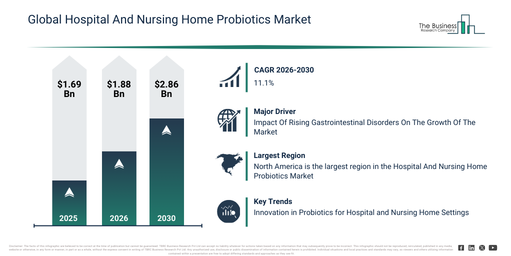
    In the realm of hospital and nursing home probiotics, a notable expansion has been observed lately, with expectations for continued escalation. The market, valued at $1.69 billion in 2025, is projected to reach $1.88 billion by 2026, reflecting a compound annual growth rate of 11.4%. This upward trajectory during the preceding period was fueled by several key factors: heightened public understanding of the advantages of gut health, an uptick in antibiotic consumption that consequently triggers digestive issues, a steadily increasing demographic of elderly individuals residing in nursing facilities, the broader integration of clinical nutrition into healthcare practices, and the progressively wider accessibility of varied probiotic products.

    Probiotics for hospital and nursing home use are projected to experience substantial expansion in the coming years, reaching an estimated value of $2.86 billion by 2030, driven by a compound annual growth rate (CAGR) of 11.1%. This anticipated growth is fueled by a heightened emphasis on managing health through the microbiome, escalating demand for immune-boosting products, a higher prevalence of digestive issues, the broader implementation of preventive care within hospital settings, and enhanced utilization of probiotics in long-term care institutions. Key developments expected during this period include greater incorporation of probiotics into clinical nutrition plans, increased adoption for the care of the elderly and those with weakened immune systems, a growing trend of integrating probiotics into proactive health strategies, the development of more specialized probiotic formulas targeting specific conditions, and a rising acceptance of probiotics as supplementary treatments in hospitals.

    Download A Free Sample Report For Comprehensive Market Insights:

    https://www.thebusinessresearchcompany.com/sample.aspx?id=20834&type=smp

    Hospital And Nursing Home Probiotics Market Development Factors: Which Trends Are Supporting Demand?

    The expanding landscape of digestive system ailments is anticipated to be a key driver in the advancement of the hospital and nursing home probiotics sector. These digestive conditions encompass a spectrum of issues impacting the tract responsible for breaking down food, such as Irritable Bowel Syndrome (IBS), Inflammatory Bowel Disease (IBD), Gastroesophageal Reflux Disease (GERD), and instances of constipation. The upward trend in the occurrence of these gastrointestinal complaints can be linked to several contributing elements including suboptimal nutritional choices, a greater reliance on pre-prepared foods, inactive lifestyles, and elevated stress levels. Probiotics utilized within hospital and nursing home settings play a crucial role in mitigating these digestive concerns by re-establishing equilibrium among beneficial gut microorganisms, thereby fostering improved digestive wellbeing and offering relief from discomforts like diarrhea, constipation, and abdominal distension. A compelling illustration of this trend is the data from the IBD Registry, a UK non-profit entity, which revealed that by the close of 2023, the count of individuals diagnosed with Inflammatory Bowel Disease (IBD) surpassed 5,300, signifying a substantial rise of over 3,000 patients compared to the preceding year. Consequently, the escalating rates of gastrointestinal disorders are directly fueling the expansion of the market for probiotics in hospital and nursing home environments.

    Hospital And Nursing Home Probiotics Market Segments: Where Are The Largest Growth Opportunities?

    The hospital and nursing home probiotics market covered in this report is segmented –

    1) By Indication: Antibiotic-Associated Diarrhea, Irritable Bowel Syndrome, Clostridium difficile Infection, Inflammatory Bowel Disease, General Gut Health

    2) By Formulation Type: Capsules, Powder, Liquid

    3) By Patient Group: Adults, Elderly, Immunocompromised Patients, Patients With Gastrointestinal Disorders

    4) By Distribution Channel: Hospitals, Nursing Homes, Healthcare Facilities

    5) By Application: Gut Health, Immunity

    Subsegments:

    1) By Antibiotic-Associated Diarrhea (AAD): Prevention of AAD, Treatment of AAD

    2) By Irritable Bowel Syndrome (IBS): IBS With Diarrhea (IBS-D), IBS With Constipation (IBS-C), Mixed IBS (IBS-M)

    3) By Clostridium Difficile Infection (CDI): Prevention of CDI Recurrence, Treatment Of CDI

    4) By Inflammatory Bowel Disease (IBD): Crohn’s Disease, Ulcerative Colitis

    5) By General Gut Health: Immune System Support, Digestive Health, Gut Microbiome Restoration

    Hospital And Nursing Home Probiotics Market Transformation Trends: Which Innovations Are Driving Change?

    Companies actively participating in the hospital and nursing home probiotics sector are prioritizing the creation of novel offerings like probiotic formulations engineered to bolster patient intestinal well-being, expedite recovery, and mitigate adverse effects linked to antibiotic use. These probiotic formulations consist of live microorganisms administered in sufficient quantities to confer health advantages, primarily by fostering a healthier equilibrium of advantageous bacteria within the gastrointestinal tract. An illustrative development occurred in October 2024 when Probi AB, a Swedish biotechnology firm with a specialization in probiotic research, introduced Metabolic Health by Probi, a product intended for clinical environments. Metabolic Health by Probi is a scientifically validated probiotic intervention formulated to promote metabolic wellness, support cardiovascular health, aid in weight management, and contribute to blood pressure normalization through a synergistic blend of two proprietary bacterial strains: Lactiplantibacillus plantarum 299v (LP299V) and Lacticaseibacillus paracasei 8700:2 (L. Paracasei 8700:2).

    Hospital And Nursing Home Probiotics Market Major Participants And Competitive Dynamics

    Major companies operating in the hospital and nursing home probiotics market are Nestlé Health Science, Abbott Laboratories, Danone S.A., Yakult Honsha Co. Ltd., BioGaia AB, Lactalis Group, General Mills Inc., Arla Foods Group, Glanbia PLC, SymbioPharm GmbH, Klaire Labs, Procter & Gamble Company, Vitakem Nutraceuticals, Synlogic Inc., Bayer AG, Sanofi, Meiji Holdings Co. Ltd., Morinaga Milk Industry Co. Ltd., Otsuka Holdings Co. Ltd., Reckitt Benckiser Group plc

    Access The Complete Hospital And Nursing Home Probiotics Market Report:

    https://www.thebusinessresearchcompany.com/report/hospital-and-nursing-home-probiotics-global-market-report

    Hospital And Nursing Home Probiotics Market Regional Analysis And Leading Geography

    North Americawas the largest region in the hospital and nursing home probiotics market in 2025. The regions covered in the hospital and nursing home probiotics market report are Asia-Pacific, South East Asia, Western Europe, Eastern Europe, North America, South America, Middle East, Africa.

    Get in touch with us:

    The Business Research Company: https://www.thebusinessresearchcompany.com/

    Americas: +1 310-496-7795

    Asia: +44 7882 955267 & +91 8897263534

    Europe: +44 7882 955267

    Email us at: marketing@tbrc.info

    Follow us on:

    LinkedIn: https://in.linkedin.com/company/the-business-research-company

    YouTube: https://www.youtube.com/channel/UC24_fI0rV8cR5DxlCpgmyFQ

    Global Market Model: https://www.thebusinessresearchcompany.com/global-market-model
  • Hospice Care Market Trends And Growth Drivers Point To Strong Future Potential

    Hospice Care Market Trends And Growth Drivers Point To Strong Future Potential

    Delivering more actionable and strategically valuable research, The Business Research Company’s 2026 market reports feature market attractiveness analysis, total addressable market evaluation, company benchmarking matrices, interactive Excel dashboards, expanded supply chain intelligence, emerging startup coverage, and detailed product insights.

    Hospice Care Market Growth Analysis: How Will Revenue Expand During The Forecast Period?

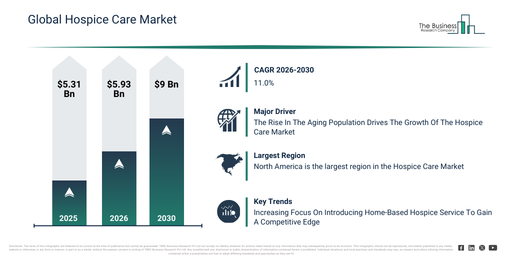
    The hospice care sector has experienced considerable expansion recently, projected to ascend from $5.31 billion in 2025 to $5.93 billion in 2026, reflecting a compound annual growth rate (CAGR) of 11.7%. This historical expansion is attributable to several key factors, including heightened public understanding of end-of-life care alternatives, a greater incidence of terminal diseases, the proliferation of hospice facilities, increased embrace of palliative care methodologies, and the support extended by charitable and local entities.

    The hospice care industry is poised for significant expansion, projected to reach a valuation of $9 billion by the year 2030, reflecting an 11.0% compound annual growth rate. This upward trajectory is fueled by a confluence of factors including an aging demographic, a heightened preference for end-of-life care delivered within a home setting, a stronger emphasis on enhancing life quality for patients, the development of specialized hospice nursing, and a growing need for caregiver assistance and guidance. Key developments anticipated during this period involve the proliferation of in-home hospice services, a greater commitment to prioritizing patient comfort and dignity, the enhanced collaboration of diverse healthcare professionals, an increasing need for palliative and pain relief solutions, and the broader availability of support systems for families and those providing care.

    Download A Free Sample Report For Comprehensive Market Insights:

    https://www.thebusinessresearchcompany.com/sample.aspx?id=7429&type=smp

    Hospice Care Market Industry Drivers: What Is Driving Revenue Growth?

    A continually increasing elderly demographic is anticipated to significantly stimulate expansion within the hospice care sector. This demographic trend signifies a societal shift where a greater percentage of individuals reach older age, often attributed to longer lifespans and lower fertility rates. Hospice services are designed to offer dedicated support and palliative measures to elderly individuals facing life-limiting conditions, focusing on maintaining their dignity and alleviating suffering during their final period. Illustratively, data from the UK Parliament’s House of Commons Library indicated that in 2022, the United Kingdom’s population included 12.7 million individuals aged 65 and above, constituting 19% of the nation’s total populace. Projections suggest this figure will climb to 22.1 million by 2072, thereby representing 27% of the overall population, underscoring the direct correlation between the growing elderly population and the burgeoning hospice care market.

    Hospice Care Market Segment Analysis: What Are The Major Market Categories?

    The hospice care market covered in this report is segmented –

    1) By Type: Nursing Services, Medical Supply Services, Physician Services, Other Types

    2) By Payer And Payment Mode: Private Health Insurance, Public And Government Programs, Out Of Pocket (Self Pay), Charitable And NGO And Philanthropic Funding, Employer Sponsored And Corporate Benefits

    3) By Application: Home Settings, Hospitals, Specialty Nursing Homes, Hospice Care Centers

    Subsegments:

    1) By Nursing Services: Skilled Nursing Care, Home Health Aide Services, Palliative Care Nursing

    2) By Medical Supply Services: Durable Medical Equipment (DME), Medication Management And Supplies, Mobility Aids And Supplies

    3) By Physician Services: On-Call Physician Services, Pain Management Consultation, Care Coordination Services

    4) By Other Types of Services: Psychological And Counseling Services, Spiritual Care Services, Respite Care Services

    #Hospice Care Market Growth Trends: What Is Influencing The Future Outlook?

    In the hospice care sector, leading organizations are concentrating on pioneering offerings like home-based hospice services as a strategic approach to differentiate themselves. These services are designed to deliver expert medical attention, emotional solace, and comfort to individuals with life-limiting illnesses within their familiar home environment, thereby elevating their well-being in life’s concluding phases. As an illustration, in July of 2023, Kaiser Permanente, a prominent healthcare entity in the United States, introduced a home-based hospice initiative named Care at Home. This program facilitates the receipt of care in their residences for members experiencing severe health conditions. It is integrated within Kaiser Permanente’s holistic care framework, aimed at furnishing patients with complete choices across their continuum of care needs. The Care at Home initiative operates via dedicated coordination hubs, supervised by physician-led groups, responsible for the remote organization of patient treatment, augmented by in-person care visits.

    Hospice Care Market Leading Companies Driving Competitive Growth

    Major companies operating in the hospice care market are Dierksen Hospice, Kindred at Home, PruittHealth Inc., Covenant Care, AseraCare Hospice, Bristol Hospice, Brookdale Hospice, Capital Caring, Community Hospice & Palliative Care, Compassus, Continuum Care Hospice, Crossroads Hospice, Encompass Health Corp., Four Seasons Hospice, Gentiva Hospice, Gilchrist Hospice Care, Grace Hospice, Halcyon Hospice & Palliative Care, Harbor Light Hospice, Heartland Hospice, Hope Hospice, Hospice of Dayton, Hospice of the Chesapeake, Hospice of the Valley, Odyssey Healthcare, Ohio’s Hospice, Pathways Home Health and Hospice, Premier Hospice and Palliative Care, Seasons Hospice & Palliative Care, Suncoast Hospice, Tidewell Hospice, VITAS Healthcare

    Access The Complete Hospice Care Market Report:

    https://www.thebusinessresearchcompany.com/report/hospice-care-global-market-report

    Hospice Care Market Geographic Analysis: Where Is Demand Growing The Fastest?

    North Americawas the largest region in the hospice care market in 2025. The regions covered in the hospice care market report are Asia-Pacific, South East Asia, Western Europe, Eastern Europe, North America, South America, Middle East, Africa.

    Get in touch with us:

    The Business Research Company: https://www.thebusinessresearchcompany.com/

    Americas: +1 310-496-7795

    Asia: +44 7882 955267 & +91 8897263534

    Europe: +44 7882 955267

    Email us at: marketing@tbrc.info

    Follow us on:

    LinkedIn: https://in.linkedin.com/company/the-business-research-company

    YouTube: https://www.youtube.com/channel/UC24_fI0rV8cR5DxlCpgmyFQ

    Global Market Model: https://www.thebusinessresearchcompany.com/global-market-model
  • Hormone Refractory Prostate Cancer Market Expansion Is Reshaping Competitive Dynamics Across The Industry

    Hormone Refractory Prostate Cancer Market Expansion Is Reshaping Competitive Dynamics Across The Industry

    Enhanced with market attractiveness analysis, total addressable market evaluation, company benchmarking matrices, interactive Excel dashboards, expanded supply chain intelligence, emerging startup coverage, and detailed product insights, The Business Research Company’s 2026 market reports deliver more actionable and strategically valuable research.

    Hormone Refractory Prostate Cancer Market Forecast: What Market Value Is Expected By 2030?

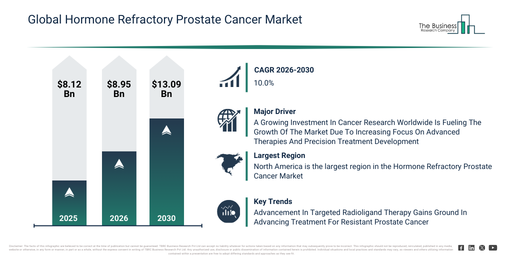
    The global market for hormone-refractory prostate cancer experienced considerable expansion, projected to increase from its 2025 valuation of $8.12 billion to $8.95 billion by 2026, reflecting a compound annual growth rate of 10.2%. This upward trajectory during the historical period was fueled by several key factors, including an escalating prevalence of advanced prostate cancer cases, the broad acceptance and application of androgen deprivation therapy, augmented access to pharmaceutical agents for chemotherapy, a greater reliance on PSA-level testing for disease surveillance, and the continuous development of healthcare systems focused on oncology.

    The market for hormone refractory prostate cancer is poised for substantial expansion over the upcoming years, projecting a reach of $13.09 billion by 2030, driven by a compound annual growth rate of 10.0%. This anticipated growth trajectory is underpinned by several key factors, including advancements in the development of targeted therapeutic agents, an uptick in clinical investigations concerning castration-resistant prostate cancer, an escalating demand for customized oncological care, the broadening scope of immuno-oncology research and development, and increased investment in cancer treatment modalities. Key developments anticipated during this forecast period encompass a greater embrace of precision oncology treatments, a rise in the utilization of combined pharmaceutical interventions, a more prevalent application of biomarker-guided treatment selection, an expanded role for immunotherapies in managing advanced stages of prostate cancer, and a heightened emphasis on individualizing treatment plans.

    Download A Free Sample Report For Comprehensive Market Insights:

    https://www.thebusinessresearchcompany.com/sample.aspx?id=25786&type=smp

    Hormone Refractory Prostate Cancer Market Growth Factors: Which Forces Are Supporting Market Expansion?

    Increased financial backing for cancer investigations is anticipated to spur the expansion of the hormone-refractory prostate cancer sector. This surge in funding supports the development of novel strategies for identifying, managing, and preventing cancer, prompted by the escalating worldwide incidence of the disease. Such investment fuels advancements in treating hormone-refractory prostate cancer, facilitating the adoption of sophisticated interventions like radioligand therapies and hormonal blockers, while also financing crucial clinical trials and biomarker studies to refine treatment accuracy and improve patient results. As an illustration, the Cancer Research Institute, a non-profit focused on immunotherapy, allocated approximately $22.8 million in its 2023–2024 fiscal period to support 64 new research grants across 42 institutions in seven nations. Consequently, the escalating commitment to cancer research is a key driver for the hormone-refractory prostate cancer market’s growth.

    Hormone Refractory Prostate Cancer Market Segment Breakdown: Which Categories Generate The Most Revenue?

    The hormone refractory prostate cancer market covered in this report is segmented –

    1) By Treatment Type: Chemotherapy, Hormonal Therapy, Immunotherapy, Radiation Therapy, Surgery

    2) By Distribution Channel: Hospital Pharmacies, Retail Pharmacies, Online Pharmacies

    3) By End-User: Hospitals, Ambulatory Surgical Centers, Specialty Clinics, Other End-Users

    Subsegments:

    1) By Chemotherapy: Docetaxel, Cabazitaxel, Mitoxantrone, Estramustin

    2) By Hormonal Therapy: Anti-Androgens, CYP17 Inhibitors, LHRH Agonists, LHRH Antagonists

    3) By Immunotherapy: Cancer Vaccines, Immune Checkpoint Inhibitors, Adoptive Cell Therapy

    4) By Radiation Therapy: External Beam Radiation Therapy (EBRT), Brachytherapy, Radionuclide Therapy

    5) By Surgery: Radical Prostatectomy, Orchiectomy, Transurethral Resection Of The Prostate (TURP)

    Hormone Refractory Prostate Cancer Market Industry Trends: What Changes Are Reshaping Demand?

    Key players within the hormone-refractory prostate cancer sector are directing their efforts toward pioneering sophisticated treatments, notably intravenous radioligand therapy, with the aim of enhancing prognoses for individuals battling forms of the illness that no longer respond to conventional therapies. This innovative intravenous radioligand therapy approach functions as a precisely targeted intervention, employing radioactive compounds linked to carriers that specifically seek out and adhere to markers unique to cancer cells, thereby eradicating malignant cells from within while minimizing harm to adjacent healthy tissues. A significant development occurred in March 2025 when Novartis AG, a pharmaceutical entity headquartered in Switzerland, secured FDA approval for Pluvicto (lutetium Lu 177 vipivotide tetraxetan), a therapeutic agent intended for earlier application in patients diagnosed with PSMA-positive metastatic castration-resistant prostate cancer (mCRPC) who have previously undergone androgen receptor pathway inhibitor (ARPI) treatment and are candidates for delaying chemotherapy. This broadened approval, stemming from the pivotal Phase III PSMAfore study, substantially increases the pool of eligible patients by an estimated factor of three, demonstrating that Pluvicto achieved a 59% reduction in the risk of radiographic progression or mortality and more than doubled the median radiographic progression-free survival when contrasted with a switch to an alternative ARPI. Consequently, Pluvicto stands as the inaugural targeted radioligand therapy sanctioned for utilization prior to chemotherapy in this particular clinical context, presenting a novel therapeutic avenue that effectively postpones disease advancement alongside a well-tolerated safety profile.

    Hormone Refractory Prostate Cancer Market Key Players And Strategic Industry Positioning

    Major companies operating in the hormone refractory prostate cancer market are Pfizer Inc, Johnson And Johnson, F Hoffmann La Roche Ltd, Merck And Co Inc, AbbVie Inc, Bayer AG, Sanofi SA, Bristol Myers Squibb Company, Novartis AG, AstraZeneca Plc, Eli Lilly And Company, Amgen Inc, Astellas Pharma Inc, Ipsen Pharma, Exelixis Inc, Orion Corporation, Lantheus Holdings Inc, Clovis Oncology Inc, Telix Pharmaceuticals, Dendreon Pharmaceuticals LLC, Janssen Pharmaceuticals Inc, Bayer Healthcare Pharmaceuticals Inc

    Access The Complete Hormone Refractory Prostate Cancer Market Report:

    https://www.thebusinessresearchcompany.com/report/hormone-refractory-prostate-cancer-global-market-report

    Hormone Refractory Prostate Cancer Market Global Footprint: Which Region Holds Market Leadership?

    North Americawas the largest region in the hormone-refractory prostate cancer market in 2025. Asia-Pacificis expected to be the fastest-growing region in the forecast period. The regions covered in the hormone refractory prostate cancer market report are Asia-Pacific, South East Asia, Western Europe, Eastern Europe, North America, South America, Middle East, Africa.

    Get in touch with us:

    The Business Research Company: https://www.thebusinessresearchcompany.com/

    Americas: +1 310-496-7795

    Asia: +44 7882 955267 & +91 8897263534

    Europe: +44 7882 955267

    Email us at: marketing@tbrc.info

    Follow us on:

    LinkedIn: https://in.linkedin.com/company/the-business-research-company

    YouTube: https://www.youtube.com/channel/UC24_fI0rV8cR5DxlCpgmyFQ

    Global Market Model: https://www.thebusinessresearchcompany.com/global-market-model
  • Horizontal Laminar Air Flow Cabinet Market Forecast Reveals Where Future Industry Value Will Be Created

    Horizontal Laminar Air Flow Cabinet Market Forecast Reveals Where Future Industry Value Will Be Created

    Through market attractiveness analysis, total addressable market evaluation, company benchmarking matrices, interactive Excel dashboards, expanded supply chain intelligence, emerging startup coverage, and detailed product insights, The Business Research Company’s 2026 market reports provide more actionable and strategically valuable research.

    Horizontal Laminar Air Flow Cabinet Market Size Outlook: How Fast Will Revenue Grow Through 2030?

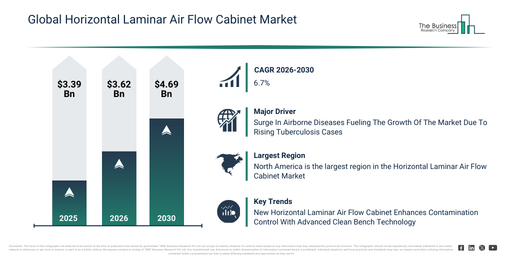
    The market for horizontal laminar airflow cabinets has experienced robust expansion lately, projected to increase from $3.39 billion in 2025 to $3.62 billion in 2026, demonstrating a compound annual growth rate of 7.0%. This historical growth trajectory is largely credited to the burgeoning pharmaceutical manufacturing sector, the widening scope of life science research endeavors, a heightened tendency towards employing sterile laboratory settings, more stringent laboratory safety mandates, and the escalating utilization of cleanroom apparatus.

    The market for horizontal laminar air flow cabinets is poised for substantial expansion in the coming years, with projections indicating a rise to $4.69 billion by 2030, driven by a compound annual growth rate of 6.7%. This anticipated growth is fueled by several key factors, including heightened investments in biopharmaceutical research, a surge in the need for sophisticated laboratory safety apparatus, the proliferation of electronics and semiconductor laboratories, a greater emphasis on contamination-free manufacturing processes, and a growing trend towards replacing older lab workstation setups with newer models. Furthermore, prominent trends expected to shape this market during the forecast period involve the increasing utilization of high-efficiency HEPA and ULPA filtration technologies, a heightened demand for space-saving and portable cabinet solutions, a growing emphasis on energy-conscious airflow systems, the development of bespoke cabinets tailored to the specific requirements of specialized laboratories, and a reinforced commitment to stringent contamination control standards.

    Download A Free Sample Report For Comprehensive Market Insights:

    https://www.thebusinessresearchcompany.com/sample.aspx?id=20562&type=smp

    Horizontal Laminar Air Flow Cabinet Market Demand Drivers: What Is Fueling Industry Growth?

    A surge in the incidence of airborne illnesses is anticipated to be a key catalyst for the expansion of the horizontal laminar air flow cabinet sector in the future. Illnesses like tuberculosis, influenza, and measles spread through the air, originating from droplets and fine particles expelled during an infected individual’s coughing, sneezing, or speaking. Contributing factors to the rising spread of these diseases include escalating urbanization, widespread international travel, and alterations in climatic conditions. Horizontal laminar air flow cabinets play a crucial role in mitigating the transmission of such diseases by establishing a consistent, unidirectional stream of HEPA-filtered air over the workspace, thereby cultivating a sterile zone that significantly lowers the potential for airborne contamination and the spread of pathogens. To illustrate, the World Health Organization, a health authority headquartered in Switzerland, reported in its Global Tuberculosis Report in October 2024 that the worldwide count of newly identified tuberculosis cases climbed to 8.2 million in 2023, a rise from the 7.5 million cases recorded in 2022. Consequently, the escalating rate of airborne disease outbreaks is a primary driver for the horizontal laminar air flow cabinet market.

    Horizontal Laminar Air Flow Cabinet Market Segmentation: How Is The Market Structured Across Key Categories?

    The horizontal laminar air flow cabinet market covered in this report is segmented –

    1) By Type: Mobile Horizontal Laminar Air Flow Cabinet, Bench Top Horizontal Laminar Air Flow Cabinet, Table Top Horizontal Laminar Air Flow Cabinet

    2) By Filtration System: High Efficiency Particulate Air (HEPA) Filtration, Ultra Low Particulate Air (ULPA) Filtration

    3) By Application: Pharmaceutical Industry, Medical And Healthcare Sector, Chemical Laboratories, Food And Beverage Industry, Electronics Industry, Life Science Research

    Subsegments:

    1) By Mobile Horizontal Laminar Air Flow Cabinet: Single-Sided Mobile Cabinets, Double-Sided Mobile Cabinets

    2) By Bench Top Horizontal Laminar Air Flow Cabinet: Small Capacity Bench Top Cabinets, Large Capacity Bench Top Cabinets

    3) By Table Top Horizontal Laminar Air Flow Cabinet: Standard Table Top Cabinets, Compact Table Top Cabinets

    Horizontal Laminar Air Flow Cabinet Market Innovation Trends: Which Developments Are Transforming The Industry?

    Leading entities within the horizontal laminar air flow cabinet sector are actively developing advanced flow hood technologies, like clean bench systems, to enhance laboratory safety and productivity. These clean bench systems function by employing a sterilized, unidirectional airflow to shield research materials and ongoing experiments from airborne impurities. A notable development occurred in August 2023 when Labconco Corporation, a prominent American manufacturer of laboratory apparatus, introduced its Nexus horizontal clean bench. This sophisticated laminar flow hood is specifically engineered to offer exceptional containment for non-hazardous specimens in settings such as pharmaceutical research and life sciences. Key features of this innovative product include the user-friendly Nexus OS, complete with a five-inch touchscreen interface, specialized cap technology for optimized airflow regulation, and remarkably efficient electronically commutated motor (ECM) blowers designed for effortless sanitization and significantly reduced contamination probabilities.

    Horizontal Laminar Air Flow Cabinet Market Competitive Landscape And Leading Companies

    Major companies operating in the horizontal laminar air flow cabinet market are Thermo Fisher Scientific Inc., Avantor Inc., Getinge AB, Allegro Global Pvt. Ltd., BioBase Group, Kewaunee Scientific Corporation, Telstar, Erlab Group, NuAire Inc., Airtech Japan Ltd., Labconco Corporation, Germfree Laboratories Inc., Bionics Scientific Technologies Pvt. Ltd., Air Science LLC, Esco Lifesciences Group, Labtron Equipment Ltd., Brinda Pharma Technologies Pvt. Ltd., LAMSYSTEMS GmbH, Monmouth Scientific Limited, Cleatech LLC, MRC Laboratory Equipment Ltd., iGene Labserve Private Limited, Bigneat Ltd., Labstac Ltd., Alpha Linear Co. Ltd.

    Access The Complete Horizontal Laminar Air Flow Cabinet Market Report:

    https://www.thebusinessresearchcompany.com/report/horizontal-laminar-air-flow-cabinet-global-market-report

    Horizontal Laminar Air Flow Cabinet Market Regional Distribution: Which Areas Drive Market Expansion?

    North Americawas the largest region in the horizontal laminar air flow cabinet market in 2025. The regions covered in the horizontal laminar air flow cabinet market report are Asia-Pacific, South East Asia, Western Europe, Eastern Europe, North America, South America, Middle East, Africa.

    Get in touch with us:

    The Business Research Company: https://www.thebusinessresearchcompany.com/

    Americas: +1 310-496-7795

    Asia: +44 7882 955267 & +91 8897263534

    Europe: +44 7882 955267

    Email us at: marketing@tbrc.info

    Follow us on:

    LinkedIn: https://in.linkedin.com/company/the-business-research-company

    YouTube: https://www.youtube.com/channel/UC24_fI0rV8cR5DxlCpgmyFQ

    Global Market Model: https://www.thebusinessresearchcompany.com/global-market-model
  • Homeopathy Medicine Treatment Market Growth Through 2030 Creates New Strategic Opportunities

    Homeopathy Medicine Treatment Market Growth Through 2030 Creates New Strategic Opportunities

    Delivering more actionable and strategically valuable research, The Business Research Company’s 2026 market reports feature market attractiveness analysis, total addressable market evaluation, company benchmarking matrices, interactive Excel dashboards, expanded supply chain intelligence, emerging startup coverage, and detailed product insights.

    Homeopathy Medicine Treatment Market Size, Value And Growth Trends Through 2030

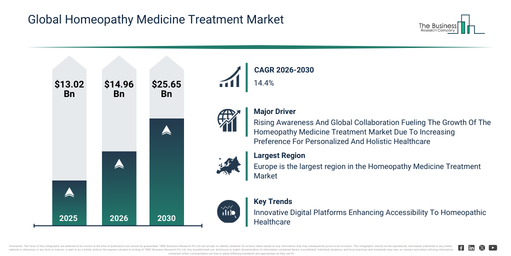
    The market for homeopathic medicines has experienced significant recent expansion, with projections indicating a rise from $13.02 billion in 2025 to $14.96 billion in 2026, reflecting a compound annual growth rate of 14.8%. This historical growth trajectory is largely underpinned by the enduring cultural acceptance of homeopathic practices, escalating apprehension regarding the adverse effects associated with conventional medical treatments, the cost-effectiveness of homeopathic alternatives, the proliferation of standalone homeopathic clinics, and a growing consumer confidence in natural healing methods.

    The market for homeopathic medical treatments is poised for considerable expansion in the coming years, projected to reach a value of $25.65 billion by 2030, driven by a compound annual growth rate of 14.4%. This anticipated surge is fueled by several key factors: an escalating emphasis on proactive health management, a burgeoning demand for individualized and comprehensive medicinal approaches, the widespread adoption of digital platforms for health-related commerce, heightened interest in remedies that enhance the immune system, and a growing consumer preference for environmentally sound healthcare options. Throughout this forecast period, prominent trends include a heightened inclination towards natural and holistic healing methods, an increasing desire for therapies focused on prevention and overall well-being, a greater acceptance of complementary medicine for managing long-term ailments, the proliferation of readily available homeopathic products, and the expanding accessibility of homeopathic solutions through online channels and direct-to-consumer sales.

    Download A Free Sample Report For Comprehensive Market Insights:

    https://www.thebusinessresearchcompany.com/sample.aspx?id=23418&type=smp

    Homeopathy Medicine Treatment Market Growth Drivers: What Factors Are Accelerating Expansion?

    Increased public knowledge about homeopathic remedies is anticipated to fuel the expansion of the homeopathy medicine treatment sector. Homeopathic drugs comprise a crucial element of the homeopathic approach, dispensed according to a patient’s unique symptoms and their comprehensive physical, psychological, and emotional profile. This heightened awareness stems from homeopathy’s natural, gentle methodology and comparatively fewer adverse effects than traditional therapies, as individuals increasingly favor comprehensive and tailored health solutions. The limited side effects, individualized care plans, and an all-encompassing philosophy have fostered greater acceptance and prompted broader utilization, thereby stimulating the market for homeopathic pharmaceuticals and care. As an illustration, in March 2023, the Ministry of Ayush, affiliated with the Indian government, established bilateral Memoranda of Understanding (MoUs) with twenty-four different countries to foster collaboration in traditional medicine and homeopathy. Consequently, the growing understanding of homeopathic treatment alternatives is significantly contributing to the advancement of the homeopathy medicine treatment industry.

    Homeopathy Medicine Treatment Market Segmentation Trends And Revenue Drivers

    The homeopathy medicine treatment market covered in this report is segmented –

    1) By Product Type: Single Remedies, Combination Remedies, Complex Medicines

    2) By Application: Chronic Diseases, Acute Diseases, Preventive Care

    3) By Distribution Channel: Retail Pharmacies, Online Platforms, Homeopathic Clinics

    Subsegments:

    1) By Single Remedies: Dilutions, Mother Tinctures, Bio-Chemic Tablets, Medicated Pellets

    2) By Combination Remedies: Tablet Formulations, Liquid Formulations, Powder Formulations, Globules

    3) By Complex Medicines: Anti-Allergic Complex, Pain Relief Complex, Immunity Boosting Complex, Respiratory Care Complex

    Homeopathy Medicine Treatment Market Trends: What Is Shaping Future Industry Growth?

    Within the homeopathy medicine treatment sector, leading enterprises are actively pursuing novel approaches, exemplified by the creation of online homeopathy medicine platforms designed to boost both convenience and accessibility. An AI-powered homeopathic medicine assistant represents a digital interface or software application that utilizes artificial intelligence to aid individuals in pinpointing appropriate homeopathic treatments by considering their reported symptoms and individual health data. As a notable development, Homeopathic.AI, a health and personal care provider based in Canada, introduced in April 2024 the inaugural AI assistant specifically developed for homeopathic medicine. This pioneering system employs sophisticated algorithms and an extensive repository of information to deliver tailored and precise health recommendations to users, thereby addressing the escalating interest in alternative therapies by broadening the global availability of homeopathic consultations. Consequently, this move towards incorporating artificial intelligence underscores the industry’s dedication to harnessing technological advancements to expand the influence and efficacy of homeopathic remedies.

    Homeopathy Medicine Treatment Market Industry Leaders: Which Organizations Are Driving Competition?

    Major companies operating in the homeopathy medicine treatment market are Dr. Willmar Schwabe GmbH & Co. KG, ?Boiron, Weleda, Biologische Heilmittel Heel GmbH, Bakson’s Homoeopathy, Ainsworths, Homeocare International, Dr. Reckeweg & Co. GmbH, Allen Homeopathy, Bharat Homeopathy, Dr. Batra’s Homeopathy, Positive Homeopathy, Hahnemann Laboratories Inc., Similia Homoeopathic Clinic, Homeocan Inc., Life Force, Radient Pharma, New Life Homoeopathy, Vital Homeos, A Nelson & Co Limited, Adelmar Pharma GmbH, Ralson Remedies, Hapdco, Adel German Homeopathy, Sharda Boiron Laboratories Global, Haslab

    Access The Complete Homeopathy Medicine Treatment Market Report:

    https://www.thebusinessresearchcompany.com/report/homeopathy-medicine-treatment-global-market-report

    Homeopathy Medicine Treatment Market Leading Geography: Which Region Generates The Most Revenue?

    Europewas the largest region in the homeopathy medicine treatment market in 2025. Asia-Pacificis expected to be the fastest-growing region in the forecast period. The regions covered in the homeopathy medicine treatment market report are Asia-Pacific, South East Asia, Western Europe, Eastern Europe, North America, South America, Middle East, Africa.

    Get in touch with us:

    The Business Research Company: https://www.thebusinessresearchcompany.com/

    Americas: +1 310-496-7795

    Asia: +44 7882 955267 & +91 8897263534

    Europe: +44 7882 955267

    Email us at: marketing@tbrc.info

    Follow us on:

    LinkedIn: https://in.linkedin.com/company/the-business-research-company

    YouTube: https://www.youtube.com/channel/UC24_fI0rV8cR5DxlCpgmyFQ

    Global Market Model: https://www.thebusinessresearchcompany.com/global-market-model
  • Home Vision Screening App Market Size Projected To Increase From $0.74 Billion To $1.39 Billion During The Forecast Period

    Home Vision Screening App Market Size Projected To Increase From $0.74 Billion To $1.39 Billion During The Forecast Period

    Enhanced with market attractiveness analysis, total addressable market evaluation, company benchmarking matrices, interactive Excel dashboards, expanded supply chain intelligence, emerging startup coverage, and detailed product insights, The Business Research Company’s 2026 market reports deliver more actionable and strategically valuable research.

    Home Vision Screening App Market CAGR Analysis And Future Market Development

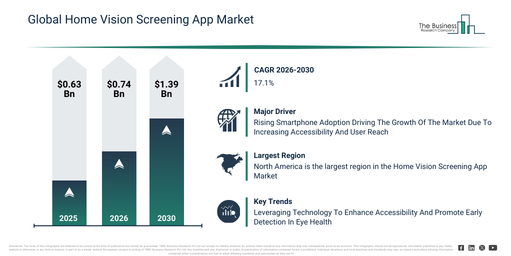
    The market for vision screening applications designed for home use has experienced substantial expansion. Projections indicate a surge from $0.63 billion in 2025 to $0.74 billion in 2026, representing a compound annual growth rate (CAGR) of 17.4%. This upward trajectory during the preceding period is linked to several factors, including the widespread availability of smartphones, heightened consciousness regarding preventative eye care, increased familiarity with digital health solutions, advancements in mobile screen clarity, and a greater acceptance of self-administered screening instruments.

    The market for at-home vision screening applications is poised for substantial expansion in the coming years, projected to reach $1.39 billion by 2030 with a compound annual growth rate of 17.1%. This forecasted increase is largely driven by a heightened need for the early identification of visual impairments, the escalating integration with tele-ophthalmology, advancements in AI-driven diagnostic precision, broader implementation in school health assessments, and a greater emphasis on making eye care more readily available. Key developments anticipated during this period involve a greater embrace of self-administered screening tools, increased utilization of smartphone technology for visual health assessments, more sophisticated AI integration for analyzing vision data, expanded applications in both child and elder care screenings, and a stronger focus on both initial detection and ongoing monitoring of eye conditions.

    Download A Free Sample Report For Comprehensive Market Insights:

    https://www.thebusinessresearchcompany.com/sample.aspx?id=29084&type=smp

    Home Vision Screening App Market Growth Factors Supporting Long-Term Expansion

    The expanding utilization of smartphones is anticipated to fuel the expansion of the home vision screening app sector. These portable smart devices, which combine communication, internet connectivity, and processing power into one unit, are experiencing a surge in popularity driven by increased internet access. This enhanced connectivity enables a greater number of individuals to readily access online services, social media platforms, and digital entertainment. The widespread adoption of smartphones is a key enabler for home vision screening applications, ensuring they can reach a broad audience, as more individuals can effortlessly acquire and utilize these apps for vision assessments without requiring specialized tools or medical appointments. Illustrating this trend, Uswitch Limited, an online service provider from the UK, reported in February 2023 that projections indicate 95% of the UK’s 68.3 million inhabitants will possess smartphones by the year 2025. Consequently, the growing prevalence of smartphone ownership is poised to drive forward the development of the home vision screening app market.

    Home Vision Screening App Market Segment Analysis Highlighting Growth Areas

    The home vision screening app market covered in this report is segmented –

    1) By Product Type: Visual Acuity Apps, Color Vision Apps, Eye Health Monitoring Apps, Other Product Types

    2) By Platform: iOS, Android, Windows, Other Platforms

    3) By Distribution Channel: App Stores, Online Platforms, Other Distribution Channels

    4) By Application: Children, Adults, Elderly, Other Applications

    5) By End-User: Individuals, Hospitals And Clinics, Schools, Other End-Users

    Subsegments:

    1) By Visual Acuity Apps: Distance Vision Test, Near Vision Test, Astigmatism Test, Contrast Sensitivity Test

    2) By Color Vision Apps: Red Green Color Test, Blue Yellow Color Test, Complete Color Blindness Test

    3) By Eye Health Monitoring Apps: Dry Eye Monitoring, Glaucoma Monitoring, Macular Degeneration Monitoring, Cataract Progress Tracking

    4) By Other Product Types: Pediatric Vision Screening, Binocular Vision Assessment, Low Vision Support, Eye Exercise And Therapy

    Home Vision Screening App Market Industry Trends Shaping Future Revenue Growth

    Embracing technological advancements, prominent players within the home vision screening application sector are prioritizing the creation of sophisticated functionalities, including multilingual self-assessment tools designed for in-home use, with the ultimate aim of broadening access, facilitating the prompt identification of visual impairments, and equipping individuals with the means to actively manage their ocular well-being conveniently from their residences. This multifaceted approach of multilingual home self-assessment involves utilizing an application that accommodates various languages, thereby breaking down communication barriers and making crucial eye health evaluations accessible to a wider spectrum of users right in their own homes. As a testament to this innovation, in February of 2024, the L V Prasad Eye Institute, situated in India, partnered with Infosys Limited, a leading Indian IT services and consulting firm, to introduce a novel home vision screening application. This cutting-edge application empowers users to conduct thorough eye examinations without leaving their homes, offering early warnings for potential vision problems, thereby paving the way for prompt medical attention and significantly improving the reach of eye care services, particularly for those residing in geographically isolated or underserved regions.

    Home Vision Screening App Market Leading Companies: Who Holds Significant Market Presence?

    Major companies operating in the home vision screening app market are Carl Zeiss Vision GmbH, Acuity Pro LLC, Visibly Inc., Vula Vision by hearX Group, EyeQue Corporation, EyeXam LLC, GoCheck Kids, Peek Vision Limited, Smart Optometry LLC, Vivid Vision Inc., Eyenuk Inc., NovaSight Ltd., Oculocare Medical AG, Vision.app Ltd., Clear Inc., WHOeyes App, Opternative Inc., OrCam Technologies Ltd., iCare Home, EyecareLive Inc.

    Access The Complete Home Vision Screening App Market Report:

    https://www.thebusinessresearchcompany.com/report/home-vision-screening-app-global-market-report

    Home Vision Screening App Market Regional Outlook: Where Are The Largest Opportunities Located?

    North Americawas the largest region in the home vision screening app market in 2025. Asia-Pacificis expected to be the fastest-growing region in the forecast period. The regions covered in the home vision screening app market report are Asia-Pacific, South East Asia, Western Europe, Eastern Europe, North America, South America, Middle East, Africa.

    Get in touch with us:

    The Business Research Company: https://www.thebusinessresearchcompany.com/

    Americas: +1 310-496-7795

    Asia: +44 7882 955267 & +91 8897263534

    Europe: +44 7882 955267

    Email us at: marketing@tbrc.info

    Follow us on:

    LinkedIn: https://in.linkedin.com/company/the-business-research-company

    YouTube: https://www.youtube.com/channel/UC24_fI0rV8cR5DxlCpgmyFQ

    Global Market Model: https://www.thebusinessresearchcompany.com/global-market-model
  • Home Spirometry App Market Growth Outlook Reveals A CAGR Of 15.8% And A Market Value Of $2.35 Billion By 2030

    Home Spirometry App Market Growth Outlook Reveals A CAGR Of 15.8% And A Market Value Of $2.35 Billion By 2030

    Through market attractiveness analysis, total addressable market evaluation, company benchmarking matrices, interactive Excel dashboards, expanded supply chain intelligence, emerging startup coverage, and detailed product insights, The Business Research Company’s 2026 market reports provide more actionable and strategically valuable research.

    Home Spirometry App Market Expansion From $1.31 Billion In 2026 To $2.35 Billion In 2030

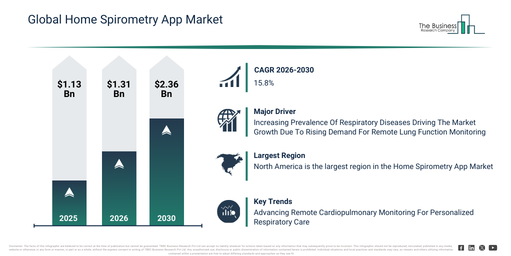
    The market for home spirometry applications has experienced substantial expansion lately, with projections indicating a rise from $1.13 billion in 2025 to $1.31 billion in 2026, reflecting a compound annual growth rate of 16.1%. This past growth trajectory is attributable to several key factors, including the escalating incidence of chronic respiratory ailments, a broader acceptance of healthcare monitoring from the comfort of one’s home, the increasing integration of smart medical devices, advancements leading to greater precision in portable spirometry devices, and a growing embrace of remote patient monitoring strategies.

    Anticipating substantial expansion, the market for home spirometry applications is projected to ascend to $2.36 billion by the year 2030, fueled by a robust compound annual growth rate of 15.8%. This surge in the upcoming forecast period is primarily driven by a heightened need for effective chronic disease management solutions, augmented integration with electronic health record systems, advancements in AI-powered respiratory data analysis, expanded application in post-acute care monitoring, and the increasing prevalence of virtual pulmonary care models. Key developments shaping this trajectory include a greater embrace of remote lung function surveillance, closer integration with smart spirometry hardware, more extensive utilization of long-term respiratory data analytics, the proliferation of telehealth-compatible spirometry platforms, and an intensified emphasis on achieving clinical-grade measurement precision.

    Download A Free Sample Report For Comprehensive Market Insights:

    https://www.thebusinessresearchcompany.com/sample.aspx?id=29082&type=smp

    Home Spirometry App Market Demand Drivers Creating New Revenue Opportunities

    The expanding presence of respiratory ailments is anticipated to fuel the advancement of the home spirometry application market. These conditions, which impact the lungs and breathing passages, manifest in symptoms like coughing, wheezing, shortness of breath, and chest tightness. A rise in these diseases is attributed to an aging demographic more vulnerable to chronic lung issues and heightened exposure to environmental pollutants that degrade respiratory well-being. Home spirometry applications aid in managing these conditions by allowing individuals to regularly assess their lung capacity at home, meticulously document symptoms, identify early indicators of worsening health, and transmit current information to medical professionals for prompt treatment, thereby fostering improved respiratory outcomes and mitigating severe complications. Illustrating this persistent challenge, Australia recorded 474 fatalities attributed to asthma in 2023, a number virtually unchanged from the 473 deaths in 2022, as reported by the National Asthma Council in October 2024, underscoring a steady mortality rate from asthma over this period. Consequently, the escalating incidence of respiratory illnesses is a key driver for the home spirometry app market.

    Home Spirometry App Market Segment Performance And Strategic Opportunities

    The home spirometry app market covered in this report is segmented –

    1) By Product Type: Standalone Apps, Integrated Apps

    2) By Platform: iPhone Operating System (iOS), Android, Windows, Other Platforms

    3) By Distribution Channel: App Stores, Direct Sales, Healthcare Facilities, Other Distribution Channels

    4) By Application: Chronic Obstructive Pulmonary Disease (COPD), Asthma, Cystic Fibrosis, Pulmonary Fibrosis, Other Applications

    5) By End-User: Patients, Healthcare Providers, Research Institutes, Other End-Users

    Subsegments:

    1) By Standalone Apps: Smartphone-Based Standalone Spirometry Apps, Tablet-Based Standalone Spirometry Apps, Desktop-Based Standalone Spirometry Apps, Cloud-Connected Standalone Spirometry Apps

    2) By Integrated Apps: Smart Spirometer-Integrated Apps, Wearable Device-Integrated Apps, Electronic Health Record (EHR)-Integrated Apps, Telehealth Platform-Integrated Apps

    Home Spirometry App Market Trends Driving Strategic Industry Expansion

    Leading entities within the home spirometry application sector are directing their efforts toward pioneering advancements, specifically in cardiopulmonary assessment tools, with the overarching goals of facilitating remote patient oversight, enhancing the management of pulmonary illnesses, and tailoring therapeutic interventions for individuals grappling with respiratory ailments. These cardiopulmonary assessment instruments empower both patients and medical professionals to meticulously monitor cardiac and pulmonary performance on an ongoing basis, which, in turn, facilitates the prompt identification of respiratory complications, the precise customization of medical regimens, and the more effective stewardship of persistent health conditions like asthma and Chronic Obstructive Pulmonary Disease. Illustratively, in September of 2025, electronRx Ltd., a technology firm headquartered in the United Kingdom, unveiled its pDx application, a sophisticated home-based cardiopulmonary evaluation system engineered for individuals diagnosed with chronic respiratory maladies. This application empowers users to gauge their respiratory capacity through the utilization of commonplace devices such as smartphones, tablets, or laptop computers, concurrently generating sophisticated digital biomarkers that encompass metrics like heart rate, breathing frequency, and tidal volume. Healthcare providers are afforded access to this real-time information via a protected portal, thereby enabling continuous remote surveillance, the early apprehension of disease advancement, and the fine-tuning of patient treatments, consequently diminishing the necessity for recurrent clinic visits and elevating the general effectiveness of patient care. Furthermore, the platform incorporates bespoke survey instruments and furnishes comprehensive analytical reports to both the patient population and their medical caregivers, fostering more enlightened choices and amplifying patient involvement in their personal health journeys.

    Home Spirometry App Market Key Players: Which Companies Shape Industry Competition?

    Major companies operating in the home spirometry app market are Cipla Limited, Clario Inc., Contec Medical Systems Co. Ltd., Vitalograph Ltd., NDD Medical Technologies AG, CareSimple Inc., MediTuner AB, NuvoAir AB, Monitored Therapeutics Inc., Sibelmed S.A., ZEPHYRx LLC, Alveofit Technologies Pvt. Ltd., Spiromagic ApS, Respirit Healthcare Pvt. Ltd., patientMpower Ltd., CMI Health Inc. (SpiroLink), Smart Respiratory Products Ltd., Koneksa Health Inc., AioCare Sp. z o.o., VitalFlo Inc.

    Access The Complete Home Spirometry App Market Report:

    https://www.thebusinessresearchcompany.com/report/home-spirometry-app-global-market-report

    Home Spirometry App Market Geographic Landscape: Which Region Dominates Industry Growth?

    North Americawas the largest region in the home spirometry app market in 2025. Asia-Pacificis expected to be the fastest-growing region in the forecast period. The regions covered in the home spirometry app market report are Asia-Pacific, South East Asia, Western Europe, Eastern Europe, North America, South America, Middle East, Africa.

    Get in touch with us:

    The Business Research Company: https://www.thebusinessresearchcompany.com/

    Americas: +1 310-496-7795

    Asia: +44 7882 955267 & +91 8897263534

    Europe: +44 7882 955267

    Email us at: marketing@tbrc.info

    Follow us on:

    LinkedIn: https://in.linkedin.com/company/the-business-research-company

    YouTube: https://www.youtube.com/channel/UC24_fI0rV8cR5DxlCpgmyFQ

    Global Market Model: https://www.thebusinessresearchcompany.com/global-market-model
  • Home Rehabilitation Products And Services Market Forecast Highlights Expansion From $114.18 Billion To $148.25 Billion Through 2030

    Home Rehabilitation Products And Services Market Forecast Highlights Expansion From $114.18 Billion To $148.25 Billion Through 2030

    Delivering more actionable and strategically valuable research, The Business Research Company’s 2026 market reports feature market attractiveness analysis, total addressable market evaluation, company benchmarking matrices, interactive Excel dashboards, expanded supply chain intelligence, emerging startup coverage, and detailed product insights.

    Home Rehabilitation Products And Services Market Forecast Highlighting Growth From $114.18 Billion To $148.25 Billion

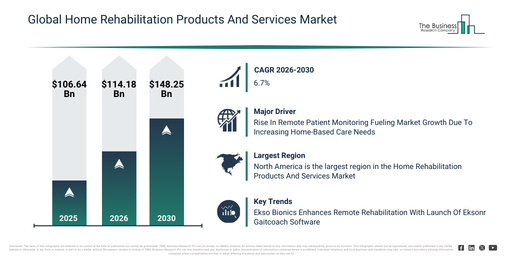
    The market for home rehabilitation solutions and offerings has experienced robust expansion lately, projected to increase from $106.64 billion in 2025 to $114.18 billion in 2026, reflecting a compound annual growth rate of 7.1%. Factors contributing to this historical growth trajectory include the escalating number of elderly individuals, a higher prevalence of long-term health issues, the proliferation of in-home healthcare options, a heightened emphasis on care following acute episodes, and enhanced accessibility of supportive technologies.

    The market for home-based rehabilitation products and services is poised for significant expansion, projected to reach $148.25 billion by 2030, reflecting a compound annual growth rate of 6.7%. This anticipated growth stems from several key drivers, including the escalating acceptance of digital rehabilitation solutions, increased capital allocation towards remote patient monitoring technologies, a broader implementation of chronic care management within the home setting, a heightened consumer desire for tailored therapeutic interventions, and an emerging emphasis on delivering rehabilitation services in a more economical fashion. During this forecast period, notable trends are expected to shape the market, such as a greater incorporation of remote monitoring tools for rehabilitation purposes, a surge in the demand for therapy delivered at home, a more profound integration of intelligent assistive devices, the continued development and deployment of virtual rehabilitation platforms, and a reinforced commitment to fostering patient autonomy and facilitating recovery.

    Download A Free Sample Report For Comprehensive Market Insights:

    https://www.thebusinessresearchcompany.com/sample.aspx?id=25784&type=smp

    Home Rehabilitation Products And Services Market Expansion Supported By Key Demand Factors

    A significant driver anticipated to fuel the expansion of the home rehabilitation products and services market is the increasing adoption of remote patient monitoring. This technology involves leveraging digital tools to collect and analyze patient health information outside of traditional medical facilities, empowering clinicians to remotely oversee patient recovery. The surge in remote patient monitoring is largely attributable to a growing preference for home-based care solutions, especially among the elderly, individuals recuperating from surgical procedures or injuries, and those managing long-term health issues. Home rehabilitation offerings are instrumental in facilitating this trend by equipping patients with essential equipment and therapeutic interventions in their own environments, simultaneously permitting healthcare professionals to monitor treatment effectiveness, patient compliance, and recuperation progress in real-time. Illustrating this trend, a survey conducted by Vivalink Inc. in August 2023 revealed that a substantial 81% of healthcare practitioners are utilizing remote patient monitoring, a dramatic uptick from just 20% in 2021, signifying a 305% increase. Furthermore, 84% of those currently employing RPM intend to broaden its application in the upcoming year. Consequently, the escalating use of remote patient monitoring is a key factor contributing to the growth of the home rehabilitation products and services sector.

    Home Rehabilitation Products And Services Market Segment Landscape And Growth Potential

    The home rehabilitation products and services market covered in this report is segmented –

    1) By Product Type: General Aids, Positioning Devices, Body Support Devices, Wheelchairs

    2) By Service Type: Occupational Therapy, Speech Therapy, Physical Therapy, Respiratory Therapy

    3) By Distribution Channel: Retail Store, Online Channel

    4) By Application: Disabilities, Geriatric People

    5) By End User: Homecare, Hospitals And Clinics, Ambulatory Care Center, Nursing Care Center

    Subsegments:

    1) By General Aids: Walkers, Crutches, Canes, Reaching Aids, Dressing Aids

    2) By Positioning Devices: Patient Transfer Boards, Slide Sheets, Bed Positioning Pillows, Wheelchair Cushions, Limb Positioning Supports

    3) By Body Support Devices: Braces And Orthotic Supports, Cervical Collars, Back Supports, Knee And Ankle Supports, Compression Garments

    4) By Wheelchairs: Manual Wheelchairs, Electric (Powered) Wheelchairs, Transport Wheelchairs, Standing Wheelchairs, Reclining Wheelchairs

    Home Rehabilitation Products And Services Market Growth Trends Influencing Competitive Dynamics

    Key players within the home rehabilitation products and services sector are prioritizing the development of novel approaches, including comprehensive telehealth systems, with the aim of strengthening remote care management, boosting patient compliance with treatment regimens, and facilitating effortless recovery journeys for individuals transitioning between healthcare facilities and their residences. These integrated telehealth systems represent cloud-enabled digital health solutions that meld remote patient monitoring, virtual physician appointments, and advanced data analysis capabilities, all intended to link patients with their healthcare providers for immediate rehabilitation support and ongoing performance evaluation. As an illustration, in the early months of 2024, Ekso Bionics Holdings Inc., a United States firm recognized for its expertise in medical exoskeletons, introduced its EksoNR GaitCoach software, a development designed to refine gait training protocols within rehabilitation therapies. This sophisticated software operates as an immediate analytical mechanism, supplying therapists with insightful gait assessments by scrutinizing critical metrics like step balance, stride progression, swing period, and postural inclination. It proactively notifies clinicians of aberrations in gait in an organized fashion, empowering them to implement prompt and precise adjustments during therapeutic interventions. Furthermore, the software is engineered to accommodate adaptive command structures, permitting instantaneous alterations to leg swing and support phases, consequently tailoring the therapeutic regimen to the unique requirements of each patient.

    Home Rehabilitation Products And Services Market Competitive Landscape: Who Are The Leading Companies?

    Major companies operating in the home rehabilitation products and services market are Medline Industries LP, Stryker Corporation, Bayada Home Health Care Inc, Maxim Healthcare Services Inc, LHC Group Inc, Enovis Corporation, Invacare Corporation, Norco Inc, Arjo Inc, Amedisys Inc, Drive DeVilbiss Healthcare LLC, Performance Health LLC, Handicare Stairlifts International, AliMed Inc, GF Health Products Inc, Dynatronics Corporation, Prism Medical Ltd, Ekso Bionics Holdings Inc, Medical Depot Inc, Sunrise Medical LLC, Ottobock SE And Co KGaA, Permobil AB

    Access The Complete Home Rehabilitation Products And Services Market Report:

    https://www.thebusinessresearchcompany.com/report/home-rehabilitation-products-and-services-global-market-report

    Home Rehabilitation Products And Services Market Largest Region: Which Geography Holds The Highest Market Share?

    North Americawas the largest region in the home rehabilitation products and services market in 2025. Asia-Pacificis expected to be the fastest-growing region in the forecast period. The regions covered in the home rehabilitation products and services market report are Asia-Pacific, South East Asia, Western Europe, Eastern Europe, North America, South America, Middle East, Africa.

    Get in touch with us:

    The Business Research Company: https://www.thebusinessresearchcompany.com/

    Americas: +1 310-496-7795

    Asia: +44 7882 955267 & +91 8897263534

    Europe: +44 7882 955267

    Email us at: marketing@tbrc.info

    Follow us on:

    LinkedIn: https://in.linkedin.com/company/the-business-research-company

    YouTube: https://www.youtube.com/channel/UC24_fI0rV8cR5DxlCpgmyFQ

    Global Market Model: https://www.thebusinessresearchcompany.com/global-market-model
  • Home Infusion Therapy Market Expected To Reach $57.27 Billion By 2030 As Growth Accelerates At 9.8% CAGR

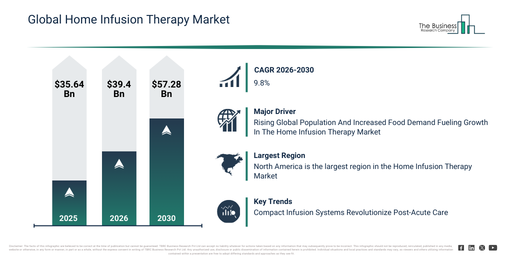
    Home Infusion Therapy Market Expected To Reach $57.27 Billion By 2030 As Growth Accelerates At 9.8% CAGR

    Enhanced with market attractiveness analysis, total addressable market evaluation, company benchmarking matrices, interactive Excel dashboards, expanded supply chain intelligence, emerging startup coverage, and detailed product insights, The Business Research Company’s 2026 market reports deliver more actionable and strategically valuable research.

    Home Infusion Therapy Market Revenue Growth Supported By A CAGR Of 57.27% Through 2030

    The home infusion therapy sector has experienced substantial expansion lately. Projections indicate a climb from $35.64 billion in 2025 to $39.4 billion by 2026, reflecting a compound annual growth rate (CAGR) of 10.6%. This acceleration during the past period is largely due to escalating hospital expenses, a rising incidence of long-term and contagious illnesses, broader access to fundamental infusion devices, increasing endorsement of healthcare delivered at home, and a scarcity of hospital beds.

    The home infusion therapy sector is poised for substantial expansion, projecting a market valuation of $57.28 billion by 2030 and exhibiting a compound annual growth rate of 9.8%. This projected growth is fueled by several key factors including the escalating utilization of biologics and advanced pharmaceuticals, a heightened demand for sustained nutritional and hydration therapies, a discernible inclination towards outpatient and in-home care delivery models, the broadening availability of skilled nursing services for home-based infusions, and the persistent drive for healthcare cost containment. Dominant trends shaping the future landscape encompass a significant migration from hospital-centered to home-based infusion services, augmented adoption of both self-administered and professionally assisted therapies, a surge in long-term infusion solutions for managing chronic and intricate health conditions, the increasing administration of specialty and high-value medications within the home setting, and a heightened emphasis on patient convenience coupled with uninterrupted treatment adherence.

    Download A Free Sample Report For Comprehensive Market Insights:

    https://www.thebusinessresearchcompany.com/sample.aspx?id=6454&type=smp

    Home Infusion Therapy Market Growth Drivers And Industry Catalysts

    The escalating global population, coupled with the resultant surge in food requirements, is anticipated to be a key driver for the expansion of the home infusion therapy sector. Food, defined as the nutrient-rich substance—comprising proteins, carbohydrates, fats, and other vital elements—that organisms utilize for growth, essential bodily functions, and energy provision, plays a crucial role for individuals receiving home infusion therapy. A growing demographic of elderly individuals, a consequence of population increase, necessitates a greater reliance on these home-based treatments. Illustrating this trend, data from January 2024, as reported by the United States Department of Agriculture, indicates that in 2023, the proportion of U.S. household budgets allocated to food was 12.9%, a marginal increase from the 12.8% recorded in 2022. Consequently, the upward trajectory in population figures and the corresponding heightened demand for food are poised to fuel the advancement of the home infusion therapy market.

    Home Infusion Therapy Market Categorization By Product Type And Application

    The home infusion therapy market covered in this report is segmented –

    1) By Product: Infusion Pumps, Intravenous Sets, IV Cannulas, Needleless Connectors

    2) By Administration: Intramuscular, Subcutaneously

    3) By Application: Total Parenteral Nutrition?, Anti-infective Therapy, Hydration Therapy, Chemotherapy, IVIg or Specialty Pharmaceuticals, Other Applications

    4) By End User: Patients, Nurse, Other End Users

    Subsegments:

    1) By Infusion Pumps: Electronic Infusion Pumps, Ambulatory Infusion Pumps, Volumetric Infusion Pumps

    2) By Intravenous Sets: Standard IV Sets, Blood Administration Sets, IV Extension Sets

    3) By IV Cannulas: Peripheral IV Cannulas, Central Venous Catheters (CVCs), Midline Catheters

    4) By Needleless Connectors: Luer-Lock Needleless Connectors, Valved Needleless Connectors, Non-Valved Needleless Connectors

    #Home Infusion Therapy Market Trends Influencing Long-Term Demand

    To secure a stronger position within the home infusion therapy sector, leading enterprises are prioritizing the development and introduction of space-saving infusion devices, exemplified by the Avoset Infusion Platform. This innovative Avoset Infusion Platform represents a connected, multi-therapy ambulatory infusion solution engineered to significantly advance both post-acute care and specialized infusion treatments, with its recent debut in April 2023 by the Israeli medical technology firm Eitan Medical Ltd. The platform’s core design emphasizes compact, user-friendly technology intended to elevate the overall patient experience while revolutionizing post-acute and specialty infusion care, featuring the Avoset infusion pump alongside functionalities for remote patient monitoring and connectivity with the AvosetGo mobile application, all geared towards optimizing patient results, maximizing comfort, and fostering autonomy throughout the therapeutic process.

    Home Infusion Therapy Market Company Landscape And Strategic Competition

    Major companies operating in the home infusion therapy market are Option Care Health Inc, KabaFusion Holdings LLC, PromptCare Companies, CSI Pharmacy LLC, Healix Infusion Therapy Inc, InfuCare Rx Inc, Integrated Home Care Services Inc, IVX Health Inc, Nations Home Infusion LLC, Oso Home Care LLC, Palmetto Infusion Services LLC, Penn Home Infusion Therapy, Premier Infusion Care LLC, Basic Home Infusion Inc, ARJ Infusion Services Inc, Beacon Infusion Healthcare Services LLC, CarepathRx LLC, National Pharmacy Services LLC, Kroger Specialty Infusion, Metro Infusion Center

    Access The Complete Home Infusion Therapy Market Report:

    https://www.thebusinessresearchcompany.com/report/home-infusion-therapy-global-market-report

    Home Infusion Therapy Market Regional Analysis: Which Region Leads By Revenue?

    North Americawas the largest region in the home infusion therapy market in 2025. Asia-Pacificis expected to be the fastest-growing region in the forecast period. The regions covered in the home infusion therapy market report are Asia-Pacific, South East Asia, Western Europe, Eastern Europe, North America, South America, Middle East, Africa.

    Get in touch with us:

    The Business Research Company: https://www.thebusinessresearchcompany.com/

    Americas: +1 310-496-7795

    Asia: +44 7882 955267 & +91 8897263534

    Europe: +44 7882 955267

    Email us at: marketing@tbrc.info

    Follow us on:

    LinkedIn: https://in.linkedin.com/company/the-business-research-company

    YouTube: https://www.youtube.com/channel/UC24_fI0rV8cR5DxlCpgmyFQ

    Global Market Model: https://www.thebusinessresearchcompany.com/global-market-model
  • Home Healthcare Software Market Set To Grow From $9.73 Billion In 2026 To $15.12 Billion By 2030 At A CAGR Of 11.6%

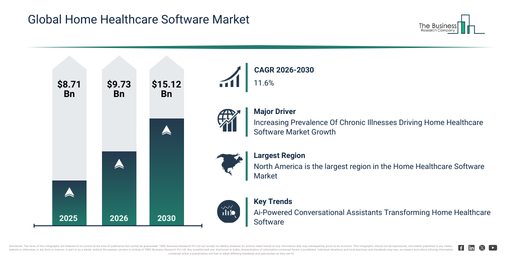
    Home Healthcare Software Market Set To Grow From $9.73 Billion In 2026 To $15.12 Billion By 2030 At A CAGR Of 11.6%

    Through market attractiveness analysis, total addressable market evaluation, company benchmarking matrices, interactive Excel dashboards, expanded supply chain intelligence, emerging startup coverage, and detailed product insights, The Business Research Company’s 2026 market reports provide more actionable and strategically valuable research.

    Home Healthcare Software Market Value Expansion And Long-Term Growth Outlook

    The global market for home healthcare software has experienced substantial expansion lately, with projections indicating continued robust growth. Forecasts suggest a climb from $8.71 billion in 2025 to $9.73 billion by 2026, reflecting a compound annual growth rate (CAGR) of 11.7%. Factors contributing to this upward trajectory during the past years include a heightened preference for care delivered at home, the increasing digitalization of patient health information, a growing imperative for seamless care coordination across healthcare providers, the proliferation of homecare agencies, and the integration of foundational telehealth technologies.

    The home healthcare software sector is poised for significant expansion in the coming years, projecting a reach of $15.12 billion by 2030, fueled by a compound annual growth rate of 11.6%. This upward trajectory is anticipated due to several key factors, including the growing prevalence of managing chronic conditions within patients’ residences, an escalating demand for immediate access to patient information, the proliferation of cloud-based healthcare solutions, a heightened emphasis on optimizing the operational efficiency of homecare providers, and an increasing regulatory focus on the precision of data and its subsequent reporting. Emerging trends expected to shape this market during the forecast period encompass the broader implementation of integrated care coordination systems, a surge in the adoption of telehealth and virtual care strategies, a greater focus on streamlining workflows and appointment scheduling, advancements in data-informed patient tracking and reporting, and the expansion of automated solutions for compliance and billing within the homecare industry.

    Download A Free Sample Report For Comprehensive Market Insights:

    https://www.thebusinessresearchcompany.com/sample.aspx?id=15199&type=smp

    Home Healthcare Software Market Opportunity Drivers: What Is Creating New Revenue Potential?

    The escalating incidence of long-term health conditions is poised to be a significant catalyst for expansion within the home healthcare software sector. These persistent ailments, defined by their duration exceeding a year and the resultant need for ongoing medical attention, limitations in daily routines, or both, are becoming more common due to factors such as an aging populace, detrimental lifestyle choices, increased urbanization, genetic predispositions, advancements in disease detection and management, and shifts in dietary patterns. Home healthcare software plays a crucial role in managing these chronic conditions by facilitating remote patient monitoring, enabling healthcare professionals to track patient progress effectively, and ensuring that treatment regimens are consistently followed. As an illustration, U.S. adults reported a substantial burden of chronic conditions in 2023, with approximately 194 million (76.4%) having at least one. This prevalence was noted at 59.5% for young adults, rising to 78.4% for those in midlife, and reaching 93.0% among older adults, according to data from the Centers for Disease Control and Prevention (CDC) in April 2025. Consequently, the growing prevalence of chronic illnesses is a primary driver for the home healthcare software market’s advancement.

    Home Healthcare Software Market Segment Analysis And Revenue Opportunities

    The home healthcare software market covered in this report is segmented –

    1) By Product: Clinical Management Systems, Hospice Systems, Agency Software Systems, Tele-Health Systems

    2) By Usage: Clinical Homecare Systems, Non-Clinical Homecare Systems

    3) By Delivery Mode: Web-Based Software, On-Premises Software, Cloud-Based Software

    4) By End User: Hospice Agencies, Homecare Agencies, Private Duty, Other End Users

    Subsegments:

    1) By Clinical Management Systems: Electronic Health Records (EHR), Patient Scheduling And Workflow Management, Care Plan Management, Clinical Decision Support

    2) By Hospice Systems: Hospice Care Management, Palliative Care Documentation, Hospice Billing And Reporting

    3) By Agency Software Systems: Home Care Agency Management, Billing And Scheduling Software, Employee Management And Compliance, Patient And Family Communication Tools

    4) By Tele-Health Systems: Telemedicine Platforms, Remote Patient Monitoring, Video Consultation Software, Telehealth Reporting And Analytics

    Home Healthcare Software Market Innovation Trends Driving Future Development

    Leading enterprises within the home healthcare software sector are prioritizing the creation of cutting-edge tools, including AI-driven dialogue agents, intended to boost patient involvement, optimize care synchronization, and bolster the operational effectiveness of home care providers. An AI-powered conversational assistant represents a software program or platform that leverages artificial intelligence, specifically natural language processing and machine learning techniques, to comprehend, interpret, and converse with human input naturally. As an illustration, in June 2025, AlayaCare, a Canadian firm specializing in cloud-based solutions for home and community care, introduced Layla, an AI-powered assistant engineered for the home care environment. Layla facilitates extensive data retrieval across care itineraries, patient charts, visit documentation, and appointment schedules; it provides mobile-centric assistance for field caregivers; it ensures a secure, HIPAA-compliant framework; and it offers reliable clinical expertise for precise medical advice. By empowering quicker, more secure decision-making and decreasing the burden of administrative tasks, Layla serves as a prime example of the evolved landscape of home healthcare software.

    Home Healthcare Software Market Leading Players Shaping Industry Direction

    Major companies operating in the home healthcare software market are Mckesson Corporation, DarioHealth Corp., Koninklijke Philips N.V., GE HealthCare Technologies Inc., B. Braun SE, Cerner Corporation, ResMed Inc., NextGen Healthcare Information System LLC, Medical Information Technology Inc. (Meditech), Homecare Homebase LLC, AlayaCare USA Inc., Omada Health Inc., Loyal Healthcare LLC, Casamba Home & Hospice, Axxess Technology Solutions Inc., Delta Health Technologies Inc., Family First Inc., KanTime Inc., ClearCare Inc. (WellSky), Thornberry Ltd., Centex AxisCare LLC, Alora Healthcare Systems Inc., Carallel LLC, HomeHero Inc.

    Access The Complete Home Healthcare Software Market Report:

    https://www.thebusinessresearchcompany.com/report/home-healthcare-software-global-market-report

    Home Healthcare Software Market Geographic Distribution And Regional Opportunities

    North Americawas the largest region in the home healthcare software market in 2025. Asia-Pacificis expected to be the fastest-growing region in the forecast period. The regions covered in the home healthcare software market report are Asia-Pacific, South East Asia, Western Europe, Eastern Europe, North America, South America, Middle East, Africa.

    Get in touch with us:

    The Business Research Company: https://www.thebusinessresearchcompany.com/

    Americas: +1 310-496-7795

    Asia: +44 7882 955267 & +91 8897263534

    Europe: +44 7882 955267

    Email us at: marketing@tbrc.info

    Follow us on:

    LinkedIn: https://in.linkedin.com/company/the-business-research-company

    YouTube: https://www.youtube.com/channel/UC24_fI0rV8cR5DxlCpgmyFQ

    Global Market Model: https://www.thebusinessresearchcompany.com/global-market-model