Month: June 2026

  • Chemotherapy Induced Peripheral Neuropathy Treatment Market Set To Grow From $1.85 Billion In 2026 To $2.36 Billion By 2030 At A CAGR Of 6.2%

    Chemotherapy Induced Peripheral Neuropathy Treatment Market Set To Grow From $1.85 Billion In 2026 To $2.36 Billion By 2030 At A CAGR Of 6.2%

    Enhanced with market attractiveness analysis, total addressable market evaluation, company benchmarking matrices, interactive Excel dashboards, expanded supply chain intelligence, emerging startup coverage, and detailed product insights, The Business Research Company’s 2026 market reports deliver more actionable and strategically valuable research.

    Chemotherapy Induced Peripheral Neuropathy Treatment Market Size Outlook: How Fast Will Revenue Grow Through 2030?

    The market for treatments targeting chemotherapy-induced peripheral neuropathy has experienced robust expansion recently, projected to advance from $1.75 billion in 2025 to $1.86 billion in 2026, reflecting a compound annual growth rate of 6.2%. This historical growth trajectory is underpinned by several key factors, including the escalating prescription of neurotoxic chemotherapy drugs, an increase in cancer patient survival rates, heightened awareness surrounding the adverse effects of chemotherapy, the accessibility of therapies aimed at alleviating symptoms, and the overall expansion of cancer care facilities.

    The market for treating chemotherapy-induced peripheral neuropathy is poised for significant expansion in the coming years, projected to reach $2.37 billion by 2030 with a CAGR of 6.2%. This anticipated growth during the forecast period is fueled by several key factors, including heightened investment in specialized neuropathy treatments, a greater emphasis on individualized supportive care within oncology, an increase in clinical trials for CIPN medications, a growing need for treatments that enhance patient quality of life, and advancements in diagnosing the condition using biomarkers. Dominant trends expected to shape this market over the forecast period involve a concentrated effort on developing neuroprotective drugs, a broader acceptance of combination therapy strategies, a stronger push for early identification and effective symptom management, the proliferation of tailored treatment plans, and intensified clinical investigation into managing CIPN.

    Download A Free Sample Report For Comprehensive Market Insights:

    https://www.thebusinessresearchcompany.com/sample.aspx?id=11967&type=smp

    Chemotherapy Induced Peripheral Neuropathy Treatment Market Industry Drivers: What Is Driving Revenue Growth?

    The escalating incidence of cancer globally is anticipated to serve as a primary catalyst for the expansion of the treatment market for chemotherapy-induced peripheral neuropathy. Peripheral neuropathy, a distressing adverse effect that can emerge from specific chemotherapy regimens administered for cancer care, is seeing increased attention as cancer diagnoses rise. For example, data from the Australian Institute of Health and Welfare, a governmental body in Australia, indicated that an estimated 165,000 new cancer diagnoses were made in Australia in 2023, translating to more than 450 individuals diagnosed daily, with males accounting for approximately 55% of these new cases. Thus, the growing global burden of cancer is directly fueling the demand for treatments addressing chemotherapy-induced peripheral neuropathy.

    Chemotherapy Induced Peripheral Neuropathy Treatment Market Segment Landscape: Which Areas Lead Market Development?

    The chemotherapy induced peripheral neuropathy treatment market covered in this report is segmented –

    1) By Drug Class: Nerve Protective Therapy, Anti-Inflammatory Therapy, Neurotransmitter Based Therapy, Antioxidant, Other Drug Classes

    2) By Treatment: Medication, Therapy, Other Treatments

    3) By Drug Type: Branded, Generic

    4) By Distribution Channel: Hospital Pharmacy, Retail Pharmacy, Online Pharmacies, Other Distribution Channels

    5) By End-User: Hospitals, Research Institutes, Specialty Clinics

    Subsegments:

    1) By Nerve Protective Therapy: Vitamin B Complex, Alpha-Lipoic Acid, Acetyl-L-Carnitine

    2) By Anti-Inflammatory Therapy: Corticosteroids, Non-Steroidal Anti-Inflammatory Drugs (NSAIDs)

    3) By Neurotransmitter Based Therapy: Gabapentin, Pregabalin, Duloxetine

    4) By Antioxidant: N-acetylcysteine, Glutathione, Coenzyme Q10

    5) By Other Drug Classes: Topical Treatments, Opioids, Herbal Remedies

    #Chemotherapy Induced Peripheral Neuropathy Treatment Market Growth Trends: What Is Influencing The Future Outlook?

    AlgoTx, a clinical-stage entity dedicated to managing intricate pain conditions, announced in March 2023 that the FDA has greenlit their Investigational New Drug Application for ATX01, a groundbreaking Phase 2 candidate. This novel therapy is slated for use in patients suffering from erythromelalgia. Concurrently, the ATX01 for the Pain of Chemotherapy (ACT) trial, investigating chemotherapy-induced peripheral neuropathy (CIPN), has enrolled its initial participants. Both of these initiatives have been granted fast-track status by the U.S. Food and Drug Administration, underscoring the companies’ dedication to advancing innovative treatments within the chemotherapy-induced peripheral neuropathy market to enhance patient outcomes and solidify their competitive standing.

    Chemotherapy Induced Peripheral Neuropathy Treatment Market Industry Leaders And Market Competition

    Major companies operating in the chemotherapy induced peripheral neuropathy treatment market are Midatech Pharma PLC, Novartis AG, Hoffmann-La Roche Ltd., Lee’s Pharmaceutical Holdings Limited, RELIEF THERAPEUTICS Holding SA, WEX Pharmaceuticals Inc., MediciNova Inc., Solasia Pharma K.K., ESTEVE, Novaremed AG, MAKScientific LLC, Sova Pharmaceuticals Inc., Kineta Inc., Aptinyx Inc., Apexian Pharmaceuticals Inc., Alexion Pharmaceuticals Inc., Sanofi, Takeda Pharmaceutical Company Limited, Vertex Pharmaceuticals Incorporated, Abbott Laboratories, Acorda Therapeutics Inc., Galena Biopharma Inc., Incyte Corporation, ChromaDex Inc., Eurofins Advinus, Asahi Kasei Corporation, WinSanTor Inc., Apollo Endosurgery Inc.

    Access The Complete Chemotherapy Induced Peripheral Neuropathy Treatment Market Report:

    https://www.thebusinessresearchcompany.com/report/chemotherapy-induced-peripheral-neuropathy-treatment-global-market-report

    Chemotherapy Induced Peripheral Neuropathy Treatment Market Regional Analysis And Leading Geography

    North America was the largest region in the chemotherapy induced peripheral neuropathy treatment market in 2025. Asia-Pacific and Europe are expected to be the fastest-growing regions in the forecast period. The regions covered in the chemotherapy induced peripheral neuropathy treatment market report are Asia-Pacific, South East Asia, Western Europe, Eastern Europe, North America, South America, Middle East, Africa.

    Get in touch with us:

    The Business Research Company: https://www.thebusinessresearchcompany.com/

    Americas: +1 310-496-7795

    Asia: +44 7882 955267 & +91 8897263534

    Europe: +44 7882 955267

    Email us at: marketing@tbrc.info

    Follow us on:

    LinkedIn: https://in.linkedin.com/company/the-business-research-company

    YouTube: https://www.youtube.com/channel/UC24_fI0rV8cR5DxlCpgmyFQ

    Global Market Model: https://www.thebusinessresearchcompany.com/global-market-model

  • Chemotherapy At Home Services Market Opportunities Are Emerging Beyond Traditional Growth Areas

    Chemotherapy At Home Services Market Opportunities Are Emerging Beyond Traditional Growth Areas

    Through market attractiveness analysis, total addressable market evaluation, company benchmarking matrices, interactive Excel dashboards, expanded supply chain intelligence, emerging startup coverage, and detailed product insights, The Business Research Company’s 2026 market reports provide more actionable and strategically valuable research.

    Chemotherapy At Home Services Market Size, Value And Growth Trends Through 2030

    The market for chemotherapy administered at home has experienced substantial expansion lately and is projected to continue its upward trajectory. This sector, valued at $1.94 billion in 2025, anticipates reaching $2.16 billion by 2026, reflecting a compound annual growth rate of 11.1%. Several key factors have fueled this growth during the preceding period, including the broader implementation of outpatient cancer treatment initiatives, a growing preference for care tailored to individual patient needs, the accessibility of mobile infusion devices, mounting expenses within the healthcare system, and advancements in the development of chemotherapy drugs.

    The market for chemotherapy delivered at home is projected to experience substantial expansion over the forthcoming years, reaching an estimated $3.14 billion by 2030, driven by a compound annual growth rate of 9.8%. This anticipated rise is fueled by several key factors, including escalating investments in the home healthcare sector, a broader embrace of digital tools for cancer patient monitoring, the proliferation of targeted therapeutic approaches for cancer, a growing inclination towards healthcare delivery outside traditional clinical settings, and enhanced financial coverage for chemotherapy administered in home environments. Significant developments anticipated during this forecast period involve a greater adoption of oncology care models centered on the home, increased utilization of mobile infusion devices, more comprehensive integration of remote patient monitoring systems, the expansion of customized chemotherapy treatment plans, and a heightened emphasis on ensuring patient comfort and security.

    Download A Free Sample Report For Comprehensive Market Insights:

    https://www.thebusinessresearchcompany.com/sample.aspx?id=15762&type=smp

    #Chemotherapy At Home Services Market Growth Factors: Which Forces Are Supporting Market Expansion?

    The growing incidence of cancer is anticipated to be a significant catalyst for the expansion of the chemotherapy-at-home services sector in the future. Cancer, a condition marked by the uncontrolled proliferation and dissemination of aberrant cells within the body, is becoming more prevalent due to factors including an aging global population, shifts in lifestyle habits, environmental influences, inherited genetic tendencies, and enhanced detection capabilities afforded by sophisticated diagnostic methods. By enabling cancer patients to undergo treatment within the familiar surroundings of their residences, chemotherapy-at-home services offer enhanced convenience and elevate the overall quality of life for these individuals. To illustrate, the National Center for Biotechnology Information reported in January 2023 that the United States anticipated 1,958,310 new cancer diagnoses and 609,820 cancer-related fatalities for the year 2023, underscoring the substantial burden of the disease and consequently fueling the demand for home-based chemotherapy solutions.

    Increased spending on healthcare is poised to accelerate the expansion of the market for chemotherapy delivered at home. This surge in healthcare expenditure, encompassing the financial resources allocated by individuals, entities, and governments towards health maintenance, prevention, and illness management, is on the rise, partly driven by the escalating costs associated with cutting-edge medical technologies, novel diagnostic instruments, and innovative therapeutic approaches. Such amplified financial investment in the healthcare sector facilitates the development and proliferation of chemotherapy-at-home services by fostering investments in economical, patient-focused cancer treatment paradigms, broadening insurance coverage, and bolstering the necessary infrastructure for the secure administration of oncological therapies outside traditional medical facilities. For example, the Centers for Medicare & Medicaid Services disclosed in December 2024 that U.S. healthcare spending saw a 7.5% increase in 2023, reaching $4.9 trillion, which translates to approximately $14,570 per person, thereby demonstrating a clear correlation between escalating healthcare budgets and the market’s upward trajectory for home-based chemotherapy.

    Chemotherapy At Home Services Market Segments: Where Are The Largest Growth Opportunities?

    The chemotherapy at home services market covered in this report is segmented –

    1) By Product: Chemotherapy Drugs, Chemotherapy Infusion Pumps

    2) By Administration: Oral, Intravenous

    3) By Application: Breast Cancer, Blood Cancer, Ovarian Cancer, Colorectal Cancer

    Subsegments:

    1) By Chemotherapy Drugs: Oral Chemotherapy Drugs, Injectable Chemotherapy Drugs, Targeted Therapy Drugs, Chemotherapy Regimen Combinations

    2) By Chemotherapy Infusion Pumps: Portable Infusion Pumps, Home Infusion Therapy Pumps, Electronic Infusion Pumps, Ambulatory Infusion Pumps

    Chemotherapy At Home Services Market Industry Trends: What Changes Are Reshaping Demand?

    The chemotherapy at home services sector is witnessing a strategic shift as leading organizations prioritize the development of patient-focused care frameworks, employing technology-driven initiatives for oncology treatments delivered in domestic environments. This approach is designed to boost treatment accessibility, elevate patient comfort levels, and alleviate strain on healthcare facilities. Such programs incorporate remote patient surveillance, virtual oncology assistance, and in-home nursing care, thereby facilitating the safe and regulation-compliant administration of chemotherapy outside conventional healthcare settings. As an illustration, Reimagine Care, a company specializing in technologically advanced home-based oncology solutions within the United States, initiated a trial for at-home cancer care in April 2025, partnering with MedStar Health. This collaborative endeavor intends to broaden the reach of oncology services, encompassing aspects like symptom management, therapeutic support, and ongoing virtual monitoring, directly into patients’ residences. Through the utilization of digital infrastructures, patient guidance instruments, and skilled healthcare professionals, the pilot aims to elevate the overall patient journey, diminish the necessity for hospital admissions, and promote a more streamlined provision of oncology care throughout the MedStar Health system.

    Chemotherapy At Home Services Market Major Participants And Competitive Dynamics

    Major companies operating in the chemotherapy at home services market are CVS Health Corporation, Optum Inc, Fresenius Kabi, Medtronic plc, Amgen, Penn Medicine, Advocate Health Care, Medibank Private Limited, Option Care Health Inc., Amedisys Inc., Lincare Holdings Inc., Cancer Treatment Centers of America (CTCA), BioScrip Inc., Shanghai MicroPort Lifesciences Co. Ltd., Accredo Health Group Inc., LloydsPharmacy Clinical Homecare, InfuSystem Holdings Inc., Portea Medical, Amerita Inc., Jivika Healthcare, Vitalis Health and Home Care Pty Ltd, Ubiqare Health Pvt. Ltd., View Health Pty Ltd group, Sciensus Pharma Services Limited, TCP Homecare

    Access The Complete Chemotherapy At Home Services Market Report:

    https://www.thebusinessresearchcompany.com/report/chemotherapy-at-home-services-global-market-report

    Chemotherapy At Home Services Market Geographic Analysis: Where Is Demand Growing The Fastest?

    North Americawas the largest region in the chemotherapy at-home services market in 2025. Asia-Pacificis expected to be the fastest-growing region in the forecast period. The regions covered in the chemotherapy at home services market report are Asia-Pacific, South East Asia, Western Europe, Eastern Europe, North America, South America, Middle East, Africa.

    Get in touch with us:

    The Business Research Company: https://www.thebusinessresearchcompany.com/

    Americas: +1 310-496-7795

    Asia: +44 7882 955267 & +91 8897263534

    Europe: +44 7882 955267

    Email us at: marketing@tbrc.info

    Follow us on:

    LinkedIn: https://in.linkedin.com/company/the-business-research-company

    YouTube: https://www.youtube.com/channel/UC24_fI0rV8cR5DxlCpgmyFQ

    Global Market Model: https://www.thebusinessresearchcompany.com/global-market-model
  • Chemiluminescence Immunoassay Market Expansion Is Opening New Pathways For Strategic Investment

    Chemiluminescence Immunoassay Market Expansion Is Opening New Pathways For Strategic Investment

    Delivering more actionable and strategically valuable research, The Business Research Company’s 2026 market reports feature market attractiveness analysis, total addressable market evaluation, company benchmarking matrices, interactive Excel dashboards, expanded supply chain intelligence, emerging startup coverage, and detailed product insights.

    Chemiluminescence Immunoassay Market CAGR Analysis And Future Market Development

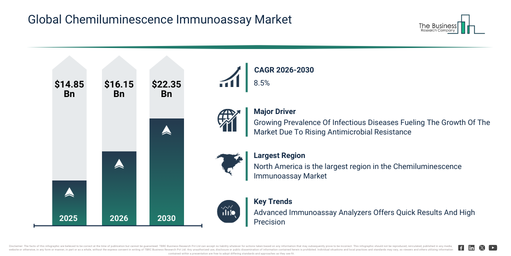
    The market for chemiluminescence immunoassays experienced robust expansion recently, projecting a rise from \$14.85 billion in 2025 to \$16.15 billion by 2026, indicating a compound annual growth rate of 8.8%. This historical growth trajectory is largely attributable to several key factors, including the heightened incidence of both infectious and chronic illnesses, the proliferation of comprehensive diagnostic facilities, a growing need for precise biomarker identification, the increased utilization of automated laboratory equipment, and the expanding application of immunoassays within clinical diagnostic procedures.

    Anticipate a robust expansion for the chemiluminescence immunoassay market, projected to reach a valuation of $22.35 billion by the year 2030, driven by an 8.5% compound annual growth rate. This upward trajectory in the projected timeframe is fueled by several key factors: augmenting need for the early identification of diseases, escalating use of diagnostic tools for individualized treatment approaches, the proliferation of distributed testing frameworks, greater incorporation of artificial intelligence in deciphering diagnostic results, and augmented investments in cutting-edge clinical laboratory facilities. Concerning prevalent trends expected during this same period, observe a heightened uptake of completely automated immunoassay equipment, a growing preference for diagnostic kits offering superior sensitivity, expanded utilization of methods capable of simultaneous multiple tests, broader deployment of swift and point-of-care CLIA solutions, and an intensified emphasis on ensuring consistent reagent effectiveness.

    Download A Free Sample Report For Comprehensive Market Insights:

    https://www.thebusinessresearchcompany.com/sample.aspx?id=27252&type=smp

    Chemiluminescence Immunoassay Market Demand Drivers: What Is Fueling Industry Growth?

    The increasing incidence of infectious diseases is poised to be a significant catalyst for the expansion of the chemiluminescence immunoassay market. Infectious diseases encompass conditions stemming from pathogenic agents like bacteria, viruses, fungi, or parasites, capable of transmission between individuals through direct or indirect means. Factors contributing to the escalation of these diseases include the mounting challenge of antimicrobial resistance, which diminishes the efficacy of standard therapies, thereby facilitating the persistence and spread of infections. Chemiluminescence immunoassays play a crucial role in diagnosing infectious diseases by offering exceptional sensitivity and specificity in detecting biomarkers, which facilitates the prompt and precise identification of disease-causing agents. These assays contribute to shortening diagnostic timelines through the provision of swift and dependable results, ultimately enhancing patient care and therapeutic effectiveness. As an illustration, data from the UK Health Security Agency indicated that in England, the count of tuberculosis cases, a bacterial infection primarily impacting the lungs, reached 4,850 in 2023, marking a 10.7% increase from the 4,380 cases recorded in 2022. Consequently, the escalating occurrence of infectious diseases is directly fueling the growth trajectory of the chemiluminescence immunoassay market.

    Chemiluminescence Immunoassay Market Segment Analysis: What Are The Major Market Categories?

    The chemiluminescence immunoassay market covered in this report is segmented –

    1) By Product Type: Analyzers, Kits, Reagents

    2) By Sample Type: Blood, Saliva, Urine, Other Samples

    3) By Technology: Chemiluminescence Enzyme Technology (CLEIA), Electrochemiluminescence Immunoassay (ECLI), Microparticle Chemiluminescence Immunoassay

    4) By Application: Therapeutic Drug Monitoring, Oncology, Cardiology, Endocrinology, Infectious Disease, Autoimmune Disease, Other Applications

    5) By End-User: Hospitals, Pharmaceutical And Biotechnology Companies, Clinical Laboratories, Other End-Users

    Subsegments:

    1) By Analyzers: Fully Automated Analyzers, Semi Automated Analyzers, Portable Analyzers

    2) By Kits: Detection Kits, Quantitative Kits, Qualitative Kits, Multiparameter Kits

    3) By Reagents: Luminol Reagents, Isoluminol Reagents, Acridinium Ester Reagents, Other Reagents

    Chemiluminescence Immunoassay Market Innovation Trends: Which Developments Are Transforming The Industry?

    Leading entities within the chemiluminescence immunoassay sector are dedicating their efforts toward creating sophisticated offerings, including cutting-edge analyzers, with the objectives of improving diagnostic precision, boosting testing capacity, and expediting the delivery of medical insights across diverse clinical arenas. These automated chemiluminescence immunoassay analyzers serve to detect and quantify light generated through specific chemical interactions, thereby enabling the precise identification of relevant biomarkers in diagnostic assays. As an illustration, Fapon Biotech Inc., a biotechnology firm headquartered in China, introduced its Shine i8000/9000 chemiluminescence immunoassay analyzer in July 2023. This apparatus, tailored for laboratories of moderate to extensive scale, delivers rapid initial findings in approximately ten minutes, coupled with elevated accuracy, all within a design that is both space-efficient, dependable, and easy to operate. Among its prominent attributes are a wide, 360-degree visual display, a streamlined process for the bulk loading of reaction vessels with a single action, an emergency backup system for the substrate in dual-tube configuration, and automated discarding of used reaction cups to mitigate potential contamination risks. The instrument’s completely automated operational sequence minimizes the need for manual input, while sophisticated computational methods ensure the reliability of outcomes, positioning it as an excellent choice for environments demanding high diagnostic throughput.

    Chemiluminescence Immunoassay Market Leading Companies Driving Competitive Growth

    Major companies operating in the chemiluminescence immunoassay market are F. Hoffmann-La Roche AG, Thermo Fisher Scientific Inc., Abbott Laboratories, Danaher Corporation, Siemens Healthineers AG, Shenzhen Mindray Bio-Medical Electronics Co. Ltd., QuidelOrtho Corporation, Sysmex Corporation, Bio-Rad Laboratories Inc., Revvity Inc., DiaSorin S.p.A., Tecan Group Ltd., Euroimmun AG, Randox Laboratories Ltd., Autobio Diagnostics Co. Ltd., Wondfo Biotech Co. Ltd., Fujirebio Diagnostics Inc., Trivitron Healthcare Pvt. Ltd., Getein Biotech Inc., Fapon Biotech Inc., Diazyme Laboratories Inc.

    Access The Complete Chemiluminescence Immunoassay Market Report:

    https://www.thebusinessresearchcompany.com/report/chemiluminescence-immunoassay-global-market-report

    Chemiluminescence Immunoassay Market Global Footprint: Which Region Holds Market Leadership?

    North Americawas the largest region in the chemiluminescence immunoassay market in 2025. Asia-Pacificis expected to be the fastest-growing region in the forecast period. The regions covered in the chemiluminescence immunoassay market report are Asia-Pacific, South East Asia, Western Europe, Eastern Europe, North America, South America, Middle East, Africa.

    Get in touch with us:

    The Business Research Company: https://www.thebusinessresearchcompany.com/

    Americas: +1 310-496-7795

    Asia: +44 7882 955267 & +91 8897263534

    Europe: +44 7882 955267

    Email us at: marketing@tbrc.info

    Follow us on:

    LinkedIn: https://in.linkedin.com/company/the-business-research-company

    YouTube: https://www.youtube.com/channel/UC24_fI0rV8cR5DxlCpgmyFQ

    Global Market Model: https://www.thebusinessresearchcompany.com/global-market-model

  • Chatbots For Mental Health And Therapy Market Trends Are Creating New Opportunities For Industry Leaders

    Chatbots For Mental Health And Therapy Market Trends Are Creating New Opportunities For Industry Leaders

    Enhanced with market attractiveness analysis, total addressable market evaluation, company benchmarking matrices, interactive Excel dashboards, expanded supply chain intelligence, emerging startup coverage, and detailed product insights, The Business Research Company’s 2026 market reports deliver more actionable and strategically valuable research.

    Chatbots For Mental Health And Therapy Market Expansion From $1.49 Billion In 2026 To $1.98 Billion In 2030

    The mental health and therapy chatbot sector has experienced robust expansion lately, with its market size projected to expand from $1.37 billion in 2025 to $1.49 billion in 2026, exhibiting a compound annual growth rate (CAGR) of 8.8%. This upward trend during the preceding period can be credited to a heightened worldwide consciousness regarding mental well-being, the proliferation of digital healthcare solutions, a surge in smartphone usage, increasing favorability towards remote therapy options, and the early integration of AI-driven conversational technologies.

    The market for mental health and therapy chatbots is poised for significant expansion, projected to reach $1.99 billion by 2030, reflecting a compound annual growth rate of 7.4%. This upward trajectory is fueled by a confluence of factors, including a rising need for accessible mental health support systems, the proliferation of individualized digital treatment approaches, increased financial backing for artificial intelligence in healthcare ventures, a heightened emphasis on proactive mental well-being, and the evolution of supportive regulatory environments for digital health interventions. Key developments anticipated during this period involve the wider implementation of AI-powered mental health assistance, a greater embrace of natural language processing technologies for therapeutic purposes, the seamless incorporation of these services with remote healthcare platforms, advancements in the ability to detect and interpret emotions, and a more rigorous commitment to safeguarding user data and privacy.

    Download A Free Sample Report For Comprehensive Market Insights:

    https://www.thebusinessresearchcompany.com/sample.aspx?id=14666&type=smp

    Chatbots For Mental Health And Therapy Market Growth Drivers: What Factors Are Accelerating Expansion?

    Anticipated surges in the need for mental health support are poised to significantly fuel the expansion of chatbots within the mental health and therapy sectors. This escalating demand for mental well-being services, resources, and frameworks stems from the increasing prevalence of mental health conditions and associated difficulties experienced by individuals. Key factors contributing to this heightened demand include greater public understanding of mental health topics, improved access to care, the lingering effects of trauma and adverse life events, and escalating workplace pressures. Chatbots offer valuable psychoeducational materials, self-management tools, and clinically validated therapeutic approaches, empowering users to cultivate effective strategies for their mental wellness. Furthermore, their constant availability ensures that individuals can access assistance whenever needed, irrespective of geographic location or the time of day. Illustrating this trend, in November 2023, data from the UK’s National Health Service revealed that an estimated 20.3% of 8 to 16-year-olds, 23.3% of 17 to 19-year-olds, and 21.7% of 20 to 25-year-olds, collectively representing about one in five young people aged 8 to 25, likely experienced a mental disorder during 2023. Consequently, the growing societal emphasis on mental health is directly acting as a catalyst for the proliferation of chatbots in this crucial market.

    Chatbots For Mental Health And Therapy Market Segment Breakdown: Which Categories Generate The Most Revenue?

    The chatbots for mental health and therapy market covered in this report is segmented –

    1) By Type: Conversational AI Or Virtual Assistant Chatbots, Symptom Monitoring Chatbots, Therapy Support Chatbots, Self-help Or Wellness Chatbots

    2) By Technology: Artificial Intelligence (AI)-Based Chatbots, Rule-Based Chatbots, Hybrid Chatbots

    3) By Deployment Mode: Cloud-Based Chatbots, On-Premise Chatbots

    4) By Application: Stress And Anxiety Management, Depression And Mood Disorders Support, Sleep And Wellness Assistance, Post-Traumatic Stress Disorder (PTSD) Support, Employee Assistance Programs (EAPs), Therapist Assistance And Patient Monitoring

    5) By End-User: Individual Users, Healthcare Providers, Enterprises And Organizations, Educational Institutions

    Subsegments:

    1) By Conversational AI Or Virtual Assistant Chatbots: Guided CBT Support Chatbots, General Mental Health Check-in Chatbots

    2) By Symptom Monitoring Chatbots: Mood Tracking Chatbots, Anxiety And Stress Monitoring Chatbots

    3) By Therapy Support Chatbots: Pre-Session Questionnaire Chatbots, Post-Session Follow-Up Chatbots

    4) By Self-help Or Wellness Chatbots: Meditation Chatbots, Daily Wellness Exercise Chatbots

    Chatbots For Mental Health And Therapy Market Trends: What Is Shaping Future Industry Growth?

    Key players in the mental health and therapy chatbot sector are prioritizing the creation of sophisticated offerings, incorporating cutting-edge technological advancements like advanced natural language processing (NLP) algorithms to enhance their market standing. These sophisticated NLP capabilities allow chatbots to process, understand, and respond to users in a manner that mimics human empathy and understanding, leading to interactions that are both more fluid and tailored to individual needs, thereby boosting the efficacy of mental health support. An illustrative example of this trend is the introduction in July 2023 of an AI therapist by TalkThru, a U.S. digital platform providing accessible professional therapy. This innovative chatbot leverages advanced NLP to facilitate profound and considerate exchanges with users, offering discreet and private therapeutic sessions at their convenience, anytime and anywhere. The availability of this AI therapist ensures continuous support, individualized care, and helps to mitigate the societal stigma associated with seeking mental health assistance. Furthermore, its intuitive interface ensures that users can readily navigate the platform and engage in therapy sessions, thereby expanding access to and improving the effectiveness of mental healthcare.

    Chatbots For Mental Health And Therapy Market Key Players And Strategic Industry Positioning

    Major companies operating in the chatbots for mental health and therapy market are Talkspace Online Therapy Inc, International Business Machines Corporation, Cisco Systems Inc, Oracle Corporation, Twilio Inc, Teladoc Health Inc, BetterHelp, Calm.com Inc, American Well Corp, Headspace Inc, Doctor On Demand Inc, MDLIVE, HelloSelf Limited, Mindstrong Inc, Lyra Health Inc, Valant, Welligent, Sensely Inc, LISSUN, Wysa Ltd, Happify Inc.

    Access The Complete Chatbots For Mental Health And Therapy Market Report:

    https://www.thebusinessresearchcompany.com/report/chatbots-for-mental-health-and-therapy-global-market-report

    Chatbots For Mental Health And Therapy Market Regional Distribution: Which Areas Drive Market Expansion?

    North Americawas the largest region in the chatbots for mental health and therapy market in 2025. Asia-Pacificis expected to be the fastest-growing region in the forecast period. The regions covered in the chatbots for mental health and therapy market report are Asia-Pacific, South East Asia, Western Europe, Eastern Europe, North America, South America, Middle East, Africa.

    Get in touch with us:

    The Business Research Company: https://www.thebusinessresearchcompany.com/

    Americas: +1 310-496-7795

    Asia: +44 7882 955267 & +91 8897263534

    Europe: +44 7882 955267

    Email us at: marketing@tbrc.info

    Follow us on:

    LinkedIn: https://in.linkedin.com/company/the-business-research-company

    YouTube: https://www.youtube.com/channel/UC24_fI0rV8cR5DxlCpgmyFQ

    Global Market Model: https://www.thebusinessresearchcompany.com/global-market-model

  • Cervical Spondylosis Treatment Market Growth Is Reshaping Competitive Advantage Across The Industry

    Cervical Spondylosis Treatment Market Growth Is Reshaping Competitive Advantage Across The Industry

    Through market attractiveness analysis, total addressable market evaluation, company benchmarking matrices, interactive Excel dashboards, expanded supply chain intelligence, emerging startup coverage, and detailed product insights, The Business Research Company’s 2026 market reports provide more actionable and strategically valuable research.

    Cervical Spondylosis Treatment Market Forecast Highlighting Growth From $6.71 Billion To $8.73 Billion

    The market dedicated to addressing cervical spondylosis has experienced robust expansion lately; indeed, it is projected to ascend from a valuation of $6.3 billion in 2025 to $6.71 billion by 2026, reflecting a compound annual growth rate of 6.5%. This historical growth trajectory has been propelled by a confluence of factors, including the escalating elderly demographic, a heightened incidence of spinal degeneration, enhanced accessibility to imaging technologies for diagnosis, a greater uptake of physiotherapy as a treatment modality, and the broadening scope of orthopedic healthcare infrastructure.

    The global market for treating cervical spondylosis is poised for significant expansion over the coming years, projected to reach $8.74 billion by 2030, exhibiting a compound annual growth rate of 6.8%. This anticipated growth trajectory is largely fueled by increased funding directed towards advancements in spinal surgery, a heightened emphasis on pain management strategies that avoid opioids, the broader availability of outpatient spine care, greater utilization of digital tools for posture improvement, and more effective rehabilitation processes. Key developments shaping this market include a growing preference for non-surgical pain relief methods, the increasing implementation of sophisticated physical therapy approaches, a surge in demand for less invasive surgical interventions, the development of customized spine care plans, and a strengthened commitment to early detection and preventative measures.

    Download A Free Sample Report For Comprehensive Market Insights:

    https://www.thebusinessresearchcompany.com/sample.aspx?id=12220&type=smp

    Cervical Spondylosis Treatment Market Growth Factors Supporting Long-Term Expansion

    An upward trend in healthcare spending is anticipated to be a significant catalyst for the expansion of the cervical spondylosis treatment market. This spending encompasses all outlays related to health services, reproductive health initiatives, nutritional programs, and urgent medical aid, all centered on maintaining health. Increased investment in healthcare generally leads to greater public understanding of conditions like cervical spondylosis, facilitates earlier detection, and supports more thorough treatment strategies. For illustration, data from the Centers for Medicare & Medicaid Services, the U.S. entity overseeing Medicare and Medicaid, indicated in December 2024 that by 2023, national healthcare expenses had seen a 7.5% rise, reaching $4.9 trillion, which converts to approximately $14,570 per person. Consequently, this escalating healthcare expenditure is fueling advancements and demand within the cervical spondylosis treatment sector.

    Cervical Spondylosis Treatment Market Segmentation: How Is The Market Structured Across Key Categories?

    The cervical spondylosis treatment market covered in this report is segmented –

    1) By Type Of Treatment: Medications, Physical Therapy, Surgery

    2) By Application: Youth, Elderly

    3) By End User: Hospitals, Ambulatory Surgical Centers, Homecare Settings

    Subsegments:

    1) By Medications: Analgesics, Non-Steroidal Anti-Inflammatory Drugs (Nsaids), Muscle Relaxants, Corticosteroids, Neuropathic Pain Medications

    2) By Physical Therapy: Manual Therapy, Exercise Therapy, Traction, Electrotherapy, Posture Training

    3) By Surgery: Discectomy, Cervical Fusion, Laminectomy, Foraminotomy, Artificial Disc Replacement

    Cervical Spondylosis Treatment Market Industry Trends Shaping Future Revenue Growth

    Within the cervical spondylosis sector, leading enterprises are prioritizing the creation of sophisticated offerings, like spinal braces, to address shifting patient requirements and technological progress. A spinal brace is engineered to deliver crucial support, enhance stability, and restrict movement within the cervical region of the spine. Demonstrating this commitment, Aspen Medical Products, a US entity specializing in pain and mobility management, unveiled its VRTX System in October 2023. This groundbreaking spinal support mechanism is intended for comprehensive coverage, extending from the cervical vertebrae down to the sacrum, with the objective of revolutionizing acute spinal treatment. Its straightforward, pre-made structure, combined with effortless size adjustments, enables medical practitioners to swiftly equip patients and stabilize their spines. This immediately deployable solution is expected to shorten hospitalizations, mitigate the likelihood of adverse outcomes, and improve hospital workflows through better time and inventory control. The VRTX System, composed of pre-fabricated parts including CTO, TLSO, LSO, and CTLSO, guarantees superior motion limitation for each component and allows for personalization to meet individual patient necessities. This adaptable design promotes product and service uniformity within healthcare facilities, thereby boosting staff productivity and elevating the quality of patient care.

    Cervical Spondylosis Treatment Market Competitive Landscape And Leading Companies

    Major companies operating in the cervical spondylosis treatment market are Johnson & Johnson, Medtronic PLC, Stryker Corporation, B. Braun SE, Zimmer Biomet Holdings Inc., Integra LifeSciences, NuVasive Inc., Globus Medical Inc., Orthofix Medical Inc., Aesculap Implant Systems LLC, Titan Spine Inc., Exactech Inc., SeaSpine Inc., RTI Surgical, Xtant Medical Holdings Inc., Zavation Medical Products LLC, Wenzel Spine Inc., Life Spine Inc., Spineology Inc., VGI Medical LLC, Dynamic Spine Inc., Synthes Holding AG, ZygoFix Ltd.

    Access The Complete Cervical Spondylosis Treatment Market Report:

    https://www.thebusinessresearchcompany.com/report/cervical-spondylosis-treatment-global-market-report

    Cervical Spondylosis Treatment Market Leading Geography: Which Region Generates The Most Revenue?

    North Americawas the dominant region in the cervical spondylosis treatment market in 2025. The regions covered in the cervical spondylosis treatment market report are Asia-Pacific, South East Asia, Western Europe, Eastern Europe, North America, South America, Middle East, Africa.

    Get in touch with us:

    The Business Research Company: https://www.thebusinessresearchcompany.com/

    Americas: +1 310-496-7795

    Asia: +44 7882 955267 & +91 8897263534

    Europe: +44 7882 955267

    Email us at: marketing@tbrc.info

    Follow us on:

    LinkedIn: https://in.linkedin.com/company/the-business-research-company

    YouTube: https://www.youtube.com/channel/UC24_fI0rV8cR5DxlCpgmyFQ

    Global Market Model: https://www.thebusinessresearchcompany.com/global-market-model

  • Cervical Cancer Screening, Diagnostics, And Pre-cancerous Dysplasia Lesion Treatment Market Forecast Signals New Revenue Opportunities Through 2030

    Cervical Cancer Screening, Diagnostics, And Pre-cancerous Dysplasia Lesion Treatment Market Forecast Signals New Revenue Opportunities Through 2030

    Delivering more actionable and strategically valuable research, The Business Research Company’s 2026 market reports feature market attractiveness analysis, total addressable market evaluation, company benchmarking matrices, interactive Excel dashboards, expanded supply chain intelligence, emerging startup coverage, and detailed product insights.

    Cervical Cancer Screening, Diagnostics, And Pre-cancerous Dysplasia Lesion Treatment Market Revenue Growth Supported By A CAGR Of 11.91% Through 2030

    Displaying robust expansion lately, the market encompassing cervical cancer screening, diagnostic procedures, and treatments for pre-cancerous dysplasia lesions is projected to experience continued strong growth. Anticipated to ascend from $8.6 billion in 2025 to $9.2 billion in 2026, this segment will exhibit a compound annual growth rate (CAGR) of 7.0%. Factors contributing to its historical upswing include the broader implementation of cervical cancer screening programs, heightened awareness surrounding women’s health issues, the proliferation of diagnostic technological solutions, the expansion of public health initiatives, and enhanced accessibility to gynecological care services.

    The market for cervical cancer screening, diagnostics, and pre-cancerous dysplasia lesion treatment is poised for significant expansion in the coming years, projected to reach $11.91 billion by 2030, driven by a compound annual growth rate of 6.7%. This anticipated growth stems from several key factors, including the broader application of national screening protocols, heightened demand for diagnostics available at the point of care, increased utilization of digital pathology, a greater emphasis on preventive oncology strategies, and augmented investments directed towards women’s healthcare infrastructure. Within the forecast period, notable developments are expected to include a rise in the adoption of HPV-based screening initiatives, expanded use of AI in diagnostic imaging analysis, a heightened focus on the early identification and prevention of cervical cancer, a greater availability of minimally invasive treatment choices, and improved integration of digital platforms for health screening.

    Download A Free Sample Report For Comprehensive Market Insights:

    https://www.thebusinessresearchcompany.com/sample.aspx?id=27250&type=smp

    #Cervical Cancer Screening, Diagnostics, And Pre-cancerous Dysplasia Lesion Treatment Market Demand Drivers Creating New Revenue Opportunities

    The escalating incidence of human papillomavirus (HPV) infections is anticipated to be a primary catalyst for the expansion of the market focused on cervical cancer screening, diagnostic procedures, and treatments for pre-cancerous dysplasia lesions. HPV infections, which comprise a common set of viral infections stemming from the human papillomavirus, impact dermal and mucous membrane tissues, potentially culminating in conditions like warts or, in certain instances, leading to cervical and other forms of cancer. Factors such as the earlier commencement of sexual activity contribute to the heightened prevalence of HPV infections, thereby elevating the risk of viral exposure at younger ages. Consequently, interventions like cervical cancer screening, diagnostic tests, and treatments for precancerous dysplasia lesions play a crucial role in mitigating the impact of HPV infections by facilitating early identification and prompt management, thus averting the advancement of HPV-related cellular anomalies into full-blown cervical cancer. Illustratively, data from July 2024, as reported by the Centers for Disease Control and Prevention (CDC), a prominent U.S. health authority, indicated that more than 42 million individuals in the United States are presently afflicted with HPV strains capable of causing illness, with an estimated 13 million new infections, including among adolescents, occurring annually. This growing burden of HPV infections is, therefore, a significant determinant in the market’s growth trajectory for cervical cancer screening, diagnostics, and the treatment of precancerous dysplasia lesions.

    Cervical Cancer Screening, Diagnostics, And Pre-cancerous Dysplasia Lesion Treatment Market Segmentation Trends And Revenue Drivers

    The cervical cancer screening, diagnostics, and pre-cancerous dysplasia lesion treatment market covered in this report is segmented –

    1) By Type: Cervical Cancer Screening, Cervical Cancer Diagnostics, Pre-Cancerous Lesion Treatment

    2) By Indication: Cervical Intraepithelial Neoplasia (CIN) 1 (Mild Dysplasia), Cervical Intraepithelial Neoplasia (CIN) 2 (Moderate Dysplasia), Cervical Intraepithelial Neoplasia (CIN) 3 (Severe Dysplasia), Invasive Cervical Cancer

    3) By Age Group: 21–29 Years, 30–65 Years, Above 65 Years

    4) By End-User: Hospitals, Diagnostic Laboratories, Specialty Gynecology Clinics, Ambulatory Surgical Centers, Academic And Research Institutes

    Subsegments:

    1) By Cervical Cancer Screening: Pap Smear Test, Human Papillomavirus Deoxyribonucleic Acid Test, Visual Inspection With Acetic Acid, Liquid-Based Cytology

    2) By Cervical Cancer Diagnostics: Colposcopy Examination, Cervical Biopsy, Endocervical Curettage, Loop Electrosurgical Excision Procedure

    3) By Pre-Cancerous Dysplasia Lesion Treatment: Cryotherapy Treatment, Laser Therapy Treatment, Cold Knife Conization, Loop Electrosurgical Excision Procedure Treatment

    Cervical Cancer Screening, Diagnostics, And Pre-cancerous Dysplasia Lesion Treatment Market Trends Driving Strategic Industry Expansion

    Within the market for cervical cancer screening, diagnostics, and the management of precancerous dysplasia, leading organizations are prioritizing the creation of cutting-edge solutions, exemplified by digital cytology systems, aimed at bolstering diagnostic precision, minimizing the impact of human mistakes, and facilitating the earlier identification of aberrant cervical cells. These sophisticated digital cytology systems leverage high-definition imaging alongside artificial intelligence capabilities to scrutinize cervical cell specimens for irregularities, thus delivering outcomes that are both swifter and more precise than those obtained through conventional microscopic examination. A notable development occurred in February 2024 when Hologic Inc., a prominent American health technology firm, secured approval from the U.S. Food and Drug Administration (FDA) for its Genius Digital Diagnostics System, a digital cytology instrument designed for cervical cancer screening. This innovative platform, powered by artificial intelligence, integrates high-resolution imaging with deep learning algorithms to refine the detection of abnormal cervical cells, thereby providing superior sensitivity and fewer false negative results in comparison to conventional manual microscopy. The system is designed to optimize workflows by directing the focus of cytologists to specific cells of interest and facilitates the review of cases remotely, representing a substantial leap forward from established methodologies and is poised to elevate accuracy, operational efficiency, and collaborative efforts in the domain of cervical cancer screening.

    #Cervical Cancer Screening, Diagnostics, And Pre-cancerous Dysplasia Lesion Treatment Market Industry Leaders: Which Organizations Are Driving Competition?

    Major companies operating in the cervical cancer screening, diagnostics, and pre-cancerous dysplasia lesion treatment market are F. Hoffmann-La Roche Ltd, Thermo Fisher Scientific Inc., Abbott Laboratories, Siemens Healthineers AG, Becton Dickinson and Company, Quest Diagnostics Incorporated, Hologic Inc., QIAGEN N.V., BGI Genomics Co. Ltd., CooperSurgical Inc., Fujirebio Holdings Inc., Sansure Biotech Inc., Pregna International Ltd., Arbor Vita Corporation, DYSIS Medical Ltd., Guided Therapeutics Inc., Femasys Inc., Cepheid Inc., Seegene Inc., Roche Diagnostics International Ltd.

    Access The Complete Cervical Cancer Screening, Diagnostics, And Pre-cancerous Dysplasia Lesion Treatment Market Report:

    https://www.thebusinessresearchcompany.com/report/cervical-cancer-screening-diagnostics-and-pre-cancerous-dysplasia-lesion-treatment-global-market-report

    Cervical Cancer Screening, Diagnostics, And Pre-cancerous Dysplasia Lesion Treatment Market Regional Outlook: Where Are The Largest Opportunities Located?

    North Americawas the largest region in the cervical cancer screening, diagnostics, and pre-cancerous dysplasia lesion treatment market in 2025. The regions covered in the cervical cancer screening, diagnostics, and pre-cancerous dysplasia lesion treatment market report are Asia-Pacific, South East Asia, Western Europe, Eastern Europe, North America, South America, Middle East, Africa.

    Get in touch with us:

    The Business Research Company: https://www.thebusinessresearchcompany.com/

    Americas: +1 310-496-7795

    Asia: +44 7882 955267 & +91 8897263534

    Europe: +44 7882 955267

    Email us at: marketing@tbrc.info

    Follow us on:

    LinkedIn: https://in.linkedin.com/company/the-business-research-company

    YouTube: https://www.youtube.com/channel/UC24_fI0rV8cR5DxlCpgmyFQ

    Global Market Model: https://www.thebusinessresearchcompany.com/global-market-model

  • Cerebrospinal Fluid (CSF) Cell Counter Market Growth Is Accelerating As Industry Transformation Continues

    Cerebrospinal Fluid (CSF) Cell Counter Market Growth Is Accelerating As Industry Transformation Continues

    Enhanced with market attractiveness analysis, total addressable market evaluation, company benchmarking matrices, interactive Excel dashboards, expanded supply chain intelligence, emerging startup coverage, and detailed product insights, The Business Research Company’s 2026 market reports deliver more actionable and strategically valuable research.

    Cerebrospinal Fluid (CSF) Cell Counter Market Value Expansion And Long-Term Growth Outlook

    The market for cerebrospinal fluid (CSF) cell counters has experienced robust expansion lately, projecting a rise from $1.51 billion in 2025 to $1.63 billion in 2026, with a compound annual growth rate of 7.3%. This historical growth trajectory is largely due to the escalating incidence of neurological conditions, an increase in the volume of diagnostic tests conducted in hospitals, the growing application of CSF analysis for clinical diagnoses, advancements in laboratory automation, and the wider availability of sophisticated diagnostic equipment.

    The market for cerebrospinal fluid (CSF) cell counters is projected to experience substantial expansion in the coming years, reaching an estimated value of $2.13 billion by 2030, with a compound annual growth rate (CAGR) of 7.0%. This anticipated growth is fueled by several key factors, including a growing need for swift neurological diagnostic tools, the increasing embrace of point-of-care testing methodologies, wider integration of digital pathology, a heightened emphasis on detecting diseases in their early stages, and escalating investments in sophisticated clinical diagnostic technologies. Prominent trends expected to shape this market during the forecast period involve a greater uptake of automated CSF cell counting systems, a rising preference for portable and point-of-care counting devices, enhanced integration of digital imaging and analysis software, the development of high-throughput diagnostic workflows, and a concentrated effort on improving diagnostic precision.

    Download A Free Sample Report For Comprehensive Market Insights:

    https://www.thebusinessresearchcompany.com/sample.aspx?id=19365&type=smp

    Cerebrospinal Fluid (CSF) Cell Counter Market Expansion Supported By Key Demand Factors

    The escalating number of neurological conditions is anticipated to spur the expansion of the cerebrospinal fluid (CSF) cell counter market. These conditions, impacting the brain, spinal cord, and nervous system, encompass diseases like Alzheimer’s, Parkinson’s, epilepsy, and multiple sclerosis, resulting in diverse physical and cognitive impairments. Factors contributing to the heightened occurrence of neurological disorders include infections, severe injuries, exposure to environmental toxins, the aging process, and pre-existing health issues such as diabetes or high blood pressure. Within the realm of neurological disorders, CSF cell counters are instrumental in examining the number and types of cells present in cerebrospinal fluid, thereby assisting in the diagnosis, ongoing management, and treatment of conditions involving infections, tumors, and neurodegenerative diseases. Illustratively, a report from the World Federation of Neurology in October 2023 indicated that over 40% of the world’s population was contending with a neurological condition, with projections suggesting the overall burden of neurological diseases could nearly double by the year 2050. Consequently, the increasing prevalence of neurological disorders serves as a primary catalyst for the growth of the CSF cell counter market.

    The increasing prevalence of infectious diseases is poised to invigorate the growth of the cerebrospinal fluid (CSF) cell counter market. Infectious diseases are ailments caused by microscopic organisms like bacteria, viruses, parasites, or fungi, capable of spreading directly or indirectly among individuals. Their rise is attributed to amplified human-to-human transmission, facilitated by swift global travel and concentrated urban populations. CSF cell counters facilitate the swift identification of aberrant cellular alterations within cerebrospinal fluid, paving the way for prompt detection and effective management of infectious diseases that impact the central nervous system. As an example, the World Health Organization, an international public health body based in Switzerland, reported in October 2024 that approximately 8.2 million new tuberculosis cases were diagnosed globally in 2023, an increase from around 7.5 million in 2022, establishing tuberculosis as the foremost cause of death from infectious diseases. Therefore, the growing incidence of infectious diseases is a significant driver for the expansion of the cerebrospinal fluid (CSF) cell counter market.

    Cerebrospinal Fluid (CSF) Cell Counter Market Segment Analysis Highlighting Growth Areas

    The cerebrospinal fluid (csf) cell counter market covered in this report is segmented –

    1) By Device Configuration: Fixed Type, Portable Type, Other Types

    2) By Product: Instruments, Consumables And Accessories, Software

    3) By Application: Hospitals And Diagnostic Laboratories, Pharmaceutical & Biotechnology, Research Institutes, Other Applications

    Subsegments:

    1) By Fixed Type: Laboratory-Based CSF Cell Counters, High-Throughput Fixed CSF Cell Counters, Automated Fixed Cell Counters, Microscopic Fixed CSF Cell Counters, Flow Cytometry-Based Fixed CSF Cell Counters

    2) By Portable Type: Handheld CSF Cell Counters, Compact, Battery-Operated CSF Cell Counters, Point-of-Care Portable CSF Cell Counters, Wireless Or Bluetooth-Enabled Portable Counters

    3) By Other Types: Semi-Automated CSF Cell Counters, Manual CSF Cell Counting Devices, Multi-Functional Cell Counters, Optical-Based CSF Cell Counters

    Cerebrospinal Fluid (CSF) Cell Counter Market Growth Trends Influencing Competitive Dynamics

    Leading entities within the cerebrospinal fluid (CSF) cell counter market are directing their efforts towards creating advanced solutions, including hematology analyzers, to improve both the speed and precision of cell enumeration. A hematology analyzer specifically for CSF cell counting represents a sophisticated instrument engineered to quantify and scrutinize the cellular components present in cerebrospinal fluid. This technology offers comprehensive data regarding the different cell populations and their concentrations within the CSF, information that is vital for the diagnosis and ongoing management of a spectrum of neurological disorders. As an illustration, in June of 2024, Horiba Ltd., a Japanese firm renowned for its scientific and analytical instrumentation, introduced the Yumizen H550E, a conveniently sized hematology analyzer. This particular instrument is capable of executing comprehensive blood counts (CBC), white blood cell differential analyses (DIFF), and tests for erythrocyte sedimentation rate (ESR) using whole blood samples in just a minute. Its broad applicability makes it an ideal choice for deployment in critical care settings, oncology departments, infectious disease management units, blood donation centers, peripheral laboratories, and various healthcare facilities.

    Cerebrospinal Fluid (CSF) Cell Counter Market Leading Companies: Who Holds Significant Market Presence?

    Major companies operating in the cerebrospinal fluid (csf) cell counter market are Merck KGaA, Thermo Fisher Scientific Inc., Abbott Laboratories, Danaher Corporation, Corning Incorporated, Agilent Technologies Inc., Olympus Corporation, Eppendorf, Bio-Rad Laboratories Inc., Sysmex Corporation, Tecan Group, Natus Medical Incorporated, Advanced Instruments, ChemoMetec A/S, NanoEntek Inc., Logos Biosystems, Oxford Optronix Ltd., Nexcelom Bioscience, DeNovix Inc., Cypress Diagnostics

    Access The Complete Cerebrospinal Fluid (CSF) Cell Counter Market Report:

    https://www.thebusinessresearchcompany.com/report/cerebrospinal-fluid-csf-cell-counter-global-market-report

    Cerebrospinal Fluid (CSF) Cell Counter Market Geographic Landscape: Which Region Dominates Industry Growth?

    North Americawas the largest region in the cerebrospinal fluid (CSF) cell counter market in 2025. The regions covered in the cerebrospinal fluid (csf) cell counter market report are Asia-Pacific, South East Asia, Western Europe, Eastern Europe, North America, South America, Middle East, Africa.

    Get in touch with us:

    The Business Research Company: https://www.thebusinessresearchcompany.com/

    Americas: +1 310-496-7795

    Asia: +44 7882 955267 & +91 8897263534

    Europe: +44 7882 955267

    Email us at: marketing@tbrc.info

    Follow us on:

    LinkedIn: https://in.linkedin.com/company/the-business-research-company

    YouTube: https://www.youtube.com/channel/UC24_fI0rV8cR5DxlCpgmyFQ

    Global Market Model: https://www.thebusinessresearchcompany.com/global-market-model

  • Cerebral Palsy Virtual Reality Therapy Market Outlook Highlights The Next Major Growth Opportunities

    Cerebral Palsy Virtual Reality Therapy Market Outlook Highlights The Next Major Growth Opportunities

    Through market attractiveness analysis, total addressable market evaluation, company benchmarking matrices, interactive Excel dashboards, expanded supply chain intelligence, emerging startup coverage, and detailed product insights, The Business Research Company’s 2026 market reports provide more actionable and strategically valuable research.

    Cerebral Palsy Virtual Reality Therapy Market Expected To Reach $3.46 Billion By 2030 At 15.7% CAGR

    The market for virtual reality therapy in cerebral palsy has experienced significant expansion. Projections indicate a rise from $1.66 billion in 2025 to $1.93 billion by 2026, reflecting a compound annual growth rate of 16.0%. Key drivers behind this growth during the past period include increased availability of pediatric rehabilitation services, a higher incidence of cerebral palsy diagnoses, the early integration of virtual therapy solutions, a growing desire for more interactive rehabilitation approaches, and improvements in the accessibility of VR hardware.

    The market for virtual reality therapy in cerebral palsy is poised for significant expansion, projecting a reach of $3.46 billion by 2030, fueled by a compound annual growth rate of 15.7%. This projected surge is underpinned by several key drivers, including a growing preference for at-home pediatric treatment options, escalating financial commitments to groundbreaking healthcare technologies, the proliferation of remote rehabilitation services, an intensified emphasis on tailored neurorehabilitation approaches, and a greater incorporation of VR within medical settings. Furthermore, the coming years are expected to witness several influential trends, such as the broader acceptance of virtually immersive rehabilitation settings, the increasing utilization of game-enhanced therapeutic interventions, the more widespread incorporation of movement-capturing sensors, the development of expanded VR therapy solutions for home use, and a heightened focus on training methodologies that leverage neuroplasticity.

    Download A Free Sample Report For Comprehensive Market Insights:

    https://www.thebusinessresearchcompany.com/sample.aspx?id=28163&type=smp

    #Cerebral Palsy Virtual Reality Therapy Market Growth Drivers And Industry Catalysts

    The increasing incorporation of telemedicine is anticipated to be a primary catalyst for the expansion of the cerebral palsy virtual reality therapy market. Telemedicine, which involves the provision of healthcare and medical advice remotely through digital means like video conferencing, mobile applications, and web-based portals, is gaining traction owing to its capacity to offer accessible, prompt, and remote healthcare solutions, thereby diminishing the necessity for physical clinic visits. Within the context of cerebral palsy virtual reality therapy, telemedicine facilitates the delivery of remote, engaging rehabilitation sessions, enabling children to hone their motor and cognitive abilities under expert supervision without the need for clinic attendance. As an illustration, data from the Australian Bureau of Statistics (ABS) revealed that in fiscal year 2023–24, a significant 83.5% of males utilized telehealth services, marking an upward trend from the 78.6% observed in 2022–23. Consequently, the amplified use of telemedicine is a key contributor to the burgeoning cerebral palsy virtual reality therapy market.

    Cerebral Palsy Virtual Reality Therapy Market Segment Performance And Strategic Opportunities

    The cerebral palsy virtual reality therapy market covered in this report is segmented –

    1) By Therapy Type: Motor Skills Training, Pain Management, Cognitive Rehabilitation, Other Therapy Types

    2) By Technology: Non-Immersive Virtual Reality (VR), Semi-Immersive Virtual Reality (VR), Fully Immersive Virtual Reality (VR)

    3) By End-User: Hospitals, Rehabilitation Centers, Homecare Settings, Other End-Users

    Subsegments:

    1) By Motor Skills Training: Gait Training, Balance Training, Upper Limb Rehabilitation, Fine Motor Skills Development

    2) By Pain Management: Distraction-Based Therapy, Immersive Relaxation Environments, Virtual Reality (VR)-Based Mind-Body Therapy, Sensory Modulation Programs

    3) By Cognitive Rehabilitation: Memory Enhancement Exercises, Attention And Focus Training, Problem-Solving Simulations, Social And Communication Skills Training

    4) By Other Therapy Types: Psychological Support & Stress Reduction, Speech And Language Therapy Support, Virtual Recreational Therapy, Occupational Therapy Support

    #Cerebral Palsy Virtual Reality Therapy Market Trends Influencing Long-Term Demand

    Within the cerebral palsy virtual reality therapy sector, leading enterprises are emphasizing innovations, including robotic systems designed to aid children’s walking, aiming to bolster motor skill rehabilitation, boost patient involvement, and offer tailored treatment plans for youngsters diagnosed with cerebral palsy. Essentially, a robotic-assisted pediatric gait trainer is a rehab apparatus leveraging robotics, frequently incorporating virtual reality, to support children with cerebral palsy or related movement challenges in practicing and improving their locomotion. A prime example occurred in January 2025 when Genrobotics Innovations Private Limited, an Indian tech firm, introduced the G-Gaiter Paediatric, the inaugural robotic-assisted pediatric gait trainer in Kerala, signifying a significant stride in child rehabilitation. This specialized equipment, catering to conditions like cerebral palsy, muscular dystrophy, and spinal cord injuries, synergizes sophisticated robotics with virtual reality and interactive gaming to provide captivating, individualized therapy sessions. Its purpose is to assist children in regaining motor control, refining muscle synergy, and establishing natural gait patterns through exact guidance. This advancement not only yields better clinical results but also elevates patient enthusiasm and extends treatment availability, firmly establishing Genrobotics as a pioneer in India’s pediatric rehabilitation technology landscape.

    Cerebral Palsy Virtual Reality Therapy Market Key Players: Which Companies Shape Industry Competition?

    Major companies operating in the cerebral palsy virtual reality therapy market are Evolv Rehabilitation Technologies S.L., MIRA Rehab Limited, Neofect Co. Ltd., XRHealth USA Inc., Tyromotion GmbH, MotusAcademy Ltd., Floreo Inc., Gait Up, Neuro Rehab VR Inc., Rehametrics S.L., Cognihab Private Limited, GaitBetter Ltd, CUREosity GmbH, Eodyne Systems S.L., Viribus VR Labs, KineQuantum SAS, Jintronix Inc., GestureTek Health Inc., Firsthand Technology Inc., VAST.Rehab sp. z o.o.

    Access The Complete Cerebral Palsy Virtual Reality Therapy Market Report:

    https://www.thebusinessresearchcompany.com/report/cerebral-palsy-virtual-reality-therapy-global-market-report

    #Cerebral Palsy Virtual Reality Therapy Market Largest Region: Which Geography Holds The Highest Market Share?

    North Americawas the largest region in the cerebral palsy virtual reality therapy market in 2025. Asia-Pacific is expected to be the fastest-growing region in the forecast period. The regions covered in the cerebral palsy virtual reality therapy market report are Asia-Pacific, South East Asia, Western Europe, Eastern Europe, North America, South America, Middle East, Africa.

    Get in touch with us:

    The Business Research Company: https://www.thebusinessresearchcompany.com/

    Americas: +1 310-496-7795

    Asia: +44 7882 955267 & +91 8897263534

    Europe: +44 7882 955267

    Email us at: marketing@tbrc.info

    Follow us on:

    LinkedIn: https://in.linkedin.com/company/the-business-research-company

    YouTube: https://www.youtube.com/channel/UC24_fI0rV8cR5DxlCpgmyFQ

    Global Market Model: https://www.thebusinessresearchcompany.com/global-market-model

  • Cerebral Palsy Treatment Market Trends And Growth Drivers Point To Strong Future Potential

    Cerebral Palsy Treatment Market Trends And Growth Drivers Point To Strong Future Potential

    Delivering more actionable and strategically valuable research, The Business Research Company’s 2026 market reports feature market attractiveness analysis, total addressable market evaluation, company benchmarking matrices, interactive Excel dashboards, expanded supply chain intelligence, emerging startup coverage, and detailed product insights.

    #Cerebral Palsy Treatment Market Size And Revenue Forecast Through 2030

    The market for cerebral palsy treatments has seen consistent expansion, projected to increase from $3.65 billion in 2025 to $3.79 billion in 2026, reflecting a compound annual growth rate (CAGR) of 4.0%. Factors contributing to this historical growth trajectory include advancements in neonatal care that have led to higher survival rates, a growing understanding of developmental disorders, the broadening scope of pediatric rehabilitation services, enhanced accessibility to physical and occupational therapies, and the increased utilization of antispastic medications.

    The cerebral palsy treatment market is poised for consistent expansion, projecting a rise to $4.49 billion by 2030, driven by a compound annual growth rate of 4.3%. This anticipated growth through the forecast period is fueled by several key factors: increased funding for neurorehabilitation studies, the broader availability of sophisticated assistive devices, the escalating use of digital therapeutic solutions, a greater emphasis on continuous care models, and better access to specialized interventions for cerebral palsy. Furthermore, the coming years are expected to witness significant trends such as the wider embrace of collaborative therapy methods, a surge in the application of customized treatment strategies, the increasing incorporation of assistive medical technologies, a push towards more extensive early intervention initiatives, and a stronger focus on achieving sustained functional improvements.

    Download A Free Sample Report For Comprehensive Market Insights:

    https://www.thebusinessresearchcompany.com/sample.aspx?id=12598&type=smp

    Cerebral Palsy Treatment Market Opportunity Drivers: What Is Creating New Revenue Potential?

    The rising incidence of cerebral palsy is poised to be a significant catalyst for the expansion of the cerebral palsy (CP) treatment sector. Cerebral palsy, a spectrum of neurological conditions that emerge during infancy or very early childhood, results in lasting impairments to muscle function and bodily movement. The identification of new instances of cerebral palsy stimulates the creation of innovative treatment modalities and therapeutic interventions. Illustrating this trend, data from Cerebral Palsy Guidance, a U.S. entity, revealed in October 2025 that in 2025, cerebral palsy continues to be the most frequently observed motor impairment in early childhood, impacting roughly 1 out of every 345 children across the United States, thereby fueling the market’s growth in CP treatments.

    #Cerebral Palsy Treatment Market Segment Landscape And Growth Potential

    The cerebral palsy treatment market covered in this report is segmented –

    1) By Treatment: Surgery Therapy, Medication

    2) By Drug Type: Anticholinergics, Anticonvulsants, Antidepressants, Other Drugs

    3) By Disease Type: Spastic Cerebral Palsy, Dyskinetic Cerebral Palsy, Ataxic Cerebral Palsy, Mixed Cerebral Palsy

    4) By Distribution Channel: Hospital Pharmacies, Retail stores And Pharmacy, Online Providers

    Subsegments:

    1) By Surgery Therapy: Orthopedic Surgery, Neurosurgery, Tendon Release Surgery, Selective Dorsal Rhizotomy

    2) By Medication: Muscle Relaxants, Anti-Seizure Medications, Pain Management Medications, Spasticity Management Drugs

    Cerebral Palsy Treatment Market Innovation Trends Driving Future Development

    Key players within the cerebral palsy treatment sector are actively pursuing collaborative ventures with entities spanning healthcare, scientific research, and the insurance industry. These partnerships are designed to broaden the scope of support services, foster greater inclusivity, and solidify their standing in the market. Such strategic alliances manifest as joint endeavors aimed at improving access to essential resources, propelling innovation in research, and championing programs designed to assist individuals diagnosed with cerebral palsy and other associated conditions. As an illustration of this trend, in November 2023, the Cerebral Palsy Alliance Research Foundation (CPARF), an American entity committed to advancing research and enhancing the quality of life for those affected by cerebral palsy, deepened its cooperative relationship with QBE North America, an insurance firm headquartered in Switzerland. This reinforced partnership signifies a shared dedication to cultivating a more welcoming, accessible, and inclusive environment for individuals managing cerebral palsy and concomitant disabilities, underscoring both organizations’ commitment to bolstering support frameworks and generating substantial positive change within the market for cerebral palsy treatments.

    Cerebral Palsy Treatment Market Competitive Landscape: Who Are The Leading Companies?

    Major companies operating in the cerebral palsy treatment market are Ipsen Biopharmaceuticals Inc., Merz GmbH & Co. KGaA, Teva Pharmaceutical Industries Ltd., Supernus Pharmaceuticals Inc., AbbVie Inc., Proveca Ltd, Novartis AG, Revance Therapeutics, Baylx Inc., Hope Biosciences, Lannett Co Inc, MGC Pharma, Pfizer Inc., Bayer AG, Johnson & Johnson, GlaxoSmithKline plc., Tris Pharma Inc., Neurocrine Biosciences Inc., Medtronic, Allergan plc., Abbott, Jazz Pharmaceuticals, Rohto Pharmaceutical, Acorda Therapeutics, Astellas Pharma, UCB S.A., Sanofi S.A.

    Access The Complete Cerebral Palsy Treatment Market Report:

    https://www.thebusinessresearchcompany.com/report/cerebral-palsy-treatment-global-market-report

    Cerebral Palsy Treatment Market Regional Analysis: Which Region Leads By Revenue?

    North Americawas the largest region in the cerebral palsy treatment market in 2025. Asia Pacific is expected to be the fastest-growing region in the forecast period. The regions covered in the cerebral palsy treatment market report are Asia-Pacific, South East Asia, Western Europe, Eastern Europe, North America, South America, Middle East, Africa.

    Get in touch with us:

    The Business Research Company: https://www.thebusinessresearchcompany.com/

    Americas: +1 310-496-7795

    Asia: +44 7882 955267 & +91 8897263534

    Europe: +44 7882 955267

    Email us at: marketing@tbrc.info

    Follow us on:

    LinkedIn: https://in.linkedin.com/company/the-business-research-company

    YouTube: https://www.youtube.com/channel/UC24_fI0rV8cR5DxlCpgmyFQ

    Global Market Model: https://www.thebusinessresearchcompany.com/global-market-model

  • Cerebral Amyloid Angiopathy Treatment Market Expansion Is Reshaping Competitive Dynamics Across The Industry

    Cerebral Amyloid Angiopathy Treatment Market Expansion Is Reshaping Competitive Dynamics Across The Industry

    Enhanced with market attractiveness analysis, total addressable market evaluation, company benchmarking matrices, interactive Excel dashboards, expanded supply chain intelligence, emerging startup coverage, and detailed product insights, The Business Research Company’s 2026 market reports deliver more actionable and strategically valuable research.

    Cerebral Amyloid Angiopathy Treatment Market Growth From $2.44 Billion In 2026 To $3.43 Billion By 2030 At A CAGR Of 8.8%

    The market for cerebral amyloid angiopathy treatments has experienced substantial expansion recently, projected to increase from $2.24 billion in 2025 to $2.45 billion in 2026, reflecting a compound annual growth rate of 9.1%. This historical growth trajectory is largely attributable to a deeper clinical comprehension of amyloid-related ailments, a rise in the identification of age-related cerebrovascular issues, the proliferation of specialized neurology centers, the accessibility of sophisticated neuroimaging technologies, and the increasing adoption of treatments for high blood pressure.

    The market for treating cerebral amyloid angiopathy is poised for significant expansion over the upcoming years, projecting an increase to $3.43 billion by 2030 with a compound annual growth rate (CAGR) of 8.8%. This anticipated growth will likely be fueled by augmented funding for research into neurodegenerative conditions, a greater embrace of tailored medical treatments, the broadening of monoclonal antibody therapy options, a heightened emphasis on initiating interventions at earlier stages, and more promising results from clinical trials involving drugs specifically designed to target amyloid. Key developments expected during this forecast period encompass a surge in the creation of therapies aimed at combating amyloid buildup, increased utilization of precise diagnostic tools for CAA, a stronger concentration on treatments that modify the disease’s progression, the wider implementation of less invasive surgical procedures, and a more pronounced focus on providing sustained supportive care throughout the patient’s journey.

    Download A Free Sample Report For Comprehensive Market Insights:

    https://www.thebusinessresearchcompany.com/sample.aspx?id=21136&type=smp

    Cerebral Amyloid Angiopathy Treatment Market Growth Momentum: Which Factors Are Influencing Demand?

    The burgeoning incidence of neurological conditions is anticipated to fuel the expansion of the market for cerebral amyloid angiopathy treatments. These neurological disorders, which impact the brain, spinal cord, or nerves, result in functional deficits affecting movement, sensation, cognition, and other bodily processes. Factors contributing to the growing prevalence of these disorders include an aging global population, evolving lifestyle patterns, environmental influences, genetic predispositions, and enhanced diagnostic methods. Therapies for cerebral amyloid angiopathy aid in managing neurological disorders by mitigating the accumulation of amyloid proteins within blood vessels, promoting better blood flow in the brain, and decreasing the likelihood of cognitive deterioration and stroke-related complications. To illustrate, the Alzheimer’s Association reported in March 2023 that approximately 6.7 million Americans aged 65 and above were living with Alzheimer’s dementia in 2023, with estimates suggesting this number could rise to 13.8 million by the year 2060. Consequently, the escalating rate of neurological disorders is a primary driver for the cerebral amyloid angiopathy treatment market.

    Increased spending on healthcare is projected to be a significant catalyst for the progression of the cerebral amyloid angiopathy treatment market. Healthcare expenditure encompasses the overall financial investment in health services, covering medical interventions, hospital stays, prescription drugs, and preventative measures, funded by individuals, governmental bodies, and private entities. The upward trend in healthcare spending can be attributed to several factors, including an aging populace, a rise in the incidence of long-term illnesses, breakthroughs in medical technology, and a greater demand for health services and therapeutic options. Treatments for cerebral amyloid angiopathy contribute to healthcare expenditure by fostering the creation of specialized therapies, improving patient prognoses, and lowering the costs associated with extended care, thereby supporting a more optimized distribution of healthcare resources. As an example, the Centers for Medicare & Medicaid Services indicated in December 2024 that U.S. healthcare expenditures grew by 7.5% in 2023, reaching $4.9 trillion, which equates to approximately $14,570 per person. Therefore, augmenting healthcare expenditure is a key driver propelling the cerebral amyloid angiopathy treatment market forward.

    Cerebral Amyloid Angiopathy Treatment Market Categorization By Product Type And Application

    The cerebral amyloid angiopathy treatment market covered in this report is segmented –

    1) By Type: Medication, Therapeutic Procedures, Surgery, Supportive Care

    2) By Route Of Administration: Oral, Intravenous, Intramuscular

    3) By Patient Type: Geriatric, Adult, Pediatric

    4) By End User: Hospitals, Clinics, Homecare Settings

    Subsegments:

    1) By Medication: Antihypertensive Drugs, Antiplatelet Drugs, Statins, Monoclonal Antibodies, Anti-Amyloid Agents

    2) By Therapeutic Procedures: Plasma Exchange, Gene Therapy, Immunotherapy

    3) By Surgery: Cranial Decompression Surgery, Surgical Drainage Of Hematomas, Vascular Reconstruction Surgery

    4) By Supportive Care: Cognitive Rehabilitation, Physical Therapy, Pain Management, Nutritional Support

    Cerebral Amyloid Angiopathy Treatment Market Trends Reshaping Industry Growth

    In the cerebral amyloid angiopathy treatment market, key players are concentrating on pioneering novel therapeutic approaches, with RNA interference (RNAi) therapeutics emerging as a significant area of focus for gene expression modulation and amyloid deposit reduction within cerebral blood vessels. These RNAi therapeutics function by leveraging RNA interference mechanisms to suppress the expression of targeted genes, thereby inhibiting the synthesis of proteins implicated in disease pathogenesis. Illustrative of this trend, Alnylam Pharmaceuticals Inc., a pharmaceutical entity based in the United States, announced in July 2023 its intention to initiate the multiple-dose phase of its ALN-APP clinical investigation in designated territories. This clinical trial for ALN-APP is structured to evaluate the safety profile and therapeutic effectiveness of RNAi-driven treatments in diminishing amyloid precursor protein (APP) levels, a crucial factor in the accumulation of amyloid plaques in the brain. The underlying principle of this research is to ascertain, through gene silencing of APP production, whether ALN-APP holds promise for halting or potentially reversing the advancement of cerebral amyloid angiopathy.

    Cerebral Amyloid Angiopathy Treatment Market Company Landscape And Strategic Competition

    Major companies operating in the cerebral amyloid angiopathy treatment market are Pfizer Inc., Johnson & Johnson Services Inc., F. Hoffmann-La Roche Limited, Merck & Co. Inc., Bayer AG, Novartis International AG, Sanofi S.A., Bristol-Myers Squibb Company, AstraZeneca Public Limited Company, Abbott Laboratories, GlaxoSmithKline plc, Medtronic PLC, Eli Lilly and Company, Boehringer Ingelheim International Limited, Viatris Incorporated, Biogen Idec Inc., Sandoz Group AG, Daiichi Sankyo Company Limited, Amneal Pharmaceuticals LLC, Lupin Limited, Glenmark Pharmaceuticals Limited, Alnylam Pharmaceuticals Incorporated, Amydis Inc.

    Access The Complete Cerebral Amyloid Angiopathy Treatment Market Report:

    https://www.thebusinessresearchcompany.com/report/cerebral-amyloid-angiopathy-treatment-global-market-report

    Cerebral Amyloid Angiopathy Treatment Market Geographic Distribution And Regional Opportunities

    North Americawas the largest region in the Largest cerebral amyloid angiopathy treatment market in 2025. The regions covered in the cerebral amyloid angiopathy treatment market report are Asia-Pacific, South East Asia, Western Europe, Eastern Europe, North America, South America, Middle East, Africa.

    Get in touch with us:

    The Business Research Company: https://www.thebusinessresearchcompany.com/

    Americas: +1 310-496-7795

    Asia: +44 7882 955267 & +91 8897263534

    Europe: +44 7882 955267

    Email us at: marketing@tbrc.info

    Follow us on:

    LinkedIn: https://in.linkedin.com/company/the-business-research-company

    YouTube: https://www.youtube.com/channel/UC24_fI0rV8cR5DxlCpgmyFQ

    Global Market Model: https://www.thebusinessresearchcompany.com/global-market-model