Month: June 2026

  • Cellular Therapy Tracking Market Growth Is Reshaping Competitive Advantage Across The Industry

    Cellular Therapy Tracking Market Growth Is Reshaping Competitive Advantage Across The Industry

    Delivering more actionable and strategically valuable research, The Business Research Company’s 2026 market reports feature market attractiveness analysis, total addressable market evaluation, company benchmarking matrices, interactive Excel dashboards, expanded supply chain intelligence, emerging startup coverage, and detailed product insights.

    Cellular Therapy Tracking Market Expansion From $3.28 Billion In 2026 To $5.3 Billion In 2030

    Cellular therapy tracking solutions have experienced a significant upswing recently, projected to expand from $2.9 billion in 2025 to $3.28 billion in 2026, reflecting a compound annual growth rate of 13.1%. This past expansion is fundamentally linked to a surge in cell therapy clinical trials, heightened regulatory oversight for sophisticated treatments, the proliferation of personalized medicine initiatives, the early embrace of digital tracking technologies, and an increase in the production of biological products.

    The market for cellular therapy tracking is poised for substantial expansion, projected to reach $5.31 billion by 2030, reflecting a compound annual growth rate of 12.8%. This anticipated surge is fueled by several key factors, including the increasing commercial viability of cell and gene therapies, a heightened need for immediate insights into therapeutic processes, the proliferation of distributed clinical trials, an intensified emphasis on patient safety and adherence to regulations, and significant investments directed towards digital health infrastructure. Anticipated developments within this timeframe include the widespread adoption of comprehensive therapy traceability systems, greater integration of software for regulatory compliance and reporting, expanded utilization of real-time supply chain oversight, the deployment of tools for optimizing workflows through data analysis, and a reinforced commitment to transparency in regulatory matters.

    Download A Free Sample Report For Comprehensive Market Insights:

    https://www.thebusinessresearchcompany.com/sample.aspx?id=28162&type=smp

    Cellular Therapy Tracking Market Opportunity Drivers: What Is Creating New Revenue Potential?

    The expansion of personalized medicine strategies is poised to propel the cellular therapy tracking market forward. Personalized medicine, an approach focused on customizing treatments and preventative measures based on an individual’s genetic profile, lifestyle choices, and environmental factors, is gaining traction. This surge in personalized medicine adoption is largely credited to breakthroughs in genomics, which facilitate the accurate detection of genetic differences and the development of bespoke therapies. Cellular therapy tracking plays a crucial role in supporting personalized medicine by guaranteeing the precise oversight and administration of patient-specific cells during the therapeutic journey. Through comprehensive traceability from start to finish, adherence to regulatory standards, and optimized operational processes for medical professionals, it boosts both the safety and effectiveness of treatments. A notable example is the U.S. Food and Drug Administration’s approval of 26 novel personalized medicines in 2023, a substantial leap from the 12 approved in the preceding year, as reported by the Personalized Medicine Coalition in February 2024. Consequently, the growing embrace of personalized medicine is acting as a key catalyst for the growth of the cellular therapy tracking market.

    Cellular Therapy Tracking Market Segment Performance And Strategic Opportunities

    The cellular therapy tracking market covered in this report is segmented –

    1) By Product Type: Software, Services

    2) By Application: Cancer, Cardiovascular Diseases, Musculoskeletal Disorders, Autoimmune Diseases, Other Applications

    3) By End-User: Hospitals, Research Institutes, Biotechnology Companies, Other End-Users

    Subsegments:

    1) By Software: Patient Registry Software, Clinical Trial Management Software, Electronic Data Capture (EDC) Systems, Laboratory Information Management Systems (LIMS), Cell Therapy Supply Chain Management Software, Compliance And Reporting Software, Data Analytics And Visualization Tools

    2) By Services: Implementation And Integration Services, Training And Education Services, Consulting Services, Managed Services, Technical Support And Maintenance, Data Security And Compliance Services

    Cellular Therapy Tracking Market Innovation Trends Driving Future Development

    Leading entities within the cellular therapy tracking sector are prioritizing the creation of adaptable solutions, specifically chain of identity (COI) management systems, to guarantee the traceability of cells, adherence to regulations, and the well-being of patients. These chain of identity (COI) management platforms are essentially digital frameworks designed to monitor and confirm the unique identity of patient-derived cells throughout the comprehensive cellular therapy lifecycle, thereby reinforcing traceability and patient safety. As an illustration, TrakCel Limited, a software firm headquartered in the United Kingdom, introduced OCELLOS Core in May 2023, an expansion of their OCELLOS product line, conceived as a Chain of Identity (COI) management platform tailored for initial autologous and personalized cell and gene therapy (CGT) clinical trials. This platform facilitates automated COI monitoring, ensuring the integrity of patient data starting from initial enrollment. The system, which is pre-configured and validated, can be implemented swiftly in approximately 2 to 3 weeks, providing an economical pathway for scaling as therapies advance from clinical testing to market availability. Furthermore, it diligently records chain of custody events alongside complete audit trails, thereby improving regulatory compliance and fostering collaborative efforts.

    Cellular Therapy Tracking Market Key Players: Which Companies Shape Industry Competition?

    Major companies operating in the cellular therapy tracking market are Johnson & Johnson, Novartis AG, Bristol-Myers Squibb Company, Thermo Fisher Scientific Inc., Gilead Sciences Inc., Merck KGaA, GE Healthcare Technologies Inc., Becton Dickinson and Company, Lonza Group Ltd., Nikon Corporation, Charles River Laboratories International Inc., Sartorius AG, Bio-Rad Laboratories Inc., Bio-Techne Corporation, Miltenyi Biotec B.V. & Co. KG, Promega Corporation, Vericel Corporation, Adaptimmune Therapeutics plc, Medipost Co. Ltd., TrakCel

    Access The Complete Cellular Therapy Tracking Market Report:

    https://www.thebusinessresearchcompany.com/report/cellular-therapy-tracking-global-market-report

    Cellular Therapy Tracking Market Geographic Distribution And Regional Opportunities

    North Americawas the largest region in the cellular therapy tracking market in 2025. The regions covered in the cellular therapy tracking market report are Asia-Pacific, South East Asia, Western Europe, Eastern Europe, North America, South America, Middle East, Africa.

    Get in touch with us:

    The Business Research Company: https://www.thebusinessresearchcompany.com/

    Americas: +1 310-496-7795

    Asia: +44 7882 955267 & +91 8897263534

    Europe: +44 7882 955267

    Email us at: marketing@tbrc.info

    Follow us on:

    LinkedIn: https://in.linkedin.com/company/the-business-research-company

    YouTube: https://www.youtube.com/channel/UC24_fI0rV8cR5DxlCpgmyFQ

    Global Market Model: https://www.thebusinessresearchcompany.com/global-market-model

  • Cellular Health Screening Market Forecast Signals New Revenue Opportunities Through 2030

    Cellular Health Screening Market Forecast Signals New Revenue Opportunities Through 2030

    Enhanced with market attractiveness analysis, total addressable market evaluation, company benchmarking matrices, interactive Excel dashboards, expanded supply chain intelligence, emerging startup coverage, and detailed product insights, The Business Research Company’s 2026 market reports deliver more actionable and strategically valuable research.

    Cellular Health Screening Market Forecast Highlighting Growth From $4.16 Billion To $6.31 Billion

    The market for cellular health screening has experienced significant expansion recently, and this upward trend is projected to continue. Anticipated to expand from $3.76 billion in 2025 to $4.16 billion in 2026, the market is set for a Compound Annual Growth Rate (CAGR) of 10.8%. Key factors contributing to this growth during the past period include a surge in chronic inflammatory diseases, heightened consciousness regarding preventative health measures, the broadening of diagnostic laboratory facilities, increased adoption of blood-based diagnostic procedures, and advancements in the validation of clinical biomarkers.

    Anticipate a swift expansion in the cellular health screening sector over the coming years, with projections indicating a market valuation of $6.31 billion by 2030, driven by a compound annual growth rate (CAGR) of 11.0%. This projected growth is largely fueled by a burgeoning demand for tailored medical treatments, the increasing utilization of technologies designed for early disease identification, the wider availability of diagnostic services that can be performed remotely or at home, the growing incorporation of AI-powered diagnostic analytics, and elevated investment in precise health screening initiatives. Key developments shaping the forecast period involve the greater adoption of diagnostic tests that examine multiple cellular panels, a rise in the application of screening tests based on specific biomarkers, a noticeable shift towards at-home sample collection kits, the expansion of rapid cellular inflammation testing capabilities, and a heightened emphasis on proactive health monitoring.

    Download A Free Sample Report For Comprehensive Market Insights:

    https://www.thebusinessresearchcompany.com/sample.aspx?id=10561&type=smp

    Cellular Health Screening Market Growth Momentum: Which Factors Are Influencing Demand?

    An increasing incidence of long-term health conditions is anticipated to be a key driver for the expansion of the cellular health screening market. These conditions, characterized by their persistent nature and the ongoing need for management, can be identified or their impact lessened through cellular screening. This technology offers a way to detect individuals at risk for chronic diseases due to a combination of inherited factors, lifestyle habits, environmental exposures, and existing health complications. Illustrating this trend, data from the Centers for Disease Control and Prevention (CDC) in April 2025 indicated that in 2023, an estimated 76.4% of U.S. adults, totaling roughly 194 million individuals, were living with at least one chronic condition. This prevalence affected 59.5% of young adults, rose to 78.4% among those in midlife, and reached a significant 93.0% in the older adult demographic, underscoring the substantial burden of chronic illness and its consequent influence on the cellular health screening market’s growth trajectory.

    #Cellular Health Screening Market Segment Landscape And Growth Potential

    The cellular health screening market covered in this report is segmented –

    1) By Test Type: Single Test Panels, Telomere Tests, Oxidative Stress Tests, Inflammation Tests, Heavy Metals Tests, Multi-Test Panels

    2) By Sample Type: Blood, Saliva, Serum, Urine

    3) By Collection Site: Home, Office, Hospital, Diagnostic Labs

    Subsegments:

    1) By Single Test Panels: Comprehensive Metabolic Panel, Lipid Panel, Hormone Panel

    2) By Telomere Tests: Telomere Length Measurement, Telomere Health Assessment

    3) By Oxidative Stress Tests: Total Antioxidant Capacity Test, Reactive Oxygen Species (ROS) Test

    4) By Inflammation Tests: C-Reactive Protein (CRP) Test, Erythrocyte Sedimentation Rate (ESR) Test

    5) By Heavy Metals Tests: Blood Lead Level Test, Mercury Urine Test, Arsenic Test

    6) By Multi-Test Panels: Comprehensive Cellular Health Panel, Customizable Multi-Test Packages

    Cellular Health Screening Market Trends Reshaping Industry Growth

    Within the cellular health screening industry, prominent players are concentrating on pioneering advancements like identifying lung cancer via a standard blood examination. This type of screening involves employing particular diagnostic methods to identify lung cancer in individuals who may not yet exhibit symptoms but possess elevated risk factors for the condition. As an illustration, in October 2023, DELFI Diagnostics, Inc., a United States entity engaged in creating advanced blood diagnostic tools, unveiled its ‘FirstLook Lung’ product. This blood test offers a user-friendly, accurate, and tailored result by evaluating the likelihood of detecting lung cancer in conjunction with low-dose computed tomography (LDCT), demonstrating a negative predictive value of 99.7 percent. The test furnishes exact findings and presents unambiguous information, assisting both individuals and medical professionals in determining the most suitable next steps in the screening pathway.

    Cellular Health Screening Market Competitive Landscape: Who Are The Leading Companies?

    Major companies operating in the cellular health screening market are Bio-Reference Laboratories Inc., Laboratory Corporation, Quest Diagnostics Incorporated, Cell Science Systems, Genova Diagnostics, Immundiagnostik AG, Life Length, SpectraCell Laboratories Inc., Telomere Diagnostics Inc., Cleveland HeartLab Inc., DNA Labs India, True Health Diagnostics LLC, Vibrant America LLC, CellMax Life, BioAge Labs Inc., InsideTracker Inc., BioMark Laboratories, Boston Heart Diagnostics Corporation, Cenegenics LLC, Cyrex Laboratories LLC, Diagnostic Solutions Laboratory, Genalyte Inc., Health Diagnostic Laboratory Inc., InCellDx Inc., Interleukin Genetics Inc.

    Access The Complete Cellular Health Screening Market Report:

    https://www.thebusinessresearchcompany.com/report/cellular-health-screening-global-market-report

    Cellular Health Screening Market Largest Region By Revenue And Market Share

    North Americawas the largest region in the cellular health screening market in 2025.Asia-Pacificis expected to be the fastest-growing region in the global cellular health screening market report during the forecast period. The regions covered in the cellular health screening market report are Asia-Pacific, South East Asia, Western Europe, Eastern Europe, North America, South America, Middle East, Africa.

    Get in touch with us:

    The Business Research Company: https://www.thebusinessresearchcompany.com/

    Americas: +1 310-496-7795

    Asia: +44 7882 955267 & +91 8897263534

    Europe: +44 7882 955267

    Email us at: marketing@tbrc.info

    Follow us on:

    LinkedIn: https://in.linkedin.com/company/the-business-research-company

    YouTube: https://www.youtube.com/channel/UC24_fI0rV8cR5DxlCpgmyFQ

    Global Market Model: https://www.thebusinessresearchcompany.com/global-market-model
  • Cell-Free DNA Isolation And Extraction Market Growth Is Accelerating As Industry Transformation Continues

    Cell-Free DNA Isolation And Extraction Market Growth Is Accelerating As Industry Transformation Continues

    Through market attractiveness analysis, total addressable market evaluation, company benchmarking matrices, interactive Excel dashboards, expanded supply chain intelligence, emerging startup coverage, and detailed product insights, The Business Research Company’s 2026 market reports provide more actionable and strategically valuable research.

    Cell-Free DNA Isolation And Extraction Market Revenue Growth Supported By A CAGR Of 2.73% Through 2030

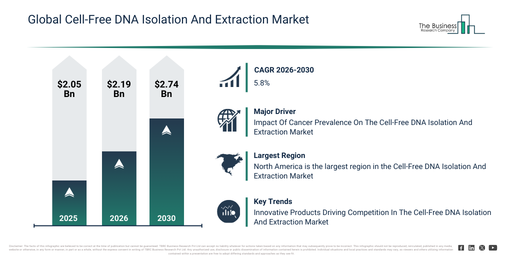
    The market for cell-free DNA isolation and extraction has experienced robust expansion, projected to increase from $2.05 billion in 2025 to $2.19 billion in 2026, reflecting a compound annual growth rate of 6.6%. This upward trend during the historical period is underpinned by several key factors, including the greater incorporation of liquid biopsy methodologies, an upswing in molecular diagnostics testing, the broadening scope of prenatal screening initiatives, a heightened utilization of genomic research instruments, and the accessibility of dedicated extraction kits.

    The market for cell-free DNA isolation and extraction is poised for considerable expansion in the forthcoming years, projected to reach $2.74 billion by 2030, exhibiting a compound annual growth rate of 5.8%. This anticipated growth throughout the forecast period is propelled by several key factors, including a heightened need for early cancer detection methods, escalating investments in precision diagnostic tools, a broader application scope in transplant monitoring, the increasing incorporation of automation within molecular laboratories, and a greater emphasis on achieving swift and precise cfDNA workflows. Significant trends anticipated during this period involve the growing acceptance of non-invasive genetic testing approaches, the escalating utilization of magnetic bead-based extraction technologies, a surging demand for automated cfDNA isolation systems, the further diversification of applications in oncology and prenatal testing, and an intensified focus on maximizing DNA recovery yields.

    Download A Free Sample Report For Comprehensive Market Insights:

    https://www.thebusinessresearchcompany.com/sample.aspx?id=16371&type=smp

    Cell-Free DNA Isolation And Extraction Market Expansion Drivers: What Is Shaping Future Growth?

    The increasing incidence of cancer globally is anticipated to be a key factor fueling the expansion of the cell-free DNA isolation and extraction market. Cancer, a group of diseases marked by the uncontrolled proliferation and dissemination of aberrant cells, frequently forming tumors that can infiltrate other bodily regions, disrupt normal physiological functions, and if unaddressed, lead to severe morbidity or mortality, is on the rise. Factors contributing to this increase include the obesity epidemic, hereditary genetic predispositions, infections by hepatitis B and C viruses, the Epstein-Barr virus (EBV), and the human papillomavirus (HPV). Methods for isolating and extracting cell-free DNA (cfDNA) facilitate in-depth genomic analysis of cancer, providing crucial insights into tumor behavior, therapeutic responsiveness, and disease progression, holding the potential to transform cancer care through enhanced early detection, tailored treatment strategies, and improved patient outcomes. Illustratively, as reported in May 2024 by the American Society of Clinical Oncology, a US professional body, roughly 20 million new cancer diagnoses were made in 2022, with projections indicating this number could reach 35 million by 2050, accompanied by an estimated 9.7 million cancer-related fatalities. Consequently, the escalating burden of cancer is a primary catalyst for the cell-free DNA isolation and extraction market’s growth.

    The expanding adoption of personalized medicine is poised to stimulate the cell-free DNA isolation and extraction market’s advancement. Personalized medicine represents a tailored healthcare strategy that adapts medical decisions and therapies to the individual’s distinct genetic profile, environmental exposures, and lifestyle, with its rising demand being underpinned by escalating cancer rates and a growing prevalence of chronic conditions. Within this paradigm, cfDNA isolation and extraction offer a minimally invasive yet thorough means for disease diagnosis, monitoring, and management, especially for cancer, by leveraging an individual’s unique genetic blueprint. As an example, the Personalized Medicine Coalition (PMC), a non-profit organization in the US, stated in February 2024 that the Food and Drug Administration (FDA) authorized 7 new personalized cancer treatments in 2023, constituting a substantial portion of the 26 personalized therapies approved that year, a notable rise from the 12 approvals seen in 2022. Therefore, the increasing uptake of personalized medicine is a significant driver for the cell-free DNA isolation and extraction market.

    Cell-Free DNA Isolation And Extraction Market Categorization By Product Type And Application

    The cell-free dna isolation and extraction market covered in this report is segmented –

    1) By Product Type: Kits, Reagents, Instruments

    2) By Technology: Column-Based Isolation And Extraction, Magnetic Beads, Silica Membranes

    3) By Application: Non-Invasive Prenatal Testing (NIPT), Oncology, Transplant Rejection, Other Applications

    4) By End-User: Hospitals, Diagnostic Laboratories, Research Institutes, Biotech And Pharma Companies

    Subsegments:

    1) By Kits: DNA Extraction Kits, CfDNA Isolation Kits, CfDNA Purification Kits, CfDNA Extraction And Purification Kits

    2) By Reagents: CfDNA Extraction Reagents, Buffer Solutions For CfDNA Extraction, Enzymes For Cfdna Isolation, Chemical Reagents For Dna Stabilization

    3) By Instruments: Automated Cfdna Extraction Instruments, Manual CfDNA Extraction Devices, Magnetic Bead Separation Instruments, Centrifugation-Based CfDNA Isolation Instruments

    Cell-Free DNA Isolation And Extraction Market Strategic Trends: What Is Defining The Next Phase Of Growth?

    Key players in the cell-free DNA isolation and extraction sector are concentrating on creating novel solutions, including automated instrumentation for DNA extraction, as a strategy to enhance their market standing. These automated DNA extraction instruments represent advanced laboratory equipment engineered to simplify and mechanize the procedure of obtaining DNA from diverse biological specimens. As an illustration, in September 2023, Yourgene Health plc, a company specializing in molecular diagnostics located in the UK, introduced its MagBench Automated DNA Extraction Instrument and Kit, aimed at improving its Sage 32 NIPT workflow across the Asia-Pacific and Middle Eastern regions. This cutting-edge offering boasts several distinctive attributes intended to refine and elevate the DNA extraction phase for purposes of prenatal screening. Specifically, the MagBench instrument integrates automation with a high degree of accuracy, employing magnetic bead-based methodologies to effectively isolate premium-grade DNA from samples of maternal blood.

    Cell-Free DNA Isolation And Extraction Market Company Landscape And Strategic Competition

    Major companies operating in the cell-free dna isolation and extraction market are F. Hoffmann-La Roche AG, Merck KGaA, Thermo Fisher Scientific Inc., Agilent Technologies Inc., Illumina Inc., QIAGEN N.V., Natera Inc., Promega Corporation, STRATEC Biomedical AG, STRECK Inc., Omega Bio-tek Inc., SeraCare Life Sciences Inc., Yourgene Health plc, System Biosciences LLC, PreAnalytiX GmbH, Bioo Scientific Corporation, BioCAT GmbH, Norgen Biotek Corp., Epigentek Group Inc., NVIGEN Inc.

    Access The Complete Cell-Free DNA Isolation And Extraction Market Report:

    https://www.thebusinessresearchcompany.com/report/cell-free-dna-isolation-and-extraction-global-market-report

    Cell-Free DNA Isolation And Extraction Market Regional Analysis And Leading Geography

    North Americawas the largest region in the cell-free DNA isolation and extraction market in 2025. The regions covered in the cell-free dna isolation and extraction market report are Asia-Pacific, South East Asia, Western Europe, Eastern Europe, North America, South America, Middle East, Africa.

    Get in touch with us:

    The Business Research Company: https://www.thebusinessresearchcompany.com/

    Americas: +1 310-496-7795

    Asia: +44 7882 955267 & +91 8897263534

    Europe: +44 7882 955267

    Email us at: marketing@tbrc.info

    Follow us on:

    LinkedIn: https://in.linkedin.com/company/the-business-research-company

    YouTube: https://www.youtube.com/channel/UC24_fI0rV8cR5DxlCpgmyFQ

    Global Market Model: https://www.thebusinessresearchcompany.com/global-market-model

  • Cell Viability Assays Market Outlook Highlights The Next Major Growth Opportunities

    Cell Viability Assays Market Outlook Highlights The Next Major Growth Opportunities

    Delivering more actionable and strategically valuable research, The Business Research Company’s 2026 market reports feature market attractiveness analysis, total addressable market evaluation, company benchmarking matrices, interactive Excel dashboards, expanded supply chain intelligence, emerging startup coverage, and detailed product insights.

    Cell Viability Assays Market Value Expansion And Long-Term Growth Outlook

    The cell viability assays market demonstrates significant recent expansion, projected to climb from $1.73 billion in 2025 to $1.91 billion by 2026, indicating a compound annual growth rate of 10.5%. This upward trend observed in the past is a result of several contributing factors, including a broader scope of in vitro research, escalating investments in pharmaceutical research and development, a surge in toxicology testing requirements, the increased adoption of cell culture models, and the growing accessibility of standardized assay kits.

    The market for cell viability assays is poised for substantial expansion in the coming years, with projections indicating a rise to $2.72 billion by 2030, reflecting a compound annual growth rate of 9.3%. This projected growth is fueled by several key drivers: the escalating need for efficient high-throughput drug discovery, a greater embrace of automated assay platforms, the expanding frontiers of personalized medicine research, a heightened emphasis on assay miniaturization techniques, and the increasing incorporation of imaging methodologies for viability assessments. During this forecast period, significant trends are expected to shape the market, including a growing preference for high-sensitivity viability assays, an augmented utilization of microplate-based detection systems, a mounting demand for comprehensive multiparametric cell health analyses, broadening applications in drug screening, and a reinforced commitment to the development of reproducible assay protocols.

    Download A Free Sample Report For Comprehensive Market Insights:

    https://www.thebusinessresearchcompany.com/sample.aspx?id=16014&type=smp

    Cell Viability Assays Market Development Factors: Which Trends Are Supporting Demand?

    Advancements in cell-based therapeutic treatments are anticipated to be a primary driver for the expansion of the cell viability assay market. These therapies, which involve utilizing living cells to mend or substitute compromised tissues, combat illnesses, or reinstate proper bodily functions, are experiencing a surge due to breakthroughs in biotechnology, heightened financial backing for regenerative medicine, greater acknowledgment and utilization of cell-based treatments, and enhancements in the techniques for cell engineering and production. Cell viability assays play a crucial role in supporting these therapeutics by verifying the well-being, effectiveness, and security of the cells employed in treatments, consequently refining both the success of the therapy and the rigor of quality assurance. Illustratively, by the third quarter of 2023, the number of gene therapies undergoing Phase III clinical trials saw a 10% rise, marking the initial quarterly growth since the third quarter of 2022, as reported by the American Society of Gene & Cell Therapy. Consequently, the escalating development of cell-based therapeutics is directly fueling the growth trajectory of the cell viability assay market.

    Cell Viability Assays Market Segment Analysis And Revenue Opportunities

    The cell viability assays market covered in this report is segmented –

    1) By Product: Consumables, Instruments

    2) By Application: Basic Research, Stem Cell Research, Drug Discovery And Development, Clinical And Diagnostic Applications, Other Applications

    3) By End-User: Academic And Research Institutes, Pharmaceutical And Biotechnology Companies, Hospital And Diagnostic Laboratories, Other End-Users

    Subsegments:

    1) By Consumables: Reagents, Kits, Assay Plates (96-Well plates), Microplates

    2) By Instruments: Spectrophotometers, Fluorometers, Microplate Readers, Flow Cytometers, Imaging Systems

    Cell Viability Assays Market Transformation Trends: Which Innovations Are Driving Change?

    In the realm of cell viability assays, leading industry players are actively engaged in creating advanced cell screening technologies aimed at enhancing precision and accelerating the drug discovery process. These cutting-edge screening technologies significantly bolster cell viability assays by facilitating high-volume, exact, and swift evaluation of cellular health and reactions, consequently refining experimental parameters and advancing the creation of treatment approaches. As an illustration, in May 2024, Arralyze, a company based in Germany, unveiled CellShepherd, a groundbreaking platform designed for single-cell investigations. This platform employs unique nanowell glass arrays to scale down cell-based assays for continuous observation. The self-directed system provides exact cell distribution, co-culturing within sterile settings, and imaging capabilities across both brightfield and fluorescent spectrums. Its artificial intelligence-powered analysis ensures dependable cell enumeration and monitoring. This easily usable platform effectively meets the growing demand for detailed single-cell research within the biomedical and life sciences fields.

    Cell Viability Assays Market Leading Players Shaping Industry Direction

    Major companies operating in the cell viability assays market are Thermo Fisher Scientific Inc., Danaher Corporation, Merck KGaA, Becton, Dickinson, and Company, Agilent Technologies Inc., Lonza Group Ltd., PerkinElmer Inc., Sartorius AG, Charles River Laboratories, Bio-Rad Laboratories Inc., Bio-Techne Corporation, Beckman Coulter Inc., Promega Corporation, Abcam Limited, MP Biomedicals, Cayman Chemical Company, Cell Signaling Technology Inc., Enzo Biochem Inc., Creative Bioarray, Abnova Corporation, Biotium, Canvax, Nexcelom Bioscience LLC, G-Biosciences, AAT Bioquest Inc.

    Access The Complete Cell Viability Assays Market Report:

    https://www.thebusinessresearchcompany.com/report/cell-viability-assays-global-market-report

    Cell Viability Assays Market Geographic Analysis: Where Is Demand Growing The Fastest?

    North Americawas the largest region in the cell viability assays market in 2025. Asia-Pacificis expected to be the fastest-growing region in the forecast period. The regions covered in the cell viability assays market report are Asia-Pacific, South East Asia, Western Europe, Eastern Europe, North America, South America, Middle East, Africa.

    Get in touch with us:

    The Business Research Company: https://www.thebusinessresearchcompany.com/

    Americas: +1 310-496-7795

    Asia: +44 7882 955267 & +91 8897263534

    Europe: +44 7882 955267

    Email us at: marketing@tbrc.info

    Follow us on:

    LinkedIn: https://in.linkedin.com/company/the-business-research-company

    YouTube: https://www.youtube.com/channel/UC24_fI0rV8cR5DxlCpgmyFQ

    Global Market Model: https://www.thebusinessresearchcompany.com/global-market-model
  • Adrenal Cancer Diagnostics Market Trends Are Creating New Opportunities For Industry Leaders

    Adrenal Cancer Diagnostics Market Trends Are Creating New Opportunities For Industry Leaders

    Through market attractiveness analysis, total addressable market evaluation, company benchmarking matrices, interactive Excel dashboards, expanded supply chain intelligence, emerging startup coverage, and detailed product insights, The Business Research Company’s 2026 market reports provide more actionable and strategically valuable research.

    Adrenal Cancer Diagnostics Market Value Analysis: What Growth Is Expected Over The Forecast Period?

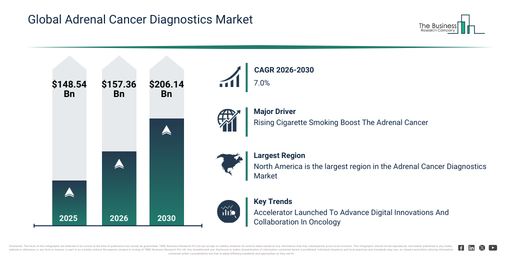
    The market for adrenal cancer diagnostics has experienced substantial expansion recently, projected to increase from $148.54 billion in 2025 to $157.36 billion by 2026, reflecting a compound annual growth rate of 5.9%. Factors influencing this growth during the preceding period included the constrained accessibility of advanced imaging technologies, an escalating incidence of adrenal tumors, heightened public and medical consciousness regarding adrenal cancer, the continued dependence on traditional biopsy methods, and enhancements in healthcare facilities.

    The market for diagnosing adrenal cancer is poised for substantial expansion, projected to reach $206.14 billion by 2030, reflecting a compound annual growth rate of 7.0%. This anticipated growth trajectory is driven by several key factors, including improvements in contrast-enhanced imaging, the development of targeted therapies for adrenal cancer, increased utilization of PET-CT combination scans, the proliferation of specialized cancer treatment facilities, and augmented governmental investment in cancer diagnostic research and tools. During this forecast period, significant trends are expected to emerge, such as the greater incorporation of sophisticated imaging modalities for adrenal cancer detection, a rise in the application of less invasive biopsy techniques, an upswing in the use of targeted therapies, the broader establishment of integrated cancer diagnostic centers, and a heightened emphasis on early diagnosis and tailored treatment plans.

    Download A Free Sample Report For Comprehensive Market Insights:

    https://www.thebusinessresearchcompany.com/sample.aspx?id=13242&type=smp

    #Adrenal Cancer Diagnostics Market Growth Drivers And Industry Catalysts

    Increased rates of cigarette consumption are anticipated to be a key driver for the expansion of the adrenal cancer diagnostics market. This trend in smoking, involving the inhalation and exhalation of tobacco smoke laden with nicotine—a substance known for its dual stimulating and calming psychoactive properties—is linked to a heightened likelihood of developing adrenal cancers, such as adrenal adenomas and adrenocortical carcinomas. The presence of carcinogenic agents within tobacco smoke has the potential to inflict damage upon the genetic material of adrenal cells, ultimately resulting in the mutations that can initiate cancerous growth. Illustrating this trend, Statistics Canada reported that in July 2024, Canadian manufacturers produced 1.2 billion cigarettes, reflecting a 4.3% month-over-month increase from June 2024 and a 2.3% year-over-year gain compared to July 2023. Consequently, the growing prevalence of cigarette smoking is directly contributing to the advancement of the adrenal cancer diagnostics sector.

    Adrenal Cancer Diagnostics Market Segment Landscape: Which Areas Lead Market Development?

    The adrenal cancer diagnostics market covered in this report is segmented –

    1) By Test: Magnetic Resonance Imaging (MRI), Computed Tomography (CT) Scan, Positron Emission Tomography (PET) Scan, Biopsy

    2) By Tumor Type: Pheochromocytoma, Adrenal Cortical Carcinoma, Other Tumor Types

    3) By End-User: Hospitals, Ambulatory Surgical Centers, Cancer Centers, Other End-Users

    Subsegments:

    1) By Magnetic Resonance Imaging (MRI): Contrast-Enhanced MRI, Functional MRI

    2) By Computed Tomography (CT) Scan: Contrast-Enhanced CT, Abdomen And Pelvis CT Scans

    3) By Positron Emission Tomography (PET) Scan: PET-CT Combination Scans, Standalone PET Scans

    4) By Biopsy: Fine Needle Aspiration Biopsy (FNA), Core Needle Biopsy, Surgical Biopsy

    #Adrenal Cancer Diagnostics Market Trends Influencing Long-Term Demand

    The adrenal cancer diagnostics market is seeing significant players launch forward-thinking projects utilizing sophisticated partnership frameworks, like the CancerX Startup Accelerator, to propel digital advancements within cancer treatment. This initiative is designed to supply burgeoning startups with invaluable guidance, skill development, and immediate connections to essential healthcare stakeholders, encompassing both medical facilities and pharmaceutical corporations. As an illustration, in November of 2023, CanceRx, LLC, a collaborative entity in the United States backed by both public and private sectors, established to accelerate advancements in cancer combating efforts, unveiled this program during the Future of Cancer Care Summit held in Tampa, Florida. The program intends to admit its initial group of around 15 to 20 enterprises commencing in March 2024, with a specific emphasis on crucial areas including clinical studies, early detection methods, diagnostic procedures, and therapeutic interventions. This endeavor is anticipated to substantially contribute to achieving the objectives of the Cancer Moonshot initiative by tackling existing gaps in cancer patient care and cultivating the creation of impactful digital health technologies in the field of oncology.

    Adrenal Cancer Diagnostics Market Industry Leaders And Market Competition

    Major companies operating in the adrenal cancer diagnostics market are Johnson And Johnson Pvt Ltd., F. Hoffmann-La Roche Ltd., Thermo Fisher Scientific, Abbott Laboratories, Siemens Healthcare GmbH, Becton Dickinson and Company, Koninklijke Philips N.V., GE HealthCare Technologies Inc., Agilent Technologies, Hologic Inc., PerkinElmer Inc., Illumina Inc., Roche Diagnostics, BioMerieux SA, Sysmex Corporation, Bio-Rad Laboratories Inc., Bruker Corporation, Exact Sciences Corp., Natera Inc., Invitae Corporation, Qiagen NV, Guardant Health Inc., Foundation Medicine Inc., NanoString Technologies Inc.

    Access The Complete Adrenal Cancer Diagnostics Market Report:

    https://www.thebusinessresearchcompany.com/report/adrenal-cancer-diagnostics-global-market-report

    #Adrenal Cancer Diagnostics Market Largest Region: Which Geography Holds The Highest Market Share?

    North Americawas the largest region in the adrenal cancer diagnostics market in 2025. Asia-Pacificis expected to be the fastest-growing region in the forecast period. The regions covered in the adrenal cancer diagnostics market report are Asia-Pacific, South East Asia, Western Europe, Eastern Europe, North America, South America, Middle East, Africa.

    Get in touch with us:

    The Business Research Company: https://www.thebusinessresearchcompany.com/

    Americas: +1 310-496-7795

    Asia: +44 7882 955267 & +91 8897263534

    Europe: +44 7882 955267

    Email us at: marketing@tbrc.info

    Follow us on:

    LinkedIn: https://in.linkedin.com/company/the-business-research-company

    YouTube: https://www.youtube.com/channel/UC24_fI0rV8cR5DxlCpgmyFQ

    Global Market Model: https://www.thebusinessresearchcompany.com/global-market-model
  • Alpers Disease Treatment Market Expansion Is Reshaping Competitive Dynamics Across The Industry

    Alpers Disease Treatment Market Expansion Is Reshaping Competitive Dynamics Across The Industry

    Through market attractiveness analysis, total addressable market evaluation, company benchmarking matrices, interactive Excel dashboards, expanded supply chain intelligence, emerging startup coverage, and detailed product insights, The Business Research Company’s 2026 market reports provide more actionable and strategically valuable research.

    Alpers Disease Treatment Market Forecast Highlighting Growth From $1.51 Billion To $1.84 Billion

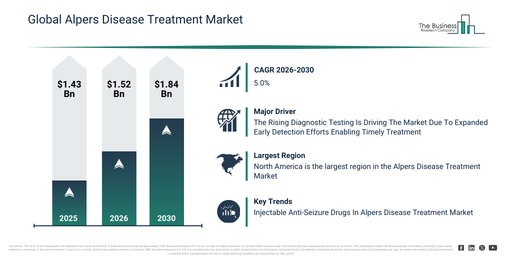
    The market for Alpers disease treatments experienced significant expansion historically, and this upward trajectory is projected to continue with a forecasted growth from $1.43 billion in 2025 to $1.52 billion in 2026, demonstrating a compound annual growth rate (CAGR) of 5.7%. Factors contributing to the market’s expansion during the earlier period included a general lack of awareness surrounding Alpers disease, the absence of distinct diagnostic instruments, constraints in accessing therapies for rare conditions, a prevailing dependence on standard anticonvulsant drugs, and a relatively small patient demographic which consequently influenced the uptake of available treatments.

    The Alpers disease treatment market is projected for consistent expansion over the coming years, anticipating a valuation of $1.84 billion by 2030, driven by a compound annual growth rate (CAGR) of 5.0%. This projected expansion during the forecast period is fueled by several key factors, including progress in genetic testing technologies, the creation of specific supportive treatments, heightened investment in rare disease research, a broader availability of specialized healthcare services, and increased partnerships between medical institutions and therapy providers. Key developments anticipated during this timeframe encompass a greater utilization of anticonvulsant medications for managing seizures, a growing emphasis on comprehensive, team-based therapeutic strategies, more widespread application of molecular genetic testing for accurate diagnosis, an increase in dedicated clinics and hospital services for rare conditions, and improved development of both supportive interventions and nutritional therapies.

    Download A Free Sample Report For Comprehensive Market Insights:

    https://www.thebusinessresearchcompany.com/sample.aspx?id=16585&type=smp

    #Alpers Disease Treatment Market Growth Factors: Which Forces Are Supporting Market Expansion?

    The expansion of diagnostic testing is projected to propel the Alpers disease treatment market. Diagnostic testing encompasses the methodical assessment of biological samples, bodily functions, or imaging outcomes to identify, track, or exclude medical conditions and inform clinical choices. A significant contributor to the surge in diagnostic testing is the growing focus on detecting diseases early and precisely, with healthcare professionals emphasizing prompt diagnosis to enhance patient outcomes, avert complications, and facilitate more effective long-term management. This rise in diagnostic testing benefits Alpers disease treatment by allowing for earlier detection of mitochondrial dysfunction, which in turn supports prompt intervention and improved clinical care for those affected. Illustrating this trend, NHS England reported in August 2025 that the number of individuals awaiting critical diagnostic tests reached 1,657,600, an increase of 95,500 since August 2024, while completed diagnostic procedures numbered 2,370,800, a rise of 18,600 over the same period. Consequently, the increasing prevalence of diagnostic testing is a key driver for the Alpers disease treatment market.

    An increased availability of personalized medicines is anticipated to be a significant factor in expanding the Alpers disease treatment market. Personalized medicine represents a medical strategy that customizes healthcare decisions, practices, interventions, and therapies to the unique attributes of each patient. This trend towards personalized medicine is driven by a deeper comprehension of genetics, patient-specific information, and supportive regulatory frameworks. For Alpers disease treatment, personalized medicines offer the advantage of custom-tailored therapies founded on an individual’s genetic profile, directly addressing the specific genetic mutations and biochemical pathways implicated in the condition, thereby potentially boosting treatment effectiveness and minimizing adverse reactions. As an example, the Personalized Medicine Coalition, a non-profit organization based in the US, noted that the FDA authorized 16 new personalized treatments for individuals with rare diseases in 2023, a substantial increase from the six approvals in 2022, as reported in February 2024. Therefore, the growing adoption of personalized medicines is fueling the growth trajectory of the Alpers disease treatment market.

    Alpers Disease Treatment Market Segment Analysis And Revenue Opportunities

    The alpers disease treatment market covered in this report is segmented –

    1) By Treatment: Anticonvulsant Drugs, Speech Therapy, Physical Therapy, Occupational Therapy

    2) By Diagnosis: Genetic and Molecular Testing, Neurodiagnostic Tests, Biochemical and Metabolic Tests

    3) By Dosage: Tablet, Injection, Other Dosages

    4) By Symptom: Seizures, Spasticity, Liver Dysfunction, Cerebral Degeneration

    Subsegments:

    1) By Anticonvulsant Drugs: Levetiracetam, Lamotrigine, Topiramate, Clonazepam

    2) By Speech Therapy: Articulation Therapy, Language Development Therapy, Swallowing Therapy, Cognitive Communication Therapy

    3) By Physical Therapy: Motor Skill Therapy, Balance And Coordination Training, Stretching And Strengthening Exercises, Gait Training

    4) By Occupational Therapy: Fine Motor Skill Training, Sensory Integration Therapy, Adaptive Techniques For Daily Living, Cognitive Rehabilitation

    Alpers Disease Treatment Market Industry Trends: What Changes Are Reshaping Demand?

    Within the alpers disease treatment market, key players are focused on creating advanced therapeutic approaches like injectable anti-seizure drugs (ASDs), which aim to offer a quicker and more dependable therapeutic effect compared to traditional oral methods. These injectable ASDs hold significant advantages for Alpers disease patients by facilitating swift and consistent seizure management, circumventing any potential absorption hindrances within the digestive system, thereby ensuring predictable and potent dosages, and presenting a more exact therapeutic choice for handling this demanding neurological disorder. Illustratively, in April 2024, Eisai Co. Ltd., a pharmaceutical firm headquartered in Japan, introduced FYCOMPA, an injectable form designed for epilepsy treatment. This medication functions as a selective, noncompetitive AMPA receptor antagonist, thought to mitigate neuronal over-excitation associated with seizures by influencing glutamate’s action at AMPA receptors located on postsynaptic membranes. However, its application in individuals suffering from Alpers disease necessitates meticulous evaluation, acknowledging the distinct complications and sensitivities inherent to this condition.

    Alpers Disease Treatment Market Leading Players Shaping Industry Direction

    Major companies operating in the alpers disease treatment market are UCB S.A., Jazz Pharmaceuticals, Eisai Co. Ltd., Otsuka Pharmaceutical Co. Ltd., H. Lundbeck A/S, Biogen Inc., Ultragenyx Pharmaceutical Inc., PTC Therapeutics Inc., Ionis Pharmaceuticals Inc., Sarepta Therapeutics Inc., GW Pharmaceuticals plc, Supernus Pharmaceuticals Inc., SK Biopharmaceuticals Co. Ltd., Marinus Pharmaceuticals Inc., Neurelis Inc., Zogenix Inc., Aquestive Therapeutics Inc., Bial – Portela & Cª S.A., Desitin Arzneimittel GmbH, Adamas Pharmaceuticals Inc.

    Access The Complete Alpers Disease Treatment Market Report:

    https://www.thebusinessresearchcompany.com/report/alpers-disease-treatment-global-market-report

    Alpers Disease Treatment Market Geographic Distribution And Regional Opportunities

    North Americawas the largest region in the alpers disease treatment market in 2025. The regions covered in the alpers disease treatment market report are Asia-Pacific, South East Asia, Western Europe, Eastern Europe, North America, South America, Middle East, Africa.

    Get in touch with us:

    The Business Research Company: https://www.thebusinessresearchcompany.com/

    Americas: +1 310-496-7795

    Asia: +44 7882 955267 & +91 8897263534

    Europe: +44 7882 955267

    Email us at: marketing@tbrc.info

    Follow us on:

    LinkedIn: https://in.linkedin.com/company/the-business-research-company

    YouTube: https://www.youtube.com/channel/UC24_fI0rV8cR5DxlCpgmyFQ

    Global Market Model: https://www.thebusinessresearchcompany.com/global-market-model
  • Alopecia Areata Market Forecast Reveals Where Future Industry Value Will Be Created

    Alopecia Areata Market Forecast Reveals Where Future Industry Value Will Be Created

    Delivering more actionable and strategically valuable research, The Business Research Company’s 2026 market reports feature market attractiveness analysis, total addressable market evaluation, company benchmarking matrices, interactive Excel dashboards, expanded supply chain intelligence, emerging startup coverage, and detailed product insights.

    Alopecia Areata Market Revenue Growth Supported By A CAGR Of 5.71% Through 2030

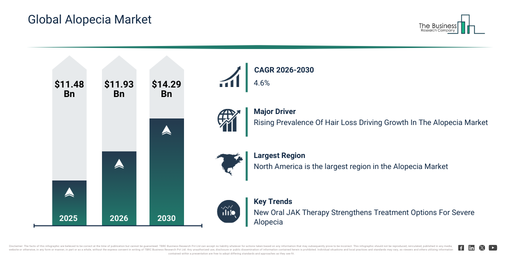
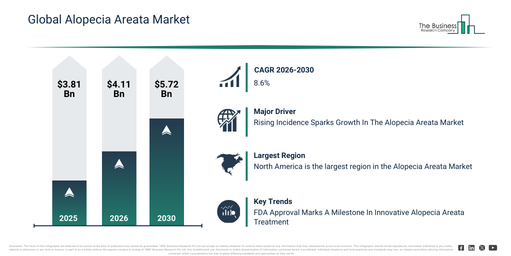
    The market for alopecia areata treatments has experienced robust expansion lately, projecting a rise from $3.81 billion in 2025 to $4.11 billion in 2026, signifying a compound annual growth rate of 7.9%. Factors contributing to this upward trend during the past period include the increasing global incidence of alopecia areata, a historical scarcity of effective therapeutic choices, a heightened need for dermatological services, the expanding healthcare infrastructure in hospitals and specialized clinics, and the embrace of conventional herbal and natural remedies.

    The alopecia areata market is poised for substantial expansion, projecting a valuation of $5.72 billion by 2030, driven by a robust compound annual growth rate of 8.6%. This anticipated surge is fueled by several key factors, including the creation of innovative immunotherapy treatments, augmented financial commitment to dermatological research, a growing demand for tailored hair loss solutions, the proliferation of home healthcare and teledermatology options, and an increasing number of clinical investigations focused on hair regeneration. Throughout this forecast period, significant trends are expected to shape the market landscape, such as heightened public consciousness regarding autoimmune hair conditions, a greater embrace of topical and oral therapeutic approaches, the expansion of dedicated treatment centers and at-home care services, advancements in trichoscopy and diagnostic methodologies, and ongoing research into pioneering hair regrowth therapies.

    Download A Free Sample Report For Comprehensive Market Insights:

    https://www.thebusinessresearchcompany.com/sample.aspx?id=12596&type=smp

    Alopecia Areata Market Demand Drivers: What Is Fueling Industry Growth?

    The burgeoning prevalence of hair loss conditions is anticipated to be a significant driver for the expansion of the alopecia areata market. Alopecia, characterized by the partial or complete shedding of hair, commonly affects the scalp but can impact other body regions too. This escalating occurrence of alopecia is largely attributable to escalating rates of autoimmune diseases, increased stress, inherited predispositions, and external factors that interfere with typical hair follicle function. Treatments for alopecia areata are designed to combat this rising health issue by addressing inflammation of the hair follicles caused by the immune system, stimulating renewed hair growth, and enhancing patients’ overall well-being with more efficient and rapidly effective therapeutic solutions. To illustrate, data from July 2023, as reported by the U.S. Department of Health and Human Services, indicates that over 50 million men and 30 million women in the U.S. are estimated to be impacted by androgenetic alopecia annually. Consequently, the growing incidence of alopecia directly fuels the growth trajectory of the alopecia areata market.

    Alopecia Areata Market Segmentation And Category Breakdown

    The alopecia areata market covered in this report is segmented –

    1) By Type: Patchy Alopecia Areata, Alopecia Totalis, Alopecia Universalis, Diffuse Alopecia Areata, Ophiasis Alopecia

    2) By Diagnosis: Trichoscopy, Skin Biopsy, Other Diagnoses

    3) By Route Of Administration: Oral, Topical, Parenteral, Other Routes Of Administration

    4) By End-Users: Hospitals, Specialty Clinics

    Alopecia Areata Market Innovation Trends: Which Developments Are Transforming The Industry?

    The companies dominating the alopecia areata sector are prioritizing the acquisition of breakthrough drug approvals, specifically focusing on Janus kinase (JAK) inhibitors, as a strategy to enhance their market standing and introduce advanced therapeutic solutions. These JAK inhibitors function by inhibiting particular enzymes, namely JAK1 and JAK2, which play a role in the autoimmune response that targets hair follicles, ultimately encouraging hair regrowth for individuals suffering from severe alopecia areata. As a notable example, in June 2023, Pfizer Inc., a prominent American biotechnology and pharmaceutical firm, revealed that the U.S. Food and Drug Administration (FDA) had granted approval for LITFULOTM (ritlecitinib), marking the first and sole treatment available for severe alopecia areata that has received authorization for individuals as young as 12 years old. This medication offers a daily oral therapeutic option for alopecia areata, an autoimmune disorder that previously lacked any FDA-approved treatments for adolescents and presented limited choices for adults. LITFULO operates as a kinase inhibitor, targeting Janus kinase 3 (JAK3) and the tyrosine kinase family of kinases implicated in hepatocellular carcinoma (TEC).

    Alopecia Areata Market Competitive Analysis Of Major Industry Participants

    Major companies operating in the alopecia areata market are Pfizer Inc., Eli Lilly and Company, Incyte Corporation, AbbVie Inc., Novartis AG, Sanofi SA, Bristol Myers Squibb, GlaxoSmithKline plc, Aclaris Therapeutics Inc., Almirall SA, Lupin Ltd., Sun Pharmaceutical Industries Ltd., Cipla Ltd., Glenmark Pharmaceuticals Ltd., Dr Reddys Laboratories Ltd., Teva Pharmaceutical Industries Ltd., Janssen Pharmaceuticals, Arena Pharmaceuticals, AnaptysBio Inc., Viela Bio, Priovant Therapeutics

    Access The Complete Alopecia Areata Market Report:

    https://www.thebusinessresearchcompany.com/report/alopecia-areata-global-market-report

    Alopecia Areata Market Largest Region By Revenue And Market Share

    North Americawas the largest region in the alopecia areata market in 2025. Asia-Pacificis expected to be the fastest-growing region in the forecast period. The regions covered in the alopecia areata market report are Asia-Pacific, South East Asia, Western Europe, Eastern Europe, North America, South America, Middle East, Africa.

    Get in touch with us:

    The Business Research Company: https://www.thebusinessresearchcompany.com/

    Americas: +1 310-496-7795

    Asia: +44 7882 955267 & +91 8897263534

    Europe: +44 7882 955267

    Email us at: marketing@tbrc.info

    Follow us on:

    LinkedIn: https://in.linkedin.com/company/the-business-research-company

    YouTube: https://www.youtube.com/channel/UC24_fI0rV8cR5DxlCpgmyFQ

    Global Market Model: https://www.thebusinessresearchcompany.com/global-market-model
  • Alopecia Market Growth Through 2030 Creates New Strategic Opportunities

    Alopecia Market Growth Through 2030 Creates New Strategic Opportunities

    Enhanced with market attractiveness analysis, total addressable market evaluation, company benchmarking matrices, interactive Excel dashboards, expanded supply chain intelligence, emerging startup coverage, and detailed product insights, The Business Research Company’s 2026 market reports deliver more actionable and strategically valuable research.

    Alopecia Market Value Expansion And Long-Term Growth Outlook

    The market for alopecia treatments has experienced consistent expansion. Projections indicate a rise from $11.48 billion in 2025 to $11.93 billion in 2026, reflecting a compound annual growth rate of 3.9%. Factors contributing to this growth during the earlier period include the increasing worldwide incidence of hair loss conditions, a greater number of consultations with dermatologists, historically restricted therapeutic choices, intensified research into hair loss solutions, and heightened cosmetic consciousness.

    Growth in the alopecia market is projected to be consistent over the coming years, reaching an estimated $14.29 billion by 2030 with a compound annual growth rate (CAGR) of 4.6%. This anticipated expansion is fueled by several key factors, including the emergence of innovative regenerative medicine approaches, enhancements in light-emitting diode (LED) therapy device technology, a rising preference for individually tailored alopecia solutions, the broadening reach of online pharmaceutical sales, and augmented investments in research aimed at hair restoration. Significant trends expected to shape this market during the forecast period encompass a greater reliance on pharmaceutical interventions for hair loss, escalating utilization of low-level laser therapy (LLLT) devices, an increase in hair transplantation surgeries, the wider application of regenerative medicine for alopecia, and enhanced public awareness and availability of at-home hair loss treatment options.

    Download A Free Sample Report For Comprehensive Market Insights:

    https://www.thebusinessresearchcompany.com/sample.aspx?id=12862&type=smp

    Alopecia Market Growth Drivers: What Factors Are Accelerating Expansion?

    The expanding incidence of hair loss is anticipated to be a key catalyst for the ongoing expansion of the alopecia treatment sector. This condition, characterized by the partial or complete shedding of hair from typically hirsute areas, finds solutions in alopecia treatments that offer comprehensive support to individuals. These treatments work by facilitating hair regrowth, developing personalized care strategies, employing multi-faceted therapeutic approaches, and addressing the physical manifestation of hair thinning, all of which can profoundly enhance an individual’s emotional state and overall life experience. For example, data released in April 2023 by China’s National Health Commission indicated that more than 250 million people in the country were affected by hair loss, with a notable 42% falling within the 26 to 30 age bracket. Complementing this, research from the Statistic Brain Research Institute in February 2023 revealed that around 40% of men encounter noticeable hair loss by the age of 35. Consequently, the escalating rate of hair loss is directly fueling the growth and development within the alopecia market.

    Alopecia Market Segment Outlook: Which Categories Are Expanding The Fastest?

    The alopecia market covered in this report is segmented –

    1) By Type: Alopecia Areata, Androgenetic Alopecia, Traction Alopecia, Cicatricial Alopecia, Other Types

    2) By Treatment: Pharmaceutical, Low Level Laser Therapy (LLLT) Devices, Hair Transplant, Regenerative Medicine, Other Treatments

    3) By Gender: Male, Female

    4) By Distribution Channel: Hospital Pharmacies, Retail Pharmacies, Online Pharmacies, Other Distribution Channels

    5) By End-User: Dermatology Clinics, Homecare Settings, Other End-Users

    Subsegments:

    1) By Alopecia Areata: Patchy Alopecia Areata, Persistent Patchy Alopecia Areata, Alopecia Universalis, Diffuse Alopecia Areata, Ophiasis

    2) By Androgenetic Alopecia: Male Pattern Baldness, Female Pattern Hair Loss

    3) By Traction Alopecia: Frontal Traction Alopecia, Occipital Traction Alopecia

    4) By Cicatricial Alopecia: Lichen Planopilaris, Discoid Lupus Erythematosus, Central Centrifugal Cicatricial Alopecia, Frontal Fibrosing Alopecia, Folliculitis Decalvans

    5) By Other Types: Telogen Effluvium, Anagen Effluvium, Trichotillomania

    Alopecia Market Trends: What Is Shaping Future Industry Growth?

    Within the alopecia market, leading entities are prioritizing the creation of pioneering treatments, including oral JAK inhibitors, aimed at augmenting therapeutic outcomes and facilitating more rapid, sustained hair restoration for individuals experiencing hair loss due to autoimmune conditions. These oral JAK inhibitors function as precision pharmaceuticals that regulate immune-induced inflammation by inhibiting the Janus kinase pathways implicated in the assault on hair follicles. For illustration, in July of 2025, Sun Pharmaceutical Industries Limited, a pharmaceutical firm headquartered in India with a specialization in generics and dermatology, introduced LEQSELVI (deuruxolitinib) to the United States market. This treatment proved effective in achieving swift clinical improvements, with a substantial percentage of patients exhibiting considerable scalp hair regrowth by the eighth week of treatment. The availability of this new option provides a well-supported, timely therapeutic solution for severe alopecia areata, thereby broadening the range of treatment possibilities accessible to both healthcare providers and those seeking care.

    Alopecia Market Key Companies And Competitive Benchmarking

    Major companies operating in the alopecia market are Pfizer Inc., Johnson and Johnson Ltd., Merck and Co. Inc., Bayer AG, Novartis AG, Sanofi SA, Eli Lilly and Company, Boehringer Ingelheim International GmbH, Allergan Plc, Teva Pharmaceutical Industries Ltd., Mylan N.V., Sun Pharmaceutical Industries Ltd., Perrigo Company Plc, Dr. Reddy’s Laboratories Ltd., Cipla Limited, Almirall S.A., Aclaris Therapeutics Inc., Curallux LLC, Theradome Inc., Lexington International LLC, Histogen Inc., Apira Science Inc.

    Access The Complete Alopecia Market Report:

    https://www.thebusinessresearchcompany.com/report/alopecia-global-market-report

    Alopecia Market Regional Analysis And Leading Geography

    North Americawas the largest region in the alopecia market in 2025. Asia-Pacificis expected to be the fastest-growing region in the forecast period. The regions covered in the alopecia market report are Asia-Pacific, South East Asia, Western Europe, Eastern Europe, North America, South America, Middle East, Africa.

    Get in touch with us:

    The Business Research Company: https://www.thebusinessresearchcompany.com/

    Americas: +1 310-496-7795

    Asia: +44 7882 955267 & +91 8897263534

    Europe: +44 7882 955267

    Email us at: marketing@tbrc.info

    Follow us on:

    LinkedIn: https://in.linkedin.com/company/the-business-research-company

    YouTube: https://www.youtube.com/channel/UC24_fI0rV8cR5DxlCpgmyFQ

    Global Market Model: https://www.thebusinessresearchcompany.com/global-market-model
  • Allogeneic Cell Therapy Market Size Projected To Increase From $1.33 Billion To $1.97 Billion During The Forecast Period

    Allogeneic Cell Therapy Market Size Projected To Increase From $1.33 Billion To $1.97 Billion During The Forecast Period

    Through market attractiveness analysis, total addressable market evaluation, company benchmarking matrices, interactive Excel dashboards, expanded supply chain intelligence, emerging startup coverage, and detailed product insights, The Business Research Company’s 2026 market reports provide more actionable and strategically valuable research.

    Allogeneic Cell Therapy Market Expected To Reach $1.97 Billion By 2030 At 10.2% CAGR

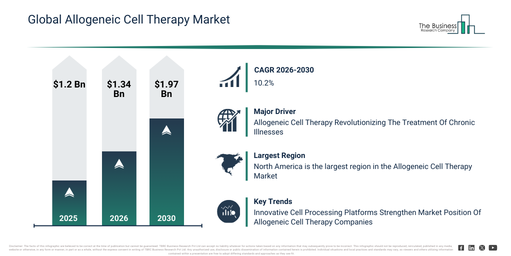
    The market for allogeneic cell therapies has experienced substantial expansion lately, projected to climb from $1.2 billion in 2025 to $1.34 billion in 2026, reflecting a compound annual growth rate of 11.5%. This recent growth trajectory is underpinned by several key factors, including the constrained supply of existing allogeneic cell therapy options, an uptick in early-phase clinical trial development, a rising incidence of hematological disorders, increasing acceptance and integration of cell therapies within healthcare facilities, and a continued dependence on established donor cell repositories.

    The market for allogeneic cell therapy is poised for substantial expansion in the coming years, projected to reach $1.97 billion by 2030, driven by a compound annual growth rate (CAGR) of 10.2%. This anticipated growth stems from several key factors including innovations in engineering both stem and immune cells, broader application in areas like dermatology, increased financial backing for cell therapy production infrastructure, partnerships formed between medical institutions and biotechnology companies, and the implementation of automated cell processing methods. Within this forecast period, significant trends are expected to shape the market, such as greater utilization of stem cell treatments, a heightened emphasis on T-cell and NK-cell based therapies, extended use of iPSC-derived therapeutic applications, a growing need for individualized cell therapy solutions, and the establishment of more rigorous regulatory frameworks and safety protocols.

    Download A Free Sample Report For Comprehensive Market Insights:

    https://www.thebusinessresearchcompany.com/sample.aspx?id=15976&type=smp

    Allogeneic Cell Therapy Market Growth Factors Supporting Long-Term Expansion

    The expanding incidence of long-term health conditions is anticipated to stimulate advancements within the allogeneic cell therapy sector. Such chronic conditions, characterized by their persistent nature, often necessitate continuous healthcare interventions and can substantially impact an individual’s functional capacity and overall well-being. Factors contributing to the rise of these persistent ailments include shifts in lifestyle patterns, genetic predisposition, and exposure to environmental hazards such as chemicals, toxins, and airborne pollutants. Allogeneic cell therapy presents a promising avenue for managing a broad spectrum of chronic diseases, leveraging healthy donor cells to mend, substitute, or regulate compromised cells or tissues in the patient. Illustratively, data from the National Center for Biotechnology Information (NCBI) in the United States indicated that by 2050, the population aged 50 and older experiencing at least one chronic illness is projected to surge by 99.5%, escalating from 71.52 million individuals in 2020 to 142.66 million. Consequently, this escalating burden of chronic diseases is a key catalyst for the expansion of the allogeneic cell therapy market.

    Allogeneic Cell Therapy Market Segment Landscape: Which Areas Lead Market Development?

    The allogeneic cell therapy market covered in this report is segmented –

    1) By Type: Stem Cell Therapies, Non-Stem Cell Therapies

    2) By Therapeutic Area: Hematological Disorders, Dermatological Disorders

    3) By End User: Hospitals, Specialty Clinics

    Subsegments:

    1) By Stem Cell Therapies: Hematopoietic Stem Cell Therapy (Hematopoietic Stem Cells), Mesenchymal Stem Cell Therapy (MSC-Based Therapies), Induced Pluripotent Stem Cells (iPSC-Based Therapies), Neural Stem Cell Therapy

    2) By Non-Stem Cell Therapies: T-cell Therapies, Natural Killer (NK) Cell Therapies, Dendritic Cell Therapies

    Allogeneic Cell Therapy Market Industry Trends Shaping Future Revenue Growth

    In the competitive landscape of the allogeneic cell therapy sector, leading entities are concentrating their efforts on pioneering advancements, exemplified by the creation of cell processing platforms, as a strategic move to solidify their market standing. These cell processing platforms represent sophisticated systems and cutting-edge technologies meticulously designed for the preparation and refinement of cells destined for therapeutic interventions. Their functions encompass the critical stages of cell isolation, purification, expansion, genetic modification, and stringent quality assurance, all aimed at certifying that the cells meet the exacting standards required for successful clinical application. A notable development occurred in March 2024 when Getinge, a prominent Swedish healthcare firm, joined forces with CellRev, a UK-based biotech enterprise, to introduce Livit ACE, a groundbreaking platform engineered for the continuous processing of adherent cells (Adherent Cell Expansion). This pioneering system harmoniously combines advanced automation with sophisticated bioprocessing technologies, thereby achieving a substantial boost in both the efficiency and the scalability of cell production. Key attributes of this platform include state-of-the-art mechanisms for cell isolation and purification that guarantee superior cell purity and viability, formidable expansion capacities enabling the generation of substantial volumes of therapeutic cells, advanced tools for genetic modification facilitating precise cell engineering, and comprehensive quality control protocols ensuring the utmost safety and therapeutic efficacy of the resultant cell products.

    Allogeneic Cell Therapy Market Industry Leaders And Market Competition

    Major companies operating in the allogeneic cell therapy market are Novartis AG, Bristol Myers Squibb Company, Takeda Pharmaceutical Company Limited, Bluebird Bio Inc., Poseida Therapeutics Inc., Fate Therapeutics Inc., Fortress Biotech Inc., Sorrento Therapeutics Inc., Eureka Therapeutics Inc., Juno Therapeutics Inc., Adaptimmune Therapeutics plc, Cellectis SA, Ziopharm Oncology Inc., Allogene Therapeutics Inc., Century Therapeutics Inc., Autolus Therapeutics plc, Bellicum Pharmaceuticals Inc., Celyad SA, TILT Biotherapeutics Ltd., CRISPR Therapeutics AG

    Access The Complete Allogeneic Cell Therapy Market Report:

    https://www.thebusinessresearchcompany.com/report/allogeneic-cell-therapy-global-market-report

    Allogeneic Cell Therapy Market Geographic Analysis: Where Is Demand Growing The Fastest?

    North Americawas the largest region in the allogeneic cell therapy market in 2025. Asia-Pacificis expected to be the fastest-growing region in the forecast period. The regions covered in the allogeneic cell therapy market report are Asia-Pacific, South East Asia, Western Europe, Eastern Europe, North America, South America, Middle East, Africa.

    Get in touch with us:

    The Business Research Company: https://www.thebusinessresearchcompany.com/

    Americas: +1 310-496-7795

    Asia: +44 7882 955267 & +91 8897263534

    Europe: +44 7882 955267

    Email us at: marketing@tbrc.info

    Follow us on:

    LinkedIn: https://in.linkedin.com/company/the-business-research-company

    YouTube: https://www.youtube.com/channel/UC24_fI0rV8cR5DxlCpgmyFQ

    Global Market Model: https://www.thebusinessresearchcompany.com/global-market-model
  • Allergy Treatment Market Growth Outlook Reveals A CAGR Of 7.6% And A Market Value Of $35.62 Billion By 2030

    Allergy Treatment Market Growth Outlook Reveals A CAGR Of 7.6% And A Market Value Of $35.62 Billion By 2030

    Delivering more actionable and strategically valuable research, The Business Research Company’s 2026 market reports feature market attractiveness analysis, total addressable market evaluation, company benchmarking matrices, interactive Excel dashboards, expanded supply chain intelligence, emerging startup coverage, and detailed product insights.

    #Allergy Treatment Market Size And Revenue Forecast Through 2030

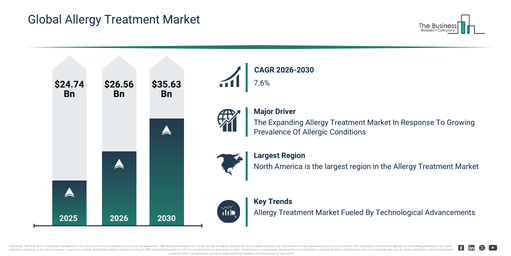
    The market for allergy treatments experienced substantial expansion over the last few years, demonstrating robust growth. Projections indicate a continued upward trajectory, with the market value expected to increase from $24.74 billion in 2025 to $26.56 billion in 2026, reflecting a compound annual growth rate of 7.3%. Key factors contributing to this growth during the past period included a global rise in allergy incidence, an increase in allergy treatments administered within hospital and clinic settings, a lack of widespread knowledge regarding sophisticated immunotherapy options, a prevalent dependence on traditional antihistamines, and the broadening reach of retail pharmacy channels.

    The allergy treatment sector is poised for substantial expansion in the upcoming years, projecting a market value of $35.63 billion by 2030, driven by a compound annual growth rate of 7.6%. This anticipated growth stems from several key factors: the escalating need for tailored allergy management solutions, innovations in how immunotherapy is administered, broader access through online pharmacies, increased funding for allergy-related research, and a higher incidence of asthma and rhinitis in both children and adults. Key developments anticipated during this period encompass a greater uptake of anti-allergy medications and immunotherapy, heightened public understanding of allergy control and avoidance strategies, the proliferation of home-based and specialized medical services, a concentrated effort towards individualized allergy therapies, and a more frequent utilization of nasal and oral administration methods.

    Download A Free Sample Report For Comprehensive Market Insights:

    https://www.thebusinessresearchcompany.com/sample.aspx?id=12130&type=smp

    #Allergy Treatment Market Demand Drivers Creating New Revenue Opportunities

    The increasing incidence of allergic diseases is anticipated to be a significant driver for the expansion of the allergy treatment market in the future. Allergic conditions occur when the body’s immune system exhibits an exaggerated response to an allergen, typically a substance that is otherwise innocuous. These treatments provide therapeutic interventions for allergies through either over-the-counter or prescribed medications, which aid in the detection and evasion of diverse allergy triggers, thereby mitigating allergic reactions, easing discomfort, reducing the severity of allergic episodes, and enhancing an individual’s overall health. As an illustration, in April 2024, Allergy UK, a prominent national charity in the United Kingdom, reported that over 21 million individuals in the UK suffer from allergies, which had emerged as the most frequently documented chronic health ailment in 2022, with forecasts suggesting that by 2026, approximately fifty percent of Europe’s population will contend with at least one type of allergy. Consequently, the escalating prevalence of conditions related to allergies is fueling the growth trajectory of the allergy treatment market.

    Allergy Treatment Market Segments: Where Are The Largest Growth Opportunities?

    The allergy treatment market covered in this report is segmented –

    1) By Treatment Type: Anti-Allergy Drugs, Immunotherapy

    2) By Type: Eye Allergy, Skin Allergy, Food Allergy, Rhinitis, Other Types

    3) By Route of Administration: Oral, Parenteral, Nasal, Other Routes of Administration

    4) By Distribution Channels: Hospital Pharmacies, Retail Pharmacies, Online Retailers, Other Distribution Channels

    5) By End-Users: Hospitals, Specialty Clinics, Homecare, Other End-Users

    Subsegments:

    1) By Anti-Allergy Drugs: Antihistamines, Corticosteroids, Leukotriene Receptor Antagonists, Decongestants

    2) By Immunotherapy: Allergy Shots, Sublingual Immunotherapy (SLIT), Oral Immunotherapy

    Allergy Treatment Market Trends Driving Strategic Industry Expansion

    The primary players within the allergy treatment sector are actively pursuing the integration of cutting-edge technologies aimed at elevating patient care, refining treatment administration, and maximizing diagnostic and therapeutic results. Innovations such as digital health platforms, remote healthcare services, wearable sensors, and precise immunotherapy methods are transforming the landscape of allergy management by facilitating smoother patient oversight, enabling diligent monitoring of allergic responses, and enabling the provision of tailored treatment strategies. Illustrating this trend, in May of 2023, Metropolis Healthcare Limited, a prominent Indian network of diagnostic laboratories, introduced artificial intelligence-driven allergy component testing utilizing Component Resolved Diagnostics (CRD). This innovative testing approach leverages AI to assist medical professionals in making well-grounded clinical judgments and offers crucial perspectives for both selecting and refining treatment regimens for individuals suffering from allergic conditions. The system operates on a nanotechnology-based multiplex platform that analyzes molecular components, capable of detecting specific IgE antibodies against 295 distinct allergens through a straightforward blood draw, thereby providing results for 158 food allergens, ten contact allergens, and 127 respiratory allergens.

    Allergy Treatment Market Major Participants And Competitive Dynamics

    Major companies operating in the allergy treatment market are Pfizer Inc., Johnson and Johnson, Allergy Therapeutics PLC, F. Hoffmann-La Roche Ltd, AbbVie Inc., Novartis AG, Merck & Co. Inc., Sanofi S.A., Thermo Fisher Scientific Inc., AstraZeneca, GlaxoSmithKline PLC, Eli Lilly and Company, Boehringer Ingelheim International GmbH, Regeneron Pharmaceuticals, Bausch Health Companies Inc., Teva Pharmaceutical Industries Ltd., Almirall S.A, Akorn Operating Company LLC, Alembic Pharmaceuticals Limited, ALK-Abelló A/S, Stallergenes Greer International AG, Adamis Pharmaceuticals, HollisterStier Allergy, Leti Pharma SL

    Access The Complete Allergy Treatment Market Report:

    https://www.thebusinessresearchcompany.com/report/allergy-treatment-global-market-report

    Allergy Treatment Market Global Footprint: Which Region Holds Market Leadership?

    North America was the largest region in the allergy treatment market in 2025. Asia-Pacific is expected to be the fastest-growing region in the forecast period. The regions covered in the allergy treatment market report are Asia-Pacific, South East Asia, Western Europe, Eastern Europe, North America, South America, Middle East, Africa.

    Get in touch with us:

    The Business Research Company: https://www.thebusinessresearchcompany.com/

    Americas: +1 310-496-7795

    Asia: +44 7882 955267 & +91 8897263534

    Europe: +44 7882 955267

    Email us at: marketing@tbrc.info

    Follow us on:

    LinkedIn: https://in.linkedin.com/company/the-business-research-company

    YouTube: https://www.youtube.com/channel/UC24_fI0rV8cR5DxlCpgmyFQ

    Global Market Model: https://www.thebusinessresearchcompany.com/global-market-model