Month: June 2026

  • Cerebral Adrenoleukodystrophy (CALD) Market Forecast Reveals Where Future Industry Value Will Be Created

    Cerebral Adrenoleukodystrophy (CALD) Market Forecast Reveals Where Future Industry Value Will Be Created

    Through market attractiveness analysis, total addressable market evaluation, company benchmarking matrices, interactive Excel dashboards, expanded supply chain intelligence, emerging startup coverage, and detailed product insights, The Business Research Company’s 2026 market reports provide more actionable and strategically valuable research.

    Cerebral Adrenoleukodystrophy (CALD) Market Expansion Outlook: What Revenue Opportunities Lie Ahead?

    The market for cerebral adrenoleukodystrophy (CALD) has experienced significant expansion lately, projecting an increase from $7.54 billion in 2025 to $8.64 billion in 2026, driven by a compound annual growth rate (CAGR) of 14.6%. This preceding growth period’s momentum is largely thanks to a deeper comprehension of ALD’s genetic underpinnings, the emergence of stem cell transplantation as a viable treatment, the proliferation of rare disease registries, heightened awareness within the neurology community, and the development of specialized treatment facilities.

    The market for cerebral adrenoleukodystrophy (CALD) is poised for significant expansion in the coming years, projecting a substantial increase to $14.72 billion by 2030, underpinned by a compound annual growth rate (CAGR) of 14.2%. This anticipated surge is fueled by a convergence of factors, including a greater embrace of gene therapy interventions, escalating funding dedicated to the development of treatments for rare diseases, the broadening reach of newborn screening programs, a heightened emphasis on customized treatment strategies, and strengthened partnerships between research institutions and clinical facilities. Key developments expected to shape this market during the forecast period encompass intensified investigation into gene therapy methodologies, wider implementation of early diagnostic screening, an increase in stem cell transplantation therapies, amplified efforts to raise awareness about rare diseases, and improved management of supportive care.

    Download A Free Sample Report For Comprehensive Market Insights:

    https://www.thebusinessresearchcompany.com/sample.aspx?id=21135&type=smp

    Cerebral Adrenoleukodystrophy (CALD) Market Expansion Drivers: What Is Shaping Future Growth?

    Augmented investment in healthcare is poised to be the primary catalyst for the expansion of the cerebral adrenoleukodystrophy (CALD) market. This surge in healthcare expenditure, fueled by demographic shifts towards older populations, the increasing prevalence of long-term illnesses, breakthroughs in medical science, escalating pharmaceutical prices, and broadened access to medical services, directly benefits the CALD sector. Specifically, elevated healthcare spending facilitates the development of enhanced diagnostic capabilities, supports pioneering therapeutic approaches like gene therapy and stem cell transplants, and broadens patient access to specialized medical attention and timely interventions. Illustrating this trend, the Centers for Medicare And Medicaid Services (CMS) reported in December 2024 that in the United States, national health expenditures (NHE) saw a 7.5% increase in 2023, a rate that surpassed the 6.1% growth of the gross domestic product (GDP). Projections indicate that from 2023 to 2032, national health expenditures (NHE) are anticipated to rise at an average annual rate of 5.6%, consequently boosting healthcare spending’s contribution to the gross domestic product (GDP) from 17.3% in 2022 to an estimated 19.7% by 2032, thus underscoring how increased healthcare spending is propelling the cerebral adrenoleukodystrophy (CALD) market forward.

    Cerebral Adrenoleukodystrophy (CALD) Market Segment Analysis And Revenue Opportunities

    The cerebral adrenoleukodystrophy (cald) market covered in this report is segmented –

    1) By Type Of Treatment: Dietary Management, Medications, Stem Cell Therapy

    2) By Patient Age Group: Adults, Children, Infants, Teens

    3) By End User: Healthcare Facilities, Patients And Caregivers, Pharmaceutical Companies

    Subsegments:

    1) By Dietary Management: Lorenzo’s Oil, Omega-3 Fatty Acids, Fatty Acid Supplements

    2) By Medications: Corticosteroids, Antioxidants, Anti-inflammatory Drugs

    3) By Stem Cell Therapy: Hematopoietic Stem Cell Transplantation (HSCT), Gene Therapy

    Cerebral Adrenoleukodystrophy (CALD) Market Strategic Trends: What Is Defining The Next Phase Of Growth?

    Within the cerebral adrenoleukodystrophy (cALD) market, leading entities are prioritizing the creation of novel oral small-molecule treatments, exemplified by selective PPARγ agonists. These advanced therapies aim to bolster neuroprotection, facilitate greater central nervous system ingress, and present safer, more user-friendly options compared to procedures that are invasive or lack precision. A PPARγ agonist, specifically a Peroxisome Proliferator-Activated Receptor gamma agonist, functions by engaging the PPARγ receptor, a nuclear hormone receptor predominantly located within adipocytes, immune cell populations, and musculature. Illustrating this trend, Minoryx Therapeutics, a biopharmaceutical firm based in Spain, secured FDA authorization in May 2023 to commence its Phase 3 CALYX investigation of leriglitazone (MIN-102). Leriglitazone stands out as a fresh, orally absorbable, brain-penetrating, and highly selective PPARγ agonist engineered to address the neuroinflammatory, mitochondrial dysfunction, demyelination, and axonal degeneration processes that drive cALD’s advancement. Offering a departure from conventional methods like HSCT or gene therapy, which are invasive, carry significant risks, and are impractical for a substantial number of adult patients, leriglitazone proposes a treatment pathway that is non-cellular, theoretically less hazardous, and more readily available. Compassionate-use evaluations have indicated that leriglitazone is well-tolerated and has shown promise in stabilizing both clinical indicators and radiological markers of disease progression in adult individuals diagnosed with cALD.

    Cerebral Adrenoleukodystrophy (CALD) Market Leading Players Shaping Industry Direction

    Major companies operating in the cerebral adrenoleukodystrophy (cald) market are Bluebird Bio Inc., Minoryx Therapeutics S.L., SwanBio Therapeutics Inc., Magenta Therapeutics Inc., Novartis AG, Vertex Pharmaceuticals Inc., MedDay Pharmaceuticals SAS, SOM Biotech Inc., Autobahn Therapeutics Inc., Orpheris Inc., Sperogenix Therapeutics Inc., NeuroVia Inc., REGENXBIO Inc., Ultragenyx Pharmaceutical Inc., Taysha Gene Therapies Inc., Neurogene Inc., Applied Genetic Technologies Corporation, Oxford BioMedica plc, UniQure N.V.

    Access The Complete Cerebral Adrenoleukodystrophy (CALD) Market Report:

    https://www.thebusinessresearchcompany.com/report/cerebral-adrenoleukodystrophy-cald-global-market-report

    Cerebral Adrenoleukodystrophy (CALD) Market Largest Region By Revenue And Market Share

    North Americawas the largest region in the cerebral adrenoleukodystrophy (CALD) market in 2025. The regions covered in the cerebral adrenoleukodystrophy (cald) market report are Asia-Pacific, South East Asia, Western Europe, Eastern Europe, North America, South America, Middle East, Africa.

    Get in touch with us:

    The Business Research Company: https://www.thebusinessresearchcompany.com/

    Americas: +1 310-496-7795

    Asia: +44 7882 955267 & +91 8897263534

    Europe: +44 7882 955267

    Email us at: marketing@tbrc.info

    Follow us on:

    LinkedIn: https://in.linkedin.com/company/the-business-research-company

    YouTube: https://www.youtube.com/channel/UC24_fI0rV8cR5DxlCpgmyFQ

    Global Market Model: https://www.thebusinessresearchcompany.com/global-market-model
  • Ceramic Dental Implant Market Growth Through 2030 Creates New Strategic Opportunities

    Ceramic Dental Implant Market Growth Through 2030 Creates New Strategic Opportunities

    Delivering more actionable and strategically valuable research, The Business Research Company’s 2026 market reports feature market attractiveness analysis, total addressable market evaluation, company benchmarking matrices, interactive Excel dashboards, expanded supply chain intelligence, emerging startup coverage, and detailed product insights.

    Ceramic Dental Implant Market Growth Potential: How Will Market Size Change Through 2030?

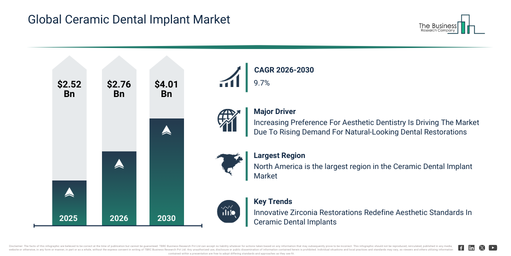
    The market for ceramic dental implants has experienced robust expansion recently, projected to increase from $2.52 billion in 2025 to $2.76 billion in 2026, reflecting a compound annual growth rate of 9.8%. Factors contributing to this historical growth trajectory include a greater incidence of dental conditions, escalating interest in cosmetic dental treatments, wider adoption of implant-supported prosthetics, innovations in ceramic material technology, and the expansion of dental healthcare facilities.

    The market for ceramic dental implants is poised for substantial expansion in the upcoming years, projecting an increase to $4.01 billion by 2030, driven by a compound annual growth rate of 9.7%. This anticipated surge is fueled by several key factors, including a discernible shift in patient inclination towards metal-free alternatives, the escalating integration of digital dentistry processes, the burgeoning field of dental implant tourism, increased financial commitment to cutting-edge dental materials, and a heightened demand for durable and aesthetically pleasing restorations. Over the projected timeframe, significant trends expected to shape the market include a greater embrace of metal-free dental implant options, a climbing desire for zirconia-based implants, more widespread utilization of CAD/CAM technology for fabricating ceramic implants, an expansion in dental restoration services focused on aesthetics, and a reinforced emphasis on both biocompatibility and osseointegration.

    Download A Free Sample Report For Comprehensive Market Insights:

    https://www.thebusinessresearchcompany.com/sample.aspx?id=30228&type=smp

    Ceramic Dental Implant Market Development Factors: Which Trends Are Supporting Demand?

    The market for ceramic dental implants is poised for expansion due to a growing inclination towards aesthetic dentistry, which aims to enhance the visual appeal of teeth and smiles by rectifying imperfections like misalignment, discoloration, chips, or gaps, ultimately contributing to a more pleasing and robust smile. This heightened interest in cosmetic dental work is primarily fueled by individuals’ escalating emphasis on their outward appearance, recognizing that a refined smile can significantly bolster self-assurance and positively influence both personal and social interactions. Ceramic dental implants play a crucial role in the pursuit of aesthetic dentistry by offering tooth-colored, natural-looking substitutes that integrate flawlessly with surrounding teeth, while also exhibiting kindness to gum tissues and mitigating the likelihood of adverse allergic responses. Illustratively, data from Dentistry, a UK publication, indicated in July 2023 that approximately a third of those under 35 pursued cosmetic dental treatments, with an average expenditure of $3,677, and notably, 10% within the 25–34 age bracket allocated $25,000 or more, predominantly towards professional services over standard check-ups or at-home solutions. Consequently, the rising demand for aesthetic dental solutions is acting as a catalyst for the advancement of the ceramic dental implant market.

    Ceramic Dental Implant Market Segmentation And Category Breakdown

    The ceramic dental implant market covered in this report is segmented –

    1) By Product Type: All-Ceramic Implants, Zirconia Implants, Porcelain Implants, Hybrid Ceramic Implants

    2) By Design: One-Piece Implants, Two-Piece Implants

    3) By Distribution Channel: Direct Sales, Online Retail, Dental Supply Stores, Dental Device Distributors

    4) By Application: Single Tooth Replacement, Multiple Teeth Replacement, Full Mouth Rehabilitation, Preventive Dental Care, Periodontal Treatments

    5) By End-User: Dental Clinics, Dental Hospitals, Research Institutions, Dental Laboratories

    Subsegments:

    1) By All-Ceramic Implants: Single-Phase Implants, Two-Phase Implants, Custom-Made Implants

    2) By Zirconia Implants: One-Piece Zirconia Implants, Two-Piece Zirconia Implants, Surface-Modified Zirconia Implants

    3) By Porcelain Implants: Fused Porcelain Implants, Pressed Porcelain Implants, Layered Porcelain Implants

    4) By Hybrid Ceramic Implants: Ceramic-Metal Composite Implants, Polymer-Infiltrated Ceramic Implants, Fiber-Reinforced Ceramic Implants

    Ceramic Dental Implant Market Transformation Trends: Which Innovations Are Driving Change?

    Leading players within the ceramic dental implant sector are prioritizing the creation of novel solutions, including sophisticated zirconia full-arch restorations, aimed at elevating the aesthetic appeal, resilience, and tailored fit of implant-supported dental prosthetics. An advanced zirconia full-arch restoration signifies a state-of-the-art dental prosthesis constructed from zirconia ceramic, engineered to faithfully reproduce the look and performance of natural dentition, while simultaneously providing enhanced robustness, biological compatibility, and wear resistance than conventional alternatives. As an illustration, in June 2025, ClearChoice Management Services, a US-based entity comprising dental implant facilities, introduced Endura Elite. This offering is characterized by meticulously crafted, layered zirconia intended to closely emulate the chromatic depth, surface quality, and light interplay of natural teeth, coupled with outstanding durability and extended service life. This introduction exemplifies the strategic direction of ceramic dental implant market participants, who are merging cutting-edge digital design methodologies with skilled artistry to yield highly customized, natural-looking restorations, consequently fostering the expansion and acceptance of ceramic implants in the realm of aesthetic dentistry.

    Ceramic Dental Implant Market Competitive Analysis Of Major Industry Participants

    Major companies operating in the ceramic dental implant market are 3M Company, Danaher Corporation, GE Healthcare, Zimmer Biomet Holdings Inc., Dentsply Sirona Inc., Straumann Group, Planmeca Oy, Midmark Corporation, J. Morita Corporation, NewTom, 3Shape A/S, Vatech Co. Ltd., Carestream Dental LLC, Yoshida Denki Co. Ltd., Takara Belmont Corporation, GC Corporation, BIOLASE Inc., Seiler Instrument & Mfg. Co. Inc., Stern Weber S.r.l., Dürr Dental AG

    Access The Complete Ceramic Dental Implant Market Report:

    https://www.thebusinessresearchcompany.com/report/global-ceramic-dental-implant-market-report

    Ceramic Dental Implant Market Regional Analysis And Leading Geography

    North Americawas the largest region in the ceramic dental implant market in 2025. Asia-Pacificis expected to be the fastest-growing region in the forecast period. The regions covered in the ceramic dental implant market report are Asia-Pacific, South East Asia, Western Europe, Eastern Europe, North America, South America, Middle East, Africa.

    Get in touch with us:

    The Business Research Company: https://www.thebusinessresearchcompany.com/

    Americas: +1 310-496-7795

    Asia: +44 7882 955267 & +91 8897263534

    Europe: +44 7882 955267

    Email us at: marketing@tbrc.info

    Follow us on:

    LinkedIn: https://in.linkedin.com/company/the-business-research-company

    YouTube: https://www.youtube.com/channel/UC24_fI0rV8cR5DxlCpgmyFQ

    Global Market Model: https://www.thebusinessresearchcompany.com/global-market-model

  • Central Venous Catheters Market Size Projected To Increase From $4.69 Billion To $6.63 Billion During The Forecast Period

    Central Venous Catheters Market Size Projected To Increase From $4.69 Billion To $6.63 Billion During The Forecast Period

    Enhanced with market attractiveness analysis, total addressable market evaluation, company benchmarking matrices, interactive Excel dashboards, expanded supply chain intelligence, emerging startup coverage, and detailed product insights, The Business Research Company’s 2026 market reports deliver more actionable and strategically valuable research.

    Central Venous Catheters Market Value Analysis: What Growth Is Expected Over The Forecast Period?

    The market for central venous catheters has experienced robust expansion lately and is projected to increase from $4.3 billion in 2025 to $4.7 billion in 2026, reflecting a compound annual growth rate of 9.2%. This surge during the past period is linked to several factors, including escalating hospital admission rates, a greater reliance on intravenous therapies, the broadening scope of critical care services, a heightened need for sustained vascular access solutions, and the widespread adoption of established catheterization protocols.

    The global market for central venous catheters is poised for substantial expansion over the coming years, projecting a value of $6.64 billion by the year 2030, propelled by a compound annual growth rate of 9.0%. This anticipated growth trajectory is underpinned by several key factors, including an intensified emphasis on curtailing hospital-acquired infections, a discernible increase in the utilization of sophisticated catheter materials, the burgeoning expansion of outpatient infusion services, a heightened demand for more secure vascular access devices, and augmented investments in patient safety technologies. During this forecast period, prominent market trends are expected to encompass the escalating deployment of antimicrobial-coated catheters, a greater embrace of multi-lumen catheter configurations, a reinforced focus on stringent infection prevention protocols, the widening availability of long-term vascular access solutions, and advancements in the training provided for catheter insertion procedures.

    Download A Free Sample Report For Comprehensive Market Insights:

    https://www.thebusinessresearchcompany.com/sample.aspx?id=18291&type=smp

    Central Venous Catheters Market Industry Drivers: What Is Driving Revenue Growth?

    Increased occurrences of kidney ailments are anticipated to stimulate expansion within the central venous catheter market. This rise in kidney disease prevalence is largely attributable to escalating rates of chronic conditions like diabetes and hypertension, which necessitate the use of central venous catheters for critical therapies such as dialysis. These catheters play a vital role in managing kidney conditions by facilitating crucial access for hemodialysis, administering medications, providing nutritional support, and enabling routine blood sampling. To illustrate, a report from Kidney Research UK in June 2023 indicated that approximately 7.19 million individuals, over 10% of the UK’s population, were affected by kidney disease in 2023, with projections suggesting an increase to 7.61 million by 2033, and a corresponding rise in the proportion of patients in advanced disease stages from 45% to 51%. Consequently, the growing burden of kidney disease is poised to be a significant driver for the central venous catheter market.

    Central Venous Catheters Market Segment Outlook: Which Categories Are Expanding The Fastest?

    The central venous catheters market covered in this report is segmented –

    1) By Type: Single-lumen, Double-lumen, Triple-lumen, Other Types

    2) By Property: Antimicrobial Coated, Non-Antimicrobial Coated

    3) By Application: Jugular Vein, Subclavian Vein, Femoral Vein, Other Applications

    4) By End User: Hospitals, Ambulatory Surgical Centers, Other End Users

    Subsegments:

    1) By Single-Lumen: Non-Tunneled Single-Lumen Catheters, Tunneled Single-Lumen Catheters

    2) By Double-Lumen: Non-Tunneled Double-Lumen Catheters, Tunneled Double-Lumen Catheters

    3) By Triple-Lumen: Non-Tunneled Triple-Lumen Catheters, Tunneled Triple-Lumen Catheters

    4) By Other Types: Quad-Lumen Catheters, Peripherally Inserted Central Catheters (PICC)

    #Central Venous Catheters Market Growth Trends: What Is Influencing The Future Outlook?

    In the central venous catheter sector, key players are focusing on the creation of sophisticated ultrasound devices to boost accuracy and safety throughout catheter insertion. These cutting-edge ultrasound systems elevate central venous catheter placement by offering live imaging, thereby enhancing precision, minimizing complications, and contributing to patient well-being and more efficient procedures. For example, in November 2023, Becton, Dickinson, and Company (BD), a prominent US medical technology firm, introduced the SiteRite 9, an advanced ultrasound system for vascular access, designed to help clinicians perform more efficiently when inserting peripherally inserted central catheters (PICCs), central venous catheters, IV lines, and other devices for accessing blood vessels. The SiteRite 9 ultrasound system boasts an intuitive 15.6-inch touchscreen display with superior image clarity. It incorporates the Cue needle tracking system for real-time needle guidance and the Sherlock 3CG+ tip confirmation system for accurate catheter navigation. BD’s sophisticated ultrasound technology is geared towards streamlining vascular access operations, aiding clinicians through intelligent, connected functionalities like vessel evaluation and automatic data recording.

    Central Venous Catheters Market Key Companies And Competitive Benchmarking

    Major companies operating in the central venous catheters market are Medtronic plc, Becton, Dickinson and Company (BD), Boston Scientific Corporation, B. Braun Holding GmbH & Co. KG, Terumo Corporation, Edwards Lifesciences Corporation, Teleflex Incorporated, Cook Group Incorporated, ICU Medical Inc., Lepu Medical Technology (Beijing) Co. Ltd, Merit Medical Systems Inc, Vygon SAS, AngioDynamics Inc., Argon Medical Devices Inc., Poly Medicure Limited, Vogt Medical Vertrieb GmbH, MedCath Corporation, GaltNeedleTech Inc., Romsons International, Newtech Medical Devices Private Limited, NIPRO Medical Corporation, DemeTECH Corporation, Scitech Medical Products SA, Prodimed, P. K. Scientific & Chemicals

    Access The Complete Central Venous Catheters Market Report:

    https://www.thebusinessresearchcompany.com/report/central-venous-catheters-global-market-report

    Central Venous Catheters Market Geographic Analysis: Where Is Demand Growing The Fastest?

    North Americawas the largest region in the central venous catheters market in 2025. The regions covered in the central venous catheters market report are Asia-Pacific, South East Asia, Western Europe, Eastern Europe, North America, South America, Middle East, Africa.

    Get in touch with us:

    The Business Research Company: https://www.thebusinessresearchcompany.com/

    Americas: +1 310-496-7795

    Asia: +44 7882 955267 & +91 8897263534

    Europe: +44 7882 955267

    Email us at: marketing@tbrc.info

    Follow us on:

    LinkedIn: https://in.linkedin.com/company/the-business-research-company

    YouTube: https://www.youtube.com/channel/UC24_fI0rV8cR5DxlCpgmyFQ

    Global Market Model: https://www.thebusinessresearchcompany.com/global-market-model

  • Central Precocious Puberty Market Growth Outlook Reveals A CAGR Of 10.1% And A Market Value Of $3.36 Billion By 2030

    Central Precocious Puberty Market Growth Outlook Reveals A CAGR Of 10.1% And A Market Value Of $3.36 Billion By 2030

    Through market attractiveness analysis, total addressable market evaluation, company benchmarking matrices, interactive Excel dashboards, expanded supply chain intelligence, emerging startup coverage, and detailed product insights, The Business Research Company’s 2026 market reports provide more actionable and strategically valuable research.

    Central Precocious Puberty Market Size Forecast: How Large Could The Market Become By 2030?

    The market for central precocious puberty interventions has experienced robust expansion recently, with projections indicating continued growth from $2.11 billion in 2025 to $2.29 billion in 2026, representing a compound annual growth rate of 8.8%. Factors contributing to this historical surge include a heightened detection rate of premature puberty onset, enhanced accessibility to pediatric medical care, the presence of effective hormone-blocking treatments, the proliferation of specialized endocrine centers, and augmented awareness among medical professionals.

    The market for central precocious puberty treatments is poised for substantial expansion over the coming years, projecting a valuation of $3.36 billion by 2030, fueled by a compelling compound annual growth rate of 10.1%. This projected surge is underpinned by several key drivers, including a heightened demand for treatment options that are both long-lasting and require minimal intervention, a growing emphasis on tailoring treatment strategies to individual children, the increasing prevalence of care delivered within the home environment, a wider acceptance of digital tools for patient oversight, and a more significant allocation of resources towards the development of new pediatric medications. Emerging trends that will shape this market trajectory include a greater emphasis on identifying puberty-related issues at an earlier stage, a more widespread utilization of extended-release gonadotropin-releasing hormone (GnRH) therapies, a stronger focus on specialized pediatric endocrine care, the broader implementation of patient tracking initiatives, and a heightened general awareness concerning hormonal imbalances.

    Download A Free Sample Report For Comprehensive Market Insights:

    https://www.thebusinessresearchcompany.com/sample.aspx?id=13184&type=smp

    #Central Precocious Puberty Market Growth Factors: Which Forces Are Supporting Market Expansion?

    Augmented investment in research and development is poised to be a significant catalyst for the expansion of the central precocious puberty market. These activities encompass the broad spectrum of efforts companies engage in to innovate, developing novel knowledge, products, services, and procedures, or refining those already in existence. Within the context of central precocious puberty (CPP), R&D endeavors are instrumental in deepening our comprehension of the disorder, refining diagnostic methods and therapeutic interventions, and ultimately elevating the quality of care for affected individuals. Illustratively, as reported by the UK’s Office for National Statistics (ONS) in April 2025, the United Kingdom’s governmental expenditure on research and development saw a notable upswing, climbing to £17.4 billion in 2023 from £16.1 billion in 2022, a substantial 8.2% increase. Consequently, this heightened level of research and development engagement stands as a key driver augmenting the central precocious puberty market.

    Central Precocious Puberty Market Segment Landscape: Which Areas Lead Market Development?

    The central precocious puberty market covered in this report is segmented –

    1) By Drug: Leuprolide Acetate, Triptorelin, Histrelin Acetate, Nafarelin

    2) By Route Of Administration: Parenteral, Subcutaneous, Intramuscular, Other Routes Of Administrations

    3) By Distribution Channel: Hospital Pharmacy, Retail Pharmacy, Online Pharmacy

    4) By End-Users: Hospitals, Specialty Clinics, Homecare, Other End-Users

    Subsegments:

    1) By Leuprolide Acetate: Injectable Formulations, Depot Formulations

    2) By Triptorelin: Injectable Formulations, Long-acting Formulations

    3) By Histrelin Acetate: Implant Formulations, Injectable Formulations

    4) By Nafarelin: Nasal Spray Formulations, Injectable Formulations

    Central Precocious Puberty Market Industry Trends: What Changes Are Reshaping Demand?

    In the central precocious puberty (CPP) market, leading pharmaceutical entities are prioritizing the creation of innovative treatment modalities, specifically long-acting Gonadotropin-Releasing Hormone (GnRH) agonists, with the aim of elevating therapeutic efficacy, ensuring dependable hormonal suppression, and increasing patient comfort. Long-acting GnRH agonists continue to represent the established benchmark for treatment, with advancements primarily revolving around sophisticated sustained-release mechanisms engineered to decrease administration frequency and bolster compliance among younger patients. As an illustration, in October 2025, the South Korean life sciences firm LG Chem introduced Leupone, a novel therapeutic agent for the management of premature puberty. This treatment is engineered to deliver robust and enduring suppression of the hormonal surges characteristic of early puberty, thereby presenting a dependable and convenient choice for individuals needing to manage central precocious puberty. The advent of Leupone not only fortifies LG Chem’s collection of endocrinological products but also facilitates wider distribution of cutting-edge CPP therapies on an international scale.

    Central Precocious Puberty Market Industry Leaders And Market Competition

    Major companies operating in the central precocious puberty market are Pfizer Inc., AbbVie Inc., Ipsen Ltd., Ferring Pharmaceuticals Private Limited, Endo Pharmaceuticals Inc., Amneal Pharmaceuticals Inc., Arbor Pharmaceuticals LLC, Sun Pharmaceutical Industries Ltd., Cipla Limited, Piramal Enterprises Limited, Livzon Pharmaceutical Group Inc., The Bachem Group, Antares Pharma Inc., Tolmar Pharmaceuticals Inc., Debiopharm Group, Salvavidas Pharmaceutical Pvt. Ltd., Actiza Pharmaceutical Private Limited, Foresee Pharmaceuticals Co. Ltd., Manus Aktteva Biopharma LLP, Midas Pharma GmbH, LGM Pharma LLC, Varian Pharmed Group, Shenzhen JYMed Technology Co. Ltd.

    Access The Complete Central Precocious Puberty Market Report:

    https://www.thebusinessresearchcompany.com/report/central-precocious-puberty-global-market-report

    Central Precocious Puberty Market Global Footprint: Which Region Holds Market Leadership?

    North Americawas the largest region in the central precocious puberty market in 2025. The regions covered in the central precocious puberty market report are Asia-Pacific, South East Asia, Western Europe, Eastern Europe, North America, South America, Middle East, Africa.

    Get in touch with us:

    The Business Research Company: https://www.thebusinessresearchcompany.com/

    Americas: +1 310-496-7795

    Asia: +44 7882 955267 & +91 8897263534

    Europe: +44 7882 955267

    Email us at: marketing@tbrc.info

    Follow us on:

    LinkedIn: https://in.linkedin.com/company/the-business-research-company

    YouTube: https://www.youtube.com/channel/UC24_fI0rV8cR5DxlCpgmyFQ

    Global Market Model: https://www.thebusinessresearchcompany.com/global-market-model

  • Central Nervous System Lymphoma Treatment Market Forecast Highlights Expansion From $1.36 Billion To $1.76 Billion Through 2030

    Central Nervous System Lymphoma Treatment Market Forecast Highlights Expansion From $1.36 Billion To $1.76 Billion Through 2030

    Delivering more actionable and strategically valuable research, The Business Research Company’s 2026 market reports feature market attractiveness analysis, total addressable market evaluation, company benchmarking matrices, interactive Excel dashboards, expanded supply chain intelligence, emerging startup coverage, and detailed product insights.

    Central Nervous System Lymphoma Treatment Market Revenue Outlook: What CAGR Is Expected Through 2030?

    The market for central nervous system lymphoma treatments has experienced robust expansion. Projections indicate a rise from $1.27 billion in 2025 to $1.36 billion in 2026, reflecting a compound annual growth rate of 6.9%. This upward trajectory in the historical period is largely due to enhanced survival outcomes achieved through high-dose chemotherapy, the broadening of oncology treatment facilities, intensified clinical investigations into blood cancers, a greater understanding of primary CNS lymphoma, and the accessibility of sophisticated diagnostic imaging methods.

    The market for central nervous system lymphoma treatments is poised for substantial expansion, projected to reach $1.76 billion by 2030, demonstrating a compound annual growth rate of 6.6%. This upward trajectory over the forecast period is fueled by several key factors, including the increasing acceptance of CAR-T and targeted immunotherapy approaches, augmented investments in the development of cancer therapeutics, a broader embrace of individualized cancer care strategies, the growing preference for less toxic therapeutic plans, and an intensified emphasis on achieving enduring remission from the disease. Key developments anticipated during this timeframe encompass a greater reliance on immunotherapy-driven treatment protocols, the expanding application of targeted therapies for CNS lymphoma, a rise in combined therapeutic methodologies, a heightened focus on bespoke treatment strategies, and a more extensive utilization of sophisticated diagnostic monitoring tools.

    Download A Free Sample Report For Comprehensive Market Insights:

    https://www.thebusinessresearchcompany.com/sample.aspx?id=21134&type=smp

    Central Nervous System Lymphoma Treatment Market Demand Drivers: What Is Fueling Industry Growth?

    The pharmaceutical sector’s rapid expansion is anticipated to bolster the central nervous system lymphoma treatment market in the coming period. This industry encompasses the scientific investigation, creation, production, and distribution of medicinal products aimed at disease prevention, treatment, and management. Key factors fueling the pharmaceutical industry’s growth include breakthroughs in medical research, an expanding elderly demographic, enhanced global healthcare accessibility, an increase in long-term health conditions, responses to worldwide health emergencies, supportive regulatory frameworks, and escalating healthcare expenditures. The progression within the pharmaceutical realm stimulates advancements in the market for treating central nervous system lymphoma by fostering innovation in specialized treatments, refining diagnostic capabilities, and increasing investments in the research and development of therapies for uncommon cancers. As an illustration, in June 2024, the European Federation of Pharmaceutical Industries and Associations (EFPIA) reported that total pharmaceutical production in Europe reached $4,17,300 million (€390,000 million) in 2023, up from $3,88,141 million (€363,300 million) in 2022. Consequently, the vigorous growth of the pharmaceutical industry is a significant driver for the central nervous system lymphoma treatment market.

    The increasing embrace of personalized medicine is poised to accelerate the expansion of the market for central nervous system lymphoma treatments. This approach centers on customizing medical interventions for individual patients by considering their unique genetic makeup, environmental exposures, and lifestyle choices, thereby optimizing treatment success and enhancing overall patient care. The burgeoning demand for personalized medicine stems from progress in genomics, the wider availability of diagnostic tools that identify specific biomarkers, sophisticated data analysis technologies, and a growing desire for more precisely targeted and potent therapeutic options. Within the context of central nervous system lymphoma treatment, personalized medicine refines therapeutic strategies to align with the distinct genetic and molecular characteristics of a patient’s lymphoma, leading to greater treatment accuracy, a reduction in adverse effects, and a higher probability of positive outcomes, particularly in challenging or treatment-resistant cases. For example, in February 2024, the Personalized Medicine Coalition (PMC) noted that the Food and Drug Administration (FDA) authorized 7 novel personalized cancer treatments in 2023, constituting a substantial portion of the 26 personalized treatments approved that year, a notable increase from the 12 approved in 2022. Therefore, the paradigm shift toward personalized medicine acts as a significant catalyst for the growth of the central nervous system lymphoma treatment market.

    Central Nervous System Lymphoma Treatment Market Segments: Where Are The Largest Growth Opportunities?

    The central nervous system lymphoma treatment market covered in this report is segmented –

    1) By Treatment Type: Chemotherapy, Radiation Therapy, Targeted Therapy, Corticosteroids, Immunotherapy

    2) By Route Of Administration: Intravenous, Oral, Intrathecal

    3) By Distribution Channel: Direct Sales, Third-Party Distributors

    4) By End User: Hospitals, Clinics, Ambulatory Surgical Centers

    Subsegments:

    1) By Chemotherapy: High-Dose Methotrexate, Temozolomide, Rituximab-Based Regimens, Carmustine, Cytarabine

    2) By Radiation Therapy: Whole Brain Radiation Therapy (WBRT), Stereotactic Radiosurgery (SRS), Brachytherapy

    3) By Targeted Therapy: Monoclonal Antibodies, Tyrosine Kinase Inhibitors, B-Cell Antigen Inhibitors, PI3K Inhibitors

    4) By Corticosteroids: Dexamethasone, Prednisone, Methylprednisolone

    5) By Immunotherapy: Checkpoint Inhibitors, Chimeric Antigen Receptor T-Cell (CAR-T) Therapy, Monoclonal Antibodies, Immune Modulators

    Central Nervous System Lymphoma Treatment Market Innovation Trends: Which Developments Are Transforming The Industry?

    Within the central nervous system lymphoma sector, leading enterprises are prioritizing the creation of novel treatments like chimeric antigen receptor (CAR) T-cell therapy. This strategic focus aims to boost treatment efficacy, offer individualized therapeutic approaches, and ultimately improve patient prognoses, especially for individuals battling recurrent or treatment-resistant disease. CAR T-cell therapy operates as a form of immunotherapy where a patient’s own T-cells are genetically engineered to more efficiently identify and combat malignant cells. A notable development occurred in June 2024 when Kite Pharma, a U.S. pharmaceutical firm, in partnership with the U.S.-based Dana-Farber Cancer Institute, announced positive findings for Yescarta (axicabtagene ciloleucel). This CAR T-cell treatment demonstrated good tolerability in patients afflicted with relapsed or refractory primary or secondary central nervous system lymphoma. The process involves extracting a patient’s T-cells, re-engineering them to specifically target cancerous cells, and then reintroducing them into the patient’s system, thereby enabling these enhanced T-cells to eliminate lymphoma cells, even within the complex environment of the central nervous system, particularly in challenging relapsed or refractory scenarios.

    Central Nervous System Lymphoma Treatment Market Major Participants And Competitive Dynamics

    Major companies operating in the central nervous system lymphoma treatment market are Pfizer Inc., Johnson & Johnson, F. Hoffmann-La Roche AG, Merck & Co. Inc, AbbVie Inc., Bristol-Myers Squibb, AstraZeneca plc, Novartis AG, GlaxoSmithKline Plc, Gilead Sciences, Amgen Inc, Regeneron Pharmaceuticals, Incyte Corporation, Takeda Pharmaceutical Company Limited, Seagen Inc., MorphoSys AG, Nurix Therapeutics, Astellas Pharma, BeiGene Ltd., Viatris Inc., Teva Pharmaceutical Industries Ltd., Sandoz Group AG, Fresenius SE & Co KGaA

    Access The Complete Central Nervous System Lymphoma Treatment Market Report:

    https://www.thebusinessresearchcompany.com/report/central-nervous-system-lymphoma-treatment-global-market-report

    Central Nervous System Lymphoma Treatment Market Regional Distribution: Which Areas Drive Market Expansion?

    North Americawas the largest region in the central nervous system lymphoma treatment market in 2025. Asia-Pacificis expected to be the fastest-growing region in the forecast period. The regions covered in the central nervous system lymphoma treatment market report are Asia-Pacific, South East Asia, Western Europe, Eastern Europe, North America, South America, Middle East, Africa.

    Get in touch with us:

    The Business Research Company: https://www.thebusinessresearchcompany.com/

    Americas: +1 310-496-7795

    Asia: +44 7882 955267 & +91 8897263534

    Europe: +44 7882 955267

    Email us at: marketing@tbrc.info

    Follow us on:

    LinkedIn: https://in.linkedin.com/company/the-business-research-company

    YouTube: https://www.youtube.com/channel/UC24_fI0rV8cR5DxlCpgmyFQ

    Global Market Model: https://www.thebusinessresearchcompany.com/global-market-model

  • Central Nervous System Biomarkers Market Expected To Reach $9.92 Billion By 2030 As Growth Accelerates At 10.2% CAGR

    Central Nervous System Biomarkers Market Expected To Reach $9.92 Billion By 2030 As Growth Accelerates At 10.2% CAGR

    Enhanced with market attractiveness analysis, total addressable market evaluation, company benchmarking matrices, interactive Excel dashboards, expanded supply chain intelligence, emerging startup coverage, and detailed product insights, The Business Research Company’s 2026 market reports deliver more actionable and strategically valuable research.

    Central Nervous System Biomarkers Market Growth Analysis: How Will Revenue Expand During The Forecast Period?

    The market for central nervous system biomarkers has experienced robust expansion lately, projected to increase from $6.14 billion in 2025 to $6.74 billion by 2026, reflecting a compound annual growth rate of 9.8%. This historical growth trajectory has been propelled by several key factors, including the rising incidence of neurological conditions, enhancements in neuroimaging and detection methodologies, a surge in neurological research endeavors, escalating requirements for monitoring disease advancement, and the broader scope of biomarker verification investigations.

    The market for central nervous system biomarkers is poised for substantial expansion, with projections indicating a rise to $9.92 billion by 2030, driven by a compound annual growth rate of 10.2%. This upward trajectory is fueled by several key factors, including greater financial commitment to precision neurology, the escalating application of biomarkers in tailoring medical treatments, the widespread adoption of artificial intelligence for biomarker discovery, an increase in clinical trials that utilize biomarkers to guide decisions, and growing endorsement from regulatory bodies for biomarker endpoints. During this projected period, significant trends will emerge, such as a greater embrace of blood-based biomarkers for CNS conditions, increased utilization of biomarkers throughout the drug development process, a heightened emphasis on identifying neurodegenerative diseases in their early stages, the proliferation of companion diagnostic biomarkers, and a more robust integration of multi-omics data.

    Download A Free Sample Report For Comprehensive Market Insights:

    https://www.thebusinessresearchcompany.com/sample.aspx?id=12632&type=smp

    Central Nervous System Biomarkers Market Growth Drivers: What Factors Are Accelerating Expansion?

    The increasing prevalence of neurological conditions is anticipated to be a primary driver for the expansion of the central nervous system (CNS) biomarker market. These disorders, affecting the brain, spinal cord, and peripheral nerves, stem from diverse origins such as genetic predispositions, infections, immune system malfunctions, degenerative changes, tumors, vascular problems, and injuries. CNS biomarkers are instrumental in diagnosing these conditions, predicting risk and outcomes, gauging disease severity, and monitoring therapeutic effectiveness, thereby contributing significantly to our comprehension and management of these ailments. Illustratively, the Centers for Disease Control and Prevention reported in April 2023 that an estimated 6.7 million Americans aged 65 and above were living with Alzheimer’s disease, a figure projected to approach 14 million by 2060, with the incidence doubling every five years past age 65. Consequently, the escalating rates of neurological illnesses are fueling the growth trajectory of the CNS biomarker market.

    Central Nervous System Biomarkers Market Segment Analysis: What Are The Major Market Categories?

    The central nervous system biomarkers market covered in this report is segmented –

    1) By Type: Safety Biomarker, Efficacy Biomarker, Validation Biomarker, Other Types

    2) By Disease: Multiple Sclerosis, Alzheimer’s Disease, Parkinson’s Disease, Traumatic Brain Injury, Other Diseases

    3) By Application: Drug Discovery And Development, Personalized Medicines, Disease Risk Assessment, Diagnostics, Other Applications

    4) By End-Users: Diagnostic Labs, Clinics, Hospitals, Research Centers, Other End-Users

    Subsegments:

    1) By Safety Biomarker: Toxicity Biomarkers, Adverse Event Biomarkers

    2) By Efficacy Biomarker: Pharmacodynamic Biomarkers, Response Biomarkers

    3) By Validation Biomarker: Predictive Biomarkers, Prognostic Biomarkers

    4) By Other Types: Diagnostic Biomarkers, Biomarkers For Disease Progression

    Central Nervous System Biomarkers Market Trends: What Is Shaping Future Industry Growth?

    Leading entities within the central nervous system biomarker sector are concentrating their efforts on the development and release of advanced analytical tools, exemplified by the assay kit. This assay kit represents a convenient compilation of necessary chemicals and components designed for a particular scientific examination. To illustrate, in June of 2023, Sysmex Corporation, a firm originating from Japan with a strong emphasis on research and development, introduced an Automated Immunoassay System. The sophisticated assay kit included in this system is engineered to detect the build-up of amyloid beta (Aβ) within the brain, a known contributor to Alzheimer’s disease, by utilizing a minimal blood sample. The methodology involves determining the proportion of Aβ peptides present in the blood through the use of an automated immunoassay platform. Consequently, this innovation empowers medical practitioners to discern Aβ accumulation in the brain by analyzing a modest quantity of blood, thereby facilitating prompt diagnosis and the initiation of treatment for affected individuals.

    Central Nervous System Biomarkers Market Leading Companies Driving Competitive Growth

    Major companies operating in the central nervous system biomarkers market are F. Hoffmann-La Roche AG, Novartis AG, Siemens Healthineers, Thermo Fisher Scientific Inc, Abbott Laboratories, Merck KGaA, Eurofins Scientific, Charles River Laboratories International Inc., PerkinElmer Inc., Bio-Rad Laboratories Inc., QIAGEN N.V., Axon Neuroscience SE, Alector Inc., Oryzon Genomics S.A., Banyan Biomarkers Inc., Anavex Life Sciences Corp., Applied Neurosolutions Inc., C2N Diagnostics, Alzheon Inc., DiaGenic ASA, Avid Radiopharmaceuticals Inc., Cassava Sciences Inc.

    Access The Complete Central Nervous System Biomarkers Market Report:

    https://www.thebusinessresearchcompany.com/report/central-nervous-system-biomarkers-global-market-report

    Central Nervous System Biomarkers Market Leading Geography: Which Region Generates The Most Revenue?

    North Americawas the largest region in the central nervous system biomarkers market in 2025. Asia-Pacificis expected to be the fastest-growing region in the forecast period. The regions covered in the central nervous system biomarkers market report are Asia-Pacific, South East Asia, Western Europe, Eastern Europe, North America, South America, Middle East, Africa.

    Get in touch with us:

    The Business Research Company: https://www.thebusinessresearchcompany.com/

    Americas: +1 310-496-7795

    Asia: +44 7882 955267 & +91 8897263534

    Europe: +44 7882 955267

    Email us at: marketing@tbrc.info

    Follow us on:

    LinkedIn: https://in.linkedin.com/company/the-business-research-company

    YouTube: https://www.youtube.com/channel/UC24_fI0rV8cR5DxlCpgmyFQ

    Global Market Model: https://www.thebusinessresearchcompany.com/global-market-model

  • Central Nervous System (CNS) Lymphoma Market Set To Grow From $1.63 Billion In 2026 To $2.08 Billion By 2030 At A CAGR Of 6.4%

    Central Nervous System (CNS) Lymphoma Market Set To Grow From $1.63 Billion In 2026 To $2.08 Billion By 2030 At A CAGR Of 6.4%

    Through market attractiveness analysis, total addressable market evaluation, company benchmarking matrices, interactive Excel dashboards, expanded supply chain intelligence, emerging startup coverage, and detailed product insights, The Business Research Company’s 2026 market reports provide more actionable and strategically valuable research.

    Central Nervous System (CNS) Lymphoma Market Forecast: What Market Value Is Expected By 2030?

    Demonstrating robust expansion in recent times, the market for central nervous system (CNS) lymphoma has experienced significant growth. Projections indicate a continued upward trend, with the market value set to increase from $1.53 billion in 2025 to $1.63 billion in 2026, reflecting a compound annual growth rate (CAGR) of 6.6%. This historical growth trajectory is underpinned by several key factors, including enhanced precision in lymphoma diagnoses, greater adoption of intensive chemotherapy regimens, the expansion of healthcare facilities dedicated to cancer care, progress in neuro-oncology studies, and the widening accessibility of corticosteroid treatments.

    Anticipated to demonstrate robust expansion over the forthcoming years, the market for central nervous system (CNS) lymphoma is projected to reach a valuation of $2.09 billion by 2030, exhibiting a compound annual growth rate (CAGR) of 6.4%. This projected growth during the forecast period is underpinned by several key factors, including escalating investments in specialized oncology drugs, a burgeoning acceptance of individualized cancer treatment methodologies, the broader implementation of biomarker-guided therapy selection, intensified research efforts concerning rare cancers, and a notable increase in clinical trial endeavors for CNS malignancies. Furthermore, prevailing trends expected to shape the market during this timeframe encompass a growing inclination towards targeted immunotherapy interventions, a more pervasive utilization of therapies centered on monoclonal antibodies, a deeper integration of precision diagnostics into the strategic planning of treatment regimens, a widening application of combination therapy strategies, and an elevated emphasis on the early identification of the disease.

    Download A Free Sample Report For Comprehensive Market Insights:

    https://www.thebusinessresearchcompany.com/sample.aspx?id=21133&type=smp

    Central Nervous System (CNS) Lymphoma Market Growth Factors Supporting Long-Term Expansion

    The escalating occurrence of psychological ailments is anticipated to be a significant catalyst for the expansion of the central nervous system (CNS) lymphoma market in the coming period. These mental health conditions, characterized by disruptions in thought processes, emotional states, or behavioral patterns that lead to significant distress or functional impairment, are on the rise due to a confluence of factors including elevated stress levels, social detachment, economic duress, inherent genetic predispositions, instances of substance misuse, and excessive reliance on digital connectivity. Furthermore, advancements within CNS lymphoma research contribute substantially to neuro-oncology, deepening our comprehension of brain inflammation dynamics, intricate immune system interactions, and the permeability of the blood-brain barrier, thereby facilitating the development of more efficacious therapeutic strategies for both cancerous conditions and psychological disorders. Illustratively, as reported by the National Health Service in the UK in November 2023, projections indicated that approximately one in five young individuals between the ages of eight and twenty-five experienced a probable mental disorder in 2023, with specific figures showing 20.3% among 8 to 16-year-olds, 23.3% among 17 to 19-year-olds, and 21.7% among 20 to 25-year-olds. Consequently, this upward trend in psychological disorder incidence is a direct driver for the growth observed in the central nervous system (CNS) lymphoma market.

    Central Nervous System (CNS) Lymphoma Market Segment Breakdown: Which Categories Generate The Most Revenue?

    The central nervous system (cns) lymphoma market covered in this report is segmented –

    1) By Class Of Drugs: Monoclonal Antibodies, Chemotherapeutic Agents, Corticosteroids

    2) By Treatment: Chemotherapy, Radiation Therapy, Steroid Therapy, Targeted Therapy

    3) By Application: Hospitals, Clinics, Ambulatory Surgical Services, Other Applications

    Subsegments:

    1) By Monoclonal Antibodies: Anti-CD20 Monoclonal Antibodies, Anti-PD-1 Monoclonal Antibodies, Other Targeted Monoclonal Antibodies

    2) By Chemotherapeutic Agents: Alkylating Agents, Antimetabolites, Topoisomerase Inhibitors

    3) By Corticosteroids: Dexamethasone, Prednisolone, Methylprednisolone

    Central Nervous System (CNS) Lymphoma Market Industry Trends Shaping Future Revenue Growth

    Within the central nervous system (CNS) lymphoma sector, leading corporations are concentrating their efforts on pioneering treatments like Tirabrutinib for primary CNS lymphoma. Tirabrutinib, characterized as a highly specific inhibitor of Bruton’s tyrosine kinase (BTK), has been engineered to combat B-cell cancers, encompassing primary CNS lymphoma (PCNSL), by disrupting crucial pathways essential for cancer cell longevity and growth. Notably, ONO Pharma Inc., a pharmaceutical entity based in the United States, revealed in March 2023 that the U.S. Food and Drug Administration (FDA) bestowed orphan drug status upon Tirabrutinib (ONO-4059) for the therapeutic use in PCNSL. This compound is presently undergoing evaluation in the phase 2 PROSPECT trial (NCT04947319). As a powerful and selective BTK inhibitor, Tirabrutinib targets the proliferation and survival mechanisms of B-cells. It exerts its influence by modulating B-cell receptor activity, which controls cellular proliferation and activation, thereby facilitating B-cell survival, maturation, and expansion.

    Central Nervous System (CNS) Lymphoma Market Key Players And Strategic Industry Positioning

    Major companies operating in the central nervous system (cns) lymphoma market are F. Hoffmann-La Roche Ltd., Merck & Co. Inc., Novartis International AG, Takeda Pharmaceutical Company Limited, Amgen Inc., Incyte Corporation, Kazia Therapeutics Limited, Karyopharm Therapeutics Inc., Nurix Therapeutics Inc., CNS Pharmaceuticals Inc., JW Therapeutics, PentixaPharm Pty Ltd, Cellectar Biosciences Inc., Bristol‑Myers Squibb Company, Johnson & Johnson, AstraZeneca plc, Pfizer Inc, BeiGene Ltd, Bayer AG, Spectrum Pharmaceuticals Inc, Teva Pharmaceutical Industries Ltd, Kyowa Kirin Co Ltd, Celltrion Inc, Regeneron Pharmaceuticals Inc, BioNTech SE, PIQUR Therapeutics AG, Curis Inc, TG Therapeutics Inc, Oncoceutics Inc, XEME Biopharma LLC

    Access The Complete Central Nervous System (CNS) Lymphoma Market Report:

    https://www.thebusinessresearchcompany.com/report/central-nervous-system-cns-lymphoma-global-market-report

    Central Nervous System (CNS) Lymphoma Market Regional Outlook: Where Are The Largest Opportunities Located?

    North Americawas the largest region in the central nervous system (CNS) lymphoma market in 2025. Asia-Pacificis expected to be the fastest-growing region in the forecast period. The regions covered in the central nervous system (cns) lymphoma market report are Asia-Pacific, South East Asia, Western Europe, Eastern Europe, North America, South America, Middle East, Africa.

    Get in touch with us:

    The Business Research Company: https://www.thebusinessresearchcompany.com/

    Americas: +1 310-496-7795

    Asia: +44 7882 955267 & +91 8897263534

    Europe: +44 7882 955267

    Email us at: marketing@tbrc.info

    Follow us on:

    LinkedIn: https://in.linkedin.com/company/the-business-research-company

    YouTube: https://www.youtube.com/channel/UC24_fI0rV8cR5DxlCpgmyFQ

    Global Market Model: https://www.thebusinessresearchcompany.com/global-market-model
  • Central Lab Market Opportunities Are Emerging Beyond Traditional Growth Areas

    Central Lab Market Opportunities Are Emerging Beyond Traditional Growth Areas

    Delivering more actionable and strategically valuable research, The Business Research Company’s 2026 market reports feature market attractiveness analysis, total addressable market evaluation, company benchmarking matrices, interactive Excel dashboards, expanded supply chain intelligence, emerging startup coverage, and detailed product insights.

    Central Lab Market Size Outlook: How Fast Will Revenue Grow Through 2030?

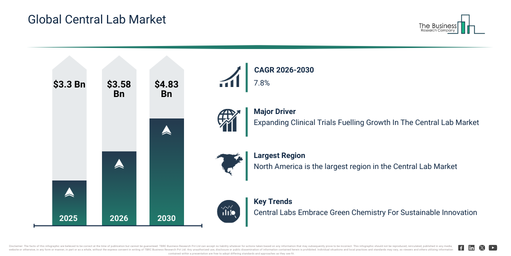
    The market for central laboratories has experienced robust expansion of late, with projections indicating continued growth from \$3.3 billion in 2025 to \$3.58 billion in 2026, reflecting a compound annual growth rate of 8.4%. Factors contributing to this upward trend during the preceding years include heightened clinical research endeavors, the escalating complexity inherent in clinical trial designs, a growing need for uniform laboratory data, the broadening scope of pharmaceutical research and development (R&D) pipelines, and advancements in laboratory informatics systems.

    The market for central laboratories is projected for substantial expansion over the coming years, reaching an estimated $4.83 billion by 2030, propelled by a compound annual growth rate of 7.8%. This anticipated upswing is fueled by several key factors, including escalating investments in precision medicine research, a heightened embrace of artificial intelligence within laboratory analytics, the broadening scope of decentralized clinical trials, a growing need for comprehensive laboratory services, and a more rigorous adherence to regulatory standards and data integrity. Key developments expected during this forecast period involve a greater reliance on centralized laboratory testing methodologies, increased uptake of sophisticated genetic and biomarker analysis services, the enhanced integration of digital systems for sample tracking, an expansion in support services for multi-site clinical trials, and a reinforced emphasis on data standardization and quality assurance protocols.

    Download A Free Sample Report For Comprehensive Market Insights:

    https://www.thebusinessresearchcompany.com/sample.aspx?id=7317&type=smp

    #Central Lab Market Demand Drivers Creating New Revenue Opportunities

    The increasing volume of clinical trials is anticipated to be a significant catalyst for the central laboratory market. Clinical trials, which are studies designed to assess the safety and efficacy of novel treatments, pharmaceuticals, or medical devices, necessitate specialized laboratory services. The pharmaceutical and biotechnology sectors frequently delegate the testing, development, and manufacturing aspects of their new products to central laboratories. Illustrating this trend, data from the Association of the British Pharmaceutical Industry revealed that the UK saw an increase in industry-initiated clinical trials, climbing from 411 in 2022 to 426 in 2023. Consequently, this expansion in clinical trial activity is poised to foster growth within the central lab market.

    Central Lab Market Segmentation: How Is The Market Structured Across Key Categories?

    The central lab market covered in this report is segmented –

    1) By Service Type: Genetic Services, Biomarker Services, Microbiology Services, Anatomic Pathology Or Histology, Specimen Management And Storage, Special Chemistry Services, Other Service Types

    2) By Test Type: Human And Tumor Genetics, Clinical Chemistry, Medical Microbiology And Cytology, Other Esoteric Tests

    3) By End-User: Pharmaceutical Companies, Academic And Research Institutes, Biotechnology Companies

    Subsegments:

    1) By Genetic Services: DNA Sequencing, Genotyping, Gene Expression Analysis

    2) By Biomarker Services: Biomarker Discovery, Biomarker Validation, Pharmacodynamic Biomarker Testing

    3) By Microbiology Services: Bacterial Identification And Susceptibility Testing, Virology Testing, Mycology And Parasitology Testing

    4) By Anatomic Pathology Or Histology: Tissue Sample Analysis, Immunohistochemistry (IHC), Slide Preparation and Staining

    5) By Specimen Management And Storage: Biorepository Services, Sample Collection And Handling, Long-Term Sample Storage

    6) By Special Chemistry Services: Toxicology Testing, Metabolomics, Hormonal Assays

    7) By Other Service Types: Hematology Testing, Coagulation Testing, Flow Cytometry Services

    Central Lab Market Trends Driving Strategic Industry Expansion

    Within the central laboratory sector, leading firms are prioritizing innovative advancements, notably embracing green chemistry principles to lessen ecological footprints. Green chemistry, in essence, involves creating chemical products and processes engineered to reduce or completely eschew the creation and application of dangerous compounds. As an illustration, PolyPeptide, a biopharmaceutical entity headquartered in Switzerland, inaugurated its Innovation Lab in May 2023 as a component of its broader strategic expansion plans. This dedicated space is committed to forefronting green chemistry, refining operational and analytical methodologies, and integrating digital solutions, all with the overarching goal of environmental impact mitigation. It serves as a nexus for cooperative efforts across its European, US, and Indian manufacturing locations, alongside external collaborators, thereby accelerating product advancement. Ultimately, this endeavor aims to bolster the company’s progress in innovation and solidify its position at the vanguard of technological development.

    Central Lab Market Competitive Landscape And Leading Companies

    Major companies operating in the central lab market are Celerion Inc., Cerba Research, Cirion Biopharma Research Inc., Clinical Reference Laboratory Inc., Eurofins Central Laboratory LLC, Frontage Laboratories Inc., Interlab Central Lab Services, InVitro International, LabConnect LLC, Labcorp Drug Development India Private Limited, Medpace Clinical Research India Private Limited, MLM Medical Labs GmbH, Q2 Solutions Pty Ltd., Sonic Healthcare Limited, Synevo Central Lab, Acm Global Laboratories Private Limited, Altasciences, Barc Lab, BioIVT LLC, ICON plc, Intertek, LabNow LLC, Medidata Solutions, NAMSA LLC, Neoteryx, Northwell Health Labs, PAREXEL International, Pharm-Olam LLC, Pharmaceutical Product Development, PRA Health Sciences, Quest Diagnostics, IQVIA Co., Rho Inc.

    Access The Complete Central Lab Market Report:

    https://www.thebusinessresearchcompany.com/report/central-lab-global-market-report

    Central Lab Market Geographic Landscape: Which Region Dominates Industry Growth?

    North Americawas the largest region in the central lab market in 2025. Asia-Pacificis expected to be the fastest-growing region in the forecast period. The regions covered in the central lab market report are Asia-Pacific, South East Asia, Western Europe, Eastern Europe, North America, South America, Middle East, Africa.

    Get in touch with us:

    The Business Research Company: https://www.thebusinessresearchcompany.com/

    Americas: +1 310-496-7795

    Asia: +44 7882 955267 & +91 8897263534

    Europe: +44 7882 955267

    Email us at: marketing@tbrc.info

    Follow us on:

    LinkedIn: https://in.linkedin.com/company/the-business-research-company

    YouTube: https://www.youtube.com/channel/UC24_fI0rV8cR5DxlCpgmyFQ

    Global Market Model: https://www.thebusinessresearchcompany.com/global-market-model
  • Central Fill Pharmacy Automation Market Expansion Is Opening New Pathways For Strategic Investment

    Central Fill Pharmacy Automation Market Expansion Is Opening New Pathways For Strategic Investment

    Enhanced with market attractiveness analysis, total addressable market evaluation, company benchmarking matrices, interactive Excel dashboards, expanded supply chain intelligence, emerging startup coverage, and detailed product insights, The Business Research Company’s 2026 market reports deliver more actionable and strategically valuable research.

    Central Fill Pharmacy Automation Market Size, Value And Growth Trends Through 2030

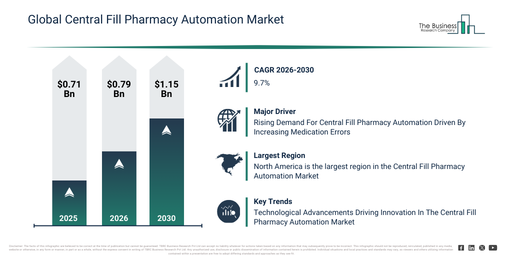
    The pharmacy automation sector, specifically focusing on central fill operations, has experienced significant expansion lately. Projections indicate a continued upward trajectory, with market value estimated to climb from $0.71 billion in 2025 to $0.79 billion by 2026, reflecting a compound annual growth rate of 11.5%. This preceding growth phase was propelled by several key factors including escalating prescription volumes, a heightened scarcity of pharmacy personnel, the broader reach of retail pharmacy networks, a greater emphasis on minimizing medication errors, and ongoing technological advancements within pharmacy automation.

    The market for centralized pharmacy automation is poised for substantial expansion, with projections indicating a rise to $1.15 billion by 2030, reflecting a compound annual growth rate of 9.7%. This anticipated growth stems from several key factors, including augmented investments in centralized pharmacy infrastructure, escalating demand for scalable fulfillment solutions, the broader integration of cloud-based pharmacy management systems, a heightened emphasis on operational efficiencies, and the increasing utilization of data analytics for medication management. Primary trends shaping this sector during the forecast period involve a greater prevalence of robotic prescription dispensing systems, a wider embrace of centralized medication fulfillment methodologies, enhanced integration of pharmacy workflow automation software, the proliferation of high-volume packaging and labeling systems, and a more pronounced concentration on ensuring medication accuracy and safety.

    Download A Free Sample Report For Comprehensive Market Insights:

    https://www.thebusinessresearchcompany.com/sample.aspx?id=15538&type=smp

    Central Fill Pharmacy Automation Market Expansion Supported By Key Demand Factors

    The increasing incidence of long-term health conditions is anticipated to be a significant driver for the expansion of the central fill pharmacy automation sector. Chronic illnesses, characterized by their gradual onset and persistent nature, often necessitate continuous medical attention and sustained medication regimens, exemplified by conditions like diabetes or cardiovascular ailments. The growing burden of these maladies fuels market expansion as a greater number of individuals require consistent prescription fulfillment, thereby increasing the demand for streamlined pharmacy dispensing technologies. Central fill pharmacy automation plays a crucial role in managing chronic diseases by effectively handling and distributing substantial quantities of ongoing prescriptions, thereby enhancing accuracy, minimizing dispensing mistakes, and facilitating punctual medication provision to patients. Illustratively, data from the Centers for Disease Control and Prevention (CDC) indicated that in 2023, a substantial 76.4% of US adults, totaling around 194 million individuals, lived with at least one chronic condition, with prevalence rates standing at 59.5% for young adults, 78.4% for middle-aged individuals, and a striking 93.0% for older adults. Consequently, this escalating prevalence of chronic diseases is directly contributing to the upward trajectory of the central fill pharmacy automation market.

    Central Fill Pharmacy Automation Market Segmentation Trends And Revenue Drivers

    The central fill pharmacy automation market covered in this report is segmented –

    1) By Product: Equipment, Software, Services

    2) By Vendor: Equipment Vendor, Consulting Vendor

    3) By Application: Inpatient Pharmacy, Outpatient Pharmacy, Retail Pharmacy, Other Applications

    Subsegments:

    1) By Equipment: Robotic Dispensing Systems, Automated Medication Storage Systems, Barcode Scanning Systems, Medication Counting Machines, Automated Labeling Systems, Packaging Systems, Other Pharmacy Automation Equipment

    2) By Software: Prescription Management Software, Inventory Management Software, Workflow Management Software, Data Analytics And Reporting Software, Medication Verification Software, Integration And Interoperability Software, Cloud-Based Software Solutions

    3) By Services: Installation And Configuration Services, Maintenance And Support Services, Consulting Services, Training Services, Managed Services, System Upgrades And Customization Services

    Central Fill Pharmacy Automation Market Growth Trends Influencing Competitive Dynamics

    In the competitive landscape of the central fill pharmacy automation sector, key players are prioritizing the creation of sophisticated, technologically driven offerings, exemplified by the emergence of cloud-based pharmacy automation as a strategy for market differentiation. This approach leverages cloud computing infrastructure to streamline and oversee the intricate processes of pharmacy management. Illustrating this trend, Innovation Associates Inc., a prominent US firm specializing in high-volume pharmacy automation technology and software, unveiled Shared Central Fulfillment in February 2024. This innovative cloud-based platform empowers pharmacy fulfillment proprietors to extend centralized prescription processing capabilities to a network of pharmacy affiliates, all managed from a singular fulfillment hub. The system is engineered to foster a more sustainable professional setting for pharmacy providers, thereby elevating the pharmacist’s contribution to the broader healthcare system. Its design facilitates both extensive and modest pharmacy operations, unlocking the benefits of central fill capabilities and broadening prescription fulfillment services across diverse pharmacy partnerships from a unified operational base.

    #Central Fill Pharmacy Automation Market Industry Leaders: Which Organizations Are Driving Competition?

    Major companies operating in the central fill pharmacy automation market are McKesson Corporation, Cencora Inc., Cardinal Health Inc., Becton Dickinson and Company, Kuka AG, J M Smith Corporation, Omnicell Inc., Swisslog Healthcare, Parata Systems LLC, ScriptPro LLC, PBA Health, Capsa Healthcare, Cornerstone Automation Systems LLC, ARxIUM Inc., Talyst LLC, Kirby Lester, Quality Manufacturing Systems Inc., R/X Automation Solutions, RxSafe LLC, Innovation Associates Inc.

    Access The Complete Central Fill Pharmacy Automation Market Report:

    https://www.thebusinessresearchcompany.com/report/central-fill-pharmacy-automation-global-market-report

    #Central Fill Pharmacy Automation Market Largest Region: Which Geography Holds The Highest Market Share?

    North Americawas the largest region in the central fill pharmacy automation market in 2025. Asia-Pacificis expected to be the fastest-growing region in the forecast period. The regions covered in the central fill pharmacy automation market report are Asia-Pacific, South East Asia, Western Europe, Eastern Europe, North America, South America, Middle East, Africa.

    Get in touch with us:

    The Business Research Company: https://www.thebusinessresearchcompany.com/

    Americas: +1 310-496-7795

    Asia: +44 7882 955267 & +91 8897263534

    Europe: +44 7882 955267

    Email us at: marketing@tbrc.info

    Follow us on:

    LinkedIn: https://in.linkedin.com/company/the-business-research-company

    YouTube: https://www.youtube.com/channel/UC24_fI0rV8cR5DxlCpgmyFQ

    Global Market Model: https://www.thebusinessresearchcompany.com/global-market-model
  • Cellulite Treatment Market Trends Are Creating New Opportunities For Industry Leaders

    Cellulite Treatment Market Trends Are Creating New Opportunities For Industry Leaders

    Through market attractiveness analysis, total addressable market evaluation, company benchmarking matrices, interactive Excel dashboards, expanded supply chain intelligence, emerging startup coverage, and detailed product insights, The Business Research Company’s 2026 market reports provide more actionable and strategically valuable research.

    Cellulite Treatment Market CAGR Analysis And Future Market Development

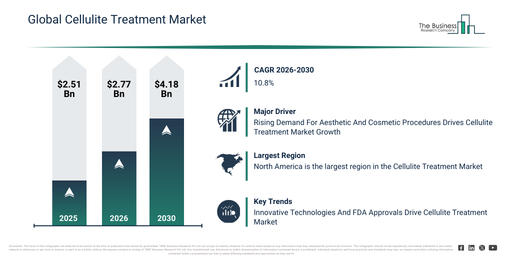
    The market for cellulite treatments has experienced a significant expansion recently, projecting a leap from $2.51 billion in 2025 to $2.77 billion in 2026, fueled by a compound annual growth rate of 10.6%. Factors contributing to this historical growth trajectory include heightened consumer consciousness regarding aesthetics, a surge in disposable income, greater accessibility to dermatological cosmetic services, a proliferation of medical spa establishments, and technological innovations in aesthetic procedures.

    The cellulite treatment sector anticipates a swift expansion in the forthcoming years, projected to reach a value of $4.18 billion by 2030, driven by a compound annual growth rate of 10.8%. This upward trajectory is fueled by several key factors, including a greater inclination towards cosmetic interventions that require minimal invasiveness, a heightened emphasis on achieving tailored aesthetic results, the progressive development and uptake of sophisticated laser and radiofrequency treatments, a growing acceptance of aesthetic devices designed for home use, and the escalating impact of online beauty platforms. Furthermore, during this forecast period, significant trends will emerge, such as a mounting demand for cellulite reduction methods that are non-invasive, increased utilization of energy-based therapeutic devices, a clear preference for therapeutic strategies that combine different modalities, the proliferation of topical treatments for home application, and a more concentrated effort on delivering personalized aesthetic solutions.

    Download A Free Sample Report For Comprehensive Market Insights:

    https://www.thebusinessresearchcompany.com/sample.aspx?id=12011&type=smp

    #Cellulite Treatment Market Growth Drivers And Industry Catalysts

    The cellulite treatment market is poised for expansion, largely fueled by a growing consumer interest in aesthetic and cosmetic procedures. These interventions, distinct from medical treatments aimed at health or bodily function, focus on enhancing a person’s appearance. Cellulite treatments, specifically targeting the dimpled or bumpy skin texture often found on the thighs, buttocks, hips, and abdomen, fall under this cosmetic umbrella. As an indicator of the broader aesthetic trend, Align Technology, Inc. reported in Q1 2025 that clear aligner volumes reached 642.3 thousand cases, representing a 2.2% sequential rise and a 6.2% year-over-year increase. This demonstrates a broader upward trajectory in demand for procedures that improve appearance, consequently boosting the market for cellulite therapies.

    Cellulite Treatment Market Segment Analysis Highlighting Growth Areas

    The cellulite treatment market covered in this report is segmented –

    1) By Procedure: Non-Invasive, Minimally Invasive, Topical

    2) By Cellulite Type: Soft, Hard, Edematous

    3) By End User: Hospitals, Cosmetic Surgery Centers, Specialized Dermatology Clinics

    Subsegments:

    1) By Non-Invasive: Laser Therapy, Radiofrequency Treatments, Ultrasound Therapy, Cryolipolysis

    2) By Minimally Invasive: Subcision, Cellfina, Liposuction-assisted Techniques

    3) By Topical: Creams And Lotions, Gels And Serums, Supplements

    #Cellulite Treatment Market Trends Influencing Long-Term Demand

    Leading players in the cellulite treatment sector are prioritizing the acquisition of regulatory clearance for cutting-edge technologies like the Cellution device, seeking to meet pressing industry needs. This specialized equipment facilitates the collection, refinement, and preparation of a patient’s endogenous cells for therapeutic applications such as fat augmentation or stem cell interventions. Illustrating this trend, DELEO, a manufacturer based in France, introduced the Cellution device to the United Kingdom in May 2024, presenting it as a groundbreaking, non-surgical method for cellulite management. Unveiled at a London gathering on April 25, 2024, the Cellution system integrates four sophisticated technologies: high-intensity focused diodes (HIFD), mechanical massage, potent dermo-cosmetic agents, and radial vibration waves, thereby delivering a holistic strategy for cellulite remediation. Esteemed professionals in the field, including Dr. Rita Rakus, have commended the device for its proven safety and efficacy. The Cellution device is slated for distribution through select aesthetic practices throughout the UK, with the objective of enhancing user self-assurance and aiding individuals in attaining their aesthetic aspirations via pioneering therapeutic interventions.

    Cellulite Treatment Market Leading Companies: Who Holds Significant Market Presence?

    Major companies operating in the cellulite treatment market are Merz Pharma GmbH & Co. KGaA, Lumenis Ltd, Cynosure Inc., ZELTIQ Aesthetics, BTL Industries Inc., Cutera Inc., Candela Corporation, Zimmer Aesthetics, Venus Concept, Solta Medical, LPG Systems, Fotona d.o.o., Viora Ltd., SharpLight Technologies Inc., Alma Lasers Ltd., Beijing Nubway S&T Co Ltd, Ellipse A/S, Lynton Lasers Ltd., EndyMed Medical Ltd., VIP Italia, Cellfina, Pollogen Ltd, Cosmetic Laser Solutions MedSpa, LipoTherapeia, Tanceuticals LLC, Synergy MedAesthetics, Asclepion Laser Technologies GmbH

    Access The Complete Cellulite Treatment Market Report:

    https://www.thebusinessresearchcompany.com/report/cellulite-treatment-global-market-report

    Cellulite Treatment Market Regional Analysis: Which Region Leads By Revenue?

    North Americawas the largest region in the cellulite treatment market in 2025. The regions covered in the cellulite treatment market report are Asia-Pacific, South East Asia, Western Europe, Eastern Europe, North America, South America, Middle East, Africa.

    Get in touch with us:

    The Business Research Company: https://www.thebusinessresearchcompany.com/

    Americas: +1 310-496-7795

    Asia: +44 7882 955267 & +91 8897263534

    Europe: +44 7882 955267

    Email us at: marketing@tbrc.info

    Follow us on:

    LinkedIn: https://in.linkedin.com/company/the-business-research-company

    YouTube: https://www.youtube.com/channel/UC24_fI0rV8cR5DxlCpgmyFQ

    Global Market Model: https://www.thebusinessresearchcompany.com/global-market-model