Month: June 2026

  • Artificial Intelligence (AI)-Generated Voice Therapy Exercise Market Expansion Is Opening New Pathways For Strategic Investment

    Artificial Intelligence (AI)-Generated Voice Therapy Exercise Market Expansion Is Opening New Pathways For Strategic Investment

    Through market attractiveness analysis, total addressable market evaluation, company benchmarking matrices, interactive Excel dashboards, expanded supply chain intelligence, emerging startup coverage, and detailed product insights, The Business Research Company’s 2026 market reports provide more actionable and strategically valuable research.

    Artificial Intelligence (AI)-Generated Voice Therapy Exercise Market CAGR Analysis And Future Market Development

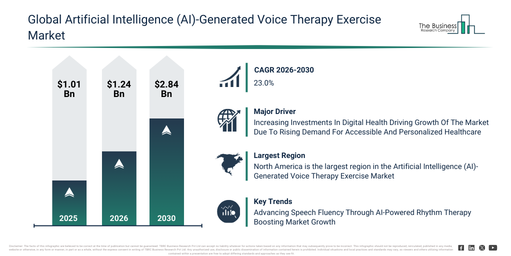
    Driven by a confluence of factors, the market for AI-enabled voice therapy exercises has experienced significant expansion. Projections indicate a robust upward trajectory, with the market valuation set to increase from $1.01 billion in 2025 to $1.24 billion in 2026, reflecting a compound annual growth rate of 23.3%. This remarkable growth trend in the preceding period was fueled by a heightened incidence of speech and voice-related impediments, the broadening reach of teletherapy solutions, a discernible scarcity of qualified speech therapists, increasing adoption of digital health interventions, and continuous enhancements in the precision of speech recognition technologies.

    The market for AI-powered voice therapy solutions is poised for substantial expansion over the coming years, projected to reach $2.84 billion by 2030 With a compound annual growth rate of 23.0%, this upward trajectory is fueled by several key factors including a heightened need for at-home speech therapy services, the escalating incorporation of artificial intelligence within rehabilitation programs, and the proliferation of voice therapy options catering to diverse languages Furthermore, the increasing adoption of immersive therapeutic tools and ongoing progress in customized digital rehabilitation approaches are significant drivers behind this anticipated growth Major developments expected during this period encompass the growing utilization of adaptive algorithms for voice therapy, the wider implementation of systems providing immediate speech feedback, a surge in the adoption of tools for remote speech rehabilitation, expanded capabilities in generating personalized therapy content, and a greater emphasis on keeping patients engaged with their recovery outside of clinical settings.

    Download A Free Sample Report For Comprehensive Market Insights:

    https://www.thebusinessresearchcompany.com/sample.aspx?id=28134&type=smp

    Artificial Intelligence (AI)-Generated Voice Therapy Exercise Market Expansion Drivers: What Is Shaping Future Growth?

    Anticipated surges in digital health funding are poised to significantly boost the market for AI-powered voice therapy exercises. This expansion of investment in digital health signifies a commitment to technological solutions aimed at improving public health, facilitating medical access, and managing health conditions effectively. The growing consumer desire for more convenient healthcare options fuels this surge, encouraging the development of remote and tailored health interventions. AI-driven voice therapy exercises further amplify digital health investments by presenting speech and cognitive rehabilitation solutions that are not only scalable and personalized but also economically viable, thereby fostering increased acceptance and trust in technological advancements within the healthcare sector. As an illustration, a report from FierceHealthcare in January 2025 highlighted that digital health venture capital reached $10.1 billion in 2024, with investors shifting their focus to earlier-stage transactions. Consequently, the escalating financial commitments to digital health are acting as a primary catalyst for the expansion of the AI-generated voice therapy exercise market.

    Artificial Intelligence (AI)-Generated Voice Therapy Exercise Market Segments: Where Are The Largest Growth Opportunities?

    The artificial intelligence (AI)-generated voice therapy exercise market covered in this report is segmented –

    1) By Component: Software, Hardware, Services

    2) By Deployment Mode: Cloud Based, On Premises

    3) By Application: Speech Rehabilatation, Accent Modification, Voice Training, Stuttering Therapy, Other Applications

    4) By End-User: Hospitals And Clinics, Rehabilatation Centres, Academic And Research Institutes, Homecare, Other End-Users

    Subsegments:

    1) By Software: Mobile Applications, Web-Based Platforms, Artificial Intelligence (AI) Speech Recognition Tools, Virtual Assistants, Cloud-Based Solutions

    2) By Hardware: Microphones, Headsets, Smart Speakers, Wearable Devices, Augmented Reality (AR) Or Virtual Reality (VR) Devices

    3) By Services: Training And Education, Consulting And Integration, Support And Maintenance, Remote Therapy Services, Data Management And Security

    Artificial Intelligence (AI)-Generated Voice Therapy Exercise Market Strategic Trends: What Is Defining The Next Phase Of Growth?

    Leading players within the artificial intelligence (AI) voice therapy market are prioritizing innovation, particularly in the realm of AI-driven rhythm therapy that utilizes wearable haptic feedback to enhance speech fluency for individuals experiencing speech disorders. This advanced therapy employs natural language processing (NLP) to deconstruct spoken language, translating it into rhythmic vibrations delivered to the user’s wrist. These vibrations function as an unobtrusive, neural metronome, gently guiding individuals toward more fluid speech. As an illustration, in April 2024, Samsung Electronics, a prominent South Korean electronics firm, introduced the Impulse application. This complimentary application, compatible with Android and the Galaxy Watch6, converts speech into rhythmic haptic feedback on the wrist, incorporating over 250 progression-tailored rhythm and tone exercises designed to refine articulation and fluency. It achieves this by offering immediate tactile pacing to improve speech, fostering greater confidence through its subtle support, and making rhythm therapy readily available on demand, thereby serving as a valuable aid for those affected by speech impairments.

    Artificial Intelligence (AI)-Generated Voice Therapy Exercise Market Major Participants And Competitive Dynamics

    Major companies operating in the artificial intelligence (AI)-generated voice therapy exercise market are Directly Relevant Companies (15): Hume AI Inc., Voiceitt Ltd., CereProc Ltd., Speechly Inc., Vocal Image OÜ, BetterSpeech Inc., TalkForce AI Inc., TheraPlatform Inc., SpeechVive Inc., Whispp Inc., Vocal Trainer AI Voices Inc., Vocalis Health Inc., Aphasia.ai Inc., Elvo AI Inc., Speechzella Inc., Lingraphica, SpeechAce, Tactus Therapy Solutions, Speechmatics, Sonde Health

    Access The Complete Artificial Intelligence (AI)-Generated Voice Therapy Exercise Market Report:

    https://www.thebusinessresearchcompany.com/report/artificial-intelligence-ai-generated-voice-therapy-exercise-global-market-report

    Artificial Intelligence (AI)-Generated Voice Therapy Exercise Market Largest Region By Revenue And Market Share

    North Americawas the largest region in the artificial intelligence (AI)-generated voice therapy exercise market in 2025. Asia-Pacific is expected to be the fastest-growing region in the forecast period. The regions covered in the artificial intelligence (AI)-generated voice therapy exercise market report are Asia-Pacific, South East Asia, Western Europe, Eastern Europe, North America, South America, Middle East, Africa.

    Get in touch with us:

    The Business Research Company: https://www.thebusinessresearchcompany.com/

    Americas: +1 310-496-7795

    Asia: +44 7882 955267 & +91 8897263534

    Europe: +44 7882 955267

    Email us at: marketing@tbrc.info

    Follow us on:

    LinkedIn: https://in.linkedin.com/company/the-business-research-company

    YouTube: https://www.youtube.com/channel/UC24_fI0rV8cR5DxlCpgmyFQ

    Global Market Model: https://www.thebusinessresearchcompany.com/global-market-model

  • Artificial Intelligence (AI)-Generated Surgical Prep Checklist Market Trends Are Creating New Opportunities For Industry Leaders

    Artificial Intelligence (AI)-Generated Surgical Prep Checklist Market Trends Are Creating New Opportunities For Industry Leaders

    Delivering more actionable and strategically valuable research, The Business Research Company’s 2026 market reports feature market attractiveness analysis, total addressable market evaluation, company benchmarking matrices, interactive Excel dashboards, expanded supply chain intelligence, emerging startup coverage, and detailed product insights.

    Artificial Intelligence (AI)-Generated Surgical Prep Checklist Market Expansion From $2.42 Billion In 2026 To $5.45 Billion In 2030

    The market for AI-powered surgical preparation checklists has experienced substantial expansion recently, projected to escalate from $1.98 billion in 2025 to $2.43 billion in 2026, reflecting a compound annual growth rate of 22.7%. This growth trajectory during the previous period was fueled by a heightened focus on safety measures during surgery, the increasing integration of digital healthcare systems, a rise in the number of surgical interventions, broader implementation of automated clinical processes, and a greater emphasis on meticulous documentation for regulatory adherence.

    The market for AI-powered surgical preparation checklists is poised for significant expansion, projected to reach $5.46 billion by 2030, exhibiting a robust compound annual growth rate of 22.4%. This accelerated trajectory is fueled by several key factors, including the evolution of AI in clinical decision support, increased investment in smart operating room technologies, a surging demand for tools that streamline surgical workflows, the broader adoption of cloud-based surgical platforms, and the growing incorporation of predictive analytics into surgical practices. During this forecast period, notable trends include a greater reliance on AI-enhanced preoperative checklists, deeper integration with existing surgical workflow systems, a rise in the adoption of predictive tools for identifying patient risks, the expansion of real-time monitoring for surgical readiness, and an intensified emphasis on solutions designed to minimize errors.

    Download A Free Sample Report For Comprehensive Market Insights:

    https://www.thebusinessresearchcompany.com/sample.aspx?id=28925&type=smp

    Artificial Intelligence (AI)-Generated Surgical Prep Checklist Market Development Factors: Which Trends Are Supporting Demand?

    Anticipated increases in surgical procedures are poised to stimulate advancement within the market for AI-created surgical preparation checklists. This surge in surgical activity, defined by the annual count of operations undertaken in medical establishments, is largely attributed to an aging demographic whose members necessitate a greater number of surgical interventions for age-related ailments including joint replacements, cardiovascular operations, and oncological therapies. AI-powered surgical preparation checklists contribute to managing this volume by streamlining pre-operative processes and minimizing postponements, thereby ensuring swifter and more accurate preparations and empowering healthcare facilities to execute procedures with enhanced efficiency. Illustratively, data from the American Society of Plastic Surgeons, a professional body in the United States, indicated in June 2024 that liposuction remained the preeminent cosmetic surgery in 2023, with approximately 350,000 interventions performed, representing a 7% rise from the previous year. Consequently, the escalation in surgical volumes is a primary catalyst for the expanding market in AI-generated surgical prep checklists.

    Artificial Intelligence (AI)-Generated Surgical Prep Checklist Market Segment Analysis: What Are The Major Market Categories?

    The artificial intelligence (AI)-generated surgical prep checklist market covered in this report is segmented –

    1) By Component: Software, Services

    2) By Deployment Mode: Cloud-Based, On-Premises

    3) By Application: Hospitals, Ambulatory Surgical Centers, Specialty Clinics, Other Applications

    4) By End-User: Healthcare Providers, Surgeons, Nurses, Other End-Users

    Subsegments:

    1) By Software: Checklist Management Platforms, Data Analytics Modules, Integration Interfaces, User Dashboard Systems, Compliance Tracking Tools, Workflow Optimization Solutions

    2) By Services: Implementation Services, Training And Support Services, Consultation Services, Maintenance Services, System Upgradation Services, Workflow Customization Services

    Artificial Intelligence (AI)-Generated Surgical Prep Checklist Market Transformation Trends: Which Innovations Are Driving Change?

    Leading players within the market for AI-driven surgical preparation checklists are concentrating on the creation of sophisticated offerings, such as intelligent operational assistants designed to improve automated processes, streamline operations, and oversee surgical readiness. These AI operational assistants function as smart digital entities employing natural language processing, machine learning, and forecasting techniques to autonomously handle administrative and organizational responsibilities. This facilitates functions like immediate data retrieval, pinpointing patient vulnerabilities, and the automated sequencing of operational flows. As an illustration, in January 2025, Qventus, an American company specializing in AI-driven care automation software for healthcare organizations, introduced its Perioperative Care Coordination (PCC) system. This AI-enabled system is engineered to lessen the administrative workload for healthcare professionals, especially those in pre-admission testing, by deploying AI assistants capable of managing patient documentation, orchestrating communications, and flagging potential issues. The PCC system contributes to a reduction in avoidable surgery postponements by as much as 40%, boosts the effectiveness of care teams by 50%, and refines the processes for patient preparation and post-operative follow-up. Developed in collaboration with prominent healthcare networks, it promises improved surgical results and substantial financial benefits for medical facilities.

    Artificial Intelligence (AI)-Generated Surgical Prep Checklist Market Leading Companies Driving Competitive Growth

    Major companies operating in the artificial intelligence (AI)-generated surgical prep checklist market are Medtronic plc, Olympus Corporation, Fortive Corporation, Epic Systems Corporation, Health Catalyst Inc., LeanTaaS Holdings Inc., Connecteam, One Mnet Health, Qventus Inc., Caresyntax Inc., Surgical Safety Technologies Inc., PeekMed S.A., Buddy Healthcare Ltd., Asensus Surgical Inc., DocSpera Inc., Force Therapeutics Inc., SeamlessMD Inc., Calcium Inc., Preop.ai Inc., Hoopcare Technologies Pvt. Ltd.

    Access The Complete Artificial Intelligence (AI)-Generated Surgical Prep Checklist Market Report:

    https://www.thebusinessresearchcompany.com/report/artificial-intelligence-ai-generated-surgical-prep-checklist-global-market-report

    Artificial Intelligence (AI)-Generated Surgical Prep Checklist Market Regional Analysis And Leading Geography

    North Americawas the largest region in the artificial intelligence (AI)-generated surgical prep checklist market in 2025. Asia-Pacificis expected to be the fastest-growing region in the forecast period. The regions covered in the artificial intelligence (AI)-generated surgical prep checklist market report are Asia-Pacific, South East Asia, Western Europe, Eastern Europe, North America, South America, Middle East, Africa.

    Get in touch with us:

    The Business Research Company: https://www.thebusinessresearchcompany.com/

    Americas: +1 310-496-7795

    Asia: +44 7882 955267 & +91 8897263534

    Europe: +44 7882 955267

    Email us at: marketing@tbrc.info

    Follow us on:

    LinkedIn: https://in.linkedin.com/company/the-business-research-company

    YouTube: https://www.youtube.com/channel/UC24_fI0rV8cR5DxlCpgmyFQ

    Global Market Model: https://www.thebusinessresearchcompany.com/global-market-model
  • Artificial Intelligence (AI)-Generated Personalized Medical Reminder Market Growth Is Reshaping Competitive Advantage Across The Industry

    Artificial Intelligence (AI)-Generated Personalized Medical Reminder Market Growth Is Reshaping Competitive Advantage Across The Industry

    Enhanced with market attractiveness analysis, total addressable market evaluation, company benchmarking matrices, interactive Excel dashboards, expanded supply chain intelligence, emerging startup coverage, and detailed product insights, The Business Research Company’s 2026 market reports deliver more actionable and strategically valuable research.

    Artificial Intelligence (AI)-Generated Personalized Medical Reminder Market Forecast Highlighting Growth From $2.01 Billion To $4.44 Billion

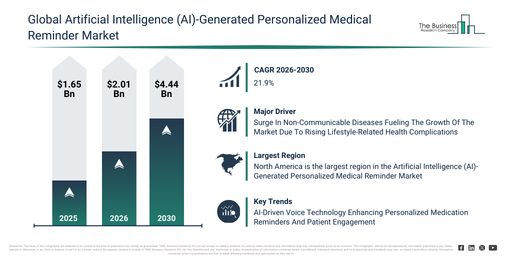
    The global market for AI-powered personalized medical reminders has experienced remarkable expansion lately, projecting a significant increase from $1.65 billion in 2025 to $2.01 billion in 2026, demonstrating a compound annual growth rate of 22.2%. Factors contributing to this growth trajectory during the past period include the escalating incidence of chronic health conditions, a greater adoption of smartphones for health management, the increasing acceptance of digital health innovations, the proliferation of remote patient monitoring initiatives, and a heightened emphasis on ensuring consistent medication adherence.

    The market for AI-crafted personalized medical reminders is poised for significant expansion, projecting a valuation of $4.44 billion by 2030, with a compound annual growth rate of 21.9%. This projected surge is fueled by advancements in AI health algorithm precision, a heightened consumer interest in tailored healthcare approaches, the broader availability of cloud-based health services, increased connectivity with digital patient records, and a greater embrace of proactive health monitoring tools. Key developments anticipated during this period involve a greater uptake of AI-powered systems for ensuring medication compliance, more profound integration of wearable technology and smart devices, expanded application of predictive data analysis to refine reminder effectiveness, further development of customized health alert systems, and an intensified emphasis on features designed to boost patient involvement.

    Download A Free Sample Report For Comprehensive Market Insights:

    https://www.thebusinessresearchcompany.com/sample.aspx?id=28924&type=smp

    Artificial Intelligence (AI)-Generated Personalized Medical Reminder Market Industry Drivers: What Is Driving Revenue Growth?

    The escalating prevalence of chronic, non-infectious diseases is poised to be a significant catalyst for the expansion of the artificial intelligence (AI) driven personalized medical reminder market. These conditions, often termed non-communicable diseases (NCDs), are chronic ailments not transmissible between individuals, and their increase is largely attributed to increasingly sedentary lifestyles. A lack of consistent physical activity progressively impairs the body’s capacity for effective regulation of weight, blood pressure, and metabolic processes, ultimately contributing to lingering health challenges. AI-powered personalized medical reminders offer a crucial support mechanism for managing NCDs, delivering timely notifications for medication schedules, necessary lifestyle modifications, and essential follow-up appointments. This proactive approach fosters enhanced patient adherence to therapeutic regimens, leading to improved long-term health trajectories. As a concrete illustration of this trend, the World Health Organization, headquartered in Switzerland, projected in February 2024 that new cancer diagnoses worldwide would exceed 35 million by 2050, marking a substantial 77% surge from the approximately 20 million cases identified in 2022. Consequently, the growing weight of non-communicable diseases is directly fueling the advancement of the AI-generated personalized medical reminder sector.

    Artificial Intelligence (AI)-Generated Personalized Medical Reminder Market Segment Breakdown: Which Categories Generate The Most Revenue?

    The artificial intelligence (AI)-generated personalized medical reminder market covered in this report is segmented –

    1) By Component: Software, Hardware, Services

    2) By Deployment Mode: Cloud-Based, On-Premises

    3) By Application: Medication Adherence, Chronic Disease Management, Elderly Care, Remote Patient Monitoring, Other Applications

    4) By End-User: Hospitals And Clinics, Homecare, Pharmacies, Individuals, Other End-Users

    Subsegments:

    1) By Software: Mobile Applications, Web-Based Platforms, Cloud-Based Solutions, Integrated Healthcare Systems, Artificial Intelligence Algorithms

    2) By Hardware: Smart Wearable Devices, Smart Speakers, Voice Assistants, Smartwatches, Medication Dispensers

    3) By Services: Installation And Integration Services, Maintenance And Support Services, Training And Consultation Services, Data Analytics And Monitoring Services, Personalization And Customization Services

    #Artificial Intelligence (AI)-Generated Personalized Medical Reminder Market Growth Trends: What Is Influencing The Future Outlook?

    Within the burgeoning market for AI-powered personalized medical reminders, leading enterprises are concentrating their efforts on advancing voice-enabled technologies, specifically integrating AI-driven voice assistants to facilitate prompt medication adherence notifications and elevate patient involvement. These sophisticated AI voice assistants leverage artificial intelligence capabilities to comprehend, process, and react to vocal instructions, thereby furnishing immediate directions, reminders, and interactive assistance for managing health and performing tasks without manual intervention. As a notable development, in April of 2025, Medisafe International, a prominent US-based entity in the medical device sector, introduced its sophisticated AI-equipped voice assistant, the Voice Intelligent Agent (VIA). This technological breakthrough is engineered to bridge a substantial $5 billion patient support deficit within the pharmaceutical realm by optimizing patient interaction and empowering specialized brands to more successfully onboard, engage, and retain individuals through tailored, intelligent dialogues, marking a crucial advancement in bolstering patient compliance and support throughout their treatment regimens.

    Artificial Intelligence (AI)-Generated Personalized Medical Reminder Market Key Players And Strategic Industry Positioning

    Major companies operating in the artificial intelligence (AI)-generated personalized medical reminder market are Google LLC, Microsoft Corporation, Oracle Corporation, Philips Healthcare, Otsuka Holdings Co. Ltd., Garmin Ltd., Teladoc Health Inc., Veradigm LLC, Tempus AI Inc., Merative LLC, MedMinder Systems Inc., MedAdvisor Ltd., Artera Services LLC, Medisafe Inc., AdhereTech Inc., CarePredict Inc., AiCure Inc., WatchMinder Company, Pivotell Ltd., CareClinic.

    Access The Complete Artificial Intelligence (AI)-Generated Personalized Medical Reminder Market Report:

    https://www.thebusinessresearchcompany.com/report/artificial-intelligence-ai-generated-personalized-medical-reminder-global-market-report

    Artificial Intelligence (AI)-Generated Personalized Medical Reminder Market Geographic Analysis: Where Is Demand Growing The Fastest?

    North Americawas the largest region in the artificial intelligence (AI)-generated personalized medical reminder market in 2025. Asia-Pacificis expected to be the fastest-growing region in the forecast period. The regions covered in the artificial intelligence (AI)-generated personalized medical reminder market report are Asia-Pacific, South East Asia, Western Europe, Eastern Europe, North America, South America, Middle East, Africa.

    Get in touch with us:

    The Business Research Company: https://www.thebusinessresearchcompany.com/

    Americas: +1 310-496-7795

    Asia: +44 7882 955267 & +91 8897263534

    Europe: +44 7882 955267

    Email us at: marketing@tbrc.info

    Follow us on:

    LinkedIn: https://in.linkedin.com/company/the-business-research-company

    YouTube: https://www.youtube.com/channel/UC24_fI0rV8cR5DxlCpgmyFQ

    Global Market Model: https://www.thebusinessresearchcompany.com/global-market-model
  • Artificial Intelligence (AI)-Generated Personalized Bipolar Management Plan Market Forecast Signals New Revenue Opportunities Through 2030

    Artificial Intelligence (AI)-Generated Personalized Bipolar Management Plan Market Forecast Signals New Revenue Opportunities Through 2030

    Through market attractiveness analysis, total addressable market evaluation, company benchmarking matrices, interactive Excel dashboards, expanded supply chain intelligence, emerging startup coverage, and detailed product insights, The Business Research Company’s 2026 market reports provide more actionable and strategically valuable research.

    Artificial Intelligence (AI)-Generated Personalized Bipolar Management Plan Market Revenue Growth Supported By A CAGR Of 5.19% Through 2030

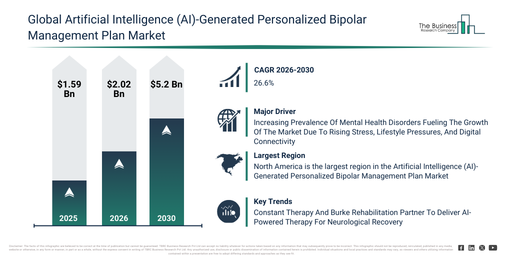
    The market for AI-driven, tailored plans to manage bipolar disorder has experienced remarkable expansion, projecting a rise from $1.59 billion in 2025 to $2.02 billion in 2026, representing a substantial compound annual growth rate of 26.9%. This upward trajectory in the historical period is fueled by several key factors, including a greater number of bipolar disorder diagnoses, the increasing integration of digital mental health solutions, a broader reach of telepsychiatry, the greater accessibility of patient health information, and advancements in machine learning analytical capabilities.

    An accelerating expansion is anticipated for the market concerning AI-driven personalized bipolar disorder management solutions, projecting a surge to $5.2 billion by 2030, fueled by a compound annual growth rate of 26.6%. This upward trajectory is propelled by several key factors, including a heightened need for individualized mental health interventions, augmented investments in AI technologies designed to aid clinical decisions, the broadening scope of remote psychiatric monitoring capabilities, a greater emphasis on psychiatric prevention strategies, and ongoing progress in the field of predictive healthcare analytics. During this projected timeframe, significant market currents are expected to manifest as the increasing adoption of AI for analyzing mood fluctuations, the wider application of predictive models for identifying potential relapses, deeper integration with electronic health record systems, the development of more sophisticated tools for tailoring therapeutic adjustments, and a reinforced commitment to achieving sustained mental wellness.

    Download A Free Sample Report For Comprehensive Market Insights:

    https://www.thebusinessresearchcompany.com/sample.aspx?id=28133&type=smp

    #Artificial Intelligence (AI)-Generated Personalized Bipolar Management Plan Market Growth Factors: Which Forces Are Supporting Market Expansion?

    The AI-generated personalized bipolar management plan market is anticipated to expand due to the escalating occurrence of mental health conditions, which encompass afflictions that profoundly impact an individual’s emotional state, cognitive processes, behavior, and general psychological function. Factors such as heightened stress stemming from contemporary lifestyles, encompassing occupational demands, social detachment, and pervasive digital engagement, contribute to the rise in these disorders. AI-driven personalized bipolar management plans offer a significant advantage in addressing mental health challenges by furnishing customized therapeutic strategies, thereby aligning perfectly with the needs of individualized patient care and diminishing diagnostic uncertainty through ongoing surveillance and foresight capabilities, ultimately enhancing therapeutic efficacy and overall patient welfare; a case in point being the American Psychiatric Association’s report from May 2024, indicating that 43% of American adults experienced increased anxiety compared to the previous year, a rise from 37% in 2023 and 32% in 2022, underscoring the market’s growth trajectory driven by the increasing prevalence of mental health issues.

    Artificial Intelligence (AI)-Generated Personalized Bipolar Management Plan Market Segmentation: How Is The Market Structured Across Key Categories?

    The artificial intelligence (AI)-generated personalized bipolar management plan market covered in this report is segmented –

    1) By Component: Software, Services

    2) By Deployment Mode: Cloud-Based, On-Premises

    3) By Application: Clinical Management, Remote Monitoring, Patient Engagement, Decision Support, Other Applications

    4) By End-User: Hospitals And Clinics, Mental Health Centers, Homecare Settings, Other End Users

    Subsegments:

    1) By Software: Clinical Decision Support Systems (CDSS), Mobile And Web Applications, Artificial Intelligence (AI) Algorithms And Predictive Analytics Tools, Electronic Health Record (EHR) Integration Modules, Remote Monitoring Platforms

    2) By Services: Implementation And Integration Services, Training And Education Services, Consulting Services, Maintenance And Support Services, Data Management And Security Services

    Artificial Intelligence (AI)-Generated Personalized Bipolar Management Plan Market Industry Trends: What Changes Are Reshaping Demand?

    Leading entities within the market for AI-crafted personalized bipolar disorder management strategies are concentrating their efforts on pioneering sophisticated offerings, exemplified by AI-powered mental well-being applications designed for tailored therapies, mood surveillance, anticipating setbacks, and facilitating superior patient care. These AI-mechanized mental health applications represent digital instruments that employ artificial intelligence to observe psychological states, customize interventions, forecast potential relapses, and bolster evidence-based medical judgments. As an illustration, in May of 2024, JD Health International Inc., a healthcare enterprise headquartered in China, introduced the Small Universe for Chatting and Healing, an innovative AI-driven platform dedicated to mental wellness. This particular platform harnesses JD Health’s proprietary large language model (LLM) specifically engineered for the healthcare domain, ensuring interactions that are not only considerate and rational but also uniquely suited to each individual, thereby allowing for ongoing observation and control of bipolar disorder manifestations. Furthermore, the platform incorporates diagnostic instruments capable of handling multiple data types for healthcare practitioners and licensed software for sleep analysis, ensuring precise evaluations.

    Artificial Intelligence (AI)-Generated Personalized Bipolar Management Plan Market Competitive Landscape And Leading Companies

    Major companies operating in the artificial intelligence (AI)-generated personalized bipolar management plan market are JD Health International Inc., Cerebral Inc., Merative US L.P., Headspace Inc., Talkspace Inc., Quartet Health Inc., NUE Life Health P.A., Woebot Health Inc., Koa Health B.V., Mindstrong Health Inc., Altimate Health Inc., SilverCloud Health Limited, Pear Therapeutics Inc., Wysa Ltd., Youper Inc., Happify Health Inc., Ellipsis Health Inc., Flow Neuroscience AB, Earkick AG, Juli Health Inc.

    Access The Complete Artificial Intelligence (AI)-Generated Personalized Bipolar Management Plan Market Report:

    https://www.thebusinessresearchcompany.com/report/artificial-intelligence-ai-generated-personalized-bipolar-management-plan-global-market-report

    Artificial Intelligence (AI)-Generated Personalized Bipolar Management Plan Market Global Footprint: Which Region Holds Market Leadership?

    North Americawas the largest region in the artificial intelligence (AI)-generated personalized bipolar management plan market in 2025. Asia-Pacific is expected to be the fastest-growing region in the forecast period. The regions covered in the artificial intelligence (AI)-generated personalized bipolar management plan market report are Asia-Pacific, South East Asia, Western Europe, Eastern Europe, North America, South America, Middle East, Africa.

    Get in touch with us:

    The Business Research Company: https://www.thebusinessresearchcompany.com/

    Americas: +1 310-496-7795

    Asia: +44 7882 955267 & +91 8897263534

    Europe: +44 7882 955267

    Email us at: marketing@tbrc.info

    Follow us on:

    LinkedIn: https://in.linkedin.com/company/the-business-research-company

    YouTube: https://www.youtube.com/channel/UC24_fI0rV8cR5DxlCpgmyFQ

    Global Market Model: https://www.thebusinessresearchcompany.com/global-market-model
  • Artificial Intelligence (AI)-Generated Digital Health Coaching Avatar Market Growth Is Accelerating As Industry Transformation Continues

    Artificial Intelligence (AI)-Generated Digital Health Coaching Avatar Market Growth Is Accelerating As Industry Transformation Continues

    Delivering more actionable and strategically valuable research, The Business Research Company’s 2026 market reports feature market attractiveness analysis, total addressable market evaluation, company benchmarking matrices, interactive Excel dashboards, expanded supply chain intelligence, emerging startup coverage, and detailed product insights.

    Artificial Intelligence (AI)-Generated Digital Health Coaching Avatar Market Value Expansion And Long-Term Growth Outlook

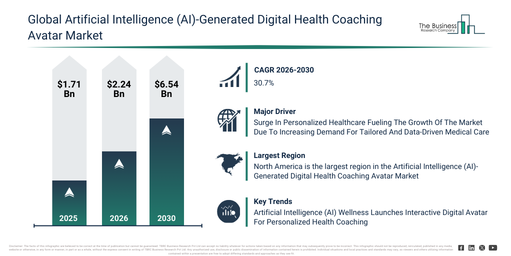
    The market for AI-powered digital health coaching avatars has experienced remarkable expansion. Projected to increase from $1.71 billion in 2025 to $2.24 billion in 2026, this segment is set to achieve a compound annual growth rate of 31.0%. The significant expansion observed previously can be linked to several key factors including a greater uptake of digital health solutions, the broadening reach of mobile health platforms, increasing comfort levels with virtual health assistants, a rise in the incidence of chronic illnesses, and advancements made in natural language processing technologies.

    Forecasting significant expansion, the market for AI-powered digital health coaching avatars is projected to achieve a substantial valuation of $6.54 billion by the year 2030, indicating a robust compound annual growth rate of 30.7%. This anticipated surge is underpinned by several key drivers, including a heightened demand for customized preventative care strategies, escalating financial commitments towards AI-driven therapeutic tools, a broader implementation of patient monitoring solutions from afar, a greater emphasis on nurturing mental well-being, and the continuous evolution of generative artificial intelligence capabilities. During this upcoming period, key market developments are anticipated to encompass a more widespread embrace of AI interfaces for health-related conversations, the incorporation of emotional intelligence into avatar functionalities, a more prevalent utilization of individualized behavioral coaching methodologies, the integration of diverse health data streams, and an intensified effort towards maintaining consistent patient involvement.

    Download A Free Sample Report For Comprehensive Market Insights:

    https://www.thebusinessresearchcompany.com/sample.aspx?id=28132&type=smp

    Artificial Intelligence (AI)-Generated Digital Health Coaching Avatar Market Demand Drivers: What Is Fueling Industry Growth?

    The expanding need for healthcare customized to individual requirements is anticipated to energize the development of the market for artificial intelligence (AI)-powered digital health coaching avatars. This trend toward bespoke medical attention, which accounts for a person’s specific needs, lifestyle, and health status, is gaining traction due to sophisticated data analysis, enabling physicians to pinpoint each patient’s distinct health concerns and administer more precise and potent treatments. AI-driven digital health coaching avatars facilitate this personalized approach by delivering immediate, customized advice and assistance, drawing upon an individual’s health information, routines, and aspirations, thereby enhancing care efficacy and patient centricity. Illustrating this progress, the Personalized Medicine Coalition reported that in February 2024, the US Food and Drug Administration (FDA) greenlit 16 new personalized treatments for individuals with uncommon ailments in 2023, a notable increase from the six approved in 2022. Consequently, the mounting demand for personalized healthcare is directly fueling the expansion of the AI-generated digital health coaching avatar market.

    Artificial Intelligence (AI)-Generated Digital Health Coaching Avatar Market Segmentation Trends And Revenue Drivers

    The artificial intelligence (AI)-generated digital health coaching avatar market covered in this report is segmented –

    1) By Component: Software, Hardware, Services

    2) By Deployment Mode: Cloud-Based, On-Premises

    3) By Application: Chronic Disease Management, Mental Health Support, Fitness And Wellness, Nutrition Guidance, Other Applications

    4) By End-User: Hospitals And Clinics, Fitness Centers, Homecare, Corporate Wellness Programs, Other End-Users

    Subsegments:

    1) By Software: Cloud Based Platforms, Mobile Applications, Web Based Interfaces, Embedded Systems

    2) By Hardware: Sensors And Wearable Devices, Smart Displays, Virtual Reality Devices, Voice And Speech Recognition Devices

    3) By Services: Implementation Services, Training And Education Services, Support And Maintenance Services, Consulting Services

    Artificial Intelligence (AI)-Generated Digital Health Coaching Avatar Market Innovation Trends: Which Developments Are Transforming The Industry?

    Within the competitive landscape of the artificial intelligence (AI) driven digital health coaching avatar sector, prominent enterprises are concentrating their efforts on pioneering sophisticated technologies, specifically AI infused digital avatars, to offer tailored health advice. These AI enhanced digital avatars function as virtual entities imbued with artificial intelligence capabilities, designed to replicate human conduct and engage intelligently within digital spaces. As an illustration, in January of 2025, Assisted Intelligence Wellness Inc. (AI Wellness), a health tech firm headquartered in the United States, initiated the Ask My Avatar Challenge during CES 2025. This program showcased dynamic digital avatars enabling participants to experience personalized wellness coaching in real time. The avatars were designed to provide continuous round the clock assistance, boundless educational material, and worldwide exposure via engaging platforms, with the overarching goal of transforming health education and user participation.

    #Artificial Intelligence (AI)-Generated Digital Health Coaching Avatar Market Industry Leaders: Which Organizations Are Driving Competition?

    Major companies operating in the artificial intelligence (AI)-generated digital health coaching avatar market are Google LLC, OpenAI LLC, Cera CARE LIMITED, Tempus AI Inc., CoachHub, Ada Health GmbH, Touchkin Eservices Private Limited, Infermedica Sp. z o.o, Hippocratic AI Inc., Buoy Health Inc., Woebot Labs Inc., Zing Coach Inc., Virti Inc., Hey Coach Education Private Limited, Rocky Robots Ltd., XpertDox LLC, Assisted Intelligence Wellness Inc., Luka Inc., RAVATAR, GOLD Health.

    Access The Complete Artificial Intelligence (AI)-Generated Digital Health Coaching Avatar Market Report:

    https://www.thebusinessresearchcompany.com/report/artificial-intelligence-ai-generated-digital-health-coaching-avatar-global-market-report

    Artificial Intelligence (AI)-Generated Digital Health Coaching Avatar Market Regional Distribution: Which Areas Drive Market Expansion?

    North Americawas the largest region in the artificial intelligence (AI)-generated digital health coaching avatar market in 2025. Asia-Pacific is expected to be the fastest-growing region in the forecast period. The regions covered in the artificial intelligence (AI)-generated digital health coaching avatar market report are Asia-Pacific, South East Asia, Western Europe, Eastern Europe, North America, South America, Middle East, Africa.

    Get in touch with us:

    The Business Research Company: https://www.thebusinessresearchcompany.com/

    Americas: +1 310-496-7795

    Asia: +44 7882 955267 & +91 8897263534

    Europe: +44 7882 955267

    Email us at: marketing@tbrc.info

    Follow us on:

    LinkedIn: https://in.linkedin.com/company/the-business-research-company

    YouTube: https://www.youtube.com/channel/UC24_fI0rV8cR5DxlCpgmyFQ

    Global Market Model: https://www.thebusinessresearchcompany.com/global-market-model
  • Artificial Intelligence (AI)-Enhanced Remote Patient Intravenous (IV) Monitoring Market Outlook Highlights The Next Major Growth Opportunities

    Artificial Intelligence (AI)-Enhanced Remote Patient Intravenous (IV) Monitoring Market Outlook Highlights The Next Major Growth Opportunities

    Enhanced with market attractiveness analysis, total addressable market evaluation, company benchmarking matrices, interactive Excel dashboards, expanded supply chain intelligence, emerging startup coverage, and detailed product insights, The Business Research Company’s 2026 market reports deliver more actionable and strategically valuable research.

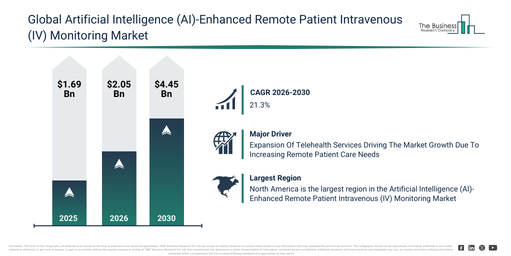
    Artificial Intelligence (AI)-Enhanced Remote Patient Intravenous (IV) Monitoring Market Expected To Reach $4.44 Billion By 2030 At 21.3% CAGR

    The market for AI-powered remote intravenous patient monitoring has experienced remarkable expansion lately. This sector is projected to increase from $1.69 billion in 2025 to $2.05 billion in 2026, demonstrating a compound annual growth rate (CAGR) of 21.6%. Factors contributing to this growth during the preceding period include the escalating application of IV therapies in healthcare settings, a rise in complications associated with infusions, the broader implementation of patient monitoring systems within hospitals, enhanced integration of smart infusion devices, and a heightened emphasis on protocols aimed at ensuring medication safety.

    The market for artificial intelligence-powered remote patient intravenous drip monitoring is poised for substantial expansion, projecting a valuation of $4.45 billion by 2030, driven by an anticipated compound annual growth rate of 21.3%. This upward trajectory in the projected period is fueled by several key factors: a greater acceptance of AI-driven infusion oversight, a heightened need for IV therapy administered at home, broader implementation of analytics for predicting patient safety, increased incorporation of networked infusion devices, and a stronger focus on monitoring patients remotely. Key developments shaping this market in the coming forecast period involve a rise in the adoption of real-time analysis of IV fluid flow, increased utilization of AI for identifying infusion mistakes, greater integration of intelligent sensors for infusions, an expansion in the management of at-home IV therapies, and an amplified dedication to patient safety and adherence to protocols.

    Download A Free Sample Report For Comprehensive Market Insights:

    https://www.thebusinessresearchcompany.com/sample.aspx?id=28921&type=smp

    Artificial Intelligence (AI)-Enhanced Remote Patient Intravenous (IV) Monitoring Market Growth Drivers: What Factors Are Accelerating Expansion?

    The burgeoning expansion of telehealth services is poised to accelerate the market expansion for artificial intelligence (AI) driven remote patient intravenous (IV) monitoring. Telehealth encompasses the provision of healthcare remotely via digital communication technologies, facilitating consultations, health oversight, and treatment without physical proximity. Regulatory adjustments and reimbursement policy shifts implemented during the COVID-19 pandemic significantly boosted telehealth’s accessibility and financial feasibility for both patients and healthcare providers. AI-enhanced remote patient IV monitoring complements telehealth by offering continuous, real-time oversight of patients’ IV therapies, automatically identifying potential complications, furnishing vital insights to medical professionals, and integrating seamlessly with virtual care systems. This integration aims to ensure prompt medical interventions, enhance patient safety, and optimize the management of treatments administered at home or on an outpatient basis. Illustratively, FAIR Health Inc. reported in April 2023 that national telehealth utilization saw a 7.3% increase in 2023, climbing from 5.5% of medical claim lines in December 2022 to 5.9% in January 2023. Consequently, the expansion of telehealth services serves as a key catalyst for the growth of the AI-enhanced remote patient intravenous (IV) monitoring market.

    The widespread adoption of wearable health technologies is projected to be a significant driver for the artificial intelligence (AI)-enhanced remote patient intravenous (IV) monitoring market. These wearable devices, including smartwatches and fitness trackers, are capable of real-time monitoring of various physiological indicators. A heightened awareness of personal health and a desire for tools that offer immediate insights into well-being are fueling the increased use of these technological aids, prompting individuals to actively track their health metrics and vital signs. By continuously gathering real-time physiological data from patients, wearable health technologies facilitate remote patient IV monitoring. This data can subsequently be analyzed to detect deviations from normal patterns, refine IV treatment protocols, and enable personalized interventions without the necessity for constant direct medical supervision. As an example, the UK Parliament’s House of Commons Library noted that between 2023 and 2024, approximately USD 15 million (£11.5 million) was invested by the NIHR and UKRI into ten distinct research initiatives dedicated to the development of wearable technologies aimed at fostering greater independence for individuals experiencing frailty or long-term physical disabilities. Therefore, the increasing prevalence of wearable health technologies is significantly contributing to the expansion of the artificial intelligence (AI)-enhanced remote patient intravenous (IV) monitoring market.

    Escalating healthcare expenditure is anticipated to stimulate the growth trajectory of the artificial intelligence (AI)-enhanced remote patient intravenous (IV) monitoring market. This rise in healthcare spending refers to the aggregate financial investment in healthcare goods and services over a defined timeframe. An increasing demand for sophisticated medical technologies and services, aimed at improving patient outcomes, boosting treatment efficacy, and supporting the integration of AI-powered remote patient monitoring systems, is driving this upward trend in expenditure. Heightened healthcare spending provides the necessary financial backing for advanced technologies, digital infrastructures, and personnel training essential for implementing and operating AI-enhanced remote patient IV monitoring systems, thereby ensuring more effective and precise patient care. For instance, according to the Centers for Medicare & Medicaid Services, national health expenditures in the US reached $4.9 trillion in 2023, marking a 7.5% increase and averaging $14,570 per capita, representing 17.6% of the Gross Domestic Product. Medicare spending alone rose by 8.1% to $1,029.8 billion, constituting 21% of the total national health expenditures. Consequently, the increase in healthcare expenditure is a primary driver for the growth of the artificial intelligence (AI)-enhanced remote patient intravenous (IV) monitoring market.

    Artificial Intelligence (AI)-Enhanced Remote Patient Intravenous (IV) Monitoring Market Segment Analysis Highlighting Growth Areas

    The artificial intelligence (AI)-enhanced remote patient intravenous (iv) monitoring market covered in this report is segmented –

    1) By Component: Hardware, Software, Services

    2) By Deployment Mode: On-Premises, Cloud-Based

    3) By Application: Hospitals, Clinics, Homecare Settings, Ambulatory Surgical Centers, Other Applications

    4) By End-User: Healthcare Providers, Patients

    Subsegments:

    1) By Hardware: Patient Monitoring Devices, Sensors And Infusion Pumps, Communication Devices, Data Storage Systems

    2) By Software: Predictive Analytics Software, Clinical Decision Support Software, Remote Monitoring Software, Data Management Software

    3) By Services: Implementation And Integration Services, Maintenance And Support Services, Training And Education Services, Remote Monitoring Services

    Artificial Intelligence (AI)-Enhanced Remote Patient Intravenous (IV) Monitoring Market Leading Companies: Who Holds Significant Market Presence?

    Major companies operating in the artificial intelligence (AI)-enhanced remote patient intravenous (iv) monitoring market are Medtronic plc, Siemens Healthineers AG, GE HealthCare Technologies Inc., Koninklijke Philips N.V., Baxter International Inc., B. Braun Melsungen AG, Terumo Corporation, Nipro Corporation, Epic Systems Corporation, ICU Medical Inc., InfuSystem Holdings Inc., AlayaCare Inc., Huma Therapeutics Ltd., Health Recovery Solutions Inc., Arcomed AG, VitalConnect Inc., Cloud DX Inc., Empatica S.r.l., AccuHealth Inc., Serum Tracker Inc.

    Access The Complete Artificial Intelligence (AI)-Enhanced Remote Patient Intravenous (IV) Monitoring Market Report:

    https://www.thebusinessresearchcompany.com/report/artificial-intelligence-ai-enhanced-remote-patient-intravenous-iv-monitoring-global-market-report

    Artificial Intelligence (AI)-Enhanced Remote Patient Intravenous (IV) Monitoring Market Leading Geography: Which Region Generates The Most Revenue?

    North Americawas the largest region in the artificial intelligence (AI)-enhanced remote patient intravenous (IV) monitoring market in 2025. Asia-Pacificis expected to be the fastest-growing region in the forecast period. The regions covered in the artificial intelligence (AI)-enhanced remote patient intravenous (iv) monitoring market report are Asia-Pacific, South East Asia, Western Europe, Eastern Europe, North America, South America, Middle East, Africa.

    Get in touch with us:

    The Business Research Company: https://www.thebusinessresearchcompany.com/

    Americas: +1 310-496-7795

    Asia: +44 7882 955267 & +91 8897263534

    Europe: +44 7882 955267

    Email us at: marketing@tbrc.info

    Follow us on:

    LinkedIn: https://in.linkedin.com/company/the-business-research-company

    YouTube: https://www.youtube.com/channel/UC24_fI0rV8cR5DxlCpgmyFQ

    Global Market Model: https://www.thebusinessresearchcompany.com/global-market-model
  • Artificial Intelligence (AI)-Enhanced Remote Neonatal Monitoring Market Trends And Growth Drivers Point To Strong Future Potential

    Artificial Intelligence (AI)-Enhanced Remote Neonatal Monitoring Market Trends And Growth Drivers Point To Strong Future Potential

    Through market attractiveness analysis, total addressable market evaluation, company benchmarking matrices, interactive Excel dashboards, expanded supply chain intelligence, emerging startup coverage, and detailed product insights, The Business Research Company’s 2026 market reports provide more actionable and strategically valuable research.

    #Artificial Intelligence (AI)-Enhanced Remote Neonatal Monitoring Market Size And Revenue Forecast Through 2030

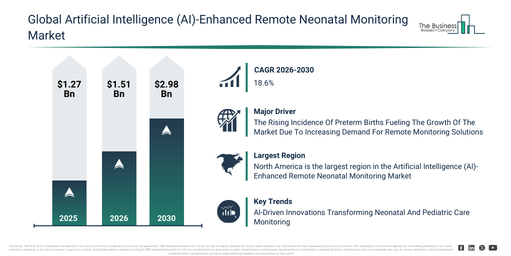
    The market for AI-powered remote neonatal monitoring has experienced significant expansion, with projections indicating a rise from $1.27 billion in 2025 to $1.51 billion in 2026, reflecting a compound annual growth rate of 18.9%. Key factors contributing to this expansion during the past period include a surge in premature births, broader availability of neonatal intensive care services, increased uptake of remote patient monitoring solutions, a greater emphasis on proactive intervention in newborn care, and improvements in neonatal sensor technology.

    The market for AI-powered remote neonatal monitoring is poised for substantial expansion in the coming years, projected to reach $2.98 billion by 2030 with a compound annual growth rate of 18.6%. This upward trajectory is fueled by several key factors, including the increasing acceptance of AI-driven monitoring solutions, a heightened demand for neonatal care provided in the home environment, advancements in predictive health analytics, the growing incorporation of cloud-based monitoring systems, and a greater emphasis on safeguarding neonatal health through preventative measures. During this projected period, significant trends are anticipated to emerge, such as the widespread adoption of continuous monitoring of neonatal vital signs, a surge in the utilization of AI for early warning systems, a broader deployment of wearable sensors for infants, the further development of remote neonatal care models, and an intensified concentration on predictive analytics for neonates.

    Download A Free Sample Report For Comprehensive Market Insights:

    https://www.thebusinessresearchcompany.com/sample.aspx?id=28920&type=smp

    Artificial Intelligence (AI)-Enhanced Remote Neonatal Monitoring Market Growth Factors Supporting Long-Term Expansion

    The escalating occurrence of premature births is anticipated to be a primary catalyst for the expansion of the artificial intelligence (AI) assisted remote neonatal surveillance sector in the foreseeable future. Premature birth, characterized by infants delivered before the 37th week of gestation, frequently necessitates specialized medical attention due to immature organ development, and it stands as a significant determinant of neonatal health results. An increasing number of women delaying childbirth contributes to a rise in preterm births, thereby elevating the likelihood of pregnancy-related complications and early deliveries. AI-powered remote neonatal monitoring systems provide crucial support in managing premature infants by conducting continuous analysis of vital signs to identify nascent signs of complications, thereby facilitating prompt medical interventions and ensuring more secure care following hospital discharge. For example, a March 2025 report from the Centers for Disease Control and Prevention (CDC), a non-profit entity based in the United States, indicated that the preterm birth rate in the U.S. experienced an increase to 10.41% in 2023, a slight uptick from 10.38% recorded in 2022. Consequently, the increasing prevalence of preterm births is directly fueling the market’s growth for artificial intelligence (AI)-enhanced remote neonatal monitoring solutions.

    Artificial Intelligence (AI)-Enhanced Remote Neonatal Monitoring Market Segment Performance And Strategic Opportunities

    The artificial intelligence (AI)-enhanced remote neonatal monitoring market covered in this report is segmented –

    1) By Component: Hardware, Software, Services

    2) By Monitoring Type: Vital Signs Monitoring, Respiratory Monitoring, Cardiac Monitoring, Other Monitoring Types

    3) By Deployment Mode: Cloud-Based, On-Premises

    4) By End User: Hospitals, Neonatal Intensive Care Units, Homecare Settings, Clinics, Other End Users

    Subsegments:

    1) By Hardware: Monitoring Devices, Wearable Sensors, Imaging Equipment, Communication Modules, Data Storage Units

    2) By Software: Analytics Platforms, Patient Management Systems, Predictive Algorithms, Visualization Tools, Alert And Notification Systems

    3) By Services: Remote Monitoring Support, Technical Maintenance, Training And Education, Consulting Services, Integration Services

    Artificial Intelligence (AI)-Enhanced Remote Neonatal Monitoring Market Industry Trends Shaping Future Revenue Growth

    Leading corporations within the AI-powered remote neonatal monitoring sector are prioritizing the creation of sophisticated technologies, specifically AI-integrated platforms for monitoring neonatal and pediatric care, with the objective of improving the early identification of health issues, refining medical judgment, and enabling constant, live surveillance of infants. These AI-driven platforms are designed to leverage artificial intelligence for the ongoing observation and analysis of infant and child health indicators, identifying irregularities, and offering practical recommendations for prompt medical attention. Illustratively, in April 2025, AngelEye Health, a US entity specializing in family engagement technology for neonatal and pediatric patients, introduced AIVision, a pioneering advancement that embeds artificial intelligence and computer vision capabilities within neonatal intensive care units (NICUs) and pediatric departments. This innovation reconfigures conventional bedside cameras into intelligent clinical instruments, delivering preemptive, data-informed intelligence to healthcare professionals. Notable functionalities encompass AI-driven motion evaluation for the early recognition of neuromotor challenges, synchronization with video electroencephalography (EEG), the surveillance of respiratory function to discern incipient signs of distress, AI-supported evaluation of pain and sedation levels, and the recording of critical events like crashes or coding to aid in clinical education.

    Artificial Intelligence (AI)-Enhanced Remote Neonatal Monitoring Market Key Players: Which Companies Shape Industry Competition?

    Major companies operating in the artificial intelligence (AI)-enhanced remote neonatal monitoring market are Philips Healthcare, GE HealthCare Technologies Inc., Mount Sinai Health System Inc., Mindray Medical International Limited, Drägerwerk AG & Co. KGaA, Hill-Rom Company Inc., Masimo Corporation, Sheba Medical Center, Natus Medical Incorporated, Spacelabs Healthcare Inc., Aver Information Inc., Owlet Inc., Nanit Inc., AngelEye Health Inc., Raybaby Inc., Zoundream Inc., Sempulse Inc., Kriba Inc., Luscii B.V., Bloomlife Inc.

    Access The Complete Artificial Intelligence (AI)-Enhanced Remote Neonatal Monitoring Market Report:

    https://www.thebusinessresearchcompany.com/report/artificial-intelligence-ai-enhanced-remote-neonatal-monitoring-global-market-report

    Artificial Intelligence (AI)-Enhanced Remote Neonatal Monitoring Market Regional Outlook: Where Are The Largest Opportunities Located?

    North Americawas the largest region in the artificial intelligence (AI)-enhanced remote neonatal monitoring market in 2025. Asia-Pacificis expected to be the fastest-growing region in the forecast period. The regions covered in the artificial intelligence (AI)-enhanced remote neonatal monitoring market report are Asia-Pacific, South East Asia, Western Europe, Eastern Europe, North America, South America, Middle East, Africa.

    Get in touch with us:

    The Business Research Company: https://www.thebusinessresearchcompany.com/

    Americas: +1 310-496-7795

    Asia: +44 7882 955267 & +91 8897263534

    Europe: +44 7882 955267

    Email us at: marketing@tbrc.info

    Follow us on:

    LinkedIn: https://in.linkedin.com/company/the-business-research-company

    YouTube: https://www.youtube.com/channel/UC24_fI0rV8cR5DxlCpgmyFQ

    Global Market Model: https://www.thebusinessresearchcompany.com/global-market-model
  • Artificial Intelligence (AI)-Enhanced Intensive Care Unit (ICU) Ventilation Weaning Market Expansion Is Reshaping Competitive Dynamics Across The Industry

    Artificial Intelligence (AI)-Enhanced Intensive Care Unit (ICU) Ventilation Weaning Market Expansion Is Reshaping Competitive Dynamics Across The Industry

    Delivering more actionable and strategically valuable research, The Business Research Company’s 2026 market reports feature market attractiveness analysis, total addressable market evaluation, company benchmarking matrices, interactive Excel dashboards, expanded supply chain intelligence, emerging startup coverage, and detailed product insights.

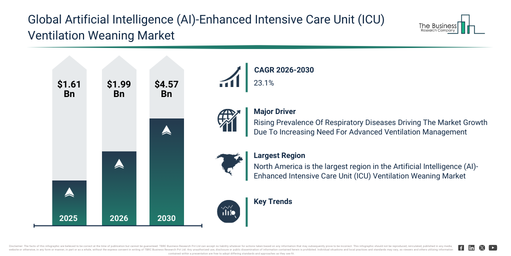
    Artificial Intelligence (AI)-Enhanced Intensive Care Unit (ICU) Ventilation Weaning Market Growth From $1.99 Billion In 2026 To $4.56 Billion By 2030 At A CAGR Of 23.1%

    The market associated with AI-powered sophisticated ventilation weaning in intensive care units has witnessed substantial expansion lately, with projections indicating a rise from $1.61 billion in 2025 to $1.99 billion in 2026, reflecting a compound annual growth rate of 23.3%. This growth trajectory during the historical period stems from several key factors, including the heightened deployment of mechanical ventilation within critical care settings, escalating numbers of ICU patients, increasing intricacy in managing respiratory conditions, the broader availability of advanced critical care monitoring tools, and a greater embrace of data-informed protocols in ICUs.

    The market for artificial intelligence powered intensive care unit (ICU) ventilation weaning is poised for substantial expansion, projecting a reach of $4.57 billion by the year 2030. This impressive upward trajectory, marked by a compound annual growth rate of 23.1%, is fueled by several key drivers including the augmenting uptake of AI-driven critical care solutions, a heightened demand for ICU management focused on patient outcomes, the broadening scope of smart ventilator systems, the increasing incorporation of predictive analytics within critical care settings, and a sustained emphasis on shortening ICU stays. During this anticipated growth period, significant market currents will include the more frequent deployment of predictive weaning algorithms, augmented integration of real-time ventilator performance data, a greater embrace of AI tools to aid ICU decision-making, the evolution of automated ventilation management processes, and a concentrated effort to minimize the duration of mechanical ventilation.

    Download A Free Sample Report For Comprehensive Market Insights:

    https://www.thebusinessresearchcompany.com/sample.aspx?id=28916&type=smp

    #Artificial Intelligence (AI)-Enhanced Intensive Care Unit (ICU) Ventilation Weaning Market Demand Drivers Creating New Revenue Opportunities

    The increasing incidence of respiratory ailments is anticipated to be a significant catalyst for the expansion of the artificial intelligence (AI)-powered intensive care unit (ICU) ventilation weaning market. These respiratory conditions, which affect the lungs and air passages, compromise the body’s capacity for normal respiration and oxygen exchange. Factors contributing to the rise in such diseases include aging demographics in developed countries, as older individuals are notably more vulnerable to chronic respiratory issues due to diminished immune responses and accumulated environmental exposures. AI-enhanced ICU ventilation weaning contributes to managing respiratory diseases by constantly evaluating patient-specific data, forecasting ideal weaning junctures, shortening the duration of mechanical respiratory support, mitigating complications, and facilitating tailored, effective, and prompt clinical interventions that enhance patient recovery. For illustrative purposes, data from the Australian Institute of Health and Welfare, a governmental entity in Australia, indicated in June 2024 that in 2023, chronic obstructive pulmonary disease (COPD) constituted 3.6% of Australia’s total disease burden and accounted for half of the entire burden attributable to respiratory conditions. Consequently, the escalating frequency of respiratory diseases is fueling the progression of the AI-enhanced ICU ventilation weaning market.

    The increasing focus on personalized medicine, driven by a greater emphasis on patient-centered care strategies, is projected to stimulate the expansion of the market for artificial intelligence (AI)-enhanced intensive care unit (ICU) ventilation weaning. This approach to precision medicine customizes therapeutic decisions and healthcare interventions for each individual, taking into account their genetic profile, lifestyle choices, and environmental influences. The growing prominence of personalized medicine is fueled by breakthroughs in genomic technologies and sophisticated data analysis tools, which facilitate more precise and individualized patient management within critical care environments. AI-enhanced ventilation weaning technologies are instrumental in advancing personalized medicine by scrutinizing unique patient data to ascertain the most opportune moments for discontinuing mechanical ventilation, thereby improving patient outcomes through bespoke treatment regimens. As an example, in February 2024, the Personalized Medicine Coalition, a non-profit organization based in the US, reported that the FDA granted approval for 16 novel personalized treatments for patients with rare diseases in 2023, a notable increase from the 6 approvals in 2022, signifying a rise of 10 new personalized therapy approvals. Therefore, the heightened emphasis on personalized medicine is a key driver for the growth of the AI-enhanced ICU ventilation weaning market.

    #Artificial Intelligence (AI)-Enhanced Intensive Care Unit (ICU) Ventilation Weaning Market Segment Landscape And Growth Potential

    The artificial intelligence (AI)-enhanced intensive care unit (icu) ventilation weaning market covered in this report is segmented –

    1) By Component: Software, Hardware, Services

    2) By Deployment Mode: On-Premises, Cloud-Based

    3) By Application: Adult Intensive Care Unit (ICU), Pediatric Intensive Care Unit (ICU), Neonatal Intensive Care Unit (ICU)

    4) By End-User: Hospitals, Specialty Clinics, Other End-Users

    Subsegments:

    1) By Software: Ventilation Management Software, Predictive Weaning Algorithms, Patient Monitoring Software, Data Analytics And Visualization Software

    2) By Hardware: Ventilators, Sensors And Monitors, Computing Systems, Connectivity Devices

    3) By Services: Implementation And Integration Services, Training And Education Services, Maintenance And Support Services, Remote Monitoring Services

    Artificial Intelligence (AI)-Enhanced Intensive Care Unit (ICU) Ventilation Weaning Market Competitive Landscape: Who Are The Leading Companies?

    Major companies operating in the artificial intelligence (AI)-enhanced intensive care unit (icu) ventilation weaning market are Medtronic plc, Koninklijke Philips N.V., GE HealthCare Technologies Inc., Drägerwerk AG & Co. KGaA, Getinge AB, Hamilton Medical AG, Hicuity Health Inc., Etiometry Inc., Clew Medical Ltd., Ambient Clinical Analytics Inc., ResMed Inc., Vyaire Medical, Inc., Mindray Medical International Limited, Zoll Medical Corporation, Baxter International Inc., Siemens Healthineers AG, Smiths Medical (ICU Medical, Inc.), Masimo Corporation, Aeonmed, Timpel S.A

    Access The Complete Artificial Intelligence (AI)-Enhanced Intensive Care Unit (ICU) Ventilation Weaning Market Report:

    https://www.thebusinessresearchcompany.com/report/artificial-intelligence-ai-enhanced-intensive-care-unit-icu-ventilation-weaning-global-market-report

    Artificial Intelligence (AI)-Enhanced Intensive Care Unit (ICU) Ventilation Weaning Market Geographic Landscape: Which Region Dominates Industry Growth?

    North Americawas the largest region in the artificial intelligence (AI)-enhanced intensive care unit (ICU) ventilation weaning market in 2025. Asia-Pacificis expected to be the fastest-growing region in the forecast period. The regions covered in the artificial intelligence (AI)-enhanced intensive care unit (icu) ventilation weaning market report are Asia-Pacific, South East Asia, Western Europe, Eastern Europe, North America, South America, Middle East, Africa.

    Get in touch with us:

    The Business Research Company: https://www.thebusinessresearchcompany.com/

    Americas: +1 310-496-7795

    Asia: +44 7882 955267 & +91 8897263534

    Europe: +44 7882 955267

    Email us at: marketing@tbrc.info

    Follow us on:

    LinkedIn: https://in.linkedin.com/company/the-business-research-company

    YouTube: https://www.youtube.com/channel/UC24_fI0rV8cR5DxlCpgmyFQ

    Global Market Model: https://www.thebusinessresearchcompany.com/global-market-model
  • Artificial Intelligence (AI)-Enhanced Diabetes Foot Ulcer Monitor Market Forecast Reveals Where Future Industry Value Will Be Created

    Artificial Intelligence (AI)-Enhanced Diabetes Foot Ulcer Monitor Market Forecast Reveals Where Future Industry Value Will Be Created

    Enhanced with market attractiveness analysis, total addressable market evaluation, company benchmarking matrices, interactive Excel dashboards, expanded supply chain intelligence, emerging startup coverage, and detailed product insights, The Business Research Company’s 2026 market reports deliver more actionable and strategically valuable research.

    Artificial Intelligence (AI)-Enhanced Diabetes Foot Ulcer Monitor Market Expansion Outlook: What Revenue Opportunities Lie Ahead?

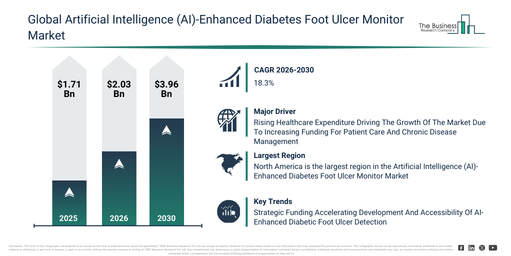
    The AI-powered system for monitoring diabetic foot ulcers has experienced significant expansion, projected to increase from $1.71 billion in 2025 to $2.03 billion in 2026, reflecting a compound annual growth rate of 18.5%. This historical growth trajectory is largely influenced by the escalating global rates of diabetes, a concurrent rise in foot-related complications among diabetic patients, the broader adoption of remote healthcare monitoring, an intensified emphasis within clinical settings on proactive wound management, and advancements in medical imaging capabilities.

    The market for artificial intelligence-powered diabetes foot ulcer monitors is poised for substantial expansion in the coming years, projected to reach a valuation of $3.96 billion by 2030, fueled by a compound annual growth rate of 18.3%. This anticipated surge is largely driven by several key factors: the escalating uptake of AI-driven diagnostic instruments, a growing preference for remote patient monitoring solutions, advancements in predictive healthcare analytics, the increasing incorporation of imaging and sensor technologies, and a heightened commitment to proactive diabetes management. Furthermore, significant trends shaping this market during the forecast period encompass the broader adoption of AI for assessing foot ulcer risk, the wider application of computer vision techniques for wound examination, a greater deployment of intelligent wearable foot sensors, the proliferation of at-home monitoring for diabetic foot conditions, and a more concentrated effort on the early identification of ulcers.

    Download A Free Sample Report For Comprehensive Market Insights:

    https://www.thebusinessresearchcompany.com/sample.aspx?id=28915&type=smp

    Artificial Intelligence (AI)-Enhanced Diabetes Foot Ulcer Monitor Market Expansion Supported By Key Demand Factors

    Increasing investment in healthcare services is anticipated to be a key catalyst for the expansion of the market for artificial intelligence (AI) powered diabetes foot ulcer monitoring devices. This rise in healthcare spending, defined as the total outlay by individuals, organizations, and governments on health-related activities and services, is largely attributed to the increasing incidence of chronic illnesses that necessitate ongoing medical attention, extended treatment durations, and significant resource allocation. Such elevated healthcare budgets enable healthcare facilities to acquire AI-driven diabetes foot ulcer monitors, thereby facilitating improved patient oversight and reducing the long-term financial burden of treatment. Illustratively, data from the Office for National Statistics in the UK indicated that in April 2025, publicly funded healthcare represented the predominant portion of the nation’s healthcare expenditure, amounting to $344 billion (£258 billion) in 2024, reflecting a real-term increase of 2.5% compared to the previous year. Consequently, robust healthcare expenditure is identified as a significant driver for the growth trajectory of the AI-enhanced diabetes foot ulcer monitor market.

    Artificial Intelligence (AI)-Enhanced Diabetes Foot Ulcer Monitor Market Categorization By Product Type And Application

    The artificial intelligence (AI)-enhanced diabetes foot ulcer monitor market covered in this report is segmented –

    1) By Product Type: Wearable Devices, Non-Wearable Devices, Smart Sensors, Imaging Systems

    2) By Technology: Machine Learning, Deep Learning, Computer Vision, Other Technologies

    3) By Application: Hospitals And Clinics, Homecare, Ambulatory Surgical Centers, Research Institutes, Other Applications

    4) By End-User: Healthcare Providers, Patients, Research Organizations, Other End-Users

    Subsegments:

    1) By Wearable Devices: Smart Watches, Smart Boots, Smart Insoles, Smart Socks

    2) By Non-Wearable Devices: Digital Cameras, Mobile Scanners, Handheld Imaging Devices, Pressure Mapping Platforms

    3) By Smart Sensors: Temperature Sensors, Pressure Sensors, Moisture Sensors, Motion Sensors

    4) By Imaging Systems: Thermal Imaging Systems, Hyperspectral Imaging Systems, Optical Imaging Systems, Ultrasonic Imaging Systems

    Artificial Intelligence (AI)-Enhanced Diabetes Foot Ulcer Monitor Market Growth Trends Influencing Competitive Dynamics

    Companies significantly involved in the market for AI-driven diabetes foot ulcer monitoring systems are prioritizing the creation of financial resources to facilitate increased production, broader market penetration, and enhanced patient access. These financial reserves are established for particular objectives, such as investment or spending. For example, in July of 2024, IR-MED Inc., an Israeli medical technology innovator, disclosed its acquisition of a $500,000 grant designated to bolster the advancement of its diagnostic tool for the proactive identification of diabetic foot ulcers. This infusion of capital will empower IR-MED to propel the refinement and market introduction of its AI-powered DiaSafe system for diabetes foot ulcer surveillance throughout the latter half of 2025, via a 13-month initiative. The DiaSafe device, leveraging the upcoming PressureSafe platform slated for release in late 2024, combines sophisticated AI analytics with infrared detection capabilities to achieve early diagnosis of diabetic foot ulcers. This innovative technology possesses the capacity to detect anomalies that remain undetectable through visual inspection alone, especially in individuals with darker complexions. Furthermore, the system’s AI-driven support mechanism evaluates biological data against established markers for specific conditions to ascertain the health status of tissue or its risk level.

    Artificial Intelligence (AI)-Enhanced Diabetes Foot Ulcer Monitor Market Company Landscape And Strategic Competition

    Major companies operating in the artificial intelligence (AI)-enhanced diabetes foot ulcer monitor market are Net Health Systems Inc., Podimetrics Inc., Orpyx Medical Technologies Inc., Spectral AI Inc., Siren Care Inc., Calceus Health Pty Ltd., WoundVision LLC., Bluedrop Medical Inc., Moticon GmbH., eKare Inc., Sensoria Health Inc., Baliston Limited., Empo Health Inc., MolecuLight Inc., MIMOSA Diagnostics Inc., Thermology Health Ltd., IR-MED Inc., DiabSense Private Limited, HeloCare Inc., SmartDiabetes Tech Ltd.

    Access The Complete Artificial Intelligence (AI)-Enhanced Diabetes Foot Ulcer Monitor Market Report:

    https://www.thebusinessresearchcompany.com/report/artificial-intelligence-ai-enhanced-diabetes-foot-ulcer-monitor-global-market-report

    #Artificial Intelligence (AI)-Enhanced Diabetes Foot Ulcer Monitor Market Largest Region: Which Geography Holds The Highest Market Share?

    North Americawas the largest region in the artificial intelligence (AI)-enhanced diabetes foot ulcer monitor market in 2025. Asia-Pacificis expected to be the fastest-growing region in the forecast period. The regions covered in the artificial intelligence (AI)-enhanced diabetes foot ulcer monitor market report are Asia-Pacific, South East Asia, Western Europe, Eastern Europe, North America, South America, Middle East, Africa.

    Get in touch with us:

    The Business Research Company: https://www.thebusinessresearchcompany.com/

    Americas: +1 310-496-7795

    Asia: +44 7882 955267 & +91 8897263534

    Europe: +44 7882 955267

    Email us at: marketing@tbrc.info

    Follow us on:

    LinkedIn: https://in.linkedin.com/company/the-business-research-company

    YouTube: https://www.youtube.com/channel/UC24_fI0rV8cR5DxlCpgmyFQ

    Global Market Model: https://www.thebusinessresearchcompany.com/global-market-model
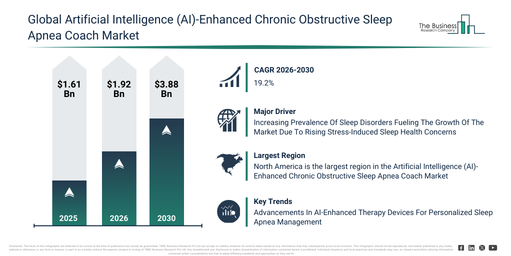
  • Artificial Intelligence (AI)-Enhanced Chronic Obstructive Sleep Apnea Coach Market Growth Through 2030 Creates New Strategic Opportunities

    Artificial Intelligence (AI)-Enhanced Chronic Obstructive Sleep Apnea Coach Market Growth Through 2030 Creates New Strategic Opportunities

    Through market attractiveness analysis, total addressable market evaluation, company benchmarking matrices, interactive Excel dashboards, expanded supply chain intelligence, emerging startup coverage, and detailed product insights, The Business Research Company’s 2026 market reports provide more actionable and strategically valuable research.

    Artificial Intelligence (AI)-Enhanced Chronic Obstructive Sleep Apnea Coach Market Growth Potential: How Will Market Size Change Through 2030?

    Fueled by an escalating incidence of sleep apnea and related respiratory ailments, along with heightened public consciousness concerning sleep health and the burgeoning availability of home-based sleep monitoring devices, the market for artificial intelligence-powered chronic obstructive sleep apnea coaches experienced substantial expansion throughout the historical period. This growth trajectory, further propelled by the proliferation of digital health platforms and an intensified emphasis within clinical settings on ensuring patient adherence to therapy, saw the market value ascend from $1.61 billion in 2025 to an projected $1.92 billion in 2026, reflecting a robust compound annual growth rate of 19.5%.

    The global market for artificial intelligence powered chronic obstructive sleep apnea coaching solutions is projected for significant expansion in the coming years, anticipated to reach $3.88 billion by 2030, reflecting a robust compound annual growth rate of 19.2%. This upward trajectory is fueled by several key factors, including the escalating use of AI tools for chronic condition management, a heightened need for remote patient monitoring, the broadening scope of individualized digital therapeutic interventions, closer integration with networked medical equipment, and a discernible shift in healthcare paradigms towards preventative strategies. During this same projected timeframe, prominent market developments are expected to include a greater acceptance of continuous sleep and respiratory tracking, an increased utilization of AI based coaching for therapy adherence, a rise in the incorporation of wearable devices for sleep diagnostics, the further development of tailored sleep wellness platforms, and a more pronounced emphasis on proactively managing health conditions.

    Download A Free Sample Report For Comprehensive Market Insights:

    https://www.thebusinessresearchcompany.com/sample.aspx?id=28914&type=smp

    #Artificial Intelligence (AI)-Enhanced Chronic Obstructive Sleep Apnea Coach Market Growth Drivers And Industry Catalysts

    The expanding landscape of sleep-related ailments is anticipated to be a primary catalyst for the advancement of the market for AI-powered coaches designed to manage chronic obstructive sleep apnea. These conditions, which disrupt normal sleep and consequently affect an individual’s well-being, daily functioning, and overall health, are on the rise primarily as a consequence of elevated stress levels stemming from contemporary work demands, academic pressures, and extensive screen usage, all of which contribute to heightened anxiety and disturbed sleep patterns. AI-driven chronic obstructive sleep apnea coaches address these issues by monitoring respiratory and sleep data, subsequently providing tailored advice and therapeutic assistance, thereby facilitating the timely identification of potential problems and fostering improvements in sleep quality and general health. Illustrating this trend, data from November 2023 revealed that the UK’s National Health Service noted a slight increase in sleep disturbances among young individuals aged 17 to 23, with 64.9% reporting issues at least three times in the preceding week, up from 64.0% in the prior year. Consequently, the escalating incidence of sleep disorders is directly contributing to the growth trajectory of the artificial intelligence-enhanced chronic obstructive sleep apnea coach market.

    Artificial Intelligence (AI)-Enhanced Chronic Obstructive Sleep Apnea Coach Market Segment Analysis And Revenue Opportunities

    The artificial intelligence (AI)-enhanced chronic obstructive sleep apnea coach market covered in this report is segmented –

    1) By Component: Software, Hardware, Services

    2) By Deployment Mode: Cloud-Based, On-Premises

    3) By Application: Home Care, Sleep Clinics, Hospitals, Research Institutes, Other Applications

    4) By End-User: Patients, Healthcare Providers, Sleep Specialists, Other End-Users

    Subsegments:

    1) By Software: Cloud-Based Platforms, Mobile Applications, Patient Monitoring Dashboards, Sleep Data Analytics Tools, Therapeutic Guidance Systems, Compliance Management Software

    2) By Hardware: Wearable Sleep Trackers, Respiratory Monitoring Devices, Pulse Oximeters, Smart Sleep Masks, Connected Airflow Sensors, Portable Sleep Diagnostic Units

    3) By Services: Remote Patient Monitoring Services, Sleep Coaching Programs, Data Integration And Management Services, Technical Support And Maintenance, Clinical Consultation Services, Training And Education Services

    #Artificial Intelligence (AI)-Enhanced Chronic Obstructive Sleep Apnea Coach Market Trends Influencing Long-Term Demand

    In the realm of AI-powered sleep apnea coaching, key players are concentrating on innovating sophisticated solutions, particularly positive airway pressure (PAP) devices, which are designed for tailored treatment plans and remote patient oversight powered by artificial intelligence. These PAP devices function by providing a consistent or variable stream of air via a mask, thereby preventing airway obstruction during sleep for individuals with obstructive sleep apnea, ultimately enhancing both respiratory function and sleep quality. As an illustration, in February 2024, ResMed Inc., a prominent US-based entity in medical technology and digital health, introduced its AirCurve 11 series of bilevel devices. These advanced units offer dual pressure settings—increased during inhalation and reduced during exhalation—facilitating more effective sleep apnea management for clinicians and bolstering patient adherence to treatment regimens. Built upon the AirSense 11 framework, the AirCurve 11 devices incorporate digital functionalities like secure cellular data transmission, automated software updates, and patient engagement tools such as the myAir application. The series encompasses models specifically engineered for both obstructive and central sleep apnea, with the overarching goal of enhancing patient comfort and adherence through customized therapeutic assistance. These devices are currently accessible in the United States, with a worldwide distribution strategy in development.

    Artificial Intelligence (AI)-Enhanced Chronic Obstructive Sleep Apnea Coach Market Leading Players Shaping Industry Direction

    Major companies operating in the artificial intelligence (AI)-enhanced chronic obstructive sleep apnea coach market are Koninklijke Philips N.V., ResMed Inc., Sleep Number Corporation, Nihon Kohden Corporation, Fisher & Paykel Healthcare Corporation Limited, Verily Life Sciences LLC, Natus Medical Incorporated, SomnoMed Limited, BMC Medical Co.,Ltd., Eight Sleep,Inc., Sleepiz AG, Sleep.ai B.V. (SleepScore Labs), EnsoData,Inc., SovaSage,Inc., Somnics Inc., Sleep Doctor,LLC, Sommetrics,Inc., Nyxoah S.A., Neru Health Inc., Apnea-Tech Limited.

    Access The Complete Artificial Intelligence (AI)-Enhanced Chronic Obstructive Sleep Apnea Coach Market Report:

    https://www.thebusinessresearchcompany.com/report/artificial-intelligence-ai-enhanced-chronic-obstructive-sleep-apnea-coach-global-market-report

    Artificial Intelligence (AI)-Enhanced Chronic Obstructive Sleep Apnea Coach Market Regional Analysis: Which Region Leads By Revenue?

    North Americawas the largest region in the artificial intelligence (AI)-enhanced chronic obstructive sleep apnea coach market in 2025. Asia-Pacificis expected to be the fastest-growing region in the forecast period. The regions covered in the artificial intelligence (AI)-enhanced chronic obstructive sleep apnea coach market report are Asia-Pacific, South East Asia, Western Europe, Eastern Europe, North America, South America, Middle East, Africa.

    Get in touch with us:

    The Business Research Company: https://www.thebusinessresearchcompany.com/

    Americas: +1 310-496-7795

    Asia: +44 7882 955267 & +91 8897263534

    Europe: +44 7882 955267

    Email us at: marketing@tbrc.info

    Follow us on:

    LinkedIn: https://in.linkedin.com/company/the-business-research-company

    YouTube: https://www.youtube.com/channel/UC24_fI0rV8cR5DxlCpgmyFQ

    Global Market Model: https://www.thebusinessresearchcompany.com/global-market-model