Month: June 2026

  • Temperature Management Market Expected To Reach $3.71 Billion By 2030 As Growth Accelerates At 5.1% CAGR

    Temperature Management Market Expected To Reach $3.71 Billion By 2030 As Growth Accelerates At 5.1% CAGR

    Delivering more actionable and strategically valuable research, The Business Research Company’s 2026 market reports feature market attractiveness analysis, total addressable market evaluation, company benchmarking matrices, interactive Excel dashboards, expanded supply chain intelligence, emerging startup coverage, and detailed product insights.

    The temperature management market is gradually evolving, with steady growth observed over recent years. Advancements in healthcare practices and an expanding range of applications are set to influence this sector’s development as we look ahead to 2030. This overview explores the market’s current size, key growth drivers, leading players, and emerging trends shaping its future trajectory.

    Current and Projected Market Size for Temperature Management

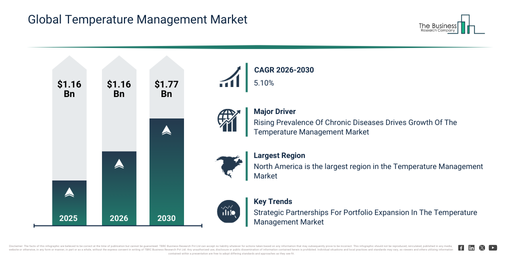
    The temperature management market has experienced modest growth recently, with its value expected to increase slightly from $3.02 billion in 2025 to $3.05 billion in 2026, reflecting a compound annual growth rate (CAGR) of 1.0%. This gradual expansion during the past period has been driven by factors such as preventing surgical hypothermia, growth in intensive care unit (ICU) capacity, advancements in neonatal care, trauma management improvements, and the modernization of hospital infrastructure.

    Looking further ahead, the market is forecast to grow more robustly, reaching $3.72 billion by 2030 at a CAGR of 5.1%. This stronger growth phase will be propelled by increased critical care demand, a rise in surgical procedures, a focus on improving neonatal survival rates, heightened need for advanced monitoring technologies, and the broader expansion of emergency care services. Key trends supporting this growth include greater adoption of patient warming systems, temperature control advancements in ICUs, increased use in neonatal applications, demand for precise thermal management solutions, and integration of portable temperature management devices.

    Download A Free Sample Report For Comprehensive Market Insights:

    https://www.thebusinessresearchcompany.com/sample.aspx?id=3244&type=smp

    How Chronic Diseases Are Boosting Demand in the Temperature Management Market

    One of the major factors propelling the temperature management market is the rising prevalence of chronic diseases. These long-term health conditions, such as diabetes, cardiovascular diseases, and arthritis, typically develop gradually and require ongoing medical attention to manage symptoms and prevent further complications. Growing incidences of chronic diseases are largely linked to unhealthy lifestyle choices, including poor diet, lack of physical activity, and smoking, all of which increase risks for conditions like diabetes and heart illness.

    Temperature management plays a crucial role in supporting patients with chronic conditions by helping maintain stable body temperatures, which enhances comfort, prevents complications, and contributes to better overall health outcomes. For example, in June 2024, the National Health Service (a UK government agency) reported that 3,615,330 patients were registered with a general practitioner for non-diabetic hyperglycemia or pre-diabetes in 2023, marking an 18% rise from 3,065,825 cases in 2022. This upward trend in chronic disease prevalence is significantly driving demand in this market.

    The Impact of Rising Surgical Procedures on Temperature Management Market Expansion

    The growing volume of surgical procedures is another significant driver behind the expansion of the temperature management market. Surgeries involve invasive medical interventions designed to treat diseases, injuries, or deformities. An aging population is contributing heavily to this rise, with more surgeries such as joint replacements and cardiovascular operations being performed.

    Effective temperature management during surgery is essential to maintain optimal patient body temperature, reducing the risk of hypothermia and associated complications. This improves patient safety, supports faster recovery, and enhances surgical outcomes. For instance, data from the Australian Institute of Health and Welfare in May 2025 showed that 778,500 patients were admitted for surgery from public hospital elective surgery waiting lists during 2023-24, representing a 5.8% increase compared to the prior year. This surge in surgical cases continues to drive the temperature management market forward.

    Access The Complete Temperature Management Market Report:

    https://www.thebusinessresearchcompany.com/report/temperature-management-global-market-report

    Segmentation Overview of the Temperature Management Market

    This report divides the temperature management market into clear segments to better understand its structure:

    1) By Product Type: Patient Warming Devices and Patient Cooling Devices

    2) By Application: Orthopedic Surgery, Sports Medicine or Ligament Repair, Trauma Surgery, Spine Surgery, Maxillofacial or Craniofacial Surgery, Reconstructive or Plastic Surgery, and Other Applications

    3) By End-Use: Hospitals, Orthopedic Clinics, Ambulatory Surgery Centers, Sports Medicine Centers, Surgical Research and Training Centers, and Other End-Users

    Further product subsegments include specific warming devices like Warm Air Blankets, Heating Pads, Warming Cabinets, Intravenous Fluid Warmers, and Forced-Air Warming Systems. Cooling devices include Cooling Blankets, Cold Packs, Intravenous Fluid Coolers, Surface Cooling Devices, and Endovascular Cooling Systems.

    Innovations and Strategic Collaborations Shaping the Temperature Management Market

    In recent years, key players in the temperature management sector have been focusing on strategic partnerships to broaden their product offerings and strengthen their market presence. Expanding product portfolios has become a common strategy to address diverse healthcare needs effectively.

    For example, in July 2023, ZOLL Medical Corporation, a US-based medical device and software developer, entered into a collaboration with BrainCool, a Swedish company specializing in temperature management solutions. This partnership allows for exclusive distribution of the IQool System Pads and BrainCool or IQool Systems across the United States and major European markets, with plans to extend to select regions in Asia. Such alliances highlight the increasing focus on innovation and market expansion.

    Key Players and Competitive Landscape in the Temperature Management Industry

    The temperature management market features several prominent companies competing and shaping industry trends. These include 3M Company, Smiths Medical, Stryker Corporation, ZOLL Medical Corporation, Mennen Medical, Belmont Instruments, EMBRlabs, Enthermics Medical Systems, Fisher & Paykel Healthcare Limited, Gaymar Industries Inc., Getinge AB, Halyard Health Inc., Inditherm Medical, Philips Healthcare, Gentherm Incorporated, Cincinnati Sub-Zero Products LLC, Inspiration Healthcare Group plc, Geratherm Medical AG, HICO Medical Systems, Atom Medical Corporation, Barkey GmbH, STERIS Corporation, ThermoTech Inc., Care Essentials Pty Ltd, MOECK & MOECK GmbH, and Augustine Surgical Inc. These firms are actively innovating and expanding their reach to meet evolving market needs.

    Regional Insights Highlighting Market Leadership and Growth Opportunities

    In 2025, North America held the largest share of the temperature management market. Western Europe followed as the second-largest regional market. The report also covers other key regions such as Asia-Pacific, South East Asia, Eastern Europe, South America, the Middle East, and Africa, providing a comprehensive global perspective. The Asia-Pacific region is expected to show accelerated growth due to increasing healthcare investments and rising demand for advanced medical technologies.

    Get in touch with us:

    The Business Research Company: https://www.thebusinessresearchcompany.com/

    Americas: +1 310-496-7795

    Asia: +44 7882 955267 & +91 8897263534

    Europe: +44 7882 955267

    Email us at: marketing@tbrc.info

    Follow us on:

    LinkedIn: https://in.linkedin.com/company/the-business-research-company

    YouTube: https://www.youtube.com/channel/UC24_fI0rV8cR5DxlCpgmyFQ

    Global Market Model: https://www.thebusinessresearchcompany.com/global-market-model
  • Telepathology Slide Scanner Market Set To Grow From $1.71 Billion In 2026 To $2.9 Billion By 2030 At A CAGR Of 14%

    Telepathology Slide Scanner Market Set To Grow From $1.71 Billion In 2026 To $2.9 Billion By 2030 At A CAGR Of 14%

    Enhanced with market attractiveness analysis, total addressable market evaluation, company benchmarking matrices, interactive Excel dashboards, expanded supply chain intelligence, emerging startup coverage, and detailed product insights, The Business Research Company’s 2026 market reports deliver more actionable and strategically valuable research.

    The telepathology slide scanner market is experiencing swift expansion, driven by technological advancements and increasing demand for remote diagnostic capabilities. As healthcare systems worldwide embrace digital pathology, the market is set to grow significantly in the coming years. Here, we explore the current market size, key growth factors, leading players, and future trends shaping this sector.

    Telepathology Slide Scanner Market Size and Growth Expectations

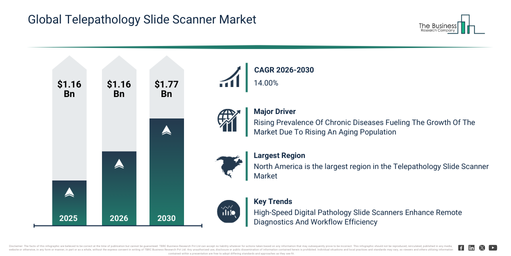
    The telepathology slide scanner market has seen rapid growth recently, with its value projected to rise from $1.5 billion in 2025 to $1.72 billion in 2026, reflecting a compound annual growth rate (CAGR) of 14.3%. This increase over the past years is largely due to a shortage of pathologists, a surge in cancer diagnostics, ongoing digitalization of laboratories, the demand for remote consultations, and improvements in imaging technology. Looking ahead, the market is predicted to grow even faster, reaching $2.91 billion by 2030 at a CAGR of 14.0%. Key drivers for this forecasted expansion include AI-enhanced diagnostic accuracy, wider adoption of telepathology, global collaboration among pathology experts, automation in workflow processes, and the growth of precision medicine. Emerging trends such as whole slide digital imaging, remote pathology diagnostics, AI-assisted slide analysis, high-throughput scanning, and cloud-based pathology workflows are also expected to fuel market growth.

    Download A Free Sample Report For Comprehensive Market Insights:

    https://www.thebusinessresearchcompany.com/sample.aspx?id=29228&type=smp

    Increasing Impact of Chronic Diseases on Telepathology Slide Scanner Demand

    One of the main factors driving revenue growth in the telepathology slide scanner market is the rising prevalence of chronic illnesses. Chronic diseases like cardiovascular conditions, diabetes, cancer, and respiratory disorders tend to develop gradually and require long-term medical management. The aging global population is a significant contributor to this trend because aging weakens the immune system, slows tissue repair, and causes cellular damage, increasing susceptibility to such conditions. Telepathology slide scanners enable fast remote examination of tissue samples and biopsies, facilitating early diagnosis and ongoing monitoring of chronic diseases, particularly cancer. These devices enhance diagnostic precision, reduce turnaround times, and allow specialists to collaborate remotely, improving patient outcomes. For example, in April 2025, the Centers for Disease Control and Prevention (CDC) reported that 76.4% of US adults—approximately 194 million people—had at least one chronic condition in 2023, underscoring the growing demand for advanced diagnostic tools like telepathology scanners.

    Market Segmentation Reveals Where Growth Opportunities Lie

    This report categorizes the telepathology slide scanner market across several dimensions:

    1) Product Type: Brightfield Scanners, Fluorescence Scanners, Whole Slide Imaging Scanners

    2) Technology: Digital Pathology, Virtual Microscopy, Other Technologies

    3) Application: Disease Diagnosis, Education, Research, Other Uses

    4) End-User: Hospitals, Diagnostic Laboratories, Academic and Research Institutes, Other Users

    Access The Complete Telepathology Slide Scanner Market Report:

    https://www.thebusinessresearchcompany.com/report/telepathology-slide-scanner-global-market-report

    Further breakdowns include:

    – Brightfield Scanners: Automated, Semi-Automated, and Manual models

    – Fluorescence Scanners: Single-Channel, Multi-Channel, Confocal types

    – Whole Slide Imaging Scanners: High-Throughput, Medium-Throughput, Low-Throughput variants

    These segmentations help identify the most promising areas for investment and innovation within the market.

    Emerging Technologies Shaping the Future of Telepathology Slide Scanners

    Key players in the telepathology slide scanner market are heavily investing in digital pathology solutions aimed at speeding up diagnostic workflows and enabling comprehensive remote slide analysis. High-speed slide scanners, in particular, are designed to quickly capture detailed, high-resolution images of pathology slides, supporting accurate diagnoses and efficient workflows in both clinical and research environments. For instance, in September 2024, South Korea-based Vieworks Co., Ltd. introduced the LUCEON 510 at the European Congress of Pathology held in Italy. This high-speed digital pathology slide scanner features a unique three-camera system that simultaneously captures images at different focus levels and merges them in real time, producing superior whole slide images. Capable of scanning up to 83 slides per hour with a 510-slide capacity, the LUCEON 510 offers four imaging modes optimized for histopathology and cytology applications, demonstrating the technological advancements driving market innovation.

    Competitive Landscape and Leading Companies in the Telepathology Slide Scanner Market

    The telepathology slide scanner market is populated by several influential companies that continue to drive innovation and expand market reach. Notable participants include Leica Biosystems, Hamamatsu Photonics K.K., 3DHISTECH Ltd., OptraSCAN Inc., Huron Digital Pathology Inc., Motic Group Co. Ltd., Grundium Ltd., KFBIO Co. Ltd., Excilone SAS, Wuhan Landing Intelligence Medical Co. Ltd., DSS Imagetech Pvt. Ltd., Carl Zeiss AG, Evident Scientific Inc., Keyence Corporation, F. Hoffmann-La Roche AG, Koninklijke Philips N.V., Meyer Instruments Inc., MBF Bioscience LLC, Mindray Bio-Medical Electronics Co. Ltd., and VisionTek Systems Ltd. These companies continue to compete on technological capabilities, product innovation, and global expansion strategies.

    Geographical Market Shares and Regional Growth Dynamics

    In 2025, North America held the largest share of the telepathology slide scanner market, supported by advanced healthcare infrastructure and widespread adoption of digital pathology solutions. Meanwhile, the Asia-Pacific region is expected to experience the fastest growth during the forecast period, driven by rising healthcare investments, increasing awareness of digital pathology benefits, and expanding medical infrastructure. Other regions covered in the market analysis include South East Asia, Western Europe, Eastern Europe, South America, the Middle East, and Africa, providing a comprehensive view of global market trends and regional opportunities.

    Get in touch with us:

    The Business Research Company: https://www.thebusinessresearchcompany.com/

    Americas: +1 310-496-7795

    Asia: +44 7882 955267 & +91 8897263534

    Europe: +44 7882 955267

    Email us at: marketing@tbrc.info

    Follow us on:

    LinkedIn: https://in.linkedin.com/company/the-business-research-company

    YouTube: https://www.youtube.com/channel/UC24_fI0rV8cR5DxlCpgmyFQ

    Global Market Model: https://www.thebusinessresearchcompany.com/global-market-model
  • Telemedicine Cart Market Opportunities Are Emerging Beyond Traditional Growth Areas

    Telemedicine Cart Market Opportunities Are Emerging Beyond Traditional Growth Areas

    Through market attractiveness analysis, total addressable market evaluation, company benchmarking matrices, interactive Excel dashboards, expanded supply chain intelligence, emerging startup coverage, and detailed product insights, The Business Research Company’s 2026 market reports provide more actionable and strategically valuable research.

    The telemedicine cart market has experienced remarkable growth recently, driven by technological advancements and increasing demand for remote healthcare solutions. As healthcare systems evolve, telemedicine carts are becoming essential tools for delivering quality care in diverse settings. Below, we explore the market’s current size, growth drivers, segmentation, leading companies, and regional outlook.

    Telemedicine Cart Market Size and Expected Growth Trajectory

    The telemedicine cart market is rapidly expanding, with its value projected to rise from $2.04 billion in 2025 to $2.42 billion in 2026, marking a compound annual growth rate (CAGR) of 18.6%. This upward trend during the historical period results from factors such as the growing need for remote patient monitoring, the rising incidence of chronic diseases, shortages in healthcare workforce, increasing adoption of digital health solutions, and heightened awareness of telemedicine’s advantages.

    Download A Free Sample Report For Comprehensive Market Insights:

    https://www.thebusinessresearchcompany.com/sample.aspx?id=25922&type=smp

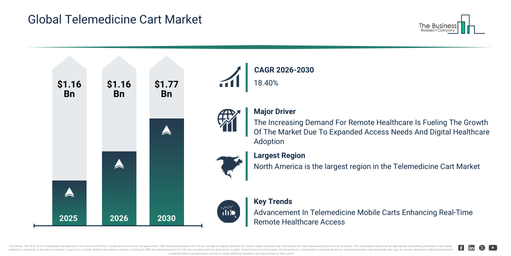
    Looking ahead, the market is anticipated to maintain strong growth, reaching $4.76 billion by 2030 with a CAGR of 18.4%. This forecasted expansion is supported by greater acceptance of home healthcare, advancements in AI-powered diagnostic tools, improved broadband and internet infrastructure, government support for digital health initiatives, and increased investment in telehealth facilities. Key market trends expected to shape future demand include the expansion of telemedicine services in rural locations, integration of wearable health devices, rising interest in mobile health applications, emphasis on patient-centered care models, and the adoption of remote clinical training programs.

    Factors Fueling the Rise of the Telemedicine Cart Market

    One of the main drivers propelling the telemedicine cart market is the growing demand for remote healthcare services. Remote healthcare enables medical consultations and treatments to be delivered through digital platforms, allowing patients to receive care without the need to travel to healthcare facilities. This is particularly important for rural and underserved areas where healthcare infrastructure is limited.

    Access The Complete Telemedicine Cart Market Report:

    https://www.thebusinessresearchcompany.com/report/telemedicine-cart-global-market-report

    Telemedicine carts play a crucial role by combining medical devices, cameras, and communication tools into mobile units that support real-time virtual consultations. These carts improve healthcare accessibility and optimize clinical workflows across geographically distant locations. For example, in August 2023, the Rockefeller Institute of Government reported that employment in home health and personal care aide roles in the United States is projected to increase by 25%, reaching 924,000 by 2031. This growth in remote healthcare demand directly supports the expansion of the telemedicine cart market.

    Detailed Segmentation of the Telemedicine Cart Market Explained

    This market is segmented broadly by components, product types, connectivity options, applications, and end-users. Components include hardware, software, and services. Product types consist of integrated telemedicine carts, modular telemedicine carts, and customized telemedicine carts. Connectivity is categorized into wired, wireless, and cloud-based solutions.

    Applications cover remote patient monitoring, clinical consultations, emergency care, education and training, among others. End-users encompass hospitals and clinics, ambulatory surgical centers, specialty centers, home care settings, and other users.

    Within these categories, further subdivisions exist. For hardware, items include display screens, integrated medical devices, cameras, microphones and speakers, power supply units, mobility equipment, and control panels with touch interfaces. Software subsegments comprise teleconsultation platforms, electronic health record (EHR) integration software, real-time communication tools, remote patient monitoring software, diagnostic programs, data security and encryption solutions, and workflow management systems.

    Service offerings include installation and setup, technical support and maintenance, training and education, software upgrades, integration and customization, remote IT support, and consulting services.

    Innovations and Trends Changing the Telemedicine Cart Market Landscape

    Leading companies in the telemedicine cart industry are focusing on developing cutting-edge products that improve real-time healthcare access in various clinical environments. Telemedicine mobile carts, which integrate medical tools, cameras, and communication technology into a single movable unit, facilitate virtual consultations and remote diagnostics. This allows healthcare providers to extend services to patients across multiple locations efficiently.

    For instance, in August 2024, First Products Inc., a US-based medical equipment manufacturer, introduced the Mov-it TeleView Cart, Mov-it Telediagnostic Cart, and Senior Virtual Health Telemedicine Mobile Cart. These solutions are designed to enhance healthcare delivery and patient outcomes by enabling two-way HD video conferencing and remote diagnostic capabilities. They provide specialized care for seniors and support broader access to healthcare in underserved and remote areas, while also reducing costs and increasing operational efficiency.

    Key Players Propelling the Telemedicine Cart Market Forward

    The telemedicine cart market features several significant companies driving innovation and competition, including Advantech Co Ltd, Rubbermaid Healthcare, Ergotron Inc, Capsa Healthcare, AFC Industries Inc, Vecna Technologies, Rudolf Riester GmbH, AVTEQ Inc, Cybernet Manufacturing Inc, PARSYS TELEMEDICINE, BriteMED Technology Inc, AMD Global Telemedicine Inc, Rife Technologies, First Products Inc, InTouch Technologies, Ditec Medical, Enovate Medical, Scott-Clark Medical, TouchPoint Medical, Medtronic Telehealth Solutions, GlobalMed, and HERMAN Miller Healthcare.

    Regional Market Insights Highlight North America’s Leadership

    In 2025, North America held the largest share in the telemedicine cart market. However, the Asia-Pacific region is expected to be the fastest-growing market throughout the forecast period. The report also covers other key regions, including South East Asia, Western Europe, Eastern Europe, South America, the Middle East, and Africa, offering a broad view of global market trends and opportunities.

    Get in touch with us:

    The Business Research Company: https://www.thebusinessresearchcompany.com/

    Americas: +1 310-496-7795

    Asia: +44 7882 955267 & +91 8897263534

    Europe: +44 7882 955267

    Email us at: marketing@tbrc.info

    Follow us on:

    LinkedIn: https://in.linkedin.com/company/the-business-research-company

    YouTube: https://www.youtube.com/channel/UC24_fI0rV8cR5DxlCpgmyFQ

    Global Market Model: https://www.thebusinessresearchcompany.com/global-market-model
  • Technetium-99m Market Expansion Is Opening New Pathways For Strategic Investment

    Technetium-99m Market Expansion Is Opening New Pathways For Strategic Investment

    Delivering more actionable and strategically valuable research, The Business Research Company’s 2026 market reports feature market attractiveness analysis, total addressable market evaluation, company benchmarking matrices, interactive Excel dashboards, expanded supply chain intelligence, emerging startup coverage, and detailed product insights.

    The technetium-99m market has experienced substantial growth in recent years, driven by advancements in medical imaging and increasing healthcare needs. As diagnostic technologies evolve and healthcare infrastructures expand worldwide, this market is positioned for continued development. Let’s explore the current market size, key growth drivers, prominent segments, recent innovations, leading players, and regional prospects shaping the technetium-99m industry.

    Steady Expansion Forecast in the Technetium-99m Market

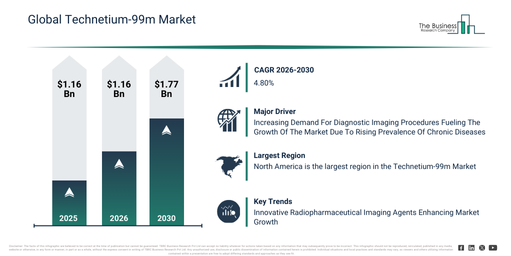
    The technetium-99m market has seen a robust upward trajectory, rising from $4.75 billion in 2025 to an anticipated $4.99 billion in 2026, representing a compound annual growth rate (CAGR) of 5.1%. This growth is largely attributed to factors such as limited availability of alternative radiopharmaceuticals, an increasing prevalence of cardiovascular diseases, expansion of nuclear medicine infrastructure, supportive government healthcare initiatives, and ongoing technological enhancements in imaging techniques. Looking ahead, the market is expected to maintain steady momentum, reaching $6.01 billion by 2030 with a CAGR of 4.8%. This forecasted growth is fueled by rising demand for precise diagnostic tools, the growth of hospital and imaging facility networks, the introduction of novel technetium-99m radiopharmaceuticals, greater integration of artificial intelligence in nuclear imaging, and heightened awareness of early disease detection. Key trends include the broader adoption of SPECT imaging, increased focus on cardiac and oncology diagnostics, demand for short half-life radiopharmaceuticals, expansion of centralized radiopharmacy services, and stronger regulatory and safety measures.

    Download A Free Sample Report For Comprehensive Market Insights:

    https://www.thebusinessresearchcompany.com/sample.aspx?id=25920&type=smp

    Growing Demand for Diagnostic Imaging Boosts Technetium-99m Market

    One of the primary drivers behind the technetium-99m market’s growth is the rising need for diagnostic imaging procedures. These procedures allow healthcare professionals to create detailed visual representations of the body’s internal structures, aiding in accurate diagnosis and treatment planning for various medical conditions. The surge in demand stems from the increasing prevalence of chronic diseases that require early and precise detection. Technetium-99m plays a vital role in these imaging procedures by enabling doctors to visualize organ and tissue function with high accuracy due to its radioactive properties. For instance, data from NHS England in November 2023 showed that 45.0 million imaging tests were performed in the year leading up to March 2023, marking a 2.2% increase over the previous year’s 44.0 million tests. This trend highlights the growing reliance on diagnostic imaging, which in turn drives the technetium-99m market forward.

    Technetium-99m Market Growth Supported by Medical Imaging Needs

    The expanding use of nuclear medicine across healthcare facilities is another factor propelling the technetium-99m market. As hospitals and imaging centers increase their capacity and technological capabilities, the demand for effective radiopharmaceuticals like technetium-99m rises. This growth is further boosted by government initiatives aimed at improving healthcare access and advancing diagnostic imaging infrastructure. Additionally, the ongoing focus on precision diagnostics and the integration of AI technologies facilitate more accurate and efficient imaging processes, contributing to the market’s positive outlook.

    Access The Complete Technetium-99m Market Report:

    https://www.thebusinessresearchcompany.com/report/technetium-99m-global-market-report

    Detailed Segmentation of the Technetium-99m Market

    This report categorizes the technetium-99m market into key segments to better understand revenue sources and market dynamics. By product type, the market includes radiopharmaceuticals, diagnostic kits, and generators. In terms of formulation, the market is divided into liquid, solid, and freeze-dried forms. Applications cover Single Photon Emission Computed Tomography (SPECT) imaging, oncology, cardiology, neurology, and other medical uses. End-users comprise hospitals, diagnostic imaging centers, research laboratories, specialized clinics, and other healthcare facilities. Further subsegments within radiopharmaceuticals include compounds such as sestamibi, tetrofosmin, sulfur colloid, macroaggregated albumin (MAA), and diethylenetriaminepentaacetic acid (DTPA). Diagnostic kits are segmented into cardiac, bone, renal, hepatobiliary, and pulmonary imaging kits. Generator types include hospital-based generators and centralized radiopharmacy generators.

    Technetium-99m Market Innovation Trends Enhancing Diagnostic Accuracy

    Leading companies in the technetium-99m space are actively developing cutting-edge radiopharmaceutical imaging agents to improve diagnostic imaging’s precision and accessibility. These agents are specialized radioactive compounds designed to help physicians visualize internal body structures more clearly. For example, in June 2024, Serac Healthcare Limited, a UK clinical radiopharmaceutical firm, received Fast Track Designation from the U.S. FDA for 99mTc-maraciclatide. This novel SPECT-CT imaging agent targets superficial peritoneal endometriosis in women aged 16 and older. It binds to integrins overexpressed in endometriosis lesions, providing clear visualization of disease sites during scans. Offering a non-invasive alternative to laparoscopic diagnosis, 99mTc-maraciclatide leverages technetium-99m’s favorable imaging properties—such as its optimal half-life and gamma emission energy—to produce high-quality images while minimizing radiation exposure. This innovation promises to enhance diagnostic accuracy and streamline treatment for endometriosis while expanding technetium-99m’s use in women’s health.

    Key Companies Leading the Technetium-99m Market

    The technetium-99m market features several prominent players shaping the industry landscape. These include Cardinal Health Inc, GE Healthcare Technologies Inc, BWX Technologies Inc, Bracco Imaging S.p.A., Lantheus Holdings Inc, China Isotope and Radiation Corporation, Jubilant Pharma Limited, Curium Pharma LLC, Eckert and Ziegler Strahlen, NorthStar Medical Radioisotopes LLC, NTP Radioisotopes SOC Ltd, Isotopia Molecular Imaging Ltd, Cyclopharm Limited, SHINE Technologies LLC, Medi Radiopharma Kft, SDS Lifesciences Pvt Ltd, ANSTO Nuclear Medicine, IRE ELiT, Sam Young Unitech Co Ltd, RadioMedix Inc, Institute of Isotopes Co Ltd, and Monrol Nuclear Products. These organizations contribute through innovation, production capacity, and global distribution networks.

    Geographical Distribution and Market Growth Outlook for Technetium-99m

    In 2025, North America accounted for the largest share of the technetium-99m market. However, the Asia-Pacific region is projected to become the fastest-growing market over the forecast period. The market report covers multiple regions, including Asia-Pacific, South East Asia, Western Europe, Eastern Europe, North America, South America, the Middle East, and Africa, providing a comprehensive view of the global market trends and regional opportunities.

    Get in touch with us:

    The Business Research Company: https://www.thebusinessresearchcompany.com/

    Americas: +1 310-496-7795

    Asia: +44 7882 955267 & +91 8897263534

    Europe: +44 7882 955267

    Email us at: marketing@tbrc.info

    Follow us on:

    LinkedIn: https://in.linkedin.com/company/the-business-research-company

    YouTube: https://www.youtube.com/channel/UC24_fI0rV8cR5DxlCpgmyFQ

    Global Market Model: https://www.thebusinessresearchcompany.com/global-market-model
  • Tangential Flow Filtration Market Trends Are Creating New Opportunities For Industry Leaders

    Tangential Flow Filtration Market Trends Are Creating New Opportunities For Industry Leaders

    Enhanced with market attractiveness analysis, total addressable market evaluation, company benchmarking matrices, interactive Excel dashboards, expanded supply chain intelligence, emerging startup coverage, and detailed product insights, The Business Research Company’s 2026 market reports deliver more actionable and strategically valuable research.

    The tangential flow filtration market is experiencing significant momentum as advances in biopharmaceutical manufacturing and downstream processing accelerate its expansion. With increasing demand for efficient filtration technologies and growing investments in biotechnology, this market is positioned for notable growth in the coming years. Let’s explore the current market size, driving forces, segmentation, emerging trends, key players, and regional outlook shaping this industry.

    Current Market Size and Projected Growth in the Tangential Flow Filtration Market

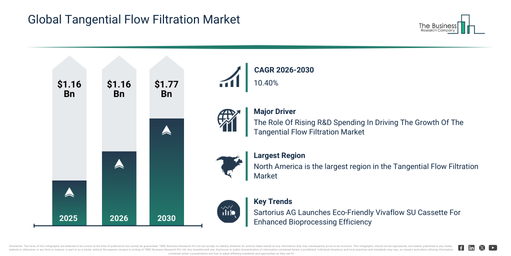
    The tangential flow filtration market has witnessed rapid growth recently and is forecasted to continue on this trajectory. The market value is expected to rise from $2.26 billion in 2025 to $2.5 billion in 2026, representing a compound annual growth rate (CAGR) of 10.5%. This growth stems from increased biopharmaceutical production, expanding downstream processing requirements, broader adoption of membrane filtration, higher biologics manufacturing volumes, and the availability of advanced filtration materials. Looking ahead, the market is projected to reach $3.72 billion by 2030, with a CAGR of 10.4%. Factors such as the rising demand for gene and cell therapies, expanded vaccine manufacturing capabilities, growing use of single-use bioprocessing systems, emphasis on cost-efficient downstream processes, and enhanced automation in biomanufacturing are expected to fuel this growth further. Key market trends include the increased acceptance of single-use TFF systems, demand for high-throughput bioprocessing solutions, integration of automated filtration platforms, expansion of TFF applications in vaccine and gene therapies, and a stronger focus on scalability and process efficiency.

    Download A Free Sample Report For Comprehensive Market Insights:

    https://www.thebusinessresearchcompany.com/sample.aspx?id=8568&type=smp

    Increasing Research and Development Investment Bolstering Tangential Flow Filtration Market

    A major factor driving the growth of the tangential flow filtration market is the rising expenditure on research and development (R&D) within pharmaceutical and biotechnology sectors. TFF plays a critical role in downstream processing by enabling concentration and purification steps for biopharmaceutical products. Growing R&D budgets support the adoption and advancement of TFF technologies. For example, Eurostat reported that in December 2024, the European Union’s R&D spending reached USD 408 billion (€381.4 billion) in 2023, marking a 6.7% increase from the previous year’s USD 382 billion (€357.4 billion). This upward trend in R&D investment is expected to generate substantial demand for tangential flow filtration solutions throughout the forecast period.

    How the Tangential Flow Filtration Market is Structured Across Products and Technologies

    The tangential flow filtration market is segmented in several ways to capture the diversity of its offerings. Product classifications include reusable systems, single-use systems, and membrane filters. Technology-wise, the market is divided into ultrafiltration and microfiltration categories. Application areas cover bioprocess applications, viral vector production, vaccine purification, and other uses. Further subsegments break down reusable systems into crossflow filtration systems, automated tangential flow systems, and batch systems. Single-use systems encompass pre-sterilized single-use assemblies and disposable filter capsules. Membrane filters are categorized into ultrafiltration membranes, microfiltration membranes, and nanofiltration membranes. This detailed segmentation allows for targeted analysis of market segments and customer needs.

    Access The Complete Tangential Flow Filtration Market Report:

    https://www.thebusinessresearchcompany.com/report/tangential-flow-filtration-global-market-report

    Innovations and Trends Advancing the Tangential Flow Filtration Industry

    Leading companies in the tangential flow filtration market are focusing on creating innovative solutions designed to improve efficiency and precision in bioprocessing. An example of this innovation is the introduction of laboratory-focused TFF cassettes, which simplify filtration processes in research settings. In September 2024, Sartorius AG, a German supplier of pharmaceutical and laboratory equipment, launched the Vivaflow SU—a next-generation TFF cassette that accommodates feed volumes from 100 mL to 1,000 mL and supports ultrafiltration and diafiltration procedures. This user-friendly cassette reduces setup complexity, operating seamlessly with standard laboratory pumps. Additionally, its eco-conscious design uses 30.5% less plastic than previous models, helping to minimize environmental impact.

    Key Companies Leading the Tangential Flow Filtration Market

    Several prominent players shape the competitive landscape of the tangential flow filtration market. These include Danaher Corporation, Koch Membrane Systems Inc., Merck Millipore, Sartorius AG, GE Healthcare, Parker Hannifin Corporation, Repligen Corporation, Alfa Laval Corporate AB, Andritz AG, Sterlitech Corporation, Meissner Filtration Products Inc., Spectrum Inc., TangenX Technology Corporation, Watersep Bioseparations Corporation, Pall Corporation, Novasep Holding SAS, Asahi Kasei Corporation, Graver Technologies, GEA Group Aktiengesellschaft, Filtration Group Corporation, 3M Company, Amazon Filters Ltd., Advantec MFS Inc., Membrane Solutions LLC, and Entegris Inc. These companies continue to innovate and expand their product portfolios to meet growing market demands.

    Regional Market Insights and Growth Prospects in Tangential Flow Filtration

    In 2025, North America held the largest share of the tangential flow filtration market, reflecting its strong biopharmaceutical sector and advanced technological infrastructure. However, the Asia-Pacific region is anticipated to be the fastest-growing market during the forecast period, driven by increased investments in biotechnology and expanding healthcare infrastructure. The market analysis also considers important regions such as South East Asia, Western Europe, Eastern Europe, South America, the Middle East, and Africa, providing a comprehensive view of global market trends and opportunities.

    Get in touch with us:

    The Business Research Company: https://www.thebusinessresearchcompany.com/

    Americas: +1 310-496-7795

    Asia: +44 7882 955267 & +91 8897263534

    Europe: +44 7882 955267

    Email us at: marketing@tbrc.info

    Follow us on:

    LinkedIn: https://in.linkedin.com/company/the-business-research-company

    YouTube: https://www.youtube.com/channel/UC24_fI0rV8cR5DxlCpgmyFQ

    Global Market Model: https://www.thebusinessresearchcompany.com/global-market-model
  • Syringe Trays Market Growth Is Reshaping Competitive Advantage Across The Industry

    Syringe Trays Market Growth Is Reshaping Competitive Advantage Across The Industry

    Through market attractiveness analysis, total addressable market evaluation, company benchmarking matrices, interactive Excel dashboards, expanded supply chain intelligence, emerging startup coverage, and detailed product insights, The Business Research Company’s 2026 market reports provide more actionable and strategically valuable research.

    The syringe trays market is experiencing remarkable growth, driven by increasing healthcare demands and advancements in medical procedures. As healthcare systems evolve, the need for efficient, sterile, and organized syringe storage solutions is becoming more critical, shaping the future trajectory of this industry. Let’s explore the current market size, key growth drivers, segmentation trends, emerging innovations, leading players, and regional dynamics influencing this market.

    Market Size and Growth Outlook for the Syringe Trays Market

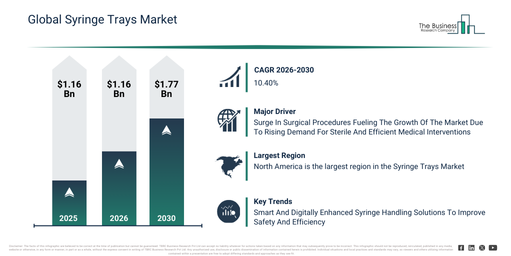
    The syringe trays market has witnessed rapid expansion in recent years, with revenues projected to rise from $20.36 billion in 2025 to $22.74 billion in 2026, reflecting a compound annual growth rate (CAGR) of 11.7%. This historical growth stems from enhanced healthcare delivery services, increased use of syringes in clinical settings, a surge in diagnostic and laboratory testing, widespread adoption of disposable medical supplies, and growth in pharmaceutical manufacturing. Looking ahead, the market is expected to grow even faster, reaching $33.79 billion by 2030, at a CAGR of 10.4%. This forecasted increase is supported by rising demand for environmentally friendly medical packaging, stricter infection control protocols, expansion in outpatient and diagnostic services, growing use of customized tray solutions, and tightening regulations around healthcare waste management. Anticipated trends include greater use of sterile, disposable syringe trays, recyclable polymer materials, multi-compartment designs, customizable packaging options, and stronger focus on contamination prevention.

    Download A Free Sample Report For Comprehensive Market Insights:

    https://www.thebusinessresearchcompany.com/sample.aspx?id=16807&type=smp

    Factors Fueling the Syringe Trays Market Growth

    The rising number of surgical interventions is a significant factor propelling the syringe trays market. Surgeries require sterile and well-organized instruments to maintain precision, safety, and efficiency. The increase in surgical procedures is driven by advances in medical technology, an aging population needing more frequent treatments, broader access to healthcare, and improved diagnostic methods facilitating timely interventions. Syringe trays play a crucial role by organizing and sterilizing syringes and related tools, enabling surgical teams to access materials quickly and safely. For instance, in May 2025, the British Association of Aesthetic Plastic Surgeons (BAAPS) reported that 27,462 cosmetic surgeries were performed in 2024, a 5% increase from the previous year, underscoring the growing demand for medical supplies like syringe trays.

    Detailed Segmentation and Revenue Drivers in the Syringe Trays Market

    This report classifies the syringe trays market based on type, distribution channel, and application. By type, the market includes Polypropylene Syringe Trays, Polyvinyl Chloride Syringe Trays, Polystyrene Syringe Trays, Polyethylene Syringe Trays, and other variants. Distribution channels are divided into offline and online sales. Application areas cover food laboratories, hospitals, veterinary services, agriculture, diagnostics, pharmaceuticals, and research laboratories. More granular subsegments include standard and recyclable polypropylene trays; medical-grade and reusable PVC trays; high-impact and disposable polystyrene trays; high-density and low-density polyethylene trays; and other types such as biodegradable materials, custom polymer trays, and multi-compartment trays.

    Access The Complete Syringe Trays Market Report:

    https://www.thebusinessresearchcompany.com/report/syringe-trays-global-market-report

    Innovations Shaping the Future of the Syringe Trays Market

    Leading companies in the syringe trays sector are investing in smart and digitally enhanced syringe-holding systems aimed at improving medication management, ensuring traceability, and boosting patient safety. These smart solutions incorporate digital technologies to monitor syringe use, capture real-time data, and increase overall handling efficiency. For example, in October 2024, Schreiner Group GmbH & Co. KG from Germany introduced its Smart Syringe Box, an intelligent packaging system designed for precise therapy monitoring. This product organizes syringes in individually perforated compartments and includes electronics that automatically detect and timestamp syringe removal. The data is transmitted via NFC, Bluetooth, or a smartphone app without requiring manual entry. Features include real-time therapy adherence tracking, optional temperature monitoring for sensitive drugs, and digital documentation, which together improve medication safety, simplify therapy tracking, and enhance operational efficiency within clinical and pharmaceutical environments.

    Key Players Driving Competition in the Syringe Trays Market

    The syringe trays market landscape is shaped by several major corporations. Prominent companies include Cardinal Health Inc., Becton Dickinson and Company, Baxter International Inc., Henry Schein Inc., Medline Industries LP, ICU Medical Inc., Vygon Ltd, Terumo Medical Corporation, Retractable Technologies Inc., Sol-Millennium Medical Group Inc., B. Braun Melsungen AG, ArcRoyal Ltd., MPS Medical Inc., Covidien Healthcare India Pvt Ltd, Hospital Equipment Manufacturing Company, Jal Extrusion Private Limited, Desco Medical, Shakti Polyplast, West Pharmaceutical Services Inc., and Gerresheimer AG.

    Regional Breakdown and Market Growth Patterns

    As of 2025, North America stood as the largest market for syringe trays, benefiting from advanced healthcare infrastructure and heavy medical procedure volumes. Meanwhile, the Asia-Pacific region is anticipated to experience the fastest growth during the forecast period, driven by rising healthcare investments, expanding medical services, and increasing demand for quality medical consumables. The report covers key regions including Asia-Pacific, South East Asia, Western Europe, Eastern Europe, North America, South America, the Middle East, and Africa, providing a broad view of global market trends.

    Get in touch with us:

    The Business Research Company: https://www.thebusinessresearchcompany.com/

    Americas: +1 310-496-7795

    Asia: +44 7882 955267 & +91 8897263534

    Europe: +44 7882 955267

    Email us at: marketing@tbrc.info

    Follow us on:

    LinkedIn: https://in.linkedin.com/company/the-business-research-company

    YouTube: https://www.youtube.com/channel/UC24_fI0rV8cR5DxlCpgmyFQ

    Global Market Model: https://www.thebusinessresearchcompany.com/global-market-model
  • Synthetic Blood Substitutes And Blood Products Market Forecast Signals New Revenue Opportunities Through 2030

    Synthetic Blood Substitutes And Blood Products Market Forecast Signals New Revenue Opportunities Through 2030

    Delivering more actionable and strategically valuable research, The Business Research Company’s 2026 market reports feature market attractiveness analysis, total addressable market evaluation, company benchmarking matrices, interactive Excel dashboards, expanded supply chain intelligence, emerging startup coverage, and detailed product insights.

    The synthetic blood substitutes and blood products industry is experiencing substantial growth, driven by medical needs and technological advancements. As healthcare challenges evolve, this market is set to expand rapidly, offering promising solutions for trauma care, chronic disease management, and surgical procedures. Let’s explore the current market size, key drivers, trends, major players, and geographic outlook shaping this important sector.

    Strong Market Expansion Forecast for Synthetic Blood Substitutes and Blood Products

    The market for synthetic blood substitutes and blood products has witnessed significant growth in recent years. It is projected to increase from $7.6 billion in 2025 to $8.81 billion in 2026, reflecting a robust compound annual growth rate (CAGR) of 15.9%. This historical growth is largely driven by persistent shortages in blood donations, rising demands from trauma and surgical interventions, concerns over transfusion-transmitted infections, an increase in cardiovascular surgeries, and medical needs within the military sector.

    Download A Free Sample Report For Comprehensive Market Insights:

    https://www.thebusinessresearchcompany.com/sample.aspx?id=21294&type=smp

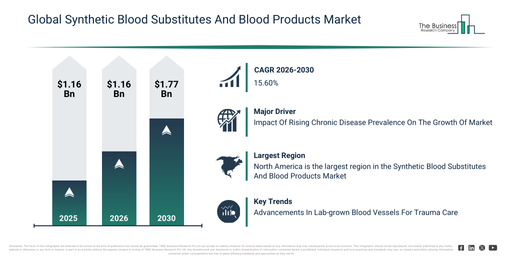
    Looking ahead, the market is expected to maintain its rapid expansion, reaching $15.7 billion by 2030 with an anticipated CAGR of 15.6%. Factors propelling this future growth include the rising incidence of trauma cases, a growing elderly population requiring surgeries, innovations in recombinant blood factors, a soaring demand for universal blood substitutes, and increased investments in emergency preparedness. Key trends shaping this period involve the development of oxygen-carrying substitutes, alternatives for trauma emergencies, reduced reliance on donor blood, blood products with longer shelf lives, and greater adoption in military and disaster medicine.

    Rising Chronic Disease Rates Fueling Demand for Synthetic Blood Products

    One of the primary factors driving the synthetic blood substitutes and blood products market is the increasing prevalence of chronic diseases worldwide. These long-lasting conditions, often requiring ongoing treatment, are becoming more common due to an aging population, unhealthy lifestyle choices, and longer life expectancies. Synthetic blood products help address critical issues related to blood loss, anemia, and impaired organ function commonly seen in patients with chronic illnesses.

    Access The Complete Synthetic Blood Substitutes And Blood Products Market Report:

    https://www.thebusinessresearchcompany.com/report/synthetic-blood-substitutes-and-blood-products-global-market-report

    For instance, data from March 2025 by the UK’s Office for Health Improvement & Disparities (OHID) shows that the prevalence of type 2 diabetes among adults aged 17 and over in England rose from 6.8% in March 2023 to 7.0% in March 2024. Such trends emphasize the growing need for synthetic blood substitutes to support the management of these chronic conditions, thereby accelerating market growth.

    Understanding Market Segments in Synthetic Blood Substitutes and Blood Products

    This market is categorized into several distinct segments to better analyze growth areas. By type, it includes Perfluorocarbon Based Products (PFC), Haemoglobin Based Oxygen Carriers, Synthetic Platelets, Recombinant Factors, and Blood Expanders. Applications cover cardiovascular diseases, anemia, organ transplant, injury and trauma, along with other uses. End-users mainly consist of hospitals and clinics, blood banks, and other healthcare providers.

    Further breakdowns include types of Perfluorocarbon products such as emulsion and non-emulsion forms; for haemoglobin carriers, polymerized and crosslinked products; synthetic platelets divided into platelet substitutes and aggregation inhibitors; recombinant factors including factor VIII, IX, and others; and blood expanders encompassing colloid and crystalloid solutions.

    Innovation and Trend Highlights Boosting the Synthetic Blood Market

    Leading companies in this industry are concentrating on breakthrough innovations like lab-grown blood vessels to improve emergency medical care and trauma treatment outcomes. These bioengineered vessels, created using human or synthetic cells, mimic the structure and function of natural arteries and veins and are intended for use in trauma repair, dialysis, and cardiovascular surgeries.

    An example is the December 2024 FDA approval of Symvess by Humacyte Global, Inc., a bioengineered, off-the-shelf blood vessel implant designed for trauma patients requiring urgent revascularization. Symvess offers a safer alternative to traditional vein harvesting or synthetic grafts and is suitable for universal application, helping restore blood flow and preserve limbs after severe injuries.

    Key Industry Players Dominating the Synthetic Blood Substitutes Market

    Several prominent companies hold significant presence in the synthetic blood substitutes and blood products market. These include Takeda Pharmaceutical Company Limited, Fresenius Kabi AG, Baxter International Inc., Octapharma AG, Green Cross Corporation, Alliance Pharmaceutical Corporation, Hemosol Inc., Sanguine Corporation, Sangart Inc., Biopure Corporation, Tenex Therapeutics, Velico Medical, Hemarina S.A., KaloCyte Inc., Aurum Biosciences Limited, SpheriTech Limited, Dendritech Inc., HbO2 Therapeutics LLC, HemoBioTech Inc., and Somatogen Inc. Their efforts span product innovation, clinical development, and market expansion.

    Geographical Overview and Regional Growth Prospects

    In 2025, North America held the largest share of the synthetic blood substitutes and blood products market. However, the Asia-Pacific region is projected to experience the fastest growth during the forecast period. The market report includes comprehensive insights into regions such as Asia-Pacific, South East Asia, Western Europe, Eastern Europe, North America, South America, the Middle East, and Africa, providing a global perspective on demand and development trends.

    Get in touch with us:

    The Business Research Company: https://www.thebusinessresearchcompany.com/

    Americas: +1 310-496-7795

    Asia: +44 7882 955267 & +91 8897263534

    Europe: +44 7882 955267

    Email us at: marketing@tbrc.info

    Follow us on:

    LinkedIn: https://in.linkedin.com/company/the-business-research-company

    YouTube: https://www.youtube.com/channel/UC24_fI0rV8cR5DxlCpgmyFQ

    Global Market Model: https://www.thebusinessresearchcompany.com/global-market-model
  • Syndromic Multiplex Diagnostics Market Growth Is Accelerating As Industry Transformation Continues

    Syndromic Multiplex Diagnostics Market Growth Is Accelerating As Industry Transformation Continues

    Enhanced with market attractiveness analysis, total addressable market evaluation, company benchmarking matrices, interactive Excel dashboards, expanded supply chain intelligence, emerging startup coverage, and detailed product insights, The Business Research Company’s 2026 market reports deliver more actionable and strategically valuable research.

    The syndromic multiplex diagnostics market is experiencing rapid growth as advancements in technology and rising healthcare needs drive demand. This market plays a critical role in improving the speed and accuracy of infectious disease diagnosis, helping healthcare providers make informed decisions quickly. Let’s explore the current market size, key growth drivers, important segments, competitive landscape, and regional insights shaping this industry’s future.

    Syndromic Multiplex Diagnostics Market Size and Projected Growth

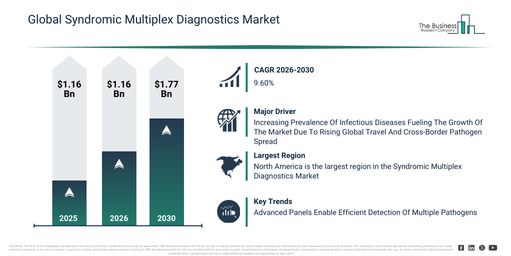
    The syndromic multiplex diagnostics market has shown robust expansion in recent years. It is expected to grow from $3.43 billion in 2025 to $3.76 billion in 2026, maintaining a compound annual growth rate (CAGR) of 9.6%. This upward trend reflects past challenges such as limited access to multiplex diagnostics, dependence on traditional single-pathogen tests, and a growing infectious disease burden. Investments in clinical laboratories and early adoption of PCR-based technologies have also fueled growth. Looking ahead, the market is projected to reach $5.42 billion by 2030, continuing the 9.6% CAGR. Factors driving this forecast include advancements in high-throughput multiplex platforms, AI-powered data analysis integration, expansion of clinical and research facilities, rising demand for rapid infectious disease screening, and the use of connected diagnostic and cloud solutions. Key trends shaping the future involve wider adoption of multiplex PCR and nucleic acid amplification test (NAAT) technologies, increasing use of next-generation sequencing, growth in cloud-based diagnostic platforms, and deployment of automated sample-to-answer systems.

    Download A Free Sample Report For Comprehensive Market Insights:

    https://www.thebusinessresearchcompany.com/sample.aspx?id=27427&type=smp

    Key Factors Driving the Syndromic Multiplex Diagnostics Market Growth

    One of the primary forces behind the market’s expansion is the rising prevalence of infectious diseases worldwide. These illnesses, caused by pathogens such as bacteria, viruses, fungi, and parasites, continue to affect large populations and present significant health challenges. The increase in global travel accelerates the spread of these diseases across countries and regions, intensifying the need for efficient diagnostic tools. Syndromic multiplex diagnostics respond to this demand by enabling rapid and simultaneous detection of multiple pathogens from a single sample, improving diagnosis speed and accuracy.

    This enhanced diagnostic capability supports timely treatment decisions and better patient outcomes. For example, in November 2025, the European Centre for Disease Prevention and Control (ECDC) reported 266,165 cases of CHIKVD and 118 deaths in Sweden for that year, marking a 35.2% decline compared to 2024. Brazil in South America remained the most affected region. These statistics highlight the ongoing challenge infectious diseases pose and reinforce the growing requirement for multiplex diagnostics to monitor and manage outbreaks effectively.

    Access The Complete Syndromic Multiplex Diagnostics Market Report:

    https://www.thebusinessresearchcompany.com/report/syndromic-multiplex-diagnostics-global-market-report

    How the Syndromic Multiplex Diagnostics Market is Organized by Segments

    The report categorizes the syndromic multiplex diagnostics market into several key segments:

    1) By Product Type: Instruments, Reagents, Software and Services

    2) By Sample Type: Blood, Urine, Saliva, Tissue

    3) By Technology: Polymerase Chain Reaction, Mass Spectrometry, Nucleic Acid Amplification Tests, Next-Generation Sequencing

    4) By Application: Infectious Diseases, Respiratory Diseases, Gastrointestinal Diseases, Sexually Transmitted Infections, Central Nervous System Diseases

    5) By End User: Clinical Laboratories, Hospitals, Pharmaceutical and Biotechnology Companies, Research Institutes, Other End Users

    Further breakdowns include instrument types like Real-Time PCR Systems, Microfluidic-Based Systems, Automated Sample-To-Answer Systems, Cartridge-Based Systems, and Multiplex PCR Platforms. Reagent categories cover assay panels, primers and probes, enzymes, buffers and solutions, and sample preparation reagents. Software and services span data analysis tools, cloud-based diagnostic platforms, integration solutions, technical support, maintenance, calibration services, and training and installation support.

    How Technological Trends Are Shaping Competition in the Syndromic Multiplex Diagnostics Sector

    Leading companies in this market prioritize developing advanced technologies such as AI-enhanced diagnostic algorithms to improve detection speed, accuracy, and comprehensiveness. These AI-driven tools employ machine learning and deep learning techniques to analyze complex clinical and laboratory data, enabling faster and more precise disease diagnoses.

    An example is Qiagen N.V., a molecular diagnostics firm based in the Netherlands, which in January 2024 launched two syndromic testing panels—the Gastrointestinal Panel 2 and the Meningitis and Encephalitis Panel—designed for its QIAstat Dx platform. These panels facilitate rapid and accurate infectious disease diagnosis by detecting multiple pathogens in a single test, helping healthcare professionals make informed clinical decisions. The QIAstat-Dx system also incorporates advanced data analytics, supporting efficient outbreak identification and management.

    Key Players Influencing the Syndromic Multiplex Diagnostics Market Landscape

    The competitive landscape includes several prominent companies driving innovation and market growth. Notable players include Roche Molecular Systems Inc., Abbott Laboratories, Becton Dickinson and Company, Hologic Inc., Bio-Rad Laboratories Inc., Qiagen N.V., Cepheid, Bosch Healthcare Solutions GmbH, Biocartis NV, Luminex Corporation, Curetis GmbH, Accelerate Diagnostics Inc., Applied BioCode Inc., Ador Diagnostics Ltd., Akonni Biosystems Inc., Alveo Technologies Inc., Atlas Genetics Ltd., BioFire Diagnostics LLC, Nanomix Inc., and Primerdesign Ltd. These organizations continue to innovate and expand their diagnostic offerings to meet evolving healthcare needs.

    Regional Market Leadership and Emerging Growth Areas in Syndromic Multiplex Diagnostics

    In 2025, North America held the largest share of the syndromic multiplex diagnostics market. However, the Asia-Pacific region is expected to experience the fastest growth during the forecast period. The market analysis also covers regions including Asia-Pacific, South East Asia, Western Europe, Eastern Europe, South America, the Middle East, and Africa, providing a broad perspective on global market trends and opportunities.

    Get in touch with us:

    The Business Research Company: https://www.thebusinessresearchcompany.com/

    Americas: +1 310-496-7795

    Asia: +44 7882 955267 & +91 8897263534

    Europe: +44 7882 955267

    Email us at: marketing@tbrc.info

    Follow us on:

    LinkedIn: https://in.linkedin.com/company/the-business-research-company

    YouTube: https://www.youtube.com/channel/UC24_fI0rV8cR5DxlCpgmyFQ

    Global Market Model: https://www.thebusinessresearchcompany.com/global-market-model
  • Surgical Tables Market Outlook Highlights The Next Major Growth Opportunities

    Surgical Tables Market Outlook Highlights The Next Major Growth Opportunities

    Through market attractiveness analysis, total addressable market evaluation, company benchmarking matrices, interactive Excel dashboards, expanded supply chain intelligence, emerging startup coverage, and detailed product insights, The Business Research Company’s 2026 market reports provide more actionable and strategically valuable research.

    The surgical tables market has witnessed significant growth in recent years, reflecting broader advancements in healthcare infrastructure and surgical practices. With evolving technology and increasing procedural demand, this sector is set to experience continued expansion. Below is a detailed overview of the market’s size, growth drivers, segmentation, emerging trends, key players, and regional outlook.

    Surgical Tables Market Size and Revenue Projections Through 2030

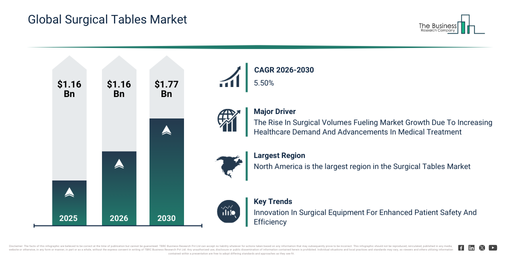
    The market for surgical tables has shown robust growth, expected to increase from $1.51 billion in 2025 to $1.6 billion in 2026, marking a compound annual growth rate (CAGR) of 6.1%. This upward trend during the historical period has been driven mainly by the expansion of surgical infrastructure within hospitals, a rising number of complex surgical procedures, enhanced availability of specialty operating rooms, adoption of cutting-edge imaging technologies, and a strong focus on improving surgical workflow efficiency.

    Looking ahead, the market is forecasted to continue growing, reaching $1.98 billion by 2030 at a CAGR of 5.5%. Key factors supporting this growth include increased investments in smart operating rooms, rising demand for equipment supporting minimally invasive surgeries, expansion of ambulatory surgical centers, widespread adoption of digitally controlled surgical tables, and greater attention to patient safety and comfort. Anticipated trends throughout this period include broader adoption of powered and automated surgical tables, growing preference for specialty and radiolucent tables, enhanced integration of imaging-compatible designs, more adjustable and modular table systems, and a stronger focus on precise patient positioning.

    Download A Free Sample Report For Comprehensive Market Insights:

    https://www.thebusinessresearchcompany.com/sample.aspx?id=17273&type=smp

    Key Factors Influencing Growth in the Surgical Tables Market

    The rising volume of surgeries is a primary factor propelling the surgical tables market forward. Several elements contribute to this increase, including an aging global population, continuous advancements in medical technology, improved access to healthcare services, and growing demand for elective procedures. Surgical tables are critical in operating rooms because they provide precise patient positioning, stability, versatility, compatibility with imaging equipment, ergonomic benefits for surgeons, and advanced features that improve procedural efficiency and safety.

    For example, in June 2024, the American Society of Plastic Surgeons—a US-based nonprofit—reported a 7% increase in minimally invasive procedures in 2023, exceeding the overall growth in surgical procedures by 2%. Additionally, hand surgeries, including carpal tunnel release, arthritis treatment, and trigger finger correction, numbered 207,887 procedures, marking a 2% rise from 2022. This growing surgical volume significantly boosts demand for surgical tables.

    Detailed Segmentation of the Surgical Tables Market and Growth Opportunities

    The surgical tables market is categorized into various segments to better understand growth potential:

    1) By Product Type: General, Specialty, Pediatric, Radiolucent

    2) By Device Type: Powered, Non-Powered

    3) By Material: Metal, Composite

    4) By End-Use: Hospitals and Clinics, Ambulatory Surgical Centers, Other End-Users

    Further subcategories include:

    – General surgical tables segmented into Manual, Electric, and Hydraulic options

    – Specialty tables covering Orthopedic, Neurological, Urology, Cardiac, and Obstetrics & Gynecology applications

    – Pediatric surgical tables classified into electric and manual types

    – Radiolucent tables featuring adjustable designs and imaging compatibility

    Access The Complete Surgical Tables Market Report:

    https://www.thebusinessresearchcompany.com/report/surgical-tables-global-market-report

    Current Trends Shaping Demand for Surgical Tables

    Leading manufacturers in the surgical tables arena are focusing on developing products that emphasize ease of use, patient safety, and enhanced surgical efficiency. User-friendly designs ensure that devices are intuitive and simple to operate, reducing the need for extensive training while improving workflow during surgeries. These products often feature clear interfaces, straightforward controls, and accessible designs to elevate the overall user experience.

    For instance, in August 2024, Swedish medical technology company Getinge AB introduced the Maquet Corin operating room table alongside the Maquet Ezea surgical light to improve safety, efficiency, and user experience in surgical settings. The Maquet Corin table incorporates an intuitive interface that streamlines workflows and fosters team coordination, including smart safety features like collision detection and overload alerts. Meanwhile, the Maquet Ezea surgical light focuses on durability and user-friendliness, offering strong illumination with features such as eye-sensitive dimming and a high color rendering index for accurate visualization during operations.

    Top Companies Leading the Surgical Tables Market

    Several prominent players dominate the surgical tables industry, including:

    – Stryker Corporation

    – STERIS Corporation

    – Getinge AB

    – Hillrom Holdings Inc.

    – Alvo Medical

    – Mizuho OSI

    – Skytron LLC

    – Merivaara Corp.

    – Berchtold Corporation

    – Mediland Enterprise Corporation

    – Narang Medical Limited

    – Medifa Healthcare Group

    – Stille AB

    – UFSK-OSYS

    – Denyers International Pty. Ltd.

    – AGA Sanitätsartikel GmbH

    – AMTAI Medical Equipment Inc.

    – Allen Medical Systems

    – NUVO Surgical

    – OPT SurgiSystems Srl

    – Schaerer Medical AG

    – Infinium Medical

    – TRUMPF Medizin Systeme GmbH Co. KG

    Regional Market Overview and Areas of Rapid Growth

    In 2025, North America held the largest share of the surgical tables market. However, the Asia-Pacific region is projected to be the fastest-growing market throughout the forecast period. The market analysis covers key geographic areas, including Asia-Pacific, South East Asia, Western Europe, Eastern Europe, North America, South America, the Middle East, and Africa, providing a comprehensive global perspective on market expansion.

    Get in touch with us:

    The Business Research Company: https://www.thebusinessresearchcompany.com/

    Americas: +1 310-496-7795

    Asia: +44 7882 955267 & +91 8897263534

    Europe: +44 7882 955267

    Email us at: marketing@tbrc.info

    Follow us on:

    LinkedIn: https://in.linkedin.com/company/the-business-research-company

    YouTube: https://www.youtube.com/channel/UC24_fI0rV8cR5DxlCpgmyFQ

    Global Market Model: https://www.thebusinessresearchcompany.com/global-market-model
  • Surgical Sutures And Staples Market Trends And Growth Drivers Point To Strong Future Potential

    Surgical Sutures And Staples Market Trends And Growth Drivers Point To Strong Future Potential

    Delivering more actionable and strategically valuable research, The Business Research Company’s 2026 market reports feature market attractiveness analysis, total addressable market evaluation, company benchmarking matrices, interactive Excel dashboards, expanded supply chain intelligence, emerging startup coverage, and detailed product insights.

    The surgical sutures and staples market is experiencing remarkable growth, driven by advances in medical technology and increasing surgical volumes worldwide. As healthcare systems expand and new wound closure techniques gain traction, this market continues to offer promising opportunities for innovation and investment. Let’s delve into the current market size, key growth factors, emerging trends, major players, and regional insights shaping this sector’s future.

    Strong Market Growth Trends in the Surgical Sutures and Staples Market

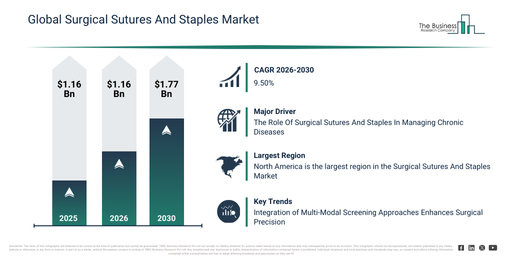
    The market for surgical sutures and staples has shown considerable expansion over recent years. It is projected to grow from $14.83 billion in 2025 to $16.14 billion in 2026, representing a compound annual growth rate (CAGR) of 8.8%. This increase is attributed to a rising number of surgical procedures, expanded hospital infrastructure, greater use of modern wound closure technologies, heightened demand for post-surgical safety, and broader availability of surgical consumables.

    Download A Free Sample Report For Comprehensive Market Insights:

    https://www.thebusinessresearchcompany.com/sample.aspx?id=2553&type=smp

    Looking ahead, the market is expected to continue its upward trajectory, reaching $23.23 billion by 2030 with an accelerated CAGR of 9.5%. Key factors driving this growth include a growing preference for minimally invasive surgical techniques, higher demand for advanced biocompatible materials, growth in outpatient surgical centers, enhanced focus on faster wound healing, and increased investment in surgical innovations. Important trends forecasted over the coming years involve the adoption of absorbable and bio-based sutures, rising demand for sophisticated surgical stapling devices, a focus on minimally invasive wound closure methods, development of infection-resistant suture materials, and a stronger emphasis on precision in wound closure.

    Driving Forces Behind the Surge in the Surgical Sutures and Staples Market

    One major factor fueling market growth is the increasing prevalence of chronic diseases worldwide. These long-term conditions, also known as non-communicable diseases (NCDs), often require surgical interventions for management or treatment. Surgical sutures and staples are essential tools in these procedures, helping close wounds, secure tissues, and support surgical success. This connection makes the rising incidence of chronic diseases a significant market driver.

    Access The Complete Surgical Sutures And Staples Market Report:

    https://www.thebusinessresearchcompany.com/report/surgical-sutures-and-staples-global-market-report

    For example, in September 2023, the World Health Organization reported that chronic diseases account for 41 million deaths annually, which is 74% of global deaths each year. Cardiovascular diseases caused 17.9 million deaths, cancer accounted for 9.3 million, chronic respiratory diseases led to 4.1 million deaths, and diabetes was responsible for 2 million. This data highlights how the burden of chronic diseases is directly boosting demand within the surgical sutures and staples market.

    Detailed Breakdown of the Surgical Sutures and Staples Market Segments

    This market is categorized based on product type, application, and end user. By product, it includes surgical sutures and surgical staples. Surgical sutures are further divided into absorbable and non-absorbable types, while surgical staples comprise linear staplers, circular staplers, and skin staplers.

    In terms of application, the market covers a wide range of surgical procedures such as general surgery, orthopedic surgery, cardiovascular surgery, gastrointestinal surgery, gynecological surgery, laparoscopic procedures, dermatologic procedures, ophthalmic procedures, emergency or trauma cases, and other specialized uses. The end users consist of hospitals, ambulatory surgical centers (ASCs), and clinics.

    Innovations Shaping the Future of the Surgical Sutures and Staples Market

    Leading companies are focusing on integrating advanced technologies to improve surgical outcomes. One notable innovation is the use of AI-enabled intraoperative visualization systems, which combine video analytics, imaging data, and procedural information to assist surgeons during tissue handling and device deployment. These technologies enhance surgical planning, device selection, and overall precision.

    For instance, in 2024, Ethicon, a US-based medical technology company, introduced the ECHELON 3000 Stapler. This device features enhanced left-right articulation for better access in tight anatomical spaces, refined firing control that ensures consistent compression across different tissue thicknesses, and an ergonomic design that improves stability during complex resections. Such innovations signal the increasing sophistication of surgical closure tools.

    Competitive Landscape Among Leading Surgical Sutures and Staples Market Players

    The surgical sutures and staples market includes several prominent companies competing globally. Key players include Ethicon Endo-Surgery Inc., Stryker Corporation, Smith & Nephew plc, Conmed Corporation, Medtronic plc, Johnson & Johnson, B.Braun Melsungen AG, Baxter International Inc., Dextera Surgical Inc., Becton, Dickinson and Company, Cardica Inc., and Purple Surgical Inc., among others. Additional important contributors are Welfare Medical Ltd., Reach Surgical Inc., Meril Life Science Pvt. Ltd., Frankenman International, Boston Scientific Corporation, Zimmer Holdings Inc., Intuitive Surgical Inc., CareFusion Corporation, 3M Company, CryoLife Inc., Derma Sciences Inc., DeRoyal Industries Inc., Teleflex Incorporated, DemeTECH Corporation, Sutures India Pvt. Ltd., Péters Surgical, EndoEvolution LLC, Surgical Specialties Corporation, Dolphin Sutures, Internacional Farmacéutica S.A. de C.V., AD Surgical, Apollo Endosurgery Inc., Assut Medical Sarl, and Aspen Surgical Products Inc.

    Which Regions Lead the Surgical Sutures and Staples Market?

    In 2025, North America held the largest portion of the global surgical sutures and staples market. Western Europe ranked as the second-largest region in market share. The overall market analysis covers various regions including Asia-Pacific, South East Asia, Western Europe, Eastern Europe, North America, South America, the Middle East, and Africa, providing a comprehensive view of global dynamics and growth potential.

    Get in touch with us:

    The Business Research Company: https://www.thebusinessresearchcompany.com/

    Americas: +1 310-496-7795

    Asia: +44 7882 955267 & +91 8897263534

    Europe: +44 7882 955267

    Email us at: marketing@tbrc.info

    Follow us on:

    LinkedIn: https://in.linkedin.com/company/the-business-research-company

    YouTube: https://www.youtube.com/channel/UC24_fI0rV8cR5DxlCpgmyFQ

    Global Market Model: https://www.thebusinessresearchcompany.com/global-market-model