Month: June 2026

  • Third-Generation Sequencing Technology Market Forecast Signals New Revenue Opportunities Through 2030

    Third-Generation Sequencing Technology Market Forecast Signals New Revenue Opportunities Through 2030

    Through market attractiveness analysis, total addressable market evaluation, company benchmarking matrices, interactive Excel dashboards, expanded supply chain intelligence, emerging startup coverage, and detailed product insights, The Business Research Company’s 2026 market reports provide more actionable and strategically valuable research.

    The field of third-generation sequencing technology has witnessed remarkable progress recently, driven by advances in genomics and growing demand for more precise genetic analysis. As this technology evolves, it is set to play a critical role in transforming research, clinical diagnostics, and personalized medicine. Let’s explore the current market size, growth drivers, key industry players, and emerging trends shaping this vital sector.

    Market Size and Projected Growth of the Third-Generation Sequencing Technology Market

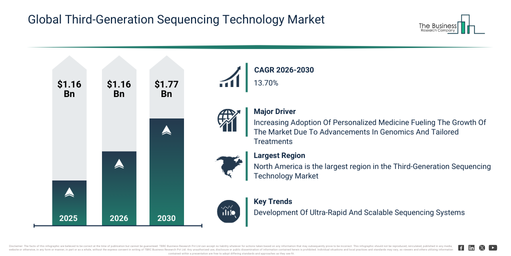
    The third-generation sequencing technology market has expanded significantly, with its value increasing from $14 billion in 2025 to $15.96 billion in 2026, representing a compound annual growth rate (CAGR) of 14.0%. This growth reflects investments in genomics research, challenges faced by short-read sequencing methods, wider acceptance in academic research, a surge in rare disease investigations, and ongoing technological innovations. Looking ahead, the market is anticipated to accelerate further, reaching $26.71 billion by 2030, growing at a CAGR of 13.7%. Contributing factors for this forecast include the broadening scope of precision medicine, adoption of clinical diagnostics, decreasing sequencing costs, integration of AI analytics, and large-scale population genomics projects. Key trends expected to influence the market during this period encompass advancements in long-read sequencing, real-time DNA analysis, clinical genomics implementation, single-molecule sequencing, and development of portable sequencing devices.

    Download A Free Sample Report For Comprehensive Market Insights:

    https://www.thebusinessresearchcompany.com/sample.aspx?id=28340&type=smp

    Personalized Medicine as a Catalyst for Market Expansion

    One of the most significant forces propelling the third-generation sequencing technology market is the rising embrace of personalized medicine. This approach tailors medical treatments and preventive strategies based on an individual’s unique genetic profile, lifestyle, and environmental factors. The growth in personalized medicine is closely tied to breakthroughs in genomics that allow for the precise identification of genetic variants and the formulation of customized therapies. Third-generation sequencing technology supports this by providing long-read, highly accurate genomic data, making it possible to detect genetic differences more comprehensively and to design more effective treatments.

    The impact of personalized medicine on market growth is underscored by recent developments. For example, in February 2024, the Personalized Medicine Coalition reported that the U.S. Food and Drug Administration (FDA) approved 26 new personalized medicines in 2023, a marked increase from the 12 approved in 2022. This surge highlights the accelerating acceptance and integration of tailored medical solutions, which in turn drives demand for advanced sequencing technologies.

    Access The Complete Third-Generation Sequencing Technology Market Report:

    https://www.thebusinessresearchcompany.com/report/third-generation-sequencing-technology-global-market-report

    Breakdown of Revenue-Generating Segments within the Third-Generation Sequencing Technology Market

    The market for third-generation sequencing technology is categorized across several dimensions. By technology type, the main segments include Single-Molecule Real-Time Sequencing (SMRT) and Nanopore Sequencing. Workflow stages include sample preparation, sequencing, data analysis, data interpretation, and data storage and management. Application-wise, the market spans genomics, transcriptomics, epigenomics, metagenomics, personalized medicine, and synthetic biology. End-users range from academic institutions and clinical laboratories to pharmaceutical and biotechnology companies, research organizations, and government and nonprofit entities.

    Within technology subsegments, SMRT sequencing is further divided into Zero-Mode Waveguides (ZMWs), Circular Consensus Sequencing (CCS), and High-Fidelity (HiFi) reads. Nanopore sequencing includes portable nanopore sequencers, benchtop nanopore sequencers, and high-throughput nanopore platforms, reflecting the diversity of devices adapted to various research and clinical needs.

    Industry Trends Transforming Demand in the Third-Generation Sequencing Technology Market

    Leading firms in the third-generation sequencing space are focusing efforts on creating cutting-edge platforms that deliver ultra-rapid and scalable sequencing solutions. These innovations aim to enhance research productivity, improve clinical relevance, and reduce both turnaround times and costs. Ultra-rapid and scalable sequencing systems facilitate high-throughput, real-time genomic analysis with exceptional speed and accuracy, enabling comprehensive genomic profiling across diverse applications.

    A case in point is Roche Holding AG, which in February 2025 introduced its Sequencing by Expansion (SBX) technology. This fully integrated next-generation sequencing system incorporates a patented biochemical process that converts DNA or RNA sequences into measurable surrogate polymers called Xpandomers. The SBX platform offers highly accurate single-molecule nanopore sequencing combined with automated data analysis, providing whole-genome sequencing results in hours instead of days, and requiring minimal manual input.

    Prominent Players and Strategic Positioning in the Third-Generation Sequencing Technology Market

    The competitive landscape of this market includes several key organizations such as Oxford Nanopore Technologies, Pacific Biosciences, Quantapore, Ultima Genomics, BGI Genomics, MGI Tech, Complete Genomics, Stratos Genomics, VisiGen Biotechnologies, Helicos Biosciences, Genia Technologies, Electronic Bio Sciences, Quantum Biosystems, Base4 Innovation, Nabsys, Chronix Biomedical, Roche, Nanopore Diagnostics, GenapSys, and SomaLogic. These companies are actively innovating and expanding their product portfolios to maintain leadership in this rapidly evolving domain.

    Geographical Leader in the Third-Generation Sequencing Technology Market

    In 2025, North America held the dominant share of the third-generation sequencing technology market. The industry analysis encompasses a broad geographic scope, including Asia-Pacific, South East Asia, Western Europe, Eastern Europe, South America, the Middle East, and Africa, providing a comprehensive view of global market dynamics and growth opportunities.

    Get in touch with us:

    The Business Research Company: https://www.thebusinessresearchcompany.com/

    Americas: +1 310-496-7795

    Asia: +44 7882 955267 & +91 8897263534

    Europe: +44 7882 955267

    Email us at: marketing@tbrc.info

    Follow us on:

    LinkedIn: https://in.linkedin.com/company/the-business-research-company

    YouTube: https://www.youtube.com/channel/UC24_fI0rV8cR5DxlCpgmyFQ

    Global Market Model: https://www.thebusinessresearchcompany.com/global-market-model
  • Therapeutic Drug Monitoring Market Growth Is Accelerating As Industry Transformation Continues

    Therapeutic Drug Monitoring Market Growth Is Accelerating As Industry Transformation Continues

    Delivering more actionable and strategically valuable research, The Business Research Company’s 2026 market reports feature market attractiveness analysis, total addressable market evaluation, company benchmarking matrices, interactive Excel dashboards, expanded supply chain intelligence, emerging startup coverage, and detailed product insights.

    The therapeutic drug monitoring sector has seen significant progress in recent years, driven by advancements in medical technology and growing demand for personalized treatment approaches. As healthcare evolves, this market is set to expand further, influenced by a variety of factors ranging from technological innovations to increasing healthcare needs worldwide. The following sections explore the market’s size, growth drivers, segmentation, innovations, competitive players, and regional dynamics.

    Therapeutic Drug Monitoring Market Size and Revenue Outlook Through 2030

    The therapeutic drug monitoring market has experienced rapid expansion and is projected to grow from $2.41 billion in 2025 to $2.67 billion in 2026, showing a compound annual growth rate (CAGR) of 10.9%. This historical growth stems from factors such as the increased use of drugs with narrow therapeutic windows, broader hospital laboratory testing, the adoption of immunoassay technologies, rising chronic disease prevalence, and advancements in analytical instruments.

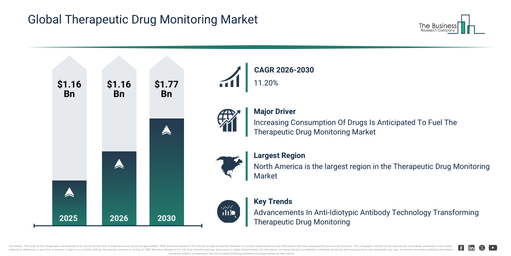
    Looking ahead, the market is expected to reach $4.09 billion by 2030, growing at a CAGR of 11.2%. This anticipated surge is driven by rising demand for precision medicine, growth of automated diagnostic laboratories, an emphasis on patient-specific dosing, technological progress in mass spectrometry, and wider adoption of real-time therapeutic monitoring. Key trends shaping the future market landscape include expanded use of LC-MS-based monitoring, personalized medicine strategies, integration of automated laboratory systems, real-time drug level analysis, and an increased focus on accurate dosing.

    Download A Free Sample Report For Comprehensive Market Insights:

    https://www.thebusinessresearchcompany.com/sample.aspx?id=10069&type=smp

    Factors Encouraging Growth in the Therapeutic Drug Monitoring Market

    A significant factor boosting the therapeutic drug monitoring market is the rising consumption of pharmaceutical drugs. These substances are essential for diagnosing, treating, or preventing diseases in humans and animals. Therapeutic drug monitoring helps optimize medication regimens by measuring drug concentrations in the bloodstream to ensure effective therapy while minimizing adverse effects.

    For instance, data released in January 2024 by the UK’s Office for Health Improvement & Disparities showed that from April 2022 to March 2023, 12,418 individuals under 18 accessed alcohol and drug services—a 10% increase compared to the previous year’s 11,326 cases. This upward trend in drug use underscores the growing need for therapeutic drug monitoring, fueling market expansion.

    Therapeutic Drug Monitoring Market Structure and Segmentation

    This market is categorized based on several key factors:

    1) Product Type: Consumables, Equipment, Immunoassay Analyzers, Chromatography and Detectors

    2) Drug Class: Antiepileptic Drugs, Antibiotic Drugs, Immunosuppressant Drugs, Antiarrhythmic Drugs, Psychoactive Drugs, Other Drugs

    3) End Users: Hospital Laboratories, Commercial and Private Laboratories, Other End Users

    Access The Complete Therapeutic Drug Monitoring Market Report:

    https://www.thebusinessresearchcompany.com/report/therapeutic-drug-monitoring-global-market-report

    More detailed subcategories include:

    – Consumables such as reagents, test kits, sample collection containers, and calibration standards

    – Equipment like analyzers, incubators, and centrifuges

    – Immunoassay analyzers including ELISA, chemiluminescent, and radioimmunoassay analyzers

    – Chromatography and detectors comprising high-performance liquid chromatography (HPLC), gas chromatography (GC), and mass spectrometry (MS)

    Innovative Developments Transforming the Therapeutic Drug Monitoring Market

    Leading companies in this market are focusing on advancing anti-idiotypic antibody technology to improve assay sensitivity and specificity. This technology enhances the accurate measurement of biologic drug levels and the monitoring of patient immune responses, which is crucial for precision dosing.

    For example, in June 2024, Bio-Rad Laboratories introduced new anti-idiotypic and anti-monomethyl auristatin E (MMAE) antibodies designed for bioanalytical assays. These innovations improve pharmacokinetic (PK) and antidrug-antibody (ADA) monitoring, particularly for antibody-drug conjugates (ADCs). Such advancements support more reliable therapeutic drug monitoring by enabling precise drug level assessments and immune response tracking.

    Key Players Driving the Therapeutic Drug Monitoring Market

    Several prominent companies are influential in this field, including Abbott Laboratories Inc., F. Hoffmann-La Roche AG, Siemens Healthineers AG, Thermo Fisher Scientific Inc., Sekisui Medical Co., Buehlmann Laboratories AG, Danaher Corporation, Bio-Rad Laboratories Inc., bioMérieux SA, Randox Laboratories Limited, Chromsystems Instruments & Chemicals GmbH, Grifols SA, Merck KGaA, BioChem Pharmaceuticals, Beckman Coulter Inc., DiaSorin S.p.A., Hologic Inc., Immunodiagnostic Systems Holdings plc, Kronus Inc., QuidelOrtho Corporation, Sysmex Corporation, TDM Solutions Inc., Theradiag, Tosoh Bioscience LLC, Trinity Biotech plc, Associated Regional and University Pathologists Inc., Mayo Clinic Laboratories, and Quest Diagnostics.

    Regional Market Insights and Growth Patterns in Therapeutic Drug Monitoring

    In 2025, North America held the leading position in the therapeutic drug monitoring market by revenue. Meanwhile, the Asia-Pacific region is anticipated to exhibit the fastest growth over the forecast period. The market analysis spans diverse regions including Asia-Pacific, South East Asia, Western Europe, Eastern Europe, North America, South America, the Middle East, and Africa, providing a comprehensive global perspective.

    Get in touch with us:

    The Business Research Company: https://www.thebusinessresearchcompany.com/

    Americas: +1 310-496-7795

    Asia: +44 7882 955267 & +91 8897263534

    Europe: +44 7882 955267

    Email us at: marketing@tbrc.info

    Follow us on:

    LinkedIn: https://in.linkedin.com/company/the-business-research-company

    YouTube: https://www.youtube.com/channel/UC24_fI0rV8cR5DxlCpgmyFQ

    Global Market Model: https://www.thebusinessresearchcompany.com/global-market-model
  • Therapeutic Dental Equipment Market Outlook Highlights The Next Major Growth Opportunities

    Therapeutic Dental Equipment Market Outlook Highlights The Next Major Growth Opportunities

    Enhanced with market attractiveness analysis, total addressable market evaluation, company benchmarking matrices, interactive Excel dashboards, expanded supply chain intelligence, emerging startup coverage, and detailed product insights, The Business Research Company’s 2026 market reports deliver more actionable and strategically valuable research.

    The therapeutic dental equipment sector has been witnessing substantial growth, driven by advancements in dental technologies and increasing awareness of oral health. This market is evolving rapidly as new treatments and tools enhance dental care quality and accessibility, supporting better patient outcomes worldwide. Let’s explore the market’s current size, growth factors, leading companies, and emerging trends shaping its future.

    Therapeutic Dental Equipment Market Size and Growth Projections

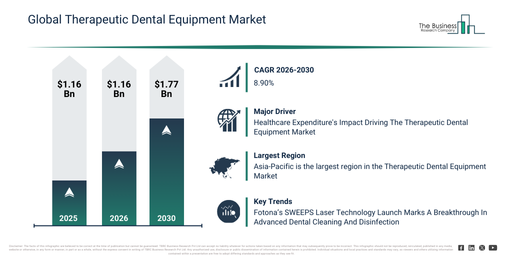
    The value of the therapeutic dental equipment market has seen significant progress in recent years. It is projected to rise from $2.39 billion in 2025 to $2.58 billion in 2026, marking a compound annual growth rate (CAGR) of 7.9%. This historic growth is largely due to the expansion of dental care facilities, an increase in oral health disorders, growing interest in cosmetic dentistry, wider adoption of modern dental instruments, and enhanced investments in dental healthcare infrastructure. Looking ahead, the market is expected to expand further to $3.63 billion by 2030, with a CAGR of 8.9%. Factors contributing to this forecasted growth include the rising demand for advanced dental procedures, greater acceptance of laser dentistry, growth in outpatient dental clinics, focus on pain-free treatments, and increasing investments in digital dental technologies.

    Download A Free Sample Report For Comprehensive Market Insights:

    https://www.thebusinessresearchcompany.com/sample.aspx?id=2390&type=smp

    Key Factors Encouraging Market Expansion

    One significant driver of market growth is the rising healthcare expenditure worldwide. Healthcare spending includes all costs related to medical services and products, which directly influence the development and availability of therapeutic dental equipment. The increase in chronic diseases requiring long-term care and frequent interventions further fuels this expenditure. For instance, in April 2025, the UK’s Office for National Statistics reported healthcare spending in 2024 reached approximately USD 365.65 billion (£317 billion), accounting for 11.1% of the nation’s GDP—a figure consistent with the previous year. This growing financial commitment to healthcare is a critical factor supporting the therapeutic dental equipment market’s expansion.

    Additional Growth Drivers in Therapeutic Dental Equipment

    Besides increased healthcare spending, the rising prevalence of oral health conditions and the expanding demand for minimally invasive and cosmetic dental treatments are accelerating market growth. The adoption of cutting-edge technologies, such as laser-based therapies and soft tissue equipment, also plays a pivotal role. Moreover, dental clinics and outpatient facilities continue to grow, providing more opportunities for deploying advanced therapeutic equipment and enhancing patient care experiences.

    Access The Complete Therapeutic Dental Equipment Market Report:

    https://www.thebusinessresearchcompany.com/report/therapeutic-dental-equipment-global-market-report

    Therapeutic Dental Equipment Market Segmentation Overview

    This market is categorized into various segments based on product type, end users, and therapeutic applications. Product segments include Soft Tissue Lasers and All Tissue Lasers. The Soft Tissue Lasers category is further divided into Diode Lasers and CO2 Lasers, while the All Tissue Lasers segment includes Er:YAG Lasers and Nd:YAG Lasers. End users cover hospitals, clinics, and dental laboratories. Therapeutic areas are divided into Restorative Dentistry, Orthodontics, Endodontics, and other related fields, providing a comprehensive breakdown of market focus areas.

    Innovations and Trends Shaping the Therapeutic Dental Equipment Market

    Technological advances are at the forefront of the therapeutic dental equipment market’s evolution. Companies are investing heavily in innovations such as photoacoustic laser irrigation, which enhances treatment accuracy, cleaning efficacy, and overall clinical results in procedures like endodontics, periodontics, and oral surgery. Photoacoustic technology allows better biofilm removal and irrigant penetration in complex root canal systems, surpassing conventional methods. For example, in March 2025, Fotona, a Slovenian dental laser manufacturer, launched its Shock Wave-Enhanced Emission Photoacoustic Streaming (SWEEPS) technology at the International Dental Show (IDS). This system uses precisely timed dual laser pulses with Auto and R-SWEEPS modes to create powerful shock waves that improve cavitation and fluid movement, delivering superior cleaning of root canals, periodontal pockets, and peri-implant areas. Such innovations offer clinicians minimally invasive options that improve disinfection and treatment effectiveness.

    Leading Players Dominating the Therapeutic Dental Equipment Market

    The competitive landscape is shaped by several key companies driving innovation and market penetration. Prominent players include CAO Group, BIOLASE Technology, Dentsply Sirona, Planmeca Group, A-dec, Midmark Corporation, A.R.C. Laser, Carestream Health Inc., The Yoshida Dental Mfg. Co., Ivoclar Vivadent Aktiengesellschaft, Convergent Dental, Den-Mat Holdings, IPG Photonics, Gnatus International Ltda., Takara Belmont Corporation, NSK Nakanishi, Young Innovations, Prime Dental Products Pvt. Ltd, AMD LASERS LLC, GC Corporation, Henry Schein Inc., Septodont, Coltène Whaledent, Kavo Kerr, KaVo Dental, Hu-Friedy Mfg. Co. LLC, BEGO, Ultradent Products Inc., DENTALEZ, StarDental, Aseptico Inc., and Parkell Inc. These organizations lead the way through continuous product development, strategic collaborations, and global market expansion.

    Geographical Distribution and Regional Market Dynamics

    In 2025, Asia-Pacific emerged as the largest market region for therapeutic dental equipment, reflecting growing demand and healthcare investments in the area. Western Europe holds the second-largest position in the global market. Other key regions analyzed in the market include South East Asia, Eastern Europe, North America, South America, the Middle East, and Africa, each offering unique growth opportunities and contributing to the overall market landscape.

    Get in touch with us:

    The Business Research Company: https://www.thebusinessresearchcompany.com/

    Americas: +1 310-496-7795

    Asia: +44 7882 955267 & +91 8897263534

    Europe: +44 7882 955267

    Email us at: marketing@tbrc.info

    Follow us on:

    LinkedIn: https://in.linkedin.com/company/the-business-research-company

    YouTube: https://www.youtube.com/channel/UC24_fI0rV8cR5DxlCpgmyFQ

    Global Market Model: https://www.thebusinessresearchcompany.com/global-market-model
  • Test Strips Market Trends And Growth Drivers Point To Strong Future Potential

    Test Strips Market Trends And Growth Drivers Point To Strong Future Potential

    Through market attractiveness analysis, total addressable market evaluation, company benchmarking matrices, interactive Excel dashboards, expanded supply chain intelligence, emerging startup coverage, and detailed product insights, The Business Research Company’s 2026 market reports provide more actionable and strategically valuable research.

    The test strips market is steadily advancing as healthcare continues to prioritize convenient and rapid diagnostic tools. Rising disease prevalence and technological improvements are setting the stage for ongoing expansion, while innovation and market diversification open new revenue streams. Let’s explore the current market size, key growth drivers, segment insights, emerging trends, major players, and regional dynamics shaping this sector.

    Test Strips Market Size and Forecasted Growth Trajectory

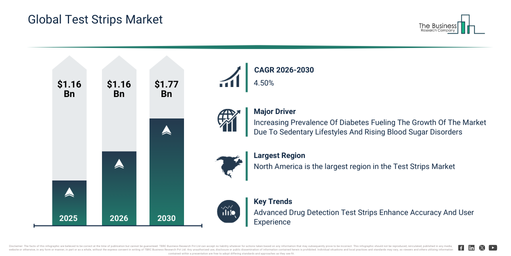
    The test strips market has demonstrated consistent growth in recent years and is projected to increase from $68.13 billion in 2025 to $71.42 billion in 2026, representing a compound annual growth rate (CAGR) of 4.8%. This earlier growth was driven by limited availability of home-testing kits, heavy dependence on conventional laboratory diagnostics, the rising incidence of diabetes, enhanced awareness about early disease detection, and constrained supply chains. Looking ahead, the market is expected to reach $85.21 billion by 2030, growing at a CAGR of 4.5%. This forecasted growth is supported by advancements in biosensor technologies, increasing adoption of digital health platforms, expansion in hospital and homecare services, rising chronic disease prevalence, and integration of AI-powered diagnostic tools. Key trends anticipated in this period include greater use of home-based testing solutions, heightened demand for multi-parameter test strips, mobile health app integrations, growth of point-of-care diagnostic setups, and a stronger focus on rapid and precise detection.

    Download A Free Sample Report For Comprehensive Market Insights:

    https://www.thebusinessresearchcompany.com/sample.aspx?id=24721&type=smp

    The Diabetes Epidemic Fueling Test Strips Market Expansion

    A primary driver propelling the test strips market is the escalating prevalence of diabetes worldwide. Diabetes is a chronic condition characterized by impaired blood sugar regulation due to the body’s inability to maintain glucose balance. Sedentary lifestyles contribute significantly to this rise, as physical inactivity often leads to weight gain and decreased insulin sensitivity, both increasing diabetes risk. Test strips play a critical role in diabetes management by enabling quick and accurate blood glucose monitoring. These devices simplify daily tracking, allowing timely treatment adjustments and better health outcomes. For example, the UK’s National Health Service reported in June 2024 that 3,615,330 patients registered with a general practitioner were diagnosed with non-diabetic hyperglycemia or pre-diabetes in 2023, marking an 18% increase from the previous year’s 3,065,825 cases. This surge highlights how rising diabetes rates are driving demand for test strips.

    Additional Factors Supporting Growth in the Test Strips Market

    Beyond diabetes, the need for early and accurate disease detection is increasingly recognized, pushing the adoption of test strips for diverse health conditions. The integration of biosensors and digital platforms enhances user convenience and data management. Moreover, the growth of homecare services and hospital networks further supports market expansion by widening access to these diagnostic tools. Together, these factors contribute to a sustainable growth environment for test strips.

    Access The Complete Test Strips Market Report:

    https://www.thebusinessresearchcompany.com/report/test-strips-global-market-report

    Detailed Segmentation Analysis in the Test Strips Market

    This sector is divided into multiple segments for better market understanding:

    1) Product Type: Blood Test Strips, Urine Test Strips, and Other Product Types

    2) Distribution Channel: Online Retail, Offline Retail, Direct Sales, Hospital Supply Chains, and Specialized Distributors

    3) Application: Diabetes, Infectious Diseases, Cardiac Marker Testing, Pregnancy and Fertility Testing, and Other Uses

    4) End User: Hospitals and Clinics, Homecare, Diagnostic Laboratories, and Other End Users

    Subcategories include:

    – Blood Test Strips such as Glucose, Cholesterol, Hemoglobin, Ketone, and Coagulation strips

    – Urine Test Strips encompassing pH, Protein, Glucose, Ketone, Leukocyte and Nitrite, Specific Gravity, and Microalbumin strips

    – Other Products including Saliva, Sweat, Multi-Parameter, Drug Abuse, and Fertility or Pregnancy Test Strips

    Innovations and Industry Trends Influencing Market Growth

    Market leaders are focusing on developing sophisticated test strips that improve detection accuracy and user experience. A notable innovation is drug detection test strips—portable devices designed for quick identification of specific drugs or metabolites in samples like urine or saliva. For instance, in September 2024, US-based Greenlane Holdings Inc. introduced advanced test strips capable of detecting substances such as fentaNYL, Xylazine, and common drink-spiking agents like benzodiazepines and ketamine. These strips provide results within two minutes and feature a simple dip-and-read or drop-and-wait design with clear visual indicators, making them ideal for use in bars, nightclubs, festivals, and personal safety kits. Such advancements highlight the increasing sophistication and utility of test strip technology.

    Key Players Holding Significant Positions in the Test Strips Market

    The test strips market features a range of prominent companies including Johnson & Johnson, F Hoffmann La Roche Ltd, Abbott Laboratories, Abbott Diabetes Care, Siemens Healthcare GmbH, Becton Dickinson and Company, bioMerieux SA, Bio Rad Laboratories Inc, TaiDoc Technology Corporation, Macherey Nagel GmbH and Co KG, OneTouch, EKF Diagnostics Holdings plc, Bionime Corporation, ACON Laboratories Inc, i SENS Inc, BTNX Inc, ARKRAY Inc, Ascensia Diabetes Care, LifeScan Inc, Nova Biomedical, Trividia Health, and Nipro Diagnostics. These players continue to invest in research and innovation to meet evolving healthcare needs.

    Regional Market Shares and Growth Patterns

    In 2025, North America was the largest regional market for test strips. However, the Asia-Pacific region is expected to experience the fastest growth during the forecast period. The market analysis spans regions including Asia-Pacific, South East Asia, Western Europe, Eastern Europe, North America, South America, the Middle East, and Africa, providing a comprehensive view of global trends and opportunities.

    Get in touch with us:

    The Business Research Company: https://www.thebusinessresearchcompany.com/

    Americas: +1 310-496-7795

    Asia: +44 7882 955267 & +91 8897263534

    Europe: +44 7882 955267

    Email us at: marketing@tbrc.info

    Follow us on:

    LinkedIn: https://in.linkedin.com/company/the-business-research-company

    YouTube: https://www.youtube.com/channel/UC24_fI0rV8cR5DxlCpgmyFQ

    Global Market Model: https://www.thebusinessresearchcompany.com/global-market-model
  • Tendon Repair Market Expansion Is Reshaping Competitive Dynamics Across The Industry

    Tendon Repair Market Expansion Is Reshaping Competitive Dynamics Across The Industry

    Delivering more actionable and strategically valuable research, The Business Research Company’s 2026 market reports feature market attractiveness analysis, total addressable market evaluation, company benchmarking matrices, interactive Excel dashboards, expanded supply chain intelligence, emerging startup coverage, and detailed product insights.

    The tendon repair market is gaining significant attention as the demand for effective treatments continues to rise. This sector is evolving rapidly, influenced by technological advancements and shifting lifestyle trends. Let’s explore the current market size, key growth drivers, leading companies, notable trends, and regional dynamics shaping the tendon repair industry.

    Tendon Repair Market Size and Growth Forecast Through 2030

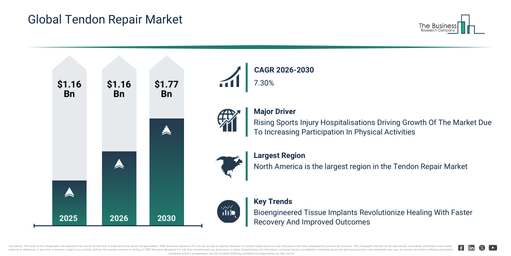
    The tendon repair market has experienced substantial expansion in recent years. It is projected to grow from $2.54 billion in 2025 to $2.73 billion in 2026, representing a compound annual growth rate (CAGR) of 7.5%. This earlier growth was driven by an increase in sports-related injuries, a growing elderly population, a higher prevalence of degenerative tendon disorders, limited awareness of minimally invasive treatment options, and the continued use of traditional suture and graft techniques.

    Looking ahead, the market is expected to reach $3.62 billion by 2030, maintaining a CAGR of 7.3% during this period. Growth will be fueled by innovations in bioinductive and synthetic implants, the integration of artificial intelligence and robotic assistance in surgeries, the expansion of outpatient surgical centers, rising participation in sports and active lifestyles, and advancements in regenerative medicine and biologic therapies. Key market trends shaping this future growth include the adoption of minimally invasive surgical procedures, customized tendon repair treatments, integration of regenerative solutions, the development of advanced suture and implant materials, and the increasing role of outpatient and ambulatory surgical services.

    Download A Free Sample Report For Comprehensive Market Insights:

    https://www.thebusinessresearchcompany.com/sample.aspx?id=25923&type=smp

    Rising Sports Injuries as a Primary Growth Driver for Tendon Repair

    A major factor propelling the tendon repair market is the growing number of sports injuries. These injuries, which affect muscles, tendons, ligaments, bones, and joints, often require medical or surgical care. The rise in hospital admissions for such injuries correlates with increased participation in intense and competitive physical activities, raising the risk of trauma and overuse damage. Tendon repair procedures are essential for restoring the integrity and function of injured tendons, alleviating pain, and enabling patients to return to activity more quickly.

    For instance, in October 2024, UK-based sports news service Insideworldfootball reported a total of 4,123 sports injuries during the 2023-24 season, marking a 4% increase compared to the previous year. This rise underscores the growing demand for tendon repair treatments and contributes to market expansion.

    Segmentation and Strategic Opportunities in the Tendon Repair Market

    This report breaks down the tendon repair market into several critical segments:

    1) Product Type: Implants, suture anchor devices, grafts, scaffolds, screws, tendon repair matrices, excision instruments, and other related products.

    2) Application Areas: Rotator cuff repair, Achilles tendinosis repair, cruciate ligament repair, biceps tenodesis, and additional applications.

    3) End-User Categories: Hospitals, ambulatory surgical centers (ASCs), specialty orthopedic clinics, and sports medicine centers.

    Further subcategories include types of implants (bioinductive, synthetic, biodegradable), suture anchors (metallic, bioabsorbable, all-suture), grafts (autografts, allografts, xenografts), scaffolds (collagen-based, synthetic polymers, hybrid), screws (interference, cannulated, bioabsorbable), tendon repair matrices (extracellular matrix patches, acellular dermal matrices, synthetic matrices), excision tools (arthroscopic, open surgical), and other products like surgical instruments, tensioning devices, and biologic adhesives. This detailed segmentation highlights numerous strategic opportunities for innovation and targeted product development within the market.

    Access The Complete Tendon Repair Market Report:

    https://www.thebusinessresearchcompany.com/report/tendon-repair-global-market-report

    Technological Advances and Innovations Steering Tendon Repair Market Growth

    Leading companies in the tendon repair field are investing heavily in new technologies, especially bioengineered tissue implants designed to improve healing outcomes, reduce recovery times, and strengthen the integration of repaired tendons. These implants are lab-engineered biological constructs made from natural or synthetic materials that mimic the structure and function of native tissues, assisting in the repair or regeneration of damaged tendons.

    For example, in July 2023, Smith+Nephew Plc, a healthcare firm based in the UK, introduced the Regeneten bioinductive implant in India. This minimally invasive, collagen-based device supports natural tendon healing and is used in rotator cuff repair. It promotes new tendon tissue growth, leading to faster recovery, significant pain relief, and a lower risk of further tendon degeneration or re-tear. Its benefits include shortened rehabilitation periods, quicker return to physical activity, and a favorable safety profile with minimal adverse effects.

    Key Competitors Driving the Tendon Repair Industry

    The tendon repair market features many prominent companies shaping competition and innovation, including Johnson And Johnson Services Inc, Stryker Corporation, Zimmer Biomet Holdings Inc, Smith And Nephew plc, Arthrex Inc, Enovis Corporation, Integra LifeSciences Holdings Corporation, CONMED Corporation, MiMedx Group Inc, Anika Therapeutics Inc, Intrauma S P A, Inion Oy, BioPro Inc, Aevumed Inc, Alafair Biosciences Inc, CoNextions Inc, Orthomed S A S, TendoMend Ltd, Parcus Medical LLC, Biorez Inc, Collagen Matrix Inc, and Organogenesis Holdings Inc. These companies are instrumental in advancing product technologies and expanding global market reach.

    Regional Market Dynamics and Growth Patterns

    In 2025, North America held the largest share of the tendon repair market, reflecting its strong healthcare infrastructure and high demand for advanced medical treatments. However, the Asia-Pacific region is forecasted to register the fastest growth during the upcoming years. The market analysis includes key regions such as Asia-Pacific, South East Asia, Western Europe, Eastern Europe, North America, South America, the Middle East, and Africa, providing a comprehensive view of global tendon repair opportunities and trends.

    Get in touch with us:

    The Business Research Company: https://www.thebusinessresearchcompany.com/

    Americas: +1 310-496-7795

    Asia: +44 7882 955267 & +91 8897263534

    Europe: +44 7882 955267

    Email us at: marketing@tbrc.info

    Follow us on:

    LinkedIn: https://in.linkedin.com/company/the-business-research-company

    YouTube: https://www.youtube.com/channel/UC24_fI0rV8cR5DxlCpgmyFQ

    Global Market Model: https://www.thebusinessresearchcompany.com/global-market-model
  • Tendon Allograft Market Forecast Reveals Where Future Industry Value Will Be Created

    Tendon Allograft Market Forecast Reveals Where Future Industry Value Will Be Created

    Enhanced with market attractiveness analysis, total addressable market evaluation, company benchmarking matrices, interactive Excel dashboards, expanded supply chain intelligence, emerging startup coverage, and detailed product insights, The Business Research Company’s 2026 market reports deliver more actionable and strategically valuable research.

    The tendon allograft market has witnessed significant growth recently, driven by advancements in medical technology and an increasing number of orthopedic procedures. With rising sports injuries and enhanced awareness of tendon repair options, this sector is set to experience strong expansion in the coming years. Let’s explore the current market size, key growth drivers, segmentation, major players, and geographic trends shaping the future of the tendon allograft industry.

    Tendon Allograft Market Size and Expected Growth Trajectory

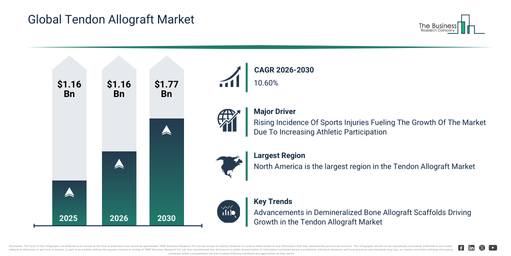
    The market for tendon allografts has shown rapid expansion in recent times. It is projected to grow from $1.53 billion in 2025 to $1.69 billion in 2026, reflecting a compound annual growth rate (CAGR) of 10.5%. This growth during the past years is linked to factors such as the limited supply of donor tendon tissue, the prevalent use of autografts for tendon repair, the increasing frequency of sports-related injuries, the rise in orthopedic surgeries, and growing awareness regarding tendon reconstruction methods. Looking ahead, the market is expected to reach $2.53 billion by 2030, growing at a CAGR of 10.6%. This forecasted rise is supported by advances in tendon allograft processing, expansion of sports medicine and orthopedic clinics, increased investments in tissue engineering and regenerative medicine, wider adoption of minimally invasive surgeries, and ongoing research into tendon repair and rehabilitation techniques. Key trends in this period include a higher demand for tendon repair surgeries, increased preference for soft tissue allografts, progress in minimally invasive orthopedic procedures, greater use of patellar and Achilles tendon grafts, and growth in rehabilitation and post-operative care programs.

    Download A Free Sample Report For Comprehensive Market Insights:

    https://www.thebusinessresearchcompany.com/sample.aspx?id=27435&type=smp

    The Influence of Sports Injuries on Tendon Allograft Market Growth

    One of the primary factors fueling growth in the tendon allograft market is the escalating number of sports-related injuries. These injuries, which affect muscles, tendons, ligaments, bones, or joints during athletic or physical activities, are becoming more common as participation in sports increases. Tendon allografts offer a ready supply of tendon tissue for surgical repair, making them particularly beneficial for athletes and physically active individuals. They help restore tendon function by supporting tissue healing and integration, thereby improving mobility and speeding up the return to sports. For instance, the U.S. National Safety Council reported that sports and recreational injuries in the United States rose to 564,845 in 2024, up from 482,886 in 2023. This upward trend in injuries is a significant driver for the tendon allograft market expansion.

    Additional Factors Propelling Demand in the Tendon Allograft Market

    Beyond sports injuries, several other factors are contributing to the market’s growth. The increasing number of orthopedic surgeries overall, coupled with greater awareness of tendon reconstruction techniques, is pushing demand higher. As more patients opt for less invasive procedures and improved tendon repair methods, healthcare providers are turning more frequently to allograft solutions. These developments, alongside growing investments in tissue engineering and regenerative medicine, are creating favorable conditions for sustained market growth.

    Access The Complete Tendon Allograft Market Report:

    https://www.thebusinessresearchcompany.com/report/tendon-allograft-global-market-report

    Detailed Segmentation in the Tendon Allograft Market

    This market is segmented across various dimensions to better understand its scope and potential. By type of allograft, the categories include flexor tendons, extensor tendons, patellar tendons, Achilles tendons, and other types. Product types are divided into soft tissue allografts, cartilage allografts, and bone allografts. Regarding applications, the market serves orthopedic, dental, cardiovascular, wound care, and other sectors. Distribution channels include direct sales, distributors, online sales, surgical centers, and hospitals. End-users comprise hospitals, ambulatory surgical centers, specialty clinics, rehabilitation centers, and research institutions. Further subcategories break down tendon types more specifically, such as finger, wrist, and elbow flexor and extensor tendons; different attachment points of patellar and Achilles tendons; and other miscellaneous tendons like rotator cuff and hamstring.

    Innovations and Technological Advances Impacting Market Competition

    Key players in the tendon allograft market are focusing on introducing technological innovations to stay ahead. One notable development is the use of demineralized bone allograft tendon scaffolds, which promote enhanced tendon-to-bone healing, reduce recovery times, and improve surgical outcomes in orthopedic and sports medicine. These scaffolds preserve collagen and growth factors from human bone, supporting natural tissue regeneration in ways synthetic grafts cannot match. For example, in February 2024, Tetrous Inc., a regenerative orthopedics company based in the US, launched the EnFix TAC implant. This fully demineralized bone allograft offers structural strength for surgical handling and encourages native tendon integration, suitable for various orthopedic tendon repair procedures. It provides surgeons with a biologically active alternative to conventional tendon grafts.

    Prominent Companies Leading the Tendon Allograft Market

    The landscape of the tendon allograft market features several influential companies. Some of the major players include Stryker Corporation, Regeneration Technologies Inc., Zimmer Biomet Holdings Inc., Smith & Nephew plc, Arthrex Inc., Conmed Corporation, MTF Biologics, MiMedx Group Inc., LifeNet Health Inc., AlloSource Inc., Xtant Medical Holdings Inc., Vivex Biomedical Inc., JRF Ortho Inc., Medtronic plc, RTI Surgical Inc., Integra LifeSciences Corporation, Lattice Biologics Ltd., Tissue Banks International, Aesculap Implant Systems, Organogenesis Holdings Inc., CryoLife Inc., Osiris Therapeutics Inc., and Tissue Regenix Group plc. These companies are heavily invested in research, innovation, and expanding their product portfolios to meet rising market demands.

    Geographic Overview Highlighting Regions with Fastest Market Growth

    In 2025, North America accounted for the largest share of the tendon allograft market. However, the Asia-Pacific region is anticipated to lead growth during the forecast period due to increasing healthcare infrastructure, rising sports participation, and expanding orthopedic treatment facilities. Other regions analyzed include South East Asia, Western Europe, Eastern Europe, South America, the Middle East, and Africa, providing a comprehensive view of global market trends and opportunities.

    Get in touch with us:

    The Business Research Company: https://www.thebusinessresearchcompany.com/

    Americas: +1 310-496-7795

    Asia: +44 7882 955267 & +91 8897263534

    Europe: +44 7882 955267

    Email us at: marketing@tbrc.info

    Follow us on:

    LinkedIn: https://in.linkedin.com/company/the-business-research-company

    YouTube: https://www.youtube.com/channel/UC24_fI0rV8cR5DxlCpgmyFQ

    Global Market Model: https://www.thebusinessresearchcompany.com/global-market-model
  • Temporomandibular Joint (TMJ) Implants Market Growth Through 2030 Creates New Strategic Opportunities

    Temporomandibular Joint (TMJ) Implants Market Growth Through 2030 Creates New Strategic Opportunities

    Through market attractiveness analysis, total addressable market evaluation, company benchmarking matrices, interactive Excel dashboards, expanded supply chain intelligence, emerging startup coverage, and detailed product insights, The Business Research Company’s 2026 market reports provide more actionable and strategically valuable research.

    The market for temporomandibular joint (TMJ) implants has witnessed significant expansion in recent years and is projected to continue this upward trend. This growth reflects advancements in medical technology, rising awareness, and increasing demand for effective treatments for TMJ disorders. Let’s explore the current market size, growth drivers, segmentation, key players, emerging trends, and regional dynamics shaping this industry.

    Forecasting the Size and Growth Trajectory of the Temporomandibular Joint (TMJ) Implants Market

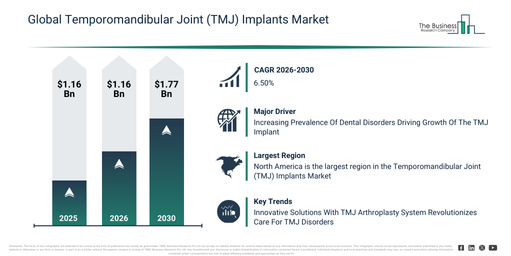
    The TMJ implants market has shown strong growth recently, with its size expected to increase from $5.6 billion in 2025 to $5.96 billion in 2026, representing a compound annual growth rate (CAGR) of 6.4%. Looking ahead, the market is forecasted to reach $7.66 billion by 2030, sustaining a CAGR of 6.5%. This expansion is driven by broader adoption of personalized implant solutions, growing investments in cutting-edge oral surgery technologies, and an aging population increasingly requiring joint reconstruction procedures. Additionally, increasing demand for minimally invasive TMJ interventions and the integration of digital planning tools in implant surgeries contribute to this robust growth. Key trends during the forecast period include wider use of patient-specific TMJ implants, advanced biocompatible materials, customized reconstruction options, and computer-aided implant design and production, all focusing on enhanced implant durability.

    Download A Free Sample Report For Comprehensive Market Insights:

    https://www.thebusinessresearchcompany.com/sample.aspx?id=19216&type=smp

    Factors Driving Growth in the Temporomandibular Joint (TMJ) Implants Market

    One of the main drivers fueling the TMJ implants market is the rising prevalence of dental disorders worldwide. Conditions affecting teeth, gums, and the oral cavity—such as those caused by poor hygiene, trauma, genetics, and lifestyle choices—are increasing in frequency. These disorders often result in pain and functional issues related to the temporomandibular joint, creating a pressing need for effective treatment options. TMJ implants provide a transformative approach for patients suffering from joint dysfunction, offering targeted relief and improving overall quality of life.

    For instance, in September 2023, data from the National Library of Medicine, a U.S. government agency, indicated that the older adult population with periodontal disease is projected to grow by 54.57% by 2050. Similarly, the number of older adults affected by carious teeth is expected to rise by 62.06% over the same period. These demographic shifts underscore the increasing demand for TMJ implants as dental disorders become more prevalent, driving market expansion.

    Access The Complete Temporomandibular Joint (TMJ) Implants Market Report:

    https://www.thebusinessresearchcompany.com/report/temporomandibular-joint-tmj-implants-global-market-report

    Detailed Breakdown of the Temporomandibular Joint (TMJ) Implants Market by Products and Applications

    This market is segmented into several categories to better understand its scope and potential.

    By Components, the market includes mandibular components, fossa prostheses, and screws.

    By Material, it features cobalt-chromium-molybdenum alloys, titanium alloys, ultra-high molecular weight polyethylene (UHMWPE), stainless steel, polyether ether ketone (PEEK), and other materials.

    By Indication, the segments cover arthritic conditions, ankylosis, and other indications.

    By End-User, the market serves hospitals, dental clinics, and other end-users.

    Further subcategories clarify specific product types such as complete, partial, and condylar mandibular prostheses; non-adjustable, adjustable, and anatomical fossa prostheses; and various screws including fixation, bone, and self-tapping screws.

    Innovations and Trends Shaping Long-Term Demand in the TMJ Implants Market

    Leading companies in the TMJ implants sector are focusing on pioneering new solutions to improve surgical outcomes and patient experiences. One notable advance is the TMJ Total Arthroplasty System, designed to treat severe TMJ disorders and provide an option for patients who have not responded to other treatments.

    For example, in February 2024, Belgium-based 3D printing firm Materialise NV unveiled a comprehensive system for total TMJ arthroplasty. This innovative solution includes titanium or polyamide predrilling and osteotomy guides to ensure surgical precision, a surgical splint for occlusion control, and a TMJ trial implant for the temporal bone component. This system represents a significant step forward in TMJ joint replacement, offering enhanced accuracy and integration with other surgical planning tools, making it highly valuable for oral and maxillofacial surgeons.

    Competitive Landscape and Key Players in the TMJ Implants Market

    The TMJ implants market features a range of prominent companies competing to deliver advanced products and solutions. Key players include Stryker Corporation, Zimmer Biomet Holdings Inc., Materialise NV, Auxein Corporation, Dentsply Sirona, Ortho Baltic, Xilloc Medical B.V., Ortho Max Mfg. Co. Pvt. Ltd., RAOMED, TMJ Concepts Inc., KLS Martin Group, DePuy Synthes CMF, Medartis AG, Acumed LLC, Jeil Medical Corporation, Aesculap Inc., Biomet Microfixation (Zimmer Biomet CMF), Medtronic CMF, Johnson & Johnson DePuy CMF, and Sientra Inc. These companies are investing in research and development to maintain competitive advantages and expand their market presence.

    Regional Market Leadership and Growth Patterns in TMJ Implants

    In 2025, North America was the leading region for the TMJ implants market, holding the largest share. The market analysis extends to other important geographical areas, including Asia-Pacific, South East Asia, Western Europe, Eastern Europe, South America, the Middle East, and Africa. While North America leads currently, emerging markets in Asia-Pacific and other regions are expected to exhibit strong growth in the coming years due to increasing healthcare infrastructure and rising awareness of TMJ treatments.

    Get in touch with us:

    The Business Research Company: https://www.thebusinessresearchcompany.com/

    Americas: +1 310-496-7795

    Asia: +44 7882 955267 & +91 8897263534

    Europe: +44 7882 955267

    Email us at: marketing@tbrc.info

    Follow us on:

    LinkedIn: https://in.linkedin.com/company/the-business-research-company

    YouTube: https://www.youtube.com/channel/UC24_fI0rV8cR5DxlCpgmyFQ

    Global Market Model: https://www.thebusinessresearchcompany.com/global-market-model
  • Temporary Mechanical Circulatory Support Device Market Size Projected To Increase From $2.9 Billion To $4.1 Billion During The Forecast Period

    Temporary Mechanical Circulatory Support Device Market Size Projected To Increase From $2.9 Billion To $4.1 Billion During The Forecast Period

    Delivering more actionable and strategically valuable research, The Business Research Company’s 2026 market reports feature market attractiveness analysis, total addressable market evaluation, company benchmarking matrices, interactive Excel dashboards, expanded supply chain intelligence, emerging startup coverage, and detailed product insights.

    The market for temporary mechanical circulatory support devices has shown substantial growth recently, driven by evolving medical needs and technological progress. This sector is poised for continued expansion as innovations improve patient outcomes and broaden applications. Below is a detailed exploration of the market size, growth drivers, key players, and regional trends shaping the future of this critical medical device industry.

    Temporary Mechanical Circulatory Support Device Market Size and Growth Projections

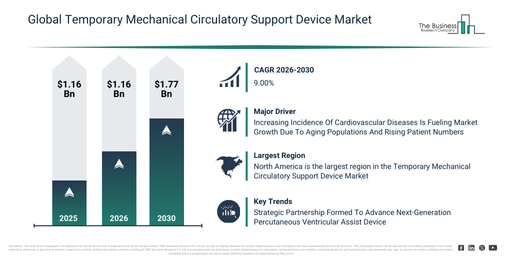
    The temporary mechanical circulatory support device market has experienced notable growth over recent years and is expected to continue this trajectory. Market revenue is projected to climb from $2.66 billion in 2025 to $2.9 billion in 2026, reflecting a compound annual growth rate (CAGR) of 9.0%. This early growth phase was driven by factors such as limited availability of these devices, dependence on invasive open-heart surgeries, high mortality rates associated with cardiogenic shock, increasing demand for acute cardiac care, and a shortage of portable or wearable alternatives. Looking ahead, the market is anticipated to reach $4.1 billion by 2030, maintaining the same CAGR of 9.0%, thanks to advancements in biomimetic and hybrid technologies, greater adoption of minimally invasive devices, rising volumes of cardiac surgeries, growth of outpatient cardiac centers, and integration of digital monitoring systems and smart hemodynamic management.

    Download A Free Sample Report For Comprehensive Market Insights:

    https://www.thebusinessresearchcompany.com/sample.aspx?id=27434&type=smp

    Factors Fueling Market Expansion in Temporary Mechanical Circulatory Support Devices

    A key driver behind the market’s growth is the rising prevalence of cardiovascular diseases worldwide. These conditions, which include heart attacks, strokes, and hypertension, predominantly affect aging populations, who are more susceptible to heart and blood vessel disorders. Temporary mechanical circulatory support devices play an essential role in managing these diseases by offering short-term support to compromised heart function and improving blood circulation during critical events such as heart failure or cardiogenic shock. As an example, a December 2024 report from GOV.UK showed that in March 2024 nearly 2.24 million adults in England—about 4.4% of those aged 18 and older—had a recorded diagnosis of chronic kidney disease, an increase from the previous year, highlighting the rising burden of related cardiovascular complications.

    Additional Growth Drivers Encouraging Revenue Potential

    Technological innovation is also a significant growth catalyst for the temporary mechanical circulatory support device market. The development of biomimetic and hybrid devices, which mimic natural heart functions more closely, along with the rise in minimally invasive procedures, is expanding the range of treatable patients and improving recovery outcomes. Furthermore, the expansion of outpatient cardiac centers and the integration of smart digital monitoring tools allow for enhanced management of patient hemodynamics, making these devices more efficient and user-friendly. These advancements contribute to growing adoption rates and open new revenue streams for manufacturers.

    Access The Complete Temporary Mechanical Circulatory Support Device Market Report:

    https://www.thebusinessresearchcompany.com/report/temporary-mechanical-circulatory-support-device-global-market-report

    Product and Segment Breakdown in the Temporary Mechanical Circulatory Support Device Market

    This market is segmented across multiple dimensions to address various clinical needs:

    – By Type: Left Ventricular Support Devices, Right Ventricular Support Devices, and Biventricular Support Devices

    – By Technology: Pneumatic Devices, Mechanical Pumps, Biomimetic Devices, Hybrid Systems, and Novel Wearable Devices

    – By Application: Cardiogenic Shock, Bridge to Transplant, Bridge to Recovery, High-Risk Cardiac Procedures, and Others

    – By End User: Hospitals, Cardiac Surgery Centers, Outpatient Surgical Facilities, Research and Academic Institutions, and Other Users

    Further subcategories delve into specific device types, such as Intra-Aortic Balloon Pumps, Percutaneous Ventricular Assist Devices, Extracorporeal Membrane Oxygenation (ECMO) systems, Right Ventricular Assist Devices, Temporary Total Artificial Hearts, and more, reflecting the diversity and specialization within the market.

    Innovations and Partnerships Spurring Market Development

    Leading companies are actively pursuing partnerships and investments to accelerate innovation in temporary mechanical circulatory support devices. For example, in November 2025, VenstraMedical, an Australian cardiovascular device firm, teamed up with Highcroft Capital, a US venture capital firm, to secure funding aimed at advancing their next-generation percutaneous ventricular assist device (pVAD). This catheter-based pump is designed to provide full ventricular unloading and hemodynamic support for patients experiencing cardiogenic shock or undergoing high-risk coronary interventions. Patented technologies enable minimally invasive insertion, with the device capable of delivering up to 7 liters of cardiac output per minute. This collaboration reflects a strong commitment to revolutionizing tMCS technology in a market valued at over $2 billion, with clinical trials and commercialization on the horizon.

    Key Industry Players Influencing Market Direction

    Several prominent companies dominate the temporary mechanical circulatory support device industry, including Abbott Laboratories, Medtronic Plc, Boston Scientific Corporation, Terumo Corporation, Getinge AB, LivaNova PLC, Magenta Medical Ltd., CorWave SA, Procyrion Inc., CardioBridge GmbH, Abiomed Inc., Berlin Heart GmbH, Thoratec Corporation, PulseCath BV, TandemLife Inc., SynCardia Systems LLC, CardiacAssist Inc., Xenios AG, Nihon Kohden Corporation, Eurosets Srl, Senko Medical Instrument Manufacturing Co Ltd, Nipro Medical Corporation, Calon Cardio-Technology Ltd., and Windmill Cardiovascular Systems Inc. These companies are instrumental in advancing product innovation, expanding market reach, and setting industry standards.

    Regional Market Overview and Expansion Drivers

    In terms of geography, North America held the largest share of the temporary mechanical circulatory support device market in 2025. However, the Asia-Pacific region is anticipated to experience the fastest growth during the forecast period due to factors such as increasing healthcare infrastructure investments, rising cardiovascular disease prevalence, and growing awareness of advanced treatment options. The market report covers additional regions including South East Asia, Western Europe, Eastern Europe, South America, the Middle East, and Africa, providing a comprehensive perspective on global market dynamics and regional opportunities.

    Get in touch with us:

    The Business Research Company: https://www.thebusinessresearchcompany.com/

    Americas: +1 310-496-7795

    Asia: +44 7882 955267 & +91 8897263534

    Europe: +44 7882 955267

    Email us at: marketing@tbrc.info

    Follow us on:

    LinkedIn: https://in.linkedin.com/company/the-business-research-company

    YouTube: https://www.youtube.com/channel/UC24_fI0rV8cR5DxlCpgmyFQ

    Global Market Model: https://www.thebusinessresearchcompany.com/global-market-model
  • Temperature Monitoring Devices Market Growth Outlook Reveals A CAGR Of 6.3% And A Market Value Of $2.23 Billion By 2030

    Temperature Monitoring Devices Market Growth Outlook Reveals A CAGR Of 6.3% And A Market Value Of $2.23 Billion By 2030

    Enhanced with market attractiveness analysis, total addressable market evaluation, company benchmarking matrices, interactive Excel dashboards, expanded supply chain intelligence, emerging startup coverage, and detailed product insights, The Business Research Company’s 2026 market reports deliver more actionable and strategically valuable research.

    The temperature monitoring devices market has experienced substantial growth recently, driven by advancements in healthcare infrastructure and the rising emphasis on patient safety. As technology evolves, demand for precise and efficient temperature monitoring solutions continues to rise across various healthcare settings. Let’s explore the market’s current state, growth factors, leading players, and key trends shaping its future.

    Steady Market Expansion Forecasted for Temperature Monitoring Devices

    The size of the temperature monitoring devices market has shown impressive growth in recent years. It is projected to increase from $1.67 billion in 2025 to $1.75 billion in 2026, reflecting a compound annual growth rate (CAGR) of 5.1%. This positive momentum stems from expanded hospital monitoring infrastructure, growing use of electronic medical devices, greater home healthcare adoption, and wider deployment of diagnostic monitoring tools.

    Download A Free Sample Report For Comprehensive Market Insights:

    https://www.thebusinessresearchcompany.com/sample.aspx?id=2847&type=smp

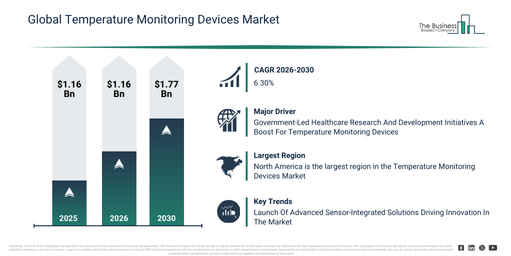
    Looking ahead, the market is expected to continue its strong trajectory, reaching $2.23 billion by 2030 with an accelerated CAGR of 6.3%. Key factors driving growth in this period include the integration of remote patient monitoring technologies, increasing demand for real-time temperature data, growth in telehealth services, heightened focus on infection prevention, and broader adoption of smart healthcare devices. Prominent trends forecasted to influence the market include the rising use of continuous temperature monitoring systems, non-contact infrared devices, wireless and remote monitoring solutions, multi-sensor platforms, and an enhanced emphasis on accuracy and regulatory compliance.

    Government Initiatives Boosting Temperature Monitoring Devices Market Growth

    Government-led research and development programs are playing a crucial role in advancing the temperature monitoring devices market. Such initiatives encompass a range of policies and investments aimed at improving healthcare outcomes and technology capabilities. For instance, in March 2023, the UK government announced a joint public–private investment of US $337.5 million (£277 million) through the Life Sciences Innovative Manufacturing Fund (LSIMF). This funding targets enhancements in advanced diagnostics, vaccine technologies, and next-generation therapeutic manufacturing, strengthening the country’s life sciences manufacturing base and supporting critical production infrastructure.

    Access The Complete Temperature Monitoring Devices Market Report:

    https://www.thebusinessresearchcompany.com/report/temperature-monitoring-devices-global-market-report

    These kinds of government-backed efforts significantly contribute to market expansion by fostering innovation and facilitating the adoption of cutting-edge temperature monitoring solutions across healthcare settings.

    Detailed Segmentation of the Temperature Monitoring Devices Market

    The market for temperature monitoring devices is categorized based on type, application, and end-user segments. By type, it splits into contact-based temperature monitoring systems and non-contact-based temperature monitoring systems. The application segment covers oral cavity, rectum, ear, and other uses. End users include hospital and surgical centers, nursing facilities, ambulatory care centers, home care, and other sectors.

    Further breaking down contact-based systems, the subcategories include thermocouples, resistance temperature detectors (RTDs), thermistors, and bimetallic temperature sensors. For non-contact systems, infrared thermometers, infrared sensors, thermal cameras, and radiation pyrometers are the main subtypes.

    Innovative Trends Driving the Temperature Monitoring Devices Market Forward

    Leading companies in the temperature monitoring devices sector are focusing on developing advanced sensor technologies that combine temperature and humidity measurements within compact digital platforms. These integrated sensing systems offer improved precision, durability, and real-time environmental data collection, which are vital for medical and industrial applications.

    For example, in June 2024, Sensirion, a Swiss company specializing in environmental and flow sensors, launched a new line of digital humidity and temperature sensors featuring a protective cover to shield the sensing element from contamination. These sensors maintain rapid response times and high accuracy, supporting long-term operational stability and easy integration into medical devices, wearable tech, and smart monitoring systems—enhancing reliability in temperature-dependent uses.

    Key Players Shaping the Temperature Monitoring Devices Industry

    Several well-established companies dominate the temperature monitoring devices landscape, including 3M Company, Drägerwerk AG & Co. KGaA, Cosinuss GmbH, Helen of Troy Limited, Koninklijke Philips N.V., Microlife Corporation, Omron Healthcare Co. Ltd., Terumo Corporation, Welch Allyn Inc., C. R. Bard Inc., Measurement Specialties Inc., Circa Scientific LLC, NOVAMED USA, Truer Medical Inc., Med-link Electronics Tech Co. Ltd., Rongrui (Shanghai) Technology Development Co. Ltd., Exsense Medical Technology Corporation, Medtronic plc, Becton Dickinson and Company, Medline Industries Inc., Amphenol Corporation, Egate Smart Building Innovation’s Inc., Silicon Laboratories Inc., Shinyei Capacitor Co. Ltd., Energy Service Company, Technosoft Solutions India Pvt Ltd., Securitas Healthcare, ABB Ltd., DeltaTRAK Inc., Emerson Electric Co., and Fluke Corporation.

    These market leaders are continuously innovating to meet growing demand and evolving technology standards.

    Regional Insights Highlight North America’s Market Lead

    In 2025, North America accounted for the largest share of the temperature monitoring devices market. Western Europe ranked as the second largest region in this sector. The overall market analysis includes key geographic regions such as Asia-Pacific, South East Asia, Western Europe, Eastern Europe, North America, South America, the Middle East, and Africa, providing a comprehensive global perspective on market developments and regional growth opportunities.

    Get in touch with us:

    The Business Research Company: https://www.thebusinessresearchcompany.com/

    Americas: +1 310-496-7795

    Asia: +44 7882 955267 & +91 8897263534

    Europe: +44 7882 955267

    Email us at: marketing@tbrc.info

    Follow us on:

    LinkedIn: https://in.linkedin.com/company/the-business-research-company

    YouTube: https://www.youtube.com/channel/UC24_fI0rV8cR5DxlCpgmyFQ

    Global Market Model: https://www.thebusinessresearchcompany.com/global-market-model
  • Temperature Modulation Devices Market Forecast Highlights Expansion From $3.8 Billion To $5.16 Billion Through 2030

    Temperature Modulation Devices Market Forecast Highlights Expansion From $3.8 Billion To $5.16 Billion Through 2030

    Through market attractiveness analysis, total addressable market evaluation, company benchmarking matrices, interactive Excel dashboards, expanded supply chain intelligence, emerging startup coverage, and detailed product insights, The Business Research Company’s 2026 market reports provide more actionable and strategically valuable research.

    The market for temperature modulation devices has seen notable growth in recent years, driven by advancements in healthcare and the increasing complexity of medical procedures. As demand for precise temperature control in clinical settings rises, this sector is poised for significant expansion. Let’s explore the current market size, factors fueling growth, key segments, technological developments, leading companies, and regional opportunities shaping the future of this industry.

    Temperature Modulation Devices Market Size and Growth Projections

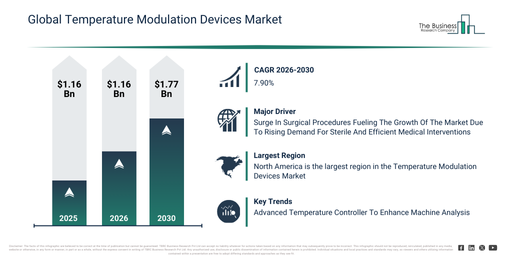
    The temperature modulation devices market has experienced strong growth and is projected to continue expanding. The market value is expected to rise from $3.48 billion in 2025 to $3.81 billion in 2026, exhibiting a compound annual growth rate (CAGR) of 9.3%. Looking ahead, this market is forecasted to reach $5.17 billion by 2030, growing at a CAGR of 7.9%. Historical growth has been supported by the increasing number of surgical and critical care procedures, heightened awareness of risks related to perioperative hypothermia, widespread adoption of temperature management protocols, enhanced availability of cutting-edge medical devices, and the expansion of intensive care units worldwide.

    Download A Free Sample Report For Comprehensive Market Insights:

    https://www.thebusinessresearchcompany.com/sample.aspx?id=15681&type=smp

    Factors Contributing to Future Market Growth

    The forecast period’s growth is anticipated to be driven by rising demand for non-invasive temperature modulation technologies and the increasing adoption of intelligent patient monitoring systems. Additionally, the expansion of neonatal and critical care services plays a key role in boosting market demand. A growing emphasis on personalized patient care and higher healthcare investments in innovative therapeutic devices are also significant contributors to this upward trend.

    Emerging Trends Shaping the Temperature Modulation Devices Market

    Among the important trends expected to influence this market are the increasing use of advanced patient warming systems and the rising need for devices that offer precise temperature regulation. The integration of digital temperature monitoring technology is becoming more prevalent, enhancing accuracy and ease of use. Furthermore, portable and battery-powered temperature modulation devices are gaining traction, reflecting a shift toward greater mobility and convenience within clinical environments.

    Access The Complete Temperature Modulation Devices Market Report:

    https://www.thebusinessresearchcompany.com/report/temperature-modulation-devices-global-market-report

    The Growing Importance of Patient Safety and Thermal Accuracy

    Patient safety remains a central focus, with manufacturers emphasizing improved thermal accuracy to prevent complications related to temperature fluctuations. Innovations aim to minimize risks associated with improper thermal management during medical procedures, thereby enhancing overall patient outcomes and satisfaction.

    How Surgical Procedures Drive Demand in the Temperature Modulation Devices Market

    One of the key factors propelling the temperature modulation devices market is the increasing volume of surgical procedures worldwide. Surgical interventions require sterile and well-organized equipment to ensure precision, safety, and operational efficiency. Advances in medical technology, an aging demographic needing more frequent interventions, broader healthcare access, and improved diagnostics have all contributed to this rise. Temperature modulation devices support surgical teams by maintaining optimal thermal conditions and ensuring quick, sterile handling of instruments.

    Surgical Procedure Growth Statistics Highlighting Market Demand

    For example, in May 2025, the British Association of Aesthetic Plastic Surgeons (BAAPS) reported that 27,462 cosmetic surgical procedures were performed in the UK during 2024, representing a 5% increase compared to the previous year. This growing number of surgical operations underlines the rising need for reliable temperature management solutions, fueling market expansion.

    How the Temperature Modulation Devices Market is Categorized

    The market is divided into several segments based on product type, application, and end use. Products include Portable Blood or IV Fluid Warmers, Conductive Patient Warming Systems, Convective Patient Warming Systems, Conductive Patient Cooling Systems, and Other Products. Applications cover Perioperative Care, Acute Care, Coronary Care, Newborn Care, and various other uses. End users primarily consist of Hospitals, Ambulatory Surgical Centers, and other healthcare facilities.

    Detailed Subsegments Within the Product Categories

    Further breakdown of product types includes Battery-Powered and Rechargeable Warmers under Portable Blood or IV Fluid Warmers; Warming Blankets and Warming Pads in Conductive Patient Warming Systems; Forced Air Warming Systems and Convection Warming Blankets under Convective Patient Warming Systems; Cooling Pads and Cooling Blankets in Conductive Patient Cooling Systems; and Temperature Monitoring Devices and Intravenous (IV) Fluid Cooling Systems classified as Other Products.

    Technological Innovations Defining the Industry’s Next Phase

    Leading companies in this space are focusing on developing cutting-edge technologies to enhance temperature control precision and efficiency. A notable example is the introduction of waveform digitization functions, which convert continuous analog signals into discrete digital signals—this advancement allows for more accurate temperature measurement and control in clinical environments.

    Case Study of Technological Advancement in Temperature Control

    In March 2024, Omron Corporation from Japan launched the OMRON NX-HTC temperature controller, which features advanced machine status analysis through improved monitoring and regulation capabilities. This device’s waveform digitization function enables precise capture and analysis of temperature patterns. Its real-time analytics support proactive maintenance, boost operational efficiency, and reduce downtime. The NX-HTC provides stable automatic control against predictable temperature fluctuations, such as those caused by environmental changes, and supports measurement temperature ranges from -50 to 500°C and up to 1,000°C for specific models.

    Key Players Leading the Temperature Modulation Devices Market

    The temperature modulation devices market features major companies including Medtronic plc, FUJIFILM Holdings Corporation, Kimberly-Clark Corporation, Becton Dickinson and Company, Stryker Corporation, Baxter Laboratories Inc., Smiths Group, Drägerwerk AG & Co KGaA, ICU Medical Inc., Masimo Corporation, ZOLL Medical Corporation, Gentherm Medical LLC, Cincinnati Sub-Zero (CSZ) Products LLC, Soma Technology Inc., Belmont Medical Technologies, The Surgical Company, BrainCool AB, Minnesota Mining and Manufacturing Company, EMIT Corporation, and Keewell Medical Technology Co Ltd.

    Regional Market Outlook and Growth Opportunities

    In 2025, North America accounted for the largest share of the temperature modulation devices market. However, Asia-Pacific is expected to be the fastest-growing region over the forecast period. The market analysis covers diverse geographic areas including Asia-Pacific, South East Asia, Western Europe, Eastern Europe, North America, South America, the Middle East, and Africa, offering a comprehensive view of global market trends and opportunities.

    Get in touch with us:

    The Business Research Company: https://www.thebusinessresearchcompany.com/

    Americas: +1 310-496-7795

    Asia: +44 7882 955267 & +91 8897263534

    Europe: +44 7882 955267

    Email us at: marketing@tbrc.info

    Follow us on:

    LinkedIn: https://in.linkedin.com/company/the-business-research-company

    YouTube: https://www.youtube.com/channel/UC24_fI0rV8cR5DxlCpgmyFQ

    Global Market Model: https://www.thebusinessresearchcompany.com/global-market-model