Month: June 2026

  • Orthopedic 3D Printing Devices Market Expansion Is Opening New Pathways For Strategic Investment

    Orthopedic 3D Printing Devices Market Expansion Is Opening New Pathways For Strategic Investment

    Delivering more actionable and strategically valuable research, The Business Research Company’s 2026 market reports feature market attractiveness analysis, total addressable market evaluation, company benchmarking matrices, interactive Excel dashboards, expanded supply chain intelligence, emerging startup coverage, and detailed product insights.

    The orthopedic 3D printing devices sector is experiencing swift advancement as new technologies and medical needs converge. This market is expanding rapidly, driven by increased demand for personalized healthcare solutions and innovations that improve surgical outcomes. Let’s explore the current size, growth factors, key players, and technological developments shaping this important industry.

    Orthopedic 3D Printing Devices Market Size and Growth Outlook

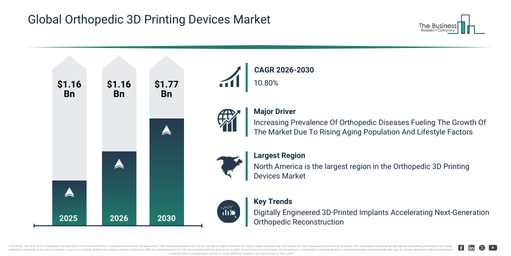
    The size of the orthopedic 3D printing devices market is rapidly increasing, with projections showing growth from $2.24 billion in 2025 to $2.49 billion in 2026, representing a compound annual growth rate (CAGR) of 10.9%. This impressive expansion in recent years is mainly fueled by the rising demand for patient-specific implants, a surge in orthopedic surgeries, advancements in 3D printing precision, the need for improved surgical efficiency, and the growth of specialty medical clinics.

    Download A Free Sample Report For Comprehensive Market Insights:

    https://www.thebusinessresearchcompany.com/sample.aspx?id=23464&type=smp

    Looking further ahead, the market is set to reach $3.75 billion by 2030, maintaining a strong CAGR of 10.8%. Key factors supporting this forecast include the growing adoption of customized joint replacements, increasing use in trauma care, innovations in biomaterials, the establishment of hospital-based printing labs, and expansion into emerging regions. Important trends during this period involve producing patient-specific implants, rapid prototyping for better surgical planning, on-demand manufacturing, wider use of metal 3D printing, and the development of integrated orthopedic digital workflows.

    Primary Forces Behind Orthopedic 3D Printing Devices Market Growth

    A major driver of market growth is the rising incidence of orthopedic disorders, which encompass conditions affecting bones, joints, ligaments, tendons, and muscles. These conditions often cause pain, mobility challenges, and disabilities, particularly among aging populations. As people age, ailments like osteoarthritis and osteoporosis become more prevalent, increasing the demand for effective orthopedic solutions.

    Access The Complete Orthopedic 3D Printing Devices Market Report:

    https://www.thebusinessresearchcompany.com/report/orthopedic-3d-printing-devices-global-market-report

    Orthopedic 3D printing devices play a crucial role by enabling the production of customized implants, prosthetics, and surgical guides tailored to individual patients. This customization leads to higher surgical precision, improved recovery times, and better outcomes for complex musculoskeletal problems. For example, in July 2025, data from the Institute for Health Transformation highlighted that in 2023, Australia experienced a bone fracture every 2.7 minutes, a figure expected to worsen dramatically to one fracture every 30 seconds by 2033. This growing burden of orthopedic diseases is a significant factor propelling market expansion.

    Detailed Market Segmentation and Revenue Opportunities in Orthopedic 3D Printing Devices

    This market is broken down into several important segments, providing insight into various product types, technologies, applications, and end-users:

    1) Product Type: This includes printers, materials, software, and services.

    2) Technology: The market comprises stereolithography, fused deposition modeling, selective laser sintering, and other emerging technologies.

    3) Application: Products serve joint replacements, spinal implants, craniomaxillofacial implants, dental implants, and other medical uses.

    4) End-User: Key buyers include hospitals, ambulatory surgical centers, specialty clinics, and other healthcare providers.

    Further subcategories include types of printers such as desktop and industrial-grade machines; materials ranging from metals and polymers to ceramics, biomaterials, and composites; software options like design, printing, and simulation software; and services covering printing, post-processing, consulting, and maintenance.

    Innovative Advances Reshaping the Orthopedic 3D Printing Devices Industry

    Leading companies in this space are pushing the envelope by developing digitally structured, 3D-printed titanium lumbar interbody systems designed to improve spinal fusion outcomes. These systems utilize additive manufacturing combined with algorithm-driven lattice architectures—such as triply periodic minimal surface and stochastic designs—to create porous cages that closely mimic the mechanical properties of natural bone. This promotes better bone integration, controlled stiffness, and physiological load distribution.

    For instance, in June 2024, ZSFab Inc., a US-based 3D medical device manufacturer, announced the first clinical use of its new InterConnect 3D Printed Titanium Lumbar Interbody System in the United States. The device’s porous titanium cages replicate cancellous bone structure to enhance osseointegration and support faster, stronger lumbar fusion. The optimized lattice design evenly distributes mechanical loads and reduces stress on neighboring spinal segments, aiming to improve long-term stability and patient recovery in spinal surgeries.

    Key Market Players Leading the Orthopedic 3D Printing Devices Sector

    Several prominent companies dominate this market, shaping its direction through innovation and broad product portfolios. These include Stryker Corporation, Zimmer Biomet Holding Inc., Orthofix Medical Inc., Tecomet Inc., 3D Systems Inc., Materialise NV, LimaCorporate S.p.A., Cretex Medical, SPINEART, PrinterPrezz, Oxford Performance Materials (OPM), Tangible Solutions Inc., Anatomics Pty Ltd, Osteo3D, Spentys, PEEK HEALTH S.A., Renishaw plc, EOS GmbH, GE Additive, Stratasys Ltd., Additive Orthopaedics, 4WEB Medical, and Restor3d.

    Regional Market Distribution and Growth Trends

    In 2025, North America held the largest market share for orthopedic 3D printing devices, reflecting the region’s advanced healthcare infrastructure and rapid technology adoption. Meanwhile, the Asia-Pacific region is expected to experience the fastest growth during the forecast period, driven by expanding healthcare access and rising investments. The market report also covers regions such as South East Asia, Western Europe, Eastern Europe, South America, the Middle East, and Africa, providing a comprehensive view of global market dynamics.

    Get in touch with us:

    The Business Research Company: https://www.thebusinessresearchcompany.com/

    Americas: +1 310-496-7795

    Asia: +44 7882 955267 & +91 8897263534

    Europe: +44 7882 955267

    Email us at: marketing@tbrc.info

    Follow us on:

    LinkedIn: https://in.linkedin.com/company/the-business-research-company

    YouTube: https://www.youtube.com/channel/UC24_fI0rV8cR5DxlCpgmyFQ

    Global Market Model: https://www.thebusinessresearchcompany.com/global-market-model
  • Orthopedic Market Trends Are Creating New Opportunities For Industry Leaders

    Orthopedic Market Trends Are Creating New Opportunities For Industry Leaders

    Enhanced with market attractiveness analysis, total addressable market evaluation, company benchmarking matrices, interactive Excel dashboards, expanded supply chain intelligence, emerging startup coverage, and detailed product insights, The Business Research Company’s 2026 market reports deliver more actionable and strategically valuable research.

    The orthopedic market has experienced significant growth in recent years, driven by a combination of demographic changes, rising injury rates, and advancements in medical technology. As healthcare systems evolve and demand for specialized treatments increases, the orthopedic sector is set to continue its steady expansion through the coming decade. Here is a detailed overview of the market’s size, key drivers, segmentation, trends, major players, and regional outlook.

    Orthopedic Market Size and Growth Trajectory Through 2030

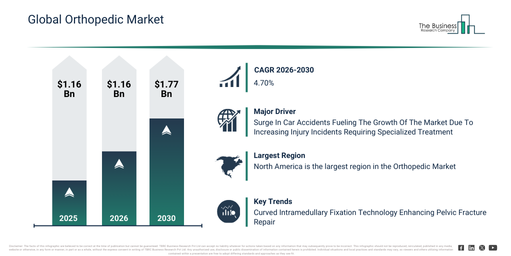
    The orthopedic market has shown impressive revenue gains, with figures expected to rise from $47.06 billion in 2025 to $49.42 billion in 2026, marking a compound annual growth rate (CAGR) of 5.0%. This growth during the past years can be attributed to factors such as the aging global population, higher cases of osteoarthritis, increased road accidents and trauma incidents, expansion in hospital infrastructure, and greater awareness of orthopedic treatment options. Looking ahead, the market is projected to reach $59.38 billion by 2030, maintaining a steady CAGR of 4.7%. Contributing elements in this forecast period include growing participation in sports, increased healthcare spending, rising demand for minimally invasive surgeries, technological innovations in implant materials, and the growth of ambulatory surgical centers. Key trends expected to influence the market involve the wider adoption of minimally invasive orthopedic procedures, heightened demand for joint replacement surgeries, increased focus on sports injury and trauma care, expansion of outpatient orthopedic services, and ongoing improvements in implant materials and designs.

    Download A Free Sample Report For Comprehensive Market Insights:

    https://www.thebusinessresearchcompany.com/sample.aspx?id=25858&type=smp

    Impact of Rising Road Traffic Accidents on Orthopedic Market Expansion

    One of the significant factors fueling the orthopedic market’s growth is the increasing frequency of car accidents, which often result in severe musculoskeletal injuries requiring orthopedic care. Car accidents involve collisions between vehicles that lead to damage, injuries, or fatalities. The surge in road accidents is mainly driven by growing traffic congestion, which raises the likelihood of collisions and reduces safe driving space. Orthopedic treatments are crucial for managing injuries such as fractures, dislocations, and spinal trauma caused by these accidents, aiding patients in regaining mobility and function. For instance, the International Transport Forum, a France-based intergovernmental organization, reported that Australia experienced 1,297 road fatalities in 2024, a 4% rise compared to the previous year, underlining the role of increasing accidents in stimulating orthopedic market demand.

    Additional Factors Supporting Orthopedic Market Growth

    Beyond road traffic injuries, aging populations and the prevalence of osteoarthritis also significantly contribute to the market’s expansion. Older adults are more likely to require orthopedic interventions due to degenerative joint diseases and bone conditions. Furthermore, advancements in healthcare infrastructure and the growing availability of orthopedic treatments have increased patient access, fueling demand. These factors combined create a supportive environment for sustained growth within the orthopedic sector.

    Access The Complete Orthopedic Market Report:

    https://www.thebusinessresearchcompany.com/report/orthopedic-global-market-report

    Orthopedic Market Segmentation and Product Categories

    This report segments the orthopedic market into several key categories:

    1) Product Type: Orthopedic Implants, Orthopedic Instruments, Braces and Supports, Orthopedic Devices

    2) Procedure Type: Open Surgery, Minimally Invasive Surgery, Arthroscopic Surgery

    3) Material: Metal, Polymers, Ceramics, Composites

    4) Application Type: Hip Orthopedic Devices, Knee Orthopedic Devices, Spine Orthopedic Devices, Craniomaxillofacial Orthopedic Devices, Upper Extremity Orthopedic Devices, Sports Injuries, Extremities, Trauma (SET) Orthopedic Devices

    5) End-User: Hospitals, Ambulatory Surgical Centers, Orthopedic Clinics, Rehabilitation Centers

    Further subsegments include:

    – Orthopedic Implants such as Joint Replacement Implants, Spinal Implants, Trauma Implants, Bone Cement

    – Orthopedic Instruments including Power Tools, Cutting Instruments, Graspers and Holders, Retractors, Measurement Instruments

    – Braces and Supports like Knee Braces, Ankle Braces, Back Supports, Elbow and Wrist Braces, Neck Braces

    – Orthopedic Devices encompassing External Fixators, Bone Growth Stimulators, Traction Devices, Orthotic Devices, and Walking Aids

    Innovations and Emerging Technologies Influencing Orthopedic Market Trends

    Leading companies in the orthopedic field are prioritizing the development of cutting-edge products designed to enhance surgical outcomes and patient recovery. One notable advancement is the introduction of curved intramedullary fixation systems, which enable minimally invasive treatment of complex pelvic fractures and improve results for patients with osteoporosis. These specialized implants offer better alignment, load distribution, and surgical adaptability compared to traditional straight devices. For example, in February 2023, CurvaFix, Inc., a US-based medical device manufacturer, launched the 7.5mm CurvaFix IM Implant. This smaller-diameter curved implant is tailored for patients with small bones and complicated pelvic structures, proving especially beneficial for fragility fractures of the pelvis common in elderly and osteoporotic populations. The implant facilitates stable fixation and often allows patients to regain mobility within 24 hours after surgery.

    Major Market Players Driving Orthopedic Industry Growth

    The orthopedic market features several influential companies that shape industry trends and innovation. Key players include Medtronic plc, Stryker Corporation, Zimmer Biomet Holdings Inc., Smith & Nephew plc, DePuy Synthes Inc., Enovis Corporation, Globus Medical Inc., Orthofix Medical Inc., DeRoyal Industries Inc., Breg Inc., Exactech Inc., Paragon 28 Inc., MicroPort Orthopedics Inc., B. Braun Melsungen AG, Corin Group PLC, Restor3d Inc., Bauerfeind AG, Thuasne Group, Orliman S.L., OrthoSolutions Ltd., Arthrex Inc., NuVasive Inc., and Wright Medical Group N.V.

    Regional Market Distribution and Opportunities

    In 2025, North America held the largest share of the orthopedic market, primarily due to its advanced healthcare infrastructure and high demand for orthopedic services. The report covers geographic regions including Asia-Pacific, South East Asia, Western Europe, Eastern Europe, North America, South America, the Middle East, and Africa, each presenting unique growth opportunities and challenges within the orthopedic space. The Asia-Pacific region, in particular, is expected to witness notable growth driven by increasing healthcare access and rising incidence of orthopedic conditions.

    Get in touch with us:

    The Business Research Company: https://www.thebusinessresearchcompany.com/

    Americas: +1 310-496-7795

    Asia: +44 7882 955267 & +91 8897263534

    Europe: +44 7882 955267

    Email us at: marketing@tbrc.info

    Follow us on:

    LinkedIn: https://in.linkedin.com/company/the-business-research-company

    YouTube: https://www.youtube.com/channel/UC24_fI0rV8cR5DxlCpgmyFQ

    Global Market Model: https://www.thebusinessresearchcompany.com/global-market-model
  • Orthokeratology Lens Market Growth Is Reshaping Competitive Advantage Across The Industry

    Orthokeratology Lens Market Growth Is Reshaping Competitive Advantage Across The Industry

    Through market attractiveness analysis, total addressable market evaluation, company benchmarking matrices, interactive Excel dashboards, expanded supply chain intelligence, emerging startup coverage, and detailed product insights, The Business Research Company’s 2026 market reports provide more actionable and strategically valuable research.

    The orthokeratology lens market has been experiencing significant growth, driven by increasing awareness and advancements in vision correction technologies. With myopia becoming more prevalent, especially among younger populations, the demand for effective, non-surgical options like orthokeratology lenses is rising steadily. Let’s explore the market size, key growth drivers, segments, industry trends, major players, and regional outlook shaping this dynamic industry.

    Orthokeratology Lens Market Size and Growth Predictions

    The market for orthokeratology lenses has expanded impressively in recent years. It is projected to increase from $2.75 billion in 2025 to $2.92 billion in 2026, at a compound annual growth rate (CAGR) of 6.5%. This growth during the past years is largely due to the rising incidence of myopia among school-aged children, positive clinical evidence supporting the safety of orthokeratology therapy, broader availability of ortho-k lenses through optometry and specialized eye care clinics, heightened parental awareness around myopia management, and the introduction of advanced rigid gas permeable lens materials.

    Download A Free Sample Report For Comprehensive Market Insights:

    https://www.thebusinessresearchcompany.com/sample.aspx?id=13501&type=smp

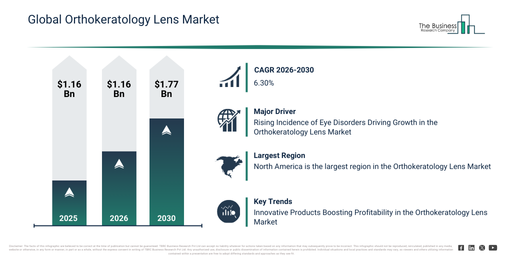
    Looking ahead, the market is expected to continue its strong upward trajectory, reaching $3.73 billion by 2030 with a CAGR of 6.3%. This forecasted expansion is attributed to the increasing burden of pediatric myopia in the Asia-Pacific region and urban centers, the growing use of multifocal overnight ortho-k lenses, wider accessibility through ophthalmology clinics and hospitals, enhanced training and certification for practitioners in specialty lens fittings, as well as greater acceptance of ortho-k as a safe and effective non-surgical alternative to traditional refractive correction methods. Key trends include the rising preference for overnight lenses for myopia control, expanding use among children and young adults, and more personalized lens designs tailored to corneal topography profiles.

    Rising Prevalence of Eye Disorders Propelling Orthokeratology Lens Demand

    A major factor driving the orthokeratology lens market is the increasing prevalence of various eye disorders worldwide. These conditions encompass a broad range of issues affecting vision and eye health. Orthokeratology lenses primarily address refractive errors such as myopia by temporarily reshaping the cornea, providing vision correction without the need for daytime glasses or contact lenses. For example, a report released in August 2023 by the World Health Organization highlighted that over 2.2 billion people suffer from vision impairment globally, with at least 1 billion cases being preventable or untreated. Refractive errors and cataracts remain the leading causes of visual impairment, yet treatment rates are low, with only 36% of those affected by refractive errors receiving proper care. This significant unmet need fuels the demand for orthokeratology lenses as a corrective solution.

    Access The Complete Orthokeratology Lens Market Report:

    https://www.thebusinessresearchcompany.com/report/orthokeratology-lens-global-market-report

    Expanding Orthokeratology Lens Market Segments and Categories

    The orthokeratology lens market is segmented by various categories to better understand the product landscape. By product type, the market includes Day-time Ortho-K Lenses and Overnight Ortho-K Lenses. Lens materials are classified into Silicone Acrylate, Fluorosilicone Acrylate, and Fluorocarbon Acrylate. Indications for use focus on correcting Myopia and Astigmatism. Distribution channels comprise Hospitals, Optometry Clinics, Ophthalmology Clinics, and other pathways.

    Further subcategories break down into Single Vision and Multifocal designs for both Day-time and Overnight Ortho-K Lenses, catering to diverse vision correction needs and wearer preferences.

    Innovations and Trends Shaping the Orthokeratology Lens Market

    Leading companies in the orthokeratology lens field are actively innovating to boost market share and meet evolving consumer demands. A notable example is Menicon Co. Ltd., which launched its Menicon Z Night lens in May 2023. This specialized orthokeratology lens is designed for short-term reshaping of the cornea to improve vision for myopia and astigmatism patients. Worn overnight, the lens provides effective myopia reduction and stable vision after just one week of use. It is well-tolerated by users and benefits from computer-assisted fitting technology to ensure a high success rate on first application.

    Such product developments demonstrate how technological advancements and precise fitting practices are enhancing the effectiveness and user experience of orthokeratology lenses.

    Key Players and Competitive Landscape in Orthokeratology Lenses

    The orthokeratology lens market features several prominent companies that shape competition and product offerings. Among these are Essilor International, Bausch & Lomb Inc., Orion Vision Group, Lucid Korea Co. Ltd., St. Shine Optical Co. Ltd., Autek China Inc., ABB Optical Group, Brighten Optix Co., E&E Optics Inc., Visioneering Technologies Inc., Alpha Corporation, Paragon Vision Sciences, Euclid Systems Corp., Contamac Ltd., SynergEyes Inc., Mark’ennovy Personalized Care Ltd., Art Optical Contact Lens Inc., GP Specialists Lens Inc., MiracLens LLC, TruForm Optics Inc., Corneal Lens Corporation, SwissLens S.A., Gelflex, Valley Contax Inc., Capricornia Contact Lens Pty Ltd., EyeKrafters Medical Optics, and Metro Optics.

    These companies compete through continuous innovation, extensive product portfolios, and broad distribution networks to capture market share.

    Regional Overview: Orthokeratology Lens Market Leaders and Fastest Growing Areas

    In 2025, North America held the largest share of the orthokeratology lens market, reflecting high adoption rates and established healthcare infrastructure. Meanwhile, the Asia-Pacific region is anticipated to be the fastest-growing market through the forecast period, driven by increasing myopia prevalence and expanding eye care services. The market analysis covers key regions including Asia-Pacific, South East Asia, Western Europe, Eastern Europe, North America, South America, the Middle East, and Africa, providing a full perspective on global market trends.

    Get in touch with us:

    The Business Research Company: https://www.thebusinessresearchcompany.com/

    Americas: +1 310-496-7795

    Asia: +44 7882 955267 & +91 8897263534

    Europe: +44 7882 955267

    Email us at: marketing@tbrc.info

    Follow us on:

    LinkedIn: https://in.linkedin.com/company/the-business-research-company

    YouTube: https://www.youtube.com/channel/UC24_fI0rV8cR5DxlCpgmyFQ

    Global Market Model: https://www.thebusinessresearchcompany.com/global-market-model
  • Orthodontic Consumables Market Forecast Signals New Revenue Opportunities Through 2030

    Orthodontic Consumables Market Forecast Signals New Revenue Opportunities Through 2030

    Delivering more actionable and strategically valuable research, The Business Research Company’s 2026 market reports feature market attractiveness analysis, total addressable market evaluation, company benchmarking matrices, interactive Excel dashboards, expanded supply chain intelligence, emerging startup coverage, and detailed product insights.

    The orthodontic consumables market has shown robust growth recently and continues to expand steadily. This sector is experiencing increasing demand due to factors such as rising malocclusion cases, more adolescent orthodontic treatments, and greater awareness around dental health. Let’s explore the current market size, key drivers, important segments, emerging trends, and regional insights shaping the future of this industry.

    Orthodontic Consumables Market Size and Growth Outlook

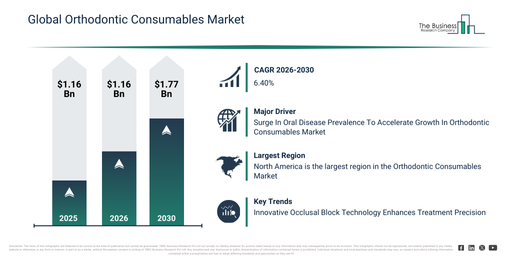
    The market for orthodontic consumables has witnessed significant growth and is projected to rise from $3.04 billion in 2025 to $3.24 billion in 2026, registering a compound annual growth rate (CAGR) of 6.7%. Looking ahead, the market is expected to reach $4.16 billion by 2030, growing at a CAGR of 6.4%. This growth during the forecast period is driven by increasing demand for adult orthodontic treatments, advancements in cosmetic dentistry, new material innovations, rising disposable incomes, and the expansion of dental tourism. Notable trends include greater adoption of clear aligners, the rise of aesthetic orthodontic materials, preference for self-ligating bracket systems, growth in preventive orthodontic care, and higher demand for products focused on patient comfort.

    Download A Free Sample Report For Comprehensive Market Insights:

    https://www.thebusinessresearchcompany.com/sample.aspx?id=19632&type=smp

    Factors Contributing to Orthodontic Consumables Market Growth: Impact of Oral Health Issues

    One major factor propelling the orthodontic consumables market is the increasing prevalence of oral diseases. These encompass various conditions affecting the teeth, gums, mouth, and associated structures, often caused by changes in diet, inadequate oral hygiene, and heightened awareness about dental health. Orthodontic consumables play a critical role in preventing sores and infections, thereby protecting oral tissues and supporting the aesthetic appearance of teeth, which is closely linked to psychological well-being. For example, in July 2024, the British Dental Association reported that over 13 million adults in England have unmet dental care needs, highlighting the urgent demand that drives this market’s growth.

    Rising Healthcare Spending Boosting Orthodontic Consumables Demand

    Another key driver is the escalation of healthcare expenditure, which has a direct impact on accessibility to advanced orthodontic treatments. Healthcare spending includes resources allocated to medical services, hospitals, medication, and public health initiatives by governments, businesses, and individuals. Increased investment in healthcare, especially for chronic diseases requiring long-term care, enables broader access to modern orthodontic solutions and encourages clinics to adopt improved materials and innovative technologies. For instance, data from the UK’s Office for National Statistics showed a 5.6% increase in nominal healthcare spending in 2023, up 0.9% from 2022. This upward trend in expenditure supports the expanding use and development of orthodontic consumables.

    Access The Complete Orthodontic Consumables Market Report:

    https://www.thebusinessresearchcompany.com/report/orthodontic-consumables-global-market-report

    Market Segmentation Overview: Leading Areas in Orthodontic Consumables

    The orthodontic consumables market is segmented across various dimensions:

    1) By Product Type: Anchorage Appliances, Ligatures, Brackets, Archwires, and Other Product Types

    2) By Patient Group: Adults, Children, and Teenagers

    3) By End-User: Hospitals and Dental Clinics

    Further detailed subcategories include:

    – Anchorage Appliances such as Mini-Screws (Temporary Anchorage Devices – TADs), Bands, Palatal Expanders, and Transpalatal Bars or Arches

    – Ligatures including Elastomeric, Wire, and Self-Ligating Brackets

    – Brackets categorized into Metal, Ceramic, Lingual, Self-Ligating, and Clear Aligners

    – Archwires covering Nickel-Titanium (Ni-Ti), Stainless Steel, Beta-Titanium, Multistrand, and Thermal-Activated types

    – Other Products like Elastics, Retainers, Bite Turbos or Blocks, Orthodontic Wax, Power Chains, and Cheek Retractors

    Innovations Steering Growth in Orthodontic Consumables

    Leading companies in this sector are introducing innovative products designed to improve treatment effectiveness and precision. One such development is the introduction of occlusal blocks, orthodontic devices that help guide jaw alignment by restricting full tooth contact to address bite problems. For example, in July 2025, Align Technology Inc. launched the Invisalign system with mandibular advancement incorporating occlusal blocks. This product offers a more comfortable and predictable alternative to traditional functional appliances for young patients, combining functional correction with clear aligner therapy under a unified digital workflow. This integration simplifies treatment planning and monitoring while enhancing patient compliance.

    Key Players Shaping the Orthodontic Consumables Market

    The market is dominated by several prominent companies, including 3M Company, Danaher Corporation, Henry Schein Inc., Patterson Companies Inc., Dentsply Sirona Inc., Align Technology Inc., Straumann Group, DB Orthodontics Ltd., Midmark Corporation, Ultradent Products Inc., Kerr Corporation, Dental Morelli Ltda., American Orthodontics, Dentaurum GmbH & Co. KG, TP Orthodontics Inc., Rocky Mountain Orthodontics Inc., Argen Corporation, Great Lakes Orthodontics Ltd., Ormco Corp., and G&H Orthodontics Inc.

    Regional Market Dynamics and Growth Hotspots

    In 2025, North America held the largest share of the orthodontic consumables market. However, the Asia-Pacific region is expected to experience the fastest growth going forward. The report also covers key geographical markets, including Asia-Pacific, South East Asia, Western Europe, Eastern Europe, South America, the Middle East, and Africa, providing a comprehensive overview of global market trends and opportunities.

    Get in touch with us:

    The Business Research Company: https://www.thebusinessresearchcompany.com/

    Americas: +1 310-496-7795

    Asia: +44 7882 955267 & +91 8897263534

    Europe: +44 7882 955267

    Email us at: marketing@tbrc.info

    Follow us on:

    LinkedIn: https://in.linkedin.com/company/the-business-research-company

    YouTube: https://www.youtube.com/channel/UC24_fI0rV8cR5DxlCpgmyFQ

    Global Market Model: https://www.thebusinessresearchcompany.com/global-market-model
  • Orthobiologics Devices And Equipment Market Growth Is Accelerating As Industry Transformation Continues

    Orthobiologics Devices And Equipment Market Growth Is Accelerating As Industry Transformation Continues

    Enhanced with market attractiveness analysis, total addressable market evaluation, company benchmarking matrices, interactive Excel dashboards, expanded supply chain intelligence, emerging startup coverage, and detailed product insights, The Business Research Company’s 2026 market reports deliver more actionable and strategically valuable research.

    The orthobiologics devices and equipment market has demonstrated significant growth recently, driven by an increasing need for advanced treatments in musculoskeletal health. This sector is poised for continued expansion as technological innovations and demographic shifts contribute to rising demand worldwide. Let’s explore the market’s current size, growth drivers, segmentation, key industry players, and geographic trends shaping its future.

    Orthobiologics Devices and Equipment Market Size and Growth Forecast

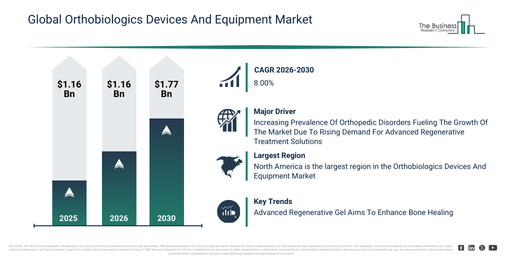
    The market for orthobiologics devices and equipment is on an upward trajectory, projected to grow from $5.99 billion in 2025 to $6.36 billion in 2026, reflecting a compound annual growth rate (CAGR) of 6.2%. This growth is supported by factors such as the rising incidence of musculoskeletal disorders, increased sports injuries, a surge in orthopedic surgeries, wider acceptance of platelet-rich plasma (PRP) therapies, and the clinical success of bone graft applications. Looking ahead, the market is expected to reach $8.64 billion by 2030, growing at a CAGR of 8.0%. This forecasted growth will be fueled by the aging population, advancements in regenerative medicine, demand for minimally invasive procedures, expanded reimbursement policies, and innovations in biomaterials. Important trends anticipated during this period include increased adoption of regenerative therapies, growth in treatments for sports-related injuries, rising use of stem cell-based products, a preference for non-surgical orthopedic options, and the expansion of specialized orthopedic clinics.

    Download A Free Sample Report For Comprehensive Market Insights:

    https://www.thebusinessresearchcompany.com/sample.aspx?id=2568&type=smp

    Primary Factors Propelling Growth in the Orthobiologics Devices and Equipment Market

    The growing prevalence of orthopedic conditions is a significant driver behind the market’s expansion. Orthopedic disorders encompass a range of ailments affecting bones, joints, muscles, ligaments, tendons, and nerves, with the aging population being particularly susceptible to issues such as osteoarthritis, osteoporosis, and fractures. Orthobiologics devices and equipment play a crucial role in these treatments by promoting natural tissue regeneration, thereby enhancing bone and joint function restoration. These technologies not only improve healing effectiveness but also shorten patient recovery periods.

    For example, a survey conducted in August 2023 by the Institute for Health Metrics and Evaluation in the United States found that 15% of adults aged 30 and above suffered from osteoarthritis in 2023. The number of affected individuals worldwide is projected to approach 1 billion by 2050, highlighting the urgency and scale of demand for orthobiologics solutions.

    Segments Offering the Greatest Opportunities in the Orthobiologics Devices and Equipment Market

    This market is categorized into several segments to better understand growth areas:

    1) Product Type: Demineralized Bone Matrix, Synthetic Bone Substitutes, Stem Cell Therapy, Plasma-Rich Protein, Viscosupplementation, Bone Morphogenetic Protein, Synthetic Orthobiologics

    2) Application Areas: Osteoarthritis and Degenerative Arthritis, Soft-Tissue Injuries, Fracture Recovery, Maxillofacial and Dental Applications, Spinal Fusion, Trauma Repair, Reconstructive Surgery

    3) End Users: Hospitals, Orthopedic Clinics, Other Users

    Access The Complete Orthobiologics Devices And Equipment Market Report:

    https://www.thebusinessresearchcompany.com/report/orthobiologics-devices-and-equipment-global-market-report

    The product types are further broken down, such as:

    – Demineralized Bone Matrix: injectable forms, paste and putty, scaffolds

    – Synthetic Bone Substitutes: calcium phosphate ceramics, bioactive glasses, polymers, and composites

    – Stem Cell Therapy: adipose-derived, bone marrow-derived, umbilical cord blood-derived products

    – Plasma-Rich Protein: platelet-rich plasma (PRP) and platelet-rich fibrin (PRF) products

    – Viscosupplementation: hyaluronic acid injections and combination products

    – Bone Morphogenetic Protein (BMP): recombinant proteins and delivery systems

    – Synthetic Orthobiologics: growth factor-enhanced products, biodegradable scaffolds with bioactive agents, and other synthetic formulations

    Recent Trends and Innovations Influencing the Orthobiologics Market

    Companies in this market are increasingly focusing on developing cutting-edge regenerative technologies to improve patient outcomes and minimize complications. One such innovation is synthetic bone fusion gels, which serve as both a scaffold and delivery mechanism for growth factors, aiding bone growth in spinal and orthopedic surgeries.

    For instance, in January 2024, Renovos Biologics Ltd., a UK biomaterial firm affiliated with Biocomposites, received FDA Breakthrough Device Designation for its synthetic nanoclay bone fusion gel called Renovite BMP-2. This injectable and moldable gel is designed to retain bone morphogenetic protein-2 (BMP-2) at the surgical site, promoting efficient bone healing while reducing risks such as ectopic bone formation and soft tissue complications that are common with older carriers. This advancement offers a more controlled and effective fusion process.

    Key Players Shaping the Orthobiologics Devices and Equipment Market

    The competitive landscape includes a number of influential companies such as BONESUPPORT AB, Medtronic plc, Kuros Biosciences Ltd., Stryker Corporation, Baxter International Inc., DePuy Synthes, Braun Melsungen AG, Zimmer Biomet Holdings Inc., Smith & Nephew plc, Arthrex Inc., Enovis Corp., Integra Lifesciences Holding Corporation, NuVasive Inc., Globus Medical Inc., Bioventus LLC, Orthofix Medical Inc., SeaSpine Holdings Corporation, Xtant Medical Holdings Inc., Acumed LLC, and Bone Biologics Corp.

    Geographical Breakdown and Market Expansion Trends

    In 2025, North America dominated the orthobiologics devices and equipment market as the largest regional segment. Western Europe followed as the second largest. The market report also covers other key regions, including Asia-Pacific, South East Asia, Eastern Europe, South America, the Middle East, and Africa, providing a broad perspective on global demand patterns and growth opportunities.

    Get in touch with us:

    The Business Research Company: https://www.thebusinessresearchcompany.com/

    Americas: +1 310-496-7795

    Asia: +44 7882 955267 & +91 8897263534

    Europe: +44 7882 955267

    Email us at: marketing@tbrc.info

    Follow us on:

    LinkedIn: https://in.linkedin.com/company/the-business-research-company

    YouTube: https://www.youtube.com/channel/UC24_fI0rV8cR5DxlCpgmyFQ

    Global Market Model: https://www.thebusinessresearchcompany.com/global-market-model
  • Organoid Kit Market Outlook Highlights The Next Major Growth Opportunities

    Organoid Kit Market Outlook Highlights The Next Major Growth Opportunities

    Through market attractiveness analysis, total addressable market evaluation, company benchmarking matrices, interactive Excel dashboards, expanded supply chain intelligence, emerging startup coverage, and detailed product insights, The Business Research Company’s 2026 market reports provide more actionable and strategically valuable research.

    The organoid kit market is swiftly evolving, driven by advancements in biomedical research and increasing applications in drug development and personalized medicine. This sector is poised for strong expansion as new technologies and collaborative efforts continue to enhance its potential, providing valuable tools for disease modeling and therapeutic innovation.

    Steady Expansion Seen in Organoid Kit Market Size and Forecast

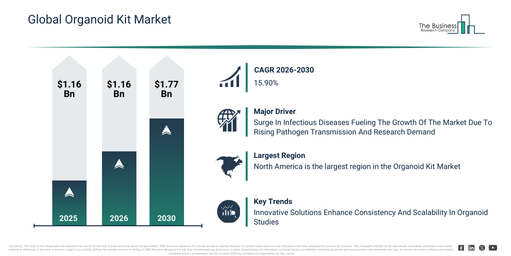
    The organoid kit market has experienced significant growth recently, with its value rising from $1.31 billion in 2025 to an anticipated $1.52 billion in 2026. This represents a compound annual growth rate (CAGR) of 16.2%. This upward trend is largely due to progress in stem cell research, greater use of organoid kits in drug discovery, the introduction of standardized kits, the growth of biomedical research, and increased funding for organoid-related studies. Looking ahead, the market is projected to continue this rapid expansion, reaching $2.75 billion by 2030, with a CAGR of 15.9%. Factors driving this forecasted growth include advancements in personalized medicine, the integration of artificial intelligence (AI) in organoid analysis, improvements in microfluidic platforms, the rise of regenerative medicine, and growing collaborations between pharmaceutical and biotechnology companies. Key trends expected to shape the market include innovations in 3D cell culture, personalized organoid development, microfluidics-based platforms, organoid bioprinting, and stem cell-derived disease modeling.

    Download A Free Sample Report For Comprehensive Market Insights:

    https://www.thebusinessresearchcompany.com/sample.aspx?id=28286&type=smp

    Factors Encouraging Growth in the Organoid Kit Market

    One major factor fueling the organoid kit market is the rising occurrence of infectious diseases worldwide. Infectious diseases, which are caused by bacteria, viruses, fungi, or parasites, spread through various means such as direct contact or contaminated environments. Poor sanitation and overcrowding have worsened the spread of these illnesses, increasing infection rates globally. Organoid kits play an important role in combating infectious diseases by enabling researchers to replicate human tissues in laboratory settings. This allows for precise investigation of how pathogens behave, how infections develop, and testing of potential treatments. For example, in August 2024, the UK Health Security Agency reported a significant rise in measles cases in England during 2023, with 368 cases compared to just 53 in 2022. The West Midlands and London were the most affected areas, accounting for nearly 77% of the cases. Such increases in infectious diseases are a key driver boosting demand for organoid kits.

    Additional Drivers Boosting Organoid Kit Market Development

    Besides infectious disease concerns, the growing focus on personalized medicine is accelerating market growth. Organoid kits enable tailored treatment approaches by modeling individual patient tissues, improving drug efficacy and safety testing. Furthermore, advances in technology like microfluidics and AI-driven analysis enhance the precision and scalability of organoid research. Increased funding and partnerships between pharmaceutical and biotech companies are also fostering innovation and commercialization in this space, further propelling the market forward.

    Access The Complete Organoid Kit Market Report:

    https://www.thebusinessresearchcompany.com/report/organoid-kit-global-market-report

    Breakdown of Organoid Kit Market Segments and Categories

    This report categorizes the organoid kit market across several major divisions:

    1) By Type: Brain Organoids, Kidney Organoids, Intestinal Organoids, Liver Organoids, and Other Organoid Types

    2) By Technology: 3D Cell Culture Technology and Microfluidics Technology

    3) By Source: Human-Derived Organoids, Animal-Derived Organoids, and Cell Line-Derived Organoids

    4) By Application: Drug Discovery and Development, Disease Modeling, Personalized Medicine, and Other Applications

    5) By End-User: Research Institutes, Pharmaceutical Companies, Contract Research Organizations, and Biotech Companies

    Further subcategories are detailed for each organoid type, such as cerebral, midbrain, and retinal organoids for brain types; nephron, collecting duct, and glomerular organoids for kidneys; small intestine, colon, and gastric organoids for intestinal types; hepatic, cholangiocyte, and biliary organoids for liver types; and other types including pancreatic, lung, heart, and tumor organoids.

    Market Trends Shaping the Future of Organoid Kits

    Leading companies in the organoid kit market are increasingly focusing on rapid aggregate formation techniques to speed up organoid development. This approach allows for generating thousands of uniform pluripotent stem cell aggregates quickly, significantly reducing the time needed to produce mature organoids. For instance, in June 2025, Pluristyx Inc., a US biotech firm, launched its PluriForm Organoid Kit, which simplifies the process of creating stem cell aggregates and cuts development timelines from months to weeks. This kit combines optimized growth media and standardized protocols to ensure reproducibility across different cell types and supports high-throughput applications such as disease modeling and drug screening.

    Key Players Driving Competition in the Organoid Kit Sector

    Several major companies are at the forefront of the organoid kit market, including STEMCELL Technologies Inc., Bio-Techne Corporation, Takara Bio Inc., American Type Culture Collection (ATCC), ACROBiosystems Inc., MIMETAS B.V., Emulate Inc., CN Bio Innovations Limited, InSCREENeX GmbH, TheWell Bioscience Inc., Prellis Biologics Inc., Crown Bioscience International, AMS Biotechnology (Europe) Limited (AMSBIO), Xylyx Bio Inc., Organovo Holdings Inc., HUB Organoids Holding B.V., Cellesce Ltd., DefiniGEN Ltd., OcellO B.V., AlveoliX AG, and VitroLabs Inc. These firms continue to invest in research and product development to maintain their competitive advantage.

    Regional Market Leadership and Growth Opportunities

    As of 2025, North America holds the largest share of the organoid kit market. However, the Asia-Pacific region is expected to emerge as the fastest-growing market during the forecast period. The report covers key regions including Asia-Pacific, South East Asia, Western Europe, Eastern Europe, North America, South America, the Middle East, and Africa, providing a thorough view of market dynamics worldwide.

    Get in touch with us:

    The Business Research Company: https://www.thebusinessresearchcompany.com/

    Americas: +1 310-496-7795

    Asia: +44 7882 955267 & +91 8897263534

    Europe: +44 7882 955267

    Email us at: marketing@tbrc.info

    Follow us on:

    LinkedIn: https://in.linkedin.com/company/the-business-research-company

    YouTube: https://www.youtube.com/channel/UC24_fI0rV8cR5DxlCpgmyFQ

    Global Market Model: https://www.thebusinessresearchcompany.com/global-market-model
  • Oral Thin Films Market Trends And Growth Drivers Point To Strong Future Potential

    Oral Thin Films Market Trends And Growth Drivers Point To Strong Future Potential

    Delivering more actionable and strategically valuable research, The Business Research Company’s 2026 market reports feature market attractiveness analysis, total addressable market evaluation, company benchmarking matrices, interactive Excel dashboards, expanded supply chain intelligence, emerging startup coverage, and detailed product insights.

    The oral thin films market has been experiencing rapid advancement, driven by innovations and shifting preferences in drug delivery systems. As healthcare professionals and patients seek more convenient and effective medication options, this sector is positioned for substantial growth. Below is an overview of the market’s size, growth drivers, segmentation, innovations, key players, and regional dynamics shaping its future.

    Oral Thin Films Market Size and Growth Forecast

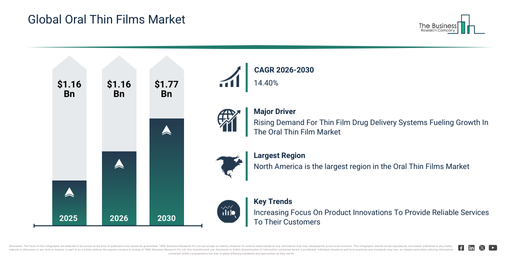
    The oral thin films market has demonstrated significant expansion in recent years. It is projected to increase from $4.99 billion in 2025 to $5.72 billion in 2026, reflecting a strong compound annual growth rate (CAGR) of 14.6%. This upward trend is largely fueled by a growing preference for non-invasive drug delivery methods, the broadening scope of psychiatric and neurological treatments, demand for faster-acting therapies, increasing acceptance of over-the-counter (OTC) drug formats, and advances in pharmaceutical film manufacturing technology. Looking ahead, the market is expected to maintain its momentum, reaching $9.82 billion by 2030 with a CAGR of 14.4%. Key factors contributing to this growth include the rising adoption of personalized medicine delivery, investments in new polymer formulations, expansion of OTC oral therapeutics, heightened attention to pediatric and geriatric patient needs, and the increasing demand for rapid-onset treatments. Emerging trends forecasted for this period involve greater use of fast-acting drug delivery films, a focus on dosage forms that enhance patient convenience, broader application of polymer-based film technologies, growth in OTC oral film products, and improved bioavailability of medications.

    Download A Free Sample Report For Comprehensive Market Insights:

    https://www.thebusinessresearchcompany.com/sample.aspx?id=6067&type=smp

    Factors Fueling the Rise of the Oral Thin Films Market

    One of the main drivers behind the surge in the oral thin films market is the increasing demand for thin film drug delivery systems. These films offer an attractive alternative to traditional dosage forms due to their convenience, self-administration capability, and quick dissolution rates. Since oral thin films can be taken without water, they provide a patient-friendly option for medication intake. Their rapid absorption makes them especially suitable for delivering drugs efficiently, which has led to heightened demand for these systems.

    Additionally, the prevalence of chronic diseases such as cardiovascular conditions in the United States, impacting over half of the population, contributes to market growth. For example, a January 2023 report by The American Cancer Society notes that approximately 42% of newly diagnosed cancers in the U.S. (excluding non-melanoma skin cancers) amount to around 820,000 cases in 2023 and 840,000 cases in 2024. Such figures emphasize the urgent need for advanced drug delivery technologies to improve treatment outcomes, further propelling the oral thin films market.

    Access The Complete Oral Thin Films Market Report:

    https://www.thebusinessresearchcompany.com/report/oral-thin-films-global-market-report

    Breakdown of Segments Within the Oral Thin Films Market

    The oral thin films market is divided into several key segments to better understand revenue sources. By type, the market includes Sublingual Films and Fast Dissolving Dental/Buccal Films. Regarding disease indications, the categories covered include Schizophrenia, Migraine, Opioid Dependence, Nausea & Vomiting, and other conditions. Distribution channels are segmented into Hospital Pharmacies, Retail Pharmacies, and other outlets.

    Further subsegment analysis highlights that Sublingual Films are categorized into Drug Delivery Films and Nutritional Supplement Films, while Fast Dissolving Dental or Buccal Films are split between Over-the-Counter (OTC) Products and Prescription Products.

    Innovations Steering the Future of Oral Thin Films

    Leading companies in the oral thin films market are prioritizing innovation to boost revenues and meet evolving needs. Products such as Rizaport, a brand-name oral thin-film formulation containing rizatriptan benzoate (an active ingredient commonly used in migraine treatment), exemplify this focus. For instance, in February 2024, CD Formulation, a U.S.-based drug formulation firm, introduced a novel oral thin film technology designed to facilitate easy administration, especially for patients with swallowing difficulties. This technology enables rapid absorption through the oral cavity, bypassing the digestive system and allowing for a quicker onset of action. It also enhances bioavailability, supports precise dosing tailored to individual needs, and improves patient compliance, particularly in emergency scenarios.

    Key Players Leading the Oral Thin Films Industry

    Several prominent companies are shaping the oral thin films market landscape. These include ZIM Laboratories Limited, Cure Pharmaceutical Holding Corp., IntelGenx Corp., Aquestive Therapeutics Inc., BioDelivery Sciences International Inc., Indivior PLC, LTS Lohmann Therapie-Systeme AG, Tesa Labtec GmbH, APR Applied Pharma Research SA, NAL Pharma, Panacea Biotec Ltd., Shilpa Therapeutics Pvt. Ltd., LIVKON Pharmaceuticals Pvt. Ltd., Kyu Kyu Pharmaceutical Co. Ltd., Seoul Pharma Co. Ltd., Adare Pharmaceuticals Inc., Sumitomo Dainippon Pharma Co. Ltd., Sunovion Pharmaceuticals Inc., MonoSol Rx LLC, and C.L. Pharm Co. Ltd. These firms are critical to the competitive dynamics and innovation within the market.

    Regional Market Trends and Growth Leaders

    In 2025, North America held the largest share of the oral thin films market, benefiting from strong healthcare infrastructure and high adoption rates of advanced drug delivery systems. Meanwhile, the Asia-Pacific region is expected to emerge as the fastest-growing market during the forecast period. The report includes a comprehensive review of regions such as Asia-Pacific, South East Asia, Western Europe, Eastern Europe, North America, South America, the Middle East, and Africa, providing a global perspective on market expansion trends.

    Get in touch with us:

    The Business Research Company: https://www.thebusinessresearchcompany.com/

    Americas: +1 310-496-7795

    Asia: +44 7882 955267 & +91 8897263534

    Europe: +44 7882 955267

    Email us at: marketing@tbrc.info

    Follow us on:

    LinkedIn: https://in.linkedin.com/company/the-business-research-company

    YouTube: https://www.youtube.com/channel/UC24_fI0rV8cR5DxlCpgmyFQ

    Global Market Model: https://www.thebusinessresearchcompany.com/global-market-model
  • Oral Syringes Market Expansion Is Reshaping Competitive Dynamics Across The Industry

    Oral Syringes Market Expansion Is Reshaping Competitive Dynamics Across The Industry

    Enhanced with market attractiveness analysis, total addressable market evaluation, company benchmarking matrices, interactive Excel dashboards, expanded supply chain intelligence, emerging startup coverage, and detailed product insights, The Business Research Company’s 2026 market reports deliver more actionable and strategically valuable research.

    The oral syringes market has witnessed significant growth recently, driven by evolving healthcare needs and increasing adoption of safe medication practices. As more patients require precise and convenient drug delivery options, this market is set to experience continued expansion. Let’s explore the current market landscape, the factors fueling its growth, key players, emerging trends, and future prospects within this sector.

    Oral Syringes Market Size and Growth Outlook

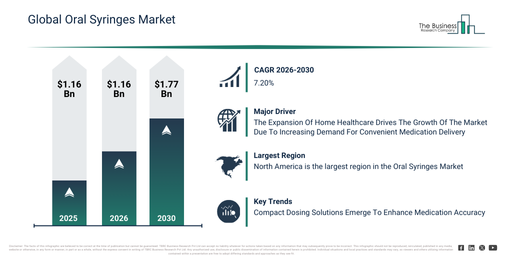
    The oral syringes market has shown steady growth, with its value rising from $1.14 billion in 2025 to an estimated $1.22 billion in 2026, reflecting a compound annual growth rate (CAGR) of 7.0%. This past growth has been supported by increased use of pediatric liquid medications, higher hospital admissions, growing awareness about dosing errors, the expansion of liquid pharmaceutical formulations, and wider acceptance of oral drug delivery systems. Looking ahead, the market is projected to reach $1.61 billion by 2030, growing at a CAGR of 7.2%. Key factors behind this forecast include the aging population, a surge in home healthcare services, demand for safer needle-free medication administration, the growth of online pharmacy platforms, and innovations in ergonomic syringe designs. Important trends anticipated in the coming years involve a focus on dose accuracy and medication safety, rising demand for pediatric and geriatric care, a shift towards disposable single-use devices, increased home-based and self-administered care, and customization options for syringe design and capacity.

    Download A Free Sample Report For Comprehensive Market Insights:

    https://www.thebusinessresearchcompany.com/sample.aspx?id=25856&type=smp

    Factors Behind Oral Syringes Market Growth: The Rise of Home Healthcare

    One major driver of the oral syringes market is the expanding home healthcare sector. Home healthcare encompasses medical and supportive services delivered in patients’ residences to aid recovery, manage chronic illnesses, or maintain overall well-being and independence. This sector’s growth is largely due to the increasing prevalence of chronic diseases, which require long-term care solutions that are both practical and cost-effective. Oral syringes play a vital role by enabling safe, accurate, and straightforward administration of liquid medications, particularly for children and elderly patients. For example, data from the U.S. Bureau of Labor Statistics in October 2024 shows that home- and community-based care jobs in the United States reached 4.3 million, including 2.5 million workers serving elderly and disabled populations and 1.8 million in home health care roles. This expansion directly supports the rise in oral syringe demand.

    Impact of Chronic Diseases on Oral Syringes Market Expansion

    The growing incidence of chronic diseases is another significant factor driving the oral syringes market forward. Chronic conditions tend to develop slowly and persist over long periods, often requiring ongoing medical attention and affecting daily life. The rise in these diseases is closely linked to unhealthy lifestyle habits such as poor nutrition, physical inactivity, smoking, and excessive alcohol consumption, which increase the risk of long-term health problems. Oral syringes facilitate chronic disease management by ensuring precise, safe, and consistent dosing of liquid medicines for patients needing extended treatment periods. For instance, the Centers for Disease Control and Prevention reported in April 2025 that 76.4% of US adults (about 194 million people) had one or more chronic conditions in 2023, including 59.5% of young adults, 78.4% of middle-aged adults, and 93.0% of older adults. This widespread prevalence fuels the demand for oral syringes.

    Access The Complete Oral Syringes Market Report:

    https://www.thebusinessresearchcompany.com/report/oral-syringes-global-market-report

    Breaking Down the Oral Syringes Market Segments

    This report categorizes the oral syringes market into several key segments:

    1) By Type: Clear Oral Syringes and Colorful Oral Syringes

    2) By Capacity: Small Volume Syringes, Medium Volume Syringes, and Large Volume Syringes

    3) By Application: Pediatric Care, Geriatric Care, Post-Surgery or Critical Care, Dental Procedures, and Other Applications

    4) By Distribution Channel: Direct Sales, Distributors, Online Retail, and Pharmacy Chains

    5) By End-User: Hospitals, Clinics, Home Care Settings, and Other End-Users

    There are further subcategories within some segments, such as clear oral syringes with or without printing, and colorful syringes available as single-color or multi-color options.

    Innovations and Industry Trends Shaping the Oral Syringes Market

    Leading companies in the oral syringes market are concentrating on innovative product development to enhance dosing accuracy and user convenience. A notable trend is the introduction of short-form syringes—compact oral dosing devices with a shorter barrel length that deliver precise medication doses in a smaller size, improving ease of handling and administration. For example, in August 2024, Adelphi Healthcare Packaging, a UK-based pharmaceutical packaging company, unveiled a new 1.5 ml short-form oral syringe designed for both human and veterinary use. This syringe offers high precision in a compact design and features an elm-end tip that prevents attachment of luer connectors or needles, reducing the risk of misuse for injections.

    The Competitive Landscape and Leading Players in Oral Syringes

    The oral syringes market features several prominent players, including Cardinal Health Inc., Medline Industries LP, Becton Dickinson and Company, Baxter International Inc., Terumo Corporation, Vygon SA, B. Braun Melsungen AG, Sol-Millennium Medical Group, CODAN Medizinische Geräte GmbH and Co KG, Changzhou Medical Appliances General Factory Co. Ltd., Neelkanth Polymer Industries Private Limited, Shako Flexipack Private Limited, Apex Medical Devices Private Limited, Vastmed LLC, Shanghai Kindly Enterprise Development Group Co. Ltd., Nipro Corporation, Hindustan Syringes and Medical Devices Limited, Weigao Group Medical Polymer Company Limited, JMS Co. Ltd., and Narang Medical Limited.

    Regional Market Overview Highlighting Revenue Leaders

    In 2025, North America was the largest region for the oral syringes market. However, the Asia-Pacific region is expected to exhibit the fastest growth during the forecast period. The analysis encompasses major regions such as Asia-Pacific, South East Asia, Western Europe, Eastern Europe, North America, South America, the Middle East, and Africa, providing a comprehensive perspective on global market trends.

    Get in touch with us:

    The Business Research Company: https://www.thebusinessresearchcompany.com/

    Americas: +1 310-496-7795

    Asia: +44 7882 955267 & +91 8897263534

    Europe: +44 7882 955267

    Email us at: marketing@tbrc.info

    Follow us on:

    LinkedIn: https://in.linkedin.com/company/the-business-research-company

    YouTube: https://www.youtube.com/channel/UC24_fI0rV8cR5DxlCpgmyFQ

    Global Market Model: https://www.thebusinessresearchcompany.com/global-market-model
  • Oral Sleep Apnea Devices Market Forecast Reveals Where Future Industry Value Will Be Created

    Oral Sleep Apnea Devices Market Forecast Reveals Where Future Industry Value Will Be Created

    Through market attractiveness analysis, total addressable market evaluation, company benchmarking matrices, interactive Excel dashboards, expanded supply chain intelligence, emerging startup coverage, and detailed product insights, The Business Research Company’s 2026 market reports provide more actionable and strategically valuable research.

    The oral sleep apnea devices market is experiencing rapid expansion, driven by increasing awareness and better diagnosis of sleep disorders. As more individuals seek effective alternatives to traditional therapies, the market is set to witness significant growth in the upcoming years. Let’s explore the current market size, key growth drivers, segmentation, emerging trends, major players, and regional outlook shaping this evolving industry.

    Market Size and Growth Projections for Oral Sleep Apnea Devices

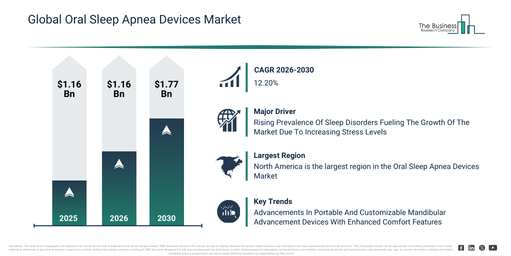
    The market for oral sleep apnea devices has seen strong growth in recent years. It is projected to rise from $1.46 billion in 2025 to $1.64 billion in 2026, exhibiting a compound annual growth rate (CAGR) of 12.6%. Looking further ahead, the market is expected to reach $2.6 billion by 2030, maintaining a CAGR of 12.2%. This upward trajectory is fueled by technological advancements in custom dental appliance design, increased diagnoses of mild and moderate sleep apnea, the spread of e-commerce for medical devices, a growing elderly population, and a rising demand for home-based therapies. Key trends include a preference for non-invasive treatments, greater use of custom-fitted oral appliances, integration of dental care in sleep medicine, expansion of at-home sleep apnea management, and a focus on patient comfort and adherence.

    Download A Free Sample Report For Comprehensive Market Insights:

    https://www.thebusinessresearchcompany.com/sample.aspx?id=25855&type=smp

    Rising Prevalence of Sleep Disorders Driving Oral Sleep Apnea Devices Market Growth

    The increasing incidence of sleep disorders is a major factor propelling the oral sleep apnea devices market forward. Sleep disorders disrupt normal sleep patterns, affecting the quality and timing of rest. Heightened stress levels contribute to these disruptions by making it harder to fall asleep and achieve restorative sleep. Oral sleep apnea devices play a critical role in managing these disorders by keeping airways open during sleep, reducing breathing interruptions, and improving overall sleep quality. For example, in December 2023, SleepFoundation reported that 37% of American adults experienced poorer sleep than the previous year, underscoring the growing need for effective sleep solutions.

    Additional Factors Supporting Market Expansion

    Beyond the growing prevalence of sleep problems, the market benefits from the rising limitations and lower acceptance of continuous positive airway pressure (CPAP) therapy. Many patients find CPAP devices cumbersome or uncomfortable, prompting them to seek alternative treatments like oral appliances. Furthermore, the development of dental sleep medicine as a specialized field has increased awareness and availability of oral devices for sleep apnea, contributing to the market’s strong performance.

    Access The Complete Oral Sleep Apnea Devices Market Report:

    https://www.thebusinessresearchcompany.com/report/oral-sleep-apnea-devices-global-market-report

    How the Oral Sleep Apnea Devices Market is Structured by Segments

    This market is segmented by device type, indication, distribution channel, and end user. Device types include Mandibular Advancement Devices, Tongue-Retaining Devices, Rapid Maxillary Expansion devices, and Mouth Guards. Indications are classified into mild and moderate sleep apnea. Distribution channels cover brick-and-mortar stores, e-commerce platforms, and hospital pharmacies. End users range from homecare settings to sleep laboratories, hospitals, and dental clinics.

    Further subcategories break down each device type in detail. Mandibular Advancement Devices include custom-fitted, prefabricated or boil-and-bite, adjustable, and fixed-position variants. Tongue-Retaining Devices consist of silicone, thermoplastic, and custom-molded types. Rapid Maxillary Expansion devices are categorized into fixed palatal expanders, removable palatal expanders, and implant-supported expanders. Mouth Guards include night guards for snoring, soft mouth guards, dual-laminate mouth guards, and custom dental sleep guards.

    Advancements Defining the Next Growth Phase in the Oral Sleep Apnea Devices Market

    Leading companies in this industry are focusing on innovation, particularly the development of portable and customizable devices. One example is replaceable nylon connectors that enable precise adjustments to mandibular positioning, enhancing comfort and treatment effectiveness.

    For instance, in May 2024, James R. Glidewell Dental Ceramics, Inc. introduced the Silent Nite 3D Sleep Appliance. This 3D-printed mandibular advancement device is digitally fabricated and designed for treating snoring and mild to moderate obstructive sleep apnea. It features adjustable nylon connectors that allow mandibular adjustments in 0.5 mm increments, ensuring a personalized fit. Additionally, its scalloped edge design improves retention while minimizing gum contact, increasing overall comfort.

    Key Competitors Making an Impact in the Oral Sleep Apnea Devices Market

    Several prominent players dominate the oral sleep apnea devices market, including James R Glidewell Dental Ceramics Inc, SomnoMed Limited, ProSomnus Sleep Technologies Inc, DynaFlex, Vivos Therapeutics Inc, Signifier Medical Technologies Ltd, Myerson LLC, Panthera Dental Inc, Apnea Sciences Corporation, PureSleep Company, Somnics Health Co Ltd, OravanOSA LLC, EMA Sleep, Alliance Sleep Corporation, OSAWELL Co Ltd, Comprehensive Sleep Solutions LLC, The Snore Reliever Company LLC, Glidewell Laboratories, SomnoDent USA, ProSomnus EVO, Panthera Sleep, and BlueSleep Dental.

    Regional Market Dynamics and Growth Opportunities

    North America held the largest share of the oral sleep apnea devices market in 2025, demonstrating strong adoption and awareness. Meanwhile, the Asia-Pacific region is expected to experience the fastest growth during the forecast period, driven by rising healthcare infrastructure development, increasing diagnosis rates, and expanding consumer awareness. This report also covers other key regions such as South East Asia, Western Europe, Eastern Europe, South America, the Middle East, and Africa, presenting a comprehensive view of global market trends and opportunities.

    Get in touch with us:

    The Business Research Company: https://www.thebusinessresearchcompany.com/

    Americas: +1 310-496-7795

    Asia: +44 7882 955267 & +91 8897263534

    Europe: +44 7882 955267

    Email us at: marketing@tbrc.info

    Follow us on:

    LinkedIn: https://in.linkedin.com/company/the-business-research-company

    YouTube: https://www.youtube.com/channel/UC24_fI0rV8cR5DxlCpgmyFQ

    Global Market Model: https://www.thebusinessresearchcompany.com/global-market-model
  • Optometry Equipment Market Growth Through 2030 Creates New Strategic Opportunities

    Optometry Equipment Market Growth Through 2030 Creates New Strategic Opportunities

    Delivering more actionable and strategically valuable research, The Business Research Company’s 2026 market reports feature market attractiveness analysis, total addressable market evaluation, company benchmarking matrices, interactive Excel dashboards, expanded supply chain intelligence, emerging startup coverage, and detailed product insights.

    The optometry equipment sector has been witnessing steady growth, driven by rising demand for advanced eye care solutions and innovative diagnostic technologies. As vision-related health issues become more prevalent, the market is set to continue expanding, fueled by technological advancements and demographic shifts. Here is an overview of the current market size, key growth factors, segmentation, leading companies, and regional dynamics shaping the industry.

    Strong Market Size Increase in Optometry Equipment from 2025 to 2030

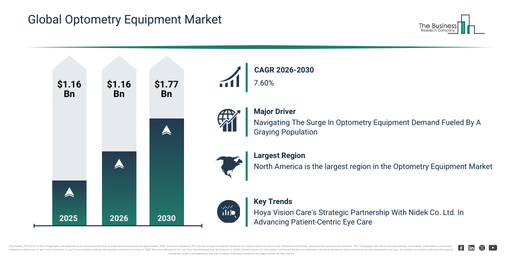
    The optometry equipment market has experienced significant growth recently and is projected to continue doing so. The market is expected to grow from $3.79 billion in 2025 to $4.1 billion in 2026, representing a compound annual growth rate (CAGR) of 8.1%. This growth during the historical period has been mainly driven by the increasing occurrence of vision disorders, expansion of eye care infrastructure, enhanced use of diagnostic imaging in optometry, a rise in cataract and glaucoma surgeries, and continual advancements in ophthalmic equipment design. Looking ahead, the market size is forecasted to reach $5.5 billion by 2030, growing at a CAGR of 7.6%. Factors contributing to the projected growth include the rising demand for preventive eye care, greater adoption of AI-powered diagnostic tools, more outpatient ophthalmic procedures, enhanced focus on precision vision correction, and ongoing innovation in ophthalmic laser technologies.

    Download A Free Sample Report For Comprehensive Market Insights:

    https://www.thebusinessresearchcompany.com/sample.aspx?id=8809&type=smp

    Population Aging as a Major Driver of Market Expansion

    One of the primary forces pushing the optometry equipment market forward is the increasing size of the aging population. Defined as individuals aged 60 and above, this demographic is growing rapidly around the world due to lower fertility rates and longer life expectancy. The expanding elderly population creates greater demand for advanced diagnostic and monitoring devices tailored to age-related eye conditions. For example, the World Health Organization projected in February 2025 that the global population aged 60 and older would rise from 1.1 billion in 2023 to 1.4 billion by 2030. This demographic shift is fueling greater adoption of sophisticated optometry equipment to better manage vision health in older adults.

    Technological Innovations Accelerate Market Demand

    Another significant factor supporting market growth is the shift toward more advanced and precise ophthalmic technologies. The integration of artificial intelligence and digital imaging techniques is enabling higher accuracy in eye diagnostics and treatments. This trend is accompanied by growing demand for minimally invasive surgery equipment and expansion of laser-based vision correction methods. Such technological progress is broadening the scope and effectiveness of optometry equipment, encouraging healthcare providers to upgrade their systems.

    Access The Complete Optometry Equipment Market Report:

    https://www.thebusinessresearchcompany.com/report/optometry-equipment-global-market-report

    Market Structure and Key Segments in Optometry Equipment

    The optometry equipment market is categorized into several segments to reflect product types, examination types, modality, portability, and end users. Key product types include ophthalmic diagnostic equipment, vision testing instruments, refraction devices, imaging equipment, and other specialized tools. Examination types cover retina, cornea, anterior segment, and general eye exams. Equipment is further classified by modality into manual, automated, and digital devices. Portability divides the market between tabletop systems and portable handheld devices. End users comprise hospitals and outpatient departments, optometry clinics, physician offices, specialty eye clinics, and academic research centers. Some notable subcategories include autorefractors, keratometers, tonometers, slit lamps, phoropters, trial lens sets, fundus cameras, optical coherence tomography devices, visual field analyzers, pachymeters, and corneal topographers.

    Collaborative Partnerships Drive Market Innovation

    Leading companies in optometry equipment are increasingly forming strategic partnerships to strengthen their market positions and expand product offerings. These alliances typically involve agreements to collaborate on research, development, manufacturing, or distribution. For instance, in February 2023, HOYA Vision Care, based in Thailand, partnered with Japan’s NIDEK Co. Ltd. This collaboration aims to provide comprehensive optical solutions, ranging from eye exams to the delivery of premium spectacle lenses, leveraging NIDEK’s extensive portfolio of ophthalmic instruments.

    Top Market Players Shaping the Optometry Equipment Industry

    Several major corporations hold significant positions within the optometry equipment market. These include Carl Zeiss Meditec AG, Essilor International SA, Topcon Medical Systems Inc., Canon Inc., Heidelberg Engineering GmbH, Nidek Co Ltd, Hoya Corporation, Bausch Health Companies Inc., Alcon Inc., Oculus Inc., Revenio Group PLC, Huvitz Co Ltd, Shin Nippon Machinery Co Ltd, Takagi Ophthalmic Instruments Ltd, Medmont International Pty Ltd, Tomey Corporation, Marco Ophthalmic Inc., Kowa Company Ltd, Keeler Ltd, HEINE Optotechnik GmbH And Co KG, and Welch Allyn Inc.

    Geographical Insights Highlighting Market Leaders and Growth Areas

    In terms of regional performance, North America captured the largest share of the optometry equipment market in 2025. However, the analysis also covers other significant regions including Asia-Pacific, South East Asia, Western Europe, Eastern Europe, South America, the Middle East, and Africa. While North America leads in market size, other regions are expected to display promising growth potential due to expanding healthcare infrastructure and rising awareness about eye health.

    In summary, the optometry equipment market is poised for robust expansion driven by demographic trends, technological innovation, and strategic industry collaborations. With increasing prevalence of vision disorders and growing emphasis on advanced diagnostics, the market outlook through 2030 remains highly positive.

    Get in touch with us:

    The Business Research Company: https://www.thebusinessresearchcompany.com/

    Americas: +1 310-496-7795

    Asia: +44 7882 955267 & +91 8897263534

    Europe: +44 7882 955267

    Email us at: marketing@tbrc.info

    Follow us on:

    LinkedIn: https://in.linkedin.com/company/the-business-research-company

    YouTube: https://www.youtube.com/channel/UC24_fI0rV8cR5DxlCpgmyFQ

    Global Market Model: https://www.thebusinessresearchcompany.com/global-market-model