Month: June 2026

  • Optogenetics Market Size Projected To Increase From $47.12 Billion To $81.04 Billion During The Forecast Period

    Optogenetics Market Size Projected To Increase From $47.12 Billion To $81.04 Billion During The Forecast Period

    Enhanced with market attractiveness analysis, total addressable market evaluation, company benchmarking matrices, interactive Excel dashboards, expanded supply chain intelligence, emerging startup coverage, and detailed product insights, The Business Research Company’s 2026 market reports deliver more actionable and strategically valuable research.

    The optogenetics sector is experiencing a remarkable surge, driven by technological advancements and growing research activities in neuroscience. As this field evolves, it is expected to play an increasingly important role in medical and scientific studies, promising substantial growth and innovation in the coming years. Below, we explore the market size, key drivers, segment details, emerging trends, major players, and regional outlook shaping the optogenetics industry.

    Market Expansion and Future Projections for the Optogenetics Market

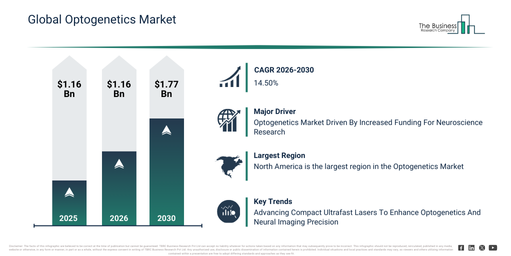
    The optogenetics market has seen significant growth recently, with its value projected to rise from $40.9 billion in 2025 to $47.13 billion in 2026, representing a compound annual growth rate (CAGR) of 15.2%. This increase during the historical period is attributed to improvements in genetic engineering tools, increased funding for neuroscience research, wider adoption of optical stimulation techniques, growth in academic and laboratory studies, and enhanced optical sensor sensitivity.

    Download A Free Sample Report For Comprehensive Market Insights:

    https://www.thebusinessresearchcompany.com/sample.aspx?id=9009&type=smp

    Looking ahead, the market is forecasted to grow rapidly, reaching $81.05 billion by 2030 at a CAGR of 14.5%. This anticipated expansion is driven by the growing utilization of optogenetics in disease research, heightened investments in brain research projects, broader translational neuroscience efforts, deeper integration with AI-based data analysis, and continued advancements in sophisticated optical actuators. Important trends shaping the market’s future include increased use of light-based neural control methods, adoption of genetically encoded optical sensors, stronger ties between optogenetics and neuroscience investigations, growth in behavioral and neural circuit mapping research, and a sharp focus on precise neuromodulation techniques.

    Key Factors Fueling Growth in the Optogenetics Market

    One of the primary forces behind the optogenetics market’s rapid growth is the rising support and funding for neuroscience research. Neuroscience involves the detailed scientific study of the nervous system, including the brain, spinal cord, and peripheral nerves. Optogenetics, a cutting-edge technique within this field, uses light to selectively manipulate neuron activity in living tissue, revolutionizing how researchers understand neural circuits.

    Access The Complete Optogenetics Market Report:

    https://www.thebusinessresearchcompany.com/report/optogenetics-global-market-report

    For instance, in March 2023, the National Institutes of Health (NIH), a leading US government agency for medical research, reported funding for neuroscience research reached approximately $11.3 billion in fiscal year 2022, with expectations to increase to $12.1 billion in 2023. This upward trend in financial backing is expected to continue propelling the optogenetics market forward.

    Breakdown of Optogenetics Market Segments and Opportunities

    The optogenetics market is segmented comprehensively to address different facets of the industry:

    By Product:

    – Lasers

    – Actuators

    – Sensors

    By Application:

    – Neuroscience

    – Behavioral Tracking

    – Retinal Disease Treatment

    – Other Applications

    By End User:

    – Hospitals and Clinics

    – Diagnostics Centers

    – Research Centers

    – Other End Users

    Further subcategories include types of lasers such as continuous wave, pulsed, and fiber-coupled lasers. Actuators are divided into channelrhodopsins, halorhodopsins, and opto-xRs, while sensors consist of calcium sensors, voltage sensors, and genetically encoded indicators. This segmentation allows for targeted growth strategies across multiple domains.

    Innovative Trends Shaping the Optogenetics Marketplace

    Leading companies in the optogenetics field are dedicating resources to create novel products, including compact femtosecond lasers designed to improve imaging resolution and enhance experimental precision. Femtosecond lasers emit ultra-short pulses, enabling detailed stimulation and imaging of neural tissue without causing thermal damage.

    For example, in June 2025, Coherent, Inc., a US photonics firm, introduced the Osprey, a compact femtosecond laser tailored for optogenetics, microsurgery, and medical device manufacturing. The Osprey delivers pulse energy up to 5 µJ with sub-350 femtosecond pulse widths, high beam quality, and stable pointing, all packaged in a robust design ideal for advanced microscopy and medical applications.

    Key Industry Players Driving Competition in the Optogenetics Landscape

    Several prominent companies dominate the optogenetics sector, shaping its competitive environment. These include Elliot Scientific Ltd., Shanghai Laser & Optics Century Co. Ltd., GenSight Biologics, Coherent Inc., Thorlabs Inc., Prizmatix Ltd., Bruker Corporation, Merck KGaA, The Jackson Laboratory, Applied Genetic Technologies Corporation, Circuit Therapeutics Inc., Bionic Sight LLC, Teledyne Photometrics, Campden Instruments, Nanoscope Therapeutics Inc., Laserglow Technologies, Hubner Group, Physical Sciences Inc., Ray Therapeutics, OptoGenTech, opto biolabs, Neurolux, Ugenex Therapeutics, Scientifica, Cobolt Inc., Inscopix, and Mightex Systems.

    Geographical Distribution and Market Leadership in Optogenetics

    In 2025, North America held the largest share of the optogenetics market. The market report also covers other important regions such as Asia-Pacific, South East Asia, Western Europe, Eastern Europe, South America, the Middle East, and Africa, providing a well-rounded view of the global market dynamics and growth prospects.

    Get in touch with us:

    The Business Research Company: https://www.thebusinessresearchcompany.com/

    Americas: +1 310-496-7795

    Asia: +44 7882 955267 & +91 8897263534

    Europe: +44 7882 955267

    Email us at: marketing@tbrc.info

    Follow us on:

    LinkedIn: https://in.linkedin.com/company/the-business-research-company

    YouTube: https://www.youtube.com/channel/UC24_fI0rV8cR5DxlCpgmyFQ

    Global Market Model: https://www.thebusinessresearchcompany.com/global-market-model
  • Optical Microscopes Market Growth Outlook Reveals A CAGR Of 7.5% And A Market Value Of $4.6 Billion By 2030

    Optical Microscopes Market Growth Outlook Reveals A CAGR Of 7.5% And A Market Value Of $4.6 Billion By 2030

    Through market attractiveness analysis, total addressable market evaluation, company benchmarking matrices, interactive Excel dashboards, expanded supply chain intelligence, emerging startup coverage, and detailed product insights, The Business Research Company’s 2026 market reports provide more actionable and strategically valuable research.

    The optical microscopes market has been experiencing significant growth recently, driven by advances in technology and expanding applications across various fields. With increasing demand from healthcare, research, and industrial sectors, the market is set for continued expansion in the coming years. Here’s an in-depth look at the market’s size, key drivers, major players, trends, and regional outlook.

    Market Size Growth and Future Outlook of the Optical Microscopes Market

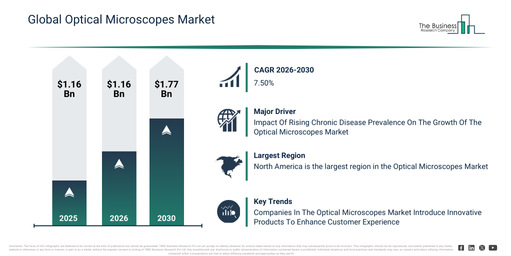
    The optical microscopes market has seen robust growth over recent years. It is anticipated to increase from $3.18 billion in 2025 to $3.45 billion in 2026, reflecting a compound annual growth rate (CAGR) of 8.4%. This growth during the historical period stems from the expansion of medical diagnostics, the rise in academic research activities, more frequent use of microscopy in clinical environments, affordability of optical systems, and advances in lens manufacturing technologies. Looking ahead, the market is projected to reach $4.61 billion by 2030, growing at a CAGR of 7.5%. Drivers for this future growth include higher investments in life sciences research, greater demand for digital pathology solutions, the expansion of clinical diagnostics infrastructure, increasing integration of AI-based image analysis tools, and a heightened focus on precision diagnostics. Notable trends include the rise in adoption of digital optical microscopes, the increasing need for high-resolution imaging, growth in laboratory and clinical applications, enhanced image analysis software integration, and ergonomic design improvements.

    Download A Free Sample Report For Comprehensive Market Insights:

    https://www.thebusinessresearchcompany.com/sample.aspx?id=15883&type=smp

    Key Factors Fueling Growth in the Optical Microscopes Market

    One of the main factors pushing the optical microscopes market forward is the rising prevalence of chronic diseases worldwide. Chronic diseases, which last over three months and often worsen over time, are linked to lifestyle factors such as poor diet, inactivity, and stress. Optical microscopes play a critical role in researching these diseases by enabling detailed observation and analysis of cellular and tissue changes.

    For instance, in February 2024, the World Health Organization, a Switzerland-based intergovernmental organization, projected over 35 million new cancer cases by 2050, a 77% increase compared to the estimated 20 million cases in 2022. This growing burden of chronic illnesses is a key driver behind the expanding optical microscopes market.

    Product and Application Segments Defining the Optical Microscopes Market

    This market is broadly categorized into several segments:

    1) By Product Type: Digital Microscopes, Stereo Microscopes, Inverted Microscopes, and Other Products

    2) By Application: Aerospace, Construction, Power Industry, Medical, and Other Applications

    3) By End-User: Hospitals and Clinics, Academic and Research Institutes, Diagnostic Laboratories, and Other End Users

    Further subcategories include:

    – Digital Microscopes, which encompass handheld, USB, and laboratory digital microscopes

    – Stereo Microscopes, consisting of trinocular, binocular, and zoom stereo microscopes

    – Inverted Microscopes, divided into research and routine types

    – Other Products, such as monocular, compound, and polarizing microscopes

    Access The Complete Optical Microscopes Market Report:

    https://www.thebusinessresearchcompany.com/report/optical-microscopes-global-market-report

    Innovation Trends Transforming the Optical Microscopes Industry

    Leading companies in the optical microscopes sector are focusing on the development of cutting-edge products to meet sophisticated research and clinical demands. One notable innovation is the advancement of multiphoton confocal microscopes, which use multiphoton excitation to capture high-resolution images deep within thick biological specimens with minimal damage. This technology is especially valuable for live tissue and cell imaging, contributing significantly to biomedical research including studies on chronic diseases.

    For example, in July 2023, Nikon Corporation, a Japan-based optical instruments manufacturer, introduced the AX R MP with NSPARC, a super-resolution multiphoton confocal microscope designed to provide sensitive array detection and super-resolution imaging in large living specimens. This breakthrough supports enhanced research into neurological conditions like Alzheimer’s and Parkinson’s diseases and accelerates drug discovery efforts.

    Key Players Leading the Optical Microscopes Market

    The market features several prominent companies, including Thermo Fisher Scientific Inc., Danaher Corporation, Carl Zeiss AG, Keyence Corporation, Olympus Corporation, VWR International Inc., Sunny Optical Technology (Group) Company Limited, Nikon Corporation, Leica Microsystems GmbH, Motic (Xiamen) Electric Group Co. Ltd., Meiji Techno Co. Ltd., Celestron LLC, Prior Scientific Instruments Ltd., Levenhuk Inc., Labomed Inc., Euromex Microscopen BV, ACCU-SCOPE Inc., Hirox Co. Ltd., AmScope LLC, Swift Optical Instruments, and Optec Instrumentation (Shanghai) Co. Ltd.

    Regional Market Insights and Growth Patterns

    In 2025, North America held the largest share of the optical microscopes market, driven by its advanced healthcare infrastructure and research capabilities. However, the Asia-Pacific region is anticipated to be the fastest-growing market in the forecast period, owing to expanding clinical diagnostics, rising investments in life sciences, and increasing adoption of advanced microscopy technologies. Other regions covered in the market report include South East Asia, Western Europe, Eastern Europe, South America, the Middle East, and Africa, offering a comprehensive global perspective on market dynamics.

    Get in touch with us:

    The Business Research Company: https://www.thebusinessresearchcompany.com/

    Americas: +1 310-496-7795

    Asia: +44 7882 955267 & +91 8897263534

    Europe: +44 7882 955267

    Email us at: marketing@tbrc.info

    Follow us on:

    LinkedIn: https://in.linkedin.com/company/the-business-research-company

    YouTube: https://www.youtube.com/channel/UC24_fI0rV8cR5DxlCpgmyFQ

    Global Market Model: https://www.thebusinessresearchcompany.com/global-market-model
  • Optical Imaging Market Forecast Highlights Expansion From $3.07 Billion To $5.5 Billion Through 2030

    Optical Imaging Market Forecast Highlights Expansion From $3.07 Billion To $5.5 Billion Through 2030

    Delivering more actionable and strategically valuable research, The Business Research Company’s 2026 market reports feature market attractiveness analysis, total addressable market evaluation, company benchmarking matrices, interactive Excel dashboards, expanded supply chain intelligence, emerging startup coverage, and detailed product insights.

    The optical imaging sector has experienced substantial growth recently, driven by technological advancements and increasing applications across healthcare and research. This overview explores the current market size, key growth factors, main players, technological innovations, and regional developments shaping the industry’s future.

    Market Expansion and Revenue Projections in the Optical Imaging Market

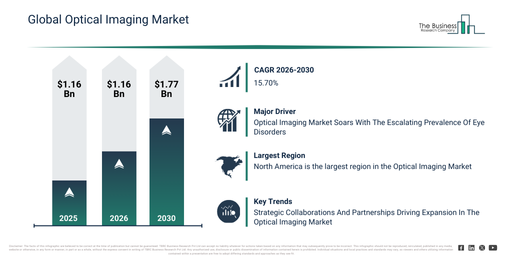
    The optical imaging market has witnessed rapid growth, with its value rising from $2.65 billion in 2025 to $3.07 billion in 2026, representing a compound annual growth rate (CAGR) of 16.0%. This expansion during the historical period is largely due to the growing use of optical imaging in scientific research, broader clinical diagnostic applications, progress in photon-based imaging technologies, increased utilization of pathological imaging, and a surge in demand for non-invasive imaging methods. Looking ahead, the market is forecasted to continue expanding swiftly, reaching $5.5 billion by 2030 with a CAGR of 15.7%. This future growth is expected to be driven by wider adoption of precision medicine diagnostics, greater investment in biomedical research imaging, enhanced intraoperative visualization tools, deeper integration of AI-powered image analysis, and ongoing innovations in optical sensor technologies. Key trends anticipated to influence the market include a rise in advanced optical imaging system usage, growing applications of multispectral and hyperspectral imaging, increasing incorporation of imaging software and analytics, expanded intraoperative imaging, and a stronger emphasis on cellular and molecular-level imaging.

    Download A Free Sample Report For Comprehensive Market Insights:

    https://www.thebusinessresearchcompany.com/sample.aspx?id=8360&type=smp

    Main Factors Contributing to Growth in the Optical Imaging Market

    One of the primary factors propelling the optical imaging market is the increasing prevalence of eye disorders worldwide. These conditions affect the eye’s normal function and can lead to visual impairments or other complications. Optical imaging technologies, known for their high-resolution and non-invasive characteristics, provide precise visualization of eye structures, which supports accurate diagnosis and ongoing monitoring of various ocular diseases. For example, in August 2023, the World Health Organization reported that at least 2.2 billion people globally suffer from near or distance vision impairment, with 1 billion cases being potentially preventable or untreated. This widespread occurrence of eye disorders is expected to significantly drive demand for optical imaging solutions.

    Optical Imaging Market Segmentation by Product and Application

    The optical imaging industry can be broken down into several key segments for analysis:

    1) By Product Type: Imaging Systems, Cameras, Software, and Other Products

    2) By Application Area: Pathological Imaging and Intra-operative Imaging

    3) By End-User: Academic and Research Institutes, Pharmaceutical and Biotechnology Firms, Contract Research Organizations (CROs), Neuroscience and Behavioral Research Labs, Clinical Research Centers and Specialized Hospitals, among others

    Further subcategories include types of imaging systems such as fluorescence, multispectral, and hyperspectral imaging; camera varieties including CCD, CMOS, and scientific cameras; diverse software categories like image analysis, visualization, and processing tools; and other essential components including light sources, optical filters, lenses, and accessories.

    Access The Complete Optical Imaging Market Report:

    https://www.thebusinessresearchcompany.com/report/optical-imaging-global-market-report

    Innovative Developments Transforming the Optical Imaging Industry

    The optical imaging market is witnessing a wave of strategic partnerships and collaborations aimed at expanding product offerings and geographic reach. Companies are increasingly teaming up with startups and mid-sized firms to enhance their technological capabilities and market presence. As an example, in January 2023, Canon Medical Systems USA, a subsidiary of Canon Medical Systems Corporation, formed a partnership with ScImage, Inc., a company specializing in cloud-native enterprise image management and PACS solutions for healthcare. This collaboration is set to strengthen Canon’s position in hemodynamic imaging through the Fysicon QMAPP Hemo portfolio, demonstrating how alliances are driving innovation and growth in the sector.

    Competitive Landscape Featuring Leading Optical Imaging Market Players

    The market features a range of prominent companies actively shaping the optical imaging space, including PerkinElmer Inc., Carl Zeiss Meditec AG, Koninklijke Philips N.V., Topcon Corporation, Bioptigen Inc., Canon Inc., Heidelberg Engineering Inc., Optovue Inc., Headwall Photonics Inc., Agfa-Gevaert N.V., Hamamatsu Photonics K.K., Hitachi Medical Corporation, Imalux Corporation, Infraredx Inc., Bruker Corporation, ChemImage Corporation, Cytoviva Inc., Leica Biosystems Nussloch GmbH, Michelson Diagnostics Ltd., Raytheon ELCAN Optical Technologies, Santec Corporation, Danaher Corporation, Thorlabs Inc., Tomophase Corporation, Ziemer Ophthalmic Systems AG, Axsun Technologies, Bioptics Inc., Andor Technology Ltd., and Abberior Instruments GmbH.

    Regional Distribution and Growth Opportunities in the Optical Imaging Market

    North America held the largest share of the optical imaging market in 2025, maintaining a strong foothold in the industry. However, significant opportunities are emerging across other regions, including Asia-Pacific, South East Asia, Western Europe, Eastern Europe, South America, the Middle East, and Africa. These diverse geographic areas present varying growth dynamics, with many expected to contribute substantially to the market’s expansion in the years ahead.

    Get in touch with us:

    The Business Research Company: https://www.thebusinessresearchcompany.com/

    Americas: +1 310-496-7795

    Asia: +44 7882 955267 & +91 8897263534

    Europe: +44 7882 955267

    Email us at: marketing@tbrc.info

    Follow us on:

    LinkedIn: https://in.linkedin.com/company/the-business-research-company

    YouTube: https://www.youtube.com/channel/UC24_fI0rV8cR5DxlCpgmyFQ

    Global Market Model: https://www.thebusinessresearchcompany.com/global-market-model
  • Optical Coherence Tomography (OCT) For Healthcare And Life Science Market Expected To Reach $4.76 Billion By 2030 As Growth Accelerates At 16.1% CAGR

    Optical Coherence Tomography (OCT) For Healthcare And Life Science Market Expected To Reach $4.76 Billion By 2030 As Growth Accelerates At 16.1% CAGR

    Enhanced with market attractiveness analysis, total addressable market evaluation, company benchmarking matrices, interactive Excel dashboards, expanded supply chain intelligence, emerging startup coverage, and detailed product insights, The Business Research Company’s 2026 market reports deliver more actionable and strategically valuable research.

    The optical coherence tomography (OCT) market within healthcare and life sciences is experiencing rapid expansion, driven by technological progress and growing medical needs. As this imaging technology becomes increasingly vital in diagnostics and treatment, its adoption across various medical fields continues to rise. Let’s explore the market’s current size, growth drivers, key players, trends, and segment breakdowns shaping its future.

    Market Size and Projected Growth in Optical Coherence Tomography for Healthcare and Life Science

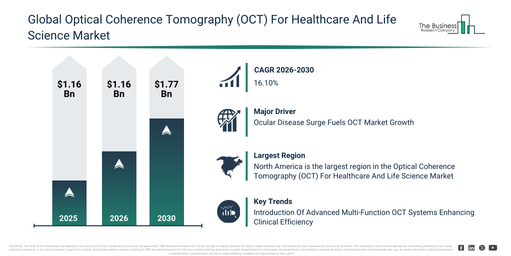
    The OCT market has been growing swiftly, moving from $2.26 billion in 2025 to $2.63 billion in 2026, reflecting a strong compound annual growth rate (CAGR) of 16.1%. This historical growth is mainly due to the rising prevalence of eye disorders, the expansion of ophthalmic diagnostic procedures, technological improvements in optical imaging, development of specialty eye clinics, and early utilization of OCT in research. Looking ahead, the market is forecasted to reach $4.77 billion by 2030, maintaining the same CAGR of 16.1%. The expected growth is fueled by increasing demand for point-of-care diagnostics, wider use in cardiology and dermatology, growth of tele-ophthalmology services, substantial investments in imaging technology innovations, and heightened emphasis on early disease detection. Emerging trends include the adoption of AI-driven image analysis, demand for high-resolution, non-invasive imaging, rising use of portable and handheld OCT devices, expanding applications beyond ophthalmology, and better integration with digital health systems.

    Download A Free Sample Report For Comprehensive Market Insights:

    https://www.thebusinessresearchcompany.com/sample.aspx?id=19130&type=smp

    Factors Accelerating Growth in the Optical Coherence Tomography Market

    A major factor driving expansion in the OCT market is the increasing incidence of ocular diseases. These conditions affect the eyes and the surrounding structures, often leading to vision loss or impairment. The rising number of aging individuals and the growing prevalence of chronic illnesses like diabetes contribute significantly to this trend. OCT technology provides detailed cross-sectional imaging of the retina and optic nerve, essential for diagnosing and tracking these diseases. For example, a report by the Review of Optometry highlights that around 80 million people worldwide suffer from glaucoma, with open-angle glaucoma accounting for 95% of cases. In the U.S. alone, over three million people are affected, and this number is projected to rise beyond 111 million by 2040. This growing patient base is a key driver for OCT market growth.

    Further Drivers Supporting OCT Market Expansion

    Beyond ocular disease prevalence, the OCT market benefits from technological advancements that improve diagnostic accuracy and patient outcomes. Increasing adoption of minimally invasive and portable imaging devices is making OCT more accessible across healthcare settings. Additionally, expanding telemedicine and tele-ophthalmology services are broadening geographic reach and patient access to high-quality eye care. These developments highlight OCT’s rising importance as a versatile diagnostic tool in healthcare.

    Access The Complete Optical Coherence Tomography (OCT) For Healthcare And Life Science Market Report:

    https://www.thebusinessresearchcompany.com/report/optical-coherence-tomography-oct-for-healthcare-and-life-science-global-market-report

    Detailed Segment Analysis and Revenue Potential Within the OCT Market

    The OCT market is segmented into various categories to better understand its scope and opportunities. By type, it includes Catheter-Based OCT Devices, Doppler OCT Devices, Handheld OCT Devices, and Tabletop OCT Devices. From a technology perspective, the market covers Time Domain OCT (TD-OCT), Frequency Domain OCT (FD-OCT), and other emerging technologies. Applications span multiple medical fields such as Ophthalmology, Cardiology, Dermatology, Gastroenterology, and other specialized uses. End users primarily include Hospitals, Specialty Clinics, Research Institutes, and other healthcare providers. Subcategories under catheter-based devices feature Intravascular OCT (IV-OCT), Endoscopic OCT, and other catheter types. Doppler OCT devices break down into Speckle-Tracking Doppler OCT and Phase-Resolved Doppler OCT, while handheld devices include portable and compact systems. Tabletop devices are further divided into standalone and modular configurations.

    How Innovations and Trends Are Shaping the Future of the OCT Market

    Leading companies in the OCT sector are focusing on developing cutting-edge solutions to improve clinical workflows and diagnostic precision. For instance, in July 2025, Huvitz, a South Korean medical equipment manufacturer, launched the OCTavius ophthalmic diagnostic device, a versatile 5-in-1 OCT system that integrates multiple eye diagnostic functions into a single unit. This reduces reliance on multiple instruments, accelerates scanning processes, and delivers high-resolution images for detailed evaluation of the macula and choroid layers. Such innovations streamline clinical operations and enhance early detection capabilities in ophthalmology, setting new standards for diagnostic technology.

    Key Players Influencing the Optical Coherence Tomography Market Direction

    The OCT market is shaped by several prominent companies, including Abbott Laboratories, Canon Inc., Carl Zeiss Meditec AG, Leica Microsystems GmbH, Thorlabs Inc., Edmund Optics Inc., Huvitz Co. Ltd., Santec Corporation, Topcon Medical Systems Inc., OPTOPOL Technology SA, NinePoint Medical, Wasatch Photonics Inc., Perimeter Medical Imaging AI Inc., Nidek Co. Ltd., Novacam Technologies Inc., DermaLumics, BaySpec Inc., Imalux Corporation, Lumedica, and Heidelberg Engineering GmbH. These organizations are at the forefront of advancing OCT technologies and expanding their applications.

    Regional Market Shares and Growth Outlook for OCT

    In 2025, North America held the largest share of the OCT market, driven by advanced healthcare infrastructure and high adoption rates of innovative diagnostic technologies. Meanwhile, the Asia-Pacific region is expected to witness the fastest growth over the coming years, fueled by expanding healthcare access, increased investment in medical technology, and rising disease prevalence. Other regions covered in the market analysis include South East Asia, Western Europe, Eastern Europe, South America, the Middle East, and Africa, providing a comprehensive view of global market dynamics.

    Get in touch with us:

    The Business Research Company: https://www.thebusinessresearchcompany.com/

    Americas: +1 310-496-7795

    Asia: +44 7882 955267 & +91 8897263534

    Europe: +44 7882 955267

    Email us at: marketing@tbrc.info

    Follow us on:

    LinkedIn: https://in.linkedin.com/company/the-business-research-company

    YouTube: https://www.youtube.com/channel/UC24_fI0rV8cR5DxlCpgmyFQ

    Global Market Model: https://www.thebusinessresearchcompany.com/global-market-model
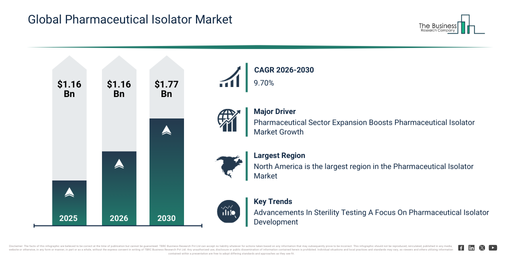
  • Pharmaceutical Isolator Market Expected To Reach $15.64 Billion By 2030 As Growth Accelerates At 9.7% CAGR

    Pharmaceutical Isolator Market Expected To Reach $15.64 Billion By 2030 As Growth Accelerates At 9.7% CAGR

    Enhanced with market attractiveness analysis, total addressable market evaluation, company benchmarking matrices, interactive Excel dashboards, expanded supply chain intelligence, emerging startup coverage, and detailed product insights, The Business Research Company’s 2026 market reports deliver more actionable and strategically valuable research.

    The pharmaceutical isolator market has witnessed significant growth recently, reflecting the increasing need for sterile processing environments in pharmaceutical production. As advancements continue and regulatory demands intensify, this market is set to expand further, driven by innovations and rising industry requirements. Let’s explore the current market size, key growth drivers, segmentation, emerging trends, major players, and regional insights shaping the future of pharmaceutical isolators.

    Pharmaceutical Isolator Market Size and Expansion Outlook

    The pharmaceutical isolator market has experienced steady growth and is projected to rise from $9.9 billion in 2025 to $10.81 billion in 2026, representing a compound annual growth rate (CAGR) of 9.2%. This growth during the historical period is mainly due to the expansion of sterile drug manufacturing, stricter aseptic processing regulations, the increasing production of biologics and injectable medicines, wider use of containment technologies, and upgrades in cleanroom standards. Looking ahead, the market is expected to continue this upward trajectory, reaching $15.64 billion by 2030 with an even higher CAGR of 9.7%. The anticipated growth is fueled by growing investments in automation, rising demand for containment solutions, personalized medicine manufacturing, focus on operator safety, and ongoing improvements in isolator design and materials. Key market trends include the adoption of automated isolator systems, modular and mobile isolators, enhanced aseptic compliance, broader containment applications, and improved monitoring and control integration.

    Download A Free Sample Report For Comprehensive Market Insights:

    https://www.thebusinessresearchcompany.com/sample.aspx?id=11905&type=smp

    Primary Drivers Behind Pharmaceutical Isolator Market Growth

    The pharmaceutical industry’s ongoing expansion plays a critical role in propelling the pharmaceutical isolator market forward. This sector encompasses organizations involved in discovering, developing, and manufacturing pharmaceutical drugs and treatments. Isolators provide a vital role by ensuring that manufacturing processes occur in contained environments free from live bacteria, preventing contamination transfer and offering superior confinement compared to traditional cleanrooms.

    For example, in June 2023, the European Federation of Pharmaceutical Industries and Associations (EFPIA), a Belgium-based association representing Europe’s pharmaceutical industry, reported that pharmaceutical production in Europe reached €390,000 million ($422,803 million) in 2023, up from €363,300 million ($393,857 million) in 2022. This steady growth in pharmaceutical manufacturing acts as a key catalyst for the rising demand for isolators.

    Breakdown of Segments and Revenue Drivers in the Pharmaceutical Isolator Market

    The pharmaceutical isolator market is segmented in this report by several key categories:

    1) By Type: Closed Isolator Systems and Open Isolator Systems

    2) By Configuration: Floor-Standing, Modular, and Compact

    3) By Application: Aseptic Isolators, Containment Isolators, and Other Applications

    4) By End-User: Pharmaceutical and Biotechnology Companies, Research Laboratories, and Other Users

    Access The Complete Pharmaceutical Isolator Market Report:

    https://www.thebusinessresearchcompany.com/report/pharmaceutical-isolator-global-market-report

    Additionally, subsegments include types of closed isolators such as Glovebox Isolators and Barrier Isolators, while open isolators include Compounding Isolators and Sterility Testing Isolators.

    Emerging Trends Impacting the Pharmaceutical Isolator Industry

    Leading companies in the pharmaceutical isolator sector are increasingly focusing on enhancing sterility testing through innovative isolator designs and platforms. These advanced containment systems ensure aseptic conditions during microbial testing of medical and pharmaceutical products, improving both safety and efficiency.

    In June 2023, Getinge, a medical technology firm based in Sweden, introduced ISOPRIME—a versatile and cost-efficient isolator tailored for pharmaceutical applications. This product supports aseptic filling and sterility testing and features advanced connectivity and traceability. Its integrated hydrogen peroxide bio-decontamination system and adaptable airflow controls make it well-suited for maintaining sterile environments in pharmaceutical manufacturing.

    Key Market Players Driving Competition in Pharmaceutical Isolators

    The pharmaceutical isolator market includes several prominent companies competing to innovate and dominate the space. Notable organizations are Getinge AB, Chiyoda Corporation, Azbil Corporation, Hosokawa Micron Ltd., Bioquell Limited, M Braun Inertgas-Systeme GmbH, Fedegari Group, Extract Technology Ltd., Germfree Laboratories Inc., COMECER SpA, SKAN AG, NuAire Limited, Contained Air Solutions Ltd., DEC Group, ITECO Engineering Srl, and others. These firms are instrumental in advancing isolator technologies and expanding market reach globally.

    Regional Market Leadership and Growth Patterns in Pharmaceutical Isolators

    In 2025, North America held the largest share of the pharmaceutical isolator market, benefiting from well-established pharmaceutical manufacturing infrastructure and regulatory frameworks. However, the Asia-Pacific region is anticipated to experience the fastest market growth during the forecast period. The overall market analysis covers key regions, including Asia-Pacific, South East Asia, Western Europe, Eastern Europe, North America, South America, the Middle East, and Africa, providing a comprehensive view of global market trends and opportunities.

    Get in touch with us:

    The Business Research Company: https://www.thebusinessresearchcompany.com/

    Americas: +1 310-496-7795

    Asia: +44 7882 955267 & +91 8897263534

    Europe: +44 7882 955267

    Email us at: marketing@tbrc.info

    Follow us on:

    LinkedIn: https://in.linkedin.com/company/the-business-research-company

    YouTube: https://www.youtube.com/channel/UC24_fI0rV8cR5DxlCpgmyFQ

    Global Market Model: https://www.thebusinessresearchcompany.com/global-market-model
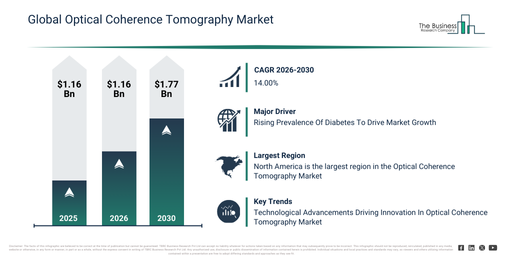
  • Optical Coherence Tomography Market Set To Grow From $2.39 Billion In 2026 To $4.04 Billion By 2030 At A CAGR Of 14%

    Optical Coherence Tomography Market Set To Grow From $2.39 Billion In 2026 To $4.04 Billion By 2030 At A CAGR Of 14%

    Through market attractiveness analysis, total addressable market evaluation, company benchmarking matrices, interactive Excel dashboards, expanded supply chain intelligence, emerging startup coverage, and detailed product insights, The Business Research Company’s 2026 market reports provide more actionable and strategically valuable research.

    The field of optical coherence tomography (OCT) has witnessed significant growth recently, driven by advances in medical imaging and increasing diagnostic needs. As technology evolves, this market is set to expand further, offering promising revenue opportunities and broadening applications in healthcare. Let’s explore the current market size, key drivers, segmentation, influential industry trends, and regional dynamics shaping the future of OCT.

    Optical Coherence Tomography Market Size and Expected Growth

    The optical coherence tomography market has experienced rapid expansion in recent years. It is projected to increase from $2.1 billion in 2025 to $2.4 billion in 2026, representing a compound annual growth rate (CAGR) of 14.2%. This growth during the historical period has been fueled by the rising incidence of retinal diseases, broader use of ophthalmic diagnostics, growing preference for minimally invasive imaging methods, expansion in cardiovascular imaging applications, and continuous technological innovations in optical imaging systems.

    Download A Free Sample Report For Comprehensive Market Insights:

    https://www.thebusinessresearchcompany.com/sample.aspx?id=8231&type=smp

    Looking ahead, the market is expected to maintain its momentum, reaching an estimated $4.04 billion by 2030 with a CAGR of 14.0%. Factors supporting this forecast include higher demand for early disease detection, increasing application of OCT in oncology and dermatology, growth in point-of-care diagnostic imaging, enhanced integration of AI-based image analysis, and ongoing improvements in imaging resolution and speed. Key trends anticipated in the coming years involve the adoption of high-resolution OCT systems, rising popularity of portable and handheld devices, integration with advanced imaging software, expansion of OCT beyond ophthalmology, and an intensified focus on real-time diagnostic imaging.

    Important Factors Propelling the Optical Coherence Tomography Market

    One major driver of OCT market growth is the increasing prevalence of diabetes worldwide. With diabetes becoming more common, the risk of diabetic retinopathy—a serious eye complication linked to the disease—rises as well. This creates a greater demand for advanced diagnostic technologies like OCT, which enable early detection and effective monitoring of diabetic retinopathy. For example, in September 2023, the World Health Organization reported 2.0 million deaths caused by diabetes globally, highlighting the urgency to address diabetes-related complications and the resulting boost to the OCT market.

    Access The Complete Optical Coherence Tomography Market Report:

    https://www.thebusinessresearchcompany.com/report/optical-coherence-tomography-global-market-report

    Another significant factor is the broadening scope of OCT applications across various medical fields. Beyond ophthalmology, OCT is increasingly used in cardiovascular imaging, oncology, and dermatology. The versatility of OCT for minimally invasive, high-resolution imaging makes it a valuable tool in clinical diagnostics and treatment planning, further supporting sustained market growth.

    Detailed Breakdown of the Optical Coherence Tomography Market

    The optical coherence tomography market is segmented into the following categories:

    1) By Device Type: Catheter-Based OCT Devices, Doppler OCT Devices, Handheld OCT Devices, Tabletop OCT Devices

    2) By Technology: Time Domain OCT (TDOCT), Frequency Domain OCT (FD-OCT), Spatial Encoded Frequency Domain OCT

    3) By Application Area: Ophthalmology, Cardiovascular

    Further sub-segments include:

    – Catheter-Based OCT Devices: Intracoronary OCT, Intravenous OCT

    – Doppler OCT Devices: Time-Domain Doppler OCT, Frequency-Domain Doppler OCT

    – Handheld OCT Devices: Portable Retinal OCT, Portable Cardiovascular OCT

    – Tabletop OCT Devices: Optical Coherence Tomography Angiography (OCTA), High-Resolution OCT for Research Applications

    Emerging Industry Trends Influencing OCT Market Expansion

    Companies in the OCT space are increasingly investing in advanced solutions that combine artificial intelligence (AI) with imaging platforms to enhance diagnostic accuracy and efficiency. AI-powered intravascular imaging systems integrate high-resolution OCT scans with machine-learning algorithms, enabling automatic analysis of vessel structures and plaque, which streamlines clinical decision-making and improves treatment precision.

    For instance, in October 2023, Abbott Laboratories introduced its new vascular imaging platform featuring Ultreon 1.0 Software in India. This technology merges OCT with AI to provide comprehensive insights into coronary artery blood flow and blockages. The software can automatically differentiate between calcified and non-calcified plaques, evaluate the severity of calcium deposits, measure vessel diameter, and guide precise stent placement. This real-time feedback enhances the accuracy and outcomes of coronary interventions. Abbott’s system uses near-infrared light to deliver detailed imaging even in complex patient anatomies.

    Competitive Landscape of Key Players in the Optical Coherence Tomography Market

    The OCT market includes several leading companies driving innovation and growth, such as Carl Zeiss Meditec AG, Heidelberg Engineering GmbH, Imalux Corporation, Michelson Diagnostics Limited, Novacam Technologies Inc., OPTOPOL Technology Sp. z o.o., Topcon Healthcare Solutions Inc., Conavi Medical Inc., ZD Medical Inc., Thorlabs Inc., NIDEK Co. Ltd., Leica Microsystems IR GmbH, Optovue Inc., Canon Inc., Santec Corporation, Tomophase Corporation, LightLab Imaging Inc., Infraredx Inc., NinePoint Medical Inc., Optiscan Pty Ltd., and AOT AG.

    Global and Regional Market Overview for Optical Coherence Tomography

    In 2025, North America held the largest share of the OCT market, benefiting from advanced healthcare infrastructure and widespread adoption of diagnostic technologies. Meanwhile, the Asia-Pacific region is forecasted to be the fastest-growing market during the forecast period. The report covers multiple regions including Asia-Pacific, South East Asia, Western Europe, Eastern Europe, North America, South America, the Middle East, and Africa, providing a comprehensive perspective on geographic market trends and growth drivers.

    Get in touch with us:

    The Business Research Company: https://www.thebusinessresearchcompany.com/

    Americas: +1 310-496-7795

    Asia: +44 7882 955267 & +91 8897263534

    Europe: +44 7882 955267

    Email us at: marketing@tbrc.info

    Follow us on:

    LinkedIn: https://in.linkedin.com/company/the-business-research-company

    YouTube: https://www.youtube.com/channel/UC24_fI0rV8cR5DxlCpgmyFQ

    Global Market Model: https://www.thebusinessresearchcompany.com/global-market-model
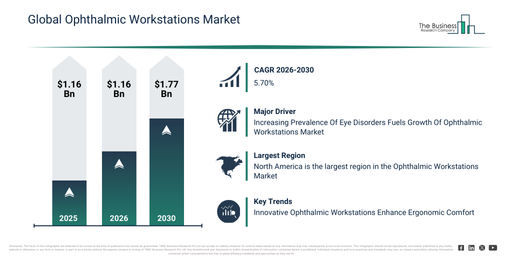
  • Ophthalmic Workstations Market Opportunities Are Emerging Beyond Traditional Growth Areas

    Ophthalmic Workstations Market Opportunities Are Emerging Beyond Traditional Growth Areas

    Delivering more actionable and strategically valuable research, The Business Research Company’s 2026 market reports feature market attractiveness analysis, total addressable market evaluation, company benchmarking matrices, interactive Excel dashboards, expanded supply chain intelligence, emerging startup coverage, and detailed product insights.

    The ophthalmic workstations market has experienced significant growth recently, driven by advances in eye care services and evolving healthcare needs. As the demand for efficient and integrated diagnostic solutions rises, this market is set to continue expanding steadily. Let’s explore the current market size, key factors propelling growth, segments gaining momentum, and notable trends shaping the ophthalmic workstation industry.

    Ophthalmic Workstations Market Size and Growth Outlook

    The market for ophthalmic workstations has shown strong expansion, with its value projected to rise from $66.42 billion in 2025 to $70.69 billion in 2026, representing a compound annual growth rate (CAGR) of 6.4%. This growth during the past years is largely due to the increase in eye care clinics, the expansion of ophthalmology departments in hospitals, a higher volume of routine eye check-ups, growing demand for integrated diagnostic systems, and advancements in medical furniture design. Looking ahead, the market is expected to reach $88.15 billion by 2030, growing at a CAGR of 5.7%. This future growth is anticipated to be fueled by more investments in modern eye care centers, the rising popularity of digitally integrated workstation solutions, the expansion of outpatient ophthalmology services, a stronger emphasis on patient comfort, and the adoption of smart clinic infrastructure. Key trends forecasted include a growing use of multifunctional ophthalmic workstations, increasing demand for ergonomic examination setups, enhanced integration of diagnostic devices, greater implementation of electric and semi-electric systems, and a focus on improving workflow efficiency.

    Download A Free Sample Report For Comprehensive Market Insights:

    https://www.thebusinessresearchcompany.com/sample.aspx?id=17217&type=smp

    Rising Prevalence of Eye Disorders Boosting Market Demand

    A major factor driving the growth of the ophthalmic workstation market is the increasing occurrence of eye disorders worldwide. Eye disorders encompass a wide range of conditions that affect vision and eye health, often caused by environmental influences, prolonged contact lens use, lifestyle factors, gender differences, and nutritional deficiencies. Ophthalmic workstations play a crucial role in modern eye care by providing a centralized space for thorough eye exams, precise diagnosis, patient management, and minor treatments. To illustrate this, the Centers for Disease Control and Prevention (CDC) reported in January 2024 that over 3.4 million Americans aged 40 and above were blind or visually impaired, a figure projected to double by 2030. This growing prevalence highlights the urgent need for advanced ophthalmic workstations, fueling market expansion.

    Key Market Segments in the Ophthalmic Workstations Industry

    This report segments the ophthalmic workstation market based on operation mode, product type, and application. Regarding operation mode, the market includes electric and manual workstations. Electric workstations can be further divided into fully electric and semi-electric types, whereas manual workstations include those operated with hand cranks or hydraulic systems. When considering product types, the market is categorized into single-function and multifunction workstations. The application segment focuses on usage in hospitals, clinics, and other settings, reflecting the diverse environments where ophthalmic workstations are utilized.

    Access The Complete Ophthalmic Workstations Market Report:

    https://www.thebusinessresearchcompany.com/report/ophthalmic-workstations-global-market-report

    Innovative Trends Transforming the Ophthalmic Workstations Sector

    Leading companies in the ophthalmic workstation market are focusing on developing innovative products that enhance ergonomics and operational efficiency for healthcare providers. One important advancement is the introduction of configurable workstations, which allow practitioners to customize instrument and control placements according to their hand dominance. This adaptability improves comfort and precision during eye exams and procedures. A recent example is Rexxam Co., Ltd.’s launch of the WorkStation OZY in May 2024. This versatile ophthalmic unit features customizable configurations for both right- and left-handed users, choice of chair colors for personalized aesthetics, and design harmony with other REXXAM instruments. Additional features include an optional elevated tabletop and flexible options tailored to various eye examinations and treatments, combining style with functionality and comfort.

    Prominent Players Shaping the Ophthalmic Workstations Market

    The competitive ophthalmic workstations market includes several major companies such as Bausch + Lomb Incorporated, Carl Zeiss Meditec AG, RODENSTOCK Instruments, Topcon Corporation, Takagi Seiko Co. Ltd., NIDEK CO. LTD., Heidelberg Engineering GmbH, Oculus Optikgeräte GmbH, S4OPTIK, Visionix, Tomey Corporation, Unitech Vision, MEDA Co. Ltd., Haag-Streit AG, Frastema Srl, US Ophthalmic, Meccanottica Mazza, CSO – Costruzione Strumenti Oftalmici, Rexxam Co. Ltd., and Huvitz Co. Ltd. These players continue to drive innovation and competition within the market.

    Regional Growth Dynamics Within the Ophthalmic Workstations Market

    In 2025, North America held the largest share of the ophthalmic workstation market, supported by well-established healthcare infrastructure and increasing patient awareness. The market report also covers other regions including Asia-Pacific, South East Asia, Western Europe, Eastern Europe, South America, the Middle East, and Africa. Among these, rapid growth is anticipated in emerging regions as healthcare services expand and modernization efforts increase access to advanced ophthalmic equipment.

    Get in touch with us:

    The Business Research Company: https://www.thebusinessresearchcompany.com/

    Americas: +1 310-496-7795

    Asia: +44 7882 955267 & +91 8897263534

    Europe: +44 7882 955267

    Email us at: marketing@tbrc.info

    Follow us on:

    LinkedIn: https://in.linkedin.com/company/the-business-research-company

    YouTube: https://www.youtube.com/channel/UC24_fI0rV8cR5DxlCpgmyFQ

    Global Market Model: https://www.thebusinessresearchcompany.com/global-market-model
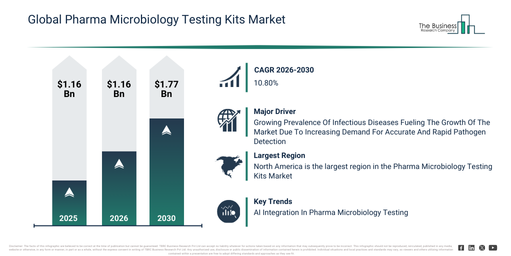
  • Pharma Microbiology Testing Kits Market Set To Grow From $7.93 Billion In 2026 To $11.97 Billion By 2030 At A CAGR Of 10.8%

    Pharma Microbiology Testing Kits Market Set To Grow From $7.93 Billion In 2026 To $11.97 Billion By 2030 At A CAGR Of 10.8%

    Through market attractiveness analysis, total addressable market evaluation, company benchmarking matrices, interactive Excel dashboards, expanded supply chain intelligence, emerging startup coverage, and detailed product insights, The Business Research Company’s 2026 market reports provide more actionable and strategically valuable research.

    The pharma microbiology testing kits market has experienced notable growth recently, driven by increasing demand for effective diagnostic tools in pharmaceutical and healthcare sectors. With advancements in technology and stricter regulatory standards, the market shows promising potential for continued expansion in the coming years. Let’s explore the current market size, key growth drivers, segment analysis, emerging trends, major players, and regional insights shaping this industry.

    Pharma Microbiology Testing Kits Market Size and Projected Growth

    The market for pharma microbiology testing kits has expanded significantly over recent years. It is projected to grow from a valuation of $7.26 billion in 2025 to $7.94 billion in 2026, marking a compound annual growth rate (CAGR) of 9.4%. This historical growth is mainly linked to stringent pharmaceutical quality regulations, the rising output of biologic drugs, heightened awareness of contamination risks, expansion in vaccine production, and adherence to good manufacturing practices (GMP). Looking ahead, the market is expected to accelerate, reaching $11.98 billion by 2030 with a CAGR of 10.8%. Factors fueling this forecast include growth in the biopharmaceutical pipeline, greater adoption of rapid testing methods, increased regulatory pressures, expansion of contract manufacturing organizations, and the implementation of automation in quality control processes. Key trends expected to influence the market entail more frequent sterility testing, growing use of rapid microbial detection technologies, broader environmental monitoring initiatives, rising demand for ready-to-use test kits, and increased outsourcing of microbiology testing services.

    Download A Free Sample Report For Comprehensive Market Insights:

    https://www.thebusinessresearchcompany.com/sample.aspx?id=2487&type=smp

    Factors Fueling the Growth of Pharma Microbiology Testing Kits Market

    One of the primary factors propelling this market is the increasing prevalence of infectious diseases worldwide. Infectious diseases, caused by pathogens such as bacteria, viruses, fungi, or parasites, continue to spread rapidly, aided by greater global travel that facilitates the transmission of these microorganisms across regions. Pharma microbiology testing kits play a critical role in diagnosing these diseases by providing fast and accurate pathogen detection, which is essential for timely clinical interventions and outbreak control.

    For instance, data from February 2024 released by the UK Health Security Agency revealed that tuberculosis cases in England rose by 10.7% from 4,380 in 2022 to 4,850 in 2023. This example highlights how rising infectious disease burdens are creating a strong demand for efficient microbiology testing solutions, thereby driving market expansion.

    Breakdown of Pharma Microbiology Testing Kits Market Segments

    This market is analyzed based on three primary categories:

    1) By Product Type: consumables and equipment

    2) By Test Type: endotoxin testing, sterility testing, microbial examination, environmental monitoring, and other tests

    3) By End User: hospitals and diagnostic centers, custom laboratory service providers, and academic and research institutes

    Within these categories, consumables are further divided into media and reagents, test kits, and sample collection containers, while equipment includes incubators, autoclaves, and microbial identification systems.

    Access The Complete Pharma Microbiology Testing Kits Market Report:

    https://www.thebusinessresearchcompany.com/report/pharma-microbiology-testing-kits-global-market-report

    Innovations and Industry Trends Shaping Market Development

    Leading companies in this sector are increasingly adopting cutting-edge technologies such as artificial intelligence (AI) to enhance diagnostic accuracy, improve efficiency, and optimize laboratory workflows. AI-driven software uses complex algorithms to analyze diagnostic data, speeding up the identification of pathogens and reducing manual labor.

    As an example, in May 2023, Becton, Dickinson and Company, a US-based medical device manufacturer, secured 510(k) clearance from the U.S. Food and Drug Administration (FDA) for its BD Kiestra MRSA Imaging Application. This AI-powered tool automates the review of Petri dishes by analyzing bacterial growth on BBL CHROMagar MRSA II plates, facilitating faster exclusion of negative samples and streamlining MRSA diagnosis.

    Key Players Leading the Pharma Microbiology Testing Kits Market

    Several prominent organizations hold significant market shares in the pharma microbiology testing kits sector, including F. Hoffmann-La Roche AG, Becton Dickinson and Company, Abbott Laboratories, ThermoFisher Scientific, SGS SA, Toxikon Corp., Pace Analytical Services, Boston Analytics, Charles River Laboratories International, Nelson Laboratories, Siemens Healthcare AG, Hologic Inc., Neogen Corporation, Shimadzu Corporation, Merck KGaA, Agilent Technologies Inc., QIAGEN N.V., Bruker Corporation, bioMérieux SA, Lucideon, Lonza Group AG, MilliporeSigma, Hardy Diagnostics, Sartorius AG, 3M Company, Waters Corporation, PerkinElmer Inc., and Luminex Corporation. These companies continue to innovate and expand their offerings to address growing market needs.

    Regional Market Dynamics and Growth Opportunities

    In 2025, North America emerged as the largest regional market for pharma microbiology testing kits, supported by strong healthcare infrastructure and regulatory frameworks. Western Europe ranked second in market size. Other regions covered in the market analysis include Asia-Pacific, South East Asia, Eastern Europe, South America, the Middle East, and Africa. Notably, the Asia-Pacific region is anticipated to witness rapid growth due to increasing healthcare investments, rising pharmaceutical manufacturing, and expanding biopharmaceutical activities in these areas.

    Get in touch with us:

    The Business Research Company: https://www.thebusinessresearchcompany.com/

    Americas: +1 310-496-7795

    Asia: +44 7882 955267 & +91 8897263534

    Europe: +44 7882 955267

    Email us at: marketing@tbrc.info

    Follow us on:

    LinkedIn: https://in.linkedin.com/company/the-business-research-company

    YouTube: https://www.youtube.com/channel/UC24_fI0rV8cR5DxlCpgmyFQ

    Global Market Model: https://www.thebusinessresearchcompany.com/global-market-model
  • Ophthalmic Viscoelastic Devices Market Expansion Is Opening New Pathways For Strategic Investment

    Ophthalmic Viscoelastic Devices Market Expansion Is Opening New Pathways For Strategic Investment

    Enhanced with market attractiveness analysis, total addressable market evaluation, company benchmarking matrices, interactive Excel dashboards, expanded supply chain intelligence, emerging startup coverage, and detailed product insights, The Business Research Company’s 2026 market reports deliver more actionable and strategically valuable research.

    The ophthalmic viscoelastic devices market is steadily evolving, driven by advancements in eye care and an increasing volume of surgical procedures worldwide. This sector is witnessing consistent growth due to rising demand for improved surgical outcomes and expanding access to ophthalmic treatments. Let’s explore the market’s current size, key growth factors, leading players, and regional insights.

    Steady Expansion in Ophthalmic Viscoelastic Devices Market Size

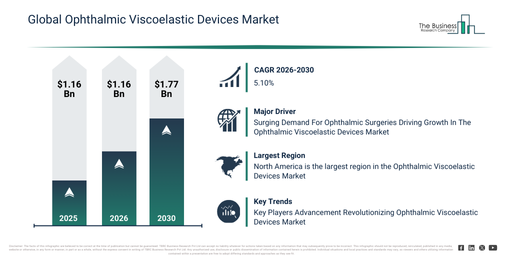
    The market for ophthalmic viscoelastic devices has shown steady growth in recent years. It is forecasted to increase from $2.72 billion in 2025 to $2.85 billion in 2026, representing a compound annual growth rate (CAGR) of 4.7%. This rise during the past period has been primarily driven by the growing prevalence of cataract surgeries, an aging demographic, wider adoption of intraocular surgical procedures, the expansion of ophthalmology clinics, and improved access to eye care services globally. Looking ahead, the market is expected to continue its upward trajectory, reaching $3.47 billion by 2030 with an anticipated CAGR of 5.1%. Factors contributing to this growth include an increased demand for premium surgical outcomes, a focus on reducing complications, the growth of advanced ophthalmic surgery centers, enhanced investments in eye care infrastructure, and the adoption of innovative viscoelastic materials. Emerging trends in the coming years are likely to include wider use of advanced viscoelastic formulations, rising interest in dual-property ophthalmic viscoelastic devices (OVDs), heightened attention on tissue protection, expansion of minimally invasive surgeries, and improvements in shelf stability and biocompatibility.

    Download A Free Sample Report For Comprehensive Market Insights:

    https://www.thebusinessresearchcompany.com/sample.aspx?id=10665&type=smp

    Increasing Number of Ophthalmic Surgeries Fuels Market Demand

    The expanding volume of ophthalmic surgeries is a significant factor propelling the ophthalmic viscoelastic devices market. These surgeries encompass a range of eye-related procedures such as cataract surgery, corneal transplants, and retinal detachment repairs. Ophthalmic viscoelastic devices serve important roles during these operations by maintaining space, protecting sensitive eye tissues, facilitating surgical maneuvers, and improving surgical visualization thanks to their unique viscous and elastic properties. These benefits contribute to better surgical outcomes and reduce complications like tissue trauma and intraoperative injury. For instance, data from May 2023 by the UK’s National Health Service reveals that cataract surgeries account for 6% of all surgeries performed annually, with over 450,000 procedures conducted each year. Projections suggest this number will rise by 25% by 2027 and surge by 50% by 2035, highlighting a robust increase in demand for ophthalmic viscoelastic devices.

    Technological Advances Shaping Ophthalmic Viscoelastic Devices Market

    Innovation plays a critical role in the competitive dynamics of the ophthalmic viscoelastic devices market. Key players are focusing on cutting-edge technologies to enhance surgical precision and patient outcomes. One such advancement is the development of line implant-free system solutions, which improve medical procedures without invasive implants, offering less intrusive treatment options. For example, in April 2023, Bausch + Lomb Corporation introduced the StableVisc cohesive ophthalmic viscosurgical device (OVD) alongside the TotalVisc Viscoelastic System. StableVisc is designed to maintain space in the eye’s anterior chamber, enabling surgeons to safely remove and replace a cloudy natural lens. The TotalVisc system combines StableVisc with ClearVisc, a dispersive OVD that protects ocular tissue throughout surgery. These products contain sodium hyaluronate and sorbitol, a distinctive compound that laboratory studies have shown to provide superior free radical scavenging compared to other OVDs. As a result, the TotalVisc system offers dual-action protection through both mechanical and chemical means.

    Access The Complete Ophthalmic Viscoelastic Devices Market Report:

    https://www.thebusinessresearchcompany.com/report/ophthalmic-viscoelastic-devices-global-market-report

    Market Segmentation Highlights for Ophthalmic Viscoelastic Devices

    This report segments the ophthalmic viscoelastic devices market into key categories to provide detailed insights:

    1) By Product Type: Cohesive Ophthalmic Viscoelastic and Dispersive Ophthalmic Viscoelastic

    2) By Application: Cataract Surgery, Glaucoma Surgery, Corneal Transplant, and Vitreoretinal Surgery

    3) By End User: Hospitals, Ophthalmology Clinics, and Other End Users

    Further subsegments include types of cohesive OVDs such as sodium hyaluronate and hyaluronic acid, as well as dispersive OVDs like sodium chondroitin sulfate and dispersive hydrogel, offering a comprehensive view of product variations in the market.

    Prominent Companies Leading the Ophthalmic Viscoelastic Devices Market

    The ophthalmic viscoelastic devices market features several key players actively shaping its landscape. Leading companies include Altacor Ltd., Bausch Health Companies Inc., Bohus Biotech AB, Carl Zeiss Meditec AG, Haohai Biological Technology Co. Ltd., Johnson & Johnson Pvt. Ltd., Novartis International AG, Rumex International Corporation, Rayner Intraocular Lenses Limited, Aurolab, Alcon Inc., Beaver-Visitec International, Neu Micromed International Pvt. Ltd., Abbott Medical Optics, Maxigen Biotech Inc., Amring Pharmaceuticals Inc., Croma Pharma GmbH, Medicontur Medical Engineering Ltd., Rhein Medical Inc., MicroSurgical Technology, FCI Ophthalmics Inc., Hanita Lenses Ltd., and HOYA Medical Singapore Pte. Ltd. These companies are investing in innovation and expanding product portfolios to meet the evolving needs of the ophthalmic surgical community.

    Regional Market Leadership and Growth Outlook for Ophthalmic Viscoelastic Devices

    In 2025, North America held the largest share of the ophthalmic viscoelastic devices market, demonstrating its established position in eye care innovation and infrastructure. Meanwhile, the Asia-Pacific region is expected to record the fastest growth during the forecast period, driven by increasing healthcare investments and expanding ophthalmic surgical centers. The market analysis encompasses important regions including Asia-Pacific, South East Asia, Western Europe, Eastern Europe, North America, South America, the Middle East, and Africa, offering a comprehensive perspective on the global ophthalmic viscoelastic devices industry.

    Get in touch with us:

    The Business Research Company: https://www.thebusinessresearchcompany.com/

    Americas: +1 310-496-7795

    Asia: +44 7882 955267 & +91 8897263534

    Europe: +44 7882 955267

    Email us at: marketing@tbrc.info

    Follow us on:

    LinkedIn: https://in.linkedin.com/company/the-business-research-company

    YouTube: https://www.youtube.com/channel/UC24_fI0rV8cR5DxlCpgmyFQ

    Global Market Model: https://www.thebusinessresearchcompany.com/global-market-model
  • Ophthalmic Sutures Market Trends Are Creating New Opportunities For Industry Leaders

    Ophthalmic Sutures Market Trends Are Creating New Opportunities For Industry Leaders

    Through market attractiveness analysis, total addressable market evaluation, company benchmarking matrices, interactive Excel dashboards, expanded supply chain intelligence, emerging startup coverage, and detailed product insights, The Business Research Company’s 2026 market reports provide more actionable and strategically valuable research.

    The ophthalmic sutures market has seen significant expansion in recent years, driven by advances in surgical techniques and increasing demand for eye-related procedures. As more patients seek solutions for various eye conditions, the market is positioned for continued growth, supported by innovations and rising awareness of ocular health. Here is a detailed overview of the market size, growth factors, key players, and future trends shaping this sector.

    Ophthalmic Sutures Market Size and Growth Forecast Through 2030

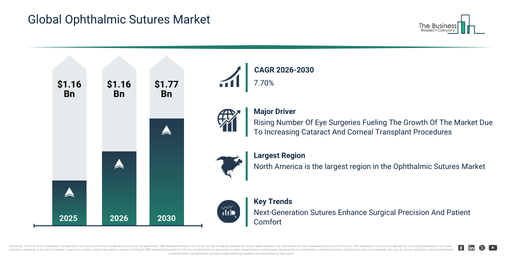
    The ophthalmic sutures market has experienced steady growth, with its value projected to rise from $0.6 billion in 2025 to $0.65 billion in 2026, reflecting a compound annual growth rate (CAGR) of 7.9%. This growth during the historical period was primarily due to limited choices in suture materials, dependence on traditional surgical methods, increasing volumes of ophthalmic surgeries, heightened awareness about eye safety, and development of hospital infrastructure. Looking ahead, the market is expected to continue its upward trajectory, reaching $0.87 billion by 2030 at a CAGR of 7.7%. Factors contributing to this forecast include the emergence of advanced biocompatible sutures, the rising number of eye surgeries, greater adoption of minimally invasive procedures, increased funding in research and academic centers, as well as technological innovations in suture production and precision delivery systems. Key trends anticipated during the forecast period involve a growing preference for absorbable and non-absorbable sutures, a shift toward synthetic materials over natural ones, expanded use in corneal, cataract, and vitrectomy surgeries, efforts to reduce post-operative tissue reactions and complications, and the growth of ophthalmic clinics and ambulatory surgery centers.

    Download A Free Sample Report For Comprehensive Market Insights:

    https://www.thebusinessresearchcompany.com/sample.aspx?id=24345&type=smp

    The Role of Increasing Eye Surgeries in Market Growth

    A major driver behind the ophthalmic sutures market expansion is the rising number of eye surgeries performed globally. These surgeries, which address vision correction, disease treatment, and injury repair, include procedures such as cataract removal, glaucoma treatment, corneal transplants, retinal surgeries, and refractive corrections. The growth in eye surgeries is closely linked to the aging population, which faces a higher prevalence of cataracts and other ocular conditions. Ophthalmic sutures play a crucial role by ensuring precise closing of surgical incisions, leading to faster healing, fewer complications, and improved surgical success rates. For example, in 2024, the Eye Bank Association of America reported 51,559 corneal transplant surgeries in the US, marking a 1.2% increase over the previous year’s 50,925 procedures. This upward trend in surgical volume is a key factor propelling demand for ophthalmic sutures.

    Material and Application Segments Defining Opportunities in the Ophthalmic Sutures Market

    This report segments the ophthalmic sutures market based on various criteria:

    1) Product Type: Absorbable Sutures and Non-Absorbable Sutures

    2) Material Origin: Natural and Synthetic

    3) Application: Corneal Transplantation Surgery, Cataract Surgery, Vitrectomy Surgery, Iridectomy Surgery, Oculoplastic Surgery, and Other uses

    4) End-User: Hospitals, Ophthalmic Clinics, Ambulatory Surgery Centers (ASCs), and Research & Academic Institutions

    Access The Complete Ophthalmic Sutures Market Report:

    https://www.thebusinessresearchcompany.com/report/ophthalmic-sutures-global-market-report

    In further detail, absorbable sutures are divided into polyglactin, polyglycolic acid, polydioxanone, fast absorbing gut, and chromic gut sutures. Non-absorbable sutures include nylon, polypropylene, silk, polyester, and stainless steel varieties. These segments highlight the diverse product offerings and application areas that provide substantial growth opportunities across the market landscape.

    Innovations Driving Demand with Next-Generation Microsurgical Sutures

    Key manufacturers in the ophthalmic sutures sector are pushing the boundaries by creating next-generation microsurgical sutures designed to improve clinical outcomes and meet evolving surgical requirements. These advanced sutures incorporate cutting-edge materials and technologies aimed at enhancing patient safety, reducing complications, and allowing more precise procedures. For instance, in October 2024, Corza Medical, a US-based medical technology firm, introduced Onatec ophthalmic microsurgical sutures. These sutures feature highly tempered stainless steel needles that provide superior bending resistance and durability. Their precise geometry and polished surfaces enable smooth tissue penetration, minimize trauma, and increase patient comfort, thus boosting the effectiveness of delicate eye surgeries.

    Competitive Landscape of the Ophthalmic Sutures Industry

    The ophthalmic sutures market is shaped by prominent players such as B. Braun Group, Mani Inc., Aurolab, Assut Europe, DemeTECH Corporation, Unilene SAC, Internacional Farmacéutica SA de CV, Geuder AG, GPC Medical Ltd., Rumex International Co., FCI Ophthalmics Inc., Teleflex Incorporated, Advanced Medical Solutions Group plc, Medline Industries LP, Alcon Surgical (Suture Portfolio), Ethicon (Johnson & Johnson Vision), Sutures India Pvt. Ltd., Lotus Surgicals Pvt. Ltd., Arosurgical Instruments, Sharpoint (Surgical Specialties Corporation), Microsuture (Teleflex brand), and Surgiwear Ltd. These companies compete by focusing on product innovation, quality, and expanding their global reach.

    Geographical Insights on Ophthalmic Sutures Market Expansion

    In 2025, North America emerged as the largest regional market for ophthalmic sutures. However, the Asia-Pacific region is forecasted to experience the fastest growth during the coming years. The market report covers a comprehensive range of regions including Asia-Pacific, South East Asia, Western Europe, Eastern Europe, North America, South America, the Middle East, and Africa, providing a global perspective on trends and growth prospects within the ophthalmic sutures industry.

    Get in touch with us:

    The Business Research Company: https://www.thebusinessresearchcompany.com/

    Americas: +1 310-496-7795

    Asia: +44 7882 955267 & +91 8897263534

    Europe: +44 7882 955267

    Email us at: marketing@tbrc.info

    Follow us on:

    LinkedIn: https://in.linkedin.com/company/the-business-research-company

    YouTube: https://www.youtube.com/channel/UC24_fI0rV8cR5DxlCpgmyFQ

    Global Market Model: https://www.thebusinessresearchcompany.com/global-market-model