Month: June 2026

  • Portable Electrocardiogram (ECG) Device Subscription Market Growth Through 2030 Creates New Strategic Opportunities

    Portable Electrocardiogram (ECG) Device Subscription Market Growth Through 2030 Creates New Strategic Opportunities

    Enhanced with market attractiveness analysis, total addressable market evaluation, company benchmarking matrices, interactive Excel dashboards, expanded supply chain intelligence, emerging startup coverage, and detailed product insights, The Business Research Company’s 2026 market reports deliver more actionable and strategically valuable research.

    The portable electrocardiogram (ECG) device subscription market is experiencing remarkable growth, driven by advancements in technology and increasing demand for convenient cardiac monitoring. As healthcare moves toward more personalized and remote care solutions, subscription-based ECG devices are becoming an essential tool for managing heart health. This overview explores the market size, growth drivers, key segments, trends, competitive landscape, and regional insights shaping the future of this transformative market.

    Market Size and Future Expansion of the Portable Electrocardiogram Device Subscription Market

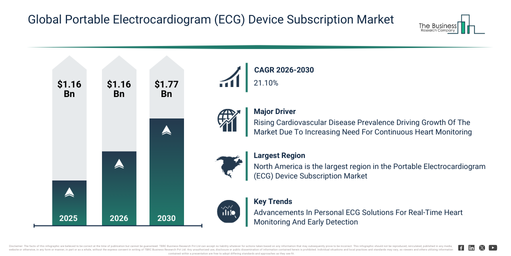
    The portable ECG device subscription market has witnessed rapid expansion recently. It is projected to increase from $1.64 billion in 2025 to $1.99 billion in 2026, marking a strong compound annual growth rate (CAGR) of 21.4%. This growth during the historical period can be linked to several factors including the rising prevalence of cardiovascular diseases, the high costs associated with diagnostic equipment, the growing adoption of home healthcare services, wider use of wearable ECG devices, and the expansion of telecardiology. Looking ahead, the market is expected to reach $4.27 billion by 2030, maintaining an impressive CAGR of 21.1%. The forecast period’s growth is propelled by innovations such as AI-enabled ECG interpretation, the rise of preventive cardiac care, integration with telehealth platforms, demand for continuous heart monitoring models, and the growth of value-based healthcare systems. Key trends set to influence this market include remote cardiac monitoring, subscription-based diagnostic access, cloud-based ECG data management, ongoing arrhythmia detection, and home-centered cardiac surveillance.

    Download A Free Sample Report For Comprehensive Market Insights:

    https://www.thebusinessresearchcompany.com/sample.aspx?id=29152&type=smp

    Factors Propelling the Portable Electrocardiogram Device Subscription Market

    One of the primary drivers behind the rising adoption of portable ECG device subscriptions is the increasing incidence of cardiovascular diseases worldwide. Cardiovascular conditions, which encompass ailments affecting the heart and blood vessels such as heart attacks, strokes, and hypertension, are becoming more widespread largely due to sedentary lifestyles and unhealthy diet patterns. These lifestyle factors raise blood pressure, cholesterol levels, and obesity rates, all contributing to heart and vascular disorders.

    Portable ECG device subscriptions play a critical role in addressing these challenges by offering continuous or on-demand monitoring of heart activity. This enables early detection of abnormal heart rhythms and arrhythmias, facilitating timely medical interventions which can improve patient outcomes. For instance, the National Institutes of Health reported in August 2025 that cardiovascular disease prevalence in the US is expected to increase by 90% from 2025 to 2050, with mortality rising by 73% and disability-adjusted life years (DALYs) by 55%. These alarming statistics highlight why the demand for portable ECG subscriptions is set to rise sharply as a tool for managing cardiovascular health more effectively.

    Access The Complete Portable Electrocardiogram (ECG) Device Subscription Market Report:

    https://www.thebusinessresearchcompany.com/report/portable-electrocardiogram-ecg-device-subscription-global-market-report

    Segment Breakdown of the Portable Electrocardiogram Device Subscription Market

    The portable ECG device subscription market is categorized into several key segments to address diverse consumer needs:

    1) Product Type: Handheld Electrocardiogram Devices, Wearable Electrocardiogram Devices, Patch-based Electrocardiogram Devices

    2) Subscription Model: Monthly, Quarterly, Annual

    3) Distribution Channel: Online Platforms, Direct Sales, Other Distribution Channels

    4) End-User: Hospitals and Clinics, Homecare Settings

    Further subcategories provide more detail, such as:

    – Handheld devices include Single-Lead, Multi-Lead, and Wireless variants.

    – Wearable devices encompass Chest Strap, Smartwatch, and Arm Band options.

    – Patch-based devices consist of Rechargeable and Wireless ECG patches.

    This diverse segmentation supports the growing demand for personalized and convenient cardiac monitoring solutions.

    Key Innovations Shaping Trends in the Portable Electrocardiogram Device Subscription Market

    Leading companies in this sector are heavily investing in the development of advanced personal ECG solutions designed for real-time heart monitoring and early detection of cardiac abnormalities. These solutions often combine portable or wearable devices with sophisticated software platforms that enable continuous or on-demand monitoring, data sharing with healthcare providers, and timely interventions remotely.

    For example, in May 2025, AliveCor Inc., a US-based medical AI company, introduced the AI-powered KardiaMobile 6L Max device featuring the innovative KardiaAlert system. This product offers medical-grade six-lead ECG technology, collecting six times more heart data than traditional single-lead devices. The KardiaAlert feature continuously monitors ECG changes and sends real-time notifications to users and healthcare professionals about subtle shifts in heart rhythms, allowing for earlier diagnosis and treatment of cardiac issues. Such advancements empower patients with accessible, accurate monitoring supported by AI and expert cardiology review.

    Leading Players in the Portable Electrocardiogram Device Subscription Market

    Several prominent companies dominate the portable ECG device subscription landscape, including AliveCor, iRhythm Technologies, SHL Telemedicine, Preventice Solutions, BioTelemetry, Medicalgorithmics, Bittium, CardioComm Solutions, InfoBionic.Ai, Vivalink, LifeSignals, Wellysis, WearLinq, VitalConnect, Bardy Diagnostics, ZOLL, Philips, GE HealthCare, Omron Healthcare, and Withings. These organizations continue to innovate and expand offerings to capture growing market demand.

    Regional Market Insights and Growth Patterns for Portable Electrocardiogram Device Subscription

    In 2025, North America held the largest revenue share in the portable ECG device subscription market, reflecting well-established healthcare infrastructure and high adoption rates of digital health technologies. However, the Asia-Pacific region is anticipated to be the fastest-growing market throughout the forecast period, driven by increasing healthcare awareness, rising cardiovascular disease cases, and rapid technological adoption. Other important regions covered include South East Asia, Western Europe, Eastern Europe, South America, the Middle East, and Africa, providing a comprehensive global view of the market’s expansion.

    Get in touch with us:

    The Business Research Company: https://www.thebusinessresearchcompany.com/

    Americas: +1 310-496-7795

    Asia: +44 7882 955267 & +91 8897263534

    Europe: +44 7882 955267

    Email us at: marketing@tbrc.info

    Follow us on:

    LinkedIn: https://in.linkedin.com/company/the-business-research-company

    YouTube: https://www.youtube.com/channel/UC24_fI0rV8cR5DxlCpgmyFQ

    Global Market Model: https://www.thebusinessresearchcompany.com/global-market-model
  • Portable Dialysis Machines Market Size Projected To Increase From $23.51 Billion To $30.32 Billion During The Forecast Period

    Portable Dialysis Machines Market Size Projected To Increase From $23.51 Billion To $30.32 Billion During The Forecast Period

    Through market attractiveness analysis, total addressable market evaluation, company benchmarking matrices, interactive Excel dashboards, expanded supply chain intelligence, emerging startup coverage, and detailed product insights, The Business Research Company’s 2026 market reports provide more actionable and strategically valuable research.

    The portable dialysis machines market has witnessed significant growth recently, driven by advancements in technology and changing patient needs. As healthcare increasingly emphasizes patient convenience and home-based treatment options, the demand for portable dialysis devices is rising. This overview explores the current market size, key growth drivers, industry trends, competitive landscape, and regional market dynamics shaping the future of portable dialysis machines.

    Steady Market Expansion Forecast for Portable Dialysis Machines

    The portable dialysis machines market has experienced robust growth in recent years. It is projected to expand from $22.16 billion in 2025 to $23.51 billion in 2026, representing a compound annual growth rate (CAGR) of 6.1%. This upward trend during the historical period is mainly due to the increasing incidence of chronic kidney disease and renal failure, as well as a growing preference for long-term dialysis treatments outside hospital environments. The early availability of portable peritoneal and hemodialysis machines, along with the growth of dialysis care services through clinics and home care, has also contributed. Additionally, greater patient awareness about home renal therapy options has supported this market growth.

    Download A Free Sample Report For Comprehensive Market Insights:

    https://www.thebusinessresearchcompany.com/sample.aspx?id=13914&type=smp

    Future Growth Projections and Emerging Opportunities in Portable Dialysis Machines

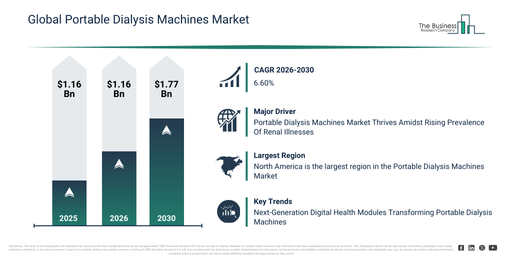
    Looking ahead, the market is expected to continue its strong trajectory, reaching $30.33 billion by 2030 with a CAGR of 6.6%. Factors propelling this growth include wider adoption of wearable and ultra-portable dialysis technologies, a shift toward patient-centered home dialysis treatment models, and increased use of portable devices for frequent, low-intensity dialysis sessions. Expanding access to portable dialysis in emerging healthcare markets also plays a crucial role. Moreover, there is a growing focus on enhancing the quality of life and treatment convenience for dialysis patients. Key trends anticipated during this period include rising use of portable machines for home-based care, increased deployment of peritoneal and hemodialysis portable systems, demand for compact and easy-to-use devices designed for self-care, advancements in wearable dialysis machines to improve patient mobility, and broader application of portable dialysis solutions across hospitals, clinics, and home settings.

    Rising Kidney Disease Rates Spur Portable Dialysis Machine Demand

    The growing prevalence of kidney-related illnesses is a major factor supporting the portable dialysis machines market’s expansion. Kidney diseases, which affect the organ’s ability to filter waste and regulate bodily functions, often necessitate dialysis when the kidneys fail. Portable dialysis machines play an essential role in managing chronic kidney disease and end-stage renal failure by filtering blood to remove excess fluids and toxins. For example, a report from June 2023 by Kidney Research UK highlighted that about 7.2 million people in the UK—more than 10% of the population—currently live with chronic kidney disease. Among them, 3.25 million have advanced stages, while another 3.9 million remain in early stages, often undiagnosed. Projections suggest this number will increase to 7.61 million by 2033. This rising patient population is a key driver behind the increased adoption of portable dialysis solutions.

    Access The Complete Portable Dialysis Machines Market Report:

    https://www.thebusinessresearchcompany.com/report/portable-dialysis-machines-global-market-report

    Breakdown of Portable Dialysis Machines Market by Product and Application

    This market is divided into several important segments for analysis. By product type, the market includes portable dialysis machines designed for home use and wearable dialysis devices. When categorized by analysis type, it covers peritoneal dialysis and hemodialysis technologies. End-user segments include hospitals, clinics, and home care settings. Further subcategories identify portable dialysis machines such as home-use devices, hemodialysis machines, and peritoneal dialysis machines, alongside wearable dialysis machines comprising wearable hemodialysis and peritoneal dialysis devices.

    Technological Advances and Innovations Driving Market Potential

    Leading companies in the portable dialysis machines industry are increasingly focusing on integrating advanced technology to boost their market presence and profitability. One key innovation is the incorporation of next-generation digital health modules, which assist clinical management by monitoring patients undergoing home dialysis and detecting potential therapy complications early. For instance, in June 2023, Singapore-based AWAK Technologies, in collaboration with Singapore General Hospital, initiated a pre-pivotal clinical trial for its Wearable Dialysis Device. This highly portable system allows patients with end-stage kidney disease to perform dialysis on the move, greatly improving their lifestyle. The trial aims to evaluate the device’s safety and effectiveness following a successful initial human study that reported no serious adverse events.

    Competitive Landscape of the Portable Dialysis Machines Market

    Several major players shape the competitive environment in this market, including Fresenius Kabi AG, Baxter International Inc, B. Braun Melsungen AG, Nipro Corporation, Nikkiso Co., Allmed Medical Products Co Ltd, NxStage Medical Inc, Outset Medical Inc, SWS Hemodialysis Care Co Ltd, Zylox Medical Devices, DEKA Research & Development Corporation, Biolight Co Ltd, Quanta Dialysis Technologies Ltd, AWAK Technologies, Toray Medical Co Ltd, Medica S.p.A, Medica Biomedical Systems, Wuzhou Suntech Medical Co Ltd, Asahi Kasei Medical Co Ltd, Wuhan Biokangtai Biotechnology Co Ltd, Nanjing Jiancheng Bioengineering Institute, and Starbright Medical Devices. These companies are actively pursuing innovation and strategic initiatives to capture growing market demand.

    Regional Analysis Highlighting North America’s Prominence and Asia-Pacific’s Rapid Growth

    In 2025, North America was the largest regional market for portable dialysis machines. However, the Asia-Pacific region is projected to emerge as the fastest-growing market during the forecast period. The report covers various geographic areas including Asia-Pacific, South East Asia, Western Europe, Eastern Europe, North America, South America, the Middle East, and Africa, providing a comprehensive view of global market trends and growth opportunities.

    Get in touch with us:

    The Business Research Company: https://www.thebusinessresearchcompany.com/

    Americas: +1 310-496-7795

    Asia: +44 7882 955267 & +91 8897263534

    Europe: +44 7882 955267

    Email us at: marketing@tbrc.info

    Follow us on:

    LinkedIn: https://in.linkedin.com/company/the-business-research-company

    YouTube: https://www.youtube.com/channel/UC24_fI0rV8cR5DxlCpgmyFQ

    Global Market Model: https://www.thebusinessresearchcompany.com/global-market-model
  • Polyp Biopsy Market Growth Outlook Reveals A CAGR Of 8.2% And A Market Value Of $2.06 Billion By 2030

    Polyp Biopsy Market Growth Outlook Reveals A CAGR Of 8.2% And A Market Value Of $2.06 Billion By 2030

    Delivering more actionable and strategically valuable research, The Business Research Company’s 2026 market reports feature market attractiveness analysis, total addressable market evaluation, company benchmarking matrices, interactive Excel dashboards, expanded supply chain intelligence, emerging startup coverage, and detailed product insights.

    The polyp biopsy market has demonstrated impressive growth in recent years and continues to show promising potential for expansion. Driven by advancements in technology and rising disease prevalence, this sector is set to experience notable revenue increases over the forecast period. Let’s explore the current market size, key growth drivers, emerging trends, major players, and regional dynamics shaping this industry.

    Polyp Biopsy Market Size and Projected Growth Through 2030

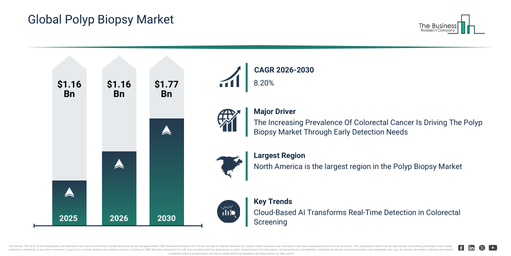
    The market for polyp biopsy has witnessed substantial growth and is projected to increase from $1.39 billion in 2025 to $1.5 billion in 2026, reflecting a compound annual growth rate (CAGR) of 8.5%. This upward trend in recent years is linked to the rising incidence of gastrointestinal and cervical cancers, advancements in endoscopic technologies, expanded screening programs, greater awareness about early diagnosis, and the growth of specialty clinics. Looking ahead, the market is expected to grow robustly, reaching $2.06 billion by 2030 at a CAGR of 8.2%. Key factors propelling this expansion include the adoption of AI-assisted biopsy procedures, minimally invasive techniques, wider use in hospitals and diagnostic labs, integration with imaging and cloud technologies, and the development of innovative biopsy tools. Leading market segments during this period include colonoscopy biopsy, colposcopy-directed biopsy, esophagogastroduodenoscopy biopsy, laryngoscopy biopsy, and endoscopic mucosal resection (EMR).

    Download A Free Sample Report For Comprehensive Market Insights:

    https://www.thebusinessresearchcompany.com/sample.aspx?id=28304&type=smp

    Factors Fueling Demand Growth in the Polyp Biopsy Market

    One of the primary drivers of the polyp biopsy market is the increasing prevalence of colorectal cancer worldwide. This cancer originates in the colon or rectum due to abnormal proliferation of epithelial cells lining the large intestine, with the potential to invade surrounding tissues and metastasize. The rise in colorectal cancer cases is largely influenced by dietary habits high in processed foods and low fiber content, which promote chronic inflammation and disrupt gut microbiota, fostering the development of precancerous lesions. Polyp biopsy plays a crucial role in early detection and histopathological examination of suspicious lesions, thereby facilitating timely intervention and preventing disease progression.

    To illustrate the impact, the American Cancer Society (ACS) estimates that in 2025, there will be approximately 107,320 new colon cancer cases and 46,950 rectal cancer diagnoses in the United States, with nearly 52,900 deaths attributed to these conditions. This significant disease burden underscores the vital need for improved diagnostic tools, which in turn is accelerating demand within the polyp biopsy market.

    Access The Complete Polyp Biopsy Market Report:

    https://www.thebusinessresearchcompany.com/report/polyp-biopsy-global-market-report

    Product and Application Segments Defining the Polyp Biopsy Market

    The polyp biopsy market is categorized across several important segments for precise market analysis:

    1) By Type: Colonoscopy, Colposcopy-Directed Biopsy, Esophagogastroduodenoscopy

    2) By Technique: Endoscopic Mucosal Resection (EMR), Endoscopic Submucosal Dissection (ESD), Conventional Biopsy

    3) By Application: Colorectal Cancer, Gastrointestinal Disorders, Other Applications

    4) By End-User: Hospitals, Specialty Clinics

    Furthermore, subcategories deepen the segmentation: Colonoscopy is divided into diagnostic and therapeutic types; Colposcopy-Directed Biopsy includes cervical, vaginal, and vulvar biopsies; Esophagogastroduodenoscopy is split into diagnostic and therapeutic procedures.

    Innovations and Trends Advancing the Polyp Biopsy Market

    Key players in this market are heavily investing in innovative technologies such as AI-assisted detection systems, which enhance the identification of colorectal polyps and facilitate early cancer detection. These AI systems analyze medical imaging in real time, flagging abnormalities to assist clinicians in making informed decisions without conducting therapeutic procedures during detection.

    For example, in September 2024, Odin Medical Ltd., a US medical technology firm affiliated with Olympus Corporation, introduced CADDIE—a cloud-based AI endoscopic platform. This solution processes colonoscopy video feeds in real time to highlight potential colorectal polyps, enabling endoscopists to improve adenoma detection rates. Clinical trials have demonstrated that CADDIE enhances diagnostic accuracy without extending procedure times or increasing risks, highlighting its potential to transform patient care and outcomes.

    Key Industry Players Influencing the Polyp Biopsy Market

    The competitive landscape of the polyp biopsy market includes prominent corporations such as Johnson & Johnson (Ethicon), Medtronic plc, Medline Industries LP, FUJIFILM Holdings Corporation, Stryker Corporation, Becton Dickinson and Company (BD), Boston Scientific Corporation, B. Braun Melsungen AG, Olympus Corporation, STERIS plc, Hologic Inc., CooperSurgical Inc., KARL STORZ SE & Co. KG, Cook Medical, ConMed Corporation, Ambu A/S, Richard Wolf GmbH, INRAD, Acheron Instruments (Pvt) Ltd., and Innovia Medical. These companies are at the forefront of driving innovation and expanding market reach.

    Regional Market Dynamics and Growth Outlook

    In 2025, North America held the largest share of the polyp biopsy market, owing to advanced healthcare infrastructure and high disease awareness. However, the Asia-Pacific region is predicted to be the fastest-growing market throughout the forecast period, driven by rising healthcare investments and increasing prevalence of gastrointestinal cancers. The comprehensive geographic analysis also covers South East Asia, Western Europe, Eastern Europe, South America, the Middle East, and Africa, providing a global perspective on market trends and opportunities.

    Get in touch with us:

    The Business Research Company: https://www.thebusinessresearchcompany.com/

    Americas: +1 310-496-7795

    Asia: +44 7882 955267 & +91 8897263534

    Europe: +44 7882 955267

    Email us at: marketing@tbrc.info

    Follow us on:

    LinkedIn: https://in.linkedin.com/company/the-business-research-company

    YouTube: https://www.youtube.com/channel/UC24_fI0rV8cR5DxlCpgmyFQ

    Global Market Model: https://www.thebusinessresearchcompany.com/global-market-model
  • Polymethyl Methacrylate (PMMA) Bone Cements Market Forecast Highlights Expansion From $1.33 Billion To $1.72 Billion Through 2030

    Polymethyl Methacrylate (PMMA) Bone Cements Market Forecast Highlights Expansion From $1.33 Billion To $1.72 Billion Through 2030

    Enhanced with market attractiveness analysis, total addressable market evaluation, company benchmarking matrices, interactive Excel dashboards, expanded supply chain intelligence, emerging startup coverage, and detailed product insights, The Business Research Company’s 2026 market reports deliver more actionable and strategically valuable research.

    The polymethyl methacrylate (PMMA) bone cements market has experienced substantial growth in recent years and shows strong potential for continued expansion. Driven by advances in medical procedures and increasing demand for effective orthopedic solutions, this market is set to evolve significantly over the coming decade. Below is an overview of current market size, factors pushing growth, key players, and emerging trends shaping its future.

    Steady Increase in Polymethyl Methacrylate Bone Cements Market Size

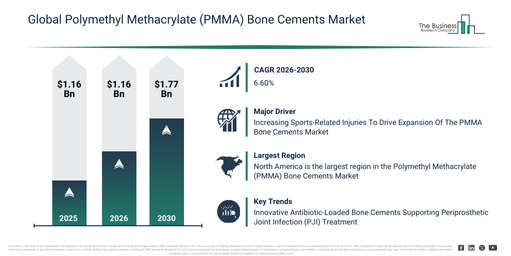
    The PMMA bone cements market has witnessed robust growth, reaching a valuation of $1.25 billion in 2025 and is projected to rise to $1.34 billion in 2026, representing a compound annual growth rate (CAGR) of 6.9%. This expansion during the historic period is largely due to the rising elderly population, a surge in orthopedic surgeries, growing osteoarthritis cases, expanding hospital infrastructure, and the need for enhanced implant stability. Looking ahead, the market is forecasted to grow further to $1.73 billion by 2030, with a slightly moderated CAGR of 6.6%. Factors expected to drive this future growth include the increasing number of minimally invasive procedures, rising sports injury rates, growth in ambulatory surgery centers, demand for faster recovery options, and innovations in bone cement formulations. Additionally, trends such as the rise in joint replacement surgeries, higher adoption of high-viscosity cements, expansion of vertebral repair techniques, greater use in trauma surgeries, and improvements in cement handling characteristics are shaping market development.

    Download A Free Sample Report For Comprehensive Market Insights:

    https://www.thebusinessresearchcompany.com/sample.aspx?id=19661&type=smp

    Sports Injuries as a Key Driver for PMMA Bone Cement Market Expansion

    One of the primary forces behind the growth of the PMMA bone cement market is the increasing incidence of sports-related injuries. These injuries occur during participation in physical activities and sports, often resulting from high-intensity movements, insufficient training, or lack of proper injury prevention. PMMA bone cement plays a critical role in orthopedic treatments for such injuries by offering structural support and ensuring the secure fixation of implants during surgeries like joint replacements or fracture repairs. For example, data from the National Safety Council’s Injury Facts reveal that exercise-related injuries surged by 8%, with reported cases rising from 445,642 in 2022 to 482,886 in 2023. This upward trend in injuries directly contributes to heightened demand for PMMA bone cement products.

    Additional Drivers Fueling Market Growth

    Beyond sports injuries, other factors also support the expansion of the PMMA bone cement market. The global increase in orthopedic procedures, driven by an aging population and rising prevalence of degenerative joint diseases such as osteoarthritis, continues to push demand. Meanwhile, improvements in hospital infrastructure and the proliferation of ambulatory surgical centers help facilitate more procedures requiring reliable bone cement solutions. These dynamics collectively encourage further adoption of PMMA bone cements worldwide.

    Access The Complete Polymethyl Methacrylate (PMMA) Bone Cements Market Report:

    https://www.thebusinessresearchcompany.com/report/polymethyl-methacrylate-pmma-bone-cements-global-market-report

    Detailed Segmentation of the PMMA Bone Cements Market

    This market can be segmented based on type, application, and end-use settings. By type, the offerings include low viscosity, medium viscosity, and high viscosity cements. These categories are further divided into subtypes such as single-component and two-component for low viscosity; hand-mixed and pre-mixed for medium viscosity; and self-mixed and pre-mixed for high viscosity cements. Regarding applications, the market serves joint surgeries, vertebral procedures, and other medical uses. In terms of end-users, hospitals, ambulatory surgical centers, and orthopedic clinics represent the primary settings where these bone cements are employed.

    Innovative Developments Influencing Market Competition

    Leading companies in the PMMA bone cement field are focusing on advancing product formulations, especially antibiotic-loaded cements designed to combat infections associated with orthopedic implants. Antibiotic-loaded bone cement combines bone repair material with antimicrobial agents to reduce the risk of periprosthetic joint infections (PJI) during surgeries. For example, in August 2024, Germany-based medical device manufacturer Heraeus Medical GmbH introduced COPAL G+V Dual Antibiotic-loaded Bone Cement. This product incorporates gentamicin and vancomycin to provide broad-spectrum antimicrobial protection, targeting infection control in high-risk orthopedic operations and improving patient outcomes post-surgery.

    Key Market Participants Driving Innovation and Growth

    The PMMA bone cement market features several prominent players including Stryker Corporation, Zimmer Biomet Holdings Inc., Heraeus Medical GmbH, Exactech Inc., Mathys AG Bettlach, Aap Implantate AG, Cambridge Polymer Group Inc., Teknimed SA, Tecres S.p.A., BioMedtrix LLC, Smith & Nephew plc, G21 srl, Graftys, Noblus, B Braun Melsungen AG, DJO Global Inc, Aegis Spine Inc, Alphatec Spine Inc, Cook Medical Inc, Elite Surgical, Evolutis, Meril Life Sciences Private Limited, Tecomet Inc, Merete Medical GmbH, Solco Biomedical, Orthoplastics, Medacta International, and Somatex Medical Technologies. These organizations continue to invest in research and development to enhance product efficacy, safety, and application versatility.

    Geographical Market Leadership and Growth Prospects

    In 2025, North America held the dominant position in the PMMA bone cement market, benefiting from advanced healthcare infrastructure and high procedure volumes. However, the Asia-Pacific region is anticipated to be the fastest-growing market during the forecast period, driven by increasing healthcare investments, expanding surgical facilities, and rising orthopedic procedure rates. Other regions covered in market analyses include South East Asia, Western Europe, Eastern Europe, South America, the Middle East, and Africa, which all contribute to the global expansion of the PMMA bone cement market.

    Get in touch with us:

    The Business Research Company: https://www.thebusinessresearchcompany.com/

    Americas: +1 310-496-7795

    Asia: +44 7882 955267 & +91 8897263534

    Europe: +44 7882 955267

    Email us at: marketing@tbrc.info

    Follow us on:

    LinkedIn: https://in.linkedin.com/company/the-business-research-company

    YouTube: https://www.youtube.com/channel/UC24_fI0rV8cR5DxlCpgmyFQ

    Global Market Model: https://www.thebusinessresearchcompany.com/global-market-model
  • Polymerase Chain Reactions (PCR) Devices, Reagents And Uses Market Expected To Reach $9.84 Billion By 2030 As Growth Accelerates At 9% CAGR

    Polymerase Chain Reactions (PCR) Devices, Reagents And Uses Market Expected To Reach $9.84 Billion By 2030 As Growth Accelerates At 9% CAGR

    Through market attractiveness analysis, total addressable market evaluation, company benchmarking matrices, interactive Excel dashboards, expanded supply chain intelligence, emerging startup coverage, and detailed product insights, The Business Research Company’s 2026 market reports provide more actionable and strategically valuable research.

    The market for polymerase chain reaction (PCR) devices, reagents, and their applications has experienced significant growth in recent years. This expansion reflects the increasing importance of these technologies in diverse fields such as diagnostics, research, and personalized medicine. Let’s explore the current market size, key drivers behind growth, important segments, leading companies, and regional developments shaping this industry.

    Market Expansion and Forecast for the Polymerase Chain Reaction Devices, Reagents and Uses Market

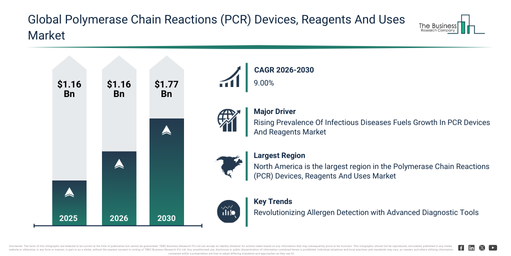
    The PCR devices, reagents, and uses market is on an upward trajectory, with projections showing growth from $6.51 billion in 2025 to $6.97 billion in 2026, representing a compound annual growth rate (CAGR) of 7.2%. This positive trend stems from factors such as outbreaks of infectious diseases, growth in genomics research, increased clinical diagnostic laboratories, demand for COVID-19 testing, and broader adoption of molecular biology techniques. Looking further ahead, the market is expected to reach $9.84 billion by 2030, growing at a faster CAGR of 9.0%. This anticipated boost is fueled by rising personalized medicine practices, expanding cancer diagnostics, wider genetic screening, enhanced research funding, and growing demand for rapid diagnostic solutions. Key trends shaping the market include the surge in molecular diagnostics, expanded infectious disease testing, greater use of real-time PCR, intensified research-based PCR applications, and the miniaturization of PCR instruments.

    Download A Free Sample Report For Comprehensive Market Insights:

    https://www.thebusinessresearchcompany.com/sample.aspx?id=2485&type=smp

    How Infectious Diseases Are Propelling Market Growth in PCR Devices, Reagents and Uses

    The increasing incidence of infectious diseases is a major driver for the PCR devices and reagents market. These diseases, caused by pathogens like bacteria, viruses, fungi, or parasites, spread through direct or indirect contact among individuals. The rise in global travel has accelerated the transmission of such diseases across borders, highlighting the need for rapid and accurate diagnostic tools. PCR technologies play a crucial role in this context by amplifying genetic material to quickly identify infections and improve laboratory efficiency. For example, in February 2024, the UK Health Security Agency reported that tuberculosis cases in England rose by 10.7% in 2023 compared to 2022, reaching 4,850 cases. This growing prevalence underscores the importance of PCR methods in disease management and supports market growth.

    Additional Factors Supporting the Expansion of the PCR Devices, Reagents and Uses Market

    Beyond infectious diseases, the adoption of PCR technologies is increasing due to broader applications in clinical diagnostics, pharmaceutical development, and biotechnology. The demand for faster, more reliable genetic testing methods is driving investments and innovations in PCR platforms. Laboratories and research organizations are embracing these tools to enhance accuracy and speed, addressing needs from early disease detection to environmental monitoring and food safety testing.

    Access The Complete Polymerase Chain Reactions (PCR) Devices, Reagents And Uses Market Report:

    https://www.thebusinessresearchcompany.com/report/polymerase-chain-reactions-devices-reagents-and-uses-global-market-report

    Breakdown of Market Segments Within PCR Devices, Reagents and Uses

    The PCR market can be divided into several key segments for better understanding:

    1) By Product Type: Instruments, Reagents, Consumables

    2) By Instrument Category: Standard PCR, RT-PCR, Digital PCR

    3) By End Users: Pharmaceutical and Biotechnology Industries, Clinical Diagnostics Labs and Hospitals, Academic and Research Organizations

    Further subcategories include types of instruments such as thermal cyclers, real-time PCR systems, and digital PCR systems. Reagents are classified into master mixes, primers and probes, enzymes, and nucleotides. Consumables include PCR tubes, PCR plates, seals and films, and pipette tips. This detailed segmentation reflects the wide range of products necessary to support diverse PCR applications.

    Innovations and Market Trends Shaping the Future of PCR Devices and Reagents

    Leading companies in the PCR market are prioritizing the development of cutting-edge diagnostic tools that enhance the precision and speed of genetic testing. These advancements improve early detection of diseases and support a broad array of research efforts spanning healthcare, environmental studies, and food safety. For example, in August 2023, Germany-based Gold Standard Diagnostics launched DNAllergen RT-PCR kits designed for highly sensitive detection of specific allergens in food products. These kits utilize real-time PCR technology to identify allergens like almond, celery, and fish with improved accuracy, addressing challenges that traditional testing methods face.

    Competitive Landscape and Major Players in the PCR Devices, Reagents and Uses Market

    Key industry leaders dominating the PCR space include Bio-Rad Laboratories Inc., F. Hoffmann-La Roche AG, Thermo Fisher Scientific Inc., Becton Dickinson and Company, Abbott Laboratories, bioMérieux S.A., Agilent Technologies Inc., QIAGEN N.V., Siemens Healthcare GmbH, Fluidigm Corporation, SYGNIS Pharma AG, Takara Bio Inc., Cepheid, Lontech Laboratories, Eppendorf India Private Limited, GE Healthcare, Kapa Biosystems, Maxim Biomedical Inc., Promega Corporation, RainDance Technologies Inc., Affymetrix Inc., Beckman Coulter Inc., Enzo Life Sciences Inc., Roche Diagnostics GmbH, Merck KGaA, Danaher Corporation, Stilla Technologies, Meridian Bioscience Inc., BioFire Diagnostics LLC, Luminex Corporation, and GenMark Diagnostics Inc. These companies focus on product innovation, strategic collaborations, and expanding their market reach.

    Geographical Breakdown and Regional Market Development for PCR Devices and Reagents

    In 2025, North America was the largest market for PCR devices and reagents, reflecting established healthcare infrastructure and strong research capabilities. Western Europe ranked as the second-largest region globally. The analysis also covers regions such as Asia-Pacific, South East Asia, Eastern Europe, South America, Middle East, and Africa, highlighting global market dynamics and opportunities for expansion across different geographies.

    Get in touch with us:

    The Business Research Company: https://www.thebusinessresearchcompany.com/

    Americas: +1 310-496-7795

    Asia: +44 7882 955267 & +91 8897263534

    Europe: +44 7882 955267

    Email us at: marketing@tbrc.info

    Follow us on:

    LinkedIn: https://in.linkedin.com/company/the-business-research-company

    YouTube: https://www.youtube.com/channel/UC24_fI0rV8cR5DxlCpgmyFQ

    Global Market Model: https://www.thebusinessresearchcompany.com/global-market-model
  • Polymer Biomaterial Market Set To Grow From $109.73 Billion In 2026 To $197.21 Billion By 2030 At A CAGR Of 15.8%

    Polymer Biomaterial Market Set To Grow From $109.73 Billion In 2026 To $197.21 Billion By 2030 At A CAGR Of 15.8%

    Delivering more actionable and strategically valuable research, The Business Research Company’s 2026 market reports feature market attractiveness analysis, total addressable market evaluation, company benchmarking matrices, interactive Excel dashboards, expanded supply chain intelligence, emerging startup coverage, and detailed product insights.

    The polymer biomaterial sector is experiencing swift expansion, driven by advancements in medical procedures and growing healthcare demands worldwide. As this market evolves, it is important to understand its current scale, growth factors, leading players, and emerging trends that are shaping its future trajectory.

    Current Market Size and Growth Outlook for Polymer Biomaterials

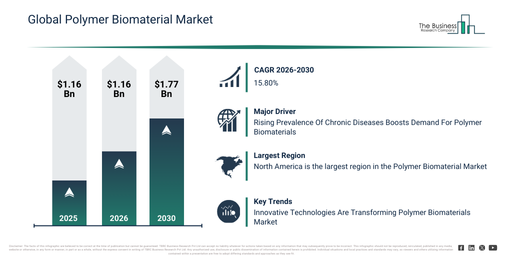
    The polymer biomaterial market has witnessed significant growth recently and is projected to expand from $94.98 billion in 2025 to $109.73 billion in 2026, which corresponds to a compound annual growth rate (CAGR) of 15.5%. This growth during the historical period is mainly due to increased orthopedic surgeries, the rise in dental implant procedures, more cardiovascular surgeries, higher demand for plastic surgery, and broader adoption of synthetic materials. Looking ahead, the market is expected to reach $197.22 billion by 2030, growing at a CAGR of 15.8%. Key drivers for this forecasted growth include advancements in regenerative medicine, the rising prevalence of chronic diseases, expansion in implant technologies, increased demand for biodegradable materials, and progress in polymer chemistry. Important trends anticipated to influence this market include greater demand for biocompatible polymers, growth in implantable medical devices, wider use of synthetic biomaterials, tissue engineering applications, and the development of durable long-term polymers.

    Download A Free Sample Report For Comprehensive Market Insights:

    https://www.thebusinessresearchcompany.com/sample.aspx?id=3416&type=smp

    How Chronic Diseases Act as a Catalyst for Polymer Biomaterial Market Growth

    The rising incidence of chronic diseases plays a crucial role in propelling the polymer biomaterial market forward. Chronic diseases, often called non-communicable diseases (NCDs), are long-lasting medical conditions that typically develop slowly and persist over time. Polymer biomaterials are integral in manufacturing implantable medical devices such as drug delivery pumps and electrodes used in neuromodulation therapies. These devices significantly improve symptom management and the quality of life for patients living with chronic conditions. For example, in June 2024, data from the UK’s National Health Service revealed that 3,615,330 people registered with a general practitioner were diagnosed with non-diabetic hyperglycemia (pre-diabetes) in 2023, an 18% increase from 3,065,825 people in 2022. This sharp increase in chronic disease cases underlines the growing need for polymer biomaterials in healthcare.

    Segments Driving Development in the Polymer Biomaterial Market

    This market is divided into several key segments to better understand its landscape:

    1) By Type: Nylon, Silicone Rubber, Polyester, Polymethyl Methacrylate (PMMA), Polyethylene (PE), Polyvinyl Chloride, and other types

    2) By Nature: Natural and Synthetic

    3) By Application: Cardiovascular, Ophthalmology, Dental, Plastic Surgery, Wound Healing, Tissue Engineering, Orthopedics, Neurological Disorders or Central Nervous System, and others

    Further breakdowns include:

    – Nylon types such as Nylon 6 and Nylon 66

    – Silicone Rubber variants including Liquid Silicone Rubber (LSR) and Solid Silicone Rubber (SSR)

    – Polyester subtypes like Polyethylene Terephthalate (PET) and Polybutylene Terephthalate (PBT)

    – PMMA in clear and colored forms

    – Polyethylene forms including High-Density (HDPE), Low-Density (LDPE), and Linear Low-Density (LLDPE)

    – Polyvinyl Chloride as rigid and flexible types

    – Other polymers like Polyurethane (PU) and Polycarbonate (PC)

    Access The Complete Polymer Biomaterial Market Report:

    https://www.thebusinessresearchcompany.com/report/polymer-biomaterial-global-market-report

    Innovations Advancing the Polymer Biomaterial Market

    Leading companies are focusing on innovative technologies to boost market performance, such as designed enzymatic biomaterials (DEB) technology. DEB represents a breakthrough platform for producing high-performance polysaccharides with enhanced properties. For instance, in June 2023, International Flavors & Fragrances Inc., a US-based company specializing in cosmetics and flavors, introduced this sustainable biopolymer technology. It allows for the production of biopolymers that mimic the qualities of petroleum-based polymers but with greater customization options. This technology enables direct transfer of desired functionalities from petroleum-based materials into biopolymer compounds, providing tailored and high-performing alternatives.

    Key Players Competing in the Polymer Biomaterial Industry

    The polymer biomaterial market features a variety of prominent companies including BASF SE, Corbion N.V., Zimmer Biomet Holdings Inc., Royal DSM N.V., Covestro AG, Evonik Industries AG, Starch Medical Inc., Victrex plc, W. L. Gore and Associates Inc., DSM Biomedical B.V., Purac Biomaterials, Ticona LLC, Invibo LLC, Covalon Technologies Ltd., Osteotech Inc., Medtronic plc, Stryker Corporation, Synthes Inc., Polyfibre Industries Pte Ltd., Toray Industries Inc., Stein Fibers Ltd., Bezwada Biomedical LLC, Collagen Solutions plc, Gelita AG, AorTech Biomaterials Pty Ltd., Berkeley Advanced Biomaterials Inc., Biocomposites Ltd., BioHorizons IPH Inc., Biomerics LLC, Bioteque Corporation, CollPlant Holdings Ltd., EndoShape Inc., PolyNovo Biomaterials Pty Ltd., and Secant Group LLC. These companies are pivotal in driving innovation and expanding market reach.

    Geographical Revenue Leaders in the Polymer Biomaterial Sector

    In 2025, North America led the global polymer biomaterial market in terms of revenue, holding the largest market share. Western Europe ranked second in size. The market report also analyzes other significant regions including Asia-Pacific, South East Asia, Eastern Europe, South America, the Middle East, and Africa, providing a detailed global view of the market’s performance and prospects.

    Get in touch with us:

    The Business Research Company: https://www.thebusinessresearchcompany.com/

    Americas: +1 310-496-7795

    Asia: +44 7882 955267 & +91 8897263534

    Europe: +44 7882 955267

    Email us at: marketing@tbrc.info

    Follow us on:

    LinkedIn: https://in.linkedin.com/company/the-business-research-company

    YouTube: https://www.youtube.com/channel/UC24_fI0rV8cR5DxlCpgmyFQ

    Global Market Model: https://www.thebusinessresearchcompany.com/global-market-model
  • Poly-L-Lactic Acid (PLA) Thread Lift Market Opportunities Are Emerging Beyond Traditional Growth Areas

    Poly-L-Lactic Acid (PLA) Thread Lift Market Opportunities Are Emerging Beyond Traditional Growth Areas

    Enhanced with market attractiveness analysis, total addressable market evaluation, company benchmarking matrices, interactive Excel dashboards, expanded supply chain intelligence, emerging startup coverage, and detailed product insights, The Business Research Company’s 2026 market reports deliver more actionable and strategically valuable research.

    The poly-L-lactic acid (PLA) thread lift market has been experiencing swift growth recently, driven by evolving consumer preferences and advances in cosmetic technologies. This sector is attracting considerable attention as patients increasingly seek effective, minimally invasive methods for facial rejuvenation. Below, we explore the market’s current status, key growth drivers, major players, and regional prospects shaping its trajectory.

    Steady Market Expansion Forecast in the Poly-L-Lactic Acid (PLA) Thread Lift Market

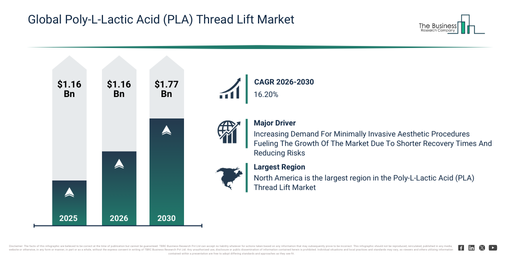
    The PLA thread lift market is set to grow from $1.49 billion in 2025 to $1.74 billion in 2026, achieving a compound annual growth rate (CAGR) of 16.5%. This upward trend during the past years has been fueled by rising demand for less invasive cosmetic treatments, innovations in thread materials, heightened aesthetic awareness, disposable income growth, and the accessibility of specialized clinics. Looking ahead, the market is projected to reach $3.17 billion by 2030, maintaining a strong CAGR of 16.2%. Factors such as the development of new thread types, customized cosmetic procedures, expansion of outpatient and specialty clinics, integration of AI-driven procedure planning, and collaborations between device manufacturers and clinics will continue to encourage this growth. Notable trends include the increasing use of barbed, smooth, screw, combination, and absorbable threads.

    Download A Free Sample Report For Comprehensive Market Insights:

    https://www.thebusinessresearchcompany.com/sample.aspx?id=28303&type=smp

    Growing Demand for Minimally Invasive Procedures Boosts the PLA Thread Lift Market

    One of the primary forces propelling the PLA thread lift market is the rising preference for minimally invasive aesthetic procedures. These treatments improve appearance with minimal pain, no large incisions, and faster recovery, making them highly appealing to patients. Their shorter downtime, reduced complication risks, less discomfort, and smaller scars are attracting more individuals seeking safe and effective cosmetic enhancements. PLA thread lifts support these procedures by providing skin lifting and tightening without surgery, stimulating collagen production to improve firmness and elasticity with minimal downtime. For instance, in November 2024, the American Society of Plastic Surgeons reported that 25,442,640 minimally invasive cosmetic procedures were performed in the U.S. in 2023, a 7% rise from 23,672,269 in 2022, underscoring the increasing adoption of such treatments.

    Medical Tourism’s Influence on the Poly-L-Lactic Acid (PLA) Thread Lift Market

    Another significant factor driving the market is the surge in medical tourism, where patients travel abroad to access affordable yet high-quality cosmetic treatments. The cost advantages offered by international clinics have made PLA thread lift procedures more accessible to a broader population. This trend enables patients to receive skilled treatments with modern facilities while benefiting from lower prices. For example, a survey published in January 2025 by the National Center for Biotechnology Information (NCBI) found that approximately 431,000 UK residents traveled overseas for medical care in 2023, up from 348,000 in 2022. This increase in medical tourism is positively impacting the demand for PLA thread lift procedures worldwide.

    Access The Complete Poly-L-Lactic Acid (PLA) Thread Lift Market Report:

    https://www.thebusinessresearchcompany.com/report/poly-l-lactic-acid-pla-thread-lift-global-market-report

    The Role of Increased Healthcare Spending in Fueling Market Growth

    Rising healthcare expenditure also plays a crucial role in expanding the PLA thread lift market. Healthcare spending comprises the total investment in medical treatments, facilities, research, and public health efforts aimed at improving health outcomes. The increasing burden of chronic diseases is driving higher healthcare budgets, indirectly boosting consumer affordability for elective cosmetic procedures. This financial growth empowers more patients to opt for minimally invasive treatments such as PLA thread lifts. To illustrate, the Office for National Statistics in the UK reported a 5.6% nominal increase in total healthcare expenditure in 2023, which represents a 0.9% rise compared to 2022. This growing investment in healthcare supports wider access to aesthetic procedures, aiding market expansion.

    Segments Highlighting Growth Potential in the Poly-L-Lactic Acid (PLA) Thread Lift Market

    This market is segmented by product type, application, and end user to capture its diverse opportunities:

    1) Product Types include Barbed Threads, Smooth Threads, Screw Threads, and Other Product Types.

    2) Applications cover Face Lift, Neck Lift, Nose Lift, Eyebrow Lift, and Other uses.

    3) End Users consist of Hospitals, Ambulatory Surgical Centers, Specialty Clinics, and other healthcare facilities.

    Further breakdowns include subcategories such as Mono, Cog, Spiral, and Anchor Threads under Barbed Threads; Monofilament, Twisted, Braided, and Polished Threads among Smooth Threads; Single Helix, Double Helix, Triple Helix, and Barrel Threads within Screw Threads; and Combination, Absorbable, and Specialty Threads categorized as Other Product Types.

    Key Players Steering the Poly-L-Lactic Acid (PLA) Thread Lift Market

    Several prominent companies are leading the PLA thread lift market, including Aptos LLC, HansBiomed Co. Ltd., Croma-Pharma GmbH, Sinclair Pharmaceuticals Ltd., Merz Pharma GmbH & Co. KGaA, Healux Corporation, N-Finders Co. Ltd., Intraline Technologies Inc., NovaThreads Inc., Surgiform Technology Ltd., Yavo Medical Technology Suzhou Co. Ltd., Metro Korea Co. Ltd., Diaminy Aesthetics Inc., Les Encres SAS, GEM S.r.l., River Aesthetics Inc., Yastrid Inc., Aesthetic Experts Labs Inc., Dr. Korman Laboratories Ltd., Auro Inc., and Amabelle Medical Technologies Pvt. Ltd.

    Regional Market Outlook Points to North America’s Dominance and Asia-Pacific’s Rapid Growth

    In 2025, North America held the largest share of the PLA thread lift market. However, the Asia-Pacific region is forecasted to be the fastest-growing market over the upcoming years. The report covers key geographic areas such as Asia-Pacific, South East Asia, Western Europe, Eastern Europe, North America, South America, the Middle East, and Africa, providing a comprehensive perspective on global market trends and opportunities.

    Get in touch with us:

    The Business Research Company: https://www.thebusinessresearchcompany.com/

    Americas: +1 310-496-7795

    Asia: +44 7882 955267 & +91 8897263534

    Europe: +44 7882 955267

    Email us at: marketing@tbrc.info

    Follow us on:

    LinkedIn: https://in.linkedin.com/company/the-business-research-company

    YouTube: https://www.youtube.com/channel/UC24_fI0rV8cR5DxlCpgmyFQ

    Global Market Model: https://www.thebusinessresearchcompany.com/global-market-model
  • Polyetheretherketone (PEEK) Implants Market Expansion Is Opening New Pathways For Strategic Investment

    Polyetheretherketone (PEEK) Implants Market Expansion Is Opening New Pathways For Strategic Investment

    Through market attractiveness analysis, total addressable market evaluation, company benchmarking matrices, interactive Excel dashboards, expanded supply chain intelligence, emerging startup coverage, and detailed product insights, The Business Research Company’s 2026 market reports provide more actionable and strategically valuable research.

    The market for polyetheretherketone (PEEK) implants has witnessed significant growth recently, fueled by advancements in medical procedures and material technologies. As demand rises across various healthcare sectors, the outlook for PEEK implants remains robust, promising continued expansion driven by innovation and demographic trends. This overview highlights the current market size, key growth drivers, segmentation, major players, strategic directions, and regional dynamics shaping this evolving industry.

    Market Size and Projected Growth Trajectory of the Polyetheretherketone (PEEK) Implants Market

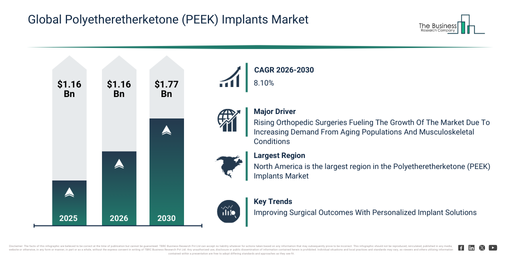
    The polyetheretherketone (PEEK) implants market has shown strong progression over the past years. Market revenue is expected to increase from $1.55 billion in 2025 to $1.68 billion in 2026, reflecting a compound annual growth rate (CAGR) of 8.4%. This earlier growth phase has been propelled by a rise in spinal and orthopedic surgeries, heightened awareness about biocompatible implant options, greater demand for trauma surgery devices, technological advancements in polymer materials, and the expansion of healthcare infrastructure globally. Looking ahead, the market is forecasted to grow steadily, reaching $2.29 billion by 2030 with a CAGR of 8.1%. This future expansion is expected to be driven by wider adoption of 3D-printed implants, an increasing elderly population, growth in minimally invasive surgical techniques, material innovations in PEEK, and the development of emerging markets. Key trends anticipated in the period include a shift toward radiolucent implants, customization through 3D printing, enhanced biocompatibility and implant durability, and the use of lightweight implant materials.

    Download A Free Sample Report For Comprehensive Market Insights:

    https://www.thebusinessresearchcompany.com/sample.aspx?id=25880&type=smp

    Rising Orthopedic Surgeries as a Key Growth Catalyst for the PEEK Implants Market

    The increasing volume of orthopedic surgeries is a major factor fueling the polyetheretherketone (PEEK) implants market expansion. Orthopedic procedures address conditions impacting the musculoskeletal system—including bones, joints, ligaments, tendons, and muscles—often requiring implants to repair or replace damaged structures. The surge in these surgeries is primarily driven by the aging worldwide population, which faces higher incidences of musculoskeletal ailments such as arthritis, joint deterioration, and fractures. As life expectancy rises, so does the need for interventions that preserve mobility and improve quality of life. PEEK implants offer a biocompatible, durable alternative to traditional metal implants, providing flexibility, strength, and radiolucency that facilitates better imaging and long-term stabilization of joints and bones. For example, data from the UK Health Security Agency (UKHSA) shows a 7.3% increase in orthopedic surgeries reported under mandatory surveillance between 2022 and 2023, reaching 102,027 procedures, underscoring the growing demand for such implants.

    Technological Progress and Polymer Innovations Supporting Market Demand

    Aside from surgery volume, the advancement in polymer technologies is playing a crucial role in boosting the polyetheretherketone (PEEK) implants market. Enhanced material properties, such as improved biocompatibility and durability, are increasing the appeal of PEEK implants over conventional options. Additionally, developments in minimally invasive surgical procedures are driving demand for implants tailored to less invasive techniques. These innovations contribute to improved patient outcomes, shorter recovery times, and broader clinical adoption, further propelling market growth.

    Access The Complete Polyetheretherketone (PEEK) Implants Market Report:

    https://www.thebusinessresearchcompany.com/report/polyetheretherketone-peek-implants-global-market-report

    Breakdown of Polyetheretherketone (PEEK) Implants Market by Types and Applications

    The PEEK implants market is categorized based on various factors to provide a detailed view of its structure. By type, products include interbody devices, screws, fixation plates, rods, and cages. From an application perspective, the market covers spinal fusion, trauma surgery, craniomaxillofacial surgery, and sports medicine. The end-user segment consists primarily of hospitals and clinics, ambulatory surgical centers, and other healthcare facilities. More specific subsegments include cervical, lumbar, thoracic, and 3D-printed interbody cages; different screw types like pedicle, cortical, cannulated, and locking screws; fixation plates including cranial, maxillofacial, orthopedic trauma, and spinal fixation plates; rods used for spinal stabilization, dynamic stabilization, posterior fixation, and custom contoured types; as well as a variety of cages such as anterior lumbar interbody fusion (ALIF), posterior lumbar interbody fusion (PLIF), transforaminal lumbar interbody fusion (TLIF), and expandable cages.

    Cutting-Edge Innovations and 3D Printing Shaping the Future of PEEK Implants

    Top players in the PEEK implants market are investing heavily in technological innovations, particularly 3D printing, to advance personalized implants that better fit individual patient anatomy. Such additive manufacturing techniques enhance implant customization, improve surgical results, and potentially shorten recovery periods. For instance, in April 2024, 3D Systems, Inc., a US-based company specializing in 3D printing solutions, obtained FDA 510(k) clearance for its VSP PEEK Cranial Implant. This product combines advanced segmentation and 3D modeling software with Evonik’s VESTAKEEP i4 3DF PEEK material and utilizes the EXT 220 MED 3D printer. The approach allows production of patient-specific cranial implants using up to 85% less material than traditional machining methods, significantly cutting costs associated with high-grade PEEK implants.

    Prominent Corporations Driving Innovation and Competition in the PEEK Implants Market

    The polyetheretherketone (PEEK) implants sector is shaped by several leading companies actively pushing competitive growth through innovation and expansion. Notable players include Stryker Corporation, NuVasive Inc., 3D Systems Inc., Zypeek Medical Technology Co. Ltd., Innovasis Inc., HAPPE Spine LLC, Cavendish Implants Ltd., Junsun Medical Technology Co. Ltd., Medtronic plc, Zimmer Biomet Holdings Inc., Globus Medical Inc., Orthofix Medical Inc., Alphatec Spine Inc., Xtant Medical Holdings Inc., Life Spine Inc., SeaSpine Holdings Corporation, CoreLink LLC, Aurora Spine Corporation, ChoiceSpine LLC, DePuy Synthes Spine, Aesculap Spine, K2M Group Holdings Inc., and Curiteva Inc. These companies focus on developing advanced implant solutions, enhancing surgical tools, and expanding their presence across key geographic markets.

    Regional Market Leadership and Emerging Growth Hotspots in PEEK Implants

    In 2025, North America was the largest regional market for polyetheretherketone (PEEK) implants, benefiting from established healthcare infrastructure and high adoption rates of advanced medical technologies. However, the Asia-Pacific region is expected to experience the most rapid growth during the forecast period, driven by increasing healthcare investments, rising patient awareness, and expanding surgical volumes. The market analysis also includes other important regions such as South East Asia, Western Europe, Eastern Europe, South America, the Middle East, and Africa, offering a comprehensive global perspective on current and future market trends.

    Get in touch with us:

    The Business Research Company: https://www.thebusinessresearchcompany.com/

    Americas: +1 310-496-7795

    Asia: +44 7882 955267 & +91 8897263534

    Europe: +44 7882 955267

    Email us at: marketing@tbrc.info

    Follow us on:

    LinkedIn: https://in.linkedin.com/company/the-business-research-company

    YouTube: https://www.youtube.com/channel/UC24_fI0rV8cR5DxlCpgmyFQ

    Global Market Model: https://www.thebusinessresearchcompany.com/global-market-model
  • Polyether Ether Ketone (PEEK) Interbody Devices Market Trends Are Creating New Opportunities For Industry Leaders

    Polyether Ether Ketone (PEEK) Interbody Devices Market Trends Are Creating New Opportunities For Industry Leaders

    Delivering more actionable and strategically valuable research, The Business Research Company’s 2026 market reports feature market attractiveness analysis, total addressable market evaluation, company benchmarking matrices, interactive Excel dashboards, expanded supply chain intelligence, emerging startup coverage, and detailed product insights.

    The Polyether Ether Ketone (PEEK) interbody devices market has seen significant progress in recent years, driven by advancements in spinal care and growing patient needs. This sector is set for continued expansion as innovations and increasing demand for spinal treatments shape its future trajectory. Let’s explore the current market size, the factors fueling growth, key segment details, recent technological developments, and the major players involved in this evolving industry.

    Market Size Growth and Forecast of the Polyether Ether Ketone (PEEK) Interbody Devices Market

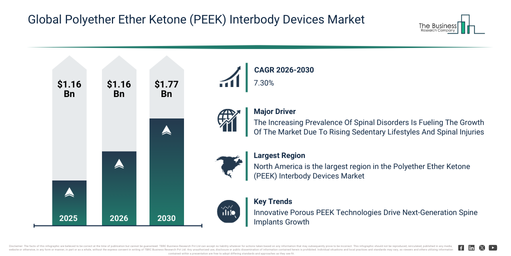
    The market for PEEK interbody devices has experienced strong growth and is anticipated to continue this trend. It is projected to rise from $1.92 billion in 2025 to $2.07 billion in 2026, reflecting a compound annual growth rate (CAGR) of 7.8%. Looking further ahead, the market is expected to reach $2.74 billion by 2030, growing at a CAGR of 7.3%. This positive momentum is driven by factors such as the increasing prevalence of degenerative disc disease, more frequent spinal trauma cases, the adoption of conventional spinal implants, an expanding elderly population, and limited awareness surrounding advanced interbody devices. Additional growth drivers include advances in PEEK materials and designs, the rise of minimally invasive surgery, expanding hospital infrastructure, growing demand for personalized implants, and the global increase in spinal fusion procedures.

    Download A Free Sample Report For Comprehensive Market Insights:

    https://www.thebusinessresearchcompany.com/sample.aspx?id=25879&type=smp

    Factors Contributing to the Expansion of the PEEK Interbody Devices Market

    The rising number of spinal disorders is a key factor boosting demand for PEEK interbody devices. Spinal disorders, which affect the vertebrae, discs, nerves, and muscles, have become more common due to sedentary lifestyles and reduced physical activity. These behaviors weaken the muscles supporting the spine, leading to increased strain and issues that require intervention. PEEK interbody devices provide strong yet flexible support between vertebrae, enhancing spinal stability and promoting natural bone growth while ensuring clear imaging during post-operative evaluations. To illustrate this trend, in May 2023, Spinal Cord Inc., a US-based resource supporting spinal cord injury patients, reported approximately 18,000 new spinal cord injury cases in the United States in 2023, with an estimated 302,000 individuals living with such injuries nationwide. This growing patient base underpins the expanding market for PEEK interbody devices.

    Technological Trends and Innovations Shaping the PEEK Interbody Devices Market

    Innovation plays a critical role in the evolution of the PEEK interbody devices sector. Leading companies are focusing on developing advanced solutions like porous PEEK interbody spacers, which feature a bone-like porous structure designed to enhance osseointegration and improve spinal fusion outcomes. These implants encourage bone ingrowth, offering better biological fixation compared to traditional smooth PEEK devices. For example, in March 2025, Globus Medical Inc., a US musculoskeletal technology firm, launched the COHERE ALIF Spacer, the first porous PEEK spacer specifically designed for anterior lumbar interbody fusion (ALIF) surgery. This device combines Globus Medical’s proprietary porous PEEK architecture with the benefits of PEEK’s imaging compatibility and mechanical strength, aiming to boost bone integration and improve surgical results.

    Access The Complete Polyether Ether Ketone (PEEK) Interbody Devices Market Report:

    https://www.thebusinessresearchcompany.com/report/polyether-ether-ketone-peek-interbody-devices-global-market-report

    Segment Analysis Detailing the PEEK Interbody Devices Market Categories

    This market is segmented in multiple ways. By product type, it includes Posterolateral Fusion Devices, Interbody Fusion Devices, Anterior Lumbar Interbody Fusion Devices (ALIF), Extreme Lateral Interbody Fusion Devices (XLIF), Posterior Lumbar Interbody Fusion Devices (PLIF), and Transforaminal Lumbar Interbody Fusion Devices (TLIF). Applications cover spinal fusion surgery, degenerative disc disease, spinal trauma, and spinal deformity. Distribution is managed through direct sales and third-party distributors, while end users encompass hospitals and clinics, ambulatory surgery centers, and specialty spine centers. Each product segment further breaks down into subcategories, such as single-level, multi-level and expandable devices within posterolateral fusion, or flat-profile, curved-profile, and cage-style devices in ALIF.

    Prominent Companies Driving the Polyether Ether Ketone (PEEK) Interbody Devices Market

    Several key players dominate this market, including Medtronic Inc., Stryker Corporation, Zimmer Biomet Holdings Inc., Globus Medical Inc., NuVasive Inc., Orthofix Medical Inc., Xtant Medical Holdings Inc., Alphatec Spine Inc., Spinal Elements Inc., Providence Medical Technology Inc., FossiLabs LLC, Life Spine Inc., Curiteva Inc., Medacta International S.A., LDR Holding Corporation, Cavendish Implants Limited, DePuy Synthes Spine, SeaSpine Holdings Corporation, Aesculap Spine, CoreLink LLC, Aurora Spine Corporation, ChoiceSpine LLC, and K2M Group Holdings Inc. These companies are investing heavily in research and development to enhance implant design and patient outcomes.

    Regional Market Distribution and Growth Outlook for PEEK Interbody Devices

    In 2025, North America held the largest market share for PEEK interbody devices. However, the Asia-Pacific region is expected to experience the fastest growth during the forecast period. The market report covers regions including Asia-Pacific, South East Asia, Western Europe, Eastern Europe, North America, South America, the Middle East, and Africa, providing a comprehensive view of global market trends.

    Get in touch with us:

    The Business Research Company: https://www.thebusinessresearchcompany.com/

    Americas: +1 310-496-7795

    Asia: +44 7882 955267 & +91 8897263534

    Europe: +44 7882 955267

    Email us at: marketing@tbrc.info

    Follow us on:

    LinkedIn: https://in.linkedin.com/company/the-business-research-company

    YouTube: https://www.youtube.com/channel/UC24_fI0rV8cR5DxlCpgmyFQ

    Global Market Model: https://www.thebusinessresearchcompany.com/global-market-model
  • Point-Of-Care-Testing (POCT) Market Growth Is Reshaping Competitive Advantage Across The Industry

    Point-Of-Care-Testing (POCT) Market Growth Is Reshaping Competitive Advantage Across The Industry

    Enhanced with market attractiveness analysis, total addressable market evaluation, company benchmarking matrices, interactive Excel dashboards, expanded supply chain intelligence, emerging startup coverage, and detailed product insights, The Business Research Company’s 2026 market reports deliver more actionable and strategically valuable research.

    The point-of-care testing (POCT) market is rapidly evolving as healthcare systems worldwide seek faster, more accessible diagnostic solutions. With technological advances and shifting healthcare delivery models, this sector is poised for significant expansion. Let’s explore the current market size, key growth drivers, segmentation, emerging trends, main competitors, and regional dynamics shaping the POCT industry.

    Current Market Size and Projected Growth Trajectory for the POCT Market

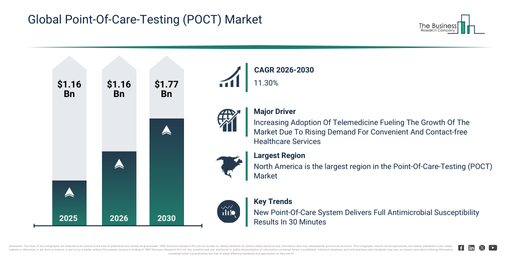
    The POCT market has witnessed swift development over recent years. Its valuation is projected to rise from $50.79 billion in 2025 to $56.68 billion in 2026, marking a compound annual growth rate (CAGR) of 11.6%. This growth during the historical period results from increasing chronic disease rates, the urgent need for quick clinical decisions, expansion in emergency and critical care services, limited access to centralized labs, and the demand for immediate diagnostic results. Moving forward, the market is expected to surge further, reaching $86.91 billion by 2030, with a CAGR of 11.3%. Factors driving this forecasted growth include ongoing miniaturization of POCT devices, the rise of home care and remote patient monitoring, frequent outbreaks of infectious diseases, decentralization of healthcare, and wider adoption of self-testing diagnostics. Key trends anticipated during this period comprise greater use of rapid diagnostic testing at the point of care, rising consumer preference for home-based and self-testing options, expansion of over-the-counter diagnostic products, increased focus on early disease detection and screening, and improvements in the accuracy and sensitivity of POCT devices.

    Download A Free Sample Report For Comprehensive Market Insights:

    https://www.thebusinessresearchcompany.com/sample.aspx?id=27391&type=smp

    The Role of Telemedicine in Boosting Demand for POCT

    One of the strongest drivers of POCT market growth is the expanding adoption of telemedicine services. Telemedicine involves delivering healthcare remotely through digital platforms such as video conferencing, phone calls, or secure messaging. The COVID-19 pandemic accelerated the acceptance of telemedicine by emphasizing the need for convenient, timely, and contactless care options. POCT complements telemedicine by enabling rapid and reliable diagnostic results that can be instantly shared with healthcare providers located remotely. For example, data from the American Hospital Association indicated that in 2023, over 12.6% of Medicare beneficiaries in the US used telehealth services. Moreover, projections show that by 2036, the physician workforce in the country could reach approximately 86,000, with telehealth playing a crucial role in alleviating healthcare provider shortages. This growing reliance on telemedicine is thus a key factor propelling the expansion of the POCT market.

    Segments and Structure within the Point-of-Care Testing Market

    The POCT market is systematically divided into several main segments:

    1) Type of Test: Blood Glucose Testing, Infectious Diseases Testing, Cardiac Markers Testing, Coagulation Testing, Pregnancy and Fertility Testing, Blood Gas or Electrolytes Testing, Urinalysis Testing, and Other Types

    2) Mode of Purchase: Over-the-Counter Products and Prescribed Products

    3) Technology Utilized: Immunoassays, Molecular Diagnostics, Microbial Detection, Polymerase Chain Reaction (PCR) Testing, and Biochemical Testing

    4) End-User Categories: Clinical Laboratories, Ambulatory Care Facilities and Physician Offices, Pharmacies, Retail Clinics and E-Commerce Platforms, Hospitals, Critical Care Centers, Urgent Care Centers, Home Care and Self-Testing, and Other End-Users

    Access The Complete Point-Of-Care-Testing (POCT) Market Report:

    https://www.thebusinessresearchcompany.com/report/point-of-care-testing-poct-global-market-report

    Further breakdowns include subcategories such as:

    – Blood Glucose Testing: Self-Monitoring Devices, Continuous Glucose Monitoring Devices, Flash Glucose Monitoring Devices

    – Infectious Diseases Testing: HIV, Hepatitis, Influenza, COVID-19, and other infections

    – Cardiac Markers Testing: Troponin, CK-MB, Myoglobin, BNP tests

    – Coagulation Testing: Prothrombin Time, Activated Partial Thromboplastin Time, International Normalized Ratio

    – Pregnancy and Fertility Testing: Pregnancy test kits, Ovulation test kits, Fertility hormone tests

    – Blood Gas or Electrolytes Testing: Arterial and Venous blood gas tests, Electrolyte tests

    – Urinalysis Testing: Urine chemistry analysis, Microscopic examination, Culture testing

    – Other Types: Drug abuse, Allergy, Cholesterol, Thyroid function tests

    Advancements and Technological Innovations Influencing POCT Growth

    Leading players in the POCT market are channeling resources into cutting-edge technologies to meet the increasing desire for faster, clinic-level diagnostics. A prominent example is microfluidic rapid antimicrobial susceptibility testing (AST) systems, which use tiny fluid channels to culture and detect bacteria from patient samples such as urine. These systems can determine antibiotic susceptibility much faster than traditional culture methods that take days to yield results. For instance, in June 2023, Japan-based Sysmex Corporation launched the PA 100 AST System, a compact POCT analyzer that employs proprietary microfluidic cartridges to detect bacteria in roughly 15 minutes and deliver complete antimicrobial susceptibility results in about 30 minutes. This user-friendly device requires minimal training, as healthcare workers simply load the sample into a cartridge and insert it into the analyzer for automated results. The quick turnaround enables timely antibiotic treatment decisions during the initial patient consultation, helping reduce inappropriate prescriptions and combat antimicrobial resistance.

    Key Companies Leading the Point-of-Care Testing Market

    The POCT market features several prominent companies that shape the competitive landscape. These include Johnson & Johnson, F. Hoffmann-La Roche Ltd., Abbott Laboratories, Danaher Corporation, Siemens Healthineers AG, Becton Dickinson and Company, BioMérieux SA, QuidelOrtho Corporation, Sysmex Corporation, Nova Biomedical Corporation, LifeScan Inc., Ascensia Diabetes Care Holdings AG, Trividia Health Inc., Trinity Biotech Plc, Sinocare Inc., Menarini Diagnostics, Princeton BioMeditech, Helena Laboratories, Chembio Diagnostics, ARKRAY, Accriva, ACON Laboratories, Sekisui Diagnostics, PTS Diagnostics, and Meridian Bioscience.

    Regional Market Insights and Growth Patterns

    In 2025, North America held the largest share of the POCT market. However, the Asia-Pacific region is anticipated to experience the fastest growth throughout the forecast period. The report analyzes various regions, including Asia-Pacific, South East Asia, Western Europe, Eastern Europe, North America, South America, the Middle East, and Africa, offering a broad perspective on global market trends and opportunities.

    Get in touch with us:

    The Business Research Company: https://www.thebusinessresearchcompany.com/

    Americas: +1 310-496-7795

    Asia: +44 7882 955267 & +91 8897263534

    Europe: +44 7882 955267

    Email us at: marketing@tbrc.info

    Follow us on:

    LinkedIn: https://in.linkedin.com/company/the-business-research-company

    YouTube: https://www.youtube.com/channel/UC24_fI0rV8cR5DxlCpgmyFQ

    Global Market Model: https://www.thebusinessresearchcompany.com/global-market-model