Month: June 2026

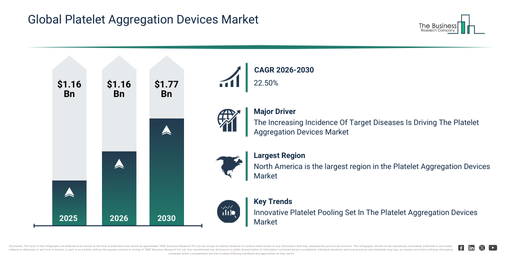
  • Platelet Aggregation Devices Market Expected To Reach $2.93 Billion By 2030 As Growth Accelerates At 22.5% CAGR

    Platelet Aggregation Devices Market Expected To Reach $2.93 Billion By 2030 As Growth Accelerates At 22.5% CAGR

    Delivering more actionable and strategically valuable research, The Business Research Company’s 2026 market reports feature market attractiveness analysis, total addressable market evaluation, company benchmarking matrices, interactive Excel dashboards, expanded supply chain intelligence, emerging startup coverage, and detailed product insights.

    The platelet aggregation devices market is experiencing remarkable growth driven by advancements in medical diagnostics and increasing prevalence of chronic diseases. As healthcare systems worldwide focus on better disease management and rapid diagnostic solutions, this sector is poised for significant expansion. Let’s explore the market’s current value, key growth drivers, segment classifications, emerging innovations, major players, and regional performance.

    Steady Market Expansion Expected for Platelet Aggregation Devices

    The platelet aggregation devices market has shown rapid growth in recent years and is forecasted to continue this trajectory. The market value is projected to rise from $1.04 billion in 2025 to $1.31 billion in 2026, achieving a compound annual growth rate (CAGR) of 25.4%. The market’s previous expansion has been primarily fueled by an increase in cardiovascular disease cases, the proliferation of clinical diagnostic labs, broader use of antiplatelet therapies, heightened demand for coagulation testing, and progress in hematology diagnostic technologies.

    Download A Free Sample Report For Comprehensive Market Insights:

    https://www.thebusinessresearchcompany.com/sample.aspx?id=15896&type=smp

    Long-Term Growth Outlook for the Platelet Aggregation Devices Market

    Looking further ahead, the market is expected to reach $2.94 billion by 2030, growing at a CAGR of 22.5%. This anticipated growth is driven by factors such as rising adoption of personalized medicine approaches, growing investments in advanced diagnostic tools, increasing demand for rapid platelet function tests, continuous research into blood disorders, and ongoing innovation in diagnostic technology. Key trends expected to influence the market include wider use of automated platelet function analyzers, demand for high-throughput testing platforms, integration of digital data management systems, expansion of multi-channel aggregation devices, and a sharper focus on enhancing diagnostic accuracy.

    Rising Prevalence of Target Diseases Boosts Market Demand

    One of the primary forces driving the platelet aggregation devices market is the increasing incidence of target diseases, which include critical conditions such as cancer, cardiovascular diseases, and diabetes. These devices play a vital role in early detection and management of thrombotic risks, helping to reduce complications like heart attacks and strokes in vulnerable populations. For example, in February 2024, the International Agency for Research on Cancer (IARC) reported that approximately 20 million new cancer cases and 9.7 million deaths occurred globally in 2022, with projections forecasting a 77% surge to over 35 million new cases by 2050. Lung cancer was the most common, with 2.5 million new diagnoses, followed by female breast, colorectal, prostate, and stomach cancers. Such alarming statistics highlight why the demand for platelet aggregation devices remains strong.

    Access The Complete Platelet Aggregation Devices Market Report:

    https://www.thebusinessresearchcompany.com/report/platelet-aggregation-devices-global-market-report

    How Target Disease Trends Are Shaping Market Dynamics

    The rising burden of these diseases underscores the need for advanced diagnostic tools that can facilitate timely intervention. Platelet aggregation devices contribute significantly by enabling healthcare providers to monitor platelet function effectively, which is crucial in managing thrombotic conditions. As efforts to combat these diseases intensify globally, the demand for reliable and efficient platelet aggregation testing solutions continues to expand, directly influencing market growth.

    Breaking Down the Platelet Aggregation Devices Market Structure

    The market is segmented into various categories to better understand consumer needs and technological preferences. These include:

    1) Product Types: Reagents, Systems, Consumables and Accessories

    2) Channel Configuration: Four Channel, Dual Channel, Eight Channel

    3) Technology Used: Optical, Impedance, Other Technologies

    4) Application Areas: Clinical Applications, Research Applications, Cardiovascular Applications, Other Applications

    5) End-Users: Standalone Hospitals, Diagnostic Laboratories, Research and Academic Institutes, Other End Users

    Within these segments, subcategories are detailed further, such as platelet aggregation assay reagents and coagulation/anticoagulation reagents under products, as well as testing systems that include platelet aggregation testing systems and automated systems. Consumables cover items like sample collection kits, testing plates, cuvettes, and calibration kits.

    Innovation Trends Transforming the Platelet Aggregation Devices Market

    Leading companies are focusing on developing state-of-the-art products to address supply challenges and improve diagnostic outcomes. A notable innovation is the introduction of the first platelet pooling set designed to stabilize the U.S. platelet supply and meet increasing clinical demands. Platelet pooling sets are specialized devices used in plateletpheresis to collect platelets from multiple donors into a single unit for transfusion. For instance, in February 2023, Terumo BCT Inc., a U.S.-based firm specializing in blood components and cellular technology, received FDA approval for its IMUGARD WB Platelet Pooling Set. This device offers extended platelet shelf life with seven-day storage clearance and enables platelet recovery from whole blood donations, enhancing supply flexibility. Such advancements are crucial for supporting critical medical procedures like chemotherapy and organ transplants, reflecting a significant leap forward in platelet aggregation technology.

    Key Industry Players Leading the Market Competition

    Several prominent companies dominate the platelet aggregation devices sector, including Roche Holding AG, Cytiva (Danaher Corp.), Siemens Healthineers, Sysmex Corporation, WerfenLife S.A., Haemonetics Corporation, Helena Laboratories Corporation, Sarstedt AG and Co. KG, Sekisui Diagnostics LLC, Diagnostica Stago, Accriva Diagnostics Holdings Inc., Sentinel CH. SpA, ADInstruments, Chrono-Log Corporation, Bio/Data Corporation, Haemochrom Diagnostica GmbH, AggreDyne Inc., Hart Biologicals Ltd., Stago, and Instrumentation Laboratory. These organizations are key drivers of innovation and competitive growth.

    Regional Market Overview and Growth Potential

    In 2025, North America held the largest share of the platelet aggregation devices market, reflecting its advanced healthcare infrastructure and high adoption of diagnostic technologies. However, the Asia-Pacific region is anticipated to exhibit the fastest growth in the coming years, fueled by expanding healthcare access, increasing prevalence of chronic diseases, and growing investments in medical diagnostics. The market report also covers regions including South East Asia, Western Europe, Eastern Europe, South America, the Middle East, and Africa, providing a comprehensive view of global trends and opportunities.

    Get in touch with us:

    The Business Research Company: https://www.thebusinessresearchcompany.com/

    Americas: +1 310-496-7795

    Asia: +44 7882 955267 & +91 8897263534

    Europe: +44 7882 955267

    Email us at: marketing@tbrc.info

    Follow us on:

    LinkedIn: https://in.linkedin.com/company/the-business-research-company

    YouTube: https://www.youtube.com/channel/UC24_fI0rV8cR5DxlCpgmyFQ

    Global Market Model: https://www.thebusinessresearchcompany.com/global-market-model
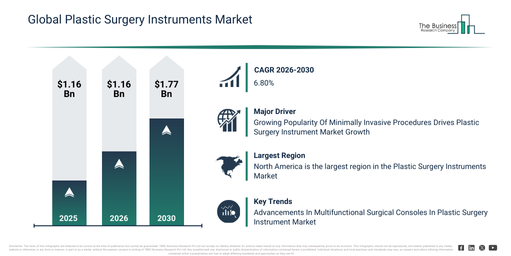
  • Plastic Surgery Instruments Market Set To Grow From $1.27 Billion In 2026 To $1.66 Billion By 2030 At A CAGR Of 6.8%

    Plastic Surgery Instruments Market Set To Grow From $1.27 Billion In 2026 To $1.66 Billion By 2030 At A CAGR Of 6.8%

    Enhanced with market attractiveness analysis, total addressable market evaluation, company benchmarking matrices, interactive Excel dashboards, expanded supply chain intelligence, emerging startup coverage, and detailed product insights, The Business Research Company’s 2026 market reports deliver more actionable and strategically valuable research.

    The plastic surgery instruments market has witnessed significant growth in recent years, driven by expanding surgical procedures and technological advancements. As the demand for both cosmetic and reconstructive surgeries rises globally, this industry is poised for continued expansion. Let’s explore the market’s size, key growth factors, leading players, and emerging trends shaping its future trajectory.

    Plastic Surgery Instruments Market Size and Expected Growth Through 2030

    The market for plastic surgery instruments has experienced considerable growth and is projected to continue on this upward path. From a valuation of $1.19 billion in 2025, the market is anticipated to reach $1.28 billion in 2026, reflecting a compound annual growth rate (CAGR) of 7.5%. This historical growth is mainly fueled by the rise in cosmetic and reconstructive surgeries, the establishment of specialized surgical clinics, increased demand for aesthetic procedures, greater availability of skilled plastic surgeons, and continuous improvements in surgical instrument manufacturing.

    Looking ahead, the market is expected to expand further, hitting $1.66 billion by 2030 with a CAGR of 6.8%. Factors contributing to this forecast include a surge in medical tourism, wider acceptance of minimally invasive surgeries, heightened focus on patient safety and better outcomes, growth of outpatient surgical facilities, and ongoing innovations in cosmetic surgery technologies. Key trends during this period are the increased use of minimally invasive instruments, growing preference for disposable tools, adoption of precision-engineered devices, rise of advanced non-surgical cosmetic equipment, and stricter sterilization and safety protocols.

    Download A Free Sample Report For Comprehensive Market Insights:

    https://www.thebusinessresearchcompany.com/sample.aspx?id=17231&type=smp

    Drivers Propelling Market Expansion Through Minimally Invasive Procedures

    One of the strongest drivers influencing the plastic surgery instruments market is the rising popularity of minimally invasive procedures. These treatments involve small incisions that minimize tissue damage and speed up recovery, making them preferable to traditional surgery. The appeal of these procedures comes from shorter healing times, reduced risk of complications, improved safety profiles, and the growing impact of social media on personal aesthetic choices.

    Plastic surgery instruments play a crucial role in enabling these minimally invasive techniques by allowing surgeons to work with precision through small openings. For example, in January 2024, Intuitive Surgical Inc., a U.S.-based robotic surgical systems manufacturer, reported approximately 415 da Vinci surgical systems in use during the fourth quarter of 2023, marking a 12% increase compared to 2022. This growth in robotic-assisted surgeries reflects the increasing demand for minimally invasive instrumentations and supports expansion in the market.

    Segmentation of the Plastic Surgery Instruments Market by Product Categories

    This market is categorized into several segments based on the type of instruments and accessories used:

    1) Surgical Instruments: This includes scalpels, forceps, scissors, retractors, needle holders, and other related tools.

    2) Non-Surgical Instruments: Products such as dermabrasion devices, laser systems, cryotherapy units, electrosurgical instruments, and other non-invasive equipment fall under this category.

    3) Accessories: These comprise needles, sutures, disposable supplies, cannulas, and various other supporting materials.

    Further subcategories provide detailed classifications, for example: scalpels are divided into disposable, reusable, and safety types; forceps include grasping, hemostatic, dressing, and surgical varieties; scissors include dissecting, tissue, iris, and bandage scissors; retractors are segmented as handheld, self-retaining, and bone retractors; needle holders range from fine to heavy-duty and cross-lock types; other surgical instruments encompass sponges, suction devices, drills, and electrosurgical tools.

    Access The Complete Plastic Surgery Instruments Market Report:

    https://www.thebusinessresearchcompany.com/report/plastic-surgery-instruments-global-market-report

    Trends Shaping Market Growth Through Advanced Technology and Innovation

    Leading companies in the plastic surgery instruments market are focusing on creating multifunctional surgical consoles to stay competitive. These consoles combine various surgical tools and energy modalities into a single integrated device, improving efficiency and precision during cosmetic procedures.

    For instance, in January 2023, Apyx Medical Corporation, a U.S.-based energy technology firm, introduced the Apyx One Console. This multifunctional generator allows surgeons to perform diverse cosmetic surgeries using one device, streamlining operations and enhancing patient outcomes. Such technological advances are responding to the increasing demand for minimally invasive surgeries and higher surgical accuracy. Despite challenges like high costs and regulatory barriers, the trend toward multifunctional, innovative instruments continues to foster market growth.

    Key Companies Leading the Plastic Surgery Instruments Industry

    The market is dominated by several prominent players, including:

    – B. Braun Melsungen AG

    – Zimmer Biomet Holdings Inc.

    – Integra LifeSciences Corporation

    – KLS Martin Group

    – Surgicon Pvt. Ltd.

    – Mentor Worldwide LLC

    – Sklar Surgical Instruments

    – Tekno-Medical Optik-Chirurgie GmbH

    – Hayden Medical Inc.

    – Millennium Surgical Corp.

    – Blink Medical Ltd.

    – Bolton Surgical Ltd.

    – Anthony Products Inc.

    – Surgipro Inc.

    – Surtex Instruments Ltd.

    – MSI Precision Instruments

    – ECA Medical Instruments

    – Novo Surgical Inc.

    – Marina Medical Instruments Inc.

    – Ekal Surgical Works

    – Wexler Surgical

    Regional Overview of the Plastic Surgery Instruments Market

    In 2025, North America held the largest share of the plastic surgery instruments market, supported by advanced healthcare infrastructure and a high prevalence of cosmetic and reconstructive procedures. Meanwhile, the Asia-Pacific region is forecasted to be the fastest-growing market over the coming years, driven by increasing medical tourism, rising disposable incomes, and expanding healthcare access. Other important regions covered in the market analysis include South East Asia, Western Europe, Eastern Europe, South America, the Middle East, and Africa, providing a comprehensive view of global market dynamics.

    Get in touch with us:

    The Business Research Company: https://www.thebusinessresearchcompany.com/

    Americas: +1 310-496-7795

    Asia: +44 7882 955267 & +91 8897263534

    Europe: +44 7882 955267

    Email us at: marketing@tbrc.info

    Follow us on:

    LinkedIn: https://in.linkedin.com/company/the-business-research-company

    YouTube: https://www.youtube.com/channel/UC24_fI0rV8cR5DxlCpgmyFQ

    Global Market Model: https://www.thebusinessresearchcompany.com/global-market-model
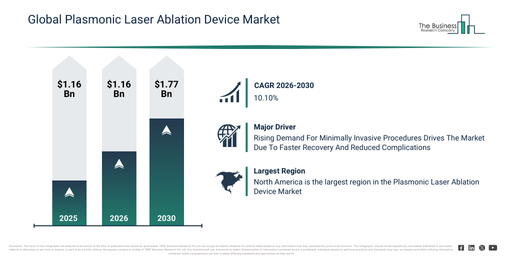
  • Plasmonic Laser Ablation Device Market Opportunities Are Emerging Beyond Traditional Growth Areas

    Plasmonic Laser Ablation Device Market Opportunities Are Emerging Beyond Traditional Growth Areas

    Through market attractiveness analysis, total addressable market evaluation, company benchmarking matrices, interactive Excel dashboards, expanded supply chain intelligence, emerging startup coverage, and detailed product insights, The Business Research Company’s 2026 market reports provide more actionable and strategically valuable research.

    The plasmonic laser ablation device market is undergoing swift development, driven by technological advancements and a growing need for precision in various fields. From medical procedures to industrial applications, this market shows promising potential for future growth. Let’s explore the current status, key drivers, market segmentation, leading companies, and regional outlook shaping this expanding industry.

    Market Size and Growth Trajectory of the Plasmonic Laser Ablation Device Market

    The plasmonic laser ablation device market has seen rapid expansion in recent years, with its value expected to rise from $1.5 billion in 2025 to $1.65 billion in 2026, reflecting a compound annual growth rate (CAGR) of 10.4%. Historically, this growth has been fueled by early advancements in laser ablation technology, increasing medical laser applications, expanding research activities in nanotechnology, high-precision manufacturing demands, and widespread use of traditional YAG and CO₂ laser systems. Looking ahead, the market is projected to surge to $2.43 billion by 2030, maintaining a strong CAGR of 10.1%. This forecast growth is largely driven by innovations in plasmonic and nanoparticle-assisted technologies, growing investments in precision and nanomedicine, expanding industrial microfabrication uses, wider adoption of ultrafast laser systems, and the integration of AI for enhanced process optimization. Prominent trends include more precise nanoscale material removal, increased use of femtosecond and ultrafast lasers, heightened demand for minimally invasive medical procedures, wider plasmonic applications in advanced material processing, and a focus on improving accuracy while reducing thermal damage.

    Download A Free Sample Report For Comprehensive Market Insights:

    https://www.thebusinessresearchcompany.com/sample.aspx?id=27386&type=smp

    Key Influences Behind the Expansion of the Plasmonic Laser Ablation Device Market

    One of the primary factors propelling market growth is the rising demand for minimally invasive medical procedures. These techniques, performed through small incisions or natural body openings using specialized tools, minimize pain, scarring, and recovery times. The appeal of quicker patient recovery and fewer complications leads to increasing adoption of such methods. Plasmonic laser ablation devices play a crucial role by enabling precise and localized tissue removal with minimal thermal injury to surrounding areas, which helps reduce incision size and speeds up healing. For example, in June 2024, the American Society of Plastic Surgeons reported that approximately 25.4 million minimally invasive procedures were carried out in 2023 in the United States, marking a 7% rise from the previous year. This surge clearly supports growth in the plasmonic laser ablation device market.

    Another important growth driver is the increasing healthcare expenditure worldwide. This spending encompasses investments made by governments, individuals, and organizations on medical treatments, services, and health resources. An aging population, which generally requires more frequent and expensive care for chronic and age-related conditions, largely contributes to this upward trend. Higher healthcare budgets enable the adoption and development of advanced technologies like plasmonic laser ablation devices by facilitating funding for research, acquisition, and clinical integration. For instance, in April 2025, the American Medical Association highlighted that US health spending in 2023 rose by 7.5% to reach $4.9 trillion, or $14,570 per capita, accelerating from a 4.6% increase in 2022. This boost in healthcare spending is a significant factor driving the market forward.

    Access The Complete Plasmonic Laser Ablation Device Market Report:

    https://www.thebusinessresearchcompany.com/report/plasmonic-laser-ablation-device-global-market-report

    The Role of Increasing Clinical Trials in Boosting the Plasmonic Laser Ablation Device Market

    The growing number of clinical trials also contributes substantially to the market’s growth. Clinical trials, which involve assessing the safety and effectiveness of medical interventions in human subjects, are increasing due to the rising focus on personalized medicine. Tailored treatment approaches require precise evaluation on specific patient groups to optimize outcomes. Plasmonic laser ablation devices support these trials by enabling high-precision cellular and molecular analysis, aiding researchers in studying diseases and treatment effects more effectively. For instance, the Association of the British Pharmaceutical Industry reported in November 2023 that recruitment for industry clinical trials in the UK grew by 15%, from 36,722 participants in 2022 to 42,088 in 2023. This rise in clinical research activity is stimulating further demand for plasmonic laser ablation technologies.

    Detailed Segmentation of the Plasmonic Laser Ablation Device Market

    This report classifies the plasmonic laser ablation device market into several key categories:

    1) Device Type: Pulsed Plasmonic Laser Ablation Devices, Continuous Wave Plasmonic Laser Ablation Devices, Femtosecond Plasmonic Laser Ablation Devices, Nanosecond Plasmonic Laser Ablation Devices

    2) Technology: Surface Plasmon Resonance (SPR) Technology, Nanoparticle Mediated Laser Ablation

    3) Application: Medical Applications, Material Processing, Research and Development

    4) End-User: Hospitals and Medical Clinics, Research Institutes and Universities, Manufacturing or Semiconductor Industries, Other End-Users

    Further subcategories break down each device type. For pulsed devices, there are Q-Switched, Mode-Locked, Tunable, and High-Power variants. Continuous wave devices include low-power, high-power, fiber-based, and diode-based models. Femtosecond devices cover Ti:Sapphire, Yb-Doped, fiber, and compact options. Nanosecond devices consist of solid-state, fiber, diode-pumped, and Q-switched types. This detailed segmentation provides a comprehensive view of the market’s structure and diverse product offerings.

    Leading Players Shaping the Plasmonic Laser Ablation Device Industry

    The market features several prominent companies that drive innovation and competition, including Mitsubishi Electric Corporation, Boston Scientific Corporation, Trumpf Group, Coherent Corp., Han’s Laser Technology Industry Group Co. Ltd., Lumentum Holdings Inc., Thorlabs Inc., Edmund Optics Inc., Jenoptik AG, Universal Laser Systems Inc., Cincinnati Incorporated, Epilog Laser, RPMC Lasers, Dongguan Mactron Technology Co. Ltd., Aesthetic World, Astanza Laser LLC, Boss Laser LLC, Quantum Composers, Laser Photonics Corporation, and Medioxra LLP. These organizations are instrumental in advancing technology, expanding applications, and fulfilling growing market demand.

    Regional Market Insights and Growth Outlook

    In 2025, North America was the largest regional market for plasmonic laser ablation devices, leading in revenue and market share. However, the Asia-Pacific region is expected to experience the fastest growth during the forecast period. The market report covers key regions including Asia-Pacific, South East Asia, Western Europe, Eastern Europe, North America, South America, the Middle East, and Africa, providing a global perspective on market trends and opportunities.

    Get in touch with us:

    The Business Research Company: https://www.thebusinessresearchcompany.com/

    Americas: +1 310-496-7795

    Asia: +44 7882 955267 & +91 8897263534

    Europe: +44 7882 955267

    Email us at: marketing@tbrc.info

    Follow us on:

    LinkedIn: https://in.linkedin.com/company/the-business-research-company

    YouTube: https://www.youtube.com/channel/UC24_fI0rV8cR5DxlCpgmyFQ

    Global Market Model: https://www.thebusinessresearchcompany.com/global-market-model
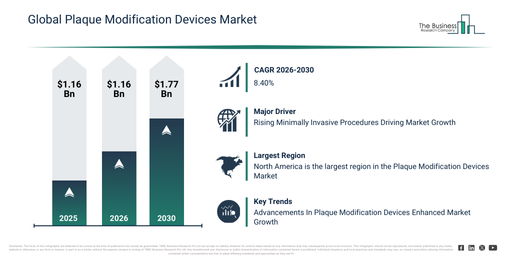
  • Plaque Modification Devices Market Expansion Is Opening New Pathways For Strategic Investment

    Plaque Modification Devices Market Expansion Is Opening New Pathways For Strategic Investment

    Delivering more actionable and strategically valuable research, The Business Research Company’s 2026 market reports feature market attractiveness analysis, total addressable market evaluation, company benchmarking matrices, interactive Excel dashboards, expanded supply chain intelligence, emerging startup coverage, and detailed product insights.

    The plaque modification devices market is experiencing significant momentum, driven by advancements in medical technologies and increasing prevalence of vascular diseases. With evolving treatment approaches and growing demand for safer, minimally invasive procedures, this market is set to witness substantial growth in the coming years. Let’s explore the current market size, key factors fueling its expansion, major players, and emerging trends shaping the industry’s future.

    Steady Growth Forecast for the Plaque Modification Devices Market

    The plaque modification devices market has demonstrated strong growth recently, with its value anticipated to rise from $1.49 billion in 2025 to $1.62 billion in 2026, marking an 8.5% compound annual growth rate (CAGR). This historical growth is largely attributed to the increasing occurrence of atherosclerosis, a rise in angioplasty procedures, the aging global population, increasing cases of peripheral artery disease, and progressive advancements in interventional cardiology techniques. Looking ahead, the market is projected to expand further, reaching $2.23 billion by 2030 with a CAGR of 8.4%. This anticipated growth is supported by innovations such as AI-guided vascular imaging, broader adoption of complex vascular interventions, heightened demand for safer procedures, growth in outpatient interventions, and new plaque removal technologies. Key trends expected to shape the market include minimally invasive plaque removal methods, precision atherectomy, enhanced embolic protection, advanced catheter-based systems, and devices designed to shorten procedure times.

    Download A Free Sample Report For Comprehensive Market Insights:

    https://www.thebusinessresearchcompany.com/sample.aspx?id=20928&type=smp

    Rising Popularity of Minimally Invasive Procedures Boosts Market Demand

    One of the primary drivers behind the plaque modification devices market expansion is the increasing use of minimally invasive medical procedures. These techniques involve smaller incisions, less tissue damage, and quicker recovery periods compared to traditional open surgeries. Technological improvements, including high-definition imaging and robotic assistance, are enhancing the precision of these procedures. Patients are also favoring minimally invasive options due to reduced pain and scarring. Plaque modification devices play a critical role in improving the safety and effectiveness of these interventions by enabling accurate removal of arterial blockages, particularly for complex vascular cases.

    Supporting Evidence of Growing Minimally Invasive Procedures

    For example, in January 2024, Intuitive Surgical Inc., a US-based leader in robotic surgery systems, reported the placement of 415 da Vinci surgical systems in the last quarter of 2023. This represents a 12% increase from 2022 and highlights the growing adoption of robotic platforms that facilitate minimally invasive surgeries. Such trends clearly indicate a rising demand for advanced devices that support these techniques, which in turn propels the growth of the plaque modification devices market.

    Access The Complete Plaque Modification Devices Market Report:

    https://www.thebusinessresearchcompany.com/report/plaque-modification-devices-global-market-report

    Diverse Segmentation of the Plaque Modification Devices Market

    This market is segmented into various categories to cater to different clinical needs. By device type, it includes Atherectomy Devices, Thrombectomy Devices, Chronic Total Occlusion (CTO) Devices, and Embolic Protection Devices. Applications cover Coronary Artery Disease, Peripheral Artery Disease, and Neurovascular Diseases. The end users range across Hospitals, Ambulatory Surgical Centers, and other healthcare providers. Further breakdowns within device types feature subcategories such as rotational, directional, laser, and orbital atherectomy devices; mechanical, aspiration, manual, and hybrid thrombectomy devices; CTO crossing guidewires, balloons, catheters, and support systems; as well as distal, proximal, filter-based, and balloon-based embolic protection devices.

    Innovations Driving the Future of Plaque Modification Devices

    Leading companies in this sector are heavily investing in next-generation technologies like intravascular image-guided catheter-based systems to maintain competitive advantage. In August 2024, Avinger, a US medical device manufacturer, introduced the Pantheris LV system. This image-guided directional atherectomy device is tailored for treating peripheral artery disease in larger vessels such as the superficial femoral and popliteal arteries. It boasts advanced features including high-speed plaque excision for efficient removal, a proprietary jog mechanism for improved plaque contact, and an enhanced guidewire management system to simplify operation and increase precision.

    Key Industry Players Shaping the Plaque Modification Devices Market

    Several prominent organizations are leading the competition in this market, including Cardinal Health, Johnson & Johnson, Abbott Laboratories, Siemens Healthineers, Philips Healthcare, Becton Dickinson, Stryker Corporation, Boston Scientific, Terumo Corporation, Edwards Lifesciences Corporation, Teleflex Incorporated, Merit Medical Systems Inc., MicroPort Scientific Corporation, Asahi Intecc Co. Ltd., AngioDynamics, Cardiovascular Systems Inc. (CSI), ACIST Medical Systems Inc., Endologix Inc., Avinger Inc., and SoundBite Medical Solutions Inc. These companies continuously innovate and expand their product portfolios to capture increasing market opportunities.

    Regional Market Overview and Growth Hotspots

    In 2025, North America held the largest share of the plaque modification devices market due to its advanced healthcare infrastructure and high adoption rates of innovative medical technologies. Meanwhile, the Asia-Pacific region is forecasted to experience the fastest growth over the upcoming years, driven by rising healthcare expenditure, increasing awareness about vascular diseases, and expanding medical facilities. Other regions covered in the market analysis include South East Asia, Western Europe, Eastern Europe, South America, the Middle East, and Africa, providing a comprehensive view of global market dynamics.

    Get in touch with us:

    The Business Research Company: https://www.thebusinessresearchcompany.com/

    Americas: +1 310-496-7795

    Asia: +44 7882 955267 & +91 8897263534

    Europe: +44 7882 955267

    Email us at: marketing@tbrc.info

    Follow us on:

    LinkedIn: https://in.linkedin.com/company/the-business-research-company

    YouTube: https://www.youtube.com/channel/UC24_fI0rV8cR5DxlCpgmyFQ

    Global Market Model: https://www.thebusinessresearchcompany.com/global-market-model
  • Plantar Fasciitis Sleeve Market Trends Are Creating New Opportunities For Industry Leaders

    Plantar Fasciitis Sleeve Market Trends Are Creating New Opportunities For Industry Leaders

    Enhanced with market attractiveness analysis, total addressable market evaluation, company benchmarking matrices, interactive Excel dashboards, expanded supply chain intelligence, emerging startup coverage, and detailed product insights, The Business Research Company’s 2026 market reports deliver more actionable and strategically valuable research.

    The plantar fasciitis sleeve market has been witnessing significant growth recently, driven by increased awareness of foot health and advancements in supportive technologies. With the rising prevalence of foot-related conditions and a growing active lifestyle, this market is set to expand further in the coming years. Let’s delve into the current market size, key drivers, important segments, leading companies, and regional trends shaping this industry.

    Plantar Fasciitis Sleeve Market Size and Growth Outlook

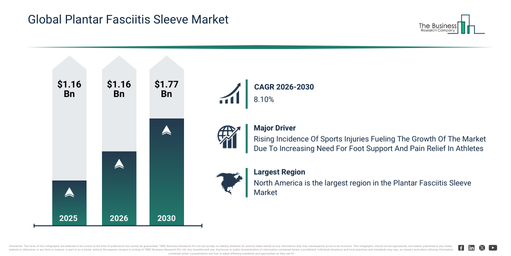
    The market for plantar fasciitis sleeves demonstrated strong momentum in recent years, with its size advancing from $0.84 billion in 2025 to $0.91 billion in 2026, marking a compound annual growth rate (CAGR) of 8.4%. This growth has been driven by a rise in plantar fasciitis cases, increased attention to foot care, adoption of non-invasive treatment options, greater sports participation, and improvements in the materials used for sleeves. Projections indicate that the market will continue to grow robustly, reaching $1.24 billion by 2030 at a CAGR of 8.1%. Future expansion is expected to be supported by innovations such as smart adjustable sleeves, integration with wearable sensor technology, growth in sports and athletic applications, development of multi-functional sleeves, and wider online distribution channels. Popular product trends include compression sleeves, night splints, arch support sleeves, gel sleeves, and custom orthotic sleeves.

    Download A Free Sample Report For Comprehensive Market Insights:

    https://www.thebusinessresearchcompany.com/sample.aspx?id=28299&type=smp

    Increasing Sports Injuries Fueling Demand for Plantar Fasciitis Sleeves

    A major factor propelling market growth is the rising occurrence of sports-related injuries. These injuries, which range from minor strains to severe fractures, often result from repetitive stress or improper movements that overwhelm the body’s natural repair mechanisms. Plantar fasciitis sleeves provide critical support for the foot arch, helping to reduce strain and alleviate heel pain during both activity and recovery periods. For example, in November 2023, Howden Group Holdings Ltd, a UK insurance intermediary, reported a 170% increase in ankle injury severity in the English Premier League between October 2022 and January 2023, alongside a 200% rise in calf or shin injuries and a 130% increase in hamstring injuries after the FIFA World Cup Qatar 2022. This surge in sports injuries is a key driver of market demand.

    Obesity Trends Increasing Need for Foot Support Sleeves

    Another important growth driver is the increasing prevalence of obesity, which raises the demand for supportive footwear and related accessories like plantar fasciitis sleeves. Obesity rates have climbed due to unhealthy dietary patterns, including higher consumption of processed and sugary foods, leading to excess fat accumulation. Plantar fasciitis sleeves help overweight individuals by providing additional cushioning and support to the foot, reducing plantar fascia strain and improving comfort during weight-bearing activities—important for managing joint stress in this population. According to the UK’s Office for Health Improvement & Disparities, as of 2023-2024, 64.5% of adults in England were classified as overweight or obese, up from 64.0% the previous year, indicating a continuing upward trend that supports market expansion.

    Access The Complete Plantar Fasciitis Sleeve Market Report:

    https://www.thebusinessresearchcompany.com/report/plantar-fasciitis-sleeve-global-market-report

    Increasing Diabetes Prevalence Boosting Market Growth

    The growing number of people living with diabetes also contributes to the demand for plantar fasciitis sleeves. Diabetes, a chronic disease characterized by insufficient insulin production or ineffective insulin use, is increasing globally due to sedentary lifestyles and poor eating habits. These sleeves offer targeted compression and support to improve blood flow, reduce inflammation, and ease foot pain—critical aspects in managing diabetic foot complications and preventing ulcers. For instance, a June 2023 report by the Institute for Health Metrics and Evaluation noted that over 500 million people worldwide currently have diabetes, with projections estimating this number will more than double to 1.3 billion by 2050. This trend highlights the expanding need for supportive foot care products.

    Breakdown of the Plantar Fasciitis Sleeve Market Segments

    This market is divided into several key segments for a clearer understanding of growth areas:

    1) Product Types include Compression Sleeves, Arch Support Sleeves, and Gel Sleeves.

    2) Materials used cover Neoprene, Fabric, Silicone, and others.

    3) Application sectors consist of Sports and Athletics, Medical Use, Personal Use, and other areas.

    4) Distribution Channels include Online Stores, Pharmacies, Specialty Stores, and additional outlets.

    Further subcategories specify types such as Ankle Compression Sleeves, Full Foot Compression Sleeves, Graduated Compression Sleeves, Open-Toe and Closed-Toe Compression Sleeves for compression sleeves; Elastic, Gel-Padded, Adjustable Strap, Low-Profile, and Multi-Zone Compression Arch Sleeves for arch supports; and Heel Cushion Gel, Silicone Gel, and Open-Heel Gel Sleeves among gel sleeve options.

    Key Players Driving the Plantar Fasciitis Sleeve Market

    The market features several prominent companies shaping its landscape, including 3M Company, BSN Medical GmbH, Össur hf., SIGVARIS Group AG, United Pacific Industries Limited, Bauerfeind AG, Cramer Products Inc., Darco International Inc., Spenco Medical Corporation, The Strassburg Sock Company Inc., Feetures Inc., Medi-Dyne Healthcare Products Ltd., ShoeInsoles.co.uk Limited, Scholl’s Wellness Company LLC, Algeos Limited, Zensah LLC, Copper Compression LLC, Stable Step LLC, Vive Health LLC, and ING Source Inc.

    Regional Market Dynamics and Growth Opportunities

    In 2025, North America held the largest share of the plantar fasciitis sleeve market, driven by high healthcare awareness and established distribution networks. However, Asia-Pacific is anticipated to exhibit the fastest growth throughout the forecast period, supported by increasing sports participation, rising obesity and diabetes rates, and expanding medical infrastructure. The market analysis encompasses regions such as Asia-Pacific, South East Asia, Western Europe, Eastern Europe, North America, South America, the Middle East, and Africa, providing a comprehensive view of global market trends.

    Get in touch with us:

    The Business Research Company: https://www.thebusinessresearchcompany.com/

    Americas: +1 310-496-7795

    Asia: +44 7882 955267 & +91 8897263534

    Europe: +44 7882 955267

    Email us at: marketing@tbrc.info

    Follow us on:

    LinkedIn: https://in.linkedin.com/company/the-business-research-company

    YouTube: https://www.youtube.com/channel/UC24_fI0rV8cR5DxlCpgmyFQ

    Global Market Model: https://www.thebusinessresearchcompany.com/global-market-model
  • Pipetting Robots Market Growth Is Reshaping Competitive Advantage Across The Industry

    Pipetting Robots Market Growth Is Reshaping Competitive Advantage Across The Industry

    Through market attractiveness analysis, total addressable market evaluation, company benchmarking matrices, interactive Excel dashboards, expanded supply chain intelligence, emerging startup coverage, and detailed product insights, The Business Research Company’s 2026 market reports provide more actionable and strategically valuable research.

    The pipetting robots market is experiencing rapid growth, driven by advances in laboratory automation and the increasing demands of research and clinical testing. As laboratories seek greater efficiency and precision, pipetting robots are becoming essential tools. This overview explores the market’s current size, growth factors, key players, technological trends, and regional insights shaping the industry’s future.

    Steady Growth in the Pipetting Robots Market Size

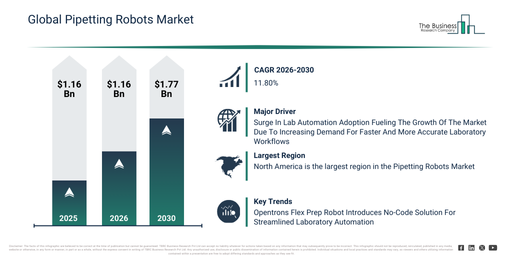
    The pipetting robots market has shown significant expansion and is expected to continue this upward trajectory. From $1.09 billion in 2025, market value is projected to reach $1.22 billion by 2026, growing at a compound annual growth rate (CAGR) of 12.0%. Over the longer term, the market is forecasted to surge to $1.9 billion by 2030, maintaining a strong CAGR of 11.8%. This growth reflects increasing reliance on automated liquid handling in laboratories, driven by rising research workloads, the need for reproducibility, and the limitations of manual pipetting.

    Download A Free Sample Report For Comprehensive Market Insights:

    https://www.thebusinessresearchcompany.com/sample.aspx?id=30354&type=smp

    The Role of Lab Automation in Boosting Market Demand

    One of the main forces propelling the pipetting robots market is the widespread adoption of laboratory automation. Automated tools and software streamline routine lab tasks such as testing and sample processing, enabling faster and more accurate workflows with minimal human intervention. As sample volumes grow and accuracy requirements tighten, labs turn increasingly to automation to enhance efficiency and reduce errors.

    Pipetting robots are pivotal to this shift, handling precise and repetitive liquid transfers automatically. This improves consistency and speed while reducing manual effort and variability. For example, in August 2024, the Pistoia Alliance reported that adoption of lab automation technologies, including artificial intelligence and machine learning, jumped from 54% in 2023 to 68% in 2024 among surveyed labs. This surge underlines how automation is rapidly becoming a standard in laboratory operations, directly fueling the pipetting robots market’s expansion.

    Access The Complete Pipetting Robots Market Report:

    https://www.thebusinessresearchcompany.com/report/global-pipetting-robots-market-report

    Segment Details and Strategic Market Opportunities in Pipetting Robots

    The pipetting robots market is categorized into several segments that capture the diversity of products and applications:

    – By Type: Automated Pipetting Systems, Semi-Automated Pipetting Systems, Multichannel Pipetting Robots, Single Channel Pipetting Robots

    – By Technology: Microplate Pipetting Robots, Multisample Pipetting Robotic Systems, Robotic Liquid Handling Systems, Automated Workstations, Custom Pipetting Systems

    – By Operating Environment: Laboratory Environment, Clean Room Environment, Clinical Environment

    – By Application: Drug Discovery, Clinical Diagnostics, Genomics and Proteomics, Food and Beverage Testing, Environmental Testing

    – By End-User: Pharmaceutical Companies, Biotechnology Firms, Academic and Research Institutions, Contract Research Organizations (CROs), Hospitals and Clinical Laboratories

    Further subcategories include specialized types of automated and semi-automated systems, various channel configurations for multichannel robots, and precision levels for single channel robots, offering users tailored solutions for diverse laboratory needs.

    Innovations and Industry Trends Shaping Pipetting Robots Development

    Leading companies in the pipetting robots market are focusing on innovations such as no-code robotic platforms, which simplify laboratory automation by allowing users to program pipetting tasks without coding expertise. This advancement enhances workflow flexibility and reduces manual errors, making automation accessible to more users.

    For instance, in September 2024, US-based Opentrons Labworks Inc. introduced the Opentrons Flex Prep robot, which combines hardware with no-code software. This system enables scientists to design and execute liquid-handling procedures via a touchscreen interface in under a minute, streamlining the experimental process. By integrating this solution with their existing automation portfolio, Opentrons offers an affordable, user-friendly option that boosts lab productivity and precision.

    Prominent Companies Driving Competition in the Pipetting Robots Market

    Several well-established firms dominate the pipetting robots industry, including Thermo Fisher Scientific Inc., Agilent Technologies Inc., Mettler-Toledo International Inc., Beckman Coulter Inc., Tecan Group Ltd., Eppendorf AG, Hamilton Company, INTEGRA Biosciences AG, Gilson Incorporated, SPT Labtech Ltd., Opentrons Labworks Inc., Formulatrix Inc., HighRes Biosolutions Inc., BioTek Instruments Inc., Analytik Jena GmbH + Co KG, BRAND GmbH + Co KG, Dynamic Devices Ltd., Revvity Inc., Hudson Robotics, Andrew Alliance SA, and Zinsser Analytic GmbH. These companies are instrumental in advancing technology and expanding market reach.

    Regional Market Leadership and Growth Prospects

    As of 2025, North America leads the global pipetting robots market in size. However, the Asia-Pacific region is expected to experience the fastest growth during the forecast period. The market analysis encompasses key regions such as Asia-Pacific, South East Asia, Western Europe, Eastern Europe, North America, South America, the Middle East, and Africa, providing a comprehensive global perspective on market trends and opportunities.

    Get in touch with us:

    The Business Research Company: https://www.thebusinessresearchcompany.com/

    Americas: +1 310-496-7795

    Asia: +44 7882 955267 & +91 8897263534

    Europe: +44 7882 955267

    Email us at: marketing@tbrc.info

    Follow us on:

    LinkedIn: https://in.linkedin.com/company/the-business-research-company

    YouTube: https://www.youtube.com/channel/UC24_fI0rV8cR5DxlCpgmyFQ

    Global Market Model: https://www.thebusinessresearchcompany.com/global-market-model
  • Pipettes And Accessories Market Forecast Signals New Revenue Opportunities Through 2030

    Pipettes And Accessories Market Forecast Signals New Revenue Opportunities Through 2030

    Delivering more actionable and strategically valuable research, The Business Research Company’s 2026 market reports feature market attractiveness analysis, total addressable market evaluation, company benchmarking matrices, interactive Excel dashboards, expanded supply chain intelligence, emerging startup coverage, and detailed product insights.

    The pipettes and accessories market is witnessing steady advancement, driven by increasing research activities and technological progress in various scientific fields. As laboratories and pharmaceutical sectors continue to expand, demand for accurate liquid measurement tools is rising, positioning this market for sustained growth in the coming years. Below is a detailed overview of the market’s current size, growth drivers, segment composition, trends, key players, and regional dynamics.

    Market Size and Growth Projections for the Pipettes and Accessories Market

    The pipettes and accessories market has experienced consistent growth recently. It is projected to increase from $1.48 billion in 2025 to $1.55 billion in 2026, reflecting a compound annual growth rate (CAGR) of 4.8%. This expansion during the historic period is largely attributed to increased laboratory research activities, growth in pharmaceutical manufacturing, rising funding for academic research, higher demand for precise liquid measurement, and widespread adoption of standardized laboratory practices.

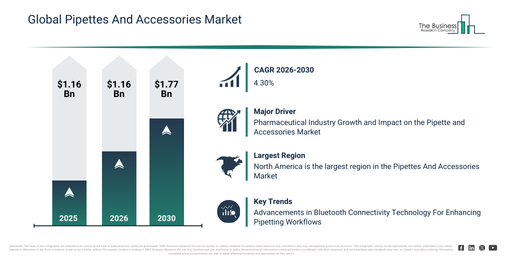
    Looking ahead, the market is expected to reach $1.84 billion by 2030, growing at a CAGR of 4.3%. Factors propelling this forecasted growth include greater investments in biotechnology research, a heightened focus on automation in labs, emphasis on improving laboratory efficiency, the expanding volume of diagnostic testing, and ongoing innovations in liquid handling technologies. Notable trends anticipated during this period include rising adoption of electronic and programmable pipettes, increased demand for high-precision liquid handling, wider use of multi-channel pipettes in research, ergonomic and user-friendly design advancements, as well as intensified attention to contamination-free pipetting.

    Download A Free Sample Report For Comprehensive Market Insights:

    https://www.thebusinessresearchcompany.com/sample.aspx?id=16148&type=smp

    Pharmaceutical Industry Growth as a Key Driver for Pipettes and Accessories Market

    The expansion of the pharmaceutical sector is expected to significantly boost demand for pipettes and related accessories. This industry primarily focuses on the research, development, manufacturing, and distribution of drugs used for medical treatments and therapies. The pharmaceutical sector’s growth is fueled by rising incidences of chronic diseases, technological advancements in research, and healthcare reforms that drive higher healthcare spending. Pipettes are essential tools in pharmaceutical workflows, used for precise liquid measurement required in drug formulation, sample preparation, and analytical testing.

    For instance, in April 2025, Eurostat reported that the European Union’s exports of medicinal and pharmaceutical products increased by 13.5% from 2023, reaching a value of $339.0 billion. This robust pharmaceutical market expansion is a significant factor propelling the pipettes and accessories market forward.

    Breakdown of Pipettes and Accessories Market Segments

    This market is categorized into several segments for a clearer understanding of its structure:

    1) By Type: Manual Pipettes, Electronic Pipettes, and Accessories

    2) By Channel Type: Single Channel and Multi-Channel

    3) By Application: Hospitals, Academic and Research Institutes, Pharmaceutical and Biotechnology Companies, and Other Applications

    Further subcategories include:

    – Manual Pipettes: Single-Channel Manual, Multi-Channel Manual, Adjustable Volume Manual, Fixed Volume Manual

    – Electronic Pipettes: Single-Channel Electronic, Multi-Channel Electronic, Digital Electronic, Programmable Electronic

    – Accessories: Pipette Tips, Calibration Tools, Stands and Holders, Servicing and Maintenance Kits, and Filters

    Access The Complete Pipettes And Accessories Market Report:

    https://www.thebusinessresearchcompany.com/report/pipettes-and-accessories-global-market-report

    Innovations and Trends Driving the Pipettes and Accessories Market

    Leading companies in this market are focusing on developing advanced products incorporating cutting-edge technologies like Bluetooth connectivity to improve laboratory workflows and data management. The integration of Bluetooth in electronic pipettes enables seamless connection with various laboratory software, facilitating efficient data transfer, real-time sharing, and streamlined operations.

    For example, in September 2023, Sartorius AG, a German manufacturer of pharmaceutical and laboratory equipment, introduced the Picus 2 electronic pipette featuring Bluetooth connectivity. This device supports connection to the Sartorius Pipetting mobile app and other laboratory systems. It offers user-friendly operation, lightweight design, customizable programming, safety features, and easy cleaning capabilities, enhancing overall pipetting efficiency.

    Top Players Leading the Pipettes and Accessories Market

    Several prominent companies shape the competitive landscape of this market, including Thermo Fisher Scientific Inc., Corning Incorporated, VWR International LLC, Mettler Toledo, Bio-Rad Laboratories Inc., Eppendorf SE, Sarstedt AG and Co. KG, Hamilton Company, Greiner Bio-One International GmbH, Cole-Parmer Instrument Company LLC, Biotix Inc., Integra Biosciences AG, Gilson Incorporated, Brand GMBH and Co KG, Socorex ISBA SA, Ajanta Export Industries, Microlit, Heathrow Scientific, Vistalab Technologies Inc., Capp, Oxford Lab Products, Nichiryo Co. Ltd., Phoenix Instruments, and Kartell Labware. These organizations continuously invest in research and development to maintain their market position and respond to evolving customer needs.

    Regional Market Distribution and Growth Patterns

    In 2025, North America held the largest share of the pipettes and accessories market. Meanwhile, the Asia-Pacific region is set to experience the fastest growth during the forecast period. The report’s regional coverage includes Asia-Pacific, South East Asia, Western Europe, Eastern Europe, North America, South America, the Middle East, and Africa, providing a comprehensive global perspective on market expansion and emerging opportunities.

    Get in touch with us:

    The Business Research Company: https://www.thebusinessresearchcompany.com/

    Americas: +1 310-496-7795

    Asia: +44 7882 955267 & +91 8897263534

    Europe: +44 7882 955267

    Email us at: marketing@tbrc.info

    Follow us on:

    LinkedIn: https://in.linkedin.com/company/the-business-research-company

    YouTube: https://www.youtube.com/channel/UC24_fI0rV8cR5DxlCpgmyFQ

    Global Market Model: https://www.thebusinessresearchcompany.com/global-market-model
  • Pipette Tips Market Growth Is Accelerating As Industry Transformation Continues

    Pipette Tips Market Growth Is Accelerating As Industry Transformation Continues

    Enhanced with market attractiveness analysis, total addressable market evaluation, company benchmarking matrices, interactive Excel dashboards, expanded supply chain intelligence, emerging startup coverage, and detailed product insights, The Business Research Company’s 2026 market reports deliver more actionable and strategically valuable research.

    The pipette tips market has seen notable growth over recent years, driven by rising demand in various laboratory and healthcare applications. With ongoing advancements in research and technology, this market is positioned for continued expansion in the foreseeable future. Let’s explore the current market size, key factors fueling growth, important players, and emerging trends shaping this sector.

    Steady Growth and Market Size Forecast for Pipette Tips

    The pipette tips market has experienced substantial expansion, increasing from $2.44 billion in 2025 to an anticipated $2.64 billion in 2026, reflecting a compound annual growth rate (CAGR) of 8.3%. This upward trend during the historical period is largely credited to the growth in laboratory research activities, pharmaceutical and biotech R&D, the widespread use of automated liquid handling systems, rising volumes of diagnostic testing, and the prevalent adoption of disposable lab consumables.

    Download A Free Sample Report For Comprehensive Market Insights:

    https://www.thebusinessresearchcompany.com/sample.aspx?id=10835&type=smp

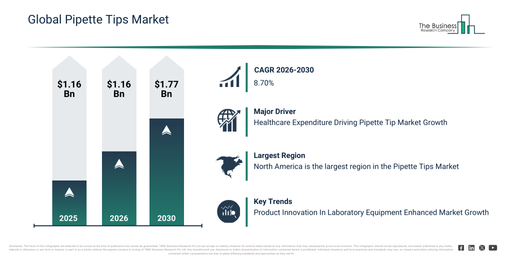
    Looking ahead, the market is projected to maintain strong momentum, reaching $3.69 billion by 2030 with a CAGR of 8.7%. Drivers for this forecasted growth include increased investments in life sciences research, expanding demand for high-throughput screening processes, the extension of automated laboratory workflows, and a growing focus on sustainability in laboratory plastics. Innovations in precision liquid handling consumables also play a crucial role, alongside trends such as the adoption of filtered and low-retention pipette tips, robotic-compatible tips, contamination-free handling, and RNase- and DNase-free consumables.

    Factors Propelling Demand in the Pipette Tips Market

    The expansion of healthcare facilities is a significant catalyst for the pipette tips market. Healthcare settings encompass a broad range of institutions, including acute care hospitals, urgent care centers, rehabilitation clinics, nursing homes, and other long-term care facilities. Pipettes are essential tools in these environments, used to accurately transfer microliter volumes of liquids for various procedures such as DNA amplification, molecular screening, ELISA diagnostic tests, and kinetic studies.

    Access The Complete Pipette Tips Market Report:

    https://www.thebusinessresearchcompany.com/report/pipette-tips-global-market-report

    For instance, in May 2023, The American Hospital Association reported an increase in the total number of hospitals in the US from 6,093 in 2022 to 60,129 in 2023. In addition, admissions in community hospitals rose from 31,393,318 to 31,967,073 over the same period. This surge in healthcare infrastructure and patient admissions directly supports greater demand for pipette tips.

    Detailed Segmentation of the Pipette Tips Market

    This market is segmented based on product types, technology, and application areas. Product categories include Standard, Filtered, Low-Retention, and other specialized pipette tips. In terms of technology, the market splits into robotic and non-robotic solutions. Application-wise, sectors such as Diagnostics and Healthcare, Pharma and Biotechnology, Academia and Education, and various other fields are covered.

    Further sub-segmentation includes Standard pipette tips classified into Non-Sterile, Sterile, and Universal Fit tips. Filtered tips are divided into Low-Filter, High-Filter, and RNase- and DNase-Free filtered variants. Low-Retention tips consist of Hydrophobic, Coated, and Non-Coated types. Other products cover Extended Length, Wide-Bore, Gel Loading, and Conductive tips.

    Emerging Trends Enhancing Market Competition and Product Innovation

    Key players in the pipette tips market are emphasizing the launch of advanced products designed to improve efficiency and precision. One noteworthy trend is the introduction of large-volume pipette tips, which allow for the transfer of bigger liquid quantities with accuracy, a vital need in many laboratory processes.

    For example, in July 2024, GenFollower Biotech Co., Ltd., a China-based manufacturer, introduced two types of 5mL large-volume pipette tips. These tips exhibit excellent compatibility with various pipette brands such as GILSON, Rainin UNV, Eppendorf, DragonLab, LABSERV, and Sartorius. Made from medical-grade polypropylene, the tips offer high transparency to facilitate easy visualization of liquids. Their clear, precise graduations ensure accurate measurement of samples, significantly boosting laboratory productivity.

    Key Players and Competitive Landscape in the Pipette Tips Industry

    The pipette tips market is dominated by several established companies, including Eppendorf, Thermo Fisher Scientific, Sartorius AG, Corning Incorporated, Sarstedt, Brand GmbH, Hamilton Company, Bio-Rad Laboratories Inc., VWR International, Greiner Bio-One International GmbH, Tecan Group Ltd., Gilson, Starlab Scientific Co. Ltd., AHN Biotechnologie GmbH, Sorenson BioScience, USA Scientific, Drummond Scientific Company, Socorex Isba SA, Mettler-Toledo Rainin LLC, Analytik Jena GmbH, Integra Holding AG, and Mettler Toledo. These firms continuously innovate and compete to meet evolving market demands.

    Geographical Insights: Pipette Tips Market Dominance

    In 2025, North America emerged as the largest region for pipette tips revenue. The market coverage extends globally, encompassing regions such as Asia-Pacific, South East Asia, Western Europe, Eastern Europe, South America, the Middle East, and Africa, each contributing to different facets of the market’s growth trajectory.

    Get in touch with us:

    The Business Research Company: https://www.thebusinessresearchcompany.com/

    Americas: +1 310-496-7795

    Asia: +44 7882 955267 & +91 8897263534

    Europe: +44 7882 955267

    Email us at: marketing@tbrc.info

    Follow us on:

    LinkedIn: https://in.linkedin.com/company/the-business-research-company

    YouTube: https://www.youtube.com/channel/UC24_fI0rV8cR5DxlCpgmyFQ

    Global Market Model: https://www.thebusinessresearchcompany.com/global-market-model
  • Pill Dispenser Internet Of Things (IoT) Market Outlook Highlights The Next Major Growth Opportunities

    Pill Dispenser Internet Of Things (IoT) Market Outlook Highlights The Next Major Growth Opportunities

    Through market attractiveness analysis, total addressable market evaluation, company benchmarking matrices, interactive Excel dashboards, expanded supply chain intelligence, emerging startup coverage, and detailed product insights, The Business Research Company’s 2026 market reports provide more actionable and strategically valuable research.

    The integration of Internet of Things (IoT) technology in healthcare is transforming medication management, particularly through smart pill dispensers. This sector is expanding rapidly as healthcare providers and patients increasingly seek innovative solutions to ensure proper medication adherence and improve treatment outcomes. Below is a detailed overview of the current market size, growth drivers, key segments, and emerging trends shaping the pill dispenser IoT market.

    Robust Growth Forecast for the Pill Dispenser Internet of Things Market

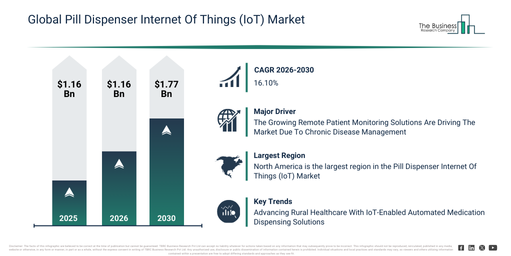
    The pill dispenser IoT market has experienced significant expansion in recent years. It is projected to grow from $2.6 billion in 2025 to $3.03 billion in 2026, representing a compound annual growth rate (CAGR) of 16.4%. This upward trend reflects factors such as the rising elderly population, the increasing prevalence of chronic diseases, heightened awareness about medication adherence, the growing adoption of smart home healthcare solutions, and advances in IoT-enabled devices. Looking ahead, the market is expected to reach $5.5 billion by 2030, maintaining a steady CAGR of 16.1%. Key contributors to this future growth include AI-driven adherence monitoring, integration with telehealth platforms, expansion within long-term care facilities, the emergence of wearable-connected pill devices, and innovations in predictive medication management. Important trends anticipated in this period involve smart pill dispensers, multi-dose automated devices, remote monitoring and alert systems, caregiver app integration, and connected pill organizers.

    Download A Free Sample Report For Comprehensive Market Insights:

    https://www.thebusinessresearchcompany.com/sample.aspx?id=29149&type=smp

    Expanding Influence of Remote Patient Monitoring Solutions

    One of the critical factors propelling the pill dispenser IoT market forward is the rise of remote patient monitoring (RPM) technologies. RPM enables continuous health supervision outside traditional clinical environments, facilitating early detection of health issues and promoting better adherence to treatment regimens. The surge in chronic disease cases has fueled the demand for RPM, as patients require ongoing monitoring to manage their conditions effectively. Pill dispenser IoT devices enhance these RPM solutions by allowing real-time tracking of medication intake, thus helping healthcare professionals oversee patient compliance more accurately. For example, as of September 2025, the Center for Connected Health Policy (CCHP) reported that forty-one state Medicaid programs in the United States reimburse remote patient monitoring services, indicating growing acceptance and integration of these technologies nationwide.

    Pill Dispenser Internet of Things Market Segmentation and Revenue Potential

    This market is divided into several key segments that define its structure and opportunities:

    1) Product Type: Automatic Pill Dispensers, Smart Pill Bottles, Connected Pill Organizers

    2) Connectivity: Wi-Fi, Bluetooth, Cellular, Other Connectivity Options

    3) Distribution Channel: Online and Offline Retail

    4) Application Areas: Home Healthcare, Hospitals and Clinics, Long-Term Care Facilities, Pharmacies, and Other Uses

    5) End-User Groups: Elderly Individuals, Patients with Chronic Diseases, Caregivers, and Other Users

    Access The Complete Pill Dispenser Internet Of Things (IoT) Market Report:

    https://www.thebusinessresearchcompany.com/report/pill-dispenser-internet-of-things-iot-global-market-report

    Further subdivisions include Automatic Pill Dispensers categorized by Timed Dispensing Devices, Multi-Dose Dispensing Devices, and Single Dose Dispensing Devices; Smart Pill Bottles segmented by Bluetooth-Enabled, Wi-Fi-Enabled, and Cellular-Enabled Options; Connected Pill Organizers classified as Weekly, Monthly, and Portable Organizers. These segments highlight diverse customer needs and technological approaches within the market.

    Innovative Developments Shaping Market Trends in Pill Dispenser IoT

    Leading market players are focusing on introducing advanced products that improve medication access and management, especially in underserved and remote regions. Automated medicine kiosks are an example of this innovation, functioning as connected devices that dispense medications on demand, monitor inventory in real-time, and integrate with remote prescription and healthcare management systems. For instance, in April 2025, Medyseva, a healthcare technology company based in India, launched MedyVend. This system enables healthcare providers to prescribe medications remotely through teleconsultations, which patients can then receive instantly at satellite clinics. MedyVend also supports real-time inventory tracking, cashless payment methods, and seamless telemedicine integration, facilitating continuous access to necessary medications in rural areas.

    Key Companies Leading the Pill Dispenser Internet of Things Market

    The pill dispenser IoT landscape features several prominent companies that are driving innovation and market expansion. Notable players include Omnicell Inc., MedMinder Systems Inc., Hero Health Inc., Spencer Health Solutions Inc., e-pill LLC., MedReady Inc., Vaica Medical, Medissimo, Wisepill Technologies CC, Medido, Pivotell Limited, Addinex Technologies Inc., Dose Health LLC, Omcare Inc., PharmAdva LLC, TSC Connected Care, CarePredict Inc., LiviSense Inc., TabTimer Pty Ltd, and QMedRx Inc. These organizations are instrumental in advancing product development, enhancing connectivity solutions, and expanding market reach.

    Geographical Insights and Regional Market Dynamics

    In 2025, North America was the dominant region for the pill dispenser IoT market, capturing the largest share. However, the Asia-Pacific region is anticipated to be the fastest-growing market during the forecast period, driven by increasing healthcare infrastructure investments, aging populations, and the adoption of smart healthcare technologies. Other regions analyzed in the market report include South East Asia, Western Europe, Eastern Europe, South America, the Middle East, and Africa, providing a comprehensive view of global market opportunities and challenges.

    Get in touch with us:

    The Business Research Company: https://www.thebusinessresearchcompany.com/

    Americas: +1 310-496-7795

    Asia: +44 7882 955267 & +91 8897263534

    Europe: +44 7882 955267

    Email us at: marketing@tbrc.info

    Follow us on:

    LinkedIn: https://in.linkedin.com/company/the-business-research-company

    YouTube: https://www.youtube.com/channel/UC24_fI0rV8cR5DxlCpgmyFQ

    Global Market Model: https://www.thebusinessresearchcompany.com/global-market-model
  • Physiotherapy Equipment And Accessories Market Trends And Growth Drivers Point To Strong Future Potential

    Physiotherapy Equipment And Accessories Market Trends And Growth Drivers Point To Strong Future Potential

    Delivering more actionable and strategically valuable research, The Business Research Company’s 2026 market reports feature market attractiveness analysis, total addressable market evaluation, company benchmarking matrices, interactive Excel dashboards, expanded supply chain intelligence, emerging startup coverage, and detailed product insights.

    The physiotherapy equipment and accessories market has experienced considerable growth recently, driven by rising health awareness and expanding rehabilitation needs. As healthcare evolves, this sector is poised for further development, supported by technological advancements and changing patient care approaches. Let’s explore the current market size, key growth factors, major players, innovation trends, and regional dynamics shaping this industry.

    Physiotherapy Equipment and Accessories Market Size and Growth Outlook

    The market for physiotherapy equipment and accessories has shown strong expansion in recent years. From $19.46 billion in 2025, it is projected to increase to $20.66 billion in 2026, registering a compound annual growth rate (CAGR) of 6.1%. This historical growth stems from factors such as a rising prevalence of musculoskeletal disorders, the broadening network of physiotherapy clinics, increased demand for rehabilitation after surgery, a shift towards non-invasive therapy methods, and a wider availability of diverse physiotherapy tools.

    Download A Free Sample Report For Comprehensive Market Insights:

    https://www.thebusinessresearchcompany.com/sample.aspx?id=18429&type=smp

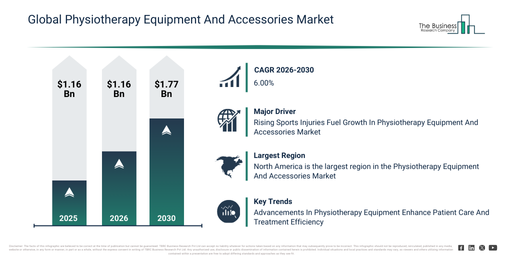
    Looking ahead, the market is expected to maintain robust growth, reaching $26.06 billion by 2030 with a CAGR of 6.0%. Key drivers for this forecast include the growing elderly population, increased adoption of remote physiotherapy services, stronger emphasis on preventive rehabilitation strategies, expansion of home healthcare offerings, and continual innovation in physiotherapy equipment design. Notable trends during this period involve rising use of portable rehabilitation devices, greater demand for home-use physiotherapy equipment, integration of digital therapy monitoring technologies, development of ergonomic accessories, and enhanced focus on pain management solutions.

    Factors Propelling Growth in the Physiotherapy Equipment and Accessories Market

    One significant factor fueling market growth is the increasing number of sports-related injuries. These injuries, which occur during athletic activities or exercise, have become more common due to growing participation in high-intensity sports and inadequate injury prevention measures. Physiotherapy equipment and accessories play a crucial role in aiding recovery by relieving pain, promoting tissue healing, improving mobility, and supporting effective rehabilitation.

    Access The Complete Physiotherapy Equipment And Accessories Market Report:

    https://www.thebusinessresearchcompany.com/report/physiotherapy-equipment-and-accessories-global-market-report

    For instance, in October 2024, Inside World Football, a UK-based sports news platform, reported that sports injuries totaled 4,123 during the 2023-24 season, marking a 4% increase compared to the previous year. This rising incidence directly contributes to the expanded need for physiotherapy tools and accessories, further driving the market.

    Physiotherapy Equipment and Accessories Market Segmentation Overview

    This market is categorized across multiple segments for better analysis and understanding:

    1) Product Type: Equipment and Accessories

    2) Application Areas: Musculoskeletal, Neurology, Pediatrics, Cardiovascular and Pulmonary, and other medical uses

    3) End Users: Hospitals and Clinics, Physiotherapy and Rehabilitation Centers, and other healthcare providers

    Within equipment, further subdivisions include Therapeutic Ultrasound Devices, Electrical Stimulation Devices, Laser Therapy Equipment, Cryotherapy Units, Traction Equipment, Hydrotherapy Equipment, Exercise and Rehabilitation Equipment, and Cryo-Chambers and Ice Compressors. Accessories encompass Electrodes for Stimulation Devices, Gel and Conductive Pads, Therapy Belts and Straps, Ball and Foam Rollers, Therapy Gloves and Braces, Cushions and Support Pads, Weight Training Equipment and Accessories, as well as Stretching and Rehabilitation Tools.

    Innovation Trends Transforming the Physiotherapy Equipment and Accessories Market

    Leading companies in this sector increasingly focus on integrating advanced technologies to improve treatment outcomes. One such innovation is the use of artificial intelligence (AI) in physiotherapy devices, which personalizes and optimizes therapy sessions with greater precision.

    For example, in August 2023, AI Rehab Ltd, based in the UK, launched Slider — an AI-enabled exercise and remote physiotherapy device designed specifically for patients with knee arthritis. This device supports both hospital and home use, aiding pre-operative and post-operative rehabilitation. Slider employs AI algorithms and wearable sensors to track motion and force during knee exercises. It also incorporates gamification elements, engaging users through interactive games that encourage movement, helping to reduce the monotony often associated with conventional physiotherapy routines.

    Competitive Landscape of the Physiotherapy Equipment and Accessories Market

    The physiotherapy equipment and accessories market features several prominent companies shaping its development. Key players include Enovis Corporation, DJO Global, BTL Corporate, Performance Health, Zynex Medical Inc, Dynatronics Corporation, Storz Medical AG, Enraf-Nonius B.V., A. Algeo Ltd, Zimmer Medizin System GmbH, Mectronic Medicale S.r.l, SEERS Medical Ltd, Life Care Systems, GymnaUniphy N.V., EMS Physio Ltd., ITO Co Ltd, HMS Medical Systems, Chinesport S.p.A., Johari Digital Healthcare, and RehabMedic Srl, among others.

    Regional Analysis Reveals Market Leadership and Growth Potential

    In 2025, North America held the largest share of the physiotherapy equipment and accessories market, reflecting a mature healthcare infrastructure and high adoption rates. Meanwhile, the Asia-Pacific region is anticipated to experience the fastest growth throughout the forecast period. This growth is supported by expanding healthcare access, increasing awareness of physiotherapy benefits, and rising investments in medical infrastructure. The market report also considers regions such as South East Asia, Western Europe, Eastern Europe, South America, the Middle East, and Africa for a comprehensive global perspective.

    Get in touch with us:

    The Business Research Company: https://www.thebusinessresearchcompany.com/

    Americas: +1 310-496-7795

    Asia: +44 7882 955267 & +91 8897263534

    Europe: +44 7882 955267

    Email us at: marketing@tbrc.info

    Follow us on:

    LinkedIn: https://in.linkedin.com/company/the-business-research-company

    YouTube: https://www.youtube.com/channel/UC24_fI0rV8cR5DxlCpgmyFQ

    Global Market Model: https://www.thebusinessresearchcompany.com/global-market-model