Month: October 2026

  • Radiation Dosimetry Badges Market Trends Supporting 8.2% CAGR Growth Through 2030

    Radiation Dosimetry Badges Market Trends Supporting 8.2% CAGR Growth Through 2030

    Featuring market attractiveness scoring, total addressable market sizing, company benchmarking matrices, interactive Excel dashboards, deeper supply chain intelligence, emerging startup tracking, and granular product-level insights, The Business Research Company’s 2026 market reports are built to deliver research that is both more actionable and more strategically valuable.

    Radiation Dosimetry Badges Market Growth Analysis: How Will Revenue Trend Over The Forecast Period?

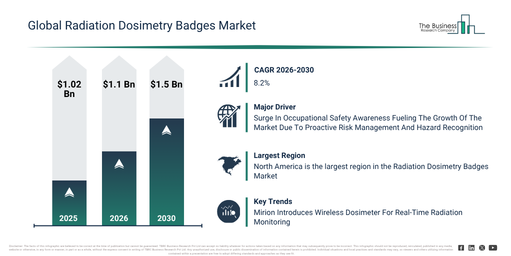
    The market for radiation dosimetry badges has experienced robust expansion in recent years. It is projected to increase from $1.02 billion in 2025 to $1.1 billion in 2026, achieving a compound annual growth rate (CAGR) of 7.9%. Historically, this growth can be attributed to several factors: a heightened awareness of radiation hazards, strict regulatory compliance requirements, the widespread adoption of film and thermoluminescent dosimeters, the proliferation of nuclear and medical facilities, and an increase in industrial applications involving radiation.

    The radiation dosimetry badges market size is anticipated to experience substantial expansion in the coming years. Its value is projected to reach $1.5 billion by 2030, exhibiting a compound annual growth rate (CAGR) of 8.2%. This growth during the forecast period is primarily driven by the increasing adoption of electronic personal dosimeters, the integration of IoT-enabled safety systems, the rising need for real-time exposure monitoring, the expansion of both healthcare and nuclear infrastructure, and greater investment in predictive radiation analytics. Significant developments expected in this period encompass real-time dosimetry monitoring, the emergence of wearable radiation safety devices, their integration with health and safety management systems, automated dose reporting and analytics capabilities, and advanced predictive radiation exposure assessment.

    Get A Free Sample Report With In-Depth Market Insights:

    https://thebusinessresearchcompany.com/sample_request?id=45352874&type=smp&name=Radiation%20Dosimetry%20Badges%20Market%20Report%202026&utm_source=Blogs&utm_medium=Paid&utm_campaign=Oct_PR

    Radiation Dosimetry Badges Market Growth Backed By Core Demand Fundamentals

    Increased awareness of occupational safety is anticipated to boost the expansion of the radiation dosimetry badges market. This awareness involves comprehending and identifying dangers in the workplace, particularly in hazardous settings, and implementing actions to avert accidents and safeguard workers’ well-being. The heightened focus on occupational safety stems from proactive approaches to risk management, more stringent regulatory supervision, and greater employer responsibility, collectively promoting prompt hazard detection and more secure work environments. Radiation dosimetry badges contribute to occupational safety efforts by constantly tracking personal exposure to ionizing radiation, thereby allowing employees and employers to evaluate risks, adhere to exposure boundaries, and enact necessary remedial safety actions. For example, in June 2024, the European Agency for Safety and Health at Work (EU-OSHA) disclosed that around 85–91% of workers in Spain recognized a heightened understanding of workplace safety and occupational safety and health (OSH) risk reduction, marking a 7% increase from 2023. Consequently, the growing occupational safety awareness is fueling the expansion of the radiation dosimetry badges market.

    Radiation Dosimetry Badges Market Segment Landscape: Which Areas Lead Development?

    The radiation dosimetry badges market covered in this report is segmented –

    1) By Product Type: Thermoluminescent Dosimeter Badges, Film Badge Dosimeters, Optically Stimulated Luminescence Dosimeter Badges, Electronic Personal Dosimeters, Other Product Types

    2) By Detection Method: Passive Dosimetry, Active Dosimetry

    3) By Distribution Channel: Direct Sales, Distributors, Online Sales, Other Distribution Channels

    4) By End-User: Hospitals And Medical Institutions, Nuclear Facilities, Research Laboratories, Industrial Facilities, Other End-Users

    Subsegments:

    1) By Thermoluminescent Dosimeter Badges: Card Type Dosimeter, Pocket Dosimeter, Ring Dosimeter, Button Dosimeter

    2) By Film Badge Dosimeters: Single Film Badge, Dual Film Badge, Multi Film Badge, Special Purpose Film Badge

    3) By Optically Stimulated Luminescence Dosimeter Badges: Card Type Dosimeter, Finger Ring Dosimeter, Wearable Dosimeter, Environmental Dosimeter

    4) By Electronic Personal Dosimeters: Portable Dosimeter, Wearable Dosimeter, Real Time Monitoring Dosimeter, Multi Parameter Dosimeter

    5) By Other Product Types: Chemical Dosimeter, Solid State Dosimeter, Pocket Ionization Chamber, Neutron Dosimeter

    Radiation Dosimetry Badges Market Growth Trends Reshaping The Competitive Landscape

    Major companies in the radiation dosimetry badges market are concentrating on developing technological enhancements, such as electronic personal dosimeters equipped with real-time monitoring capabilities, to facilitate continuous exposure tracking, elevate worker safety, and ensure adherence to regulations in radiation-exposed environments. Electronic personal dosimeters with real-time monitoring are sophisticated wearable instruments designed to constantly measure and instantly transmit radiation exposure data, which allows for anticipatory risk management, immediate alerts for hazardous dose levels, and straightforward compliance reporting. For example, in April 2024, Mirion Dosimetry Services, a US-based firm specializing in radiation safety solutions, launched the InstadoseVUE Wireless Dosimeter. This newly introduced device enables the real-time observation of individual radiation exposure, empowering workers and supervisors to continuously monitor doses. It enhances workplace safety and compliance through its wireless data transmission and instant notification system, while also enabling proactive radiation protection measures in settings with elevated risks.

    Radiation Dosimetry Badges Market Competitive Overview And Top Companies

    Major companies operating in the radiation dosimetry badges market are Thermo Fisher Scientific Inc., Honeywell International Inc, SGS SA, Fuji Electric Co. Ltd., CERN Dosimetry Service, Ludlum Measurements Inc., PTW Freiburg, Chiyoda Technol Corp., ECOTEST group, Seibersdorf Labor GmbH, Avanttec Medical Systems, Polimaster, Renentech Laboratories, Best Dosimetry Services Inc., Ultra‑Tech Laboratories, RadPro International GmbH, RadPro Radiation Protection Services Limited, Laurus Systems, Atomic Energy Industrial Laboratories of the Southwest Inc. (AEIL), Xray Dose Company.

    View The Full Radiation Dosimetry Badges Market Report:

    https://thebusinessresearchcompany.com/report/radiation-dosimetry-badges-market-report?utm_source=Blogs&utm_medium=Paid&utm_campaign=Oct_PR

    Radiation Dosimetry Badges Market Top Region: Where Does Most Revenue Come From?

    North America was the largest region in the radiation dosimetry badges market in 2025. Asia-Pacific is expected to be the fastest-growing region in the forecast period. The regions covered in the radiation dosimetry badges market report are Asia-Pacific, South East Asia, Western Europe, Eastern Europe, North America, South America, Middle East, Africa.

    Reach Out To Our Team:

    The Business Research Company: https://www.thebusinessresearchcompany.com/

    Americas: +1 310-496-7795

    Asia: +44 7882 955267 & +91 8897263534

    Europe: +44 7882 955267

    Email us at: marketing@tbrc.info

    Follow us on:

    LinkedIn: https://in.linkedin.com/company/the-business-research-company

    YouTube: https://www.youtube.com/channel/UC24_fI0rV8cR5DxlCpgmyFQ

    Global Market Model: https://www.thebusinessresearchcompany.com/global-market-model
  • Quantum Dermatology Market Forecast Highlights A $5.08 Billion Opportunity For Industry Participants

    Quantum Dermatology Market Forecast Highlights A $5.08 Billion Opportunity For Industry Participants

    Built to provide research that’s more actionable and strategically valuable, The Business Research Company’s 2026 market reports include market attractiveness analysis, total addressable market sizing, company benchmarking matrices, interactive Excel dashboards, broader supply chain intelligence, emerging startup tracking, and in-depth product insights.

    Quantum Dermatology Market Forecast: What Value Will The Market Reach By 2030?

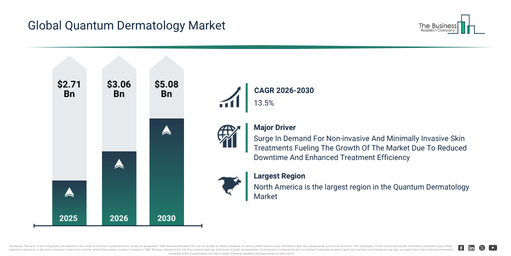
    The quantum dermatology market has witnessed rapid growth in recent years. It is anticipated to expand from $2.71 billion in 2025 to $3.06 billion in 2026, exhibiting a compound annual growth rate (CAGR) of 13.2%. This historical expansion can be ascribed to elements like the escalating demand for cosmetic procedures, continuous advancements in laser and IPL technologies, the proliferation of aesthetic clinics, a heightened awareness of skin health, and the increasing adoption of multi-technology systems.

    The quantum dermatology market is projected to experience substantial expansion over the next few years, with its valuation expected to reach $5.08 billion by 2030, exhibiting a compound annual growth rate (CAGR) of 13.5%. This growth throughout the forecast period can be primarily attributed to the integration of AI in dermatology, the expansion of dermatology clinics, the increasing demand for personalized skin treatments, the adoption of combination systems, and the growth of non-invasive rejuvenation therapies. Prominent trends anticipated in this timeframe include minimally invasive treatment techniques, personalized dermatology solutions, AI-driven skin analysis, non-invasive skin rejuvenation therapies, and real-time treatment monitoring.

    Get A Free Sample Report With In-Depth Market Insights:

    https://thebusinessresearchcompany.com/sample_request?id=22539878&type=smp&name=Quantum%20Dermatology%20Market%20Report%202026&utm_source=Blogs&utm_medium=Paid&utm_campaign=Oct_PR

    Quantum Dermatology Market Growth Catalysts And Demand Drivers

    The rising preference for non-invasive and minimally invasive skin treatments is anticipated to fuel the expansion of the quantum dermatology market. These treatments involve procedures that improve skin appearance or health without major surgical intervention, employing technologies such as laser, energy-based devices, injectables, and light-based methods. Patients increasingly favor these options due to benefits like shorter recovery periods, less discomfort, reduced complication risks, and quicker return to daily activities. Quantum dermatology supports this trend by leveraging sophisticated, precision-focused dermatological technologies and data-driven treatment strategies to enhance procedural accuracy, improve clinical results, and minimize tissue damage and healing time. For instance, in September 2025, Hansard – UK Parliament reported that 7.7 million individuals in the UK underwent cosmetic and dermatological procedures, which included minimally invasive treatments, marking a 12% rise compared to 2023. Consequently, the growing demand for non-invasive and minimally invasive skin treatments is a key driver for the quantum dermatology market’s growth. An increase in healthcare spending is projected to advance the quantum dermatology market. Healthcare expenditure refers to the aggregate spending by both public and private sectors on medical services, products, and initiatives aimed at maintaining and enhancing health. This rise in spending is primarily due to an aging demographic, as a growing number of elderly individuals require more frequent and intricate medical attention. Quantum dermatology assists in controlling healthcare costs by offering advanced, accurate, and non-invasive skin treatments, thereby lessening the necessity for extended therapies and hospital stays. As an illustration, in April 2025, the Office for National Statistics, a UK-based government department, noted that healthcare spending increased by 6.5% in nominal terms and 2.4% in real terms between 2023 and 2024. Thus, the escalating healthcare expenditure is propelling the expansion of the quantum dermatology market.

    Quantum Dermatology Market Segments: Where Is Growth Concentrated?

    The quantum dermatology market covered in this report is segmented –

    1) By Technology: Laser-Based Systems, Intense Pulsed Light (IPL) Systems, Combination Systems, Other Technologies

    2) By Treatment Type: Hair Removal, Pigmented Lesions Treatment, Skin Firming And Tightening, Wrinkle Reduction And Rejuvenation, Vascular Lesion Treatment

    3) By Application: Aesthetic And Cosmetic Treatments, Dermatology Procedures, Skin Rejuvenation Therapies, Hair Reduction Treatments

    4) By End User: Dermatology Clinics, Professional Clinics And Aesthetic Practitioners, Beauty Salons And Spas, Hospitals And Medical Aesthetic Centers, Medical Institutions, Individual Consumers

    Subsegments:

    1) By Laser-Based Systems: Fractional Laser Systems, Ablative Laser Systems, Non Ablative Laser Systems, Pulsed Laser Systems

    2) By Intense Pulsed Light Systems: Hair Removal Systems, Skin Rejuvenation Systems, Vascular Lesion Treatment Systems, Pigmentation Treatment Systems

    3) By Combination Systems: Laser And Intense Pulsed Light Systems, Laser And Radio Frequency Systems, Intense Pulsed Light And Radio Frequency Systems, Other Multi Technology Systems

    4) By Other Technologies: Radio Frequency Systems, Ultrasound Based Systems, Cryotherapy Systems, Photodynamic Therapy Systems

    Quantum Dermatology Market Competitive Landscape: Which Companies Lead The Industry?

    Major companies operating in the quantum dermatology market are Bruker Corporation, El.En. S.p.A., InMode Ltd., Shenzhen GSD Tech Co. Ltd., IDS Medical Systems (IDSMED), Sciton Inc., Strata Skin Sciences Inc., HONKON, Beijing ADSS Development Co. Ltd., Sharplight Technologies Ltd., Hironic Co. Ltd., Aerolase Corporation, Union Medical Co. Ltd., Zimmer MedizinSysteme GmbH, Wontech Co. Ltd., Lynton Lasers Ltd., DEKA M.E.L.A. Srl, DermaSensor Inc., Lasering USA, Telea Medical, Beijing Sincoheren, Eunsung Global Corp., Astiland Medical Aesthetics Technology Co. Ltd., BioWave Health Care.

    View The Full Quantum Dermatology Market Report:

    https://thebusinessresearchcompany.com/report/quantum-dermatology-market-report?utm_source=Blogs&utm_medium=Paid&utm_campaign=Oct_PR

    Quantum Dermatology Market Regional Breakdown: Where Is Demand Concentrated?

    North America was the largest region in the quantum dermatology market in 2025. Asia-Pacific is expected to be the fastest-growing region in the forecast period. The regions covered in the quantum dermatology market report are Asia-Pacific, South East Asia, Western Europe, Eastern Europe, North America, South America, Middle East, Africa.

    Reach Out To Our Team:

    The Business Research Company: https://www.thebusinessresearchcompany.com/

    Americas: +1 310-496-7795

    Asia: +44 7882 955267 & +91 8897263534

    Europe: +44 7882 955267

    Email us at: marketing@tbrc.info

    Follow us on:

    LinkedIn: https://in.linkedin.com/company/the-business-research-company

    YouTube: https://www.youtube.com/channel/UC24_fI0rV8cR5DxlCpgmyFQ

    Global Market Model: https://www.thebusinessresearchcompany.com/global-market-model

  • Protein-Folding Artificial Intelligence (AI) Platform Market Outlook Through 2030: Understanding The Growth Opportunity

    Protein-Folding Artificial Intelligence (AI) Platform Market Outlook Through 2030: Understanding The Growth Opportunity

    Featuring market attractiveness scoring, total addressable market sizing, company benchmarking matrices, interactive Excel dashboards, deeper supply chain intelligence, emerging startup tracking, and granular product-level insights, The Business Research Company’s 2026 market reports are built to deliver research that is both more actionable and more strategically valuable.

    Protein-Folding Artificial Intelligence (AI) Platform Market Size, Value And Growth Trajectory Through 2030

    The protein-folding artificial intelligence (AI) platform market size has experienced exponential growth in recent years. This market is projected to expand from $1.88 billion in 2025 to $2.48 billion in 2026, demonstrating a compound annual growth rate (CAGR) of 32.0%. Historically, this expansion has been driven by factors such as the greater acceptance of computational biology tools, advancements in pharmaceutical research, the widespread availability of structural protein databases, an increasing need for personalized medicine, and the evolution of high-performance computing systems.

    The protein-folding artificial intelligence (AI) platform market is poised for significant expansion in the coming years. It is projected to achieve a valuation of $7.58 billion by 2030, demonstrating a compound annual growth rate (CAGR) of 32.2%. This projected growth is largely driven by the increasing integration of AI and deep learning in protein folding, the expansion of cloud-based bioinformatics platforms, notable investments in specialized AI accelerators, a surge in academic and biotech research initiatives, and the critical demand for expedited drug discovery cycles. Prominent trends anticipated in this forecast period encompass AI-driven protein structure prediction, the incorporation of high-performance computing, automated molecular modeling, the advancement of cloud-based bioinformatics platforms, and sophisticated predictive analytics for drug discovery.

    Get A Free Sample Report With In-Depth Market Insights:

    https://thebusinessresearchcompany.com/sample_request?id=34901881&type=smp&name=Protein-Folding%20Artificial%20Intelligence%20%28AI%29%20Platform%20Market%20Report%202026&utm_source=Blogs&utm_medium=Paid&utm_campaign=Oct_PR

    Protein-Folding Artificial Intelligence (AI) Platform Market Growth Momentum: What Factors Are Shaping Demand?

    The increasing embrace of personalized medicine is anticipated to fuel the expansion of the protein-folding artificial intelligence (AI) platform market. Personalized medicine represents an approach where healthcare and treatments are tailored to a patient’s unique biological and individual characteristics. The rising application of personalized medicine stems from advancements in genomic technologies, which empower healthcare providers to analyze a patient’s genetic information swiftly and precisely, thereby facilitating more targeted and effective treatments. A protein-folding artificial intelligence platform supports personalized medicine by forecasting patient-specific protein structures, which in turn guides the selection of targeted drugs and the development of optimized therapies. For example, in February 2024, the Personalized Medicine Coalition, a US-based non-profit organization, reported that the FDA approved 16 new personalized treatments for rare disease patients in 2023, an increase from six in 2022. The personalized treatments newly approved for 2023 also encompassed seven cancer drugs and three for other diseases and conditions. Consequently, the expanding adoption of personalized medicine is propelling the growth of the protein-folding artificial intelligence (AI) platform market.

    Protein-Folding Artificial Intelligence (AI) Platform Market Segment Breakdown: Which Categories Lead On Revenue?

    The protein-folding artificial intelligence (AI) platform market covered in this report is segmented –

    1) By Component: Software, Hardware, Services

    2) By Deployment Mode: On-Premises, Cloud

    3) By Application: Drug Discovery, Disease Research, Personalized Medicine, Biotechnology, Academic Research, Other Applications

    4) By End-User: Pharmaceutical And Biotechnology Companies, Research Institutes, Healthcare Providers, Other End Users

    Subsegments:

    1) By Software: Protein Structure Prediction Platforms, Molecular Modeling And Simulation Software, Bioinformatics Analysis Software, Data Visualization And Interpretation Tools, Machine Learning And Deep Learning Frameworks, Workflow Management And Automation Software

    2) By Hardware: High Performance Computing Systems, Graphics Processing Units, Central Processing Units, Data Storage Systems, High Speed Networking Infrastructure, Specialized Artificial Intelligence Accelerators

    3) By Services: Consulting And Advisory Services, System Integration Services, Cloud And Infrastructure Management Services, Model Development And Validation Services, Data Annotation And Curation Services, Maintenance And Technical Support Services

    Protein-Folding Artificial Intelligence (AI) Platform Market Company Landscape And Competitive Strategy

    Major companies operating in the protein-folding artificial intelligence (AI) platform market are Schrodinger Inc., XtalPi Inc., Isomorphic Labs Limited, Recursion Pharmaceuticals Inc., Nabla Bio Inc., Arzeda Corporation, Evozyne, ProteinQure Inc., Genesis Therapeutics Inc., Cradle Bio Inc., Profluent Inc., Evaxion Biotech A/S, Iambic Therapeutics Inc., Insilico Medicine Inc., Insitro Inc., Levitate Bio Inc., Shiru Inc., Tamarind Bio, Archon Biosciences, Neoncorte Bio, and Generate Biomedicines Inc.

    View The Full Protein-Folding Artificial Intelligence (AI) Platform Market Report:

    https://thebusinessresearchcompany.com/report/protein-folding-artificial-intelligence-ai-platform-market-report?utm_source=Blogs&utm_medium=Paid&utm_campaign=Oct_PR

    Protein-Folding Artificial Intelligence (AI) Platform Market Largest Region: Which Geography Holds The Highest Market Share?

    North America was the largest region in the protein-folding artificial intelligence (AI) platform market in 2025. Asia-Pacific is expected to be the fastest-growing region in the forecast period. The regions covered in the protein-folding artificial intelligence (AI) platform market report are Asia-Pacific, South East Asia, Western Europe, Eastern Europe, North America, South America, Middle East, Africa.

    Reach Out To Our Team:

    The Business Research Company: https://www.thebusinessresearchcompany.com/

    Americas: +1 310-496-7795

    Asia: +44 7882 955267 & +91 8897263534

    Europe: +44 7882 955267

    Email us at: marketing@tbrc.info

    Follow us on:

    LinkedIn: https://in.linkedin.com/company/the-business-research-company

    YouTube: https://www.youtube.com/channel/UC24_fI0rV8cR5DxlCpgmyFQ

    Global Market Model: https://www.thebusinessresearchcompany.com/global-market-model
  • Protein Structure Prediction Platforms Market Growth Potential: What The Latest Forecast Reveals

    Protein Structure Prediction Platforms Market Growth Potential: What The Latest Forecast Reveals

    Built to provide research that’s more actionable and strategically valuable, The Business Research Company’s 2026 market reports include market attractiveness analysis, total addressable market sizing, company benchmarking matrices, interactive Excel dashboards, broader supply chain intelligence, emerging startup tracking, and in-depth product insights.

    Protein Structure Prediction Platforms Market CAGR Outlook And Future Development

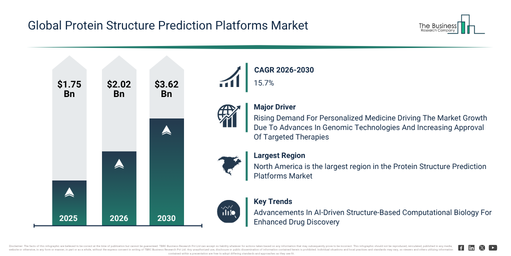
    The protein structure prediction platforms market has experienced rapid growth in recent years. It is projected to expand from $1.75 billion in 2025 to $2.02 billion in 2026, at a compound annual growth rate (CAGR) of 15.5%. This historical expansion can be attributed to several factors, including a reliance on experimental methods such as x-ray crystallography and NMR spectroscopy, limited computational resources, the early adoption of homology modeling techniques, an increasing demand for drug discovery, and the development of academic research in proteomics.

    The protein structure prediction platforms market size is anticipated to experience significant expansion in the coming years. It is projected to achieve a valuation of $3.62 billion by 2030, growing at a compound annual growth rate (CAGR) of 15.7%. This growth over the forecast period is fueled by factors such as the increasing adoption of advanced AI and ML algorithms, the expansion of cloud-based platforms, their integration with biopharmaceutical pipelines, rising investments in computational biology, and a growing demand for high-throughput protein modeling. Key trends emerging in this period include AI-driven protein structure prediction, the prevalence of cloud-based computational platforms, deeper integration with drug discovery pipelines, advancements in real-time molecular modeling, and the application of predictive disease research analytics.

    Get A Free Sample Report With In-Depth Market Insights:

    https://thebusinessresearchcompany.com/sample_request?id=26424289&type=smp&name=Protein%20Structure%20Prediction%20Platforms%20Market%20Report%202026&utm_source=Blogs&utm_medium=Paid&utm_campaign=Oct_PR

    Protein Structure Prediction Platforms Market Expansion Drivers: What’s Shaping Future Growth?

    The rising demand for personalized medicine is projected to stimulate the growth of the protein structure prediction platforms market in the future. Personalized medicine defines a strategy that customizes healthcare and treatments according to a patient’s specific biological and individual traits. The uptake of personalized medicine is expanding due to progress in genomic technologies, which empower healthcare professionals to rapidly and precisely examine a patient’s genetic data, thereby facilitating more focused and efficacious therapies. Within research and drug development, protein structure prediction platforms assist personalized medicine by enabling scientists to model patient-specific protein variants, comprehend mutation-driven structural alterations, and formulate targeted treatments for genetically identified patient groups. For example, in February 2024, information from the Personalized Medicine Coalition, a US-based non-profit organization, indicated that the U.S. Food and Drug Administration approved 16 new personalized treatments for rare disease patients in 2023, a rise from six in 2022. Consequently, the increasing need for personalized medicine is a key factor propelling the expansion of the protein structure prediction platforms market.

    Protein Structure Prediction Platforms Market Segmentation: How Does The Market Break Down By Category?

    The protein structure prediction platforms market covered in this report is segmented –

    1) By Component: Software, Services

    2) By Technology: Artificial Intelligence-based, Homology Modeling, Ab Initio, Threading, Hybrid Methods

    3) By Deployment Mode: Cloud-Based, On-Premises

    4) By Application: Drug Discovery, Disease Research, Academic Research, Biotechnology, Other Applications

    5) By End-User: Pharmaceutical And Biotechnology Companies, Academic And Research Institutes, Contract Research Organizations, Other End Users

    Subsegments:

    1) By Software: Structure Prediction Software, Molecular Modeling Software, Visualization And Analysis Software, Database Management Software, Workflow Automation And Simulation Software

    2) By Services: Consulting And Implementation Services, Integration And Customization Services, Training And Technical Support Services, Maintenance And Upgrade Services, Data Analysis And Computational Services

    Protein Structure Prediction Platforms Market Strategic Trends: What Defines The Next Growth Phase?

    Major companies operating in the protein structure prediction platforms market are focusing on developing innovative solutions such as, structure-based computational biology technologies to accelerate drug discovery, enable accurate protein modeling, and enhance target identification through advanced molecular simulations and AI-driven structural analysis. These systems leverage three-dimensional protein structure data, molecular modeling, and simulation algorithms to analyze biomolecular interactions and support rational drug design. For instance, in March 2024, Basecamp Research, a UK-based AI-driven biotechnology company, launched BaseFold, a deep learning model designed to improve 3D protein structure prediction for large and complex proteins. By augmenting AlphaFold2 with its proprietary BaseGraph dataset derived from global biodiversity sources, BaseFold demonstrated up to six-fold improvements in predictive accuracy and three-fold enhancements in small-molecule docking performance in internal benchmarks. Such advances underpin next-generation protein structure prediction platforms by improving the modeling of protein classes that have been underrepresented in public datasets, thereby supporting AI-driven drug discovery efforts.

    Protein Structure Prediction Platforms Market Key Players Shaping Industry Direction

    Major companies operating in the protein structure prediction platforms market are IBM Corporation, Thermo Fisher Scientific Inc., Dassault Systèmes SE, Charles River Laboratories International Inc., Bruker Corporation, Revvity Inc., DeepMind Technologies Limited, Schrödinger Inc., BenevolentAI Limited, Nimbus Therapeutics Inc., Arzeda Corporation, Relay Therapeutics Inc., LabVantage Solutions Inc., Genesis Therapeutics Inc., Bioinformatics Solutions Inc., Chemical Computing Group ULC, Insilico Medicine Inc., Cloud Pharmaceuticals Inc., Peptone Ltd., Molecular Forecaster Inc., Acellera Ltd., CD BioSciences, and ProteinLab.ai Inc.

    View The Full Protein Structure Prediction Platforms Market Report:

    https://thebusinessresearchcompany.com/report/protein-structure-prediction-platforms-market-report?utm_source=Blogs&utm_medium=Paid&utm_campaign=Oct_PR

    Protein Structure Prediction Platforms Market Regional Analysis: Which Region Leads By Revenue?

    North America was the largest region in the protein structure prediction platforms market in 2025. Asia-Pacific is expected to be the fastest-growing region in the forecast period. The regions covered in the protein structure prediction platforms market report are Asia-Pacific, South East Asia, Western Europe, Eastern Europe, North America, South America, Middle East, Africa.

    Reach Out To Our Team:

    The Business Research Company: https://www.thebusinessresearchcompany.com/

    Americas: +1 310-496-7795

    Asia: +44 7882 955267 & +91 8897263534

    Europe: +44 7882 955267

    Email us at: marketing@tbrc.info

    Follow us on:

    LinkedIn: https://in.linkedin.com/company/the-business-research-company

    YouTube: https://www.youtube.com/channel/UC24_fI0rV8cR5DxlCpgmyFQ

    Global Market Model: https://www.thebusinessresearchcompany.com/global-market-model
  • Protein Stability Screening Platforms Market Growth Outlook: Why Analysts Expect Continued Expansion

    Protein Stability Screening Platforms Market Growth Outlook: Why Analysts Expect Continued Expansion

    Backed by market attractiveness analysis, total addressable market sizing, company benchmarking matrices, interactive Excel dashboards, wider supply chain intelligence, emerging startup coverage, and detailed product-level insights, The Business Research Company’s 2026 market reports are designed to offer research that is more actionable and strategically valuable than ever.

    Protein Stability Screening Platforms Market Set To Climb From $1.58 Billion In 2026 To $2.29 Billion By 2030

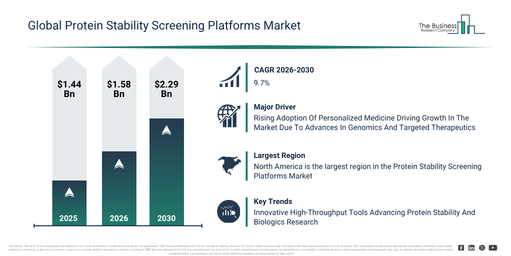
    The protein stability screening platforms market has seen substantial growth over recent years. This market is set to expand from $1.44 billion in 2025 to $1.58 billion in 2026, exhibiting a compound annual growth rate (CAGR) of 9.5%. Key drivers for its historical development include the increasing demand for biologics, the widespread use of conventional stability testing methods, a rise in investment within pharmaceutical research and development, the development of monoclonal antibody therapies, and strict regulatory demands.

    The protein stability screening platforms market is poised for substantial growth over the next few years. It is projected to expand to $2.29 billion by 2030, demonstrating a compound annual growth rate (CAGR) of 9.7%. This anticipated growth during the forecast period is due to factors such as the adoption of AI-driven protein stability platforms, the integration with IoT-enabled laboratory systems, the expansion of biopharmaceutical pipelines, an increased demand for real-time monitoring, and the development of predictive modeling software. Significant trends expected in the forecast period include high-throughput protein stability screening, automated formulation analysis, integration with laboratory information systems, real-time protein degradation monitoring, and predictive shelf-life modeling.

    Get A Free Sample Report With In-Depth Market Insights:

    https://thebusinessresearchcompany.com/sample_request?id=58032214&type=smp&name=Protein%20Stability%20Screening%20Platforms%20Market%20Report%202026&utm_source=Blogs&utm_medium=Paid&utm_campaign=Oct_PR

    Protein Stability Screening Platforms Market Development Factors: What’s Supporting Demand?

    The increasing use of personalized medicine is anticipated to drive the expansion of the protein stability screening platforms market. This approach, personalized medicine, customizes medical treatments and health choices based on a person’s genetic, molecular, and clinical characteristics, aiming to enhance treatment effectiveness and safety. The growth of personalized medicine is primarily fueled by developments in genomics and molecular diagnostics, allowing for the detection of genetic differences and molecular indicators that impact disease advancement and drug reactions, thereby facilitating the creation of more precise therapies. In personalized medicine, protein stability screening platforms are crucial for assessing the stability, folding, and interaction patterns of proteins in diverse conditions, a process vital for refining drug and biologic designs. As an illustration, in February 2024, the Personalized Medicine Coalition, a U.S.-based non-profit organization, reported that in 2023 the U.S. Food and Drug Administration (FDA) approved 16 new personalized treatments for rare disease patients, up from six approvals in 2022. Consequently, the increasing embrace of personalized medicine is accelerating the expansion of the protein stability screening platforms market.

    Protein Stability Screening Platforms Market Segment Trends And Revenue Contributors

    The protein stability screening platforms market covered in this report is segmented –

    1) By Protein Type: Monoclonal Antibodies, Recombinant Proteins, Vaccines And Antigens, Enzymes, Other Protein Types

    2) By Technology: Differential Scanning Calorimetry, Differential Scanning Fluorimetry, Spectroscopy, Chromatography, Other Technologies

    3) By Component Type: Instruments, Consumables, Software, Services

    4) By Application: Drug Discovery, Biopharmaceutical Development, Protein Engineering, Academic Research, Other Applications

    5) By End-User: Pharmaceutical & Biotechnology Companies, Academic And Research Institutes, Contract Research Organizations, Other End-Users

    Subsegments:

    1) By Monoclonal Antibodies: Human Monoclonal Antibodies, Chimeric Monoclonal Antibodies, Humanized Monoclonal Antibodies, Murine Monoclonal Antibodies

    2) By Recombinant Proteins: Recombinant Human Proteins, Recombinant Animal Proteins, Recombinant Microbial Proteins, Recombinant Plant Proteins

    3) By Vaccines and Antigens: Protein Subunit Vaccines, Conjugate Vaccines, Toxoid Vaccines, Virus Like Particle Vaccines

    4) By Enzymes: Hydrolases, Oxidoreductases, Transferases, Lyases, Isomerases, Ligases

    5) By Other Protein Types: Fusion Proteins, Cytokines, Hormones, Growth Factors

    Protein Stability Screening Platforms Market Transformation Trends: What Innovations Are Driving Change?

    Leading companies in the protein stability screening platforms market are increasingly prioritizing the creation of innovative high-throughput instruments. These tools facilitate the rapid assessment of protein stability, aggregation, and folding, thus accelerating biopharmaceutical development and optimizing formulations. High-throughput tools are defined as systems that can perform a large volume of experiments or analyses simultaneously, enabling researchers to efficiently produce robust datasets while conserving time and samples. As an illustration, in January 2025, Unchained Labs Ltd., a U.S.-based life sciences tools firm, introduced Aunty, a new platform engineered to speed up biologics and gene therapy research. This system integrates full-spectrum fluorescence with static and dynamic light scattering, allowing for the simultaneous evaluation of thermal, aggregation, and colloidal stability. It functions with minimal sample volumes, approximately 8 µL, in a 96-well plate format, thereby supporting efficient, high-throughput protein characterization during the early stages of drug development.

    Protein Stability Screening Platforms Market Competitive Analysis Of Leading Industry Participants

    Major companies operating in the protein stability screening platforms market are Thermo Fisher Scientific Inc., GE Healthcare Life Sciences, Agilent Technologies Inc., Shimadzu Corporation, Bruker Corporation, Waters Corporation, Revvity Inc., Bio-Rad Laboratories Inc., Spectris plc., Malvern Panalytical Ltd., Promega Corporation, Unchained Labs Inc., NanoTemper Technologies GmbH, Creative Biostructure Inc., BMG LABTECH GmbH, Jasco Inc., Porvair Sciences Ltd., Zinsser Analytic GmbH, Jena Bioscience GmbH, Applied Photophysics Ltd., Enzo Life Sciences Inc.

    View The Full Protein Stability Screening Platforms Market Report:

    https://thebusinessresearchcompany.com/report/protein-stability-screening-platforms-market-report?utm_source=Blogs&utm_medium=Paid&utm_campaign=Oct_PR

    Protein Stability Screening Platforms Market Geographic Distribution And Regional Opportunities

    North America was the largest region in the protein stability screening platforms market in 2025. Asia-Pacific is expected to be the fastest-growing region in the forecast period. The regions covered in the protein stability screening platforms market report are Asia-Pacific, South East Asia, Western Europe, Eastern Europe, North America, South America, Middle East, Africa.

    Reach Out To Our Team:

    The Business Research Company: https://www.thebusinessresearchcompany.com/

    Americas: +1 310-496-7795

    Asia: +44 7882 955267 & +91 8897263534

    Europe: +44 7882 955267

    Email us at: marketing@tbrc.info

    Follow us on:

    LinkedIn: https://in.linkedin.com/company/the-business-research-company

    YouTube: https://www.youtube.com/channel/UC24_fI0rV8cR5DxlCpgmyFQ

    Global Market Model: https://www.thebusinessresearchcompany.com/global-market-model
  • Pre-Sterilized Nested Vials Market Analysis: Understanding The Drivers Behind 13.7% CAGR Through 2030 Growth

    Pre-Sterilized Nested Vials Market Analysis: Understanding The Drivers Behind 13.7% CAGR Through 2030 Growth

    Featuring market attractiveness scoring, total addressable market sizing, company benchmarking matrices, interactive Excel dashboards, deeper supply chain intelligence, emerging startup tracking, and granular product-level insights, The Business Research Company’s 2026 market reports are built to deliver research that is both more actionable and more strategically valuable.

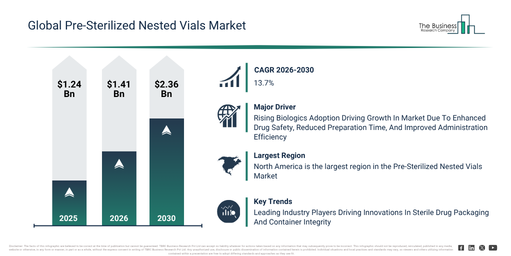
    Pre-Sterilized Nested Vials Market Poised To Hit $2.36 Billion By 2030 With A 13.7% CAGR

    The pre-sterilized nested vials market size has experienced rapid expansion in recent years. This market is projected to grow from $1.24 billion in 2025 to $1.41 billion in 2026, achieving a compound annual growth rate (CAGR) of 13.5%. Historically, this expansion has been driven by factors such as an escalating demand for injectable medications, the widespread adoption of pre-sterilized vials, the proliferation of biologics and vaccines, an uptick in contract manufacturing activities, and rigorous pharmaceutical packaging regulations.

    The pre-sterilized nested vials market is projected to experience substantial expansion over the upcoming period. This market is anticipated to reach $2.36 billion in 2030, exhibiting a compound annual growth rate (CAGR) of 13.7%. Key drivers for this growth throughout the forecast timeframe include increased automation in aseptic fill-finish processes, the emergence of environmentally friendly nested vials, a rise in vaccine manufacturing capabilities, the uptake of sophisticated polymer and glass materials, and the incorporation of digital tracking and monitoring solutions. Significant trends identified for the projected period encompass the integration of automated aseptic filling, wider acceptance of pre-sterilized packaging, automation in nested vial handling, advancements in material science, and efforts to optimize regulatory compliance.

    Get A Free Sample Report With In-Depth Market Insights:

    https://thebusinessresearchcompany.com/sample_request?id=57024459&type=smp&name=Pre-Sterilized%20Nested%20Vials%20Market%20Report%202026&utm_source=Blogs&utm_medium=Paid&utm_campaign=Oct_PR

    Pre-Sterilized Nested Vials Market Growth Drivers: What’s Behind The Acceleration?

    The increased acceptance of biologics is projected to boost the expansion of the pre-sterilized nested vials market. This adoption signifies the growing utilization of biologic treatments by medical professionals and individuals in standard clinical settings. The impetus behind this lies in biologics’ capacity to provide precise therapeutic outcomes, especially for chronic, autoimmune, and metabolic conditions, areas where traditional small-molecule drugs frequently exhibit reduced effectiveness. Pre-sterilized nested vials facilitate the expanding application of biologics by supplying ready-to-use, contamination-free primary packaging options, thereby guaranteeing product safety, maintaining drug stability, and minimizing preparation time during aseptic filling and administration processes. As an illustration, the Generics and Biosimilars Initiative (GaBI), a Belgium-based organization disseminating scientific data on generic and biosimilar pharmaceuticals, stated in October 2024 that in addition to the nine primary biologics, two other intricate biologic medications—Novo Nordisk’s Ozempic (semaglutide) and Eli Lilly’s Trulicity (dulaglutide), both prescribed for type 2 diabetes—achieved substantial sales in 2023, amounting to roughly US$14 billion and US$7.2 billion, respectively. Consequently, the increased uptake of biologics is propelling the expansion of the pre-sterilized nested vials market.

    Pre-Sterilized Nested Vials Market Breakdown By Product Type And Application

    The pre-sterilized nested vials market covered in this report is segmented –

    1) By Product Type: Glass Nested Vials, Plastic Nested Vials

    2) By Sterilization Method: Gamma Sterilization, Ethylene Oxide Sterilization, Steam Sterilization, Other Sterilization Methods

    3) By Capacity: 2R, 6R, 10R, 20R, Other Capacities

    4) By Application: Injectable Drugs Packaging, Biologics Packaging, Vaccine Packaging, Clinical Trial Packaging, Aseptic Fill-Finish Operations

    5) By End-User: Hospitals, Contract Manufacturing Organizations, Research Institutes, Other End-Users

    Subsegments:

    1) By Glass Nested Vials: Type I Borosilicate, Type II Soda Lime Treated, Type III Soda Lime, Neutral Glass

    2) By Plastic Nested Vials: Polypropylene, Polyethylene, Cyclo Olefin Polymer, Polycarbonate

    Pre-Sterilized Nested Vials Market Trends: What’s Defining The Industry’s Next Phase?

    Major companies operating in the pre-sterilized nested vials market are concentrating on developing innovative solutions, such as container closure integrity, to ensure sterile drug delivery, prevent contamination, and maintain the stability and safety of pharmaceutical products. Container closure integrity refers to a packaging system’s ability to uphold a complete seal that effectively prevents contamination, leakage, or loss of sterility. For instance, in May 2024, West Pharmaceutical Services Inc., a US-based manufacturing company, launched Daikyo Crystal Zenith (CZ) Nested Vials in a Tub. These are ready-to-use, pre-sterilized cyclic olefin polymer (COP) vials designed for sensitive therapies like cell/gene treatments and radiopharmaceuticals. Available in 2 mL (100 vials/tub) and 10 mL (48 vials/tub) sizes, with external dimensions resembling ISO 8362-1 glass, they ensure cryogenic container closure integrity, low particulates (<2% USP <788>), high viral vector recovery, breakage resistance, and minimal chemical interactions.

    Pre-Sterilized Nested Vials Market Top Companies Driving Competitive Growth

    Major companies operating in the pre-sterilized nested vials market are Corning Incorporated, Terumo Corporation, Nipro PharmaPackaging, West Pharmaceutical Services Inc., Gerresheimer AG, Datwyler Holding Inc., Stevanato Group, SCHOTT AG, Shandong Pharmaceutical Glass Co. Ltd., SGD Pharma, Bormioli Pharma, Adelphi Healthcare Packaging, DWK Life Sciences, Linuo Glassworks Group, SiO2 Materials Science, Jinan Youlyy Industrial Co. Ltd., Origin Pharma Packaging, Pacific Vial Manufacturing Inc., Daikyo Seiko Ltd., Qorpak, AptarGroup Inc., QCVIALZ LLC.

    View The Full Pre-Sterilized Nested Vials Market Report:

    https://thebusinessresearchcompany.com/report/pre-sterilized-nested-vials-market-report?utm_source=Blogs&utm_medium=Paid&utm_campaign=Oct_PR

    Pre-Sterilized Nested Vials Market Global Footprint: Which Region Leads The Industry?

    North America was the largest region in the pre-sterilized nested vials market in 2025. Asia-Pacific is expected to be the fastest-growing region in the forecast period. The regions covered in the pre-sterilized nested vials market report are Asia-Pacific, South East Asia, Western Europe, Eastern Europe, North America, South America, Middle East, Africa.

    Reach Out To Our Team:

    The Business Research Company: https://www.thebusinessresearchcompany.com/

    Americas: +1 310-496-7795

    Asia: +44 7882 955267 & +91 8897263534

    Europe: +44 7882 955267

    Email us at: marketing@tbrc.info

    Follow us on:

    LinkedIn: https://in.linkedin.com/company/the-business-research-company

    YouTube: https://www.youtube.com/channel/UC24_fI0rV8cR5DxlCpgmyFQ

    Global Market Model: https://www.thebusinessresearchcompany.com/global-market-model
  • Preclinical Antibody Development Market Growth To $7.93 Billion By 2030: What’s Driving The Expansion?

    Preclinical Antibody Development Market Growth To $7.93 Billion By 2030: What’s Driving The Expansion?

    Built to provide research that’s more actionable and strategically valuable, The Business Research Company’s 2026 market reports include market attractiveness analysis, total addressable market sizing, company benchmarking matrices, interactive Excel dashboards, broader supply chain intelligence, emerging startup tracking, and in-depth product insights.

    Preclinical Antibody Development Market Size And Revenue Outlook Through 2030

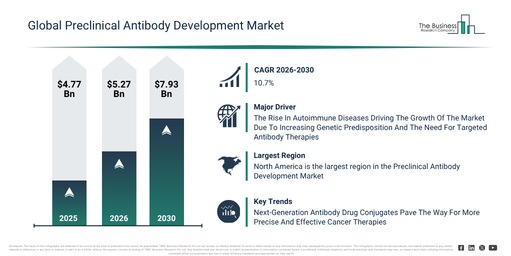
    The preclinical antibody development market has experienced rapid expansion in its size over recent years. This market is projected to expand from $4.77 billion in 2025 to $5.27 billion in 2026, demonstrating a compound annual growth rate (CAGR) of 10.5%. Historically, this expansion has been driven by factors such as the increasing need for therapeutic antibodies, significant progress in monoclonal antibody technologies, the expansion of research in oncology and infectious diseases, enhancements in laboratory automation, and greater research and development investments by pharmaceutical firms.

    The preclinical antibody development market is projected to experience swift expansion over the coming years. Its value is set to reach $7.93 billion by 2030, exhibiting a compound annual growth rate (CAGR) of 10.7%. This anticipated growth stems from several factors, including the increasing embrace of AI-based platforms for antibody design, the incorporation of predictive analytics into preclinical research, the expansion of infrastructure for biotechnology research, a rising emphasis on personalized medicine, and more partnerships between pharmaceutical and biotech firms. Key developments anticipated during this period encompass high-throughput screening of antibodies, AI-powered optimization of candidates, advanced in vitro testing methods, predictive models for toxicity, and early evaluations of developability.

    Get A Free Sample Report With In-Depth Market Insights:

    https://thebusinessresearchcompany.com/sample_request?id=11752862&type=smp&name=Preclinical%20Antibody%20Development%20Market%20Report%202026&utm_source=Blogs&utm_medium=Paid&utm_campaign=Oct_PR

    Preclinical Antibody Development Market Growth Factors Behind Sustained Expansion

    The rising occurrence of autoimmune conditions is anticipated to drive expansion in the preclinical antibody development market throughout the projection period. These disorders involve the immune system erroneously targeting healthy cells and tissues, resulting in persistent inflammation and cellular harm. The growing incidence of these ailments stems from a mix of genetic predispositions, environmental and lifestyle influences, shifts in immune-modulating exposures, and enhanced understanding and diagnostic tools for the diseases. The increasing challenge posed by autoimmune diseases has created substantial unfulfilled medical requirements, leading pharmaceutical and biotechnology firms to intensify their research and development initiatives on targeted biologic treatments. In this context, preclinical antibody development is crucial, facilitating the identification, testing, and refinement of antibodies specifically designed to regulate or inhibit disordered immune reactions before clinical trials. For example, as reported by Arthritis Australia, an Australia-based non-profit organization, in February 2024, the count of males affected by rheumatoid arthritis (RA), an autoimmune disease, is 212,136 and females 362,137 for 2025, projected to increase by 2040 to around 280,040 males and 479,828 females. Consequently, the expanding occurrence of autoimmune diseases is fueling the expansion of the preclinical antibody development market.

    Preclinical Antibody Development Market Segment Analysis And Revenue Potential

    The preclinical antibody development market covered in this report is segmented –

    1) By Type: Monoclonal Antibodies, Polyclonal Antibodies, Other Types

    2) By Service Type: Antibody Discovery, Humanization And Engineering, Affinity Maturation, Developability Assessment, Expression And Purification, In Vitro Functional Characterization

    3) By Application: Oncology, Infectious Diseases, Autoimmune Diseases, Other Applications

    4) By End-User: Pharmaceutical Companies, Biotechnology Companies, Research Institutes, Other End-Users

    Subsegments:

    1) By Monoclonal Antibodies: Murine Monoclonal Antibodies, Chimeric Monoclonal Antibodies, Humanized Monoclonal Antibodies, Fully Human Monoclonal Antibodies, Recombinant Monoclonal Antibodies

    2) By Polyclonal Antibodies: Primary Polyclonal Antibodies, Secondary Polyclonal Antibodies, Affinity Purified Polyclonal Antibodies, Antiserum Polyclonal Antibodies, Species Specific Polyclonal Antibodies

    3) By Other Types: Bispecific Antibodies, Single Domain Antibodies, Antibody Fragments, Conjugated Antibodies, Catalytic Antibodies

    Preclinical Antibody Development Market Industry Trends Fueling Future Revenue Growth

    Major companies active in the preclinical antibody development market are increasingly concentrating on the creation of innovative modalities, such as antibody-drug conjugates (ADCs), to improve targeted cancer therapies and enhance treatment efficacy. ADCs are a class of focused therapeutics that integrate the specificity of monoclonal antibodies with the powerful cytotoxic activity of small-molecule drugs, enabling the precise delivery of toxic payloads to cancer cells while minimizing harm to healthy tissues. As an example, in November 2024, Celltrion Inc., a South Korea-based biopharmaceutical firm, announced the advancement of CT-P70 and CT-P71, two novel preclinical ADC candidates aimed at solid tumors, including non-small cell lung cancer and bladder cancer, respectively. Both of these ADCs comprise tumor-targeting antibodies conjugated to cytotoxic payloads, engineered to achieve accurate tumor targeting with reduced off-target toxicity, potentially improving therapeutic indices compared to traditional monoclonal antibodies or chemotherapies. These next-generation ADC programs signify a broader industry shift from biosimilar manufacturing towards the development of novel, differentiated biologic therapies.

    Preclinical Antibody Development Market Leading Players And Competitive Positioning

    Major companies operating in the preclinical antibody development market are Thermo Fisher Scientific Inc., WuXi AppTec Co Ltd., Charles River Laboratories International Inc., Sartorius Aktiengesellschaft, Samsung Biologics Co. Ltd., Evotec SE, KBI Biopharma Inc., GenScript Biotech Corporation, Abzena plc, Crown Bioscience Inc., AbCellera Biologics Inc., Adimab LLC, Creative Biolabs Inc., Boehringer Ingelheim BioXcellence GmbH, Integral Molecular Inc., ProMab Biotechnologies Inc., Eurofins Scientific SE, Ablexis Inc., Mabsilico Inc., Fujifilm Diosynth Biotechnologies Inc., Recipharm AB.

    View The Full Preclinical Antibody Development Market Report:

    https://thebusinessresearchcompany.com/report/preclinical-antibody-development-market-report?utm_source=Blogs&utm_medium=Paid&utm_campaign=Oct_PR

    Preclinical Antibody Development Market Regional Distribution: Which Areas Power Market Growth?

    North America was the largest region in the preclinical antibody development market in 2025. Asia-Pacific is expected to be the fastest-growing region in the forecast period. The regions covered in the preclinical antibody development market report are Asia-Pacific, South East Asia, Western Europe, Eastern Europe, North America, South America, Middle East, Africa.

    Reach Out To Our Team:

    The Business Research Company: https://www.thebusinessresearchcompany.com/

    Americas: +1 310-496-7795

    Asia: +44 7882 955267 & +91 8897263534

    Europe: +44 7882 955267

    Email us at: marketing@tbrc.info

    Follow us on:

    LinkedIn: https://in.linkedin.com/company/the-business-research-company

    YouTube: https://www.youtube.com/channel/UC24_fI0rV8cR5DxlCpgmyFQ

    Global Market Model: https://www.thebusinessresearchcompany.com/global-market-model
  • Portable Near-Infrared (NIR) Spectrometers Market Analysis Through 2030: Market Size, Growth Trends And Industry Outlook

    Portable Near-Infrared (NIR) Spectrometers Market Analysis Through 2030: Market Size, Growth Trends And Industry Outlook

    Backed by market attractiveness analysis, total addressable market sizing, company benchmarking matrices, interactive Excel dashboards, wider supply chain intelligence, emerging startup coverage, and detailed product-level insights, The Business Research Company’s 2026 market reports are designed to offer research that is more actionable and strategically valuable than ever.

    Portable Near-Infrared (NIR) Spectrometers Market Revenue Outlook: What CAGR Lies Ahead Through 2030?

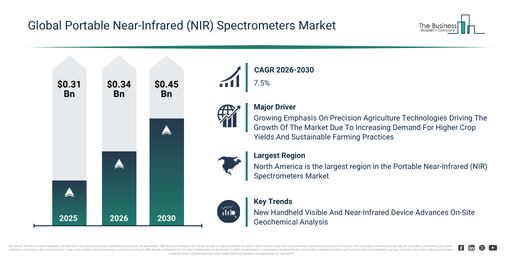
    The market size for portable near-infrared (NIR) spectrometers has experienced substantial growth in recent years. It is projected to expand from $0.31 billion in 2025 to $0.34 billion in 2026, at a compound annual growth rate (CAGR) of 7.3%. The historical expansion can be attributed to factors like the increasing demand for rapid material analysis, the rise of agricultural testing, greater adoption in food quality testing, advancements in handheld detector technology, and the need for on-site chemical analysis.

    The portable near-infrared (NIR) spectrometers market is anticipated to show significant expansion over the next few years. It is forecast to grow to $0.45 billion in 2030, achieving a compound annual growth rate (CAGR) of 7.5%. The expansion during the projected period can be ascribed to elements such as the integration of AI and cloud-based software, the miniaturization of spectrometer components, an increase in environmental and industrial testing applications, the advancement of multi-wavelength spectrometers, and the adoption of portable NIR spectrometers within the pharmaceutical sector. Prominent developments expected in this forecast period include portable real-time analysis, non-destructive material testing, integration with mobile devices, AI-enabled spectral interpretation, and field-deployable quality control.

    Get A Free Sample Report With In-Depth Market Insights:

    https://thebusinessresearchcompany.com/sample_request?id=71185615&type=smp&name=Portable%20Near-Infrared%20%28NIR%29%20Spectrometers%20Market%20Report%202026&utm_source=Blogs&utm_medium=Paid&utm_campaign=Oct_PR

    Portable Near-Infrared (NIR) Spectrometers Market Expansion Drivers: What’s Shaping Future Growth?

    An increasing focus on precision agriculture technologies is anticipated to propel the expansion of the portable near-infrared (NIR) spectrometers market throughout the projected timeframe. Precision agriculture involves sophisticated digital, sensor-driven, and data-powered instruments, allowing farmers to precisely monitor and manage soil and crop conditions, which in turn enhances yields, optimizes resource consumption, and lessens environmental harm. The rising uptake of these techniques is spurred by the imperative to boost agricultural output, manage escalating input expenses, and foster sustainable farming methods through targeted application of water, fertilizers, and pesticides, guided by immediate field information. Given precision agriculture’s strong dependence on quick, on-location analytical data, portable NIR spectrometers are becoming more prominent because they can provide instantaneous readings of soil nutrients, moisture levels, and crop vitality directly in the field. For example, data from January 2024, released by the Government Accountability Office, a US-based government agency, indicated that roughly 27% of farms and ranches across the United States had implemented precision agriculture methods for crop management in 2023. Consequently, the heightened emphasis on precision agriculture technologies is fostering the expansion of the portable near-infrared (NIR) spectrometers market.

    Portable Near-Infrared (NIR) Spectrometers Market Segment Breakdown: Which Categories Lead On Revenue?

    The portable near-infrared (NIR) spectrometers market covered in this report is segmented –

    1) By Component: Detectors, Optical Components, Software

    2) By Wavelength Range: Short-Wave Near-Infrared, Long-Wave Near-Infrared

    3) By Technology: Transmission Near-Infrared Spectroscopy, Reflectance Near-Infrared Spectroscopy, Diffuse Reflectance Near-Infrared Spectroscopy

    4) By Application: Agriculture And Raw Material Testing, Pharmaceutical And Chemical Analysis, Food Quality And Composition Testing, Industrial Material Identification, Environmental And Field Testing

    5) By End-User: Research Laboratories, Manufacturing Industries, Food Processing Units

    Subsegments:

    1) By Detectors: Indium Gallium Arsenide Detectors, Lead Sulfide Detectors, Silicon Detectors, Extended Range Indium Gallium Arsenide Detectors, Thermoelectrically Cooled Detectors

    2) By Optical Components: Light Sources, Diffraction Gratings, Optical Filters, Sample Holders, Fiber Optic Probes

    3) By Software: Data Acquisition Software, Spectral Analysis Software, Calibration And Modeling Software, Instrument Control Software, Cloud Based Data Management Software

    Portable Near-Infrared (NIR) Spectrometers Market Strategic Trends: What Defines The Next Growth Phase?

    Major companies in the portable near-infrared (NIR) spectrometers market are focusing on developing innovative solutions, such as handheld visible and near-infrared analyzers, to enable swift, on-site mineral identification and real-time geochemical decision-making in field exploration environments. Handheld visible and near-infrared (Vis-NIR) analyzers are portable spectroscopic tools that employ reflected light in the visible and near-infrared wavelength range to quickly identify and analyze the composition of materials directly in the field without requiring laboratory testing. For example, in January 2025, SciAps Inc., a US-based instrumentation company, launched reveNIR, a handheld Vis-NIR (Visible and Near-Infrared) analyzer designed to improve real-time mineral identification and field-based decision-making in mineral exploration. This device is engineered to provide rapid, on-site analysis of rocks, soils, and drill cores without the need for laboratory assessment, operating across a broad spectral range to enable accurate detection of key alteration and ore-related minerals.

    Portable Near-Infrared (NIR) Spectrometers Market Competitive Analysis Of Leading Industry Participants

    Major companies operating in the portable near-infrared (NIR) spectrometers market are Thermo Fisher Scientific Inc., ABB Ltd., Agilent Technologies Inc., Yokogawa Electric Corporation, Sartorius AG, Shimadzu Corporation, Bruker Corporation, Carl Zeiss AG, HORIBA Ltd., Hamamatsu Photonics K.K., VIAVI Solutions Inc., Metrohm AG, KPM Analytics Inc., Unity Scientific Inc., Ocean Insight Inc., JASCO Corporation, Kett Electric Laboratory Co. Ltd., Nynomic AG, Wasatch Photonics Inc., Q-Interline A/S, StellarNet Inc., Polytec GmbH, Anton Paar GmbH.

    View The Full Portable Near-Infrared (NIR) Spectrometers Market Report:

    https://thebusinessresearchcompany.com/report/portable-near-infrared-nir-spectrometers-market-report?utm_source=Blogs&utm_medium=Paid&utm_campaign=Oct_PR

    Portable Near-Infrared (NIR) Spectrometers Market Geographic Spread And Regional Opportunities

    North America was the largest region in the portable near-infrared (NIR) spectrometers market in 2025. Asia-Pacific is expected to be the fastest-growing region in the forecast period. The regions covered in the portable near-infrared (NIR) spectrometers market report are Asia-Pacific, South East Asia, Western Europe, Eastern Europe, North America, South America, Middle East, Africa.

    Reach Out To Our Team:

    The Business Research Company: https://www.thebusinessresearchcompany.com/

    Americas: +1 310-496-7795

    Asia: +44 7882 955267 & +91 8897263534

    Europe: +44 7882 955267

    Email us at: marketing@tbrc.info

    Follow us on:

    LinkedIn: https://in.linkedin.com/company/the-business-research-company

    YouTube: https://www.youtube.com/channel/UC24_fI0rV8cR5DxlCpgmyFQ

    Global Market Model: https://www.thebusinessresearchcompany.com/global-market-model
  • Population Genomic Screening Programs Market Growth Forecast: Market Size, Key Trends And Emerging Opportunities Through 2030

    Population Genomic Screening Programs Market Growth Forecast: Market Size, Key Trends And Emerging Opportunities Through 2030

    Built to provide research that’s more actionable and strategically valuable, The Business Research Company’s 2026 market reports include market attractiveness analysis, total addressable market sizing, company benchmarking matrices, interactive Excel dashboards, broader supply chain intelligence, emerging startup tracking, and in-depth product insights.

    Population Genomic Screening Programs Market Forecast: What Value Will The Market Reach By 2030?

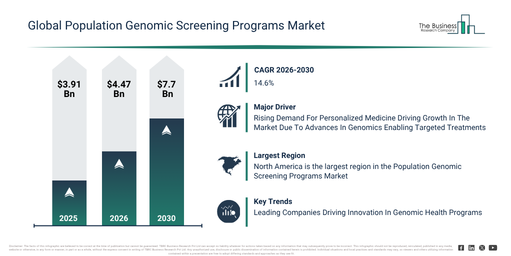
    The size of the population genomic screening programs market has experienced rapid growth in recent years. This market is projected to expand from $3.91 billion in 2025 to $4.47 billion in 2026, demonstrating a compound annual growth rate (CAGR) of 14.3%. Historically, this expansion has been driven by increased awareness of hereditary diseases, the implementation of newborn screening programs, advancements in sequencing technologies, growing government health initiatives, and the development of healthcare infrastructure.

    The market for population genomic screening programs is projected to experience substantial expansion over the upcoming years. Its value is set to reach $7.7 billion in 2030, showing a compound annual growth rate (CAGR) of 14.6%. This anticipated growth during the forecast period stems from factors such as the broadening of adult and carrier screening initiatives, the incorporation of AI-based genomic analysis tools, connectivity with digital health platforms, a rising need for individualized medicine, and increased investment in population genomic research. Key developments expected in this period encompass comprehensive genetic risk evaluation across populations, linking with electronic health records (EHR), AI-powered variant interpretation, tailored preventive health schemes, and adherence to data security and privacy regulations.

    Get A Free Sample Report With In-Depth Market Insights:

    https://thebusinessresearchcompany.com/sample_request?id=74694922&type=smp&name=Population%20Genomic%20Screening%20Programs%20Market%20Report%202026&utm_source=Blogs&utm_medium=Paid&utm_campaign=Oct_PR

    Population Genomic Screening Programs Market Industry Drivers: What’s Behind The Revenue Growth?

    The increasing need for individualized healthcare approaches is anticipated to boost the expansion of the population genomic screening programs market. This approach, personalized medicine, customizes medical interventions and health choices according to a person’s genetic makeup, environmental factors, and lifestyle, aiming to enhance treatment efficacy and safety. Its rising uptake is propelled by developments in genomics and molecular diagnostics, allowing medical professionals to gain deeper insights into genetic differences and administer more accurate, focused therapies, thereby improving patient results and minimizing negative reactions. Population genomic screening programs are fundamental to the advancement of personalized medicine, as they identify genetic variations and risk factors linked to diseases within broad and varied populations. Such programs facilitate the early detection of disease risks, the categorization of patient groups, and the creation of customized prevention and treatment plans for individuals and for public health initiatives. As an illustration, in February 2024, the Personalized Medicine Coalition, a U.S.-based non-profit organization, stated that in 2023 the U.S. Food and Drug Administration (FDA) sanctioned 16 new personalized treatments for rare disease patients, an increase from six approvals in 2022. Consequently, the expanding demand for personalized medicine is fueling the growth of the population genomic screening programs market.

    Population Genomic Screening Programs Market Segment Trends And Revenue Contributors

    The population genomic screening programs market covered in this report is segmented –

    1) By Program Type: Newborn Screening, Adult Screening, Carrier Screening, Pharmacogenomics, Other Program Types

    2) By Program Model: National Screening Programs, Regional Screening Programs, Institution Based Screening, Direct To Consumer Screening

    3) By Technology: Next Generation Sequencing, Microarray, Polymerase Chain Reaction, Other Technologies

    4) By Application: Rare Disease Detection, Cancer Risk Assessment, Pharmacogenomics, Chronic Disease Prediction, Other Applications

    5) By End-User: Hospitals, Research Institutes, Government Agencies, Diagnostic Laboratories, Other End-Users

    Subsegments:

    1) By Newborn Screening: Rare Disease Screening, Metabolic Disorder Screening, Immunodeficiency Disorder Screening, Neurological Disorder Screening, Endocrine Disorder Screening

    2) By Adult Screening: Hereditary Cancer Risk Screening, Cardiovascular Genetic Risk Screening, Neurodegenerative Disease Risk Screening, Preventive Health Risk Screening, Late Onset Genetic Disorder Screening

    3) By Carrier Screening: Preconception Carrier Screening, Prenatal Carrier Screening, Expanded Carrier Screening, Recessive Disorder Carrier Screening, Population Based Carrier Screening

    4) By Pharmacogenomics: Drug Response Prediction Testing, Adverse Drug Reaction Risk Testing, Dose Optimization Testing, Therapeutic Selection Testing, Medication Safety Testing

    5) By Other Program Types: Polygenic Risk Assessment Programs, Predictive Genomic Health Programs, Preventive Genomic Screening Programs, Population Risk Stratification Programs, Research Based Genomic Screening Programs

    #Population Genomic Screening Programs Market Growth Trends: What’s Shaping The Future Outlook?

    Leading companies operating in the population genomic screening programs market are concentrating on developing innovative solutions, such as hereditary risk assessment, to facilitate the early identification of genetic predispositions, guide personalized prevention strategies, and enhance long-term health outcomes. Hereditary risk assessment involves evaluating an individual’s probability of developing specific genetic disorders or diseases, based on their inherited genetic variants and family medical history. For instance, in November 2023, Helix OpCo, LLC, a US-based population genomics and clinical technology company, partnered with Cone Health, a US-based not-for-profit network of healthcare providers, to launch a population genomics initiative aimed at advancing precision medicine in North Carolina. This program utilizes Helix’s comprehensive platform to furnish actionable precision medicine insights, thereby enabling earlier interventions, fostering community wellness efforts, and improving health equity across Alamance, Forsyth, Guilford, Rockingham, and Randolph counties and beyond.

    Population Genomic Screening Programs Market Industry Leaders And Competitive Landscape

    Major companies operating in the population genomic screening programs market are F. Hoffmann-La Roche AG, Thermo Fisher Scientific Inc., Quest Diagnostics Incorporated, Illumina Inc., Natera Inc., Myriad Genetics Inc., BGI Genomics Co. Ltd., Guardant Health Inc., Fulgent Genetics Inc., Ambry Genetics Corporation, Pacific Biosciences of California Inc., Color Genomics Inc., Helix OpCo Inc., Personalis Inc., CENTOGENE N.V., ProPhase Labs Inc., DNAnexus Inc., Genomics England Limited, Eurofins Genomics Germany GmbH, Sema4 Inc., Mapmygenome India Private Limited, Gencove Inc.

    View The Full Population Genomic Screening Programs Market Report:

    https://thebusinessresearchcompany.com/report/population-genomic-screening-programs-market-report?utm_source=Blogs&utm_medium=Paid&utm_campaign=Oct_PR

    Population Genomic Screening Programs Market Regional Analysis And Top Geography

    North America was the largest region in the population genomic screening programs market in 2025. Asia-Pacific is expected to be the fastest-growing region in the forecast period. The regions covered in the population genomic screening programs market report are Asia-Pacific, South East Asia, Western Europe, Eastern Europe, North America, South America, Middle East, Africa.

    Reach Out To Our Team:

    The Business Research Company: https://www.thebusinessresearchcompany.com/

    Americas: +1 310-496-7795

    Asia: +44 7882 955267 & +91 8897263534

    Europe: +44 7882 955267

    Email us at: marketing@tbrc.info

    Follow us on:

    LinkedIn: https://in.linkedin.com/company/the-business-research-company

    YouTube: https://www.youtube.com/channel/UC24_fI0rV8cR5DxlCpgmyFQ

    Global Market Model: https://www.thebusinessresearchcompany.com/global-market-model
  • Pooled Clustered Regularly Interspaced Short Palindromic Repeats (CRISPR) Screening Market CAGR Forecast Through 2030: Key Trends Shaping Industry Expansion

    Pooled Clustered Regularly Interspaced Short Palindromic Repeats (CRISPR) Screening Market CAGR Forecast Through 2030: Key Trends Shaping Industry Expansion

    Backed by market attractiveness analysis, total addressable market sizing, company benchmarking matrices, interactive Excel dashboards, wider supply chain intelligence, emerging startup coverage, and detailed product-level insights, The Business Research Company’s 2026 market reports are designed to offer research that is more actionable and strategically valuable than ever.

    Pooled Clustered Regularly Interspaced Short Palindromic Repeats (CRISPR) Screening Market Size Outlook: How Quickly Will Revenue Expand Through 2030?

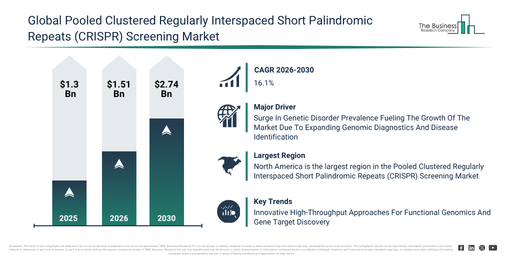
    The pooled clustered regularly interspaced short palindromic repeats (crispr) screening market size has experienced significant expansion recently. Its value is projected to rise from $1.3 billion in 2025 to $1.51 billion in 2026, demonstrating a compound annual growth rate (CAGR) of 15.9%. This past growth can be attributed to an increasing need for functional genomics, wider adoption of CRISPR-Cas9 technology, an increase in pharmaceutical research and development, progress in gene editing tools, and the expansion of academic research programs.

    The pooled clustered regularly interspaced short palindromic repeats (crispr) screening market is projected to experience substantial expansion over the upcoming years. This market is anticipated to reach a valuation of $2.74 billion by 2030, exhibiting a compound annual growth rate (CAGR) of 16.1%. Factors contributing to this growth during the forecast period include AI-enabled gene screening, the integration of cloud-based genomics platforms, increasing demand for personalized medicine applications, the expansion of biotech infrastructure, and advancements in automation for high-throughput screening. Key trends identified for the forecast period encompass high-throughput screening techniques, the integration of multi-omics data, automated CRISPR workflows, AI-driven gene target identification, and real-time functional genomics analysis.

    Get A Free Sample Report With In-Depth Market Insights:

    https://thebusinessresearchcompany.com/sample_request?id=20824759&type=smp&name=Pooled%20Clustered%20Regularly%20Interspaced%20Short%20Palindromic%20Repeats%20%28CRISPR%29%20Screening%20Market%20Report%202026&utm_source=Blogs&utm_medium=Paid&utm_campaign=Oct_PR

    Pooled Clustered Regularly Interspaced Short Palindromic Repeats (CRISPR) Screening Market Growth Factors: What’s Supporting Expansion?

    The growing occurrence of genetic disorders is anticipated to fuel the expansion of the pooled clustered regularly interspaced short palindromic repeats (CRISPR) screening market. These conditions, stemming from inherited or acquired DNA irregularities impacting normal bodily functions, are seeing an uptick in prevalence. This increase is partly due to factors such as older parental age, enhanced diagnostic tools, and broader genetic screening efforts, which collectively lead to more cases being identified and reported. Pooled CRISPR screening is vital for genetic disorder research, facilitating high-throughput, genome-wide discovery of genes and pathways linked to diseases. For instance, the Cystic Fibrosis Trust, a UK-based charity, noted in October 2024 that cystic fibrosis patient registrations increased from approximately 11,148 in 2022 to 11,318 in 2023, showing an annual growth of about 1.5%. Consequently, the rising incidence of genetic disorders is a key driver for the pooled clustered regularly interspaced short palindromic repeats (CRISPR) screening market.

    Pooled Clustered Regularly Interspaced Short Palindromic Repeats (CRISPR) Screening Market Segment Analysis Spotlighting Growth Areas

    The pooled clustered regularly interspaced short palindromic repeats (crispr) screening market covered in this report is segmented –

    1) By Screening Type: Genome Wide Screening, Targeted Screening

    2) By Product Type: Libraries, Reagents And Kits, Instruments, Software, Services

    3) By Technology: Clustered Regularly Interspaced Short Palindromic Repeats (CRISPR) Cas9 Screening, Clustered Regularly Interspaced Short Palindromic Repeats (CRISPR) Interference Screening, Clustered Regularly Interspaced Short Palindromic Repeats (CRISPR) Activation Screening

    4) By Application: Functional Genomics, Drug Discovery, Cancer Research, Gene Regulation, Other Applications

    5) By End-User: Pharmaceutical And Biotechnology Companies, Academic And Research Institutes, Contract Research Organizations, Other End-Users

    Subsegments:

    1) By Genome Wide Screening: Knockout Screening, Activation Screening, Interference Screening

    2) By Targeted Screening: Gene Specific Knockout, Gene Specific Activation, Gene Specific Interference

    Pooled Clustered Regularly Interspaced Short Palindromic Repeats (CRISPR) Screening Market Industry Trends: What’s Reshaping Demand?

    Major companies in the pooled clustered regularly interspaced short palindromic repeats (CRISPR) screening market are concentrating on developing innovative solutions like transcriptome-wide profiling to enable high-throughput functional genomics and precise identification of gene targets for therapeutic and research applications. Transcriptome-wide profiling refers to the comprehensive analysis of all RNA transcripts expressed in a cell or tissue at a given time, providing insights into gene activity, regulation, and cellular functions. For instance, in June 2023, Parse Biosciences Inc., a US-based biotechnology company, launched CRISPR Detect, a technology enabling high-scale single-cell pooled CRISPR screens. This innovation integrates with the company’s Evercode Whole Transcriptome platform to pair individual gene perturbations, via Cas12-based single guide ribonucleic acid (RNA) (sgRNAs), with whole-transcriptome expression profiles across up to one million cells per experiment, overcoming prior throughput and cost barriers in droplet-based single-cell RNA-seq. It expands applications in genome-scale gene function analysis, regulatory networks, signaling pathways, and drug discovery beyond targeted validation.

    Pooled Clustered Regularly Interspaced Short Palindromic Repeats (CRISPR) Screening Market Key Participants And Competitive Landscape

    Major companies operating in the pooled clustered regularly interspaced short palindromic repeats (crispr) screening market are Thermo Fisher Scientific Inc., Merck KGaA, Danaher Corporation, Applied Biological Materials Inc., Agilent Technologies Inc., Charles River Laboratories International Inc., QIAGEN N.V., GenScript Biotech Corporation, Twist Bioscience Corporation, Ginkgo Bioworks Inc., Element Biosciences Inc., Synthego Corporation, Bit.bio Limited, Bioneer Corporation, VectorBuilder Inc., Admera Health LLC, Addgene Inc., Creative Biogene Inc., Cellecta Inc., Vivlion Inc., GeneCopoeia Inc.

    View The Full Pooled Clustered Regularly Interspaced Short Palindromic Repeats (CRISPR) Screening Market Report:

    https://thebusinessresearchcompany.com/report/pooled-clustered-regularly-interspaced-short-palindromic-repeats-crispr-screening-market-report?utm_source=Blogs&utm_medium=Paid&utm_campaign=Oct_PR

    Pooled Clustered Regularly Interspaced Short Palindromic Repeats (CRISPR) Screening Market Geographic Analysis: Where Is Demand Rising Fastest?

    North America was the largest region in the pooled clustered regularly interspaced short palindromic repeats (CRISPR) screening market in 2025. Asia-Pacific is expected to be the fastest-growing region in the forecast period. The regions covered in the pooled clustered regularly interspaced short palindromic repeats (crispr) screening market report are Asia-Pacific, South East Asia, Western Europe, Eastern Europe, North America, South America, Middle East, Africa.

    Reach Out To Our Team:

    The Business Research Company: https://www.thebusinessresearchcompany.com/

    Americas: +1 310-496-7795

    Asia: +44 7882 955267 & +91 8897263534

    Europe: +44 7882 955267

    Email us at: marketing@tbrc.info

    Follow us on:

    LinkedIn: https://in.linkedin.com/company/the-business-research-company

    YouTube: https://www.youtube.com/channel/UC24_fI0rV8cR5DxlCpgmyFQ

    Global Market Model: https://www.thebusinessresearchcompany.com/global-market-model