Category: HealthcareServices

  • Healthcare IT Consulting Global Market Outlook 2024-2033: Size And Growth Rate Analysis

    Healthcare IT Consulting Global Market Outlook 2024-2033: Size And Growth Rate Analysis

    The Business Research Company’s global market reports provide comprehensive analysis on the various markets in 27 industries across 60 geographies.

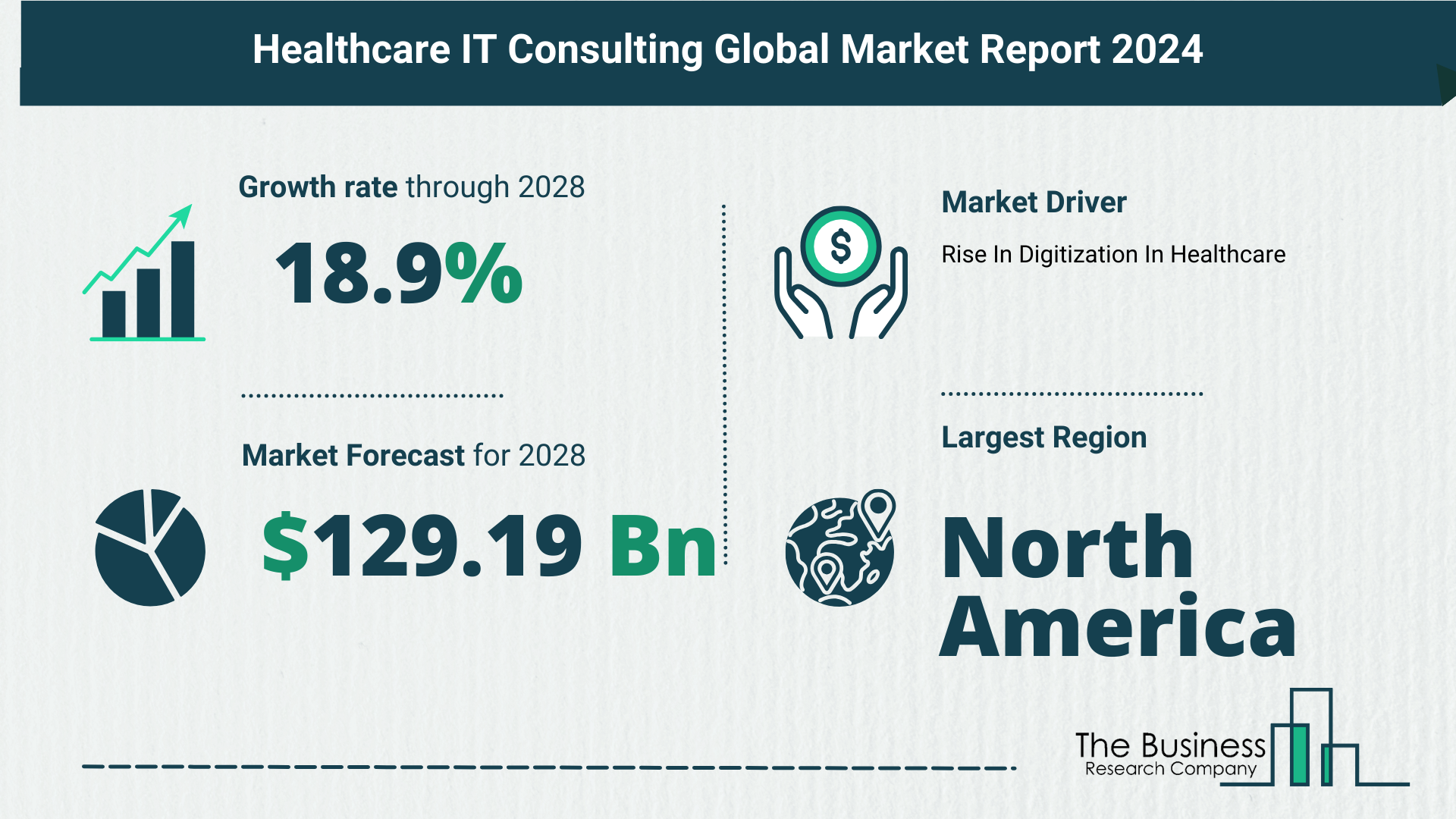
    The healthcare IT consulting market has witnessed remarkable growth in recent years. According to industry reports, the market size surged from $54.55 billion in 2023 to $64.59 billion in 2024, showcasing a compelling Compound Annual Growth Rate (CAGR) of 18.4%. Looking ahead, the forecast is even more promising, with an anticipated market size of $129.19 billion in 2028, growing at a CAGR of 18.9%. This growth trajectory is underpinned by various factors, notably including telemedicine, genomics, and cybersecurity.

    Factors Driving Historic Growth

    • Regulatory compliance
    • EHR implementation
    • Interoperability
    • Security and privacy
    • Population health management

    Anticipated Growth Factors

    • Telemedicine growth
    • Genomics and precision medicine
    • Cybersecurity and data protection
    • Pandemic preparedness
    • Healthcare equity

    Telemedicine’s Pivotal Role

    Growing Telemedicine Services Driving The Expansion Of The Healthcare It Consulting Market

    The rise of telemedicine services is a pivotal force propelling the healthcare IT consulting market forward. Telemedicine involves the remote delivery of healthcare, consultations, and clinical services through telecommunications technologies. Notably, a substantial 37.0% of adults in the United States reported utilizing telemedicine services within the previous 12 months in 2021. The integration of video conferencing, EHR systems, and remote monitoring tools necessitates the expertise of healthcare IT consultants, further solidifying their role in driving market growth.

    Dominant Players and Strategies

    Innovation And Product Diversification Strategies In The Healthcare It Consulting Market

    Major players in the healthcare IT consulting market are adopting innovative strategies to stay ahead. One prominent approach involves developing new products, such as Software as a Service (SaaS) platforms, to broaden customer bases and boost revenue. For example, Epic Systems Corporation launched Garden Plot, a SaaS platform tailored for independent medical groups. This platform simplifies access to Epic tools, fostering interoperability and collaboration among healthcare providers. The move towards SaaS reflects a broader trend of companies aiming to meet the evolving needs of the healthcare industry.

    Major Companies in Healthcare IT Consulting

    • Accenture PLC
    • Cerner Corporation
    • Deloitte Touche Tohmatsu Limited
    • Tata Consultancy Services Limited
    • Epic Systems Corporation
    • Microsoft Corporation
    • PricewaterhouseCoopers International Limited

    View More On The Healthcare IT Consulting Market Report 2024 – https://www.thebusinessresearchcompany.com/report/healthcare-it-consulting-global-market-report

    Mergers and Acquisitions: Driving Growth and Expertise

    Healthcare Performance Group Inc. Acquired Health Data Specialists LLC

    Mergers and acquisitions continue to shape the landscape of the healthcare IT consulting market. In July 2022, Healthcare Performance Group Inc. acquired Health Data Specialists LLC, emphasizing a strategic move to maximize EHR platform capabilities. This acquisition enhances expertise in project management, optimization, legacy system support, and managed services. The evolving market dynamics are pushing companies to consolidate resources and enhance their service offerings to meet the growing demands of the healthcare sector.

    Market Segmentation: Understanding Diversity

    The healthcare IT consulting market is diverse, with segmentation based on type, component, and end user.

    Segmentation Overview

    1. Type:
      • HCIT Change Management
      • Healthcare Business Process Management
      • HCIT Integration And Migration
      • Healthcare or Medical System Security Set-Up And Risk Assessment
      • Healthcare Enterprise Reporting And Data Analytics
      • Other Types
    2. Component:
      • Services
      • Software
      • Hardware
    3. End User:
      • Hospitals And Ambulatory Care Centers
      • Diagnostic And Imaging Centers
      • Public And Private Payers
      • Other End Users

    Regional Dynamics: North America Leading, Asia-Pacific Surging

    North America held the largest share in the healthcare IT consulting market in 2023. However, Asia-Pacific is poised to be the fastest-growing region in the forecast period. The evolving healthcare landscape, coupled with technological advancements and increasing healthcare IT investments, positions Asia-Pacific as a hotbed for market expansion.

    In conclusion, the healthcare IT consulting market is riding a wave of rapid growth, driven by transformative factors such as telemedicine, innovative strategies from major players, and strategic mergers and acquisitions. As the market continues to evolve, the industry is gearing up to address the diverse needs of healthcare stakeholders, ushering in a new era of digital healthcare solutions and consulting expertise.

    Request A Sample Of The Global Healthcare IT Consulting Market Report 2024:
    https://www.thebusinessresearchcompany.com/sample_request?id=7709&type=smp

  • Overview Of The Hyaluronic Acid-based Dermal Fillers Market 2024-2033: Growth And Major Players Analysis

    Overview Of The Hyaluronic Acid-based Dermal Fillers Market 2024-2033: Growth And Major Players Analysis

    The Business Research Company’s global market reports are now updated with the latest market sizing information for the year 2024 and forecasted to 2033

    The hyaluronic acid-based dermal fillers market has experienced a significant surge in recent years, evolving from a $4.47 billion industry in 2023 to an estimated $5 billion in 2024. This growth is propelled by a compound annual growth rate (CAGR) of 11.7%. Factors contributing to this expansion in the historic period include the aging population, increased beauty consciousness, the influence of social media, the proliferation of medical spas, aesthetic clinics, and the rise in e-commerce.

    Anticipated Growth on the Horizon

    • The hyaluronic acid-based dermal fillers market is poised for continued rapid growth, projected to reach $7.64 billion in 2028, with a CAGR of 11.2%.
    • The forecasted expansion is driven by increasing disposable income, heightened consumer awareness regarding personal hygiene and grooming, a growing demand for personal care products, and overall economic growth.

    Driving Force: The Rise in Aging Population

    • The hyaluronic acid-based dermal fillers market is significantly influenced by the global rise in the aging population.
    • With the demographic shift towards an aging society, there is an increased demand for non-surgical solutions to address signs of aging, such as wrinkles and sagging skin.
    • The World Health Organization predicts that the global population of individuals aged 60 and above will double by 2050, reaching 2.1 billion.

    Key Market Players

    • Major companies contributing to the growth of the hyaluronic acid-based dermal fillers market include Bohus Biotech AB, AbbVie Inc., Galderma Laboratories L.P., Merz Pharmaceuticals GmbH, and others.
    • These industry leaders play a crucial role in developing and expanding the market through their innovative products and strategic initiatives.

    View More On The Hyaluronic Acid-based Dermal Fillers Market Report 2024 – https://www.thebusinessresearchcompany.com/report/hyaluronic-acid-based-dermal-fillers-global-market-report

    Technological Advancements Driving Innovation

    • Technological advancements are at the forefront of shaping the hyaluronic acid-based dermal fillers market.
    • Companies are focusing on developing new technological solutions, such as laser resurfacing treatments introduced in 2021, addressing multiple skin concerns in a more efficient and less invasive manner.
    • These innovations are designed to enhance the appeal of dermal fillers and address emerging needs, including those arising from the COVID-19 stress.

    Strategic Acquisition: Prollenium Medical Technologies Inc. and Soft Medical Aesthetics

    • In a strategic move, Prollenium Medical Technologies Inc., a Canada-based manufacturer, acquired Soft Medical Aesthetics in October 2022.
    • The acquisition aims to strengthen Prollenium’s brand lineup, featuring Revanesse dermal fillers, and enhance safety and effectiveness in the aesthetic medicine field.
    • Soft Medical Aesthetics, based in France, is a notable manufacturer of hyaluronic acid-based dermal fillers.

    Market Segmentation and Regional Dynamics

    • The hyaluronic acid-based dermal fillers market is segmented based on product type (Single-Phase Product, Duplex Product), usage (Specialty And Dermatology Clinics, Hospitals And Clinics), and application (Wrinkle Removal, Lip Augmentation, Rhinoplasty, Other Applications).
    • In 2023, North America dominated the market, while Asia-Pacific is anticipated to be the fastest-growing region in the forecast period.

    Future Trends: Shaping the Landscape

    • Emerging trends in the forecast period include a shift towards natural and organic formulations, combination therapies, minimally invasive procedures, advanced delivery techniques, and the integration of virtual consultations and telemedicine.
    • These trends reflect a dynamic market responding to evolving consumer preferences and technological advancements.

    Conclusion: Aesthetic Evolution in a Dynamic Market
    The hyaluronic acid-based dermal fillers market is undergoing a remarkable transformation, driven by factors such as the aging population, technological advancements, and strategic acquisitions. With the market set to reach $7.64 billion by 2028, it’s evident that the quest for youthful and rejuvenated skin continues to be a significant global trend. As the industry evolves, embracing innovation and adapting to consumer demands, the future promises a landscape where beauty meets cutting-edge technology.

    Request A Sample Of The Global Hyaluronic Acid-based Dermal Fillers Market Report 2024:
    https://www.thebusinessresearchcompany.com/sample_request?id=6605&type=smp

  • What Is The Forecast Growth Rate For The Hospice Care Market?

    What Is The Forecast Growth Rate For The Hospice Care Market?

    The Business Research Company’s market reports offer an in-depth analysis on the market’s growth potential, major drivers, key trends and more.

    Steady Growth Trajectory

    The hospice care market has experienced substantial growth, escalating from $4.21 billion in 2023 to $4.73 billion in 2024, boasting a commendable Compound Annual Growth Rate (CAGR) of 12.3%. This surge is attributed to an array of factors, including the increase in the aging population, rising terminal illnesses, adoption of a palliative care approach, the expansion of Medicare coverage, and the surge in home-based care.

    Projected Momentum
    The market is poised for sustained growth, anticipated to reach $7.31 billion in 2028 with a CAGR of 11.5%. Drivers for this expansion include a continued aging population, effective chronic illness management, integration of telehealth services, regulatory changes, and a heightened focus on quality and outcome measures. Notable trends in the forecast period encompass personalized care plans, a holistic approach, pediatric hospice care, bereavement support, and an emphasis on quality and outcome measures.

    Chronic Diseases as Catalysts

    • Epidemic of Chronic Diseases: The surge in chronic diseases, attributed to factors like tobacco use, poor nutrition, physical inactivity, and excessive alcohol consumption, is a pivotal driver for the growth of the hospice care market.
    • Global Impact: Chronic diseases constitute a significant global health burden, with 74% of total deaths attributed to non-communicable diseases. This includes fatalities from cardiovascular diseases, cancer, chronic respiratory diseases, and diabetes.

    Industry Leaders
    Major players shaping the hospice care landscape include Dierksen Hospice, Kindred at Home, National Association for Home Care and Hospice, PruittHealth Inc., Covenant Care, and many more.

    Read More On The Hospice Care Market Report 2024 – https://www.thebusinessresearchcompany.com/report/hospice-care-global-market-report

    Innovations: Home-Based Hospice Services

    • Strategic Focus: Companies are strategically introducing innovative solutions like home-based hospice services to gain a competitive edge.
    • Enhancing Quality of Life: Home-based hospice services offer specialized medical care, emotional support, and comfort to terminally ill individuals in the familiar surroundings of their homes.

    Merger and Acquisition Dynamics

    • Traditions Health and Homestead Hospice and Palliative Care: In December 2021, Traditions Health acquired Homestead Hospice and Palliative Care, reflecting a strategic move to expand end-of-life care services across the nation while ensuring the highest caliber of patient care.

    Market Segmentation

    The hospice care market is segmented based on:

    • Type: Nursing Services, Medical Supply Services, Physician Services, Other Types of Services
    • Application: Home Settings, Hospitals, Specialty Nursing Homes, Hospice Care Centers

    Regional Dynamics

    • North America’s Dominance: In 2023, North America emerged as the largest region in the hospice care market, showcasing the region’s commitment to advancing end-of-life care services.

    In conclusion, the hospice care market is evolving to meet the increasing demands of an aging population and rising chronic diseases. With a focus on personalized care, innovative home-based services, and strategic mergers, the industry is poised to play a pivotal role in enhancing the quality of life for individuals during their final stages of illness. As we navigate the future of hospice care, the industry’s commitment to compassion and innovation remains unwavering.

    Request for A Sample Of The Global Hospice Care Market Report:
    https://www.thebusinessresearchcompany.com/sample_request?id=7429&type=smp

  • Key Takeaways From The Global Home Infusion Therapy Market Forecast 2024

    Key Takeaways From The Global Home Infusion Therapy Market Forecast 2024

    The Business Research Company’s global market reports are now updated with the latest market sizing information for the year 2024 and forecasted to 2033

    As per The Business Research Company’s Home Infusion Therapy Global Market Report 2024, the home infusion therapy market is expected to show significant growth in the forecast period.

    The home infusion therapy market has experienced rapid growth, reaching $28.68 billion in 2023 and projecting a rise to $31.95 billion in 2024, reflecting a Compound Annual Growth Rate (CAGR) of 11.4%. This surge in the historic period is attributed to the increased aging population, rise in patient preference, the surge in chronic diseases, and the inclination towards hospital avoidance.

    Future Projections

    An Upward Trajectory

    The home infusion therapy market is poised for substantial growth in the coming years, with an anticipated increase to $47.43 billion in 2028, boasting a CAGR of 10.4%. This expansion in the forecast period is fueled by rising telehealth integration, an emphasis on personalized medicine, pandemic preparedness, patient empowerment, and the growing prevalence of value-based care models.

    Emerging Trends
    Key trends in the forecast period encompass the utilization of advanced infusion devices, the prominence of biologic and specialty drugs, the growth of pediatric home infusion, a focus on infusion pump safety, and the importance of patient education and training.

    Catalysts for Growth

    1. Global Population and Food Demand

    The growing global population and the subsequent increase in food demand are anticipated to be significant drivers for the growth of the home infusion therapy market. As the world’s population is expected to reach 9.7 billion by 2050, the demand for food is projected to increase by 70%. This surge in population and food demand is closely linked to the need for home infusion therapy, especially among the aging population who rely on these therapies. The crucial connection between food and patients undergoing home infusion therapy underlines the pivotal role of this market in sustaining health and well-being.

    1. Major Market Players

    Prominent companies in the home infusion therapy market include B. Braun Melsungen AG, Baxter International Inc., Eli Lilly and Company, and others. These entities play a vital role in providing essential infusion therapy services, contributing to the market’s growth.

    Strategies for Evolution

    Innovation and Product Diversification

    Leading companies in the market are prioritizing innovation by introducing compact infusion systems. The Avoset Infusion Platform, launched by Eitan Medical Ltd., is a prime example. This connected, multi-therapy ambulatory infusion system is designed to revolutionize post-acute care and specialty infusion therapy. With features like remote monitoring capabilities and integration with the AvosetGo app, it aims to enhance the user experience, improve patient outcomes, and promote comfort and independence throughout the treatment cycle.

    Strategic Acquisitions: PromptCare and NBN Infusions Inc.

    In March 2021, PromptCare, a US-based specialty home infusion, and complex respiratory services company, acquired NBN Infusions Inc., fortifying its focus on providing specialty infusion therapies. This strategic move aimed at expanding PromptCare’s service portfolio in home infusion therapy, enteral therapy, and respiratory therapy services.

    Market Segmentation

    The home infusion therapy market is segmented based on product, administration, application, and end-user:

    1. Product: Encompassing Infusion Pumps, Intravenous Sets, IV Cannulas, Needleless Connectors.
    2. Administration: Covering Intramuscular, Subcutaneously, Epidural.
    3. Application: Including Total Parenteral Nutrition, Anti-infective Therapy, Enteral Nutrition, Hydration Therapy, Chemotherapy, IVIg or Specialty Pharmaceuticals, and Other Applications.
    4. End-User: Targeting Patients, Nurses, Hospitals, and Other End Users.

    Regional Dominance

    North America took the lead as the largest region in the home infusion therapy market in 2023. However, Asia-Pacific is anticipated to be the fastest-growing region in the forecast period, highlighting the global reach and potential of home infusion therapies.

    In conclusion, the home infusion therapy market is on a trajectory of continuous growth, driven by demographic shifts, technological innovations, and strategic advancements. As the healthcare landscape evolves, the importance of home infusion therapy in providing personalized, patient-centric care becomes increasingly evident, promising a future where individuals can receive effective treatments in the comfort of their homes.

    View More On The Home Infusion Therapy Market Report 2024 – https://www.thebusinessresearchcompany.com/report/home-infusion-therapy-global-market-report

    Request A Sample Of The Global Home Infusion Therapy Market Report 2024:
    https://www.thebusinessresearchcompany.com/sample_request?id=6454&type=smp

  • Understand How The Healthcare Cloud Infrastructure Market Is Poised To Grow Through 2024-2033

    Understand How The Healthcare Cloud Infrastructure Market Is Poised To Grow Through 2024-2033

    The Business Research Company’s global market reports are now updated with the latest market sizing information for the year 2024 and forecasted to 2033

    As per The Business Research Company’s Healthcare Cloud Infrastructure Global Market Report 2024, the healthcare cloud infrastructure market is expected to show significant growth in the forecast period.

    The healthcare cloud infrastructure market is on an upward trajectory, driven by rapid technological advancements, rising investments, and transformative trends that promise to reshape the landscape of healthcare data management.

    Unveiling Growth: A Snapshot of Market Expansion

    • Historical Momentum: The healthcare cloud infrastructure market reached $71.66 billion in 2023 and is poised to grow to $84.73 billion in 2024 at an impressive CAGR of 18.2%. This growth is underpinned by the increasing demand for data storage, cost efficiency, scalability, remote access, and interoperability.
    • Future Projections: Looking ahead, the market is forecasted to see rapid growth, reaching $169.06 billion by 2028, with a CAGR of 18.8%. The anticipated surge is fueled by factors like the growth of telemedicine, advancements in genomic and precision medicine, compliance, data security, pandemic preparedness, and the integration of blockchain.

    Investments Driving Hospital Cloud Computing Technologies

    • Funding Dynamics: Growing investments in hospital cloud computing technologies are catalysts for the market’s expansion. Hospitals worldwide are embracing digital technologies to reduce costs and enhance operations, leading to an increased demand for cloud infrastructure. For example, the government of Delhi, India, allocated $18.9 million for a cloud-based hospital information management system, exemplifying a global trend in healthcare digitization.
    • Key Players: Major companies shaping this trend include Amazon.com Inc., IBM, Salesforce Inc., and Microsoft Azure, actively participating in the evolution of healthcare cloud infrastructure.

    View More On The Healthcare Cloud Infrastructure Market Report 2024 – https://www.thebusinessresearchcompany.com/report/healthcare-cloud-infrastructure-global-market-report

    Technological Triumph: AI and Text Analytics Integration

    • Technological Advancements: The integration of advanced technologies like artificial intelligence (AI) and text analytics is a pivotal trend gaining traction. Market leaders are focusing on leveraging these technologies to enhance workflow efficiency and reduce costs. Microsoft Corporation’s update of its Microsoft Cloud for Healthcare with AI and text analytics in March 2022 exemplifies this commitment.
    • Workflow Automation: Microsoft’s initiative aims to provide complete data insight, minimize administrative burden, increase frontline care team efficiency, and promote workflow automation. Such advancements promise improved quality of care, reduced clinician fatigue, and insights extraction from unstructured medical data.

    Game-Changer Acquisition: Microsoft’s Nuance Communications Deal

    • Strategic Acquisition: Microsoft’s acquisition of Nuance Communications Inc. in April 2021 for $19.7 billion is a game-changer for healthcare cloud and AI capabilities. Nuance Communications specializes in conversational AI and cloud-based ambient clinical intelligence, aligning seamlessly with Microsoft’s vision to address the comprehensive needs of the rapidly transforming healthcare industry.
    • Cloud and AI Synergy: This strategic move positions Microsoft at the forefront of cloud and AI innovation, further solidifying its commitment to revolutionizing healthcare data management.

    Segmentation Insights: Components, Pricing Models, and Deployment

    • Components: The market’s segmentation includes Hardware and Services, reflecting the diverse elements contributing to the healthcare cloud infrastructure.
    • Pricing Models: Different pricing models such as Pay-As-You-Go and Spot Pricing offer flexibility and cater to various needs within the healthcare sector.
    • Deployment Models: The adoption of Private Cloud, Hybrid Cloud, and Public Cloud deployment models provides healthcare entities with options that align with their specific requirements.
    • End-Users: Healthcare Providers and Healthcare Payers are the key end-users, reflecting the broad spectrum of entities engaging with cloud infrastructure in healthcare.

    Global Outlook: North America Leading, Asia-Pacific Surging Ahead

    • Regional Dynamics: In 2023, North America held the leading position in the healthcare cloud infrastructure market, showcasing the region’s early adoption and integration of cloud technologies. Looking forward, Asia-Pacific is poised to be the fastest-growing region, reflecting a global shift towards embracing cloud infrastructure in healthcare data management.
    • Factors Driving Growth in Asia-Pacific: The anticipated growth in Asia-Pacific is fueled by factors like increased adoption of technology, rising healthcare investments, and a growing focus on digitization in the healthcare sector.

    In conclusion, the healthcare cloud infrastructure market is not just expanding; it’s evolving at the intersection of technological innovation, strategic investments, and a global commitment to transforming healthcare data management. As the industry continues on this trajectory, the future promises a more interconnected, efficient, and technologically advanced healthcare ecosystem for providers, payers, and ultimately, patients.

    Request A Sample Of The Global Healthcare Cloud Infrastructure Market Report 2024:
    https://www.thebusinessresearchcompany.com/sample_request?id=7267&type=smp

  • What’s The Growth Forecast For Healthcare Consulting Services Market Through 2024-2033?

    What’s The Growth Forecast For Healthcare Consulting Services Market Through 2024-2033?

    The Business Research Company’s global market reports provide comprehensive analysis on the various markets in 27 industries across 60 geographies.

    The healthcare consulting services market has witnessed rapid growth, soaring from $25.09 billion in 2023 to $28.52 billion in 2024, showcasing a robust compound annual growth rate (CAGR) of 13.7%. This surge can be attributed to various factors such as regulatory compliance, healthcare reform, cost containment, increased population health management, and the integration of telehealth. As we peer into the future, the forecast suggests even more substantial growth, reaching $48.08 billion by 2028 at a CAGR of 13.9%.

    Digitalization’s Impact: A Catalyst for Market Growth

    • The adoption of digitalization in healthcare is a significant driver for the industry’s growth.
    • Digital technologies enhance public health data collection, disease monitoring, and surveillance.
    • The American Medical Association reported a remarkable increase in tele-visits and remote monitoring equipment usage from 2016 to 2022.
    • Key players in the market include Alvarez and Marsal Holdings LLC, Deloitte Consulting LLP, and Accenture PLC.

    View More On The Healthcare Consulting Services Market Report 2024 – https://www.thebusinessresearchcompany.com/report/healthcare-consulting-services-global-market-report

    Tech Advancements: Elevating Patient Outcomes and Efficiency

    • Technology advancement emerges as a pivotal trend in healthcare consulting services.
    • Companies like Harman International Industries focus on introducing innovations to modernize treatment and improve patient outcomes.
    • Recognition as an Amazon Web Services (AWS) Healthcare Consulting Competency Partner showcases Harman’s commitment to technological excellence.

    Strategic Partnerships: Revolutionizing European Healthcare

    • Strategic collaborations, exemplified by Vodafone Group plc and Deloitte LLP, are reshaping European healthcare.
    • The Vodafone Centre for Health, established in partnership with Deloitte, aims to enhance access to healthcare services.
    • The collaboration anticipates the combined expertise of both organizations to streamline access to connected healthcare services.

    Accenture’s Expansion: Gevity Consulting Inc. Acquisition

    • Accenture PLC’s acquisition of Gevity Consulting Inc. in September 2021 strengthened its healthcare consulting portfolio.
    • The acquisition aimed at providing health system integration services, solution implementation, data informatics, and analytics services in Canada and other markets.

    Market Segmentation and Regional Dynamics

    • The healthcare consulting services market is segmented by components (software, hardware, services), operations (operational management, financial, clinical), and end-users (government bodies, healthcare providers, health insurance payers, pharmaceutical and biotechnology companies, medical device companies, and other end-users).
    • North America dominated the market in 2023, while Asia-Pacific is expected to witness the fastest growth in the forecast period.

    Conclusion

    The healthcare consulting services market is poised for substantial growth, fueled by factors such as digitalization, technological advancements, strategic partnerships, and acquisitions. As healthcare continues to evolve, consulting services play a pivotal role in navigating the complexities of regulatory changes, technological integration, and the overall improvement of patient outcomes. With the right strategies in place, companies operating in this space are well-positioned to drive innovation and contribute significantly to the ever-evolving landscape of healthcare.

    Request A Sample Of The Global Healthcare Consulting Services Market Report 2024:
    https://www.thebusinessresearchcompany.com/sample_request?id=7155&type=smp

  • How Is The Healthcare CRM Market Expected To Grow Through 2024-2033

    How Is The Healthcare CRM Market Expected To Grow Through 2024-2033

    The Business Research Company’s global market reports are now updated with the latest market sizing information for the year 2024 and forecasted to 2033

    According to The Business Research Company’s Healthcare CRM Global Market Report 2024, the healthcare CRM market is expected to show promising growth in the forecast period.

    The healthcare CRM market has experienced rapid growth in recent years, with a projected increase from $17.9 billion in 2023 to $20.75 billion in 2024, boasting a compound annual growth rate (CAGR) of 15.9%. This expansion is attributed to several factors, including patient-centered care, regulatory compliance, population health management, telehealth integration, and referral management.

    Rising Adoption in Hospitals and Clinics

    • The proliferation of CRM systems in healthcare institutions is expected to drive market growth.
    • Healthcare CRM software ensures secure storage of a comprehensive patient database, enhancing accessibility.
    • Patients can easily access information through various channels, fostering immediate services and solutions.
    • Implementation of CRM in healthcare has demonstrated a significant reduction in administrative errors, contributing to overall efficiency.

    Integrating CRM with Electronic Health Records (EHR)

    • Over 90% of hospitals are anticipated to use electronic health records (EHR) by 2022.
    • CRMs supplement EHR by unifying communication capabilities for concurrent patient engagements.
    • The combination of EHR and CRM provides users access to comprehensive patient profiles, enhancing overall healthcare management.

    Key Players

    • Major companies operating in the healthcare CRM market include Accenture PLC, IBM Corporation, Microsoft Corporation, Oracle Corporation, SAP SE, and others.
    • These companies play a pivotal role in shaping the landscape of healthcare CRM, ensuring technological advancements and innovative solutions.

    Technological Advancements In Healthcare CRM: Transforming Patient Engagement And Digital Experiences

    The healthcare CRM market is poised to witness significant growth, reaching $38.14 billion in 2028 with a CAGR of 16.4%. This growth is attributed to key factors such as telemedicine expansion, predictive analytics, interoperability, pandemic preparedness, and value-based care. Notable trends in the forecast period include data analytics and insights, mobile CRM applications, personalized care plans, artificial intelligence, and chatbot integration, along with a focus on social determinants of health.

    View More On The Healthcare CRM Market Report 2024 – https://www.thebusinessresearchcompany.com/report/healthcare-crm-global-market-report

    Technological Innovation Driving Patient Engagement

    • Technological advancements are a prominent trend in the healthcare CRM market.
    • Companies focus on developing advanced solutions to improve patient health and strengthen market positions.
    • Nuance Communications Inc. introduced an AI-powered virtual assistant platform, enhancing patient engagement and digital experiences across the healthcare journey.

    Salesforce’s Strategic Acquisition

    • In December 2021, Salesforce Inc. acquired Acumen Solution, a CRM solutions provider for healthcare, bolstering its capabilities in the healthcare CRM sector.
    • This acquisition aims to accelerate benefits realization from Salesforce Customer 360, fostering long-term success in the digital environment.

    Market Segmentation

    • The healthcare CRM market is segmented based on components, technology, deployment model, application, and end-users.
    • Segments include software and services, predictive, mobile, social, collaborative, and other technologies, on-premise and web/cloud-based models, and various applications catering to community outreach, health education, financial donor management, and more.
    • End-users encompass providers, payers, and the life science industry, highlighting the diverse applications of healthcare CRM.

    North America’s Dominance in the Healthcare CRM Market

    North America emerged as the largest region in the healthcare CRM market in 2023, reflecting the region’s advanced healthcare infrastructure and adoption of CRM technologies. The region’s dominance is expected to continue, emphasizing the pivotal role North America plays in shaping the global landscape of healthcare CRM.

    In conclusion, the healthcare CRM market is on a trajectory of substantial growth, driven by technological innovations, strategic acquisitions, and a growing demand for enhanced patient engagement and digital experiences. As the market continues to evolve, stakeholders must stay attuned to emerging trends and leverage advanced CRM solutions to elevate healthcare services worldwide.

    Request A Sample Of The Global Healthcare CRM Market Report 2024:
    https://www.thebusinessresearchcompany.com/sample_request?id=7324&type=smp

  • Overview Of The Healthcare Data Storage Market 2024-2033: Growth And Major Players Analysis

    Overview Of The Healthcare Data Storage Market 2024-2033: Growth And Major Players Analysis

    The Business Research Company’s global market reports are now updated with the latest market sizing information for the year 2024 and forecasted to 2033

    The healthcare data storage market has undergone an explosive growth phase, surging from $5.51 billion in 2023 to an anticipated $6.34 billion in 2024, exhibiting a robust compound annual growth rate (CAGR) of 15.2%. The historic period’s growth is attributed to several key factors, including the escalating healthcare data volume, regulatory compliance demands, data backups, disaster recovery, increased research, clinical trials, and the imperative for interoperability and health information exchange (HIE).

    Continued Momentum: Projected Growth and Key Drivers

    The momentum is set to continue with the market projected to reach a staggering $12.03 billion by 2028, fueled by a CAGR of 17.4%. The forecasted growth is underpinned by pivotal factors such as big data and analytics, genomics, precision medicine, artificial intelligence (AI), machine learning, cybersecurity, and the advent of 5G connectivity. Notable trends in the forecast period include the expansion of electronic health records (EHR), the embrace of cloud-based healthcare storage, a heightened focus on data security and compliance, the integration of healthcare IoT data, and the adoption of edge computing for healthcare data.

    Explosive Growth in Healthcare Data: A Driving Force

    1. Volume Surge:The healthcare data storage market is propelled by a substantial increase in the volume of digital data within healthcare organizations.
    2. Tools Advancements:Advances in big data analytics tools and medical imaging contribute to the surge.
    3. Real-time Decision Support:Availability of real-time data aids clinical decision-making, improving patient care quality.
    4. Industry Impact:According to RBC Capital Markets, the healthcare industry generates 30% of the world’s total data volume.
    5. Future Projections:Data for healthcare is expected to grow at a CAGR of 36% by 2025.

    Key Players Shaping the Landscape

    1. Major Companies:Dell Technologies, IBM, NetApp, Hewlett Packard Enterprise, Pure Storage, Hitachi, Western Digital, Huawei, Toshiba, Scality, Fujitsu, Drobo, Cloudian, Samsung, Tintri, Cisco Systems, Nutanix, Commvault, Cohesity, Rubrik, and many more.
    2. Innovative Solutions:Companies are focusing on innovative solutions like Healthcare Data Engine (HDE) accelerators to meet evolving consumer needs.

    View More On The Healthcare Data Storage Market Report 2024 – https://www.thebusinessresearchcompany.com/report/healthcare-data-storage-global-market-report

    Innovative Healthcare Data Engine (HDE) Accelerators: A Paradigm Shift

    1. Product Innovations:Major companies are leveraging Healthcare Data Engine (HDE) accelerators to cater to consumer demands effectively.
    2. Use Case Focus:HDE accelerators are insights and tools based on use cases, enhancing patient care, health equality, and value-based care.
    3. Strategic Launch:Google Cloud Platform launched HDE accelerators in collaboration with industry experts and healthcare organizations.
    4. Infrastructure Deployment:HDE accelerators provide specialized infrastructure deployment options, data models, and dashboard templates.
    5. HIPAA Compliance:HDE utilizes Google Cloud’s infrastructure for secure data storage, ensuring HIPAA compliance.

    Strategic Acquisitions Driving Innovation

    1. Hitachi’s Strategic Move:Hitachi’s acquisition of Global Logic Inc. for $9.6 billion in March 2021 expands digital solutions and strengthens social innovation in healthcare.
    2. Digital Transformation:The acquisition allows Hitachi to expedite the digital transformation of social infrastructure globally.
    3. Core Business Growth:Hitachi enhances its core Lumada digital solutions business through Global Logic’s AI/ML-based healthcare case management software solutions.

    Market Segmentation: Unveiling Dynamics

    1. Type Segmentation:Magnetic Storage, Flash Storage, Solid-State Storage
    2. Architecture Segmentation:Block Storage, File Storage, Object Storage
    3. Deployment Segmentation:On-Premise Solutions, Remote Solutions, Hybrid Solutions
    4. End User Segmentation:Pharmaceutical, Hospitals, Other End-Users

    Regional Dominance: North America Leads

    In 2023, North America emerged as the largest region in the healthcare data storage market, showcasing its dominance in this burgeoning sector. The region’s contribution underscores the global significance of the healthcare data storage revolution.

    Conclusion: Navigating the Future

    As the healthcare data storage market continues its meteoric rise, fueled by technological advancements, innovative solutions, and strategic acquisitions, it emerges as a critical player in reshaping the healthcare landscape. With a future marked by big data, analytics, AI, and transformative trends, stakeholders must navigate this dynamic terrain to harness the full potential of healthcare data storage solutions.

    Request A Sample Of The Global Healthcare Data Storage Market Report 2024:
    https://www.thebusinessresearchcompany.com/sample_request?id=5845&type=smp

  • Key Trends And Drivers In The Healthcare Distribution Market 2024

    Key Trends And Drivers In The Healthcare Distribution Market 2024

    The Business Research Company’s market reports offer an in-depth analysis on the market’s growth potential, major drivers, key trends and more.

    The healthcare distribution market has experienced robust growth, witnessing an ascent from $1122.79 billion in 2023 to $1225.18 billion in 2024, marked by a commendable Compound Annual Growth Rate (CAGR) of 9.1%. This upward trend is poised to persist, forecasting a market size of $1774.44 billion by 2028, with a compelling CAGR of 9.7%. The historic and forecasted growth is attributed to various factors, including expanding healthcare infrastructure, an aging population, regulatory compliance, the globalization of pharmaceuticals, and supply chain optimization.

    Disease Incidence’s Influence on Healthcare Distribution

    Challenges and Opportunities

    The escalating incidence of diseases is anticipated to be a significant driver for the healthcare distribution market. Diseases, affecting individuals, plants, or animals, necessitate efficient and prompt distribution of therapeutic resources, vaccinations, and healthcare services. The distribution networks must be adaptable, responsive, and well-coordinated to manage outbreaks effectively. For instance, the World Health Organization reported a 4.5% rise in individuals ill with tuberculosis (TB) in 2021, totaling 10.6 million cases. This underscores the critical role of healthcare distribution in combating evolving health threats and enhancing public health outcomes.

    Key Players in Healthcare Distribution

    Industry Giants Shaping the Landscape

    Major companies contributing to the healthcare distribution market include Alliance Healthcare UK, AmerisourceBergen Corporation, Cardinal Health Inc., and many others. These industry giants play a crucial role in shaping the healthcare distribution landscape and ensuring the seamless flow of medical products across the globe.

    Innovative Collaborations: Transforming Healthcare Distribution

    Strategic Partnerships for Enhanced Patient Care

    Major players in the healthcare distribution market are strategically collaborating to better meet the needs of consumers. One notable example is the partnership between Evernorth Health Services and CarepathRx Health System Solutions. This collaboration aims to improve patient-specialized care by combining Evernorth’s specialty and care experience with CHSS’s pharmacy and infusion management skills, digital solutions, and health system contacts. Such collaborations contribute to diversifying services, strengthening patient linkages, and enhancing care for chronic and complicated disorders.

    Read More On The Healthcare Distribution Market Report 2024 – https://www.thebusinessresearchcompany.com/report/healthcare-distribution-global-market-report

    Market Expansion Through Acquisitions: DKSH’s Strategic Moves

    Consolidation in the Asia-Pacific Region

    In April 2021, DKSH, a Switzerland-based transportation services company, expanded its market presence in the Asia-Pacific region through strategic acquisitions. The company acquired Bosung, a South Korea-based life sciences distributor, and Medworkz, a Singapore-based distributor of medical products. This move reflects a commitment to market consolidation and an expansion strategy in one of the fastest-growing regions for healthcare distribution.

    Segmentation Insights: Understanding Market Dynamics

    Breaking Down the Healthcare Distribution Market

    The healthcare distribution market is segmented based on type and end user. Notable segments include Pharmaceutical Product Distribution Services, Biopharmaceutical Product Distribution Services, and Medical Device Distribution Services under type, and Retail Pharmacies, Hospital Pharmacies, and Other End-Users under end user. This segmentation provides a comprehensive understanding of the diverse dynamics within the healthcare distribution landscape.

    Regional Leadership and Growth: North America and Asia-Pacific

    Dominance and Potential

    In 2023, North America emerged as the largest region in the healthcare distribution market. The region’s dominance is attributed to a robust healthcare infrastructure and a proactive approach to regulatory compliance. Looking forward, Asia-Pacific is poised to be the fastest-growing region in the forecast period. This underscores the evolving global dynamics of healthcare distribution and the potential for significant market expansion in diverse geographical regions.

    Future Trends: Shaping the Healthcare Distribution Landscape

    Adapting to Changing Realities

    The forecast period brings forth transformative trends in healthcare distribution. Notable trends include cold chain logistics, e-commerce and direct-to-consumer (DTC) models, medical device tracking and traceability, data-driven decision-making, and advanced inventory management solutions. As the industry adapts to these trends, stakeholders must remain agile to navigate the evolving landscape and capitalize on emerging opportunities.

    In conclusion, the healthcare distribution market is navigating a dynamic landscape fueled by various factors, including technological advancements, strategic collaborations, and the evolving needs of a global population. Stakeholders in this space need to stay attuned to market dynamics, innovate, and collaborate strategically to ensure efficient healthcare distribution and enhance patient outcomes.

    Request for A Sample Of The Global Healthcare Distribution Market Report:
    https://www.thebusinessresearchcompany.com/sample_request?id=7326&type=smp

  • What’s The Growth Forecast For Healthcare EDI Market Through 2024-2033?

    What’s The Growth Forecast For Healthcare EDI Market Through 2024-2033?

    The Business Research Company’s global market reports provide comprehensive analysis on the various markets in 27 industries across 60 geographies. 

    The healthcare Electronic Data Interchange (EDI) market is experiencing a significant surge, fueled by technological advancements, government support, and transformative mergers. Let’s explore the key drivers, trends, and future projections shaping this dynamic landscape.

    Rapid Expansion: A Snapshot of Market Growth

    • Historic Momentum: In 2023, the healthcare EDI market stood at $4.58 billion, poised to reach $5.07 billion in 2024 at a commendable CAGR of 10.7%. The historical growth is attributed to regulatory compliance, administrative efficiency, cost reduction, error reduction, and streamlined claims processing.
    • Future Projections: Looking ahead, the market is anticipated to witness accelerated growth, reaching $7.84 billion by 2028 at a CAGR of 11.5%. This optimistic forecast is underpinned by factors such as telehealth expansion, data standardization, data privacy, inter-organizational data sharing, and enhanced pandemic preparedness.

    Government Backing: A Catalyzing Force for Market Surge

    • Government Support Dynamics: The rising support from governments worldwide for the healthcare sector is a pivotal driver for the healthcare EDI market. Increased public healthcare spending, as seen in India, facilitates the development of new equipment, better services, and technological advancements in government hospitals.
    • Indian Economic Survey: India’s public healthcare spending rose from 1.8% in 2020-21 to 2.1% in 2021-22, and the Union budget for 2022 allocated $11.28 billion for healthcare growth, signifying a significant impetus for the healthcare EDI market.
    • Key Players: Major companies contributing to the market’s growth include McKesson Corporation, Optum Inc., Allscripts, and GE Healthcare, among others, actively participating in the transformation of healthcare data management.

    View More On The Healthcare EDI Market Report 2024 – https://www.thebusinessresearchcompany.com/report/healthcare-edi-global-market-report

    Technological Triumph: NextGen Healthcare Leads the Way

    • Technological Advancements in Focus: NextGen Healthcare Inc., a prominent player, exemplifies the industry’s commitment to technological innovation. The launch of NextGen Health Data Hub Insights in May 2022 showcases the company’s dedication to providing cutting-edge solutions.
    • Innovative Data Warehouse: NextGen Health Data Hub Insights offers a state-of-the-art data warehouse and bespoke analytics solution, simplifying data access, analytics, and report production for healthcare providers and health information exchanges (HIEs).

    Mergers Shaping a Smarter Healthcare System

    • Change Healthcare and Optum Merger: The merger of Change Healthcare Inc. and Optum Inc. in October 2022 is a monumental development in the healthcare EDI landscape. The unified companies aim to create a more intelligent and adaptive health system, streamlining clinical, administrative, and financial procedures.
    • Efficiency and Cost Reduction: The merger aims to increase efficiency, reduce friction, and ultimately benefit the entire healthcare system, translating to reduced expenses and heightened satisfaction for stakeholders, including individuals, payers, and providers.

    Segmentation Insights: Navigating Components and Transactions

    • Components: The market is segmented into Software, Hardware, and Services, reflecting the diverse elements shaping the healthcare EDI landscape.
    • Transactions: Key transaction types include Claim Management, Healthcare Supply Chain, and Other Transactions, underlining the varied applications of EDI in the healthcare sector.
    • Modes of Delivery and End Users: The market further distinguishes itself through modes of delivery (Mobile, VAN, Web & Cloud-based, Point-to-point) and end users (Healthcare Provider, Payer, Pharmacies, and Other End Users), showcasing a nuanced understanding of the industry’s intricacies.

    Global Outlook: North America Leads, Asia-Pacific Surges Ahead

    • Regional Dynamics: In 2023, North America dominated the healthcare EDI market, and moving forward, Asia-Pacific is positioned as the fastest-growing region. This shift underscores the global relevance of EDI in healthcare data management.
    • Factors Driving Growth: The forecasted growth in Asia-Pacific is attributed to factors like increased adoption of technology, rising healthcare investments, and a growing focus on digitization in the healthcare sector.

    In conclusion, the healthcare EDI market is on an upward trajectory, fueled by a confluence of factors ranging from government support to technological innovations. As the industry evolves, stakeholders must remain attuned to these transformative trends, paving the way for a more efficient, adaptive, and interconnected healthcare ecosystem.

    Request A Sample Of The Global Healthcare EDI Market Report 2024:
    https://www.thebusinessresearchcompany.com/sample_request?id=6129&type=smp