Category: HealthcareServices

  • Healthcare Digital Payment Industry Anticipated to Expand at 22.3% CAGR During the Forecast Period

    Healthcare Digital Payment Industry Anticipated to Expand at 22.3% CAGR During the Forecast Period

    Unlock Global Insights – Save 20% on Market Reports with Code ONLINE20

    What Are The Forecasted Market Size Estimates For The Healthcare Digital Payment Market Between 2025 And 2029?

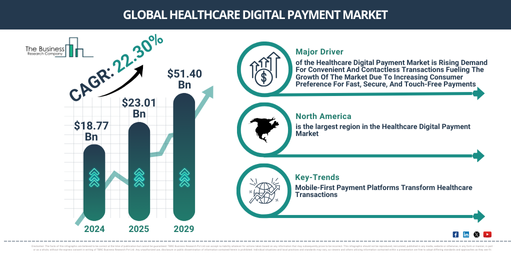
    The healthcare digital payment market has experienced rapid expansion in recent years. It is projected to increase from $18.77 billion in 2024 to $23.01 billion in 2025, at a compound annual growth rate (CAGR) of 22.6%. The historical growth can be attributed to the rising prevalence of smartphones, increased internet accessibility, a surge in demand for contactless transactions, wider adoption of e-commerce platforms, and a growing necessity for quicker billing processes.

    The healthcare digital payment market size is set for substantial growth in the upcoming years. It is predicted to expand to $51.40 billion by 2029, demonstrating a compound annual growth rate (CAGR) of 22.3%. The expansion observed during this forecast period is attributed to the increasing adoption of telemedicine, the broadening of health insurance coverage, a rise in government initiatives promoting digital health, and a surge in patient preference for cashless payment methods. Notable trends expected in the forecast period include advancements in biometric authentication, enhanced integration of wearable health devices with payment systems, the evolution of blockchain-based secure transactions, innovations in AI-powered billing solutions, and progress in real-time cross-border healthcare payments.

    Unlock Your Free Sample Report for Exclusive Market Data:

    https://www.thebusinessresearchcompany.com/sample.aspx?id=28239&type=smp

    Which Major Market Drivers Are Shaping The Future Of The Healthcare Digital Payment Market?

    The escalating preference for convenient and contactless transactions is anticipated to drive the expansion of the healthcare digital payment market. Convenient and contactless transactions refer to payments executed quickly and easily without the need for physical interaction with cash or cards. This increase in convenient and contactless transactions is a result of rising consumer demand for swift and effortless transactions that do not require physical contact or PIN input. Convenient and contactless transactions bolster healthcare digital payment systems by providing fast and secure payment options, making them ideal for clinics, pharmacies, and telehealth services. They contribute to less manual processing and shorter waiting times by enabling seamless, touch-free payments, thereby enhancing convenience for both patients and providers. For instance, in July 2024, UK Finance, a UK-based financial services company, reported that 18.3 billion contactless payments were made in the UK in 2023, indicating a 7% rise from 17 billion in 2022. Therefore, the growing demand for convenient and contactless transactions is a significant factor in the growth of the healthcare digital payment market.

    What Are The Key Segments In The Healthcare Digital Payment Market?

    The healthcare digital payment market covered in this report is segmented as

    1) By Type: Mobile Wallets, Point-Of-Sale (POS) Systems, Internet Banking, Mobile Banking, Cryptocurrencies, Other Types

    2) By Solution: Application Program Interface, Payment Gateway, Payment Processing, Payment Security And Fraud Management, Transaction Risk Management, Other Solutions

    3) By Deployment: Cloud, On-Premise

    4) By Technology: Near Field Communication (NFC), Quick Response (QR) Code Payments, Blockchain, Biometric Authentication, Other Technologies

    5) By End-User: Hospitals, Medical Clinics, Pharmacies, Health Insurance Companies, Telemedicine And Remote Health Services, Other End-Users

    Subsegments:

    1) By Mobile Wallets: Near Field Communication Payments, Quick Response (QR) Code Payments, Mobile App Based Payments, Cloud Based Mobile Wallets, Peer To Peer Transfers

    2) By Point Of Sale Systems: Countertop Terminals, Mobile Point Of Sale Terminals, Smart Point Of Sale Terminals, Contactless Point Of Sale Terminals, Integrated Point Of Sale Solutions

    3) By Internet Banking: Web Based Fund Transfers, Online Bill Payments, Account Management Services, Loan And Credit Services, Online Investment Services

    4) By Mobile Banking: Mobile Check Deposits, Mobile Fund Transfers, Account Balance Inquiries, Bill Payments Through Apps, Personalized Financial Alerts

    5) By Cryptocurrencies: Bitcoin Payments, Ethereum Payments, Stablecoin Transactions, Blockchain Based Remittances, Decentralized Finance Payments

    6) By Other Types: Biometric Payment Systems, Voice Activated Payment Systems, Wearable Device Payments, Smart Card Payments, Contactless Payment Rings

    How Are Emerging Market Trends Shaping The Healthcare Digital Payment Industry Landscape?

    Leading companies in the healthcare digital payment market are concentrating on developing advanced solutions, such as mobile-first payment platforms, to boost transaction efficiency, strengthen security, and improve patient and provider interactions. Mobile-first payment platforms are defined as digital payment systems optimized for smartphones and tablets, facilitating smooth, secure, and contactless transactions through integrated technologies including tokenization, biometric authentication, and cloud-based processing. For instance, in April 2025, Alternative Payments Ltd. (t/a Judopay), a UK-based mobile payments provider, launched a digital payments solution for UK pharmacies and healthcare providers aimed at simplifying and securing payment processing in the healthcare sector. This adaptable, fully compliant platform enables providers to accept payments online, in-app, in person, and through payment links, supporting all major payment methods like cards, Apple Pay, Google Pay, and contactless payments. It addresses key challenges in healthcare payments, such as strict data regulations, fraud risk, and complex underwriting, by providing fast onboarding, fraud prevention, and seamless integration with existing healthcare systems.

    Who Are The Primary Competitors In The Global Healthcare Digital Payment Market?

    Major companies operating in the healthcare digital payment market are American Express Company, Visa Inc., PayPal Holdings Inc., Mastercard Incorporated, HDFC Bank Limited, Fiserv Inc., Experian Health Inc., athenahealth Inc., Adyen N.V., Nets Group A/S, Cotiviti Inc., Waystar Inc., Precisely Software Incorporated, Paymentus Holdings Inc., Zelis Healthcare LLC, Flywire Corporation, Phreesia Inc., Availity L.L.C., RevSpring Inc., Rectangle Health Inc., AccessOne MedCard Inc., ClearBalance Healthcare Inc., PayZen Inc., and PatientPay Inc.

    Download The Full Report For Exclusive Market Findings:

    https://www.thebusinessresearchcompany.com/report/healthcare-digital-payment-global-market-report

    Which Region Shows The Highest Potential For Future Expansion In The Healthcare Digital Payment Market?

    North America was the largest region in the healthcare digital payment market in 2024. Asia-Pacific is expected to be the fastest-growing region in the forecast period. The regions covered in healthcare digital payment report are Asia-Pacific, Western Europe, Eastern Europe, North America, South America, Middle East and Africa.

    Request A Customized Version Of The Healthcare Digital Payment Market Report:

    https://www.thebusinessresearchcompany.com/customise?id=28239&type=smp

    Browse Through More Reports Similar to the Global Healthcare Digital Payment Market 2025, By The Business Research Company

    Digital Payments Global Market Report 2025

    https://www.thebusinessresearchcompany.com/report/digital-payments-global-market-report

    Digital Transformation In Healthcare Global Market Report 2025

    https://www.thebusinessresearchcompany.com/report/digital-transformation-in-healthcare-global-market-report

    Healthcare Payer Solution Global Market Report 2025

    https://www.thebusinessresearchcompany.com/report/healthcare-payer-solution-global-market-report

    Get in touch with us:

    The Business Research Company: https://www.thebusinessresearchcompany.com/

    Americas +1 310-496-7795

    Asia +44 7882 955267 & +91 8897263534

    Europe +44 7882 955267

    Email us at info@tbrc.info

    Follow us on:

    LinkedIn: https://in.linkedin.com/company/the-business-research-company

    YouTube: https://www.youtube.com/channel/UC24_fI0rV8cR5DxlCpgmyFQ

    Global Market Model: https://www.thebusinessresearchcompany.com/global-market-model

  • Global Haptic Virtual Reality (VR) Fitness Suit Market Projected to Expand at 27.5% CAGR by 2029

    Global Haptic Virtual Reality (VR) Fitness Suit Market Projected to Expand at 27.5% CAGR by 2029

    Unlock Global Insights – Save 20% on Market Reports with Code ONLINE20

    How Is The Haptic Virtual Reality (VR) Fitness Suit Market Size Likely To Evolve From 2025 Through 2034?

    The haptic virtual reality (VR) fitness suit market has seen its size surge dramatically in recent years. Its value is anticipated to rise from $1.25 billion in 2024 to $1.60 billion in 2025, exhibiting a compound annual growth rate (CAGR) of 27.9%. This past growth is attributable to several key factors, including increased awareness of physical rehabilitation benefits, an increasing preference for multisensory exercise experiences, greater engagement in remote or home-based training, a heightened demand for real-time performance feedback, and a growing interest in social and team-based virtual reality fitness activities.

    The haptic virtual reality (VR) fitness suit market size is anticipated to undergo significant expansion over the next few years. It is projected to reach $4.24 billion by 2029, exhibiting a compound annual growth rate (CAGR) of 27.5%. This growth in the forecast period can be attributed to the increasing adoption of immersive fitness solutions, a rising demand for personalized VR workouts, growing interest in gamified exercise programs, an increasing focus on home-based rehabilitation and training, and the rising popularity of social and multiplayer virtual fitness experiences. Major trends expected during this period include advancements in wearable haptic feedback systems, the development of AI-powered personalized VR workouts, innovations in multiplayer and social VR fitness platforms, improvements in sensor accuracy for real-time performance tracking, and the creation of integrated VR fitness and health monitoring solutions.

    Unlock Your Free Sample Report for Exclusive Market Data:

    https://www.thebusinessresearchcompany.com/sample.aspx?id=28238&type=smp

    What Are The Main Drivers Boosting The Haptic Virtual Reality (VR) Fitness Suit Industry’s Expansion?

    The increasing engagement in physical activities and consistent exercise is anticipated to drive the expansion of the haptic virtual reality (VR) fitness suit market in the future. These encompass both organized and informal actions aimed at boosting physical fitness, health, and overall well-being. The uptake of physical activities and regular exercise is on an upward trend, driven by increasing recognition of their importance in preventing lifestyle-related illnesses, improving psychological health, and contributing to general welfare. Haptic virtual reality fitness suits augment physical activities and regular exercise by delivering immediate tactile responses, thereby refining posture, enhancing movement precision, and fostering deeper immersion for more impactful training sessions. For example, data from the UK Fitness Report, released in November 2023 by PureGym Limited, a UK-based health club operator, revealed a 2% rise in UK gym memberships year-over-year, with 16% of the population now holding gym memberships. Furthermore, an additional 16% of individuals indicated plans to join a gym in 2024. Consequently, the increasing participation in physical activities and regular exercise is propelling the haptic virtual reality (VR) fitness suit market.

    What Are The Leading Segments Analyzed In The Haptic Virtual Reality (VR) Fitness Suit Market?

    The haptic virtual reality (VR) fitness suit market covered in this report is segmented as

    1) By Product Type: Full-Body Suits, Upper-Body Suits, Lower-Body Suits, Accessories

    2) By Technology: Force Feedback, Vibrotactile, Electroactive Polymers, Other Technologies

    3) By Distribution Channel: Online Stores, Specialty Stores, Retail Stores, Other Distribution Channels

    4) By Application: Personal Fitness, Professional Training, Rehabilitation, Gaming, Other Applications

    5) By End-User: Consumers, Fitness Centers, Rehabilitation Centers, Sports Institutes, Other End-Users

    Subsegment:

    1) By Full-Body Suits: Haptic Feedback Suits, Motion Capture Suits, Exoskeleton Suits

    2) By Upper-Body Suits: Haptic Vests, Haptic Arm Bands, Shoulder And Chest Harnesses

    3) By Lower-Body Suits: Haptic Leg Bands, Haptic Pants, Foot And Ankle Haptic Modules

    4) By Accessories: Haptic Gloves, Haptic Shoes Or Footwear, Wearable Sensors, Haptic Belts And Straps

    Which Key Trends Are Expected To Influence The Haptic Virtual Reality (VR) Fitness Suit Market In The Coming Years?

    Leading companies in the haptic virtual reality fitness suit market are concentrating on technological advancements, such as full-body tactile actuation, to enhance immersive workout experiences, improve user engagement, and enable the precise simulation of physical sensations for effective fitness training. Full-body tactile actuation utilizes distributed actuators embedded in wearable textiles to provide localized force or vibration feedback, thereby augmenting motion and exercise cues and improving real-time training fidelity. For instance, in November 2024, bHaptics Inc., a South Korea-based VR haptics company, introduced the TactSuit Pro. The TactSuit Pro offers a sophisticated combination of immersive feedback, comfort, and accessibility for users engaging in virtual reality activities, including fitness applications. This device is equipped with 32 haptic motors, which deliver localized tactile sensations and enhance realism during workouts or interactive sessions. A thumbwheel with a light emitting diode (LED) status ring positioned on the chest allows users to effortlessly adjust the intensity of sensations in real time, supporting both high-intensity exercise and lighter routines.

    Which Key Market Players Are Investing In Expansion And Innovation Of Haptic Virtual Reality (VR) Fitness Suit Market?

    Major companies operating in the haptic virtual reality (vr) fitness suit market are Shenzhen H&T Intelligent Control Co. Ltd, Ultraleap Limited, Dexta Robotics Inc., Woojer Ltd., Actronika SAS, HaptX Inc., SenseGlove B.V., Palladyne AI Inc., bHaptics Inc., Wave Company Inc., NeuroDigital Technologies S.L., AjnaLens Pvt. Ltd., Teslasuit Inc., SUBPAC Inc., VirZOOM Inc., AxonVR Inc., VRgluv Inc., Kaaya Tech Inc., Manus VR B.V., Valkyrie Industries Inc.

    Download The Full Report For Exclusive Market Findings:

    https://www.thebusinessresearchcompany.com/report/haptic-virtual-reality-vr-fitness-suit-global-market-report

    How Is Haptic Virtual Reality (VR) Fitness Suit Market Demand Varying Across Different Regions?

    North America was the largest region in the haptic virtual reality (VR) fitness suit market in 2024. Asia-Pacific is expected to be the fastest-growing region in the forecast period. The regions covered in haptic virtual reality (VR) fitness suit report are Asia-Pacific, Western Europe, Eastern Europe, North America, South America, Middle East and Africa.

    Request A Customized Version Of The Haptic Virtual Reality (VR) Fitness Suit Market Report:

    https://www.thebusinessresearchcompany.com/customise?id=28238&type=smp

    Browse Through More Reports Similar to the Global Haptic Virtual Reality (VR) Fitness Suit Market 2025, By The Business Research Company

    Virtual Reality Vr Fitness Game Global Market Report 2025

    https://www.thebusinessresearchcompany.com/report/virtual-reality-vr-fitness-game-global-market-report

    Virtual Reality Vr In Medical Simulation Global Market Report 2025

    https://www.thebusinessresearchcompany.com/report/virtual-reality-vr-in-medical-simulation-global-market-report

    Online Virtual Fitness Global Market Report 2025

    https://www.thebusinessresearchcompany.com/report/online-virtual-fitness-global-market-report

    Get in touch with us:

    The Business Research Company: https://www.thebusinessresearchcompany.com/

    Americas +1 310-496-7795

    Asia +44 7882 955267 & +91 8897263534

    Europe +44 7882 955267

    Email us at info@tbrc.info

    Follow us on:

    LinkedIn: https://in.linkedin.com/company/the-business-research-company

    YouTube: https://www.youtube.com/channel/UC24_fI0rV8cR5DxlCpgmyFQ

    Global Market Model: https://www.thebusinessresearchcompany.com/global-market-model
  • Genomic Selection Platform Market to Grow at a CAGR of 16.9% from 2025 to 2029

    Genomic Selection Platform Market to Grow at a CAGR of 16.9% from 2025 to 2029

    Unlock Global Insights – Save 20% on Market Reports with Code ONLINE20

    What Are The Growth Projections For The Genomic Selection Platform Market Size During 2025–2029?

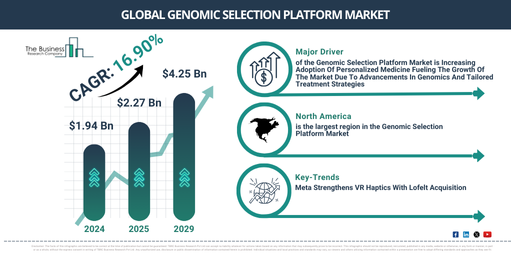
    The genomic selection platform market size has seen rapid growth in recent years. It is expected to expand from $1.94 billion in 2024 to $2.27 billion in 2025, achieving a compound annual growth rate (CAGR) of 17.3%. The market’s historic growth can be ascribed to several factors, including the advancement of agricultural biotechnology, the increasing prominence of quantitative genetics in breeding programs, a greater focus on disease resistance in crops and livestock, the expansion of collaborative research initiatives, and escalating disease pressures along with climate variability.

    The genomic selection platform market is projected for rapid growth in the coming years. It is expected to expand to $4.25 billion by 2029, demonstrating a compound annual growth rate (CAGR) of 16.9%. This projected growth can be attributed to escalating global food demand, the advancement of precision agriculture, an increasing focus on sustainable breeding practices, the broadening scope of livestock genomics, and the rise of contract breeding and genomic services. Significant trends anticipated during this period include further developments in next-generation sequencing (NGS), the integration with digital agriculture tools, the incorporation of AI and machine learning, the adoption of cloud-based genomic data platforms, and the merging of multi-omics data.

    Unlock Your Free Sample Report for Exclusive Market Data:

    https://www.thebusinessresearchcompany.com/sample.aspx?id=28237&type=smp

    Which Factors And Drivers Are Influencing The Genomic Selection Platform Market In 2025?

    The expanding integration of personalized medicine is anticipated to drive the future expansion of the genomic selection platform market. This medical methodology involves customizing treatment and prevention approaches based on an individual’s distinct genetic profile, lifestyle, and environmental factors. The growing embrace of personalized medicine is largely fueled by breakthroughs in genomics, which facilitate the accurate identification of genetic variations and the development of customized therapies. Genomic selection platforms play a crucial role in personalized medicine by offering precise genomic data, thereby enabling the customization of treatments for individual patients. These platforms streamline therapy selection by forecasting responses to interventions, thus enhancing treatment efficacy and patient outcomes and minimizing trial-and-error. As an illustration, in February 2024, data from the Personalized Medicine Coalition (PMC), a US-based nonprofit organization, revealed that the U.S. Food and Drug Administration (FDA) sanctioned 26 novel personalized medicines in 2023, marking a considerable rise from the 12 approvals in 2022. Consequently, the rising uptake of personalized medicine is a key driver for the growth of the genomic selection platform market. The increasing output from crops is projected to propel the expansion of the genomic selection platform market in the future. Crop yield signifies the volume of agricultural produce, such as grains, fruits, or vegetables, harvested from a specific land area. This increase in crop yield is largely attributable to progress in agricultural biotechnology, which improves plant genetics and robustness. Genomic selection platforms contribute to higher crop yields by allowing the precise identification and selection of superior-performing plant varieties, making them perfectly suited for contemporary agriculture and breeding initiatives. These platforms cut down on the time and expense associated with conventional breeding methods by delivering accurate genetic forecasts, thereby boosting farm productivity and ensuring food security. For example, in February 2024, as reported by the Department for Environment, Food and Rural Affairs, a UK-based government agency, the UK’s total cereal production, encompassing wheat, barley, oats, and other lesser cereals (like rye, triticale, and mixed grain), amounted to 24.3 million tonnes in 2022, representing an 8% increase compared to 2021. Consequently, the rising crop yields are a significant factor driving the growth of the genomic selection platform market.

    What Are The Segment Types Shaping The Genomic Selection Platform Market?

    The genomic selection platform market covered in this report is segmented as

    1) By Component: Software, Hardware, Services

    2) By Deployment Mode: On-Premises, Cloud-Based

    3) By Application: Plant Breeding, Animal Breeding, Human Genomics, Other Applications

    4) By End-User: Research Institutes, Biotechnology Companies, Agricultural Organizations, Other End Users

    Subsegments:

    1) By Software: Genomic Data Management Software, Bioinformatics And Statistical Analysis Tools, DNA Or RNA Sequencing Data Processing Software, Genomic Prediction And Modeling Software, Cloud-Based Genomic Platforms, Workflow Automation And Integration Tools

    2) By Hardware: Next-Generation Sequencing (NGS) Systems, Polymerase Chain Reaction (PCR) Instruments, Microarray Analyzers, High-Performance Computing (HPC) Systems, Data Storage Servers, Laboratory Automation And Robotics

    3) By Services: Sequencing And Genotyping Services, Data Analysis And Interpretation Services, Cloud Hosting & Data Storage Services, Custom Bioinformatics Solutions, Training And Technical Support Services, Consulting And Implementation Services

    What Are The Major Trends Driving The Growth Of The Genomic Selection Platform Market?

    Major companies operating in the genomic selection platform market are focusing on developing innovative solutions, such as targeted sequencing platforms, to enhance trait prediction and accelerate breeding programs. Targeted sequencing platforms refer to genomic technologies and systems designed to sequence specific regions of the genome rather than the entire genome. For instance, in October 2024, Element Biosciences Inc., a US-based life sciences technology company, launched Trinity, a breakthrough targeted sequencing platform that streamlines exome capture by integrating traditionally complex steps directly into its AVITI System. The platform eliminates the need for specialized equipment, reduces manual work by up to five hours, and offers a one-hour hybridization option for same-day results, making it ideal for time-sensitive studies. Trinity expands to support custom panels across diverse applications such as oncology, respiratory diseases, and minimal residual disease (MRD). It delivers faster, more cost-effective, and more accessible sequencing, marking the first major advancement in exome capture.

    Who Are The Core Companies Influencing The Genomic Selection Platform Market Landscape?

    Major companies operating in the genomic selection platform market are F. Hoffmann-La Roche Ltd, Thermo Fisher Scientific Inc., GE Healthcare Technologies Inc., Eurofins Scientific SE, Agilent Technologies Inc., Illumina Inc., Beckman Coulter Inc., Bio-Rad Laboratories Inc., QIAGEN N.V., MGI Tech Co. Ltd., Azenta Inc., 10x Genomics Inc., Oxford Nanopore Technologies plc, Ultima Genomics Inc., Element Biosciences Inc., DNAnexus Inc., Deep Genomics Inc., Epigene Labs Inc., Quotient Therapeutics Inc., Evogene Ltd., Nebula Genomics Inc., Verinomics Inc., InEdita Bio Inc., GenEmbryomics Inc., and Enigma Genomics Inc.

    Download The Full Report For Exclusive Market Findings:

    https://www.thebusinessresearchcompany.com/report/genomic-selection-platform-global-market-report

    Which Geographies Are Emerging As Strong Markets For The Genomic Selection Platform Industry?

    North America was the largest region in the genomic selection platform market in 2024. The regions covered in genomic selection platform report are Asia-Pacific, Western Europe, Eastern Europe, North America, South America, Middle East and Africa.

    Request A Customized Version Of The Genomic Selection Platform Market Report:

    https://www.thebusinessresearchcompany.com/customise?id=28237&type=smp

    Browse Through More Reports Similar to the Global Genomic Selection Platform Market 2025, By The Business Research Company

    Genomics Services Global Market Report 2025

    https://www.thebusinessresearchcompany.com/report/genomics-services-global-market-report

    Genomics Global Market Report 2025

    https://www.thebusinessresearchcompany.com/report/genomics-global-market-report

    Genomics Personalized Health Global Market Report 2025

    https://www.thebusinessresearchcompany.com/report/genomics-personalized-health-global-market-report

    Get in touch with us:

    The Business Research Company: https://www.thebusinessresearchcompany.com/

    Americas +1 310-496-7795

    Asia +44 7882 955267 & +91 8897263534

    Europe +44 7882 955267

    Email us at info@tbrc.info

    Follow us on:

    LinkedIn: https://in.linkedin.com/company/the-business-research-company

    YouTube: https://www.youtube.com/channel/UC24_fI0rV8cR5DxlCpgmyFQ

    Global Market Model: https://www.thebusinessresearchcompany.com/global-market-model
  • Global Genomic Data Clean-Room Platforms Market 2025–2029: Competitive Insights and Opportunities

    Global Genomic Data Clean-Room Platforms Market 2025–2029: Competitive Insights and Opportunities

    Unlock Global Insights – Save 20% on Market Reports with Code ONLINE20

    What Is The Global Market Value Of The Genomic Data Clean-Room Platforms Industry In 2025?

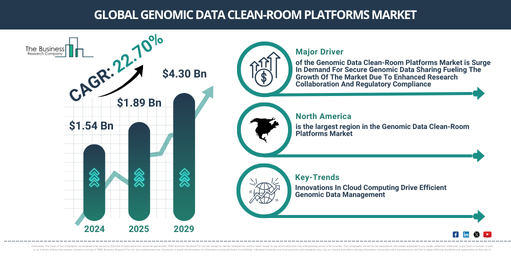
    The genomic data clean-room platforms market size has experienced rapid expansion in recent years. Projections indicate that this market will expand from $1.54 billion in 2024 to reach $1.89 billion by 2025, demonstrating a compound annual growth rate (CAGR) of 22.9%. Historically, this increase can be linked to factors such as the heightened embrace of precision medicine, an uptick in genomic research partnerships, a greater need for secure sharing of health data, the emergence of more stringent data privacy and compliance regulations, and the expanding incorporation of artificial intelligence within genomics.

    The genomic data clean-room platforms market size is expected to experience significant expansion in the coming years. This market is projected to reach $4.30 billion by 2029, with a compound annual growth rate (CAGR) of 22.7%. The anticipated growth during the forecast period is driven by the increasing necessity for large-scale genomic data analysis, heightened investments in healthcare data security, the expanding adoption of cloud-based genomic platforms, an uptick in multi-omics research collaborations, and the growing demand for personalized medicine solutions. Key trends influencing this period include advancements in privacy-preserving computation techniques, innovations in federated learning models, the integration of blockchain for secure data transactions, novel cloud-native clean-room architectures, and improvements in interoperability standards for genomic data platforms.

    Unlock Your Free Sample Report for Exclusive Market Data:

    https://www.thebusinessresearchcompany.com/sample.aspx?id=28236&type=smp

    What Are The Key Drivers Of Growth In The Genomic Data Clean-Room Platforms Market?

    The increasing need for secure genomic data sharing is projected to boost the expansion of the genomic data clean-room platforms market in the future. Secure genomic data sharing involves the exchange and utilization of genomic information while safeguarding individual privacy and adhering to regulatory guidelines. This rising demand stems from improved research collaboration, which facilitates wider access to pseudonymized genomic datasets without compromising patient privacy. Genomic data clean-room platforms address this need by offering controlled environments where researchers can access and analyze sensitive genomic datasets, guaranteeing privacy, compliance, and data security. For instance, in June 2024, as reported by the US-based federal government agency, the National Library of Medicine, South Korea revised its health data guidelines to remove the “reserved” status for pseudonymized genomic data, with >90% expert agreement. This change enabled the use of datasets from 872 individuals (642,563 SNPs and 13 STRs), where 90–98% of STRs matched corresponding SNPs, rising to 99–100% with 30 STRs. Consequently, the growing demand for secure genomic data sharing will drive the genomic data clean-room platforms market.

    What Are The Different Segment Classifications Within The Genomic Data Clean-Room Platforms Market?

    The genomic data clean-room platforms market covered in this report is segmented as

    1) By Component, Software, Services

    2) By Deployment Mode, On-Premises, Cloud-Based

    3) By Application, Pharmaceutical And Biotechnology Companies, Research And Academic Institutions, Healthcare Providers, Contract Research Organizations, Other Application

    4) By End-User, Hospitals, Research Centers, Diagnostic Laboratories, Other End User

    Subsegments:

    1) By Software, Data Integration, Data Analysis, Security And Compliance, Visualization Tools, Workflow Management

    2) By Services, Consulting, Implementation, Support And Maintenance, Training, Custom Development

    What Are The Major Trends Driving The Growth Of The Genomic Data Clean-Room Platforms Market?

    Leading firms within the genomic data clean-room platforms market are progressively adopting cloud-based offerings to enhance the scalability, security, and collaborative aspects of managing genomic data. These cloud-native infrastructures facilitate the hosting, storage, and analysis of genomic datasets exclusively within cloud environments, thereby supplying adaptable computing power, secure access mechanisms, and unified storage, eliminating the necessity for on-premises infrastructure. As an illustration, in 2024, SOPHiA GENETICS, a healthcare technology company from Switzerland specializing in cloud-native solutions, unveiled an improved whole genome sequencing analytics solution utilizing cloud platforms to provide quicker, more secure, and scalable insights for both researchers and clinicians. These advancements enable effective, privacy-conscious genomic data analysis, foster cooperative research endeavors, and stimulate expansion within the genomic data clean-room platforms market.

    Which Major Industry Participants Are Leading The Genomic Data Clean-Room Platforms Market Growth?

    Major companies operating in the genomic data clean-room platforms market are Amazon Web Services Incorporated, BC Platforms Aktiengesellschaft, IQVIA Incorporated, Illumina Incorporated, Snowflake Incorporated, Palantir Technologies Incorporated, Qiagen, Datavant Incorporated, Databricks Incorporated, Foundation Medicine Incorporated, Flatiron Health Incorporated, Verily Life Sciences LLC, Genomics England Limited, Velsera, Elucidata Incorporated, DNAnexus Incorporated, Lifebit Biotech Limited, Congenica, Genestack Limited, KnetMiner.

    Download The Full Report For Exclusive Market Findings:

    https://www.thebusinessresearchcompany.com/report/genomic-data-clean-room-platforms-global-market-report

    Which Region Is Projected To Lead The Genomic Data Clean-Room Platforms Market During The Forecast Period?

    North America was the largest region in the genomic data clean-room platforms market in 2024. The regions covered in genomic data clean-room platforms report are Asia-Pacific, Western Europe, Eastern Europe, North America, South America, Middle East and Africa.

    Request A Customized Version Of The Genomic Data Clean-Room Platforms Market Report:

    https://www.thebusinessresearchcompany.com/customise?id=28236&type=smp

    Browse Through More Reports Similar to the Global Genomic Data Clean-Room Platforms Market 2025, By The Business Research Company

    Genomics Services Global Market Report 2025

    https://www.thebusinessresearchcompany.com/report/genomics-services-global-market-report

    Genomics Global Market Report 2025

    https://www.thebusinessresearchcompany.com/report/genomics-global-market-report

    Data Cleaning Tools Global Market Report 2025

    https://www.thebusinessresearchcompany.com/report/data-cleaning-tools-global-market-report

    Get in touch with us:

    The Business Research Company: https://www.thebusinessresearchcompany.com/

    Americas +1 310-496-7795

    Asia +44 7882 955267 & +91 8897263534

    Europe +44 7882 955267

    Email us at info@tbrc.info

    Follow us on:

    LinkedIn: https://in.linkedin.com/company/the-business-research-company

    YouTube: https://www.youtube.com/channel/UC24_fI0rV8cR5DxlCpgmyFQ

    Global Market Model: https://www.thebusinessresearchcompany.com/global-market-model
  • Genome-Wide Association Studies Market Forecast 2025–2034: Where Businesses Should Invest Next

    Genome-Wide Association Studies Market Forecast 2025–2034: Where Businesses Should Invest Next

    Unlock Global Insights – Save 20% on Market Reports with Code ONLINE20

    #What Is The Projected Market Size Of The Genome-Wide Association Studies Market By 2029?

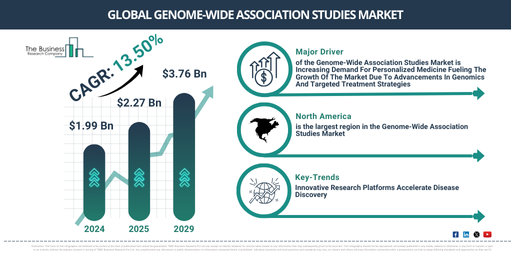
    The genome-wide association studies market has seen rapid expansion in recent years. It is anticipated to grow from $1.99 billion in 2024 to $2.27 billion in 2025, at a compound annual growth rate (CAGR) of 13.8%. This historical growth can be ascribed to the increasing incidence of chronic diseases, a heightened recognition of genetic influences in illnesses, wider adoption of genomic research, augmented government financial backing for genomics, and the expanding network of biobanks and genomic databases.

    The market for genome-wide association studies is projected to experience swift expansion in the coming years. This market is anticipated to reach $3.76 billion by 2029, exhibiting a compound annual growth rate (CAGR) of 13.5%. Factors contributing to this growth over the forecast period include the expanding application of pharmacogenomics in clinical environments, increasing embrace of multi-omics methodologies, escalating need for personalized medicine, intensified genomic research across varied populations, and the advancing creation of point-of-care genetic testing. Key trends anticipated during this period encompass technological progress in sequencing platforms, novelties in data analysis algorithms, evolution in functional genomics, ongoing research and development into gene-environment interactions, and breakthroughs in genome editing technologies.

    Unlock Your Free Sample Report for Exclusive Market Data:

    https://www.thebusinessresearchcompany.com/sample.aspx?id=28234&type=smp

    Which Drivers Are Shaping The Genome-Wide Association Studies Industry’s Market Share?

    The increasing demand for personalized medicine is projected to drive the growth of the genome-wide association studies market. Personalized medicine represents a medical approach that customizes treatment and prevention strategies based on an individual’s unique genetic makeup, lifestyle, and environment. The rising adoption of personalized medicine is primarily attributed to advancements in genomics, which allow for the precise identification of genetic variations and the development of tailored treatments for individuals. Genome-wide association studies (GWAS) bolster personalized medicine by identifying genetic variations linked to diseases, thereby enabling targeted treatment approaches. These studies enhance healthcare outcomes by offering insights into individual risk profiles and supporting precision therapies. For instance, in February 2024, the Personalized Medicine Coalition (PMC), a US-based nonprofit organization, reported that the U.S. Food and Drug Administration (FDA) approved 26 new personalized medicines in 2023, marking a significant increase from the 12 approved in 2022. Thus, the escalating demand for personalized medicine is propelling the expansion of the genome-wide association studies market.

    Which Key Segments Fueling The Genome-Wide Association Studies Market?

    The genome-wide association studies market covered in this report is segmented as

    1) By Product Type: Genotyping Services, Genotyping Kits And Reagents, Software And Data Analysis Tools, Other Product Types

    2) By Application: Drug Discovery, Disease Risk Assessment, Personalized Medicine, Other Applications

    3) By End-User: Pharmaceutical And Biotechnology Companies, Academic And Research Institutes, Hospitals And Clinics, Other End-Users

    Subsegments:

    1) By Genotyping Services: Whole Genome Sequencing (Wgs), Exome Sequencing, Targeted Genotyping

    2) By Genotyping Kits And Reagents: Dna Extraction Kits, Sequencing Reagents, Library Preparation Kits

    3) By Software And Data Analysis Tools: Bioinformatics Platforms, Data Visualization Tools, Statistical Analysis Software

    4) By Other Product Types: Sample Collection Devices, Quality Control Tools, Laboratory Consumables

    Which Trends Are Impacting The Genome-Wide Association Studies Market?

    Leading companies operating within the genome-wide association studies market are concentrating on developing innovative solutions, such as sophisticated research platforms, to accelerate the discovery of diseases and advance personalized medicine applications. An advanced research platform is an integrated system comprising tools and technologies that enable large-scale genomic data generation, analysis, and interpretation for genome-wide association studies. For instance, in January 2025, 23andMe Holding Co., a US-based biotechnology company, launched Discover23, a consumer-focused platform for genetic insights and ancestry exploration. This platform allows biopharma collaborators to access comprehensive genetic data through a trusted environment powered by Lifebit. It provides analysis-ready genome-wide association studies (GWAS) for over 1,000 disease cohorts, which are derived from billions of phenotypic data points from millions of consenting participants. The advanced research platform aims to accelerate drug discovery by assisting researchers in identifying novel disease biology and potential drug targets, thereby improving clinical trial success while consistently maintaining participant privacy.

    Which Key Players Are Driving Competition In The Genome-Wide Association Studies Market?

    Major companies operating in the genome-wide association studies market are F. Hoffmann-La Roche AG, AstraZeneca plc, Thermo Fisher Scientific Inc., GlaxoSmithKline plc, Regeneron Pharmaceuticals Inc., Eurofins Scientific SE, Laboratory Corporation of America Holdings, Daiichi Sankyo Company Limited, Agilent Technologies Inc., Illumina Inc., Revvity Inc., QIAGEN N.V., Databricks Inc., Broad Institute of MIT and Harvard, BGI Genomics Co. Ltd., deCODE genetics Inc., Genomics England Ltd., CD Genomics Inc., Veritas Genetics Inc., Finngen, and The Wellcome Sanger Institute.

    Download The Full Report For Exclusive Market Findings:

    https://www.thebusinessresearchcompany.com/report/genome-wide-association-studies-global-market-report

    How Do Regional Market Performances Compare Within The Genome-Wide Association Studies Industry?

    North America was the largest region in the genome-wide association studies market in 2024. The regions covered in genome-wide association studies report are Asia-Pacific, Western Europe, Eastern Europe, North America, South America, Middle East and Africa.

    Request A Customized Version Of The Genome-Wide Association Studies Market Report:

    https://www.thebusinessresearchcompany.com/customise?id=28234&type=smp

    Browse Through More Reports Similar to the Global Genome-Wide Association Studies Market 2025, By The Business Research Company

    Genomic Data Analysis And Interpretation Global Market Report 2025

    https://www.thebusinessresearchcompany.com/report/genomic-data-analysis-and-interpretation-global-market-report

    Genomics Global Market Report 2025

    https://www.thebusinessresearchcompany.com/report/genomics-global-market-report

    Genomics Personalized Health Global Market Report 2025

    https://www.thebusinessresearchcompany.com/report/genomics-personalized-health-global-market-report

    Get in touch with us:

    The Business Research Company: https://www.thebusinessresearchcompany.com/

    Americas +1 310-496-7795

    Asia +44 7882 955267 & +91 8897263534

    Europe +44 7882 955267

    Email us at info@tbrc.info

    Follow us on:

    LinkedIn: https://in.linkedin.com/company/the-business-research-company

    YouTube: https://www.youtube.com/channel/UC24_fI0rV8cR5DxlCpgmyFQ

    Global Market Model: https://www.thebusinessresearchcompany.com/global-market-model
  • Gene Transplant Industry Overview 2025: Growth Projections and Market Trends

    Gene Transplant Industry Overview 2025: Growth Projections and Market Trends

    Unlock Global Insights – Save 20% on Market Reports with Code ONLINE20

    What Is The Future Market Size Estimation For The Gene Transplant Market Covering 2025–2034?

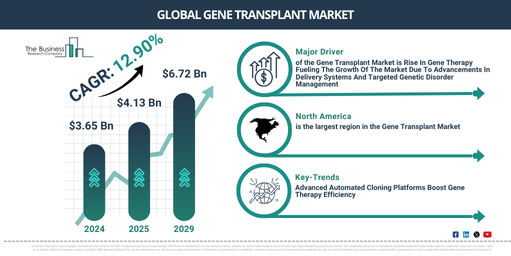
    The gene transplant market size has experienced rapid expansion over recent years. It is projected to grow from $3.65 billion in 2024 to $4.13 billion in 2025, demonstrating a compound annual growth rate (CAGR) of 13.3%. The historical increase can be attributed to rising success rates in early clinical studies, increasing adoption of next-generation sequencing (NGS), rising development of cell-based therapies, and increasing availability of orphan drug designations.

    The gene transplant market size is anticipated to experience swift expansion over the coming years. It is projected to reach $6.72 billion by 2029, demonstrating a compound annual growth rate (CAGR) of 12.9%. This growth during the forecast period stems from factors such as an intensified focus on singular curative therapies, an expansion in manufacturing capabilities for gene therapies, enhanced regulatory alignment, broader applications for neurological conditions, and the increased adoption of synthetic biology platforms. Key trends expected over this period involve the merging of artificial intelligence with gene editing technologies, the incorporation of gene therapy into regenerative medicine, the use of wearable biosensors in gene therapy trials, the application of 3D bioprinting utilizing gene-modified cells, and the integration of blockchain for clinical data management.

    Unlock Your Free Sample Report for Exclusive Market Data:

    https://www.thebusinessresearchcompany.com/sample.aspx?id=28232&type=smp

    What Are The Emerging Market Drivers Creating New Opportunities In The Gene Transplant Industry?

    The increasing prevalence of gene therapy is anticipated to propel the future expansion of the gene transplant market. This medical technique involves modifying or manipulating an individual’s genes to treat or prevent disease. The surge in gene therapy adoption is attributed to advancements in delivery systems, which facilitate the safe, efficient, and targeted transport of genetic material into cells. Gene therapy assists in managing genetic disorders by providing targeted treatments that correct or replace defective genes, positioning it as a promising approach for previously untreatable conditions. It lessens disease symptoms and slows progression by addressing the underlying genetic cause, thereby improving patient outcomes and quality of life. For instance, in December 2024, according to the American Society of Gene & Cell Therapy (ASGCT), a US-based non-profit medical and scientific organization, the Food and Drug Administration (FDA) approved six gene therapy products in 2023, an increase from five approvals in 2022. Consequently, the expansion of gene therapy is driving the growth of the gene transplant market.

    What Are The Major Segments Identified In The Gene Transplant Market?

    The gene transplant market covered in this report is segmented as

    1) By Type: Autologous, Allogeneic

    2) By Application: Genetic Disorders, Cancer, Rare Diseases, Other Application

    3) By End-User: Hospitals, Research Institutes, Biotechnology Companies, Other End-Users

    Subsegments:

    1) By Autologous: Hematopoietic Stem Cell Transplantation, Gene-Modified Autologous Cell Therapy, Chimeric Antigen Receptor T (CAR-T) Cell Therapy

    2) By Allogeneic: Hematopoietic Stem Cell Transplantation, Gene-Modified Allogeneic Cell Therapy, Allogeneic Chimeric Antigen Receptor T (CAR-T) Cell Therapy, Off-The-Shelf Gene Therapies

    Which Market Trends Are Creating New Opportunities In The Gene Transplant Industry?

    Key companies active in the gene transplant market are concentrating on advancing solutions, such as automated cloning platforms, to boost efficacy, refine accuracy, and hasten the progression of gene therapies. These platforms represent mechanisms that autonomously separate and cultivate individual cells into monoclonal lineages, thereby enhancing velocity, exactness, and uniformity for gene transplant and therapeutic applications. As an illustration, in November 2024, iotaSciences Ltd., a UK-based life sciences technology company, unveiled the XT Single-Cell Cloning Platform, an automated cloning platform. It incorporates automated microfluidics, AI-powered image analysis, and nano-dispensing technology to facilitate high-volume, accurate isolation and cloning of singular cells. Its design aims to expedite gene therapy development by guaranteeing monoclonality, a crucial regulatory mandate, simultaneously cutting down processing time from multiple weeks to mere days. The system additionally supports CRISPR-based gene editing uses by allowing effective delivery of editing components into target cells, consequently advancing the creation of next-generation treatments.

    Which Leading Companies Dominate The Gene Transplant Market Share?

    Major companies operating in the gene transplant market are Bayer AG, Novartis AG, CSL Behring LLC, Charles River Laboratories International Inc., BioMarin Pharmaceutical Inc., Sarepta Therapeutics Inc., Ultragenyx Pharmaceutical Inc., CRISPR Therapeutics AG, Beam Therapeutics Inc., Rocket Pharmaceuticals Inc., Voyager Therapeutics Inc., Sangamo Therapeutics Inc., Editas Medicine Inc., Krystal Biotech Inc., bluebird bio Inc., Orchard Therapeutics plc, 4D Molecular Therapeutics Inc., Solid Biosciences Inc., uniQure N.V., and MeiraGTx Holdings plc.

    Download The Full Report For Exclusive Market Findings:

    https://www.thebusinessresearchcompany.com/report/gene-transplant-global-market-report

    What Regional Growth Trends Are Shaping The Gene Transplant Market Outlook?

    North America was the largest region in the gene transplant market in 2024. Asia-Pacific is expected to be the fastest-growing region in the forecast period. The regions covered in gene transplant report are Asia-Pacific, Western Europe, Eastern Europe, North America, South America, Middle East and Africa.

    Request A Customized Version Of The Gene Transplant Market Report:

    https://www.thebusinessresearchcompany.com/customise?id=28232&type=smp

    Browse Through More Reports Similar to the Global Gene Transplant Market 2025, By The Business Research Company

    Genes Therapy Global Market Report 2025

    https://www.thebusinessresearchcompany.com/report/genes-therapy-global-market-report

    Gene Editing Global Market Report 2025

    https://www.thebusinessresearchcompany.com/report/gene-editing-global-market-report

    Kidney Transplant Global Market Report 2025

    https://www.thebusinessresearchcompany.com/report/kidney-transplant-global-market-report

    Get in touch with us:

    The Business Research Company: https://www.thebusinessresearchcompany.com/

    Americas +1 310-496-7795

    Asia +44 7882 955267 & +91 8897263534

    Europe +44 7882 955267

    Email us at info@tbrc.info

    Follow us on:

    LinkedIn: https://in.linkedin.com/company/the-business-research-company

    YouTube: https://www.youtube.com/channel/UC24_fI0rV8cR5DxlCpgmyFQ

    Global Market Model: https://www.thebusinessresearchcompany.com/global-market-model
  • Functional Genomics Industry Insights: Market Forecast to 2029

    Functional Genomics Industry Insights: Market Forecast to 2029

    Unlock Global Insights – Save 20% on Market Reports with Code ONLINE20

    How Much Larger Is The Functional Genomics Market Expected To Become By 2029 Compared With Its 2025 Level?

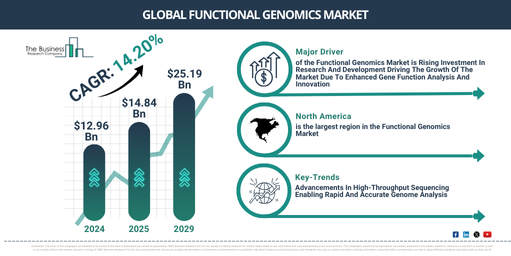
    The functional genomics market has seen rapid expansion in recent years. Its value is expected to increase from $12.96 billion in 2024 to $14.84 billion in 2025, reflecting a compound annual growth rate (CAGR) of 14.5%. This historical growth can be attributed to a heightened focus on gene expression studies, the rising application of functional assays in drug discovery, the emergence of more biotech firms, increasing advancements in high-throughput screening methods, and a greater integration of bioinformatics within genomics research.

    The functional genomics market is projected to experience substantial expansion over the coming years, reaching $25.19 billion by 2029, exhibiting a compound annual growth rate (CAGR) of 14.2%. This anticipated growth during the forecast period is primarily driven by several factors, including escalating investments in precision medicine, wider acceptance of multi-omics approaches, a heightened need for advanced genetic testing, the expanding utility of functional genomics in oncology, and increased funding for research and development initiatives. Key trends shaping the market within this period encompass progress in single-cell sequencing technologies, the creation of cloud-based genomic data platforms, breakthroughs in high-throughput functional screening methods, enhanced integration of genomics with proteomics, and the formulation of personalized therapeutic strategies utilizing functional genomics.

    Unlock Your Free Sample Report for Exclusive Market Data:

    https://www.thebusinessresearchcompany.com/sample.aspx?id=28228&type=smp

    Which Major Market Drivers Are Shaping The Future Of The Functional Genomics Market?

    Increased investment in research and development is anticipated to propel the expansion of the functional genomics market moving forward. Research and development refers to the structured effort to generate, improve, and innovate products, processes, or understanding through systematic investigation and experimentation. Funding in research and development is on the rise as businesses increasingly pursue innovation to remain competitive, prompting them to allocate greater resources towards developing novel products, enhancing technologies, and capturing emerging market opportunities. Investment in research and development benefits functional genomics by furthering the identification and analysis of gene functions, thereby improving our comprehension of complex biological processes and supporting the creation of precise therapeutic strategies. For instance, in December 2022, the Department of Health and Social Care, a UK-based government department, disclosed that the government announced an investment of £105 million to expedite the diagnosis of rare genetic conditions in newborns, with the aim of providing critical, potentially life-saving treatments for many infants. This funding will back research focused on advancing genomic healthcare by examining the DNA of patients. Therefore, the growing investment in research and development is driving the growth of the functional genomics market.

    How Is The Functional Genomics Market Segmented?

    The functional genomics market covered in this report is segmented as

    1) By Product: Kits And Assays, Instruments

    2) By Technology: Next-Generation Sequencing (NGS), Microarray Analysis, CRISPR And Gene Editing Technologies, RNA Sequencing (RNA-Seq)

    3) By End-User: Academic And Research Institutes, Pharmaceutical And Biopharmaceutical Companies, Contract Research Organizations (CROs), Clinical Laboratories, Agricultural Biotechnology Companies

    Subsegments:

    1) By Kits And Assays: PCR Kits, Microarray Kits, NGS Kits, Reagents, Enzymes

    2) By Instruments: Sequencers, Microarray Scanners, PCR Instruments, Automation Systems

    Which Competitive Trends Are Defining The Functional Genomics Market Structure?

    Leading companies in the functional genomics market are prioritizing the development of sophisticated techniques, such as high-throughput sequencing, to offer remarkably accurate and comprehensive insights into complex genomes. High-throughput sequencing is a methodology that allows for the rapid and simultaneous sequencing of significant quantities of DNA or RNA, enabling broad-scale genetic information analysis. For example, in February 2025, Roche, a Switzerland-based pharmaceutical firm, introduced its sequencing by expansion (SBX) technology, thereby creating a new category within next-generation sequencing. This SBX chemistry, coupled with an advanced sensor module, facilitates ultra-fast, high-throughput sequencing that is both adaptable and scalable for various applications. This innovative approach converts the DNA or RNA sequence into a detectable surrogate polymer called an Xpandomer via a precise biochemical process. Xpandomers, which are fifty times longer than the original nucleic acid, translate sequence information into strong, low-noise signals for clear and dependable detection. By leveraging a CMOS-based sensor with parallel processing, this technique achieves highly accurate single-molecule nanopore sequencing, notable for its exceptional speed and versatility.

    Who Are The Key Multinational Companies Dominating The Functional Genomics Market?

    Major companies operating in the functional genomics market are Hoffmann-La Roche Ltd., Thermo Fisher Scientific Inc., Merck KGaA, Becton Dickinson and Company, Agilent Technologies Inc., Illumina Inc., Perkin Elmer Inc., Revvity Inc., Exact Sciences Corporation, Bio-Rad Laboratories Inc., QIAGEN NV, Integrated DNA Technologies Inc., Promega Corporation, Pacific Biosciences of California Inc., Genomics Ltd., MEDiC LLC, Enhanc3D Genomics Ltd., Samplix, Arima Genomics Inc., Phase Genomics Inc.

    Download The Full Report For Exclusive Market Findings:

    https://www.thebusinessresearchcompany.com/report/functional-genomics-global-market-report

    Which Global Regions Are Influencing The Competitive Landscape Of The Functional Genomics Market?

    North America was the largest region in the functional genomics market in 2024. Asia-Pacific is expected to be the fastest-growing region in the forecast period. The regions covered in functional genomics report are Asia-Pacific, Western Europe, Eastern Europe, North America, South America, Middle East and Africa.

    Request A Customized Version Of The Functional Genomics Market Report:

    https://www.thebusinessresearchcompany.com/customise?id=28228&type=smp

    Browse Through More Reports Similar to the Global Functional Genomics Market 2025, By The Business Research Company

    Genomics Global Market Report 2025

    https://www.thebusinessresearchcompany.com/report/genomics-global-market-report

    Metagenomics Global Market Report 2025

    https://www.thebusinessresearchcompany.com/report/metagenomics-global-market-report

    Genomics Services Global Market Report 2025

    https://www.thebusinessresearchcompany.com/report/genomics-services-global-market-report

    Get in touch with us:

    The Business Research Company: https://www.thebusinessresearchcompany.com/

    Americas +1 310-496-7795

    Asia +44 7882 955267 & +91 8897263534

    Europe +44 7882 955267

    Email us at info@tbrc.info

    Follow us on:

    LinkedIn: https://in.linkedin.com/company/the-business-research-company

    YouTube: https://www.youtube.com/channel/UC24_fI0rV8cR5DxlCpgmyFQ

    Global Market Model: https://www.thebusinessresearchcompany.com/global-market-model
  • Fifth Generation (5G) Technology In Telehealth Industry Forecast to Hit $6.9 Billion by 2029 With a Strong 23.1% CAGR

    Fifth Generation (5G) Technology In Telehealth Industry Forecast to Hit $6.9 Billion by 2029 With a Strong 23.1% CAGR

    Unlock Global Insights – Save 20% on Market Reports with Code ONLINE20

    What Are The Growth Projections For The Fifth Generation (5G) Technology In Telehealth Market Size During 2025–2029?

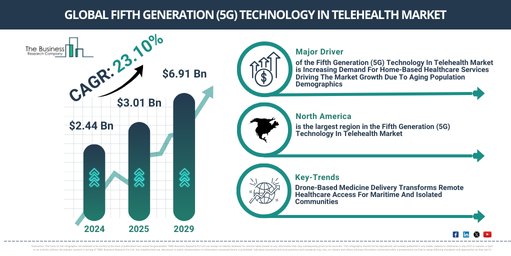
    The fifth generation (5G) technology in telehealth market size has witnessed substantial expansion in recent years. It is projected to expand from $2.44 billion in 2024 to $3.01 billion in 2025, demonstrating a compound annual growth rate (CAGR) of 23.4%. This past growth stems from factors such as a greater reliance on international medical knowledge, an uptick in the utilization of mobile-based diagnostic imaging, an increase in patient demand for contactless healthcare delivery, enhanced integration of wearable sensors for monitoring chronic illnesses, and the heightened significance of continuous healthcare provision during natural calamities.

    The market size for fifth-generation (5G) technology within telehealth is projected to experience rapid expansion over the upcoming years. This market is anticipated to reach $6.91 billion by 2029, exhibiting a compound annual growth rate (CAGR) of 23.1%. Factors driving this growth during the forecast period include the escalating demand for remote patient monitoring, the increasing uptake of virtual consultations, the expansion of healthcare digitalization, the growing requirement for real-time data transfer in the healthcare sector, and augmented government backing for telehealth infrastructure. Significant trends expected in the forecast period encompass progress in artificial intelligence-powered telehealth platforms, enhanced implementation of edge computing for healthcare data, breakthroughs in immersive virtual reality-based patient care, the incorporation of blockchain for securing medical records, and developments in robotics-assisted remote surgeries.

    Unlock Your Free Sample Report for Exclusive Market Data:

    https://www.thebusinessresearchcompany.com/sample.aspx?id=28222&type=smp

    What Are The Drivers Pushing New Developments In The Fifth Generation (5G) Technology In Telehealth Market?

    The future expansion of the fifth generation (5G) technology in telehealth market is anticipated, driven by the rising need for remote healthcare services. Remote healthcare involves delivering clinical health services to patients using digital communication, eliminating the need for physical visits. This increased demand stems from enhanced accessibility and convenience, especially benefiting individuals in rural regions and those with restricted mobility, who can now receive specialized medical attention irrespective of their location. The fifth generation (5G) technology in telehealth significantly improves remote healthcare through its ultra-fast, low-latency connectivity, facilitating real-time patient monitoring, high-definition virtual consultations, and smooth data transfer, which collectively boosts the access, quality, and timeliness of care, irrespective of a patient’s whereabouts. As an illustration, a survey conducted by Vivalink, a US-based healthcare technology firm, revealed in August 2023 that 81% of clinicians currently utilize remote patient monitoring (RPM), a substantial rise from just 20% in 2021, marking a 305% increase. Furthermore, 84% of existing RPM users intend to broaden their adoption of this technology in 2024. Consequently, the growing need for remote healthcare services is fueling the expansion of the fifth generation (5G) technology in telehealth market.

    Which Key Segments Fueling The Fifth Generation (5G) Technology In Telehealth Market?

    The fifth generation (5G) technology in telehealth market covered in this report is segmented as

    1) By Component: Hardware , Software , Services

    2) By Connectivity Type: Device Connectivity, ??Network Connectivity

    3) By Application: Remote Patient Monitoring , Real-Time Consultation , Telemedicine , Mobile Health , Other Applications

    4) By End-User: Hospitals , Clinics , Homecare , Other End-Users

    Subsegments:

    1) By Hardware: Network Equipment, Communication Devices, Sensors, Wearable Devices, Edge Devices

    2) By Software: Telemedicine Platforms, Remote Patient Monitoring Software, Data Analytics Software, Security Software, Cloud Management Software

    3) By Services: Network Deployment Services, Integration Services, Maintenance And Support Services, Consulting Services, Training And Education Services

    What Are The Major Trends Driving The Growth Of The Fifth Generation (5G) Technology In Telehealth Market?

    Leading companies in the fifth generation (5G) technology in telehealth market are concentrating on leveraging innovative solutions, such as drone-based medicine delivery, to ensure quicker and remote access to healthcare. Drone-based medicine delivery involves utilizing unmanned aerial vehicles (drones) for transporting medicines, vaccines, or medical supplies to isolated or difficult-to-reach locations, thereby providing expedited, reliable, and contactless access to vital healthcare. As an illustration, in April 2023, M1 Limited, a telecommunication company based in Singapore, partnered with Fullerton Health Group, a Singapore-based healthcare provider, to introduce a 5G-enabled telemedicine offering specifically for seafarers. This initiative includes real-time teleconsultations with medical professionals on land and the deployment of 5G-capable drones for delivering medicines directly to vessels at sea, guaranteeing prompt and efficient healthcare availability for maritime workers. The service is designed to assist both seafarers aboard their ships and shore-based employees of shipping firms, provided they maintain a connection to the 5G network. Such advancements not only enhance the accessibility of medical support for people in distant or inaccessible regions but also underscore the revolutionary capability of 5G technology in transforming healthcare provision, elevating safety standards, and safeguarding the health of workers vital to worldwide trade and supply networks.

    Which Major Industry Participants Are Leading The Fifth Generation (5G) Technology In Telehealth Market Growth?

    Major companies operating in the fifth generation (5g) technology in telehealth market are Verizon Communications Inc., AT&T Inc., Huawei Technologies Co. Ltd., Nippon Telegraph and Telephone Corporation, T-Mobile US Inc., Cisco Systems Inc., Intel Corporation, Vodafone Group Plc, Qualcomm Technologies Inc., BT Group plc, Fujitsu Limited, Telefonaktiebolaget LM Ericsson, Nokia Corporation, Siemens Healthineers AG, GE HealthCare Technologies Inc., ZTE Corporation, M1 Limited, GlobalMed Holdings LLC, Visionable Limited, Telit Communications Limited.

    Download The Full Report For Exclusive Market Findings:

    https://www.thebusinessresearchcompany.com/report/fifth-generation-5g-technology-in-telehealth-global-market-report

    What Are The Key Regional Factors Influencing The Fifth Generation (5G) Technology In Telehealth Market Growth?

    North America was the largest region in the fifth generation (5G) technology in telehealth market in 2024. Asia-Pacific is expected to be the fastest-growing region in the forecast period. The regions covered in fifth generation (5G) technology in telehealth report are Asia-Pacific, Western Europe, Eastern Europe, North America, South America, Middle East and Africa.

    Request A Customized Version Of The Fifth Generation (5G) Technology In Telehealth Market Report:

    https://www.thebusinessresearchcompany.com/customise?id=28222&type=smp

    Browse Through More Reports Similar to the Global Fifth Generation (5G) Technology In Telehealth Market 2025, By The Business Research Company

    5G In Healthcare Global Market Report 2025

    https://www.thebusinessresearchcompany.com/report/5g-in-healthcare-global-market-report

    5G Technologies Global Market Report 2025

    https://www.thebusinessresearchcompany.com/report/5g-technologies-global-market-report

    Telehealth Global Market Report 2025

    https://www.thebusinessresearchcompany.com/report/telehealth-global-market-report

    Get in touch with us:

    The Business Research Company: https://www.thebusinessresearchcompany.com/

    Americas +1 310-496-7795

    Asia +44 7882 955267 & +91 8897263534

    Europe +44 7882 955267

    Email us at info@tbrc.info

    Follow us on:

    LinkedIn: https://in.linkedin.com/company/the-business-research-company

    YouTube: https://www.youtube.com/channel/UC24_fI0rV8cR5DxlCpgmyFQ

    Global Market Model: https://www.thebusinessresearchcompany.com/global-market-model

  • Fifth Generation (5G) Smart Healthcare Market to Reach $24.65 Billion by 2029, Growing at a CAGR of 25.5%

    Fifth Generation (5G) Smart Healthcare Market to Reach $24.65 Billion by 2029, Growing at a CAGR of 25.5%

    Unlock Global Insights – Save 20% on Market Reports with Code ONLINE20

    What Is The Global Market Value Of The Fifth Generation (5G) Smart Healthcare Industry In 2025?

    The fifth generation (5G) smart healthcare market size has experienced considerable growth recently. It is forecast to grow from $7.90 billion in 2024 to $9.94 billion in 2025, at a compound annual growth rate (CAGR) of 25.9%. This historical expansion can be attributed to an increasing reliance on cloud-based electronic health records, rising experimentation with mobile-enabled emergency response systems, a surge in the use of connected ambulances for critical care, increasing adoption of wearable patches for prenatal monitoring, and a rising demand for smart medical inventory management systems.

    The fifth generation (5G) smart healthcare market is projected to experience rapid expansion in the coming years, with its size expected to reach $24.65 billion by 2029, exhibiting a compound annual growth rate (CAGR) of 25.5%. This significant growth during the forecast period is primarily driven by an increasing demand for connected medical devices, the rising adoption of real-time remote surgeries, a greater need for continuous patient data monitoring, the expanding deployment of smart hospitals featuring digital infrastructure, and growing government initiatives aimed at advanced healthcare connectivity. Key trends anticipated in this period include advancements in robotic-assisted telehealth surgeries, sophisticated deployment of digital twins for patient simulations, innovation in smart biosensors for predictive healthcare, the integration of augmented reality into medical training, and progress in edge computing for real-time health analytics.

    Unlock Your Free Sample Report for Exclusive Market Data:

    https://www.thebusinessresearchcompany.com/sample.aspx?id=28221&type=smp

    What Are The Emerging Market Drivers Creating New Opportunities In The Fifth Generation (5G) Smart Healthcare Industry?

    The increasing need for remote patient monitoring is projected to boost the expansion of the fifth generation (5G) smart healthcare market in the foreseeable future. Remote patient monitoring (RPM) involves leveraging digital innovations to monitor and transmit patient health information in real time beyond conventional medical facilities. The uptick in remote patient monitoring stems from the growing incidence of chronic illnesses and the necessity for ongoing care, as it allows for early interventions, minimizes hospital visits, and improves patient well-being. The fifth generation (5G) smart healthcare facilitates remote patient monitoring by delivering fast, low-latency connectivity crucial for uninterrupted data exchange and dependable virtual healthcare services. A relevant example shows that in August 2023, Vivalink, a US-based healthcare technology company, conducted a survey revealing that 81% of clinicians currently employ remote patient monitoring (RPM), a substantial increase from only 20% in 2021, representing a 305% rise. Additionally, 84% of those presently utilizing RPM intend to expand their adoption of the technology in 2024. This burgeoning demand for remote patient monitoring is consequently a key driver for the growth of the fifth generation (5G) smart healthcare market.

    How Is The Fifth Generation (5G) Smart Healthcare Market Classified Into Different Segments?

    The fifth generation (5G) smart healthcare market covered in this report is segmented as

    1) By Component: Hardware, Software, Services

    2) By Application: Remote Patient Monitoring, Connected Medical Devices, Telemedicine, Augmented Reality (AR) Or Virtual Reality (VR) For Surgery, Other Applications

    3) By End-User: Hospitals, Clinics, Ambulatory Surgical Centers, Other End-Users

    Subsegments:

    1) By Hardware: Wearable Devices, Medical Imaging Equipment, Diagnostic Equipment, Monitoring Devices, Networking Equipment

    2) By Software: Electronic Health Record, Telemedicine Platforms, Health Analytics Software, Patient Management System, Remote Monitoring Software

    3) By Services: Consulting Services, Implementation Services, Maintenance And Support, Training And Education, Data Management Services

    What Trends Are Expected To Drive The Fifth Generation (5G) Smart Healthcare Market?

    Major companies operating in the fifth generation (5G) smart healthcare market are increasingly utilizing innovative technologies like artificial intelligence (AI) to facilitate continuous patient monitoring and enhance emergency medical services. Artificial intelligence (AI) involves machines mimicking human intelligence to process information, learn, and make choices, thereby benefiting healthcare through immediate patient oversight, prompt diagnoses, and more efficient and precise medical interventions. For instance, in July 2025, KIMS Hospitals Private Limited, an India-based healthcare firm, collaborated with Medulance Private Limited, an India-based app-driven technology and comprehensive emergency response provider, to introduce Thane region’s inaugural AI-integrated 5G Smart Ambulance. This ambulance facilitates the live transmission of crucial patient data such as ECG, blood pressure, and oxygen saturation to the emergency room even before arrival. Integrating 5G connectivity with AI-driven analytics, this system empowers emergency doctors to evaluate patient status and initiate treatment plans preemptively, leading to considerable improvements in response timings and better results during critical situations. Furthermore, it offers a replicable framework for incorporating cutting-edge technology into pre-hospital care across India and other developing regions.

    Who Are The Prominent Global Companies Shaping The Fifth Generation (5G) Smart Healthcare Market?

    Major companies operating in the fifth generation (5g) smart healthcare market are Verizon Communications Inc., AT&T Inc., Huawei Technologies Co. Ltd., Nippon Telegraph and Telephone Corporation, T-Mobile US Inc., Cisco Systems Inc., Intel Corporation, Oracle Corporation, Vodafone Group Plc, Qualcomm Technologies Inc., Medtronic plc, BT Group plc, Fujitsu Limited, Telefonaktiebolaget LM Ericsson, Siemens Healthineers AG, GE HealthCare Technologies Inc., ZTE Corporation, Visionable Limited, Somatix Inc., Vigorus Healthtech Pvt. Ltd.

    Download The Full Report For Exclusive Market Findings:

    https://www.thebusinessresearchcompany.com/report/fifth-generation-5g-smart-healthcare-global-market-report

    How Do Regional Market Performances Compare Within The Fifth Generation (5G) Smart Healthcare Industry?

    North America was the largest region in the fifth generation (5G) smart healthcare market in 2024. The regions covered in fifth generation (5G) smart healthcare report are Asia-Pacific, Western Europe, Eastern Europe, North America, South America, Middle East and Africa.

    Request A Customized Version Of The Fifth Generation (5G) Smart Healthcare Market Report:

    https://www.thebusinessresearchcompany.com/customise?id=28221&type=smp

    Browse Through More Reports Similar to the Global Fifth Generation (5G) Smart Healthcare Market 2025, By The Business Research Company

    5G In Healthcare Global Market Report 2025

    https://www.thebusinessresearchcompany.com/report/5g-in-healthcare-global-market-report

    5Th Generation 5G Enterprise Global Market Report 2025

    https://www.thebusinessresearchcompany.com/report/5th-generation-5g-enterprise-global-market-report

    5G Technologies Global Market Report 2025

    https://www.thebusinessresearchcompany.com/report/5g-technologies-global-market-report

    Get in touch with us:

    The Business Research Company: https://www.thebusinessresearchcompany.com/

    Americas +1 310-496-7795

    Asia +44 7882 955267 & +91 8897263534

    Europe +44 7882 955267

    Email us at info@tbrc.info

    Follow us on:

    LinkedIn: https://in.linkedin.com/company/the-business-research-company

    YouTube: https://www.youtube.com/channel/UC24_fI0rV8cR5DxlCpgmyFQ

    Global Market Model: https://www.thebusinessresearchcompany.com/global-market-model
  • Global Family Medicine Services Market Projected to Expand at 6.2% CAGR by 2029

    Global Family Medicine Services Market Projected to Expand at 6.2% CAGR by 2029

    Unlock Global Insights – Save 20% on Market Reports with Code ONLINE20

    How Much Was The Family Medicine Services Market Worth In 2025, And What Is Its Anticipated Value By 2029?

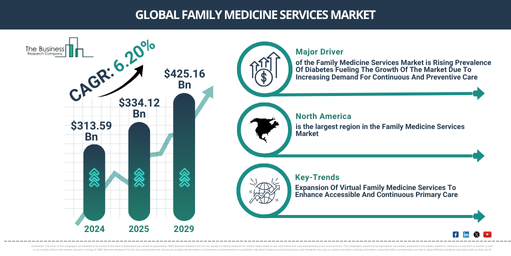
    The family medicine services market has experienced robust expansion in recent years. This market is projected to expand from $313.59 billion in 2024 to $334.12 billion by 2025, demonstrating a compound annual growth rate (CAGR) of 6.5%. Historically, this growth is a result of broadened health insurance coverage, the move towards value-based care approaches, growing patient preference for ease of access, wider government programs and helpful health policies, and a greater emphasis on preventive measures.

    The family medicine services market is anticipated to experience substantial expansion in the coming years. It is projected to grow to $425.16 billion in 2029, at a compound annual growth rate (CAGR) of 6.2%. This growth during the forecast period is attributed to factors such as continued geriatric population increase, widespread adoption of telehealth, the rising prevalence of chronic conditions, an increasing demand for accessible and cost-effective healthcare options, and a growing need for digital health solutions. Major trends anticipated in this period include the integration of digital health tools, advancements in medical technology and specialist support, innovations in remote patient monitoring, the incorporation of artificial intelligence and data analytics for patient management, and the widespread adoption of telemedicine and virtual consultation platforms.

    Unlock Your Free Sample Report for Exclusive Market Data:

    https://www.thebusinessresearchcompany.com/sample.aspx?id=28218&type=smp

    What Are The Top Growth Drivers Impacting The Family Medicine Services Market Outlook?

    The increasing prevalence of diabetes is expected to propel the growth of the family medicine services market going forward. Diabetes is a long-term condition where the body struggles to regulate blood sugar levels, often due to issues with insulin production or utilization. The rise in diabetes prevalence stems from modern sedentary lifestyles, characterized by reduced physical activity and prolonged sitting, which significantly contribute to increasing obesity rates—a major risk factor for developing the disease. Family medicine services aid in diabetes management by providing continuous, tailored care that helps patients control blood sugar, encourages healthy lifestyle modifications, and reduces the risk of complications through consistent monitoring and advice. For instance, in April 2025, according to the International Diabetes Federation, a Belgium-based umbrella organization, in 2024, around 589 million adults aged 20–79 are living with diabetes, and this number is expected to increase to 853 million by 2050. Therefore, the increasing prevalence of diabetes is driving the growth of the family medicine services market.

    What Are The Major Segment Types Covered In The Family Medicine Services Market?

    The family medicine services market covered in this report is segmented as

    1) By Service Type: Preventive Care, Chronic Disease Management, Acute Care Services, Wellness Programs, Telemedicine Services

    2) By Patient Demographics: Pediatric Patients, Adult Patients, Geriatric Patients, Pregnant Women, Special Needs Patients

    3) By Care Delivery Model: Traditional Office Visits, Urgent Care Centers, Community Health Clinics, Mobile Health Units, Home Health Care

    4) By Technology Integration: Electronic Health Record Systems, Remote Patient Monitoring, Mobile Health Applications, artificial intelligence (AI) In Diagnoses, Data Analytics For Patient Management

    5) By End-User: Hospitals, Clinics, Home Care, Other End-Users

    Subsegments:

    1) By Preventive Care: Health Screenings, Vaccination Services, Routine Physical Examinations, Lifestyle Counseling

    2) By Chronic Disease Management: Diabetes Management, Hypertension Management, Cardiovascular Disease Management, Asthma And Respiratory Care

    3) By Acute Care Services: Emergency Treatment, Infectious Disease Treatment, Injury And Trauma Care, Surgical Consultations

    4) By Wellness Programs: Nutrition Counseling, Fitness And Exercise Programs, Stress Management Programs, Mental Health Support

    5) By Telemedicine Services: Virtual Consultations, Remote Patient Monitoring, Online Prescription Services, Telehealth Follow-Ups

    Which Market Trends Are Creating New Opportunities In The Family Medicine Services Industry?

    Major companies in the family medicine services market are focusing on expanding virtual primary care services, such as virtual family medicine, to improve patient access, reduce appointment wait times, and provide continuous care for chronic conditions. Virtual family medicine involves delivering primary healthcare services remotely using digital platforms like video calls, phone consultations, or mobile applications. For instance, in September 2023, Atrium Health, a US-based healthcare provider, introduced its Virtual Primary Care service. This service allows patients to establish an ongoing relationship with a dedicated family medicine provider for comprehensive primary care, delivered virtually through secure video visits. Available around the clock with flexible scheduling, this service enables patients to receive care for chronic conditions, preventative health, mental health, medication management, lab orders, and virtual specialist consults without needing in-person visits. It targets patients with busy lifestyles, frequent travelers, or those facing access challenges, offering convenient, personalized care from home, the office, or while traveling across North Carolina, South Carolina, and Georgia.

    Which Leading Companies Dominate The Family Medicine Services Market Share?

    Major companies operating in the family medicine services market are Kaiser Permanente, Trinity Health, Banner Health, Tenet Healthcare Corporation, NYU Langone Hospitals, Intermountain Health Care Inc., Baylor Scott & White Health LLC, Geisinger Clinic, Ascension Health, Michigan Health Corp., UW Health, Stanford Health Care, Evergreen Health, Providence, Sutter Health, UCI Health, Altru Health System, Blessing Health System, Samaritan Health Services, Allcare Health, Skagit Regional Health, Olathe Health.

    Download The Full Report For Exclusive Market Findings:

    https://www.thebusinessresearchcompany.com/report/family-medicine-services-global-market-report

    Which Regional Markets Are Contributing Most To The Family Medicine Services Industry Expansion?

    North America was the largest region in the family medicine services market in 2024. The regions covered in family medicine services report are Asia-Pacific, Western Europe, Eastern Europe, North America, South America, Middle East and Africa.

    Request A Customized Version Of The Family Medicine Services Market Report:

    https://www.thebusinessresearchcompany.com/customise?id=28218&type=smp

    Browse Through More Reports Similar to the Global Family Medicine Services Market 2025, By The Business Research Company

    Care Services Global Market Report 2025

    https://www.thebusinessresearchcompany.com/report/care-services-global-market-report

    Healthcare Services Market 2025

    https://www.thebusinessresearchcompany.com/report/healthcare-services-market

    Individual And Family Services Global Market Report 2025

    https://www.thebusinessresearchcompany.com/report/individual-and-family-services-global-market-report

    Get in touch with us:

    The Business Research Company: https://www.thebusinessresearchcompany.com/

    Americas +1 310-496-7795

    Asia +44 7882 955267 & +91 8897263534

    Europe +44 7882 955267

    Email us at info@tbrc.info

    Follow us on:

    LinkedIn: https://in.linkedin.com/company/the-business-research-company

    YouTube: https://www.youtube.com/channel/UC24_fI0rV8cR5DxlCpgmyFQ

    Global Market Model: https://www.thebusinessresearchcompany.com/global-market-model