Blog

  • Point-of-Care Diagnostics Devices And Equipment Market Size Forecast: How The Industry Is Expected To Grow From 2026 To 2030

    Point-of-Care Diagnostics Devices And Equipment Market Size Forecast: How The Industry Is Expected To Grow From 2026 To 2030

    Backed by market attractiveness analysis, total addressable market sizing, company benchmarking matrices, interactive Excel dashboards, wider supply chain intelligence, emerging startup coverage, and detailed product-level insights, The Business Research Company’s 2026 market reports are designed to offer research that is more actionable and strategically valuable than ever.

    Point-of-Care Diagnostics Devices And Equipment Market Forecast: What Value Will The Market Reach By 2030?

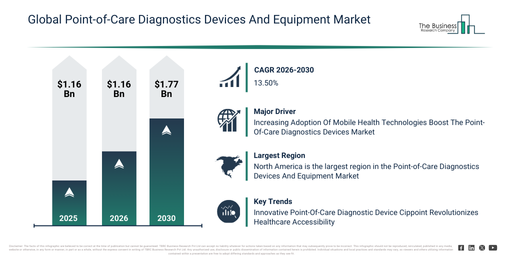
    The point-of-care diagnostics devices and equipment market size has experienced significant expansion in recent years. It is anticipated to grow from $64.11 billion in 2025 to $71.62 billion in 2026, at a compound annual growth rate (CAGR) of 11.7%. This historical growth can be attributed to factors such as the increasing burden of chronic diseases, a greater demand for rapid clinical decision-making, the expansion of outpatient healthcare services, the rising adoption of portable diagnostic devices, and the growth of preventive healthcare practices.

    The point-of-care diagnostics devices and equipment market is projected to experience substantial expansion over the coming years. Its valuation is anticipated to reach $118.72 billion in 2030, exhibiting a compound annual growth rate (CAGR) of 13.5%. This forecasted expansion stems from factors such as a heightened need for home healthcare diagnostics, the increasing embrace of digital health ecosystems, the broadening scope of infectious disease screening initiatives, the growing incorporation of AI-powered diagnostic assistance, and a stronger emphasis on remote patient monitoring. Key developments expected during this period involve a greater uptake of rapid diagnostic testing devices, a surging desire for decentralized healthcare diagnostics, the deeper integration of connected point-of-care systems, the proliferation of home-based testing options, and an elevated commitment to intuitive device interfaces.

    Get A Free Sample Report With In-Depth Market Insights:

    https://thebusinessresearchcompany.com/sample_request?id=87519147&type=smp&name=Point-of-Care%20Diagnostics%20Devices%20And%20Equipment%20Market%20Report%202026&utm_source=Blogs&utm_medium=Paid&utm_campaign=Oct_PR

    Point-of-Care Diagnostics Devices And Equipment Market Growth Catalysts And Demand Drivers

    The expanding use of mobile health technologies is anticipated to fuel the expansion of the point-of-care diagnostics devices market in the future. Mobile health encompasses the application of portable devices like smartphones and tablets, alongside other wireless innovations such as wearable technology, to provide healthcare services, disseminate information, and oversee health data. Point-of-care diagnostics (POC) devices are vital within mobile health (mHealth) because they facilitate quick and accessible testing and data acquisition directly at or close to where the patient is located. Such devices are engineered to deliver instant outcomes for diverse medical examinations and frequently interface with mobile applications or link to smartphones for purposes of data handling and transfer. For example, PharmiWeb reported in February2025 that approximately 23% of healthcare interactions are projected to occur virtually in 2025. Consequently, the heightened embrace of mobile health technologies is actively stimulating the growth of the point-of-care diagnostics devices market.

    Point-of-Care Diagnostics Devices And Equipment Market Segment Landscape And Growth Outlook

    The point-of-care diagnostics devices and equipment market covered in this report is segmented –

    1) By Type: Infectious disease testing kits, Cardio metabolic monitoring kits, Cholesterol testing kits, Pregnancy and fertility tests kits, Tumor Or cancer markers, Urinalysis testing kits, Hematology testing kits, Drugs of abuse testing kits, Fecal occult testing kits, Other Types

    2) By Prescription Mode: Prescription-based Testing Devices, Over-The-Counter (OTC) Testing Devices

    3) By End User: Professional diagnostic centers, Hospitals/critical care centers, Outpatient healthcare Setting, Ambulatory care settings, Research laboratories, Home

    Subsegments:

    1) By Infectious Disease Testing Kits: HIV Testing Kits, Hepatitis Testing Kits, Malaria Testing Kits, Influenza Testing Kits, COVID-19 Testing Kits, Other Infectious Disease Testing Kits

    2) By Cardio Metabolic Monitoring Kits: Blood Glucose Testing Kits, Blood Pressure Monitoring Kits, Lipid Testing Kits, Other Cardio Metabolic Monitoring Kits

    3) By Cholesterol Testing Kits: Total Cholesterol Testing Kits, HDL Cholesterol Testing Kits, LDL Cholesterol Testing Kits, Triglyceride Testing Kits

    4) By Pregnancy and Fertility Test Kits: Pregnancy Test Kits, Ovulation Test Kits, Fertility Monitoring Kits

    5) By Tumor Or Cancer Markers: Prostate-Specific Antigen (PSA) Test Kits, Human Epidermal Growth Factor Receptor 2 (HER2) Test Kits, CA-125 Test Kits, Alpha-Fetoprotein (AFP) Test Kits, Other Cancer Marker Test Kits

    6) By Urinalysis Testing Kits: Protein Testing Kits, Glucose Testing Kits, pH Testing Kits, Specific Gravity Testing Kits, Nitrite Testing Kits, Other Urinalysis Testing Kits

    7) By Hematology Testing Kits: Complete Blood Count (CBC) Kits, Hemoglobin Testing Kits, Hematocrit Testing Kits, Platelet Count Kits, Other Hematology Testing Kits

    8) By Drugs of Abuse Testing Kits: Marijuana Testing Kits, Cocaine Testing Kits, Opioid Testing Kits, Amphetamine Testing Kits, Other Drugs of Abuse Testing Kits

    9) By Fecal Occult Testing Kits: Stool Blood Test Kits, Occult Blood Screening Kits, Other Fecal Occult Testing Kits

    10) By Other Types: Glucose Monitoring Kits, Temperature Monitoring Kits, Oxygen Saturation Monitoring Kits, Other Specialty Point-of-Care Kits

    Point-of-Care Diagnostics Devices And Equipment Market Trends Shaping Long-Term Demand

    Leading companies in the point-of-care diagnostic devices and equipment market are developing innovative products, such as Cippoint, to improve access to healthcare and reduce diagnostic times. Cippoint is a point-of-care testing device suitable for multiple health conditions. This advanced device offers a comprehensive range of testing parameters, including cardiac markers, diabetes, infectious diseases, fertility, thyroid function, inflammation, metabolic markers, and coagulation markers. For instance, in January 2023, Cipla Limited, an India-based pharmaceutical company, launched Cippoint as a point-of-care testing device for various health conditions, confirming its status as a state-of-the-art tool with wide-ranging testing capabilities. Cippoint operates as an immunofluorescence-based quantitative analyzer, enabling healthcare professionals to receive test results within 3 to 15 minutes, which facilitates more rapid and efficient clinical decisions. Furthermore, its ease of use makes it deployable in diverse settings like hospitals, clinics, and mobile vans.

    Point-of-Care Diagnostics Devices And Equipment Market Key Players Shaping Industry Direction

    Major companies operating in the point-of-care diagnostics devices and equipment market are Abbott Laboratories, F. Hoffmann-La Roche AG, Siemens Healthineers, Danaher, Beckman Coulter, Becton Dickinson and Company, Qiagen N.V., Johnson & Johnson, Alere, BioMerieux, Chembio Diagnostic Systems, Quidel Corporation, EKF Diagnostics, Trinity Biotech Plc, OraSure Technologies, Sysmex Corporation, Radiometer Medical ApS, Response Biomedical Corporation, Bio-Rad Laboratories, Illumina, Thermo Fisher Scientific Inc., LabCorp, Luminex Corporation, LifeScan, Nova, Sekisui Diagnostics, Hemocue AB, Akers Biosciences,

    View The Full Point-of-Care Diagnostics Devices And Equipment Market Report:

    https://thebusinessresearchcompany.com/report/point-of-care-diagnostics-devices-and-equipment-global-market-report?utm_source=Blogs&utm_medium=Paid&utm_campaign=Oct_PR

    Point-of-Care Diagnostics Devices And Equipment Market Regional Analysis: Which Geography Leads On Revenue?

    North America was the largest region in the point-of-care diagnostic devices and equipment market in 2025. Asia-Pacific was the second-largest region in the global point-of-care diagnostics devices and equipment market. The regions covered in the point-of-care diagnostics devices and equipment market report are Asia-Pacific, South East Asia, Western Europe, Eastern Europe, North America, South America, Middle East, Africa.

    Reach Out To Our Team:

    The Business Research Company: https://www.thebusinessresearchcompany.com/

    Americas: +1 310-496-7795

    Asia: +44 7882 955267 & +91 8897263534

    Europe: +44 7882 955267

    Email us at: marketing@tbrc.info

    Follow us on:

    LinkedIn: https://in.linkedin.com/company/the-business-research-company

    YouTube: https://www.youtube.com/channel/UC24_fI0rV8cR5DxlCpgmyFQ

    Global Market Model: https://www.thebusinessresearchcompany.com/global-market-model
  • Point-of-Care (POC) Coagulation Testing Devices Market Reaches $3.49 Billion In 2026: Forecast And Growth Opportunities

    Point-of-Care (POC) Coagulation Testing Devices Market Reaches $3.49 Billion In 2026: Forecast And Growth Opportunities

    Featuring market attractiveness scoring, total addressable market sizing, company benchmarking matrices, interactive Excel dashboards, deeper supply chain intelligence, emerging startup tracking, and granular product-level insights, The Business Research Company’s 2026 market reports are built to deliver research that is both more actionable and more strategically valuable.

    Point-of-Care (POC) Coagulation Testing Devices Market Size Outlook: How Quickly Will Revenue Expand Through 2030?

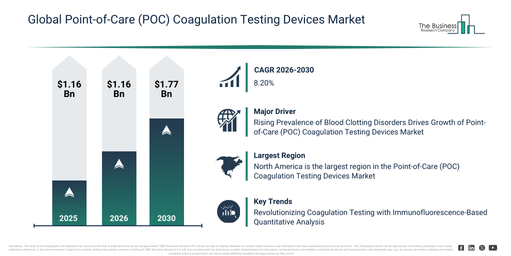
    The point-of-care (poc) coagulation testing devices market size has demonstrated significant growth in recent years. It is forecast to grow from $2.32 billion in 2025 to $2.55 billion in 2026, achieving a compound annual growth rate (CAGR) of 9.7%. The historical expansion can be attributed to the rising prevalence of coagulation disorders, the increased use of anticoagulant therapies, the expansion of decentralized healthcare settings, the growing adoption of point-of-care diagnostics, and advancements in coagulation testing technologies.

    The point-of-care (poc) coagulation testing devices market size is projected for substantial expansion over the coming years. This market is anticipated to reach $3.49 billion in 2030, exhibiting a compound annual growth rate (CAGR) of 8.2%. The expansion during the forecast period is largely due to factors such as a greater need for home healthcare diagnostics, an increased emphasis on personalized medicine, the growth of telehealth-enabled diagnostic solutions, an expanding elderly demographic, and ongoing advancements in microfluidic testing platforms. Key developments anticipated in this period encompass the wider adoption of portable coagulation monitors, a heightened call for quick diagnostic testing at the point of care, the growing prevalence of home-based coagulation testing kits, improved wireless data connectivity in poc devices, and a stronger emphasis on the precision and dependability of tests.

    Get A Free Sample Report With In-Depth Market Insights:

    https://thebusinessresearchcompany.com/sample_request?id=98888268&type=smp&name=Point-of-Care%20%28POC%29%20Coagulation%20Testing%20Devices%20Market%20Report%202026&utm_source=Blogs&utm_medium=Paid&utm_campaign=Oct_PR

    Point-of-Care (POC) Coagulation Testing Devices Market Opportunity Drivers: What’s Unlocking New Revenue Potential?

    An increase in the occurrence of blood clotting disorders is anticipated to stimulate the expansion of the point-of-care (POC) coagulation testing devices market moving forward. These conditions hinder the blood’s capacity to clot correctly. Certain lifestyle habits, such as smoking, heavy alcohol consumption, and a sedentary existence, can contribute to blood clotting disorders. These activities can adversely affect the health of blood vessels, levels of clotting factors, and blood circulation, elevating the potential for irregular clot formation. POC coagulation testing devices allow medical providers to rapidly evaluate a patient’s coagulation status, facilitating prompt adjustments to medication dosages and treatment plans. For example, in July 2025, the National Blood Authority, an Australia-based blood management agency, reported that 2,788 patients were living with hereditary haemophilia A (HMA) in 2023–2024, an increase from 2,681 patients in 2022–2023. Thus, the growing prevalence of blood clotting disorders is a key driver for the growth of the point-of-care (POC) coagulation testing devices market.

    Point-of-Care (POC) Coagulation Testing Devices Market Breakdown By Product Type And Application

    The point-of-care (poc) coagulation testing devices market covered in this report is segmented –

    1) By Product Type: Coagulation Monitors, Consumables, Coagulation Analyzers

    2) By Technology: Optical Technology, Mechanical Technology, Electrochemical Technology

    3) By Method: Prothrombin Time And International Normalized Ratio, Viscoelastic Coagulation Monitoring, Other Methods

    4) By Application: Coagulation Testing, Other Applications

    5) By End-User: Hospitals, Diagnostic Laboratories, Clinics, Other End-Users

    Subsegments:

    1) By Coagulation Monitors: Prothrombin Time (Pt) Monitors, International Normalized Ratio (Inr) Monitors, Activated Partial Thromboplastin Time (Aptt) Monitors, Whole Blood Coagulation Monitors, Clotting Time Monitors

    2) By Consumables: Test Strips, Reagents, Control Solutions, Calibration Kits, Lancets And Needles

    3) By Coagulation Analyzers: Portable Coagulation Analyzers, Benchtop Coagulation Analyzers, Fully Automated Coagulation Analyzers, Semi-Automated Coagulation Analyzers, Coagulation Testing Kits (For Home Use)

    Point-of-Care (POC) Coagulation Testing Devices Market Innovation Trends Shaping Future Development

    Key companies operating within the point-of-care (POC) coagulation testing devices market are engaged in the development of immunofluorescence-based quantitative analyzers to enhance the identification and management of coagulation disorders. These analyzers function as diagnostic instruments in laboratory environments, designed to accurately measure and quantify specific proteins or molecules involved in the coagulation process, thereby assisting in the diagnosis and treatment of blood clotting conditions. For instance, in January 2023, Cipla Limited, an India-based pharmaceutical firm, introduced Cippoint. This immunofluorescence-based quantitative analyzer employs immunofluorescence technology to yield quick and precise test results within 3 to 15 minutes, thus expediting clinical decision-making processes. With its user-friendly interface, swift processing time, and comprehensive testing features, Cippoint is instrumental in boosting diagnostic efficiency, enabling timely medical judgments, and improving patient care outcomes.

    Point-of-Care (POC) Coagulation Testing Devices Market Competitive Analysis Of Leading Industry Participants

    Major companies operating in the point-of-care (poc) coagulation testing devices market are Roche Diagnostics, Abbott Laboratories, Siemens Healthineers, Bio-Rad Laboratories Inc., Werfen, Haemonetics Corporation, HemoSonics LLC, Sysmex Corporation, Nihon Kohden Corporation, HORIBA Medical, Helena Laboratories Corporation, Diagnostica Stago, Sekisui Diagnostics, Instrumentation Laboratory, Trinity Biotech plc, CoaguSense Inc., iLine Microsystems, Medirox AB, Hemochron Systems, Axis-Shield Diagnostics

    View The Full Point-of-Care (POC) Coagulation Testing Devices Market Report:

    https://thebusinessresearchcompany.com/report/point-of-care-poc-coagulation-testing-devices-global-market-report?utm_source=Blogs&utm_medium=Paid&utm_campaign=Oct_PR

    Point-of-Care (POC) Coagulation Testing Devices Market Geographic Spread And Regional Opportunities

    North America was the largest region in the point-of-care (POC) coagulation testing devices market in 2025. The regions covered in the point-of-care (poc) coagulation testing devices market report are Asia-Pacific, South East Asia, Western Europe, Eastern Europe, North America, South America, Middle East, Africa.

    Reach Out To Our Team:

    The Business Research Company: https://www.thebusinessresearchcompany.com/

    Americas: +1 310-496-7795

    Asia: +44 7882 955267 & +91 8897263534

    Europe: +44 7882 955267

    Email us at: marketing@tbrc.info

    Follow us on:

    LinkedIn: https://in.linkedin.com/company/the-business-research-company

    YouTube: https://www.youtube.com/channel/UC24_fI0rV8cR5DxlCpgmyFQ

    Global Market Model: https://www.thebusinessresearchcompany.com/global-market-model
  • Point-of-Care (POC) Coagulation Testing Market Growth In 2026: Market Size, Key Drivers And Future Outlook

    Point-of-Care (POC) Coagulation Testing Market Growth In 2026: Market Size, Key Drivers And Future Outlook

    Built to provide research that’s more actionable and strategically valuable, The Business Research Company’s 2026 market reports include market attractiveness analysis, total addressable market sizing, company benchmarking matrices, interactive Excel dashboards, broader supply chain intelligence, emerging startup tracking, and in-depth product insights.

    Point-of-Care (POC) Coagulation Testing Market Size, Value And Growth Trajectory Through 2030

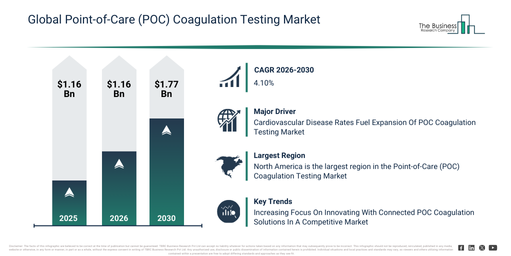
    The point-of-care (poc) coagulation testing market size has shown consistent expansion in recent years. Its valuation is projected to increase from $1.25 billion in 2025 to $1.3 billion in 2026, achieving a compound annual growth rate (CAGR) of 4.2%. The development observed in previous periods can be linked to the increasing occurrence of cardiovascular diseases requiring anticoagulation treatment, a greater need for quick coagulation results in operating theatres and intensive care units, the early clinical acceptance of optical and mechanical poc testing systems, the broadening scope of coagulation monitoring within hospital and clinic environments, and enhanced understanding of point-of-care diagnostics for improving treatment efficacy.

    The point-of-care (poc) coagulation testing market is projected to experience consistent expansion over the upcoming years, reaching a valuation of $1.52 billion by 2030, driven by a compound annual growth rate (CAGR) of 4.1%. This anticipated growth during the forecast period is primarily fueled by a growing move towards decentralized and home-based coagulation monitoring, increased use of electrochemical detection technologies, higher volumes of procedures in emergency and trauma care settings, wider availability through retail and direct tender distribution channels, and an intensified focus on reducing processing times and enhancing therapeutic results. Key trends expected over the forecast period encompass the increasing integration of rapid bedside coagulation testing in critical and emergency care, the expanded application of poc coagulation devices for tracking anticoagulation therapy, a rising demand for portable and handheld coagulation analysis instruments, the broader deployment of coagulation testing in home care and outpatient scenarios, and a surging need for real-time clinical decision support facilitated by near-patient testing.

    Get A Free Sample Report With In-Depth Market Insights:

    https://thebusinessresearchcompany.com/sample_request?id=24488942&type=smp&name=Point-of-Care%20%28POC%29%20Coagulation%20Testing%20Market%20Report%202026&utm_source=Blogs&utm_medium=Paid&utm_campaign=Oct_PR

    Point-of-Care (POC) Coagulation Testing Market Growth Momentum: What Factors Are Shaping Demand?

    The escalating occurrence of cardiovascular diseases is projected to stimulate the expansion of the point-of-care (POC) coagulation testing market going forward. Cardiovascular diseases (CVDs) encompass various conditions affecting the heart and blood vessels, such as coronary heart disease, cerebrovascular disease, and peripheral arterial disease. Point-of-care (POC) coagulation testing is valuable in managing Cardiovascular diseases (CVDs) due to its ability to provide real-time coagulation status updates. This enables prompt decisions on interventions and lowers the risk of bleeding complications post-cardiac surgery. As an illustration, in October 2024, the Centers for Disease Control and Prevention, a US-based public health institute, reported that in 2023, roughly 1 out of every 6 deaths from cardiovascular diseases affected adults younger than 65 years old, and 919,032 people died from cardiovascular disease, representing 1 in every 3 deaths. Thus, the increasing prevalence of cardiovascular diseases is propelling the growth of the point-of-care (POC) coagulation testing market.

    Point-of-Care (POC) Coagulation Testing Market Segment Analysis And Revenue Potential

    The point-of-care (poc) coagulation testing market covered in this report is segmented –

    1) By Technology: Optical Technology, Mechanical Technology, Electrochemical Technology

    2) By Distribution Channel: Direct Tenders, Retail

    3) By End-User: Hospitals, Clinics, Home care

    Subsegments:

    1) By Optical Technology: Reflectance Photometry, Fluorescence Detection, Colorimetric Detection

    2) By Mechanical Technology: Mechanical Oscillation, Ultrasonic Detection

    3) By Electrochemical Technology: Amperometric Detection, Potentiometric Detection, Conductometric Detection

    Point-of-Care (POC) Coagulation Testing Market Trends Redefining Industry Growth

    Leading companies in the point-of-care (POC) coagulation testing market are prioritizing the innovation of connected POC coagulation solutions through strategic partnerships to secure a competitive advantage. A strategic collaboration is defined as a formal arrangement between two or more parties that agree to work together to achieve specific, predetermined, and mutually beneficial goals. For example, in January 2023, Jana care, a US-based company that develops biomarker assays for its proprietary digital health platform, partnered with Roche Diagnostics, a Switzerland-based company known for developing diagnostic tests, instruments, and digital solutions that enhance healthcare. This collaboration seeks to develop and distribute a point-of-care blood testing platform designed for screening chronic kidney disease and heart failure. This cutting-edge platform will permit patients to conduct blood tests at home, with clinicians reviewing the results remotely.

    Point-of-Care (POC) Coagulation Testing Market Leading Companies And Competitive Benchmarking

    Major companies operating in the point-of-care (poc) coagulation testing market are Siemens Healthcare GmbH, Abbott Laboratories, F. Hoffmann-La Roche Ltd., Danaher Corporation, Sysmex Corporation, IDEXX Laboratories Inc., Quidel Corporation, Werfen SA, Nihon Kohden Corporation, Horiba Ltd., Hycel, Nova Biomedical Corporation, Haemonetics Corporation, Maccura Biotechnology Co. Ltd., Helena Laboratories Corporation, Abaxis Inc., ARKRAY Inc., Radiometer Medical ApS, HemoSonics LLC, iLine Microsystems SL, Corgenix Medical Corporation, Quotient Limited, Micropoint Bioscience Inc., Beijing Succeeder Technology Inc., EKF Diagnostics Holdings plc

    View The Full Point-of-Care (POC) Coagulation Testing Market Report:

    https://thebusinessresearchcompany.com/report/point-of-care-poc-coagulation-testing-global-market-report?utm_source=Blogs&utm_medium=Paid&utm_campaign=Oct_PR

    Point-of-Care (POC) Coagulation Testing Market Top Region By Revenue And Market Share

    North America was the largest region in the point-of-care (POC) coagulation testing market in 2025. The regions covered in the point-of-care (poc) coagulation testing market report are Asia-Pacific, South East Asia, Western Europe, Eastern Europe, North America, South America, Middle East, Africa.

    Reach Out To Our Team:

    The Business Research Company: https://www.thebusinessresearchcompany.com/

    Americas: +1 310-496-7795

    Asia: +44 7882 955267 & +91 8897263534

    Europe: +44 7882 955267

    Email us at: marketing@tbrc.info

    Follow us on:

    LinkedIn: https://in.linkedin.com/company/the-business-research-company

    YouTube: https://www.youtube.com/channel/UC24_fI0rV8cR5DxlCpgmyFQ

    Global Market Model: https://www.thebusinessresearchcompany.com/global-market-model
  • Point Of Care Lipid Test Market Size And Forecast 2026–2030: Trends Driving Industry Expansion

    Point Of Care Lipid Test Market Size And Forecast 2026–2030: Trends Driving Industry Expansion

    Backed by market attractiveness analysis, total addressable market sizing, company benchmarking matrices, interactive Excel dashboards, wider supply chain intelligence, emerging startup coverage, and detailed product-level insights, The Business Research Company’s 2026 market reports are designed to offer research that is more actionable and strategically valuable than ever.

    Point Of Care Lipid Test Market CAGR Outlook And Future Development

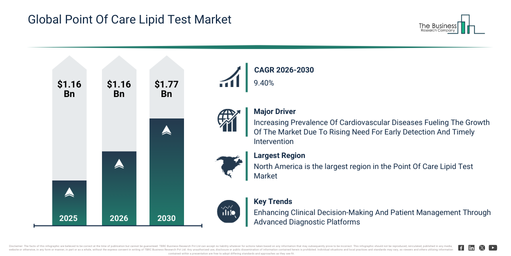
    The point of care lipid test market has demonstrated strong growth in recent years. This market is projected to expand from $0.74 billion in 2025 to $0.82 billion in 2026, at a compound annual growth rate (CAGR) of 9.7%. The growth observed in the past can be attributed to the increasing prevalence of cardiovascular diseases, the demand for rapid testing, progress in biosensor technology, increased awareness of cholesterol management, and the availability of point-of-care devices.

    The point of care lipid test market size is forecasted to undergo significant expansion in the coming years, with expectations to reach $1.17 billion by 2030, growing at a compound annual growth rate (CAGR) of 9.4%. This anticipated growth is primarily driven by the integration of mobile applications and cloud platforms, the expansion into home care settings, increased adoption within clinics and hospitals, the development of multi-analyte tests, and collaborative efforts between device and software providers. Prominent trends throughout the forecast period include the rise of fingerstick lipid testing, the availability of portable lipid analyzers, the use of multi-parameter analyzers, rapid cardiovascular risk assessment capabilities, and the prevalence of home-based lipid monitoring solutions.

    Get A Free Sample Report With In-Depth Market Insights:

    https://thebusinessresearchcompany.com/sample_request?id=94589313&type=smp&name=Point%20Of%20Care%20Lipid%20Test%20Market%20Report%202026&utm_source=Blogs&utm_medium=Paid&utm_campaign=Oct_PR

    Point Of Care Lipid Test Market Expansion Drivers: What’s Shaping Future Growth?

    The rising incidence of cardiovascular conditions is projected to boost the expansion of the point of care lipid test market in the future. Cardiovascular diseases encompass various heart and blood vessel disorders, such as coronary artery disease, stroke, and high blood pressure, frequently caused by atherosclerosis connected to irregular cholesterol and triglyceride levels. The escalating occurrence of cardiovascular ailments stems from increasingly sedentary habits and diminished physical activity, contributing to issues like obesity, poor circulation, and other risk factors for CVDs. Point-of-care lipid tests facilitate the handling of the increasing prevalence of cardiovascular diseases by offering rapid, on-site measurements of cholesterol and other lipid levels, allowing for early detection of risk and swift treatment choices to hinder disease advancement. For example, in January 2024, the American Heart Association, a US-based nonprofit organization, reported that cardiovascular disease-related deaths in the cardiovascular sector reached 931,578, an increase of 3,000 fatalities from the prior year’s total of 928,741. Consequently, the growing prevalence of cardiovascular diseases is anticipated to drive the point of care lipid test market’s growth.

    Point Of Care Lipid Test Market Segmentation And Category Overview

    The point of care lipid test market covered in this report is segmented –

    1) By Product Types: Instruments, Consumables

    2) By Application: Hyperlipidemia, Hypertriglyceridemia, Hyperlipoproteinemia, Familial Hypercholesterolemia, Other Applications

    3) By End-User: Hospitals, Clinics, Home Care Settings, Other End Users

    Subsegments:

    1) By Instruments: Portable Or Handheld Analyzers, Multi-parameter Analyzers, Single-parameter Analyzers

    2) By Consumables: Test Strip, Reagents And Kits

    Point Of Care Lipid Test Market Strategic Trends: What Defines The Next Growth Phase?

    Key companies operating in the point-of-care lipid test market are concentrating on innovative solutions, such as advanced point-of-care (POC) diagnostic platforms, to provide rapid, accurate, and lab-quality lipid panel results directly at the patient’s bedside, thereby enhancing clinical decision-making and patient management. An advanced point-of-care (POC) diagnostic platform is defined as a portable, integrated device that executes quick, precise, and lab-quality tests close to the patient, facilitating real-time clinical decisions and immediate health management. For example, in July 2023, Vital Biosciences Inc., a health technology company based in Canada, launched VitalOne, a point-of-care lab testing platform engineered to deliver over 50 lab-grade blood test results in just 20 minutes utilizing a compact, automated device at locations such as clinics and pharmacies. This system unifies hematology, clinical chemistry, and immunoassays within a single instrument, allowing healthcare providers to complete testing, diagnosis, and treatment in one visit, significantly improving access, speed, and personalization of patient care, all with accuracy comparable to traditional central labs.

    Point Of Care Lipid Test Market Industry Leaders And Competitive Landscape

    Major companies operating in the point of care lipid test market are Abbott Laboratories, EKF Diagnostics Holdings plc, Roche Diagnostics International AG, Siemens Healthineers AG, Horiba ABX SAS, Randox Laboratories Ltd., Sekisui Diagnostics LLC, EKF Diagnostics USA Inc., VivaChek Biotech (Hangzhou) Co. Ltd., Menarini Diagnostics S.r.l., Trinity Biotech plc, AccuBioTech Co. Ltd., MiCo BioMed Co. Ltd., BHR Diagnostics Private Limited, SD Biosensor Inc., ARKRAY Inc., PTS Diagnostics, HemoCue AB, MedTest Dx Inc., Nova Biomedical Corporation

    View The Full Point Of Care Lipid Test Market Report:

    https://thebusinessresearchcompany.com/report/point-of-care-lipid-test-global-market-report?utm_source=Blogs&utm_medium=Paid&utm_campaign=Oct_PR

    Point Of Care Lipid Test Market Regional Analysis And Top Geography

    North America was the largest region in the point of care lipid test market in 2025. Asia-Pacific is expected to be the fastest-growing region in the forecast period. The regions covered in the point of care lipid test market report are Asia-Pacific, South East Asia, Western Europe, Eastern Europe, North America, South America, Middle East, Africa.

    Reach Out To Our Team:

    The Business Research Company: https://www.thebusinessresearchcompany.com/

    Americas: +1 310-496-7795

    Asia: +44 7882 955267 & +91 8897263534

    Europe: +44 7882 955267

    Email us at: marketing@tbrc.info

    Follow us on:

    LinkedIn: https://in.linkedin.com/company/the-business-research-company

    YouTube: https://www.youtube.com/channel/UC24_fI0rV8cR5DxlCpgmyFQ

    Global Market Model: https://www.thebusinessresearchcompany.com/global-market-model
  • Point Of Care Hematology Diagnostics Market 2026 Outlook: Market Size, CAGR And Key Growth Opportunities

    Point Of Care Hematology Diagnostics Market 2026 Outlook: Market Size, CAGR And Key Growth Opportunities

    Featuring market attractiveness scoring, total addressable market sizing, company benchmarking matrices, interactive Excel dashboards, deeper supply chain intelligence, emerging startup tracking, and granular product-level insights, The Business Research Company’s 2026 market reports are built to deliver research that is both more actionable and more strategically valuable.

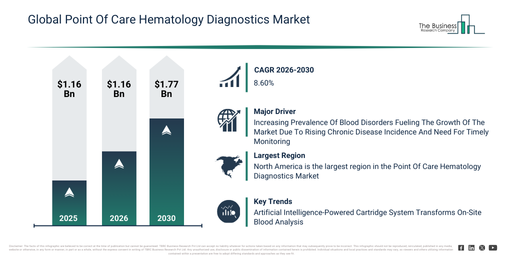
    Point Of Care Hematology Diagnostics Market Set To Climb From $3.16 Billion In 2026 To $4.39 Billion By 2030

    The point of care hematology diagnostics market size has demonstrated significant expansion in recent years. This market is anticipated to increase from $2.9 billion in 2025 to $3.16 billion in 2026, registering a compound annual growth rate (CAGR) of 9.0%. Its historical growth was influenced by factors including reliance on centralized laboratory testing, the escalating prevalence of anemia and blood disorders, a rise in hospital emergency admissions, the demand for expedited diagnostic turnaround times, and restricted access to laboratory infrastructure in rural areas.

    The point of care hematology diagnostics market is projected to experience substantial expansion in the coming years. This market is set to reach a valuation of $4.39 billion by 2030, exhibiting a compound annual growth rate (CAGR) of 8.6%. This anticipated growth during the forecast period is driven by several factors, including the increasing incidence of chronic and infectious diseases, the expansion of point of care testing initiatives, a heightened need for swift diagnostics in emergency situations, innovations in compact hematology analyzers, and the proliferation of decentralized healthcare delivery systems. Key trends expected over the forecast period encompass a greater uptake of rapid bedside blood testing, an increasing requirement for decentralized diagnostics in urgent care environments, the wider deployment of portable and handheld hematology instruments, the extension of point of care testing into regions with limited resources, and an emphasis on reducing turnaround times for quicker clinical decision-making.

    Get A Free Sample Report With In-Depth Market Insights:

    https://thebusinessresearchcompany.com/sample_request?id=94558990&type=smp&name=Point%20Of%20Care%20Hematology%20Diagnostics%20Market%20Report%202026&utm_source=Blogs&utm_medium=Paid&utm_campaign=Oct_PR

    Point Of Care Hematology Diagnostics Market Development Factors: What’s Supporting Demand?

    The growing prevalence of blood disorders is expected to drive the expansion of the point-of-care hematology diagnostics market in the future. Blood disorders are defined as conditions that impact the blood’s components, such as red blood cells, white blood cells, platelets, or plasma. This increasing incidence of blood disorders is primarily linked to the rising occurrence of chronic diseases, which directly affect blood health and require continuous monitoring. Point-of-care hematology diagnostics assist in the early detection and management of blood disorders by offering rapid, accurate results directly at or near the patient’s location, enabling quicker clinical decisions and improved disease management. For instance, in November 2024, The American Society of Hematology, a US-based Non-profit organization, projected that global leukemia cases could reach approximately 519,540 by 2050. Therefore, the increasing incidence of blood disorders is a key factor boosting the growth of the point-of-care hematology diagnostics market.

    Point Of Care Hematology Diagnostics Market Segment Outlook: Which Categories Are Growing Fastest?

    The point of care hematology diagnostics market covered in this report is segmented –

    1) By Type: Complete Blood Count, Coagulation Testing, Hemoglobin Testing, Anemia Diagnosis, Other Types

    2) By Mode Of Prescription: Prescription Based Product, Over-The-Counter Based Product

    3) By End User: Diagnostic Centers, Hospitals, Blood Banks, Transfusion Centers, Other End Users

    Subsegments:

    1) By Complete Blood Count: White Blood Cell Count, Red Blood Cell Count, Platelet Count, Hematocrit, Hemoglobin Concentration, Mean Corpuscular Volume (MCV)

    2) By Coagulation Testing: Prothrombin Time (PT), Activated Partial Thromboplastin Time (aPTT), International Normalized Ratio (INR), D-Dimer Test, Fibrinogen Level

    3) By Hemoglobin Testing: Total Hemoglobin, Glycated Hemoglobin (HbA1c), Oxyhemoglobin, Carboxyhemoglobin, Methemoglobin

    4) By Anemia Diagnosis: Iron Studies, Vitamin B12 Levels, Folate Levels, Reticulocyte Count, Ferritin Test, Transferrin Saturation

    5) By Other Types: Blood Typing And Crossmatching, Erythrocyte Sedimentation Rate, Malaria Parasite Detection, Sickle Cell Screening, C-Reactive Protein Testing

    Point Of Care Hematology Diagnostics Market Transformation Trends: What Innovations Are Driving Change?

    Leading companies in the point-of-care hematology diagnostics market are prioritizing the creation of innovative solutions, such as cartridge-based AI-powered hematology analyzers, to provide swift, precise, and immediate blood testing for enhanced patient outcomes. These analyzers are characterized as compact diagnostic instruments that employ disposable reagent cartridges and artificial intelligence technology for the rapid and precise examination of blood specimens directly where care is given. An example of this is Zoetis Inc., a US-based veterinary health company, which in September 2024 introduced Vetscan OptiCell, a cartridge-based, AI-powered hematology analyzer tailored for animal health applications. This advanced device provides swift and high-standard complete blood count (CBC) outcomes on-site in a matter of minutes, simultaneously minimizing upkeep and operational effort. Featuring sophisticated AI-powered image processing and viscoelastic focusing capabilities, it accurately positions cells for optimal visualization, facilitating precise blood cell categorization and automatic detection of irregularities, consequently guaranteeing effective and dependable diagnostic results for animals.

    Point Of Care Hematology Diagnostics Market Key Participants And Competitive Landscape

    Major companies operating in the point of care hematology diagnostics market are F. Hoffmann‑La Roche Ltd., Abbott Laboratories, Danaher Corporation, Siemens Healthineers AG, Shenzhen Mindray Bio‑Medical Electronics Co. Ltd., Sysmex Corporation, HORIBA Ltd., Nova Biomedical Corp., S.D. Sight Diagnostics Ltd., EKF Diagnostics Holdings plc., BioMedomics Inc., PixCell Medical Technologies Ltd., Boule Diagnostics AB, Nihon Kohden Corporation, Edan Instruments Inc., A Menarini Industrie Farmaceutiche Srl, Becton Dickinson and Company, Ortho Clinical Diagnostics, Khema Diagnostics, Bio‑Rad Laboratories Inc.

    View The Full Point Of Care Hematology Diagnostics Market Report:

    https://thebusinessresearchcompany.com/report/point-of-care-hematology-diagnostics-global-market-report?utm_source=Blogs&utm_medium=Paid&utm_campaign=Oct_PR

    Point Of Care Hematology Diagnostics Market Geographic Analysis: Where Is Demand Rising Fastest?

    North America was the largest region in the point of care hematology market in 2025. Asia-Pacific is expected to be the fastest-growing region in the forecast period. The regions covered in the point of care hematology diagnostics market report are Asia-Pacific, South East Asia, Western Europe, Eastern Europe, North America, South America, Middle East, Africa.

    Reach Out To Our Team:

    The Business Research Company: https://www.thebusinessresearchcompany.com/

    Americas: +1 310-496-7795

    Asia: +44 7882 955267 & +91 8897263534

    Europe: +44 7882 955267

    Email us at: marketing@tbrc.info

    Follow us on:

    LinkedIn: https://in.linkedin.com/company/the-business-research-company

    YouTube: https://www.youtube.com/channel/UC24_fI0rV8cR5DxlCpgmyFQ

    Global Market Model: https://www.thebusinessresearchcompany.com/global-market-model
  • Point Of Care Devices Market Size Growth: From $34.44 Billion In 2026 To $48.88 Billion By 2030

    Point Of Care Devices Market Size Growth: From $34.44 Billion In 2026 To $48.88 Billion By 2030

    Built to provide research that’s more actionable and strategically valuable, The Business Research Company’s 2026 market reports include market attractiveness analysis, total addressable market sizing, company benchmarking matrices, interactive Excel dashboards, broader supply chain intelligence, emerging startup tracking, and in-depth product insights.

    Point Of Care Devices Market Forecast: Value Set To Climb From $34.44 Billion To $48.88 Billion

    The point of care devices market size has experienced robust expansion in recent years. Projections indicate its valuation will ascend from $31.46 billion in 2025 to $34.44 billion in 2026, demonstrating a compound annual growth rate (CAGR) of 9.5%. Historically, this market’s expansion was driven by factors such as restricted access to centralized laboratory services, the increasing prevalence of chronic ailments, the imperative for quicker clinical determinations, the proliferation of primary healthcare establishments, and a heightened demand for bedside diagnostic solutions.

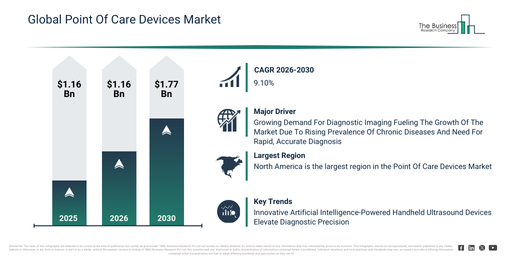
    The point of care devices market is anticipated to show significant expansion over the next few years. It will grow to $48.88 billion in 2030 at a compound annual growth rate (CAGR) of 9.1%. This projected growth during the forecast period is largely due to advancements in microfluidics and biosensors, the rising acceptance of wearable and remote monitoring devices, an increase in home healthcare environments, growing requirements for infectious disease surveillance, and the integration of digital health platforms. Prominent trends for the forecast period encompass the increasing adoption of rapid diagnostic testing at care facilities, a greater demand for home-based and self-testing products, the miniaturization of diagnostic and monitoring tools, an escalating focus on decentralized healthcare provision, and the broadening of point of care testing within emergency and critical care settings.

    Get A Free Sample Report With In-Depth Market Insights:

    https://thebusinessresearchcompany.com/sample_request?id=79367464&type=smp&name=Point%20Of%20Care%20Devices%20Market%20Report%202026&utm_source=Blogs&utm_medium=Paid&utm_campaign=Oct_PR

    Point Of Care Devices Market Industry Drivers: What’s Behind The Revenue Growth?

    The increasing need for diagnostic imaging is anticipated to propel the growth of the point-of-care devices market moving forward. Diagnostic imaging encompasses techniques and processes utilized to create visual representations of the body’s interior for clinical analysis and medical intervention. The demand for diagnostic imaging is escalating due to the rising occurrence of chronic conditions that require early and accurate diagnosis. Point-of-care devices augment diagnostic imaging by providing compact and mobile designs, making them perfectly suited for clinics, bedside use, and remote healthcare environments. They contribute to reduced turnaround time by delivering rapid and accurate imaging results, which in turn improves clinical decision-making and the efficiency of patient care. For instance, in November 2024, as per the National Health Service, a UK-based government agency, 47.2 million imaging tests were reported in England in the year to March 2024, showing an increase of 4.8% from 45.0 million recorded in the previous year. Therefore, the expanding demand for diagnostic imaging is a key driver for the growth of the point-of-care devices market.

    Point Of Care Devices Market Segment Landscape: Which Areas Lead Development?

    The point of care devices market covered in this report is segmented –

    1) By Type Of Device: Diagnostic Devices, Therapeutic Devices, Monitoring Devices, Treatment Devices, Support Devices

    2) By Technology: Biochemical Technology, Microfluidics, Immunoassay Technology, Nucleic Acid Testing, Wearable Technology

    3) By Application: Cardiology, Diabetes Management, Infectious Diseases, Oncology, Pediatrics

    4) By Distribution Channel: Direct Sales, Distributors, Online Sales, Retail Pharmacies, Healthcare Institutions

    5) By End User: Hospitals, Clinics, Home Care Settings, Diagnostic Laboratories, Emergency Medical Services (EMS)

    Subsegments:

    1) By Diagnostic Devices: Blood Glucose Monitors, Hematology Analyzers, Coagulation Analyzers, Urinalysis Devices, Molecular Diagnostics

    2) By Therapeutic Devices: Infusion Pumps, Respiratory Therapy Devices, Pain Management Devices, Wound Care Devices, Dialysis Devices

    3) By Monitoring Devices: Vital Signs Monitors, Cardiac Monitors, Pulse Oximeters, Temperature Monitors, Respiratory Monitors

    4) By Treatment Devices: Defibrillators, Surgical Devices, Laser Therapy Devices, Physical Therapy Devices

    5) By Support Devices: Sample Collection Devices, Specimen Transport Devices, Data Management Devices, Calibration And Maintenance Devices

    #Point Of Care Devices Market Growth Trends: What’s Shaping The Future Outlook?

    Leading companies in the point-of-care devices market are concentrating on developing technologically advanced solutions, including artificial intelligence-enhanced handheld ultrasound systems, to enhance diagnostic precision and portability. These artificial intelligence-enhanced handheld ultrasound systems are portable imaging tools that utilize AI algorithms to aid in capturing and interpreting ultrasound images for quicker and more accurate diagnoses. As an example, in October 2023, Koninklijke Philips N.V., a Netherlands-based healthcare technology company, launched the Compact 5000 Series, an AI-enhanced point-of-care ultrasound system. This portable device offers superior image quality combined with advanced AI-driven automation for measurements and streamlined workflows, facilitating rapid and accurate diagnostics across various healthcare settings. It also boasts user-friendly controls, supports multiple transducers, and integrates seamlessly with telemedicine platforms to enable collaborative remote clinical care.

    Point Of Care Devices Market Top Companies Driving Competitive Growth

    Major companies operating in the point of care devices market are Johnson & Johnson, F. Hoffmann-La Roche AG, Thermo Fisher Scientific Inc., Abbott Laboratories, Danaher Corporation, Siemens Healthineers AG, Becton Dickinson and Company, Hologic Inc., BioMérieux SA, Quidel Corporation, OraSure Technologies Inc., Nova Biomedical Corporation, Sekisui Diagnostics LLC, Abaxis Inc., EKF Diagnostics Holdings plc, Trinity Biotech plc, Chembio Diagnostics Inc., PTS Diagnostics LLC, MeMed, Alere Inc., Diagnostics For All Inc.

    View The Full Point Of Care Devices Market Report:

    https://thebusinessresearchcompany.com/report/point-of-care-devices-global-market-report?utm_source=Blogs&utm_medium=Paid&utm_campaign=Oct_PR

    Point Of Care Devices Market Global Footprint: Which Region Leads The Market?

    North America was the largest region in the point of care devices market in 2025. Asia-Pacific is expected to be the fastest-growing region in the forecast period. The regions covered in the point of care devices market report are Asia-Pacific, South East Asia, Western Europe, Eastern Europe, North America, South America, Middle East, Africa.

    Reach Out To Our Team:

    The Business Research Company: https://www.thebusinessresearchcompany.com/

    Americas: +1 310-496-7795

    Asia: +44 7882 955267 & +91 8897263534

    Europe: +44 7882 955267

    Email us at: marketing@tbrc.info

    Follow us on:

    LinkedIn: https://in.linkedin.com/company/the-business-research-company

    YouTube: https://www.youtube.com/channel/UC24_fI0rV8cR5DxlCpgmyFQ

    Global Market Model: https://www.thebusinessresearchcompany.com/global-market-model
  • Poc Hba1C Testing Market Analysis 2026: Market Size, Growth Trends And Industry Outlook

    Poc Hba1C Testing Market Analysis 2026: Market Size, Growth Trends And Industry Outlook

    Backed by market attractiveness analysis, total addressable market sizing, company benchmarking matrices, interactive Excel dashboards, wider supply chain intelligence, emerging startup coverage, and detailed product-level insights, The Business Research Company’s 2026 market reports are designed to offer research that is more actionable and strategically valuable than ever.

    Poc Hba1C Testing Market Revenue Growth On Track For A 11.4% CAGR Through 2030

    The poc hba1c testing market has shown considerable growth in recent years. Its size is expected to increase from $1.02 billion in 2025 to $1.14 billion in 2026, achieving a compound annual growth rate (CAGR) of 11.9%. Historically, this growth has been fueled by the rising global prevalence of diabetes, increased clinical reliance on long-term glucose monitoring, the expansion of outpatient diagnostic services, growing awareness of early diabetes diagnosis, and the availability of compact diagnostic instruments.

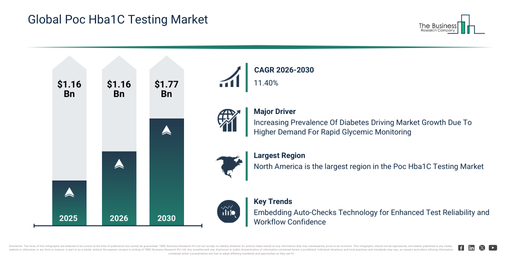
    The poc hba1c testing market is anticipated to experience significant expansion in the coming years. This market is projected to reach $1.76 billion by 2030, demonstrating a compound annual growth rate (CAGR) of 11.4%. This growth during the forecast period is attributable to several factors, including the rising adoption of decentralized diagnostics, an escalating demand for home care testing solutions, the broadening of digital diabetes management programs, a heightened emphasis on preventive healthcare, and increased investments in rapid diagnostic technologies. Key trends anticipated during the forecast period involve the wider adoption of rapid point-of-care hba1c devices, an increase in the utilization of portable and handheld testing systems, a surge in demand for home-based diabetes monitoring, the expansion of integrated poc diagnostic platforms, and an elevated focus on test accuracy and standardization.

    Get A Free Sample Report With In-Depth Market Insights:

    https://thebusinessresearchcompany.com/sample_request?id=19186608&type=smp&name=Poc%20Hba1C%20Testing%20Market%20Report%202026&utm_source=Blogs&utm_medium=Paid&utm_campaign=Oct_PR

    Poc Hba1C Testing Market Growth Factors: What’s Supporting Expansion?

    The rising incidence of diabetes is propelling the expansion of the point-of-care (POC) HbA1C testing market. Diabetes, a persistent metabolic condition, is defined by elevated blood glucose levels and necessitates continuous monitoring to prevent severe outcomes such as neuropathy, cardiovascular disease, and renal impairment. This escalation in diabetes diagnoses globally stems from factors like sedentary lifestyles, unhealthy dietary patterns, obesity, and the aging of populations. The growing prevalence of diabetes actively supports the POC HbA1C testing market by escalating the demand for rapid, convenient, and accurate assessments of glycemic control across clinics, pharmacies, and home-care settings, thereby facilitating prompt treatment interventions. To illustrate, in 2025, according to the International Diabetes Federation, a Belgium-based health organization, in 2024, around 589 million adults aged 20-79 were living with diabetes, with the total number projected to reach 853 million by 2050 and with more than 4 in 5 adults with diabetes residing in low and middle income countries. Consequently, the increasing prevalence of diabetes is a primary driver for the growth of the POC hba1c testing market.

    Poc Hba1C Testing Market Segments: Where Is Growth Concentrated?

    The poc hba1c testing market covered in this report is segmented –

    1) By Type of Product: Instruments, Consumables

    2) By Technology: Ion-Exchange HPLC, Enzymatic Assay, Affinity Binding Chromatography, Immunoassay, Other Technologies

    3) By End User: Hospitals, Physician Office Or Outpatient Center, Home Care, Other End Users

    Subsegments:

    1) By Instruments: Handheld HbA1c Testing Devices, Portable HbA1c Analyzers, Desktop HbA1c Testing Systems, Integrated Point Of Care Testing Systems

    2) By Consumables: Test Strips, Control Solutions, Reagents, Calibration Solutions, Sample Collection Devices

    Poc Hba1C Testing Market Industry Trends: What’s Reshaping Demand?

    Leading companies in the point-of-care (POC) HbA1c testing market are progressively incorporating integrated internal verification mechanisms. This aims to guarantee test accuracy, minimize error potential, and enhance confidence in diagnostics performed close to the patient. Such automated checking systems continually observe ambient conditions, the intactness of samples, and the performance of assays during every test, thereby preventing incorrect outcomes or the spoilage of samples. An example is Siemens Healthineers, a Germany-based company specializing in medical technology, which introduced its next-generation point-of-care Atellica DCA Analyser in July 2024. The Atellica DCA Analyzer utilizes its exclusive Auto-Checks Technology. This technology performs a comprehensive set of internal calibrations and validations during the entire testing procedure, encompassing environmental calibration, verification of airflow and temperature, assessment of sample volume and integrity, optical clarity, and precision checks. This automated self-monitoring system guarantees that each HbA1c result, provided in merely 4–5 minutes, possesses laboratory-grade quality, simultaneously lessening the requirement for continuous oversight from an operator. By incorporating these inherent self-checks, the Atellica DCA aids in reducing pre-analytical mistakes, improving the reliability of results, and facilitating the expansion of point of care (POC) testing, especially in environments with constrained laboratory infrastructure.

    Poc Hba1C Testing Market Leading Players And Competitive Positioning

    Major companies operating in the poc hba1c testing market are F. Hoffmann-La Roche Ltd, Siemens Healthineers AG, Bio-Rad Laboratories Inc, Menarini Group, Danaher Corporation, Tosoh Bioscience Inc, ARKRAY Inc, i-SENS Inc, Abbott Laboratories, Trinity Biotech plc, Aina Blood Monitoring System, Getein Biotech Inc, Sugentech Inc, Alere Inc, EKF Diagnostics, HemoCue, PTS Diagnostics, Osang Healthcare, Ortho Clinical Diagnostics, Ascensia, Platinum Equity (LifeScan), Becton Dickinson and Company, Kainico Ltd, Evia Medical Technologies, Agamatrix Inc, Bionime Corporation

    View The Full Poc Hba1C Testing Market Report:

    https://thebusinessresearchcompany.com/report/POC-Hba1c-testing-global-market-report?utm_source=Blogs&utm_medium=Paid&utm_campaign=Oct_PR

    Poc Hba1C Testing Market Regional Split: Which Areas Are Fueling Growth?

    North America was the largest region in the POC HbA1C testing market in 2025. Africa is expected to be the fastest-growing region in the forecast- period. The regions covered in the poc hba1c testing market report are Asia-Pacific, South East Asia, Western Europe, Eastern Europe, North America, South America, Middle East, Africa.

    Reach Out To Our Team:

    The Business Research Company: https://www.thebusinessresearchcompany.com/

    Americas: +1 310-496-7795

    Asia: +44 7882 955267 & +91 8897263534

    Europe: +44 7882 955267

    Email us at: marketing@tbrc.info

    Follow us on:

    LinkedIn: https://in.linkedin.com/company/the-business-research-company

    YouTube: https://www.youtube.com/channel/UC24_fI0rV8cR5DxlCpgmyFQ

    Global Market Model: https://www.thebusinessresearchcompany.com/global-market-model
  • Pneumothorax Treatment Devices Market Forecast To 2030: Starting From $6.43 Billion In 2026

    Pneumothorax Treatment Devices Market Forecast To 2030: Starting From $6.43 Billion In 2026

    Featuring market attractiveness scoring, total addressable market sizing, company benchmarking matrices, interactive Excel dashboards, deeper supply chain intelligence, emerging startup tracking, and granular product-level insights, The Business Research Company’s 2026 market reports are built to deliver research that is both more actionable and more strategically valuable.

    Pneumothorax Treatment Devices Market Value Growth And Long-Term Outlook

    The pneumothorax treatment devices market has experienced substantial growth recently. It is projected to expand from $3.98 billion in 2025 to $4.39 billion in 2026, at a compound annual growth rate (CAGR) of 10.3%. This historical growth can be attributed to several factors including an increase in traumatic chest injuries, a rise in road accident cases, improvements in hospital emergency infrastructure, the widespread adoption of chest tube procedures, and the expansion of critical care units.

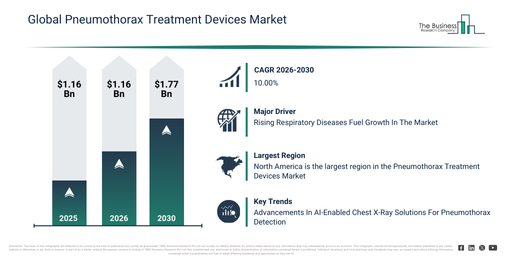
    The pneumothorax treatment devices market size is projected to experience substantial growth over the next few years. This market is anticipated to reach $6.43 billion by 2030, exhibiting a compound annual growth rate (CAGR) of 10.0%. The expansion during the forecast period is primarily driven by factors such as the increasing availability of portable emergency devices, advancements in thoracic vent systems, a rise in ICU admissions, the demand for faster lung re-expansion, and the broadening of emergency medical services. Prominent trends expected in this period include rapid emergency lung decompression, the development of portable pneumothorax management devices, the integration of minimally invasive chest drainage, enhanced air leak control systems, and the introduction of simplified bedside treatment kits.

    Get A Free Sample Report With In-Depth Market Insights:

    https://thebusinessresearchcompany.com/sample_request?id=77720728&type=smp&name=Pneumothorax%20Treatment%20Devices%20Market%20Report%202026&utm_source=Blogs&utm_medium=Paid&utm_campaign=Oct_PR

    Pneumothorax Treatment Devices Market Demand Drivers: What’s Powering Industry Growth?

    The rising incidence of respiratory ailments is projected to stimulate expansion in the pneumothorax treatment devices market. These conditions are medical issues impacting the lungs and airways, hindering respiration and oxygen uptake. Increases in respiratory diseases are often linked to factors such as air contamination, tobacco use, viral infections, and heightened allergen exposure. Pneumothorax treatment devices address collapsed lungs and re-establish normal breathing in individuals suffering from respiratory diseases. As an illustration, in September 2025, data from the Australian Bureau of Statistics, a government body in Australia, indicated that influenza-related fatalities climbed from 611 deaths in 2023 to 806 deaths in 2024, and further to 1,057 deaths by August 2025, marking a 73% growth from 2023 to the corresponding August 2025 timeframe. Furthermore, deaths associated with respiratory syncytial virus (RSV) saw an increase from 380 deaths in 2023 to 468 deaths in 2024, followed by 399 deaths in the year leading up to August 2025. Consequently, the growing prevalence of respiratory diseases is a key driver for the pneumothorax treatment devices market.

    Pneumothorax Treatment Devices Market Segment Analysis: What Are The Core Market Categories?

    The pneumothorax treatment devices market covered in this report is segmented –

    1) By Type: Ventilator Devices, Thoracic Vent Devices, Other Types

    2) By Application: Traumatic Pneumothorax, Spontaneous Pneumothorax, Other Applications

    3) By End-User: Hospitals, Ambulatory Surgical Centers, Other End Users

    Subsegments:

    1) By Ventilator Devices: Portable Ventilators, Non-Invasive Ventilators, Invasive Ventilators

    2) By Thoracic Vent Devices: Chest Drainage Systems, Heimlich Valves, One-Way Chest Valve Systems

    3) By Other Types: Needle Aspiration Devices, Pleural Catheters, Oxygen Therapy Devices

    Pneumothorax Treatment Devices Market Innovation Trends: What Developments Are Reshaping The Industry?

    Major companies operating in the pneumothorax treatment devices market are prioritizing the development of technologically advanced solutions, such as chest X-ray solutions, to sustain their position in the market. These chest X-ray solutions encompass imaging systems, equipment, and technologies crafted to capture detailed radiographic images of the chest, including the lungs, heart, ribs, and surrounding structures. For instance, in September 2023, Qure.ai, a US-based health tech company, announced it received 510(k) FDA clearance for its innovative chest X-ray solution, qXR-PTX-PE. This solution is specifically designed to assist in the rapid detection of pneumothorax (PTX) and pleural effusion (PE). The AI-enabled software enhances care pathways in intensive care units (ICUs) and emergency rooms (ERs) by providing timely notifications to healthcare professionals. The qXR-PTX-PE solution analyzes chest X-ray images for critical findings, significantly improving triage efficiency in emergency settings, where these conditions pose serious risks to patient health.

    Pneumothorax Treatment Devices Market Competitive Overview And Top Companies

    Major companies operating in the pneumothorax treatment devices market are Cardinal Health Inc., Medtronic PLC, Siemens Healthineers AG, Medline Industries Inc., Fujifilm Holdings Corporation, Becton Dickinson and Company (BD), GE HealthCare Technologies Inc., Stryker Corporation, Boston Scientific Corporation, Draegerwerk AG & Co. KGaA, Cook Medical Inc., B. Braun Melsungen AG, Utah Medical Products Inc., Rocket Medical plc, Nobelpharma Co. Ltd., Sinapi Biomedical Inc., UreSil Inc., ATMOS MedizinTechnik GmbH & Co. KG, Betaglue Technologies S.p.A., Selio Medical Inc.

    View The Full Pneumothorax Treatment Devices Market Report:

    https://thebusinessresearchcompany.com/report/pneumothorax-treatment-devices-global-market-report?utm_source=Blogs&utm_medium=Paid&utm_campaign=Oct_PR

    Pneumothorax Treatment Devices Market Top Region: Where Does Most Revenue Come From?

    North America was the largest region in the pneumothorax treatment devices market in 2025. The regions covered in the pneumothorax treatment devices market report are Asia-Pacific, South East Asia, Western Europe, Eastern Europe, North America, South America, Middle East, Africa.

    Reach Out To Our Team:

    The Business Research Company: https://www.thebusinessresearchcompany.com/

    Americas: +1 310-496-7795

    Asia: +44 7882 955267 & +91 8897263534

    Europe: +44 7882 955267

    Email us at: marketing@tbrc.info

    Follow us on:

    LinkedIn: https://in.linkedin.com/company/the-business-research-company

    YouTube: https://www.youtube.com/channel/UC24_fI0rV8cR5DxlCpgmyFQ

    Global Market Model: https://www.thebusinessresearchcompany.com/global-market-model
  • Platelet Aggregation Devices Market Size In 2026 And Beyond: Understanding Future Growth Potential

    Platelet Aggregation Devices Market Size In 2026 And Beyond: Understanding Future Growth Potential

    Built to provide research that’s more actionable and strategically valuable, The Business Research Company’s 2026 market reports include market attractiveness analysis, total addressable market sizing, company benchmarking matrices, interactive Excel dashboards, broader supply chain intelligence, emerging startup tracking, and in-depth product insights.

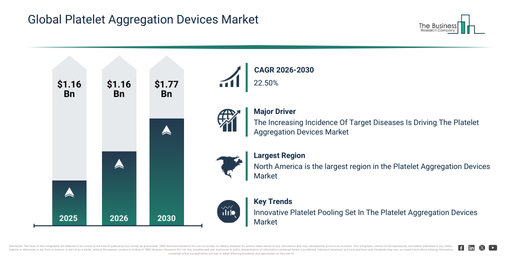
    Platelet Aggregation Devices Market Poised To Hit $2.94 Billion By 2030 With A 22.5% CAGR

    The platelet aggregation devices market has experienced substantial growth in recent years. It is projected to expand from $1.04 billion in 2025 to $1.31 billion in 2026, demonstrating a compound annual growth rate (CAGR) of 25.4%. This historical expansion can be linked to factors such as an increase in cardiovascular disease prevalence, the expansion of clinical diagnostic laboratories, a rise in the application of antiplatelet therapies, growing requirements for coagulation testing, and developments in hematology diagnostics.

    The platelet aggregation devices market size is expected to experience significant growth in the coming years. It is projected to reach $2.94 billion in 2030, exhibiting a compound annual growth rate (CAGR) of 22.5%. This anticipated growth is driven by factors such as the increasing adoption of personalized medicine, rising investments in advanced diagnostics, a growing demand for rapid platelet function testing, an expansion of research into blood disorders, and continuous innovation in diagnostic technologies. Noteworthy trends during the forecast period include the increasing use of automated platelet function analyzers, a surging demand for high-throughput testing systems, the rising integration of digital data management, the expansion of multi-channel aggregation devices, and an enhanced focus on diagnostic accuracy.

    Get A Free Sample Report With In-Depth Market Insights:

    https://thebusinessresearchcompany.com/sample_request?id=79964508&type=smp&name=Platelet%20Aggregation%20Devices%20Market%20Report%202026&utm_source=Blogs&utm_medium=Paid&utm_campaign=Oct_PR

    Platelet Aggregation Devices Market Growth Drivers: What’s Behind The Acceleration?

    The rising occurrence of target diseases is projected to propel the platelet aggregation devices market in the coming years. Target diseases refer to specific health conditions that receive focused attention for prevention, diagnosis, and treatment due to their considerable impact on public health, encompassing conditions such as cancer, cardiovascular diseases, and diabetes. Platelet aggregation devices assist in reducing the prevalence of these target diseases by facilitating prompt detection and efficient management of thrombotic risks, thus averting severe health events like heart attacks and strokes in at-risk groups. For example, in February 2024, data released by the International Agency for Research on Cancer (IARC), a France-based specialized cancer agency of the World Health Organization (WHO), revealed that globally, there were approximately 20 million new cancer cases and 9.7 million deaths in 2022, with forecasts predicting a 77% increase, leading to more than 35 million new cases by 2050; lung cancer emerged as the most widespread worldwide with 2.5 million new cases (12.4%), followed by female breast cancer (2.3 million cases, 11.6%), colorectal cancer (1.9 million cases, 9.6%), prostate cancer (1.5 million, 7.3%), and stomach cancer (970,000, 4.9%). Consequently, the growing incidence of target diseases is fueling the expansion of the platelet aggregation devices market.

    Platelet Aggregation Devices Market Segment Breakdown: Which Categories Lead On Revenue?

    The platelet aggregation devices market covered in this report is segmented –

    1) By Product: Reagents, Systems, Consumables And Accessories

    2) By Channel Configuration: Four Channel, Dual Channel, Eight Channel

    3) By Technology: Optical, Impedance, Other Technologies

    4) By Application: Clinical Applications, Research Applications, Cardiovascular Applications, Other Applications

    5) By End-User: Standalone Hospitals, Diagnostic Laboratories, Research And Academic Institutes, Other End Users

    Subsegments:

    1) By Reagents: Platelet Aggregation Assay Reagents, Coagulation And Anticoagulation Reagents

    2) By Systems: Platelet Aggregation Testing Systems, Automated Platelet Aggregation Systems

    3) By Consumables And Accessories: Sample Collection Kits, Testing Plates And Cuvettes, Calibration Kits

    Platelet Aggregation Devices Market Trends: What’s Defining The Industry’s Next Phase?

    Key companies within the platelet aggregation devices market are intensifying their efforts to develop advanced solutions, introducing innovative products like the inaugural platelet pooling set intended to stabilize the U.S. platelet supply and address increasing requirements. Specifically, a platelet pooling set represents a specialized medical instrument utilized in plateletpheresis to gather and consolidate platelets from multiple donors into a singular unit for transfusion therapy. As an illustration, in February 2023, Terumo BCT Inc., a US-based provider of blood components and cellular technology, reported that the Food and Drug Administration (FDA), a US-based federal agency, had granted approval for its IMUGARD WB Platelet Pooling Set. The product offers an extended shelf life for platelets, secured FDA clearance for seven-day storage, and facilitates platelet recoupment from whole blood donations, thereby bolstering flexibility and overall availability in the platelet aggregation devices market. This introduction signifies a notable technological leap, addressing the imperative for enhanced platelet availability, more streamlined supply management, and bolstering the strained U.S. platelet supply to fulfill escalating demand in crucial medical interventions such as chemotherapy and organ transplants.

    Platelet Aggregation Devices Market Competitive Landscape: Which Companies Lead The Industry?

    Major companies operating in the platelet aggregation devices market are Roche Holding AG, Cytiva (Danaher Corp.), Siemens Healthineers, Sysmex Corporation, WerfenLife S.A., Haemonetics Corporation, Helena Laboratories Corporation, Sarstedt AG And Co. KG, Sekisui Diagnostics LLC, Diagnostica Stago, Accriva Diagnostics Holdings Inc., Sentinel CH. SpA, ADInstruments, Chrono-Log Corporation, Bio/Data Corporation, Haemochrom Diagnostica GmbH, AggreDyne Inc., Hart Biologicals Ltd., Stago, Instrumentation Laboratory

    View The Full Platelet Aggregation Devices Market Report:

    https://thebusinessresearchcompany.com/report/platelet-aggregation-devices-global-market-report?utm_source=Blogs&utm_medium=Paid&utm_campaign=Oct_PR

    Platelet Aggregation Devices Market Regional Breakdown: Where Is Demand Concentrated?

    North America was the largest region in the platelet aggregation devices market in 2025. Asia-Pacific is expected to be the fastest-growing region in the forecast period. The regions covered in the platelet aggregation devices market report are Asia-Pacific, South East Asia, Western Europe, Eastern Europe, North America, South America, Middle East, Africa.

    Reach Out To Our Team:

    The Business Research Company: https://www.thebusinessresearchcompany.com/

    Americas: +1 310-496-7795

    Asia: +44 7882 955267 & +91 8897263534

    Europe: +44 7882 955267

    Email us at: marketing@tbrc.info

    Follow us on:

    LinkedIn: https://in.linkedin.com/company/the-business-research-company

    YouTube: https://www.youtube.com/channel/UC24_fI0rV8cR5DxlCpgmyFQ

    Global Market Model: https://www.thebusinessresearchcompany.com/global-market-model
  • Plastic Surgery Instruments Market Reaches $1.66 Billion In 2026: Key Developments Shaping Expansion

    Plastic Surgery Instruments Market Reaches $1.66 Billion In 2026: Key Developments Shaping Expansion

    Backed by market attractiveness analysis, total addressable market sizing, company benchmarking matrices, interactive Excel dashboards, wider supply chain intelligence, emerging startup coverage, and detailed product-level insights, The Business Research Company’s 2026 market reports are designed to offer research that is more actionable and strategically valuable than ever.

    Plastic Surgery Instruments Market Size And Revenue Outlook Through 2030

    The plastic surgery instruments market size has experienced strong growth in recent years. It is forecast to increase from $1.19 billion in 2025 to $1.28 billion in 2026, growing at a compound annual growth rate (CAGR) of 7.5%. The expansion witnessed in prior periods can be attributed to several factors, including an uptick in cosmetic and reconstructive surgery procedures, the proliferation of specialty surgical clinics, a heightened demand for aesthetic enhancements, an increased availability of trained plastic surgeons, and ongoing advancements in surgical instrument manufacturing.

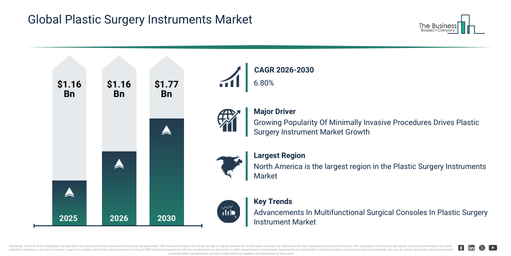
    The plastic surgery instruments market is anticipated to experience robust expansion over the coming years. This market is predicted to reach $1.66 billion by 2030, exhibiting a compound annual growth rate (CAGR) of 6.8%. Several factors contribute to this projected growth, including an increase in medical tourism activities, the greater embrace of minimally invasive procedures, heightened emphasis on patient safety and outcomes, the proliferation of outpatient surgical centers, and continuous innovation in cosmetic surgery technologies. Key trends anticipated throughout this period encompass a surging demand for minimally invasive surgical instruments, wider adoption of disposable surgical tools, the increasing deployment of precision-engineered instruments, the broadening scope of advanced non-surgical cosmetic devices, and a heightened commitment to sterilization and safety standards.

    Get A Free Sample Report With In-Depth Market Insights:

    https://thebusinessresearchcompany.com/sample_request?id=69390149&type=smp&name=Plastic%20Surgery%20Instruments%20Market%20Report%202026&utm_source=Blogs&utm_medium=Paid&utm_campaign=Oct_PR

    Plastic Surgery Instruments Market Growth Factors Behind Sustained Expansion

    The plastic surgery instrument market is projected to expand due to the increasing adoption of minimally invasive procedures. These medical interventions involve small incisions, leading to reduced tissue damage and quicker patient recovery compared to conventional surgical methods. Their rising appeal stems from benefits such as shorter recuperation times, lower complication risks, enhanced safety, and the amplified impact of social media on aesthetic preferences. Specialized plastic surgery instruments are crucial for minimally invasive techniques, facilitating precise handling and shortening recovery periods by utilizing small cuts and focused methods. As an illustration, in January 2024, Intuitive Surgical Inc., a US-based manufacturer of robotic products, reported approximately 415 da Vinci surgical systems (robotic surgical systems that use a minimally invasive surgical approach) in the fourth quarter of 2023. This figure represented a 12% increase over 2022. Consequently, the expanding popularity of minimally invasive procedures is a key impetus for the plastic surgery instrument market’s growth.

    Plastic Surgery Instruments Market Segmentation: How Does The Market Break Down By Category?

    The plastic surgery instruments market covered in this report is segmented –

    1) By Surgical Instruments: Scalpels, Forceps, Scissors, Retractors, Needle Holders, Other Surgical Instruments

    2) By Non-Surgical Instruments: Dermabrasion Instruments, Laser Devices, Cryotherapy Devices, Electrosurgical Instruments, Other Non-Surgical Instruments

    3) By Accessories: Needles, Sutures, Disposables, Cannulas, Other Accessories

    Subsegments:

    1) By Scalpels: Disposable Scalpels, Reusable Scalpels, Safety Scalpels

    2) By Forceps: Grasping Forceps, Hemostatic Forceps, Dressing Forceps, Surgical Forceps

    3) By Scissors: Dissecting Scissors, Tissue Scissors, Iris Scissors, Bandage Scissors

    4) By Retractors: Handheld Retractors, Self-Retaining Retractors, Bone Retractors

    5) By Needle Holders: Fine Needle Holders, Heavy-Duty Needle Holders, Cross-Lock Needle Holders

    6) By Other Surgical Instruments: Surgical Sponges, Suction Instruments, Surgical Drills, Electrosurgical Instruments

    Plastic Surgery Instruments Market Industry Trends Fueling Future Revenue Growth

    Major entities operating in the plastic surgery instrument market are prioritizing the development of sophisticated products, such as multifunctional surgical consoles, to achieve a competitive edge. A multifunctional surgical console consolidates various surgical tools and technologies into a singular unit, thereby enhancing the efficiency and accuracy of cosmetic interventions. For instance, in January 2023, Apyx Medical Corporation, a U.S.-based energy technology company, introduced the Apyx One Console, a versatile generator designed for cosmetic surgical procedures. This innovative offering integrates different energy modalities, empowering surgeons to execute multiple procedures with a single device, thus optimizing operations and improving patient recovery. Such advancements respond to the rising demand for minimally invasive surgeries and the necessity for superior surgical precision. The movement towards multifunctional and advanced instruments fuels market expansion, notwithstanding obstacles like considerable expenses and regulatory challenges.

    Plastic Surgery Instruments Market Competitive Landscape: Who Leads The Industry?

    Major companies operating in the plastic surgery instruments market are B. Braun Melsungen AG, Zimmer Biomet Holdings Inc., Integra LifeSciences Corporation, KLS Martin Group, Surgicon Pvt. Ltd., Mentor Worldwide LLC, Sklar Surgical Instruments, Tekno-Medical Optik-Chirurgie GmbH, Hayden Medical Inc., Millennium Surgical Corp., Blink Medical Ltd., Bolton Surgical Ltd., Anthony Products Inc., Surgipro Inc., Surtex Instruments Ltd., MSI Precision Instruments, ECA Medical Instruments, Novo Surgical Inc., Marina Medical Instruments Inc., Ekal Surgical Works, Wexler Surgical

    View The Full Plastic Surgery Instruments Market Report:

    https://thebusinessresearchcompany.com/report/plastic-surgery-instruments-global-market-report?utm_source=Blogs&utm_medium=Paid&utm_campaign=Oct_PR

    Plastic Surgery Instruments Market Geographic Landscape: Which Region Dominates Industry Growth?

    North America was the largest region in the plastic surgery instruments market in 2025. Asia-Pacific is expected to be the fastest-growing region in the forecast period. The regions covered in the plastic surgery instruments market report are Asia-Pacific, South East Asia, Western Europe, Eastern Europe, North America, South America, Middle East, Africa.

    Reach Out To Our Team:

    The Business Research Company: https://www.thebusinessresearchcompany.com/

    Americas: +1 310-496-7795

    Asia: +44 7882 955267 & +91 8897263534

    Europe: +44 7882 955267

    Email us at: marketing@tbrc.info

    Follow us on:

    LinkedIn: https://in.linkedin.com/company/the-business-research-company

    YouTube: https://www.youtube.com/channel/UC24_fI0rV8cR5DxlCpgmyFQ

    Global Market Model: https://www.thebusinessresearchcompany.com/global-market-model