Blog

  • Plasmonic Laser Ablation Device Market Growth Outlook For 2026: Drivers, Trends And Future Opportunities

    Plasmonic Laser Ablation Device Market Growth Outlook For 2026: Drivers, Trends And Future Opportunities

    Featuring market attractiveness scoring, total addressable market sizing, company benchmarking matrices, interactive Excel dashboards, deeper supply chain intelligence, emerging startup tracking, and granular product-level insights, The Business Research Company’s 2026 market reports are built to deliver research that is both more actionable and more strategically valuable.

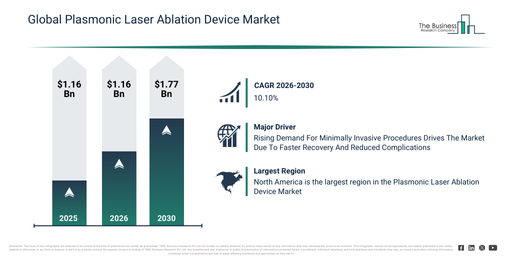
    Plasmonic Laser Ablation Device Market Growth From $1.65 Billion In 2026 To $2.43 Billion By 2030 At A CAGR Of 10.1%

    The plasmonic laser ablation device market has seen rapid growth over recent years. It is projected to expand from $1.5 billion in 2025 to $1.65 billion in 2026, achieving a compound annual growth rate (CAGR) of 10.4%. The historical rise in this market can be linked to the initial advancements in laser ablation technologies, the increased application of lasers in medical procedures, the expansion of nanotechnology research in both academia and industry, the demand for manufacturing tools with high precision, and the embrace of conventional YAG and CO2 laser systems.

    The plasmonic laser ablation device market size is projected to undergo substantial expansion in the next few years. It will grow to $2.43 billion in 2030 at a compound annual growth rate (CAGR) of 10.1%. The expansion during this forecast period can be ascribed to progress in plasmonic and nanoparticle-mediated technologies, increasing investment in precision medicine and nanomedicine, the broadening of industrial microfabrication applications, a greater uptake of ultrafast laser systems, and the integration of AI-enabled process optimization. Significant trends anticipated for the forecast period include the rising adoption of nanoscale precision material removal, increased utilization of femtosecond and ultrafast laser systems, a growing demand for minimally invasive medical procedures, the proliferation of plasmonic applications in advanced material processing, and an enhanced emphasis on accuracy coupled with reduced thermal damage.

    Get A Free Sample Report With In-Depth Market Insights:

    https://thebusinessresearchcompany.com/sample_request?id=49258262&type=smp&name=Plasmonic%20Laser%20Ablation%20Device%20Market%20Report%202026&utm_source=Blogs&utm_medium=Paid&utm_campaign=Oct_PR

    Plasmonic Laser Ablation Device Market Demand Drivers Opening New Revenue Streams

    The market for plasmonic laser ablation devices is anticipated to expand due to the growing need for minimally invasive procedures. These medical techniques, which use specialized instruments via small cuts or natural orifices, aim to lessen pain, scarring, and recuperation time. The popularity of minimally invasive procedures is rising because they facilitate quicker patient recovery, enabling a faster return to daily life with fewer complications. Plasmonic laser ablation devices are employed in these procedures for extremely accurate and localized removal of tissue, ensuring minimal thermal harm to surrounding regions. This method helps reduce incision dimensions and speed up the healing process. For example, as reported by the American Society of Plastic Surgeons, a US-based professional society, in June 2024, approximately 25.4 million minimally invasive procedures were carried out in 2023, marking a 7% increase from 2022. Consequently, the increasing demand for minimally invasive procedures is propelling the growth of the plasmonic laser ablation device market. The plasmonic laser ablation device market is set to expand driven by increasing healthcare expenditure. This expenditure encompasses the comprehensive spending by individuals, governments, and various organizations on medical services, treatments, and other health-related resources. The rise in healthcare costs is primarily attributed to an aging global population, as older individuals often necessitate more intensive and expensive medical attention for chronic and age-related health issues. Higher healthcare spending facilitates the advancement and uptake of cutting-edge technologies like plasmonic laser ablation devices by allocating funds for research, acquisition, and their incorporation into clinical settings. As an illustration, the American Medical Association, a US-based professional association, stated in April 2025 that health spending in the U.S. in 2023 climbed by 7.5%, reaching $4.9 trillion, or $14,570 per person, which represents a significant increase over the 4.6% growth seen in 2022. Thus, the upward trend in healthcare expenditures is a key factor propelling the plasmonic laser ablation device market’s growth.

    Plasmonic Laser Ablation Device Market Segment Trends And Revenue Contributors

    The plasmonic laser ablation device market covered in this report is segmented –

    1) By Device Type: Pulsed Plasmonic Laser Ablation Devices, Continuous Wave Plasmonic Laser Ablation Devices, Femtosecond Plasmonic Laser Ablation Devices, Nanosecond Plasmonic Laser Ablation Devices

    2) By Technology: Surface Plasmon Resonance (SPR) Technology, Nanoparticle Mediated Laser Ablation

    3) By Application: Medical Applications, Material Processing, Research And Development

    4) By End-User: Hospitals And Medical Clinics, Research Institutes And Universities, Manufacturing Or Semiconductor Industries, Other End-Users

    Subsegments:

    1) By Pulsed Plasmonic Laser Ablation Devices: Q-Switched Pulsed Plasmonic Laser Ablation Devices, Mode-Locked Pulsed Plasmonic Laser Ablation Devices, Tunable Pulsed Plasmonic Laser Ablation Devices, High-Power Pulsed Plasmonic Laser Ablation Devices

    2) By Continuous Wave Plasmonic Laser Ablation Devices: Low-Power Continuous Wave Plasmonic Laser Ablation Devices, High-Power Continuous Wave Plasmonic Laser Ablation Devices, Fiber-Based Continuous Wave Plasmonic Laser Ablation Devices, Diode-Based Continuous Wave Plasmonic Laser Ablation Devices

    3) By Femtosecond Plasmonic Laser Ablation Devices: Ti:Sapphire Femtosecond Plasmonic Laser Ablation Devices, Yb-Doped Femtosecond Plasmonic Laser Ablation Devices, Fiber Femtosecond Plasmonic Laser Ablation Devices, Compact Femtosecond Plasmonic Laser Ablation Devices

    4) By Nanosecond Plasmonic Laser Ablation Devices: Solid-State Nanosecond Plasmonic Laser Ablation Devices, Fiber Nanosecond Plasmonic Laser Ablation Devices, Diode-Pumped Nanosecond Plasmonic Laser Ablation Devices, Q-Switched Nanosecond Plasmonic Laser Ablation Devices

    Plasmonic Laser Ablation Device Market Company Landscape And Competitive Strategy

    Major companies operating in the plasmonic laser ablation device market are Mitsubishi Electric Corporation, Boston Scientific Corporation, Trumpf Group, Coherent Corp., Han’s Laser Technology Industry Group Co. Ltd., Lumentum Holdings Inc., Thorlabs Inc., Edmund Optics Inc, Jenoptik AG, Universal Laser Systems Inc., Cincinnati Incorporated, Epilog Laser, RPMC Lasers, Dongguan Mactron Technology Co. Ltd., Aesthetic World, Astanza Laser LLC, Boss Laser LLc, Quantum Composers, Laser Photonics Corporation, Medioxra LLP

    View The Full Plasmonic Laser Ablation Device Market Report:

    https://thebusinessresearchcompany.com/report/plasmonic-laser-ablation-device-global-market-report?utm_source=Blogs&utm_medium=Paid&utm_campaign=Oct_PR

    Plasmonic Laser Ablation Device Market Largest Region: Which Geography Holds The Highest Market Share?

    North America was the largest region in the plasmonic laser ablation device market in 2025. Asia-Pacific is expected to be the fastest-growing region in the forecast period. The regions covered in the plasmonic laser ablation device market report are Asia-Pacific, South East Asia, Western Europe, Eastern Europe, North America, South America, Middle East, Africa.

    Reach Out To Our Team:

    The Business Research Company: https://www.thebusinessresearchcompany.com/

    Americas: +1 310-496-7795

    Asia: +44 7882 955267 & +91 8897263534

    Europe: +44 7882 955267

    Email us at: marketing@tbrc.info

    Follow us on:

    LinkedIn: https://in.linkedin.com/company/the-business-research-company

    YouTube: https://www.youtube.com/channel/UC24_fI0rV8cR5DxlCpgmyFQ

    Global Market Model: https://www.thebusinessresearchcompany.com/global-market-model
  • Plaque Modification Devices Market Size Forecast From 2026 To 2030: Key Industry Trends

    Plaque Modification Devices Market Size Forecast From 2026 To 2030: Key Industry Trends

    Built to provide research that’s more actionable and strategically valuable, The Business Research Company’s 2026 market reports include market attractiveness analysis, total addressable market sizing, company benchmarking matrices, interactive Excel dashboards, broader supply chain intelligence, emerging startup tracking, and in-depth product insights.

    Plaque Modification Devices Market Expansion Outlook: What Revenue Opportunities Are Ahead?

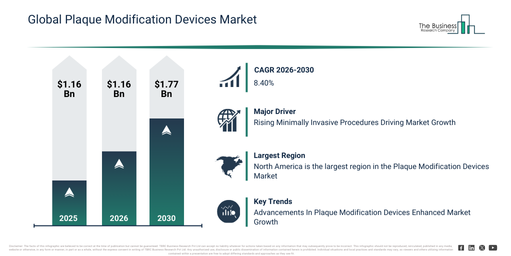
    The plaque modification devices market has experienced strong growth in recent years. This market is projected to expand from $1.49 billion in 2025 to $1.62 billion in 2026, demonstrating a compound annual growth rate (CAGR) of 8.5%. The historical expansion can be attributed to factors such as increasing atherosclerosis prevalence, a rise in angioplasty procedures, an aging population, the growing incidence of peripheral artery disease, and advancements in interventional cardiology.

    The plaque modification devices market is anticipated to show significant expansion over the next few years. It will grow to $2.23 billion in 2030 at a compound annual growth rate (CAGR) of 8.4%. This projected growth is driven by advancements such as AI-guided vascular imaging, the increasing scope of complex vascular interventions, a rising demand for safer procedures, the expansion of outpatient interventions, and ongoing innovation in plaque removal devices. Important developments during this forecast period are expected to include minimally invasive plaque removal methods, precision atherectomy technologies, enhanced embolic protection, sophisticated catheter-based systems, and devices designed to reduce procedure durations.

    Get A Free Sample Report With In-Depth Market Insights:

    https://thebusinessresearchcompany.com/sample_request?id=60997954&type=smp&name=Plaque%20Modification%20Devices%20Market%20Report%202026&utm_source=Blogs&utm_medium=Paid&utm_campaign=Oct_PR

    Plaque Modification Devices Market Growth Backed By Core Demand Fundamentals

    The anticipated increase in minimally invasive procedures is set to propel the expansion of the plaque modification devices market in the future. These procedures involve medical or surgical techniques characterized by smaller incisions, minimal tissue disruption, and reduced physical trauma compared to traditional open surgery. The surge in minimally invasive procedures is fueled by advancements in technology, such as high-definition imaging and robotic systems, which enhance precision, alongside increasing patient demand for faster recovery and less scarring. Plaque modification devices improve the safety and efficiency of minimally invasive procedures by enabling precise removal of arterial blockages and broadening the scope of treatment for patients with complex vascular conditions. For instance, in January 2024, Intuitive Surgical Inc., a US-based manufacturer of robotic products, reported the placement of 415 da Vinci surgical systems (robotic surgical systems that utilize a minimally invasive surgical approach) in the fourth quarter of 2023, which represented a 12% increase over 2022. Consequently, the growing number of minimally invasive procedures is a primary driver for the plaque modification devices market’s growth.

    Plaque Modification Devices Market Segment Analysis Spotlighting Growth Areas

    The plaque modification devices market covered in this report is segmented –

    1) By Type: Atherectomy Devices, Thrombectomy Devices, Chronic Total Occlusion Devices, Embolic Protection Devices

    2) By Application: Coronary Artery Disease, Peripheral Artery Disease, Neurovascular Diseases

    3) By End User: Hospitals, Ambulatory Surgical Centers, Other End Users

    Subsegments:

    1) By Atherectomy Devices: Rotational Atherectomy Devices, Directional Atherectomy Devices, Laser Atherectomy Devices, Orbital Atherectomy Devices

    2) By Thrombectomy Devices: Mechanical Thrombectomy Devices, Aspiration Thrombectomy Devices, Manual Thrombectomy Devices, Hybrid Thrombectomy Devices

    3) By Chronic Total Occlusion (CTO) Devices: CTO Crossing Guidewires, CTO Balloons, CTO Catheters, CTO Support Systems

    4) By Embolic Protection Devices: Distal Protection Devices, Proximal Protection Devices, Filter-Based Embolic Protection Devices, Balloon-Based Embolic Protection Devices

    Plaque Modification Devices Market Growth Trends Reshaping The Competitive Landscape

    Leading companies in the plaque modification devices market are concentrating on creating advanced solutions, such as intravascular image-guided, catheter-based systems, to achieve a competitive advantage. Intravascular image-guided refers to medical procedures or interventions that utilize imaging technology to guide instruments or devices within blood vessels. For example, in August 2024, Avinger, a US-based medical device company, introduced the Pantheris LV image-guided directional atherectomy system, specifically designed for treating peripheral artery disease (PAD) in larger blood vessels like the superficial femoral and popliteal arteries. It provides distinct features such as higher-speed plaque excision for efficient removal of challenging occlusive tissue, a proprietary jog mechanism for improved plaque apposition, and an advanced guidewire management system to streamline user operation.

    Plaque Modification Devices Market Key Players Shaping Industry Direction

    Major companies operating in the plaque modification devices market are Cardinal Health, Johnson & Johnson, Abbott Laboratories, Siemens Healthineers, Philips Healthcare, Becton Dickinson, Stryker Corporation, Boston Scientific, Terumo Corporation, Edward Lifesciences Corporation, Teleflex Incorporated, Merit Medical Systems Inc., MicroPort Scientific Corporation, Asahi Intecc Co. Ltd., AngioDynamics, Cardiovascular Systems Inc. (CSI), ACIST Medical Systems Inc., Endologix Inc., Avinger Inc., SoundBite Medical Solutions Inc.

    View The Full Plaque Modification Devices Market Report:

    https://thebusinessresearchcompany.com/report/plaque-modification-devices-global-market-report?utm_source=Blogs&utm_medium=Paid&utm_campaign=Oct_PR

    Plaque Modification Devices Market Regional Analysis: Which Region Leads By Revenue?

    North America was the largest region in the plaque modification devices market in 2025. Asia-Pacific is expected to be the fastest-growing region in the forecast period. The regions covered in the plaque modification devices market report are Asia-Pacific, South East Asia, Western Europe, Eastern Europe, North America, South America, Middle East, Africa.

    Reach Out To Our Team:

    The Business Research Company: https://www.thebusinessresearchcompany.com/

    Americas: +1 310-496-7795

    Asia: +44 7882 955267 & +91 8897263534

    Europe: +44 7882 955267

    Email us at: marketing@tbrc.info

    Follow us on:

    LinkedIn: https://in.linkedin.com/company/the-business-research-company

    YouTube: https://www.youtube.com/channel/UC24_fI0rV8cR5DxlCpgmyFQ

    Global Market Model: https://www.thebusinessresearchcompany.com/global-market-model
  • Plantar Fasciitis Sleeve Market 2026: Market Size, Growth Drivers And Emerging Opportunities

    Plantar Fasciitis Sleeve Market 2026: Market Size, Growth Drivers And Emerging Opportunities

    Backed by market attractiveness analysis, total addressable market sizing, company benchmarking matrices, interactive Excel dashboards, wider supply chain intelligence, emerging startup coverage, and detailed product-level insights, The Business Research Company’s 2026 market reports are designed to offer research that is more actionable and strategically valuable than ever.

    Plantar Fasciitis Sleeve Market Growth Potential: How Will Market Size Shift Through 2030?

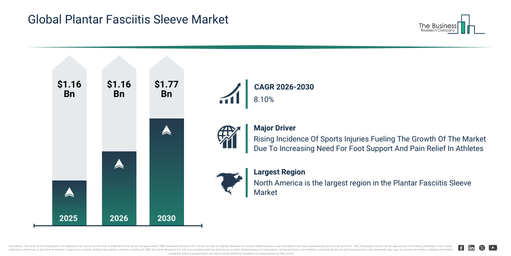
    The plantar fasciitis sleeve market has experienced robust expansion over recent years. Forecasts indicate an increase from $0.84 billion in 2025 to $0.91 billion in 2026, demonstrating a compound annual growth rate (CAGR) of 8.4%. This historical growth is attributable to factors such as the increasing occurrence of plantar fasciitis, heightened awareness of foot health, the embrace of non-invasive treatment options, an uptick in sports participation, and advancements in sleeve material technology.

    The plantar fasciitis sleeve market size is anticipated to experience substantial expansion in the coming years. It is projected to reach $1.24 billion by 2030, exhibiting a compound annual growth rate (CAGR) of 8.1%. This growth throughout the forecast period stems from factors such as the emergence of smart and adjustable sleeves, the integration with wearable sensors, an increase in the sports and athletics sector, the creation of multi-purpose sleeves, and the broadening of online distribution channels. Key developments during the forecast period are expected to involve compression sleeves, night splints, arch support sleeves, gel sleeves, and custom orthotic sleeves.

    Get A Free Sample Report With In-Depth Market Insights:

    https://thebusinessresearchcompany.com/sample_request?id=85923534&type=smp&name=Plantar%20Fasciitis%20Sleeve%20Market%20Report%202026&utm_source=Blogs&utm_medium=Paid&utm_campaign=Oct_PR

    Plantar Fasciitis Sleeve Market Growth Catalysts And Demand Drivers

    The rising occurrence of sports-related injuries is anticipated to boost the growth of the Plantar Fasciitis Sleeve Market. These injuries encompass physical damage sustained during athletic pursuits or exercise, ranging from minor sprains and strains to more severe fractures or dislocations. Their increasing prevalence is attributed to repetitive stress or improper movements that exceed the body’s inherent capacity to repair and safeguard tissues, leading to eventual damage over time. A plantar fasciitis sleeve aids in sports injuries by providing support to the foot arch, reducing strain, and easing heel pain during activity or recovery. For instance, in November 2023, Howden Group Holdings Ltd, a UK-based insurance intermediary company, reported that the severity of ankle injuries in the English Premier League surged by 170% between October 2022 and January 2023, with calf or shin injuries increasing by 200% and hamstring injuries by 130%, following the FIFA World Cup Qatar 2022. Thus, the growing incidence of sports injuries is a key driver for the Plantar Fasciitis Sleeve Market.

    Plantar Fasciitis Sleeve Market Segment Performance And Emerging Opportunities

    The plantar fasciitis sleeve market covered in this report is segmented –

    1) By Product Type: Compression Sleeves, Arch Support Sleeves, Gel Sleeves

    2) By Material: Neoprene, Fabric, Silicone, Other Materials

    3) By Application: Sports And Athletics, Medical Use, Personal Use, Other Applications

    4) By Distribution Channel: Online Stores, Pharmacies, Specialty Stores, Other Distribution Channels

    Subsegments:

    1) By Compression Sleeves: Ankle Compression Sleeves, Full Foot Compression Sleeves, Graduated Compression Sleeves, Open-Toe Compression Sleeves, Closed-Toe Compression Sleeves

    2) By Arch Support Sleeves: Elastic Arch Support Sleeves, Gel-Padded Arch Support Sleeves, Adjustable Strap Arch Sleeves, Low-Profile Arch Sleeves, Multi-Zone Compression Arch Sleeves

    3) By Gel Sleeves: Heel Cushion Gel Sleeves, Silicone Gel Sleeves, Open-Heel Gel Sleeves

    Plantar Fasciitis Sleeve Market Competitive Analysis Of Leading Industry Participants

    Major companies operating in the plantar fasciitis sleeve market are 3M Company, BSN Medical GmbH, Össur hf., SIGVARIS Group AG, United Pacific Industries Limited, Bauerfeind AG, Cramer Products Inc., Darco International Inc., Spenco Medical Corporation, The Strassburg Sock Company Inc., Feetures Inc., Medi-Dyne Healthcare Products Ltd., ShoeInsoles.co.uk Limited, Scholl’s Wellness Company LLC, Algeos Limited, Zensah LLC, Copper Compression LLC, Stable Step LLC, Vive Health LLC, ING Source Inc.

    View The Full Plantar Fasciitis Sleeve Market Report:

    https://thebusinessresearchcompany.com/report/plantar-fasciitis-sleeve-global-market-report?utm_source=Blogs&utm_medium=Paid&utm_campaign=Oct_PR

    Plantar Fasciitis Sleeve Market Geographic Distribution And Regional Opportunities

    North America was the largest region in the plantar fasciitis sleeve market in 2025. Asia-Pacific is expected to be the fastest-growing region in the forecast period. The regions covered in the plantar fasciitis sleeve market report are Asia-Pacific, South East Asia, Western Europe, Eastern Europe, North America, South America, Middle East, Africa.

    Reach Out To Our Team:

    The Business Research Company: https://www.thebusinessresearchcompany.com/

    Americas: +1 310-496-7795

    Asia: +44 7882 955267 & +91 8897263534

    Europe: +44 7882 955267

    Email us at: marketing@tbrc.info

    Follow us on:

    LinkedIn: https://in.linkedin.com/company/the-business-research-company

    YouTube: https://www.youtube.com/channel/UC24_fI0rV8cR5DxlCpgmyFQ

    Global Market Model: https://www.thebusinessresearchcompany.com/global-market-model
  • Pipetting Robots Market Set To Expand From $1.9 Billion In 2026: Growth Outlook Through 2030

    Pipetting Robots Market Set To Expand From $1.9 Billion In 2026: Growth Outlook Through 2030

    Featuring market attractiveness scoring, total addressable market sizing, company benchmarking matrices, interactive Excel dashboards, deeper supply chain intelligence, emerging startup tracking, and granular product-level insights, The Business Research Company’s 2026 market reports are built to deliver research that is both more actionable and more strategically valuable.

    Pipetting Robots Market Value Analysis: What Growth Lies Ahead Over The Forecast Period?

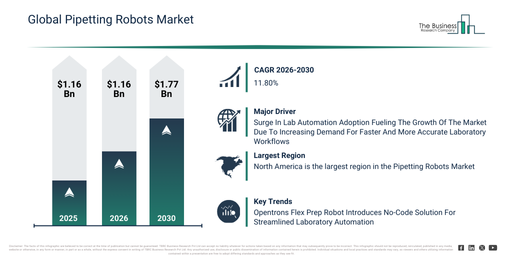
    The pipetting robots market has witnessed substantial growth in its size over recent years. It is projected to increase from $1.09 billion in 2025 to $1.22 billion in 2026, at a compound annual growth rate (CAGR) of 12.0%. The expansion observed historically stems from factors such as heightened laboratory automation, escalating research workloads, the imperative for reproducibility, constraints associated with manual pipetting, and the broader development within life science research.

    The pipetting robots market size is anticipated to undergo significant expansion in the upcoming years. It is projected to increase to $1.9 billion in 2030, demonstrating a compound annual growth rate (CAGR) of 11.8%. This growth during the forecast period is primarily driven by factors such as the broadening of drug discovery initiatives, the expansion of genomics and proteomics, an escalating demand for laboratory efficiency, the integration with LIMS systems, and an uptick in clinical diagnostics testing. Key trends expected in this period involve high throughput liquid handling, the reduction of errors associated with manual pipetting, the establishment of automated laboratory workflows, ensuring consistent volume dispensing accuracy, and the development of scalable modular robot platforms.

    Get A Free Sample Report With In-Depth Market Insights:

    https://thebusinessresearchcompany.com/sample_request?id=65839954&type=smp&name=Pipetting%20Robots%20Market%20Report%202026&utm_source=Blogs&utm_medium=Paid&utm_campaign=Oct_PR

    Pipetting Robots Market Opportunity Drivers: What’s Unlocking New Revenue Potential?

    The increasing integration of laboratory automation is projected to drive expansion within the pipetting robots market moving ahead. Laboratory automation involves employing machinery, software, and automated instruments to execute lab functions like testing, measuring, and sample processing with reduced human intervention, enabling laboratories to operate with greater speed, precision, and fewer mistakes within a unified, efficient workflow. The uptake of lab automation is increasing due to the need for quicker and more precise handling of expanding sample volumes in laboratories, a requirement automation addresses by minimizing manual labor and enhancing total efficiency through an uninterrupted workflow. Pipetting robots contribute to lab automation by executing accurate and repetitive liquid-handling operations autonomously, thereby enhancing precision, velocity, and uniformity, concurrently lessening human input. As an illustration, data from August 2024, provided by the Pistoia Alliance, a US-based not-for-profit organization, showed that the adoption of lab automation, including artificial intelligence and machine learning (AI/ML), climbed from 54% in 2023 to 68% in 2024. This signifies that among 200 surveyed labs, the count utilizing advanced systems grew from 108 to 136, indicating a 14-point jump in just one year. Consequently, the expanding use of lab automation is fueling the expansion of the pipetting robots market.

    Pipetting Robots Market Segment Landscape And Growth Outlook

    The pipetting robots market covered in this report is segmented –

    1) By Type: Automated Pipetting Systems, Semi-Automated Pipetting Systems, Multichannel Pipetting Robots, Single Channel Pipetting Robots

    2) By Technology: Microplate Pipetting Robots, Multisample Pipetting Robotic Systems, Robotic Liquid Handling Systems, Automated Workstations, Custom Pipetting Systems

    3) By Operating Environment: Laboratory Environment, Clean Room Environment, Clinical Environment

    4) By Application: Drug Discovery, Clinical Diagnostics, Genomics and Proteomics, Food And Beverage Testing, Environmental Testing

    5) By End-User: Pharmaceutical Companies, Biotechnology Firms, Academic And Research Institutions, Contract Research Organizations (CROs), Hospitals And Clinical Laboratories

    Subsegments:

    1) By Automated Pipetting Systems: Bench Top Automated Pipetting Systems, Integrated Automated Pipetting Workstations, High Throughput Automated Pipetting Systems, Compact Automated Pipetting Systems

    2) By Semi Automated Pipetting Systems: Electronic Assist Semi Automated Pipetting Systems, Motor Driven Semi Automated Pipetting Systems, Adjustable Volume Semi Automated Pipetting Systems, Fixed Volume Semi Automated Pipetting Systems

    3) By Multichannel Pipetting Robots: Low Channel Count Multichannel Pipetting Robots, High Channel Count Multichannel Pipetting Robots, Plate Based Multichannel Pipetting Robots, Tube Based Multichannel Pipetting Robots

    4) By Single Channel Pipetting Robots: Portable Single Channel Pipetting Robots, Bench Top Single Channel Pipetting Robots, High Precision Single Channel Pipetting Robots, Entry Level Single Channel Pipetting Robots

    Pipetting Robots Market Innovation Trends Shaping Future Development

    Leading companies within the pipetting robots market are prioritizing the development of sophisticated solutions, such as no-code robotic systems, to streamline laboratory automation. A no-code robotic solution represents an intuitive platform that enables scientists to configure and perform pipetting tasks without requiring programming expertise, thereby boosting workflow efficiency and minimizing manual errors. For example, in September 2024, Opentrons Labworks Inc., a US-based lab automation firm, introduced the Opentrons Flex Prep robot, complemented by new no-code software. This innovative system allows users to design, visualize, and carry out pipetting tasks in as little as a minute directly through a touchscreen interface, offering both straightforwardness and increased functionality. It integrates with Opentrons’ current lab automation solutions, which deliver an accessible, economical, and adaptable liquid-handling experience. The Flex Prep boosts laboratory productivity, facilitates precise liquid transfers, and enables researchers to concentrate on more critical components of their experiments.

    Pipetting Robots Market Leading Companies And Competitive Benchmarking

    Major companies operating in the pipetting robots market are Thermo Fisher Scientific Inc., Agilent Technologies Inc., Mettler-Toledo International Inc., Beckman Coulter Inc., Tecan Group Ltd., Eppendorf AG, Hamilton Company, INTEGRA Biosciences AG, Gilson Incorporated, SPT Labtech Ltd., Opentrons Labworks Inc., Formulatrix Inc., HighRes Biosolutions Inc., BioTek Instruments Inc., Analytik Jena GmbH + Co KG, BRAND GmbH + Co KG, Dynamic Devices Ltd., Revvity Inc., Hudson Robotics, Andrew Alliance SA, Zinsser Analytic GmbH

    View The Full Pipetting Robots Market Report:

    https://thebusinessresearchcompany.com/report/global-pipetting-robots-market-report?utm_source=Blogs&utm_medium=Paid&utm_campaign=Oct_PR

    Pipetting Robots Market Largest Region By Revenue And Market Share

    North America was the largest region in the pipetting robots market in 2025. Asia-Pacific is expected to be the fastest-growing region in the forecast period. The regions covered in the pipetting robots market report are Asia-Pacific, South East Asia, Western Europe, Eastern Europe, North America, South America, Middle East, Africa.

    Reach Out To Our Team:

    The Business Research Company: https://www.thebusinessresearchcompany.com/

    Americas: +1 310-496-7795

    Asia: +44 7882 955267 & +91 8897263534

    Europe: +44 7882 955267

    Email us at: marketing@tbrc.info

    Follow us on:

    LinkedIn: https://in.linkedin.com/company/the-business-research-company

    YouTube: https://www.youtube.com/channel/UC24_fI0rV8cR5DxlCpgmyFQ

    Global Market Model: https://www.thebusinessresearchcompany.com/global-market-model
  • Pipettes And Accessories Market Size And Growth In 2026: Key Factors Shaping Future Demand

    Pipettes And Accessories Market Size And Growth In 2026: Key Factors Shaping Future Demand

    Built to provide research that’s more actionable and strategically valuable, The Business Research Company’s 2026 market reports include market attractiveness analysis, total addressable market sizing, company benchmarking matrices, interactive Excel dashboards, broader supply chain intelligence, emerging startup tracking, and in-depth product insights.

    Pipettes And Accessories Market Size Forecast: How Big Could The Market Get By 2030?

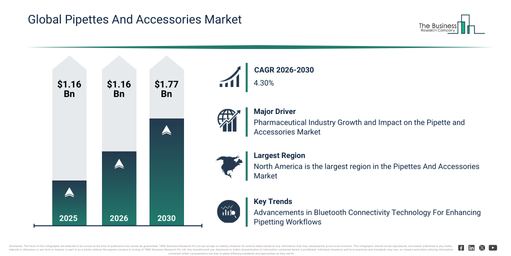
    The market size for pipettes and accessories has experienced steady expansion in recent years. This market is projected to grow from $1.48 billion in 2025 to $1.55 billion in 2026, advancing at a compound annual growth rate (CAGR) of 4.8%. The historical growth of this market can be attributed to the expansion of laboratory research activities, an increase in pharmaceutical manufacturing, rising academic research funding, the growing demand for accurate liquid measurement, and the widespread adoption of standardized laboratory practices.

    The market size for pipettes and accessories is projected to experience consistent expansion in the coming years. It will grow to $1.84 billion in 2030 at a compound annual growth rate (CAGR) of 4.3%. This expansion during the forecast period is driven by factors such as increased funding in biotechnology research, greater laboratory automation, a heightened emphasis on efficiency in labs, larger volumes of diagnostic testing, and ongoing advancements in liquid handling technologies. Key developments anticipated during this time involve the wider acceptance of electronic and programmable pipettes, a heightened need for precision liquid handling, greater deployment of multi-channel pipettes for research, the introduction of more ergonomic and convenient designs, and a stronger emphasis on ensuring contamination-free pipetting practices.

    Get A Free Sample Report With In-Depth Market Insights:

    https://thebusinessresearchcompany.com/sample_request?id=99948258&type=smp&name=Pipettes%20And%20Accessories%20Market%20Report%202026&utm_source=Blogs&utm_medium=Paid&utm_campaign=Oct_PR

    Pipettes And Accessories Market Growth Momentum: What Factors Are Shaping Demand?

    The increasing expansion of pharmaceutical enterprises is anticipated to stimulate the growth of the pipette and accessories market in the future. The pharmaceutical industry refers to the economic sector primarily focused on researching, developing, manufacturing, and selling drugs or medications used for medical treatment or therapy. This industry is experiencing growth due to the rising prevalence of chronic diseases, ongoing advancements in research and technology, and healthcare reforms contributing to elevated healthcare expenditures. Pipettes and their associated accessories are engineered to accurately measure and transfer specific liquid volumes, a function critical in pharmaceutical procedures like drug formulation, sample preparation, and analytical testing. For instance, in April 2025, according to Eurostat a Luxembourg-based European Union in 2024, the EU’s exports of medicinal and pharmaceutical products rose by 13.5% from 2023, reaching $339.0 billion. Therefore, the growth of pharmaceutical companies is a key driver for the pipette and accessories market.

    Pipettes And Accessories Market Breakdown By Product Type And Application

    The pipettes and accessories market covered in this report is segmented –

    1) By Type: Manual Pipettes, Electronic Pipettes, Accessories

    2) By Channel Type: Single Channel, Multi-Channel

    3) By Application: Hospitals, Academic And Research Institute, Pharmaceutical And Biotechnology Companies, Other Applications

    Subsegments:

    1) By Manual Pipettes: Single-Channel Manual Pipettes, Multi-Channel Manual Pipettes, Adjustable Volume Manual Pipettes, Fixed Volume Manual Pipettes

    2) By Electronic Pipettes: Single-Channel Electronic Pipettes, Multi-Channel Electronic Pipettes, Digital Electronic Pipettes, Programmable Electronic Pipettes

    3) By Accessories: Pipette Tips, Pipette Calibration Tools, Pipette Stands And Holders, Pipette Servicing And Maintenance Kits, Pipette Filters

    Pipettes And Accessories Market Trends Redefining Industry Growth

    Leading companies in the pipettes and accessories market are developing innovative products with advanced technologies, such as Bluetooth connectivity, to optimize workflows and improve data management capabilities. This Bluetooth connectivity in electronic pipettes allows these devices to integrate smoothly with various laboratory software and systems, facilitating efficient data transfer, real-time data sharing, and streamlined operations. For instance, in September 2023, Sartorius AG, a Germany-based pharmaceutical and laboratory equipment manufacturing and supplier company, launched its Picus 2 electronic pipettes. The Picus 2 electronic pipettes are equipped with Bluetooth connectivity, enabling users to connect to the Sartorius Pipetting mobile app and integrate with other existing systems. These pipettes are designed for effortless pipetting, featuring a lightweight and streamlined build, and offer advanced functionalities such as customizable programs, safety features, and easy cleaning.

    Pipettes And Accessories Market Industry Leaders And Competitive Landscape

    Major companies operating in the pipettes and accessories market are Thermo Fisher Scientific Inc., Corning Incorporated, VWR International LLC, Mettler Toledo, Bio-Rad Laboratories Inc., Eppendorf SE, Sarstedt AG And Co. KG, Hamilton Company, Greiner Bio-One International GmbH, Cole-Parmer Instrument Company LLC, Biotix Inc., Integra Biosciences AG, Gilson Incorporated, Brand GMBH And Co KG, Socorex ISBA SA, Ajanta Export Industries, Microlit, Heathrow Scientific, Vistalab Technologies Inc., Capp, Oxford Lab Products, Nichiryo Co. Ltd., Phoenix Instruments, Kartell Labware

    View The Full Pipettes And Accessories Market Report:

    https://thebusinessresearchcompany.com/report/pipettes-and-accessories-global-market-report?utm_source=Blogs&utm_medium=Paid&utm_campaign=Oct_PR

    Pipettes And Accessories Market Regional Analysis And Leading Geography

    North America was the largest region in the pipettes and accessories market in 2025. Asia-Pacific is expected to be the fastest-growing region in the forecast period. The regions covered in the pipettes and accessories market report are Asia-Pacific, South East Asia, Western Europe, Eastern Europe, North America, South America, Middle East, Africa.

    Reach Out To Our Team:

    The Business Research Company: https://www.thebusinessresearchcompany.com/

    Americas: +1 310-496-7795

    Asia: +44 7882 955267 & +91 8897263534

    Europe: +44 7882 955267

    Email us at: marketing@tbrc.info

    Follow us on:

    LinkedIn: https://in.linkedin.com/company/the-business-research-company

    YouTube: https://www.youtube.com/channel/UC24_fI0rV8cR5DxlCpgmyFQ

    Global Market Model: https://www.thebusinessresearchcompany.com/global-market-model
  • Pipette Tips Market Forecast 2026–2030: Market Size, Trends And Growth Opportunities

    Pipette Tips Market Forecast 2026–2030: Market Size, Trends And Growth Opportunities

    Backed by market attractiveness analysis, total addressable market sizing, company benchmarking matrices, interactive Excel dashboards, wider supply chain intelligence, emerging startup coverage, and detailed product-level insights, The Business Research Company’s 2026 market reports are designed to offer research that is more actionable and strategically valuable than ever.

    Pipette Tips Market Revenue Outlook: What CAGR Lies Ahead Through 2030?

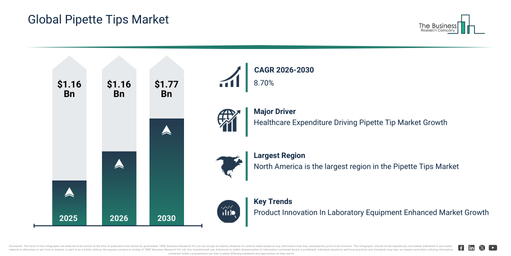
    The pipette tips market has seen robust expansion in recent years. It is anticipated to increase from $2.44 billion in 2025 to $2.64 billion in 2026, achieving a compound annual growth rate (CAGR) of 8.3%. This historic growth can be attributed to the broadening of laboratory research initiatives, the surge in pharmaceutical and biotechnology research and development, the increasing implementation of automated liquid handling systems, a rise in diagnostic testing volumes, and the extensive uptake of disposable lab consumables.

    The pipette tips market is projected to experience substantial expansion over the upcoming years. This market is anticipated to reach a valuation of $3.69 billion by 2030, exhibiting a compound annual growth rate (CAGR) of 8.7%. Factors contributing to this growth during the forecast period include greater investments in life sciences research, a surging demand for high-throughput screening, the broader adoption of automated laboratory workflows, an increasing emphasis on sustainable laboratory plastics, and ongoing innovation in consumables for precision liquid handling. Key trends expected over the forecast period encompass a wider acceptance of filtered and low-retention pipette tips, a growing need for robotic-compatible tips, an intensified focus on contamination-free liquid handling, the proliferation of RNase and DNase-free consumables, and an increased commitment to high-precision pipetting.

    Get A Free Sample Report With In-Depth Market Insights:

    https://thebusinessresearchcompany.com/sample_request?id=22049118&type=smp&name=Pipette%20Tips%20Market%20Report%202026&utm_source=Blogs&utm_medium=Paid&utm_campaign=Oct_PR

    Pipette Tips Market Expansion Drivers: What’s Shaping Future Growth?

    The expanding count of healthcare establishments is projected to boost the growth of the pipette tips market moving forward. A healthcare setting encompasses various health-related facilities and services, including acute care hospitals, urgent care centers, rehabilitation facilities, nursing homes, and other long-term care institutions. A pipette serves as standard yet vital equipment in hospitals for precisely and accurately transferring liquid volumes in the microliter range. Its applications also include DNA amplification, molecular screening, ELISA (a diagnostic test), and kinetic studies. For example, in May 2023, The American Hospital Association, a US-based healthcare industry trade group, indicated that the total number of hospitals in the US region increased from 6,093 in 2022 to 60,129 in 2023, and admissions in community hospitals rose from 31,393,318 in 2022 to 31,967,073 in 2023. Thus, the increasing number of healthcare settings drives the pipette tips market.

    Pipette Tips Market Segment Analysis And Revenue Potential

    The pipette tips market covered in this report is segmented –

    1) By Product: Standard, Filtered, Low-Retention, Other Products

    2) By Technology: Robotic, Non-Robotic

    3) By Application: Diagnostics And Healthcare, Pharma And Biotech, Academia And Education, Other Applications

    Subsegments:

    1) By Standard: Non-Sterile Tips, Sterile Tips, Universal Fit Tips

    2) By Filtered: Low-Filter Tips, High-Filter Tips, RNase And DNase-Free Filtered Tips

    3) By Low-Retention: Hydrophobic Low-Retention Tips, Coated Low-Retention Tips, Non-Coated Low-Retention Tips

    4) By Other Products: Extended Length Tips, Wide-Bore Tips, Gel Loading Tips, Conductive Tips

    Pipette Tips Market Strategic Trends: What Defines The Next Growth Phase?

    Leading companies within the pipette tips market are increasingly focusing on introducing advanced products, such as large-volume pipette tips, to satisfy the rising demand for more efficient and precise laboratory tools. Large-volume pipette tips are specialized tips designed to hold and transfer larger quantities of liquid, typically employed in laboratory settings for applications requiring accurate measurement and dispensing of greater solutions. For instance, in July 2024, GenFollower Biotech Co., Ltd., a manufacturing company based in China, unveiled two types of 5mL large volume pipette tips. These new tips demonstrate exceptional compatibility with GILSON, Rainin UNV, Eppendorf, DragonLab, LABSERV, and Sartorius pipettes. Constructed from medical-grade polypropylene, the new tips offer high transparency, facilitating easy liquid observation. The clear and precise graduations present on the tips ensure accurate sample measurements, thereby significantly enhancing laboratory efficiency.

    Pipette Tips Market Key Participants And Competitive Landscape

    Major companies operating in the pipette tips market are Eppendorf, Thermo Fisher Scientific, Sartorius AG, Corning Incorporated, Sarstedt, Brand GmbH, Hamilton Company, Bio-Rad Laboratories Inc., VWR International, Greiner Bio-One International GmbH, Tecan Group Ltd., Gilson, Starlab Scientific Co. Ltd., AHN Biotechnologie GmbH, Sorenson BioScience, USA Scientific, Drummond Scientific Company, Socorex Isba SA, Mettler-Toledo Rainin LLC, Analytik Jena GmbH, Integra Holding AG, Mettler Toledo

    View The Full Pipette Tips Market Report:

    https://thebusinessresearchcompany.com/report/pipette-tips-global-market-report?utm_source=Blogs&utm_medium=Paid&utm_campaign=Oct_PR

    Pipette Tips Market Geographic Analysis: Where Is Demand Accelerating Fastest?

    North America was the largest region in the pipette tips market in 2025. The regions covered in the pipette tips market report are Asia-Pacific, South East Asia, Western Europe, Eastern Europe, North America, South America, Middle East, Africa.

    Reach Out To Our Team:

    The Business Research Company: https://www.thebusinessresearchcompany.com/

    Americas: +1 310-496-7795

    Asia: +44 7882 955267 & +91 8897263534

    Europe: +44 7882 955267

    Email us at: marketing@tbrc.info

    Follow us on:

    LinkedIn: https://in.linkedin.com/company/the-business-research-company

    YouTube: https://www.youtube.com/channel/UC24_fI0rV8cR5DxlCpgmyFQ

    Global Market Model: https://www.thebusinessresearchcompany.com/global-market-model
  • Pill Dispenser Internet Of Things (IoT) Market Size Reaches $3.03 Billion In 2026: What Is Driving Growth?

    Pill Dispenser Internet Of Things (IoT) Market Size Reaches $3.03 Billion In 2026: What Is Driving Growth?

    Featuring market attractiveness scoring, total addressable market sizing, company benchmarking matrices, interactive Excel dashboards, deeper supply chain intelligence, emerging startup tracking, and granular product-level insights, The Business Research Company’s 2026 market reports are built to deliver research that is both more actionable and more strategically valuable.

    Pill Dispenser Internet Of Things (IoT) Market Growth Analysis: How Will Revenue Trend Over The Forecast Period?

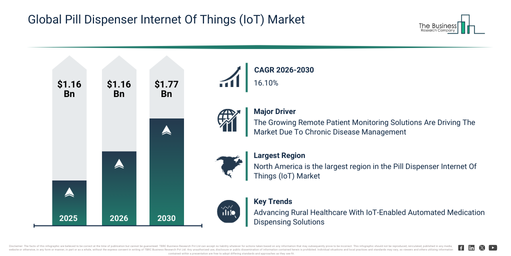
    The pill dispenser internet of things (iot) market size has seen substantial growth recently. This market is expected to expand from $2.6 billion in 2025 to $3.03 billion in 2026, achieving a compound annual growth rate (CAGR) of 16.4%. Historically, this expansion has been propelled by factors such as a growing elderly population, an increase in chronic diseases, heightened awareness regarding medication adherence, the adoption of smart home healthcare technologies, and the ongoing development of IoT-enabled devices.

    The pill dispenser internet of things (iot) market size is anticipated to undergo significant expansion in the coming years. It is projected to attain a value of $5.5 billion by 2030, growing at a compound annual growth rate (CAGR) of 16.1%. The increase throughout the forecast period can be attributed to several factors, including AI-powered adherence monitoring, the integration of telehealth platforms, growth within long-term care facilities, the development of wearable-connected pill devices, and predictive medication management. Key trends expected during this period involve smart pill dispensers, multi-dose automated devices, remote monitoring and alerts, integration with caregiver applications, and connected pill organizers.

    Get A Free Sample Report With In-Depth Market Insights:

    https://thebusinessresearchcompany.com/sample_request?id=90086686&type=smp&name=Pill%20Dispenser%20Internet%20Of%20Things%20%28IoT%29%20Market%20Report%202026&utm_source=Blogs&utm_medium=Paid&utm_campaign=Oct_PR

    Pill Dispenser Internet Of Things (IoT) Market Development Factors: What’s Supporting Demand?

    The expansion of remote patient monitoring solutions is projected to fuel the growth of the pill dispenser internet of things (IoT) market. These solutions are healthcare technologies designed for continuous observation of patient health outside traditional clinical settings, facilitating early detection of issues and supporting better adherence to treatment. The increase in remote patient monitoring solutions stems from a rise in chronic disease cases, as patients require ongoing health tracking for effective management of long-term conditions. Pill dispenser internet of things (IoT) enhances remote patient monitoring solutions by enabling real-time tracking of medication adherence, allowing healthcare providers to monitor patient treatment more effectively. For example, by September 2025, according to the Center for Connected Health Policy (CCHP), a US-based non-profit organization, forty-one state Medicaid programs provide reimbursement for remote patient monitoring services, illustrating the expanding adoption and integration of these solutions across the United States. Therefore, the growing remote patient monitoring solutions are propelling the growth of the pill dispenser internet of things (IoT) market.

    Pill Dispenser Internet Of Things (IoT) Market Segmentation And Category Overview

    The pill dispenser internet of things (iot) market covered in this report is segmented –

    1) By Product Type: Automatic Pill Dispensers, Smart Pill Bottles, Connected Pill Organizers

    2) By Connectivity: Wi-Fi, Bluetooth, Cellular, Other Connectivity

    3) By Distribution Channel: Online, Offline

    4) By Application: Home Healthcare, Hospitals And Clinics, Long-Term Care Facilities, Pharmacies, Other Applications

    5) By End-User: Elderly, Chronic Disease Patients, Caregivers, Other End-Users

    Subsegments:

    1) By Automatic Pill Dispensers: Timed Dispensing Devices, Multi Dose Dispensing Devices, Single Dose Dispensing Devices

    2) By Smart Pill Bottles: Bluetooth Enabled Bottles, Wi Fi Enabled Bottles, Cellular Enabled Bottles

    3) By Connected Pill Organizers: Weekly Pill Organizers, Monthly Pill Organizers, Portable Pill Organizers

    Pill Dispenser Internet Of Things (IoT) Market Transformation Trends: What Innovations Are Driving Change?

    Companies operating in the pill dispenser internet of things (IoT) market are focusing on developing innovative products, such as automated medicine kiosks, to improve access to prescribed medications in remote and underserved areas. An automated medicine kiosk is a connected device that dispenses medications on demand, tracks inventory in real time, and integrates with remote prescription and healthcare management systems. For instance, in April 2025, Medyseva, an India-based healthcare technology provider, launched MedyVend. This product allows healthcare providers to prescribe medications remotely through teleconsultations, which are then instantly dispensed to patients at satellite clinics. It also features real-time inventory monitoring, cashless transactions, and integration with telemedicine services, enabling continuous access to essential medicines in rural regions.

    Pill Dispenser Internet Of Things (IoT) Market Top Companies Driving Competitive Growth

    Major companies operating in the pill dispenser internet of things (iot) market are Omnicell Inc., MedMinder Systems Inc., Hero Health Inc., Spencer Health Solutions Inc., e-pill LLC., MedReady Inc., Vaica Medical, Medissimo, Wisepill Technologies CC, Medido, Pivotell Limited, Addinex Technologies Inc., Dose Health LLC, Omcare Inc., PharmAdva LLC, TSC Connected Care, CarePredict Inc., LiviSense Inc., TabTimer Pty Ltd, QMedRx Inc.

    View The Full Pill Dispenser Internet Of Things (IoT) Market Report:

    https://thebusinessresearchcompany.com/report/pill-dispenser-internet-of-things-iot-global-market-report?utm_source=Blogs&utm_medium=Paid&utm_campaign=Oct_PR

    Pill Dispenser Internet Of Things (IoT) Market Global Footprint: Which Region Leads The Industry?

    North America was the largest region in the pill dispenser internet of things (IoT) market in 2025. Asia-Pacific is expected to be the fastest-growing region in the forecast period. The regions covered in the pill dispenser internet of things (iot) market report are Asia-Pacific, South East Asia, Western Europe, Eastern Europe, North America, South America, Middle East, Africa.

    Reach Out To Our Team:

    The Business Research Company: https://www.thebusinessresearchcompany.com/

    Americas: +1 310-496-7795

    Asia: +44 7882 955267 & +91 8897263534

    Europe: +44 7882 955267

    Email us at: marketing@tbrc.info

    Follow us on:

    LinkedIn: https://in.linkedin.com/company/the-business-research-company

    YouTube: https://www.youtube.com/channel/UC24_fI0rV8cR5DxlCpgmyFQ

    Global Market Model: https://www.thebusinessresearchcompany.com/global-market-model
  • Physiotherapy Equipment And Accessories Market Valued At $26.06 Billion In 2026: Key Trends And Growth Drivers

    Physiotherapy Equipment And Accessories Market Valued At $26.06 Billion In 2026: Key Trends And Growth Drivers

    Built to provide research that’s more actionable and strategically valuable, The Business Research Company’s 2026 market reports include market attractiveness analysis, total addressable market sizing, company benchmarking matrices, interactive Excel dashboards, broader supply chain intelligence, emerging startup tracking, and in-depth product insights.

    Physiotherapy Equipment And Accessories Market Forecast: What Value Will The Market Reach By 2030?

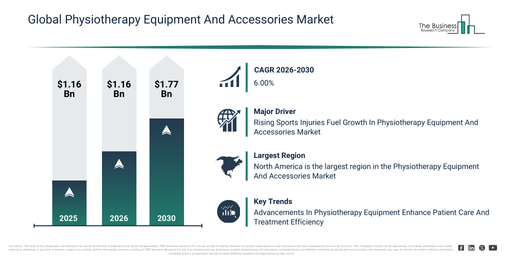
    The physiotherapy equipment and accessories market has shown strong growth in recent years. It is expected to expand from $19.46 billion in 2025 to $20.66 billion in 2026, achieving a compound annual growth rate (CAGR) of 6.1%. This historical growth can be attributed to an increased prevalence of musculoskeletal disorders, the expansion of physiotherapy clinics, a rising demand for post-surgical rehabilitation, the greater adoption of non-invasive therapy techniques, and the availability of a diversified range of physiotherapy tools.

    The physiotherapy equipment and accessories market is projected for significant expansion over the coming years. This market is set to reach $26.06 billion in 2030, exhibiting a compound annual growth rate (CAGR) of 6.0%. This anticipated growth during the forecast period stems from factors such as an expanding geriatric population, the increasing embrace of remote physiotherapy solutions, a heightened emphasis on preventive rehabilitation, the growth of home healthcare services, and ongoing innovations in therapy equipment design. Key developments expected in this period include the wider acceptance of portable rehabilitation devices, an increasing demand for home-based physiotherapy equipment, the greater integration of digital tools for therapy monitoring, the proliferation of ergonomic and patient-friendly accessories, and an intensified focus on technologies for pain management.

    Get A Free Sample Report With In-Depth Market Insights:

    https://thebusinessresearchcompany.com/sample_request?id=54109871&type=smp&name=Physiotherapy%20Equipment%20And%20Accessories%20Market%20Report%202026&utm_source=Blogs&utm_medium=Paid&utm_campaign=Oct_PR

    Physiotherapy Equipment And Accessories Market Industry Drivers: What’s Behind The Revenue Growth?

    The increasing occurrence of sports-related injuries is projected to boost the expansion of the physiotherapy equipment and accessories market in the future. These injuries are defined as physical harm incurred during participation in sports or physical exercise. The frequency of sports injuries is escalating because of greater involvement in high-intensity athletic pursuits and inadequate preventative actions. Such equipment and accessories assist individuals with sports injuries by contributing to pain alleviation, fostering recovery, enhancing movement, and supporting rehabilitation efforts. As an illustration, Inside world football, a UK-based web-based news-driven service, reported in October 2024 that sports injuries totaled 4,123 in the 2023-24 season, which represents a 4% increase from the 2022-23 season. Consequently, the growing number of sports injuries acts as a key driver for the expansion of the physiotherapy equipment and accessories market.

    Physiotherapy Equipment And Accessories Market Segment Outlook: Which Categories Are Growing Fastest?

    The physiotherapy equipment and accessories market covered in this report is segmented –

    1) By Product: Equipment, Accessories

    2) By Application: Musculoskeletal, Neurology, Pediatrics, Cardiovascular And Pulmonary, Other Applications

    3) By End User: Hospitals And Clinics, Physiotherapy And Rehabilitation Centers, Other End Users

    Subsegments:

    1) By Equipment: Therapeutic Ultrasound Devices, Electrical Stimulation Devices, Laser Therapy Equipment, Cryotherapy Units, Traction Equipment, Hydrotherapy Equipment, Exercise And Rehabilitation Equipment, Cryo-Chambers And Ice Compressors

    2) By Accessories: Electrodes For Stimulation Devices, Gel And Conductive Pads, Therapy Belts And Straps, Ball And Foam Rollers, Therapy Gloves And Braces, Cushions And Support Pads, Weight Training Equipment And Accessories, Stretching And Rehabilitation Tools

    #Physiotherapy Equipment And Accessories Market Growth Trends: What’s Shaping The Future Outlook?

    Key players in the physiotherapy equipment and accessories market are concentrating on creating sophisticated products, including artificial intelligence-based physiotherapy devices, with the aim of improving treatment precision and results for patients. These AI-powered devices are defined as advanced systems that leverage AI algorithms to improve, customize, and refine physical rehabilitation and therapeutic interventions. An example of this innovation is the launch of Slider in August 2023 by AI Rehab Ltd, a UK-based medical equipment manufacturer. Slider is an artificial intelligence (AI)-integrated device for exercise and remote physiotherapy, specifically designed for knee arthritis patients. The device’s design allows for application in both hospital settings and at home, proving especially advantageous for individuals undergoing rehabilitation before and after surgery. Slider employs artificial intelligence to enable remote physiotherapy sessions. To use it, patients simply position the device under their heel to carry out fundamental knee exercises, which are then tracked by wearable sensors that monitor motion and force. Furthermore, the device incorporates gamification strategies, enabling users to participate in computer games that promote leg movements beneficial for knee functionality. This interactive methodology helps to lessen the repetitiveness frequently linked with conventional physiotherapy routines.

    Physiotherapy Equipment And Accessories Market Leading Players And Competitive Positioning

    Major companies operating in the physiotherapy equipment and accessories market are Enovis Corporation, DJO Global, BTL Corporate, Performance Health, Zynex Medical Inc, Dynatronics Corporation, Storz Medical AG, Enraf-Nonius B.V., A. Algeo Ltd, Zimmer Medizin System GmbH, Mectronic Medicale S.r.l, SEERS Medical Ltd, Life Care Systems, GymnaUniphy N.V., EMS Physio Ltd., ITO Co Ltd, HMS Medical Systems, Chinesport S.p.A., Johari Digital Healthcare, RehabMedic Srl, Everyway Medical Instruments Co Ltd

    View The Full Physiotherapy Equipment And Accessories Market Report:

    https://thebusinessresearchcompany.com/report/physiotherapy-equipment-and-accessories-global-market-report?utm_source=Blogs&utm_medium=Paid&utm_campaign=Oct_PR

    Physiotherapy Equipment And Accessories Market Regional Distribution: Which Areas Power Market Growth?

    North America was the largest region in the physiotherapy equipment and accessories market in 2025. Asia-Pacific is expected to be the fastest-growing region in the forecast period. The regions covered in the physiotherapy equipment and accessories market report are Asia-Pacific, South East Asia, Western Europe, Eastern Europe, North America, South America, Middle East, Africa.

    Reach Out To Our Team:

    The Business Research Company: https://www.thebusinessresearchcompany.com/

    Americas: +1 310-496-7795

    Asia: +44 7882 955267 & +91 8897263534

    Europe: +44 7882 955267

    Email us at: marketing@tbrc.info

    Follow us on:

    LinkedIn: https://in.linkedin.com/company/the-business-research-company

    YouTube: https://www.youtube.com/channel/UC24_fI0rV8cR5DxlCpgmyFQ

    Global Market Model: https://www.thebusinessresearchcompany.com/global-market-model
  • Physiotherapy Equipment Market Size In 2026: Growth Outlook And Forecast Through 2030

    Physiotherapy Equipment Market Size In 2026: Growth Outlook And Forecast Through 2030

    Backed by market attractiveness analysis, total addressable market sizing, company benchmarking matrices, interactive Excel dashboards, wider supply chain intelligence, emerging startup coverage, and detailed product-level insights, The Business Research Company’s 2026 market reports are designed to offer research that is more actionable and strategically valuable than ever.

    Physiotherapy Equipment Market Size Outlook: How Quickly Will Revenue Expand Through 2030?

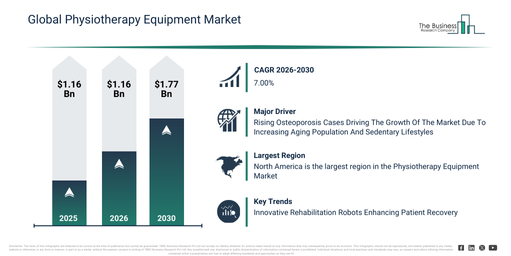
    The physiotherapy equipment market has experienced substantial growth in recent times. This market is projected to expand from $20.91 billion in 2025 to $22.38 billion in 2026, registering a compound annual growth rate (CAGR) of 7.0%. Historically, this growth has been driven by factors such as an increase in musculoskeletal disorders, a rise in physical injuries, the expansion of rehabilitation centers, the demand for post-surgical recovery, and an aging population.

    The physiotherapy equipment market is anticipated to experience substantial growth in the upcoming years. Its valuation is projected to reach $29.29 billion by 2030, exhibiting a compound annual growth rate (CAGR) of 7.0%. This expansion during the forecast period is driven by factors such as the increasing adoption of remote physiotherapy, the emergence of wearable rehabilitation devices, the widespread prevalence of chronic pain, the incidence of sports injuries, and the rise of digital therapy platforms. Prominent trends expected in the same period include the expansion of home-based rehabilitation, the growing adoption of electrotherapy devices, a heightened demand for non-invasive pain management techniques, the broadening scope of sports rehabilitation, and the integration of smart therapy equipment.

    Get A Free Sample Report With In-Depth Market Insights:

    https://thebusinessresearchcompany.com/sample_request?id=50915481&type=smp&name=Physiotherapy%20Equipment%20Market%20Report%202026&utm_source=Blogs&utm_medium=Paid&utm_campaign=Oct_PR

    Physiotherapy Equipment Market Growth Factors: What’s Supporting Expansion?

    The increasing occurrence of osteoporosis is anticipated to boost the physiotherapy equipment market’s expansion. Osteoporosis involves weakened bones, making them susceptible to fractures due to lower bone density and strength. Its rising prevalence stems from aging populations, inactive lifestyles, and inadequate nutrition. As people live longer, more individuals reach an age where bone density naturally diminishes, increasing their vulnerability to osteoporosis. Physiotherapy equipment aids in managing this condition through treatments that build bone strength, improve stability, and enhance muscle function, thus lowering the likelihood of falls and fractures. For example, in July 2025, the Institute for Health Transformation, an Australia-based health research institute, reported that in 2023, Australia experienced a fracture every 2.7 minutes, a rate expected to surge dramatically to one fracture every 30 seconds by 2033. Consequently, the rising incidence of osteoporosis propels the growth of the physiotherapy equipment market.

    Physiotherapy Equipment Market Segment Landscape: Which Areas Lead Development?

    The physiotherapy equipment market covered in this report is segmented –

    1) By Type: Cryotherapy, Hydrotherapy, Continuous Passive Motion (CPM), Ultrasound, Electric Stimulation, Heat Therapy, Therapeutic Exercise, Other Types

    2) By Application: Neurology, Musculoskeletal, Pediatric, Cardiovascular And Pulmonary, Other Applications

    3) By End-User: Hospitals And Clinics, Rehabilitation Centers, Other End-Users

    Subsegments:

    1) By Cryotherapy: Ice Packs, Cold Compression Therapy Units, Cryo Chambers, Vapocoolant Sprays

    2) By Hydrotherapy: Whirlpool Therapy Equipment, Underwater Treadmills, Aquatic Therapy Pools, Hydrotherapy Tanks

    3) By Continuous Passive Motion (CPM): Knee CPM Machines, Shoulder CPM Machines, Elbow CPM Machines, Ankle CPM Machines

    4) By Ultrasound: Therapeutic Ultrasound Devices, High-Intensity Focused Ultrasound (HIFU), Low-Intensity Pulsed Ultrasound (LIPUS)

    5) By Electric Stimulation: Transcutaneous Electrical Nerve Stimulation (TENS) Units, Neuromuscular Electrical Stimulation (NMES) Devices, Functional Electrical Stimulation (FES) Devices, Interferential Current Therapy (IFC) Units

    6) By Heat Therapy: Infrared Lamps, Heating Pads, Paraffin Wax Baths, Hot Packs

    7) By Therapeutic Exercise: Resistance Bands And Tubes, Balance And Stability Equipment, Exercise Balls, Strength Training Machines

    8) By Other Types: Laser Therapy Devices, Traction Therapy Equipment, Shockwave Therapy Machines, Magnetotherapy Devices

    Physiotherapy Equipment Market Industry Trends: What’s Reshaping Demand?

    Leading companies operating in the physiotherapy equipment market are prioritizing the development of advanced products, such as rehabilitation robots, to improve patient recovery and optimize treatment outcomes. These innovative rehabilitation robots are sophisticated robotic systems that integrate cutting-edge technologies like AI, brain-computer interfaces (BCI), and high-precision sensors to enhance patient recovery, restore motor functions, and improve rehabilitation outcomes. For instance, in November 2023, Syrebo, a China-based technology company, launched the Hand Rehabilitation Robot (BCI) SY-BR09 and Upper Limb Rehabilitation Robot SY-UEA2. The Hand Rehabilitation Robot (BCI) SY-BR09 incorporates brain-computer interface (BCI) technology, stimulating the brain for ‘top-down’ neural reshaping and enhancing active movement awareness, which significantly improves rehabilitation effectiveness. Meanwhile, the Upper Limb Rehabilitation Robot SY-UEA2 features a full-featured mobile chassis and high-precision optical positioning technology, offering targeted upper limb training to assist functional recovery.

    Physiotherapy Equipment Market Competitive Overview And Top Companies

    Major companies operating in the physiotherapy equipment market are Medtronic plc, Zimmer Biomet Holdings Inc., Oceanic Healthcare, Dynatronics Corporation, Chirag Electronics Pvt. Ltd., HMS Medical Systems, Bio-Med International Pvt Ltd., Naugra Medical, Hi-Tech Surgical Company, Bit & Byte Technosys Private Limited, Physio Medicare, Cerabest Healthcare, Bharath Medical Systems, Divine Physiotherapy Equipments, JaincoLab, Syrebo, Sonka Medical, Maktrex International, Life Care Systems, Tapsi Electro Medical Systems & Services

    View The Full Physiotherapy Equipment Market Report:

    https://thebusinessresearchcompany.com/report/physiotherapy-equipment-global-market-report?utm_source=Blogs&utm_medium=Paid&utm_campaign=Oct_PR

    Physiotherapy Equipment Market Leading Geography: Which Region Contributes The Most Revenue?

    North America was the largest region in the physiotherapy equipment market in 2025. The regions covered in the physiotherapy equipment market report are Asia-Pacific, South East Asia, Western Europe, Eastern Europe, North America, South America, Middle East, Africa.

    Reach Out To Our Team:

    The Business Research Company: https://www.thebusinessresearchcompany.com/

    Americas: +1 310-496-7795

    Asia: +44 7882 955267 & +91 8897263534

    Europe: +44 7882 955267

    Email us at: marketing@tbrc.info

    Follow us on:

    LinkedIn: https://in.linkedin.com/company/the-business-research-company

    YouTube: https://www.youtube.com/channel/UC24_fI0rV8cR5DxlCpgmyFQ

    Global Market Model: https://www.thebusinessresearchcompany.com/global-market-model
  • Physiotherapy Devices Market Trends Supporting 6.3% CAGR Growth Through 2030

    Physiotherapy Devices Market Trends Supporting 6.3% CAGR Growth Through 2030

    Featuring market attractiveness scoring, total addressable market sizing, company benchmarking matrices, interactive Excel dashboards, deeper supply chain intelligence, emerging startup tracking, and granular product-level insights, The Business Research Company’s 2026 market reports are built to deliver research that is both more actionable and more strategically valuable.

    Physiotherapy Devices Market Size, Value And Growth Trajectory Through 2030

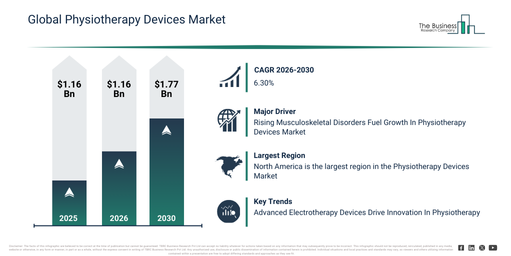
    The physiotherapy devices market size has seen substantial growth in recent years. It will grow from $23.15 billion in 2025 to $24.67 billion in 2026 at a compound annual growth rate (CAGR) of 6.6%. The historical expansion can be ascribed to a rising occurrence of musculoskeletal disorders, an increasing elderly population, the proliferation of rehabilitation centers, more road accident injuries, and the adoption of non-invasive therapies.

    The physiotherapy devices market is projected to experience substantial expansion over the coming years, forecast to reach $31.49 billion in 2030, showing a compound annual growth rate (CAGR) of 6.3%. This projected growth during the forecast period is primarily driven by factors such as the rise in home rehabilitation services, an increase in injuries from sports participation, growing requirements for post-surgical recovery, the expansion of physiotherapy clinics, and the demand for portable devices. Key trends anticipated in the same period encompass the increasing integration of home-based physiotherapy equipment, a greater need for pain management devices, the broadening scope of sports injury rehabilitation, the expanding utilization of wearable therapy devices, and the incorporation of multimodal therapy solutions.

    Get A Free Sample Report With In-Depth Market Insights:

    https://thebusinessresearchcompany.com/sample_request?id=98725655&type=smp&name=Physiotherapy%20Devices%20Market%20Report%202026&utm_source=Blogs&utm_medium=Paid&utm_campaign=Oct_PR

    Physiotherapy Devices Market Demand Drivers: What’s Powering Industry Growth?

    The increasing occurrence of musculoskeletal disorders is projected to fuel the expansion of the physiotherapy devices market going forward. Musculoskeletal disorders (MSDs) refer to injuries or ailments impacting muscles, bones, joints, tendons, ligaments, and adjacent tissues, resulting in discomfort, rigidity, and restricted motion. The frequency of musculoskeletal disorders is escalating due to an aging population, as older individuals naturally undergo the deterioration of bones, joints, and muscles, making them more prone to such conditions. Physiotherapy devices play a crucial role in managing musculoskeletal disorders by offering pain alleviation, enhancing movement, and fostering recovery via focused rehabilitation. For instance, in January 2024, according to the Office for Health Improvement & Disparities, a UK-based government agency, in 2023, 18.4% of individuals aged 16 and older reported having a long-term musculoskeletal (MSK) condition, marking an increase from the 17.6% prevalence recorded in 2022. Consequently, the growing prevalence of musculoskeletal disorders is boosting the physiotherapy devices market.

    Physiotherapy Devices Market Segments: Where Is Growth Concentrated?

    The physiotherapy devices market covered in this report is segmented –

    1) By Type: Equipment, Kit, Accessories

    2) By Application: Musculoskeletal, Neurology, Cardiovascular, Other Applications

    3) By End User: Hospitals, Physiotherapy Clinics, Rehabilitation Centers, Other End Users

    Subsegments:

    1) By Equipment: Electrical Stimulation Devices, Ultrasound Therapy Machines, Traction Equipment, Laser Therapy Devices, Cryotherapy Equipment, Heat Therapy Devices, Electrotherapy Units, Exercise Equipment

    2) By Kit: Physiotherapy Treatment Kits, Mobility Assistance Kits, Pain Relief Kits, Post-Surgery Recovery Kits, Home Physiotherapy Kits

    3) By Accessories: Massage Rollers, Therapy Balls, Resistance Bands And Tubes, Knee And Back Supports, Foot And Ankle Supports, Electrode Pads For Electrotherapy, Therapy Straps And Bands, Posture Correction Devices

    Physiotherapy Devices Market Innovation Trends: What Developments Are Reshaping The Industry?

    Major companies operating within the physiotherapy devices market are increasingly creating home-use solutions, such as electrotherapy devices, to enhance treatment outcomes and accelerate patient recovery times. An electrotherapy device is a medical apparatus designed to apply electrical currents to the body for therapeutic benefits, including pain relief, muscle stimulation, and the promotion of tissue healing. For example, in March 2023, Zynex Inc., a US-based medical device company, launched NexWave, an advanced electrotherapy device specifically developed for pain management. This device provides relief that is 50 times stronger than standard transcutaneous electrical nerve stimulation (TENS) units without causing side effects. Its mechanism involves transmitting electrical signals that effectively block pain at the nervous system level, offering a safer alternative to pain medication. Nexwave is ideal for patients recovering from surgeries or those suffering from chronic pain, as it improves blood circulation, encourages natural movement, and speeds up rehabilitation. Designed for home use, it delivers higher frequencies and a more potent electrical output compared to non-prescription devices, making it highly recommended by both patients and doctors.

    Physiotherapy Devices Market Competitive Landscape: Which Companies Lead The Industry?

    Major companies operating in the physiotherapy devices market are 3M Company, DJO LLC, BTL Industries Inc., Performance Health Holding Inc., Zynex Medical Inc., Morris Group International Inc., Dynatronics Corporation, Storz Medical AG, Chattanooga Group, Zimmer MedizinSysteme GmbH, Mectronic Medicale S.r.l., Mettler Electronics Corp., EMS Physio Ltd., International Electro Medical Co., Medisport S.r.l., Enovis Corporation, Enraf Nonius B.V., ITO Co Ltd, Whitehall Manufacturing Inc., Richmar, HMS Medical Systems Pvt Ltd, Life Care Systems Pvt Ltd, Meden-Inmed, Gymna Uniphy, CoolSystems Inc.

    View The Full Physiotherapy Devices Market Report:

    https://thebusinessresearchcompany.com/report/physiotherapy-devices-global-market-report?utm_source=Blogs&utm_medium=Paid&utm_campaign=Oct_PR

    Physiotherapy Devices Market Regional Outlook: Where Is Opportunity Concentrated?

    North America was the largest region in the physiotherapy devices market in 2025. Asia-Pacific is expected to be the fastest-growing region in the forecast period. The regions covered in the physiotherapy devices market report are Asia-Pacific, South East Asia, Western Europe, Eastern Europe, North America, South America, Middle East, Africa.

    Reach Out To Our Team:

    The Business Research Company: https://www.thebusinessresearchcompany.com/

    Americas: +1 310-496-7795

    Asia: +44 7882 955267 & +91 8897263534

    Europe: +44 7882 955267

    Email us at: marketing@tbrc.info

    Follow us on:

    LinkedIn: https://in.linkedin.com/company/the-business-research-company

    YouTube: https://www.youtube.com/channel/UC24_fI0rV8cR5DxlCpgmyFQ

    Global Market Model: https://www.thebusinessresearchcompany.com/global-market-model