Month: June 2026

  • Low Vision Electronic Visual Aids Market Outlook Highlights The Next Major Growth Opportunities

    Low Vision Electronic Visual Aids Market Outlook Highlights The Next Major Growth Opportunities

    Delivering more actionable and strategically valuable research, The Business Research Company’s 2026 market reports feature market attractiveness analysis, total addressable market evaluation, company benchmarking matrices, interactive Excel dashboards, expanded supply chain intelligence, emerging startup coverage, and detailed product insights.

    The low vision electronic visual aids market is steadily gaining traction as the demand for vision enhancement technologies rises globally. With advances in technology and increasing awareness, this sector is set for significant growth in the coming years. Let’s explore the market size, key drivers, innovative trends, major players, and regional opportunities shaping this evolving industry.

    Market Size and Growth Prospects of the Low Vision Electronic Visual Aids Market

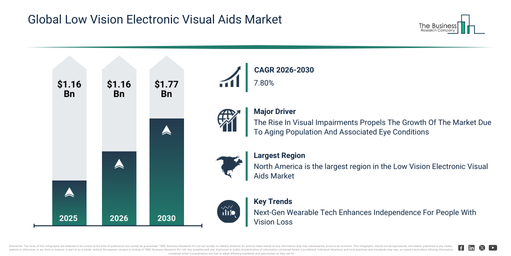
    The low vision electronic visual aids market has witnessed strong growth recently and is projected to expand further. From $1.25 billion in 2025, it is expected to increase to $1.35 billion in 2026, growing at a compound annual growth rate (CAGR) of 8.0%. Looking ahead, the market is forecasted to reach $1.82 billion by 2030, with a CAGR of 7.8%. This growth is driven by factors such as a rising number of people with visual impairments, limited access to affordable aids, increased awareness about low vision devices, improvements in optical magnification technologies, and an aging global population. The market’s future trajectory will also be shaped by the integration of artificial intelligence (AI) and the Internet of Things (IoT), along with growing demand for portable and wearable products, government support initiatives, wider acceptance in educational settings, and expanded e-commerce sales channels.

    Download A Free Sample Report For Comprehensive Market Insights:

    https://www.thebusinessresearchcompany.com/sample.aspx?id=25815&type=smp

    Growing Impact of Visual Impairments Boosting Market Demand

    A key factor propelling the low vision electronic visual aids market is the increasing prevalence of visual impairments worldwide. These impairments encompass a range of vision loss conditions that cannot be fully corrected by conventional means like glasses, contact lenses, medication, or surgery. Age-related eye diseases such as macular degeneration, cataracts, and glaucoma are becoming more common due to population aging, contributing significantly to this rise. Low vision aids help enhance remaining vision by providing magnification, improved contrast, and digital image processing, thereby supporting greater independence in day-to-day activities for affected individuals. For example, in August 2023, the World Health Organization reported that at least 2.2 billion people globally experience near or distance vision impairment. However, only 36% of those with refractive error-related distance vision impairment and just 17% of cataract patients have received adequate treatment. This treatment gap highlights the need and opportunity for electronic low vision aids to improve quality of life.

    Technological Innovations Transforming the Market Landscape

    The low vision electronic visual aids market is witnessing dynamic innovation driven by technology integration. Companies are increasingly developing AI-powered wearable smart glasses and other advanced devices to enhance real-time visual interpretation and user autonomy. These aids utilize AI for image processing, object recognition, and voice output, enabling users to better perceive and interact with their environments. A notable example is Eyedaptic Inc., a US-based medical technology firm, which in August 2024 launched EYE6 with Ivy—a next-generation wearable visual assistant designed for individuals with age-related macular degeneration and other retinal conditions. This lightweight smart glasses system combines advanced vision enhancement with an AI assistant named Ivy, capable of reading text, identifying objects, describing surroundings, and supporting communication in 99 languages. The device features full HD 1080p displays, hands-free voice control, and remote upgrade capabilities, offering a highly customizable and user-friendly experience for people with low vision.

    Access The Complete Low Vision Electronic Visual Aids Market Report:

    https://www.thebusinessresearchcompany.com/report/low-vision-electronic-visual-aids-global-market-report

    Low Vision Electronic Visual Aids Market Segments and Product Categories

    This market is segmented comprehensively across various categories to address diverse user needs. By type, the market includes Portable Electronic Magnifiers, Closed Circuit Television (CCTV) systems, Voice Readers, and other devices. Technology classifications cover Optical Devices, Electronic Magnifiers, Text-to-Speech Devices, and Speech Recognition Systems. Applications are categorized into Reading Assistance, Navigation Assistance, Social Interaction and Communication, and Entertainment. Distribution channels span Online Retail, Specialty Stores, Optical Stores, and others. The end-user segments involve Individuals, Hospitals and Clinics, Rehabilitation Centers, and Educational Institutions.

    Further subcategories provide detailed breakdowns such as Portable Electronic Magnifiers including handheld, stand, wearable, and digital tablet magnifiers; CCTV devices divided into desktop, transportable, wearable, and those with text-to-speech integration; Voice Readers comprising screen readers, book readers, OCR-based readers, and smart audio assistants; and other types like Braille notetakers, smart glasses, screen magnification software, and navigation aids.

    Key Players in the Low Vision Electronic Visual Aids Industry

    Several prominent companies lead the low vision electronic visual aids market, driving innovation and accessibility. These players include Eschenbach Optik GmbH, Vispero, HumanWare Group, Freedom Scientific Inc., IrisVision Global Inc., VisionAid International Ltd., Zoomax Technology Co. Ltd., HIMS Inc., LS And S Products Inc., CTECH Low Vision And Blindness Solutions, Low Vision International AB, NuEyes Technologies Inc., Optelec U.S. Inc., Reinecker Vision GmbH, OrCam Technologies Ltd., Enhanced Vision, Dolphin Computer Access, Acesight, Eyedaptic Inc., eSight Corporation, Eurobraille, and Help Tech GmbH & Co. KG. Their efforts continue to expand the reach and capabilities of electronic visual aids worldwide.

    Regional Market Outlook: North America Leads While Asia-Pacific Grows Rapidly

    In 2025, North America held the largest share of the low vision electronic visual aids market, benefiting from advanced healthcare infrastructure and strong awareness levels. Meanwhile, the Asia-Pacific region is expected to experience the fastest growth during the forecast period, driven by rising population, increasing prevalence of visual impairments, improving healthcare access, and growing adoption of innovative technologies. The market report covers key geographical areas including Asia-Pacific, Southeast Asia, Western Europe, Eastern Europe, North America, South America, the Middle East, and Africa, providing a thorough understanding of global developments and regional opportunities.

    Get in touch with us:

    The Business Research Company: https://www.thebusinessresearchcompany.com/

    Americas: +1 310-496-7795

    Asia: +44 7882 955267 & +91 8897263534

    Europe: +44 7882 955267

    Email us at: marketing@tbrc.info

    Follow us on:

    LinkedIn: https://in.linkedin.com/company/the-business-research-company

    YouTube: https://www.youtube.com/channel/UC24_fI0rV8cR5DxlCpgmyFQ

    Global Market Model: https://www.thebusinessresearchcompany.com/global-market-model
  • Low Vision Electronic Glasses Market Trends And Growth Drivers Point To Strong Future Potential

    Low Vision Electronic Glasses Market Trends And Growth Drivers Point To Strong Future Potential

    Enhanced with market attractiveness analysis, total addressable market evaluation, company benchmarking matrices, interactive Excel dashboards, expanded supply chain intelligence, emerging startup coverage, and detailed product insights, The Business Research Company’s 2026 market reports deliver more actionable and strategically valuable research.

    The market for low vision electronic glasses has witnessed significant growth recently, driven by technological advancements and a growing need among visually impaired individuals. As innovations continue to emerge, this sector is set to expand further, offering enhanced solutions to improve vision and quality of life. Below is an in-depth overview of the market size, key drivers, segmentation, competitive landscape, and regional developments shaping this industry.

    Steady Growth Projection for the Low Vision Electronic Glasses Market

    The low vision electronic glasses market demonstrated rapid expansion over recent years, with its size expected to rise from $0.97 billion in 2025 to $1.08 billion in 2026. This growth reflects a compound annual growth rate (CAGR) of 11.6%. The earlier phase of market growth was influenced by factors such as the increasing prevalence of visual impairments, technological restrictions of traditional optical aids, the high pricing of earlier devices, limited awareness about low vision aids, and a shortage of trained eye care professionals.

    Download A Free Sample Report For Comprehensive Market Insights:

    https://www.thebusinessresearchcompany.com/sample.aspx?id=25814&type=smp

    Future Expansion Forecast for Low Vision Electronic Glasses

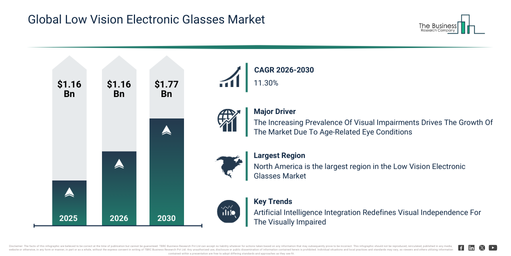
    Looking ahead, the market is projected to continue this upward trend, reaching $1.66 billion by 2030 with a CAGR of 11.3%. This anticipated growth results from advances in AI-driven vision enhancement, the integration of augmented reality (AR) and virtual reality (VR) technologies to create immersive experiences, cost reductions achieved through mass production, a growing elderly population, and a stronger focus on enabling independent living for those with visual impairments. Key trends expected to shape the market include the miniaturization of devices, real-time image enhancement features, improved comfort and ergonomic designs for wearability, integration of voice and gesture controls, and customized vision assistance.

    Rising Visual Impairments Fuel Demand for Low Vision Electronic Glasses

    An important factor propelling the market forward is the increasing number of people affected by visual impairments. These impairments involve significant vision loss that cannot be corrected fully by glasses, contact lenses, medication, or surgical methods, impacting individuals’ ability to perform daily tasks. The growth in visual impairments is largely driven by aging populations, as age-related eye conditions such as cataracts, glaucoma, and macular degeneration become more common. Low vision electronic glasses enhance the remaining vision through magnification, contrast adjustments, and real-time image processing, thereby supporting greater autonomy in everyday life. For example, the World Health Organization reported in August 2023 that at least 2.2 billion people globally have either near or distance vision impairment. However, treatment rates remain low, with only 36% of those affected by refractive errors and a mere 17% with cataract-related vision impairment receiving adequate care. This gap underscores the rising demand for assistive devices like low vision electronic glasses.

    Access The Complete Low Vision Electronic Glasses Market Report:

    https://www.thebusinessresearchcompany.com/report/low-vision-electronic-glasses-global-market-report

    Technological Progress and AI Integration Drive Market Growth

    The enhancement of vision through low vision electronic glasses is increasingly being powered by artificial intelligence, which offers dynamic image optimization and environmental awareness. These AI-enabled devices help users recognize objects, read text aloud, and improve overall visual clarity. For instance, in August 2024, US-based company Eyedaptic Inc. introduced the EYE6 smart glasses designed for individuals with central vision loss. Combining augmented reality with AI-driven vision enhancement, these glasses provide real-time image adjustment to boost clarity and contrast. Additional features include a lightweight design, hands-free operation, multilingual visual assistance supporting 99 languages, and capabilities such as text reading and environmental descriptions to assist users with daily activities.

    Comprehensive Segmentation of the Low Vision Electronic Glasses Market

    The market analysis divides the low vision electronic glasses sector into several key segments:

    1) Product Type: Wearable Glasses, Smart Glasses, Augmented Reality Glasses, Night Vision Glasses

    2) Technology: Optical Technology, Digital Technology, Adaptive Technology, Artificial Intelligence Integrated Technology

    3) Application: Personal Use, Professional Use

    4) Distribution Channel: Online Retail, Offline Retail, Direct Sales, Healthcare Providers

    5) End-User: Individuals with Visual Impairments, Healthcare Institutions, Educational Institutions, Occupational Rehabilitation Centers

    Further subcategories include specific types of wearable glasses such as head-mounted low vision glasses, clip-on assistive glasses, and full-frame digital glasses. Smart glasses categories cover voice-controlled models, Bluetooth-enabled visual aids, and integrated camera glasses. Augmented reality glasses include varieties meant for object recognition, navigation assistance, and text-to-speech functionalities. Night vision glasses feature infrared-based, thermal imaging, and low-light enhancement technologies.

    Leading Companies Driving Innovation in the Low Vision Electronic Glasses Market

    The competitive landscape of the low vision electronic glasses market features major players who are innovating to meet the needs of visually impaired users. Prominent companies include OrCam Technologies Ltd., Enhanced Vision Systems Inc., Vuzix Corporation, Zoomax Technology Co. Ltd., IrisVision Global Inc., Acesight, Ceciaa SAS, Envision Technologies BV, Eyedaptic Inc., GiveVision Ltd., NuEyes Technologies Inc., OXSIGHT Ltd., Vision Buddy Inc., eSight Corporation, Everysight Labs Ltd., Nreal Technology Ltd., Rokid Corporation, Avegant Corporation, Magic Leap Inc., Lenovo Smart Glasses Division, Sony Smart Vision Systems, and Epson Smart Glasses Division.

    Geographical Distribution and Market Leadership

    In 2025, North America held the largest share of the low vision electronic glasses market. However, the Asia-Pacific region is expected to register the fastest growth rate during the forecast period. The market report covers key geographic regions including Asia-Pacific, South East Asia, Western Europe, Eastern Europe, North America, South America, the Middle East, and Africa, providing a comprehensive view of global market trends.

    Get in touch with us:

    The Business Research Company: https://www.thebusinessresearchcompany.com/

    Americas: +1 310-496-7795

    Asia: +44 7882 955267 & +91 8897263534

    Europe: +44 7882 955267

    Email us at: marketing@tbrc.info

    Follow us on:

    LinkedIn: https://in.linkedin.com/company/the-business-research-company

    YouTube: https://www.youtube.com/channel/UC24_fI0rV8cR5DxlCpgmyFQ

    Global Market Model: https://www.thebusinessresearchcompany.com/global-market-model
  • Metered Dose Inhaler Devices Market Growth Through 2030 Creates New Strategic Opportunities

    Metered Dose Inhaler Devices Market Growth Through 2030 Creates New Strategic Opportunities

    Delivering more actionable and strategically valuable research, The Business Research Company’s 2026 market reports feature market attractiveness analysis, total addressable market evaluation, company benchmarking matrices, interactive Excel dashboards, expanded supply chain intelligence, emerging startup coverage, and detailed product insights.

    The market for metered dose inhaler devices has witnessed significant expansion in recent years, driven by rising respiratory health challenges worldwide. As demand for effective inhalation therapies grows, this sector is set to continue its upward trajectory, shaped by technological advancements and changing healthcare needs. Here is an in-depth look at the current market size, growth drivers, segmentation, innovations, key players, and regional insights.

    Strong Growth Prospects in the Metered Dose Inhaler Devices Market

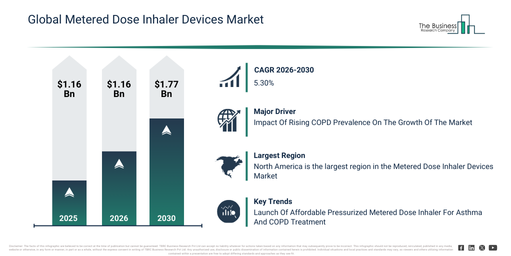
    The metered dose inhaler devices market is projected to increase from $16.23 billion in 2025 to $17.12 billion in 2026, growing at a compound annual growth rate (CAGR) of 5.5%. This growth reflects the historical rise in asthma prevalence, increasing cases of chronic obstructive pulmonary disease (COPD), widespread adoption of inhalation therapies, physician preference for MDIs, and the availability of generic inhalers. Looking ahead, the market is expected to reach $21.06 billion by 2030, with a CAGR of 5.3%. Factors contributing to this anticipated expansion include the emergence of smart inhalers, stricter environmental regulations concerning propellants, growth in homecare treatments, rising demand for digital adherence monitoring, and advancements in respiratory therapies. Prominent trends likely to influence the market during this period are smart dose-tracking inhalers, breath-actuated inhalation technology, compact portable designs, improved dose accuracy, and the adoption of eco-friendly propellants.

    Download A Free Sample Report For Comprehensive Market Insights:

    https://www.thebusinessresearchcompany.com/sample.aspx?id=20878&type=smp

    Chronic Obstructive Pulmonary Disease as a Key Growth Driver

    A significant factor boosting the metered dose inhaler devices market is the rising prevalence of chronic obstructive pulmonary disease (COPD). COPD is a progressive condition characterized by airflow obstruction, most often resulting from long-term exposure to irritants such as cigarette smoke. Symptoms include shortness of breath, coughing, and wheezing. The increasing number of COPD cases is linked to tobacco use, air pollution, aging populations, and delays in diagnosis or treatment. Metered dose inhalers play an important role in managing COPD by delivering medication directly to the lungs, providing quick relief and improving airflow. For example, in December 2023, the National Institutes of Health projected that COPD cases worldwide will increase from 532 million in 2030 to 592 million by 2050, underlining the impact of this disease on market growth.

    Air Pollution’s Role in Rising Demand for Metered Dose Inhalers

    Another critical element fueling market expansion is the growing problem of air pollution, which significantly contributes to respiratory health challenges. Air pollution consists of harmful substances such as particulate matter, gases, and biological molecules in the atmosphere that adversely impact health. Exposure to polluted air is a major risk factor for diseases like asthma and COPD. The increase in air pollution is primarily caused by industrialization, urbanization, higher vehicular emissions, and fossil fuel combustion. Metered dose inhalers help mitigate the effects of these environmental factors by delivering targeted medication to patients suffering from pollution-induced respiratory issues. For instance, in October 2025, the Clean Air Fund, a UK-based nonprofit, reported an 80% surge in funding for fossil fuel-related projects, rising from $5.3 billion to $9.5 billion in 2023, highlighting the continuing impact of fossil fuel use on air quality and public health. Notably, fossil fuel combustion accounts for over 5 million of the 8.1 million annual premature deaths caused by air pollution, reinforcing the connection between air pollution and the growing need for MDIs.

    Access The Complete Metered Dose Inhaler Devices Market Report:

    https://www.thebusinessresearchcompany.com/report/metered-dose-inhaler-devices-global-market-report

    Segmentation of the Metered Dose Inhaler Devices Market and Strategic Outlook

    This market is divided into various segments to better understand demand and tailor strategies:

    1) By Type: Desktop Metered Dose Inhaler Devices, Portable Metered Dose Inhaler Devices, and Other Types

    2) By Distribution Channel: Online and Offline

    3) By Application: Asthma, Chronic Obstructive Pulmonary Disease, and Other Applications

    4) By End-User: Hospitals, Clinics, Homecare Settings, and Other End Users

    Further subcategories include:

    – Desktop MDIs: Standard, High-performance, and Smart desktop devices

    – Portable MDIs: Conventional, Advanced, and Smart portable devices

    – Other types: Nebulizer-based MDIs, Dry powder inhaler (DPI) combination devices, Soft mist inhaler (SMI) devices, and other specialized MDIs

    Technological Advancements Shaping the Metered Dose Inhaler Devices Market

    Leading companies in the metered dose inhaler devices space are concentrating on developing cutting-edge technologies, such as pressurized metered dose inhalers (pMDIs), which enhance drug delivery efficiency and improve patient compliance. These devices deliver a precise aerosolized dose using pressurized propellants. For instance, in July 2023, Lupin Limited from India launched Luforbec 100/6 in Germany—a pMDI designed to treat adult asthma and COPD by combining beclometasone (100 µg) and formoterol (6 µg). Remarkably, this product is priced roughly 47% below the fixed reference price, making it more accessible to patients. Since about 5% of adults in Germany suffer from asthma, this launch highlights Lupin’s commitment to addressing vital respiratory health needs and improving treatment outcomes.

    Key Market Players Influencing Competition in the Metered Dose Inhaler Devices Sector

    The metered dose inhaler devices industry features several influential companies, including Pfizer Inc., Merck & Co. Inc., AstraZeneca PLC, GlaxoSmithKline plc, 3M Company, Boehringer Ingelheim GmbH, Teva Pharmaceutical Industries Ltd., Berry Global Inc., AptarGroup Inc., Philips Healthcare, Chiesi Farmaceutici S.p.A., Cipla Limited, Gerresheimer AG, Zydus Lifesciences Limited, Mylan N.V., Nemera, Beximco Pharmaceuticals Limited, Cohero Health Inc., Bespak Europe Ltd., Trudell Medical International, and Iconovo AB.

    Geographical Insights Highlighting Market Leadership and Growth Potential

    In 2025, North America held the largest share of the metered dose inhaler devices market. Meanwhile, the Asia-Pacific region is forecasted to experience the fastest growth during the upcoming years. The market report covers several key regions, including Asia-Pacific, South East Asia, Western Europe, Eastern Europe, North America, South America, the Middle East, and Africa, thereby providing a comprehensive overview of global market trends and opportunities.

    Get in touch with us:

    The Business Research Company: https://www.thebusinessresearchcompany.com/

    Americas: +1 310-496-7795

    Asia: +44 7882 955267 & +91 8897263534

    Europe: +44 7882 955267

    Email us at: marketing@tbrc.info

    Follow us on:

    LinkedIn: https://in.linkedin.com/company/the-business-research-company

    YouTube: https://www.youtube.com/channel/UC24_fI0rV8cR5DxlCpgmyFQ

    Global Market Model: https://www.thebusinessresearchcompany.com/global-market-model
  • Low Vision Assistive Devices Market Expansion Is Reshaping Competitive Dynamics Across The Industry

    Low Vision Assistive Devices Market Expansion Is Reshaping Competitive Dynamics Across The Industry

    Through market attractiveness analysis, total addressable market evaluation, company benchmarking matrices, interactive Excel dashboards, expanded supply chain intelligence, emerging startup coverage, and detailed product insights, The Business Research Company’s 2026 market reports provide more actionable and strategically valuable research.

    The low vision assistive devices market is experiencing significant growth, driven by advances in technology and increasing awareness of visual impairments. With a rising number of individuals affected by vision loss and new innovations improving accessibility, this market is set for continued expansion. Let’s explore the current market size, growth factors, segmentation, key players, and emerging trends shaping this important sector.

    Market Size and Expected Growth of the Low Vision Assistive Devices Market

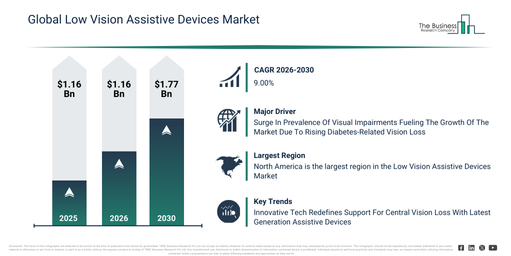
    The low vision assistive devices market has seen substantial expansion in recent years. It is projected to grow from $1.23 billion in 2025 to $1.34 billion in 2026, reflecting a compound annual growth rate (CAGR) of 8.9%. Looking ahead, this market is expected to reach $1.89 billion by 2030, with a CAGR of 9.0%. This upward trajectory is fueled by developments such as AI-powered assistive technologies, integration of augmented and virtual reality, increased healthcare investments, growing demand for wearable devices, and the rise of online retail channels. Key trends anticipated to influence the market include a shift toward portable and wearable solutions, greater use of electronic magnifiers, seamless incorporation of assistive software into everyday devices, enhanced access in educational and workplace settings, and the delivery of personalized vision support.

    Download A Free Sample Report For Comprehensive Market Insights:

    https://www.thebusinessresearchcompany.com/sample.aspx?id=25813&type=smp

    Primary Factors Stimulating Growth in the Low Vision Assistive Devices Market

    The rising prevalence of visual impairments is a major driver behind the expanding demand for low vision assistive devices. Visual impairment includes a spectrum of conditions ranging from partial vision loss to complete blindness that standard corrective lenses cannot fully address. The increase in visual impairment cases is closely linked to the growing incidence of diabetes, which can lead to retinal damage over time. Low vision assistive devices play a vital role by improving the remaining vision, aiding daily activities, and enhancing independence and quality of life for affected individuals.

    A concrete example comes from Australia, where Vision Australia reported that approximately 453,000 people live with blindness or low vision as of February 2025. This number is projected to rise to 564,000 by 2030, as noted by Developing Australia Communities, an organization supporting the disability sector. This growth in the visually impaired population is helping to drive the market forward.

    Access The Complete Low Vision Assistive Devices Market Report:

    https://www.thebusinessresearchcompany.com/report/low-vision-assistive-devices-global-market-report

    Market Segmentation Overview of the Low Vision Assistive Devices Industry

    This market is categorized into several key segments for a detailed understanding:

    1) Product Type: Magnifiers, Reading Devices, Wearable Devices, Screen Readers, Other Products

    2) Application: Education, Healthcare, Personal Use

    3) Distribution Channel: Online Stores, Specialty Stores, Optical Stores, Other Channels

    4) End-User: Children, Adults, Elderly

    Further breakdowns include:

    – Magnifiers such as handheld, stand, electronic, and pocket types

    – Reading devices including Optical Character Recognition (OCR) tools, text-to-speech devices, desktop video magnifiers, and portable readers

    – Wearable devices like smart glasses, head-mounted displays, AR-based solutions, and camera-based systems

    – Screen readers covering software-based, web-based, mobile, and Braille-integrated readers

    – Other products including Braille embossers, tactile graphics tools, speech-to-text converters, as well as audio books and e-readers

    Innovative Technology Trends Influencing the Low Vision Assistive Devices Market

    Leading companies in this space are increasingly focusing on cutting-edge technologies designed to enhance visual clarity, mobility, and independence for people with central vision loss. The latest assistive devices combine high-resolution imaging, real-time processing, and wearable organic light-emitting diode (OLED) displays to provide enhanced visuals that integrate with remaining eyesight while maintaining peripheral awareness.

    For instance, in July 2025, Canadian tech firm eSight introduced the eSight Go wearable device. It features a 12-megapixel camera with 4K resolution, dual full HD OLED screens, and a 45-degree field of view that offers an immersive and natural viewing experience. Additional benefits include advanced image stabilization, a user-friendly interface, and a neck-distributed battery pack for comfort during extended use. Such advanced devices aim to help users engage fully in daily activities at school, work, and home while accommodating over 20 different vision impairments worldwide.

    Major Players Driving Competition in the Low Vision Assistive Devices Sector

    Key companies that shape the competitive landscape in this market include HIMS Inc., OrCam Technologies Ltd., HumanWare Group, Freedom Scientific Inc., eSight Corporation, IrisVision Global Inc., Zoomax Technology Co. Limited, Optelec U.S. Inc., Cobolt Systems Ltd., NuEyes Technologies Inc., Vision Buddy Inc., Acesight, Eyedaptic Inc., LVI Low Vision International AB, Reinecker Vision GmbH, Ash Technologies Ltd., RevoSight Inc., Enhanced Vision, Dolphin Computer Access, Vispero, Eurobraille, and Help Tech GmbH & Co. KG. These firms focus on innovation and expanding accessibility to meet growing user needs.

    Regional Market Share Insights for the Low Vision Assistive Devices Industry

    In 2025, North America held the largest market share in the low vision assistive devices sector. Other significant regions covered in market analyses include Asia-Pacific, South East Asia, Western Europe, Eastern Europe, South America, Middle East, and Africa. While North America leads currently, emerging regions are expected to contribute to market expansion in the coming years.

    Get in touch with us:

    The Business Research Company: https://www.thebusinessresearchcompany.com/

    Americas: +1 310-496-7795

    Asia: +44 7882 955267 & +91 8897263534

    Europe: +44 7882 955267

    Email us at: marketing@tbrc.info

    Follow us on:

    LinkedIn: https://in.linkedin.com/company/the-business-research-company

    YouTube: https://www.youtube.com/channel/UC24_fI0rV8cR5DxlCpgmyFQ

    Global Market Model: https://www.thebusinessresearchcompany.com/global-market-model
  • Low Vision And Blind Aids Products Market Forecast Reveals Where Future Industry Value Will Be Created

    Low Vision And Blind Aids Products Market Forecast Reveals Where Future Industry Value Will Be Created

    Delivering more actionable and strategically valuable research, The Business Research Company’s 2026 market reports feature market attractiveness analysis, total addressable market evaluation, company benchmarking matrices, interactive Excel dashboards, expanded supply chain intelligence, emerging startup coverage, and detailed product insights.

    The market for low vision and blind aids products has witnessed remarkable growth recently, driven by advances in technology and increased awareness of visual impairments. With ongoing innovations and expanding applications, this sector is set to continue its strong upward trajectory in the coming years. Let’s explore the current market size, key growth drivers, segment breakdowns, technological trends, major players, and regional dynamics shaping this industry.

    Market Expansion and Projected Growth of the Low Vision and Blind Aids Products Market

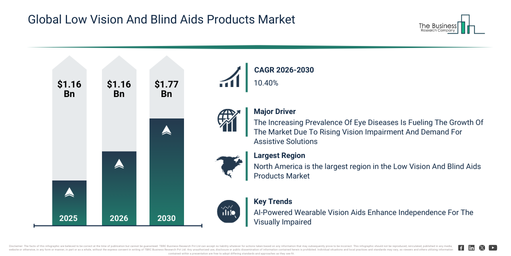
    The low vision and blind aids products market has seen rapid expansion over recent years. It is forecasted to increase from $3.32 billion in 2025 to $3.68 billion in 2026, marking a compound annual growth rate (CAGR) of 10.8%. This historic growth is largely fueled by the rising prevalence of visual impairments, greater public awareness of available aids, supportive government initiatives for people with disabilities, technological progress in optical devices, and early adoption by educational institutions. Looking ahead, the market is expected to continue growing swiftly, reaching $5.46 billion by 2030 with a CAGR of 10.4%. Factors contributing to future growth include the integration of artificial intelligence (AI) into vision aids, the rise of wearable technologies, growing demand for portable electronic devices, expansion of online retail channels, and heightened focus on inclusive education and employment. Emerging trends forecasted to dominate the market include personalized vision enhancement solutions, voice-activated assistive tools, mobile accessibility features, smart navigation aids for both indoor and outdoor mobility, and affordable, inclusive low vision technologies.

    Download A Free Sample Report For Comprehensive Market Insights:

    https://www.thebusinessresearchcompany.com/sample.aspx?id=25812&type=smp

    Key Factors Propelling Demand in the Low Vision and Blind Aids Products Market

    One of the primary drivers boosting this market is the increasing prevalence of eye diseases worldwide. These conditions affect the structure or function of the eyes, often leading to impaired vision or blindness. The surge in eye-related disorders is closely linked to lifestyle changes such as prolonged screen time, which causes eye strain and accelerates vision problems. Low vision and blind aids products help individuals with these conditions by maximizing the use of their remaining vision or providing non-visual alternatives for accessing information. These aids play a crucial role in improving daily activities, mobility, and independence for people with permanent vision loss. For example, in May 2024, the Centers for Disease Control and Prevention (CDC) reported that over 90 million Americans aged 40 and above currently face vision challenges. Projections indicate that by 2050, vision impairment and blindness in the U.S. will increase by 150%, with diabetic retinopathy cases rising by 72%, cataracts by 87%, and glaucoma and macular degeneration expected to double. Such alarming statistics underscore the critical need for low vision and blind aids, which in turn is driving market expansion.

    Additional Market Drivers Shaping Future Opportunities

    Alongside the rise in eye diseases, increasing incorporation of advanced technologies like AI in vision aids is accelerating the market’s growth. Wearable devices equipped with smart features are gaining popularity for their ability to provide real-time assistance and improved functionality. Moreover, the expansion of online sales channels has made these products more accessible to a wider audience. There is also growing emphasis on creating inclusive environments within education and employment sectors, which further stimulates demand for assistive vision products. These factors combined are expected to significantly contribute to the market’s rapid development over the next few years.

    Access The Complete Low Vision And Blind Aids Products Market Report:

    https://www.thebusinessresearchcompany.com/report/low-vision-and-blind-aids-products-global-market-report

    Breaking Down the Low Vision and Blind Aids Products Market Segments

    This market is categorized into multiple key segments to better understand opportunities and focus areas:

    1) By Product Type: Optical Aids, Non-Optical Aids, Electronic Aids, Assistive Software, Wearable Technology

    2) By Age Group: Children, Adults, Seniors, Teenagers, Middle-Aged

    3) By Distribution Channel: Online Stores, Retail Pharmacies, Specialized Medical and Assistive Device Retailers, Specialty Stores, Direct Sales

    4) By Application: Blind Schools, Disabled Persons Federations and Hospitals, Enterprises and Social Organizations

    5) By End-User: Individuals, Healthcare Professionals, Educational Institutions, Community Organizations, Government Agencies

    These categories further include subsegments such as:

    – Optical Aids: Magnifying Glasses, Telescopic Glasses, Spectacle-Mounted Magnifiers, Handheld Magnifiers, Stand Magnifiers

    – Non-Optical Aids: Braille Books, Large Print Materials, Tactile Graphics, Signature Guides, Writing Templates

    – Electronic Aids: Video Magnifiers, Digital Readers, Screen Enlargers, Electronic Braille Displays, Talking Devices

    – Assistive Software: Screen Readers, Screen Magnification Software, Text-To-Speech Software, Optical Character Recognition (OCR) Tools, Navigation and Mapping Software

    – Wearable Technology: Smart Glasses, AI-Powered Vision Aids, Wearable Cameras, Voice-Enabled Smart Devices, Haptic Feedback Wearables

    Innovations Transforming the Low Vision and Blind Aids Product Market

    Leading companies in this market are heavily investing in advanced technologies to enhance the independence and quality of life for visually impaired users. A notable example is the development of AI-powered wearable vision aids—smart, head-mounted devices that combine artificial intelligence with vision enhancement to assist users in interpreting visual information, performing daily tasks, and navigating their surroundings more effectively. For instance, in August 2024, Eyedaptic, a US-based provider specializing in vision enhancement, introduced the EYE6 with Ivy. This innovative product utilizes multimodal generative AI and large language model technology to help individuals with age-related macular degeneration and other retinal disorders. It can read text, identify objects, and interpret environments in 99 languages, offering a lightweight, smart glasses solution that blends high-definition visual augmentation with an interactive AI assistant designed to enable greater autonomy and ease in everyday activities.

    Key Industry Players and Competitive Landscape in the Low Vision and Blind Aids Sector

    The low vision and blind aids products market features several prominent companies shaping its trajectory. These include Eschenbach Optik GmbH, Tobii Dynavox, OrCam Inc., Vispero, HumanWare, Freedom Scientific, MaxiAids, Enhanced Vision, Dolphin Computer Access, Zoomax, IRIS Vision, SELVAS Healthcare Inc., LS&S LLC, LVI Low Vision International, VisionAid, Eurobraille, HHW Care Products India Private Limited, Nippon Telesoft Co. Ltd., Help Tech GmbH & Co. KG, eSight Corporation, Vuzix Corporation, and Aira Tech Corp. These firms compete by innovating technologies, expanding product portfolios, and enhancing global reach to better serve the growing population of visually impaired individuals.

    Regional Market Analysis Highlighting Geographic Leaders

    In 2025, North America held the largest share of the low vision and blind aids products market, establishing itself as a key revenue leader. Meanwhile, the Asia-Pacific region is anticipated to experience the fastest growth during the forecast period, driven by increasing healthcare infrastructure and growing awareness of vision impairment solutions. Other important regions analyzed in the market report include South East Asia, Western Europe, Eastern Europe, South America, the Middle East, and Africa, providing a comprehensive global perspective on market trends and opportunities.

    Get in touch with us:

    The Business Research Company: https://www.thebusinessresearchcompany.com/

    Americas: +1 310-496-7795

    Asia: +44 7882 955267 & +91 8897263534

    Europe: +44 7882 955267

    Email us at: marketing@tbrc.info

    Follow us on:

    LinkedIn: https://in.linkedin.com/company/the-business-research-company

    YouTube: https://www.youtube.com/channel/UC24_fI0rV8cR5DxlCpgmyFQ

    Global Market Model: https://www.thebusinessresearchcompany.com/global-market-model
  • Menopause Cooling Wearable Market Size Projected To Increase From $1.67 Billion To $2.79 Billion During The Forecast Period

    Menopause Cooling Wearable Market Size Projected To Increase From $1.67 Billion To $2.79 Billion During The Forecast Period

    Enhanced with market attractiveness analysis, total addressable market evaluation, company benchmarking matrices, interactive Excel dashboards, expanded supply chain intelligence, emerging startup coverage, and detailed product insights, The Business Research Company’s 2026 market reports deliver more actionable and strategically valuable research.

    The menopause cooling wearable market is rapidly gaining traction as more women seek effective ways to manage menopausal symptoms. Innovations in wearable technology and growing awareness about menopause are creating new opportunities for both consumers and manufacturers. Let’s explore the current market size, key factors driving growth, emerging trends, and the competitive landscape shaping this evolving sector.

    Steady Growth and Future Potential in the Menopause Cooling Wearable Market

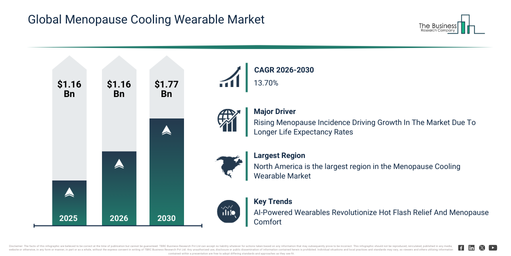
    The menopause cooling wearable market has experienced significant expansion recently. It is projected to increase from $1.47 billion in 2025 to $1.67 billion in 2026, reflecting a compound annual growth rate (CAGR) of 14.0%. This rise has been fueled by growing awareness of menopause symptoms, wider adoption of wearable health devices, increased healthcare spending by women, advances in cooling material technologies, and the demand for devices that provide comfort at home. Looking ahead, the market is expected to continue this strong momentum, reaching $2.79 billion by 2030 with a CAGR of 13.7%. Factors contributing to future growth include integration with smart health ecosystems, AI-powered temperature management, expansion into emerging markets, development of multifunctional wearables, and a focus on sustainable and eco-friendly materials. Innovations anticipated to influence the market include wearable temperature-regulating devices, sensor-embedded cooling wearables, smart home health connectivity, portable and discreet cooling accessories, and breakthroughs in phase-change materials.

    Download A Free Sample Report For Comprehensive Market Insights:

    https://www.thebusinessresearchcompany.com/sample.aspx?id=29125&type=smp

    Key Factors Fueling Growth in the Menopause Cooling Wearable Market

    One of the main drivers behind the expansion of this market is the increasing number of women experiencing menopause. Menopause marks the end of menstrual cycles and occurs when hormone production by the ovaries stops, typically after 12 consecutive months without menstruation. With longer life expectancies, more women are living well beyond their reproductive years, resulting in a higher proportion of the population undergoing menopausal transition and facing related health challenges.

    This growing demographic is driving demand for menopause cooling wearables, as these devices offer on-demand temperature relief to alleviate hot flashes and night sweats. Such wearables provide comfort and improve quality of life throughout menopause. For instance, a December 2023 report from the National Library of Medicine highlighted that approximately 1.3 million women enter menopause annually in the United States, with the condition commonly occurring between ages 45 and 56. This significant incidence underscores the need for effective symptom management solutions, supporting the market’s ongoing growth.

    Access The Complete Menopause Cooling Wearable Market Report:

    https://www.thebusinessresearchcompany.com/report/menopause-cooling-wearable-global-market-report

    Breakdown of the Menopause Cooling Wearable Market and Its Segments

    The menopause cooling wearable market is analyzed across several key segments:

    1) Product Types include Necklaces, Bracelets, Patches, and Vests.

    2) Technologies cover Active Cooling, Passive Cooling, Phase Change Materials, and other innovative cooling methods.

    3) Distribution Channels involve Online Stores, Pharmacies, Specialty Stores, and other outlets.

    4) Applications encompass Hot Flash Relief, Night Sweats management, Daily Wear, and additional uses.

    5) End-Users include Homecare settings, Hospitals and Clinics, and other sectors.

    Further subcategories refine the product types: Necklaces include smart cooling, temperature-regulating, phase-change material, and gel-based variants. Bracelets range from smart cooling and thermal regulation to sensor-integrated and rechargeable models. Patches are differentiated by hydrogel, phase-change, herbal-infused, and adhesive thermal relief types. Vests comprise battery-operated, phase-change material, smart temperature-controlled, and moisture-wicking designs.

    Technological Advances Driving Innovation in the Menopause Cooling Wearable Market

    Leading companies in this market are pushing forward with advanced technologies such as AI-powered wearables designed to better manage hot flashes. These smart devices use artificial intelligence to monitor physiological indicators, predict or detect hot flashes in real time, and provide targeted cooling or relief. This approach enhances personal comfort and allows for more effective symptom tracking.

    For example, in January 2024, Amira Health Inc., a healthcare technology startup based in the US, introduced an AI-based hot flash care wearable. The product uses sophisticated sensors and adaptive cooling technology to deliver personalized relief while continuously monitoring symptoms. This innovation represents a major step forward in menopause care, aiming to improve daily living by offering real-time and customized comfort for women experiencing menopausal symptoms.

    Key Players Leading the Menopause Cooling Wearable Market

    The competitive landscape features several prominent companies including Embr Labs, Amira Health, Grace Cooling, Menopod, MyCelsius, Coolzen, Thermaband, KÜLKUF, Fria LLC, Koldtec, Polar Products Inc., frogg toggs, Arctic Heating AS, CoolSense, CoolCura, Hot Girls Pearls, BodiMetrics, VivaLNK, Qardio, and Chill Pal. These market leaders are continuously advancing product innovation to meet growing consumer needs.

    Regional Market Overview and Growth Outlook

    In terms of regional performance, North America was the largest market for menopause cooling wearables in 2025. However, the Asia-Pacific region is expected to experience the fastest growth during the forecast period. The market analysis also encompasses other regions, including South East Asia, Western Europe, Eastern Europe, South America, the Middle East, and Africa, providing a comprehensive picture of global trends and opportunities.

    Get in touch with us:

    The Business Research Company: https://www.thebusinessresearchcompany.com/

    Americas: +1 310-496-7795

    Asia: +44 7882 955267 & +91 8897263534

    Europe: +44 7882 955267

    Email us at: marketing@tbrc.info

    Follow us on:

    LinkedIn: https://in.linkedin.com/company/the-business-research-company

    YouTube: https://www.youtube.com/channel/UC24_fI0rV8cR5DxlCpgmyFQ

    Global Market Model: https://www.thebusinessresearchcompany.com/global-market-model
  • Low Temperature Plasma Sterilizer Market Growth Through 2030 Creates New Strategic Opportunities

    Low Temperature Plasma Sterilizer Market Growth Through 2030 Creates New Strategic Opportunities

    Enhanced with market attractiveness analysis, total addressable market evaluation, company benchmarking matrices, interactive Excel dashboards, expanded supply chain intelligence, emerging startup coverage, and detailed product insights, The Business Research Company’s 2026 market reports deliver more actionable and strategically valuable research.

    The low temperature plasma sterilizer market has been experiencing rapid growth, driven by increasing awareness and advancements in sterilization technology. As healthcare facilities and other industries seek effective, safe, and efficient sterilization methods, this market is set to expand significantly in the coming years. Let’s explore the current market size, key drivers, segmentation, trends, major players, and regional outlook to understand the broader landscape.

    Current Market Size and Projected Growth of the Low Temperature Plasma Sterilizer Market

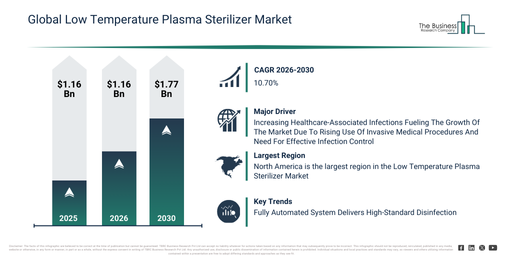
    In recent years, the low temperature plasma sterilizer market has expanded quickly. It is projected to grow from a valuation of $1.49 billion in 2025 to $1.65 billion in 2026, registering a compound annual growth rate (CAGR) of 10.7%. The historic growth is primarily linked to heavy reliance on traditional steam sterilizers, limited recognition of the benefits of low-temperature sterilization, expanding hospital and clinic infrastructure, increasing numbers of surgical and dental procedures, and stricter sterilization compliance requirements. Looking ahead, this market is expected to reach $2.48 billion by 2030, maintaining a CAGR of 10.7%. Factors fueling future growth include technological progress in cold plasma and hydrogen peroxide sterilization, rising demand within homecare and mobile healthcare sectors, growth in pharmaceutical packaging sterilization, integration with smart hospital systems, and an increased focus on patient safety and infection control. Emerging trends emphasize the wider adoption of low-temperature sterilization techniques, growing sterilization needs for heat- and moisture-sensitive instruments, expansion into outpatient and mobile healthcare, more widespread use in pharmaceutical and laboratory applications, and a preference for rapid, residue-free sterilization processes.

    Download A Free Sample Report For Comprehensive Market Insights:

    https://www.thebusinessresearchcompany.com/sample.aspx?id=27330&type=smp

    Rising Healthcare-Associated Infections Propel Demand for Low Temperature Plasma Sterilizers

    One of the primary factors driving growth in this market is the escalating prevalence of healthcare-associated infections (HAIs). These infections occur when patients contract infections while undergoing treatment in healthcare settings, often due to the increased use of invasive devices and procedures that heighten the risk of pathogen transmission. Low temperature plasma sterilizers play a vital role in combating HAIs by effectively sterilizing heat-sensitive medical instruments with no toxic residues, thereby improving the safety of equipment reuse and enhancing infection control measures. For example, data from the UK Health Security Agency (UKHSA) in July 2025 highlighted a rise in methicillin-resistant Staphylococcus aureus (MRSA) bacteraemia cases, with an incidence rate increase from 1.7 to 1.8 cases per 100,000 population in the first quarter of 2025 compared to the same period in 2024. This uptick in infections underscores the urgent need for advanced sterilization solutions, contributing to market expansion.

    Technological Innovation and Growing Healthcare Infrastructure Support Market Growth

    Another significant driver is the continuous development of advanced sterilization technologies, combined with the expansion of healthcare infrastructure worldwide. As more healthcare facilities, including hospitals, clinics, and dental offices, adopt modern sterilization methods, demand for low temperature plasma sterilizers rises. The trend towards minimally invasive surgeries and the use of heat- and moisture-sensitive instruments further amplifies this need, promoting adoption of plasma sterilization techniques that preserve instrument integrity while ensuring high-level disinfection.

    Access The Complete Low Temperature Plasma Sterilizer Market Report:

    https://www.thebusinessresearchcompany.com/report/low-temperature-plasma-sterilizer-global-market-report

    Detailed Segmentation of the Low Temperature Plasma Sterilizer Market

    The market for low temperature plasma sterilizers is organized into various key segments to better understand its components:

    1) Product Type: Tabletop Sterilizers, Large-Automated Sterilizers, Portable Sterilizers, Accessories And Consumables

    2) Technology: Cold Plasma Technology, Atmospheric Pressure Plasma Technology, Low-Temperature Hydrogen Peroxide Plasma Technology, Radiofrequency Plasma Technology

    3) Material Compatibility: Metal Instruments, Plastic Instruments, Glass Instruments, Textiles And Porous Materials

    4) Application: Surgical Instrument Sterilization, Hospital Environment Sterilization, Pharmaceutical Packaging Sterilization, Dental Product Sterilization

    5) End-User: Healthcare Facilities, Pharmaceutical Companies, Research Laboratories, Homecare Settings

    Further breakdown includes subcategories such as Tables for Tabletop Sterilizers tailored for dental clinics, small laboratories, outpatient facilities, and home healthcare; Large-Automated Sterilizers used in hospital sterile supply departments, pharmaceutical manufacturing, research institutes, and industrial sterilization; Portable Sterilizers serving field medical units, emergency response teams, mobile clinics, and military settings; and Accessories and Consumables including sterilization trays, indicator strips and tapes, sterilant cartridges, and replacement filters or parts.

    Innovations and Industry Advances Shaping the Low Temperature Plasma Sterilizer Market

    Leading companies in this sector are concentrating on creating cutting-edge products designed to enhance sterilization efficiency, reduce the need for manual input, and ensure high safety standards for heat-sensitive instruments. These developments include fully automated medical-grade sterilization systems that leverage plasma or hydrogen peroxide technologies. For instance, in April 2025, Zhejiang Sada Medical Technology Co. Ltd. introduced the SD-D 100L Low-Temperature Hydrogen Peroxide Plasma Sterilizer. This device operates at a low temperature (around 50°C ± 5°C), making it ideal for sterilizing delicate instruments like endoscopes and surgical tools. It features rapid sterilization cycles of 40 to 60 minutes, integrated HEPA filtration, and advanced safety mechanisms to prevent overpressure and overheating, ensuring compliance with regulatory standards while optimizing workflow.

    Major Players Leading the Low Temperature Plasma Sterilizer Market

    The competitive landscape of the low temperature plasma sterilizer market is shaped by several prominent companies, including Getinge AB, Shinva Medical Instrument Co. Ltd., Belimed AG, Advanced Sterilization Products, Tuttnauer Ltd., Matachana S.A., Cisa Production S.r.l., Steelco S.p.A., Aurora Sterilisation, STERIS plc, 3M Company, Noxilizer Inc., MMM Group, Andersen Products Inc., Cantel Medical Corp., Laoken Medical Technology Co. Ltd., Mudanjiang Plasma Physical Application Technology Co. Ltd., TEKNOMAR, BeyondMedi, Zeronitec, MEDFUTURE, Heal Force Bio-Meditech Holdings Co. Ltd., BIOBASE Group Co. Ltd., and Sada Medical Co. Ltd. These organizations invest heavily in research and development to remain competitive and address evolving industry demands.

    Regional Market Distribution and Growth Opportunities

    In 2025, North America held the largest share of the low temperature plasma sterilizer market, benefiting from advanced healthcare infrastructure and regulatory frameworks. However, the Asia-Pacific region is anticipated to experience the fastest growth during the forecast period. The report covers key geographic markets including Asia-Pacific, South East Asia, Western Europe, Eastern Europe, North America, South America, the Middle East, and Africa, providing a comprehensive view of global market trends and regional opportunities.

    Get in touch with us:

    The Business Research Company: https://www.thebusinessresearchcompany.com/

    Americas: +1 310-496-7795

    Asia: +44 7882 955267 & +91 8897263534

    Europe: +44 7882 955267

    Email us at: marketing@tbrc.info

    Follow us on:

    LinkedIn: https://in.linkedin.com/company/the-business-research-company

    YouTube: https://www.youtube.com/channel/UC24_fI0rV8cR5DxlCpgmyFQ

    Global Market Model: https://www.thebusinessresearchcompany.com/global-market-model

  • Membrane Spatula Market Growth Outlook Reveals A CAGR Of 5.5% And A Market Value Of $1.09 Billion By 2030

    Membrane Spatula Market Growth Outlook Reveals A CAGR Of 5.5% And A Market Value Of $1.09 Billion By 2030

    Through market attractiveness analysis, total addressable market evaluation, company benchmarking matrices, interactive Excel dashboards, expanded supply chain intelligence, emerging startup coverage, and detailed product insights, The Business Research Company’s 2026 market reports provide more actionable and strategically valuable research.

    The demand for membrane spatulas has seen significant growth recently, driven by advances in medical procedures and increasing healthcare needs. As surgical techniques continue to evolve and the prevalence of related health conditions rises, the membrane spatula market is poised for steady expansion. This overview explores the current market size, key growth drivers, product segmentation, major players, and regional prospects shaping the industry’s future.

    Membrane Spatula Market Size and Projected Growth

    The membrane spatula market has experienced robust growth in recent years and is expected to continue expanding. From $0.83 billion in 2025, the market is forecasted to reach $0.88 billion in 2026, growing at a compound annual growth rate (CAGR) of 6.1%. This increase reflects factors such as rising numbers of ophthalmic surgeries, growth in hospital surgical departments, improved availability of skilled surgeons, a higher prevalence of eye disorders, and the adoption of minimally invasive procedures. Looking ahead, the market is projected to grow further, reaching $1.1 billion by 2030 with a CAGR of 5.5%. Drivers for this expansion include growing demand for advanced microsurgical tools, increasing specialty clinics, greater emphasis on surgical precision and outcomes, expansion of healthcare infrastructure in emerging regions, and rising investments in surgical instruments. Key trends anticipated during this period involve increased use of precision tools, more frequent application of membrane spatulas in eye surgeries, broader adoption of microsurgical techniques, growth of specialty surgical centers, and a shift toward reusable, durable instruments.

    Download A Free Sample Report For Comprehensive Market Insights:

    https://www.thebusinessresearchcompany.com/sample.aspx?id=17200&type=smp

    Factors Behind Market Expansion for Membrane Spatulas

    The rising volume of surgical procedures worldwide is a major contributor to the membrane spatula market’s growth. Surgical interventions, which involve physically altering tissues or organs to treat or diagnose medical conditions, have been increasing due to technological advancements, an aging global population, higher incidence of chronic diseases, and patient expectations for improved post-treatment quality of life. Membrane spatulas play a crucial role in enabling surgeons to handle delicate tissues accurately during complex operations, thereby improving surgical outcomes. For instance, data from June 2024 by the International Society of Aesthetic Plastic Surgery (ISAPS), based in Germany, shows that plastic surgeons performed over 15.8 million aesthetic surgical procedures globally in 2023—marking a 5.5% increase from the previous year’s nearly 15 million procedures. This growing number of surgeries directly supports the rising demand for membrane spatulas.

    Increasing Ophthalmic and ENT Conditions Fueling Market Growth

    Another key factor driving the membrane spatula market is the growing prevalence of ophthalmic and otolaryngological (ear, nose, and throat) disorders. Ophthalmic conditions such as cataracts, glaucoma, and retinal diseases affect eye health, while otolaryngological issues include sinusitis, ear infections, and tonsillitis. The rise in these conditions stems from factors like aging populations, greater exposure to environmental pollutants, lifestyle changes, genetic factors, and enhanced diagnostic capabilities that improve detection rates. As these health issues become more common, so does the need for specialized surgical instruments like membrane spatulas, which assist in the precise handling of sensitive tissues during diagnosis and treatment. According to the World Health Organization (WHO) in August 2023, around 2.2 billion people worldwide suffer from vision impairments, with roughly one billion affected by distance vision problems or blindness caused by conditions such as cataracts (94 million), refractive error (88.4 million), age-related macular degeneration (8 million), glaucoma (7.7 million), and diabetic retinopathy (3.9 million). Near-vision impairment, primarily from presbyopia, affects approximately 826 million individuals. This widespread incidence of ophthalmic issues strongly supports market growth for membrane spatulas.

    Access The Complete Membrane Spatula Market Report:

    https://www.thebusinessresearchcompany.com/report/membrane-spatula-global-market-report

    Product Types and Applications in the Membrane Spatula Market

    The membrane spatula market is segmented based on product type, material composition, and end-user categories. By type, the market is divided into single-ended and double-ended spatulas. Single-ended spatulas further include flat and curved variants, while double-ended spatulas also come in flat and curved forms. In terms of materials, membrane spatulas are typically made from stainless steel or titanium. Regarding end users, the primary segments are hospitals and clinics, reflecting the main healthcare settings where these tools are utilized.

    Competitive Landscape of the Membrane Spatula Market

    Several key players dominate the membrane spatula industry, including Corza Ophthalmology, KLS Martin Group, RUMEX International, Moria, Crestpoint Ophthalmics, OPTICO, Titan Medical Instruments, Reda Instrumente, MSI Precision Specialty Instruments, BOSS Instruments, Bharati Surgical, Ambler Surgical Corporation, Walcott Rx Instruments, Medelec Instruments, ScissorOn Instrumentation, Damla Medical, Duckworth and Kent, Storz am Mark, Asico, and Katena Products. These companies compete by innovating product designs, enhancing quality, expanding distribution networks, and targeting growing demand in various regions.

    Geographic Market Distribution and Future Regional Opportunities

    In 2025, North America held the largest share of the membrane spatula market, supported by advanced healthcare infrastructure and high procedure volumes. However, the Asia-Pacific region is expected to experience the fastest growth over the forecast period, driven by expanding healthcare facilities, increased investments, and rising prevalence of eye and ENT conditions. Other important regions covered in the market report include South East Asia, Western Europe, Eastern Europe, South America, the Middle East, and Africa, each presenting unique growth opportunities linked to their healthcare development trajectories.

    Get in touch with us:

    The Business Research Company: https://www.thebusinessresearchcompany.com/

    Americas: +1 310-496-7795

    Asia: +44 7882 955267 & +91 8897263534

    Europe: +44 7882 955267

    Email us at: marketing@tbrc.info

    Follow us on:

    LinkedIn: https://in.linkedin.com/company/the-business-research-company

    YouTube: https://www.youtube.com/channel/UC24_fI0rV8cR5DxlCpgmyFQ

    Global Market Model: https://www.thebusinessresearchcompany.com/global-market-model

  • Low Endotoxin Gelatin Market Size Projected To Increase From $1.96 Billion To $2.54 Billion During The Forecast Period

    Low Endotoxin Gelatin Market Size Projected To Increase From $1.96 Billion To $2.54 Billion During The Forecast Period

    Through market attractiveness analysis, total addressable market evaluation, company benchmarking matrices, interactive Excel dashboards, expanded supply chain intelligence, emerging startup coverage, and detailed product insights, The Business Research Company’s 2026 market reports provide more actionable and strategically valuable research.

    The low endotoxin gelatin market is gaining significant traction as advancements in pharmaceutical and biotech fields continue to accelerate. With increasing research, innovative applications, and growing awareness around safety standards, this market is set for notable growth. Let’s explore its current size, growth drivers, key industry players, and emerging trends shaping its future.

    Current Market Size and Growth Outlook for Low Endotoxin Gelatin

    The low endotoxin gelatin market has witnessed strong growth recently, expanding from $1.84 billion in 2025 to an anticipated $1.96 billion in 2026, with a compound annual growth rate (CAGR) of 6.5%. This rise has been driven by increased pharmaceutical research activities, a boost in tissue engineering projects, expansion of biotechnology laboratories, early adoption of innovative drug delivery systems, and heightened awareness regarding endotoxin safety. Looking ahead, the market is forecasted to reach $2.54 billion by 2030, growing at a CAGR of 6.7%. The forecasted growth stems from surging demand in regenerative medicine, greater investments in biopharmaceutical manufacturing, a rising need for injectable gelatin products, development of new biotech-grade gelatin formulations, and a shift toward sustainable production processes.

    Download A Free Sample Report For Comprehensive Market Insights:

    https://www.thebusinessresearchcompany.com/sample.aspx?id=25811&type=smp

    Factors Leading the Growth of Low Endotoxin Gelatin Market

    One of the main forces propelling market expansion is the growing demand within regenerative medicine. This medical field focuses on therapies that repair, replace, or regenerate damaged human cells, tissues, or organs to restore their normal function. The increasing prevalence of chronic diseases has heightened the need for advanced therapies capable of promoting tissue regeneration and improving patient outcomes. Low endotoxin gelatin plays a crucial role in this area by providing a safe and biocompatible scaffold that encourages cell growth and tissue healing with minimal immune response. Its exceptional purity makes it particularly suited for sensitive applications like cell therapies and tissue engineering.

    An example highlighting this trend can be found in data released by the American Society of Gene & Cell Therapy (ASGCT) and Citeline in July 2023. By the end of the first quarter of 2023, there were 247 gene therapies in Phase II clinical trials, increasing by 5% to 260 by the end of the second quarter. This steady rise in regenerative medicine projects further supports the expanding demand for low endotoxin gelatin in the field.

    Access The Complete Low Endotoxin Gelatin Market Report:

    https://www.thebusinessresearchcompany.com/report/low-endotoxin-gelatin-global-market-report

    Product and Segment Breakdown Within the Low Endotoxin Gelatin Market

    This market is segmented across various categories to offer a detailed perspective on product types, processing methods, formulations, applications, and end users. These divisions include:

    1) Processing Method: Type A (Acid Process Gelatin) and Type B (Alkaline Process Gelatin)

    2) Product Types: Porcine Gelatin, Bovine Gelatin, Fish Gelatin, and others

    3) Formulations: Powder, Granules, Liquid, Sheet, and other forms

    4) Applications: Drug delivery systems, tissue engineering, cell culture, stabilizing agents, biomedical scaffolding, and encapsulation

    5) End Users: Pharmaceuticals, biotechnology firms, medical device manufacturers, regenerative medicine developers, research laboratories

    Further subcategories include specialties such as Porcine Skin Gelatin and Pharmaceutical Grade Type A within the acid process gelatin group, and Bovine Hide Gelatin and Injectable Grade Type B under the alkaline process gelatin category.

    Emerging Trends and Innovations Influencing Market Growth

    Leading companies in the low endotoxin gelatin sector are concentrating on developing advanced products, such as endotoxin-controlled excipients, to improve the safety and effectiveness of pharmaceutical formulations. These highly refined ingredients are designed to minimize endotoxin contamination, which is critical for sensitive products like injectables, biologics, and cell-based therapies.

    For instance, in January 2025, GELITA, a German gelatin and collagen peptide manufacturer, introduced VACCIPRO and MEDELLAPRO. These medical-grade gelatins and collagen peptides are crafted for cutting-edge bioscience applications, including vaccine stabilization, medical devices, and 3D bioprinting. They comply with strict endotoxin control standards, ensuring product safety and enhanced patient care in pharmaceutical and healthcare environments.

    Key Players Steering the Low Endotoxin Gelatin Market

    The competitive landscape of the low endotoxin gelatin market includes several prominent companies such as Nagase & Co. Ltd., Darling Ingredients, GELITA AG, PB Leiner, Nippi Inc., Nitta Gelatin Inc., Weishardt Group, Sterling Biotech Limited, Narmada Gelatines Ltd., Great Lakes Gelatin Company, Junca Gelatines SL, Trobas Gelatine BV, Lapi Gelatine S.p.A., Ewald-Gelatine GmbH, India Gelatine & Chemicals Ltd., Reinert Gruppe Ingredients GmbH, Jilin Tianzheng Biotechnology Co. Ltd., Yasin Gelatin, Rousselot Biomedical, Advanced BioMatrix Inc., Gelomics Pty Ltd., and BDF Natural Ingredients. These companies are actively advancing product development and expanding their market presence.

    Regional Market Dynamics and Revenue Leadership

    In 2025, North America stood as the largest regional market for low endotoxin gelatin, supported by well-established pharmaceutical and biotechnology sectors. Meanwhile, the Asia-Pacific region is projected to be the fastest-growing market during the forecast period, driven by rising healthcare investments and expanding biotech industries. The market analysis also encompasses key areas such as South East Asia, Western Europe, Eastern Europe, South America, the Middle East, and Africa, providing a comprehensive view of global market trends.

    Get in touch with us:

    The Business Research Company: https://www.thebusinessresearchcompany.com/

    Americas: +1 310-496-7795

    Asia: +44 7882 955267 & +91 8897263534

    Europe: +44 7882 955267

    Email us at: marketing@tbrc.info

    Follow us on:

    LinkedIn: https://in.linkedin.com/company/the-business-research-company

    YouTube: https://www.youtube.com/channel/UC24_fI0rV8cR5DxlCpgmyFQ

    Global Market Model: https://www.thebusinessresearchcompany.com/global-market-model
  • Long-Read Sequencing Market Growth Outlook Reveals A CAGR Of 26.5% And A Market Value Of $3.74 Billion By 2030

    Long-Read Sequencing Market Growth Outlook Reveals A CAGR Of 26.5% And A Market Value Of $3.74 Billion By 2030

    Delivering more actionable and strategically valuable research, The Business Research Company’s 2026 market reports feature market attractiveness analysis, total addressable market evaluation, company benchmarking matrices, interactive Excel dashboards, expanded supply chain intelligence, emerging startup coverage, and detailed product insights.

    The long-read sequencing market has witnessed remarkable growth recently, driven by advancements in genomic technologies and increasing research demands. As this sector continues to evolve, it is expected to expand significantly in the coming years. Below, we explore the market size, key drivers, segmentation, trending innovations, leading players, and geographic outlook shaping the future of long-read sequencing.

    Rapid Growth and Expanding Market Size of Long-Read Sequencing

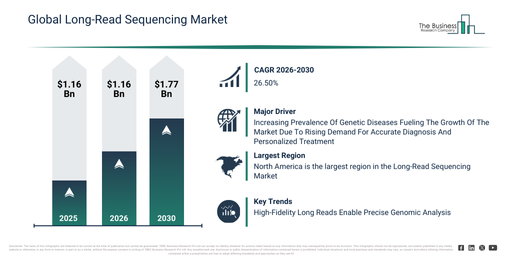
    The long-read sequencing market has seen exponential growth, increasing from $1.15 billion in 2025 to $1.46 billion in 2026, reflecting a strong compound annual growth rate (CAGR) of 26.8%. This surge is largely due to the limitations of short-read sequencing, advancements in nanopore technology, expanding genomics research, demand for precise genome assembly, and increased funding within the life sciences sector. Looking ahead, the market is projected to reach $3.74 billion by 2030, maintaining a CAGR of 26.5%. Growth factors during this period include wider clinical adoption, decreased sequencing costs, integration with AI-powered analysis tools, expansion in oncology diagnostics, and population genomics development. Key trends are centered on the broader use of long-read technologies, enhanced detection of structural variants, the rise of hybrid sequencing methods, growth in rare disease genomics, and applications in complex genome assembly.

    Download A Free Sample Report For Comprehensive Market Insights:

    https://www.thebusinessresearchcompany.com/sample.aspx?id=28259&type=smp

    Genetic Disease Prevalence as a Major Growth Driver in Long-Read Sequencing

    A key factor propelling the long-read sequencing market is the increasing occurrence of genetic disorders. These conditions, caused by DNA mutations or inherited changes, affect various aspects of health and development. Growing awareness combined with better diagnostic technologies has led to earlier and more accurate identification of genetic diseases. Long-read sequencing offers a comprehensive genomic view, making it especially useful for diagnosing complex and rare disorders by detecting structural variations and mutations often missed by other methods.

    Improved Patient Outcomes Fueling Market Demand

    By reducing uncertainty in diagnosis and enhancing personalized treatment plans, long-read sequencing supports improved clinical decision-making. For example, data from October 2024 by the UK-based Cystic Fibrosis Trust showed that the number of people living with cystic fibrosis rose from 11,148 in 2022 to 11,318 in 2023. Such increases in genetic disease prevalence underscore the rising need for advanced sequencing solutions, driving demand in this market.

    Access The Complete Long-Read Sequencing Market Report:

    https://www.thebusinessresearchcompany.com/report/long-read-sequencing-global-market-report

    Breaking Down the Long-Read Sequencing Market Structure

    The market is segmented across several key categories for a detailed understanding:

    1) Product and Service Types: Instruments or platforms, consumables and reagents, services and software.

    2) Workflow Stages: Pre-sequencing, sequencing, and data analysis.

    3) Technology Platforms: Single Molecule Real-Time (SMRT) High-Fidelity (HiFi) sequencing, synthetic long-read or linked-read technologies, hybrid approaches, and other emerging methods.

    4) Applications: Human genomics and rare disease diagnostics, oncology and liquid biopsy, metagenomics and microbiome studies, transcriptomics, agricultural genomics including plant and animal breeding, among others.

    5) End Users: Academic and research institutions, hospitals and clinics, pharmaceutical and biotechnology companies, and other sectors.

    Further subcategories include specific instruments like SMRT sequencers and nanopore sequencers; consumables such as library preparation kits, sample prep kits, and sequencing kits; as well as services covering sequencing operations, data analysis, and bioinformatics software.

    Innovations and Trends Accelerating Long-Read Sequencing Capabilities

    Leading companies in this field are focusing on breakthrough developments to improve sequencing accuracy and detection of complex genetic variations. High-fidelity (HiFi) reads, which combine long read lengths with minimal error rates, are at the forefront of these advancements, allowing researchers to identify intricate genetic variants with greater precision.

    For instance, in November 2024, Pacific Biosciences of California Inc. introduced the Vega system—its first benchtop long-read sequencer aimed at providing faster, accessible genomic analysis. This compact and affordable instrument delivers highly accurate HiFi data with 99.9% read accuracy and supports diverse applications such as RNA sequencing, targeted sequencing, and small genome analysis. Vega also features onboard computing and user-friendly operation, making advanced sequencing more attainable for many laboratories.

    Key Players Driving Competition in the Long-Read Sequencing Industry

    The competitive landscape includes major industry players such as Thermo Fisher Scientific Inc., Agilent Technologies Inc., Revvity Inc., Bio-Rad Laboratories Inc., BGI Genomics Co. Ltd., Novogene Co. Ltd., Takara Bio Inc., Oxford Nanopore Technologies plc, Pacific Biosciences of California Inc., New England Biolabs Inc., Roche Sequencing Solutions Inc., The Garvan Institute, Element Biosciences Inc., Eurofins Genomics, CD Genomics, BaseClear B.V, France Génomique, GrandOmics Biosciences Co. Ltd., Future Genomics Technologies B.V., and MicrobesNG. These companies are continually advancing technologies to capture more market share and meet growing customer demands.

    Regional Insights Highlighting Market Leadership and Growth Areas

    In 2025, North America held the largest share of the long-read sequencing market, reflecting strong research infrastructure and funding support. Meanwhile, the Asia-Pacific region is expected to experience the fastest growth throughout the forecast period, driven by increasing investment in genomics research, expanding healthcare infrastructure, and rising demand for advanced diagnostics. The market report covers critical regions including Asia-Pacific, South East Asia, Western Europe, Eastern Europe, North America, South America, the Middle East, and Africa, offering a broad perspective on global market dynamics.

    Get in touch with us:

    The Business Research Company: https://www.thebusinessresearchcompany.com/

    Americas: +1 310-496-7795

    Asia: +44 7882 955267 & +91 8897263534

    Europe: +44 7882 955267

    Email us at: marketing@tbrc.info

    Follow us on:

    LinkedIn: https://in.linkedin.com/company/the-business-research-company

    YouTube: https://www.youtube.com/channel/UC24_fI0rV8cR5DxlCpgmyFQ

    Global Market Model: https://www.thebusinessresearchcompany.com/global-market-model